Liveaboards · Indonesia
White Manta — a spacious Raja Ampat dive boat built around the water
What makes this boat unique
- White Manta carries up to 20 passengers in 14 air-conditioned en-suite cabins across three decks.
- Its dive operation uses small groups, shaded work areas, separate camera rinsing and a dedicated camera room.
- Nitrox is available from a membrane system, with DIN adapters and rental equipment on board.
- The Raja Ampat route includes cleaning stations, current-swept reefs, soft-coral walls and some of Indonesia’s richest fish life.
For subtitles in English: start the video firstthen click the gearat the top right of the video, select “Subtitles/CC”, then “Auto-translate” and choose “English”.
The invitation
White Manta suits divers who want Raja Ampat’s best-known reefs without giving up room to handle cameras, dry kit and tired legs. The boat is large enough to provide separate places for diving, eating and disappearing between dives, yet the diving is organised in small groups rather than as one crowd moving through the water. That matters here: currents, cleaning stations and dense fish schools reward a guide who can keep a group together without rushing it. The route brings together Cape Kri, Blue Magic, Melissa’s Garden, Manta Sandy and the reefs around Kri and Mansuar. Above water, the appeal is practical rather than theatrical: a substantial dive deck, a proper camera room, shaded outdoor space and a crew that speaks English, French and Indonesian. This is the choice for a diver who boards to spend the week underwater, but does not want the boat to feel like an afterthought.
Boarding
From the dock, White Manta makes the impression of a purpose-built dive vessel rather than a converted passenger boat. Its broad beam gives the hull a steady, substantial look, while the three deck levels separate cabins from the working parts of the trip. Once aboard, the main deck leads naturally to the saloon, dining area, camera room and dive deck, so a diver does not spend the week carrying wet gear through guest spaces. The upper deck opens onto outdoor dining and a partially covered sundeck; the lower deck is quieter and reserved for cabins. Cummins engines and a 10-knot cruising speed point to a boat made for long Indonesian crossings, not quick hops between neighbouring sites. The movement on board is straightforward: up to the dive deck, back to the saloon, then outside when the weather invites it.
The atmosphere on board
White Manta’s atmosphere is shaped by the amount of working space and by a crew large enough to keep the practical jobs moving. Divers can leave the dive deck, camera room and dining areas doing their separate jobs instead of competing for one crowded corner. Small dive groups make the underwater side feel more personal, while the crew’s English, French and Indonesian cover a mixed international group without making every exchange formal. The boat’s hospitality is most visible in the repeated details: kit handled between dives, food appearing when it is needed, cabins cleaned daily and the tender returning divers to the right point on the reef. By evening, the day belongs to the saloon, the outdoor deck and the photographs being passed around. The vessel itself scores below the crew and food, but that is useful context: the boat’s scale and age show through more than the people running it, and the people are what make the week work.
The sites you’ll dive
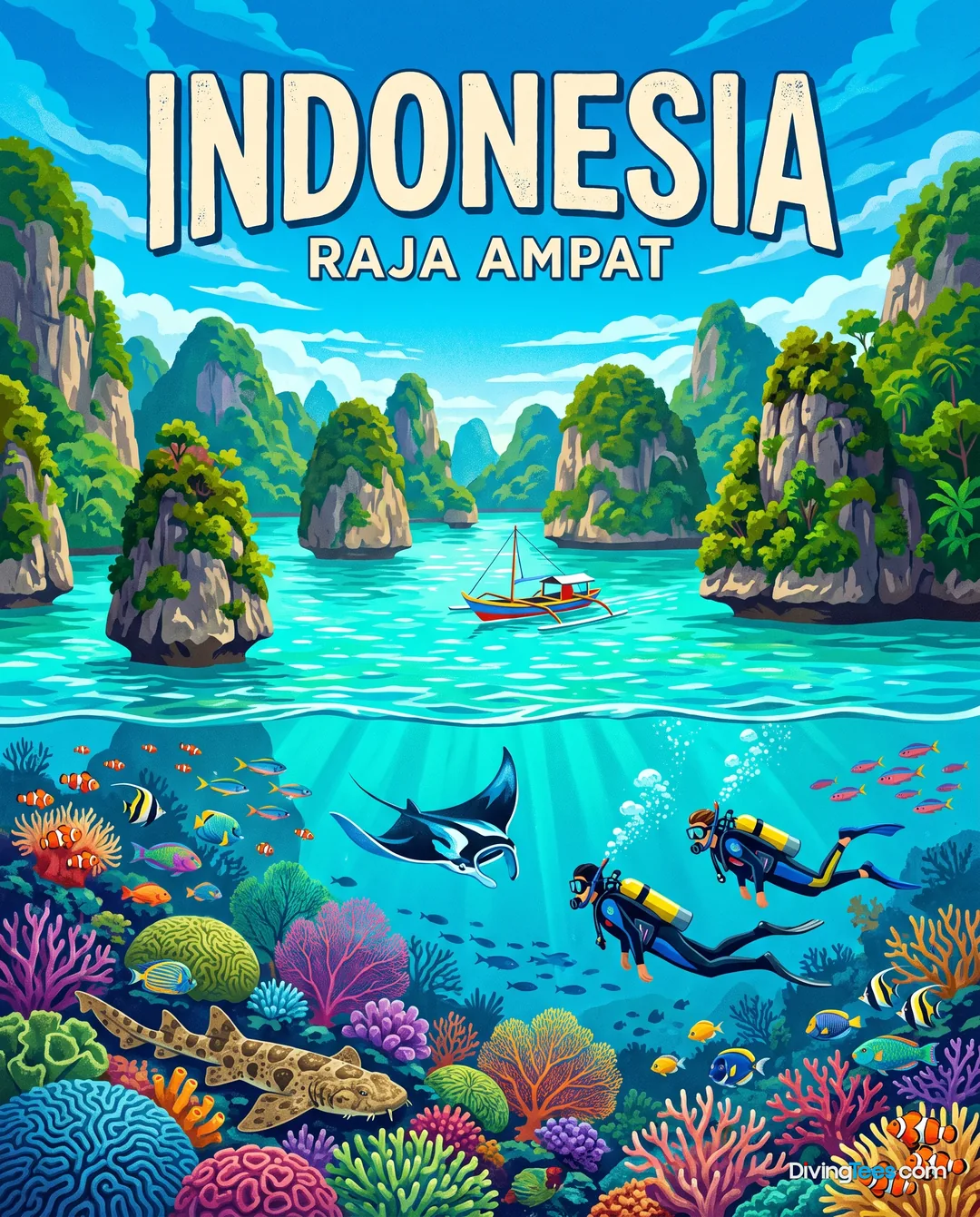
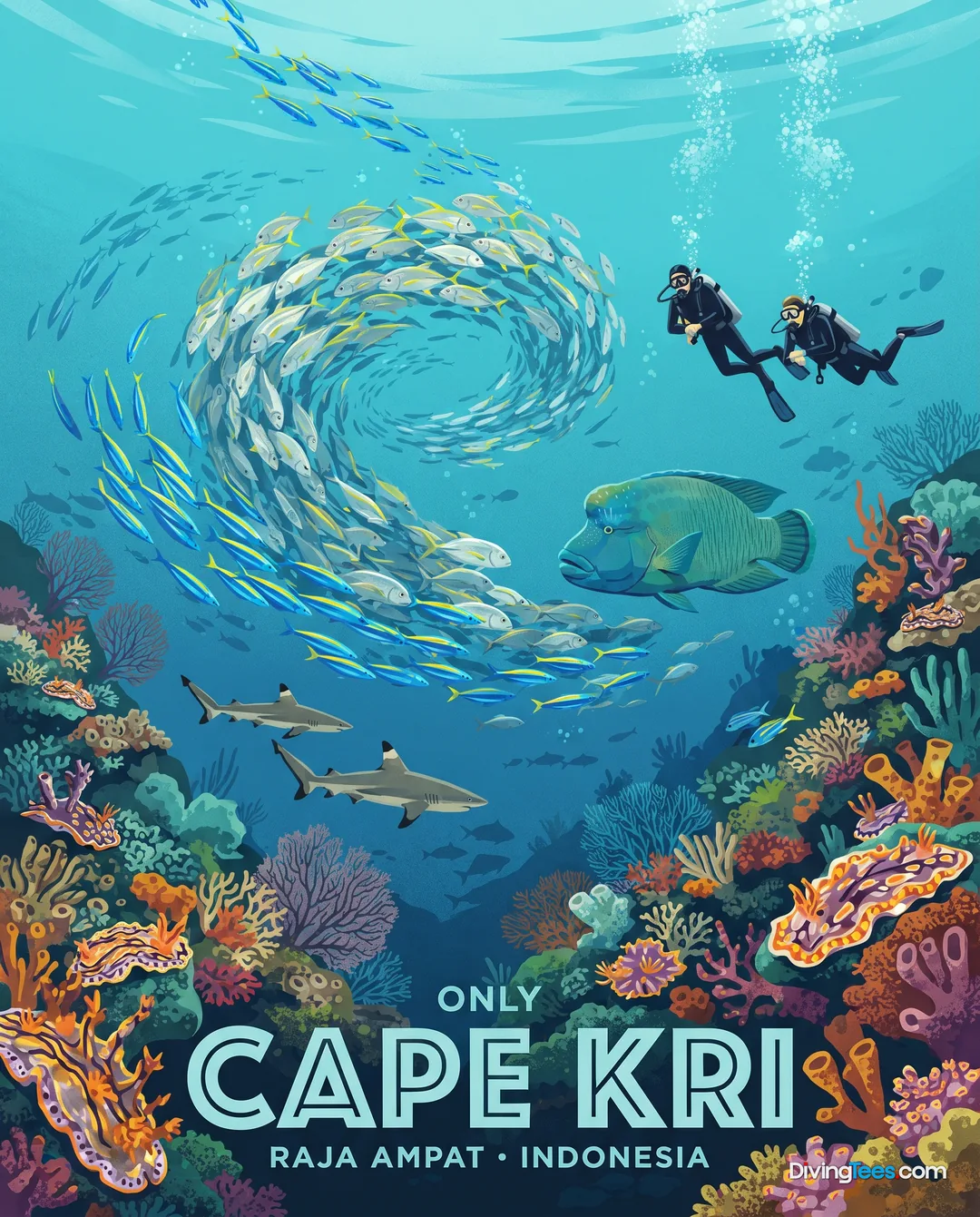
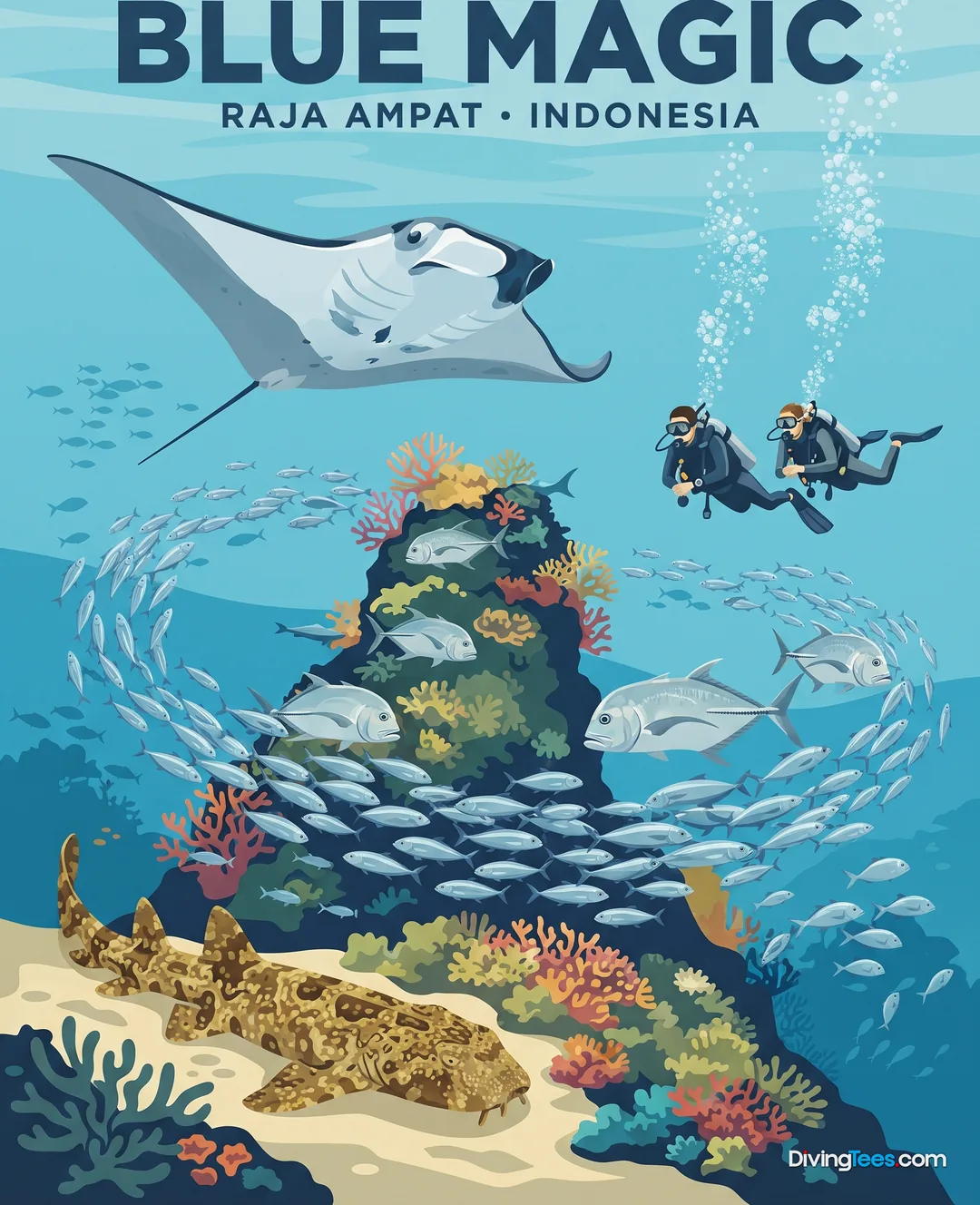
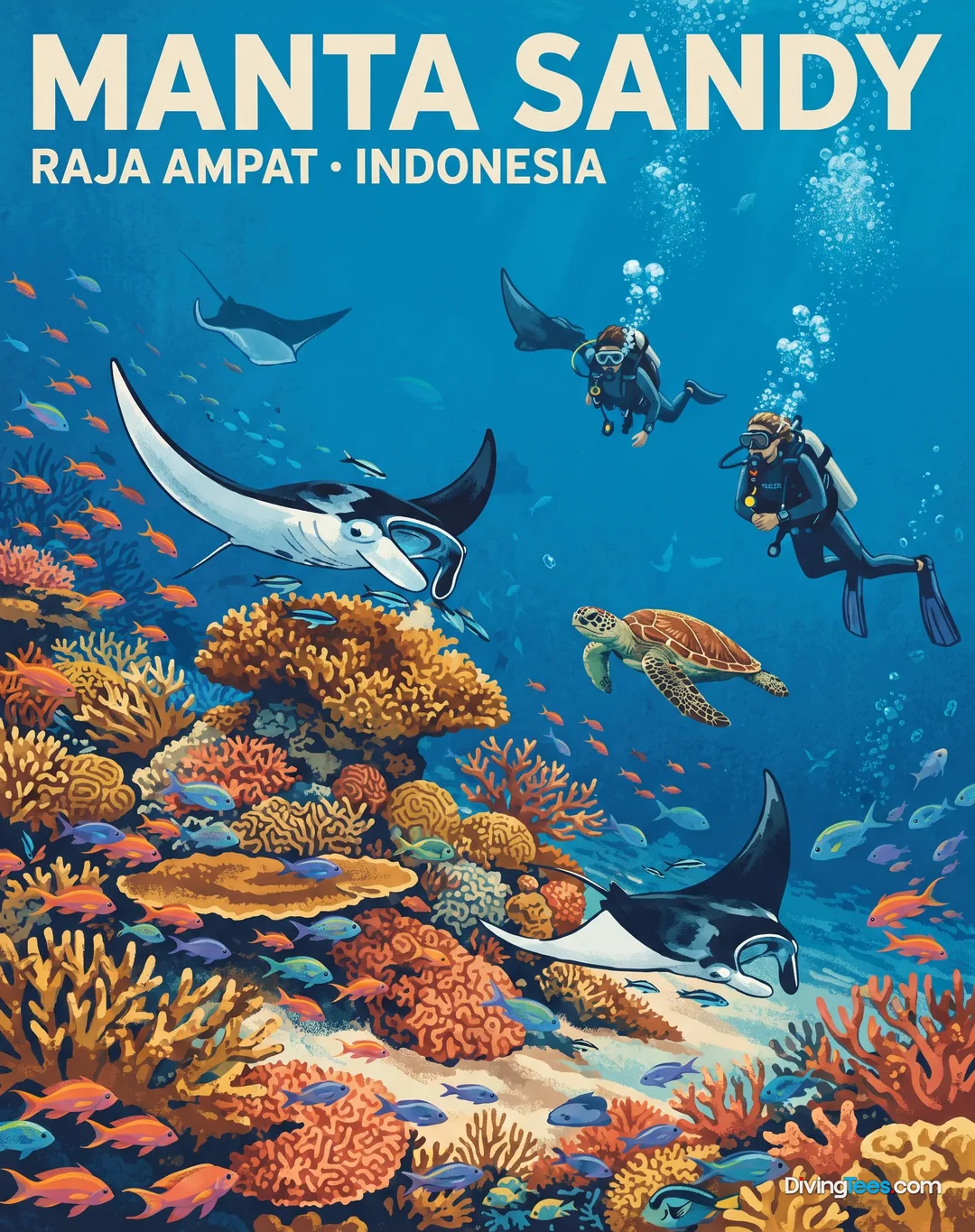
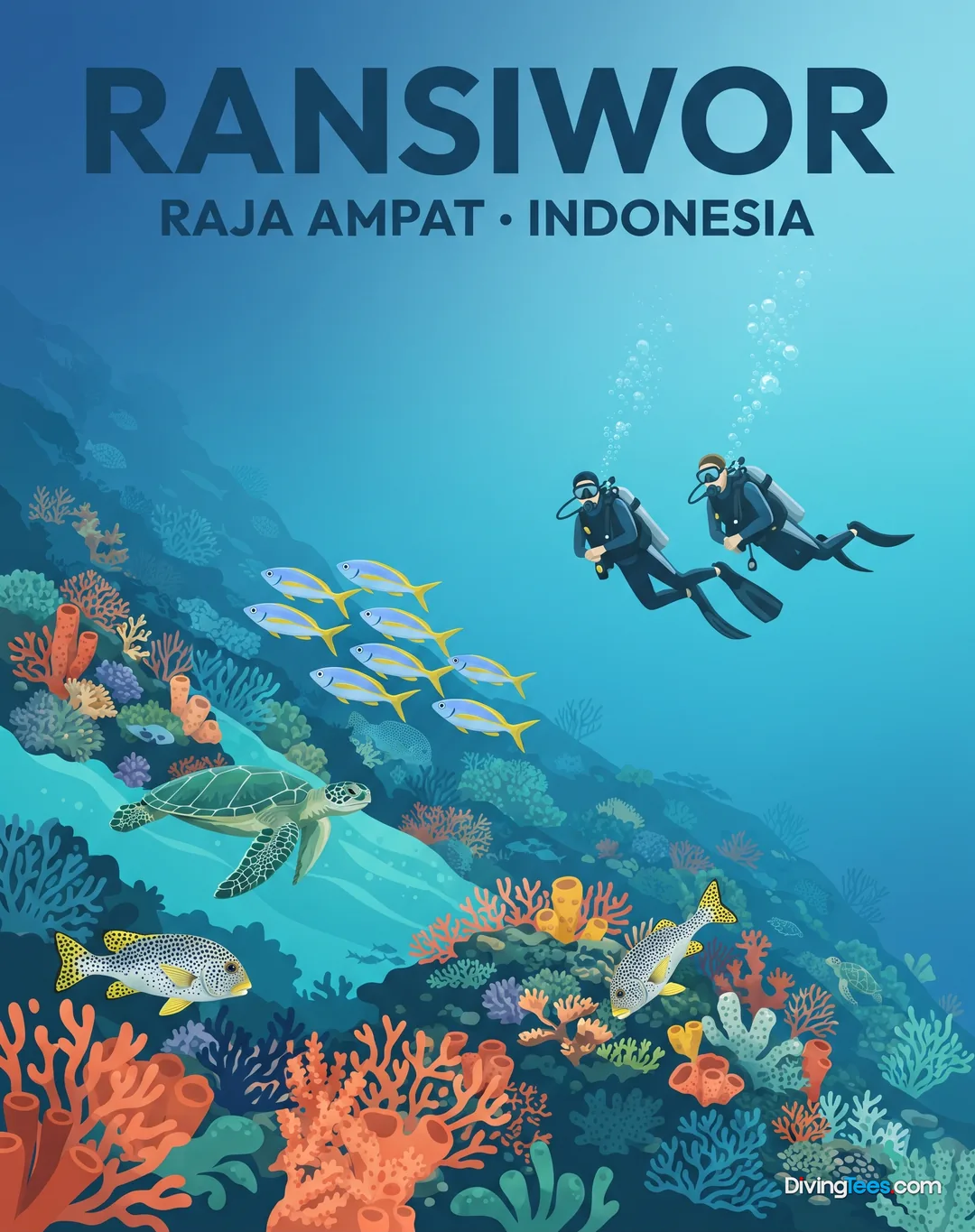
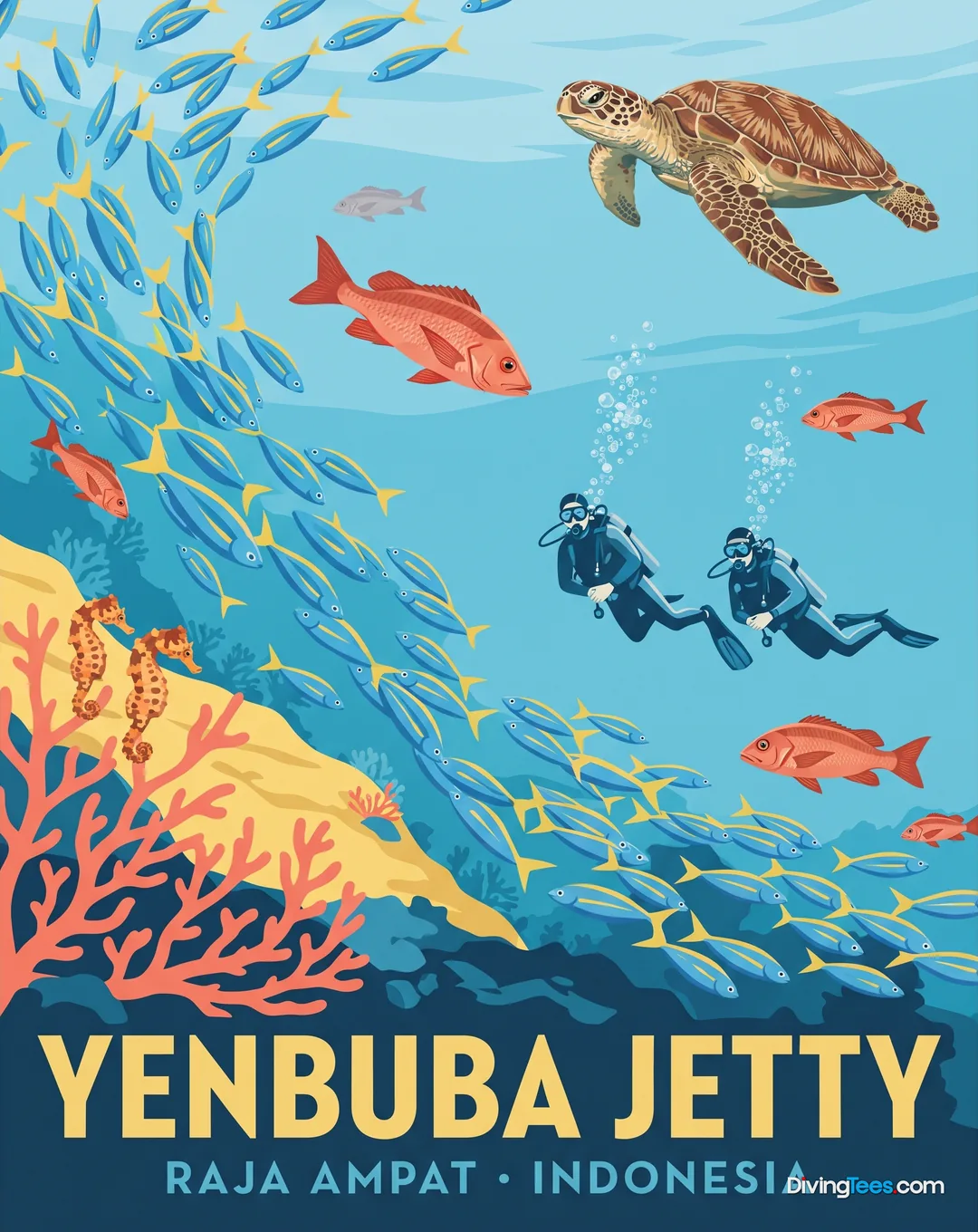
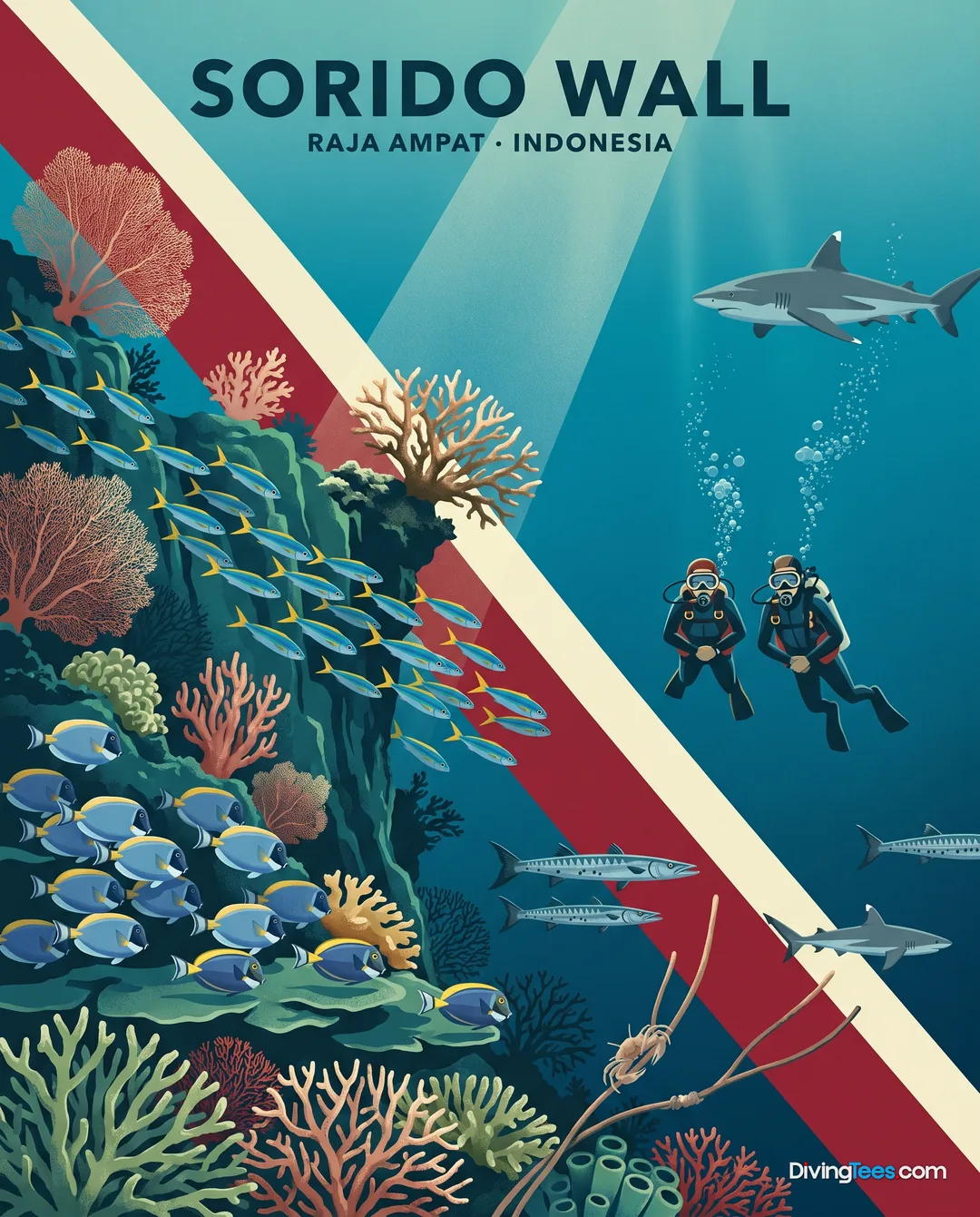
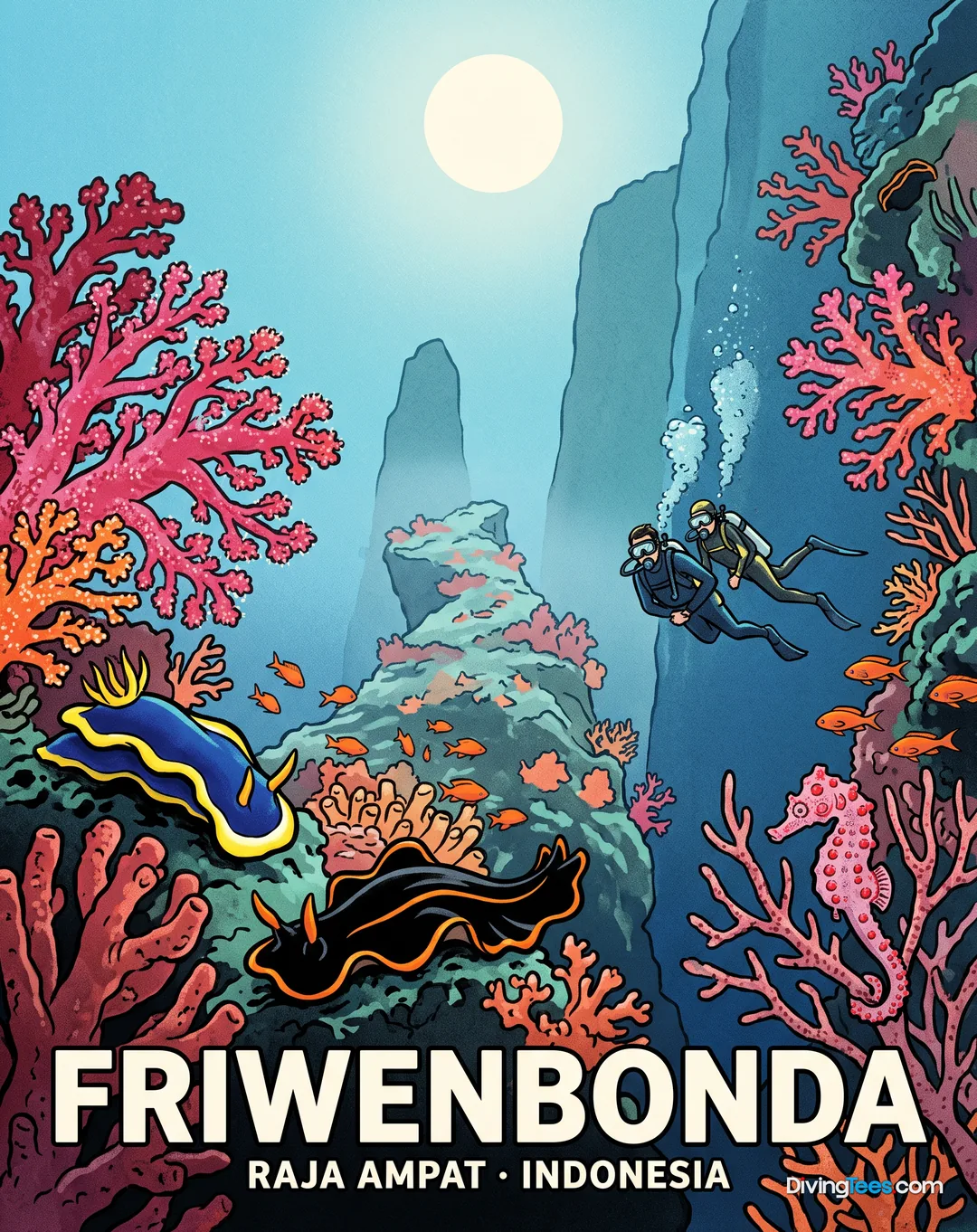
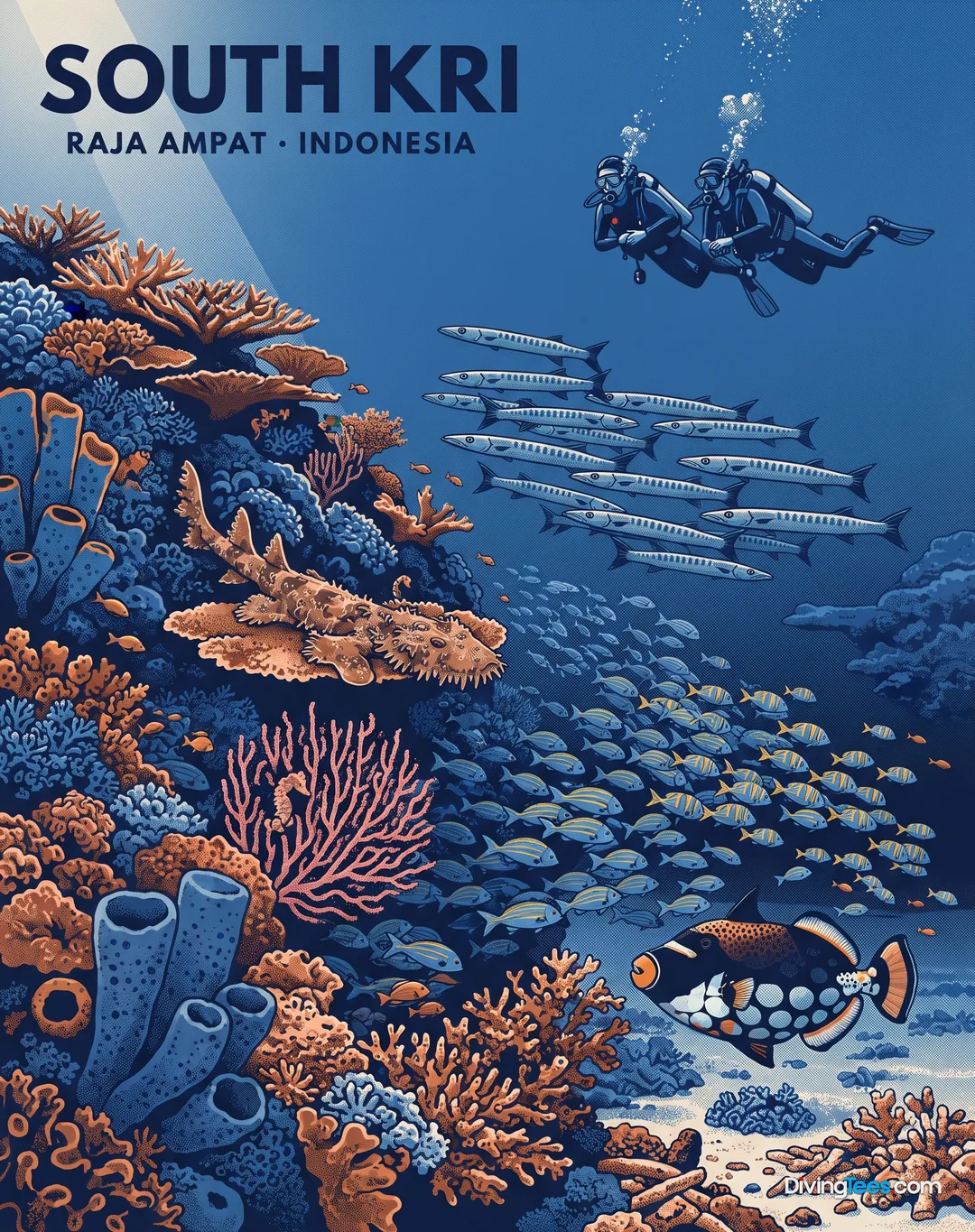
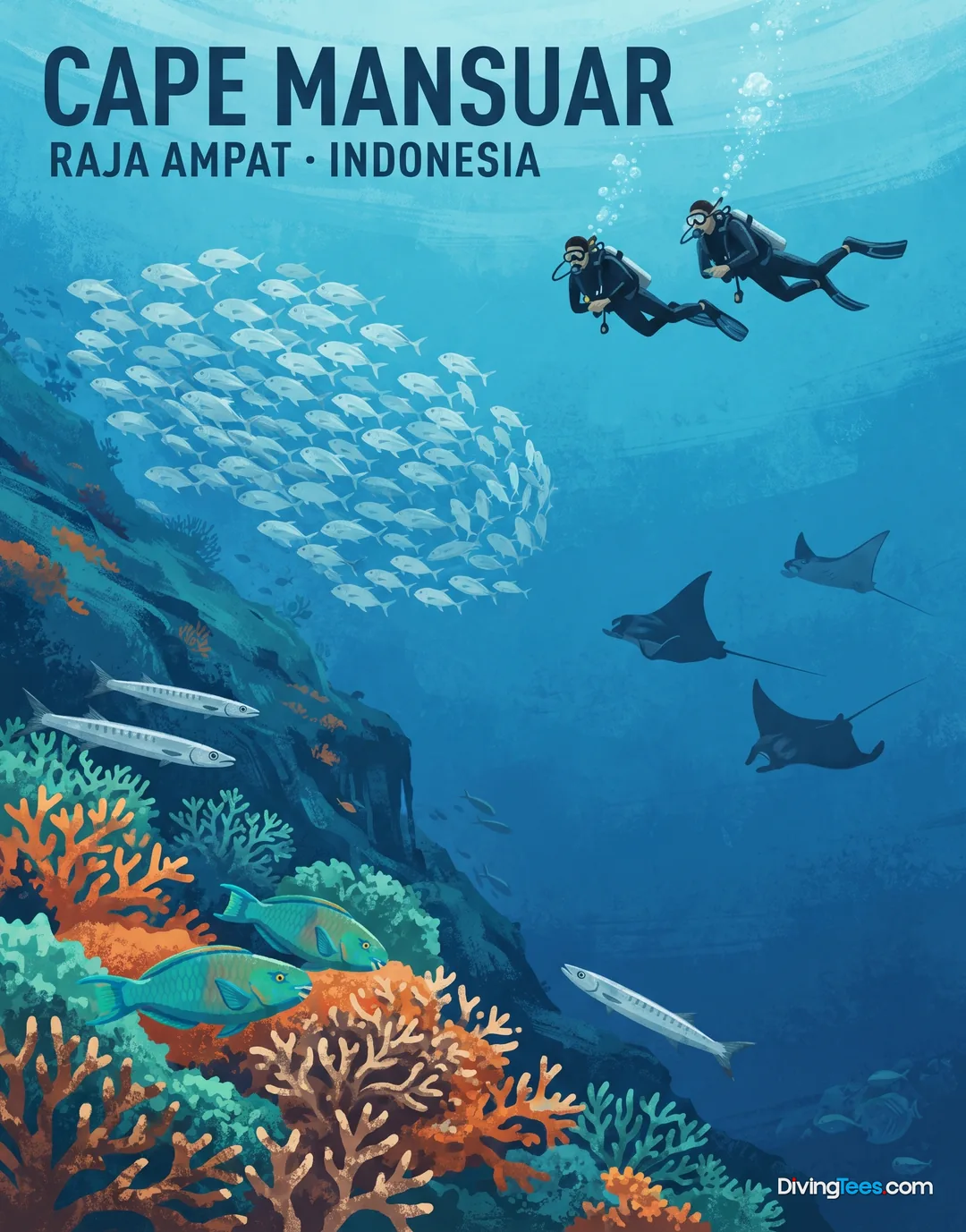
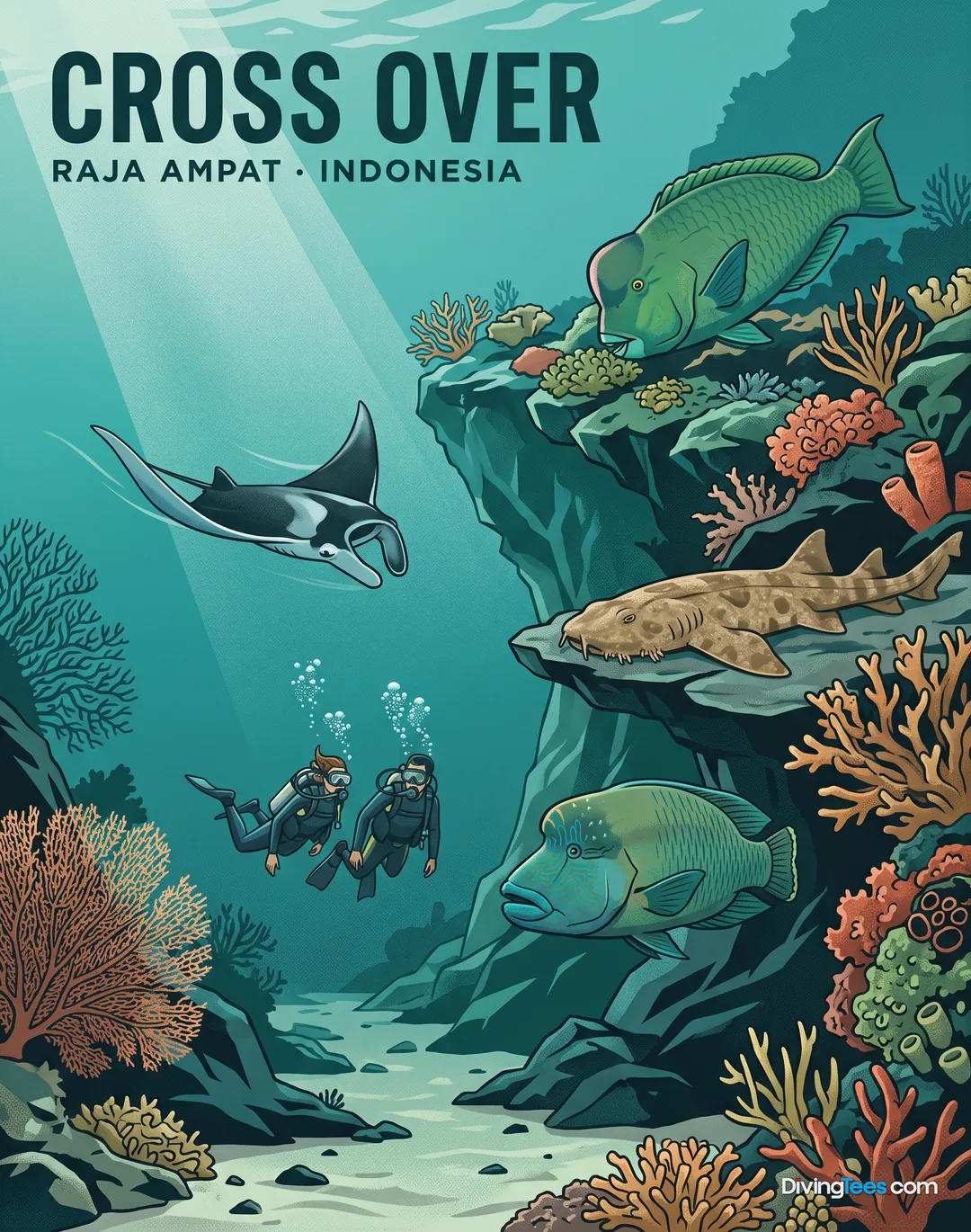
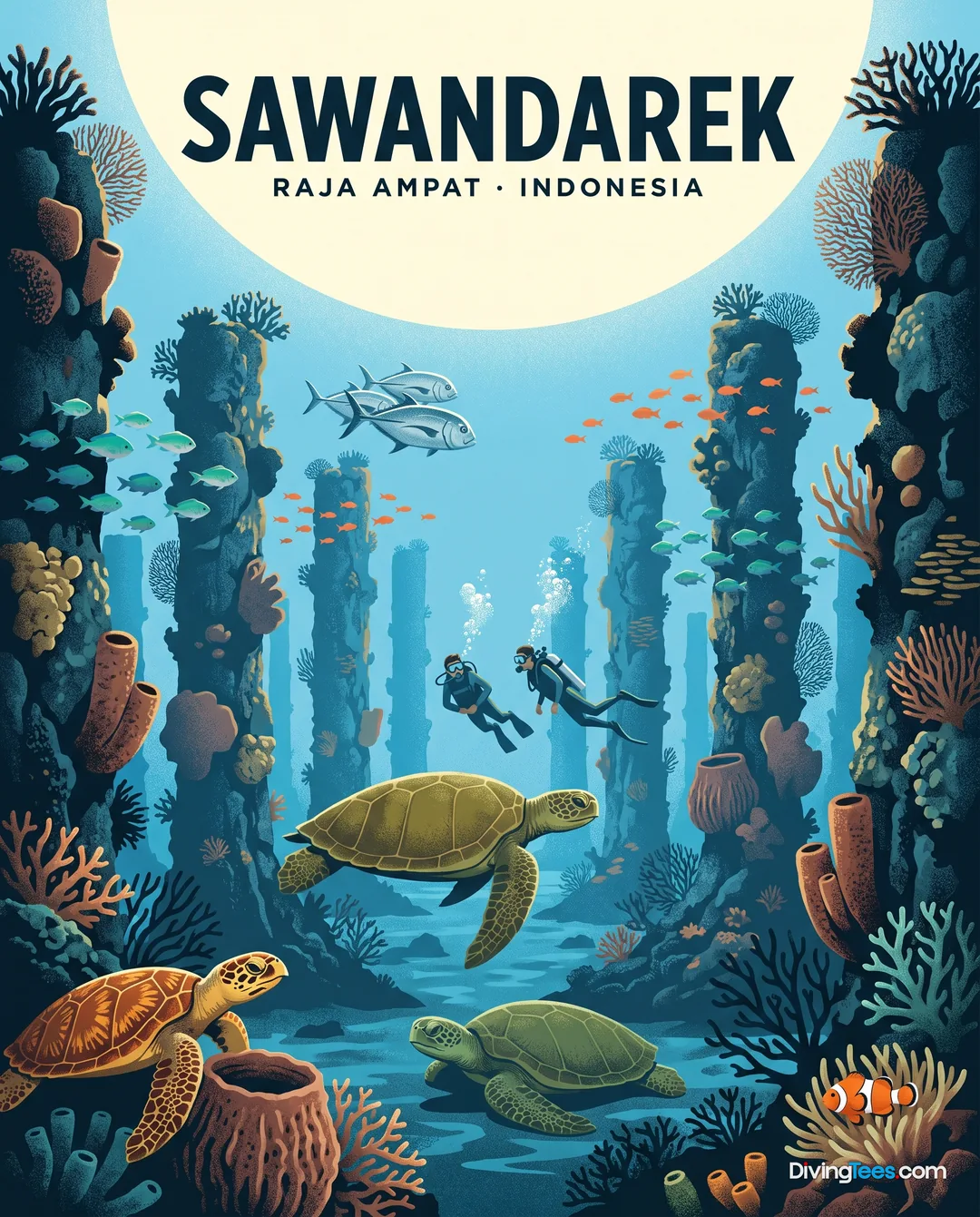
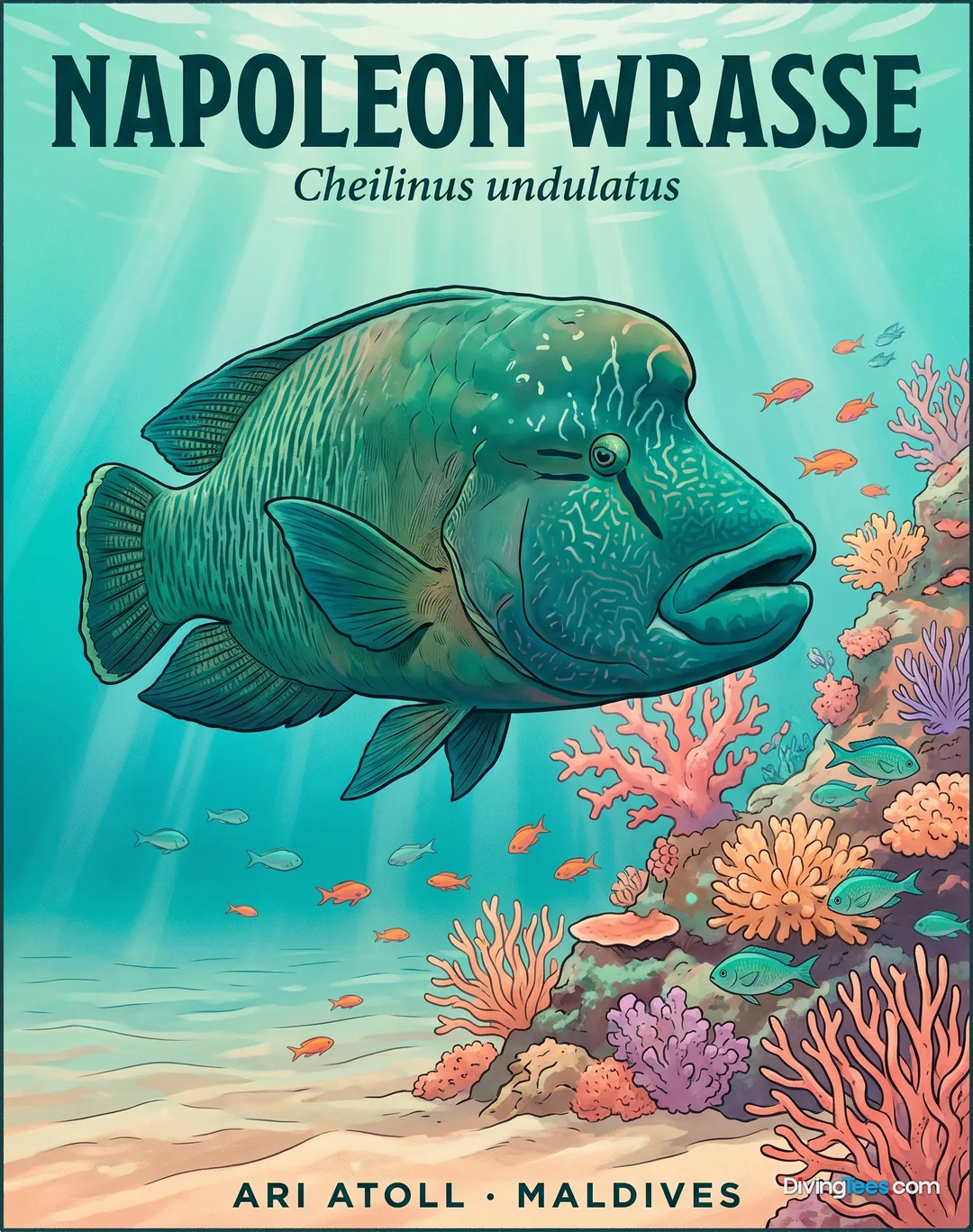
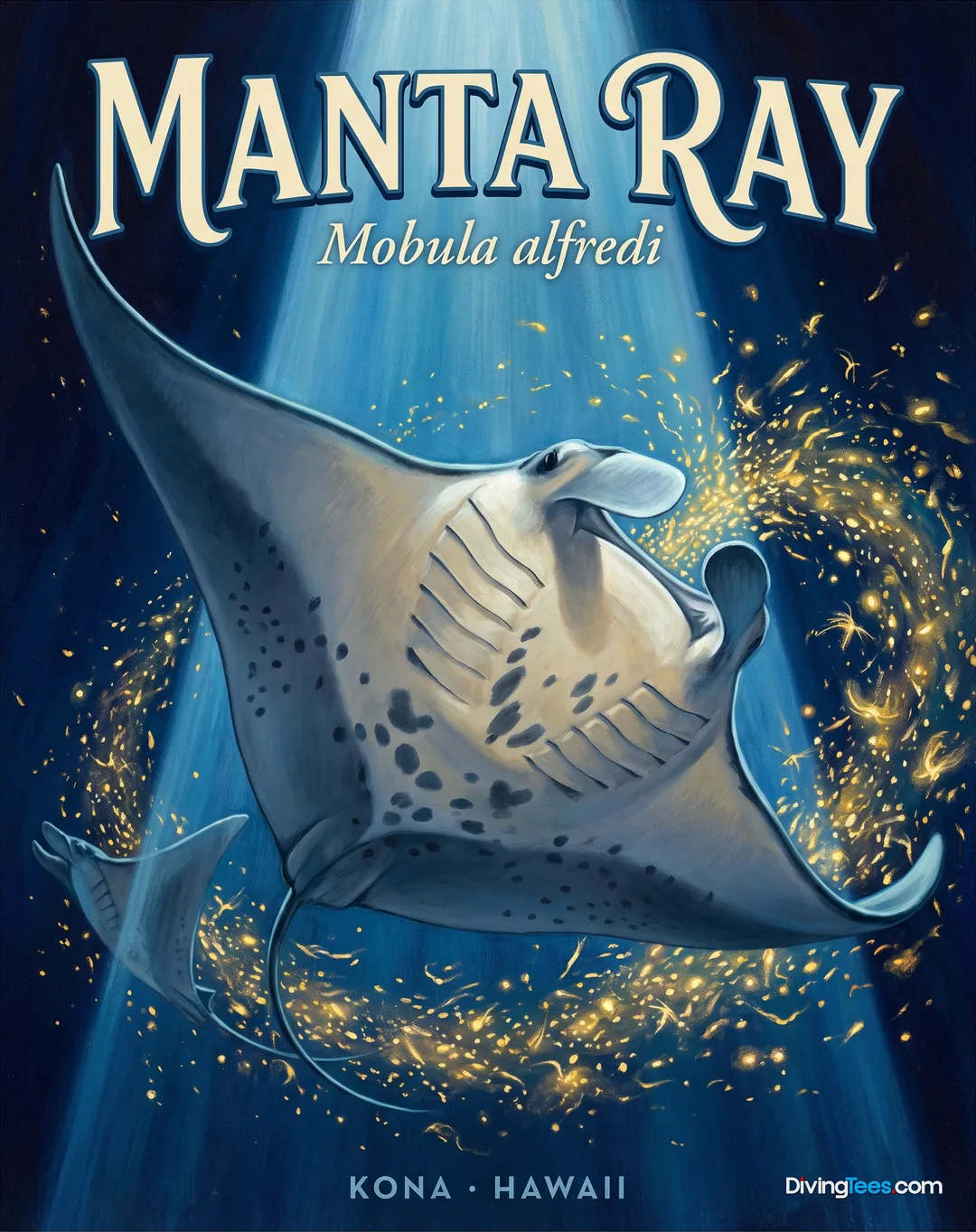
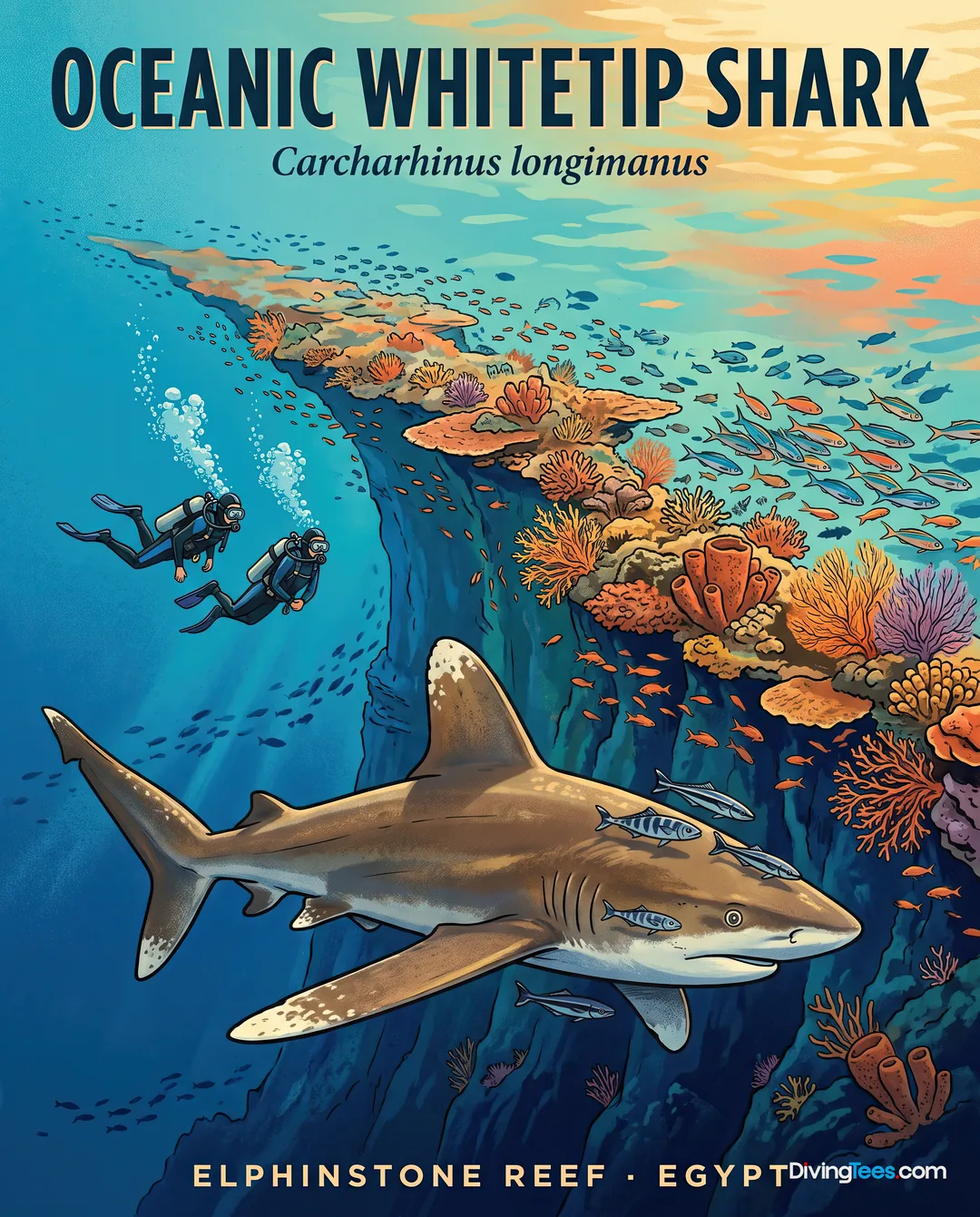
The Raja Ampat route is recorded as a 12-day, 11-night voyage from Ambon to Sorong, with the reefs around Kri, Mansuar and nearby islands forming the underwater centre of the trip. Cape Kri is the big fish dive: schools of emperors and fusiliers move over the reef, with Napoleon wrasse and reef sharks in the scene. Mike’s Point combines reef overhangs thick with soft coral and sweetlips with a flat plateau where eagle rays may pass; its maximum depth is -40m. Melissa’s Garden stays shallower, with soft corals and staghorn formations down to -35m. Blue Magic is a current-fed reef where schooling fish, giant trevally, dogtooth tuna and oceanic manta rays may appear. At Manta Sandy, the reason for entering is clear: reef manta rays hover over cleaning stations, watched by divers and snorkelers alike. Ransiwor reaches -30m and follows gentle slopes to busy cleaning stations and yellow-back fusiliers. Yenbuba Jetty also reaches -30m, beginning beneath fish-filled, coral-covered pilings before opening onto a sloping reef. Sorido Wall, Friwenbonda, South Kri, Cape Mansuar, Cross Over and Sawandarek add walls, drifts, soft-coral slopes, strong current and turtle-rich shallows to the route.
What you’ll meet underwater
Across this route, the recurring cast is broad: barracuda, reef sharks, trevally, fusiliers, sweetlips, Napoleon wrasse, bumphead parrotfish, sea turtles, nudibranchs, soft corals and pygmy seahorses. The spectacle changes with the structure of the reef. Schools gather where current and shelter meet, while cleaning stations bring turtles, rays and reef sharks into one carefully watched patch of water. Cape Kri is the place for the route’s most unusual heavy hitters, including giant grouper and whitetip reef sharks. Blue Magic is the specific reason to look offshore for oceanic whitetip sharks, tuna and oceanic manta rays. Ransiwor can produce an octopus and a clownfish among its cleaning-station life; Sorido Wall is where surgeonfish belong in the picture. South Kri adds bigeye trevally, crabs and shrimp to the macro side of the route, while Yenbuba Jetty is the site for anthias and damselfish among the pilings. None of these encounters is guaranteed, but the route keeps putting divers in the habitats that make them possible.

Who puts you in the water
The boat runs diving in small groups, with guides working closely enough to keep briefings and entries personal rather than turning them into a mass launch. The crew speaks English, French and Indonesian. Oxygen, first-aid kits and a crew trained in first aid are carried on board, alongside the vessel’s radio, GPS, radar, sonar and emergency-position equipment. Those are the concrete safety features available during a remote itinerary. The available information does not set a guide count, a fixed diver-to-guide ratio, a minimum number of logged dives or a list of courses conducted on board, so the trip should not be sold as a teaching platform or as a particular level of technical diving. Nitrox is available to appropriately qualified divers after the onboard waiver. The diving itself is planned in small groups, which is the useful distinction for a route where current and marine-life encounters can change the shape of a dive quickly.
The dive deck and the gear
The dive deck is sizeable, shaded and laid out for repeated use rather than a single shore dive. Tanks are prepared at individual working positions, with DIN adapters available, and the filling system uses three compressors with a nitrox membrane producing 32% nitrox. Nitrox is not included by default; it is available as an optional extra, and a nitrox waiver is signed on board. A separate freshwater rinse is provided for cameras, alongside a dedicated camera room with charging stations and an outdoor camera workstation. Rental equipment is available, although no brands or tank material are specified. Divers enter the water from the dive platform and are supported by two aluminium tenders plus an inflatable dinghy for transport and diver pickup. The tender system matters in Raja Ampat: it lets the boat place groups on different parts of a reef and collect them where they surface, instead of making every diver return to one fixed ladder.
Between dives
The best place between dives is the shaded dive area, where kit stays close and cameras can move between the outdoor workstation and the dedicated camera room without being exposed to the main traffic of the boat. When the surface interval is longer, the air-conditioned salon gives relief from the heat and a place to eat, watch audio-video entertainment or work on photographs. The upper deck is the change of scene: loungers, double day-beds, outdoor dining and open views over the islands. A non-diver can join the trip, and snorkelling is supported from the tenders, so not every quiet hour has to be spent waiting for the next briefing. Internet is available as a paid service, but the boat’s more useful distraction is usually the camera room or the water still visible from the rail.
A day on board
A White Manta diving day starts with the compressor already doing its work and the first briefing before the boat’s upper decks have fully woken. Divers move from breakfast to the first descent, return to the shaded dive area, eat a snack and repeat the process for the next dive. Lunch breaks the morning from the afternoon, with further dives planned around reef position, current and the tender pickups. The gaps are used for food, camera work, a cool hour in the air-conditioned salon or a climb to the sundeck when the heat allows it. On some days the boat is underway between areas, and the view changes from reef to island while tanks are filled and batteries charge. A night dive may close the diving day where the itinerary and conditions allow. Dinner then replaces the briefing room as the evening’s meeting point, before the cabins and the low, steady movement of the boat take over.
What you eat aboard
The galley serves a buffet built around both Western and local Indonesian food, with beer and wine available alongside the included non-alcoholic drinks. Meals are taken in the indoor dining room or outside in the al-fresco area when conditions allow. The important detail is not the restaurant language but the timing: after a dive, food is ready without turning the surface interval into a formal event. Snacks bridge the gaps between meals, which is exactly what a four-dive day needs. Indonesian dishes give the table a sense of place, while Western options make the menu workable for a group coming off several days at sea. Food scores strongly with returning passengers, and on a boat where divers may spend most of the day wet, hungry and handling cameras, that is not a minor part of the experience.
Nights at sea
The cabins are spread over three levels, with upper-deck doubles, main-deck twin-share rooms and lower-deck twin or double options. Every cabin has air conditioning and a private bathroom with a hot-water shower. Upper and main-deck rooms have sea-facing windows or portholes; the lower-deck cabins use a lit virtual window, so they do not offer the same direct view outside. That distinction matters more at night than during the day, when most divers are either underwater or on deck. The rooms average about 20 square metres, enough for a liveaboard stay without making the bunk area feel like a cupboard. Between dives, the air-conditioned salon gives a darker, cooler place to sit, while the sundeck offers loungers and double day-beds. The boat has 14 bathrooms for 14 cabins, which keeps morning traffic simple.
Upper Deck Cabins
Main Deck Cabins
Lower Deck Twin Share Cabins
Lower Deck Double/Twin Cabins
What to know before boarding
The recorded Raja Ampat crossing departs from Ambon and returns through Sorong. Airport and hotel transfers are included when arranged for the embarkation and disembarkation days. The boat should be treated as the final link in a remote journey, so arriving in Ambon the night before is the sensible choice rather than trying to connect directly into boarding. The return transfer is arranged from Sorong after disembarkation.
Deck plan
- Length
- 46 m
- Beam
- 10 m
- Maximum number of passengers
- 20
- Number of cabins
- 14
- Number of bathrooms
- 14
- Engines
- 2 × 450 hp Cummins
- Cruising speed
- 10 knots
- Tenders
- Yes
- Website
- explorerventures.com ↗
Hello, I'm Marina, DivingDeal.com's AI assistant. I answer in detail about hotels, dive centres and liveaboards.

Thinking about the whole trip and the flights? Talk it over with Edith →
Marina is an AI. Some links are affiliate links: DivingDeal may earn a commission, at no extra cost to you. Bookings are made with the partner.