Liveaboards · Indonesia
Jelajahi Laut — a purpose-built Indonesian liveaboard for remote diving
What makes this boat unique
- Jelajahi Laut was built locally in 2021 from ironwood and teak for liveaboard diving.
- The boat carries up to 12 guests in six air-conditioned cabins, including two sea-view cabins with private balconies.
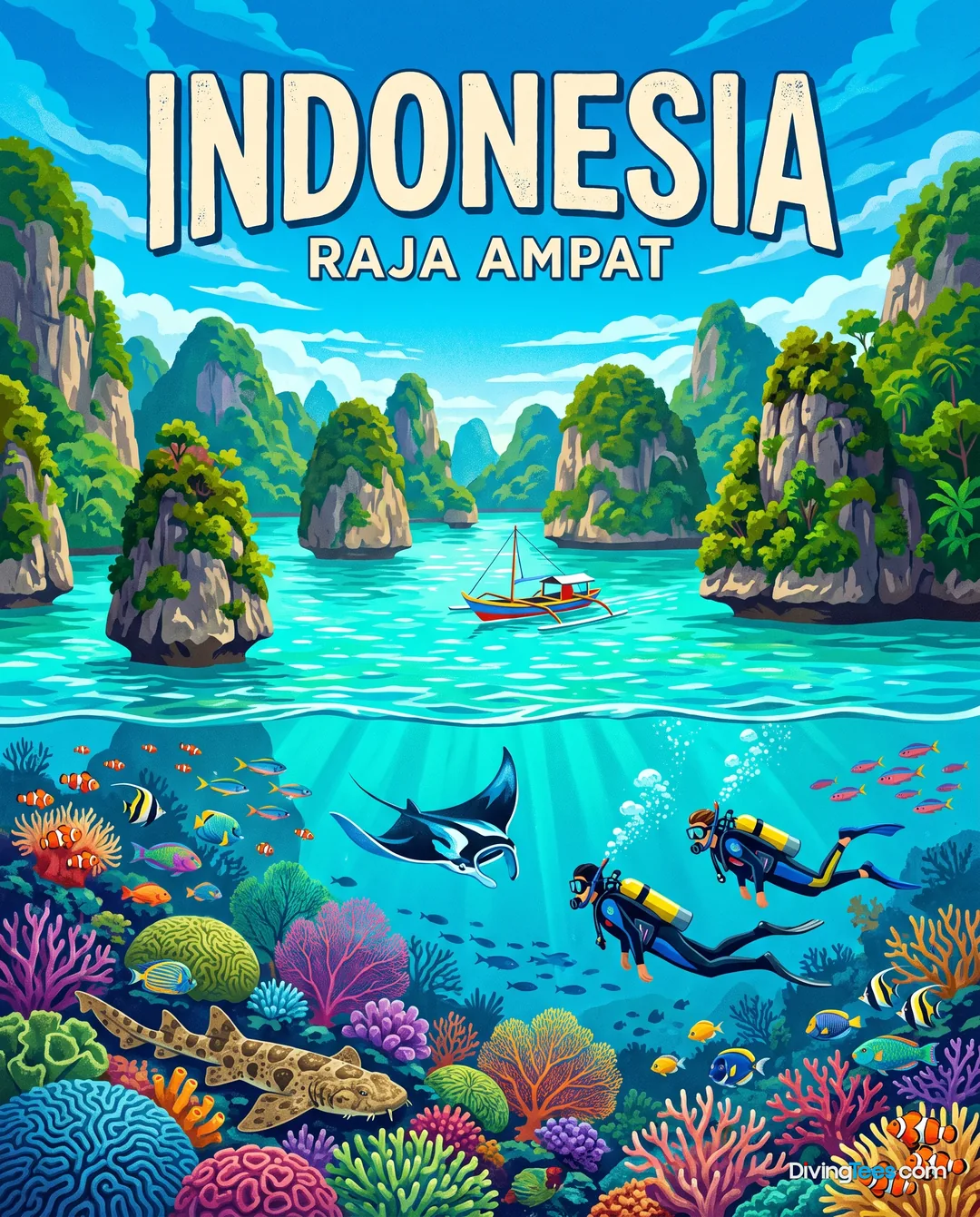
- Its routes reach Raja Ampat, Sulawesi, Halmahera, the Maluku Islands and the Banda Sea.
- The dive operation has two tenders, DIN and yoke-compatible tanks, sidemount support and membrane-blended nitrox.
- Trips include night dives, naturalist-led land excursions, full-board meals and stand-up paddleboarding.
For subtitles in English: start the video firstthen click the gearat the top right of the video, select “Subtitles/CC”, then “Auto-translate” and choose “English”.
The invitation
Jelajahi Laut is for divers who want Indonesia beyond the familiar circuit. Mikumba Diving uses her to reach Halmahera, the Maluku Islands, the Banda Sea, Sulawesi and Raja Ampat, with itineraries created around remote reefs, volcanic islands and crossings that smaller day boats cannot make. The boat was designed by divers rather than converted from a general-purpose vessel, so the useful parts of a liveaboard are treated seriously: a proper dive area, two tenders, camera facilities, air-conditioned cabins and enough room to get out of the way between dives. Six cabins keep the group to 12 guests on most trips. That matters in places where the point is not to follow a line of boats to the same reef, but to spend a week exploring water that still feels lightly visited.
Boarding
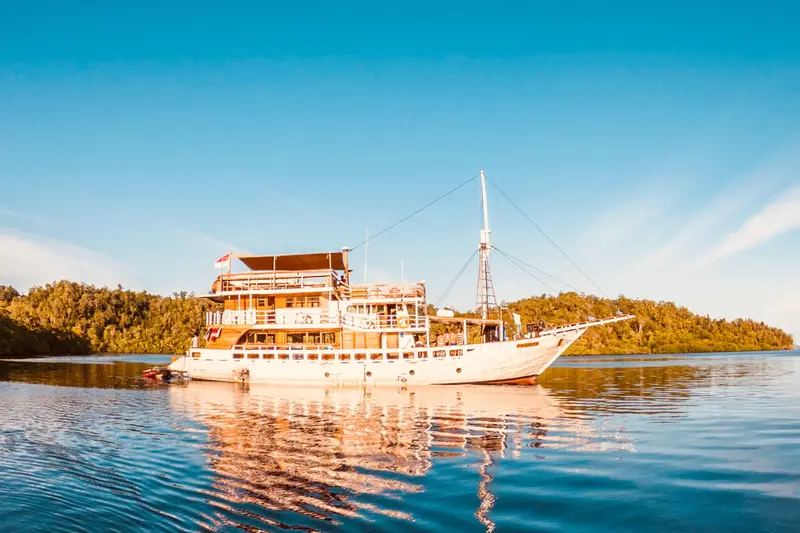
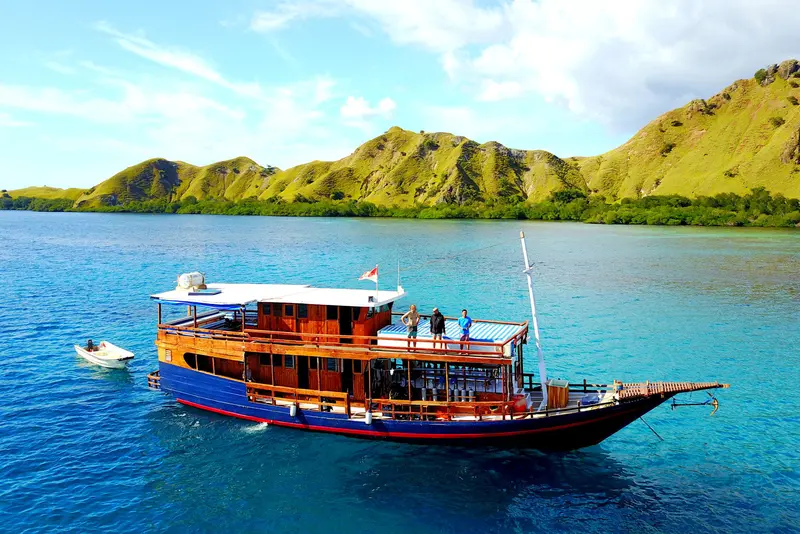
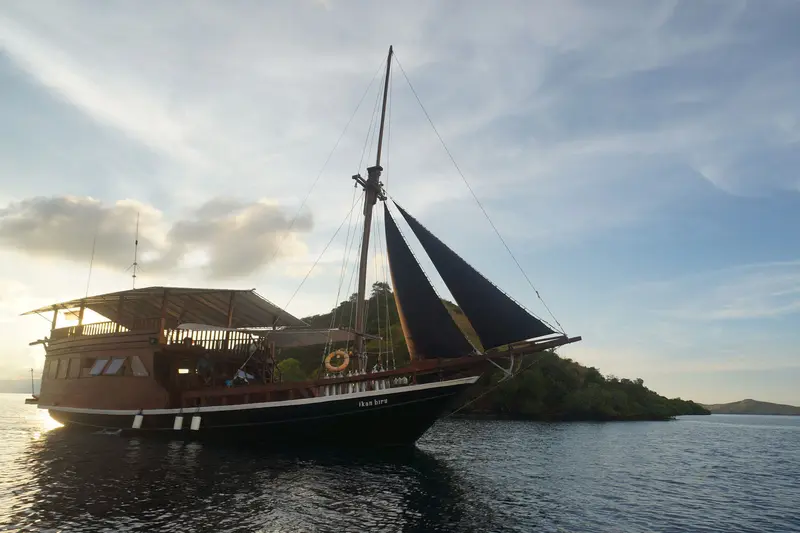
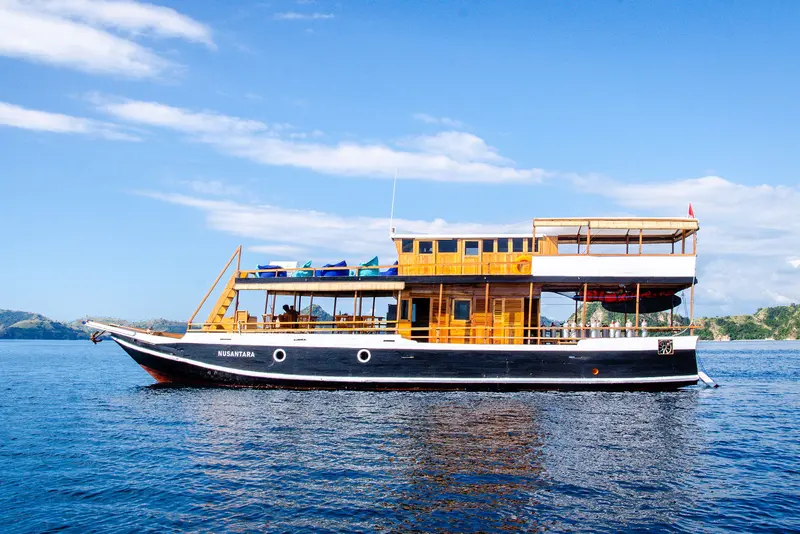
The first impression is of a working Indonesian vessel built in wood, with ironwood and teak carrying the structure and the open decks doing most of the social work. Jelajahi Laut feels made for long passages between islands rather than short transfers from a resort. You move from the dive deck to shaded outdoor space, then into an air-conditioned dining and living area when the heat or weather turns. The main engine is a 500hp Yanmar marine engine, and the boat also carries three generators, so the sound of machinery remains part of life at sea rather than disappearing behind a hotel-like façade. The layout is easy to understand from the first briefing: cabins below and on the upper deck, dive operations aft, living space forward and a broad sun deck above. It is a boat with a clear job, and that job is getting divers to distant Indonesian water.
The atmosphere on board
The small guest count shapes the atmosphere more than any claim about luxury. With up to 12 divers and a crew-to-passenger ratio close to one, the people running the boat are present throughout the day: on deck before a dive, in the tender after it and around the table later. Mikumba’s guides are described as knowledgeable and easy to talk to, and the crew’s role extends beyond tying tanks and serving meals; they help make long crossings, logbook time and evenings on board feel occupied without being over-programmed. English, French, Spanish and Indonesian are spoken among the crew and dive team. The result is a social boat without the pressure of a party boat. Divers can talk through a current or a rare sighting, then disappear to a balcony or a beanbag when they want quiet.
The sites you’ll dive
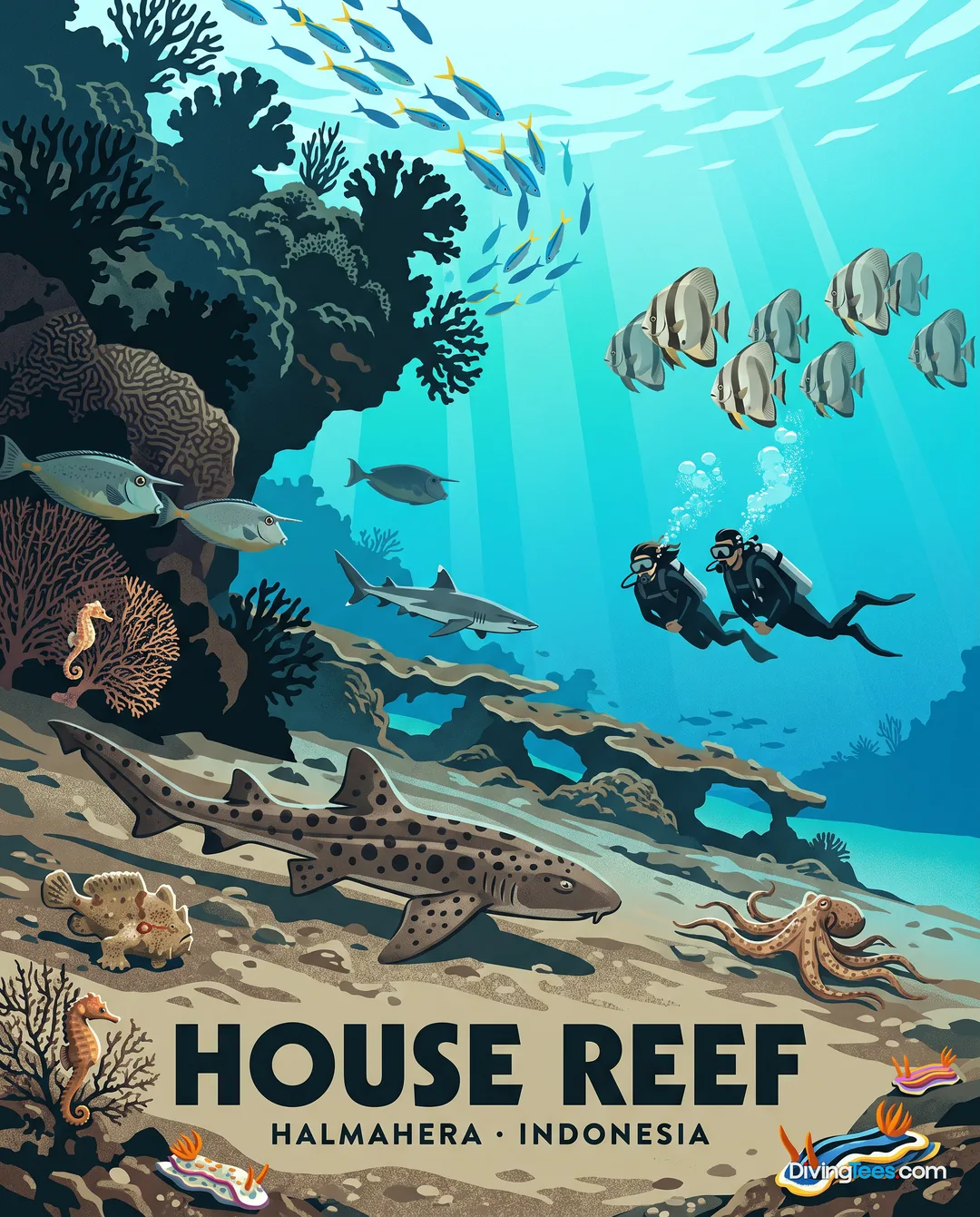
The route is the reason to choose this boat. Eight-day/seven-night trips run Ternate to Ternate through Ternate and central Halmahera, where Pulau Tifore brings submerged reefs, schooling barracuda and bigeye trevally, while Patintie Strait is used for drift dives among reef sharks, tunas and possible manta rays. The Goraici Islands add healthy reefs, walls and macro life. Ten-day/nine-night trips run Ambon–Banda–Ambon, combining Ambon Bay muck diving with the volcanic islands and remote walls of the Banda Sea; sites such as Nil Desperandum, Serua and Batu Kapal are reached only by liveaboard. Other recorded itineraries include a 14-day/13-night Ternate–Ambon crossing, Raja Ampat trips from November to April, and Sulawesi routes from Lembeh to Bunaken or Luwuk. House Reef in Halmahera offers a shore-entry reef with reef sharks, turtles and macro life, including pygmy seahorses and nudibranchs.
Itineraries, dates and prices
Prices per person. Each month shows its lowest price: click a month, or pick an itinerary.
Next departures · 23 departuresfrom £2,508$3,353€2,996
January 2027
February 2027
March 2027
April 2027
See dates and prices
If you click these links and make a purchase on the partner site, DivingDeal may earn a commission, at no extra cost to you.
Dates and prices taken from Divebooker and liveaboard.com, updated 20 October 2026
What you’ll meet underwater
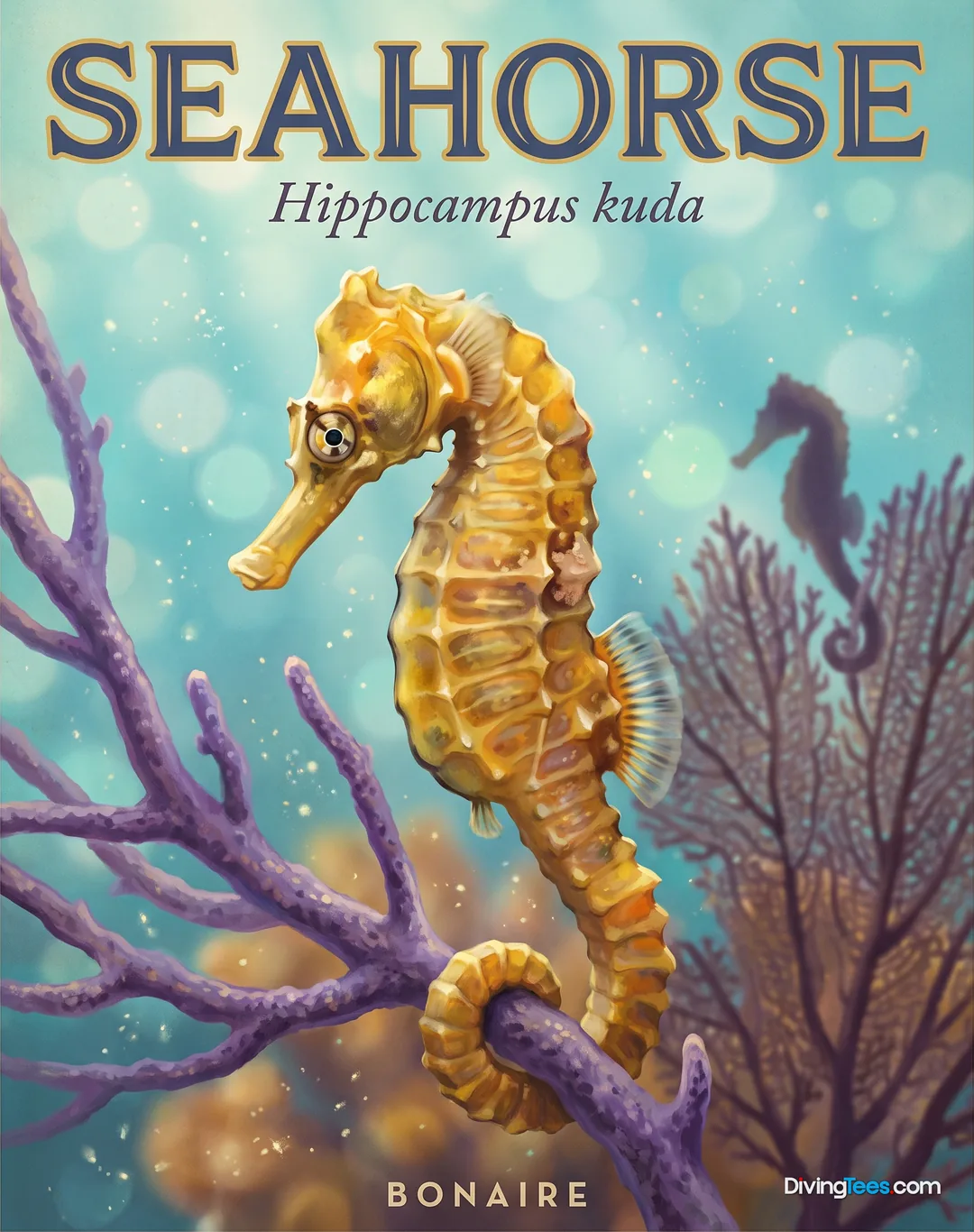
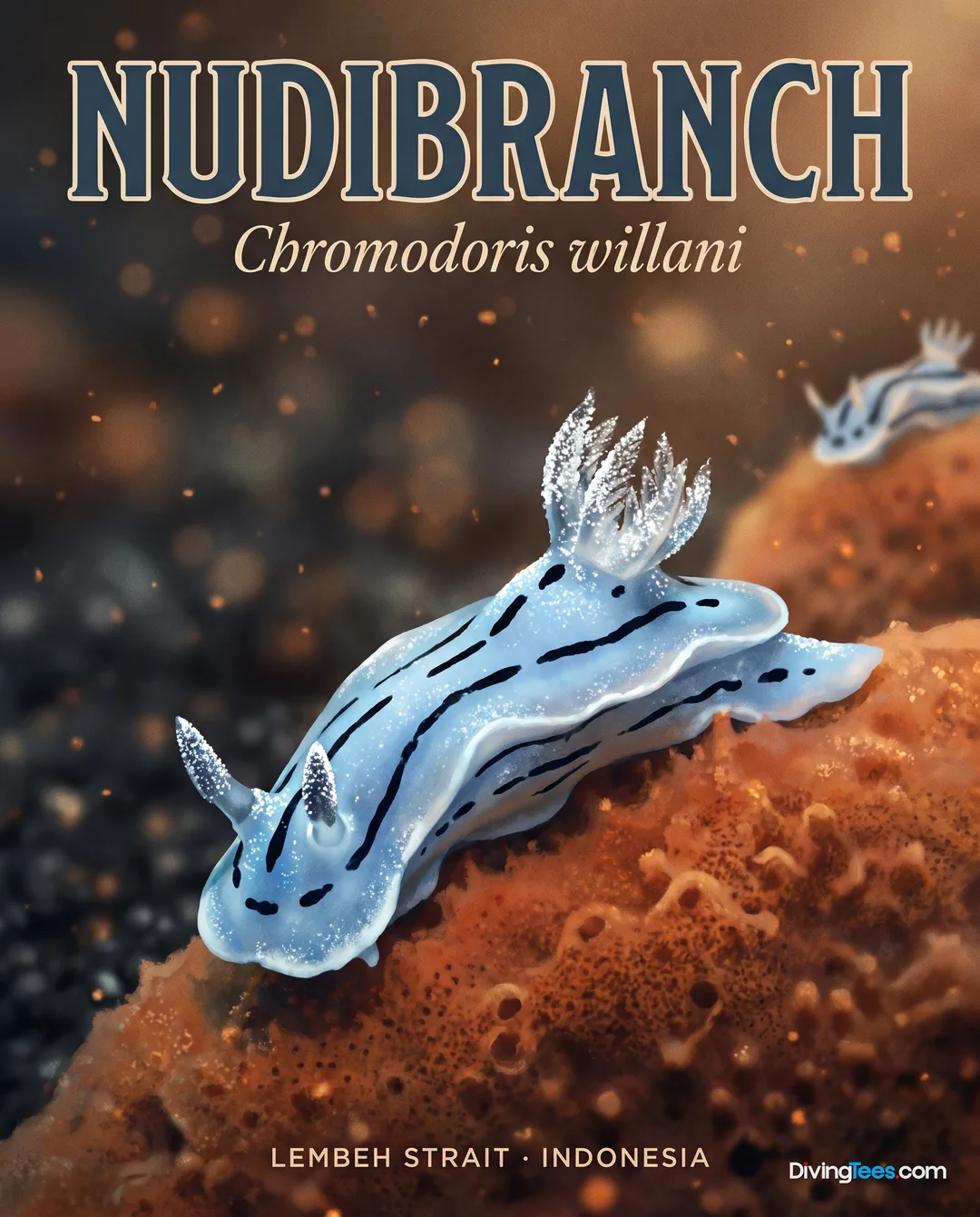
The animal life changes with the water you are exploring. Halmahera and North Maluku can put schooling barracuda, bigeye trevally, tunas, reef sharks and manta rays into the same itinerary, while healthy reefs support dense reef fish, soft corals and smaller creatures for careful searching. Ambon brings the muck-diving approach: black sand, slow finning and attention to nudibranchs, shrimps, unusual octopus and other small life. The Banda Sea shifts the scale again, with remote seamounts and walls where pelagic encounters are possible, including schooling hammerheads on the right expedition and conditions. House Reef is the site-specific hunt: reef sharks, turtles, sea snakes, crabs, shrimps, gobies, moray eels, nudibranchs, octopuses, ghost pipefish and pygmy seahorses are all recorded there. The point is not a checklist; it is having time to look properly.

Who puts you in the water
Dive groups are kept to a maximum of four guests per guide, giving briefings and water entry a manageable scale when a site is current-affected or spread across a wall. The team can work in English, French and Spanish, with Indonesian also spoken on board, and courses can be taught on Jelajahi Laut in English, French and Spanish. The boat is suited to a broad range of divers, but the Banda Sea expedition is recommended for Advanced Open Water divers with at least 50 logged dives because of its remote setting and possible strong currents. Guides brief the site and the conditions before each dive, then use the tenders to collect divers where they surface. Emergency oxygen, an AED, first-aid kits, life rafts, EPIRBs, radar, satellite communications and trained first-aid crew support the operation. A private guide can also be arranged as an optional extra.
The dive deck and the gear
The dive operation is built around a shaded working area, a proper platform and two tenders, each fitted with a 100hp four-stroke Yamaha outboard. Divers can gear up on the main boat and enter from the platform, or use the tenders when the site, current or surface position calls for it. The tank bank comprises 40 aluminium 11-litre tanks and four 15-litre tanks, with DIN and yoke-compatible fittings; sidemount diving is supported. Two Bauer compressors handle air, while a Renner membrane compressor produces nitrox. Nitrox is available as an optional extra rather than included in the standard package. Rental equipment is available. Photographers get a dedicated charging area and a separate camera rinse tank. Oxygen, first-aid kits and an AED are carried for emergencies.
Between dives
Between dives, the boat gives people several ways to come down from the water without forcing everyone into the same room. The shaded dive area is the practical centre after a dive, while the sun deck has loungers, cushions and beanbags for reading, drying gear or watching the islands pass. The air-conditioned living and dining rooms are there when the sun is too hard, with a library, fish-identification books, audio-visual entertainment and board games for the quieter stretches. Photographers have a dedicated charging area and separate camera rinse facilities, so wet equipment does not have to compete with dry personal gear. When there is no dive, the upper deck is the place to watch the boat work its way between volcanic islands. Stand-up paddleboards and land excursions add movement without turning the trip into a resort programme.
A day on board
A day begins with the dive operation rather than a hotel timetable: the compressor is working, tanks are checked, and the first briefing comes before the boat’s other business. The pattern then repeats with food, surface intervals, another briefing and another entry from the platform or a tender. On routes designed for serious exploration, three or four dives may fill the daylight, with a night dive included on the itinerary when conditions and the site allow it. Meals and snacks appear around the diving rather than interrupting it, and the gaps belong to showers, cameras, logbooks, naps and the upper deck. Some afternoons are spent underway between islands; others leave time for a shore excursion, a naturalist walk or a quiet stretch with no tank on the back. After the final dive, the boat settles into dinner and the next day’s plan.
What you eat aboard
Meals combine local Indonesian cooking with Western dishes and are prepared by the onboard chef. Full-board dining is included, with vegetarian and vegan choices, and snacks are available throughout the day alongside tea, coffee, drinking water and other non-alcoholic drinks. Beer and wine are available separately. The food has earned the strongest review score on the boat, which makes sense on a diving itinerary: meals are not an afterthought squeezed between briefings, but the reset point after coming back from the water. A local dish can carry the place more convincingly than any decoration, while the Western options give the galley room to handle a mixed group over a longer expedition. Some trips also include a beach barbecue, putting the evening meal ashore rather than at the dining table.
Nights at sea
The six cabins are air-conditioned, and all have hot water. Two sea-view cabins sit on the upper deck with double beds, private balconies and their own bathrooms; the deluxe cabins combine a double bed with a single bed, while the two standard cabins have twin beds and share a bathroom. The standard cabins are the practical choice, not the private retreat, because their bathroom is shared with the other standard cabin. The sea-view cabins change the feel of a night: a balcony, open water outside and somewhere to sit without climbing to the sun deck. Every cabin is non-smoking, and the boat has daily housekeeping, towels and toiletries. After a day of diving, the useful luxury is simple—air conditioning, a hot shower and a bunk away from the working deck. The layout suits couples and families as well as divers travelling alone.
Sea View Cabins
Deluxe Cabins
Standard Twin Cabins
What to know before boarding
Recorded departures include Ternate–Ternate, Ternate–Ambon and Ambon–Ambon, depending on the itinerary. Transfers can be arranged from the relevant airport or hotel, but they are optional rather than part of the standard trip. Arriving the night before is the sensible way to protect a liveaboard departure from flight delays and give the crew time to get everyone aboard.
What the boat does for the ocean
Mikumba runs Jelajahi Laut under the Green Fins Code of Conduct and provides environmental training for staff. The boat uses eco-friendly soaps, shampoos and cleaning products, offers reef-safe sunscreen and supports refillable drinking water rather than relying only on single-use bottles. The operator also takes part in TrashHero beach clean-ups, runs marine-awareness sessions in local schools and supports a local PADI Divemaster programme. These actions sit alongside the diving, not in place of it: they reduce daily waste and give local crew a route into professional dive work.
- Year built
- 2021
- Length
- 32 m
- Beam
- 7 m
- Maximum number of passengers
- 12
- Number of cabins
- 6
- Number of bathrooms
- 6
- Engines
- 500 hp Yanmar marine engine
- Cruising speed
- 7 knots
- Tenders
- 2
- Website
- mikumbadiving.com ↗
Hello, I'm Marina, DivingDeal.com's AI assistant. I answer in detail about hotels, dive centres and liveaboards.
Thinking about the whole trip and the flights? Talk it over with Edith →
Marina is an AI. Some links are affiliate links: DivingDeal may earn a commission, at no extra cost to you. Bookings are made with the partner.