Liveaboards · Indonesia
Ondina — a traditional Indonesian phinisi built around diving
What makes this boat unique
- Traditional wooden phinisi construction from South Sulawesi gives Ondina a strong local identity.
- The boat carries up to 16 guests in air-conditioned cabins with private bathrooms.
- Diving is supported by a shaded dive area, two Yamaha 40hp tenders, DIN adapters and a separate camera rinse tank.
- Nitrox is available as an optional extra.
- The kitchen combines Asian and Western dishes, with vegetarian and vegan choices.
For subtitles in English: start the video firstthen click the gearat the top right of the video, select “Subtitles/CC”, then “Auto-translate” and choose “English”.
The invitation
Ondina is for divers who want Indonesia's remote islands from a working wooden phinisi rather than a polished hotel boat. Built in South Sulawesi by Bugis seafarers, she keeps the character of a traditional vessel while providing the practical comforts that matter after repeated dives: air-conditioned cabins, private bathrooms, shaded working space and tenders for reaching the sites. The routes run from Sorong through Raja Ampat, Cenderawasih, the northern Banda Sea, Triton Bay and Halmahera. That range is the reason to choose her: one boat opens access to several of Indonesia's most remote diving regions, with a local and international crew on board.
Boarding
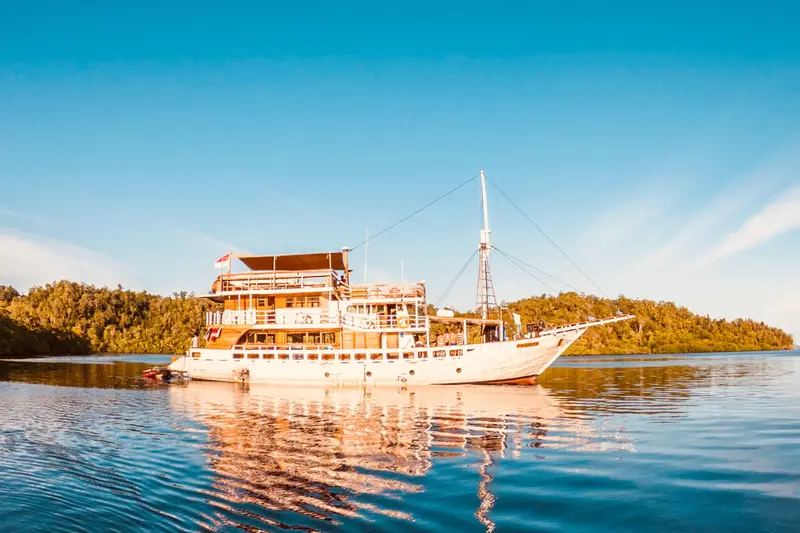
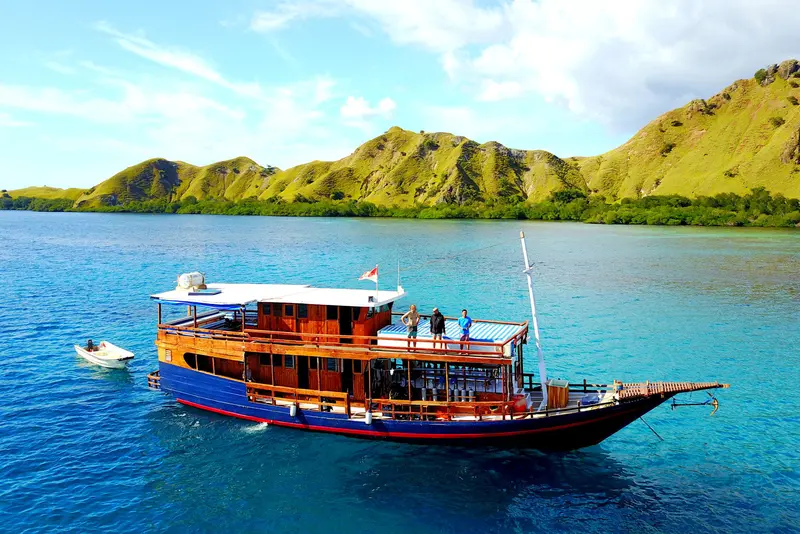
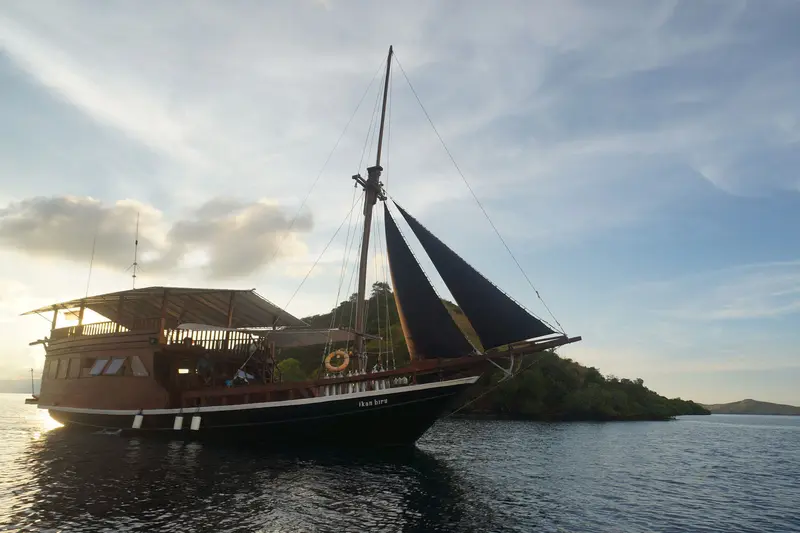
Ondina arrives with the unmistakable shape and feel of a traditional Indonesian phinisi. The wooden hull was built in South Sulawesi by Bugis craftsmen, using tropical woods and traditional methods, then renovated in 2013. It is not a new-build yacht designed to hide its working character; the appeal is in the wood, the open deck areas and the sense of a vessel made for long passages between islands. Inside, the layout is practical rather than extravagant, with an air-conditioned salon, an outdoor dining area, a terrace and an observation deck. The boat was designed for divers, so movement between the living spaces and the dive operation remains straightforward.
The atmosphere on board
Ondina's atmosphere comes from the balance between a traditional local boat and a crew drawn from Indonesia and abroad. English, French, Spanish and Indonesian are spoken, so briefings and ordinary conversation can move easily between guests from different countries. The crew-to-passenger ratio is close to one-to-one, which is felt most clearly in the practical parts of the day: moving equipment, launching from the tenders and keeping the living spaces running. In the evening, people gather in the salon, at the bar or outside for dinner. The boat's strongest reputation is not its luxury; it is the combination of attentive crew work and very well-regarded food.
Who puts you in the water
The crew speaks English, French, Spanish and Indonesian, and Ondina has been operating Indonesian liveaboard routes since 2001. That makes the boat suitable for beginners as well as advanced divers, photographers and video divers. Guides work with the tenders and dive platform, while the crew-to-passenger ratio stays close to one-to-one. Private guiding is available as an option, and scuba-diving and nitrox certifications can be arranged separately.
The dive deck and the gear
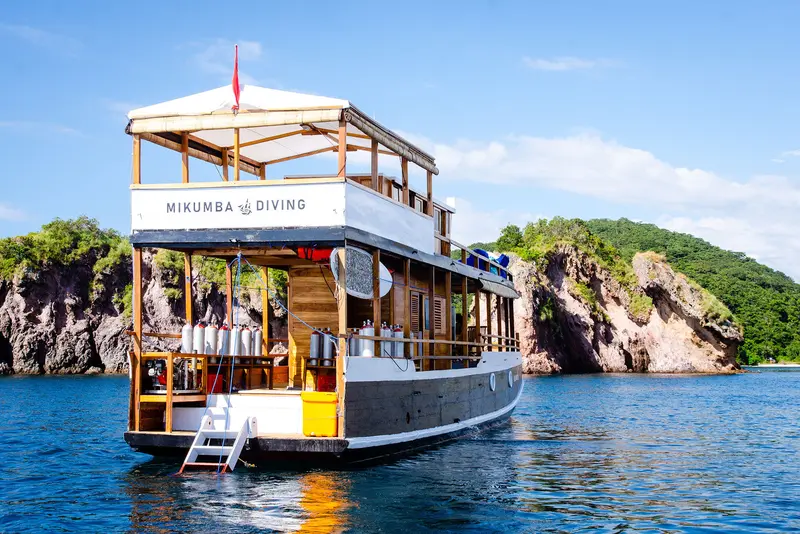
The dive operation is built for repeated entries rather than a decorative dive platform. There is a shaded dive area, a dedicated platform, rinse tanks and two Yamaha 40hp tenders to take divers to and from the sites. Divers can use DIN adapters, and sidemount diving is supported. Nitrox is available as an optional extra, while rental equipment and extra dives can also be arranged separately. Photographers get a dedicated camera rinse area and charging stations, useful on a route where cameras stay busy between dives. Oxygen and first-aid kits are carried on board, and the boat has the navigation and communications equipment expected for remote Indonesian waters, including radar, sonar, GPS and VHF/DSC/SSB radio.
Between dives
Between dives, the shaded dive area and outdoor spaces give the day somewhere to settle. The observation deck and terrace are the natural places to watch the islands pass, while the air-conditioned salon offers relief when the sun is strong. Photographers have a dedicated working area, charging stations and a separate camera rinse. A library, audio and video entertainment, a bar and optional massage cover the quieter hours without turning the boat into a resort. Non-divers are welcome, including snorkellers, and can join land excursions or use the snorkelling equipment.
A day on board
A day on Ondina is organised around the diving rather than around a sightseeing timetable. A briefing comes before the entry, and the tenders carry divers out to the sites before returning them to the platform. Meals and snacks break up the time between dives, while the shaded deck, salon and observation areas give cameras and bodies time to dry. When the boat moves between islands, the journey becomes part of the day: watch the coast, work on photographs, read or stay outside. The exact number and timing of dives depend on the route and conditions, but the structure remains clear—briefing, water, recovery, food, rest, then the next decision about getting wet.
What you eat aboard
Meals are one of Ondina's strongest points. The kitchen moves between local Indonesian dishes and Western food, served as buffet or à la carte meals, with vegetarian and vegan options available. Snacks are offered throughout the day, which matters when dives divide the day into small, hungry intervals. Meals can be taken outdoors, and a beach barbecue is part of the experience rather than an afterthought. Non-alcoholic drinks, tea, coffee and drinking water are included; beer, wine, cocktails and other alcoholic drinks are separate. The food suits a mixed group without flattening the Indonesian setting into generic liveaboard fare.
Nights at sea
The cabins are on the lower deck, each with air conditioning, a porthole and a private bathroom with hot water. The two forward cabins use twin single bunks; the other cabins combine a double bed with an upper single bunk, making them useful for couples, friends or family groups. Senior and junior cabin categories are available. Nights are simple and private rather than spacious in the resort sense: close the cabin door, run the air conditioning and let the boat's wooden structure remind you that you are at sea. Cabins are non-smoking, and daily housekeeping keeps the space manageable through a week of wet gear and repeated dives.
Senior Cabins
Junior Cabins
What to know before boarding
Ondina is based in Sorong and operates routes from there through several Indonesian regions. Airport and hotel transfers are included. Arriving in Sorong the night before the cruise is sensible, leaving room for flight delays before boarding.
Deck plan
Itineraries, dates and prices
Prices per person. Each month shows its lowest price: click a month, or pick an itinerary.
Next departures · 13 departuresfrom £2,746$3,671€3,280
January 2027
June 2027
August 2027
October 2027
November 2027
See dates and prices
If you click these links and make a purchase on the partner site, DivingDeal may earn a commission, at no extra cost to you.
Dates and prices taken from Divebooker and liveaboard.com, updated 25 October 2026
Hello, I'm Marina, DivingDeal.com's AI assistant. I answer in detail about hotels, dive centres and liveaboards.
Thinking about the whole trip and the flights? Talk it over with Edith →
Marina is an AI. Some links are affiliate links: DivingDeal may earn a commission, at no extra cost to you. Bookings are made with the partner.