
Tarzan-Diving
Google 4.9/5 (424 reviews)
Raja Ampat · Indonesia · Asia
Max. depth · 33 mDescend into the waters of Raja Ampat to discover the surprisingly intact fuselage of a P-47 Thunderbolt, a rare find on the seabed.
Diving the P-47 Plane Wreck in Raja Ampat means immersing yourself in a piece of wartime history that remains remarkably undisturbed. As you make your descent, the form of the aircraft gradually materialises from the blue, a P-47 Thunderbolt fighter plane that came to rest on a gentle, coral-covered slope. Unlike many wrecks in the region, this one is not merely scattered debris, but a substantial, identifiable structure that draws you in.
The plane sits upright, beginning its journey into the depths at 26 metres and extending down to 33 metres. Approaching the wreck, you'll find the airframe itself is a canvas for marine growth, particularly a profusion of soft corals that drape and cling to every available surface. It’s a testament to the persistent vitality of Raja Ampat's waters, transforming a relic of human conflict into a thriving, new ecosystem.
As you explore the dimensions of the P-47, tracing its wings and fuselage, you gain a sense of its original form, a rare intact example of a wartime aircraft. The currents, though not specified as strong for this particular site, are a constant presence in Raja Ampat, often guiding the growth of these dense soft coral formations. You'll want to take your time to appreciate the structural integrity and the vibrant, organic additions that now define this underwater monument.
Beyond the wreck itself, the dive continues as you ascend the immaculate coral slope where the plane rests. This provides an extended opportunity to observe the vibrant soft corals that characterise the area. The ambient light filters down, playing across the intricate textures of the corals, creating a vivid backdrop to the wreck dive experience, ensuring the dive delivers visual interest well beyond the plane itself.
The transition from exploring the P-47 to drifting along the surrounding coral slope is seamless, allowing for a natural progression into your safety stop. It’s a dive profile designed to maximise your time at depth with the wreck, then gradually ascend through a rich, healthy reef environment. This careful planning ensures that the P-47 Plane Wreck isn't just about the history, but also about the ongoing natural beauty of Raja Ampat's underwater world.
This site is designed for Advanced divers, with the P-47 Plane Wreck resting between a minimum depth of 26 metres and a maximum of 33 metres. Currents at Raja Ampat sites can be variable, ranging from gentle to strong and unpredictable depending on the tides. Visibility tends to be excellent, though strong plankton concentrations can tint the water, often a sign of abundant pelagic life.
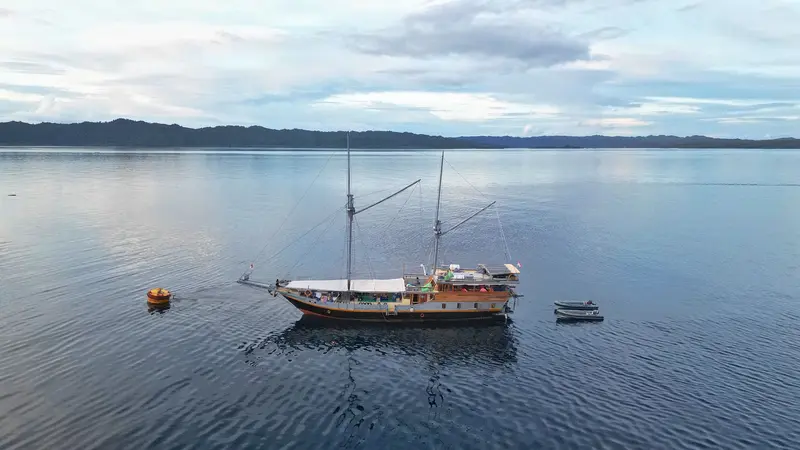
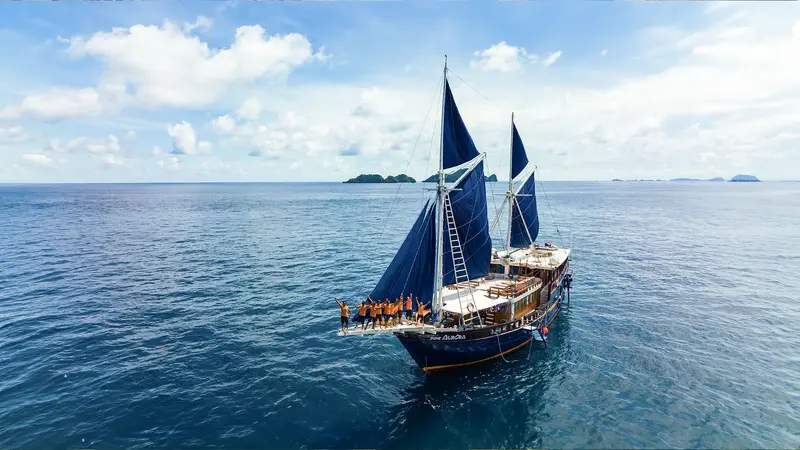
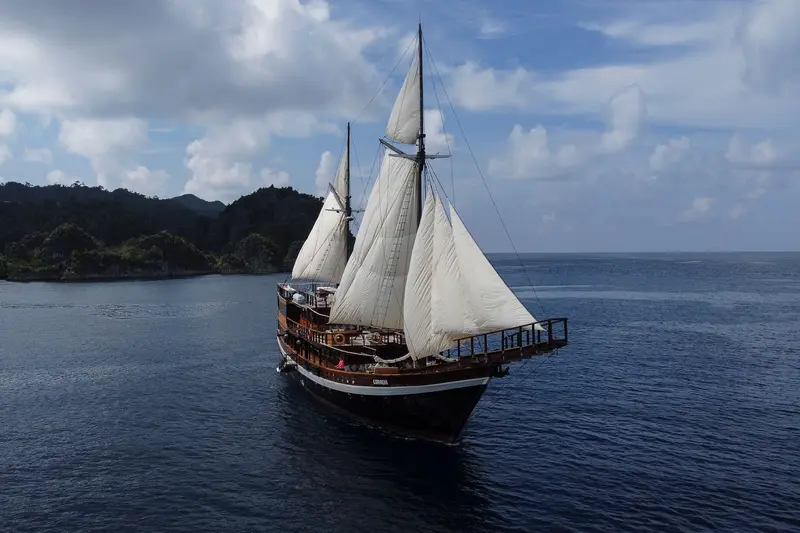
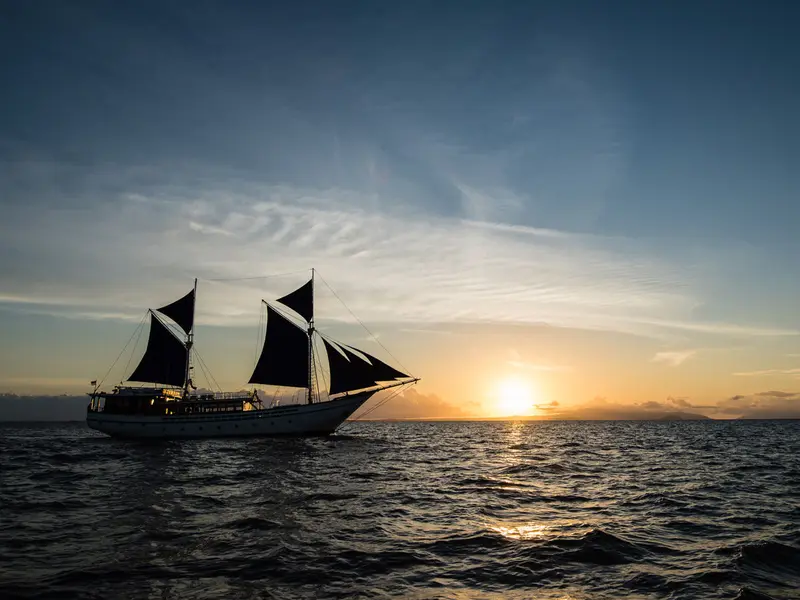
31 liveaboards depart from Raja Ampat another way to explore the region, over several days at sea.
At the P-47 Plane Wreck, visibility tends to be excellent, although strong plankton concentrations can tint the water. These conditions can indicate abundant pelagic life nearby. Currents vary with the tides, ranging from gentle to strong and unpredictable, so you should be prepared for changing water movement during the dive.
The P-47 Plane Wreck is designed for Advanced divers. The aircraft rests at significant depth, while Raja Ampat currents can vary from gentle to strong and unpredictable depending on the tides. You should be comfortable managing these conditions while exploring the wreck and ascending along the surrounding coral slope.
The P-47 Plane Wreck rests between 26 and 33 metres. The upright aircraft begins at 26 metres and extends down to 33 metres on a gentle, coral-covered slope. Your dive can focus on the intact airframe, including its wings and fuselage, before continuing upward along the slope.
You can explore an intact WWII P-47 Thunderbolt fighter plane covered in abundant soft corals, then follow the gentle coral slope during your ascent. Currents may be gentle, strong, or unpredictable according to the tides. Plankton-rich water can tint visibility and may accompany abundant pelagic life.