Liveaboards · Indonesia
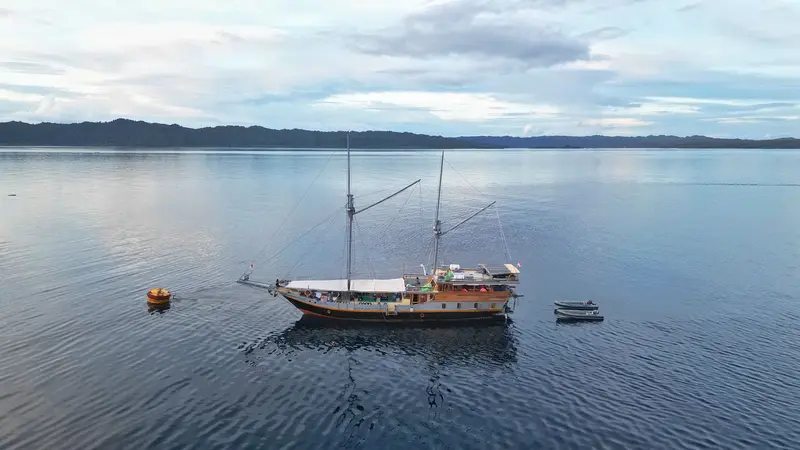
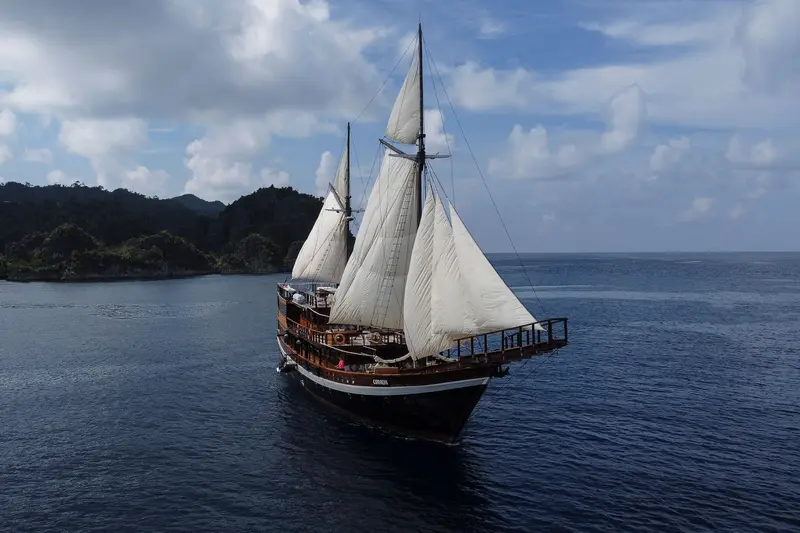
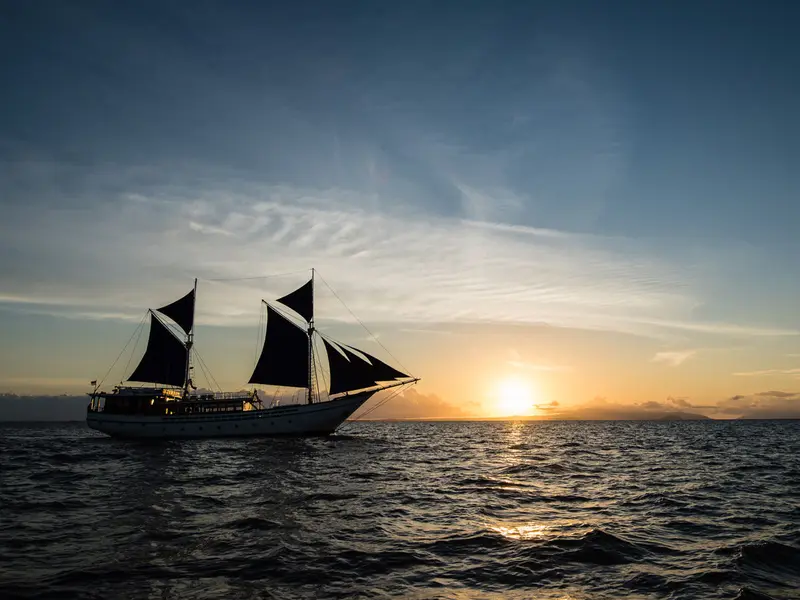
Dune Aurora — a traditional phinisi built around serious diving
What makes this boat unique
- This 42-metre traditional Sulawesi-built phinisi carries up to 18 guests in nine en-suite, air-conditioned cabins.
- The dive operation uses two six-metre fiber tenders and one 4.65-metre RIB, with nitrox included for certified divers.
- The route reaches Raja Ampat, Kaimana, the Banda Sea and other eastern Indonesian destinations.
- Vegetarian, vegan and gluten-free menus are available alongside local and international dishes.
- The boat has separate camera rinsing, charging stations, sidemount support and DIN adapters.
For subtitles in English: start the video firstthen click the gearat the top right of the video, select “Subtitles/CC”, then “Auto-translate” and choose “English”.
The invitation
Dune Aurora is for divers who choose a traditional Indonesian phinisi because the boat itself belongs to the region, then use it to reach reefs that are difficult to fold into a land-based itinerary. The reason to board is the combination: manta cleaning stations in Raja Ampat, current-fed reefs in Kaimana, dense schooling fish and serious macro sites, all linked by a boat designed first as a diving platform. It is not a minimalist expedition boat, nor a modern floating hotel. The appeal lies in having a proper dive operation, generous equipment space and a crew close in number to the guests, while the hull carries you through eastern Indonesia. Come for the sites, but expect the character of a working phinisi around them.
Boarding
Dune Aurora arrives as an authentic traditional phinisi built in Sulawesi, with the proportions and presence of a vessel made for the Indonesian archipelago rather than a generic cruise ship. Built in 2007 and renovated in 2010, it combines that traditional identity with an air-conditioned salon, a dedicated dive deck, charging stations and a separate camera rinse area. Boarding leads from the main deck into a boat arranged around diving and open-air time: equipment stays close to the water, while the upper spaces give room to look out across the islands. The feel is more maritime than polished-resort, but the operation is set up for up to 18 divers without turning the deck into a queue.
The atmosphere on board
The atmosphere is helped by scale: 18 guests and a crew-passenger ratio close to one-to-one make it possible for the crew to remain part of the daily diving routine rather than appear only at meals. English, French, Chinese, Spanish and Indonesian are spoken on board. Guests describe a dive deck with enough room to set up and keep accessories close, and cabins that feel spacious rather than squeezed into leftover hull space. The boat itself scores slightly below the crew, food and diving, which suggests an older working vessel rather than a flawless new build. The return is practical comfort, strong food and people who remain visible through the day. Evenings are suited to eating outside, talking through the last dive and watching the route continue around the hull.
The sites you’ll dive
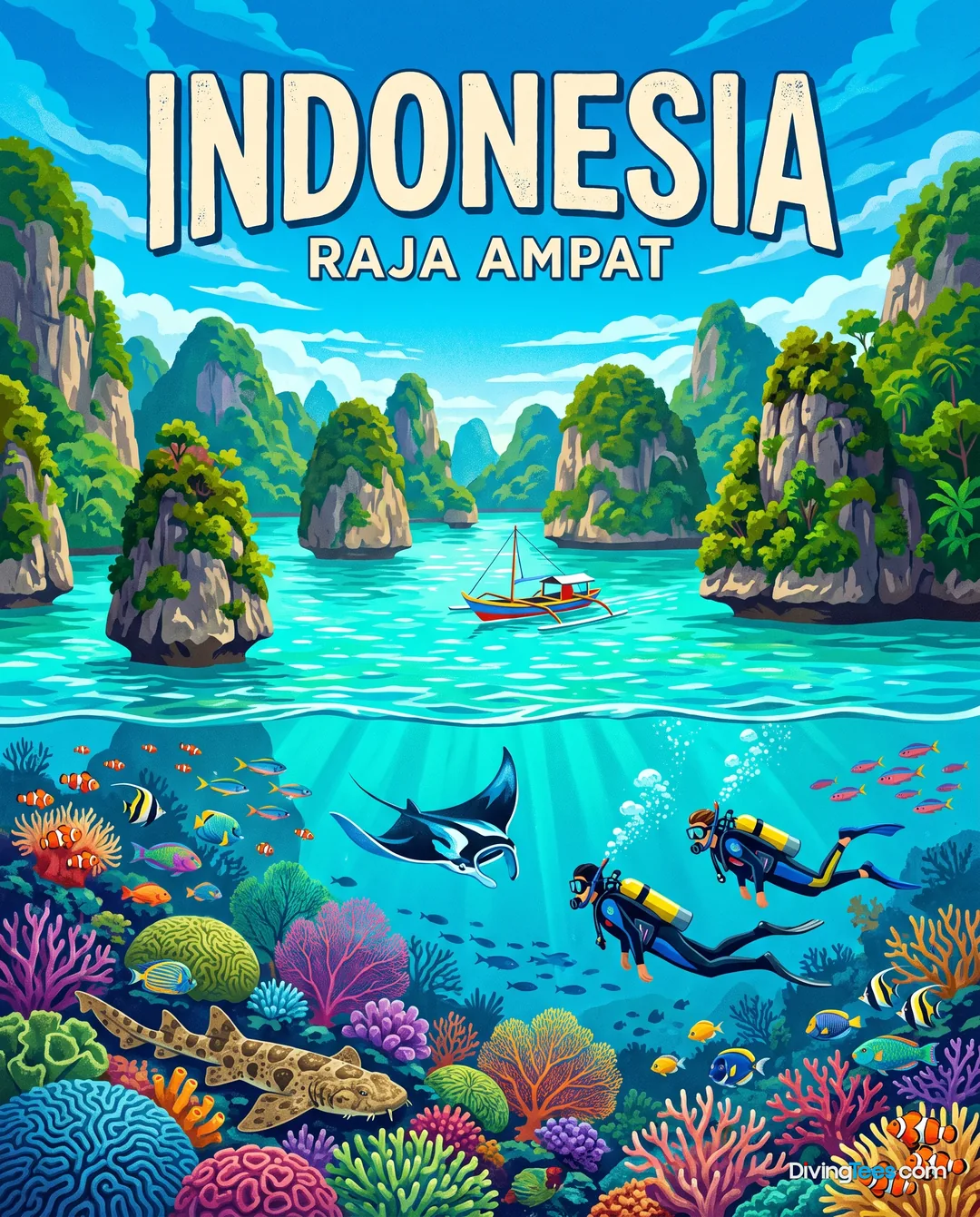
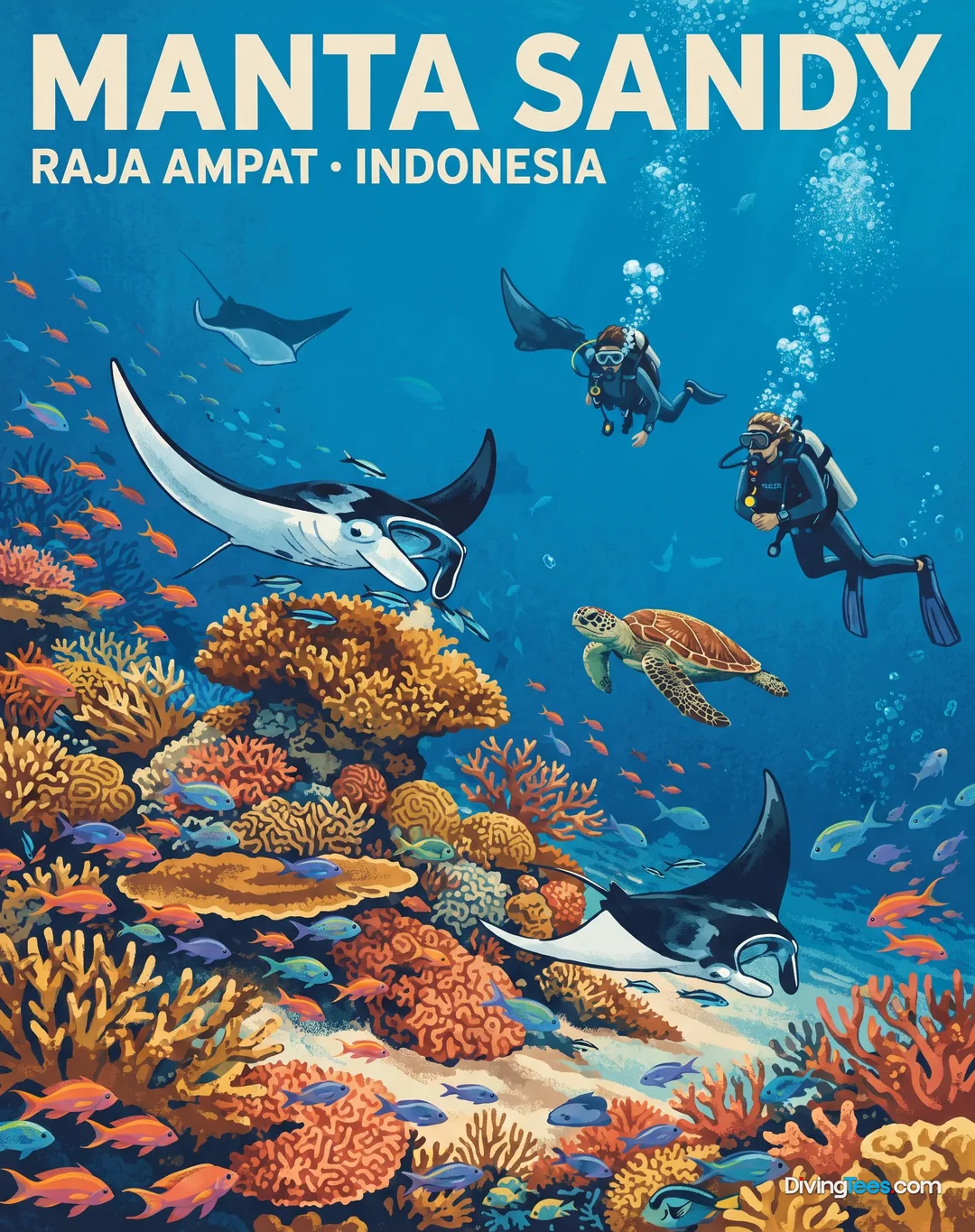
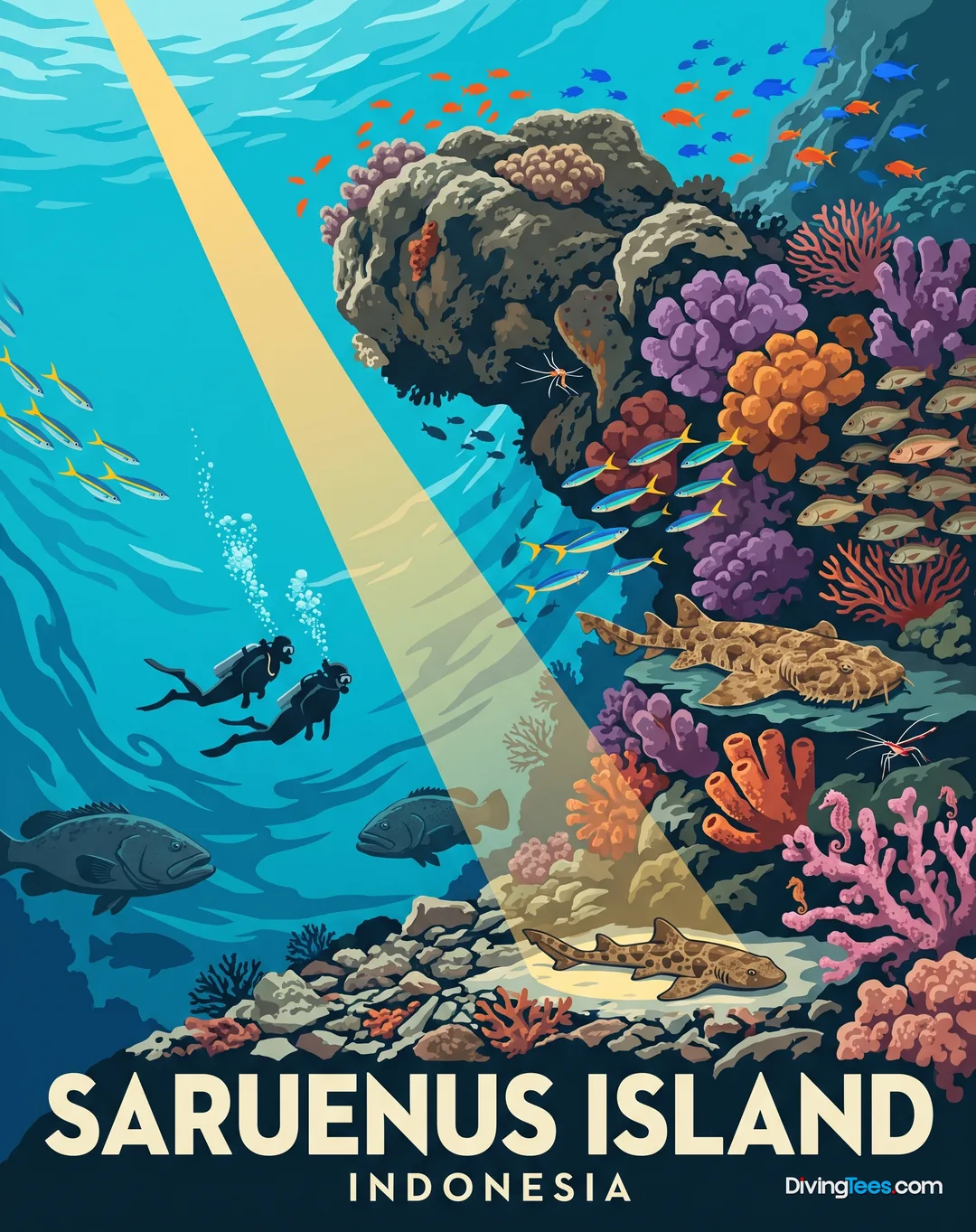
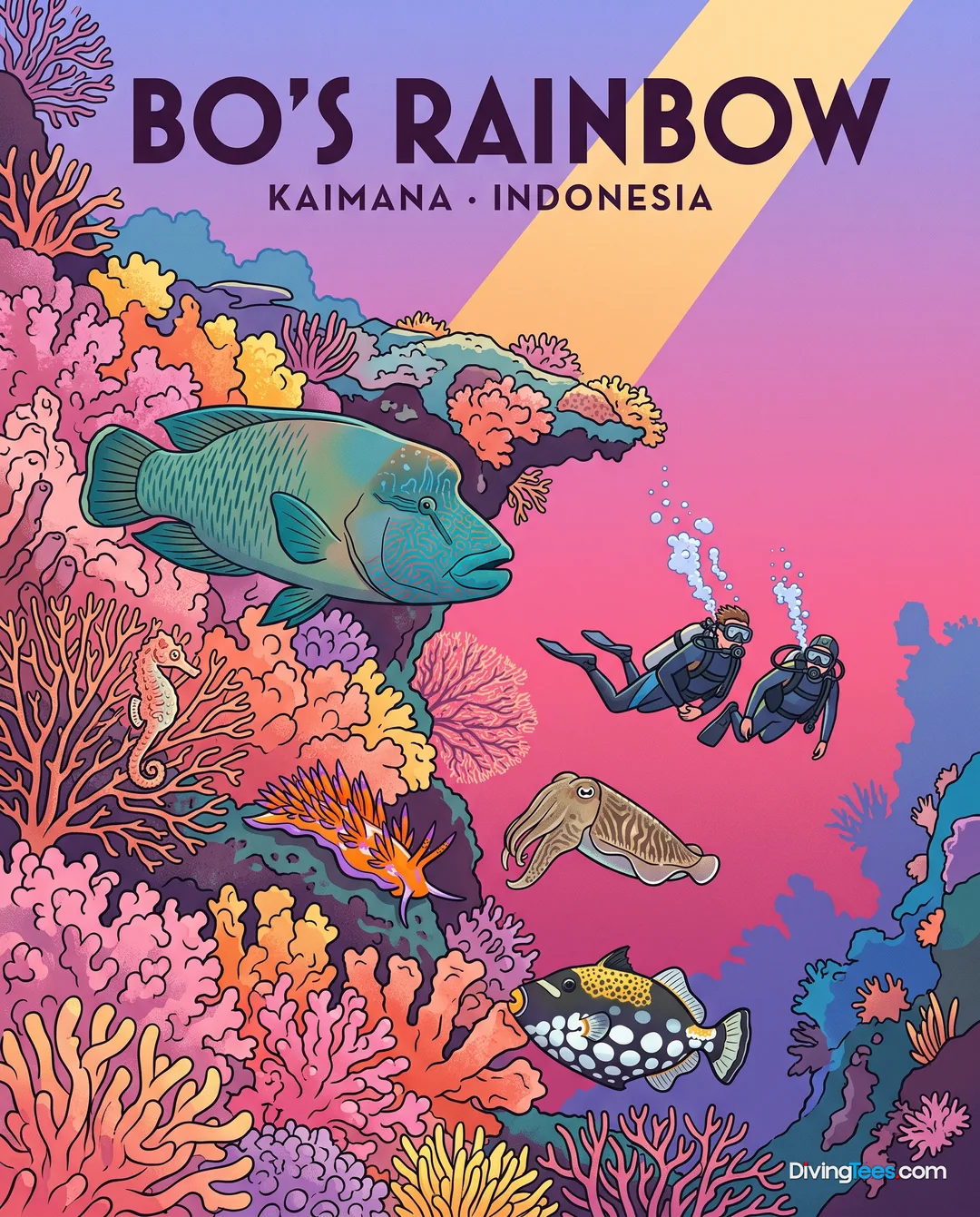
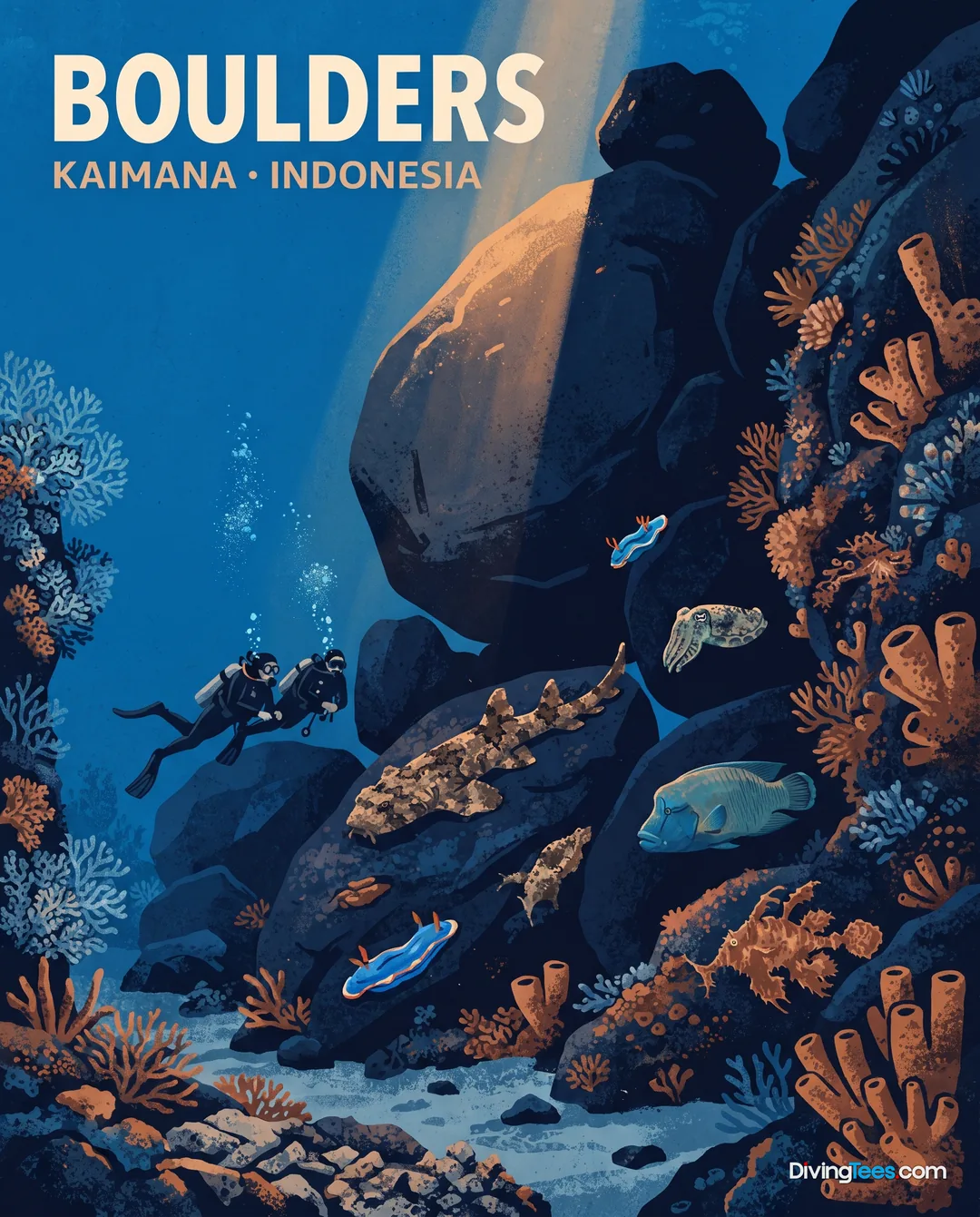
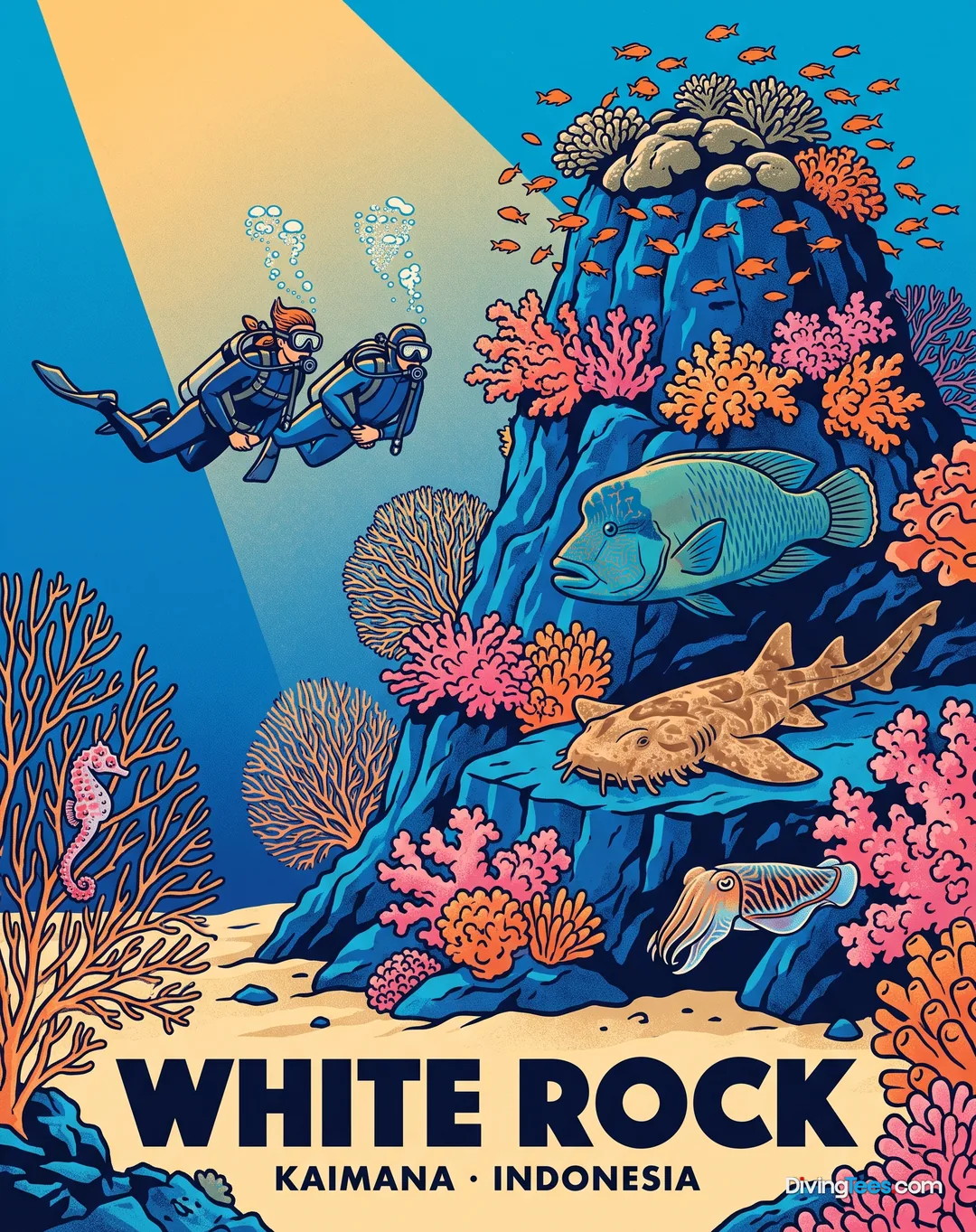
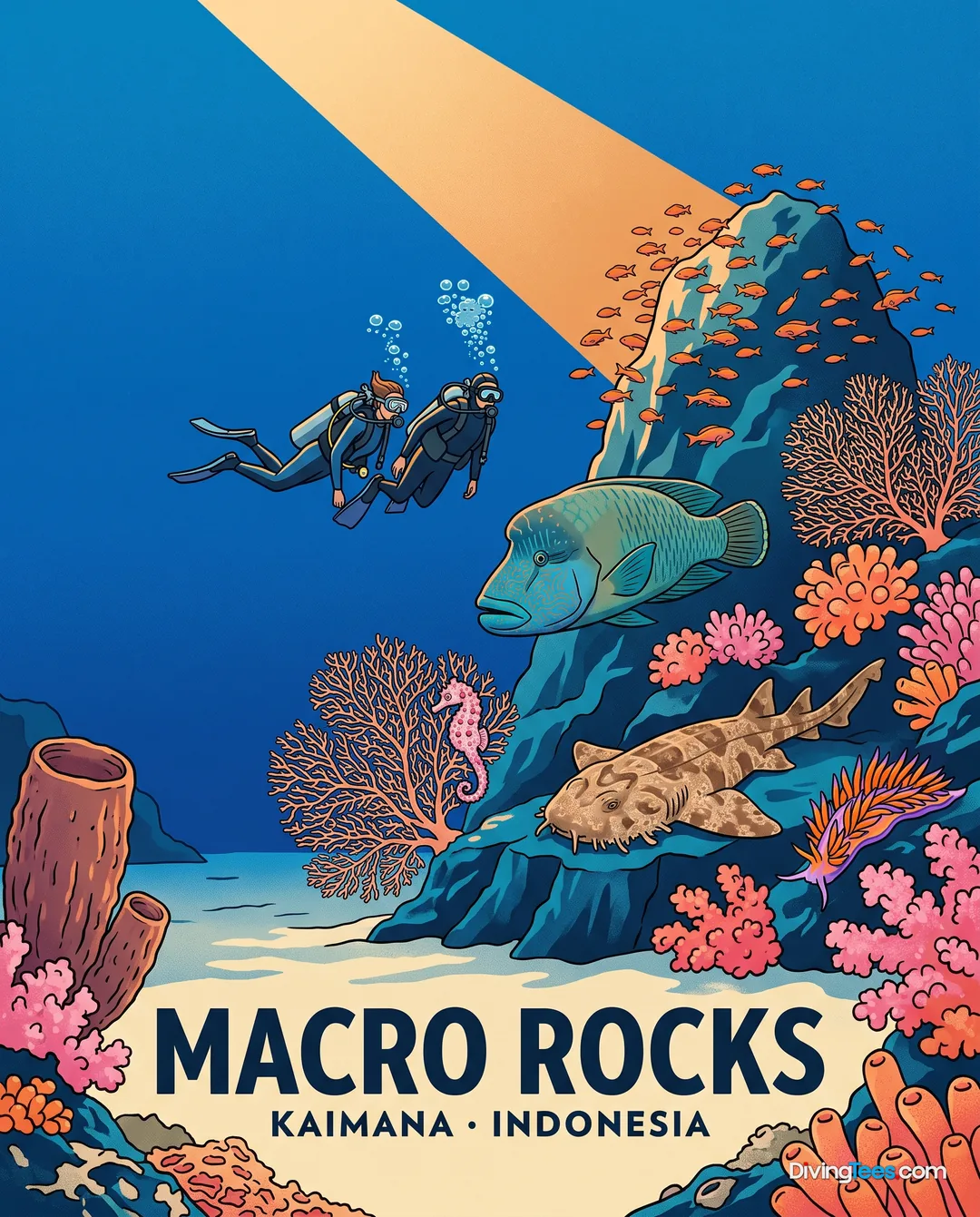
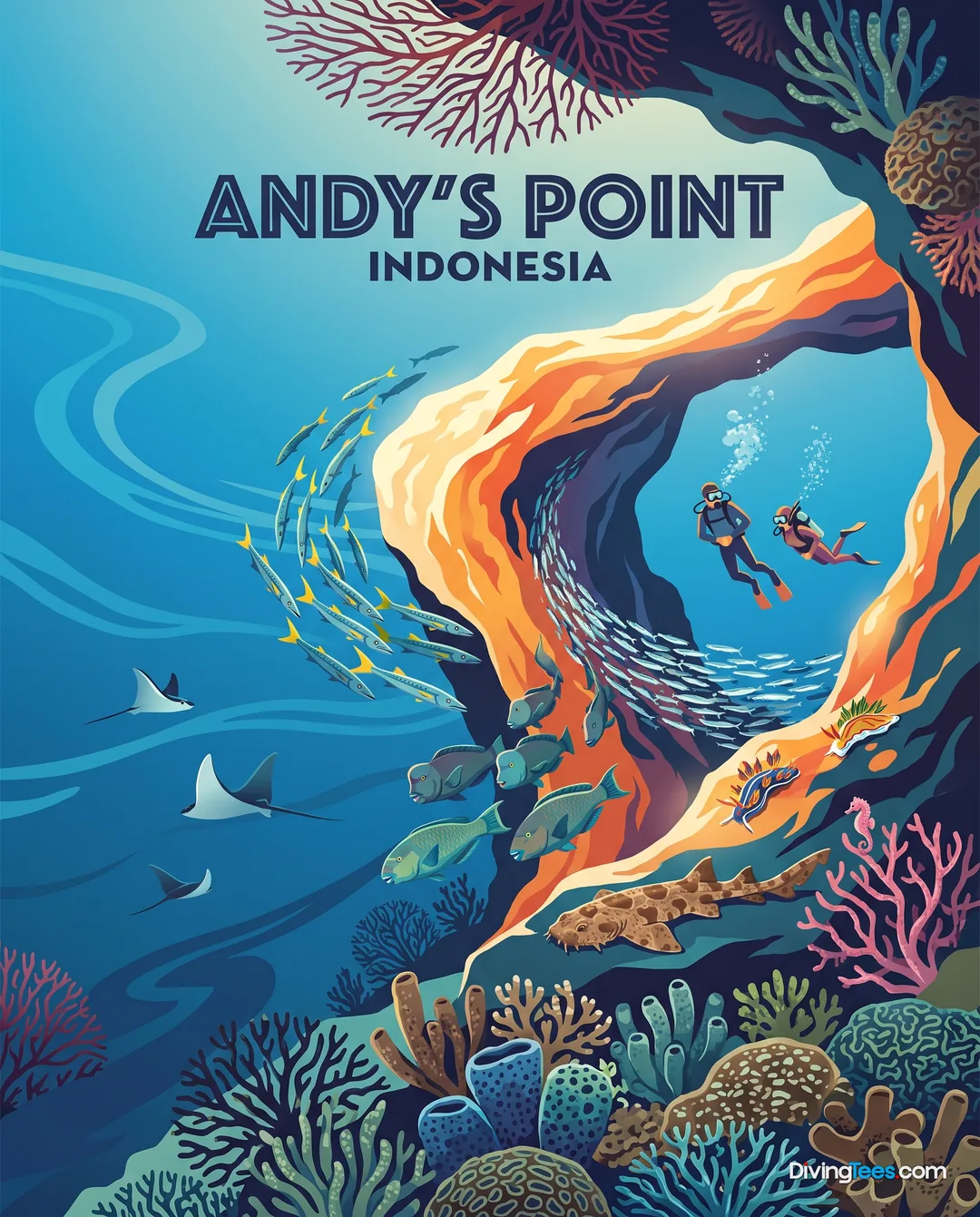
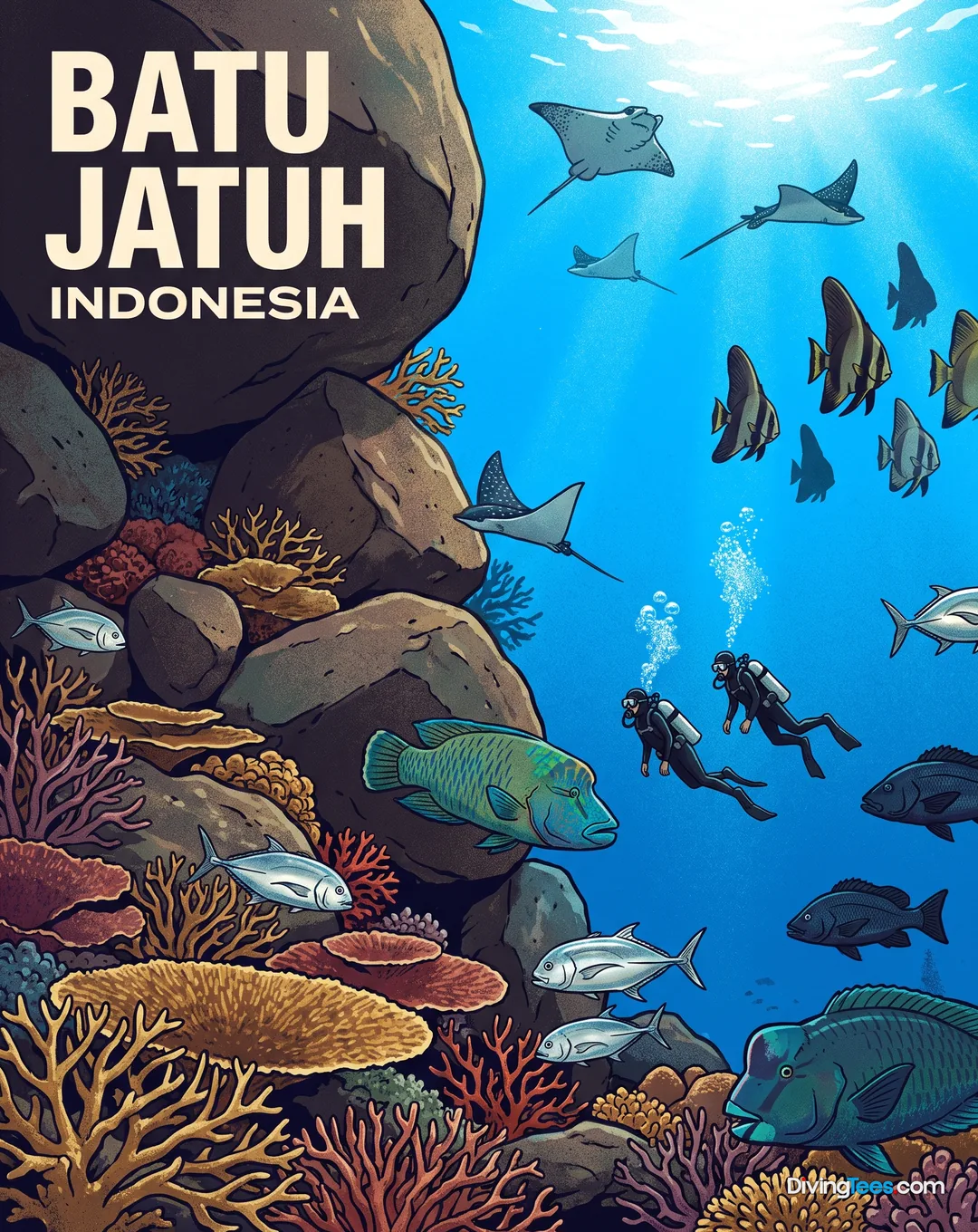
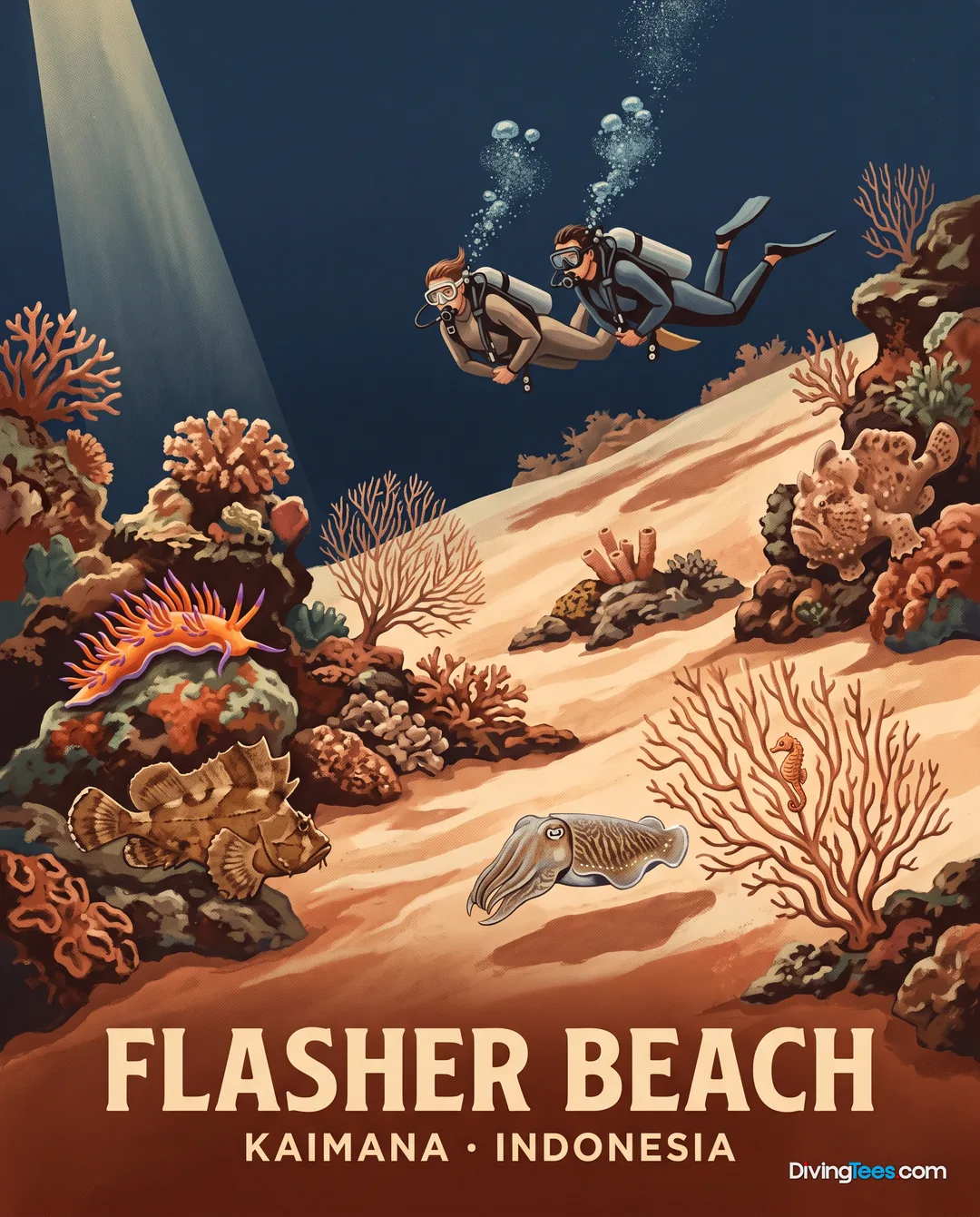
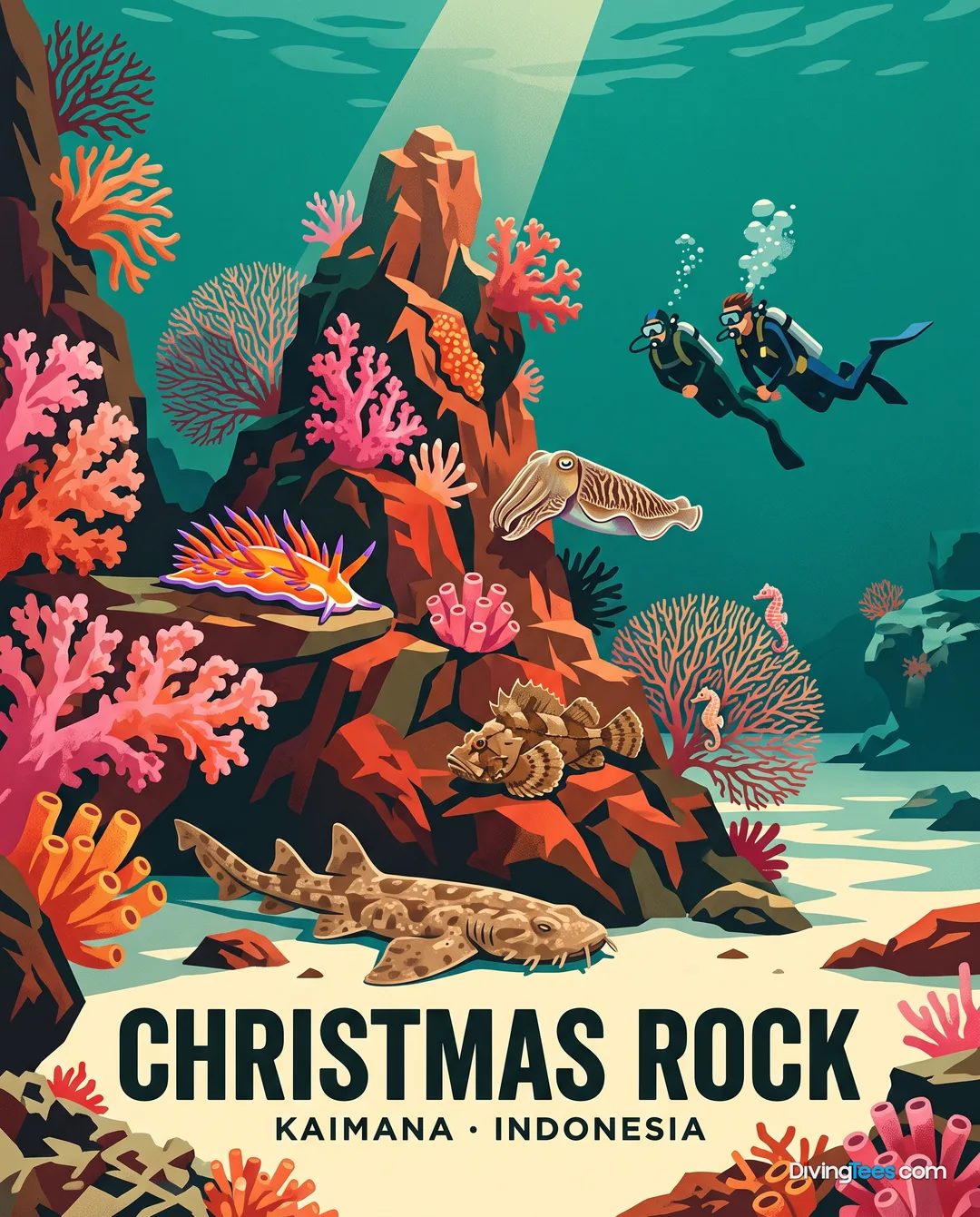
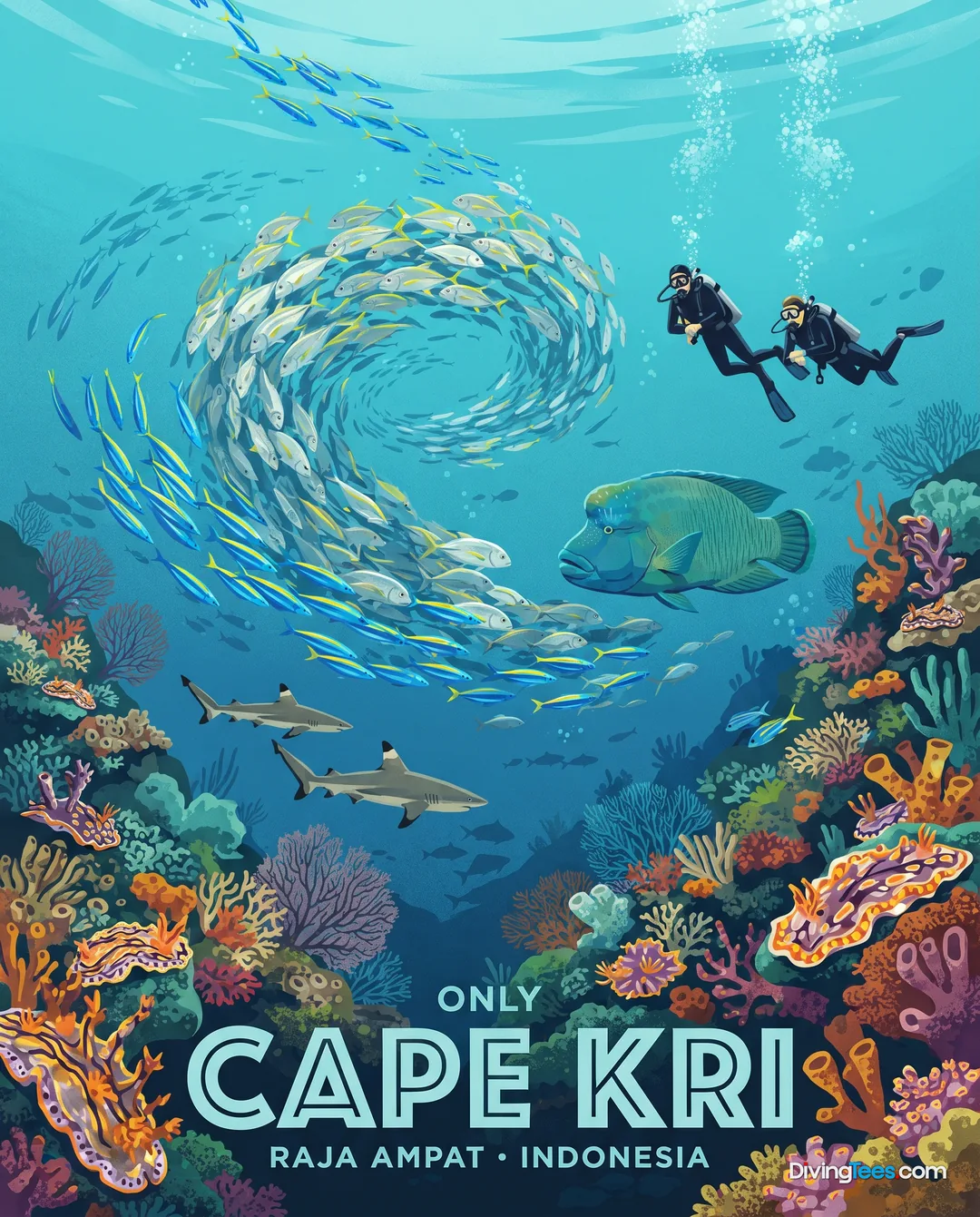
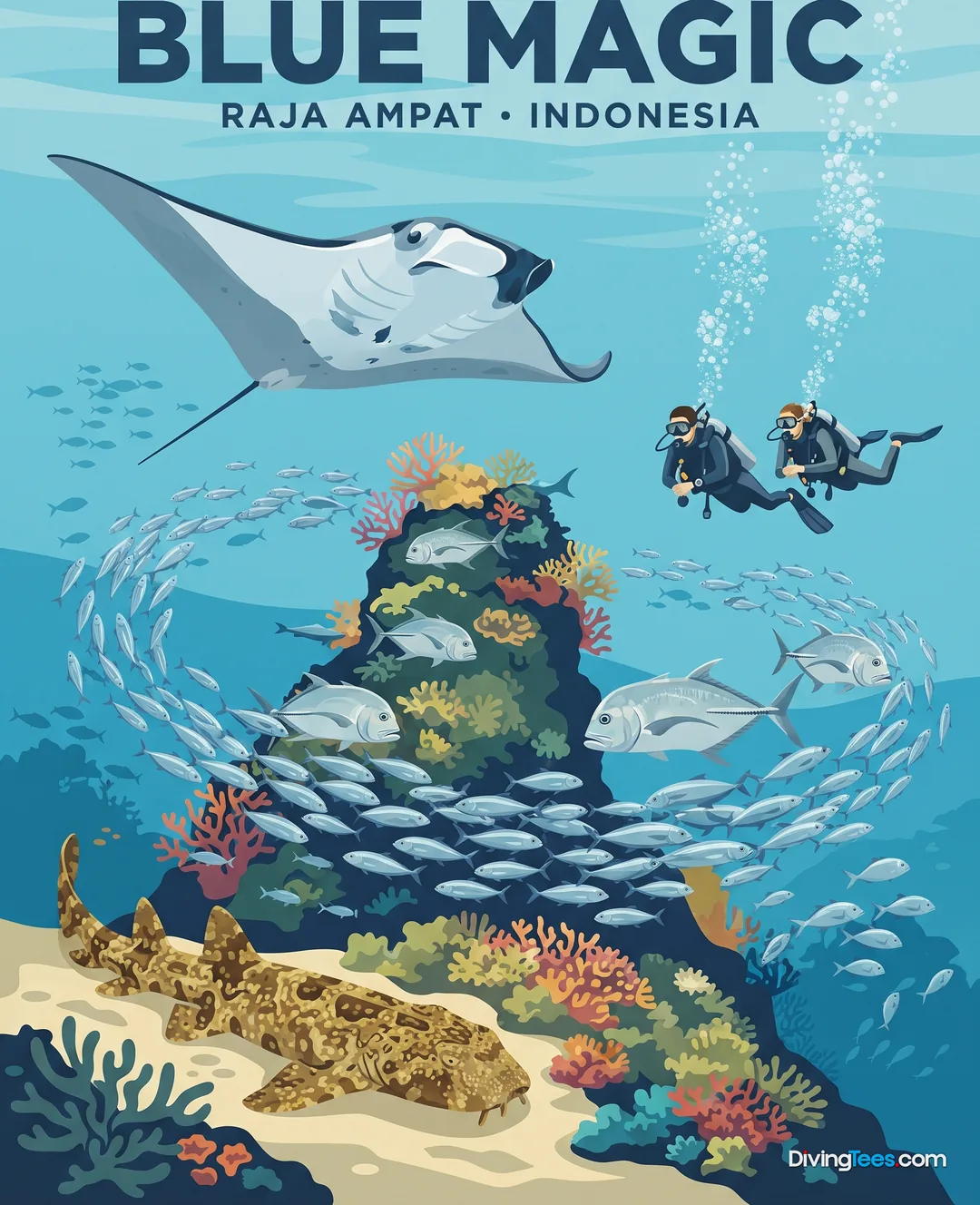
The route moves between Raja Ampat and Kaimana, with departures also covering the Banda Sea and longer crossings between Sorong, Ambon, Kaimana and Manokwari. At Manta Sandy, reef mantas hover over cleaning stations, a site that works for snorkelers as well as divers. Mike’s Point combines reef overhangs full of soft corals and sweetlips with a flat plateau where eagle rays may pass; the maximum depth is -40m. In Kaimana, Saruenus Island is a current-driven drift over soft-coral gardens, while Bo’s Rainbow drops among coral-covered boulders and sandy slopes to -16m. White Rock reaches -14m and is known for macro life, including frogfish; Macro Rocks slopes onto white sand at -20m. Andy’s Point brings strong current and barracuda schools. Batu Jatuh builds its hard-coral gardens around fallen rocks and may bring mobulas, eagle rays or mantas. Flasher Beach reaches -20m, Boulders is shaped by huge sea-fan-covered rocks, and Christmas Rock reaches -18m. Back in Raja Ampat, Cape Kri is known for exceptional fish density, Melissa’s Garden reaches -35m, and Blue Magic brings schooling fish and possible oceanic mantas. Trips range from 7 days/6 nights to 13 days/12 nights, with 10-day/9-night and 12-day/11-night options also listed.
Itineraries, dates and prices
Prices per person. Each month shows its lowest price: click a month, or pick an itinerary.
Next departures · 16 departuresfrom £2,305$3,081€2,753
November 2026
December 2026
April 2027
June 2027
See dates and prices
If you click these links and make a purchase on the partner site, DivingDeal may earn a commission, at no extra cost to you.
Dates and prices taken from Divebooker and liveaboard.com, updated 19 October 2026
What you’ll meet underwater
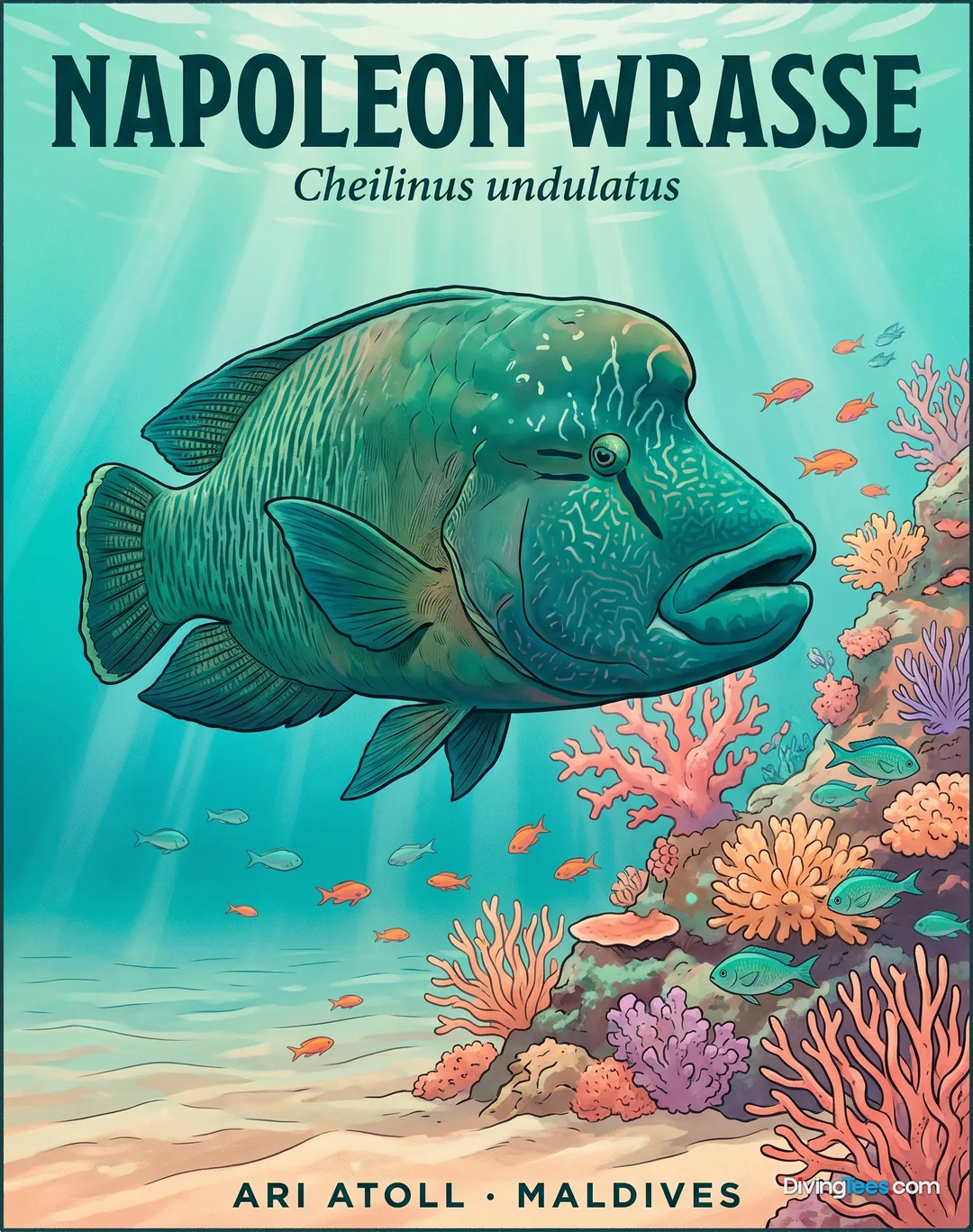
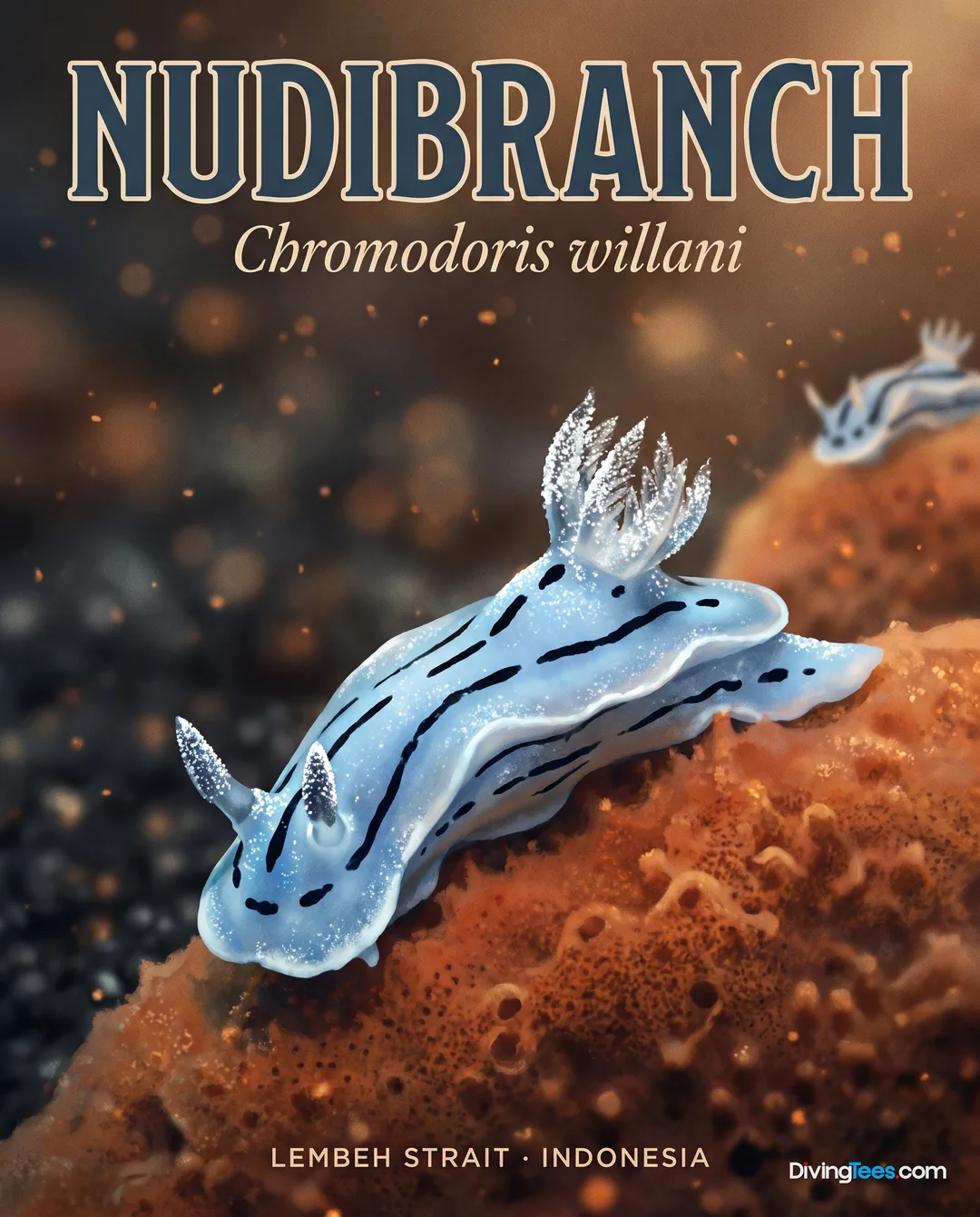
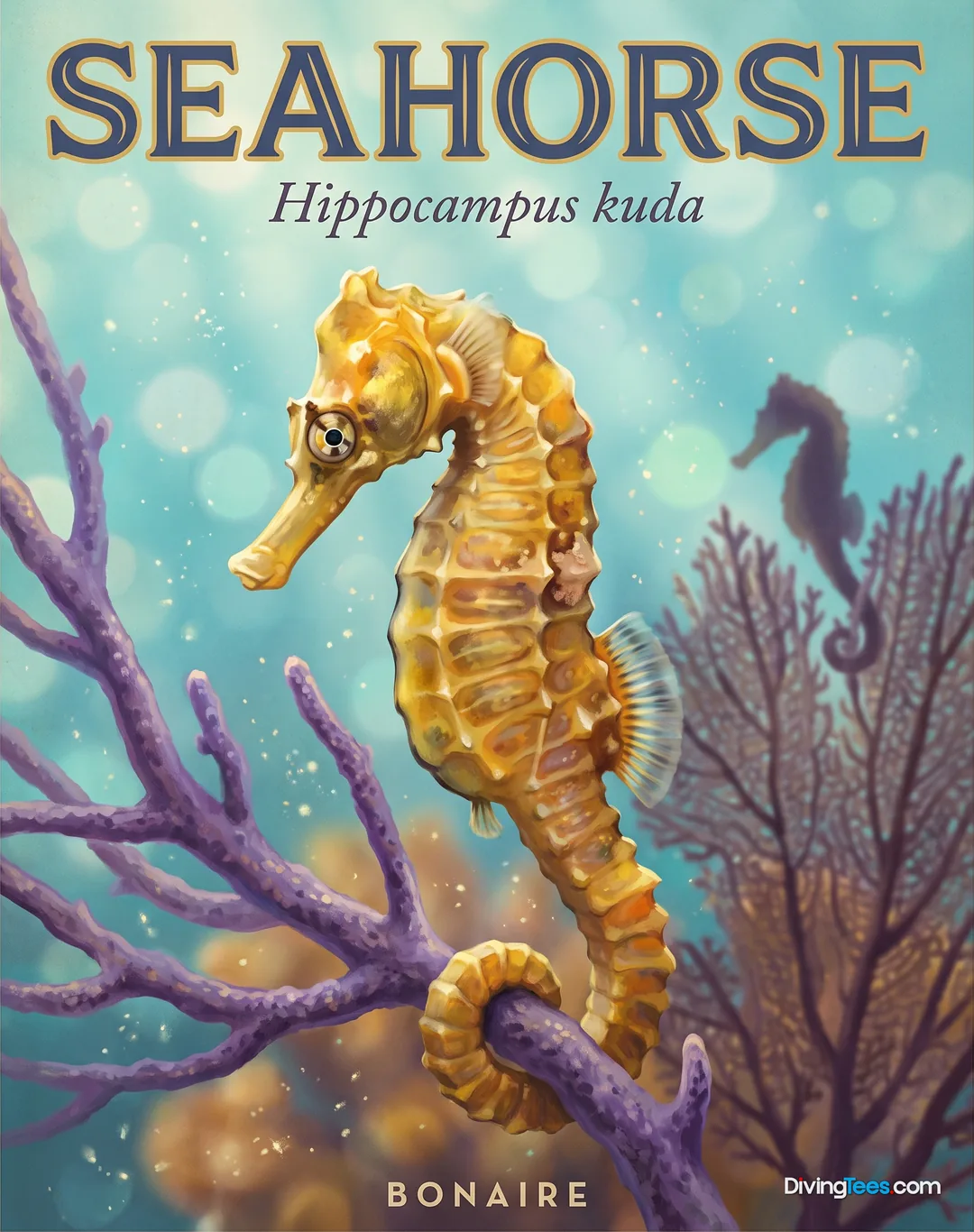
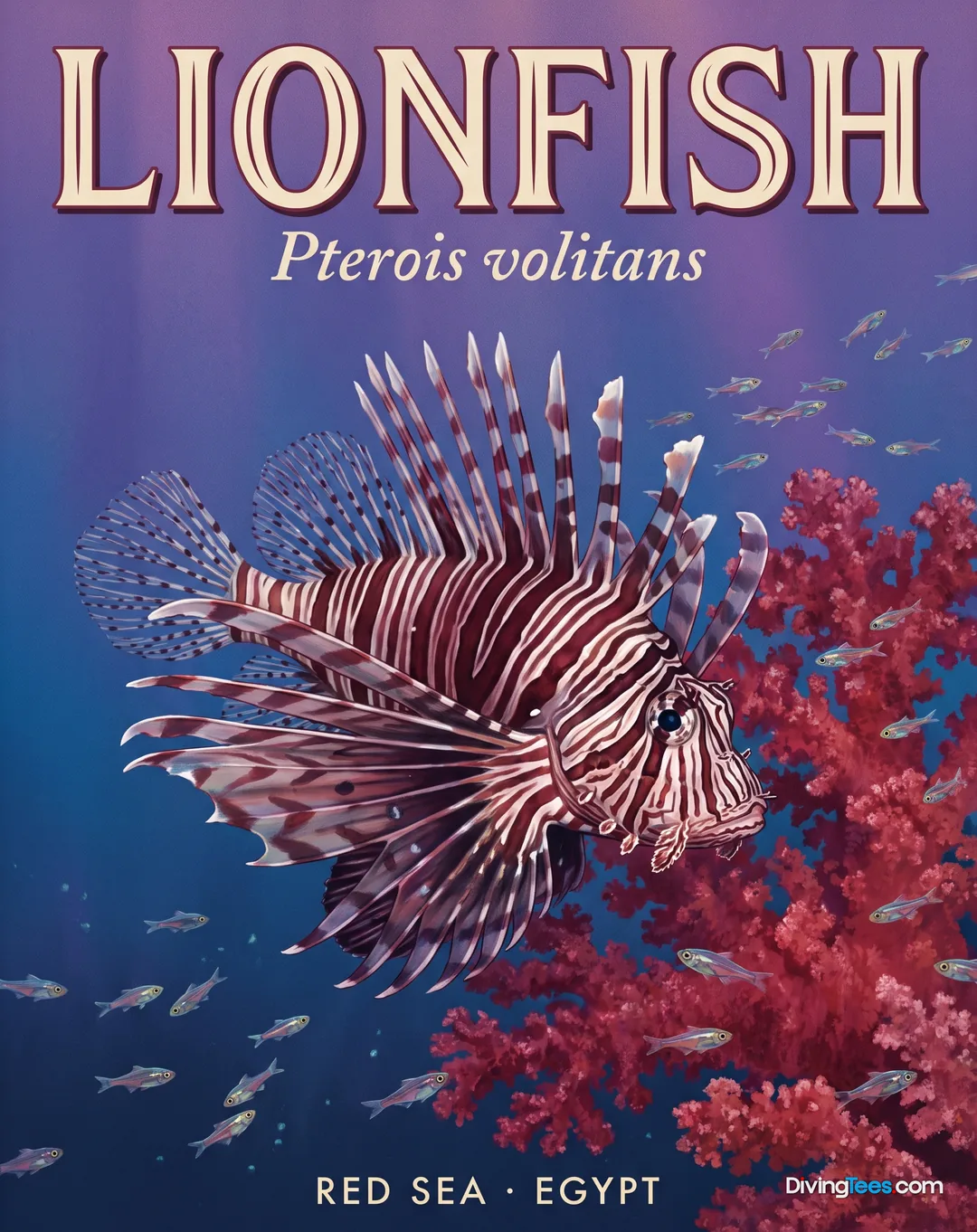
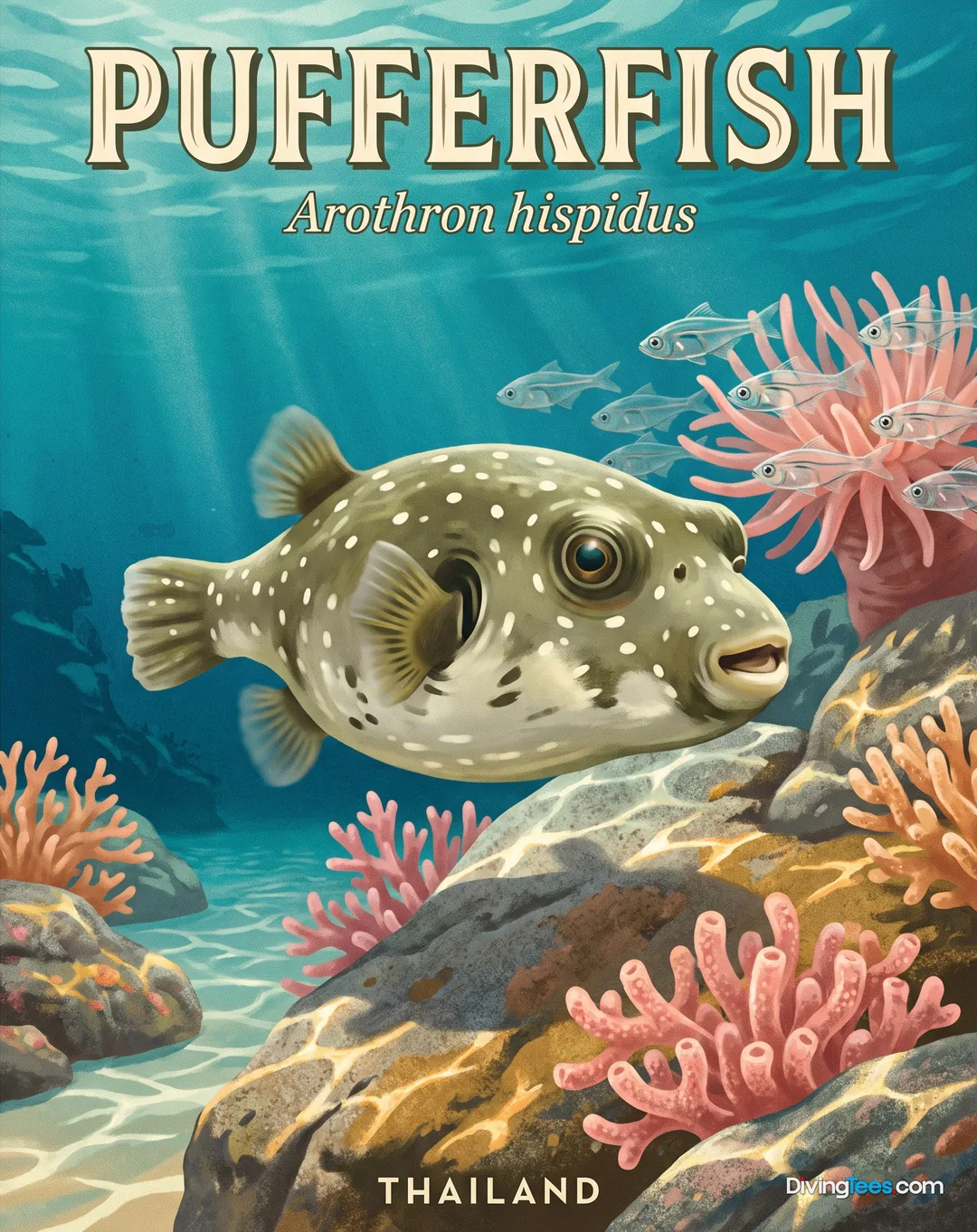
The broad spectacle is a reef full of movement rather than one signature animal: fusiliers, snappers, groupers, sweetlips, humphead parrotfish, Napoleon wrasse, trevallies, nudibranchs and pygmy seahorses recur across several sites. Mantas are part of the route’s central promise, but the encounter has a setting: at Manta Sandy, reef mantas use cleaning stations, while Blue Magic is known for schooling fish and regular encounters with oceanic mantas. Cape Kri is the place for reef life at its densest, including white-tip reef sharks and a recorded 374 fish species on one dive. Blue Magic is the only named site on this route associated with oceanic sharks, tuna and dogtooth tuna. Saruenus Island can turn up castagnoles in its strong current; Boulders is the site for glassfish, moray eels, lionfish and pufferfish; Batu Jatuh is where batfish are recorded; and White Rock is the specific stop for frogfish. At Flasher Beach, the late-afternoon light matters because several flasher wrasse species display there, including the endemic P. Nursalim.
Who puts you in the water
The dive team works with a multilingual crew speaking English, French, Chinese, Spanish and Indonesian. The boat carries oxygen, first-aid kits, fire alarms and extinguishers, life rafts, VHF/DSC/SSB radio, GPS, radar, sonar and an emergency position-indicating beacon. Briefings and group organisation are handled around the site and conditions. The strongest practical point is the support close to the water: dedicated tenders, a full dive platform and crew trained in first aid.
The dive deck and the gear
The dive deck is built for repeated use, with space to assemble equipment and store accessories instead of having every item underfoot. Nitrox is included for certified divers, and DIN adapters are available. The operation supports sidemount diving and can accommodate rebreathers on request; rental equipment is available as an optional extra. Cameras have their own rinse tank, separate from the general equipment rinse, and the platform connects directly to the tenders. Two six-metre fiberboats, each with a 40-horsepower Yamaha engine, handle the main diver transfers, while a 4.65-metre RIB with a 40-horsepower Yamaha engine covers other operations. Divers return to the tender after surfacing and are brought back to the platform, rather than having to swim a long distance to the boat.
Between dives
Between dives, the boat gives you several different places to disappear for a while. The air-conditioned indoor salon is useful when the heat catches up, while the terrace and observation deck open the trip back to the islands and passing water. The bar, library and audio-video entertainment cover the slower stretches without forcing anyone into a group activity. Photographers have a dedicated space and separate camera rinse facilities; kayaks and stand-up paddleboards are available when the boat is stopped. An afternoon without a dive can therefore be spent under cover, on the sun deck, or in the water above the reef rather than inside the cabin.
A day on board
A day follows the needs of the diving rather than a hotel timetable. The first briefing comes before the first entry, followed by the boat’s support through the dive, tender transfer and return to the platform. Food appears between those water sessions, with snacks available when a full meal is too much and lunch or dinner giving the day its longer pause. During crossings, the dive deck clears and the boat’s upper spaces become the place to dry off, work on photographs or watch the islands pass. When the next briefing approaches, equipment is checked and assembled again. That flexibility is useful in Raja Ampat and Kaimana, where currents and animal encounters are part of the reason to move between sites.
What you eat aboard
Meals are served as full board, with buffet and à la carte formats, local and Western cooking, snacks through the day and the option of dining outside. The menu is built for a mixed group: vegan, vegetarian and gluten-free dishes are available, alongside a broad variety of portions that suits divers returning hungry from the water. Non-alcoholic drinks, tea, coffee and drinking water are included; wine is offered with dinner, while other alcoholic drinks are separate. On a route where meals divide the dives, that variety matters more than elaborate presentation. A good plate arrives when the tanks are empty and the next briefing is still far enough away to eat properly.
Nights at sea
The nine cabins sit on the main deck, with the cabin area at the rear of the boat. Each has air conditioning, a private bathroom and a porthole, with daily housekeeping and sea-view cabins among the available categories. The important detail after a long dive day is that the cabin is a private room with its own bathroom, not a shared liveaboard bunk space. Inside, the light comes through a small marine window rather than a broad hotel-style pane, and the boat’s working character remains close to hand. Standard and superior categories are offered, including twin and double arrangements. Outside, the sun deck and observation areas provide the space that the cabins cannot.
Mexico Standard Cabin (#1)
Raja Ampat Standard Cabin (#2)
Banda Sea Standard Cabin (#3)
Bali Standard Cabin (#4)
Alor Standard Cabin (#5)
Komodo Standard Cabin (#6)
Maldives Standard Cabin (#7)
Red Sea Superior Cabin (#8)
French Riviera Superior Cabin (#9)
What to know before boarding
Departure and return ports depend on the itinerary: listed trips run from Sorong to Sorong, Manokwari to Manokwari, Ambon to Ambon, Sorong to Ambon, Ambon to Kaimana, Kaimana to Sorong and Sorong to Sorong. Airport and hotel transfers are included. Arrive the night before departure so a delayed flight does not put the boarding connection at risk. The exact meeting arrangements are provided with the trip details.
Deck plan
- Year built
- 2007
- Year renovated
- 2010
- Length
- 42 m
- Beam
- 9 m
- Maximum number of passengers
- 18
- Number of cabins
- 9
- Number of bathrooms
- 9
- Engines
- Nissan 420 hp marinized
- Cruising speed
- 6-7 knots
- Tenders
- 2 × 6 m fiberglass boats with 2 × 40 hp Yamaha/engine and 1 Rib 4.7 m with 40 hp yamaha
- Website
- liveaboard.dune-world.com ↗
Hello, I'm Marina, DivingDeal.com's AI assistant. I answer in detail about hotels, dive centres and liveaboards.
Thinking about the whole trip and the flights? Talk it over with Edith →
Marina is an AI. Some links are affiliate links: DivingDeal may earn a commission, at no extra cost to you. Bookings are made with the partner.