
WaterColors Boracay Dive Resort
★★★
★ 9.2/10 (40 reviews)
less than 1 km away as the crow flies
Dive centre · Boracay · Philippines
5.01 Google reviewExplore the deep walls and wreck sites of Boracay aboard Toby, a custom-built dive boat.
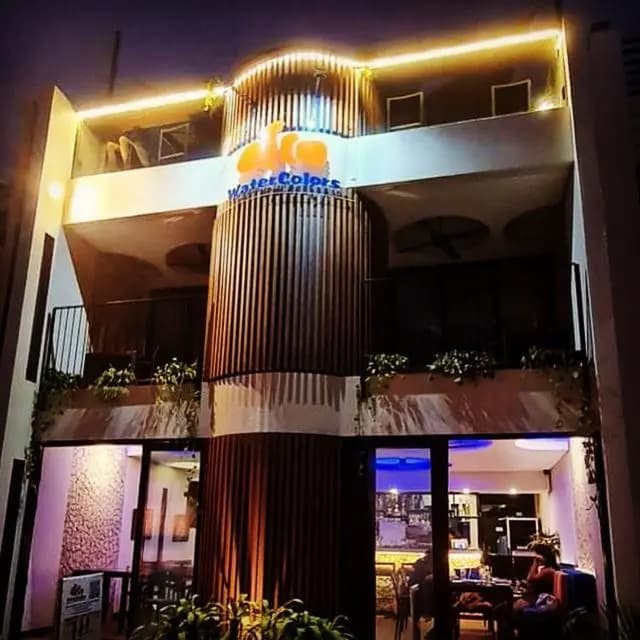
Located at Station 1 near the Diamond Hotel, Diving Boracay has been a fixture of the local diving community since 2003. As a PADI 5 Star centre, it has spent over two decades refining its operations to serve both the local reef environment and the needs of international divers.
The centre operates from a well-established base that includes a dedicated shop, modern classrooms, and an on-site equipment repair workshop. Whether you are looking to start your journey with a Discover Scuba Diving session or are an experienced diver seeking Nitrox, the facility is designed to support a professional diving workflow.
The team is experienced in a variety of disciplines, ranging from traditional recreational scuba to specialised freediving. They offer instruction in multiple languages, including English and French, making them a reliable choice for international divers.
Beyond standard scuba training, the centre is a training hub for professionals, offering the PADI Instructor Development Course (IDC). This commitment to high-level education ensures that the instruction remains focused on safety, environmental responsibility, and technical precision.
The course catalogue is extensive, covering the entire PADI progression. You can begin with Bubblemaker or Discover Scuba Diving and progress through Open Water Diver, Advanced Open Water Diver, and Adventure Diver, eventually reaching Rescue Diver and Divemaster levels.
For divers looking to specialise, the centre offers PADI Deep Diver, Wreck Diver, and Enriched Air Nitrox courses. They also provide a comprehensive freediving programme, including courses for Beginner, Advanced, and Master Freediver levels.
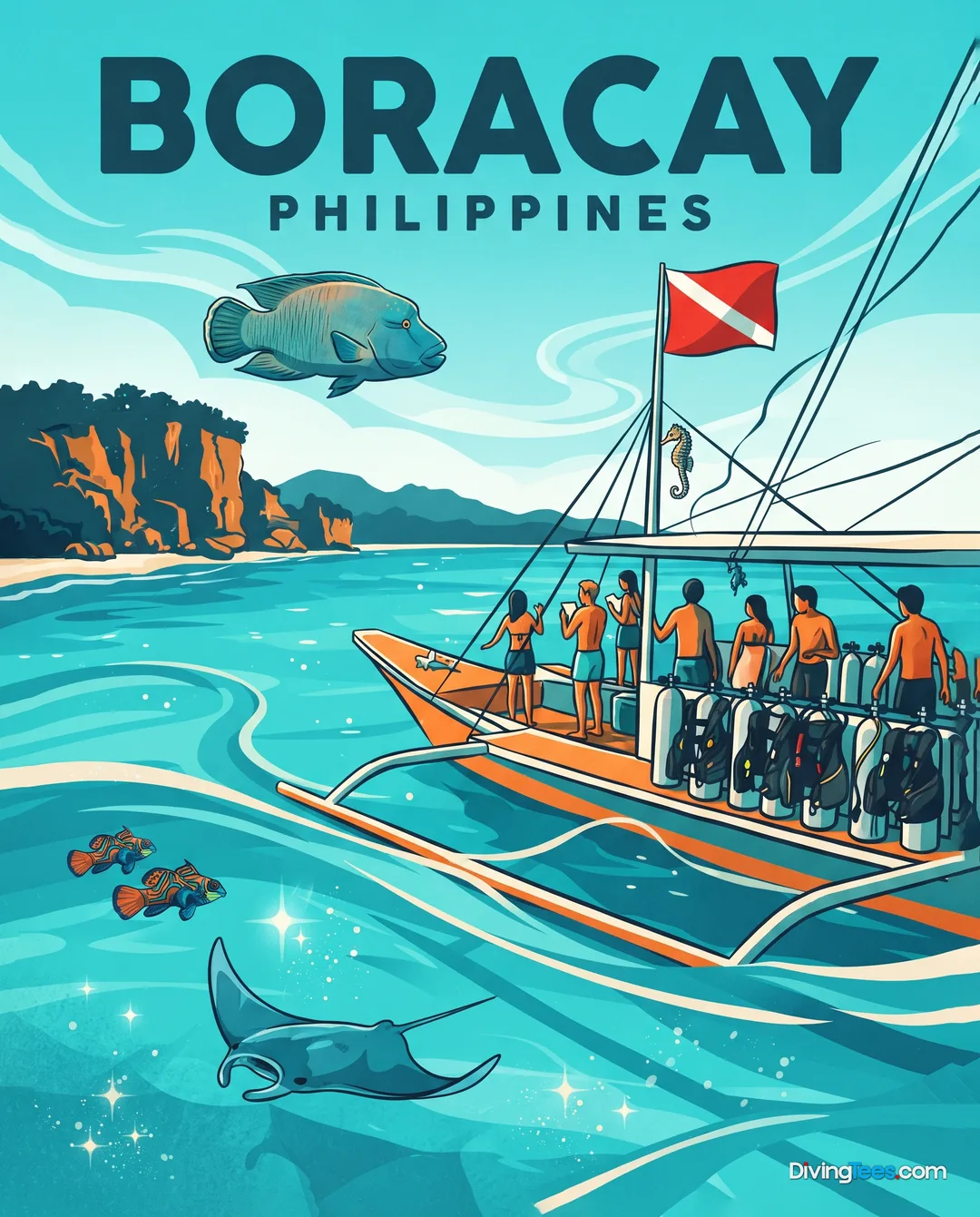
The centre operates a custom-built dive boat named Toby, which has a capacity for 16 divers. The vessel is equipped with cylinder supports and dedicated storage areas for your equipment to keep the decks organised.
Toby is used for a variety of dive profiles, including day trips to various reef and wreck sites, as well as night dives. Nitrox is available for use on board, allowing for extended bottom times on deeper excursions.
The centre provides full rental kit for those not travelling with their own gear, including BCDs, wetsuits, regulator sets, fins, masks, and dive computers. An on-site workshop is available for equipment repairs, ensuring that kit is well-maintained.
For those looking to extend their training, the facility supports a wide range of certifications and provides the necessary infrastructure for both scuba and freediving disciplines.
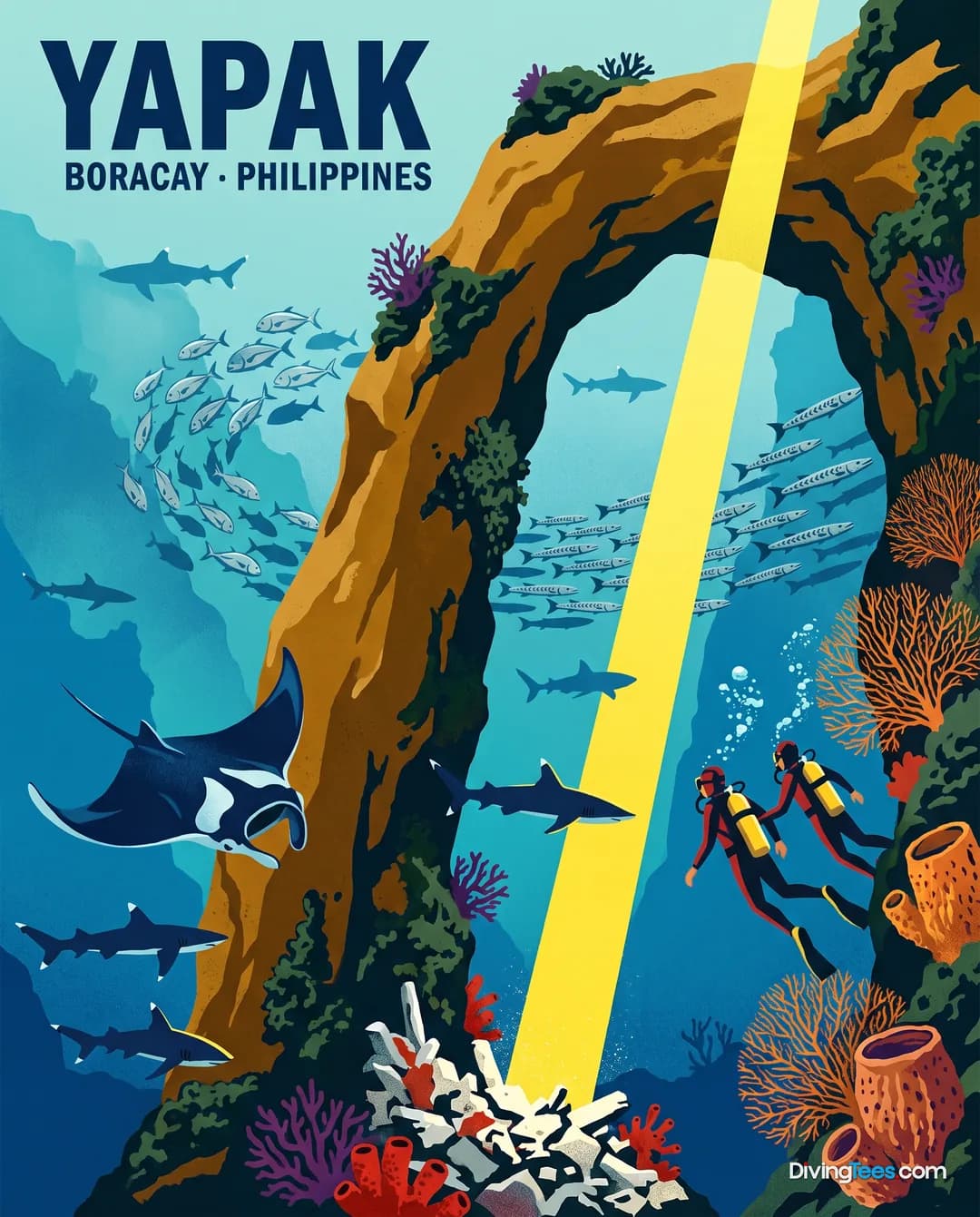
Yapak is a significant drift dive site located to the north of the island. It features a massive wall that drops from 30 metres to over 70 metres, where you can encounter tuna, blacktip reef sharks, and barracuda.
Camia II is a wreck dive that sits vertically on the seabed at depths between 25 and 31 metres. Having been sunk in 2001, it now serves as an artificial reef where you can explore the captain's cabin and the deck.
Maniguin is a small atoll south of Boracay that offers a diverse range of environments, including a large cave. Accessible via day excursions, the site reaches depths of up to 60 metres and is known for resident sharks, eagle rays, and midnight snappers.
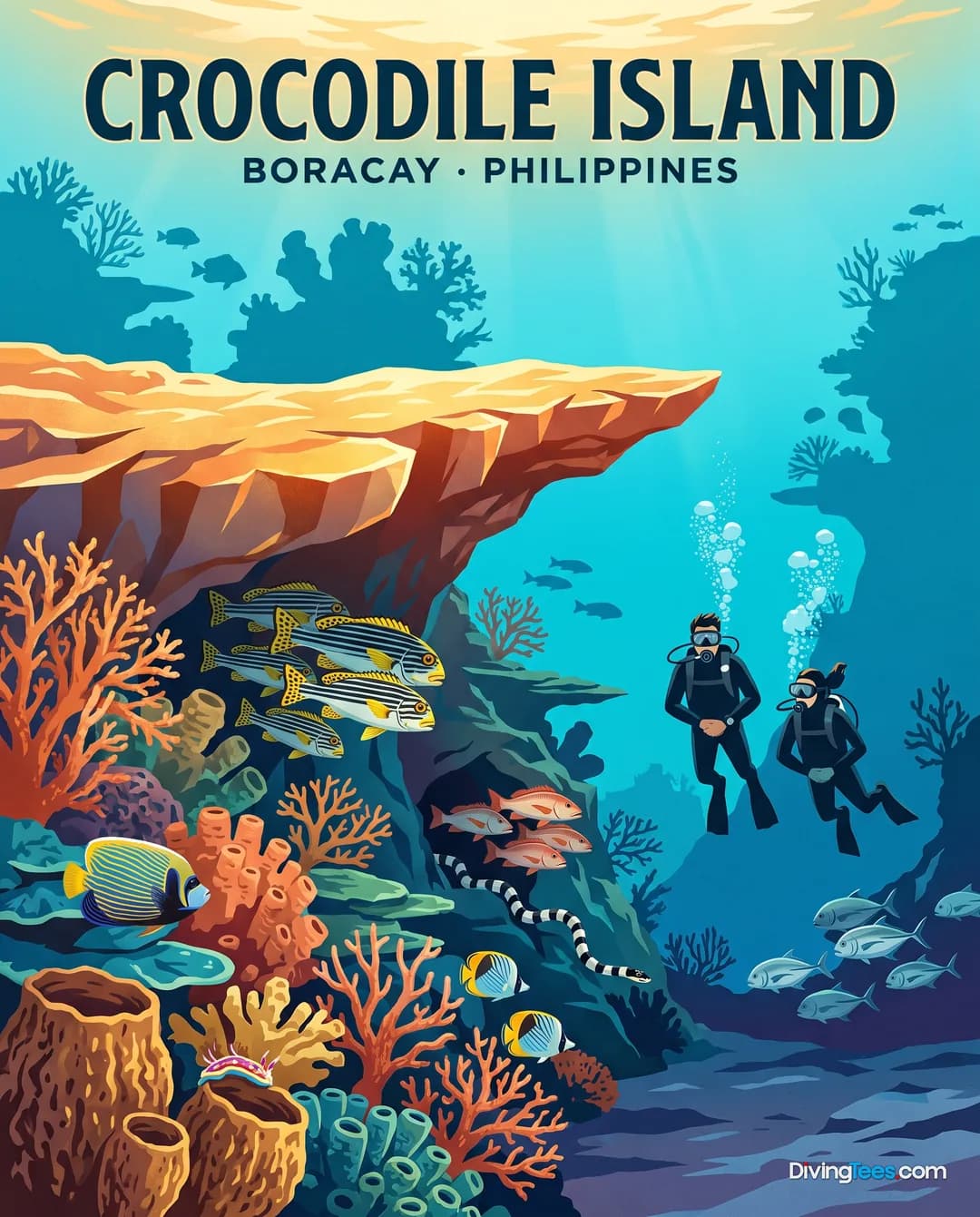
Crocodile Island is a reef site located to the south, easily identified by its crocodile-shaped silhouette. At depths between 10 and 25 metres, it is a vibrant spot for observing reef life such as moray eels, lionfish, and various groupers.
And some of the dive sites the centre runs.
The marine life around Boracay is diverse, particularly around the deeper walls and atolls. You can expect to see pelagics such as tuna (Thunnus), barracuda (Sphyraena), and various shark species, including blacktip reef sharks (Triaenodon obesus) and whitetip sharks (Triaenodon obesus).
On the reef flats and shallower sites like Friday's Rock, the environment is rich with colourful reef fish. You will frequently encounter triggerfish (Balistidae), parrotfish (Calotomus), and various species of snapper (Lutjanidae), alongside anemones (Actiniaria) and diverse hard corals (Scleractinia).
Macro enthusiasts will find plenty to observe in the crevices and sandy patches. The area is home to various scorpionfish (Scorpaenidae), moray eels (Muraenidae), octopus (Octopoda), and sea cucumbers, providing a constant interest for those with a keen eye for detail.
Diving conditions in the area vary depending on the specific site. Some locations, such as Yapak, are known for strong currents that are suitable for experienced drift divers.
Visibility is generally good, typically ranging between 30 and 40 metres. Water temperatures remain warm throughout the year, generally between 25 and 29°C.
Hello, I'm Marina, DivingDeal.com's AI assistant. I answer in detail about hotels, dive centres and liveaboards.

Thinking about the whole trip and the flights? Talk it over with Edith →
Marina is an AI. Some links are affiliate links: DivingDeal may earn a commission, at no extra cost to you. Bookings are made with the partner.
Your last day stays dry: no diving in the 18-24 hours before a flight the perfect window to see the destination from another angle.
 Nature
⏱ 4 h · ★ 3.2 (11 reviews)
from €70
see on Viator ↗
 City
City⏱ 6 h
from €202
see on Viator ↗
Ratings and reviews collected by Viator and Tripadvisor.