Liveaboards · Philippines
Solitude One — a rebuilt merchant vessel for small-group diving across the Philippines
What makes this boat unique
- Solitude One is a rebuilt steel-hulled merchant vessel with 11 cabins for up to 24 passengers.
- The Anilao–Cebu itinerary lasts 11 days and 10 nights and combines macro sites, walls, reefs and pelagic encounters.
- Two purpose-built fiberglass tenders carry divers between the stern dive deck and the sites.
- A dedicated camera studio, separate camera rinse tanks and charging stations make the boat well suited to underwater photographers.
- Nitrox, DIN adapters, sidemount diving and rebreather diving are available.
For subtitles in English: start the video firstthen click the gearat the top right of the video, select “Subtitles/CC”, then “Auto-translate” and choose “English”.
The invitation
Solitude One suits divers who want to cross a serious stretch of the Philippines without changing boats or giving up the comforts that matter after several dives a day. The Anilao–Cebu route links two very different kinds of diving: silty slopes and rare macro life around Anilao, then walls, current and larger animals around Cebu. The boat’s character sits between expedition vessel and liveaboard built around divers. It began life as a merchant vessel, was rebuilt in 2013, and now carries small dive groups rather than a crowd spread across a resort-sized ship. Come for the variety, but also for the working details: a stern dive deck, large tenders that collect divers after the descent, a shaded camera area and enough room to step away between briefings. It is a good choice when the underwater route matters more than a polished yacht identity.
Boarding
Solitude One arrives with the purposeful lines of a former merchant vessel rather than a yacht designed for guests. The steel hull and working-ship history remain part of its character, while the 2013 rebuild turned the interior into a liveaboard made for long days in the water. Boarding leads toward a stern dive deck built as the operational centre of the boat, with guest areas opening onto more relaxed spaces above. The contrast is useful: this is a substantial vessel for a route that can move between Anilao and Cebu, but the diving remains close at hand. There is a clear sense of a ship that was adapted for divers rather than dressed up as a floating hotel.
The atmosphere on board
The boat’s atmosphere is shaped less by ceremony than by how close the crew stays to the diving day. A crew-to-passenger ratio close to one keeps help within reach on the deck, at meals and when equipment needs moving. English and Spanish are spoken. The small-group approach makes it easier for divers to talk through a site, a camera problem or the animal seen on the previous descent without competing with a large crowd. Evenings can remain simple: food outdoors, a film in the saloon or a drink after the last dive. Solitude One works best for people who value being looked after without being managed every minute, with the crew’s role felt in the small practical interventions that keep the week moving.
The sites you’ll dive
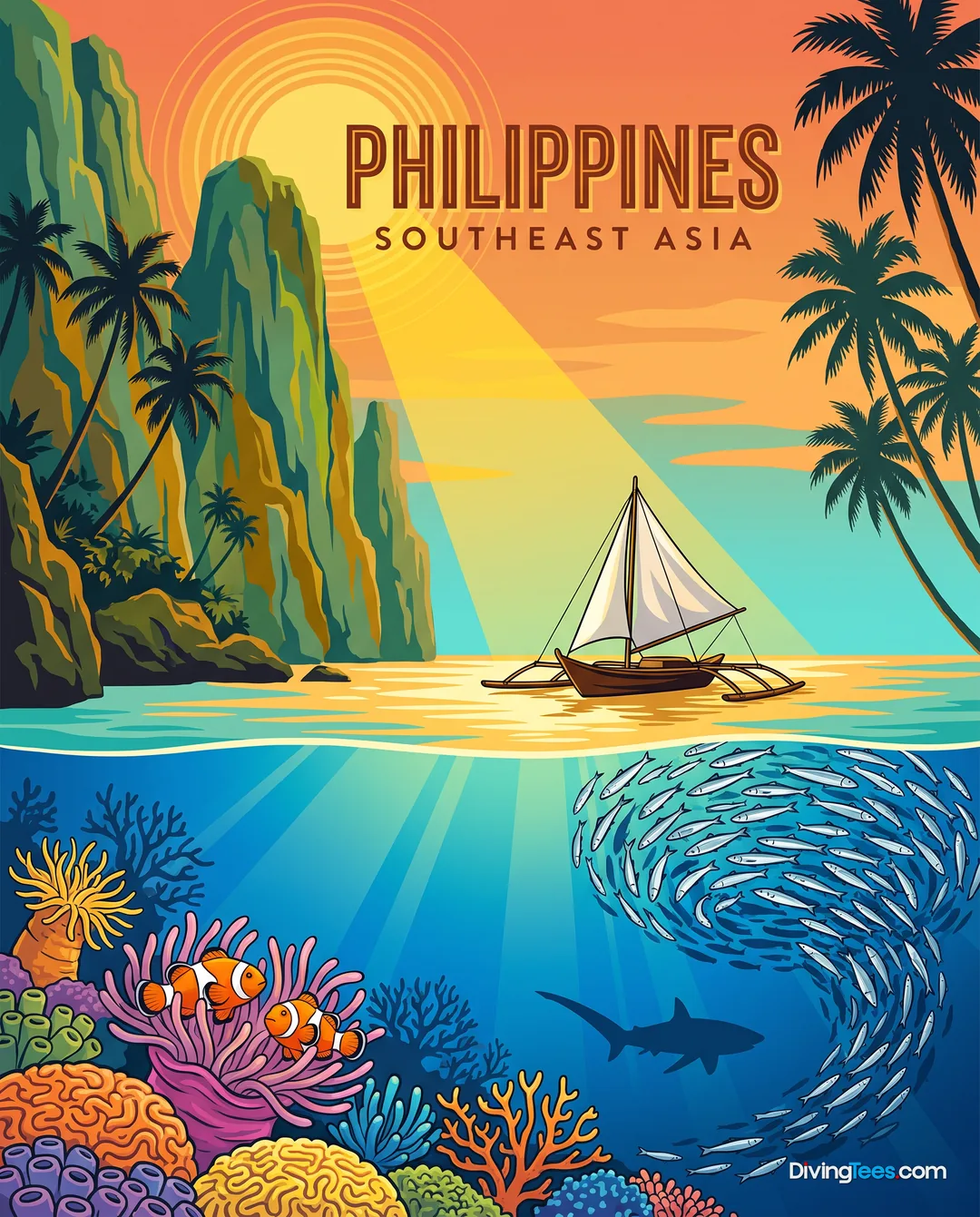
This 11-day, 10-night Anilao–Cebu crossing earns its length by changing the type of diving as the route moves. Verde Island reaches -38m, with pelagics over vivid reef, gorgonian fans and basket sponges; Buceo Point reaches -20m and is a silty macro site for frogfish, seahorses, ghost pipefish and octopus. Around Cebu, Pescador Island drops from 12 to 33 metres and reaches -40m, combining deep walls with a striking underwater cathedral and schools of jacks. Copton Point reaches -50m and begins at an aircraft wreck at 20 metres. Marine Sanctuary reaches -35m, where reef gives way to a gorgonian forest. The walls at Dolphin House reach -35m, White Beach -30m, Tuble Reef -30m, Panagsama Beach -30m and Talisay Wall -30m. Kasai Point reaches -37m, with canyons, caves and razorfish; Tongo Point reaches -29m. Sumilon Island adds a protected sanctuary, while Dolphin House Reef reaches -12m and offers shallow turtle diving.
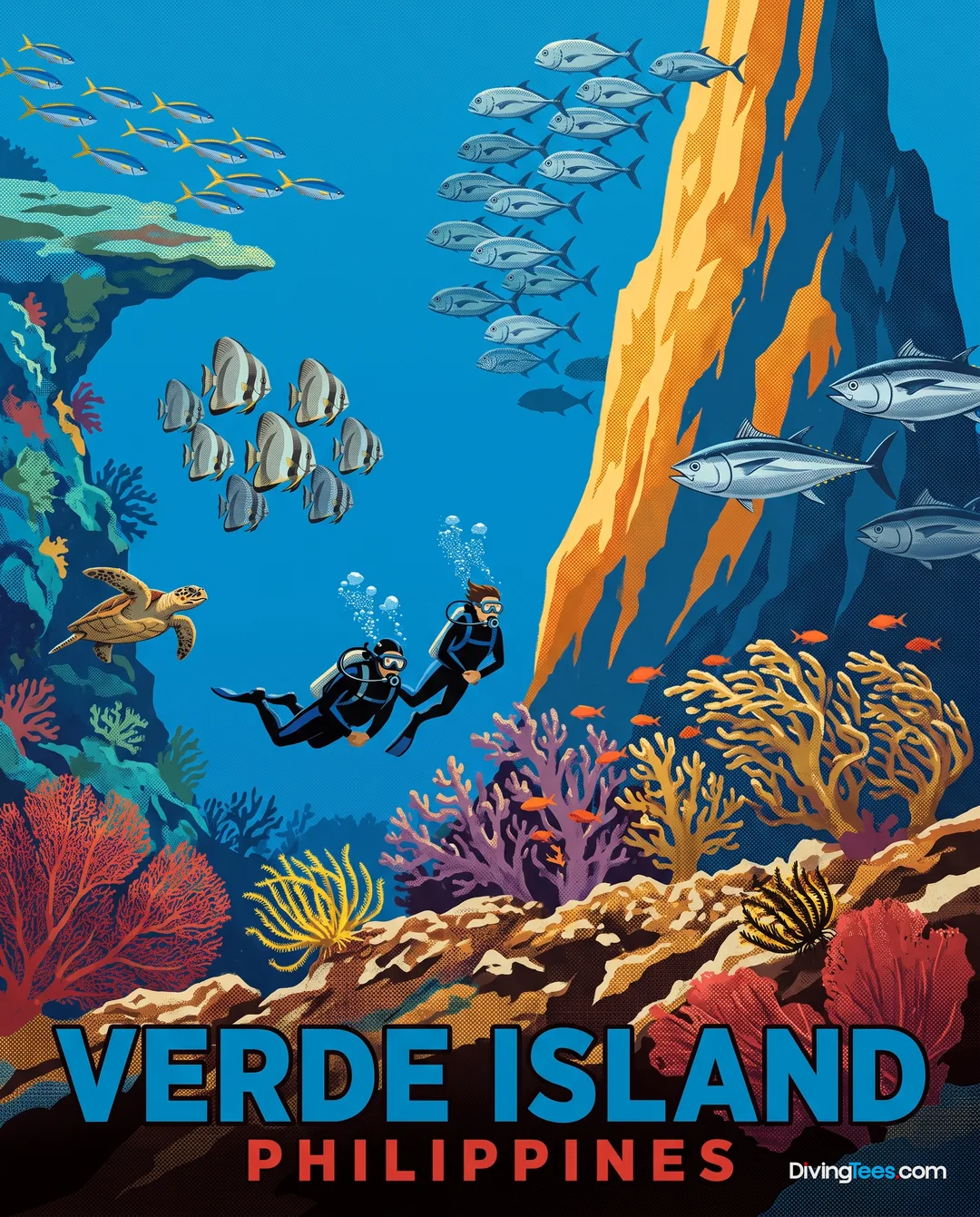
Verde Island →
Max. depth · 38 m
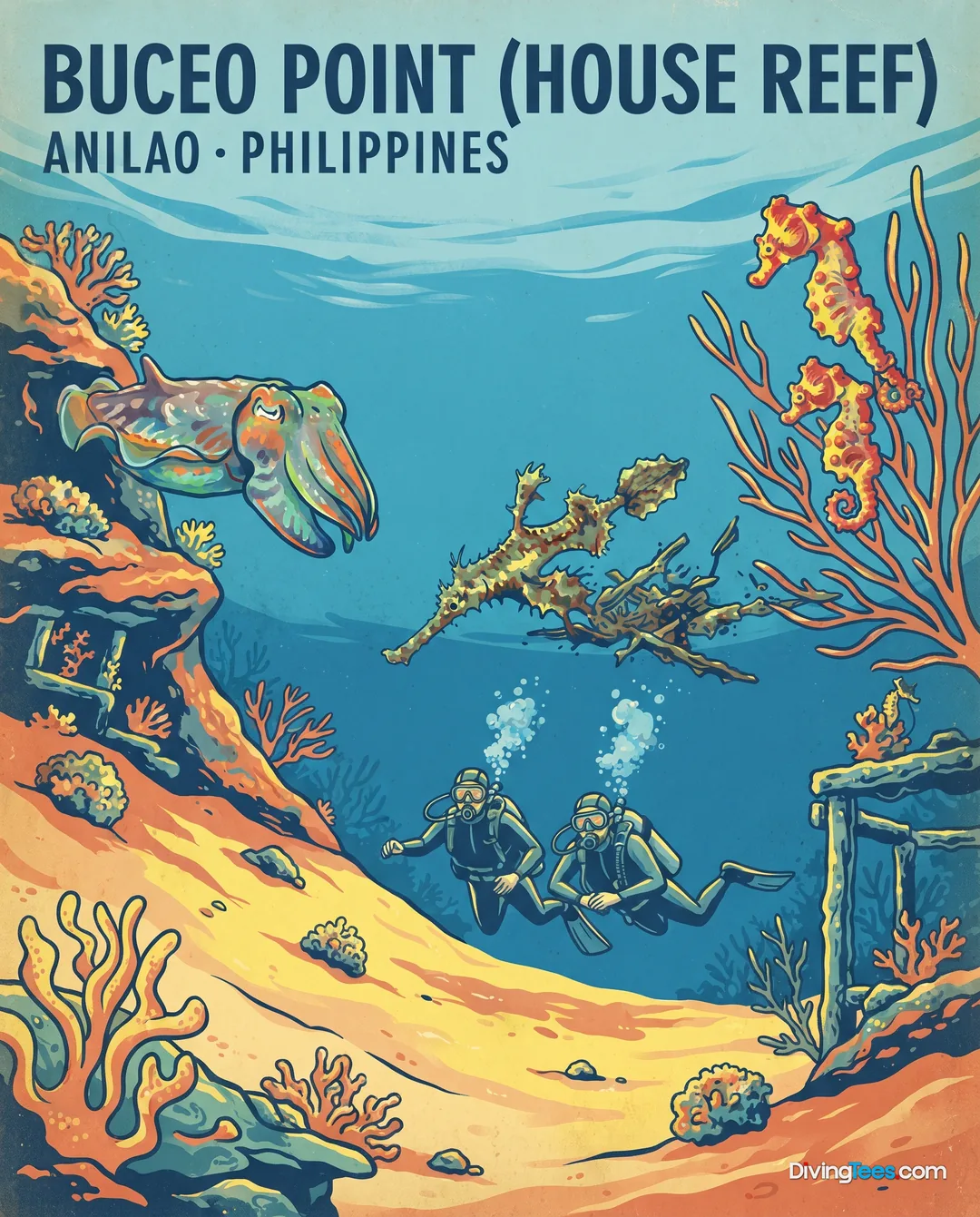
Buceo Point →
Max. depth · 20 m
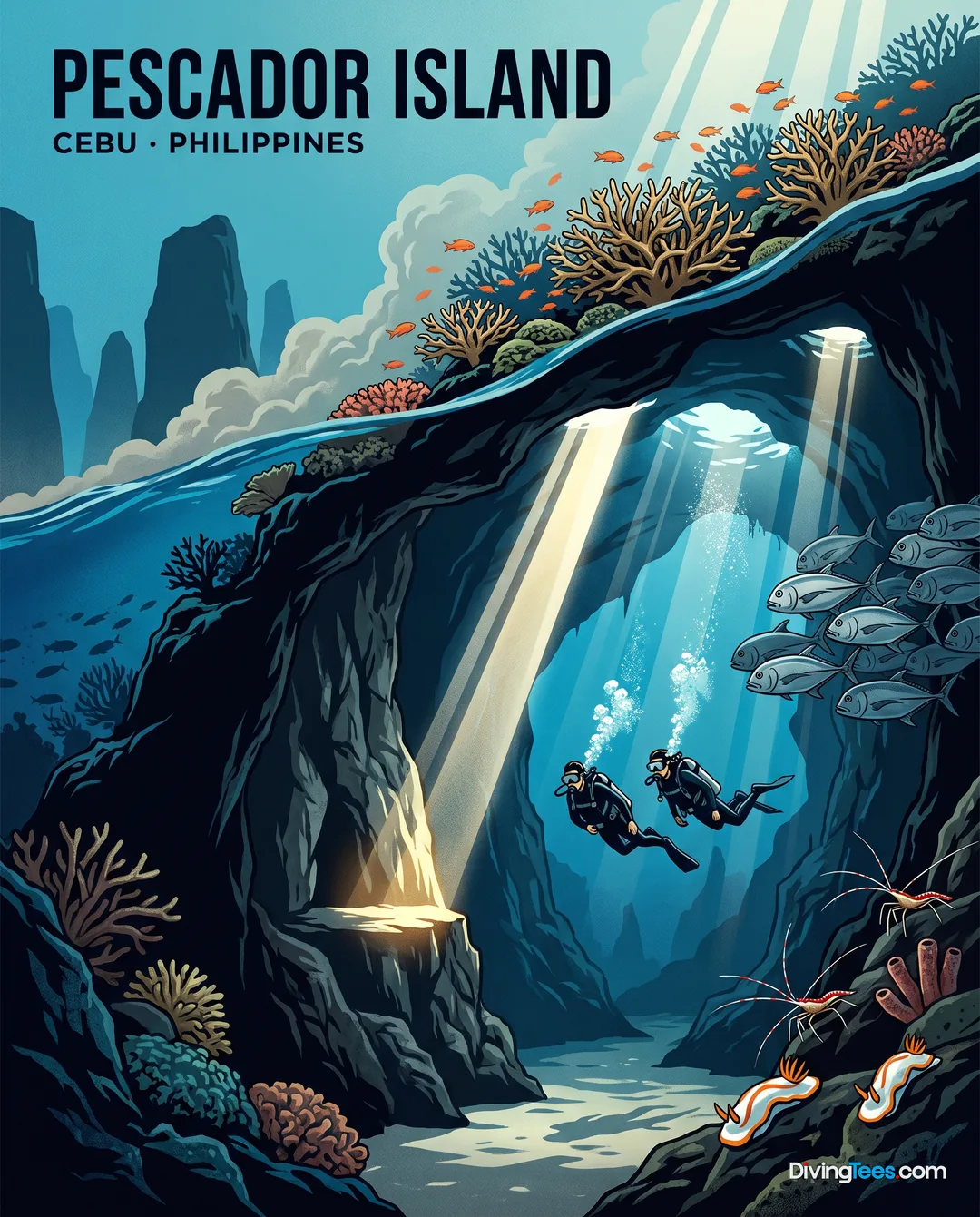
Pescador Island →
Max. depth · 40 m
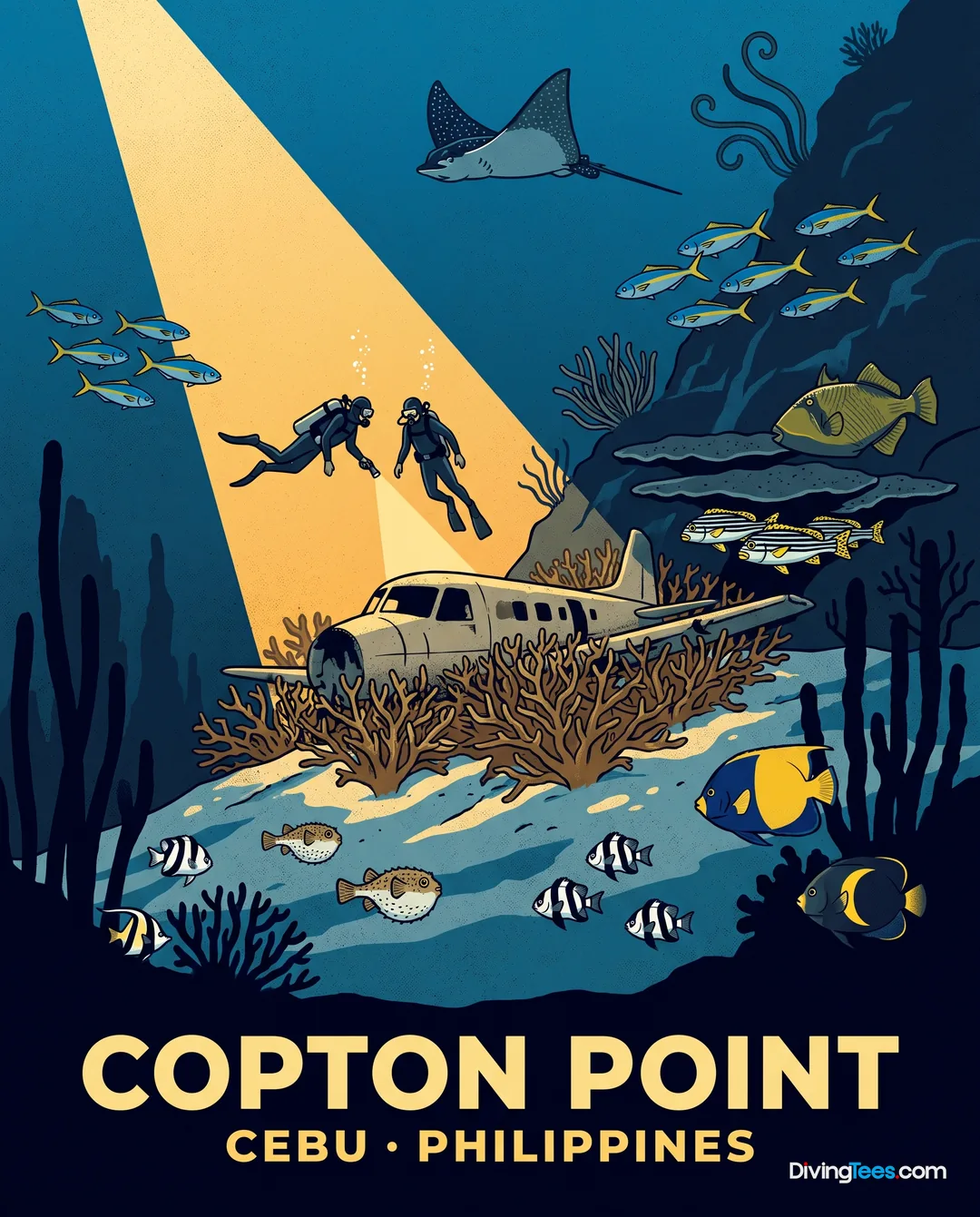
Copton Point →
Max. depth · 50 m
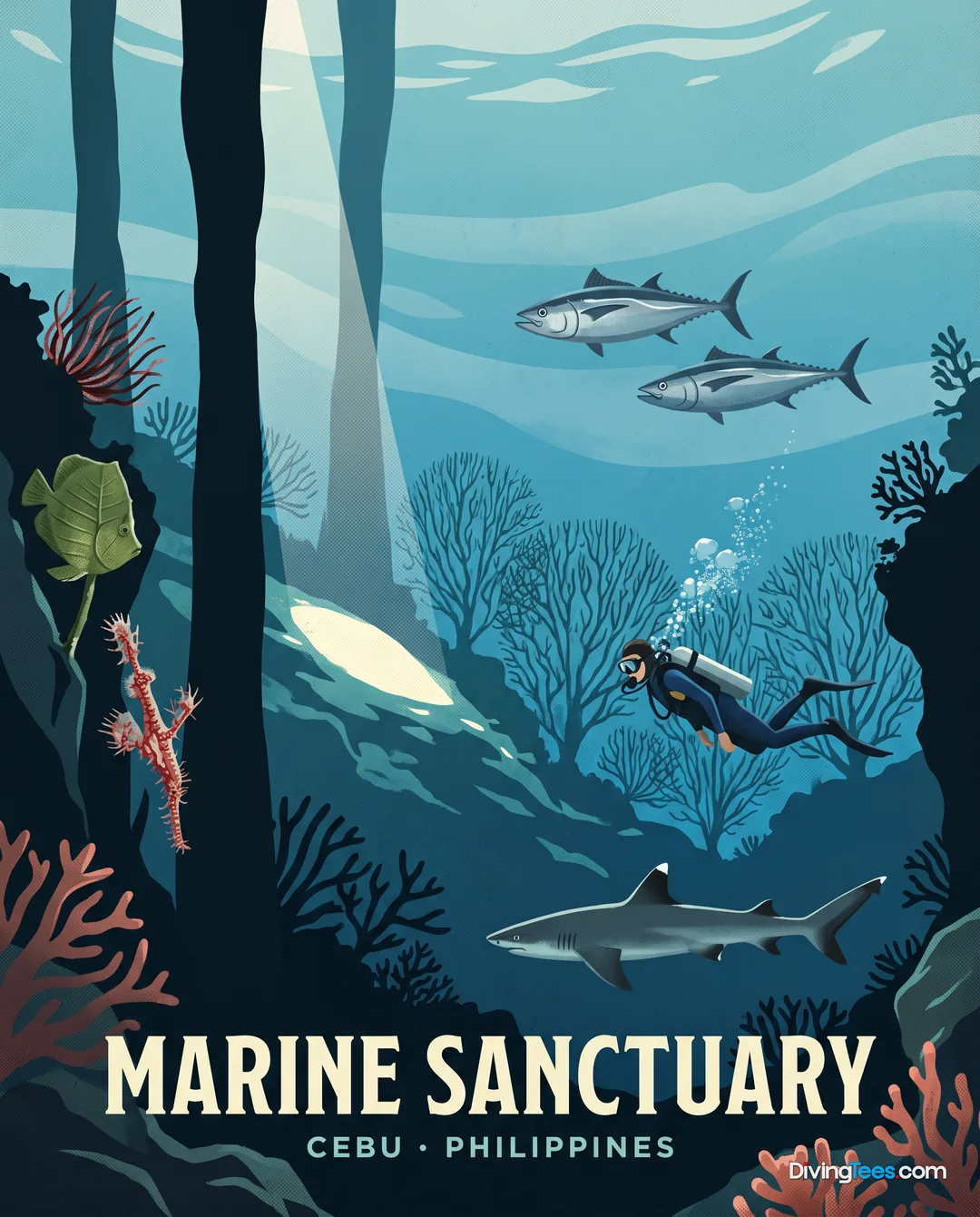
Marine Sanctuary →
Max. depth · 35 m
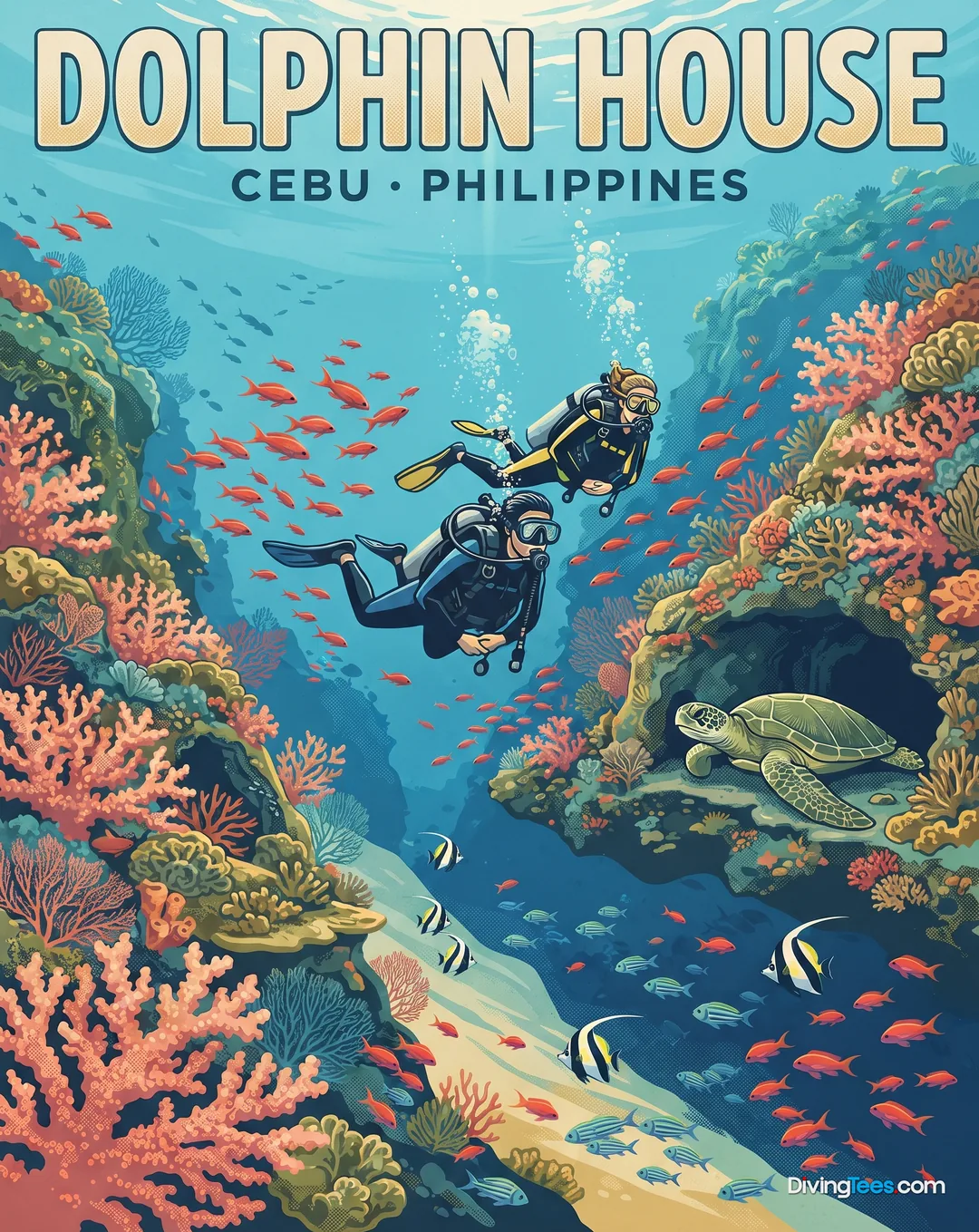
Dolphin House →
Max. depth · 35 m
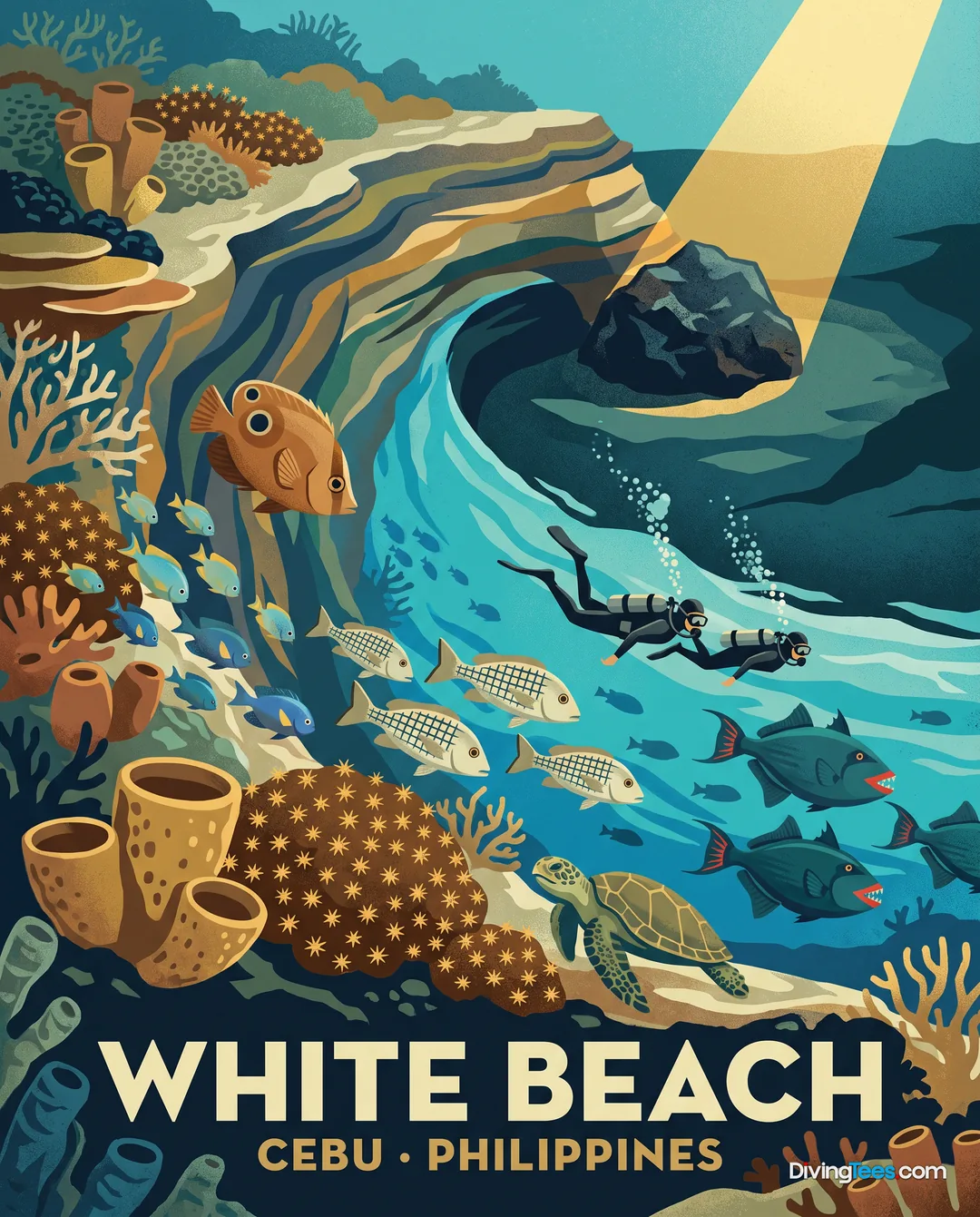
White Beach →
Max. depth · 30 m
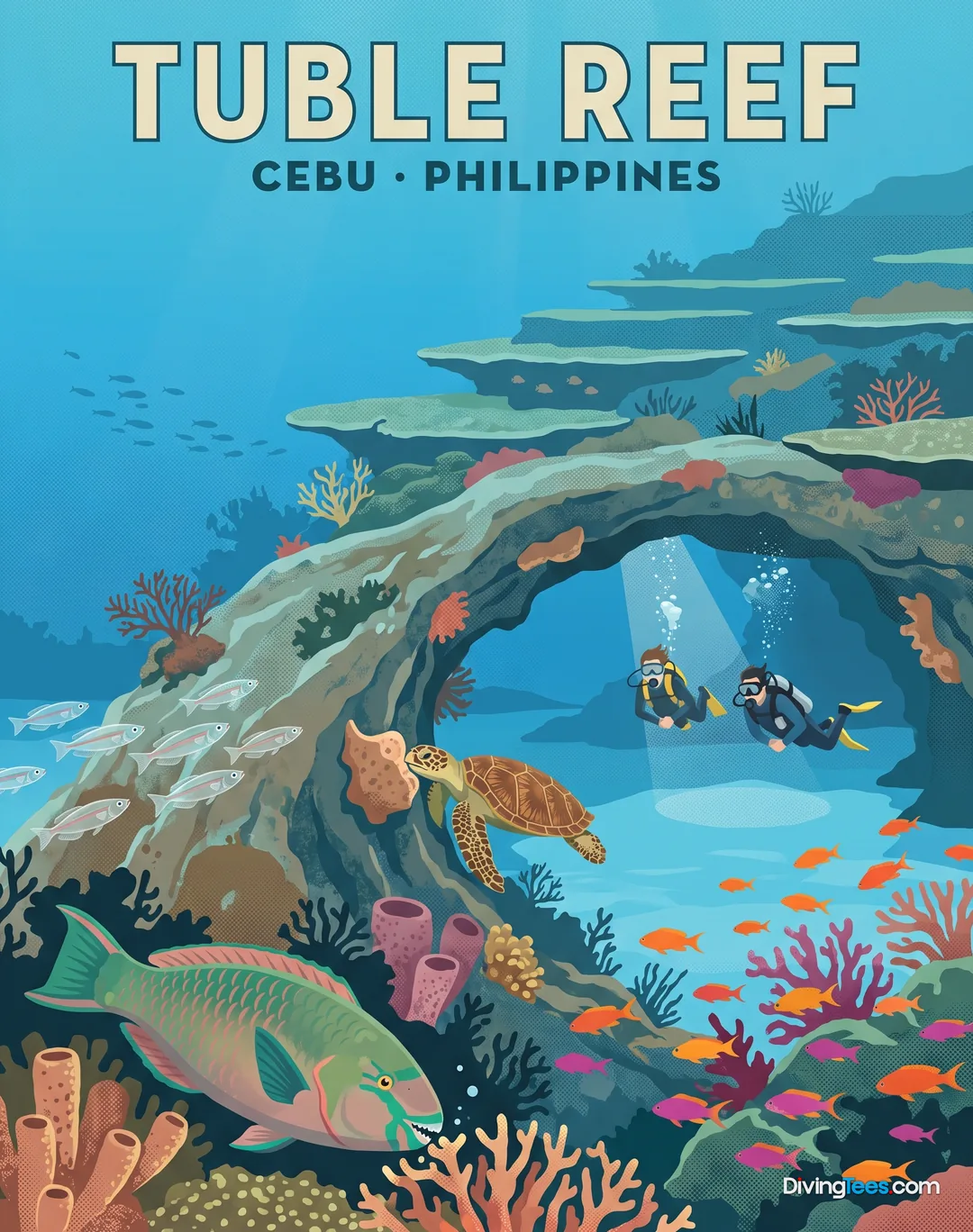
Tuble Reef →
Max. depth · 30 m
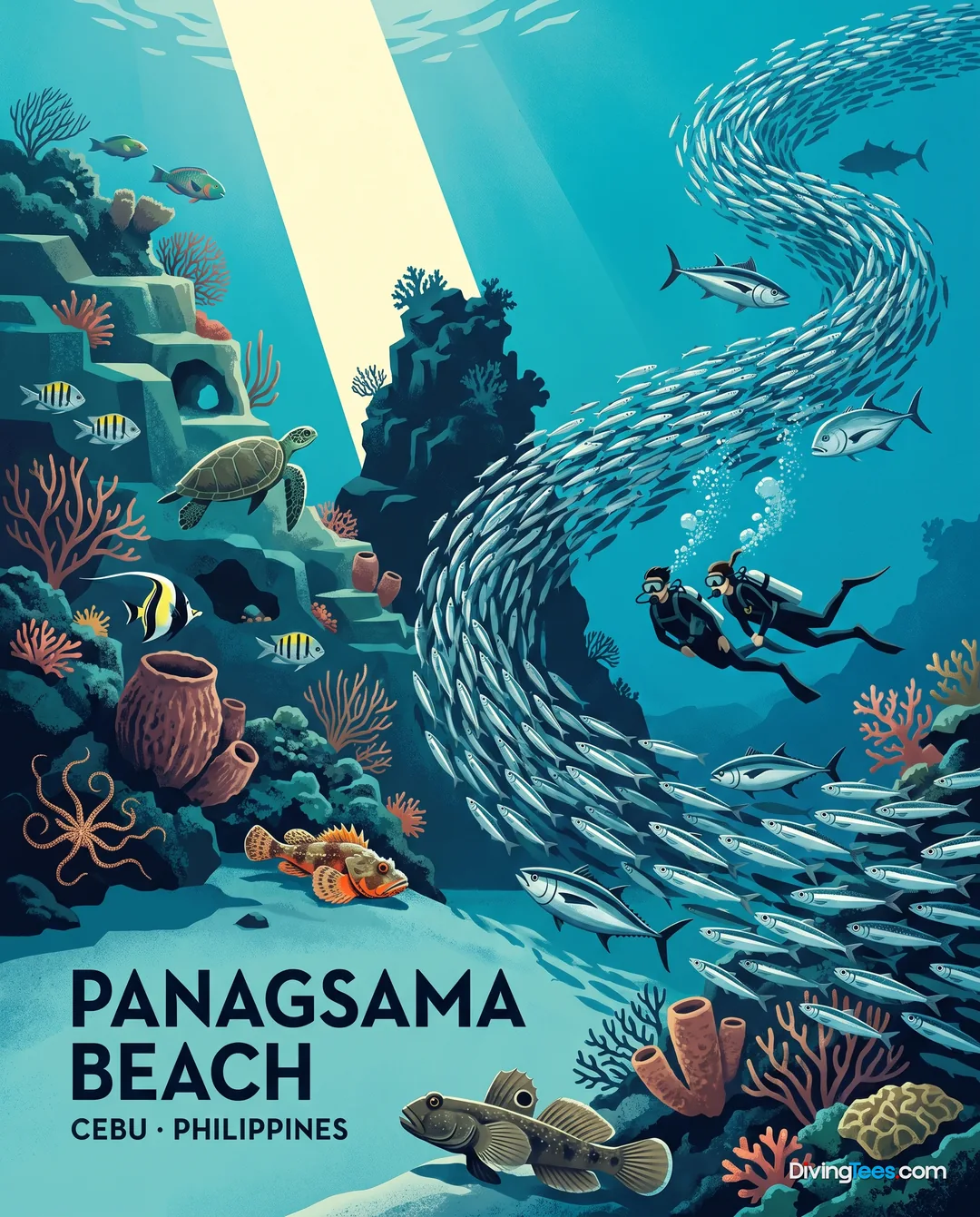
Panagsama Beach →
Max. depth · 30 m
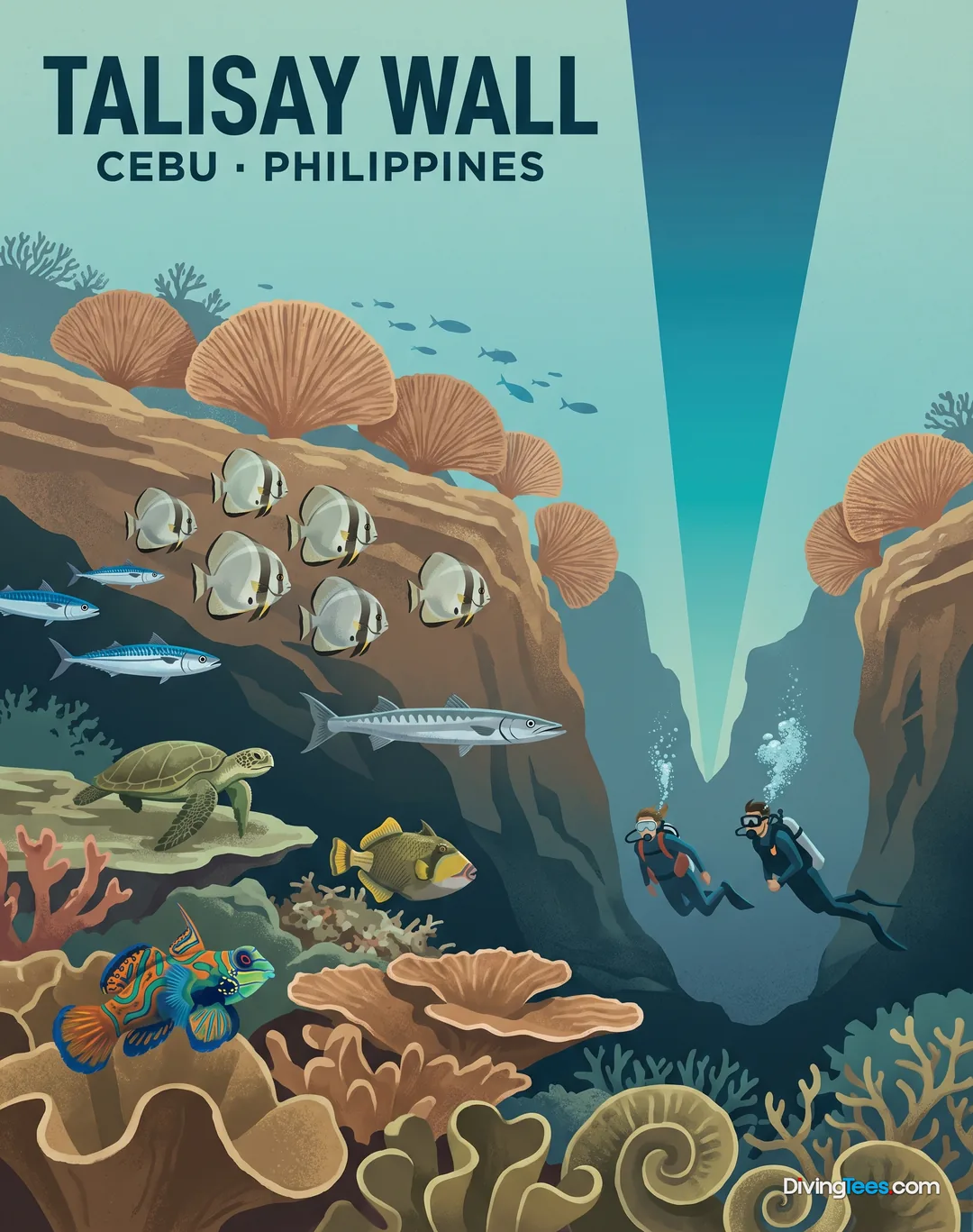
Talisay Wall →
Max. depth · 30 m
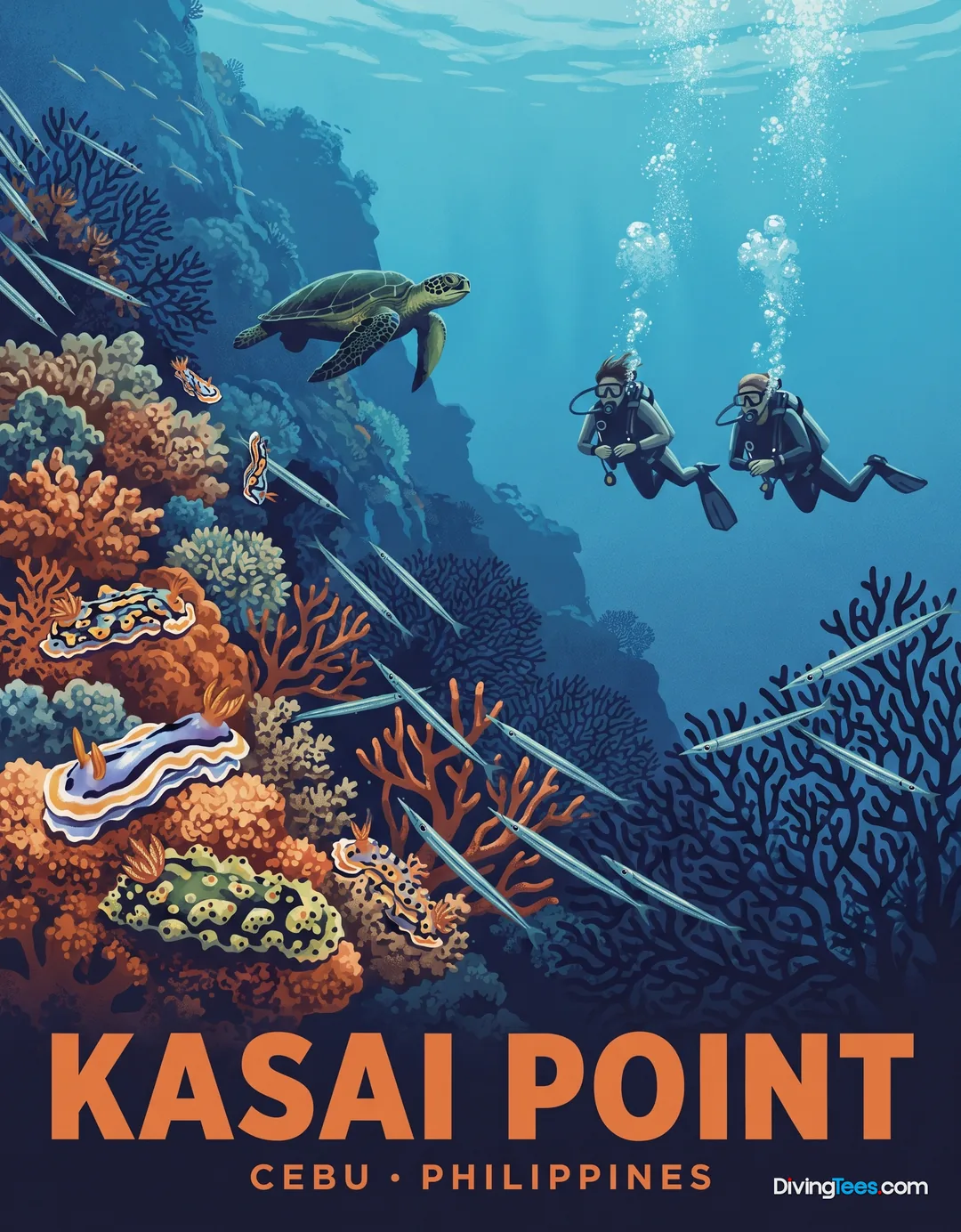
Kasai Point →
Max. depth · 37 m
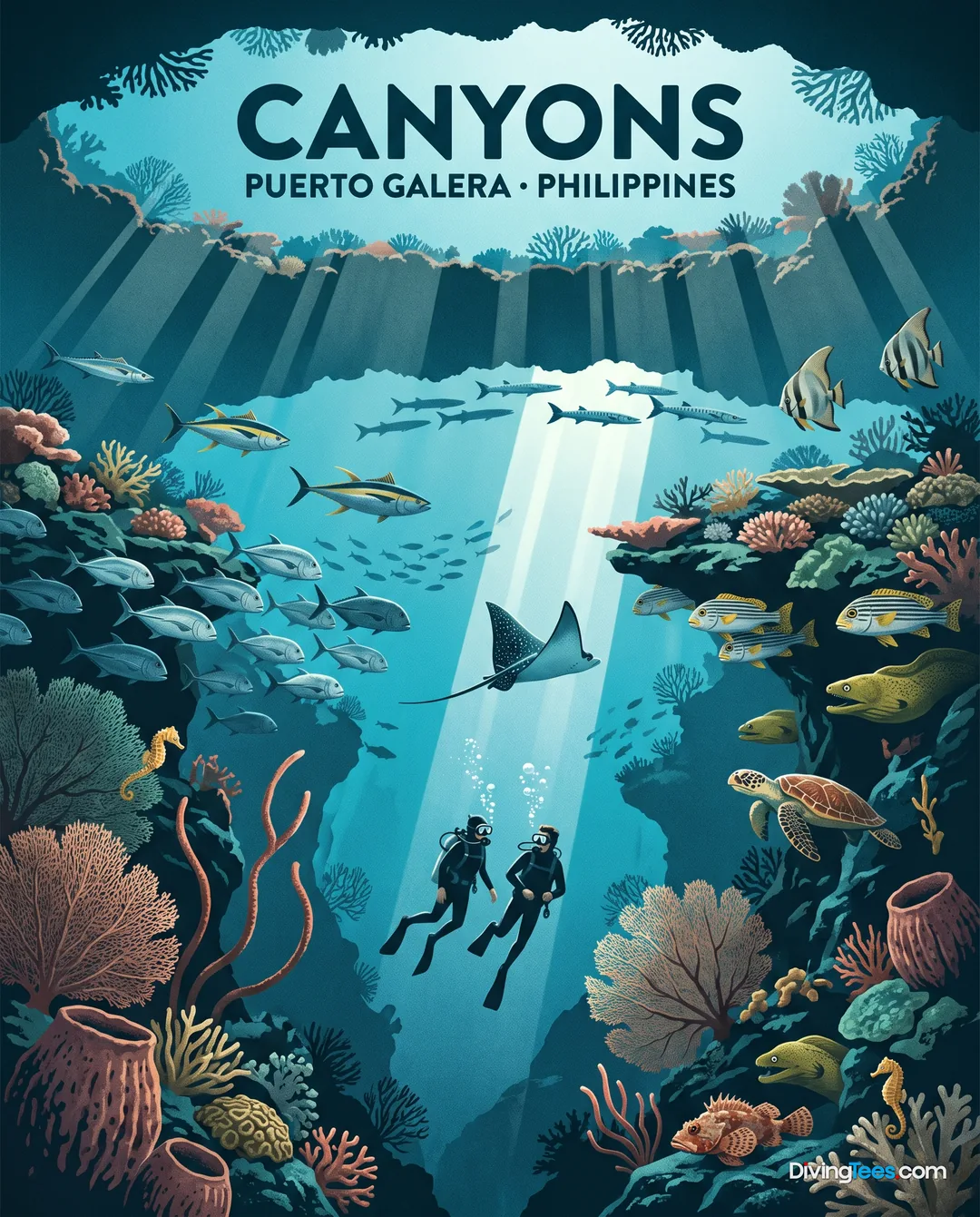
Canyons →
Max. depth · 35 m
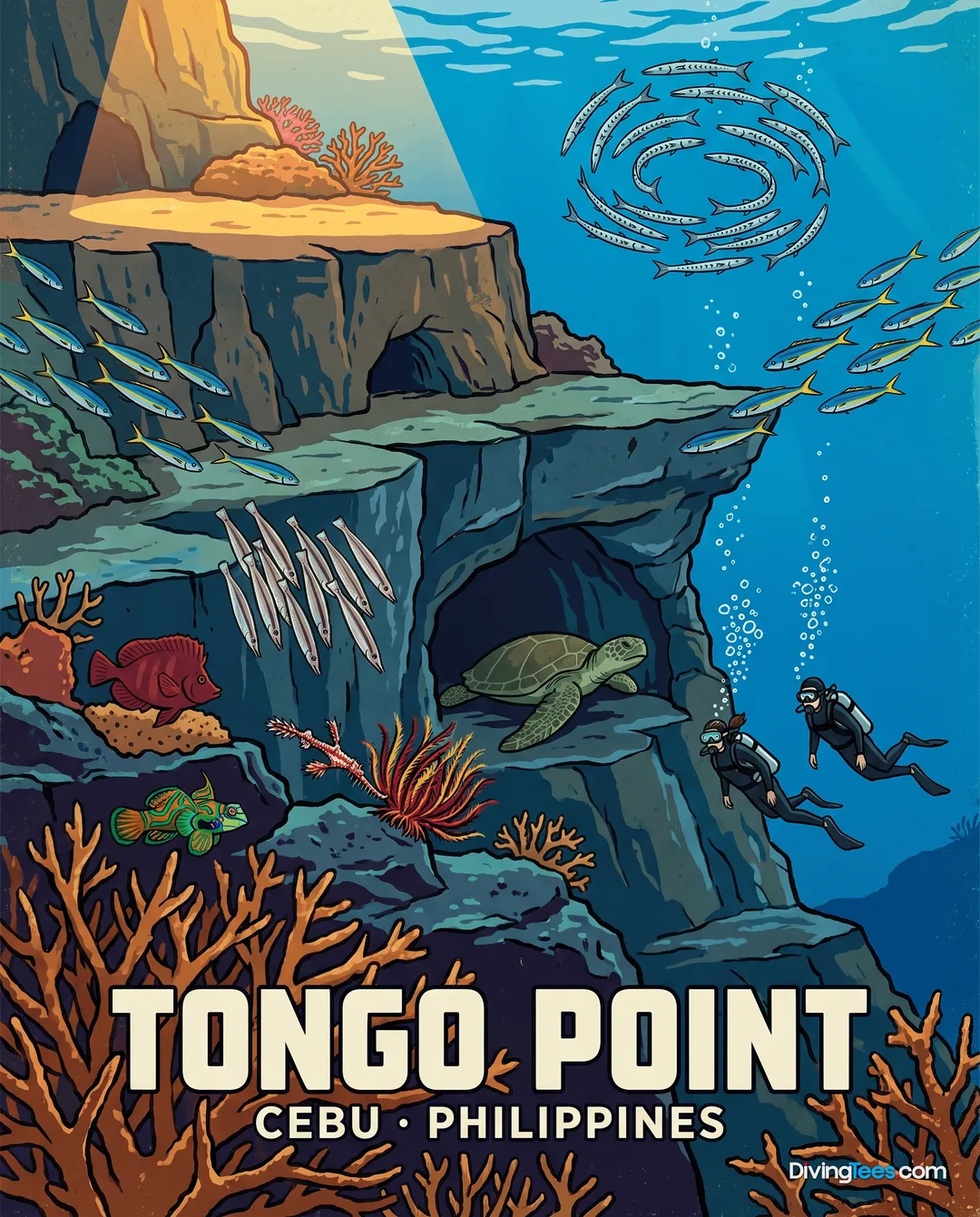
Tongo Point →
Max. depth · 29 m
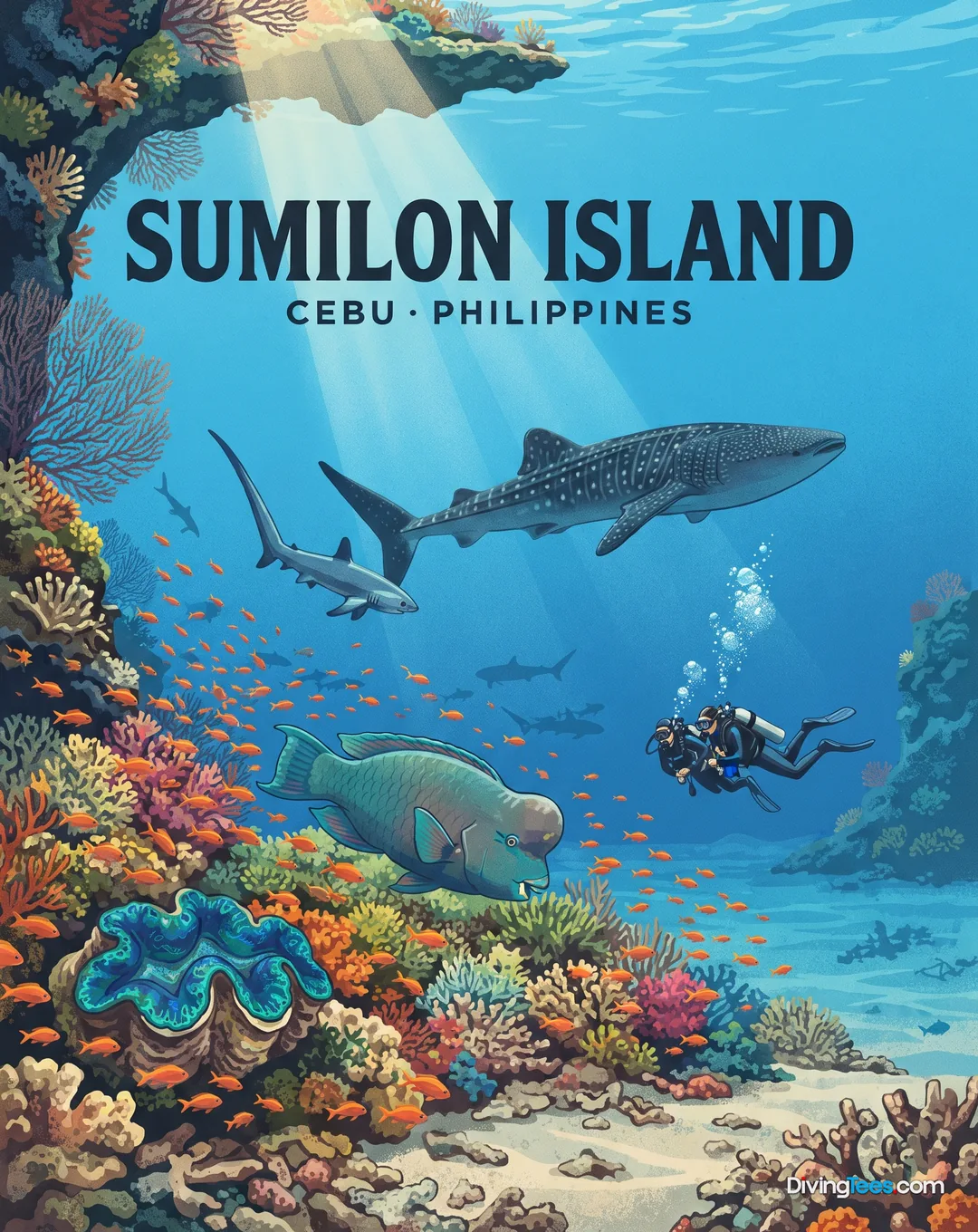
Sumilon Island →
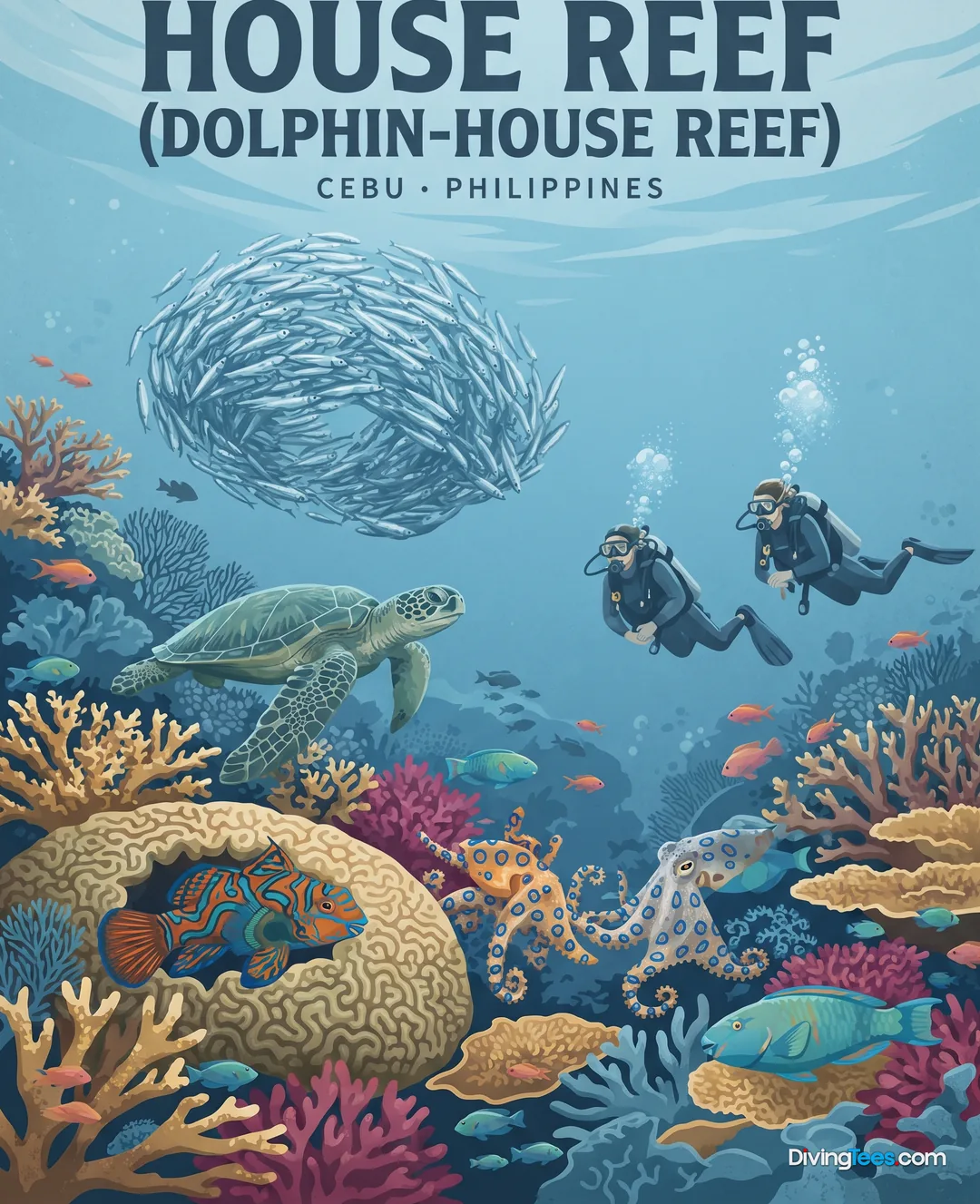
Dolphin House Reef →
Max. depth · 12 m
What you’ll meet underwater
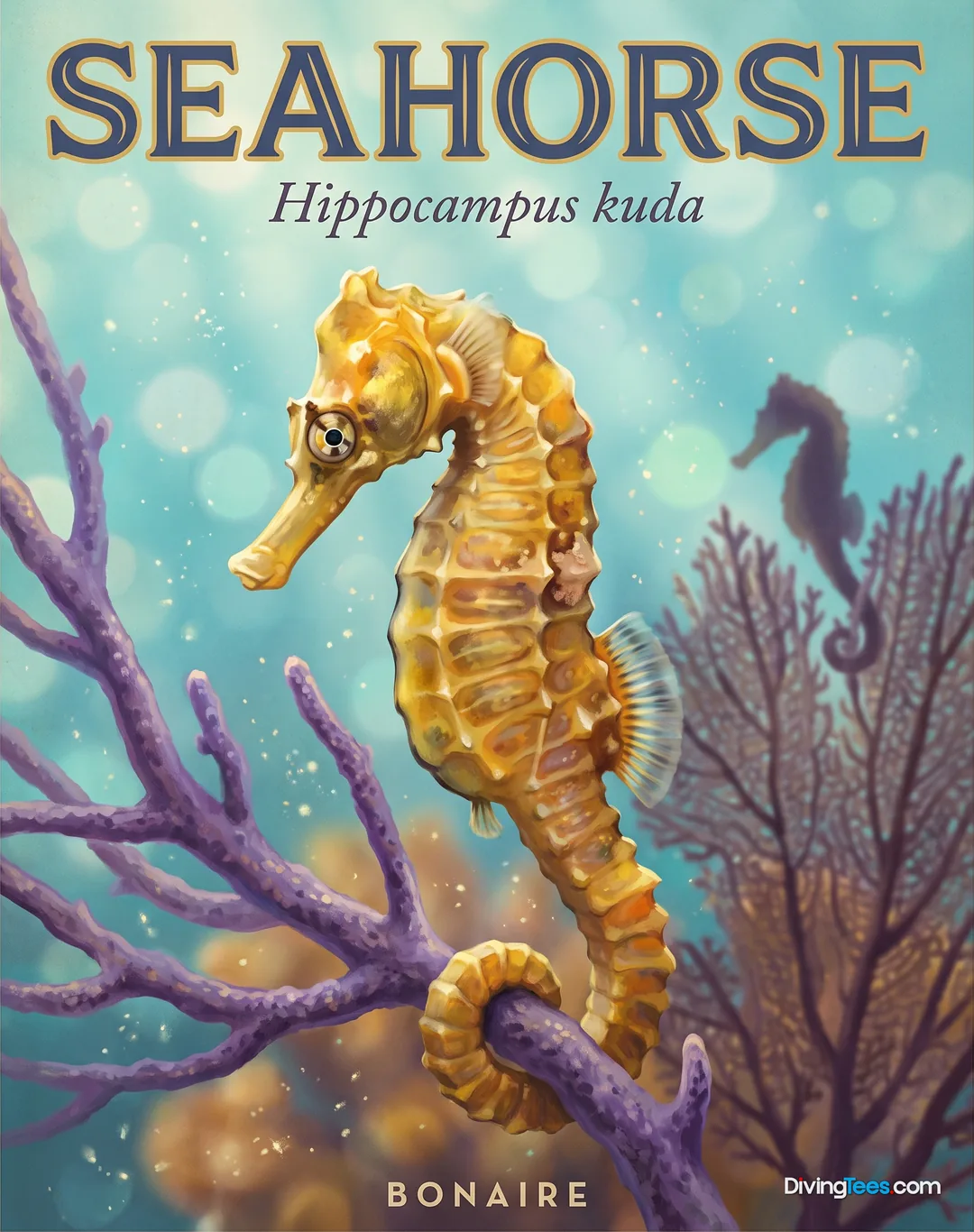
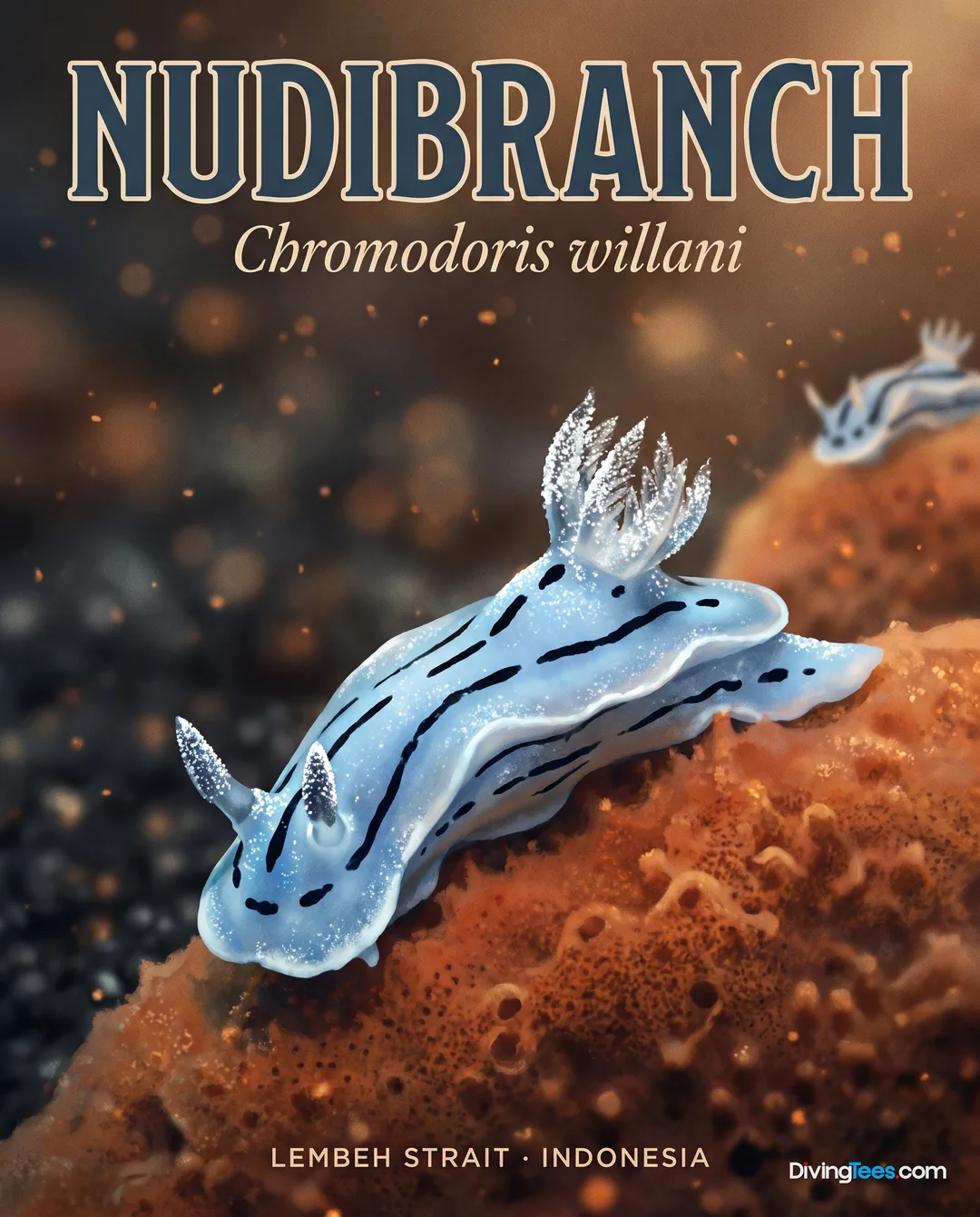
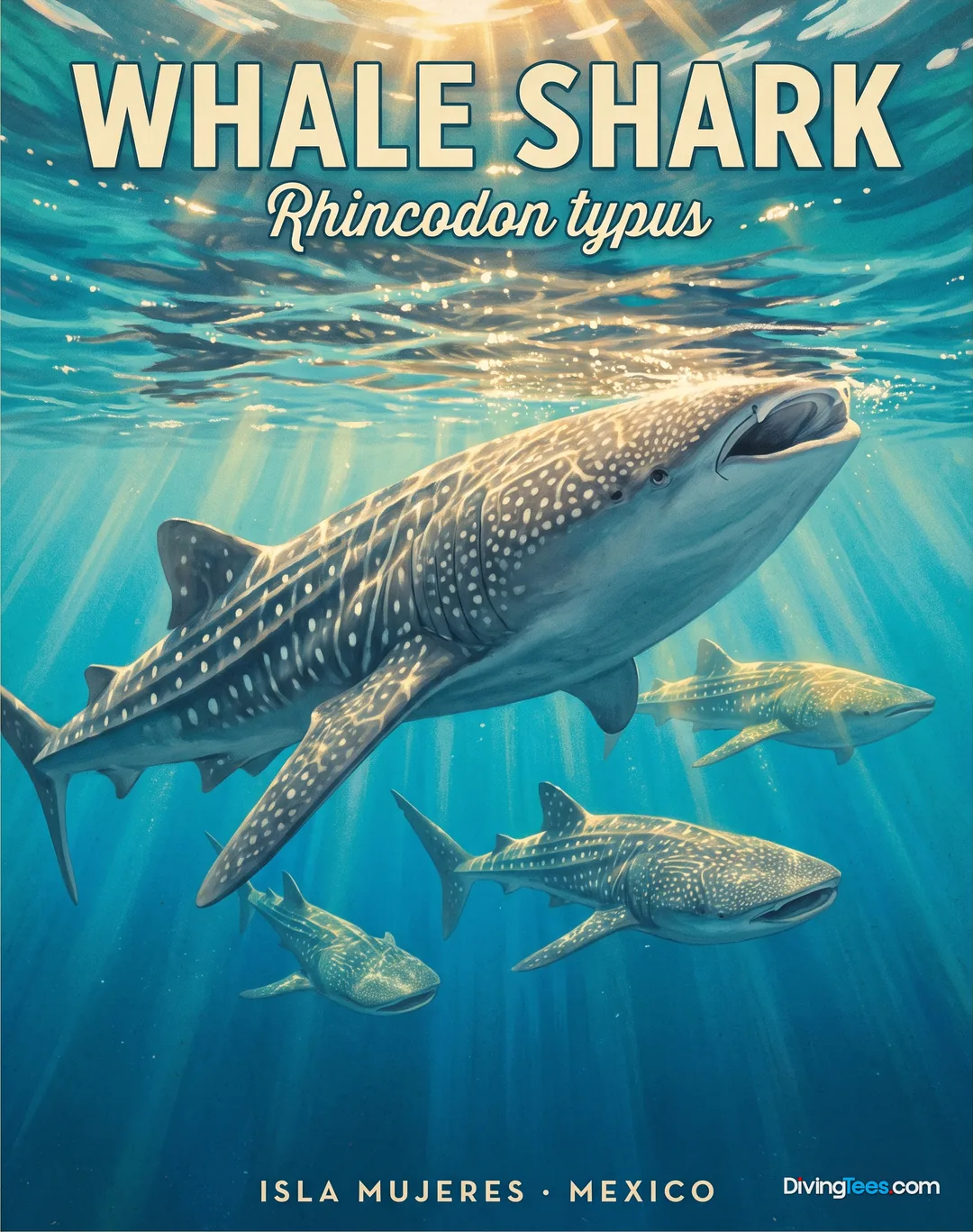
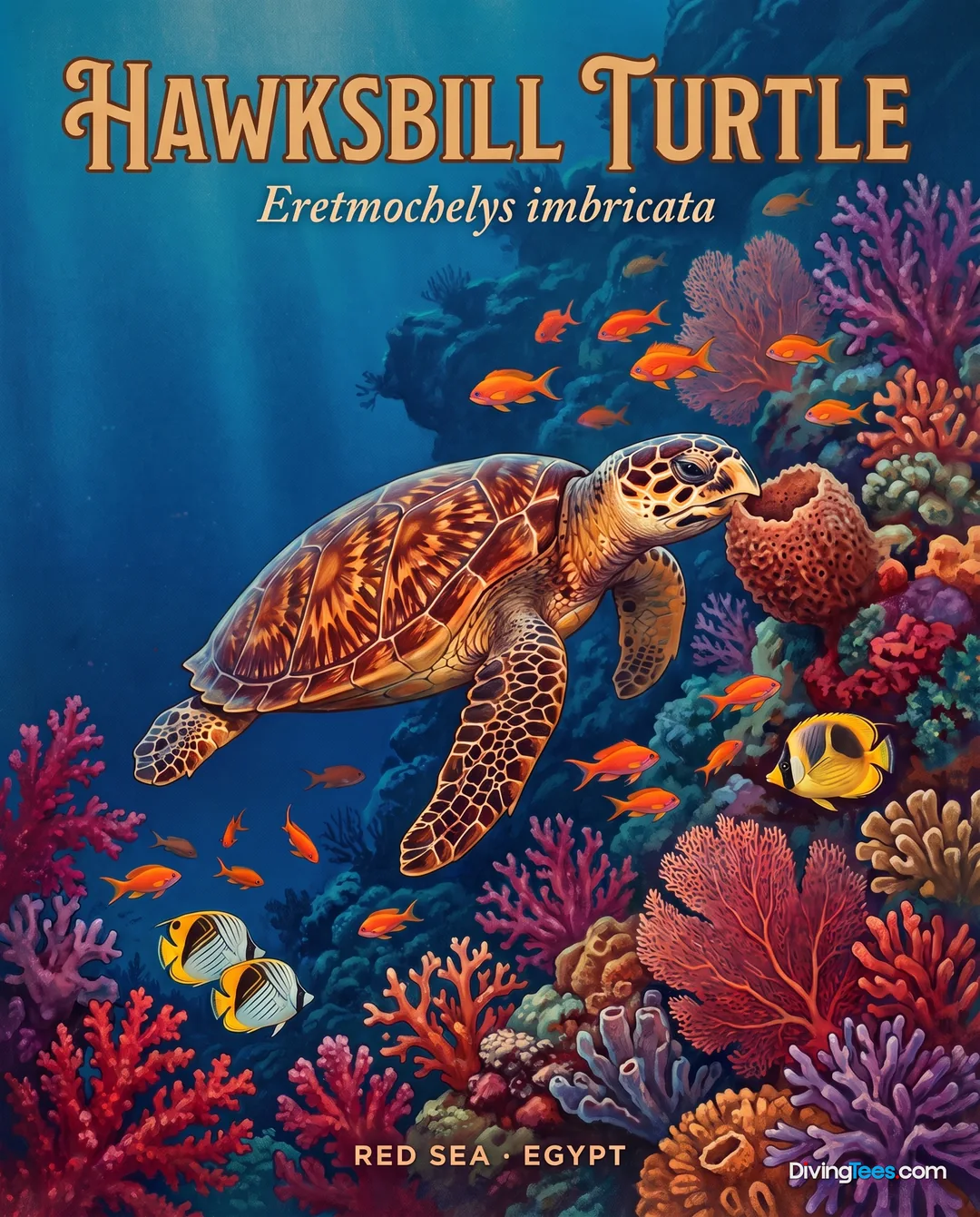
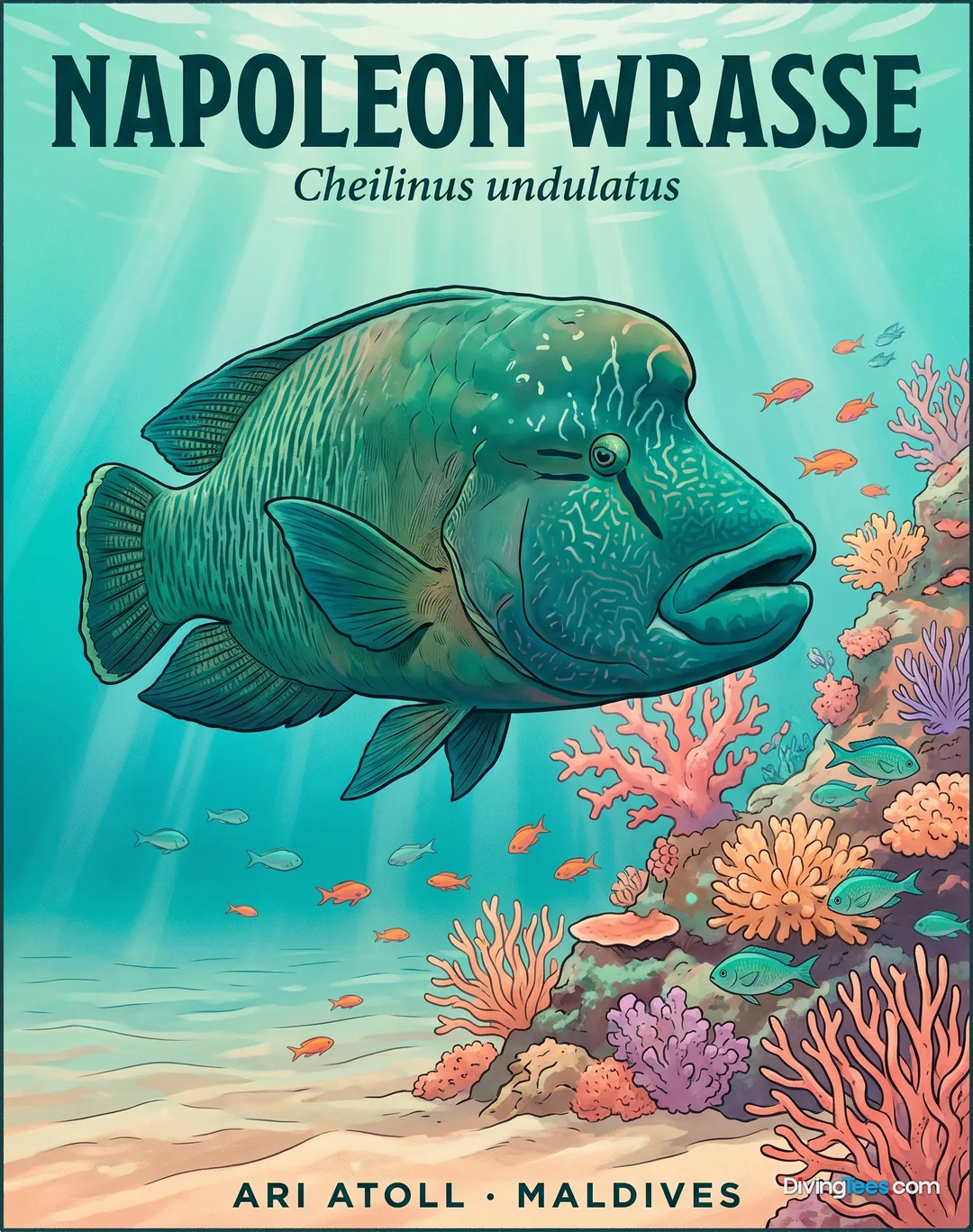
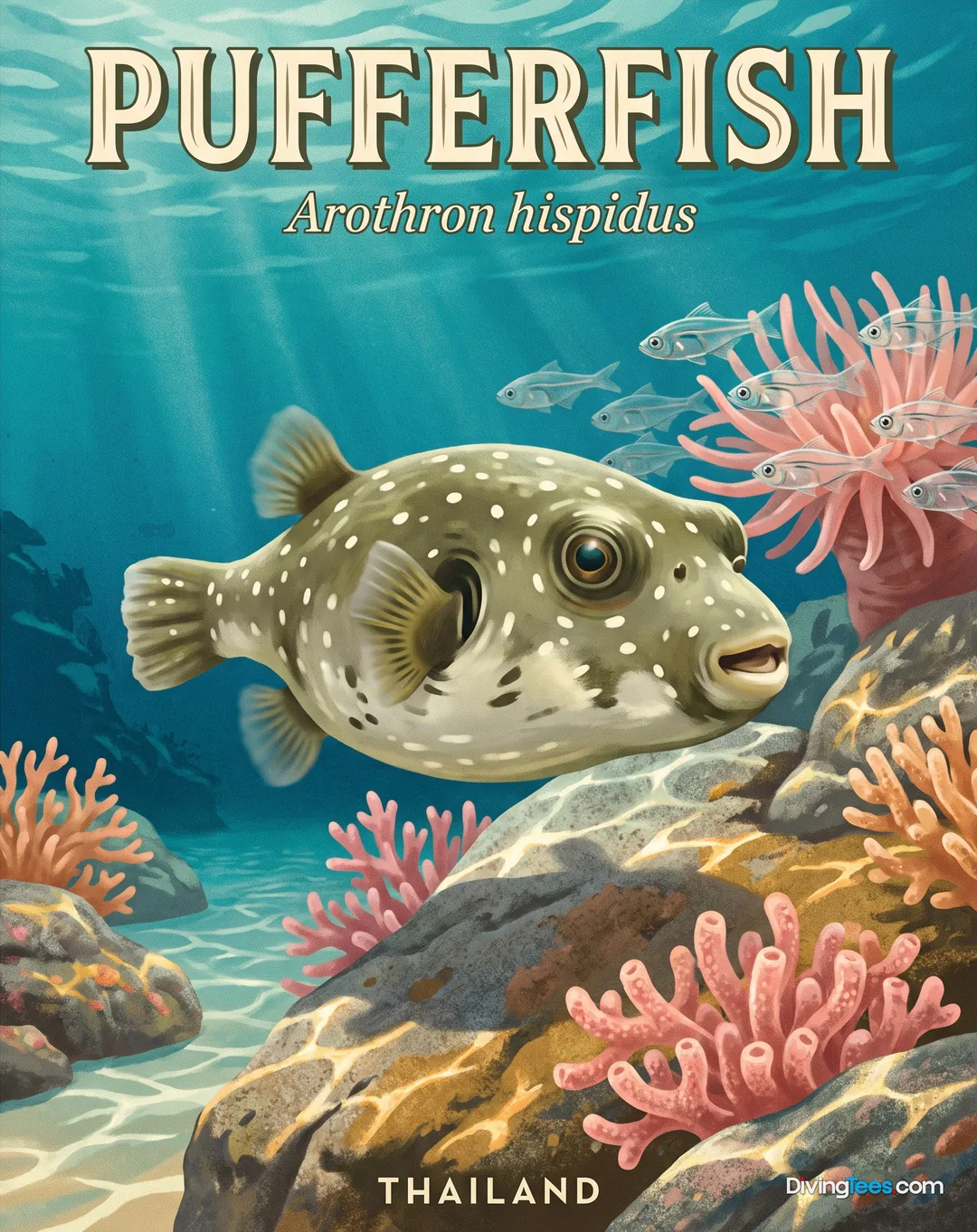
Across the route, turtles and nudibranchs are the recurring thread, with tuna, green turtles, frogfish, scorpionfish, whale sharks, jacks, shrimp, gorgonians, batfish, filefish and hawksbill turtles recorded at several sites. The spectacle changes with the terrain: a turtle on a Cebu wall, a frogfish or ghost pipefish on Anilao’s silty slopes, then tuna or schooling fish where current and reef shape bring larger animals together. Some encounters give a precise reason to choose a site. Verde Island is the place for the Napoleon wrasse and anemones; Pescador Island is where a white-tip reef shark and butterflyfish are recorded. Marine Sanctuary is the named site for grouper. Dolphin House Reef is associated with eels and squid, Buceo Point with crabs, Tongo Point with fusiliers, Talisay Wall with gobies, White Beach with damselfish, and Panagsama Beach with pufferfish. The sardine aggregation at Panagsama can draw tuna and jacks into the same blue water.
Who puts you in the water
Dive groups are deliberately kept small, which is the main advantage for a diver who wants time with a macro subject or room on a wall. English and Spanish are spoken by the crew, and the boat carries oxygen, first-aid kits and crew trained in first aid. Navigation and emergency equipment includes VHF, satellite communication, radar, sonar, GPS, an EPIRB and rescue boats. The dive operation supports air, nitrox, sidemount and rebreather divers. The available information does not give a fixed guide-to-diver ratio within each group, instructor qualifications, minimum logged dives or a list of courses run onboard, so the exact structure of briefings and group assignments should be understood from the cruise team before departure.
The dive deck and the gear
The stern dive deck is shaded and built for repeated entries, with a platform, rinse tanks and dedicated support from the tenders. Two 11.5-metre purpose-built fiberglass boats carry divers to the sites and return to collect them after they surface, using twin 150HP or 200HP four-stroke outboards. That separation keeps the main vessel’s deck organised while the tenders handle the drop and pickup. Nitrox is available through a membrane system, with enriched air in the EAN 28% to 36% range; it is an optional extra and is offered to certified divers. DIN adapters are available, as are sidemount and rebreather support. The camera setup includes a dedicated studio, a work bench, air guns, towels, two camera rinse tanks and separate charging space with surge protection and UPS sockets. Rental equipment is available, though brands and tank construction are not stated.
Between dives
Between dives, Solitude One gives guests several ways to come out of their equipment without disappearing into a cabin. The sun deck offers open air, while the bow-side jacuzzi is the place to sit when the body wants warmth and the eyes want a horizon. The aft open-air dining area keeps meals connected to the sea. Inside, the air-conditioned saloon has a large screen and a library of films and series, with books available for slower hours. The attached camera room gives photographers somewhere to adjust equipment and work between dives. Kayaks and stand-up paddleboards provide a reason to get back on the water without carrying a tank.
A day on board
A diving day starts with the first briefing before the boat’s working areas become busy, followed by the first descent and a return to tanks, food and surface interval. The schedule is built around up to four dives on a full diving day, with meals placed between them: light breakfast, substantial breakfast, lunch, cooked afternoon snack and dinner. The gaps belong to the sun deck, saloon, camera room or a quiet cabin, depending on whether the body wants shade, editing time or sleep. The tenders move divers to the sites and return them to Solitude One after the dives, while the main vessel can continue positioning for the next part of the route. The exact sites and sequence follow conditions, so the day is defined by the order of briefing, dive, recovery and refuelling rather than by fixed clock times.
What you eat aboard
The galley serves five meals across the diving day: a light breakfast, a fuller breakfast, lunch, cooked afternoon snacks and dinner. Main meals are generally buffet-style, with warm dishes kept ready so divers can eat without waiting for a formal service. Vegetarian and vegan options are available, and the kitchen can also move beyond the usual buffet with special meals or a barbecue on the beach. Biscuits and instant noodles remain available between meals. That pattern matters on a liveaboard: food appears soon after the dive that earned it, then again before the next one. The table is practical fuel, but the range of choices and the attention given to dietary needs make it a real part of the trip rather than an afterthought.
Nights at sea
The cabins sit on the main deck and have bay windows, so the sea is part of the room rather than something seen only from the sun deck. Categories range from Deluxe and Stateroom cabins to twin, single and family arrangements, including a Standard Quad Cabin. Private bathrooms, hot showers and air-conditioning cover the practical side of life after a dive. The larger Stateroom gives two guests more room, while the Deluxe cabins offer a private twin setup; the Quad is shared. Most of the value here is in the layout: after a camera-heavy or current-filled dive, the cabin is close to the working areas without being the only place to escape. Daily housekeeping keeps the space usable through the trip.
Deluxe Cabin DBL
Deluxe Cabin SGL (B4)
Deluxe Twin/DBL Cabins
Standard Quad Cabin (B8)
Staterooms (A1 & B6)
Stateroom SGL (A3)
Stateroom (A2)
What to know before boarding
The Anilao–Cebu itinerary boards in Anilao and ends in Cebu. Airport and hotel transfers are included for the cruise, with the arrangements communicated as part of the joining information. Arriving the night before boarding is the sensible choice, especially when the trip depends on reaching the dock ready to start.
Deck plan
- Year built
- 1979
- Year renovated
- rebuilt 2013
- Length
- 52 m
- Beam
- 8.6 m
- Maximum number of passengers
- 24
- Number of cabins
- 11
- Number of bathrooms
- 10
- Engines
- Main 2698 hp / auxiliary propulsion engine
- Cruising speed
- 8 knots
- Tenders
- 2 × 11.5 m purpose-built fiberglass boats (with twin 150 hp or 200 hp 4-stroke outboard engines)
- Website
- solitude.world ↗
Hello, I'm Marina, DivingDeal.com's AI assistant. I answer in detail about hotels, dive centres and liveaboards.

Thinking about the whole trip and the flights? Talk it over with Edith →
Marina is an AI. Some links are affiliate links: DivingDeal may earn a commission, at no extra cost to you. Bookings are made with the partner.