Liveaboards · Philippines
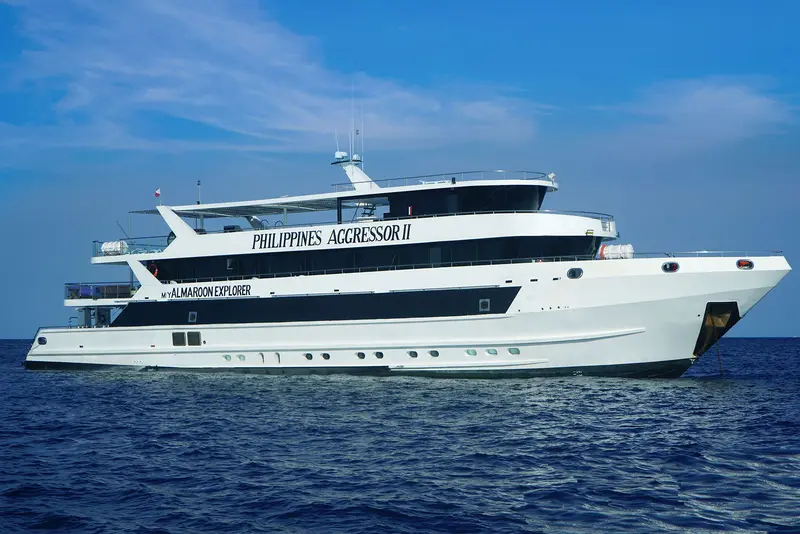
Philippines Aggressor — a polished liveaboard built around serious diving
Deal on this boat
Per person
£4,175$5,581€4,986 £2,981$3,985€3,560
Discount calculated by us, against the boat's usual price for a trip of the same length.
See all discounted dates ↓What makes this boat unique
- The 135-foot Philippines Aggressor carries up to 24 passengers in 12 air-conditioned cabins with private bathrooms.
- Its Cebu itineraries run for 7 or 10 nights and include night dives.
- The dive setup includes shaded working space, camera facilities, DIN adapters, rinse tanks and one 12-person tender.
- Food is a recognised strength, with full-board dining, gourmet meals, buffet service, vegetarian and vegan options, beer and wine.
- Balcony Suites, Deluxe Main cabins and Deluxe Lower cabins are available; some cabins have accessible balconies and all listed cabins have porthole windows.
For subtitles in English: start the video firstthen click the gearat the top right of the video, select “Subtitles/CC”, then “Auto-translate” and choose “English”.
The invitation
The Philippines Aggressor suits divers who want a polished base for Cebu's walls, sanctuaries, wrecks and macro sites without giving up the practical rhythm of a dive boat. It is large enough to offer separate spaces for eating, camera work, resting and getting ready, yet the guest capacity keeps the operation centred on a single dive programme rather than a floating resort with diving added later. The reason to choose it is the combination: a well-equipped dive deck, night dives included, a tender for sites away from the yacht, and food that is one of the boat's clearest strengths. Cebu rewards both wide-angle and patient critter diving. This boat gives both types of diver room to work.
Boarding
The first impression is modern and orderly rather than nautical theatre. The layout is elegant, with a spacious sundeck, shaded areas and a jacuzzi above the working parts of the boat. Moving around should feel straightforward: the salon gives everyone an air-conditioned place to gather, while the terrace and outdoor dining areas shift the day outside when the weather allows. The single tender carries 12 passengers, so some dives begin with a short transfer rather than a giant group crowding one platform. That matters in Cebu, where a wall, sanctuary or shore-based site may be the point of the day. The Philippines Aggressor is designed for a full boat of divers, but its separate salons, deck spaces and camera room keep the trip from becoming one continuous queue.
The atmosphere on board
The atmosphere is shaped less by ceremony than by service that keeps a demanding dive week moving. The crew speaks English and handles the practical handoffs between cabin, galley, dive deck and tender. Passenger feedback points most clearly to professional service, strong food and a dive operation that works well; the boat itself scores higher than the crew, which suggests that the vessel's polished setting is part of the appeal while the human side depends on the team on the particular departure. That is a fair distinction. A crew's real value appears when tanks are ready, meals arrive without derailing the next dive, and a tender is where divers need it after surfacing. Evenings can stay dive-focused, with night diving included rather than treated as an optional extra.
The sites you’ll dive
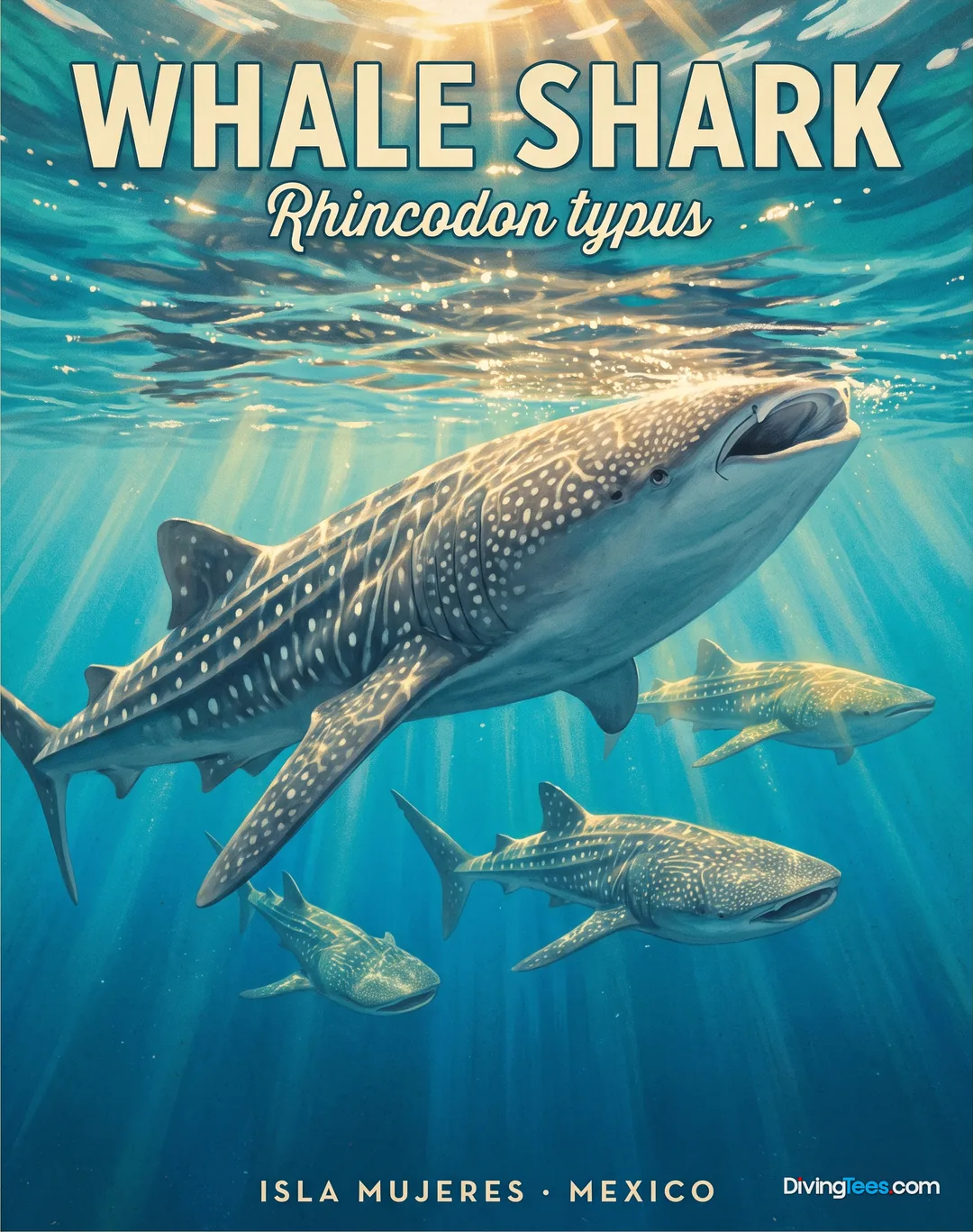
The Cebu route moves between protected reefs, steep walls, macro sites and wreck terrain. Sumilon Island is a historic marine sanctuary with healthy reef systems, nudibranchs, frogfish, blacktip reef sharks, rays and the possibility of whale sharks. Dolphin House Reef is shallow, directly accessible from shore and reaches -12 m; green turtles, seahorses, octopus and squid are among its reasons to slow down. Tongo Point reaches -29 m along a wall and sanctuary where razor fish, leaf fish, harlequin ghost pipefish, mandarinfish, fusiliers and sweetlips reward close inspection. Pescador Island drops from 12 to 33 m on its sheltered southern slope and reaches -40 m, with deep walls, an underwater cathedral, schooling jacks and a white-tip reef shark possibility. Marine Sanctuary reaches -35 m and shifts from busy reef to gorgonian forest. Copton Point reaches -50 m and combines a 20 m aircraft wreck with coral slopes and walls. White Beach reaches -30 m, while Dolphin House reaches -35 m through a wall and turtle-filled grottos. Tuble Reef reaches -30 m, with canyons and a small cave. Kasai Point reaches -37 m along a steep wall and caves. Panagsama Beach reaches -30 m and is the place for Moalboal's sardine balls, with tuna and jacks hunting around them. Talisay Wall reaches -30 m, moving from a gentle slope to a wall with barracuda and batfish. Recorded Best of Visayas departures run Cebu to Cebu for 7 or 10 nights.
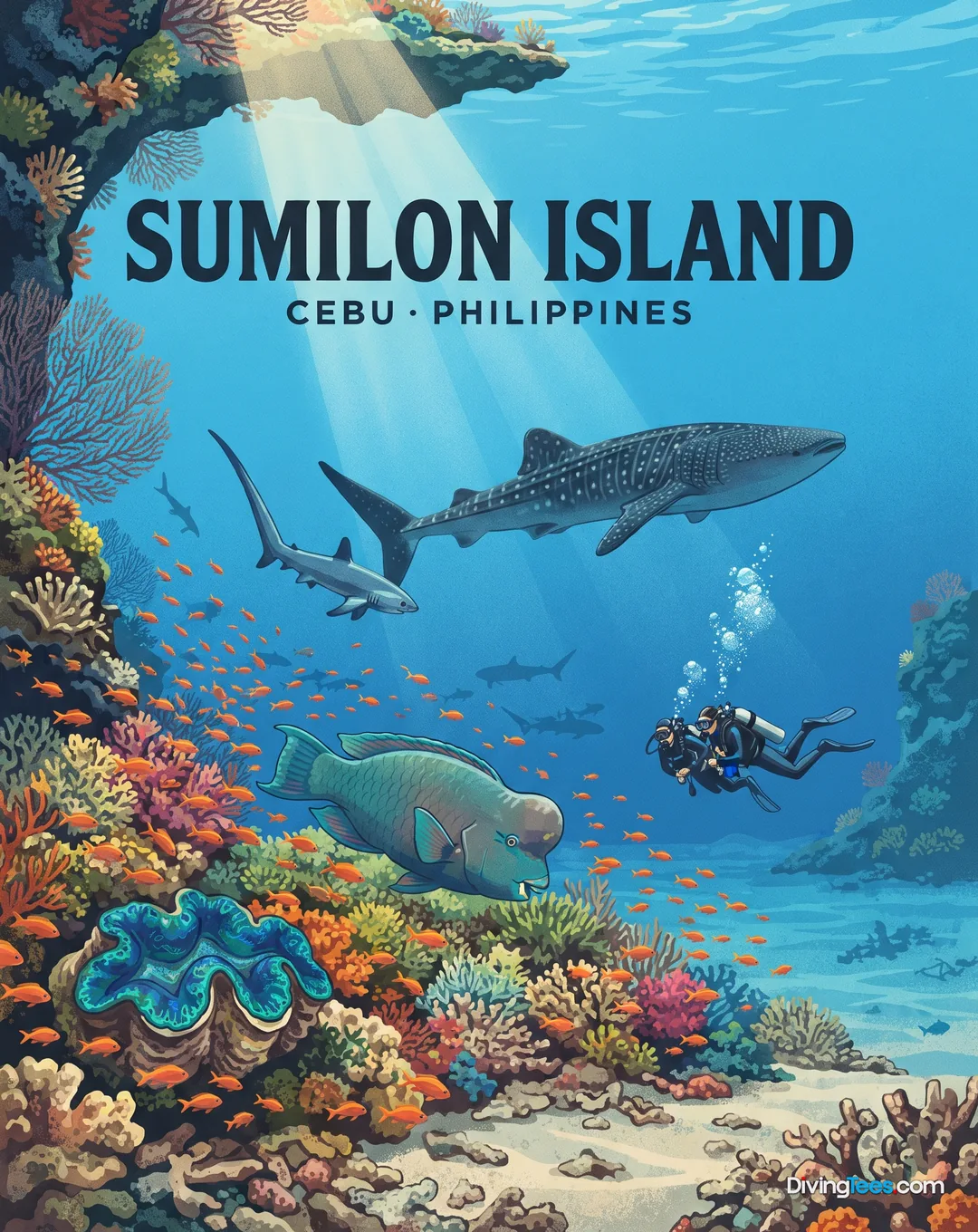
Sumilon Island →
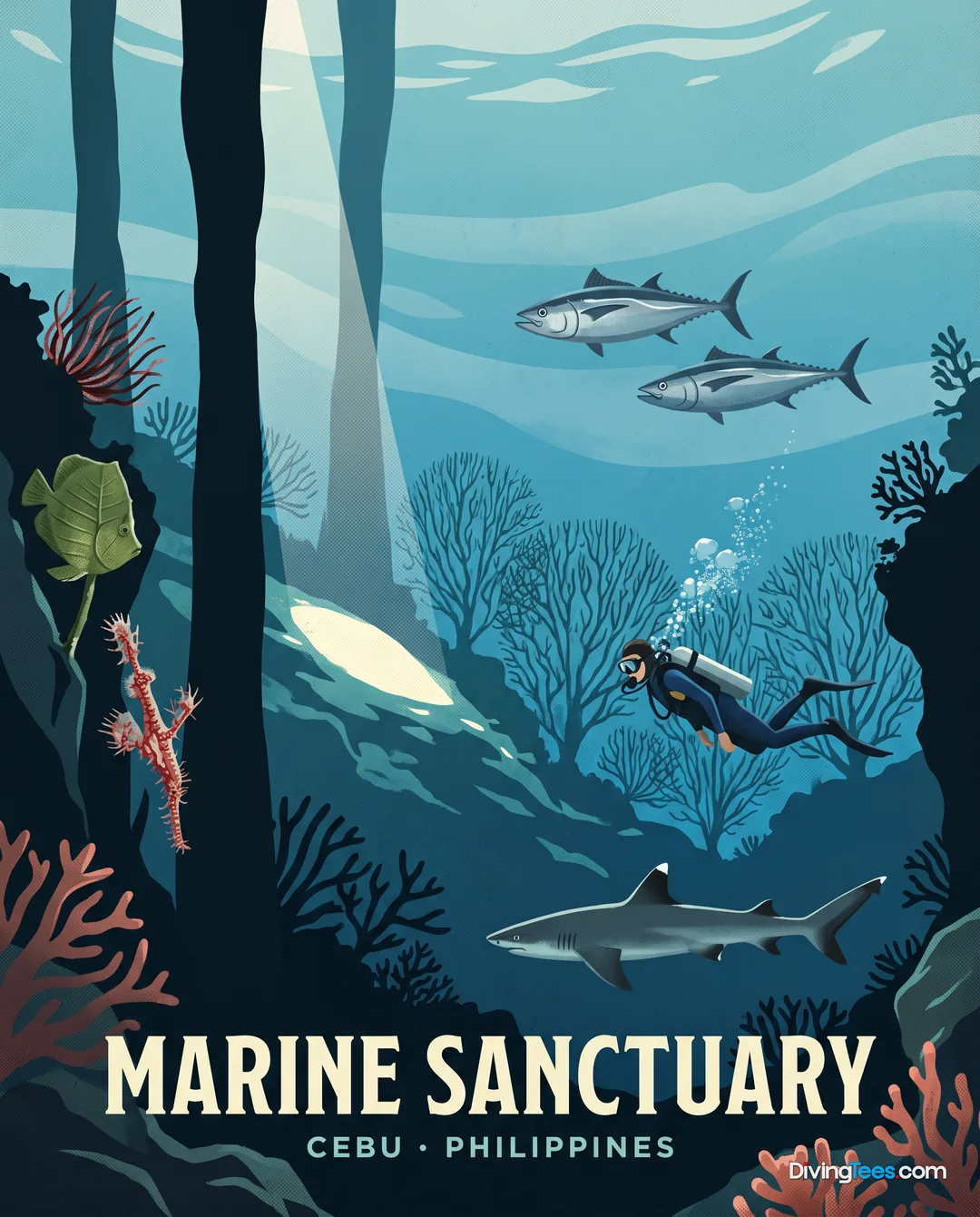
Marine Sanctuary →
Max. depth · 35 m
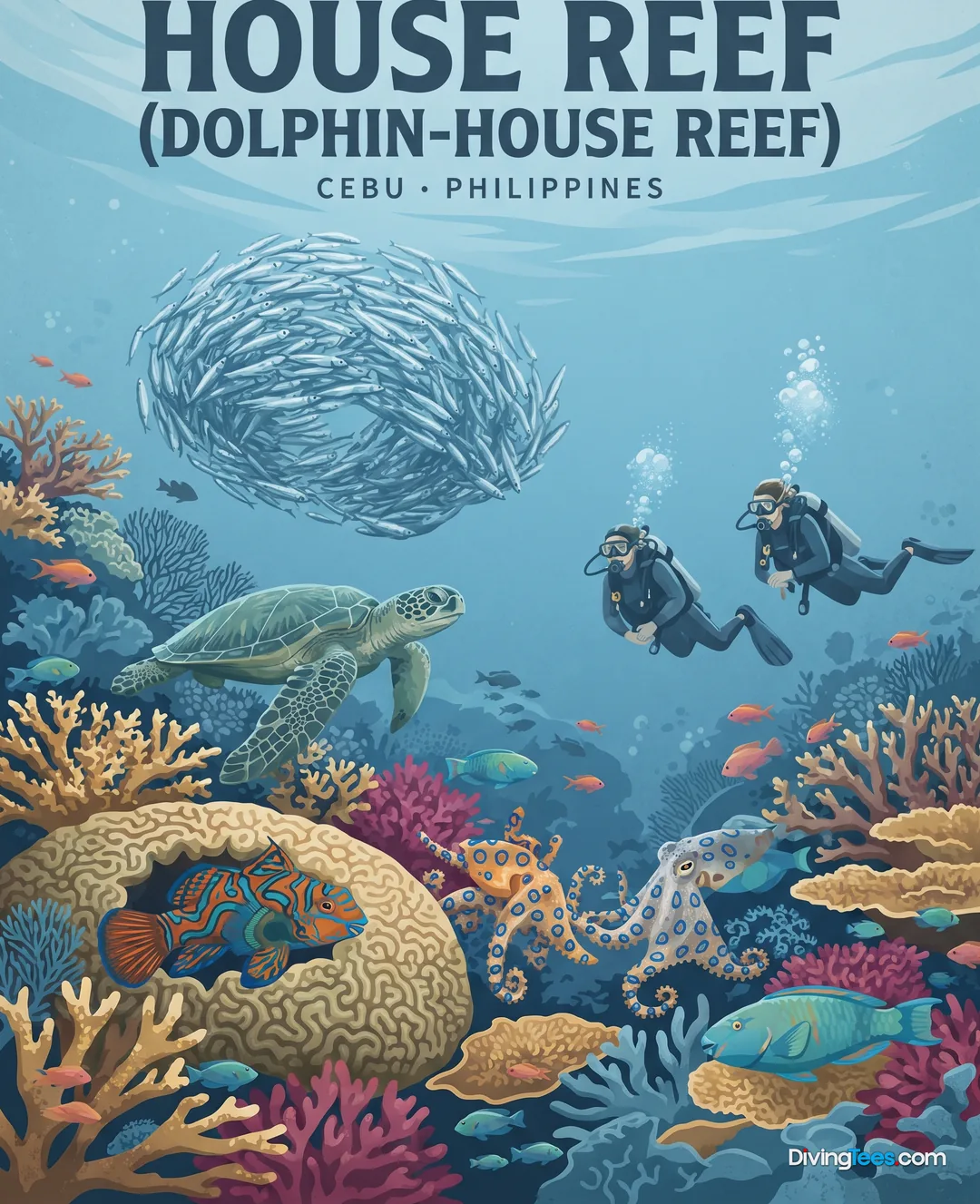
Dolphin House Reef →
Max. depth · 12 m
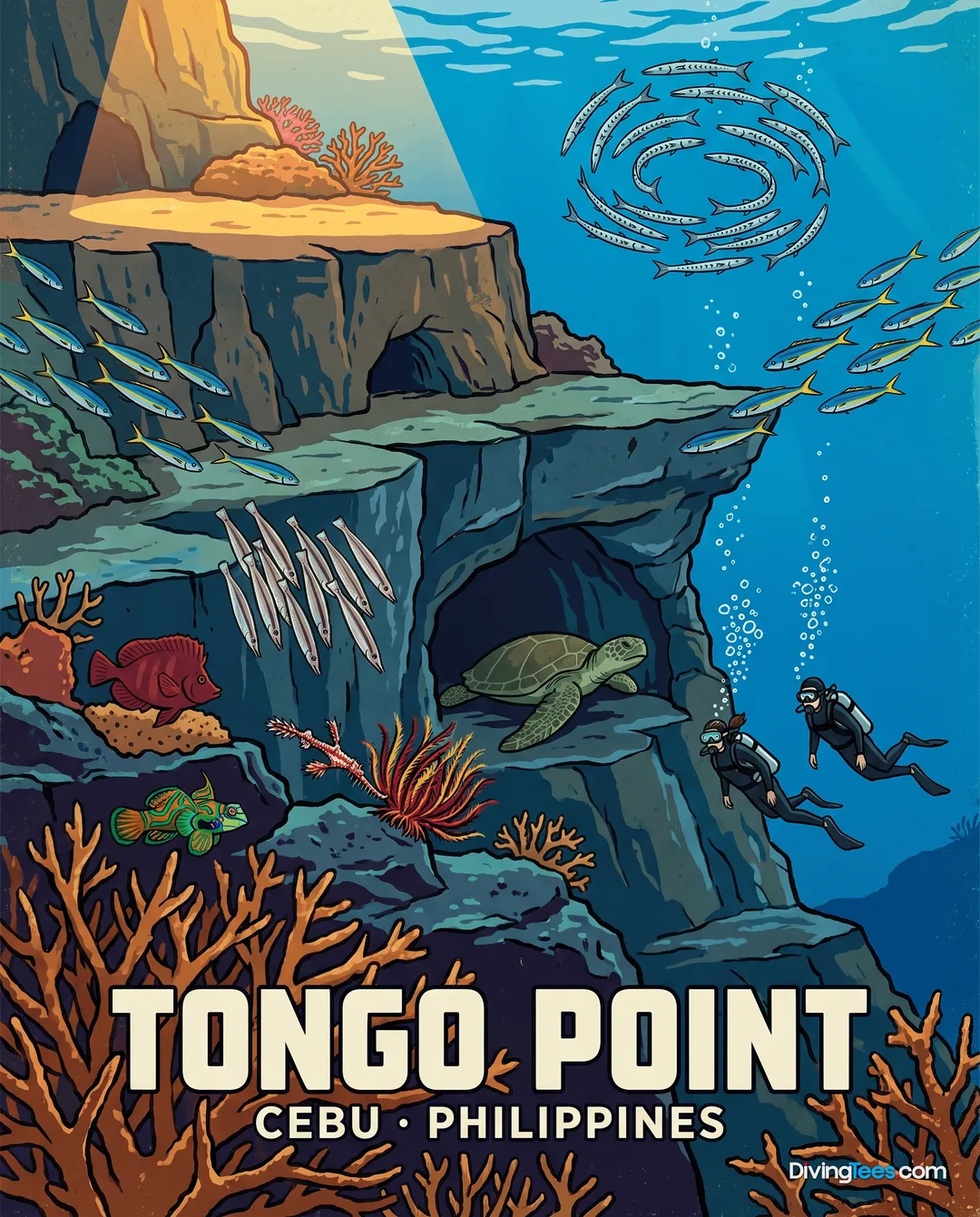
Tongo Point →
Max. depth · 29 m
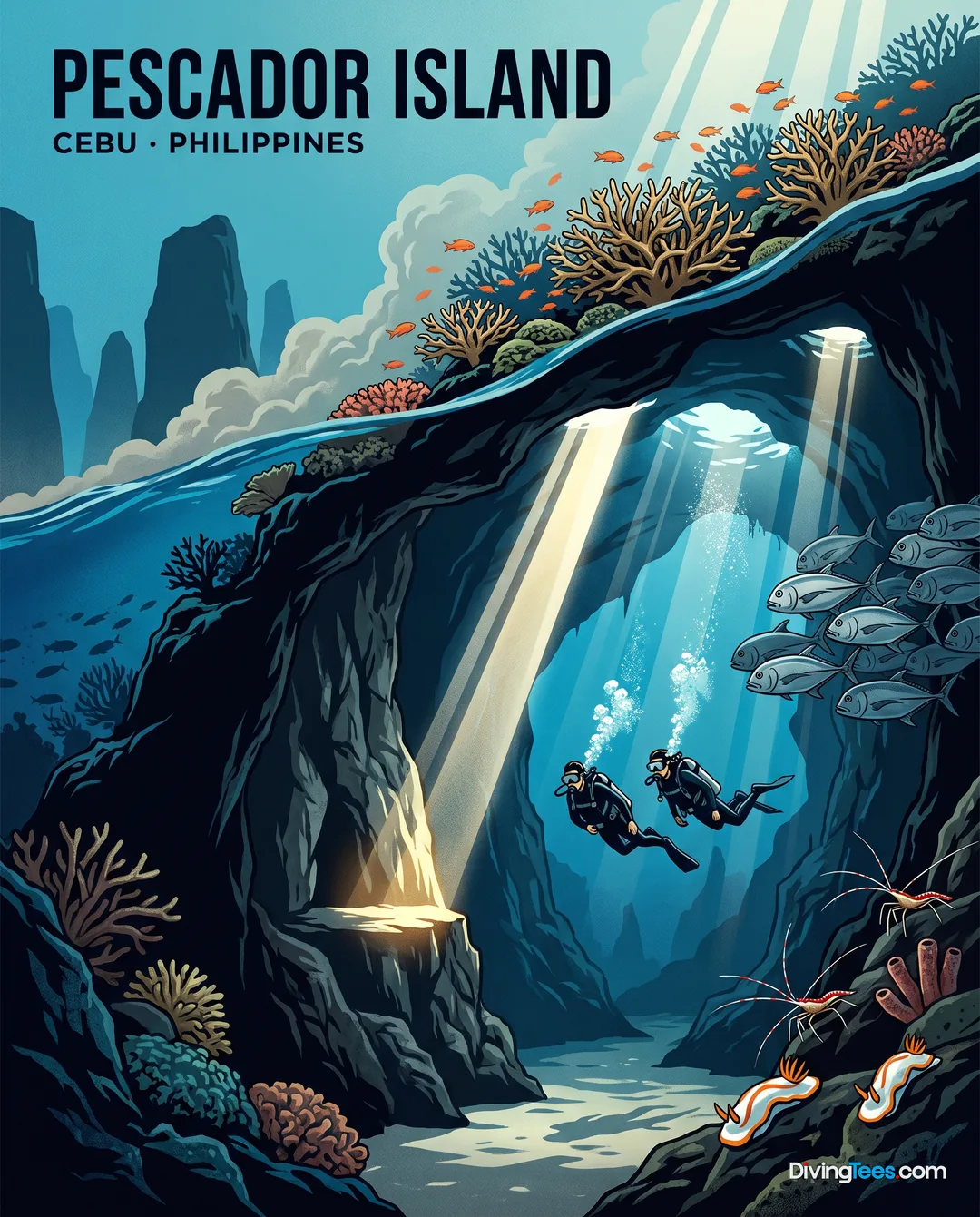
Pescador Island →
Max. depth · 40 m
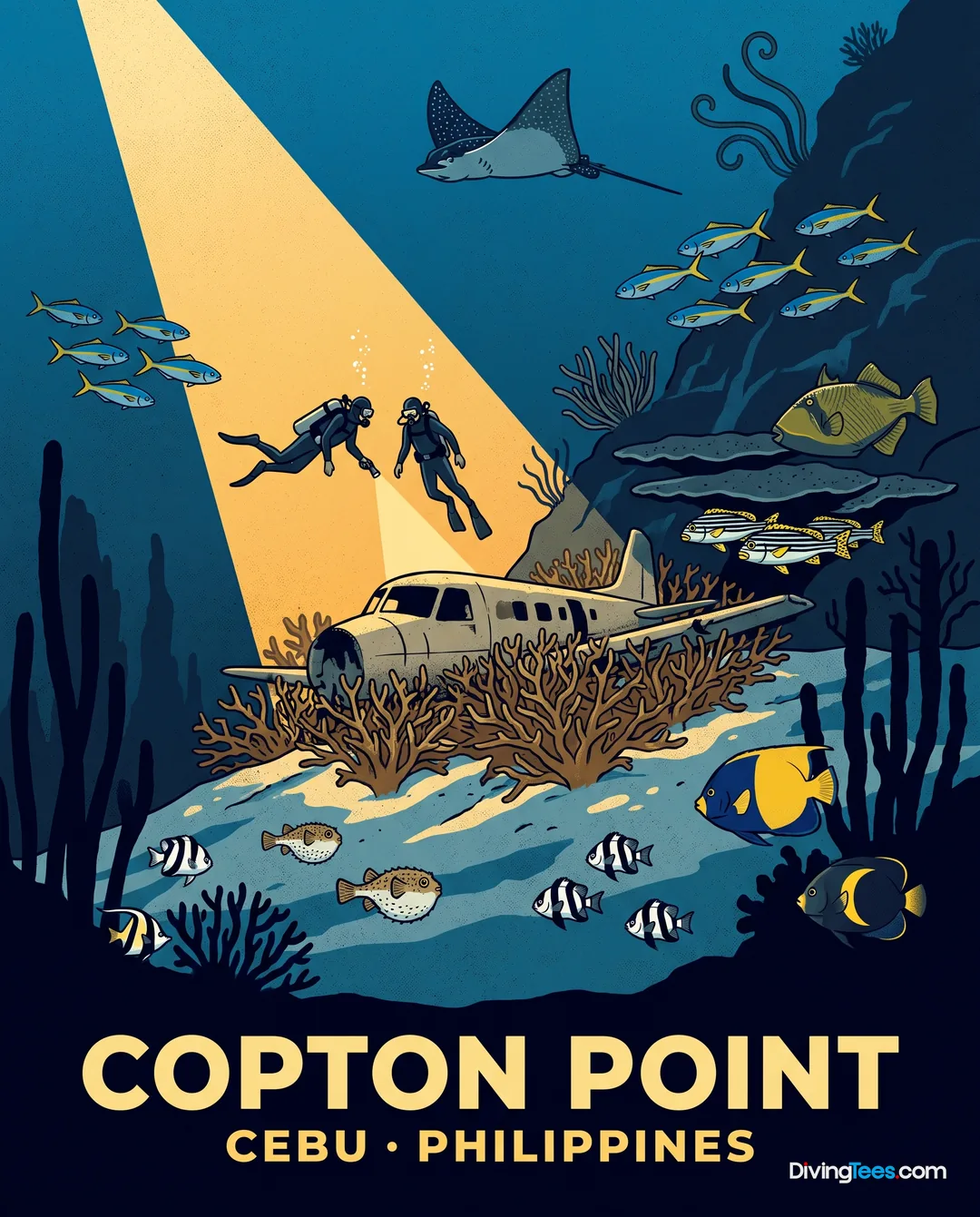
Copton Point →
Max. depth · 50 m
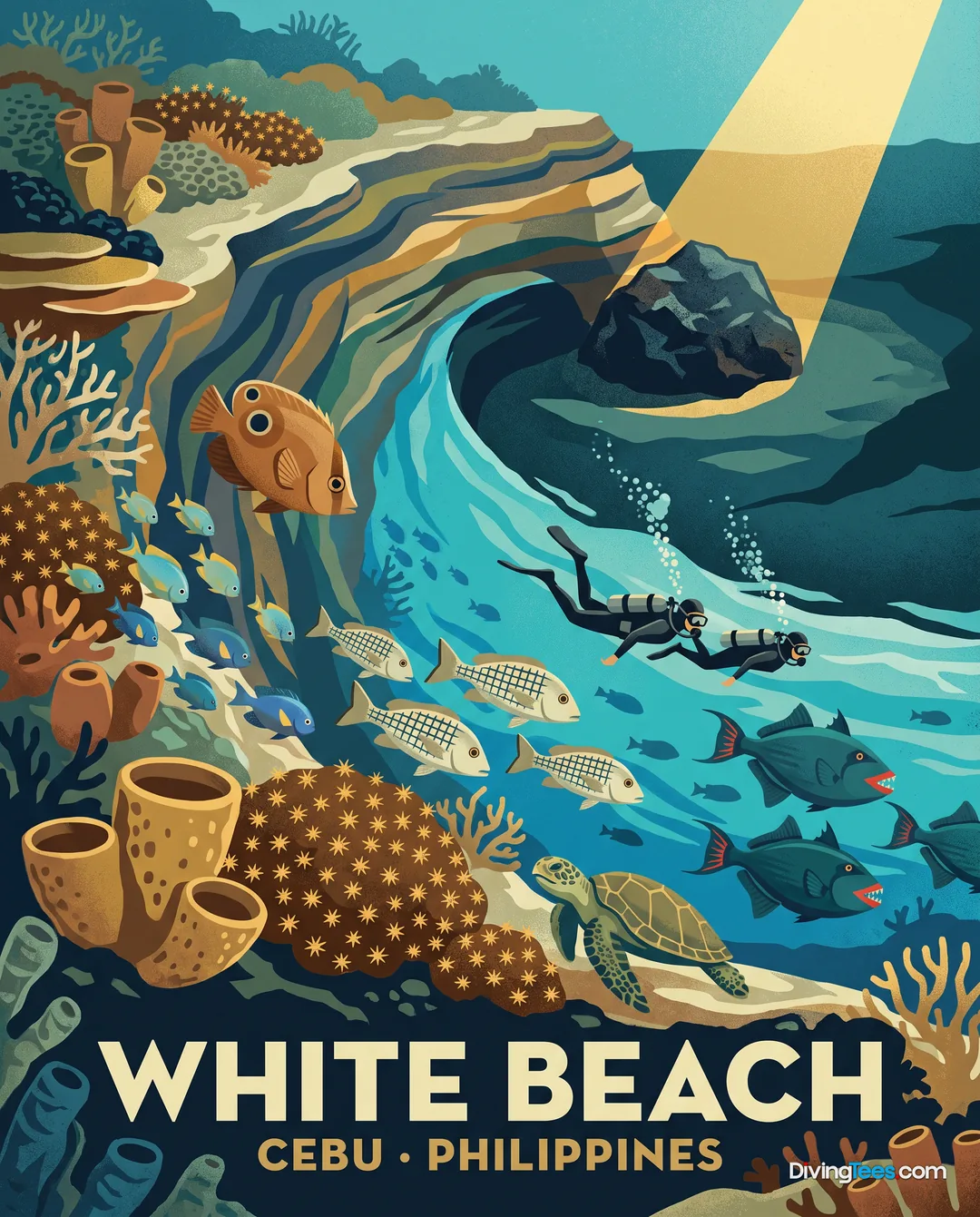
White Beach →
Max. depth · 30 m
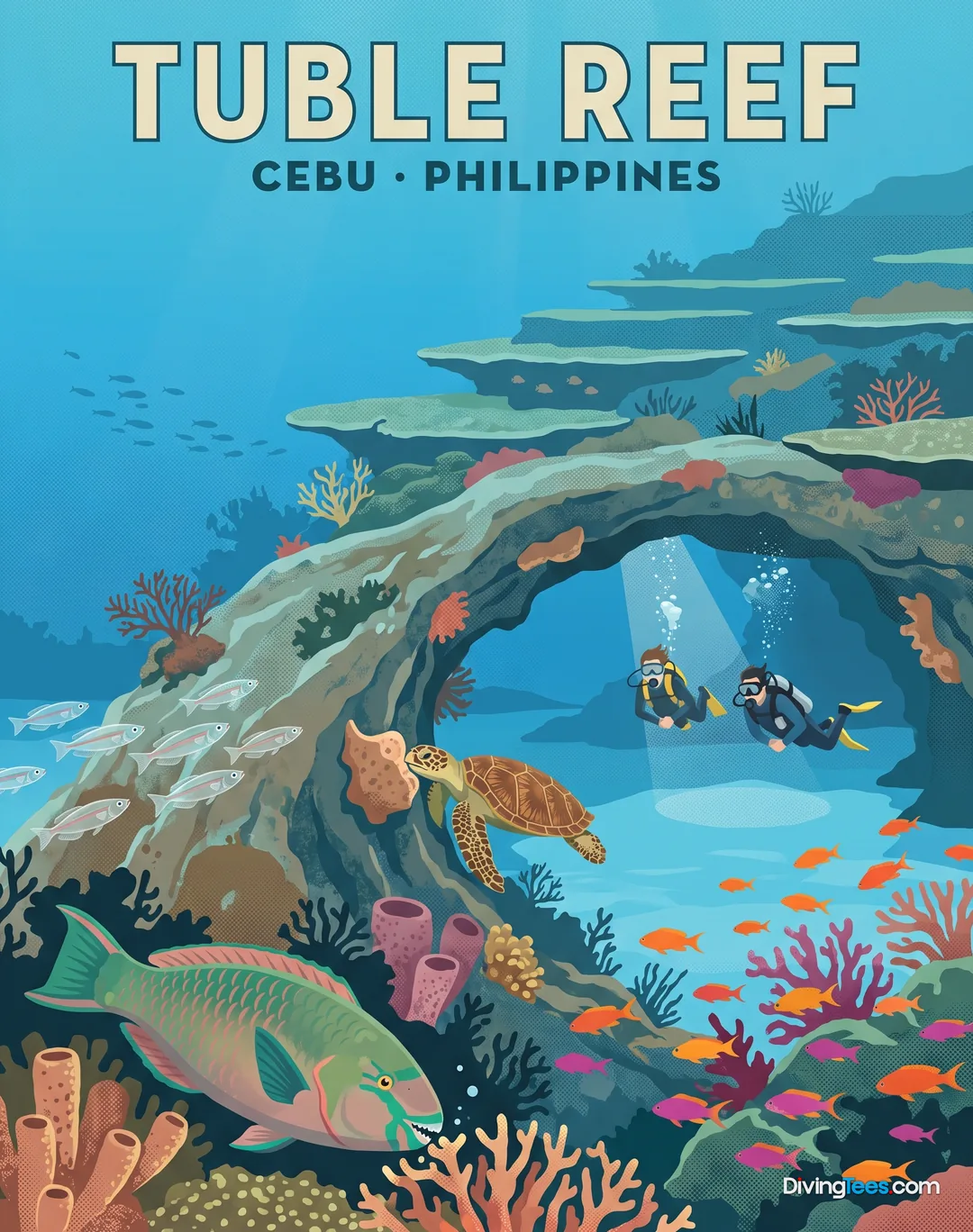
Tuble Reef →
Max. depth · 30 m
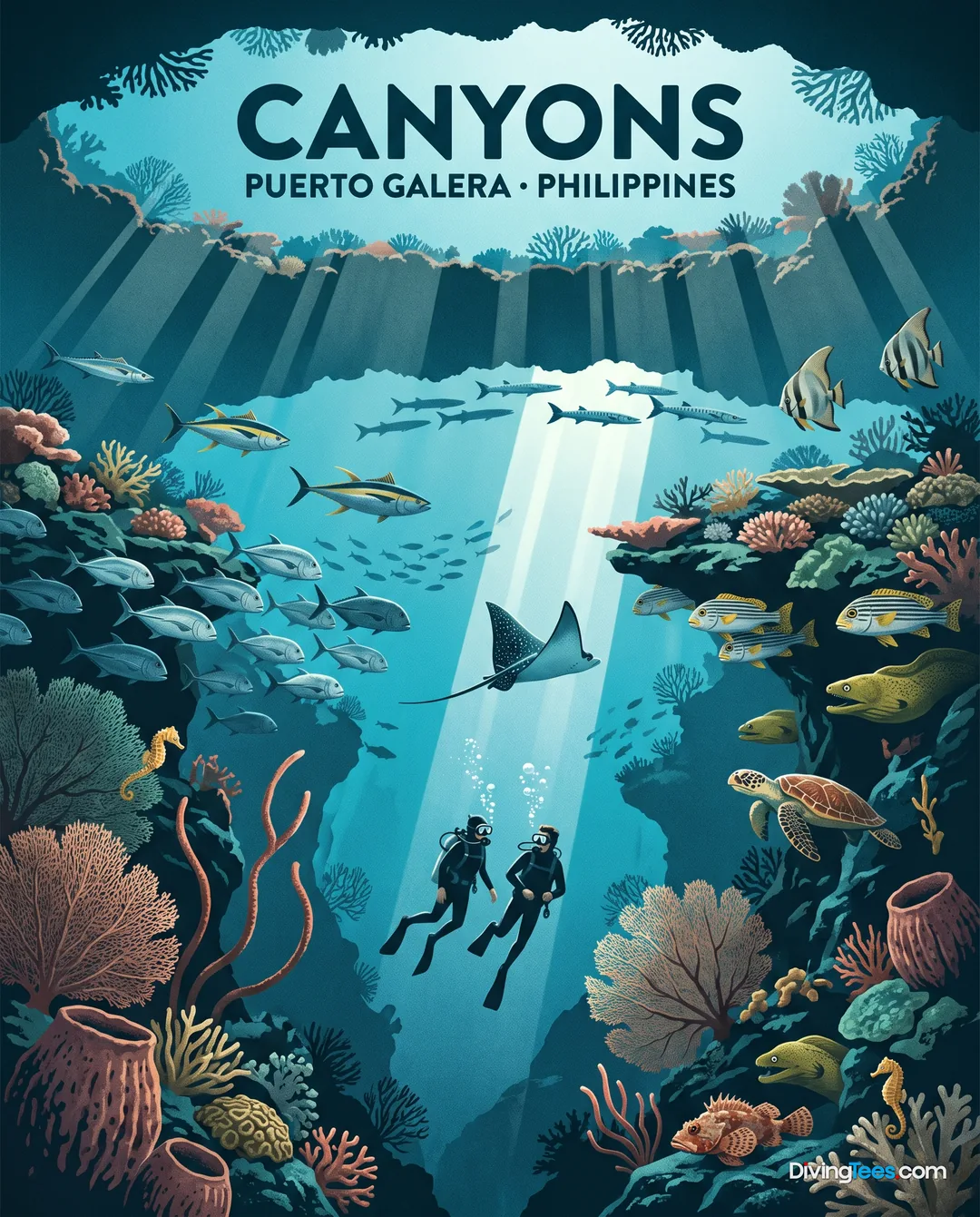
Canyons →
Max. depth · 35 m
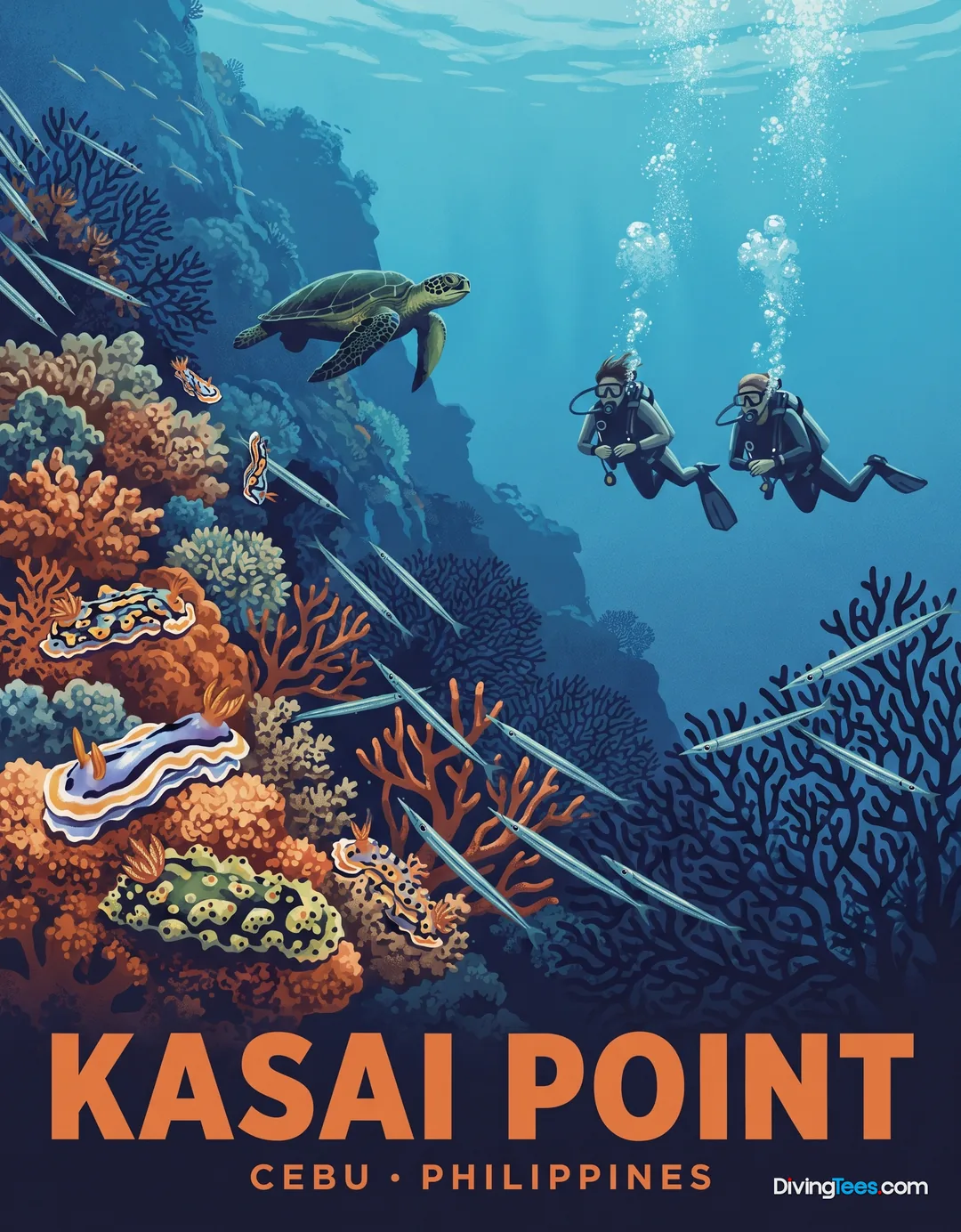
Kasai Point →
Max. depth · 37 m
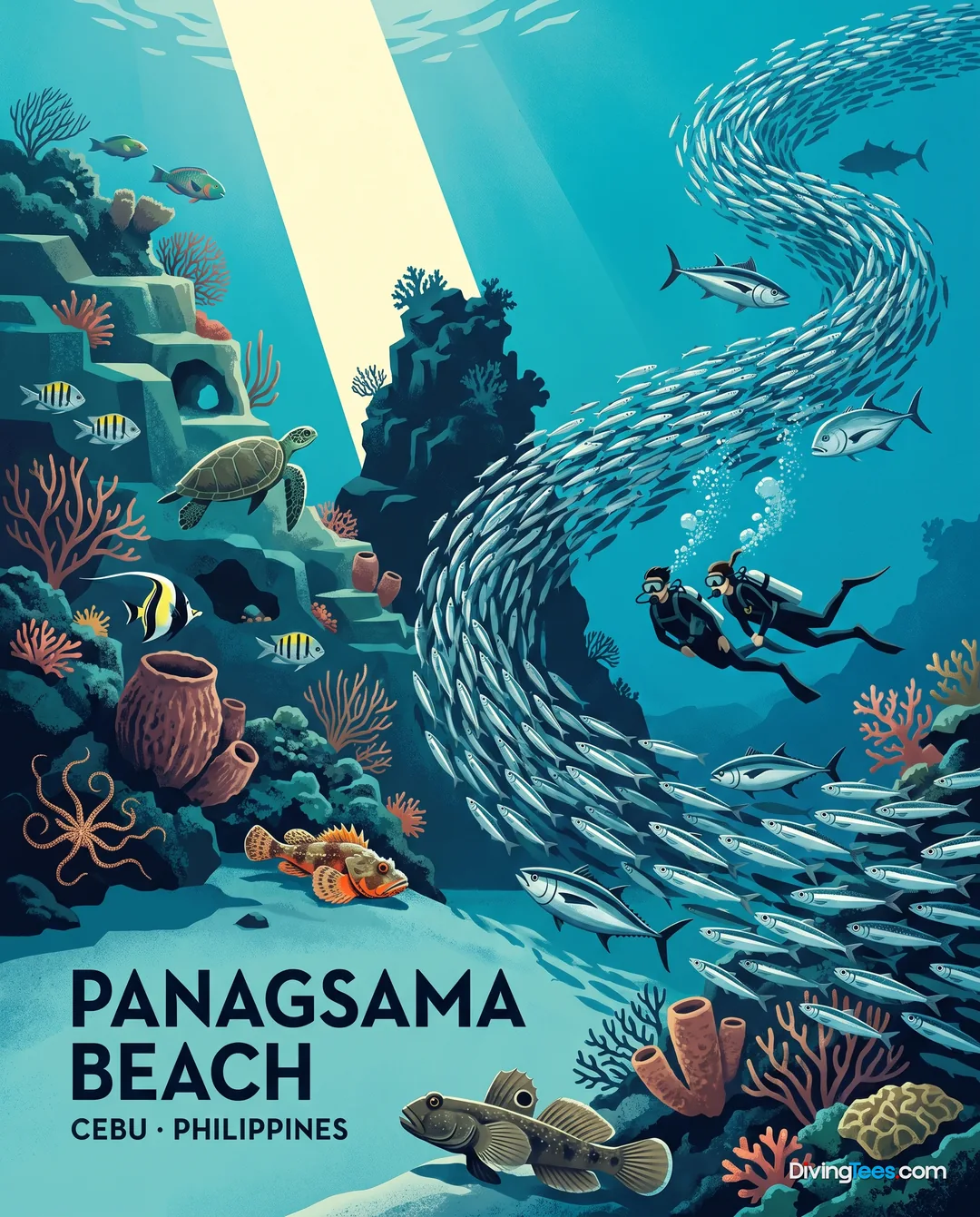
Panagsama Beach →
Max. depth · 30 m
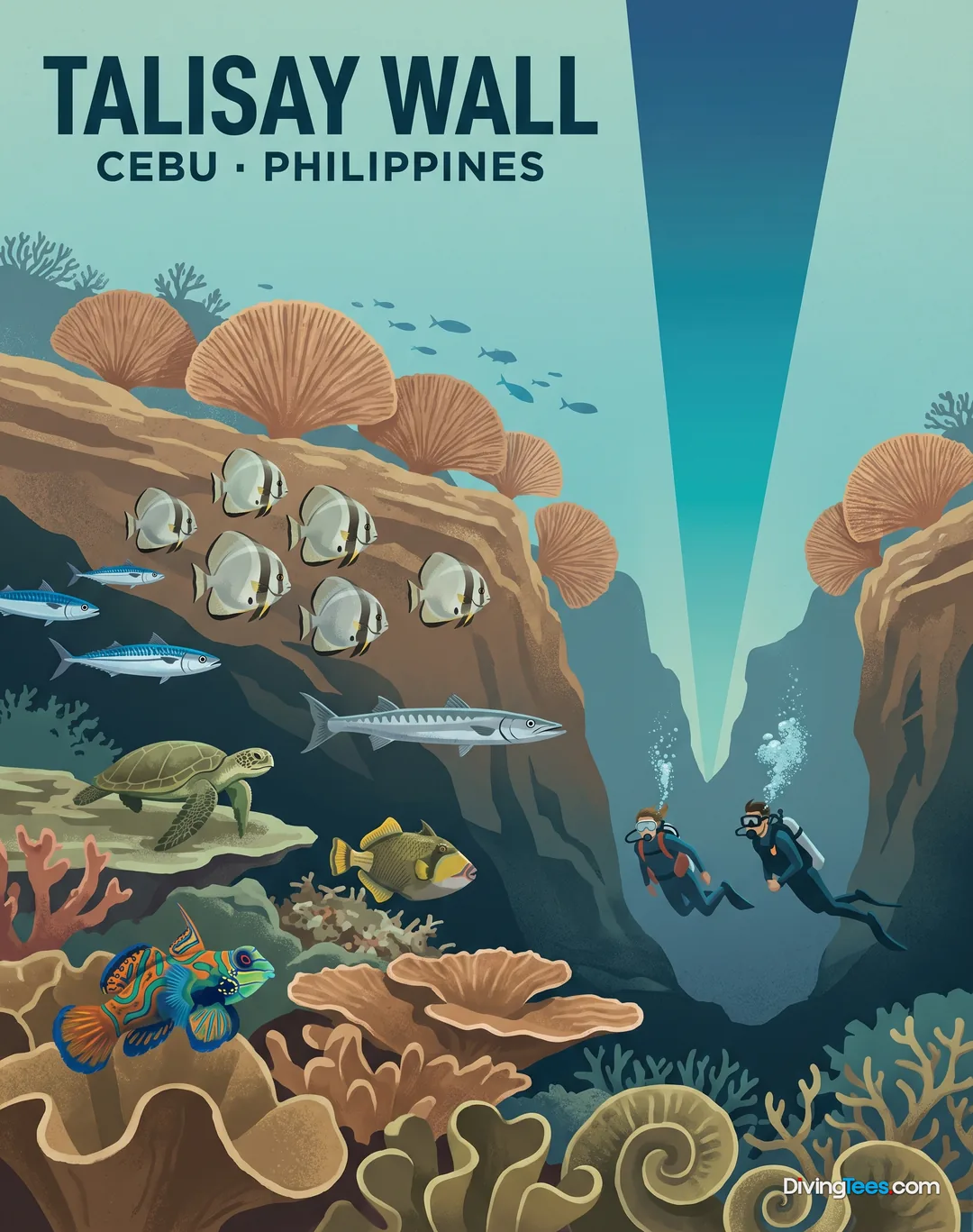
Talisay Wall →
Max. depth · 30 m
Itineraries, dates and prices
Prices per person. Each month shows its lowest price: click a month, or pick an itinerary.
Next departures · 110 departuresfrom £895$1,197€1,069
November 2026
December 2026
Green dot: a discounted departure that month. Discount calculated by us, against the boat's usual price for a trip of the same length.
See dates and prices
If you click these links and make a purchase on the partner site, DivingDeal may earn a commission, at no extra cost to you.
Dates and prices taken from Divebooker and liveaboard.com, updated 25 October 2026
What you’ll meet underwater
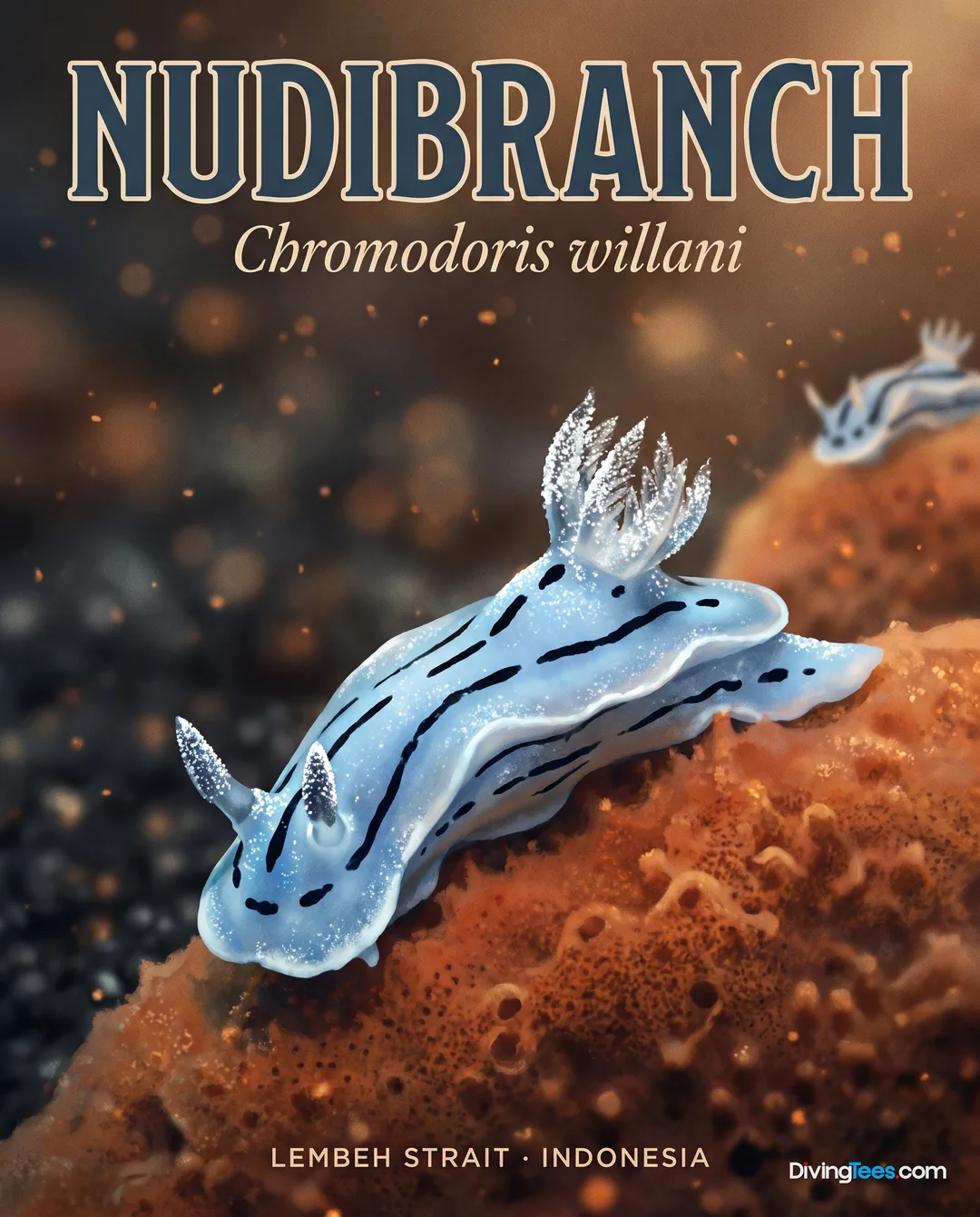
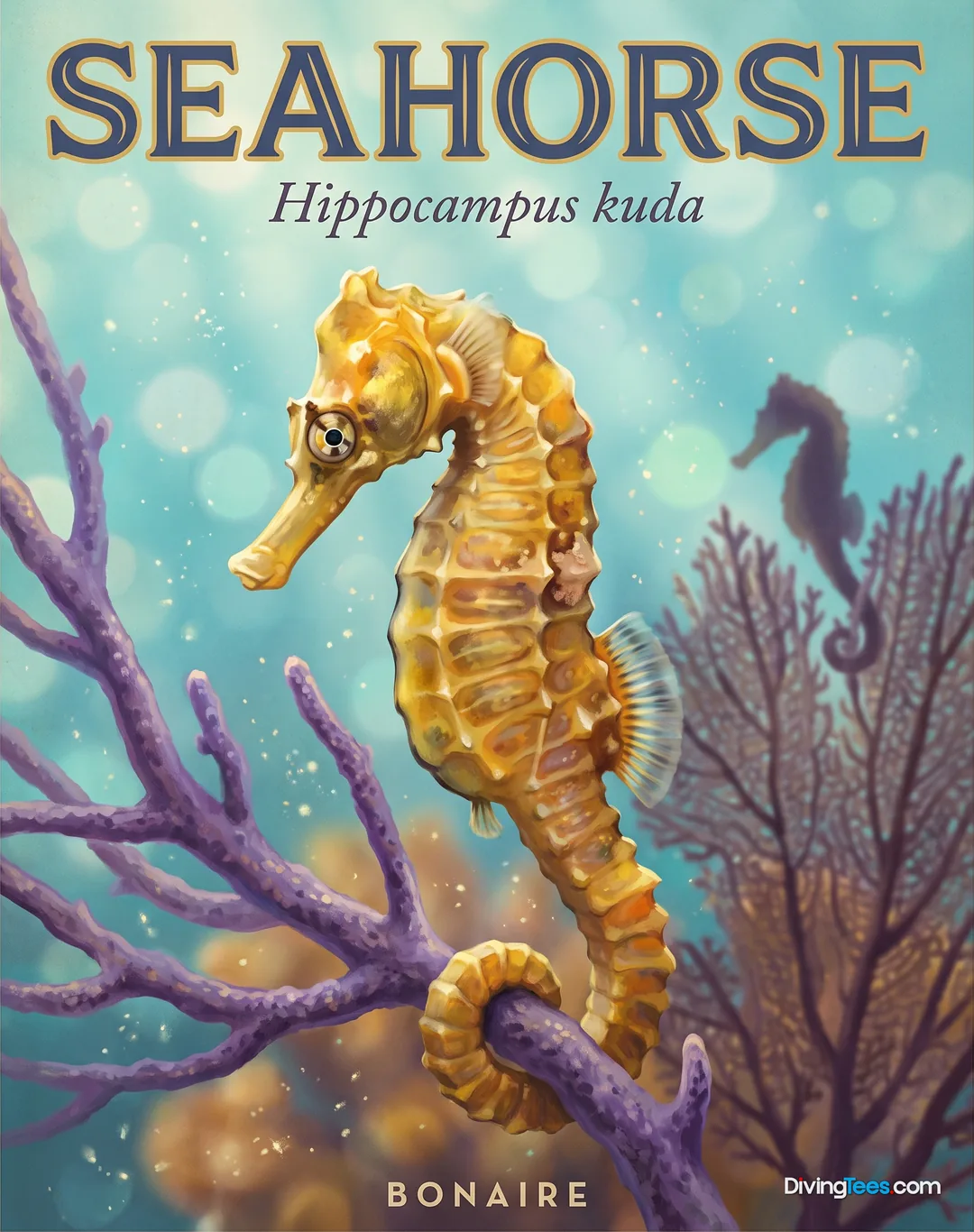
Sea turtles are the recurring presence of this route, recorded at nine sites, with green turtles appearing at four. Nudibranchs turn up across seven sites, while frogfish, tuna, whale sharks, gorgonians and filefish give the route both small subjects and open-water movement. Panagsama Beach is the visual outlier: thousands of sardines form bait balls against the wall while tuna and jacks drive through them. Other animals are tied to particular sites. Marine Sanctuary is the named place for grouper and its gorgonian forest. Pescador Island is where a white-tip reef shark and morays are recorded. Dolphin House Reef offers the route's recorded seahorse, octopus, squid and eel sightings, while Dolphin House is associated with anthias and turtles in the wall's grottos. Tongo Point is the site for fusiliers and sweetlips. White Beach has the recorded castagnole, and Talisay Wall is the named site for gobies. None of these encounters is guaranteed; the point of the itinerary is that the habitats change before the search becomes repetitive.
Who puts you in the water
Every dive begins with a briefing from the dive staff. Dives are organised as buddy-team dives, with teams of two or three divers; a staff member is not automatically a buddy unless the dive involves only that guest and that staff member. On direct-from-yacht dives, a staff member may be in the water to assist, spot critters and support underwater photography or videography. On tender dives, a staff member may accompany the group and help keep it together, but guests are not required to follow that person underwater. Oxygen, first-aid kits and crew trained in first aid are carried on board. Advanced Open Water and Nitrox training may be available during the trip, depending on the instructor, with course arrangements confirmed after boarding. The operating language is English.
The dive deck and the gear
The boat provides 80-cubic-foot air tanks, weights and weight belts. Tanks use K valves, and the Philippines Aggressor accommodates both K and DIN connections, with DIN adapters available. Nitrox is available as 32% fills for certified Nitrox divers as an optional extra, and a Nitrox course can be taken on board. The shaded dive area has rinse tanks, a camera room and a diving platform, while the 12-person tender handles dives that are not made directly from the yacht. Sidemount is accepted only with a single-cylinder configuration. Rebreathers are not supported, double tanks are not permitted, and underwater scooters and similar powered devices are not allowed. Rental equipment is offered separately, and larger tanks may be requested subject to availability.
Between dives
Between dives, the spacious shaded dive area is the practical refuge: close enough to the gear to check a camera or make a small adjustment, but protected from direct sun while surface intervals pass. The sundeck offers loungers and a jacuzzi when the priority is simply to stop moving. Inside, the air-conditioned salon, library and camera room give different kinds of shelter from heat, noise and glare. A non-diving guest can snorkel, use the common areas or join optional land excursions, so the boat also works for a mixed group. The best quiet time is likely to be found away from the dive platform, with the water moving past and the next briefing still far enough away to leave the camera alone.
A day on board
The day follows the needs of the diving rather than a sightseeing timetable. First comes the briefing, then the first descent while the water and light are still fresh; meals and snacks appear between dives, and the shaded deck becomes the place for tank checks, camera work and surface intervals. Later dives move the focus from reef structure to macro searching, walls, a wreck or the sardine action at Panagsama Beach. When conditions and the itinerary allow, the day closes with a night dive, included in the dive programme. After surfacing, the tender or platform brings divers back to the boat, where hot showers, dinner and an air-conditioned salon replace the noise of the deck. The exact number and timing of dives depend on the route and conditions, but the sequence is clear: briefing, dive, eat, reset, dive again, then sleep close to the next descent.
What you eat aboard
Food is one of the strongest reasons to choose this boat. The galley serves full-board meals through the day, with gourmet cooking presented through buffet and Western-style service, alongside vegetarian and vegan choices. Beer, wine and a selection of higher-end wines are available, as are non-alcoholic drinks, tea, coffee, water and snacks. On a Cebu itinerary, the table is not decoration: it is where divers replace the energy spent getting through repeated dives and compare the tiny subject found on a wall with the larger animal seen in open water. The useful combination is plenty of food without making every meal formal. Divers can eat, hydrate and get back to the deck without losing the day to ceremony.
Nights at sea
The cabin categories are Balcony Suites, Deluxe Main and Deluxe Lower. Cabins are air-conditioned and have private bathrooms with hot showers, while porthole windows keep the outside world present without turning the room into a public space. The listed cabin location is midship on the lower deck, useful for anyone who prefers less movement than the bow or stern can bring. Balcony access is available in the appropriate cabins, giving a private place to step outside rather than competing for a chair on the sun deck. These are compact liveaboard rooms, not hotel suites; their value is the privacy, climate control and quick return to bed after a night dive. The boat's generous common areas do the rest of the work.
Balcony Suites
Deluxe Main
Deluxe Lower
What to know before boarding
Best of Visayas departures begin and end in Cebu. Airport transfer is included. The trip information records 7-night and 10-night charters, with the longer itinerary listed as 11 days and 10 nights and the shorter as 8 days and 7 nights. Arriving in Cebu the night before is the sensible way to protect the first day from flight delays.
Deck plan
- Length
- 41.1 m
- Beam
- 8.7 m
- Maximum number of passengers
- 24
- Number of cabins
- 12
- Number of bathrooms
- 12
- Cruising speed
- 10 knots
- Tenders
- 1, capacity 12 pax
- Website
- aggressor.com ↗
Hello, I'm Marina, DivingDeal.com's AI assistant. I answer in detail about hotels, dive centres and liveaboards.
Thinking about the whole trip and the flights? Talk it over with Edith →
Marina is an AI. Some links are affiliate links: DivingDeal may earn a commission, at no extra cost to you. Bookings are made with the partner.