

Dive Station Pattaya
Google 4.9/5 (413 reviews)
9.9 km away as the crow flies
Pattaya · Thailand · Asia
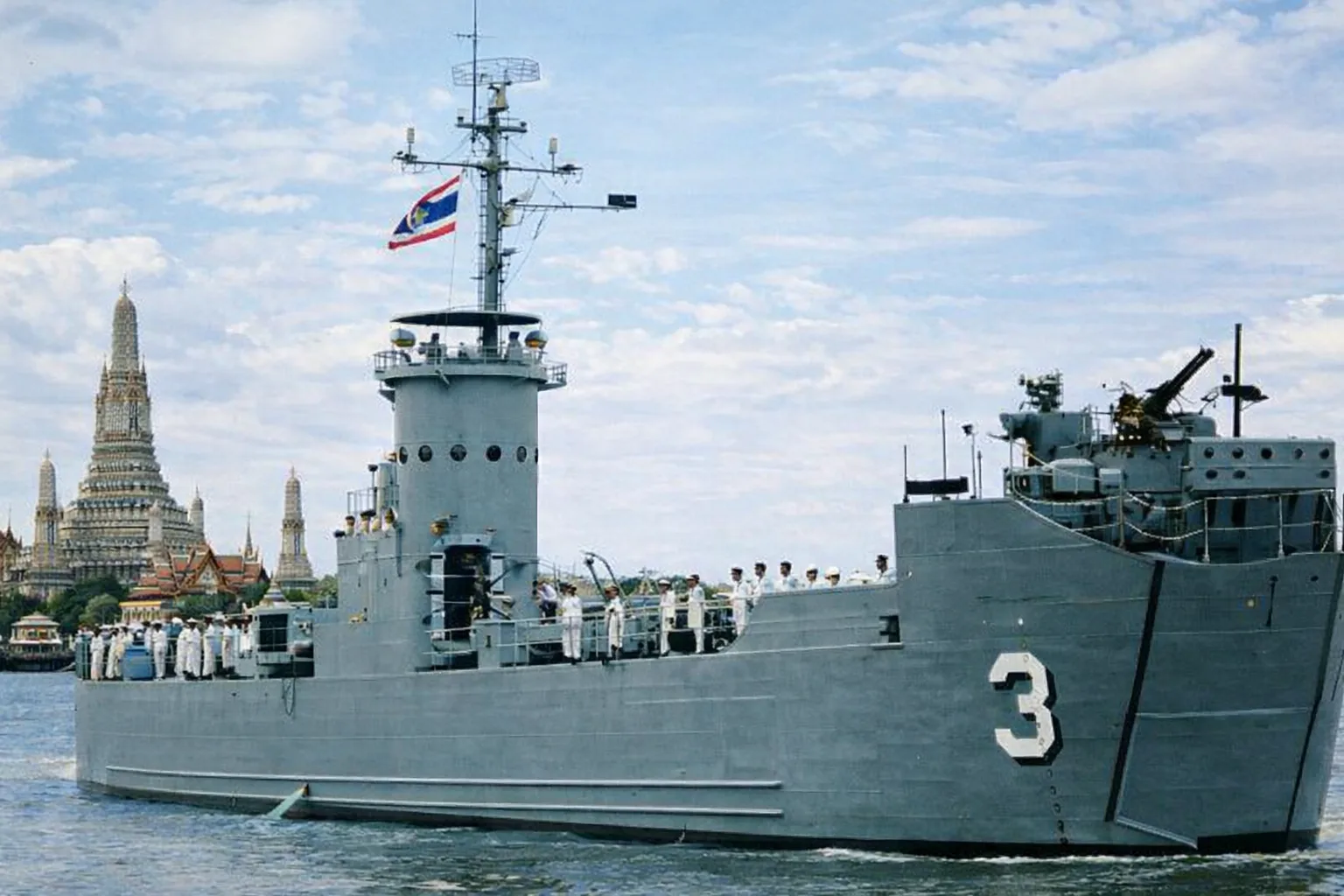
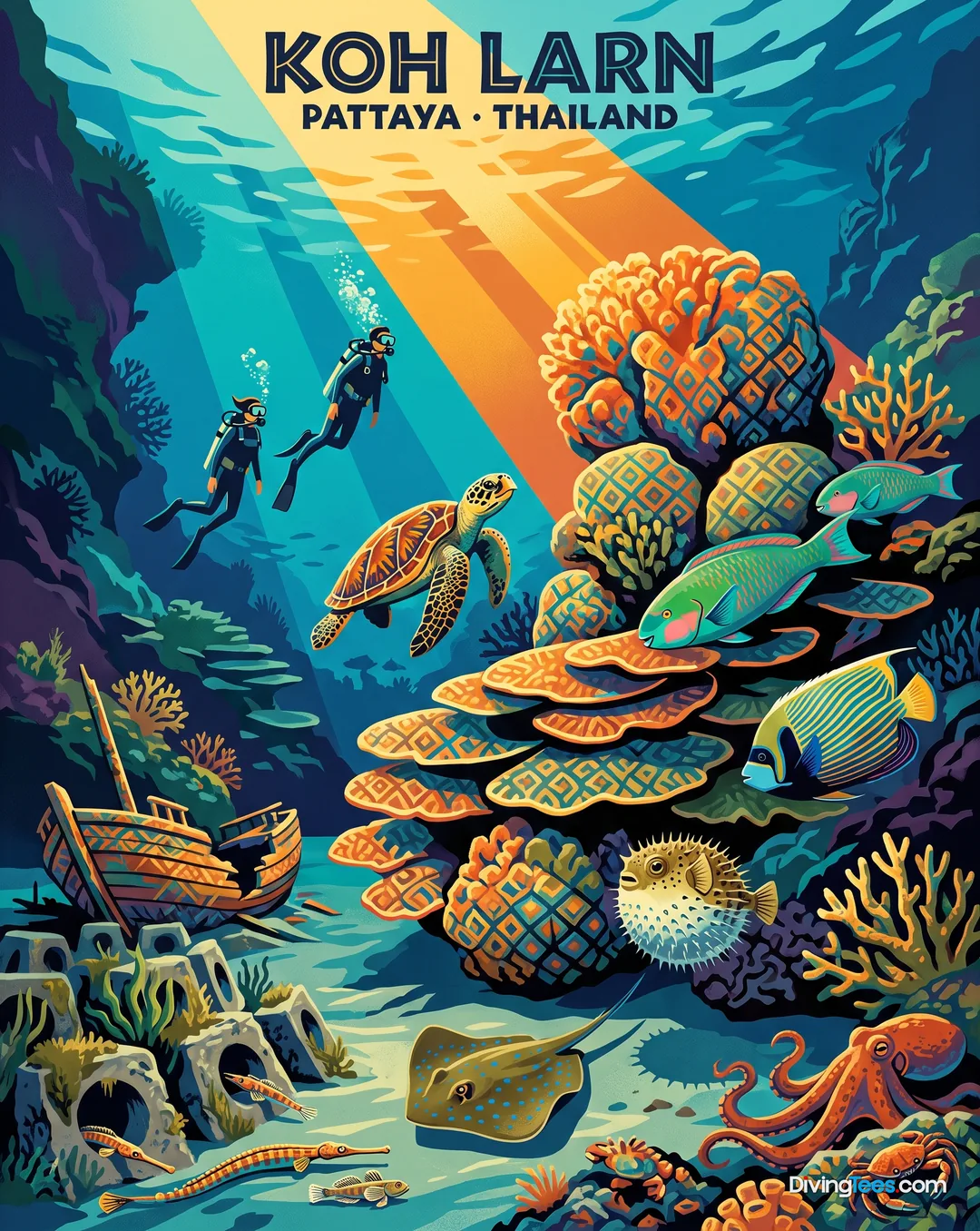
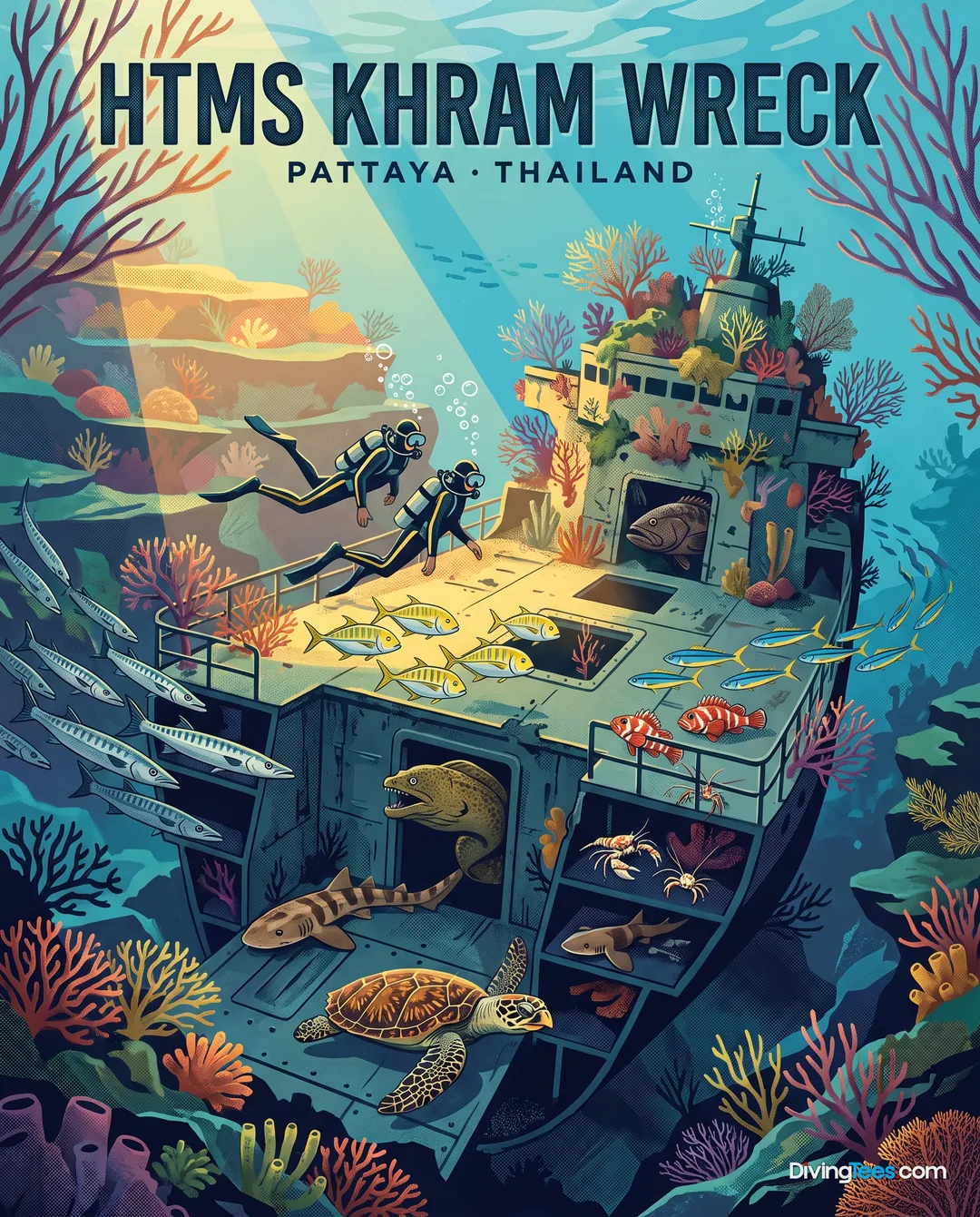
Max. depth · 30 mDescend onto the HTMS Kut, an intentionally-sunk warship now serving as a thriving artificial reef frequented by Hawksbill sea turtles.
For subtitles in English: start the video firstthen click the gearat the top right of the video, select “Subtitles/CC”, then “Auto-translate” and choose “English”.
The HTMS Kut lies on the seabed as a purposefully sunken vessel, creating a substantial artificial reef structure suitable for divers. As you descend, the sheer scale of the wreck becomes apparent, its form contrasting with the surrounding sandy bottom. The stern section, often the initial point of interest, gives way to the main deck, where marine growth has begun to colonize the metal plates.
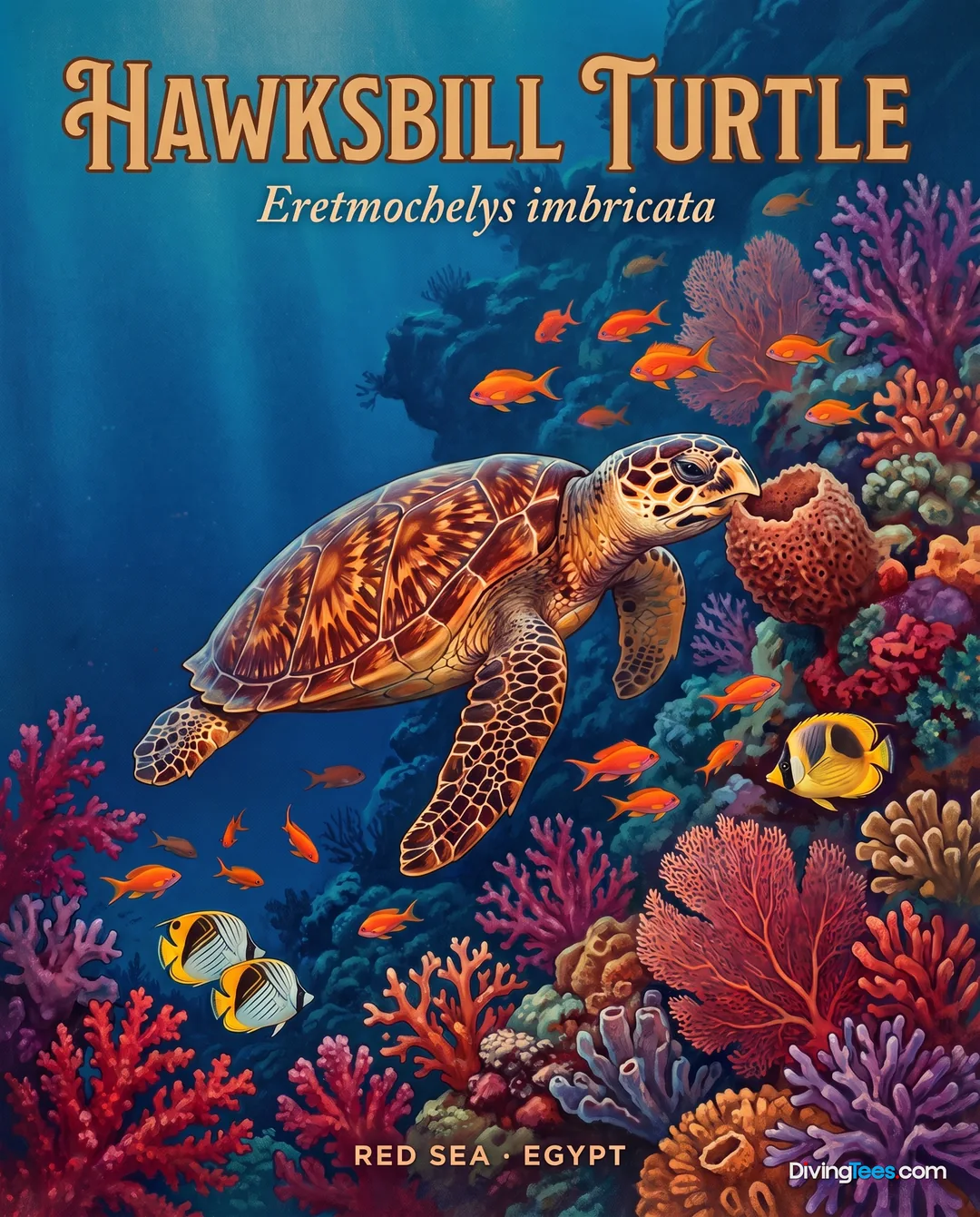
This wreck acts as a focal point for marine life in the Bay of Pattaya, drawing in a variety of species that seek shelter and feeding grounds. While the larger structure invites a range of pelagics, it is particularly known for resident Hawksbill sea turtles (Eretmochelys imbricata). These turtles are frequently observed navigating the wreck's contours, often found in proximity to the vessel, utilizing the abundant smaller life the wreck attracts.
The HTMS Kut's design as an artificial reef has allowed for a steady colonization by both soft and hard corals over time, transforming the ship's decks and internal spaces into living habitats. Pockets of the wreck allow for penetration for divers with appropriate training and equipment, offering a different perspective of the ship's interior while maintaining safe access. These enclosed areas often reveal unique growth patterns and resident inhabitants sheltered from the open current.
Interaction with the surrounding environment is a key aspect of diving the HTMS Kut. Its proximity to natural shallow coral reefs and sandy nesting sites suggests a direct ecological connection, making it a critical hub for local biodiversity. This environmental context explains the regular presence of creatures like the Hawksbill turtles, as they move between different feeding and resting areas within the wider ecosystem.
The HTMS Kut is an advanced level dive site, reaching a maximum depth of 30 metres. Minimum certification required is Advanced Open Water Diver, due to depth and potential for variable conditions. Planned decompression stops should always be factored into your dive profile.
You need Advanced Open Water Diver certification to dive HTMS Kut. The site is considered advanced because it reaches substantial depth and may involve variable conditions. HTMS Kut is also suitable for PADI Wreck Diver training, while penetration into enclosed areas requires appropriate training and equipment.
HTMS Kut lies at depths between twenty and thirty metres, with a maximum depth of thirty metres. You should plan your dive profile around this depth range and factor planned decompression stops into your dive. The wreck rests on a sandy bottom and includes decks, internal spaces, and other areas to explore.
You may encounter variable conditions while diving HTMS Kut. The wreck's enclosed areas can be sheltered from the open current, creating different conditions inside the vessel than around its exterior. Because of the site's depth and conditions, you should plan planned decompression stops as part of your dive profile.
You can explore a purpose-sunk vessel colonized by soft and hard corals, with marine growth covering metal plates, decks, and internal spaces. Hawksbill sea turtles are frequently seen around the wreck, which also provides shelter and feeding grounds for varied marine life in Pattaya Bay.