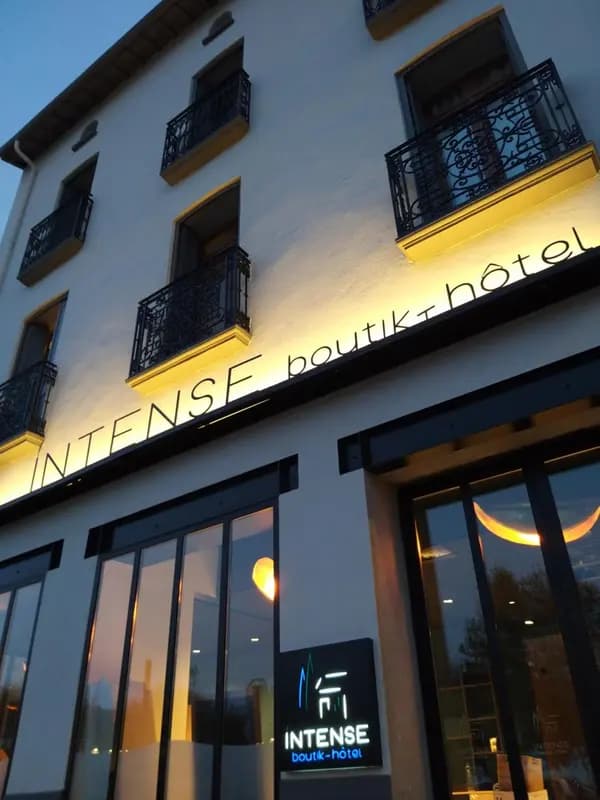
Intense Boutik-Hôtel
★★★
★ 9.3/10 (436 reviews)
4.6 km away as the crow flies
Dive centre · Banyuls-sur-Mer · France
4.8220 Google reviewsExplore the marine reserve with a specialist team offering advanced rebreather training and eco-responsible diving from the Port de Plaisance in Banyuls-sur-Mer.
For subtitles in English: start the video firstthen click the gearat the top right of the video, select “Subtitles/CC”, then “Auto-translate” and choose “English”.
Situated on the Port de Plaisance in Banyuls-sur-Mer, Plongee Bleue has been a fixture of the local diving community since 2011. The centre is deeply integrated into the local ecosystem, operating as a partner of the Réserve Marine de Cerbère-Banyuls and Sea Shepherd Dive. This connection informs their entire approach to diving, focusing on environmental stewardship and sustainable practices.
Whether you are looking to start your journey with a discovery dive or are a technical diver seeking Trimix or rebreather certifications, the centre provides a professional framework. Their commitment to the environment is visible in their daily operations, from their zero-waste policy to their use of non-toxic anti-fouling on vessels.
Led by Delphine and Julien, the team brings nearly two decades of experience to the Mediterranean coast. They manage a diverse range of training, from PADI and FFESSM certifications to specialised IANTD rebreather courses. The instructors are equipped to handle a wide variety of profiles, including children and divers with disabilities, such as those with autism.
The centre operates with a strong educational focus, offering courses in marine ecology and underwater videography. This academic approach ensures that divers leave not just with a certification, but with a genuine understanding of the Mediterranean habitat they are exploring.
The training catalogue is extensive, covering everything from initial discovery dives to professional instructor training. They offer PADI and ANMP/FFESSM courses, alongside specialised training such as the DEJEPS instructor programme.
Technical divers can access IANTD rebreather training and Nitrox courses. The centre also hosts specific programmes for younger divers, including dedicated children's stages, as well as freediving and underwater videography training.
The centre operates the Master Gommoni, an 8.75-metre inboard vessel powered by a 330 cv Volvo Penta engine. This boat is configured to carry up to 10 participants for full-day excursions.
Onboard, you can find amenities designed for comfort between dives, including tea served in reusable cups and water. The vessel is also set up to allow for the rinsing of some equipment directly on the boat, making the transition from sea to shore more efficient.
Plongee Bleue provides full equipment hire, which includes the cylinder and weights as part of the diving package. For those who prefer to bring their own kit, specific items such as masks, snorkels, and fins are also available for hire.
Technical divers will find Nitrox and Trimix support on-site. For those completing advanced levels, the centre provides necessary safety equipment, including dive computers and ascent stage buoys.
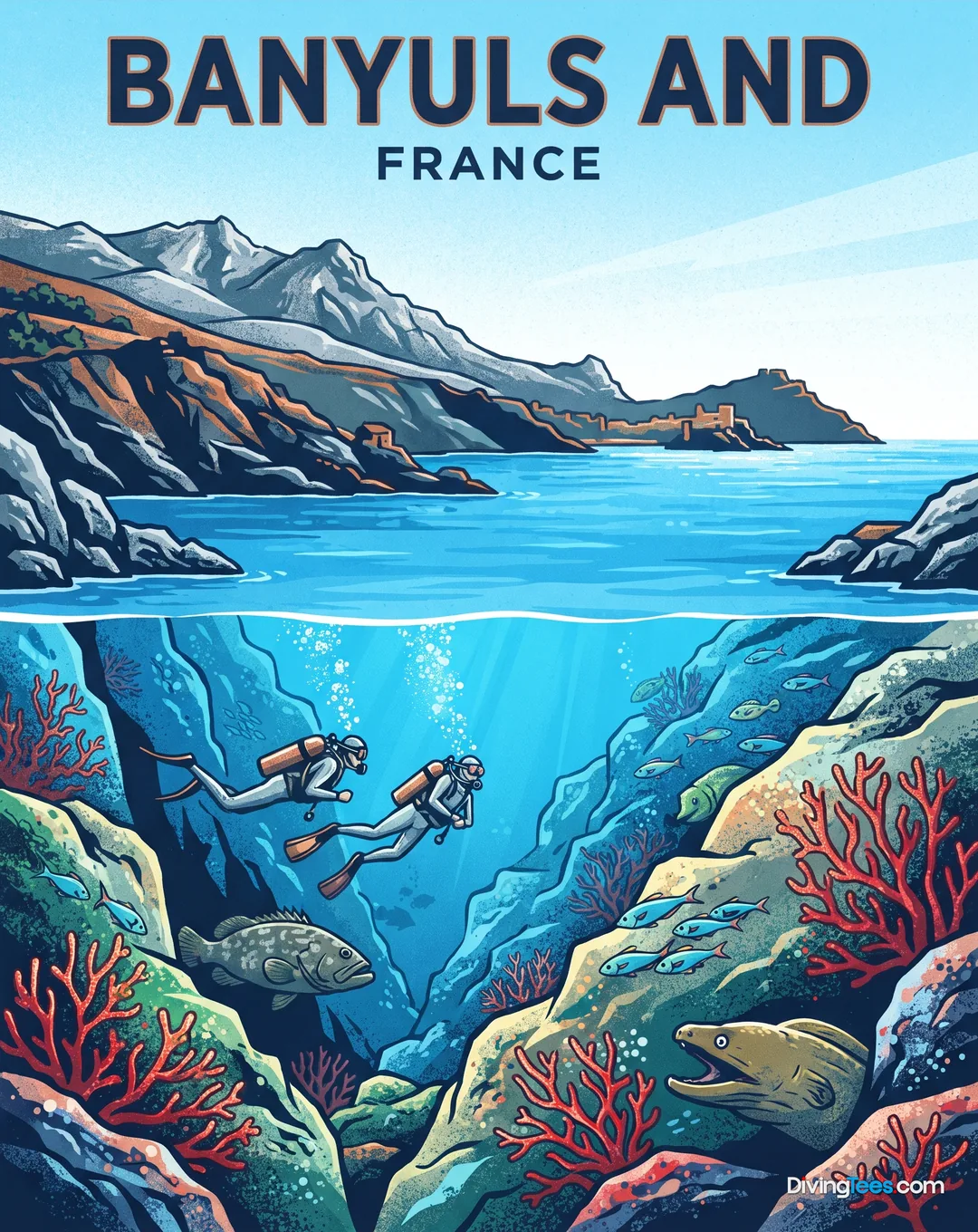
Réserve Marine de Cerbère-Banyuls is a premier site featuring arches, caves, and faults covered in anemones. Diving here typically occurs at depths between 18 and 40 metres, making it accessible to all levels.
Cap Creus, located just across the border in Spain, offers a classic warm-water diving experience with high biological richness. Be aware that this area can experience strong currents.
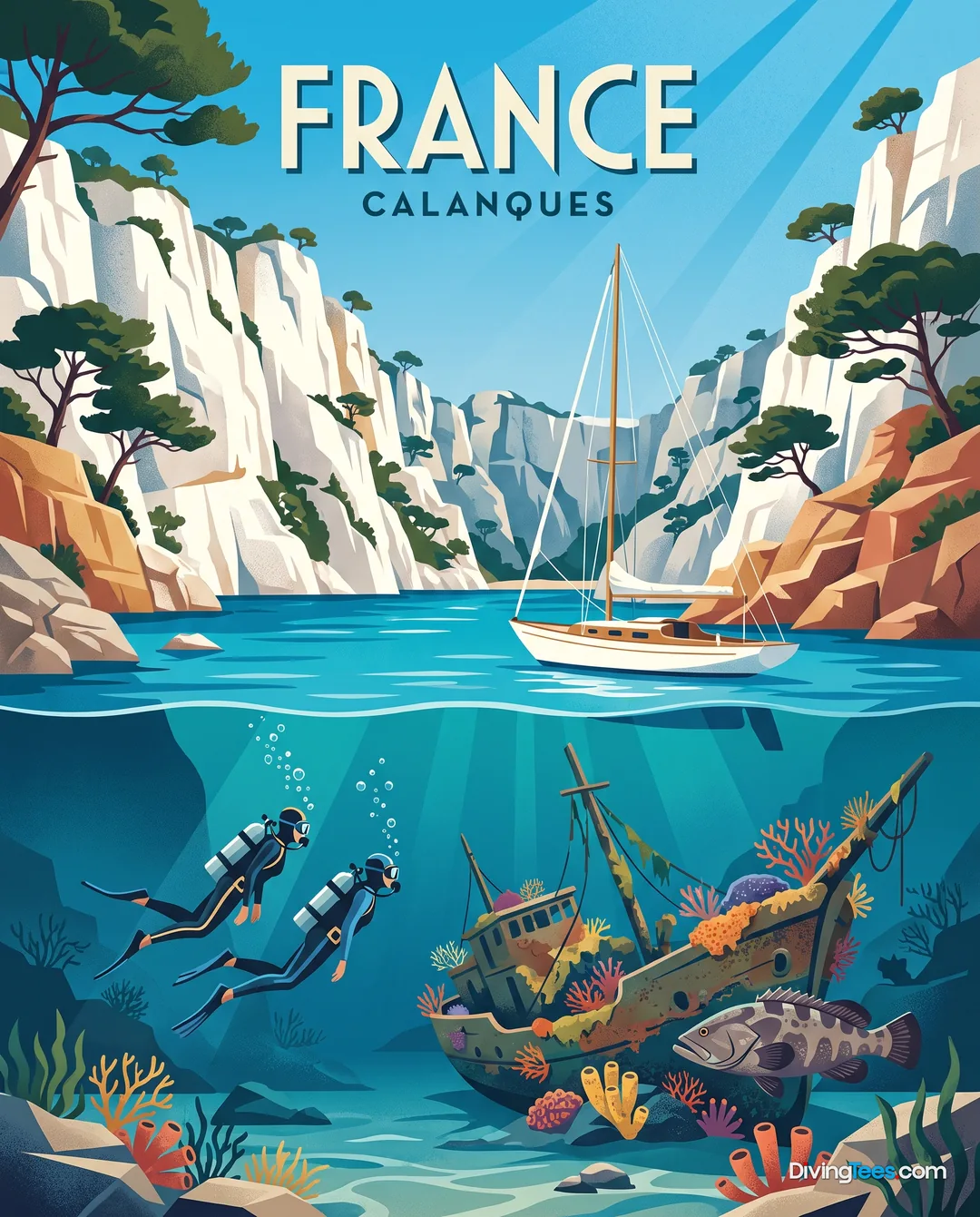
For advanced divers, the wrecks of the Côte Vermeille provide significant interest. These Second World War wrecks are located off the coasts of Port-Vendres, Collioure, and Argeles-sur-Mer, at depths ranging from 35 to 110 metres.
And some of the dive sites the centre runs.
The marine life in the Cerbère-Banyuls area is exceptionally diverse, particularly around the rocky reefs and gorgonian forests. You will encounter various species of Grouper (Epinephelus) and Dusky grouper (Epinephelus marginatus) patrolling the structures. The walls are draped with red coral, gorgonians, and various sea fans, creating a complex habitat for smaller inhabitants.
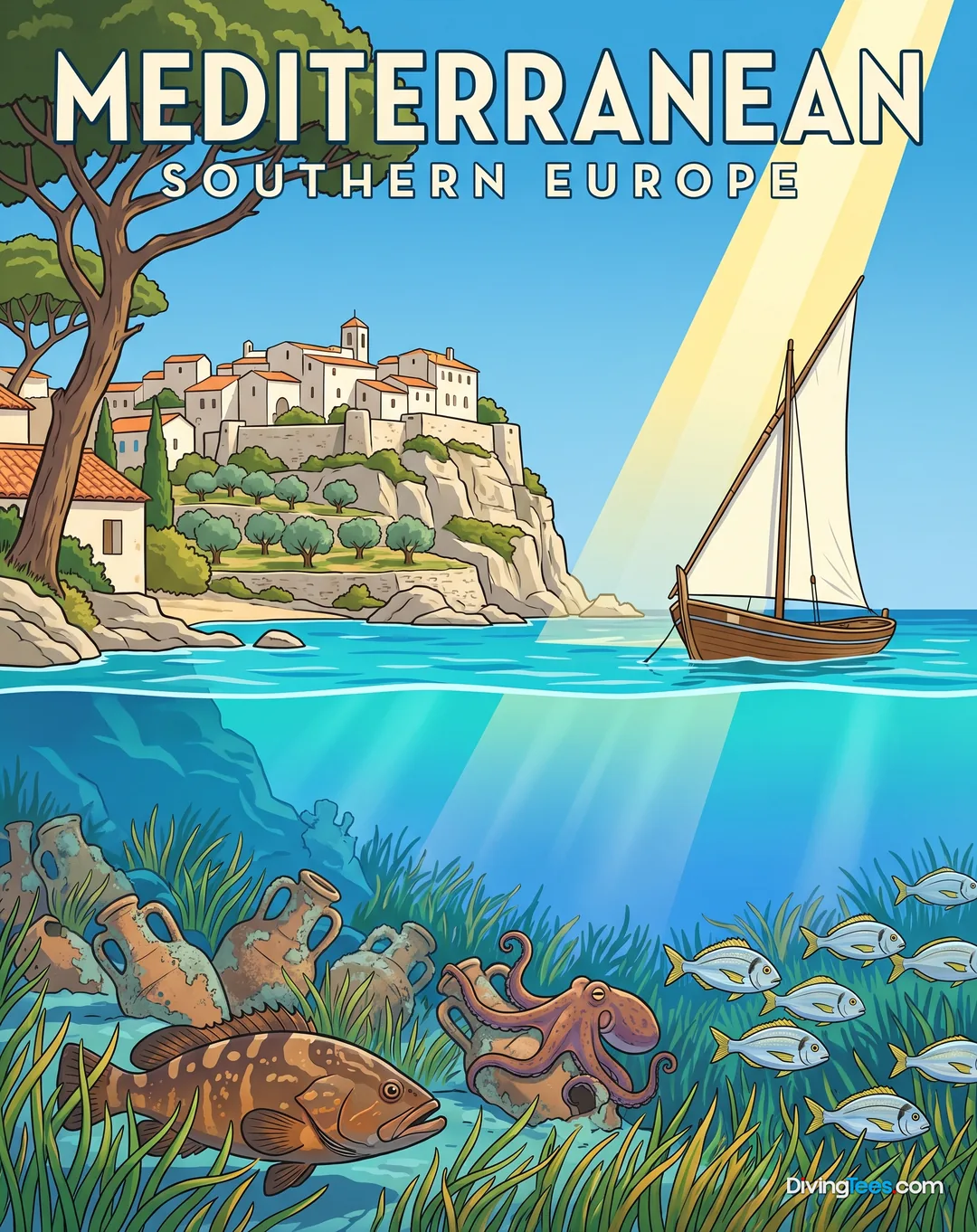
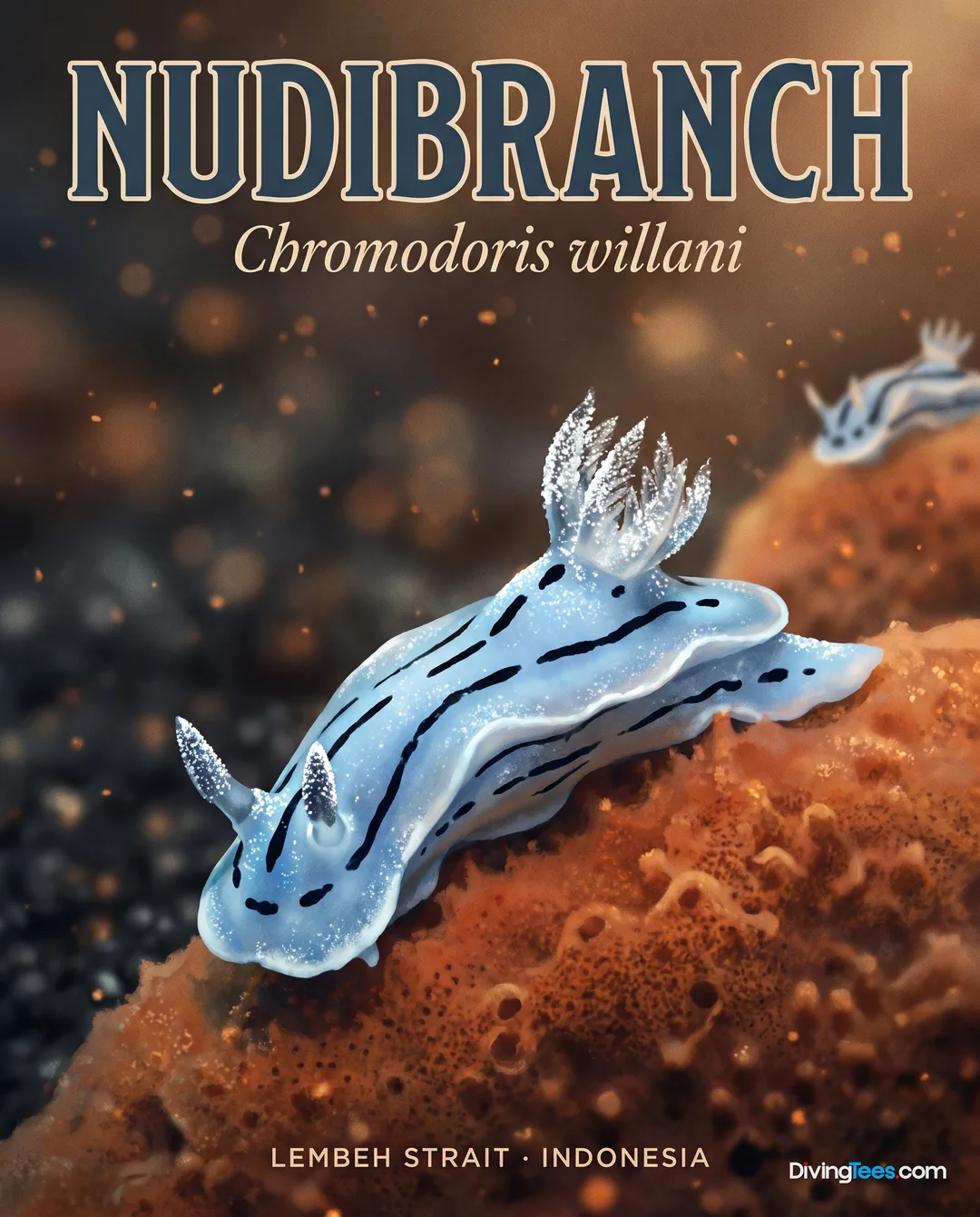
In the rocky crevices and among the reef flat, you will find plenty of macro life. Look for Nudibranch (Chromodoris willani) and Purple aeolid (Flabellina affinis), alongside octopuses (Octopus vulgaris) and different species of Moray eel (Muraenidae). Scorpionfish (Scorpaenidae) often remain well-camouflaged against the seabed.
Pelagic and mid-water species include various types of sea bream (Sparidae), such as gilthead seabream, dentex, and zebra seabream. You may also spot Salema porgy (Sarpa salpa), common two-banded seabream, and various wrasse species. Larger fish like the brown meagre (Sciaena umbra) and large groupers are common sights for those exploring the deeper sections of the reserve.
Diving in this region is subject to the specific regulations of the Marine Reserve, which includes a prohibition on night diving within the protected zone. While the Mediterranean offers varied conditions, divers should be prepared for potentially strong currents when venturing towards Cap Creus.
Surface conditions can vary, but the proximity to the port provides a reliable starting point for most excursions. Always check with the team regarding the specific swell and current conditions for your scheduled departure.
Hello, I'm Marina, DivingDeal.com's AI assistant. I answer in detail about hotels, dive centres and liveaboards.

Thinking about the whole trip and the flights? Talk it over with Edith →
Marina is an AI. Some links are affiliate links: DivingDeal may earn a commission, at no extra cost to you. Bookings are made with the partner.
★★★
★ 9.3/10 (436 reviews)
4.6 km away as the crow flies
★★★★
★ 9.1/10 (781 reviews)
less than 1 km away as the crow flies
★★★
★ 9.1/10 (763 reviews)
5.3 km away as the crow flies
★★★
★ 8.8/10 (793 reviews)
4.1 km away as the crow flies