
Rederis Plongee
Google 4.9/5 (436 reviews)
3.2 km away as the crow flies
Banyuls-sur-Mer · France · Mediterranean
Max. depth · 6 mExplore a unique shallow underwater trail in the Cerbère-Banyuls Marine Natural Reserve, designed for observation of diverse Mediterranean littoral habitats.
The Sentier sous-marin de Peyrefite is less of a traditional dive site and more of a dedicated underwater nature trail, stretching over 250 metres from the shore. You access it directly from Peyrefite beach, following a clearly marked line of buoys and a water line. This design allows for a progressive exploration of distinct environments, making it approachable for those new to marine observation.
As you follow the trail, you'll encounter five distinct observation stations, each highlighting a different aspect of the shallow coastal ecosystem. The topography changes frequently, moving from pebble beds to dense Posidonia oceanica meadows. These seagrass beds are crucial nurseries for many species and offer a different visual experience compared to the rocky sections.
Further along the route, the seabed shifts again, revealing rocky blocks, small faults, and mini drop-offs. This geological diversity creates a range of micro-habitats within a short distance. You'll find blennies and tripterygiid triplefins camouflaged against the rocks, while ornate wrasse (Symphodus tinca) and corkwing wrasse (Symphodus melops) dart through the water column, often feeding close to the substrate.
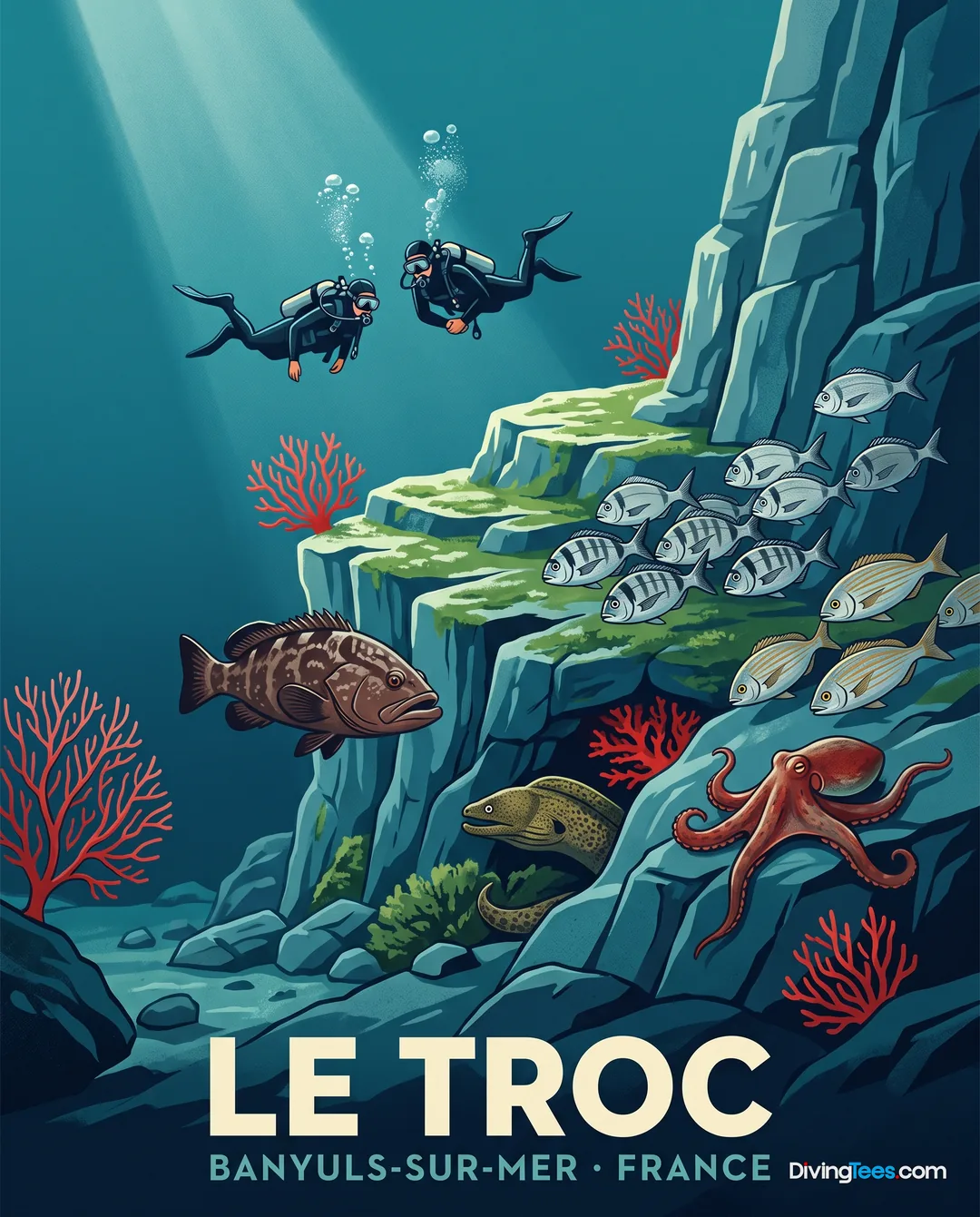
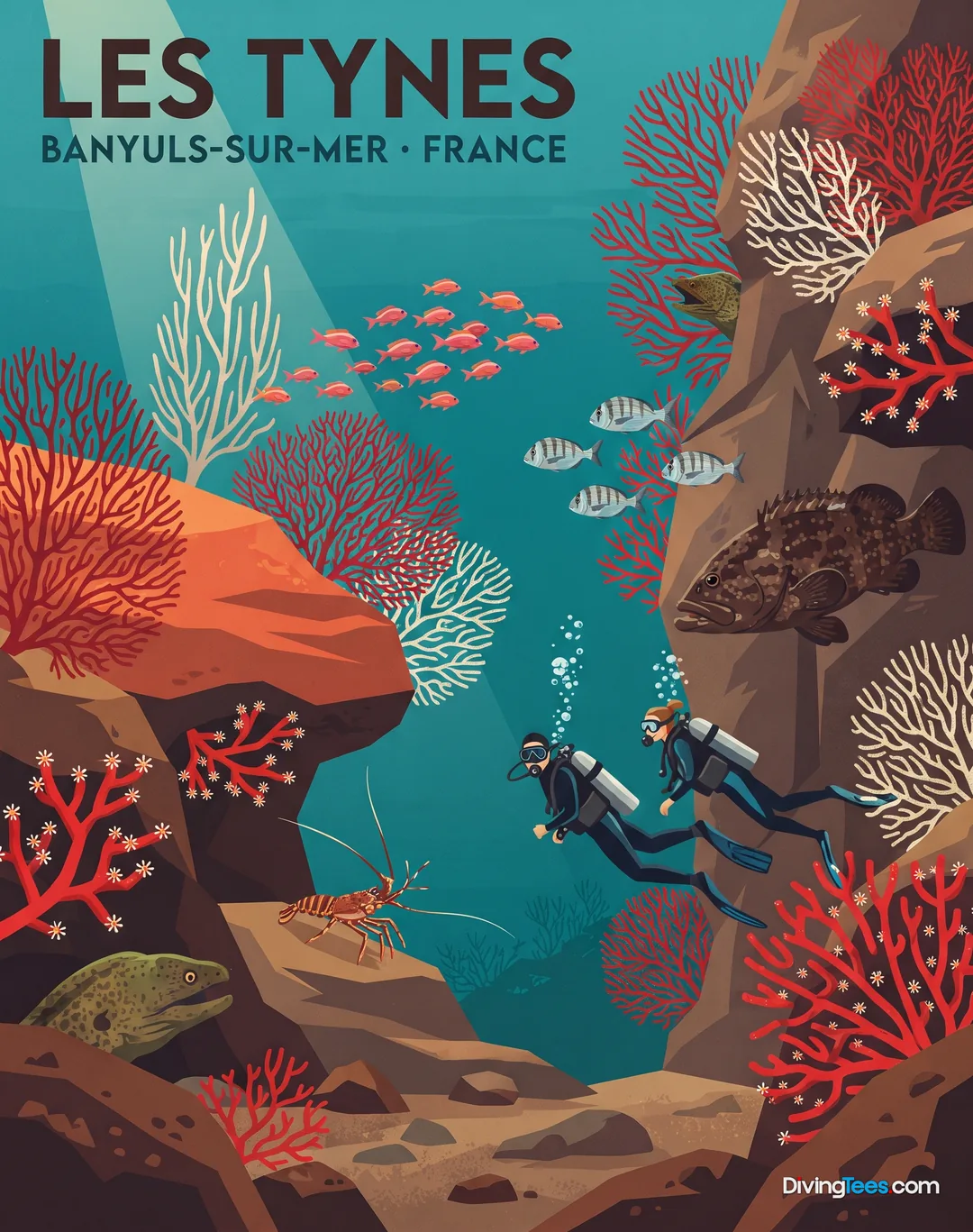
The abundant marine life includes schools of saddled seabream (Oblada melanura) and salema porgy (Sarpa salpa) moving across the various habitats. Keep an eye out for brown meagre (Sciaena umbra) and even dusky grouper (Epinephelus marginatus) hiding in the rock formations. The protected status within the Cerbère-Banyuls Marine Natural Reserve contributes significantly to this biological richness.
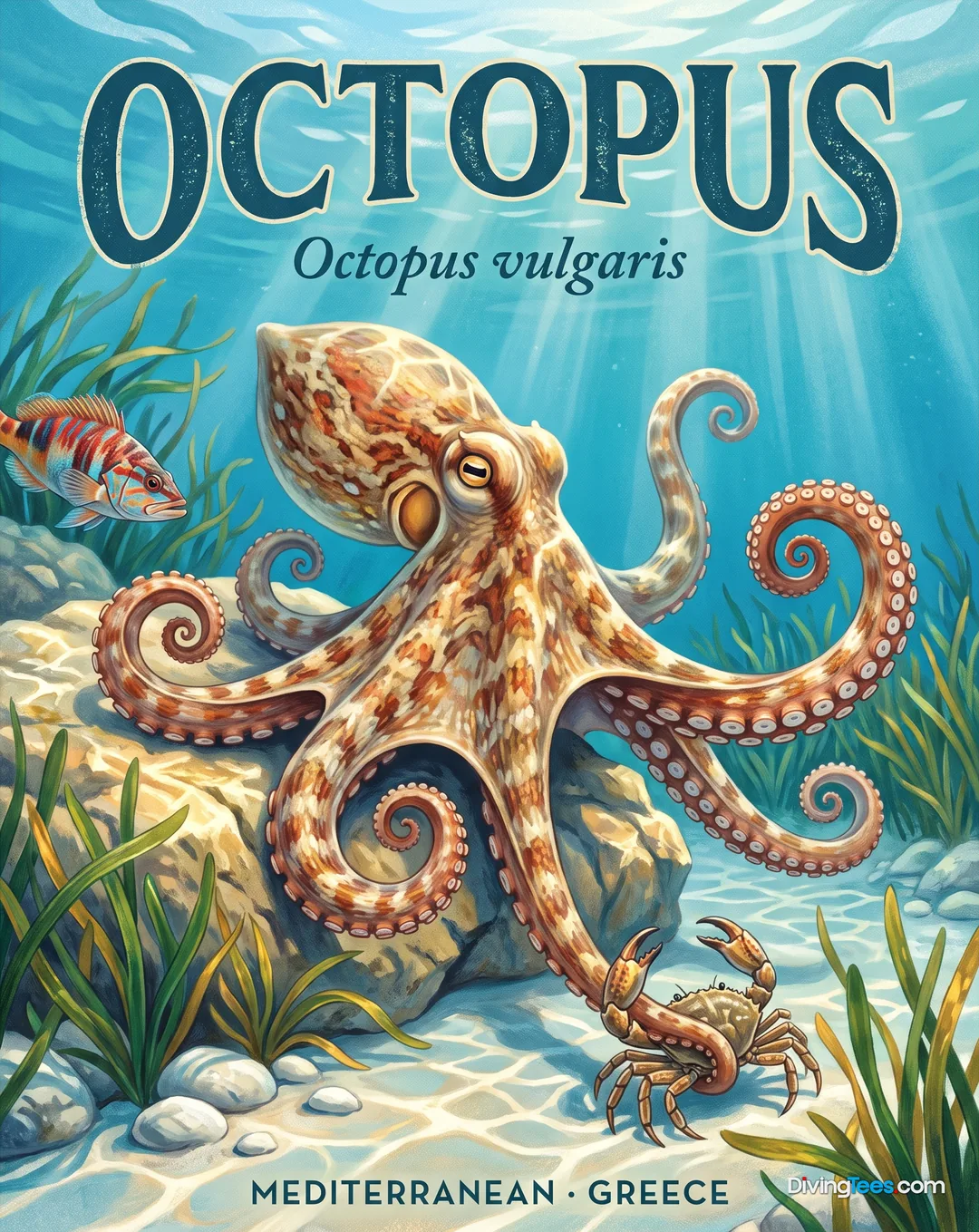
You might also spot more elusive creatures like octopuses (Octopus vulgaris) or common cuttlefish (Sepia officinalis) changing colours to blend with their surroundings. Moray eels (Muraena helena) can be seen peeking from their crevices, while seabass (Dicentrarchus labrax) might pass by in the open water. While less common, there are occasional sightings of barred hogfish (Bodianus rufus) and even a stingray (Dasyatis pastinaca) gliding over the sandy patches.
The entire experience is designed for easy, close-up observation in very shallow water. The maximum depth is a consistent 6 metres, with the trail starting as shallow as 1 metre. This makes the Sentier ideal for extended bottom times and detailed exploration without the concerns of deeper diving. The light penetration is excellent throughout, enhancing the colours of the marine environment.
This site offers a shallow dive experience with a maximum depth of 6 metres and a minimum of 1 metre. It is accessible for Open Water Diver certified individuals, but also well-suited for snorkelers or anyone with basic swimming experience in open water. Currents are generally light, as the location is typically sheltered. However, local conditions can vary depending on sea state and wind exposure, which can affect surface swimming. The best season for visiting is from June to September for optimal conditions.
You can visit Sentier sous-marin de Peyrefite from June to September, when conditions are described as optimal. The trail begins from Peyrefite beach and follows a marked line of buoys and a water line, allowing you to explore the shallow underwater environments progressively from shore.
You can explore Sentier sous-marin de Peyrefite with an Open Water Diver certification. The site is also suitable for snorkelers and for you if you have basic swimming experience in open water. Its guided, shallow underwater trail is designed for accessible observation close to the shore.
Sentier sous-marin de Peyrefite ranges from 1 to 6 metres deep, making it suitable for shallow exploration and extended time in the water. Currents are generally light because the location is typically sheltered, although sea state and wind exposure can affect surface swimming and local conditions.
At Sentier sous-marin de Peyrefite, you can follow five observation stations across 250 metres of pebbles, Posidonia meadows and rocky blocks. Look for saddled seabream, salema porgy, ornate wrasse, blennies, octopuses, common cuttlefish and moray eels, with other species sometimes passing through.