
Rederis Plongee
Google 4.9/5 (436 reviews)
Banyuls-sur-Mer · France · Mediterranean
Max. depth · 25 mDescend into Les 3 Moines, a vibrant marine reserve site where rocky formations teem with fish, from schooling barracudas to camouflaged scorpionfish.
Les 3 Moines, set within the Banyuls-Cerbère marine reserve, presents a unique dive profile characterized by a series of rocky reliefs, fault lines, and extensive coralligenous zones. The site is structured around several mooring buoys, allowing for multiple dive itineraries. You'll often start around a prominent rock that rises to about 15 meters, then transition across sandy patches at 20-21 meters, before exploring deeper areas to the north where the coralligenous environment becomes more pronounced. This varied terrain, with its blocks and successive slopes, offers a dynamic exploration unlike a single sheer wall.
The topography here is a key element of the dive, providing a complex habitat that supports a dense population of marine life. Rather than a monolithic structure, you navigate through a series of smaller breaks and gradual inclines, moving from sunlit shallower sections to the deeper, more intricate coralligenous gardens. This complexity creates numerous hiding spots and hunting grounds, explaining the consistent biodiversity reported by divers who frequent the site. The presence of these varied micro-habitats ensures that each dive can unfold differently, depending on the route chosen.
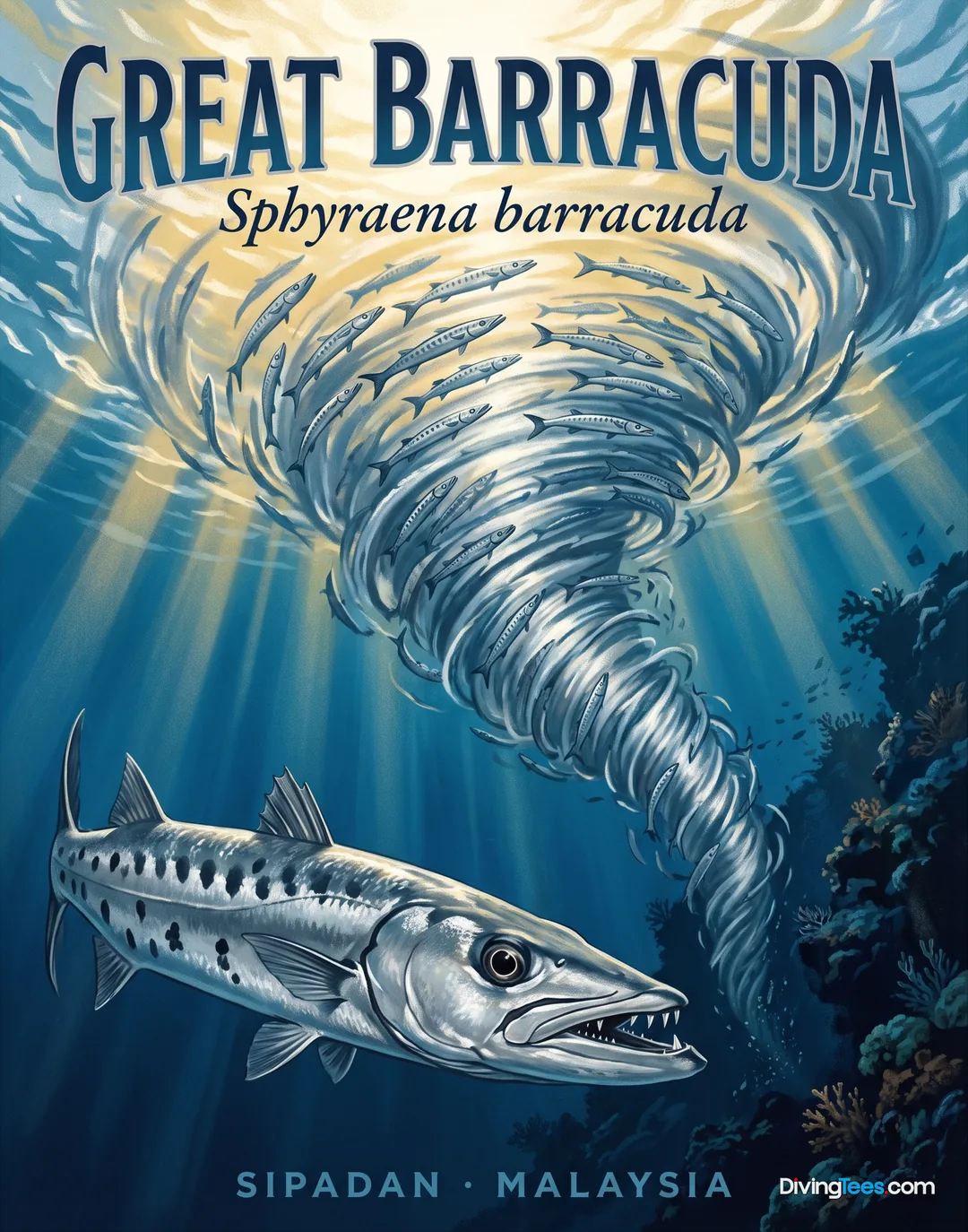
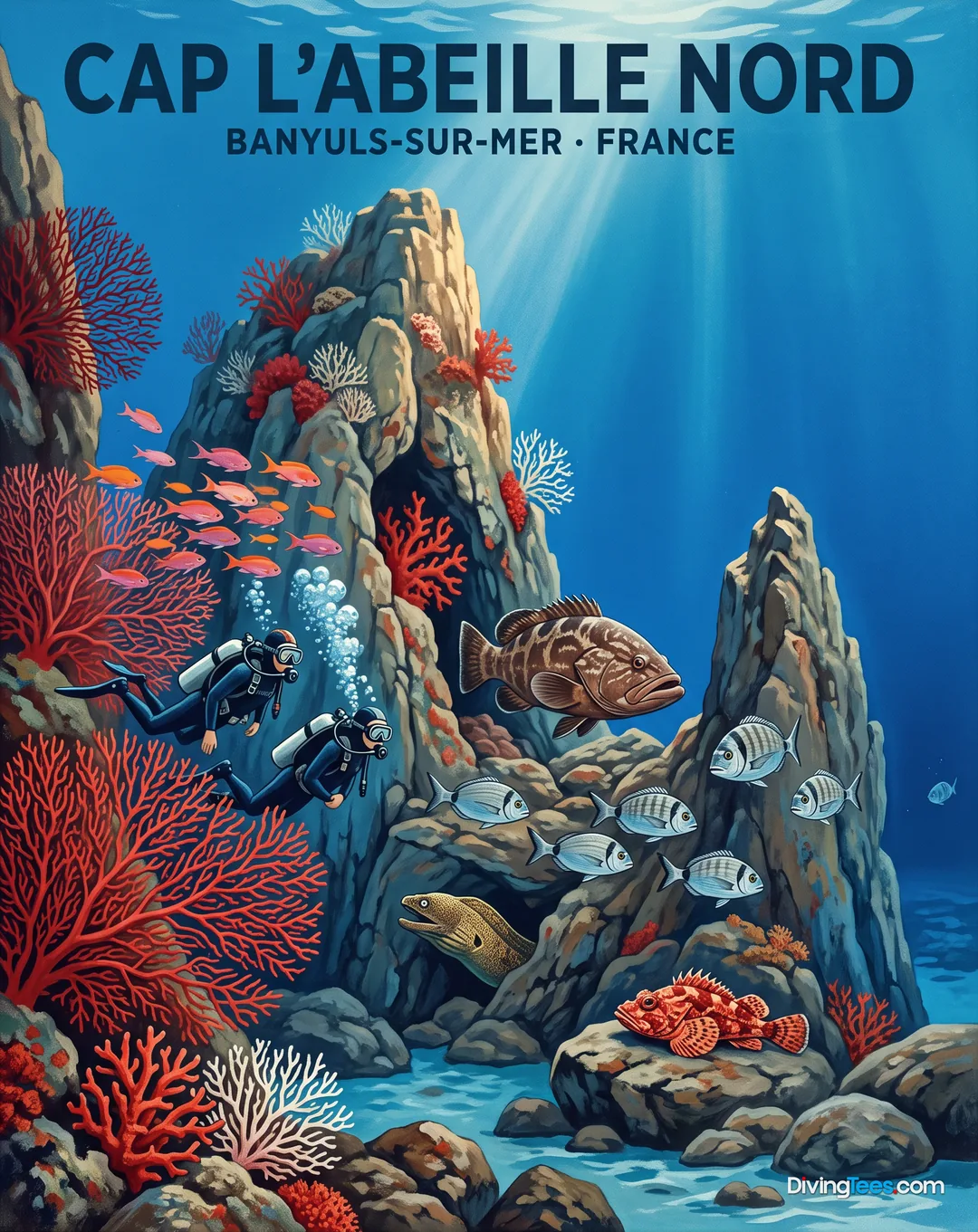
As you explore Les 3 Moines, the sheer volume of fish life is immediately apparent. This site is renowned for its 'aquarium-like' density, with groupers (Epinephelus marginatus) often seen patrolling their territories. You'll encounter schools of gilthead seabream (Sparus aurata) and common dentex (Dentex dentex) moving through the water column, alongside occasional sightings of barracudas (Sphyraena barracuda) that can cruise past in impressive formations. The rich environment also supports individual moray eels (Muraena helena) tucked into crevices, and scorpionfish (Scorpaena scrofa) perfectly camouflaged against the rocks.
The deeper sections to the north unveil impressive coralligenous growth, a hallmark of healthy Mediterranean ecosystems. Here, the red Mediterranean coral (Corallium rubrum) adds vibrant colour to the submarine landscape, creating intricate structures that house a multitude of smaller organisms. Damselfish (Chromis chromis) dart among the rocks, while anthias (Anthias anthias) add flashes of orange to the deeper light. This extensive coralligene acts as a vital nursery and shelter, contributing significantly to the site's high concentration of marine fauna.
Visibility at Les 3 Moines generally allows for good appreciation of the expansive reef structure and schooling fish. While currents are typically light, it’s a site exposed to open water conditions, so localized current variations can occur, particularly around the more pronounced rocky outcrops or with changing weather. The multiple mooring points allow dive operators to select the most sheltered or rewarding approach based on conditions, ensuring a comfortable and productive dive experience across its diverse sections.
Les 3 Moines is accessible for intermediate to advanced divers. The dive profile ranges from a minimum depth of 6 meters down to a maximum of 25 meters. Current at the site is generally light, but as with any open water site, conditions can vary with local weather patterns. You should be comfortable with varied topographies and have a good understanding of buoyancy control to fully appreciate the different sections of the site.
Les 3 Moines is accessible to intermediate and advanced divers. You should feel comfortable with varied underwater topography and have good buoyancy control to appreciate its rocky reliefs, fault lines, sandy patches, successive slopes, and coralligenous areas. Several mooring buoys provide different routes through these changing sections.
Les 3 Moines ranges from 6 to 25 meters. You may begin around a prominent rock rising to about 15 meters, cross sandy patches at 20 to 21 meters, and continue toward deeper northern areas where coralligenous formations become more pronounced. The route chosen affects the sections you explore.
Currents at Les 3 Moines are generally light, but local weather can change open water conditions. Variations may occur around pronounced rocky outcrops or as weather changes. Multiple mooring buoys let dive operators choose a more sheltered or rewarding approach, helping you adapt the dive to conditions.
At Les 3 Moines, you can see dense fish life among rocky reliefs, fault lines, sandy patches, and coralligenous formations. Groupers, gilthead seabream, dentex, barracudas, moray eels, scorpionfish, damselfish, and anthias may appear. The deeper northern areas include red Mediterranean coral and intricate habitats supporting smaller organisms.