
Rederis Plongee
Google 4.9/5 (436 reviews)
Banyuls-sur-Mer · France · Mediterranean
Max. depth · 19 mLes Tynes offers a shallow, rocky reef profile typical of the Banyuls-Cerbère marine reserve, rich with resident Mediterranean fauna between 8 and 19 metres.
Les Tynes, sometimes referred to as Les Tymes or Les Tinyes, sits off the coast of Banyuls-sur-Mer, presenting a typical Mediterranean rocky reef environment. This site gently slopes from a minimum depth of 8 metres down to 19 metres, making it an accessible dive for various experience levels. The topography is characterized by a mix of rocky structures and the essential Posidonia oceanica seagrass meadows, which are a cornerstone of the Mediterranean ecosystem, providing shelter and foraging grounds for countless species.
As you descend, the transition from the sun-drenched shallows to the deeper sections reveals different facets of this reef. The upper plateaus are often frequented by schools of wrasse and smaller basslets, darting through the rocks. Closer to the 18-19 meter mark, the coralligenous formations become more pronounced, offering crevices and overhangs for larger, more reclusive inhabitants. The light penetration remains good throughout the dive, illuminating the vibrant colours of the Mediterranean gorgonians and sponges that encrust the rocky substrate.
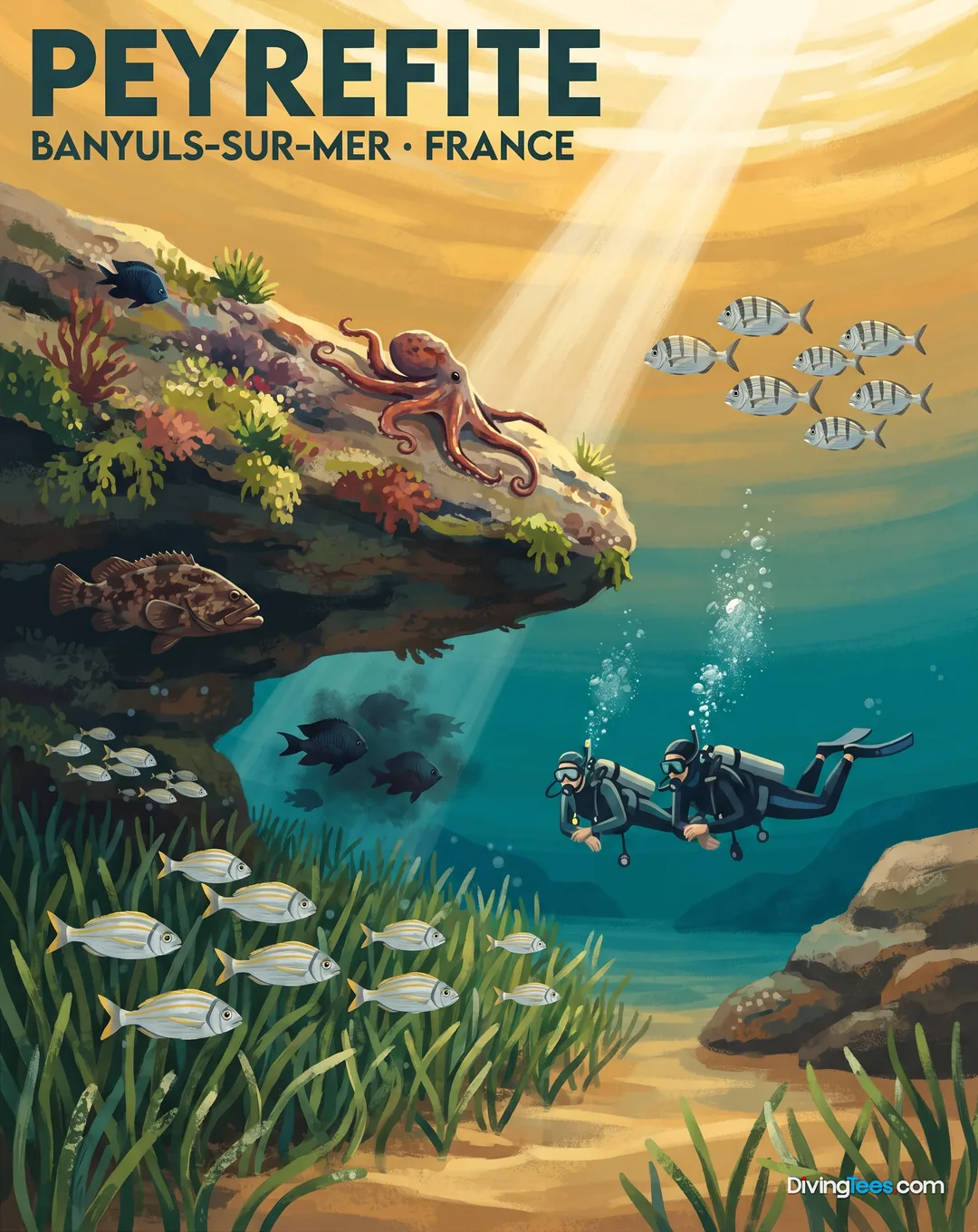
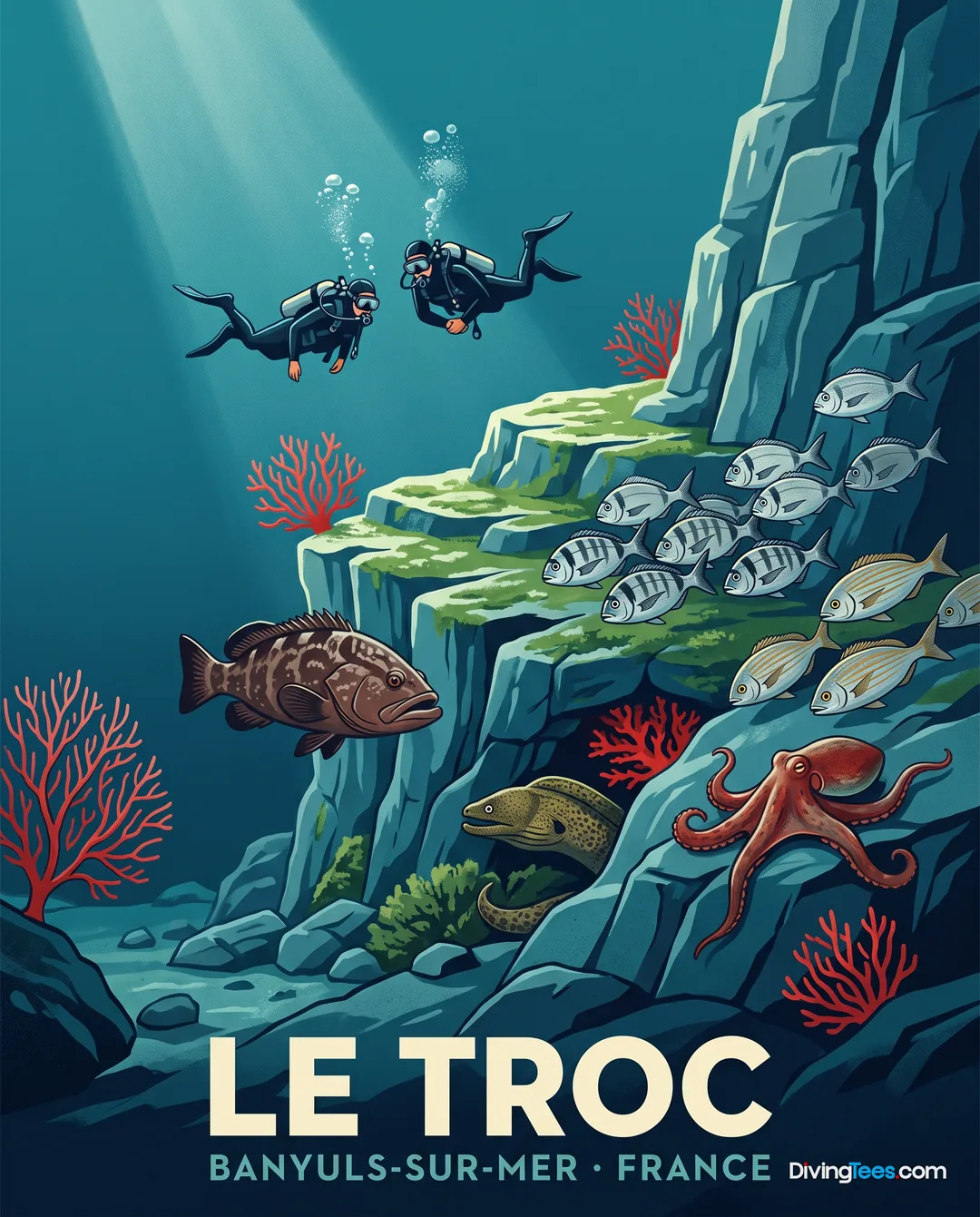
Exploring the nooks and crannies of Les Tynes often leads to encounters with the site's resident fauna. Octopus are frequently spotted, camouflaged against the rocks, while moray eels (Muraena helena) peer out from their hiding spots within the reef. Groupers, often solitary and territorial, can be found patrolling their chosen sections of the reef, occasionally joined by schools of barracuda (Sphyraena viridensis) passing by in the bluer water.
The conditions at Les Tynes reflect the typical Mediterranean coastal environment. Visibility here commonly ranges between 10 and 20 metres, offering clear views of the reef and its inhabitants. While generally mild, currents can be variable, occasionally influenced by wind and swell patterns along the coast. It is not a site known for strong, consistent currents, suggesting manageable conditions for most recreational divers.
This site is primarily accessed by boat from Banyuls-sur-Mer, as is common for many of the dive locations within this sector. The boat ride itself is usually short, providing a quick transition from the dive centre to the underwater environment. This ease of access contributes to Les Tynes being a popular choice for local dive operators looking for a reliable, engaging reef dive.
What sets Les Tynes apart is its embodiment of the Banyuls-Cerbère marine reserve's unique characteristics within a relatively shallow profile. While specific distinguishing features from other nearby sites are not always broadly documented by all operators, its consistent display of thriving Mediterranean fauna and classic coralligenous growth makes it a representative example of the protected ecosystem. It’s a site that rewards careful observation rather than dramatic geological features or large pelagic encounters, focusing instead on the intricate life of the reef.
For divers looking to understand and appreciate the nuances of the Mediterranean subtidal, Les Tynes offers a comprehensive look. It’s a place where the ecosystem feels contained and vibrant, allowing for close observation of species interaction within a defined depth range. You'll find yourself moving slowly, taking in the details of the macro life on the rocks and the behaviour of the larger fish that call this reef home, making each dive a learning experience.
This site offers a maximum depth of 19 metres and is accessible from Open Water Diver certification for those comfortable with shallow Mediterranean reef conditions. Visibility typically ranges from 10 to 20 metres. Current is variable; while generally mild, it can occasionally be influenced by coastal wind and swell patterns, requiring awareness during the dive.
Les Tynes is accessible to Open Water Divers who are comfortable with shallow Mediterranean reef conditions. Its gently sloping profile and manageable recreational setting suit various experience levels. You can explore rocky structures, Posidonia oceanica seagrass meadows, and coralligenous formations while paying attention to the changing reef environment throughout the dive.
Les Tynes slopes from 8 to 19 metres. In the shallows, rocky structures mix with Posidonia oceanica seagrass meadows. Around 18 to 19 metres, coralligenous formations become more pronounced, with crevices and overhangs. Good light penetration illuminates Mediterranean gorgonians and sponges across the rocky substrate.
At Les Tynes, visibility commonly ranges from 10 to 20 metres, giving you clear views of the reef and its inhabitants. Currents are generally mild but variable, and coastal wind and swell patterns can influence them. You should remain aware of changing conditions during the dive, even though strong consistent currents are not characteristic.
At Les Tynes, you can look for schools of wrasse and smaller basslets around the upper plateaus, along with groupers patrolling the reef. Moray eels and octopus are frequently seen among the rocks, while barracuda may pass through bluer water. Coralligenous formations, Mediterranean gorgonians, sponges, and seagrass add further habitat.