
Rederis Plongee
Google 4.9/5 (436 reviews)
2.2 km away as the crow flies
Banyuls-sur-Mer · France · Mediterranean
Max. depth · 22 mDescend into Cap l'Abeille Sud, a vibrant underwater landscape where rocky formations meet rich coralligenous life, offering a diverse dive experience from 6 to 22 metres.
Cap l'Abeille Sud, also known as Cap l’Abeille or Cap l'Abeille Sud bouée 7, is situated on the Côte d'Azur, part of the larger Banyuls/Cerbère reserve. This site is predominantly a rocky, coralligenous area featuring an intricate relief of fissures, small canyons, and sections of sand that open seaward. While there are shore access points near Taillelauque, most divers approach by boat, utilizing the available mooring buoys. The general dive profile takes you from a shallower mooring area around 10 metres, gradually descending over sandy patches and rocky masses, and then leading back towards shallower depths.
The southern sector of Cap l'Abeille provides an engaging dive across a depth range from 6 metres down to 22 metres. Deeper sections, particularly towards the east, reveal more pronounced coralligenous formations and the presence of red coral. These areas often present interesting geological features like faults, creating a varied underwater landscape that keeps each dive dynamic. Unlike some of the more open sections of the reserve, Cap l'Abeille Sud generally offers a dive that can be completed within a single tank, focusing on these shallower, yet biologically rich, sections.
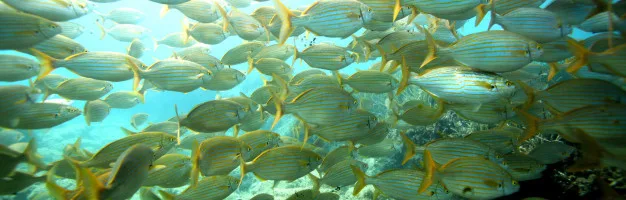
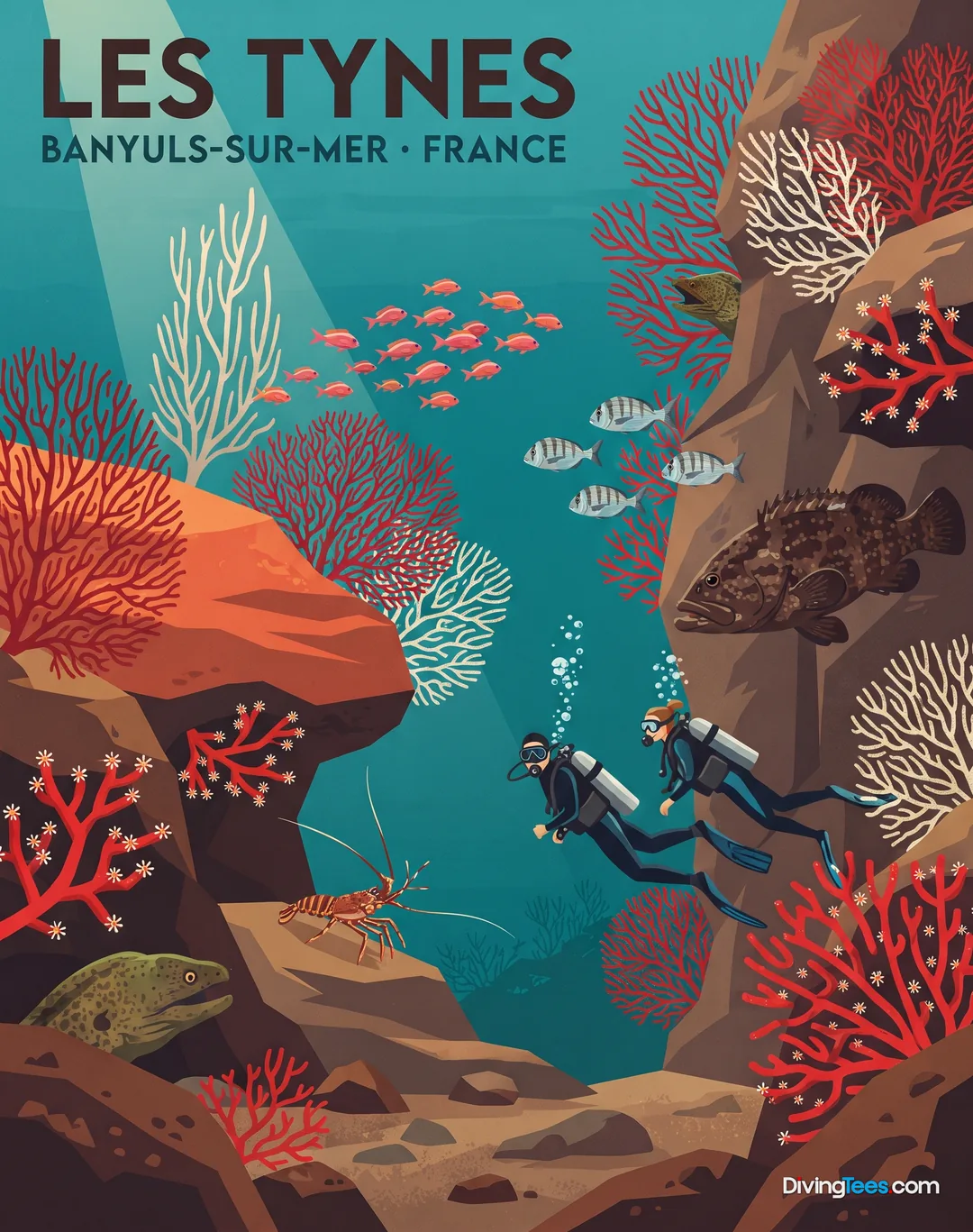
Life at Cap l'Abeille Sud thrives, particularly in the 10 to 15-metre band where you will find dense concentrations of marine organisms. Here, schooling fish like sea bream and gilthead sea bream are common, often alongside mullet and the ubiquitous damselfish and chromis. Further into the rocky recesses and along the walls, keep an eye out for groupers and dentex, which patrol these territories. The intricate topography provides ample hiding spots and foraging grounds for these species, creating an active environment.
Beyond the schooling fish, the invertebrate life contributes significantly to the site's rich ecosystem. Lobsters are often seen tucked into crevices, while moray eels can be found in their preferred rocky shelters. The coralligenous habitat, a crucial feature of this Mediterranean site, is adorned with red coral and gorgonians, providing structure and colour. These filter-feeding organisms benefit from the water movement around the cape, creating a vibrant backdrop to the diverse faunal encounters.
While the site can be sheltered, conditions here are variable and influenced by local weather patterns. Tramontane winds or other strong air movements can affect surface conditions and, consequently, visibility and comfort underwater, especially outside the immediate shelter of the cape. You might find visibility decreasing in more exposed areas, suggesting a connection to current and sea state. Planning your dive with an awareness of these potential shifts will enhance your experience and safety.
This section of the Banyuls/Cerbère reserve is renowned for its fish abundance. While the maximum depth is 22 metres, the richest areas for life and structure are often shallower. The combination of varied topography, from rocky ledges to small canyons and sandy patches, supports a wide array of species. The presence of Neptune grass (Posidonia oceanica) in some areas further enhances the biodiversity, providing essential habitat for juvenile fish and invertebrates, making it a productive and healthy marine environment.
Compared to Cap l'Abeille North or other more extensive reserve areas, the southern sector offers a distinct experience. It’s characterised by a more intimate, rock-and-fissure-focused dive with a shallower operational range. This allows divers to spend more bottom time exploring the detailed micro-habitats without the need to push to greater depths for points of interest. It’s a site where careful observation of the smaller details often yields the most rewarding encounters.
Cap l'Abeille Sud is accessible for Open Water Diver certified divers, with depths ranging from a minimum of 6 metres to a maximum of 22 metres. While the site can be sheltered, current conditions are variable and can be influenced by wind and sea state, particularly outside the direct shelter of the cape. Visibility typically ranges from 3 to 10 metres, but can decrease with stronger surface conditions. Divers should assess surface conditions before entering the water, especially when tramontane winds are present.
Cap l'Abeille Sud is accessible to Open Water Diver certified divers, with depths from 6 to 22 metres. The dive generally begins near a mooring around 10 metres, crosses sandy patches and rocky masses, and returns toward shallower water. The richest marine life and structure are often found between 10 and 15 metres.
Choose Cap l'Abeille Sud after assessing the surface conditions, especially when tramontane winds are present. The site can be sheltered, but wind and sea state may affect conditions, comfort, and visibility, particularly outside the cape's direct shelter. Most divers approach by boat using the available mooring buoys.
Currents and conditions at Cap l'Abeille Sud are variable and influenced by wind and sea state. Water movement around the cape supports red coral and gorgonians, while stronger surface conditions can reduce visibility. Visibility typically ranges from 3 to 10 metres, with more exposed areas affected by local weather patterns.
At Cap l'Abeille Sud, you can explore rocky coralligenous formations, fissures, small canyons, faults, and sandy patches. Sea bream, gilthead sea bream, mullet, damselfish, chromis, groupers, and dentex inhabit the area. Look in crevices for lobsters and moray eels, and along the walls for red coral and gorgonians.