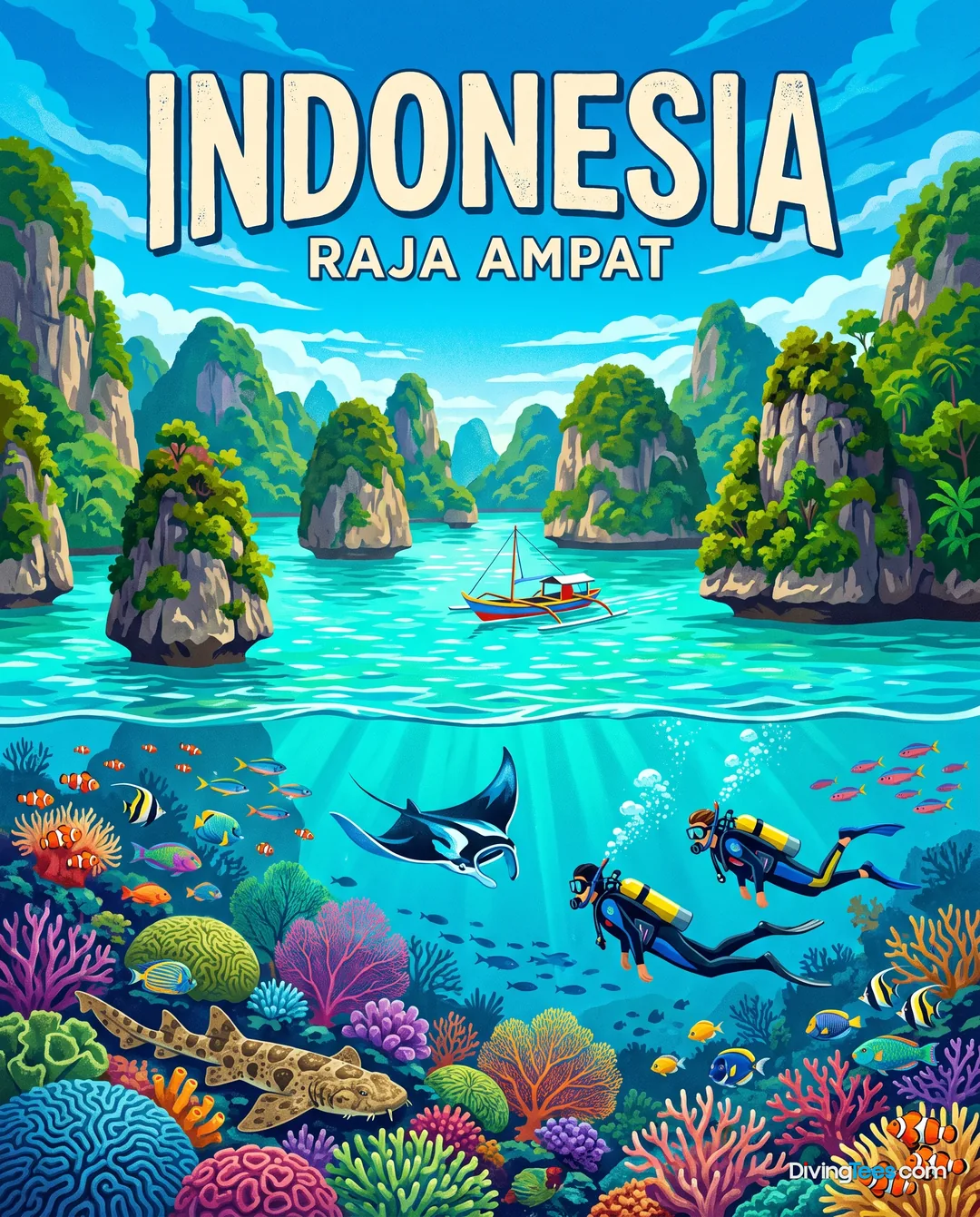
Liveaboards · Indonesia
Gaya Baru Indah — a small, dive-first phinisi for Raja Ampat
What makes this boat unique
- This traditional Indonesian phinisi carries up to eight guests in two double and two twin cabins.
- Diving is organised in groups of no more than four, with two RIB tenders staying with divers for pickup.
- Nitrox EAN32 is available at no extra charge on all dives for certified nitrox divers.
- The boat runs 7-day Raja Ampat North and Central cruises, 10-day Raja Ampat South cruises, and 12-day Raja Ampat–Banda Sea crossings.
For subtitles in English: start the video firstthen click the gearat the top right of the video, select “Subtitles/CC”, then “Auto-translate” and choose “English”.
The invitation
Gaya Baru Indah is for divers who would rather spend a week in the water than in a large floating resort. Only eight guests share the boat, and the diving is kept to small groups of four with a guide. That matters in Raja Ampat: a guide can point out a pygmy seahorse without losing the rest of the group, while a RIB can collect divers where the current carries them. The reason to choose this boat is the combination of a traditional phinisi, a compact guest list and a route through the Dampier Strait’s hard-coral reefs. Cape Kri, Blue Magic, Manta Sandy and Melissa’s Garden are not treated as names on a checklist; they are the places around which the trip is built. Come aboard for fish schools, mantas, sharks and small reef life, with the diving kept at the centre of each day.
Boarding
From the dock, Gaya Baru Indah presents as a working Indonesian phinisi rather than a purpose-built resort ship. The traditional hull and timber decks give the boat its character, while the 2022 renovation keeps the parts guests use most in good order. Once aboard, the scale becomes clear: eight guests, several open deck areas and no need to search for a quiet corner. The bowsprit, foredeck, main deck and upper deck each offer a different view of the islands. Awnings go up in the heat and can be removed at night for an open sky. Below deck, the single Mitsubishi engine is part of the boat’s soundscape when underway. Two RIBs handle the diving, leaving the main boat as the place to return to after each dive. The layout suits people who want the sea close, not a hotel corridor between them and the next briefing.
The atmosphere on board
With eight guests and a crew-to-passenger ratio close to one, the boat becomes familiar quickly. The same people help with gear, meals, transfers and the small decisions that keep four dives a day moving. Guides speak English, German, Korean and Indonesian, which helps when a briefing needs to be precise rather than merely translated. The crew’s role is most visible in the transitions: tanks ready before the briefing, food appearing after the first dive, and the tender waiting when divers surface away from the boat. Evenings are simple. Dinner follows the last activity, drinks can be taken on deck, and the quiet-ship rule brings the day down before sleep. The boat itself scores below its crew, but that contrast is useful information: the vessel has the character and compromises of an older traditional phinisi, while the people running it are the part guests tend to carry home.
The sites you’ll dive
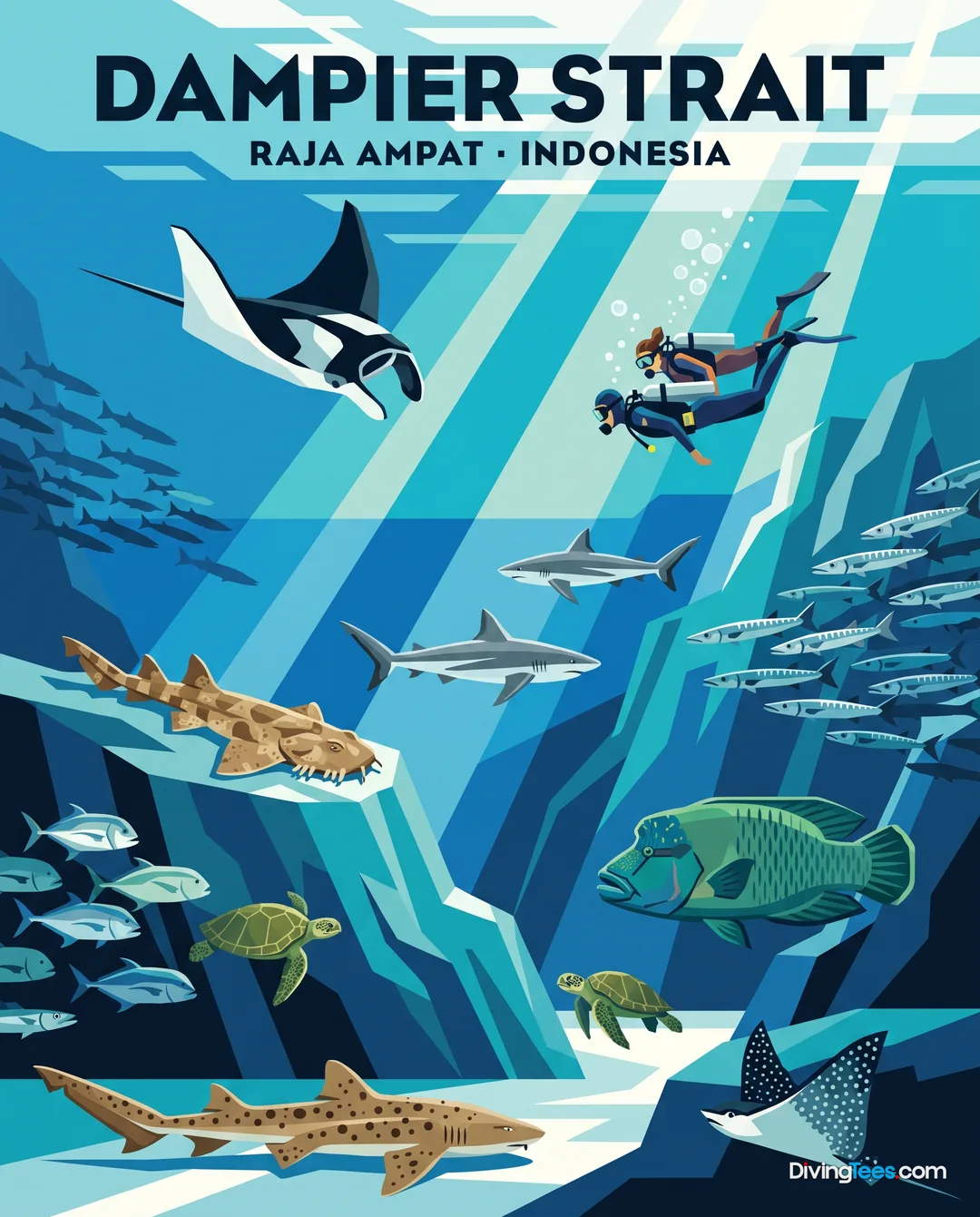
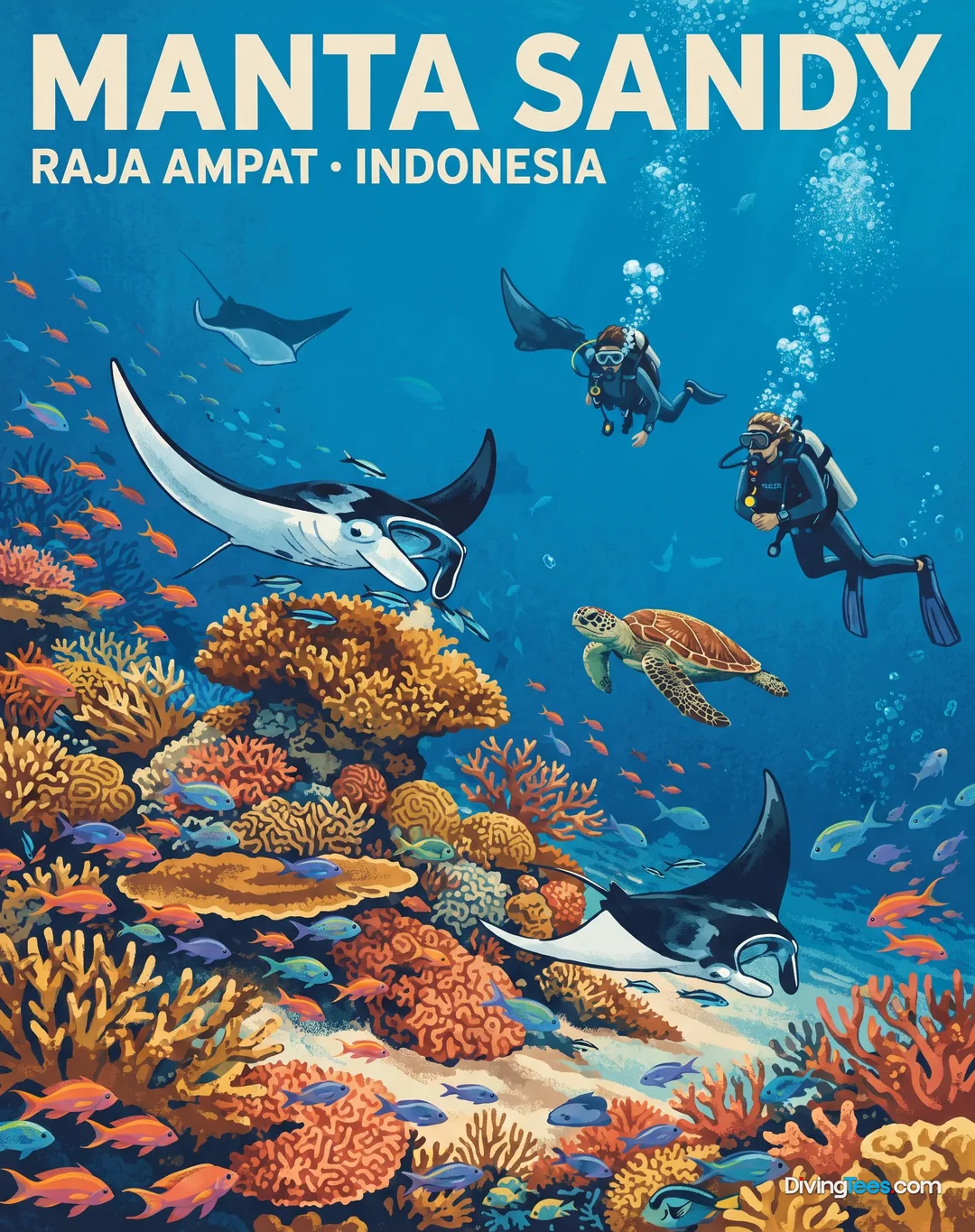
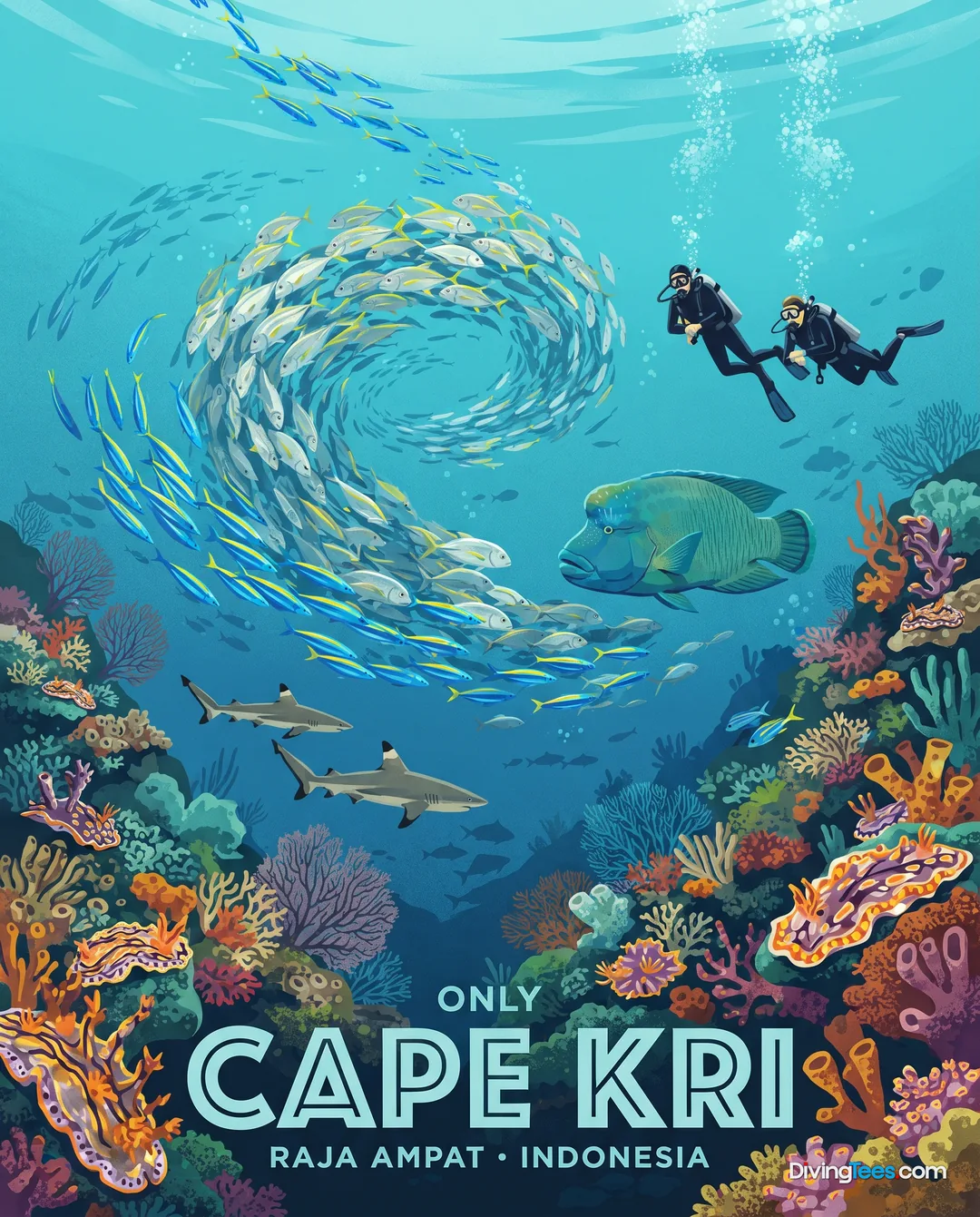
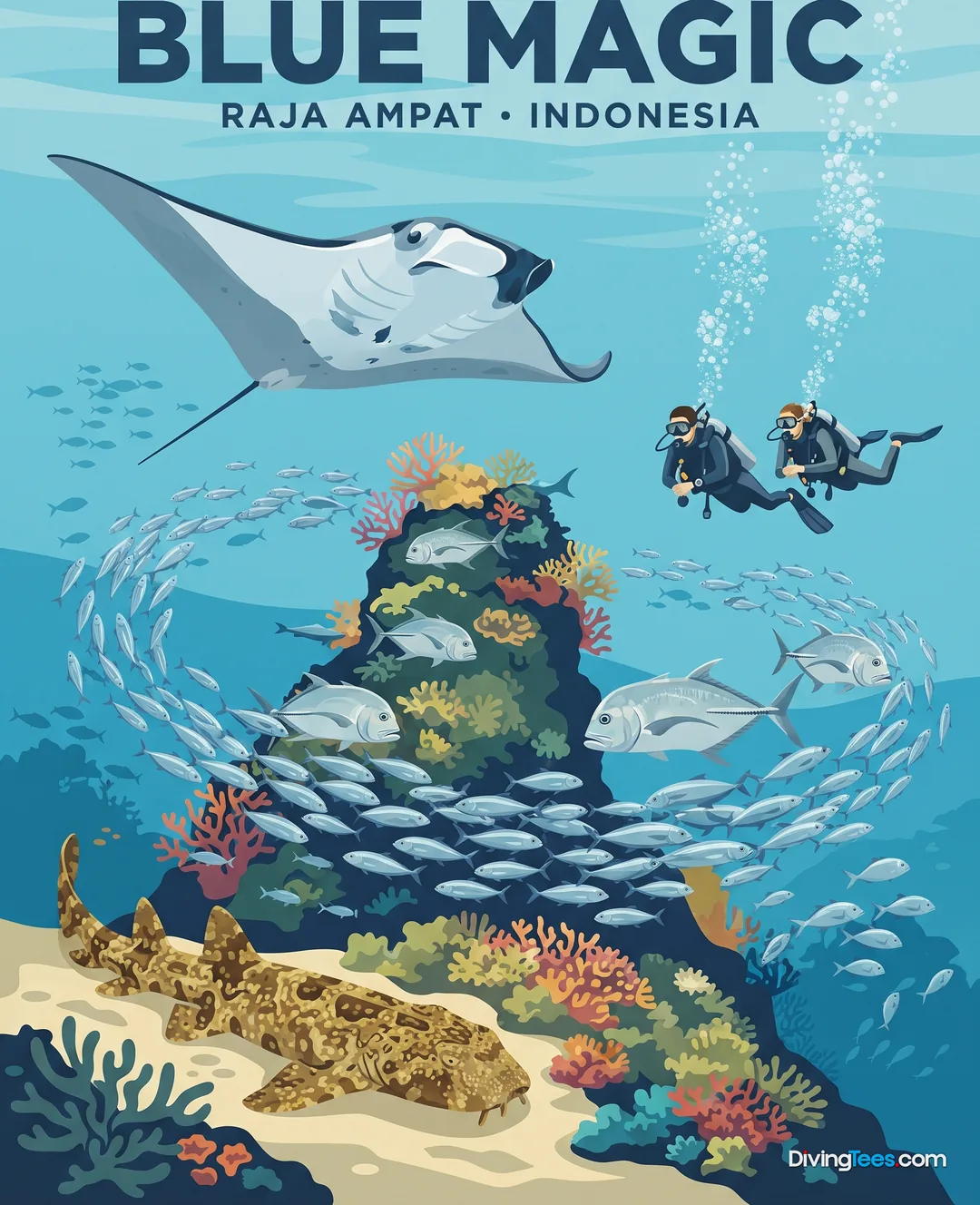
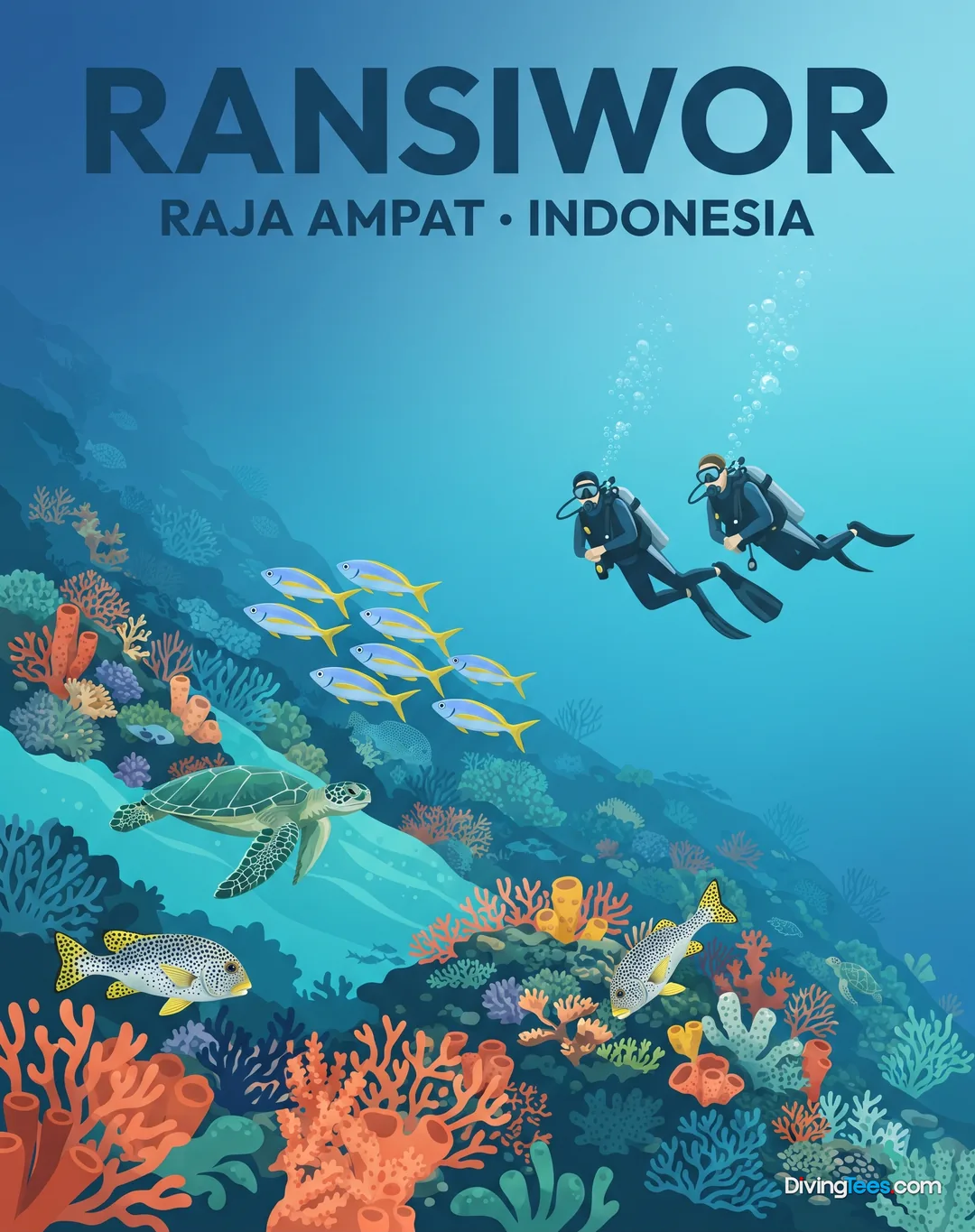
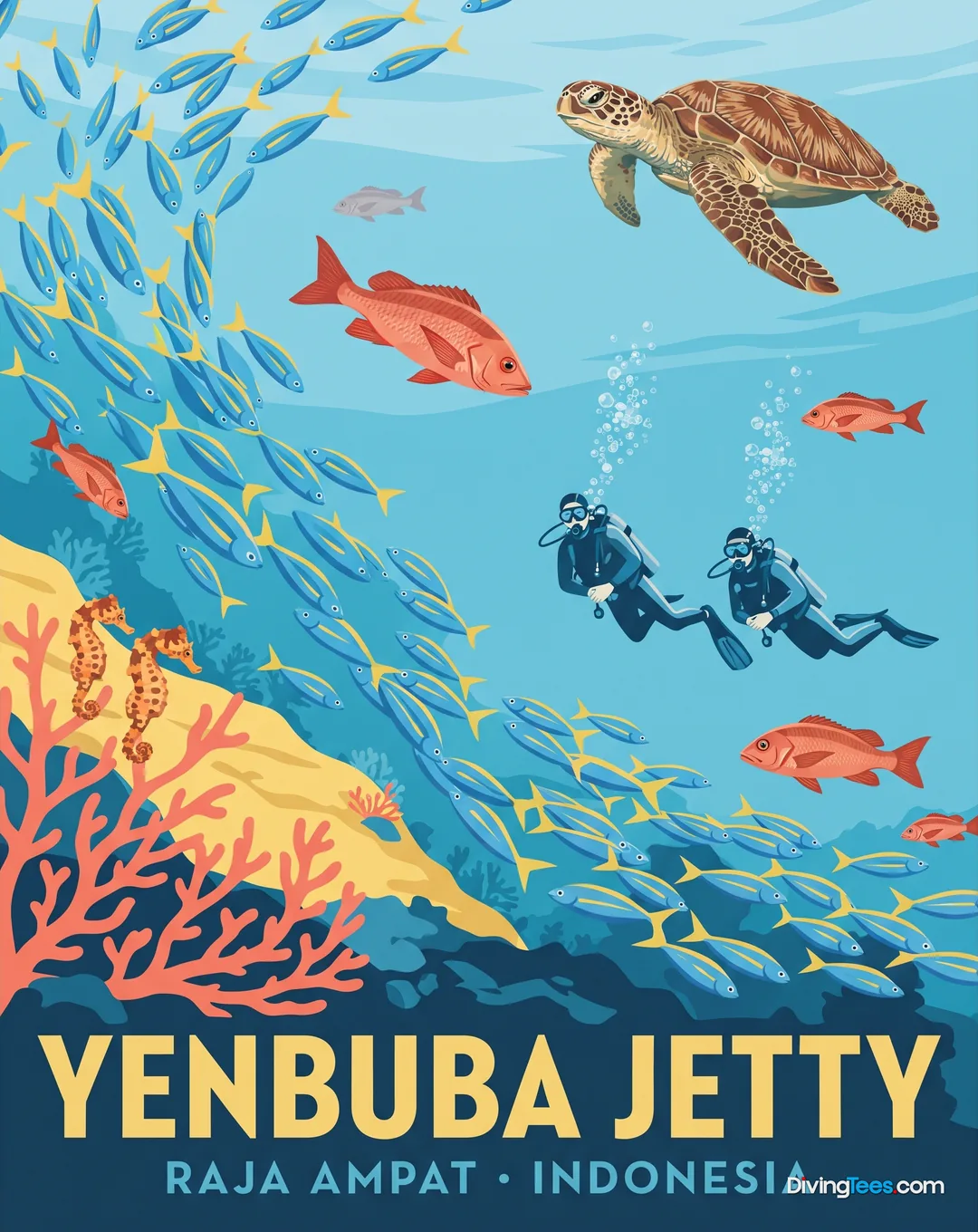
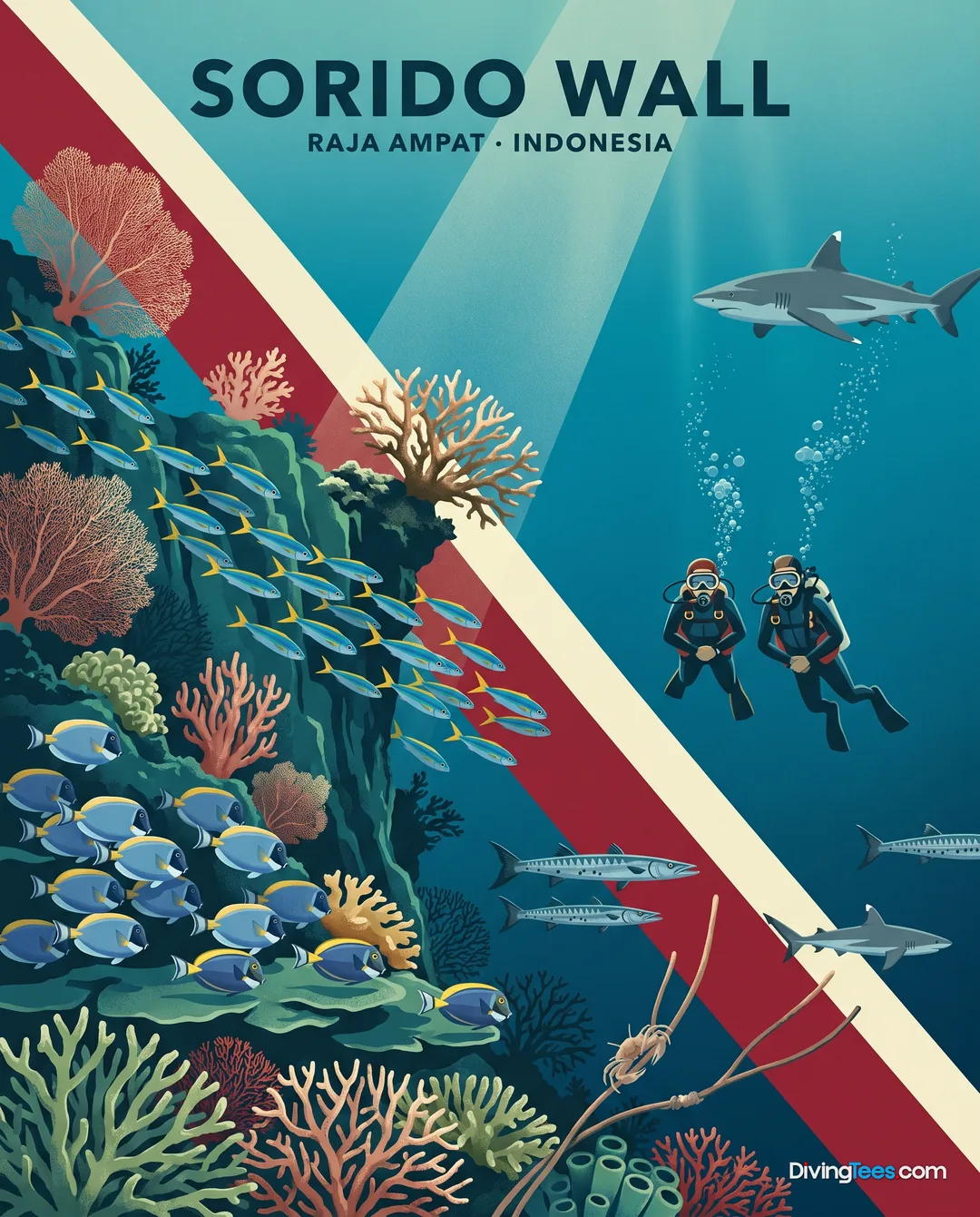
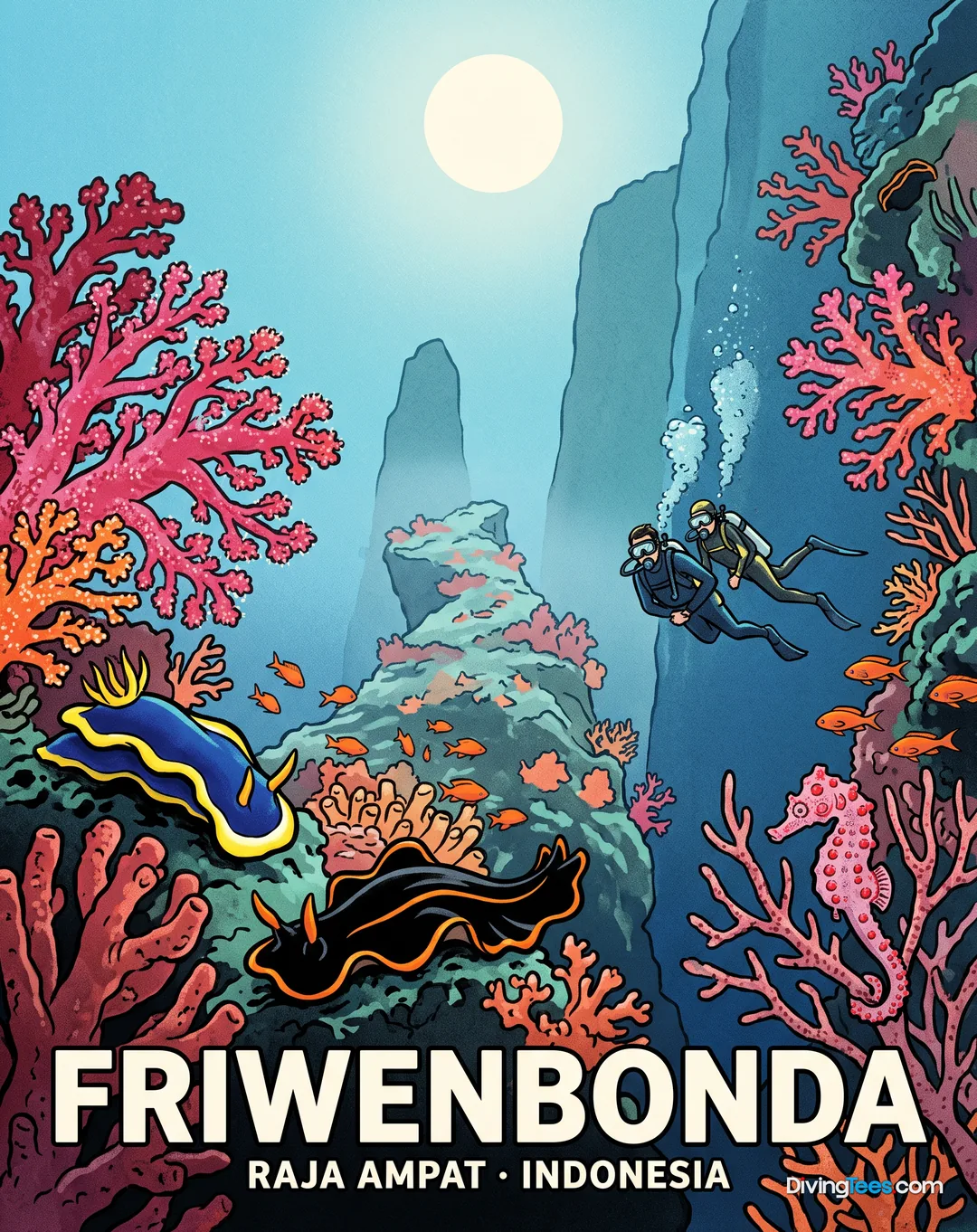
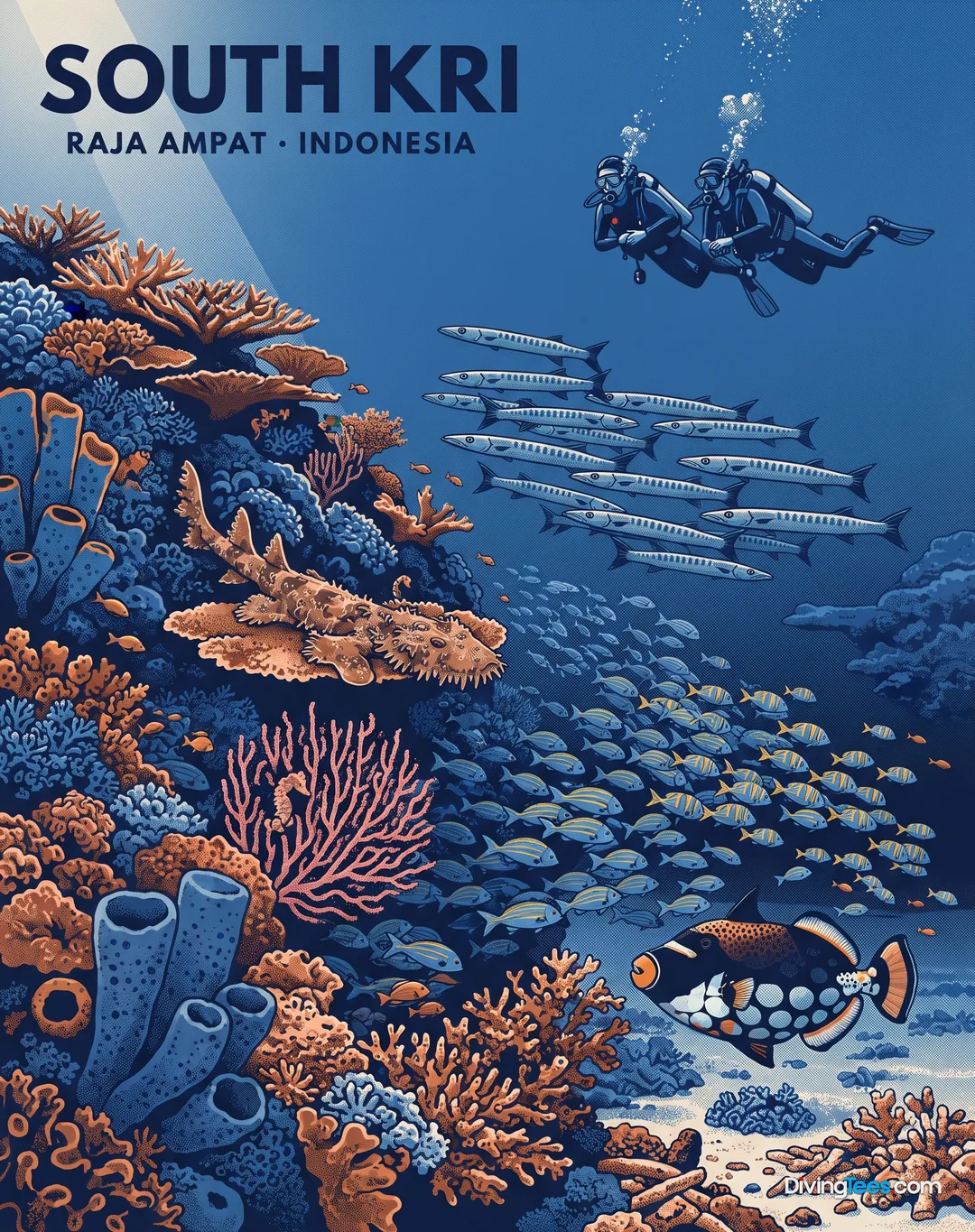
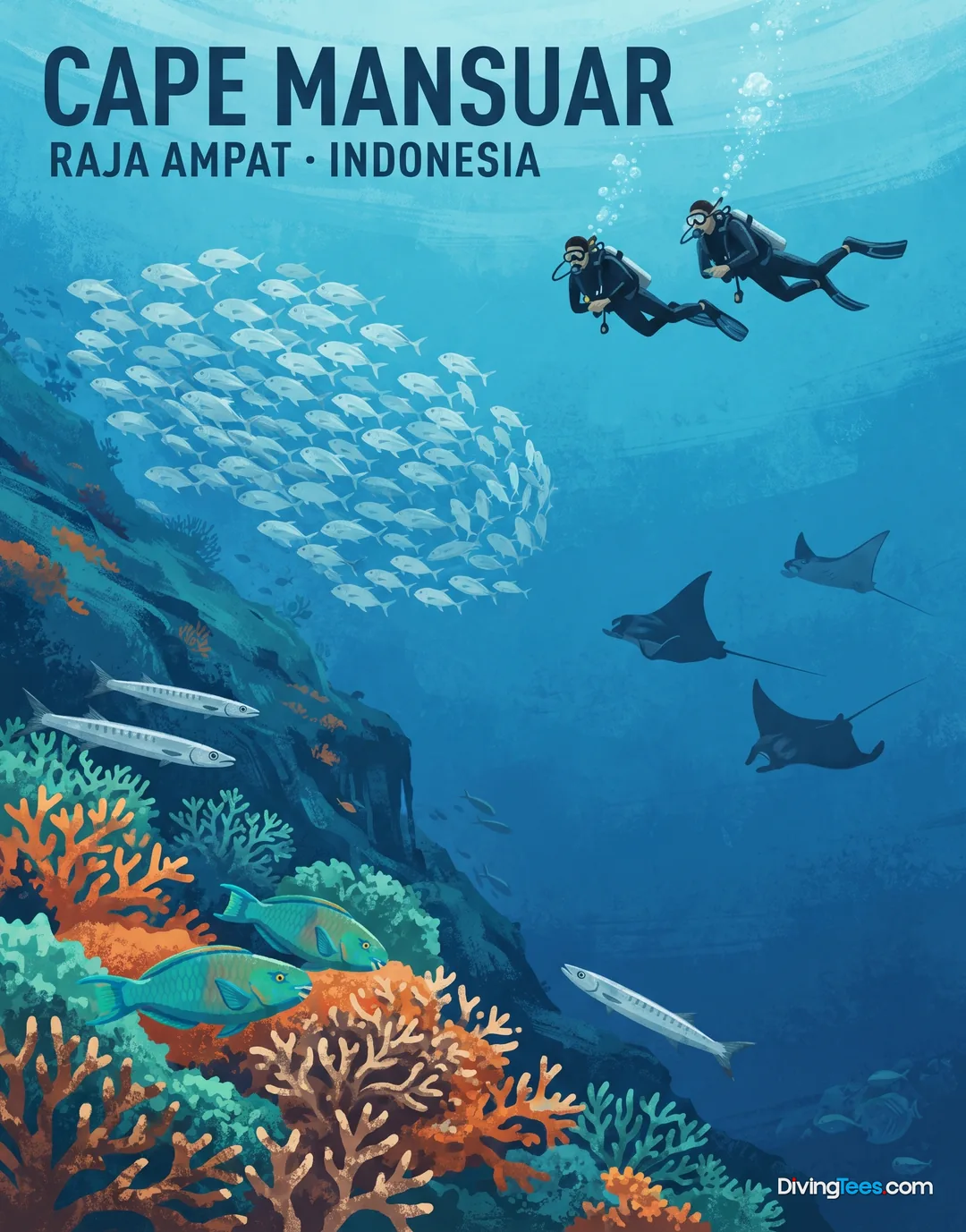
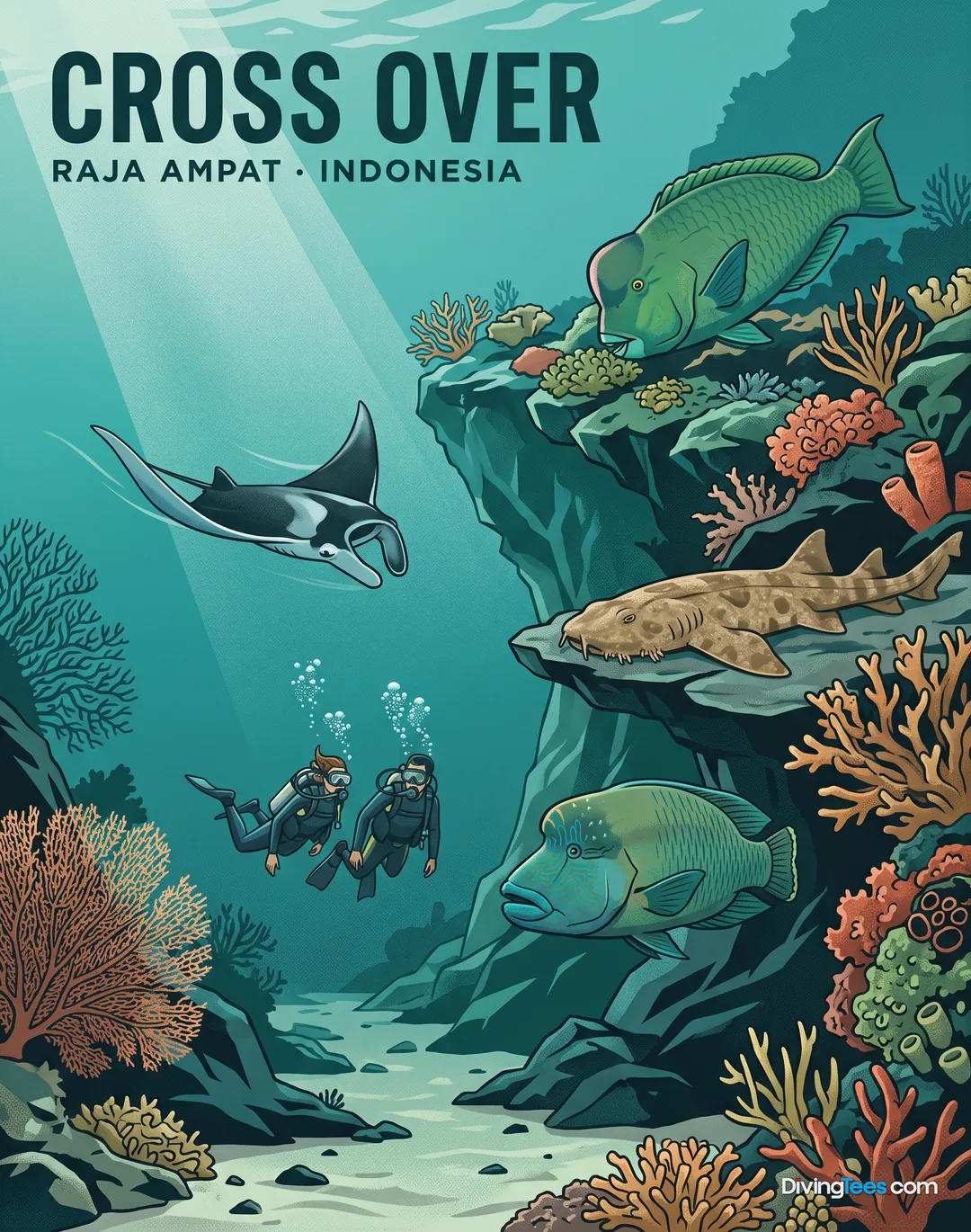
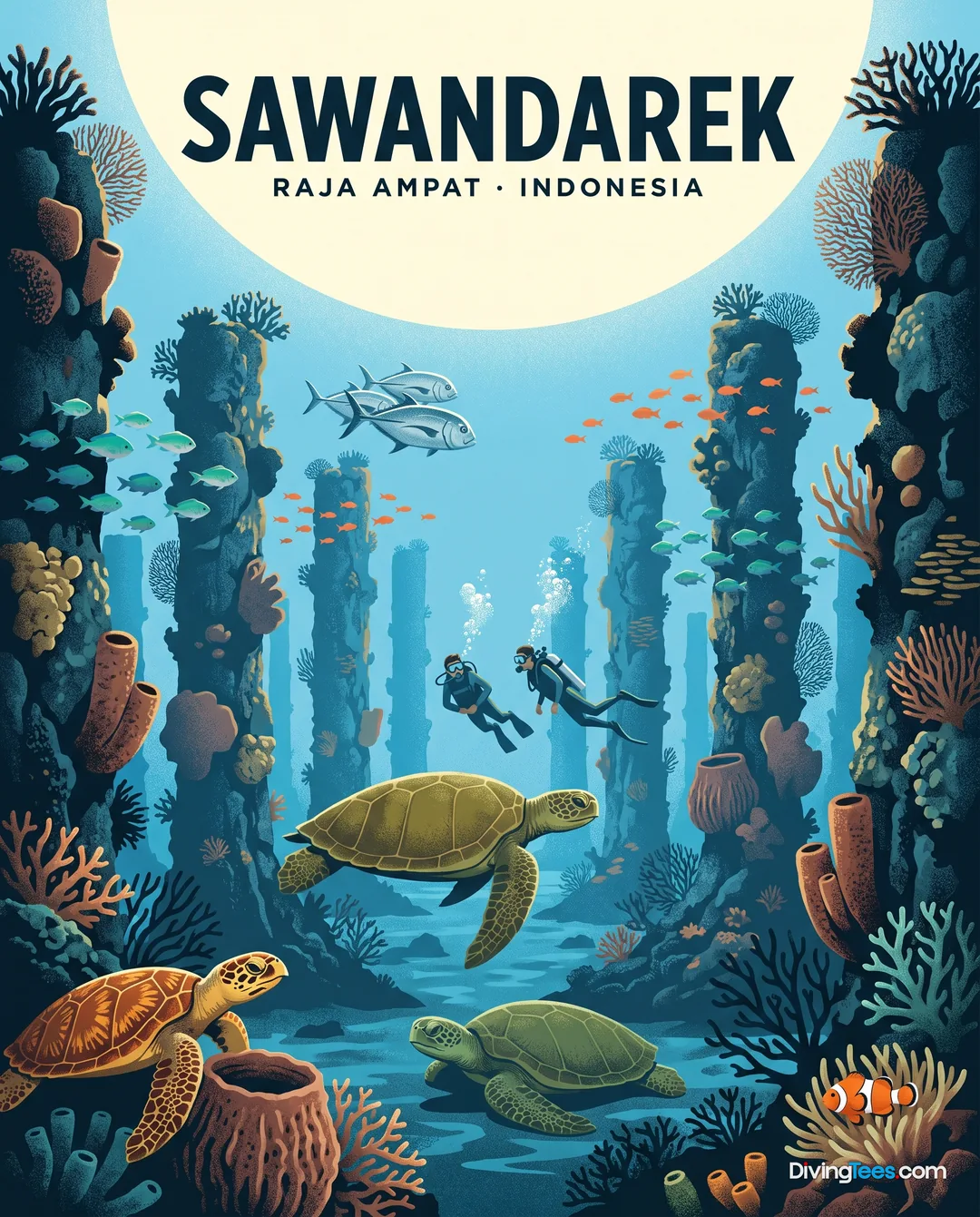
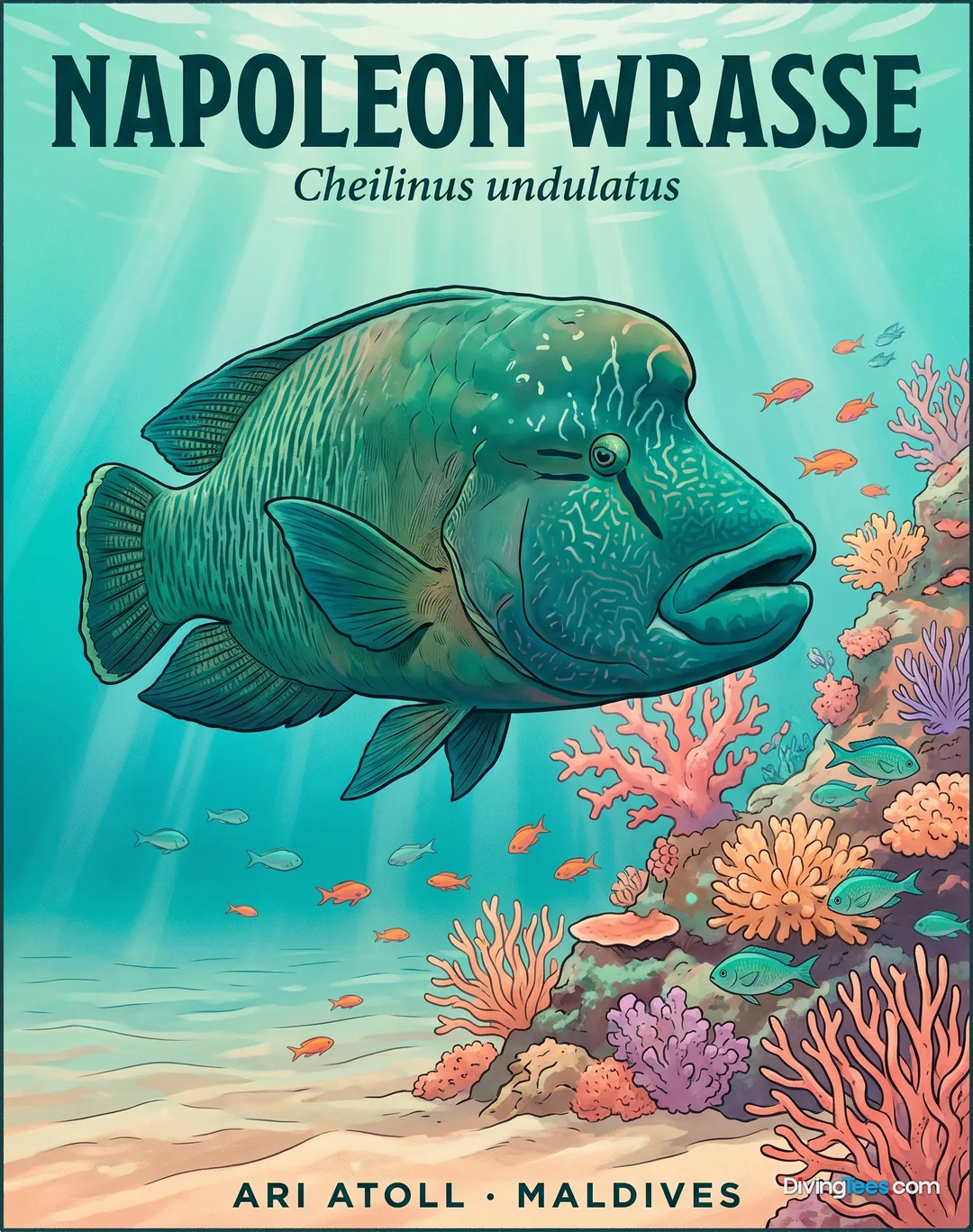
The 7-day North and Central Raja Ampat route is built around the Dampier Strait and nearby reefs, with 18 planned dives; longer 10-day South Raja Ampat trips plan 25, while 12-day Raja Ampat–Banda Sea crossings plan 28. At Manta Sandy, cleaning stations can bring reef manta rays close enough for divers and snorkellers to share the encounter. Cape Kri is the fish-school dive: 374 fish species have been observed on a single dive, with barracuda, fusiliers, reef sharks and Napoleon wrasse in the mix. Blue Magic adds schooling fish and possible oceanic mantas over a vibrant reef. Melissa’s Garden descends through soft coral and staghorn formations to a maximum of -35m. Mike’s Point combines reef overhangs full of soft corals and sweetlips with a flat plateau where eagle rays may pass; its site description reaches a maximum of -40m, while the boat’s operational dive limit is 30m. Ransiwor and Yenbuba Jetty both reach a maximum of -30m, pairing gentle slopes or coral-covered pilings with fusiliers, turtles and small reef life. Sorido Wall, Friwenbonda, South Kri, Cape Mansuar, Cross Over and Sawandarek add walls, drifts, strong current, soft-coral colour and giant green turtles. Site choices can change with weather and local approvals.
What you’ll meet underwater
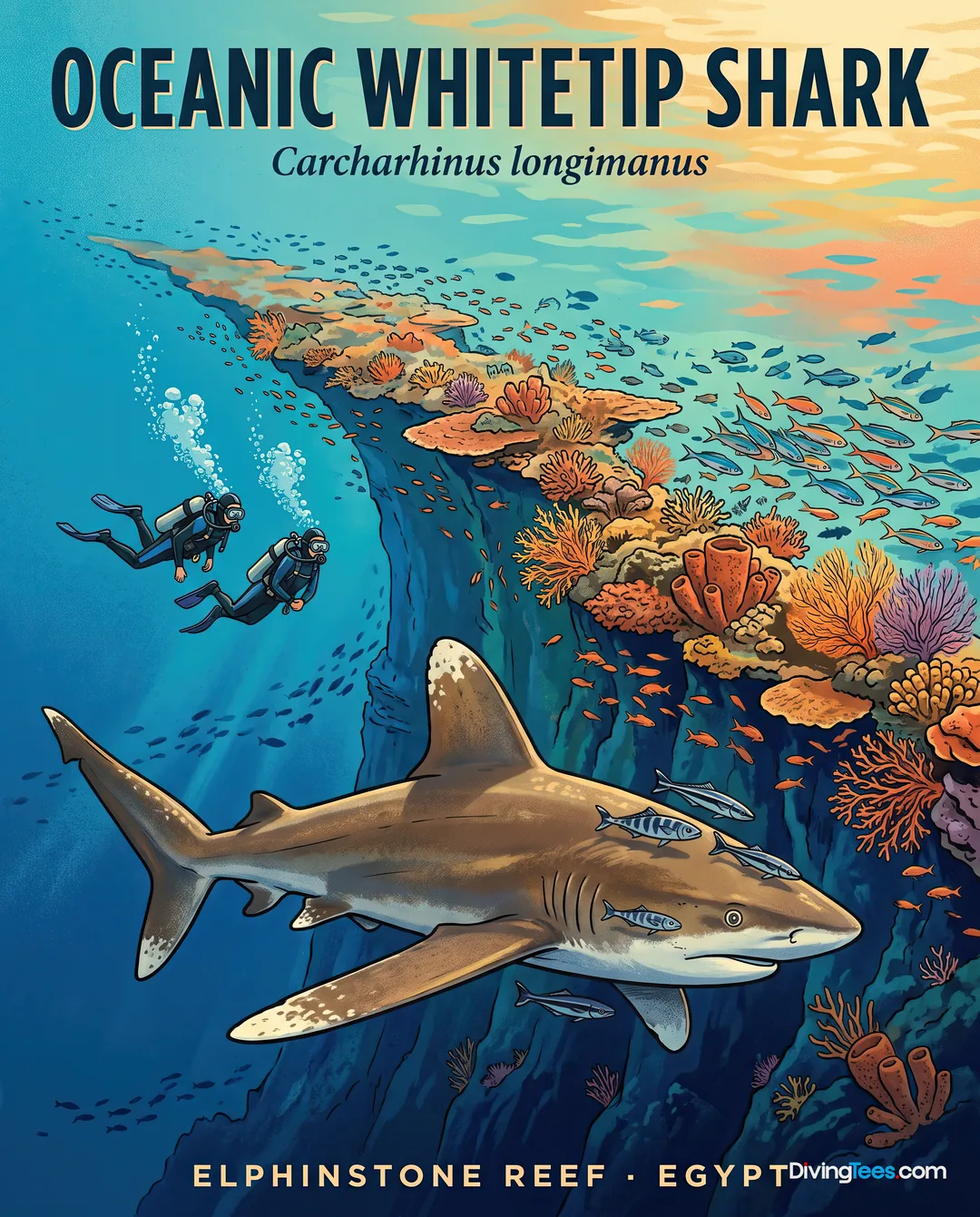
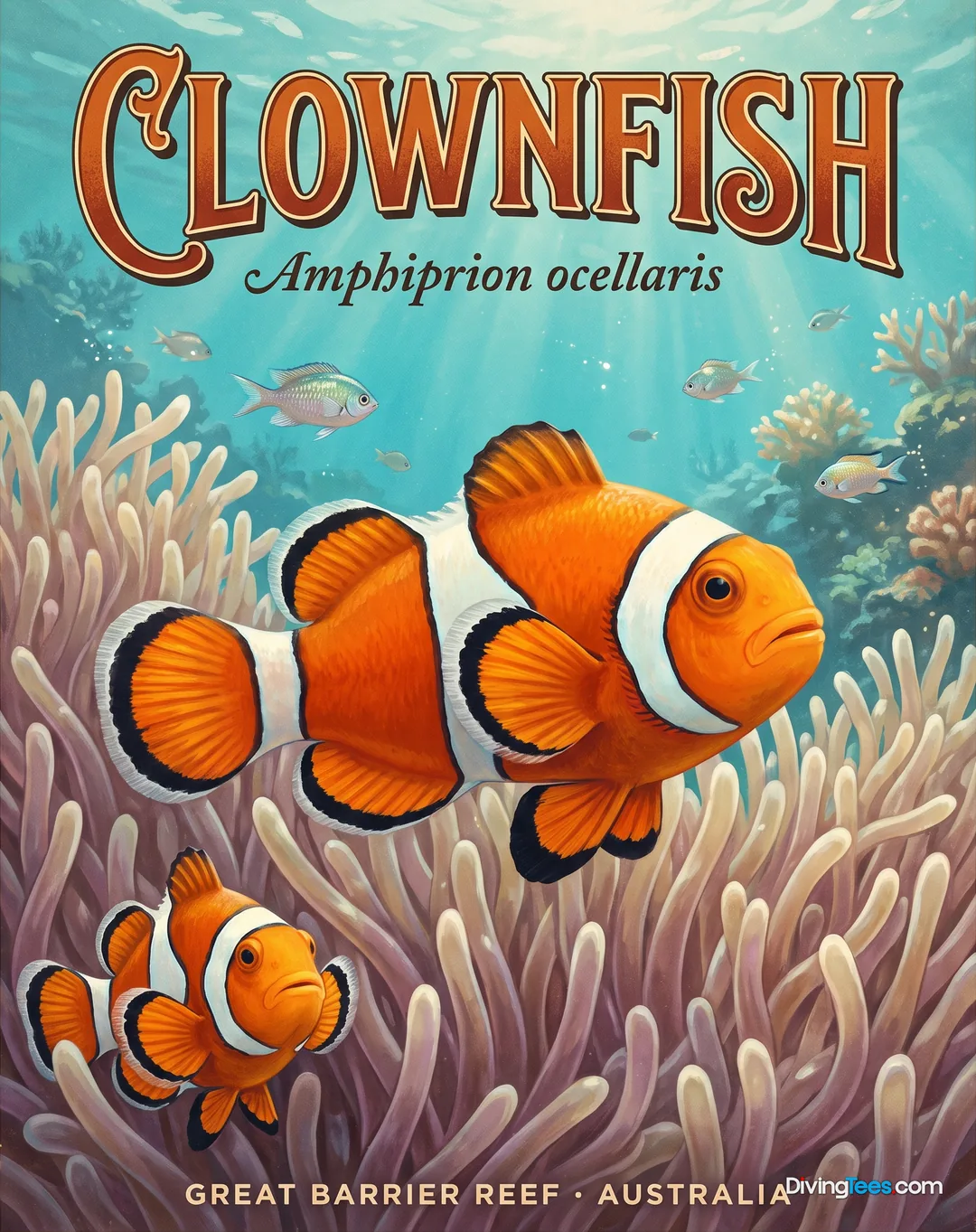
Across this route, the reef is busy at several scales. Barracuda, reef sharks, trevally, fusiliers, sweetlips, Napoleon wrasse, humphead parrotfish, sea turtles, soft corals and nudibranchs recur across the sites, while pygmy seahorses and eagle rays reward slower looking. The current is part of the spectacle: it can draw schools and pelagics along Cape Mansuar or Cross Over, while cleaning stations at Manta Sandy and Ransiwor give animals a reason to hold position. Cape Kri is the place for the route’s distinctive giant grouper and whitetip reef shark sightings. Blue Magic is where an oceanic whitetip shark or dogtooth tuna may add weight to the blue-water view. South Kri is the site associated with bigeye trevally, crabs and shrimp among the schooling fish and macro life. Yenbuba Jetty offers anthias and damselfish around the pilings; Ransiwor can produce an octopus and clownfish. None of these encounters is guaranteed, but each site has a clear reason to enter the water.

Who puts you in the water
A guide leads each group of no more than four divers, normally two buddy teams. Before entering the water, the guide gives a site briefing covering navigation and the conditions expected; underwater, the guide stays with the group and points out marine life. Divers remain responsible for themselves and their buddy, plan the dive on a personal computer and begin, conduct and end the dive together. The boat asks for Advanced certification, at least 30 logged dives and a last dive within the previous year. A refresher and recent practice are sensible if that interval has passed. Nitrox diving requires proof of certification; a NAUI Nitrox Diver course is available with prior booking. The boat carries oxygen for diving emergencies, first-aid kits, fire equipment and marine communications including VHF and SSB radio, radar, GPS, AIS, SART and EPIRB. No defibrillator or recall system is listed.
The dive deck and the gear
The shaded dive deck is arranged around a U-shaped bench with tank holders, gear storage underneath, wetsuit hangers and a separate rinse tank for cameras and torches. The boat carries 22 aluminium tanks of 11.3 litres, with both DIN and K-valves (yoke). Two dive compressors and a nitrox generator support the operation, and EAN32 is free on every dive for divers certified to use it; air is available if they are not. Divers can bring their own equipment or rent full sets and individual pieces, including a dive computer, which is mandatory. The dive computer, surface marker buoy and other personal safety equipment remain the diver’s responsibility. Entry and exit are through one of two RIB tenders, and the tender stays with the dive group to collect divers at the end of the dive. The main deck is therefore a staging area, not a giant platform: gear is organised, cameras have their own rinse water and groups move to the RIB in small numbers.
Between dives
Between dives, the boat gives people several ways to be still without leaving the sea behind. The shaded decks are the natural place to dry off, talk through the last dive or watch the RIB return with the next group. Sunbeds and the upper deck offer more exposure, while the bowsprit and foredeck put the islands directly ahead. A saloon, library and observation deck provide shelter when the sun is strongest. On a longer passage, those spaces matter more than a long list of facilities: there is room to read, charge a camera, edit photographs or simply wait for the next site. Land excursions are offered when the route and guests’ requests allow them. The boat can also be used for island visits, birdwatching and snorkelling, but the quiet hours remain tied to the diving schedule and the movement between sites.
A day on board
The working day starts with coffee, tea and toast before the first briefing, then the first dive goes in at 7:00. Breakfast follows at 9:00. A second briefing comes at 10:30, with the next dive at 11:00 and lunch at 13:00. The afternoon follows the same pattern: briefing at 14:30, third dive at 15:00, then a snack at 16:30. Twice a week, the schedule adds a night dive at 19:00 before dinner. The rest of the gaps are used for eating, drying equipment, moving between islands or taking a shaded seat while the crew prepares the next entry. Departure day is slower: guests board, settle their gear and paperwork, eat lunch and the anchor comes up, with an afternoon dive depending on the cruise. Arrival day ends with a leisurely passage through the islands before returning to port at noon. On a standard 7-day cruise, the plan is 18 dives.
What you eat aboard
The galley serves three meals a day, with snacks between them, and combines Indonesian and international cooking. Local dishes give the route a sense of place; familiar Western options keep the table practical over a week of repeated dives. Vegetarian meals are available. Coffee, tea and drinking water are self-service throughout the day, while beer and soft drinks are available on board. Meals arrive at the points where divers need them: breakfast after the first dive, lunch after the second, an afternoon snack before the final dive and dinner after the day’s water work. That timing is more important than elaborate presentation. After a 60-minute dive, divers want food that is ready, filling and easy to eat before the next briefing. The food scores particularly strongly, and the mix of local cooking, Western dishes and snacks gives the galley enough range for a small group sharing every meal.
Nights at sea
The four cabins are arranged as double and twin cabins, with portholes and hatches that can be opened for ventilation. Air conditioning runs day and night, and fans give another way to manage the warm Raja Ampat air. Three shared shower rooms provide warm fresh-water showers, while bedding, towels, shampoo and soap are supplied. The cabins are not built around private bathrooms or hotel-style separation; the three bathrooms are shared across the boat. That is the trade-off for a small traditional vessel carrying only eight guests. At night, the awnings can come down and the upper decks open to the stars. When the boat is moving, the engine is audible. When it lies at anchor, the space becomes quieter, with the sea and the movement of a wooden liveaboard replacing the sound of a resort.
Double Cabins
Twin Cabins
What to know before boarding
Raja Ampat cruises aboard Gaya Baru Indah start and finish in Waisai on Waigeo Island. Transfers in the departure and arrival towns are included on those days; a guided transfer from Sorong airport or a Sorong hotel to Waisai can also be arranged separately. The operator recommends arriving in Waisai the night before, since the ferry connection and Indonesian transport can disrupt a tight arrival plan. The boat returns to Waisai at noon on the final day.
Deck plan
What the boat does for the ocean
The boat avoids selling drinks in plastic bottles or multilayer tetra packs because those packages are difficult to recycle in Raja Ampat. The operator buys as much food and supplies as possible from local farmers, fishermen and traders. On the water, the crew applies a strict no-touch policy: no gloves, knives, hunting or collecting, and divers must stay clear of the reef and avoid penetration on wreck dives. These are direct operating choices that reduce waste, support the local supply chain and limit physical damage to marine life.
- Year built
- 2013
- Year renovated
- 2022
- Length
- 27 m
- Beam
- 5.3 m
- Maximum number of passengers
- 8
- Number of cabins
- 4
- Number of bathrooms
- 3
- Engines
- 1 × Mitsubushi 190 hp
- Cruising speed
- 7 knots
- Tenders
- 2
- Website
- bigblueindonesia.com ↗
Hello, I'm Marina, DivingDeal.com's AI assistant. I answer in detail about hotels, dive centres and liveaboards.

Thinking about the whole trip and the flights? Talk it over with Edith →
Marina is an AI. Some links are affiliate links: DivingDeal may earn a commission, at no extra cost to you. Bookings are made with the partner.