Liveaboards · Indonesia
Indo Master — a compact, diver-first base for North Sulawesi
What makes this boat unique
- Built in 2022 and renovated in 2024, Indo Master carries up to 18 passengers in nine air-conditioned cabins with private bathrooms.
- The dive deck has room to set up and store equipment, with separate rinse facilities for cameras and diving gear.
- Two tenders serve the dive sites, and nitrox and rental equipment are available as paid options.
- Fresh bread is made every day, with both local and Western dishes served buffet-style.
For subtitles in English: start the video firstthen click the gearat the top right of the video, select “Subtitles/CC”, then “Auto-translate” and choose “English”.
The invitation
Indo Master suits divers who want the water to take priority without giving up a private cabin or a manageable group size. The boat is recent enough to feel orderly rather than improvised, and the 2024 renovation matters when four dives a day make small inconveniences grow quickly. Its strongest points are practical: a well-regarded dive operation, plenty of space on the deck, two tenders, good briefings and regular night diving. It is also a sensible choice for a mixed group, since snorkellers and non-divers are welcome and kayaks and stand-up paddleboards are available. The boat score is lower than the scores for crew, food and diving, which says something useful: this is not being sold as a floating resort. The return is a crew and dive service that passengers rate exceptionally highly, with North Sulawesi's walls, black-sand slopes, pinnacles and wrecks reached from a boat designed to keep the diving straightforward.
Boarding
From the dock, Indo Master presents as a working dive vessel rather than a decorative yacht. The recent build and renovation show in the orderly layout and clean practical spaces, while the size keeps the group small enough that the same faces appear at every meal and briefing. Once aboard, movement is simple: cabin, salon, outer terrace, then down to the dive platform where the trip really starts. The boat has two Mitsubishi engines and moves at a measured cruising pace, so crossings are part of the liveaboard rather than something hidden behind a hotel-like interior. Passenger feedback places the hull below the crew, food and diving, and that is the honest reading of the boat: its character comes less from luxury detailing than from how well the operation works around the water. The crew speaks English, and the strong scores for service and dive briefings suggest that practical questions get answered without ceremony.
The atmosphere on board
Indo Master's atmosphere is built by the people running the day. Crew and dive service receive perfect scores, as do the food and diving, while the boat itself scores lower; passengers are clearly remembering the operation more than a polished hull. That distinction is useful after a week at sea. The crew's job is visible in the parts divers notice: briefings that make sense, dive reviews after the water, meals arriving when the group needs them and a deck kept ready for the next entry. English is spoken on board. With a maximum of 18 passengers, the group remains small enough for repeated contact with the same guides, cooks and deck crew, and the frequent night dives give evenings a clear purpose. After the last dive, the salon, terrace and audio-video entertainment provide the setting; the reason to stay up is usually the conversation about what was found below.
The sites you’ll dive
North Sulawesi is a route of walls, black sand, pinnacles and macro sites. Bunaken Marine Park drops along dramatic walls to a maximum of -40m, with turtles, reef fish and possible pelagic encounters. Bunaken Timur reaches a vibrant 40-metre wall and a maximum of -25m; Murex Bangka House Reef slopes to -25m and is known for pygmy seahorses and blue ribbon eels. Lekuan combines enormous sponges and coral gardens to -25m, while Sachiko’s places gorgonians, barracudas and blacktip reef sharks along a wall to -25m. Siladen Wall also reaches -25m. Sahaung uses pinnacles and boulders to -35m, and Batu Mandi uses isolated pinnacles to -30m. Celah Celah is a cleft in the wall looking into deep blue; no maximum depth is given. Lembeh Strait brings shallow black sand and rare macro life. Bethlehem has seagrass and sand to -20m, City Extra volcanic sand to -20m, and Murex Manado House Reef reaches -20m from the beach. The Molas Shipwreck is an upright Second World War cargo vessel on a sandy slope to -40m. Recorded departures also include Komodo National Park trips of 8 or 11 days and Banda Sea trips of 7, 8 or 11 days.
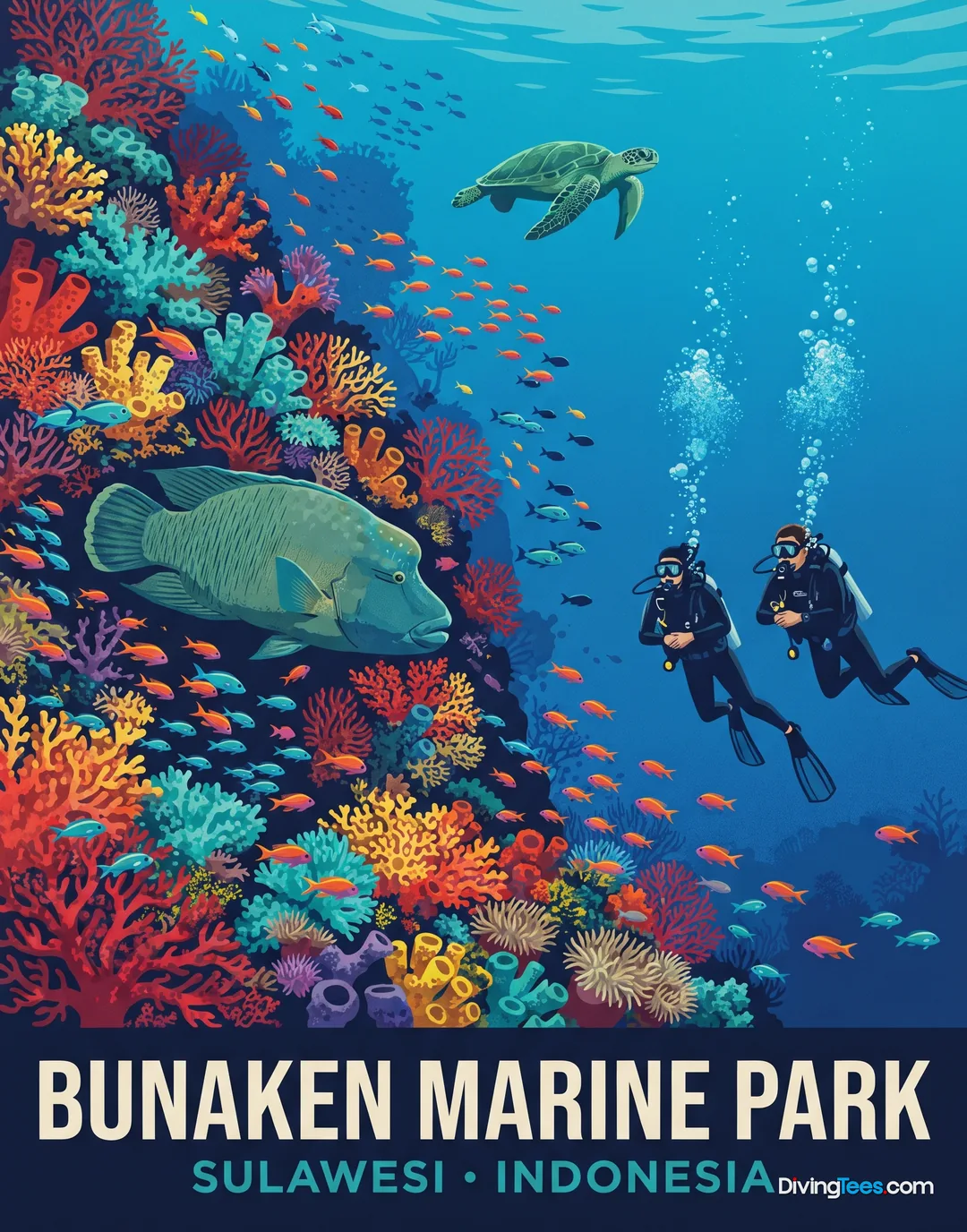
Bunaken Marine Park →
Max. depth · 40 m
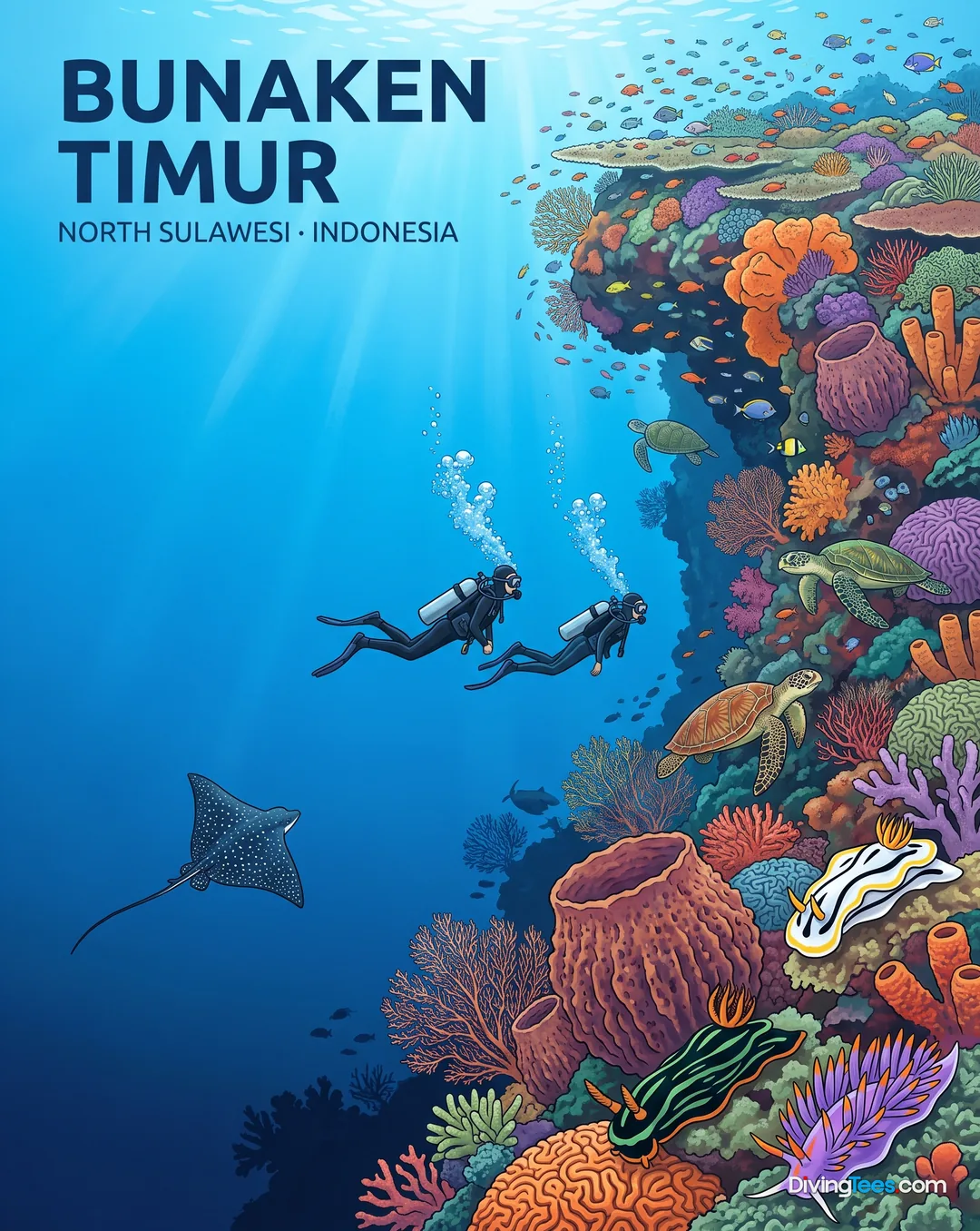
Bunaken Timur →
Max. depth · 25 m
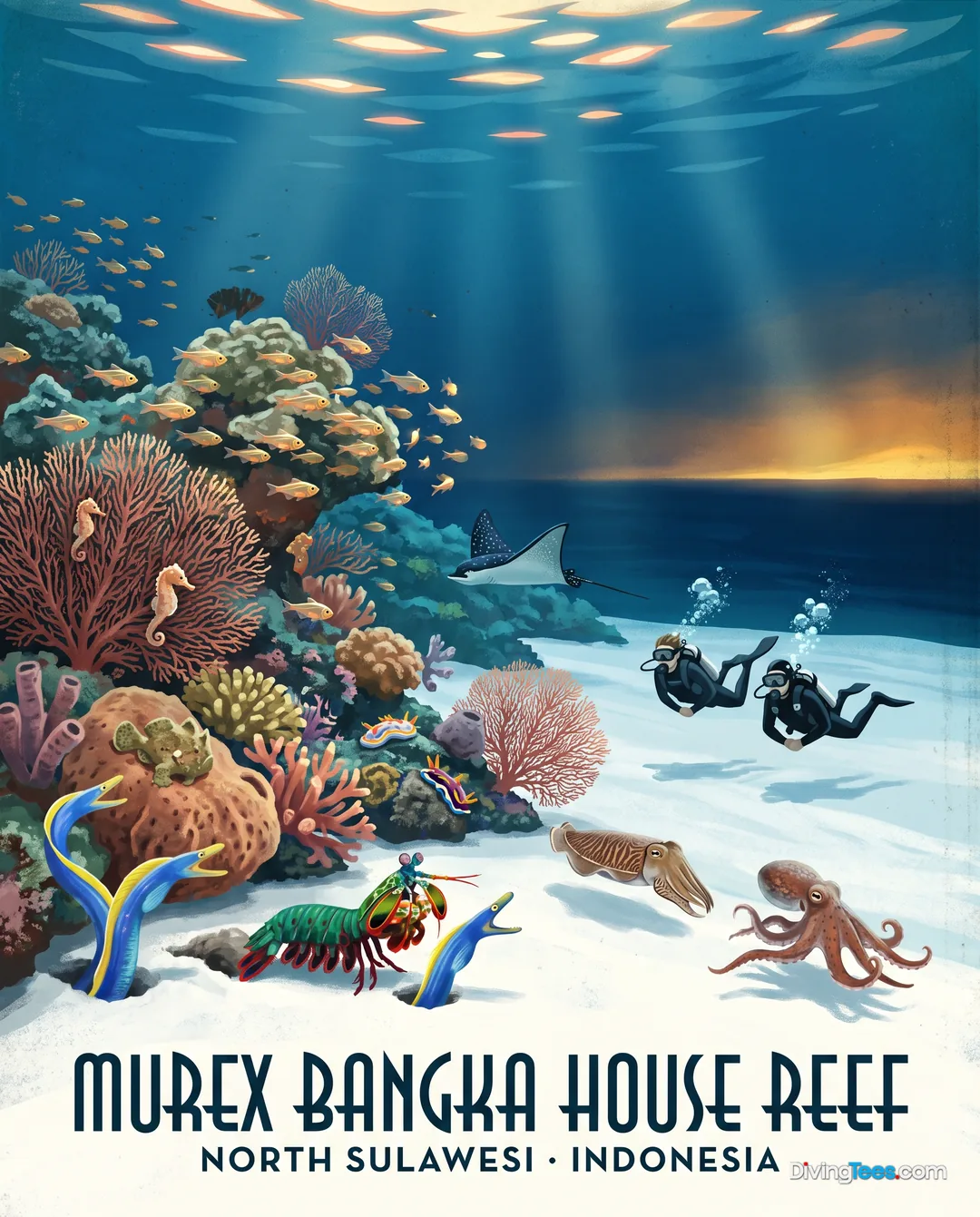
Murex Bangka House Reef →
Max. depth · 25 m
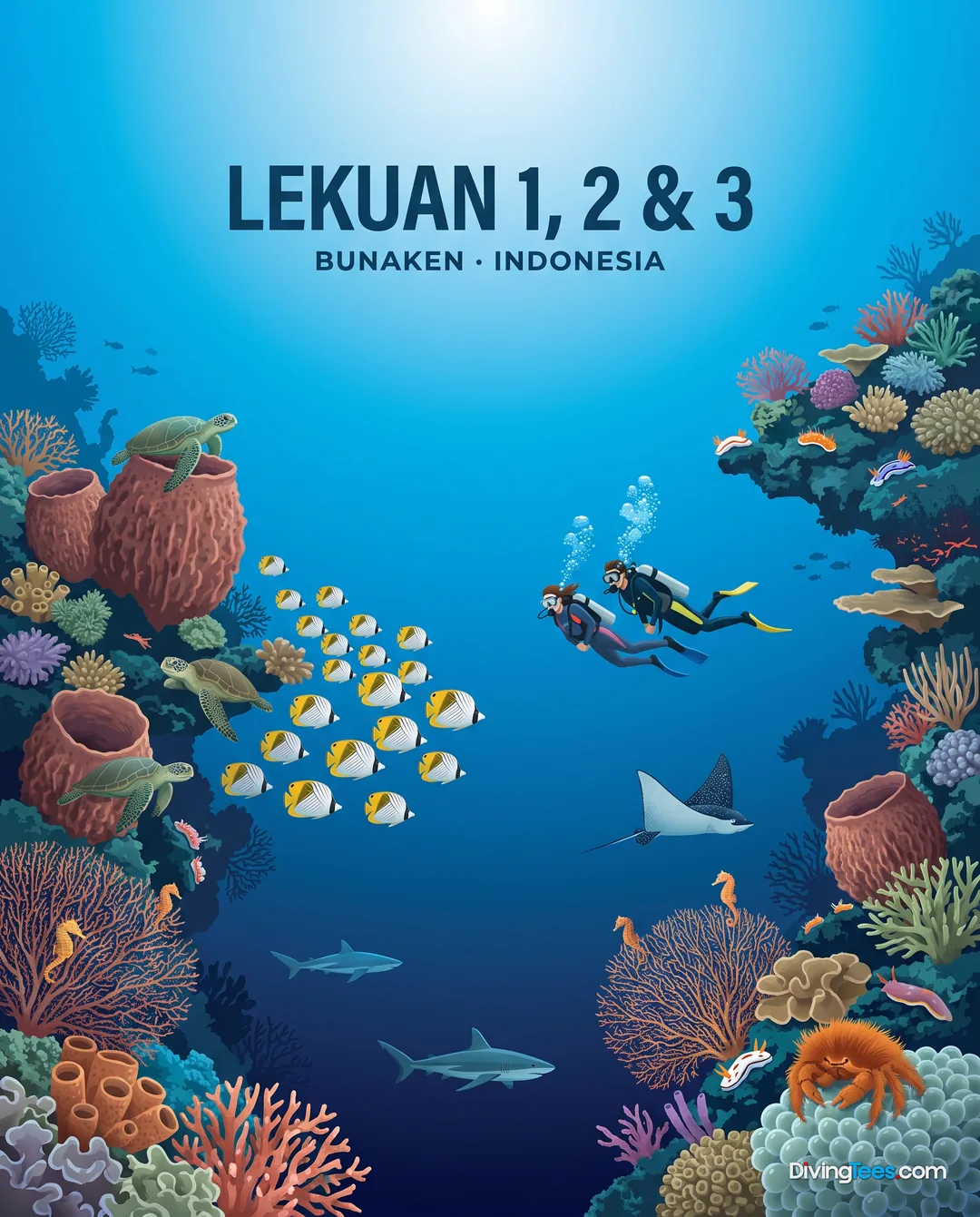
Lekuan →
Max. depth · 25 m
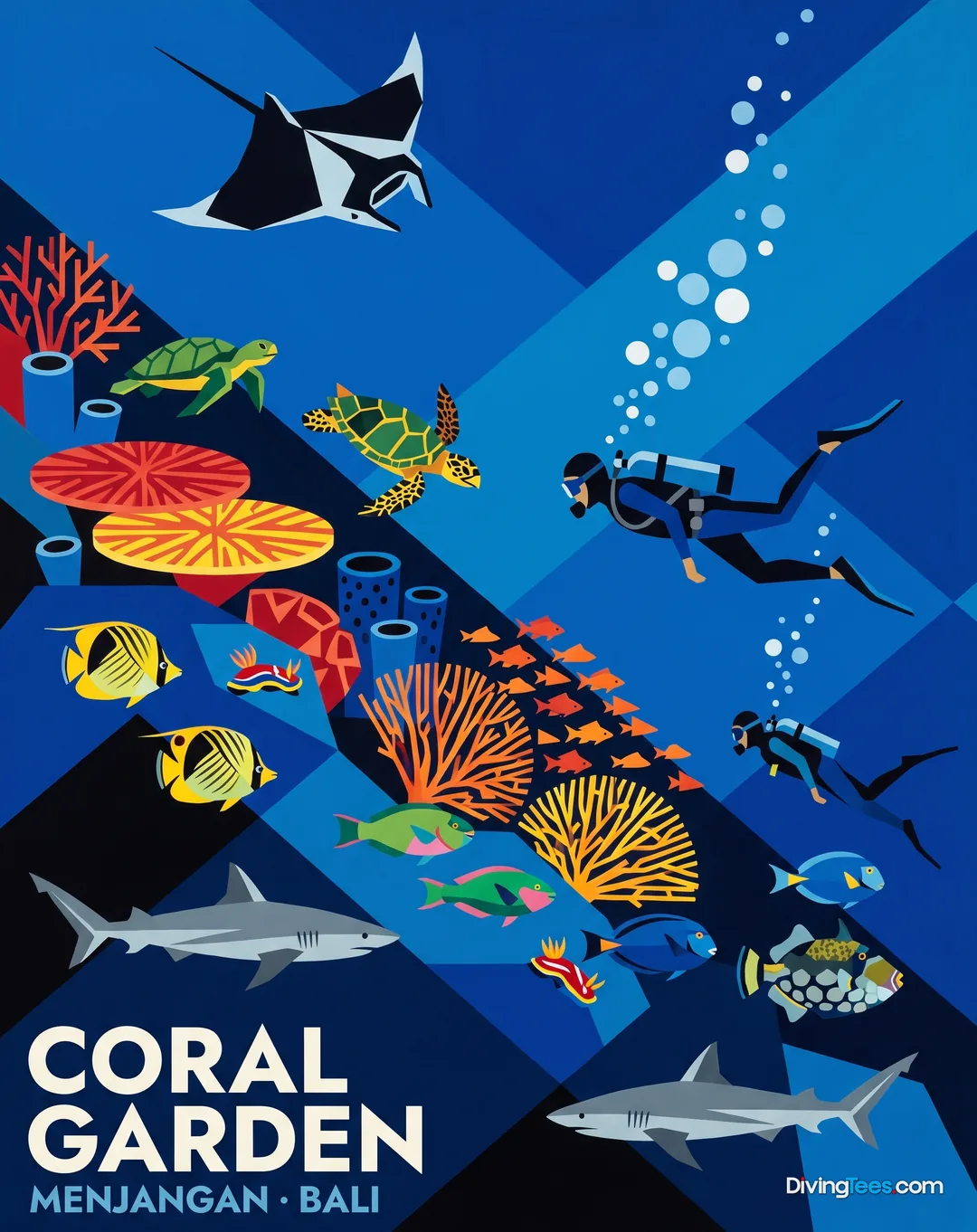
Coral Garden →
Max. depth · 28 m
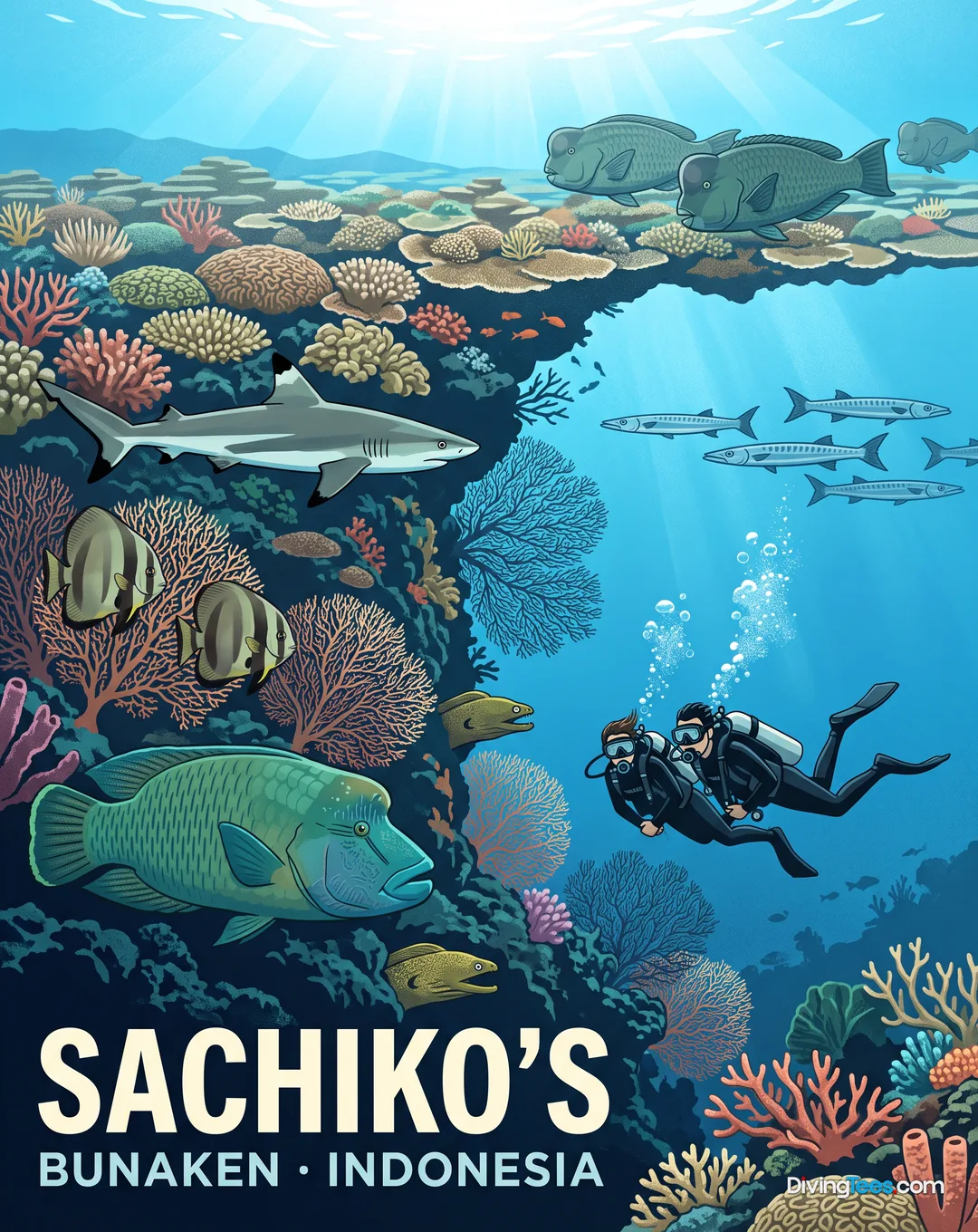
Sachiko’s →
Max. depth · 25 m
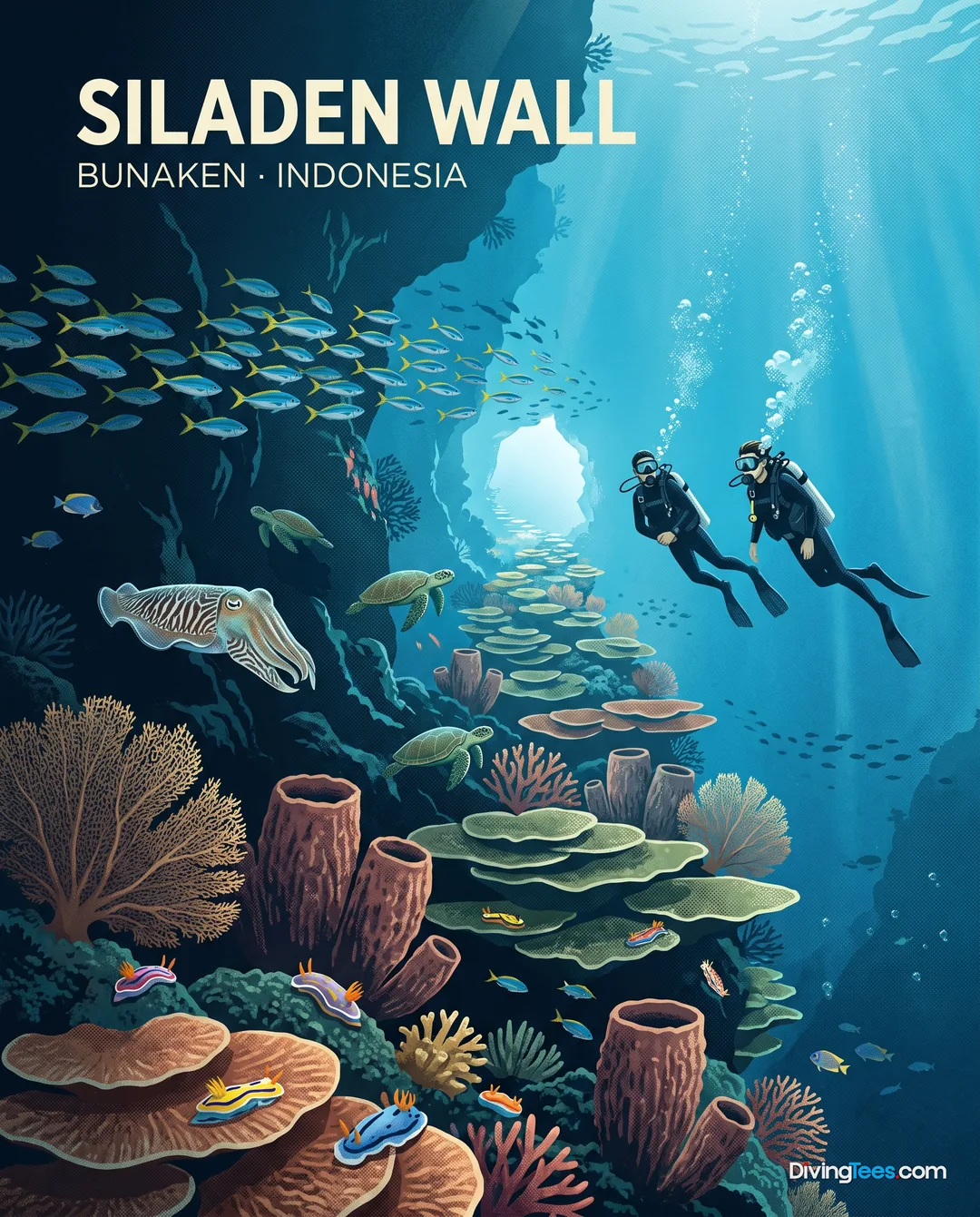
Siladen Wall →
Max. depth · 25 m
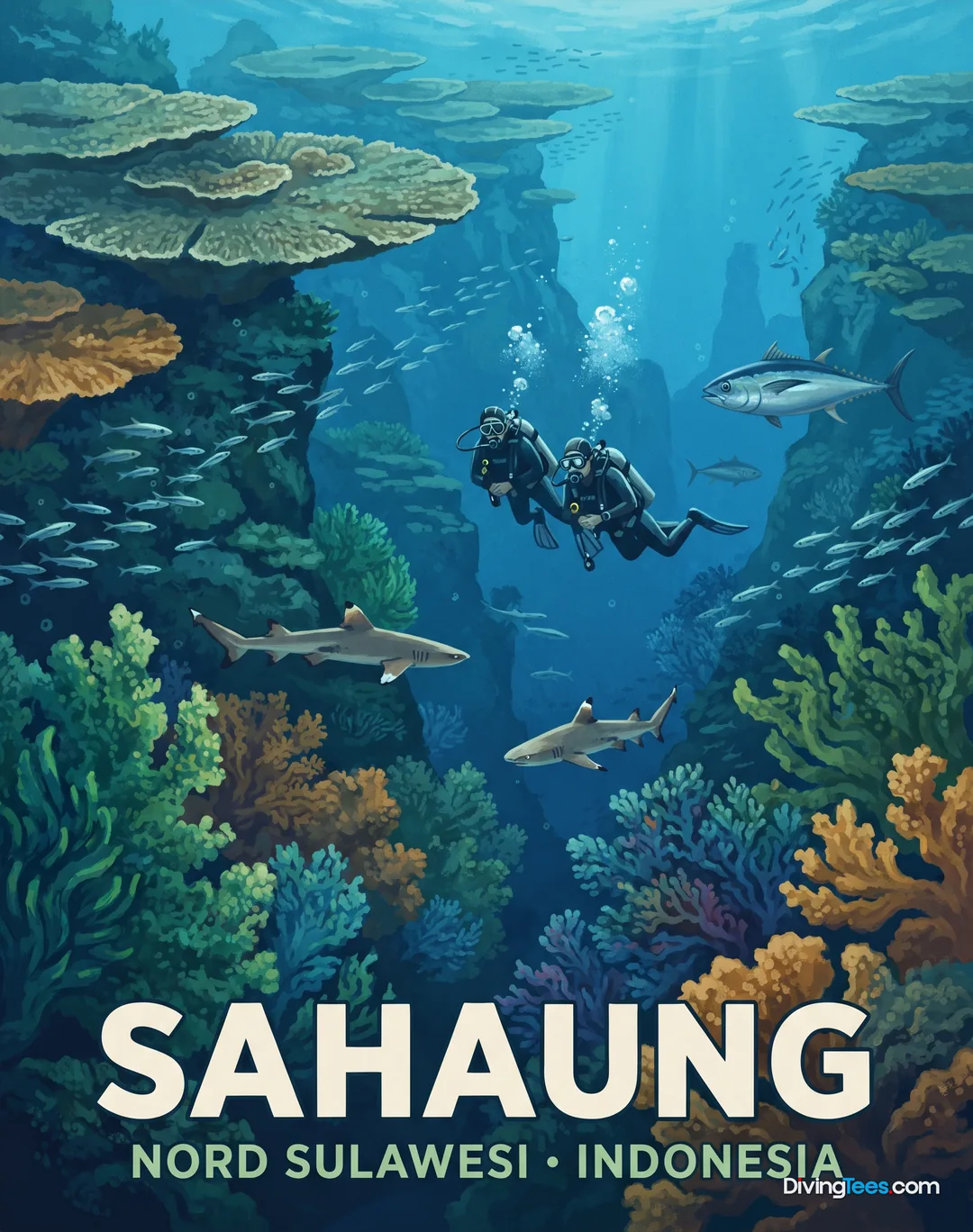
Sahaung →
Max. depth · 35 m
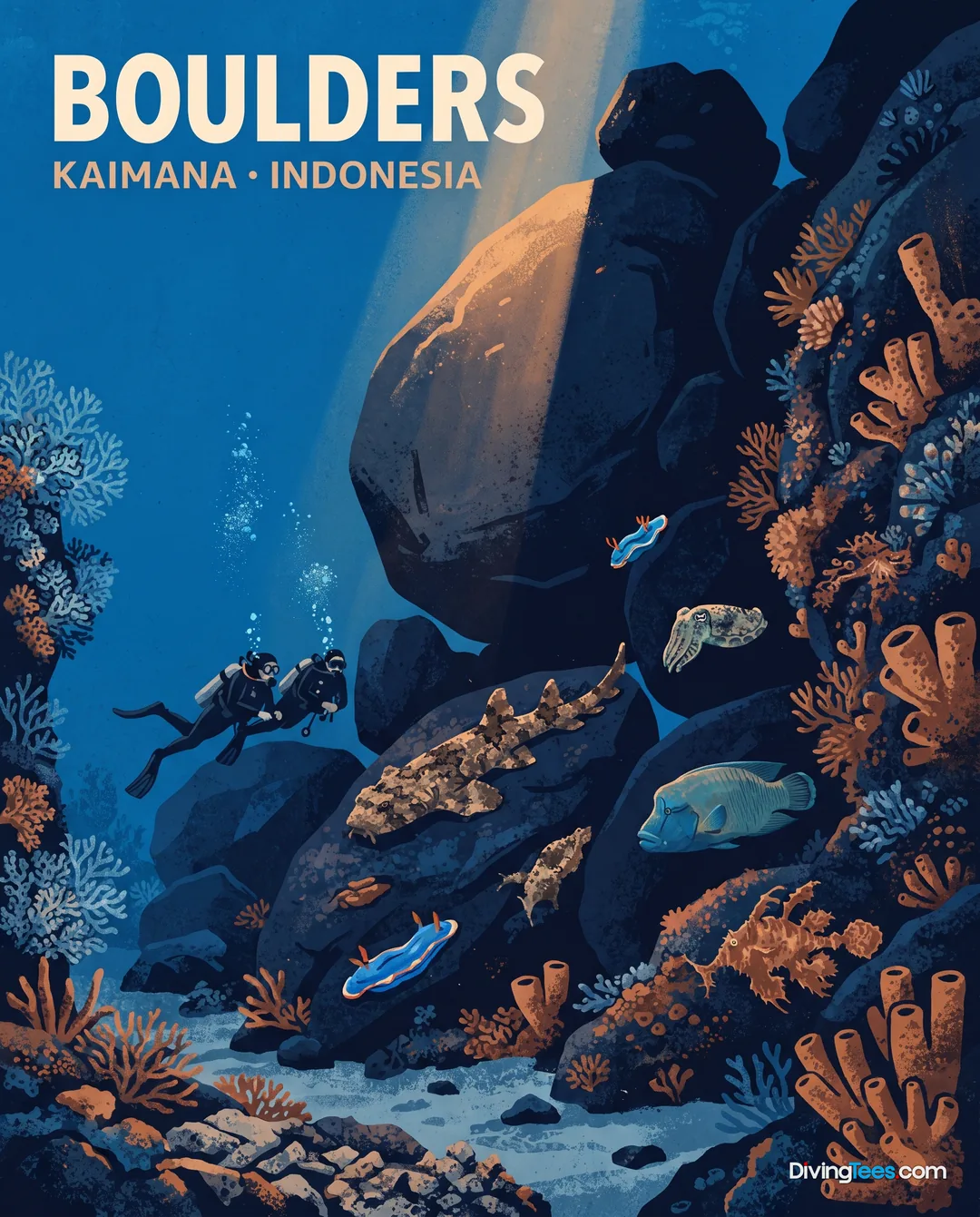
Boulders →
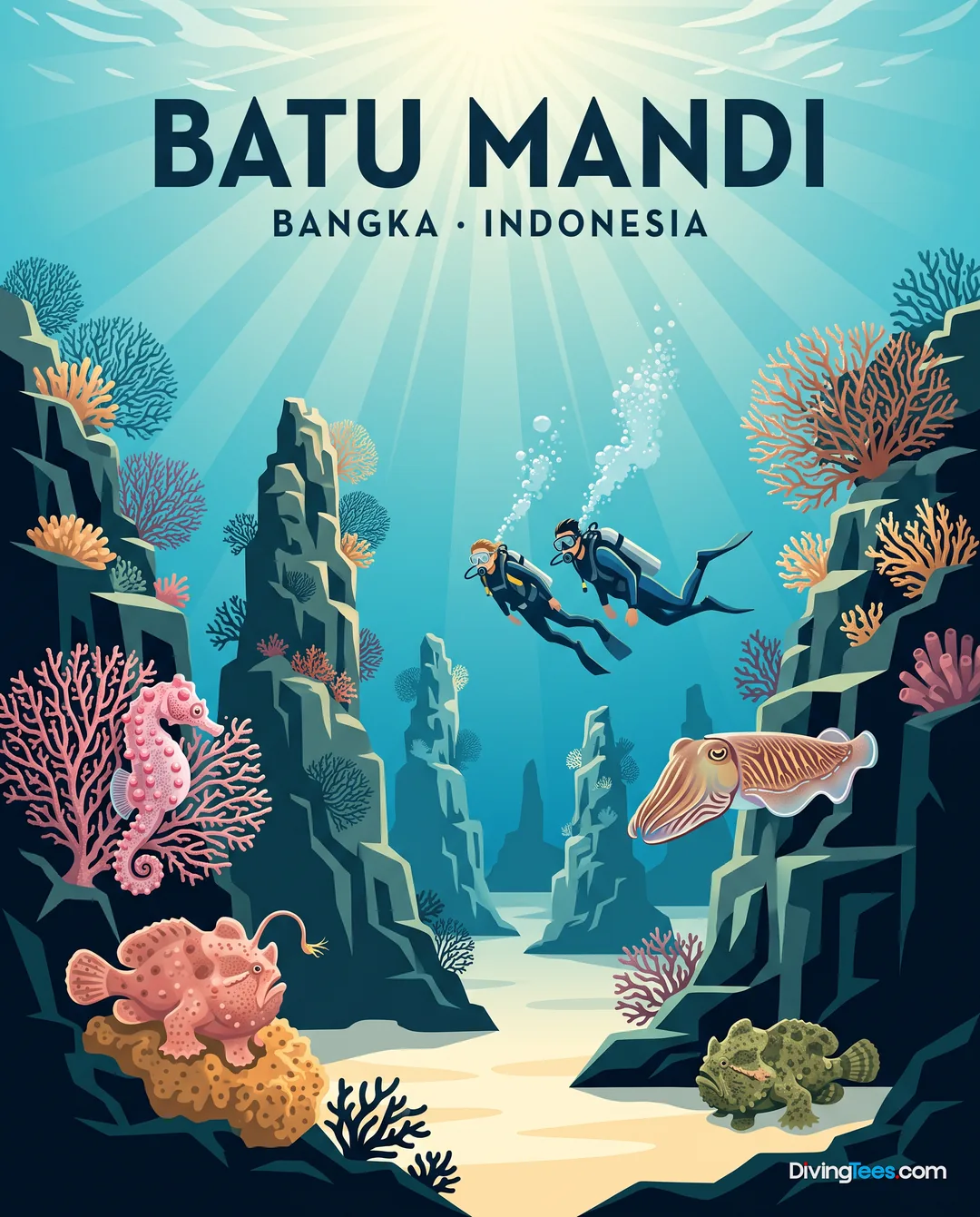
Batu Mandi →
Max. depth · 30 m
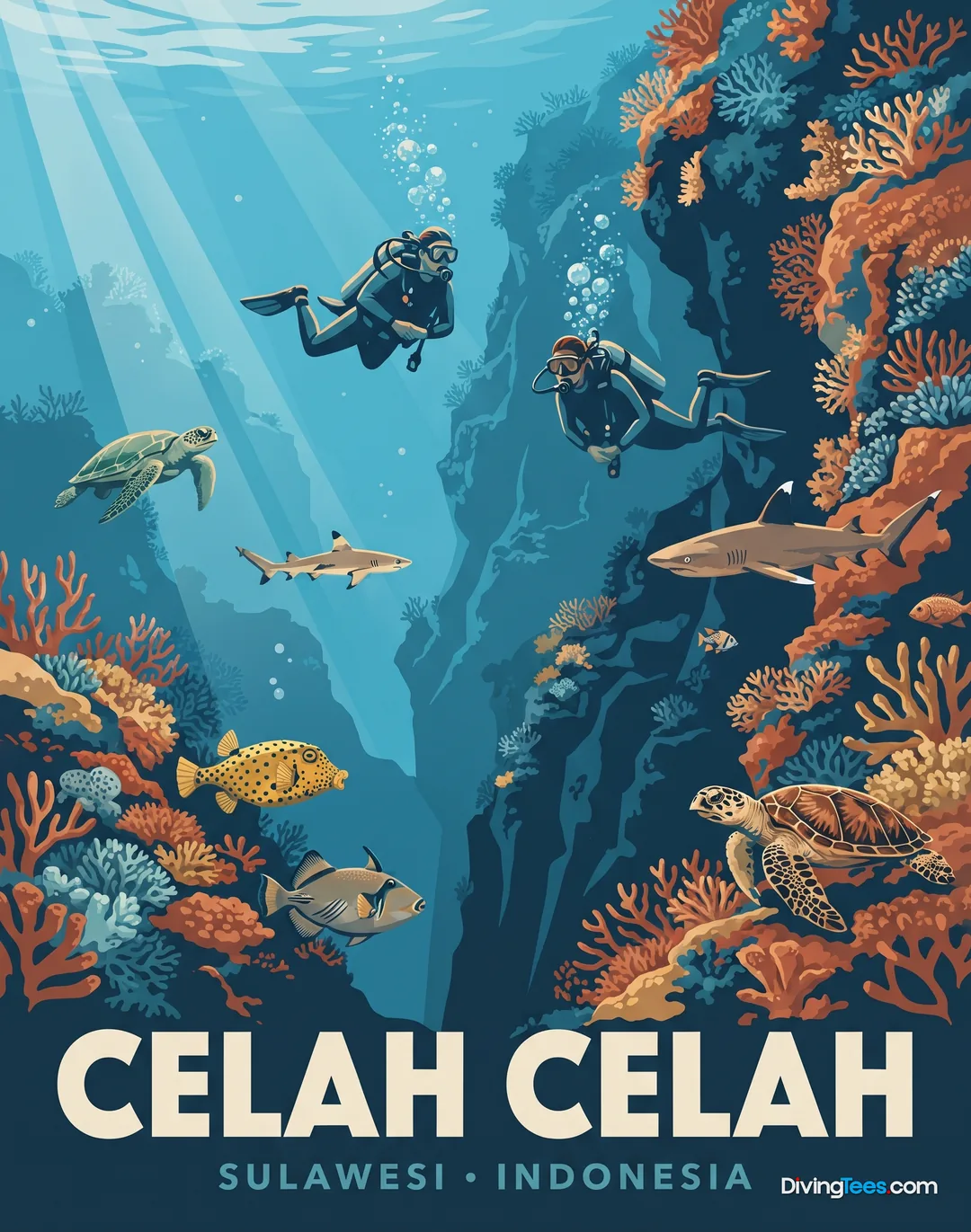
Celah Celah →
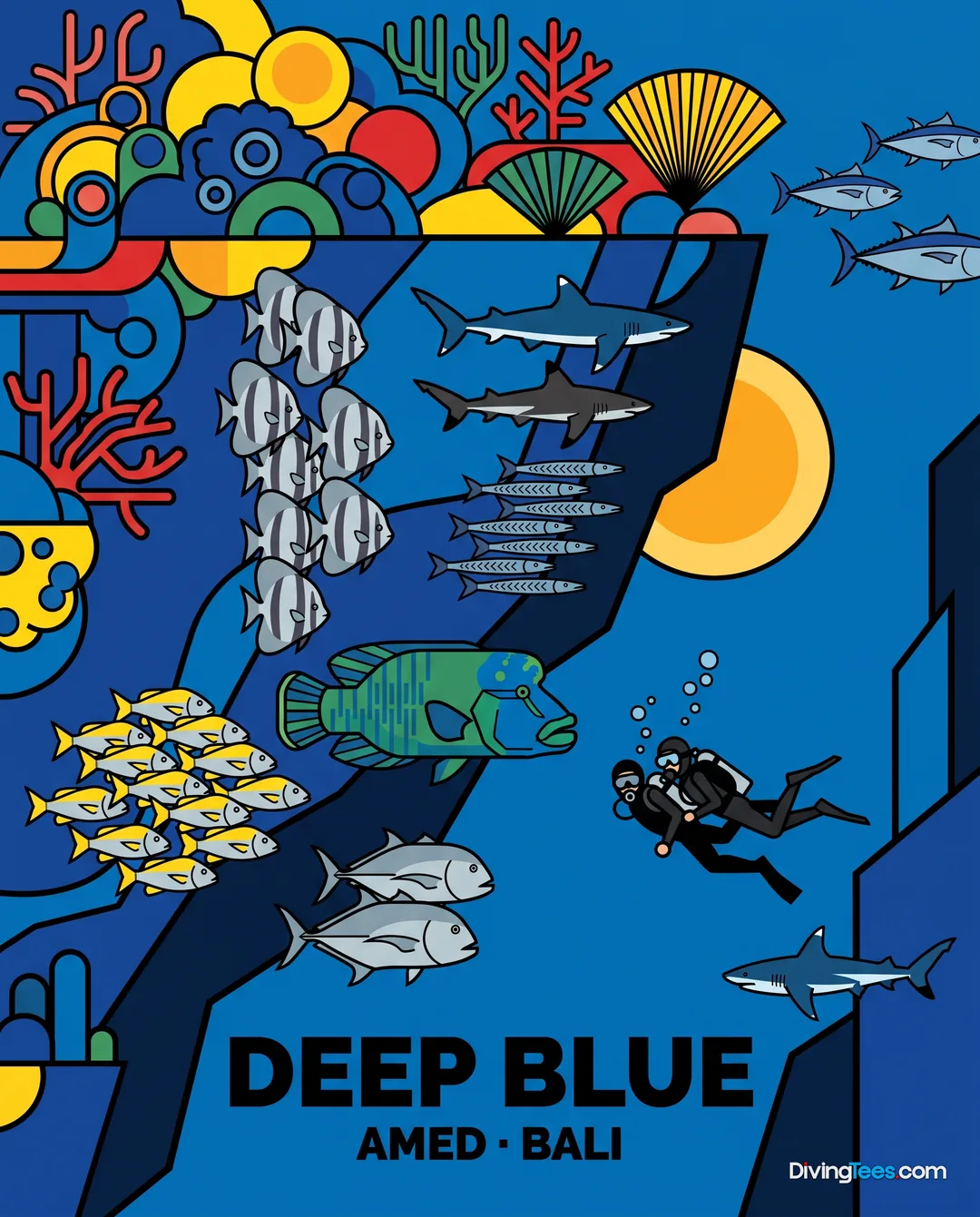
Deep Blue →
Max. depth · 40 m
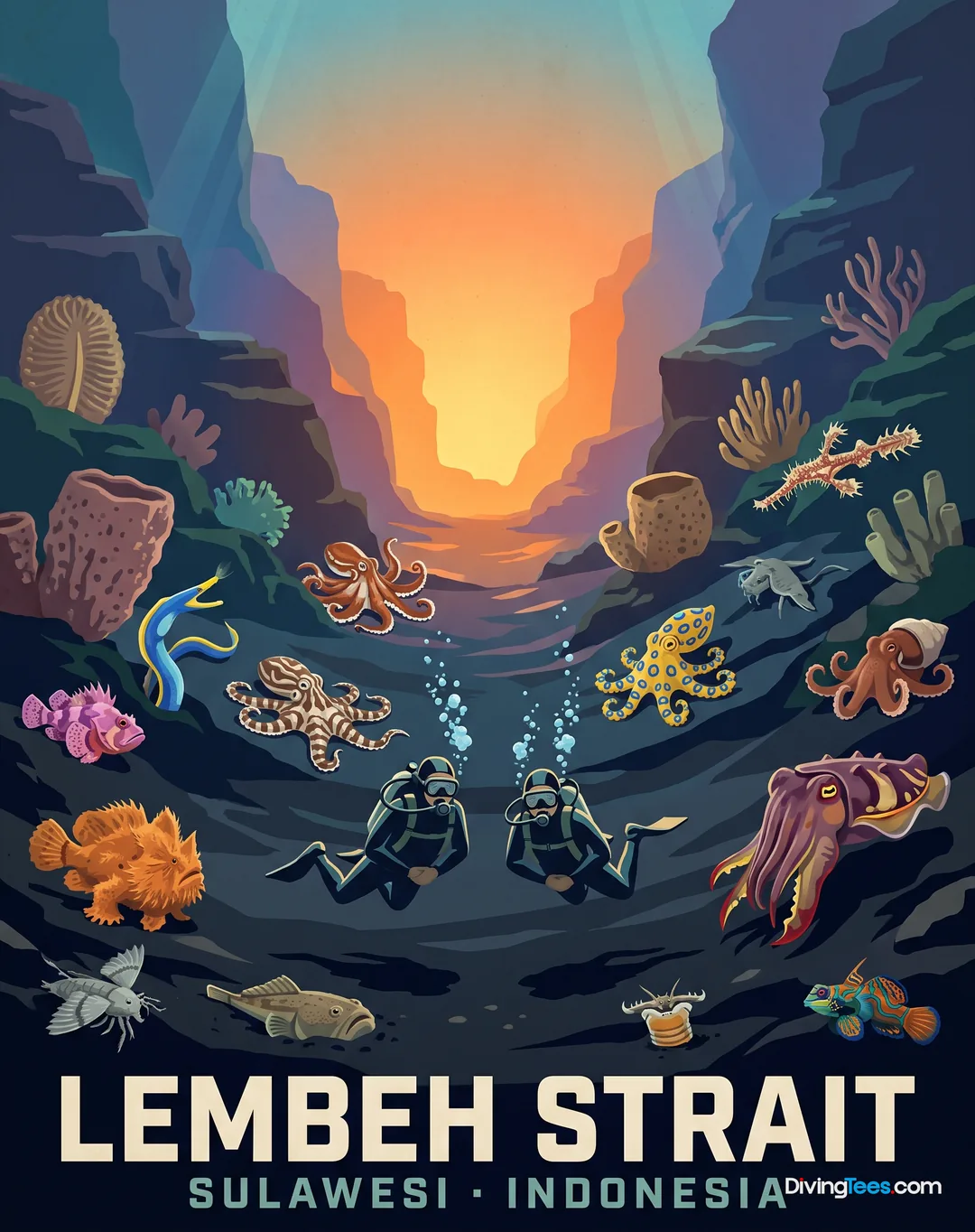
Lembeh Strait →
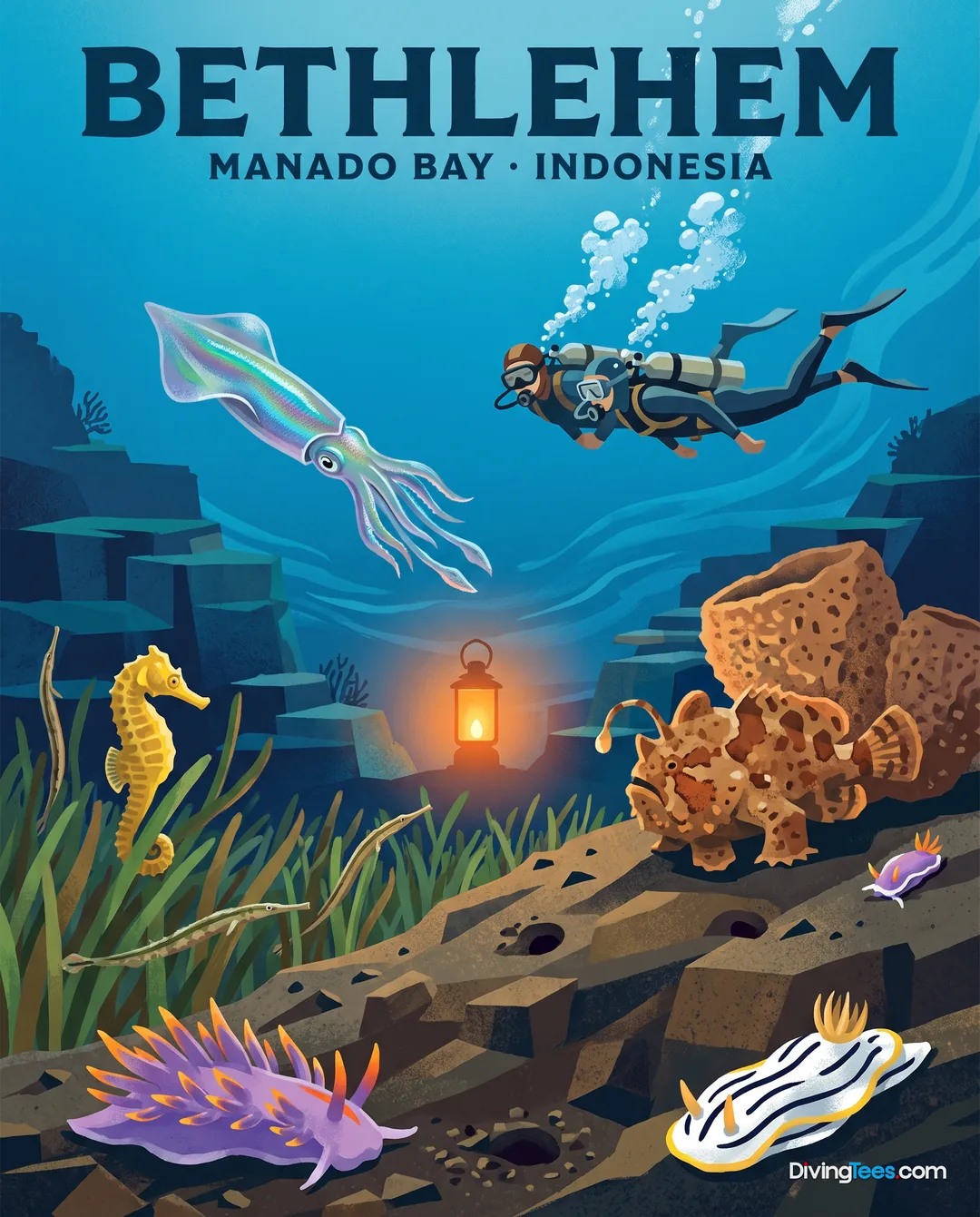
Bethlehem →
Max. depth · 20 m
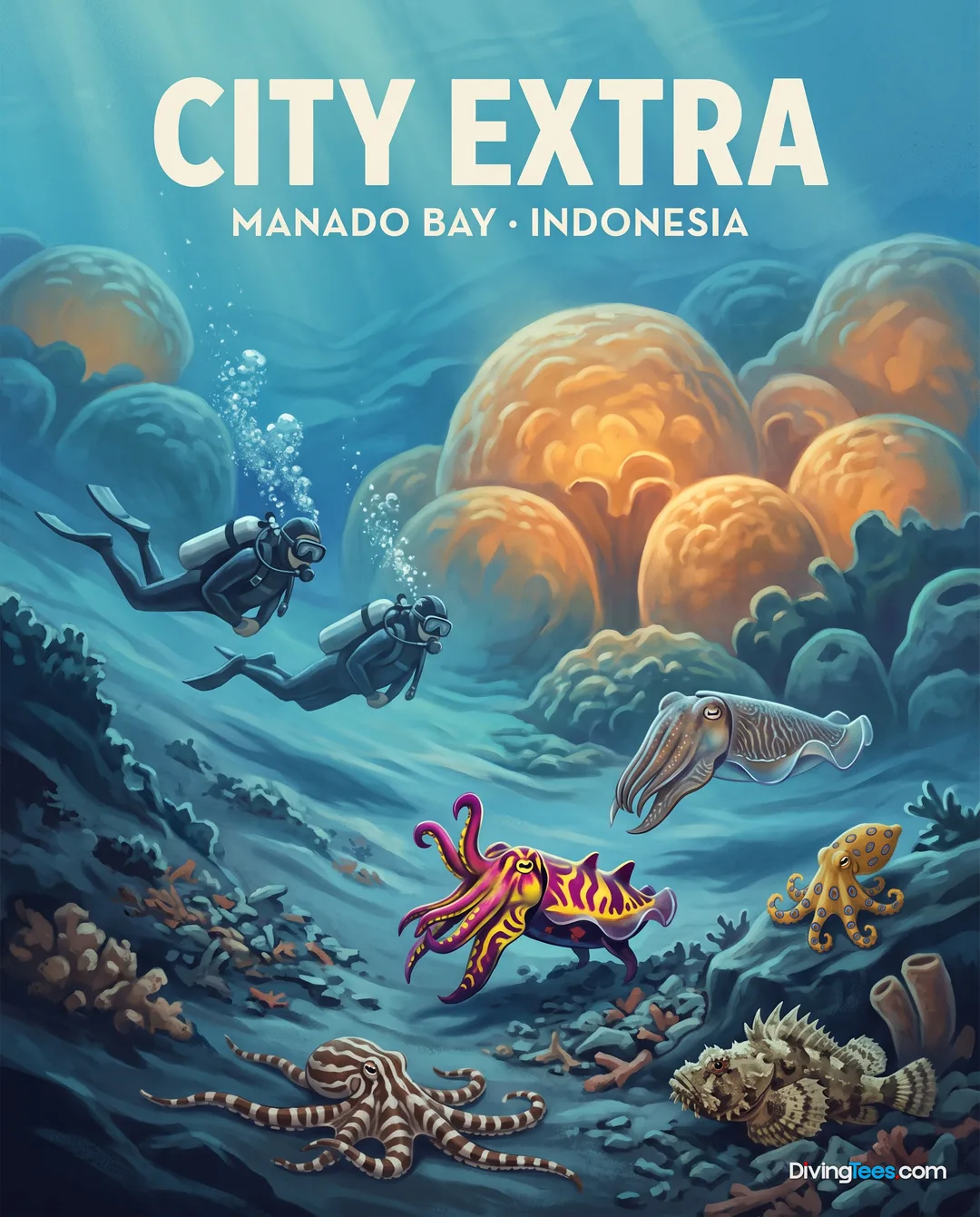
City Extra →
Max. depth · 20 m
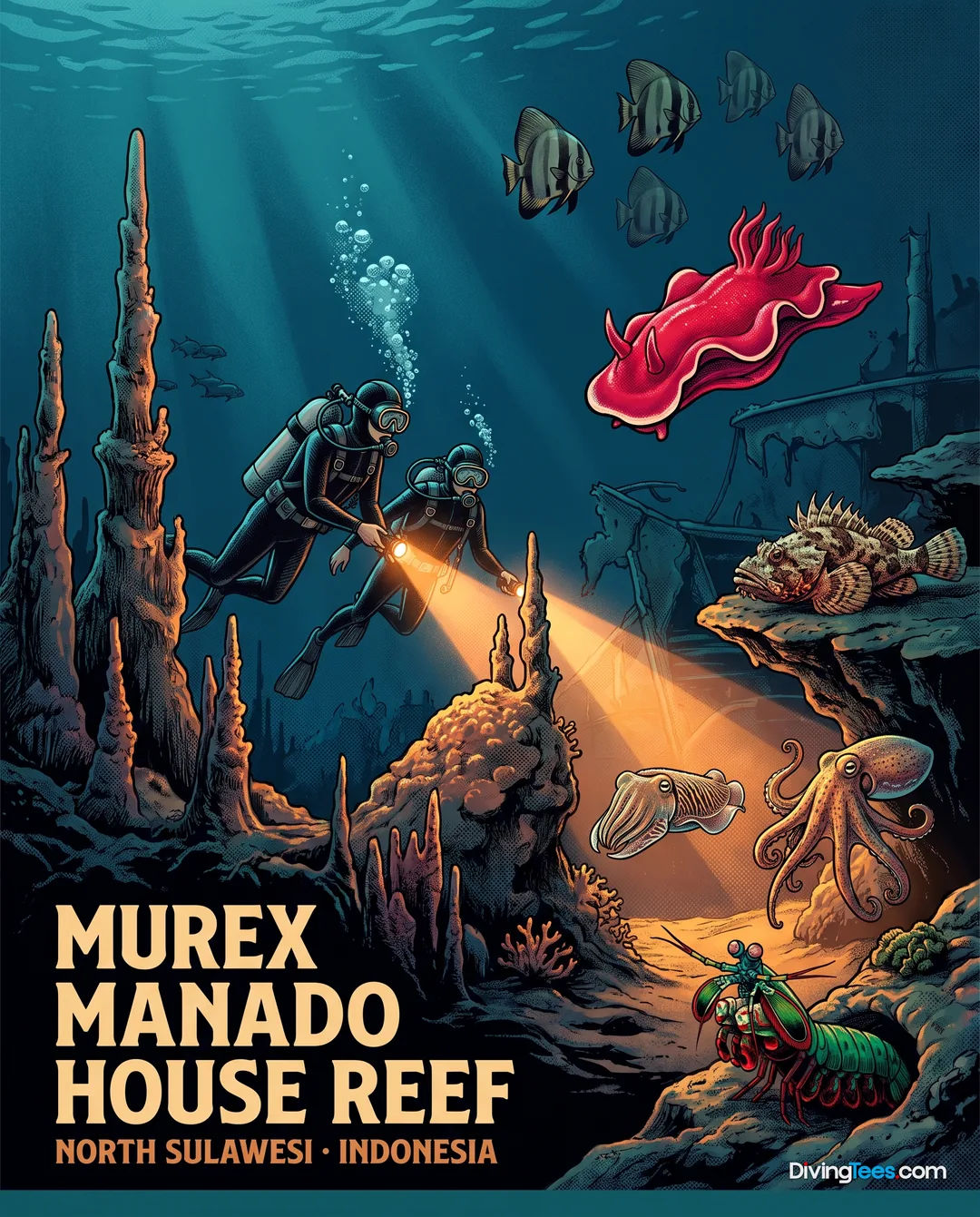
Murex Manado House Reef →
Max. depth · 20 m
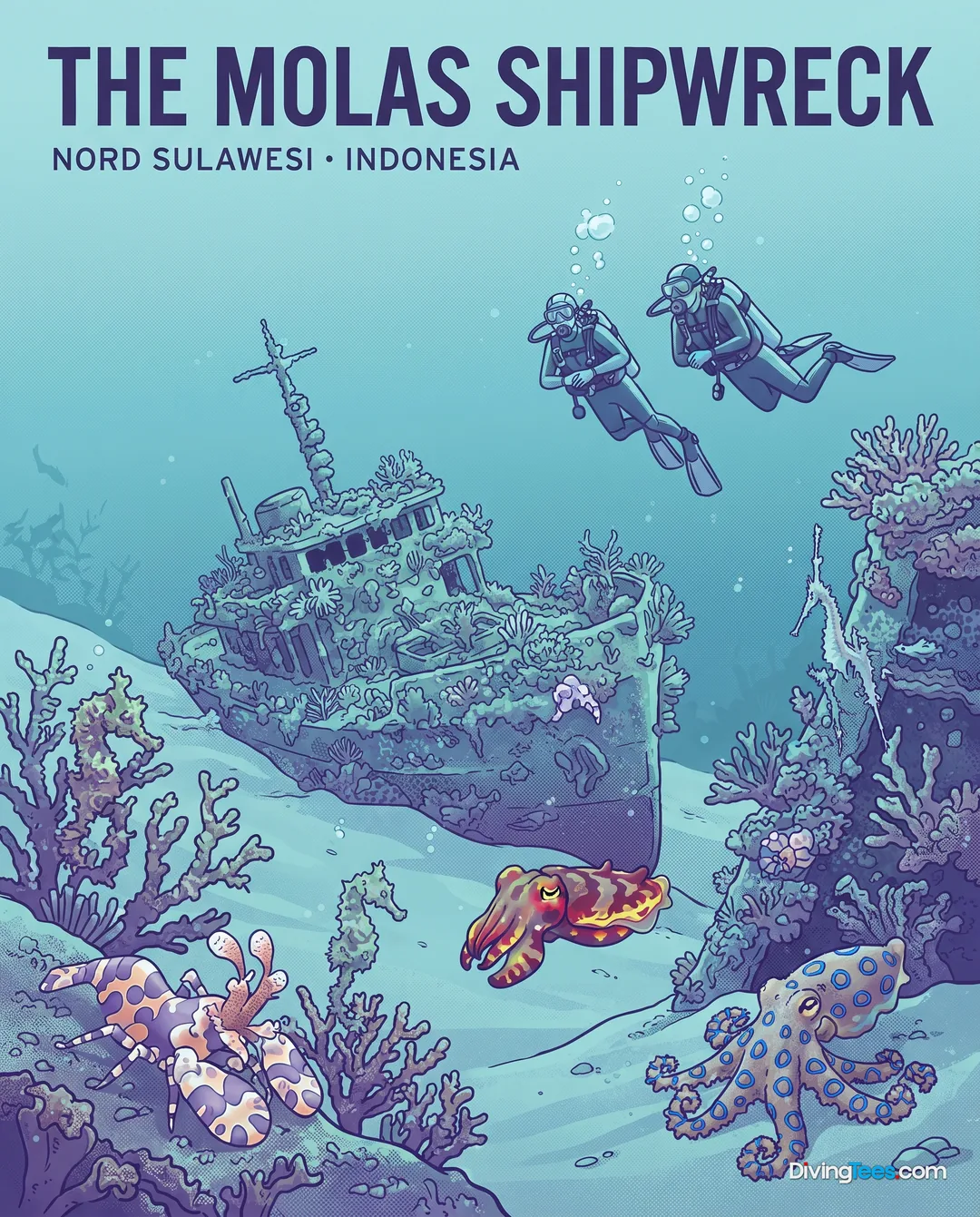
The Molas Shipwreck →
Max. depth · 40 m
What you’ll meet underwater
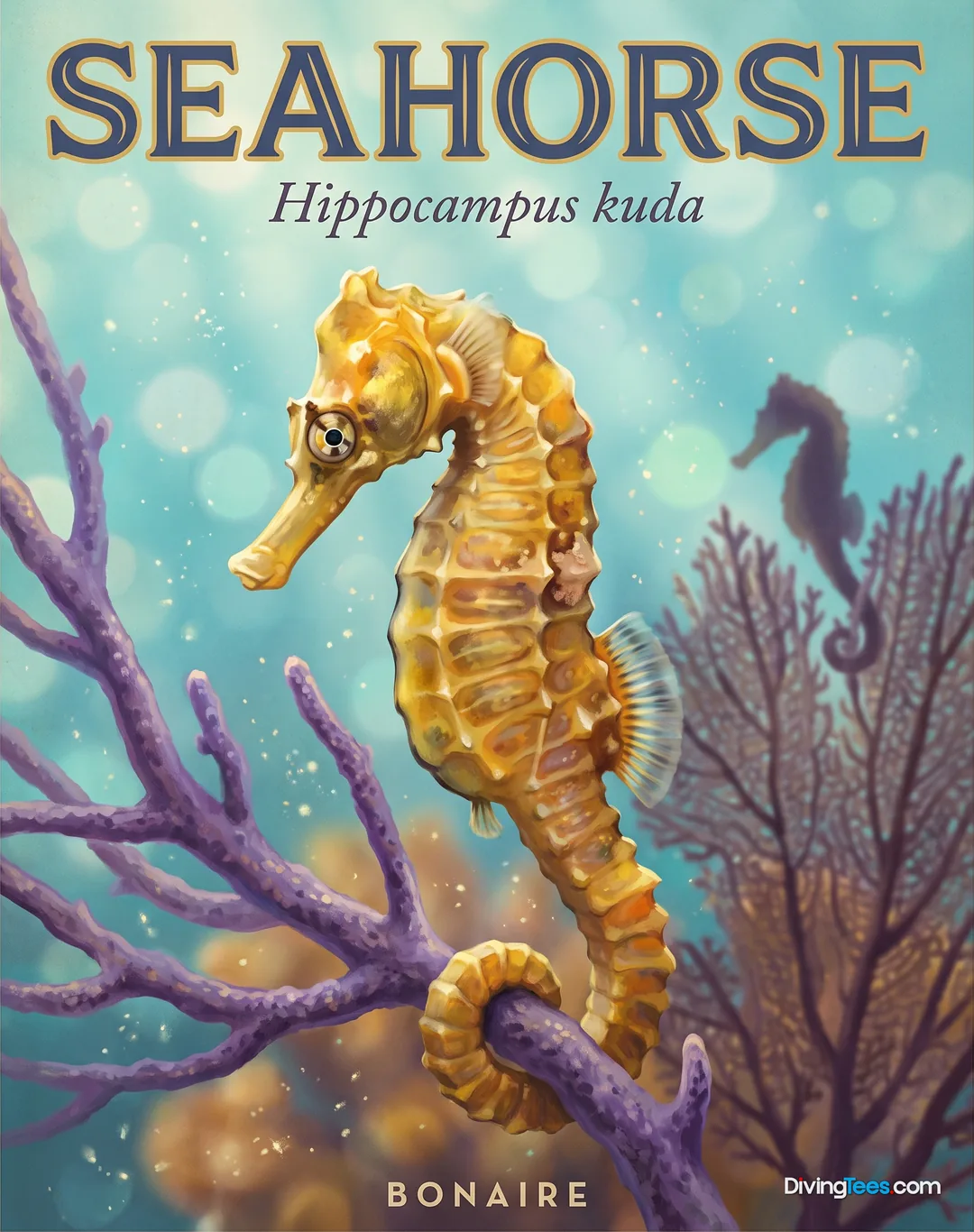
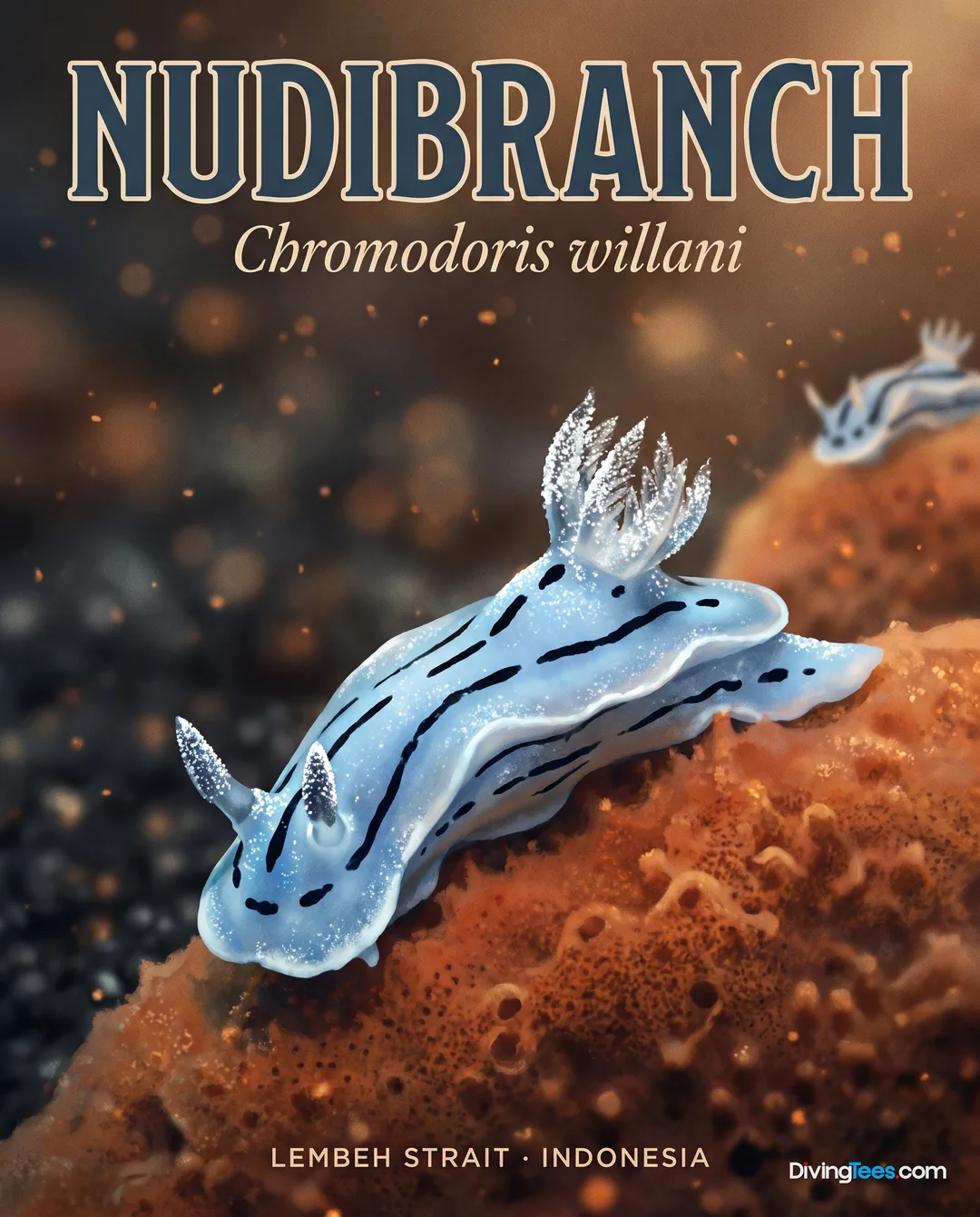
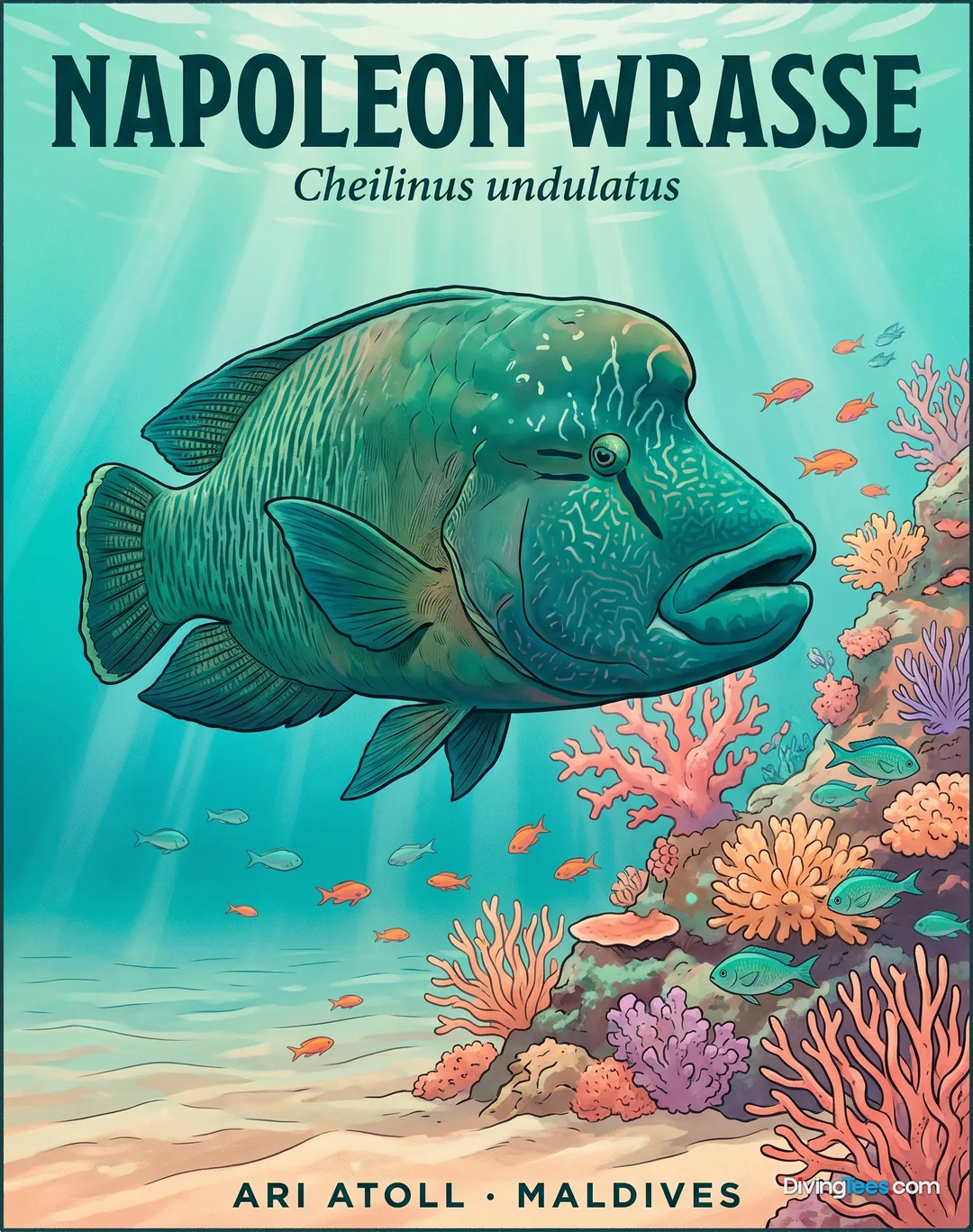
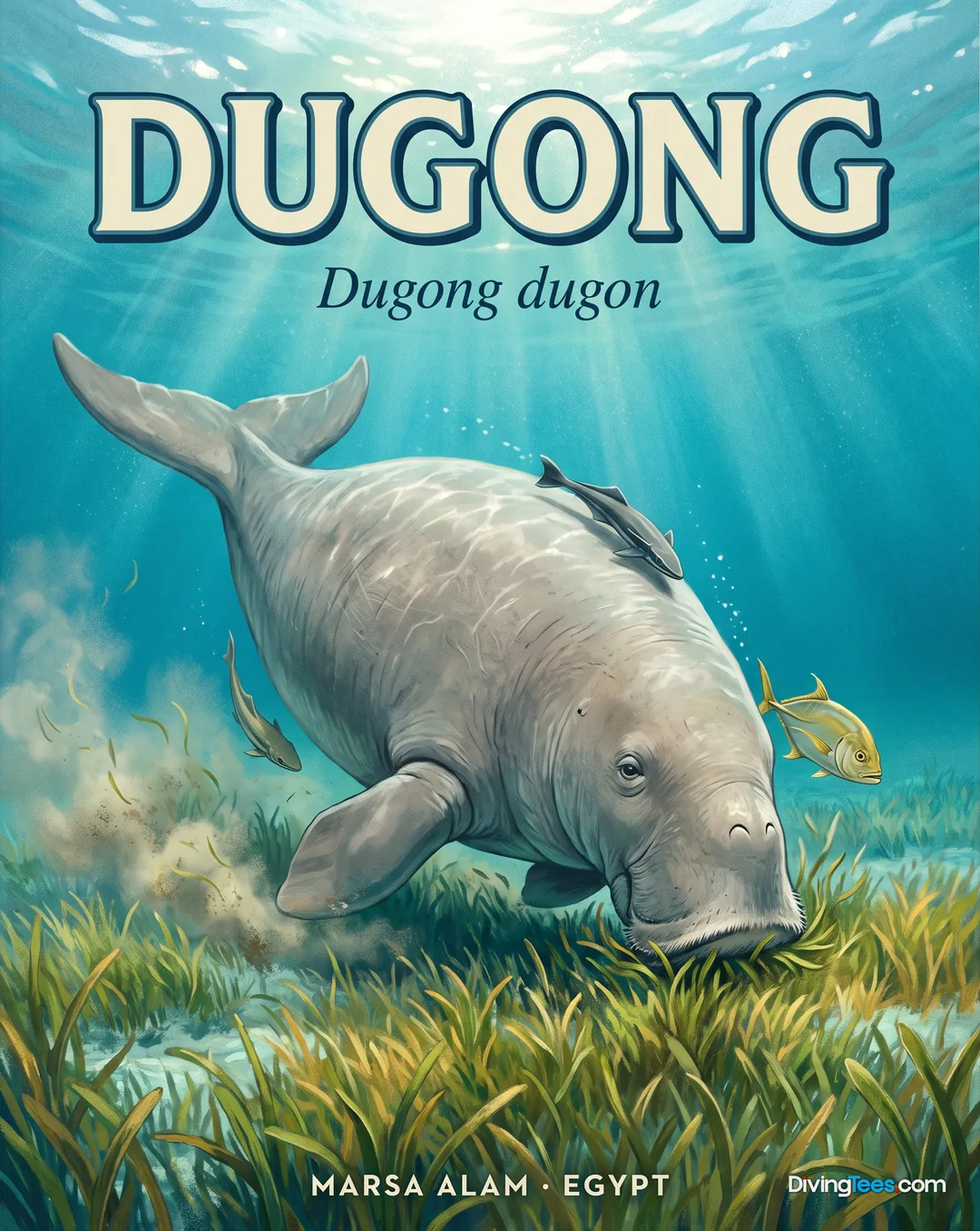
Across this route, nudibranchs are the most consistent small subjects, recorded at seven sites. Pygmy seahorses, eagle rays, cuttlefish and sea turtles also turn up across several sites, alongside moray eels, mantis shrimps, barracudas, Napoleon wrasse and reef sharks. The larger animals are part of the possibility rather than a promise: walls and open blue water can bring turtles, rays, barracudas and white-tip reef sharks into view. Some animals give a site its reason for being there. Bunaken Marine Park is the place on this route associated with dolphins, dugongs, groupers, giant trevally and angelfish. Lembeh Strait is the specific site for the octopus encounters that make black sand so compelling. Celah Celah concentrates butterflyfish, parrotfish, wrasse, surgeonfish and triggerfish around its wall cleft. Bunaken Timur is where hard coral and unicornfish are recorded. Murex Bangka House Reef rewards a slow macro search for pygmy seahorses, ribbon eels, mantis shrimps and glassfish. City Extra is the place to look for mimic octopus and flamboyant cuttlefish, while the Molas Shipwreck adds longfin batfish, ribbon morays and macro life to an upright wartime wreck.
Who puts you in the water
The dive team runs the operation in English, with briefings and post-dive reviews singled out as strong points. The available details do not give a guide count, guide-to-diver ratio, instructor qualifications, minimum logged dives or a course list, so the trip should be chosen for the published diving rather than for a specific training format. Guides organise the diving around the sites and the tenders, while the deck crew handles the practical work around entries, exits and equipment. Safety equipment includes emergency oxygen, first-aid kits, life jackets, life rafts, fire alarms and extinguishers, VHF/DSC/SSB radio, a locating beacon and trained first-aid crew. A defibrillator and a diver recall system are not listed. The good briefing score is therefore the clearest guide to the onboard method: listen carefully, understand the site plan and stay within the limits set for the dive.
The dive deck and the gear
The dive deck is one of Indo Master's strongest practical features. Divers have room to set up and store accessories, with a dedicated platform for entering the water and two tenders to reach the sites. Separate rinse tanks are provided for diving equipment and cameras, and the camera area has its own rinse facility and charging stations, so a large housing does not have to compete with fins and masks. DIN adapters are available. Nitrox is available as a paid option, while rental equipment can also be arranged for an additional charge; the boat does not publish tank material, cylinder volume, compressor model or the rental brands here, so those details should not be assumed. Outdoor showers are available on deck. The two tenders are the working link between the boat and the reef, carrying divers out and collecting them after the dive, while the main platform gives entries and exits a direct route back aboard.
Between dives
Between dives, the boat gives people several ways to come down from the water without turning the pause into a programme. The indoor salon offers air-conditioned shade, while the terrace and sun areas make room for a book, a camera check or simply drying off. Kayaks and stand-up paddleboards are included, so a surface interval can be spent on the water without putting another tank on your back. The camera room and charging stations give photographers a place to deal with equipment before the next call to the deck. Internet is available as a paid service rather than a feature to assume is included. On an afternoon without a dive, the useful choice is simple: stay in the shade, take a kayak, use the library or let the boat's movement become the activity.
A day on board
A day on Indo Master is shaped by the next briefing rather than by a sightseeing timetable. Divers wake for the first call, prepare on the deck, enter from the platform or tender, then return to food, rinsing and a short interval before the next dive. Briefings and dive reviews give the day its structure, while the two tenders allow the groups to work at the selected sites instead of treating the boat as the only place to move from. Meals punctuate the cycle, with breakfast choices and fresh bread useful after the first dive and buffet meals keeping later stops flexible. The gaps can hold a camera check, a kayak outing, time in the salon or a quiet hour on the terrace. There are many night dives on the programme, so the final entry comes after the daylight work and changes the character of the last dive. The boat gets underway when the route requires it; no fixed onboard times are published.
What you eat aboard
Meals are served buffet-style, with Western and local cooking and a full-board plan covering all meals. Breakfast has many options, and fresh bread is made every day—one of the small details that matters when the first meal follows an early dive and the next one has to carry a diver through the morning. Beer and wine are available, while tea and coffee are included. The food is not treated as a side note here: passengers score it as highly as the diving and crew. On a four-dive day, that means a table that keeps working—something hot after the water, enough choice for different appetites, and bread that does not arrive as an afterthought.
Nights at sea
The nine cabins are all on the cabin deck, with air-conditioning, a private bathroom and access to a balcony. Categories range from Classic Double and Classic Twin cabins to Premium Twin Suites and Superior Twin/Double options, so the choice is mainly about layout and cabin level rather than sharing a bathroom. Indo Master is not presented as a boat where the cabin is the destination. Its value lies in having a cool, private place to sleep between dives, with the common areas taking over when the group is awake. The salon provides an indoor retreat, while the terrace and outdoor showers keep wet equipment and wet divers from taking over the living spaces. At night, the important sounds are the boat's engines, water and the movement of a working vessel; the available information does not describe sound insulation or cabin locations, so light sleepers should choose their cabin with the deck plan in hand.
Classic Double Cabin
Classic Twin Cabin
Premium Twin Suite
Superior Twin/Double
Premium Twin / Double Suite
What to know before boarding
Recorded departures and returns use Labuan Bajo for Komodo National Park itineraries and Ambon for Banda Sea itineraries. Airport transfer is included, and the transfer is from the relevant arrival airport to the boat. The exact meeting instructions are provided with the trip details. Arriving the night before remains the sensible choice, especially when a flight delay would otherwise put the embarkation at risk.
Deck plan
- Year built
- 2022
- Year renovated
- 2024
- Length
- 47 m
- Maximum number of passengers
- 18
- Number of cabins
- 9
- Number of bathrooms
- 9
- Engines
- 2 × 304 hp Mitsubishi
- Cruising speed
- 5 knots
- Tenders
- 2
- Website
- masterliveaboards.com ↗
Hello, I'm Marina, DivingDeal.com's AI assistant. I answer in detail about hotels, dive centres and liveaboards.

Thinking about the whole trip and the flights? Talk it over with Edith →
Marina is an AI. Some links are affiliate links: DivingDeal may earn a commission, at no extra cost to you. Bookings are made with the partner.