

Amed White Sand Divers
★ 5/5 (815 reviews)
1.9 km away as the crow flies
Amed · Indonesia · Asia
Max. depth · 40 mDeep Blue offers an exhilarating drift dive along a dramatic wall in Amed, often bringing encounters with schooling pelagics and reef sharks in stronger currents.
For subtitles in English: start the video firstthen click the gearat the top right of the video, select “Subtitles/CC”, then “Auto-translate” and choose “English”.
Deep Blue is found a short boat ride from Amed, marking itself as a site for divers seeking a more challenging profile. The dive typically begins in a shallower bay, offering a contrasting start with vibrant coral bommies that host a range of smaller reef fish. As you move towards the deeper sections, the topography shifts to a pronounced wall, extending well beyond the 30-meter mark and opening into the blue.
The defining characteristic of Deep Blue is the current. This is a drift dive, and the current can be strong, sweeping you along a generally straight path without significant up or down welling, but with the potential to cover considerable distance. Managing buoyancy and exercising strong spatial awareness are paramount here, as you navigate with the flow rather than against it, especially as you approach deeper sections of the wall.
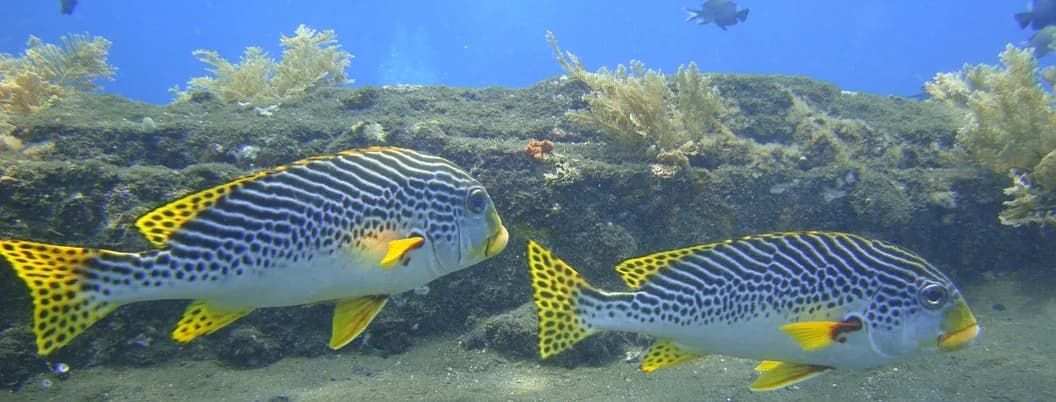
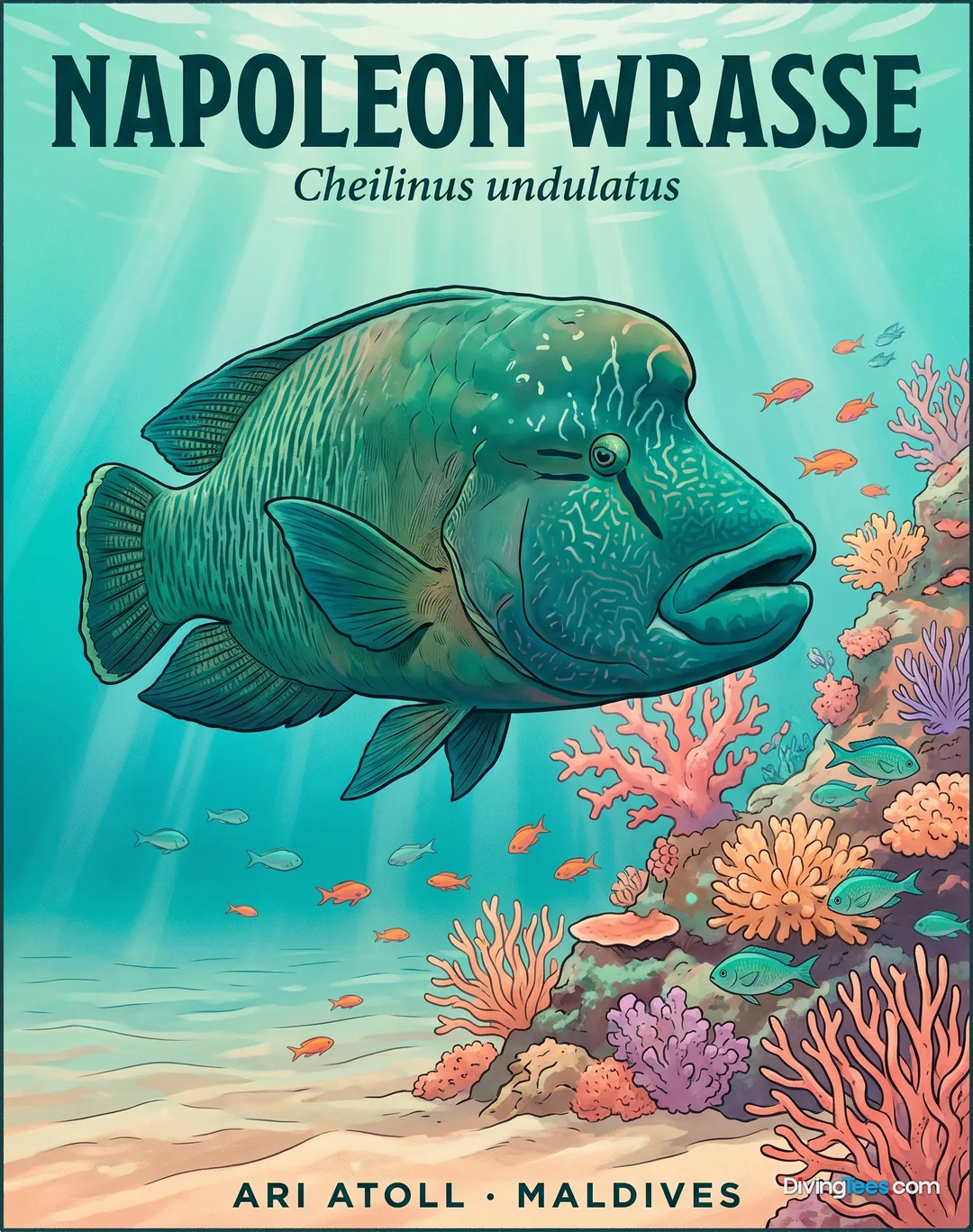
At depths around 30 to 35 meters, the site reveals its full potential for pelagic encounters. It is here that you are most likely to encounter schools of batfish (Chaetodipterus faber) and snapper (Lutjanidae), alongside cruising Napoleon wrasse (Cheilinus undulatus). The currents that make this site a drift provide the nutrients that attract these larger species, making the deeper wall a focal point for activity.
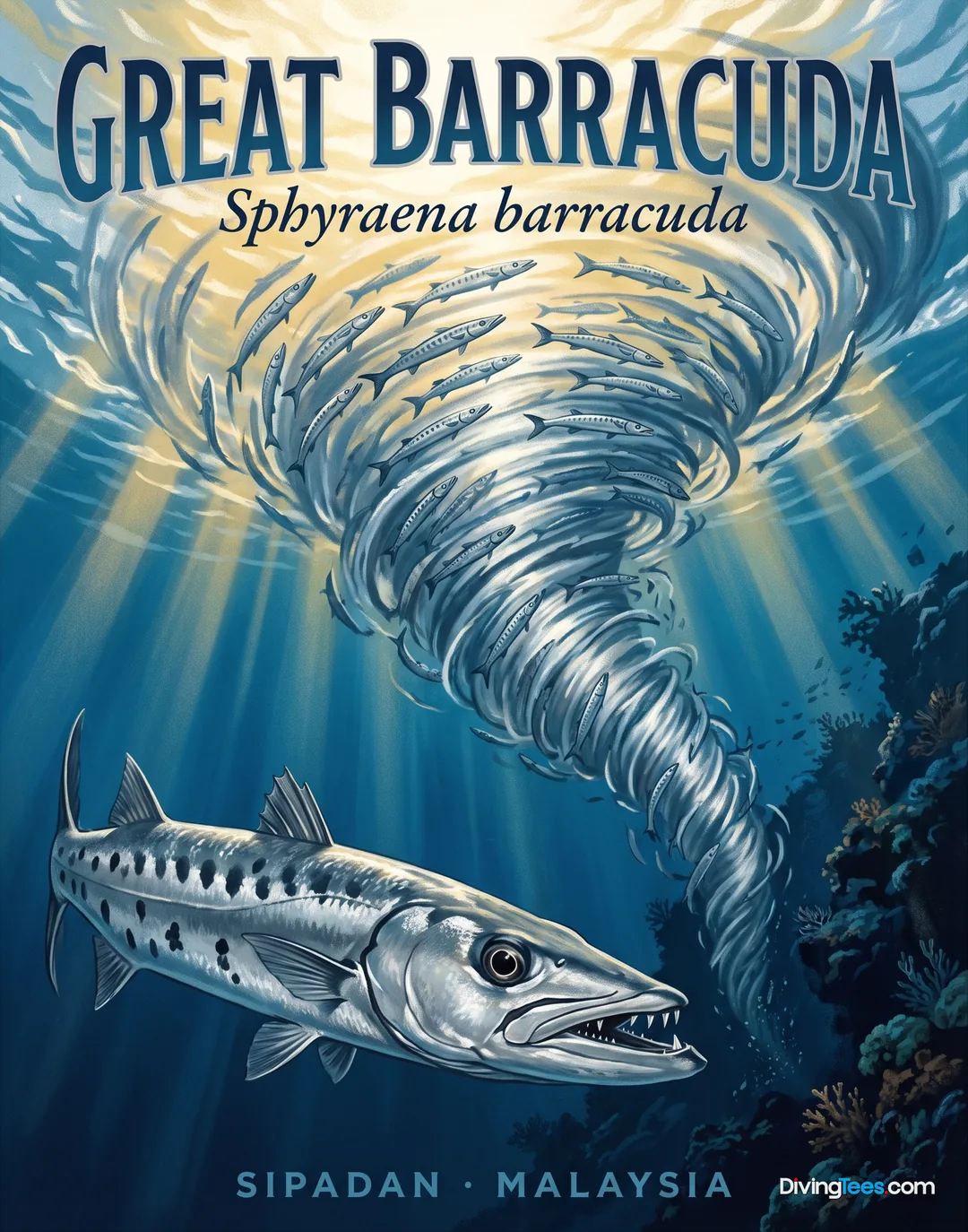
Along the spectacular wall, larger predatory species are a regular sight. Schools of giant trevally (Caranx ignobilis) are common, often seen hunting in the blue, and barracuda (Sphyraenidae) formations can be impressive. Regularly, you will also spot white-tip reef sharks (Triaenodon obesus) and black-tip reef sharks (Carcharhinus melanopterus) patrolling the deeper reef edges and the open water, adding to the dynamic nature of the dive.
Occasional encounters with tuna (Thunnus) and other reef sharks further out in the blue are also possible, particularly for divers who maintain their depth and position along the wall. The nutrient-rich waters brought by the current support this diverse food web, meaning that while the current adds a challenge, it also brings the rewards of larger marine life.
The journey along the wall offers consistent visual interest, from the corals and gorgonians in the shallower areas to the more dramatic drop-off and overhangs in the deeper sections. This transition provides varying habitats that cater to different species, ensuring a continuous progression of marine life as you drift through the site. The interaction between the topography, the current, and the marine residents makes Deep Blue a site with its own distinct character.
This is an advanced dive, accessible to Advanced Open Water certified divers with at least 50 logged dives and proficiency in drift diving techniques. Depths range from 5 meters in the initial bay to 40 meters along the wall, with the most active areas often found below 18 meters. Currents at Deep Blue are consistently strong, requiring excellent buoyancy control and navigation skills. Visibility can be good, typically between 10 and 30 meters, but it can fluctuate. The dry season, from April to October, generally offers the most stable conditions.