Liveaboards · Indonesia
Cajoma IV — a handcrafted phinisi for small-group Komodo diving
What makes this boat unique
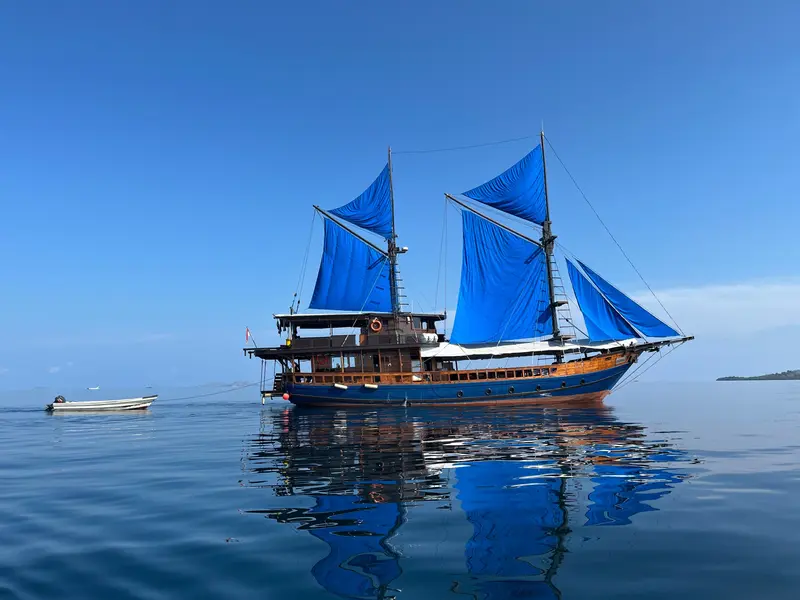
- Cajoma IV is a traditional Indonesian wooden phinisi built from teak and ironwood, fitted out for diving and private liveaboard trips.
- The boat takes up to eight guests in four air-conditioned cabins with private bathrooms, hot-water showers and portholes.
- Two speedboats carry divers to and from the dive sites, while the shaded dive area has DIN adapters, rinse tanks and a Bauer compressor.
- Komodo departures run from Labuan Bajo and combine diving with snorkeling, island visits and a land excursion to see Komodo dragons.
- The crew speaks English, Dutch, French and Indonesian, with a published four-to-one diver-to-guide ratio.
For subtitles in English: start the video firstthen click the gearat the top right of the video, select “Subtitles/CC”, then “Auto-translate” and choose “English”.
The invitation
Cajoma IV suits divers who want Komodo in a small group without giving up the feel of a proper wooden phinisi. The boat is built around eight guests, not a crowd moving through a large floating resort. That changes the trip: the same people are beside the tanks, at the table and on the tender all week, while the crew can keep the diving personal. The reason to choose this boat is the balance. Handcrafted teak and ironwood give it the character of an Indonesian sailing vessel; air-conditioned cabins, private bathrooms, hot showers and a shaded dive area make the long days practical. The route is not only about getting underwater. Cajoma IV also takes guests ashore in Komodo National Park, including a visit to see the dragons. It is a good match for a small group that wants serious access to the water and time to experience the islands above it.
Boarding
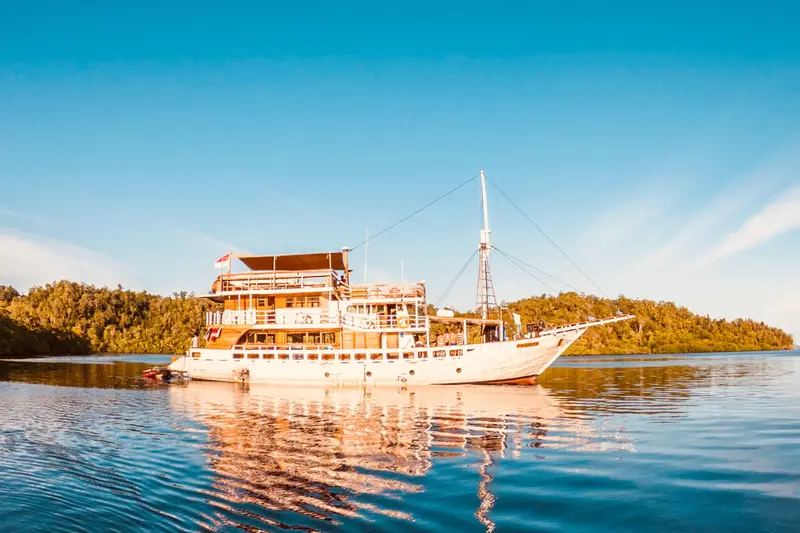
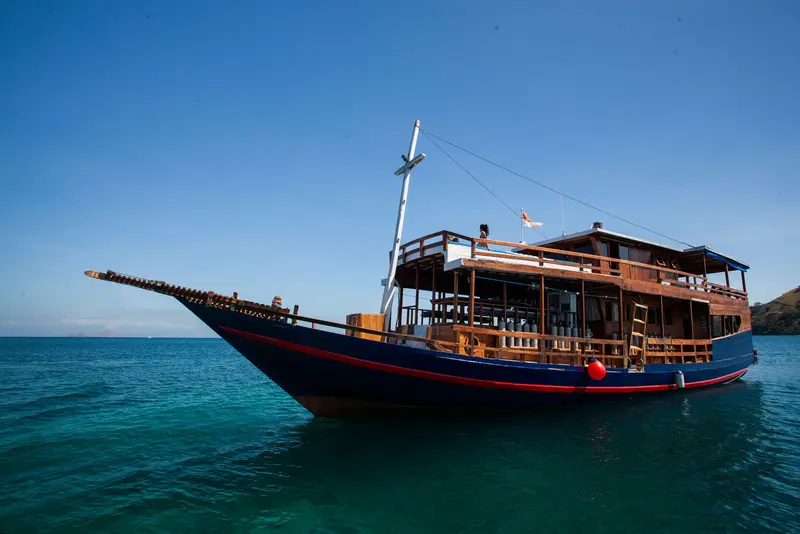
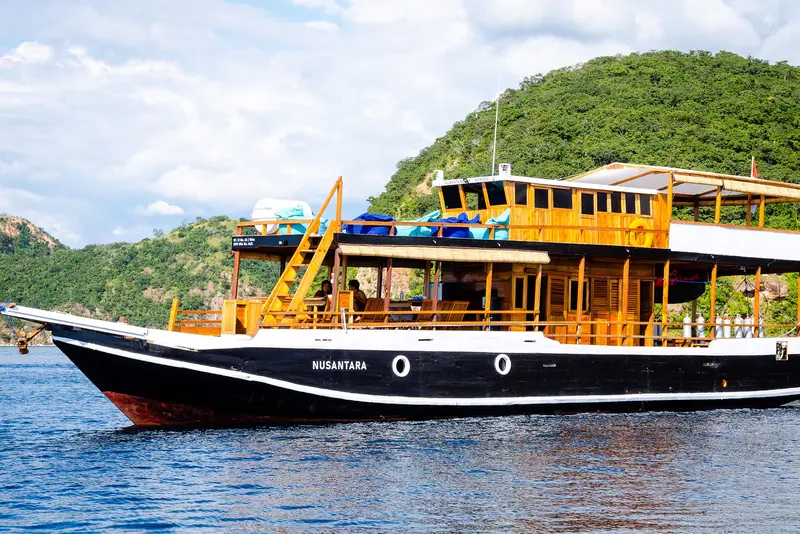
From the dock, Cajoma IV has the unmistakable presence of a traditional Indonesian sailing boat, with dark timber and the working lines of a phinisi rather than the look of a purpose-built hotel. Teak and ironwood continue inside, where the finish softens the practical parts of the vessel. The arrangement is easy to understand: cabins below, shared living space above, and the dive platform close to the tenders. A spacious upper area gives the boat its best sense of room, with places to sit outside and watch the islands pass. The design feels handcrafted, but the daily systems are modern enough for a diving trip: air conditioning, hot water, charging points, navigation equipment and safety gear are all part of the working boat. With only eight guests, movement stays simple. There is no need to search for a quiet corner or wait for a crowd to clear the platform.
The atmosphere on board
Cajoma IV is small enough for the crew to remain part of the day rather than disappear behind a service door. They handle the transfers, meals, dive movements and shore excursions in a setting where eight guests quickly become one working group. The crew speaks English, Dutch, French and Indonesian, which helps when the day moves between a dive briefing, a meal and an island visit. Passenger feedback puts the people ahead of the hull: the boat scores 9.3, while the crew scores 9.6 and the food 9.8. That is a fair distinction. Cajoma IV is a handcrafted wooden vessel, not a new steel yacht, but the gain is the crew’s close attention and the warmth of the traditional layout. Evenings can end at the outdoor table, with drinks, a barbecue or a quiet place on deck while the boat settles for the night.
Who puts you in the water
The diving is organised for small groups, with a published four-to-one diver-to-guide ratio. That is the useful number on a Komodo trip: the guide can keep track of the group without turning every descent into a mass entry. Certified divers are the core audience, while snorkelers and non-divers can join the water activities. The crew speaks English, Dutch, French and Indonesian, and guides brief the group before the tender leaves the platform. Oxygen, first-aid kits and the boat’s marine safety equipment are carried on board. The practical level is straightforward: arrive as a certified diver with the experience needed for the conditions of the planned Komodo dives, and discuss any limits with the guide before entering the water.
The dive deck and the gear
The dive setup is built for repeated entries rather than decorative use. A shaded dive area leads to the platform, with two speedboats taking divers out to the sites and collecting them after the dive. Tanks are supplied with DIN or yoke valves, and 80-cubic-foot cylinders are listed for the diving package; personal equipment can be rented as an option. A Bauer compressor handles filling on board. Rinse tanks are provided for equipment, with a separate rinse area for cameras, and DIN adapters remove one common equipment mismatch before it becomes a problem. Weights and weight belts are included for diving. The layout keeps the wet work near the water and the dry spaces above it, which is what matters after the third or fourth dive of the day.
Between dives
Between dives, the upper deck is the natural refuge. The terrace has open-air dining, sun loungers and bean bags, with enough shade to make surface intervals comfortable rather than punishing. A jacuzzi gives the non-diving hours their own purpose, while the observation area is better suited to watching the islands and tender movements than sitting inside with a screen. The audio and video entertainment is there, but Komodo supplies the stronger distraction when the boat is underway: changing shorelines, bright water and the search for the next anchorage. Snorkelers and non-divers are welcome, so a surface interval does not have to mean waiting alone for the divers to return. On a day with an island visit instead of a dive, the boat works as a base for moving between water, shore and deck without packing a day bag each time.
A day on board
A Cajoma IV day starts with a light breakfast and a briefing before the first water session. The schedule can then carry the group through several cycles of diving, eating and returning to the deck: a dive or snorkel, breakfast, another water activity, lunch, a further dive or island visit, then snacks before dinner. The diving package allows up to four dives in a day, and an optional night dive can add a final entry after dark. The boat may be underway between sites or anchored while the tenders shuttle divers to the reef, so the gaps are filled by shade, food, an island visit or the upper deck rather than by a fixed timetable. On the final day, the trip closes in Labuan Bajo after the last activities and a group photo, followed by the transfer ashore. The rhythm is active, but the order stays clear: brief, dive, eat, recover, and go again.
What you eat aboard
Meals are prepared on board as a mix of Indonesian and Western cooking, with the catch of the day included in the choices. The format can move between buffet meals, set-menu dinners and food served outside, with snacks available through the day. Vegetarian and vegan options are available, alongside soft drinks, tea, coffee, beer, wine and a selection of larger wines; alcoholic drinks are not part of the standard inclusions. That variety matters after several dives. A diver can eat properly without turning every meal into an event, then find something small between water sessions instead of waiting for dinner. The table is one of the boat’s stronger points: food is treated as part of the trip, not merely fuel placed beside the dive schedule. On selected evenings, a barbecue can take the meal outside and keep the group on deck after sunset.
Nights at sea
The four cabins are arranged for privacy rather than dormitory living: a Master Cabin, Deluxe Double Cabins and a Deluxe Twin Cabin, all air-conditioned with private bathrooms. The cabins sit on the lower deck and use portholes, so the sleeping space is more sheltered than the open decks above. One cabin has an accessible balcony, giving its occupants a direct place to step outside without climbing to the main terrace. The useful luxury here is not a long list of furniture. It is being able to return from a dive, rinse off under hot water, close the cabin door and let the boat carry on around you. Daily housekeeping keeps the small spaces workable during a trip built around wet gear. Outside, the upper deck changes the feel of the night: open air, low light, a drink from the bar and the dark outline of Komodo’s islands beyond the rail.
Master Cabin
Deluxe Double Cabins
Deluxe Twin Cabin
What to know before boarding
Cajoma IV departs from and returns to Labuan Bajo. Transfers between the airport or a hotel and the vessel are included, with the pickup details arranged through the booking process. Arriving in Labuan Bajo the night before is sensible, so a delayed flight does not put the boarding connection at risk. The return transfer is made after the boat comes back to port.
Itineraries, dates and prices
Prices per person. Each month shows its lowest price: click a month, or pick an itinerary.
Next departures · 51 departuresfrom £846$1,132€1,011
November 2026
December 2026
March 2027
See dates and prices
If you click these links and make a purchase on the partner site, DivingDeal may earn a commission, at no extra cost to you.
Dates and prices taken from liveaboard.com, updated 25 October 2026
- Year built
- 2015
- Length
- 30 m
- Maximum number of passengers
- 8
- Number of cabins
- 4
- Number of bathrooms
- 4
- Engines
- 6-cylinder Mitshubishi
- Tenders
- 2 speedboats
- Website
- cajoma.co.id ↗
Hello, I'm Marina, DivingDeal.com's AI assistant. I answer in detail about hotels, dive centres and liveaboards.
Thinking about the whole trip and the flights? Talk it over with Edith →
Marina is an AI. Some links are affiliate links: DivingDeal may earn a commission, at no extra cost to you. Bookings are made with the partner.