

Let's Dive Tulamben
Google 5/5 (2,215 reviews)
less than 1 km away as the crow flies
Bali · Indonesia · Asia
Max. depth · 40 mDescend along Tulamben's dramatic volcanic wall, where intricate overhangs and abundant reef life plunge from the surface to depths beyond 60 metres.
For subtitles in English: start the video firstthen click the gearat the top right of the video, select “Subtitles/CC”, then “Auto-translate” and choose “English”.
The Tulamben Wall presents itself as a dramatic vertical drop, beginning almost immediately beneath the surface, allowing for an effortless entry and rapid immersion into its vibrant ecosystem. As you fin over the stony volcanic beach, the black sand and rubble slope quickly transitions into a steep reef, then a sheer wall. From your first fin strokes, the coral growth is immediately apparent, clinging to every available surface and creating a textured topography that provides shelter and hunting grounds for myriad marine creatures. The intricate interplay of light and shadow created by numerous rocky overhangs invites exploration into their darker recesses.
Tracing the wall's contours, you navigate a dynamic environment where the sheer drop-off transitions into a series of ledges and small caves. These architectural features, formed from old lava flows from Mount Agung, are not merely aesthetic; they form crucial microhabitats for the smaller denizens of the reef. Emperor angelfish (Pomacanthus imperator) and yellowface angelfish (Pomacanthus xanthometopon) are frequent sights, their vibrant patterns a constant against the coral backdrop, often darting between the crevices, seemingly undisturbed by your presence.
As you continue your descent along the wall, the topography shifts, revealing deeper sections that hold different secrets. The wall itself starts around 12 to 15 metres and plunges beyond 60 metres, offering a multi-level profile. Amidst the hard and soft corals, you will regularly encounter bluebanded angelfish (Chaetodontoplus septentrionalis), their striking colours adding to the site’s visual richness. These deeper zones beckon experienced divers to explore their full extent, offering further encounters with the wall's diverse inhabitants.
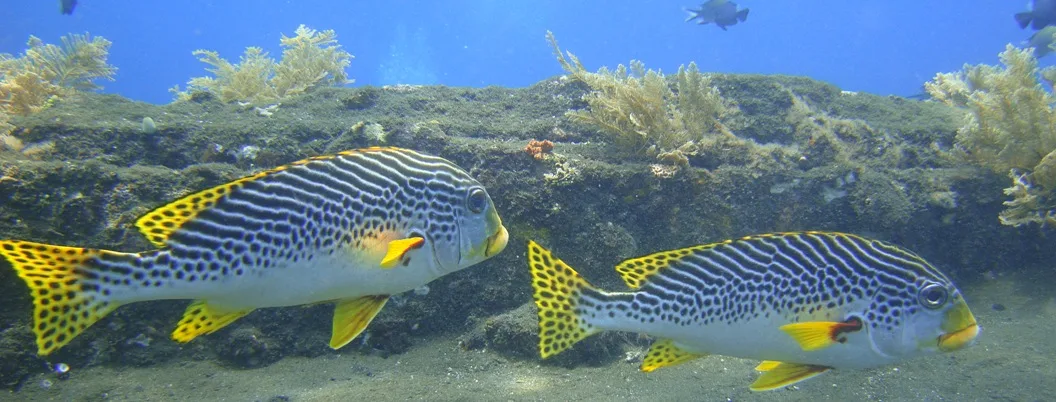
One of the defining features of Tulamben Wall is the sheer abundance of small reef fish that schools along its length. These dense congregations create shifting, shimmering curtains of life, a mesmerising spectacle against the dramatic backdrop of the deep blue. Amidst these swarms, you will often spot squadrons of schooling jacks and fusiliers, their streamlined forms contrasting with the more sedentary reef dwellers. These encounters underscore the health and vitality of this particular Balinese dive site.
The wall's structure, with its myriad hiding spots and rich nutritional offerings, creates ideal conditions for robust populations of various species. As you drift, keep an eye out for ducfish, whose elegant movements are a common sight along the reef. You will also find bumphead parrotfish, reef sharks, and trevallies patrolling the deeper sections. The consistency of these encounters, coupled with the impressive coral formations and large sea fans, ensures that every section of your dive along the Tulamben Wall offers something new, making it a compelling exploration at any depth.
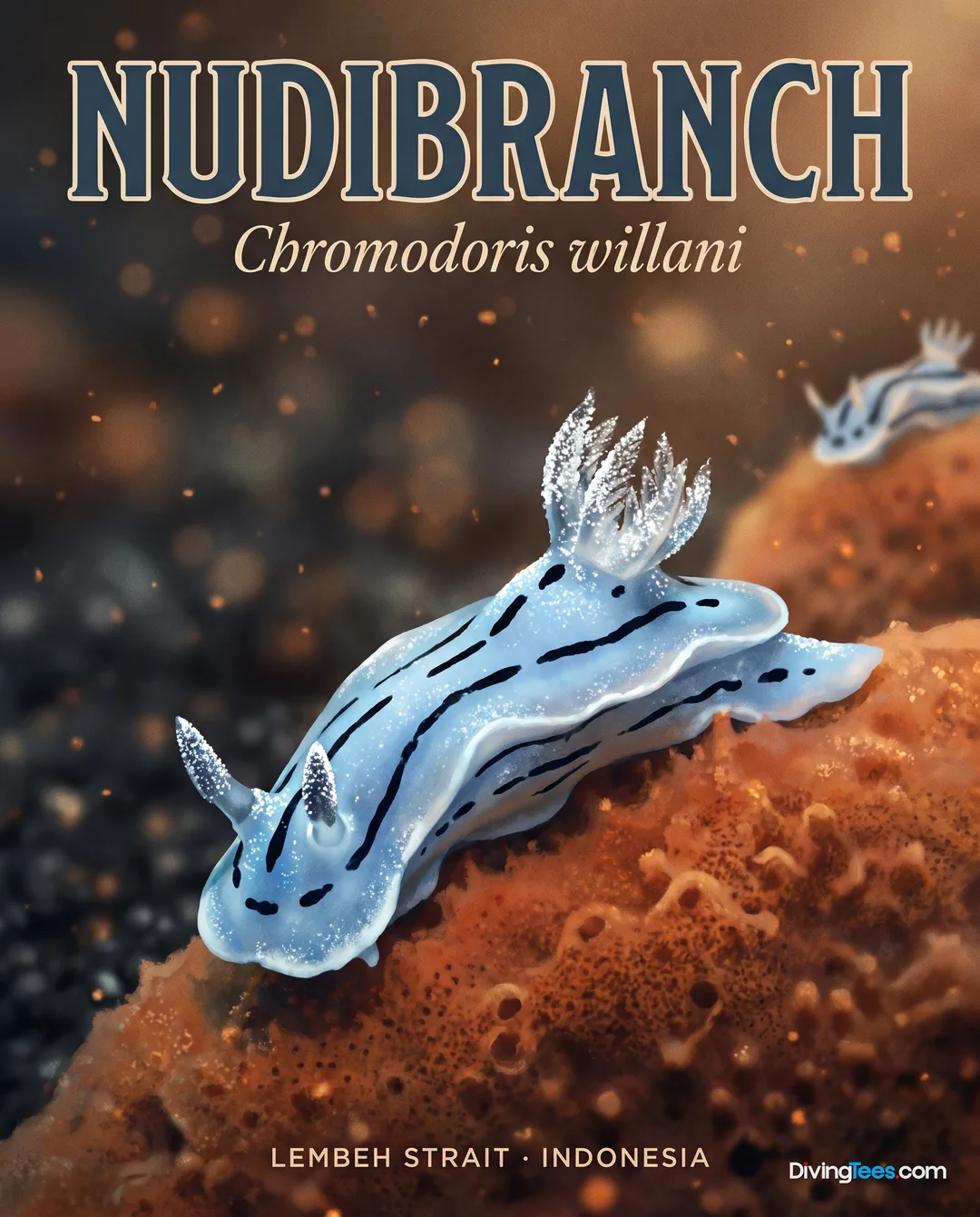
The black sand and volcanic substrate provide a striking contrast and excellent macro backgrounds, making the Tulamben Wall popular for both wide-angle and macro photography. Look closely among the corals and sponges for nudibranchs, ghost pipefish, and pygmy seahorses. Lionfish, moray eels, barracuda, and groupers are also common residents, often found tucked into crevices or hovering near the wall face. This diversity caters to various diving interests, from observing large pelagics to searching for cryptic macro life.
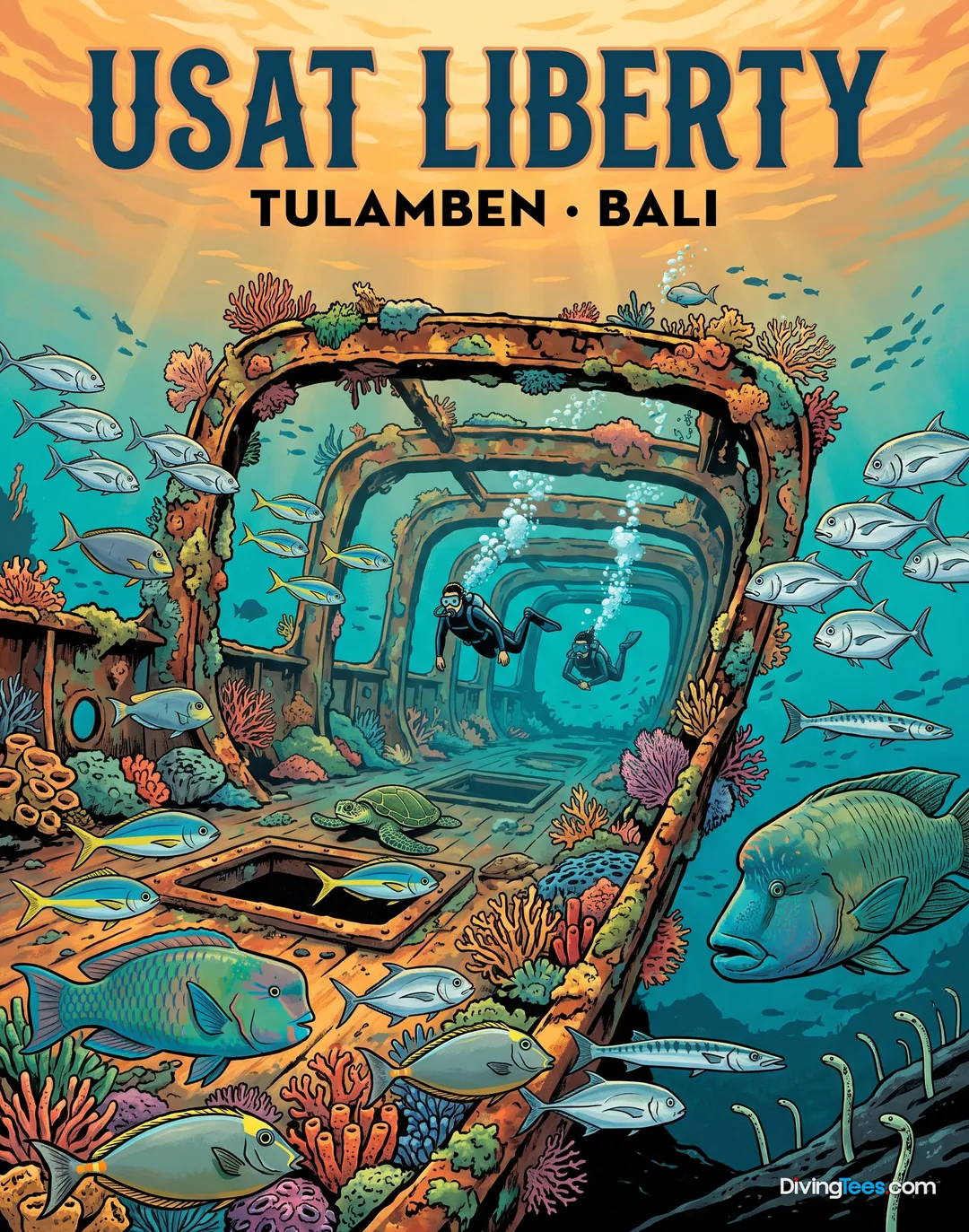
Access to the Tulamben Wall is typically a shore entry from a stony volcanic beach, at the end of a mostly dry river. Divers enter from the cobble shore and descend over the slope to the wall. This proximity to shore, combined with the wall's immediate drop-off, makes it a convenient and accessible dive. The site's unique formation, a dramatic lava-formed wall close to the famous USAT Liberty wreck, offers a distinct diving experience that sets it apart from other wall dives in the region.
The Tulamben Wall is accessible to divers with Open Water certification and good buoyancy control, though more experience is recommended for exploring the deeper, multi-level wall profiles. The wall begins at a minimum depth of 1 metre and extends down to a maximum of 60 metres. Currents are generally mild to moderate along the wall, but can become strong around full and new moon tides, requiring careful dive planning. Visibility typically ranges from 15 to 30 metres during the dry season (April/May to October/November) and 8 to 20 metres in the wet season (November to March), occasionally reaching up to 40 metres. Diving is possible year-round, with the dry season offering the calmest seas and best visibility.
You can dive Tulamben Wall year-round. During the dry season, from April or May to October or November, visibility typically ranges from fifteen to thirty metres and the seas are generally calmer. During the wet season, from November to March, visibility typically ranges from eight to twenty metres.
Tulamben Wall is accessible to divers with Open Water certification and good buoyancy control. More experience is recommended if you plan to explore the deeper, multi-level wall profiles. The shore entry begins from a stony volcanic beach, allowing you to descend over the slope toward the wall.
Tulamben Wall offers a multi-level profile, with the wall starting around twelve to fifteen metres and continuing beyond sixty metres. The site begins near the surface, with the wall entry described from one metre, while the listed site depth ranges from five to forty metres.
Currents at Tulamben Wall are generally mild to moderate, but they can become strong around full and new moon tides, so careful planning is needed. You may see schooling jacks, small reef fish, angelfish, nudibranchs, pygmy seahorses, reef sharks, trevallies, moray eels, and large sea fans.