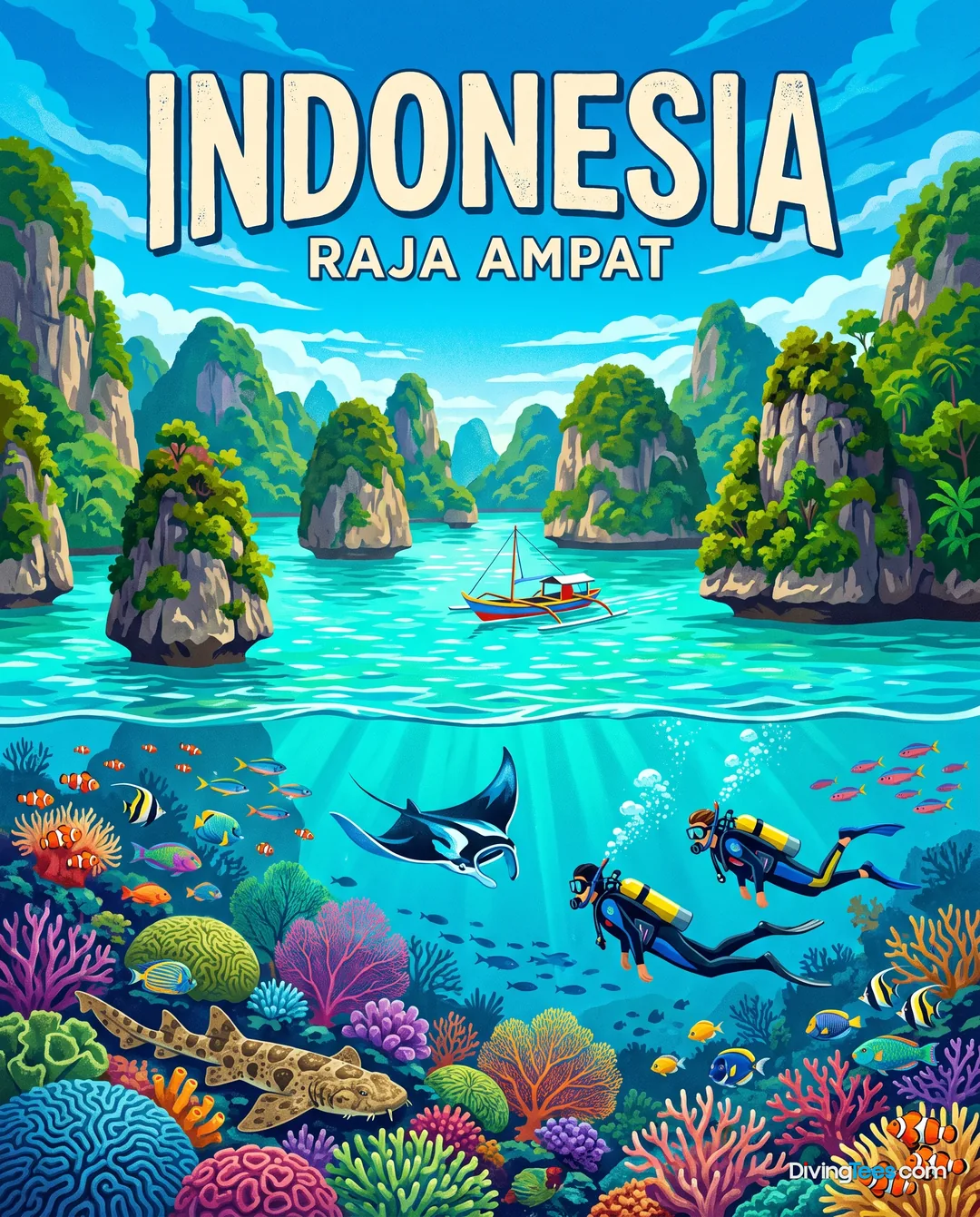
Liveaboards · Indonesia
Akomo Isseki — a small, hand-built phinisi for serious diving and easy company
What makes this boat unique
- Akomo Isseki carries no more than eight guests in four twin cabins, keeping the dive groups and the boat itself small.
- The hand-built wooden phinisi combines traditional Indonesian construction with solar-powered electrical systems and modern navigation and safety equipment.
- Its Raja Ampat itineraries run for 11 days and 10 nights from Waisai, with sites such as Cape Kri, Blue Magic, Manta Sandy and Melissa's Garden.
- The boat is strongest where it counts: crew, food and diving score higher than the hull, whose comfort is simple rather than luxurious.
For subtitles in English: start the video firstthen click the gearat the top right of the video, select “Subtitles/CC”, then “Auto-translate” and choose “English”.
The invitation
Akomo Isseki is for divers who would rather have fewer bubbles in the frame than a larger boat with more facilities. Eight guests change the trip: briefings stay personal, the deck does not become a queue, and the tender can collect divers without turning every return to the surface into a harbour operation. The boat suits a Raja Ampat trip built around current-swept reefs, manta cleaning stations, dense fish schools and small creatures hiding in coral. It also suits people who want the crew close by, not separated behind a service routine. The cabins are comfortable but simple, the food is a real part of the day, and the evening belongs to conversation, cards, a book or a cold beer. Choose this boat for access, local knowledge and a group small enough to feel like a group—not a passenger manifest.
Boarding
From the dock, Akomo Isseki looks like what it is: a traditional Indonesian wooden phinisi built by hand in South Sulawesi, not a floating hotel dressed to resemble one. Her hull uses tropical hardwoods, with a thick Jati deck and teak work through the living spaces. The low superstructure leaves the boat open to the sea, while the covered deck gives divers a practical place to sit out of the sun. Inside, the panoramic saloon brings the water and islands into the room rather than hiding them behind tinted corridors. There is enough space to move without losing sight of the boat’s working purpose. Solar power keeps the electrical systems running with less generator use and less mechanical noise at anchor. The impression is warm timber, open air and equipment that belongs on a dive boat.
The atmosphere on board
The atmosphere comes from the scale and the crew’s proximity. With eight guests, people learn one another’s names quickly, share meals and usually end up discussing the same subjects every dive trip comes back to: current, fish behaviour, cameras and what was missed. The Indonesian crew have helped build the boats and many have worked together since the beginning, so their role is not limited to serving meals or handling lines. They guide, cook, maintain the boat, watch the water and keep the day moving without making it feel managed. Passenger experience consistently places the crew, food and diving above the vessel itself. That is a fair description of the trade-off: the hull is not presented as luxury, but the people make the simple comfort work. Evenings can stay quiet with books and cards, or become louder when the group has found its rhythm.
The sites you’ll dive
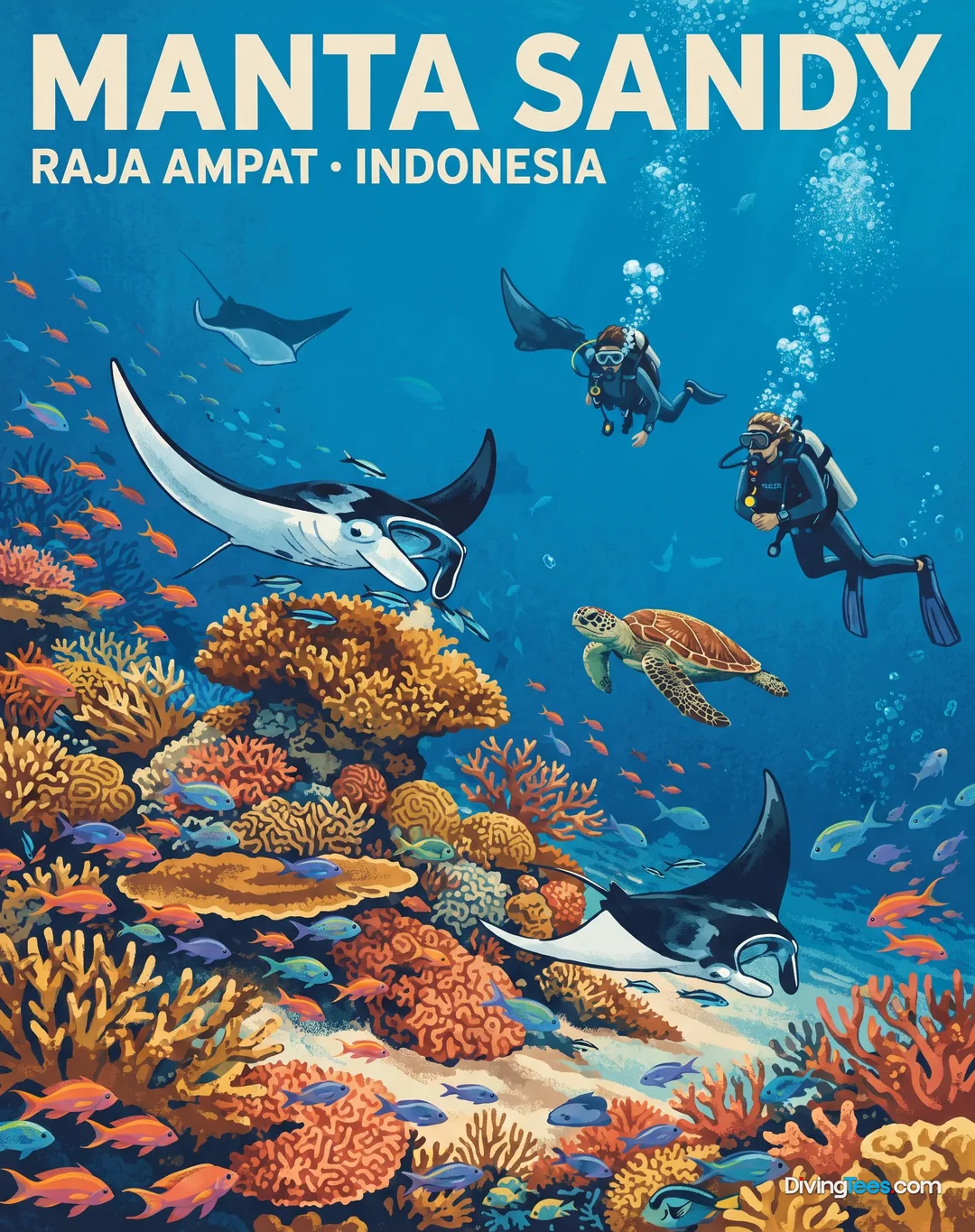
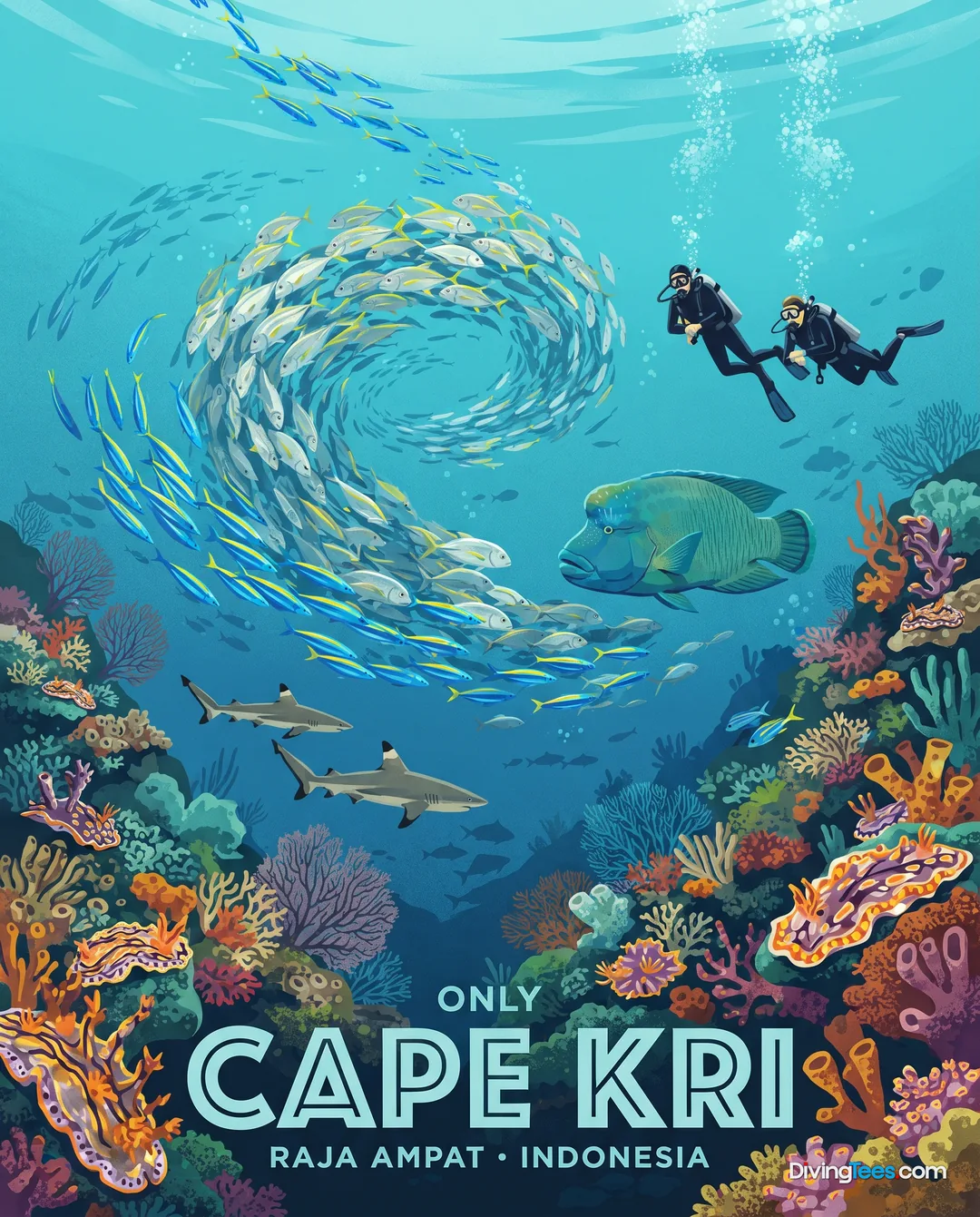
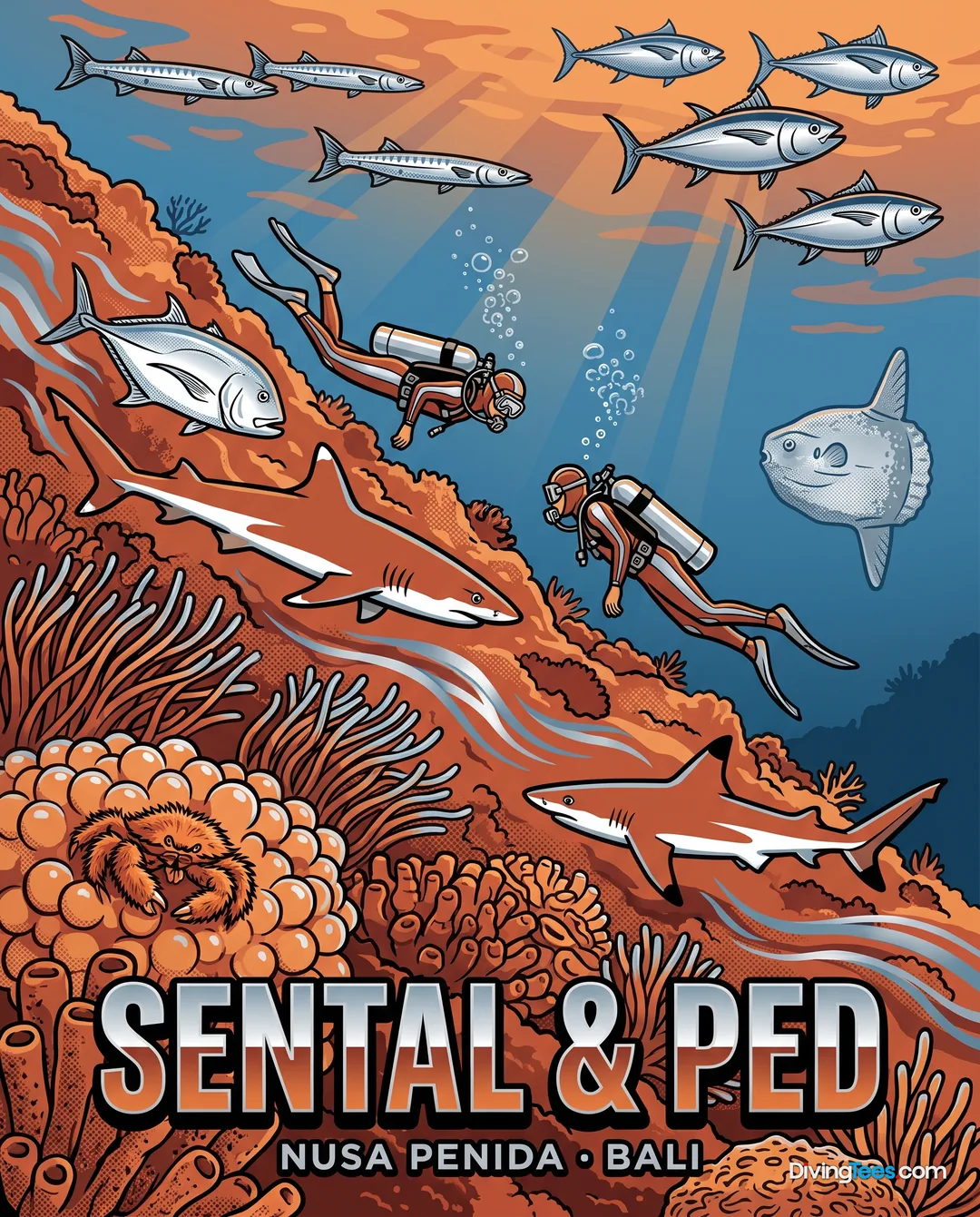
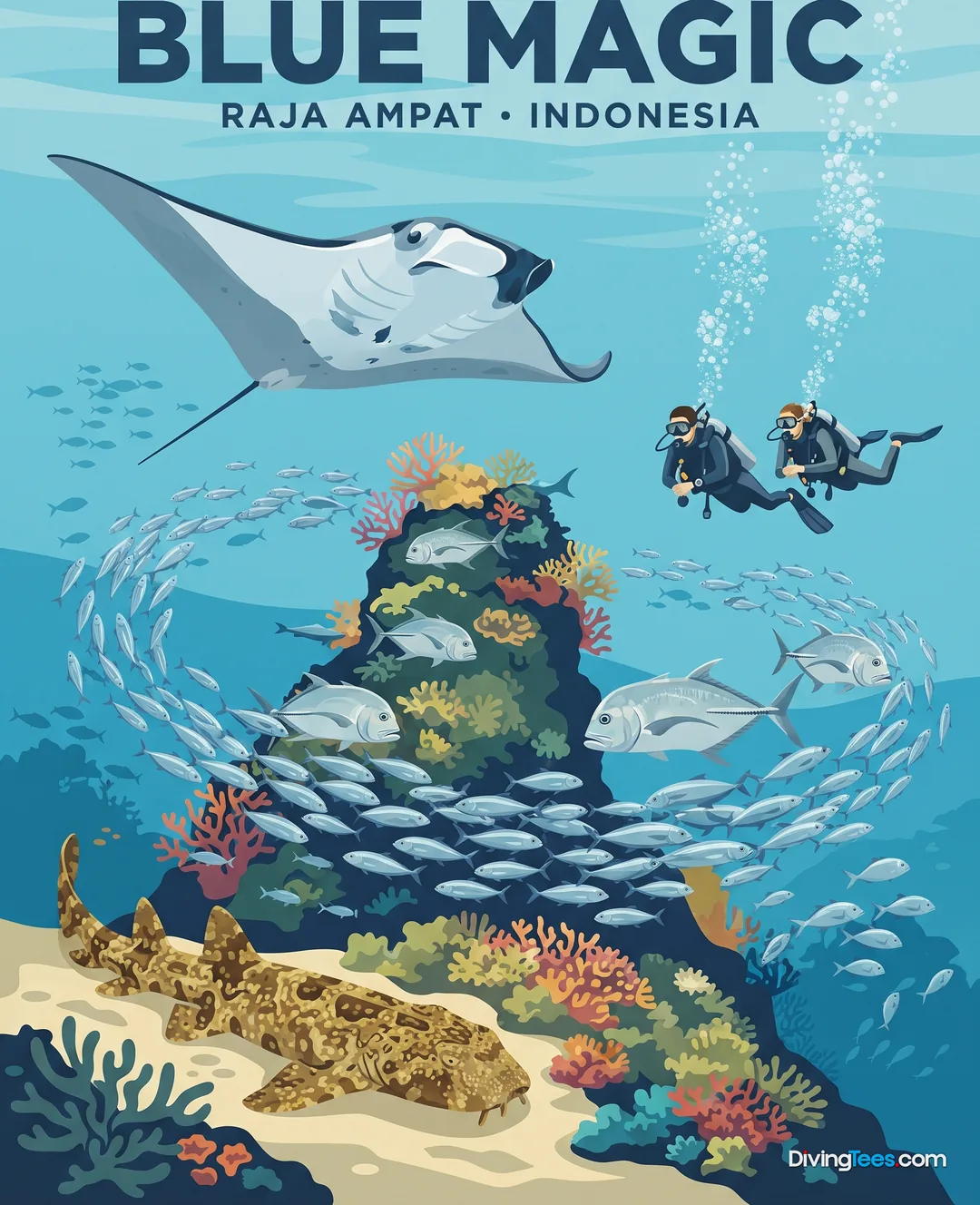
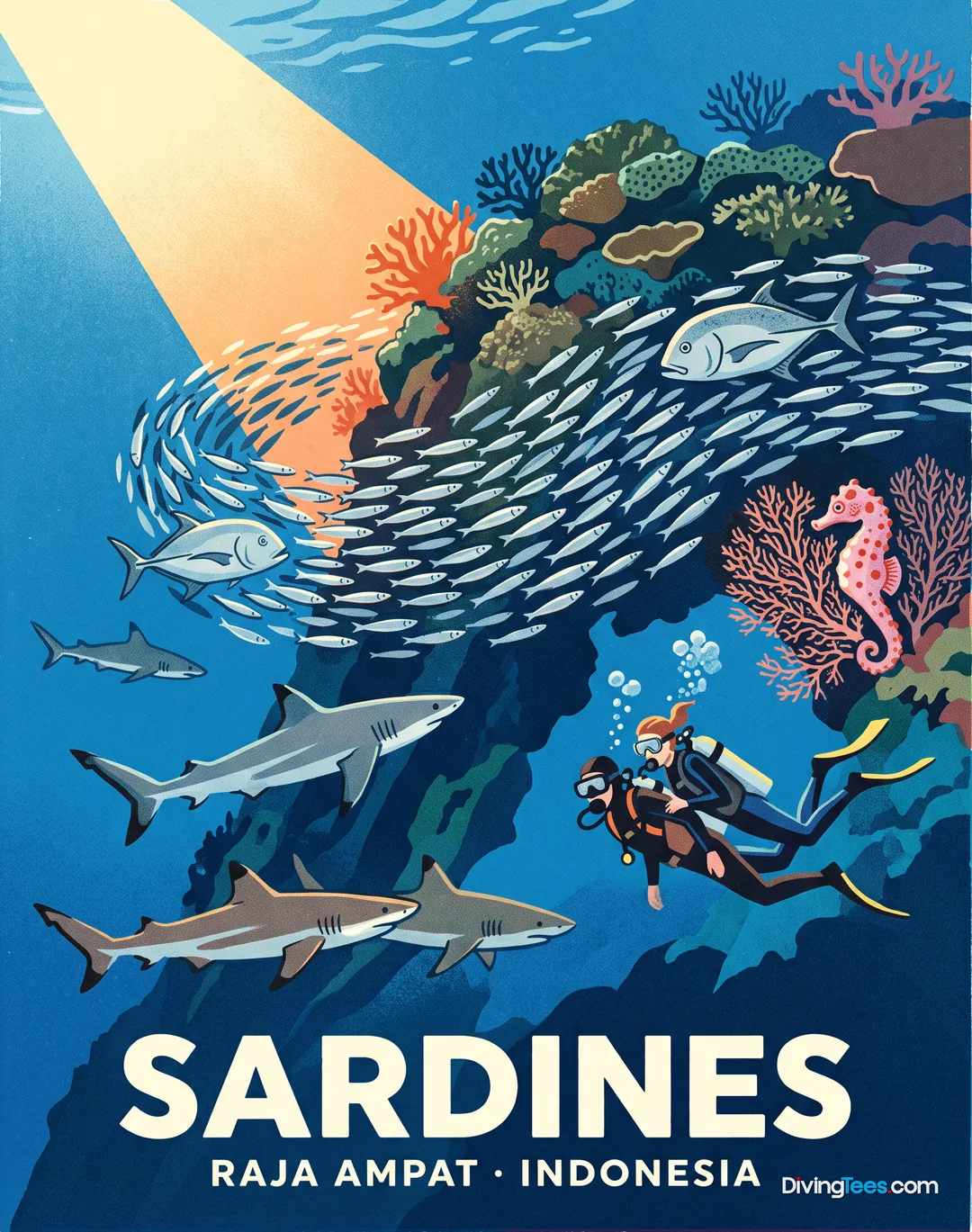
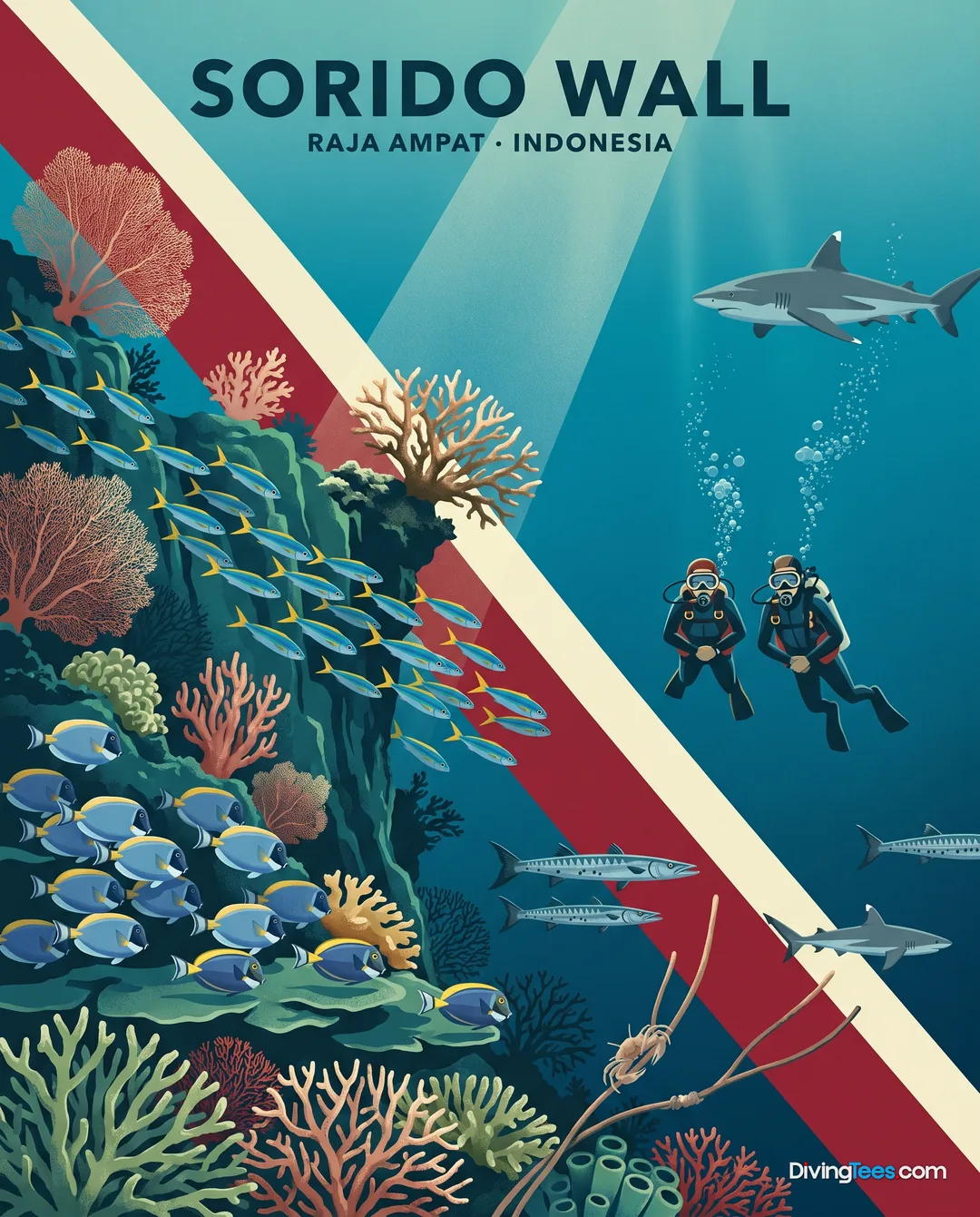
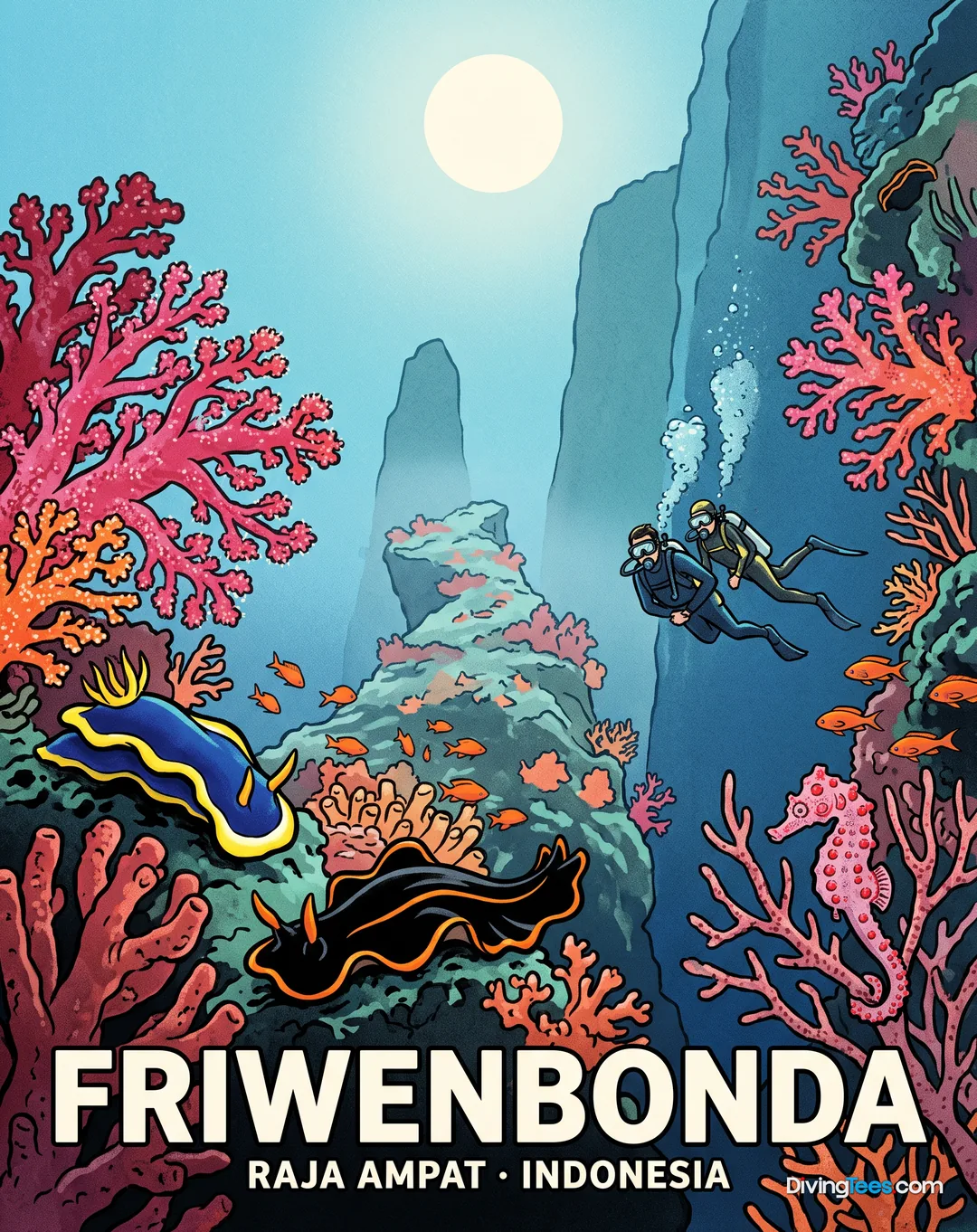
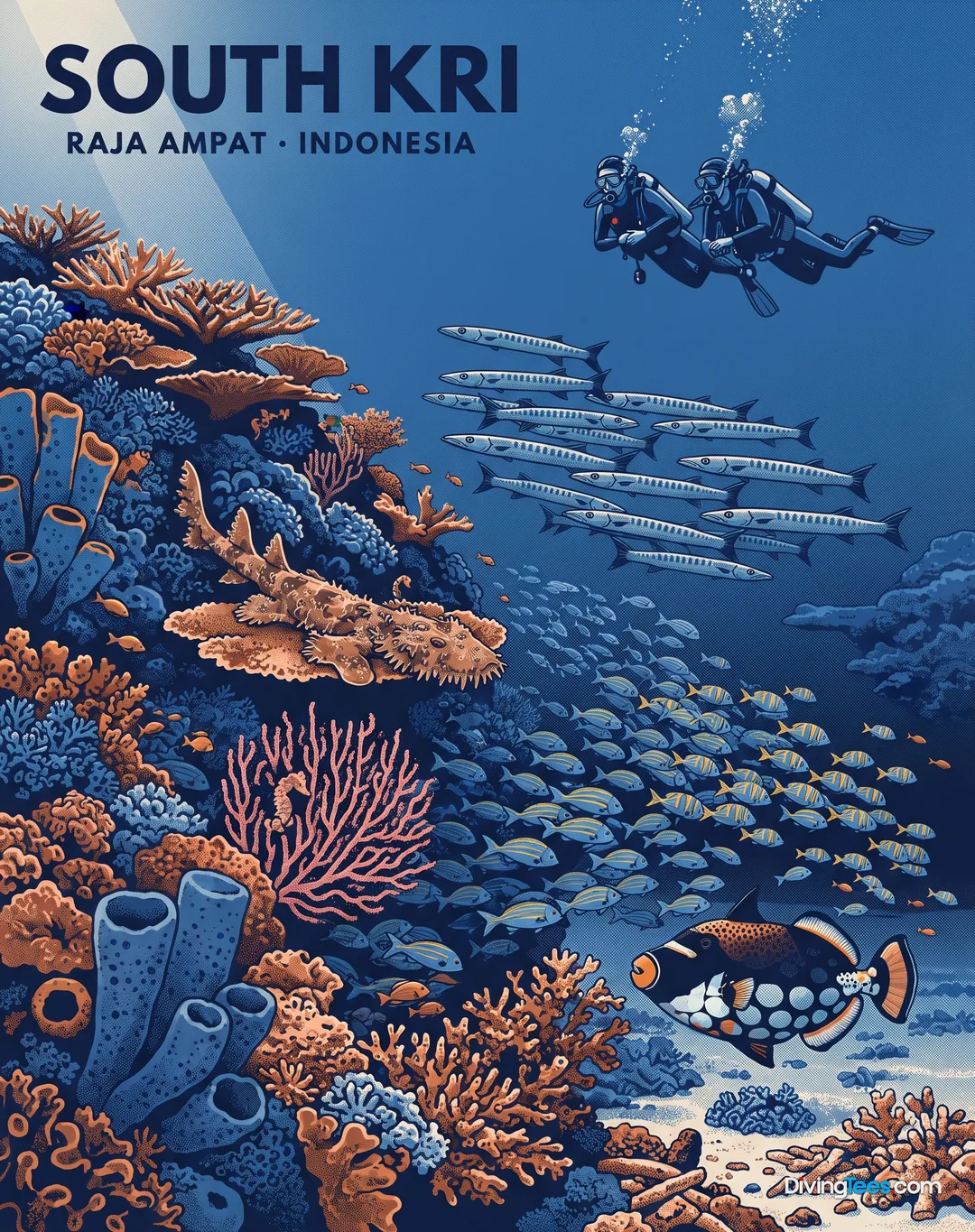
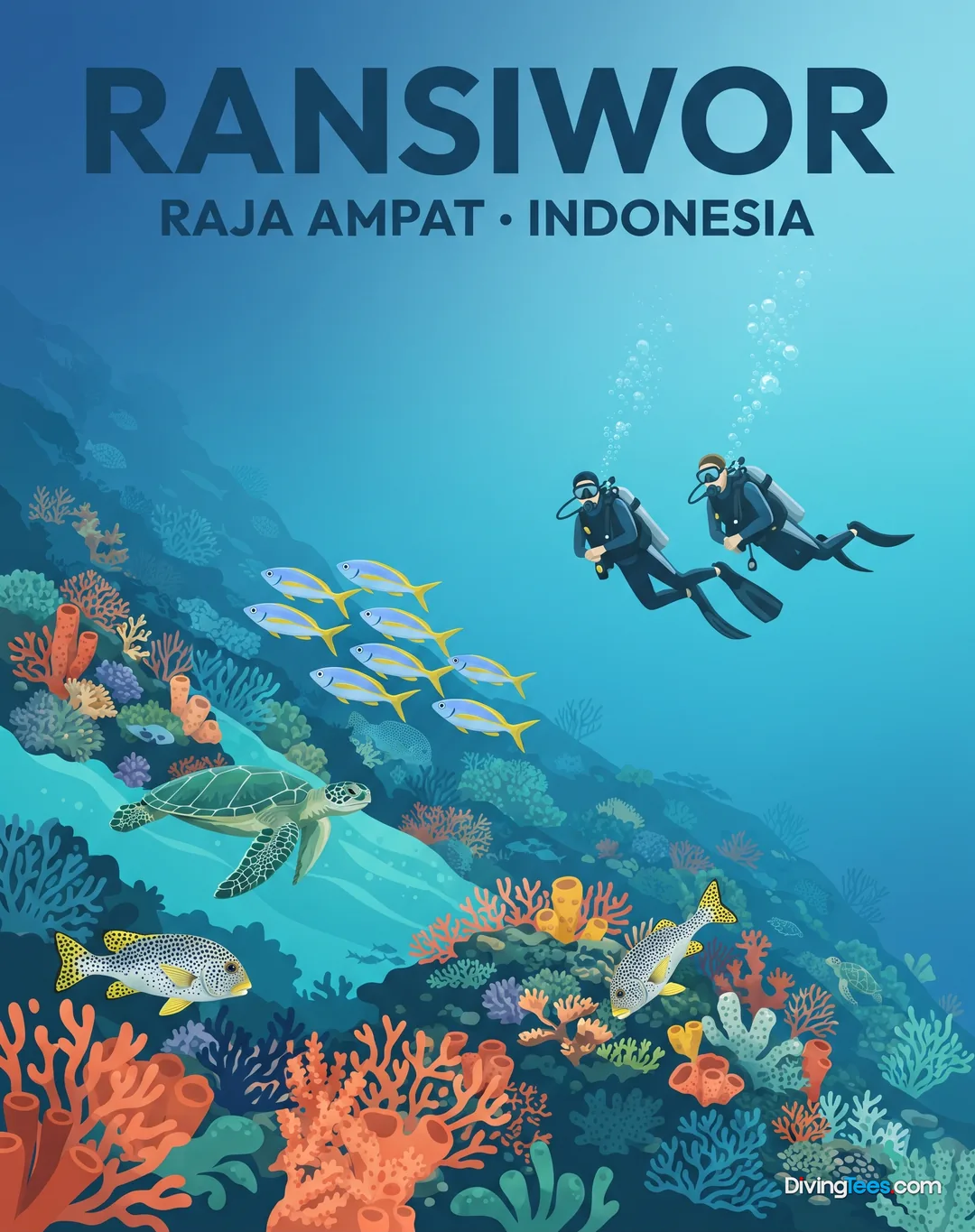
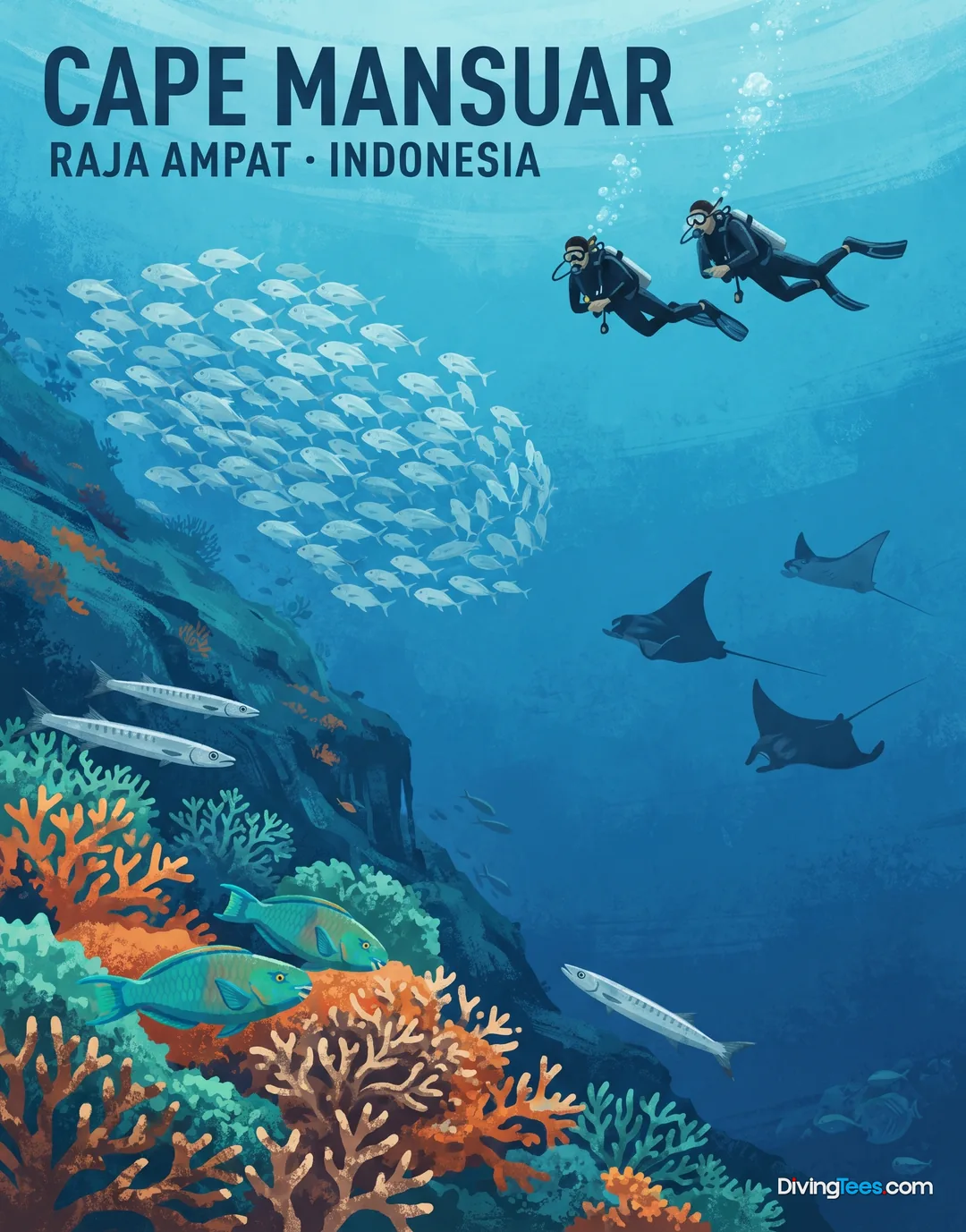
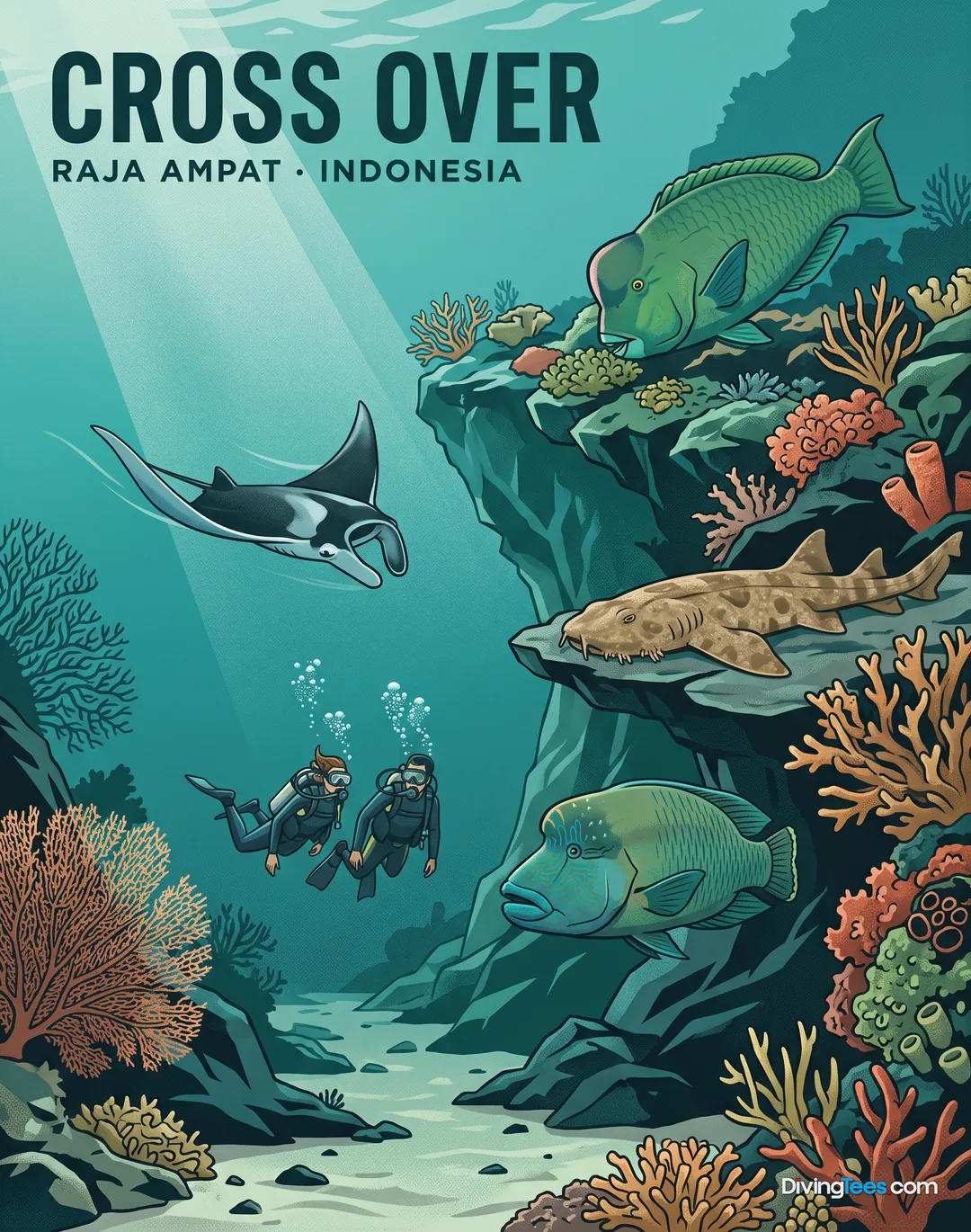
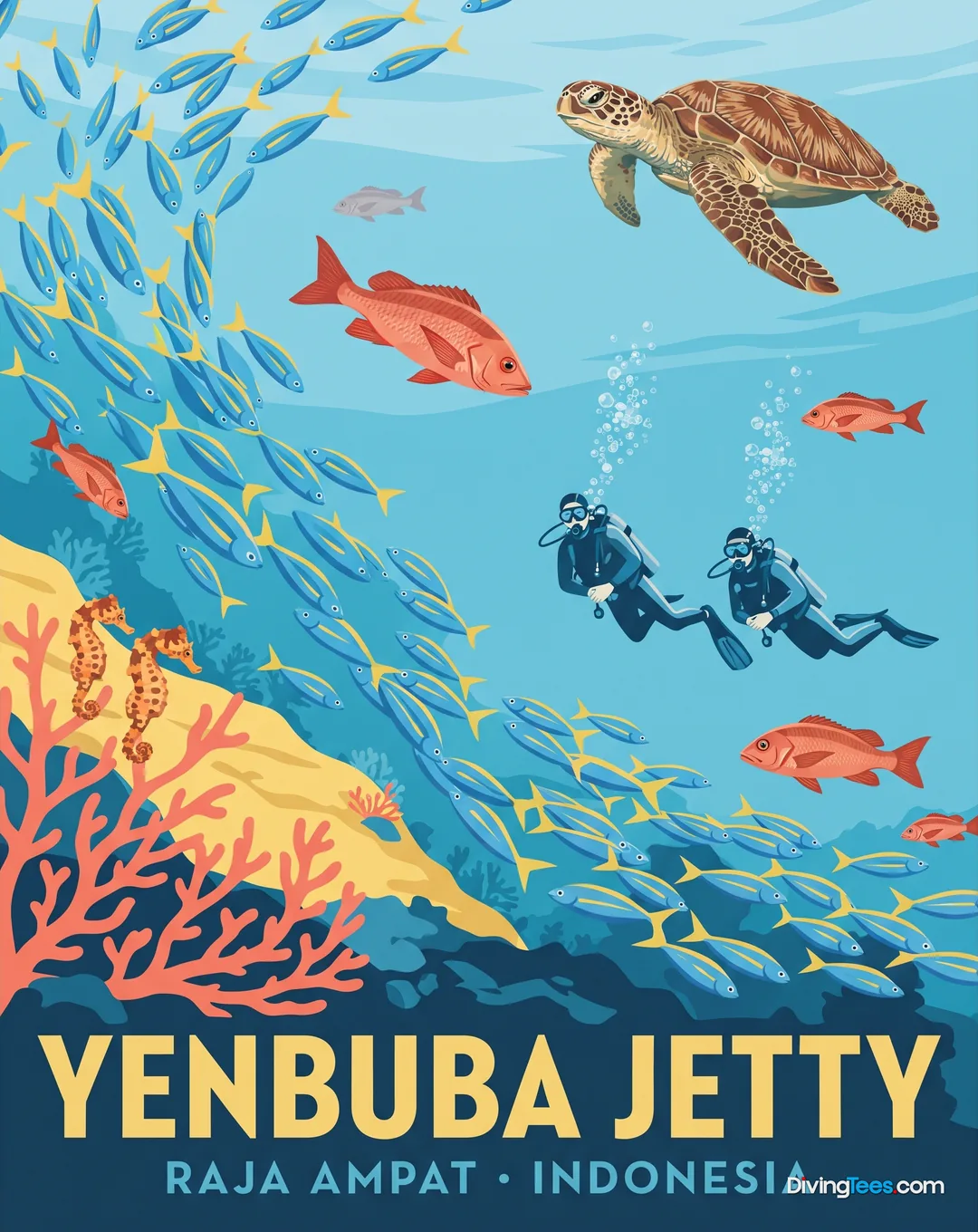
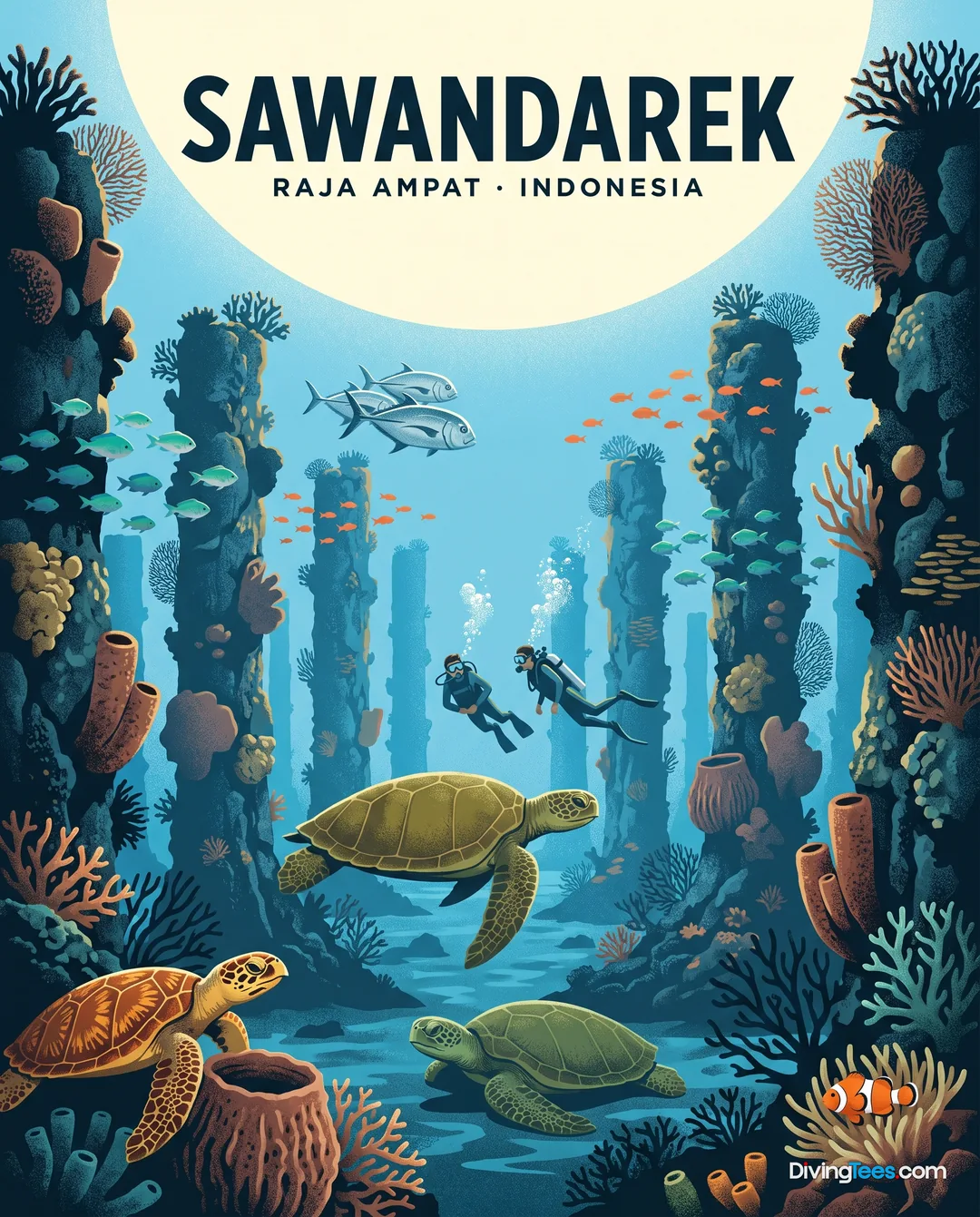
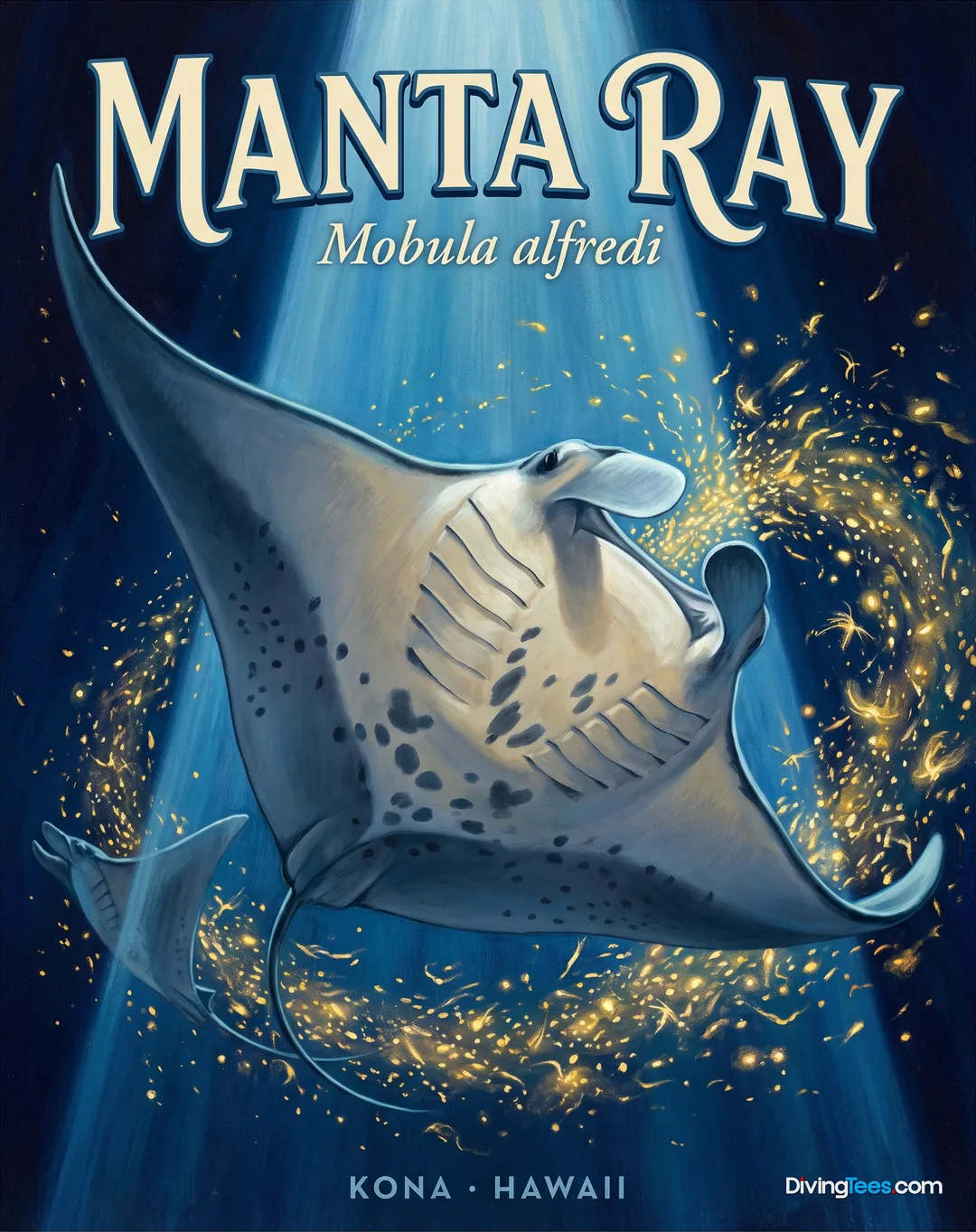
The 11-day, 10-night Raja Ampat route from Waisai to Waisai is built around reefs where current concentrates life. Manta Sandy is a cleaning-station dive: reef mantas hover while divers and snorkellers watch from the water. Mike’s Point combines overhangs thick with soft coral and a flat plateau where eagle rays may pass; its maximum depth is -40m. Cape Kri is the fish-count site, with schooling fusiliers and snappers, Napoleon wrasse and reef sharks over a reef shaped by moving water. Melissa’s Garden is shallower and more intricate, with soft coral and staghorn formations down to -35m. Blue Magic brings schooling fish, wobbegongs, giant trevallies, dogtooth tuna, barracuda and possible oceanic mantas. Sardines is about biomass and motion, while Sorido Wall puts barracuda and reef sharks beside fusiliers and surgeonfish. Friwenbonda offers a colourful soft-coral wall and pygmy seahorses near the surface. South Kri is a relaxed drift with macro life and schooling fish. Ransiwor slopes to -30m and centres on cleaning stations; Cape Mansuar, Cross Over, Yenbuba Jetty and Sawandarek add current, coral, turtles, fish schools and rich shallow reefs. Tides, weather and sea conditions can change the selection.
What you’ll meet underwater
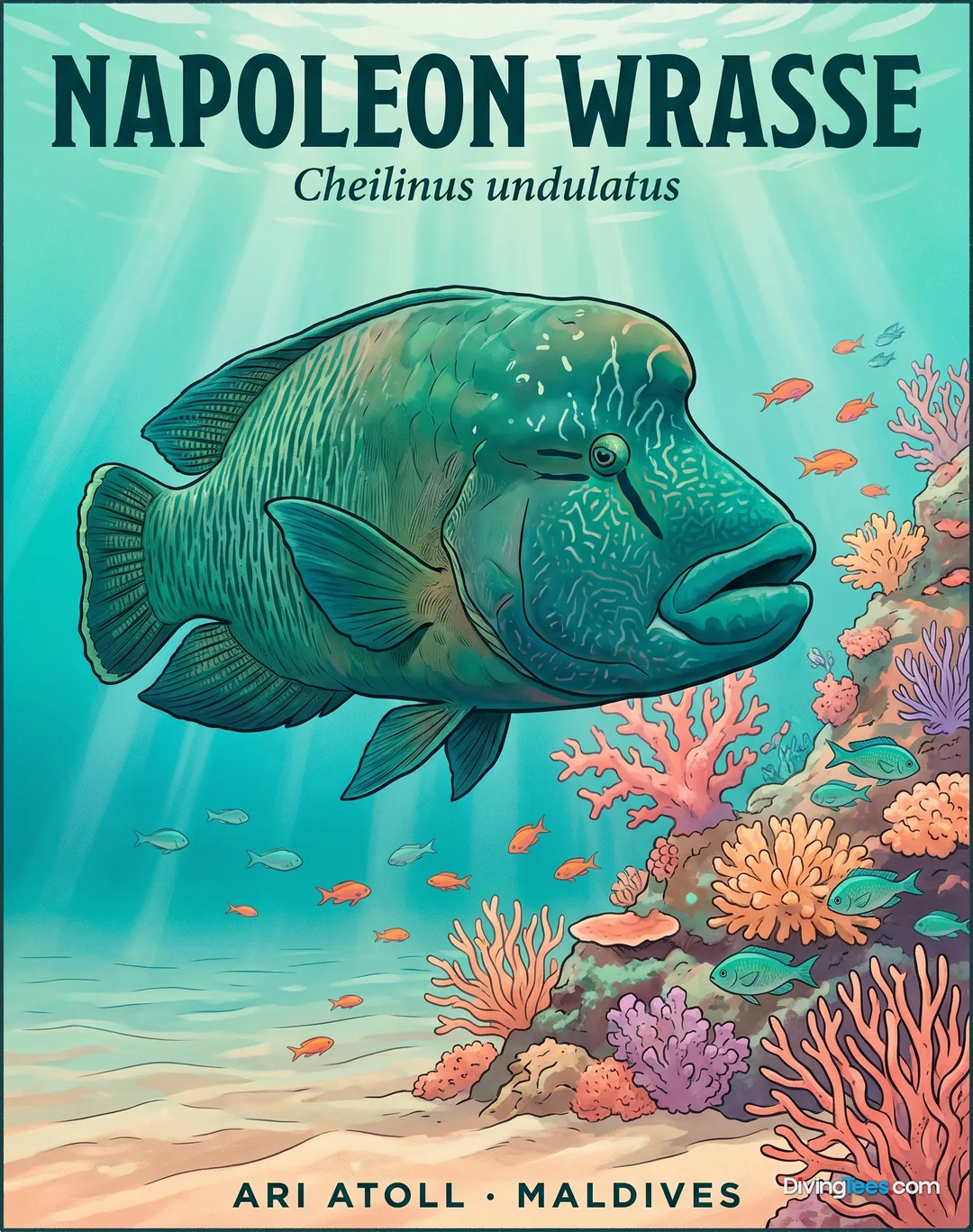
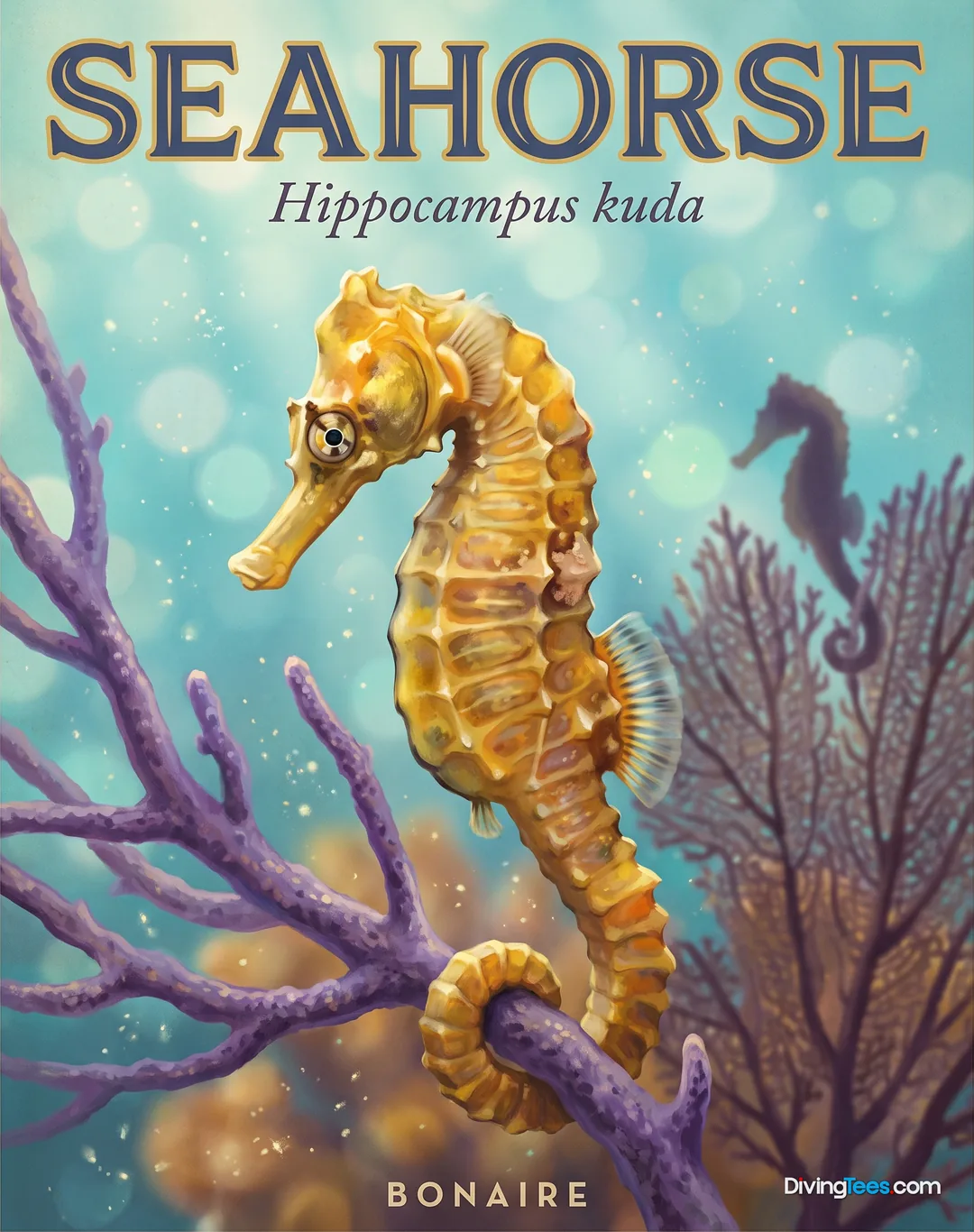
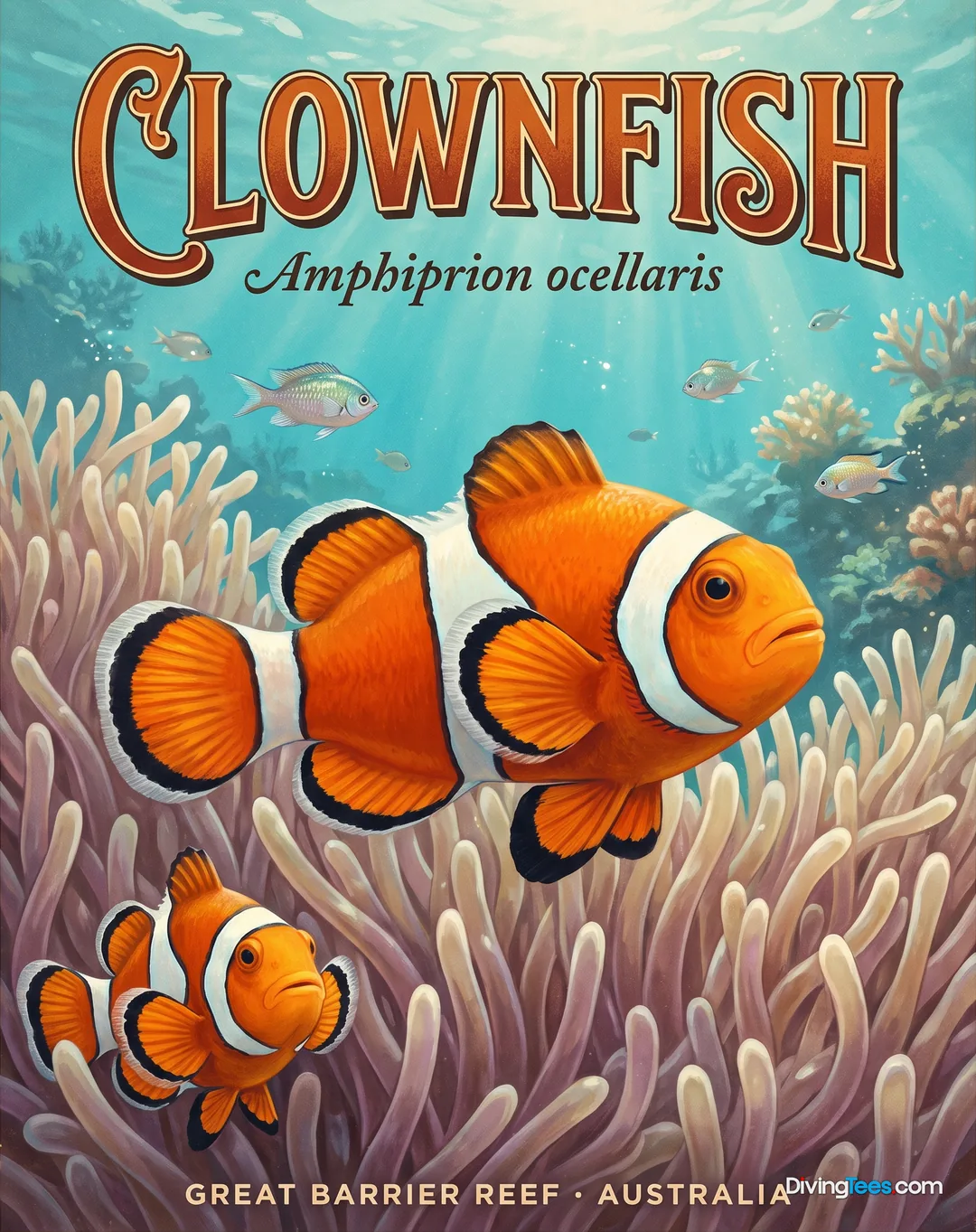
Raja Ampat gives this route two scales of animal life. Across many sites, expect barracuda, reef sharks, trevally, fusiliers, sweetlips, Napoleon wrasse, bumphead parrotfish, sea turtles, nudibranchs, soft corals and pygmy seahorses. The larger animals gather where current brings food: manta rays at cleaning stations, schooling fish along walls and reef sharks patrolling the flow. The small encounters are just as deliberate—nudibranchs, crustaceans and pygmy seahorses reward a slow look rather than a fast pass over the reef. Some sightings are tied to one place. Cape Kri is the only listed site for giant grouper and whitetip reef sharks. Blue Magic is where oceanic sharks and tuna appear in the route’s specific records. Ransiwor is the site associated with octopus and clownfish; South Kri with big-eye trevally, crabs and shrimp; Sorido Wall with surgeonfish; and Yenbuba Jetty with anthias and damselfish around coral-covered pilings. Nothing is guaranteed underwater, but the sites give each search a reason.

Who puts you in the water
English-speaking dive professionals lead the trips, with SSI and PADI-certified guides and instructors who know Indonesian currents, reef life and local procedures. Dive groups are kept to a small ratio of 1:4. The minimum level is Advanced Open Water or an equivalent qualification, or a Deep speciality, and the cruise team chooses groups and sites according to ability, comfort, currents and conditions. Divers may buddy-dive independently on sites considered suitable by the cruise leader, while guides can take a slower route or manage the stronger water when the site calls for it. Briefings cover the reef shape, expected tidal conditions, current and likely marine life rather than reducing the dive to a single route. A reef hook may be useful at some sites. Oxygen, first-aid kits, trained first-aid crew and communications equipment are carried on board; no defibrillator or recall system is specified.
The dive deck and the gear
The dive setup is made for a small group rather than a high-volume operation. Akomo Isseki has a shaded dive space, a proper dive platform and one 6.2-metre compound-plastic tender that escorts divers to the sites and can reach shallow reefs. Entry and exit therefore happen from the tender or the platform, with the support boat remaining close during the dive. The boat carries maintained scuba tanks, a Coltri Sub compressor, weights and belts, with DIN and yoke tank connections. Rental equipment can be arranged in advance; the available rental range is not detailed here. Cameras have a separate rinse area, and charging stations are used on board. There is no stated information for nitrox, tank capacity or tank material, SMB provision, hot-water return showers or a dedicated camera table, so those details should not be assumed. The essential system is clear: compact groups, a working platform and a tender suited to Raja Ampat’s reefs.
Between dives
Between dives, the shaded dive area is the natural meeting point: close enough to the water to watch the tender and far enough from the glare to sort cameras or dry off. The large decks leave room to spread out, while the sun areas suit anyone who wants heat, a view and no conversation. Akomo Isseki carries kayaks for exploring Raja Ampat’s limestone mazes and lagoons, and shore excursions can include beaches, viewpoints or village areas depending on the route. The interior saloon has a small library and audio-video entertainment, but most gaps are filled more simply—with coffee, camera work, a book or a discussion about the last reef. When the boat is underway between anchorages, the scenery becomes the activity: islands, cliffs and open water passing without a timetable imposed on every hour.
A day on board
A day begins with the first dive briefing, followed by the first descent while the reef is still the main event rather than a backdrop to the day. Dives and meals alternate with surface intervals spent eating, rinsing cameras, comparing notes or lying in the shade. The exact number and timing of dives depend on the destination, tides, weather and safety, and a night dive is available when conditions allow. Between sites, Akomo Isseki may move through Raja Ampat’s islands while guests use the decks, saloon or kayaks. Shore excursions and beach barbecues break up the underwater schedule when the route permits. The day closes with dinner, a route briefing or a card game, then the boat settles at anchor. The next morning starts the same way: equipment checked, a briefing listened to, and another reef waiting below.
What you eat aboard
Food is one of Akomo Isseki’s strongest points, and the galley serves both Indonesian cooking and familiar Western dishes. Meals are full-board, with buffet or à la carte service, snacks through the day and options for vegetarian and vegan guests. Fresh-cooked food, local flavours and enough variety matter when diving takes up the useful hours; nobody wants to spend a surface interval negotiating a meal that will not carry them to the next dive. There can also be beer, a beach barbecue and outdoor dining where the route allows it. The table is part of the boat’s social engine: divers return hungry, compare what passed in front of their cameras, eat together and head back to the deck. It is generous expedition food, not formal dining, and that is the right balance for this trip.
Nights at sea
The four Standard Cabins are twin cabins with traditional portholes, sea views and natural ventilation. Their wooden interiors use Kendoli and teak, with large beds, cupboards for bags and dive gear, wardrobes and shelves for cameras, laptops or books. That storage matters after several days, when a dry bag otherwise becomes part of the furniture. Akomo Isseki has three bathrooms shared among the guests, so the arrangement is practical rather than private-hotel generous. The boat’s solar-powered systems help keep nights quieter, and the open layout lets sea air move through the living spaces. After the last meal, people tend to drift between the saloon, the shaded deck and the sun area instead of disappearing into separate rooms. These are simple cabins, but the boat gives them light, ventilation and room for the things divers actually bring.
Standard Cabins
What to know before boarding
Raja Ampat trips aboard Akomo Isseki board and return in Waisai. Boarding is at 11am, and arrival back in harbour is in the mid-morning. Airport and hotel transfers are optional extras rather than part of the standard trip; the route through Sorong and the fast boat to Waisai need to be arranged around the sailing. Arriving in the area at least one night before boarding is strongly advised.
What the boat does for the ocean
Akomo Isseki runs its electrical systems from solar power, reducing generator use, fuel consumption and operational noise. The operation limits single-use plastics, sources food locally and works within Indonesia’s marine regulations. Local village and marine-park contributions support the places through which the boat travels. These are modest, practical measures rather than a claim of impact-free travel.
- Year built
- 2018
- Length
- 27 m
- Beam
- 6 m
- Maximum number of passengers
- 8
- Number of cabins
- 4
- Number of bathrooms
- 3
- Engines
- Mitsubishi
- Cruising speed
- 6 knots
- Tenders
- 1
Hello, I'm Marina, DivingDeal.com's AI assistant. I answer in detail about hotels, dive centres and liveaboards.

Thinking about the whole trip and the flights? Talk it over with Edith →
Marina is an AI. Some links are affiliate links: DivingDeal may earn a commission, at no extra cost to you. Bookings are made with the partner.