Liveaboards · Indonesia
Aliikai — a refined Indonesian phinisi for diving and island expeditions
What makes this boat unique
- Aliikai combines Indonesian boat-building heritage with a refit completed between 2019 and 2021.
- Seven air-conditioned cabins accommodate up to 15 passengers, with private bathrooms and several balcony or sea-view options.
- The dive setup includes free nitrox, DIN adaptors, a shaded preparation area, a ventilated camera room and two tenders.
- Recorded departures run round trip from Labuan Bajo through Komodo National Park for four or six days.
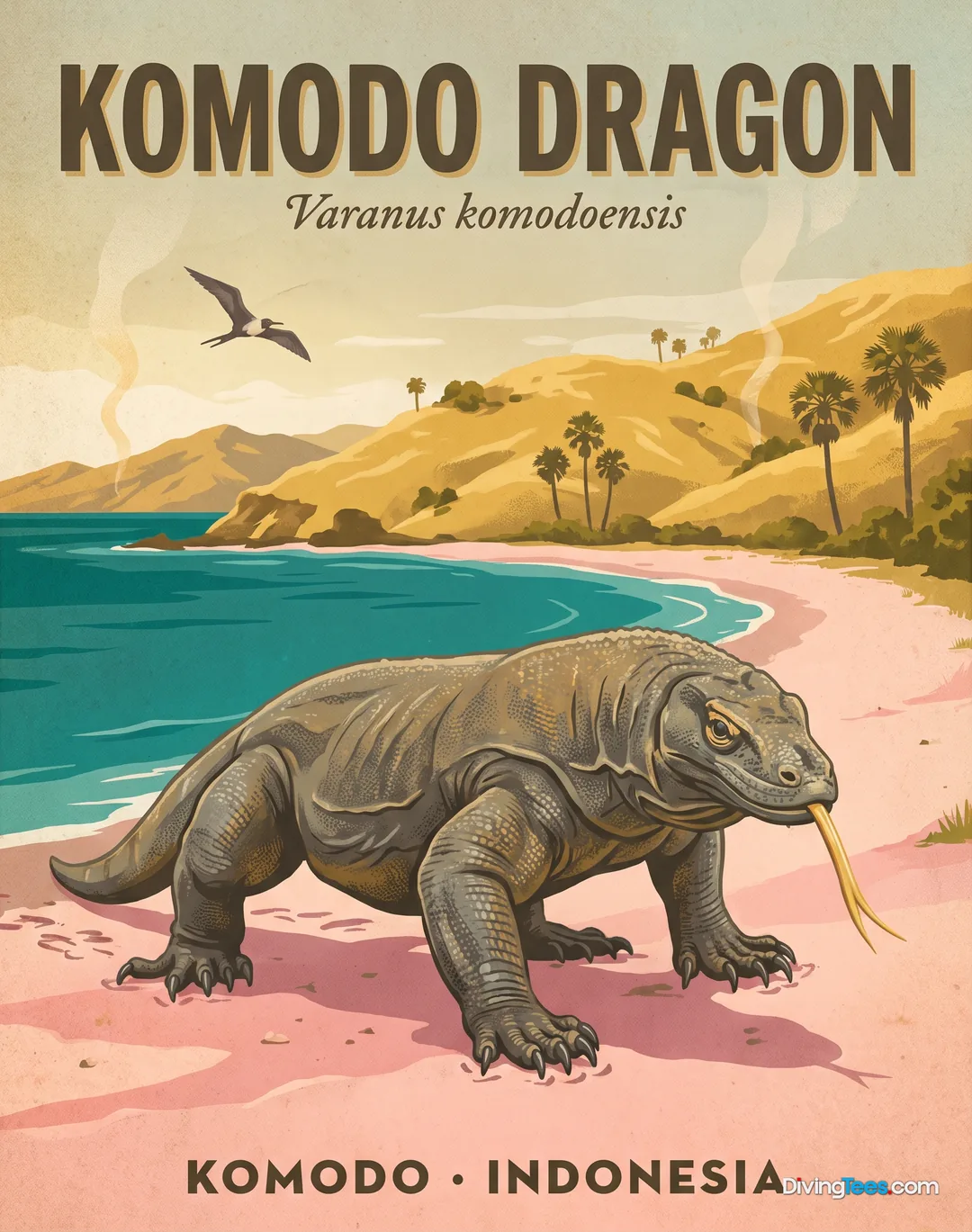
- Villages, naturalist excursions and Komodo dragon expeditions sit alongside the diving programme.
For subtitles in English: start the video firstthen click the gearat the top right of the video, select “Subtitles/CC”, then “Auto-translate” and choose “English”.
The invitation
Aliikai is for divers who want a proper expedition boat without giving up the details that make a week easy: a private cabin, shaded space to prepare, a camera room that can be used properly and a crew present in numbers. The boat carries no more than 15 passengers, while 12 Indonesian crew members and an expedition leader run the voyage. That balance matters. The day can stay focused on diving, but the trip is not limited to the reef. Villages, naturalist outings, kayaks and Komodo dragon expeditions bring the islands into the itinerary. Aliikai also suits mixed groups: non-divers and snorkellers are welcome, and the living spaces are designed for more than simply sleeping between dives. The reason to choose it over a harder-edged dive liveaboard is the combination of guided diving, Indonesian character and room to spend time outside the water.
Boarding
Aliikai makes its first impression as a traditional Indonesian phinisi reshaped for modern expedition travel. The boat was built around Indonesian boat-building heritage and refitted by carpenters in Bulukumba, South Sulawesi, so the character comes from the hull itself rather than from nautical decoration added afterwards. Once aboard, the movement is straightforward: an air-conditioned indoor lounge and dining room lead out to a covered alfresco area, while the upper lounge and observation spaces take the boat upward into the breeze. The refit gives the vessel a finished, deliberate feel without erasing its origins. There is enough separation between the areas to disappear for a while, then return to the group when the meal or briefing begins. Aliikai is not presented as a stripped-down working coaster. It is an Indonesian sailing vessel arranged around long days of diving and island travel.
The atmosphere on board
The atmosphere is shaped by a small passenger group and a large working crew: 12 Indonesian crew members plus an expedition leader for a maximum of 15 guests. That shows up in the practical parts of the day, from meals and transfers to the movement between the boat and the water. The crew’s role is not limited to diving; the same voyage can include island visits, naturalist guiding and water activities. The indoor lounge and dining room keep the group together without making the whole boat feel public, while the covered outdoor area offers a quieter place to sit. After dinner, the upper lounge can turn into an open-air cinema under the stars. The result is more expedition house than floating dormitory. People can stay with the group, but the layout gives them somewhere else to go when the day has been long.
The sites you’ll dive
The recorded departures are round trips from Labuan Bajo through Komodo National Park, lasting four days and three nights or six days and five nights. The listed Northern Sulawesi sites offer a different kind of route: Bunaken Marine Park follows vertical walls to -40m, while Bunaken Timur combines a 40-metre wall with shallow reef and macro life, to -25m. Lekuan, Sachiko’s and Siladen Wall are wall dives to -25m, with turtles, reef sharks, gorgonians, barracudas and small reef animals. Sahaung’s pinnacles and boulders reach -35m and may bring white-tip reef sharks; Batu Mandi’s isolated pinnacles reach -30m. Murex Bangka House Reef is a sloping macro reef to -25m, with pygmy seahorses and blue ribbon eels. Lembeh Strait adds black sand and rare macro life; Bethlehem and City Extra stay shallow, to -20m, for seahorses, longfin squid, mimic octopus and flamboyant cuttlefish. Celah Celah is a wall cleft opening into blue water, while The Molas Shipwreck is a World War II cargo vessel resting upright on a sandy slope, to -40m. Murex Manado House Reef reaches -20m and mixes natural and artificial structures with reef life.
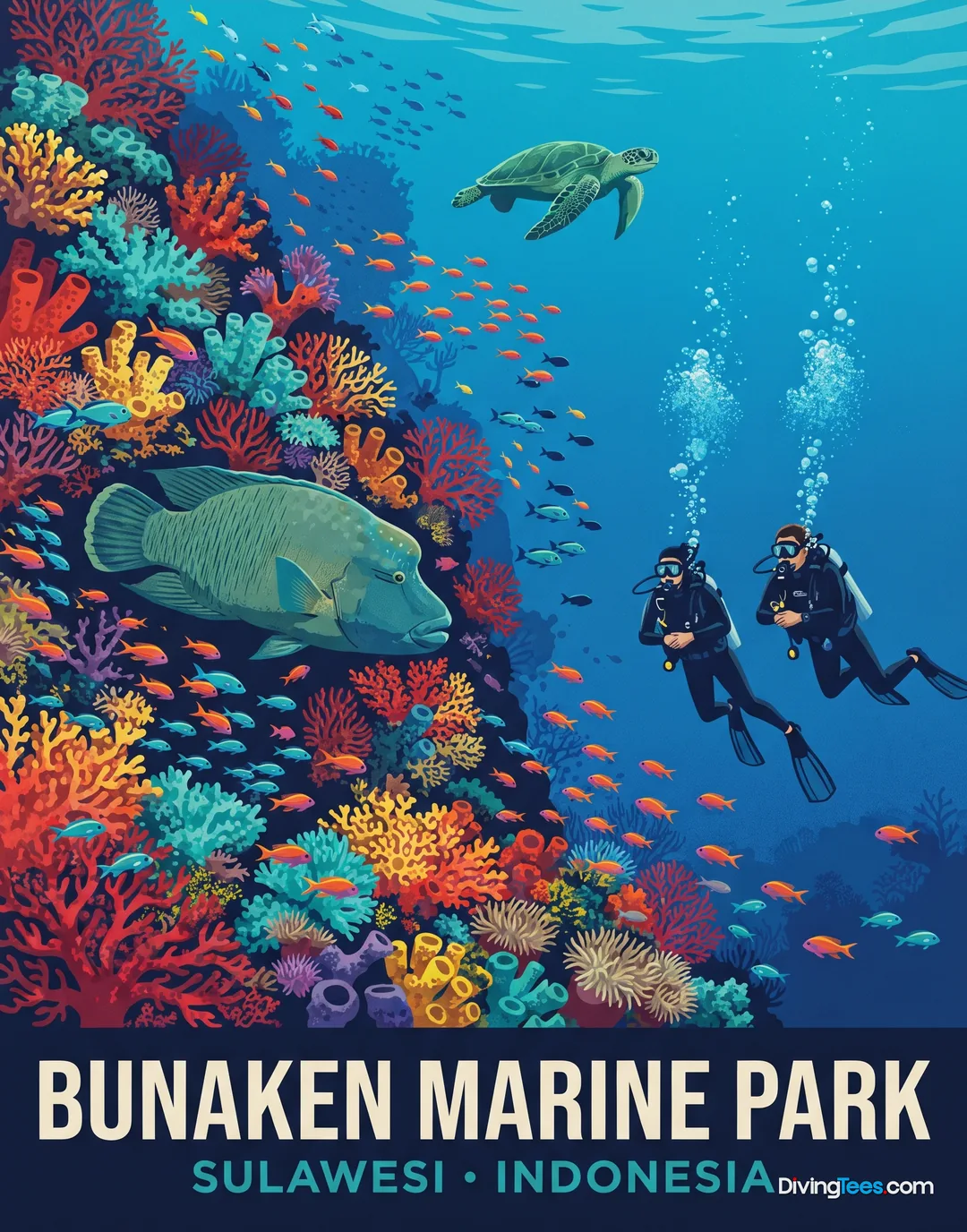
Bunaken Marine Park →
Max. depth · 40 m
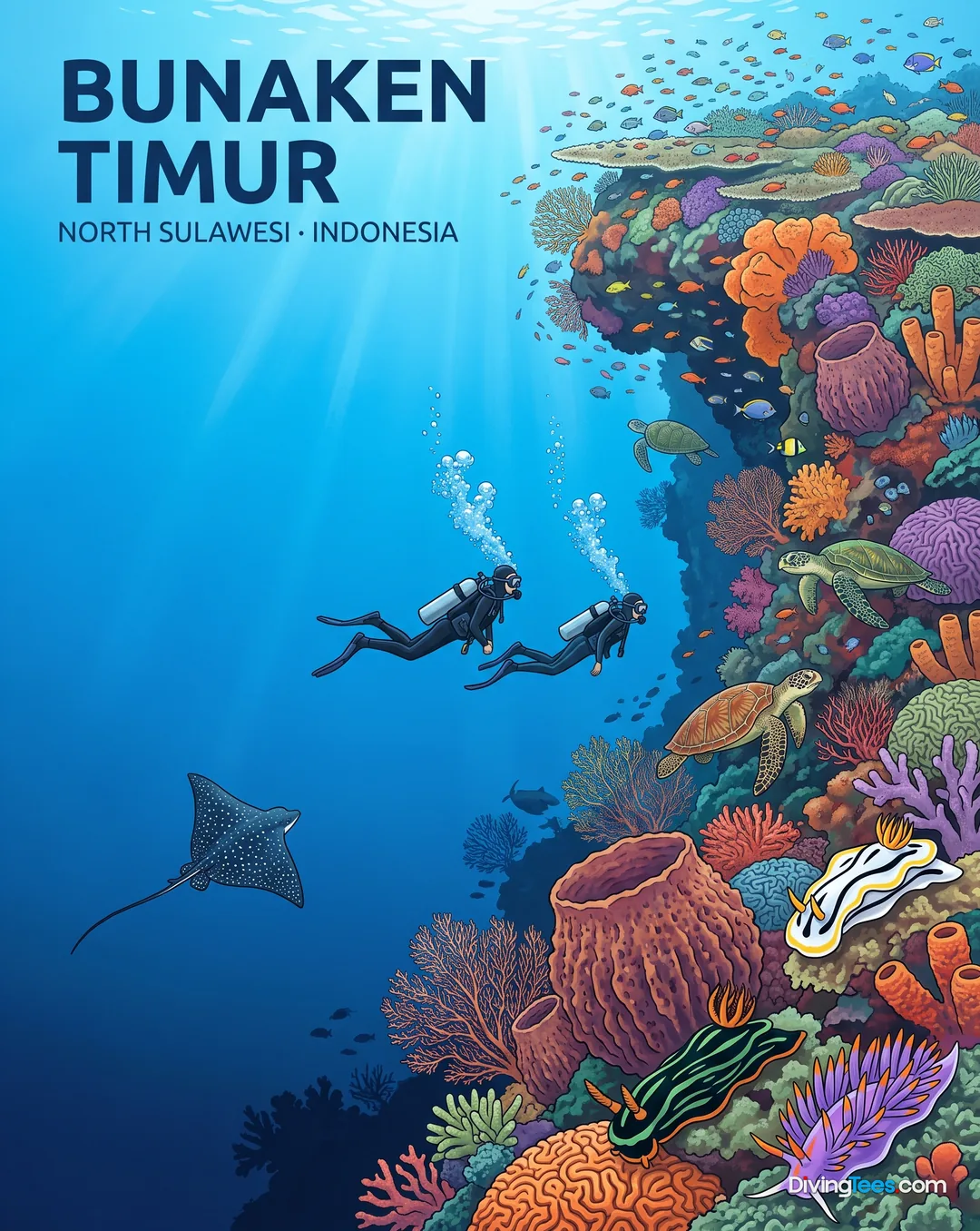
Bunaken Timur →
Max. depth · 25 m
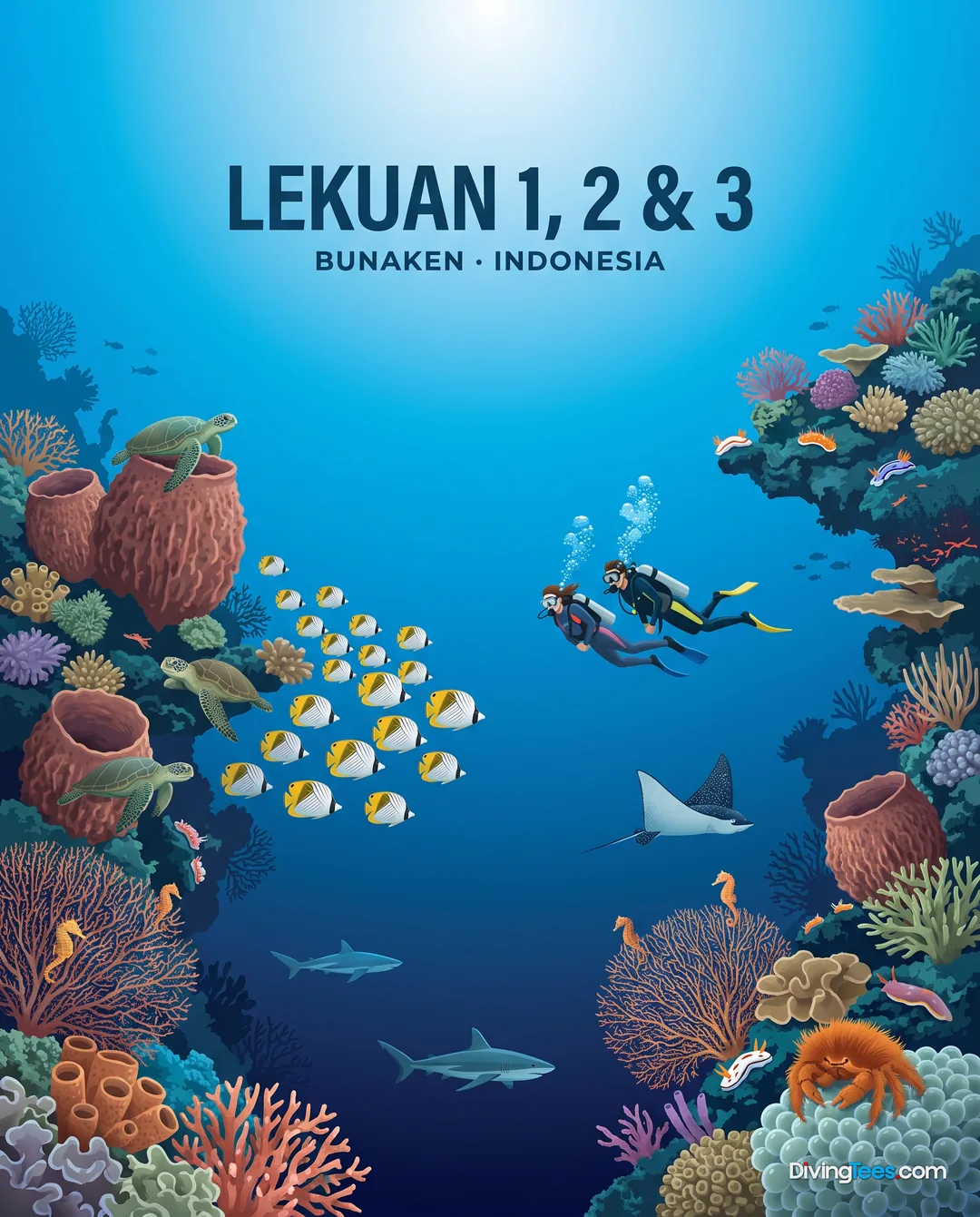
Lekuan →
Max. depth · 25 m
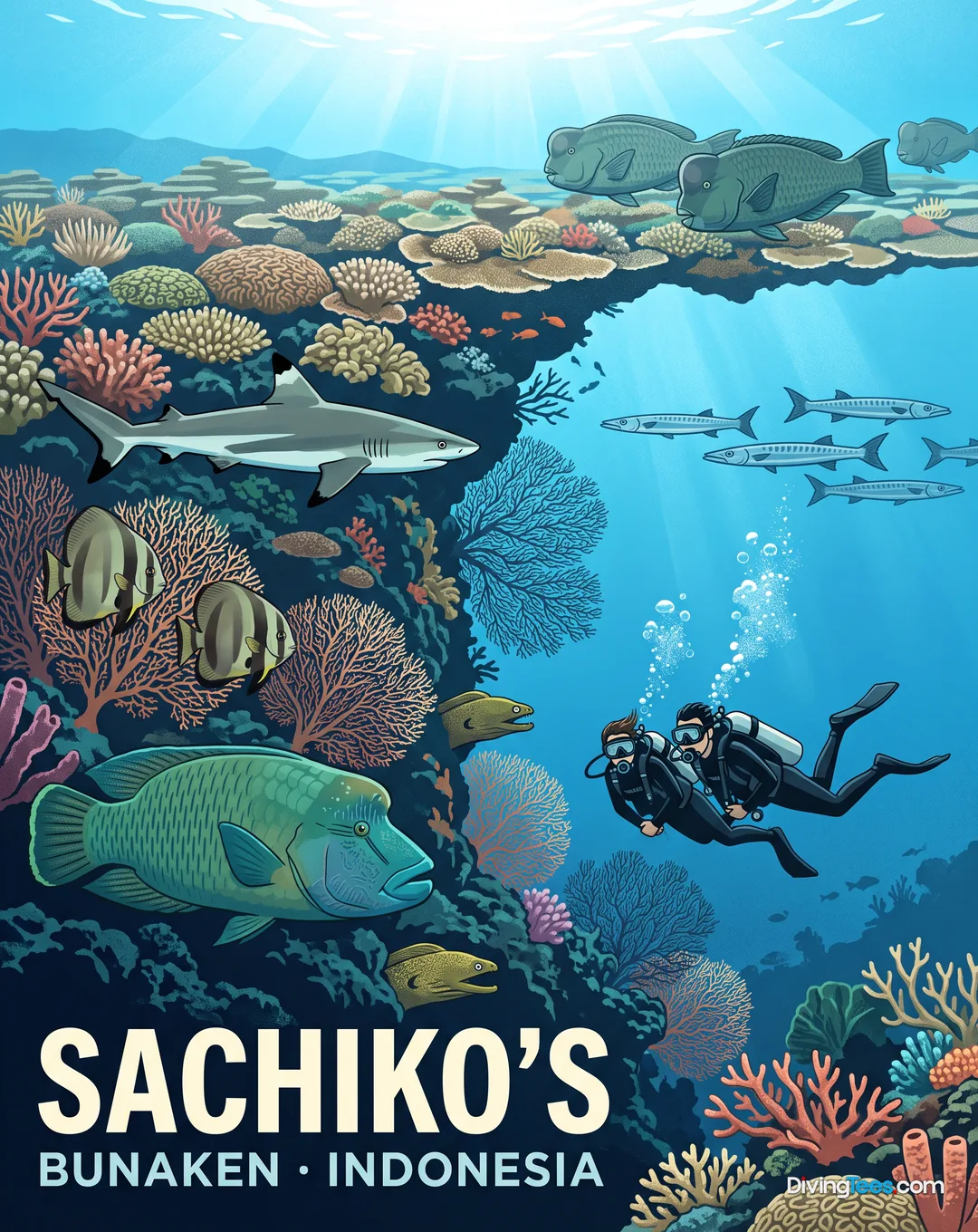
Sachiko’s →
Max. depth · 25 m
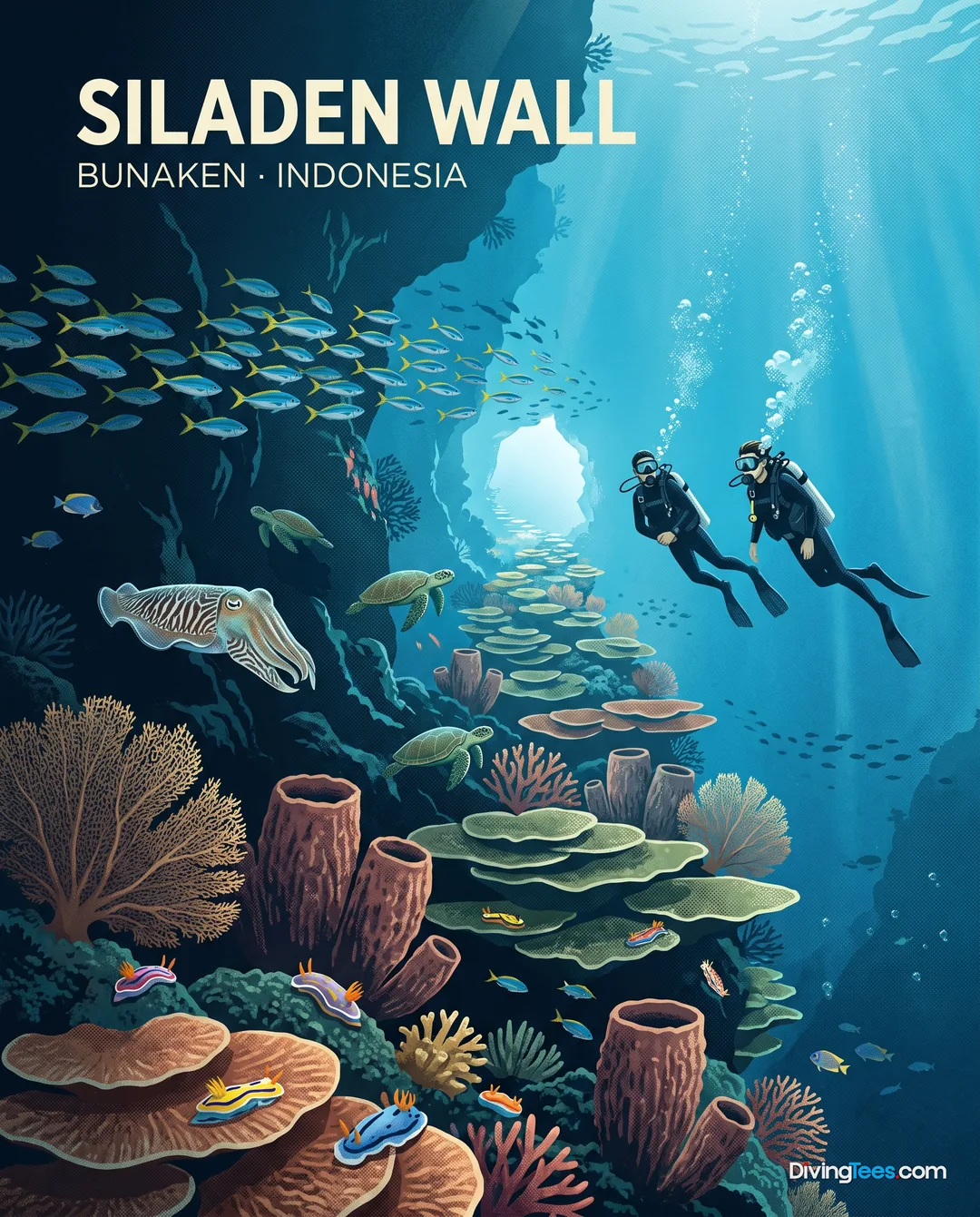
Siladen Wall →
Max. depth · 25 m
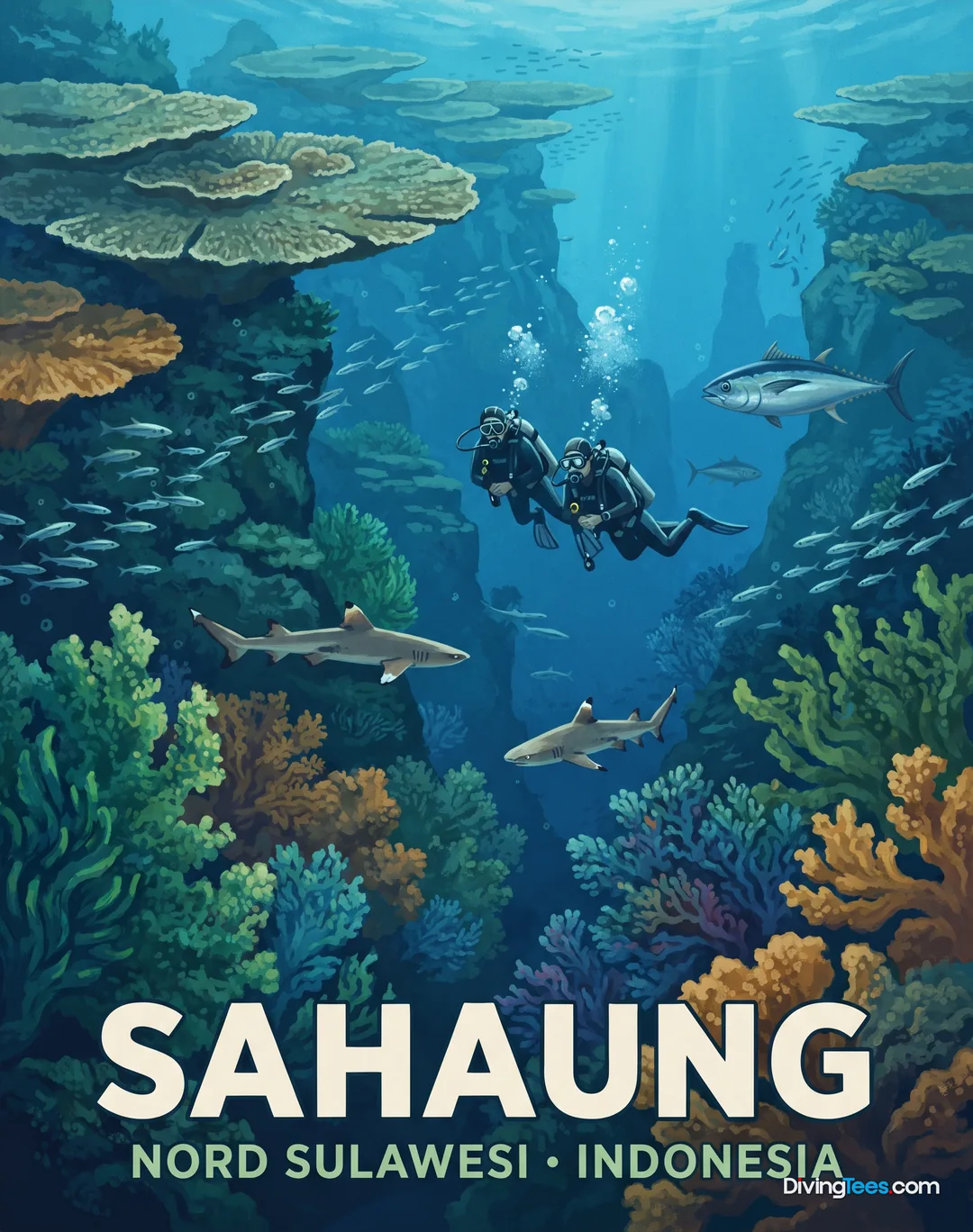
Sahaung →
Max. depth · 35 m
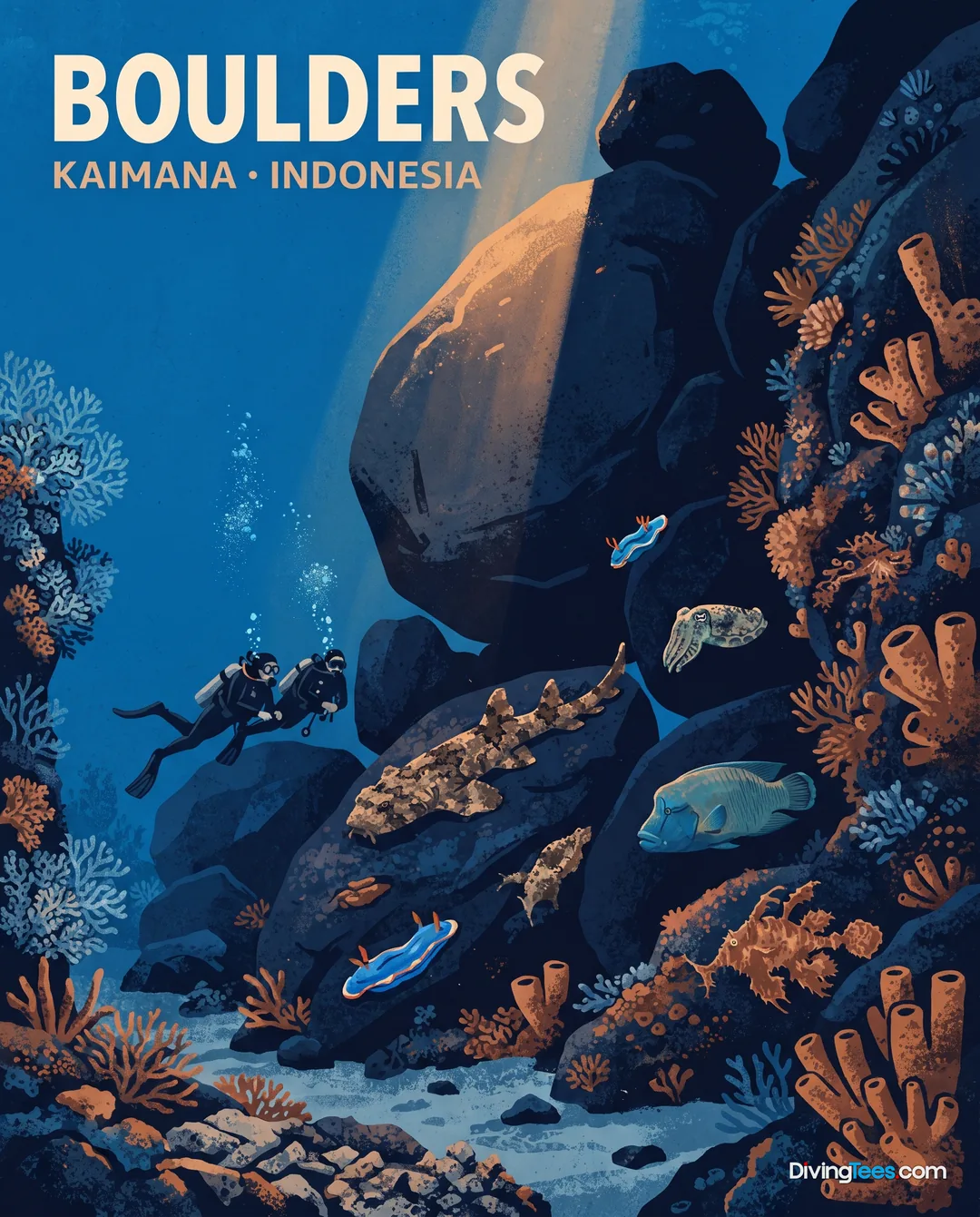
Boulders →
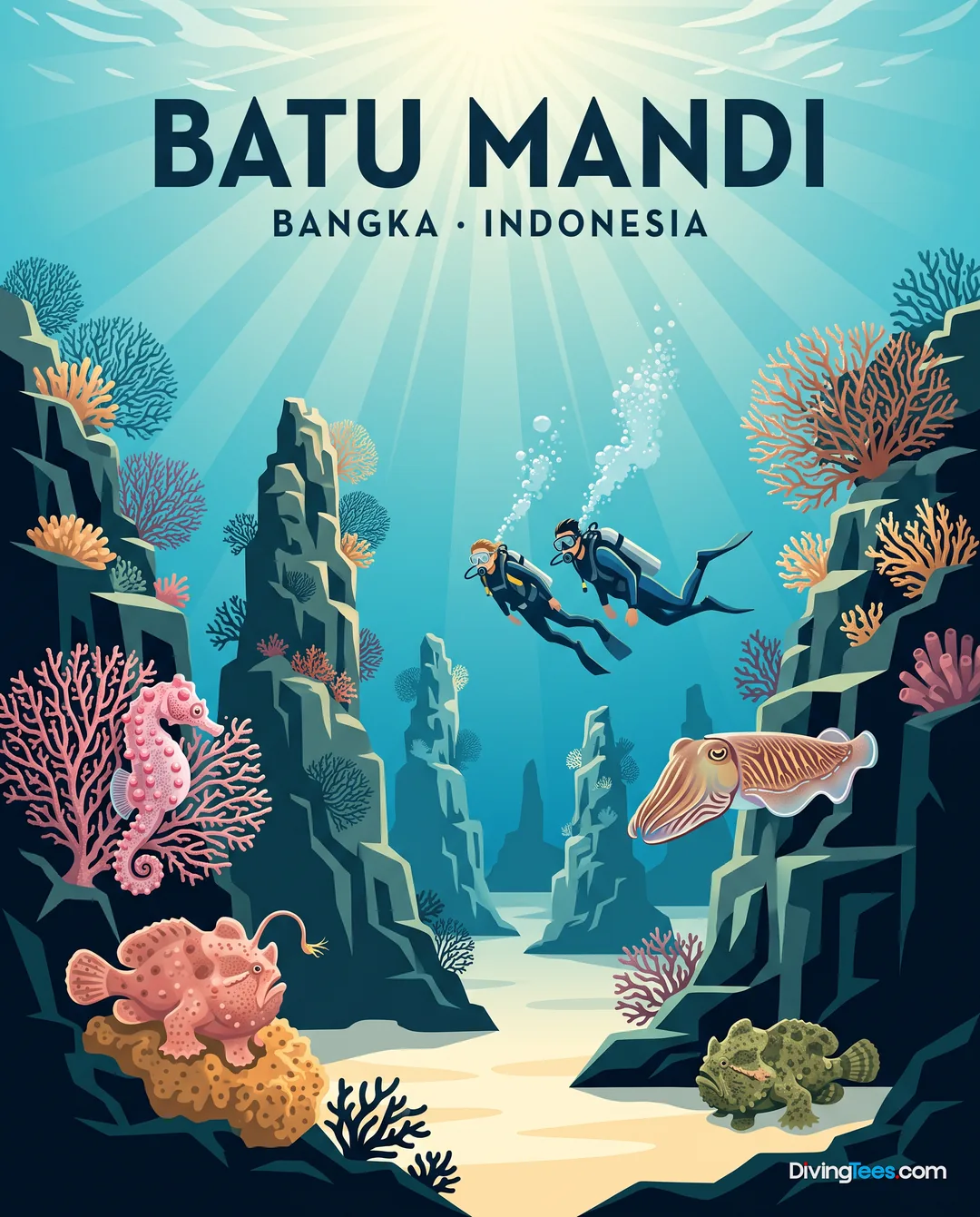
Batu Mandi →
Max. depth · 30 m
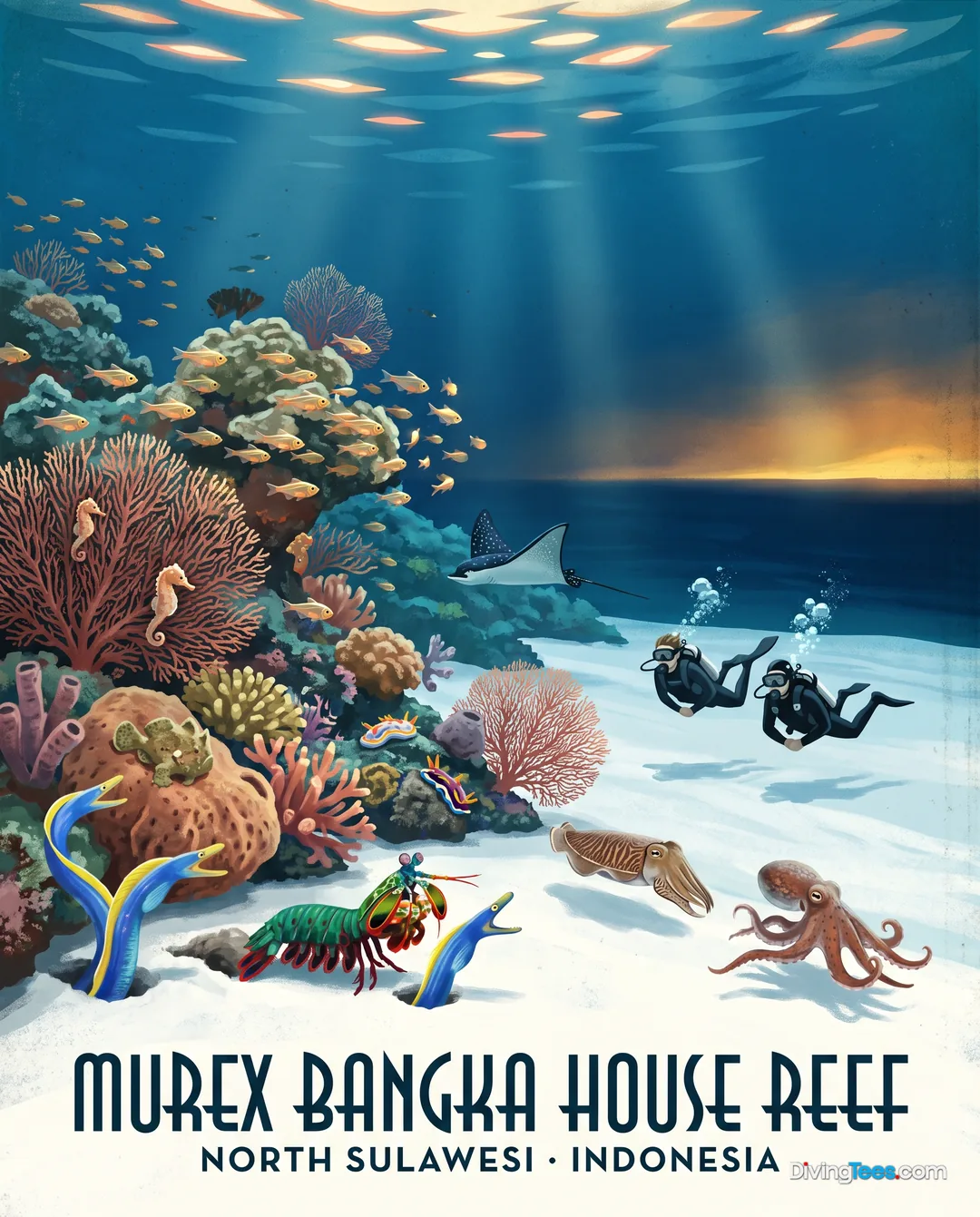
Murex Bangka House Reef →
Max. depth · 25 m
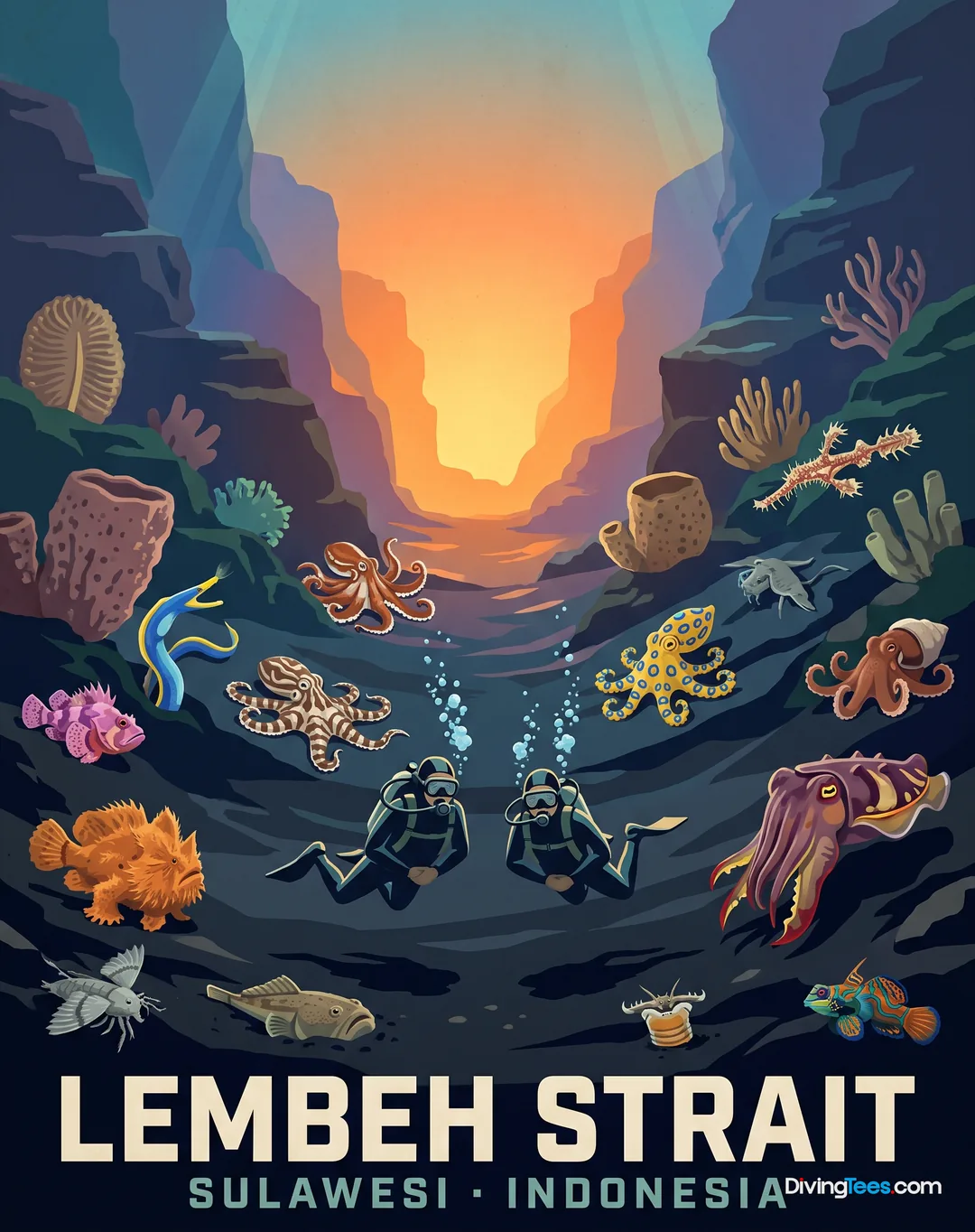
Lembeh Strait →
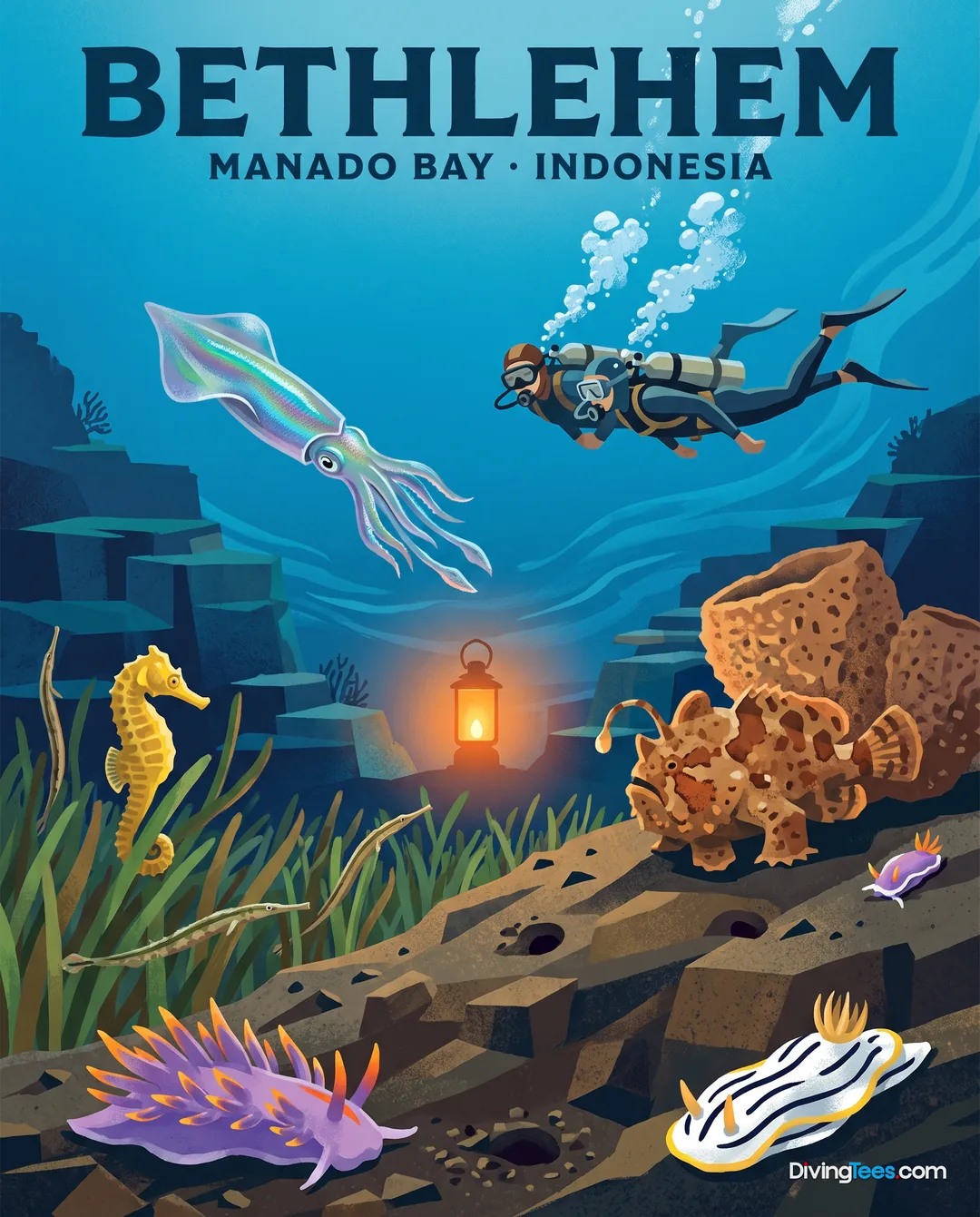
Bethlehem →
Max. depth · 20 m
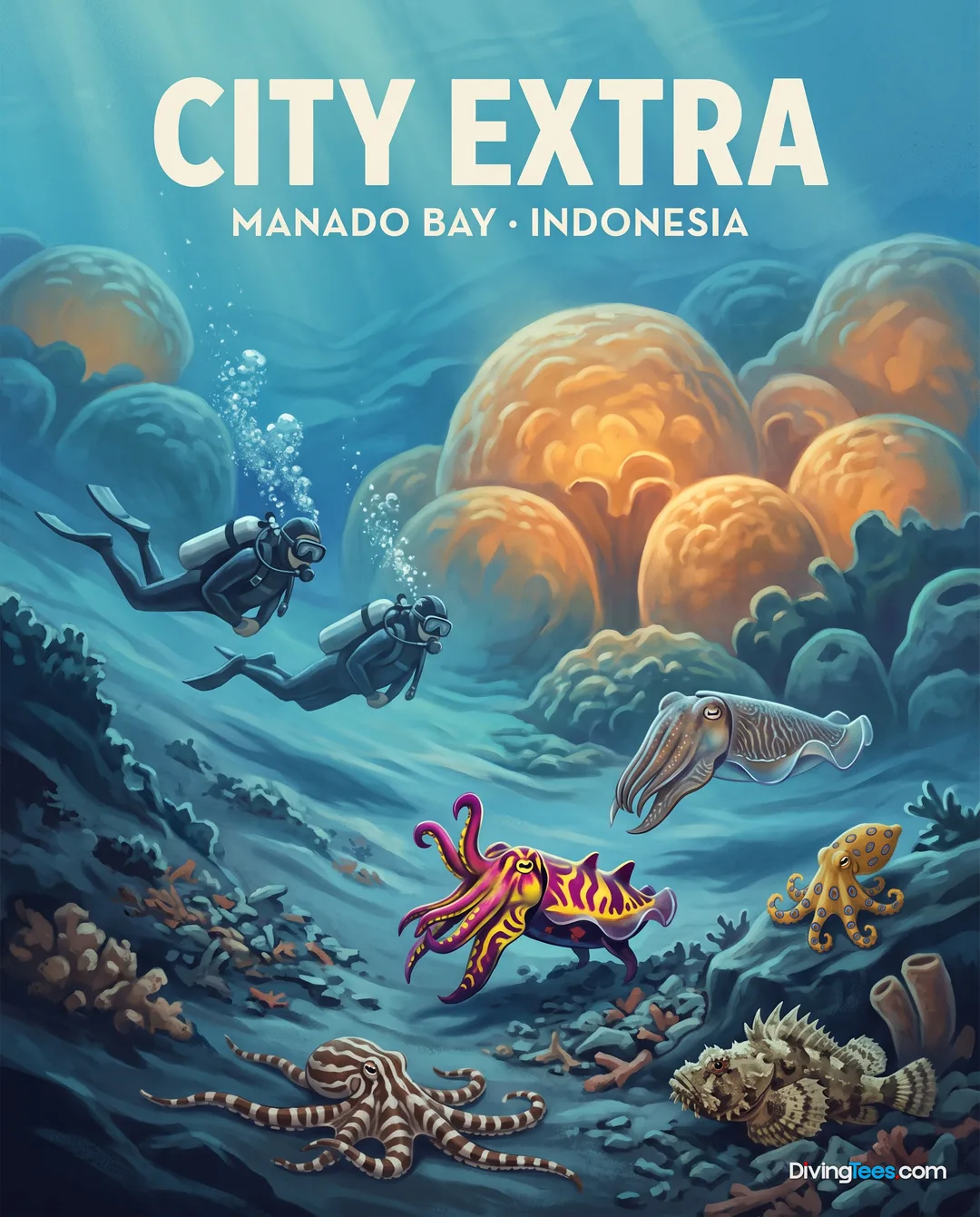
City Extra →
Max. depth · 20 m
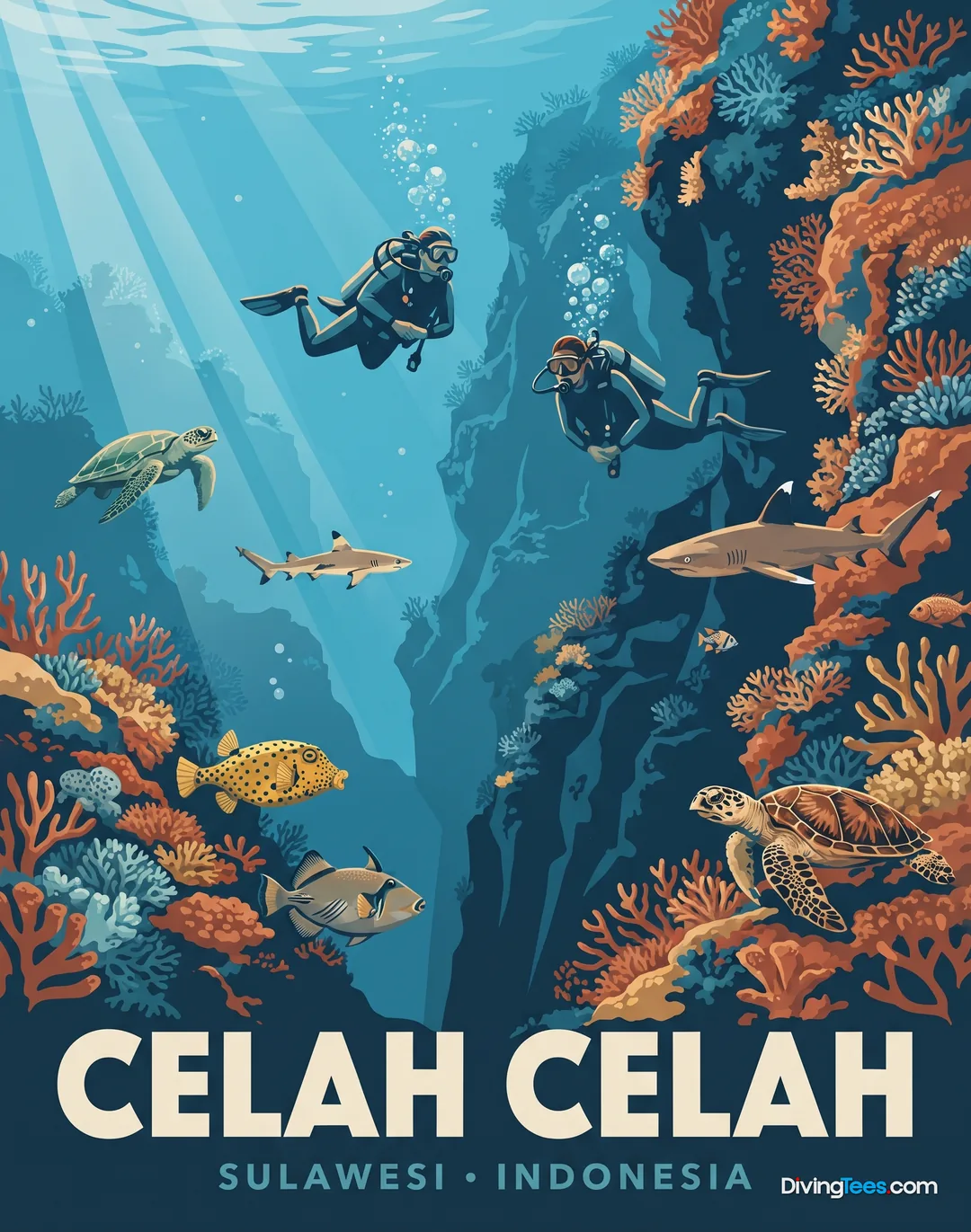
Celah Celah →
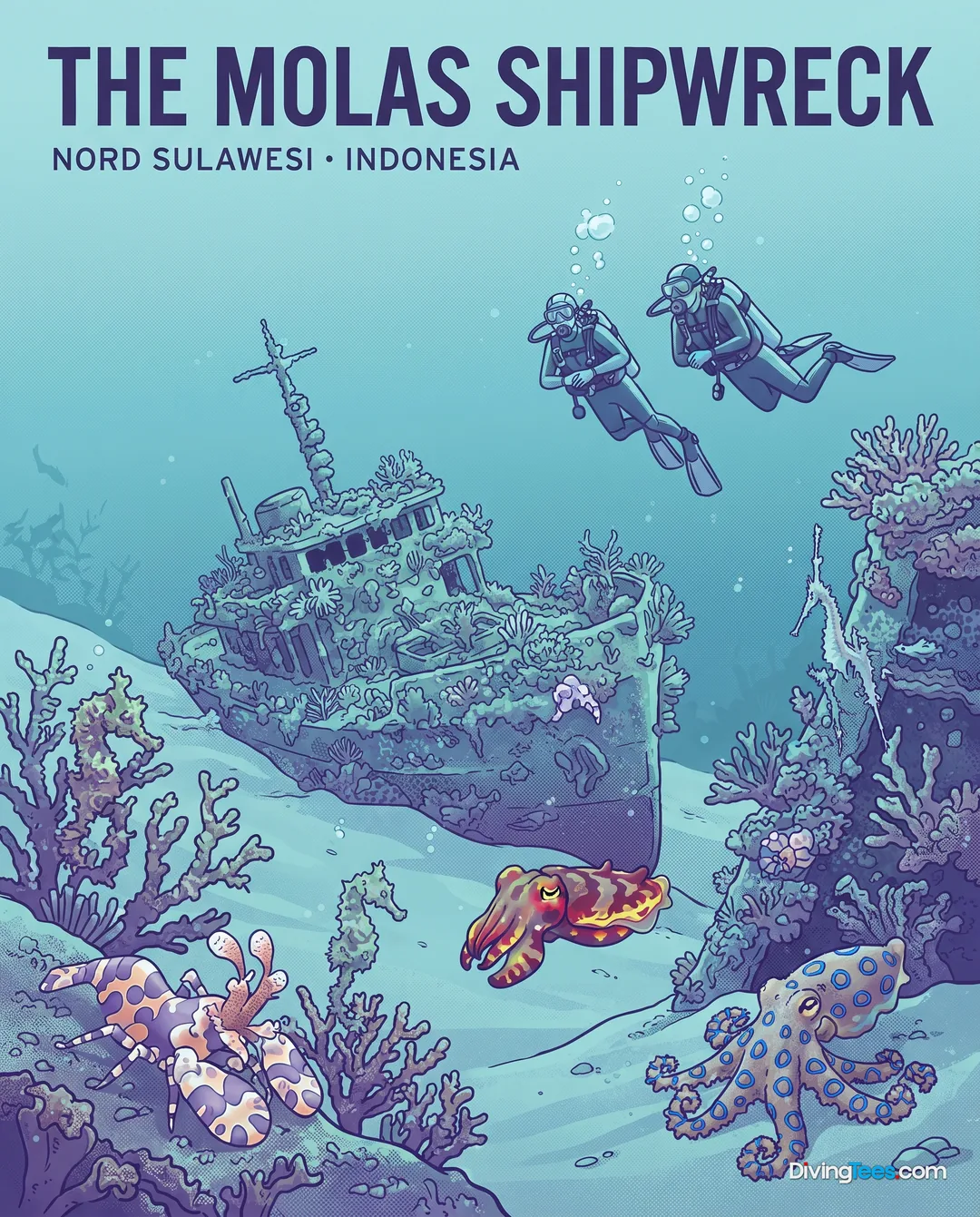
The Molas Shipwreck →
Max. depth · 40 m
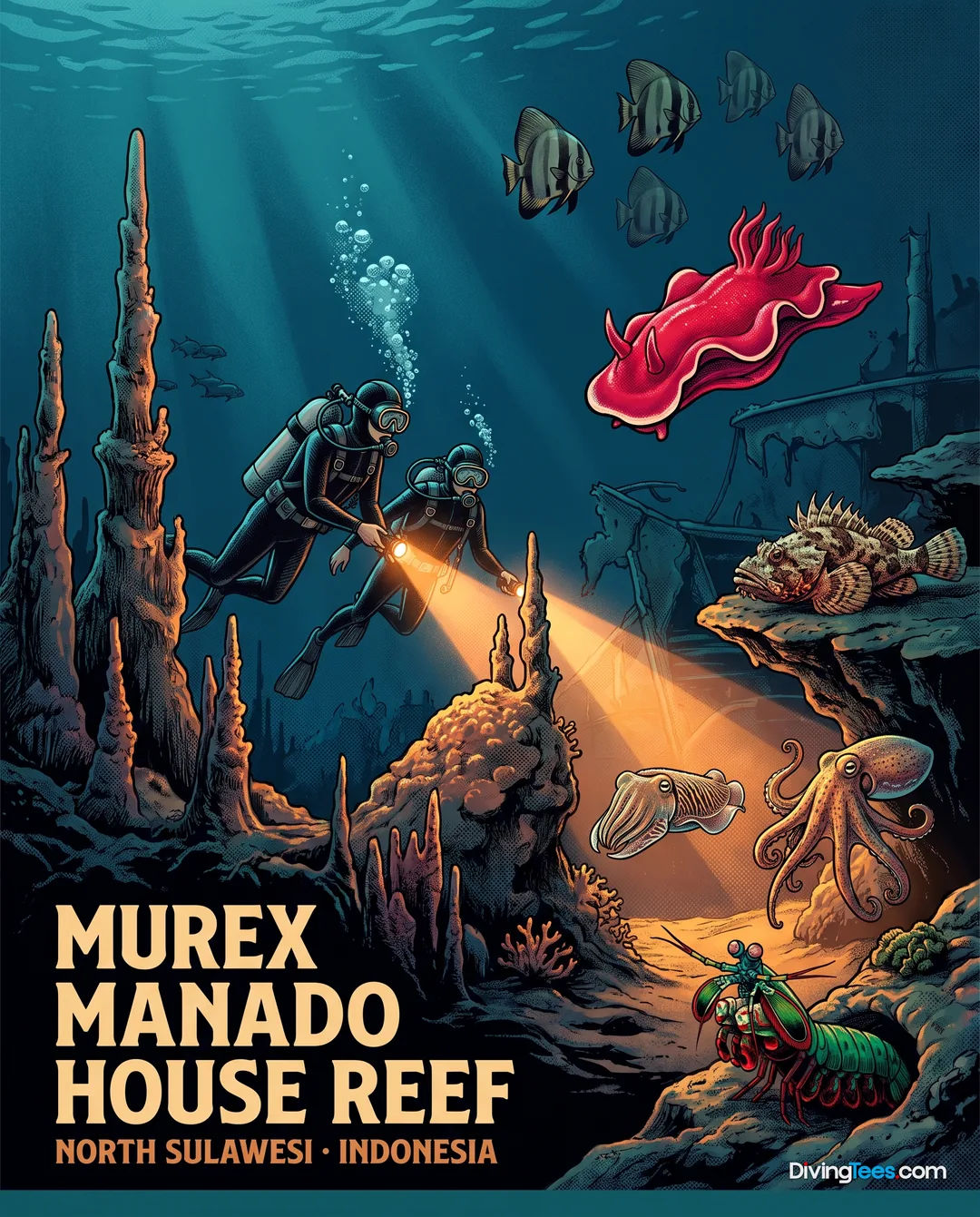
Murex Manado House Reef →
Max. depth · 20 m
What you’ll meet underwater
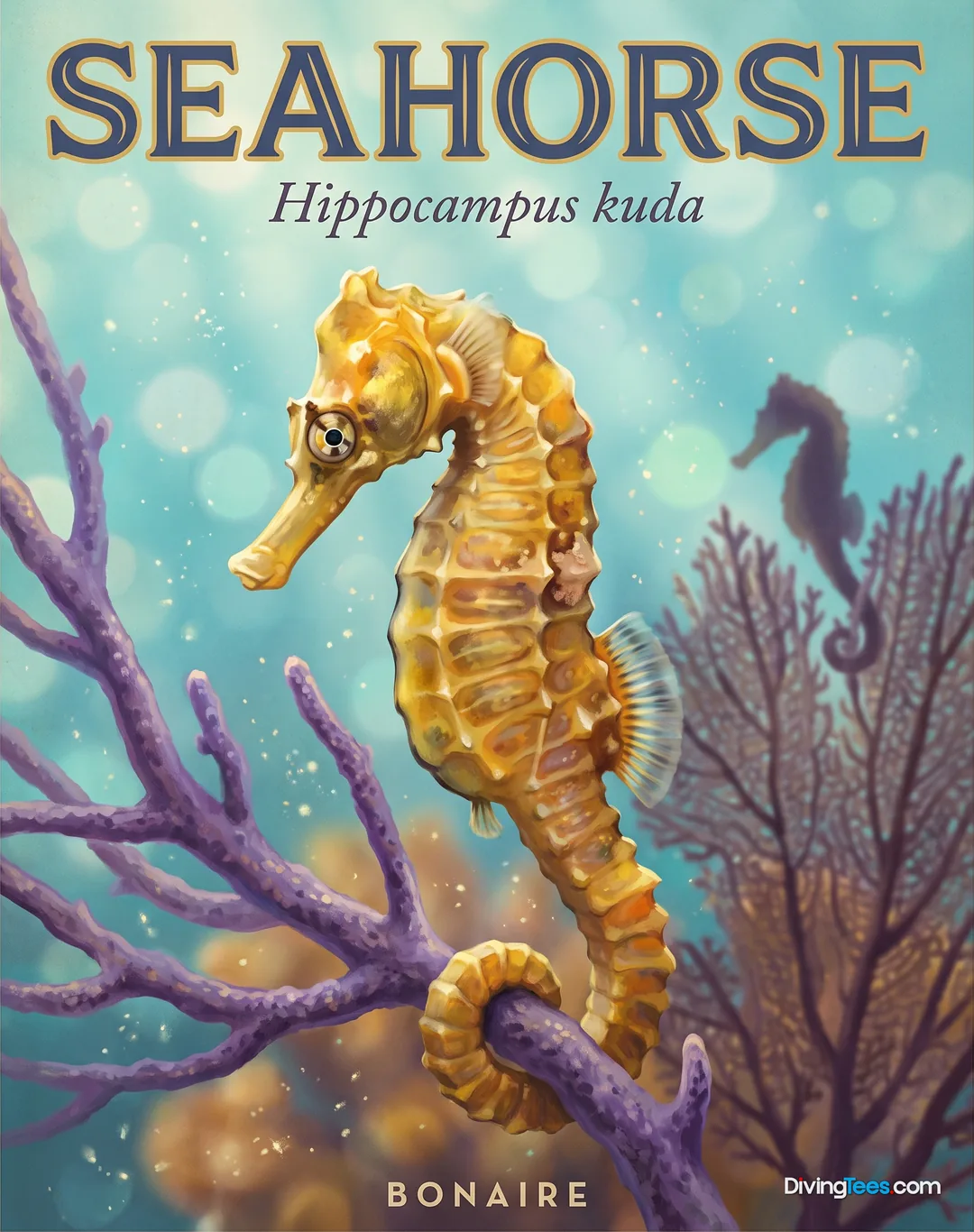
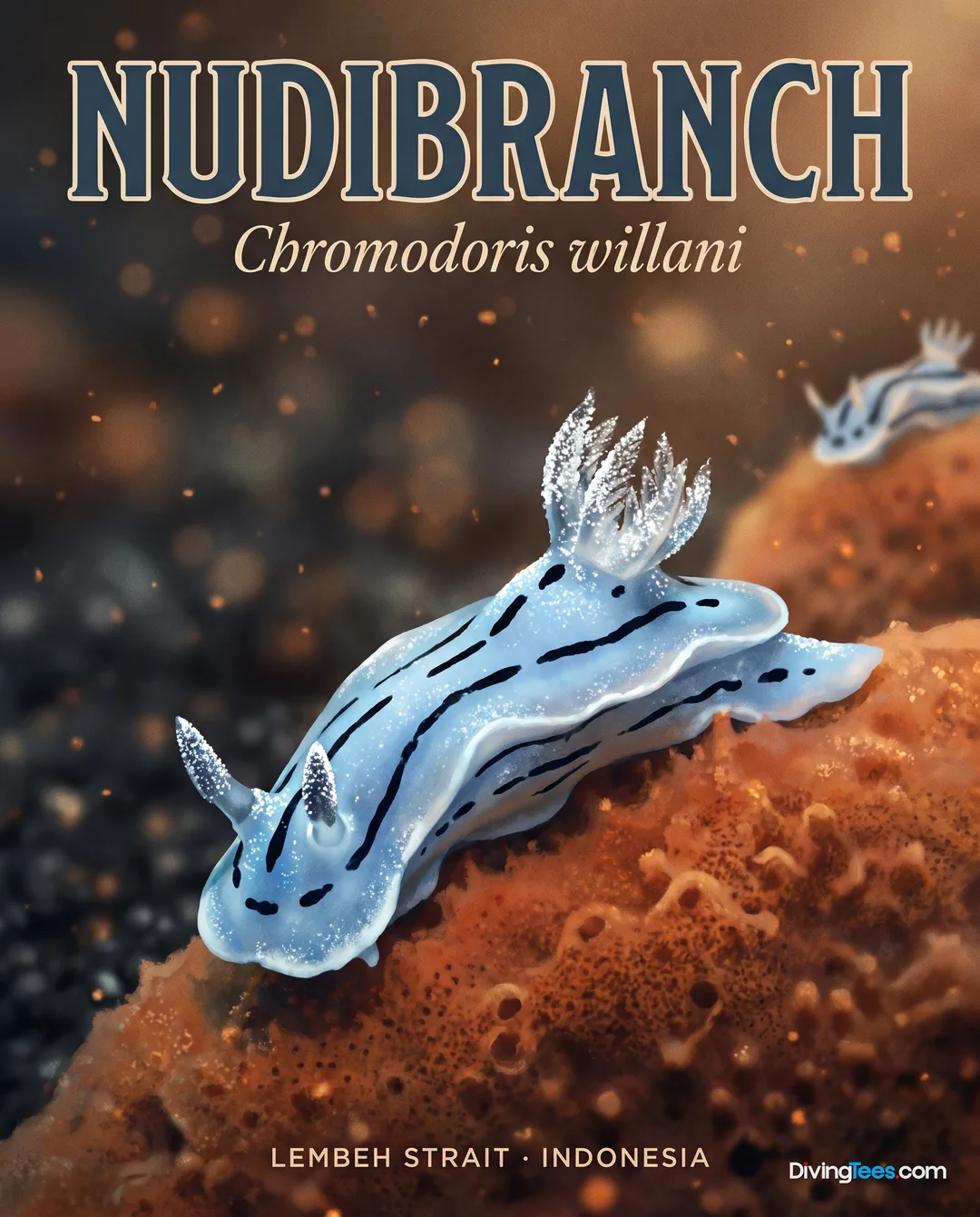
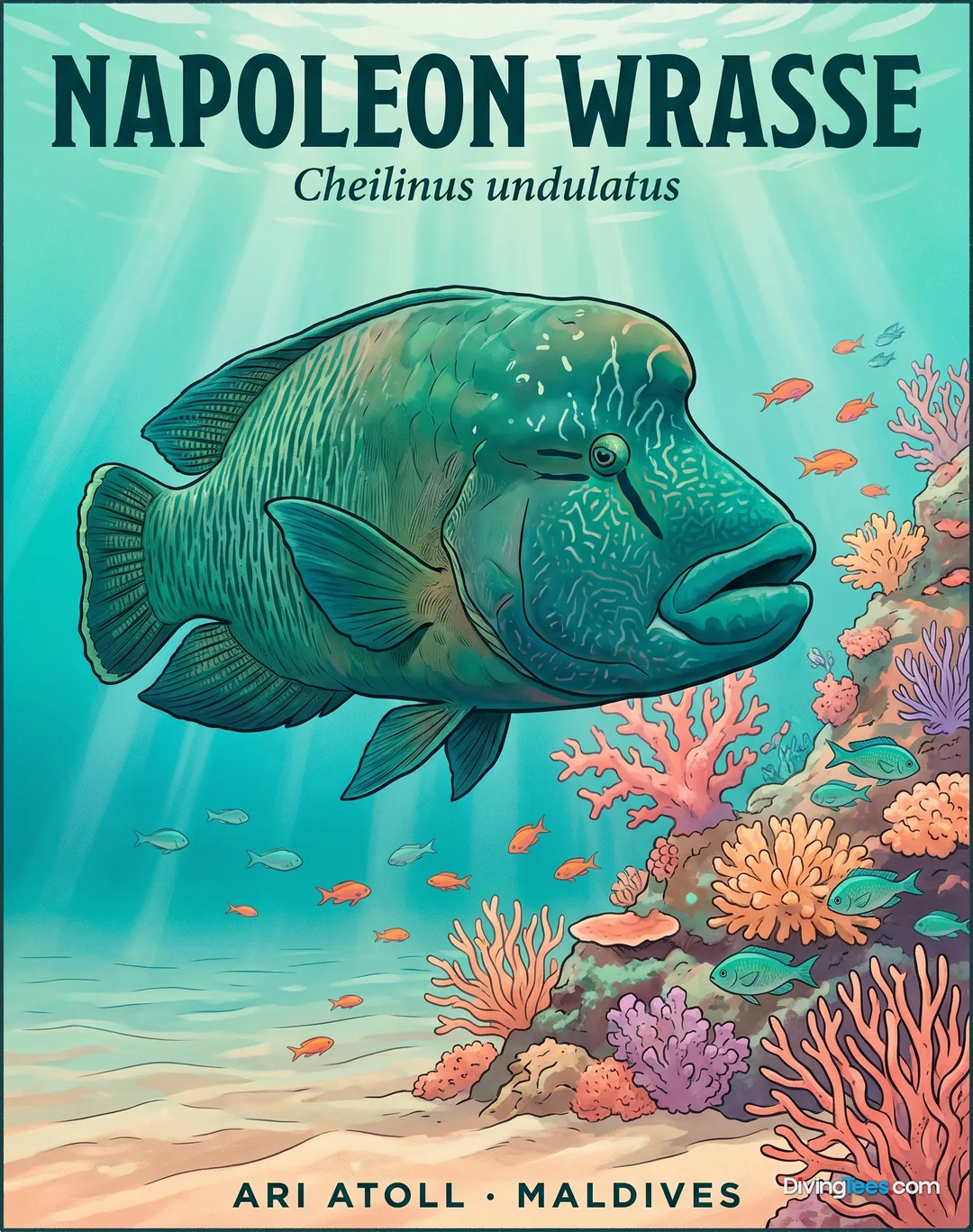
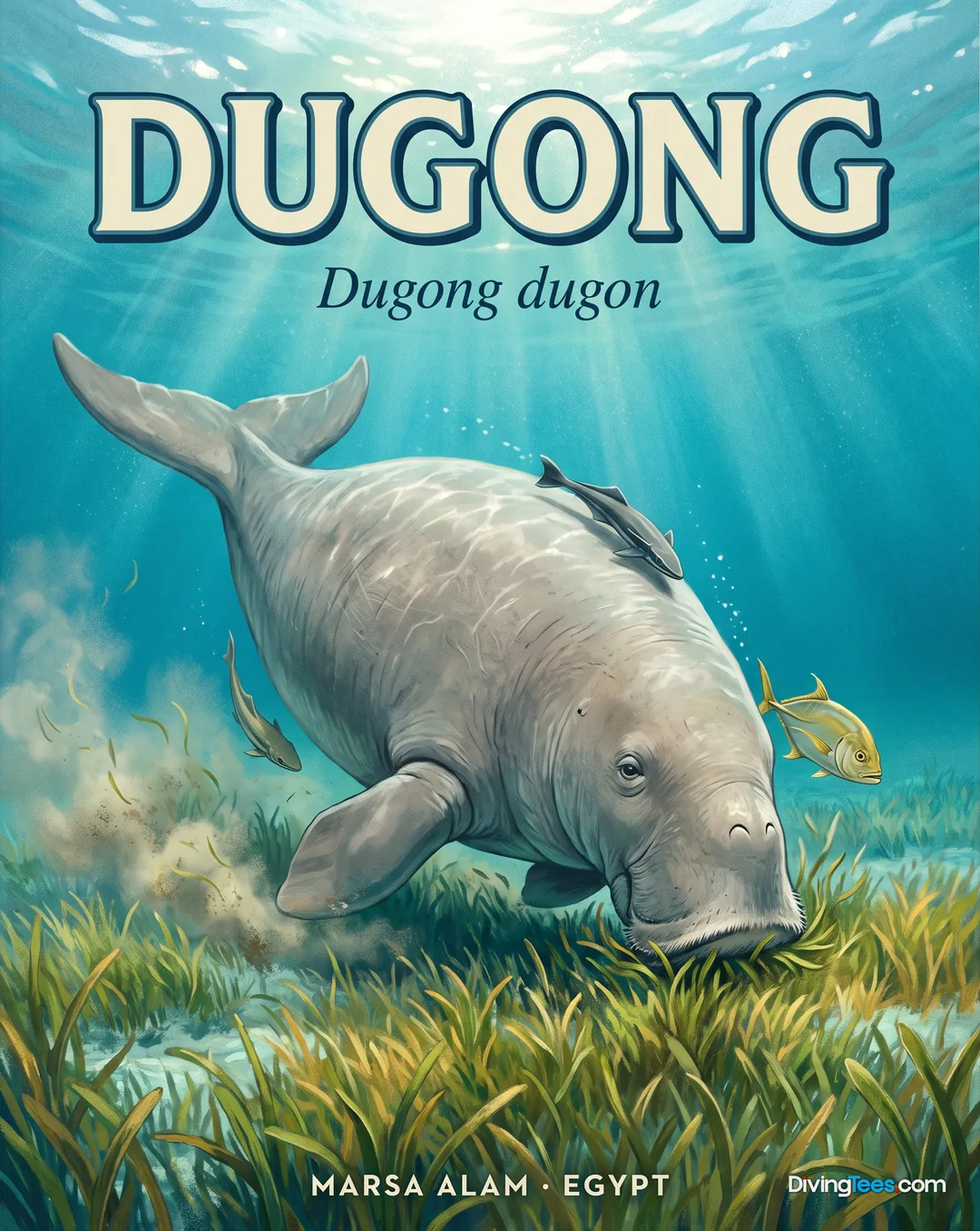
This route is built for both familiar reef encounters and patient macro hunting. Nudibranchs are recorded across seven sites, while pygmy seahorses, eagle rays, cuttlefish, moray eels, mantis shrimps, reef sharks, barracuda and Napoleon wrasse recur across several parts of the programme. The larger animals belong to the walls and open blue: turtles, eagle rays and reef sharks may appear around Bunaken, Lekuan, Sachiko’s and Siladen Wall, while Sahaung is the place to look for white-tip reef sharks among pinnacles and schooling fish. Some sightings give a site its reason for being there. Dolphins, dugongs, groupers, big-eye trevally and angelfish are recorded at Bunaken Marine Park; Lembeh Strait is the specific site for mimic octopus; Celah Celah brings triggerfish, surgeonfish and wrasse into the wall cleft; Bunaken Timur is where hard coral and unicornfish are noted. Murex Bangka House Reef is the named site for glassfish. The animal list rewards slow observation more than rushing from one subject to the next.
Who puts you in the water
The dive operation is supported by dive guides and an expedition leader, alongside a crew that speaks English, French and Indonesian. The crew-to-passenger ratio is close to one-to-one, which leaves enough hands for the practical work around entries, exits and equipment. Briefings are led before the dives, with groups organised around the site and the people in the water rather than around a fixed large-group format. A private dive guide is available as an optional extra for divers who want one-to-one attention. Aliikai carries oxygen, first-aid kits and emergency equipment, and the crew is trained in first aid; radio, satellite and mobile communications are also on board. The available information does not set out a required logged-dive minimum, instructor roster, course programme or specific group size, so those points should be checked against the chosen itinerary before departure.
The dive deck and the gear
Aliikai’s dive centre is arranged for repeated diving rather than a quick shore excursion. The preparation area is shaded, the platform gives direct access to the water, and two tenders carry divers to and from sites when the boat cannot sit directly above the descent point. Nitrox is available and included, with DIN adaptors on board; a nitrox certification is an optional extra. Night dives are part of the included diving programme. After a night dive, a warm shower on the dive centre helps with the transition back aboard. Cameras have a separate rinse area and a ventilated camera room for charging, handling and preparation between dives. Rebreather diving is supported. There are rinse tanks for equipment, while rental equipment is available as an optional extra. The setup is strongest for divers who bring cameras or want nitrox and night dives without treating each one as a special request.
Between dives
Between dives, Aliikai gives passengers several ways to get off the dive deck without leaving the boat behind. The covered outdoor lounge and alfresco dining area provide shade, while the upper lounge opens onto the breeze and can be used for morning yoga or simple rest. Kayaks, stand-up paddleboards and fishing gear are available, and the itinerary can include village visits, naturalist excursions and Komodo dragon expeditions. Small rivers and mangrove-lined lagoons are part of the wider expedition style described for the boat. The indoor lounge is air-conditioned when the midday heat becomes too much, with books and audio-visual entertainment available. On a no-dive afternoon, Aliikai is better suited to moving quietly between water, shade and shore than to organised group activity. The space is there, but it does not force a programme on anyone.
A day on board
A dive day starts with the briefing, equipment preparation and the first entry from the platform or tender. After the divers return, breakfast and snacks give way to the next surface interval, with the boat either holding position or moving between islands and sites. Further dives follow as the route allows, and the included night dive extends the day beneath the surface rather than ending it at sunset. Meals punctuate the sequence without requiring a return to shore: breakfast after the first water session, then lunch and dinner around the remaining dives and travel. Between entries, the shaded dive area, camera room, indoor lounge and upper deck give the group different places to dry out and reset. When there is no dive scheduled, the gap can become a kayak outing, a village visit, a naturalist excursion or time under way. The rhythm is active, but it has somewhere to slow down.
What you eat aboard
The chef works with locally sourced Indonesian ingredients and builds the menu around both local and Western cooking. Full board means three meals a day, with snacks through the day, and the table can move outside for alfresco dining or a beach barbecue. Vegetarian and vegan options are available, while non-alcoholic drinks, tea and coffee are included; beer, wine and cocktails are available separately. The useful point for divers is the timing and availability rather than ceremony: food is part of the recovery between dives, with snacks ready when a full meal would come too late. Dinner can be served in the dining area or outside, depending on the evening. The food is one of Aliikai’s strongest points, with varied meals and a more considered kitchen than the usual liveaboard routine.
Nights at sea
The seven cabins are spread across the lower, main and upper decks, with air conditioning, wardrobes and private bathrooms throughout. Kei and Fam are owner cabins with king beds and private balconies; the king beds can be changed to twins on request. Koon and Savu sit on the upper deck with windows and queen beds, while Abui, Dayak and Asmat are lower-deck cabins with portholes; Asmat also has a sofa that converts into a single bed. The cabin deck is therefore not uniform, and the choice affects how much daylight and outside view reaches the room. The lower cabins offer porthole light rather than a broad window. Outside the cabin, the air-conditioned lounge gives a quiet retreat from the heat, and the upper lounge becomes an open-air cinema after dark, with popcorn. These are nights built around privacy, air movement and a place to sit after the last dive—not just a bunk below the waterline.
Kei Cabin - Upper Deck
Fam Cabin - Main Deck
Koon Cabin - Upper Deck
Savu Cabin - Upper Deck
Abui Cabin - Lower Deck
Dayak Cabin - Lower Deck
Asmat Cabin - Lower Deck
What to know before boarding
The recorded Komodo National Park voyages depart from and return to Labuan Bajo. Airport and hotel transfers are included, covering the arrival and return transfer arrangements for the trip. The transfer details are provided with the booking information, so the pickup point should be supplied when the trip is arranged. Arriving in Labuan Bajo the night before remains the sensible way to board without making the liveaboard wait for a delayed connection.
Deck plan
- Year built
- 2005
- Year renovated
- 2019 - 2021
- Length
- 40 m
- Beam
- 8.5 m
- Maximum number of passengers
- 15
- Number of cabins
- 7
- Number of bathrooms
- 8
- Engines
- Nissan marine 10-cylinder 365 hp diesel engine
- Cruising speed
- 7 - 9 knots
- Tenders
- 2
- Website
- aliikai-voyage.com ↗
Hello, I'm Marina, DivingDeal.com's AI assistant. I answer in detail about hotels, dive centres and liveaboards.

Thinking about the whole trip and the flights? Talk it over with Edith →
Marina is an AI. Some links are affiliate links: DivingDeal may earn a commission, at no extra cost to you. Bookings are made with the partner.