Liveaboards · Indonesia
Seamore Papua — a traditional phinisi built for remote Indonesian diving
What makes this boat unique
- This wooden phinisi carries up to 18 divers in nine air-conditioned cabins with private bathrooms.
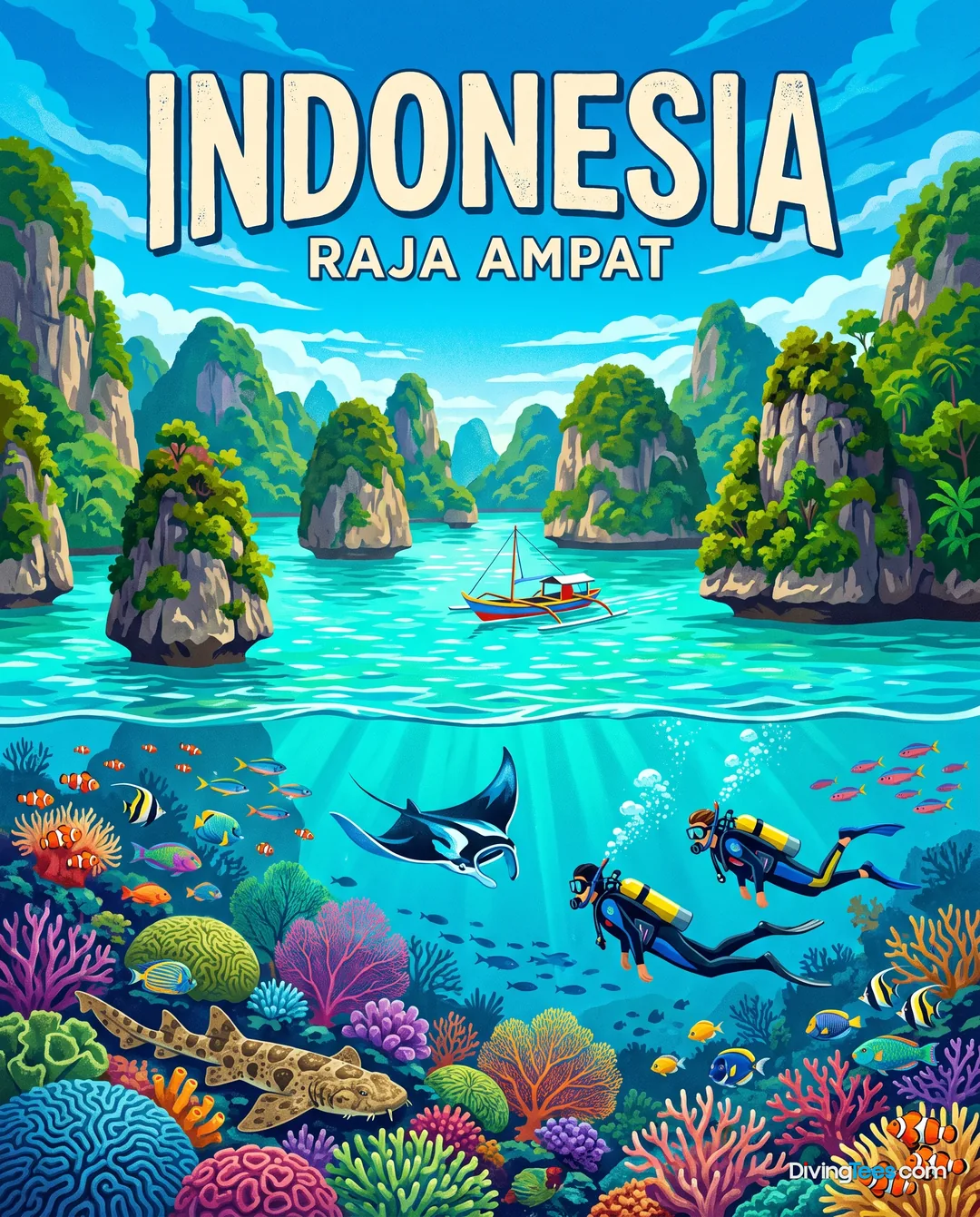
- Its Raja Ampat routes reach sites such as Cape Kri, Blue Magic, Manta Sandy and Melissa's Garden.
- Two Bauer compressors, diving tenders and a guide ratio of one guide to four divers support the operation.
- The boat accepts certified divers with at least 30 logged dives; nitrox and technical diving are not available.
The invitation
Seamore Papua is for divers who want the reach of a liveaboard rather than the polish of a floating resort. Its traditional wooden phinisi takes guests into Raja Ampat, South Halmahera and other eastern Indonesian routes where the reason to board is below the surface: manta cleaning stations, steep current-swept reefs, dense fish schools and small animals hidden in coral. The boat also suits groups and full charters, with nine cabins and space for 18 passengers. The diving is guided, not self-directed expedition diving: the minimum requirement is 30 dives, and the routes include sites where current and depth matter. A week here is about getting back in the water repeatedly, then returning to a shaded wooden deck with the next site still ahead.
Boarding
From the dock, Seamore Papua presents the familiar lines of a wooden Indonesian phinisi rather than a modern steel yacht. The hull and broad beam give it a sturdy, working-boat character, while the 2024 renovation keeps the shared spaces and cabins in current service. Four decks divide the boat into useful zones: cabins and the dive area sit on the main deck, the restaurant and sheltered open lounge are above, and the uppermost deck is left for sun, shade and the view. Boarding does not feel like entering a hotel corridor. It feels like stepping onto a wooden vessel arranged around diving, meals and the sea outside. The public toilets and dive area share the main deck, so the route from bunk to gear is short.
The atmosphere on board
The atmosphere is shaped by a small passenger group and by a crew whose work is visible in the transitions: getting food out, keeping the dive operation moving and making the next launch straightforward. English and Indonesian are spoken on board. With room for 18 passengers, the same people share the deck, the buffet and the tender throughout the trip, so the group becomes familiar quickly without needing an organised social programme. Evenings can stay simple: dinner, conversation, a look at the day's photographs and time on the upper deck. The boat is not presented as a luxury resort with constant entertainment. Its strength is the useful kind of comfort that leaves divers fed, dry and close to the next day's water.
The sites you’ll dive
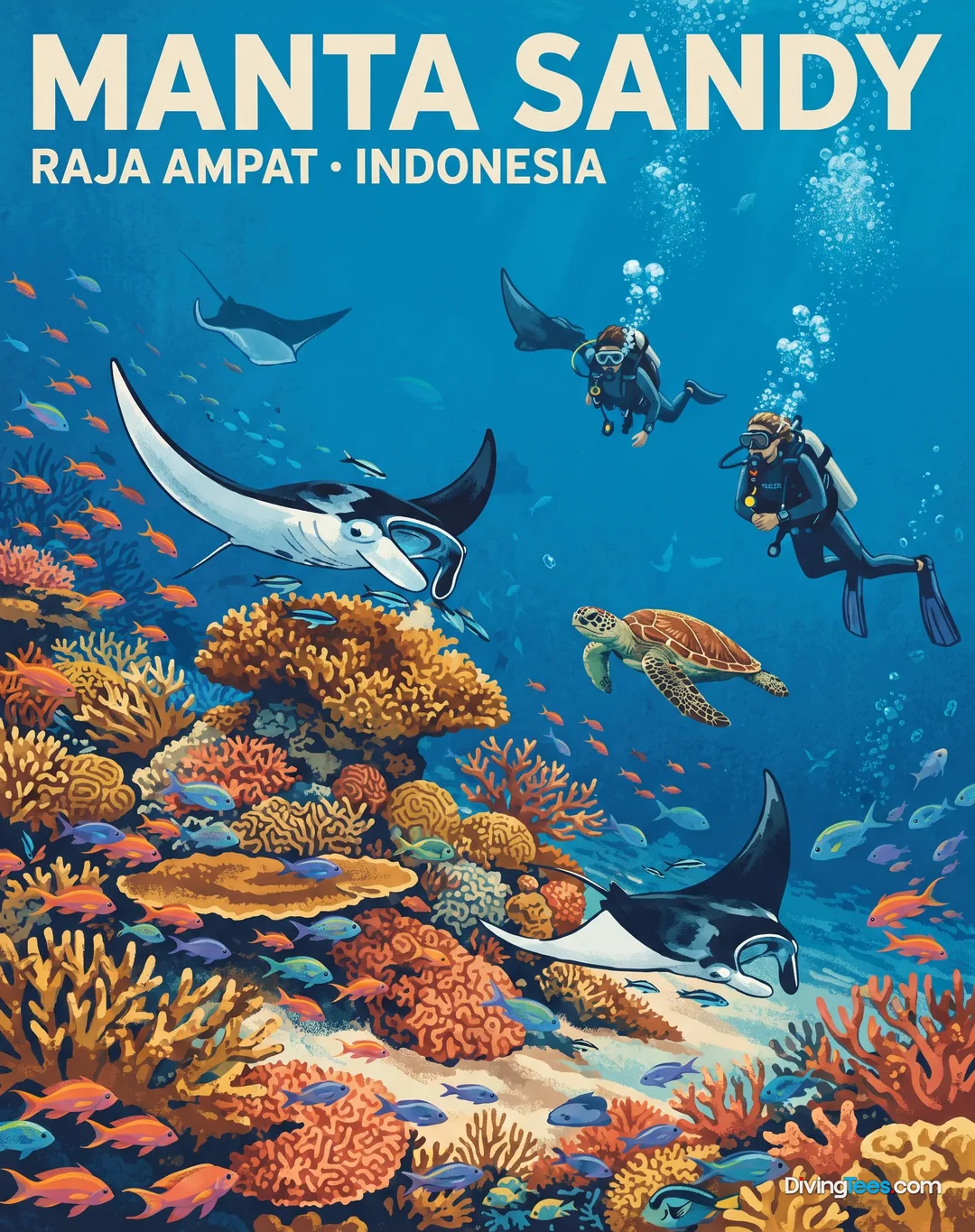
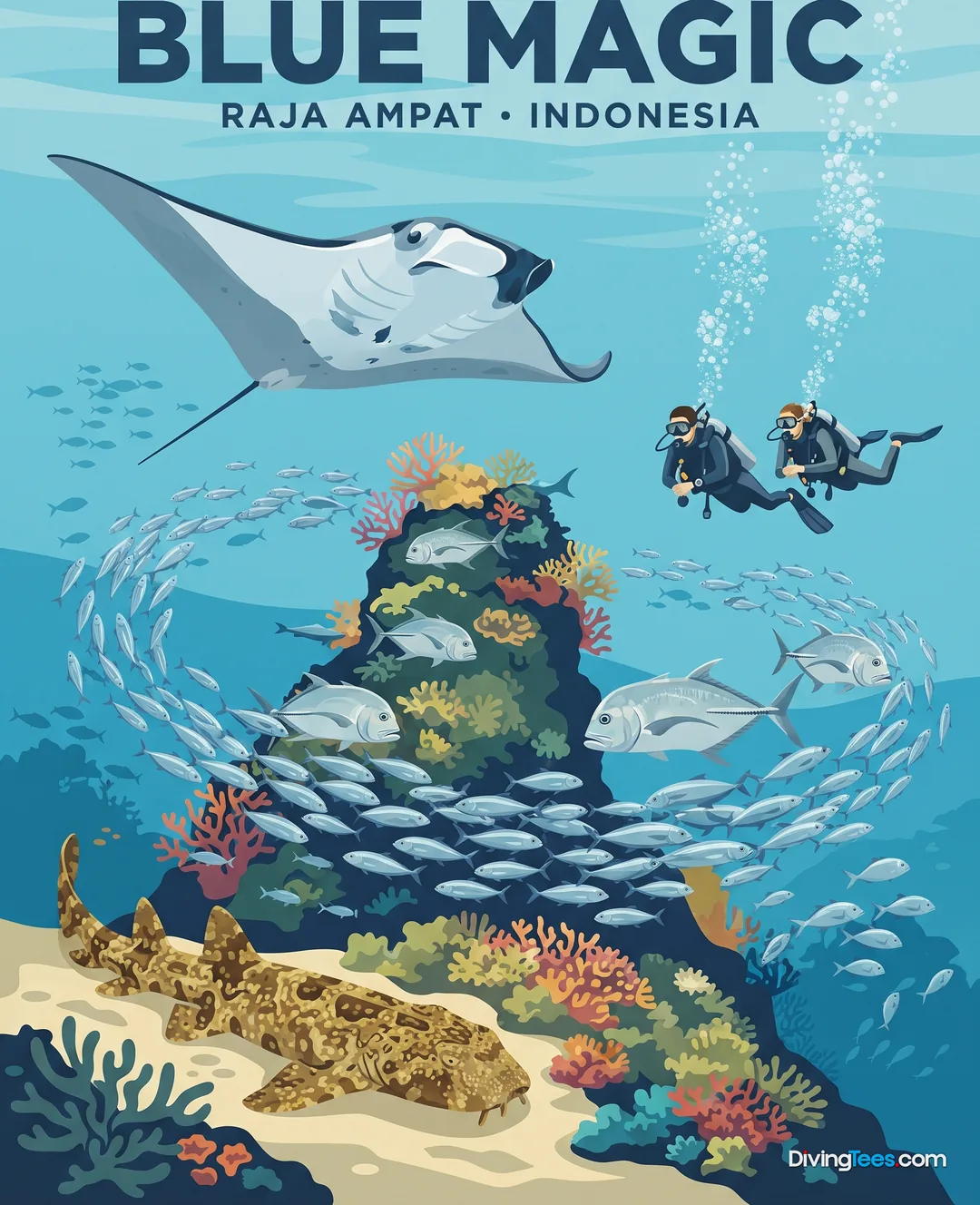
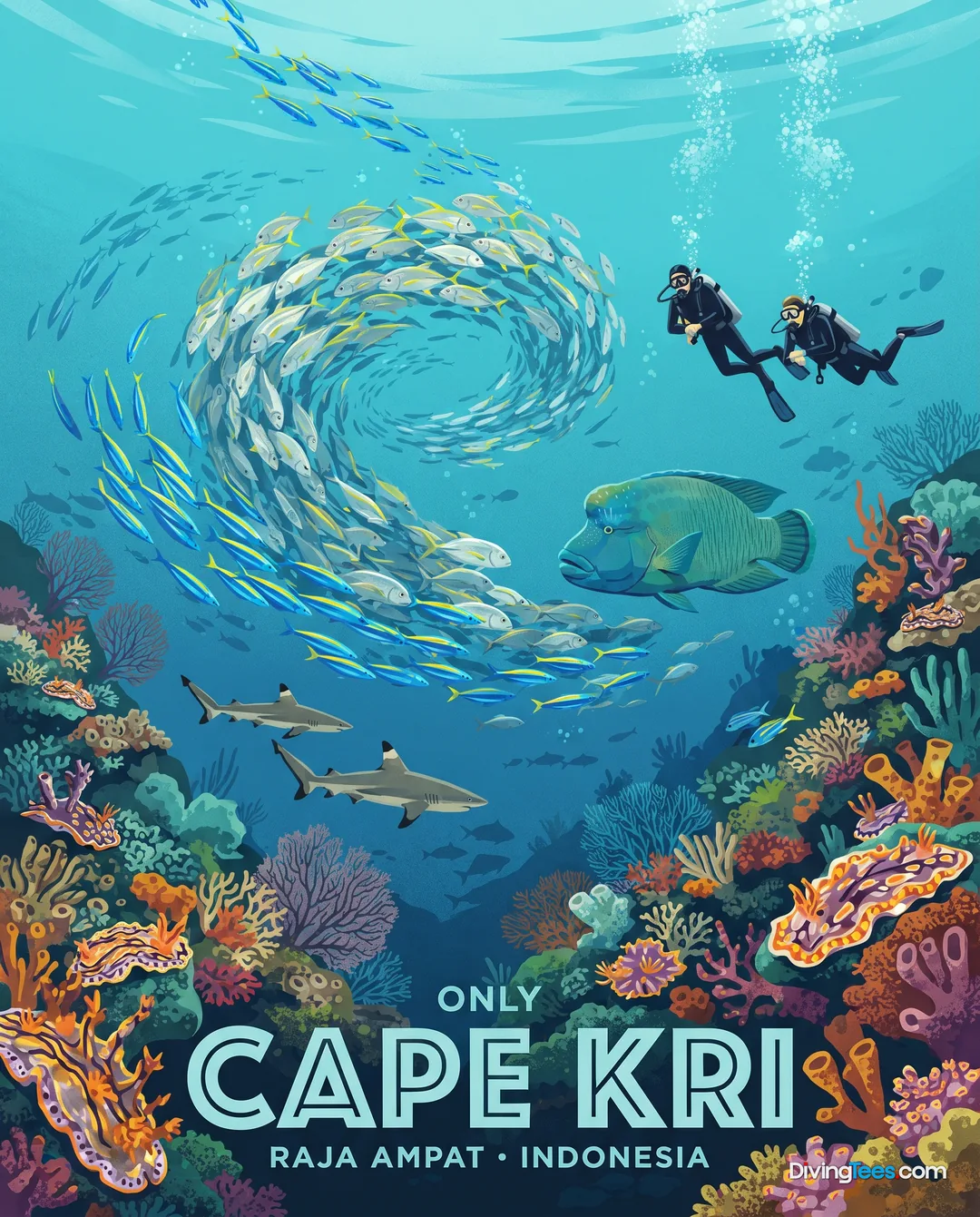
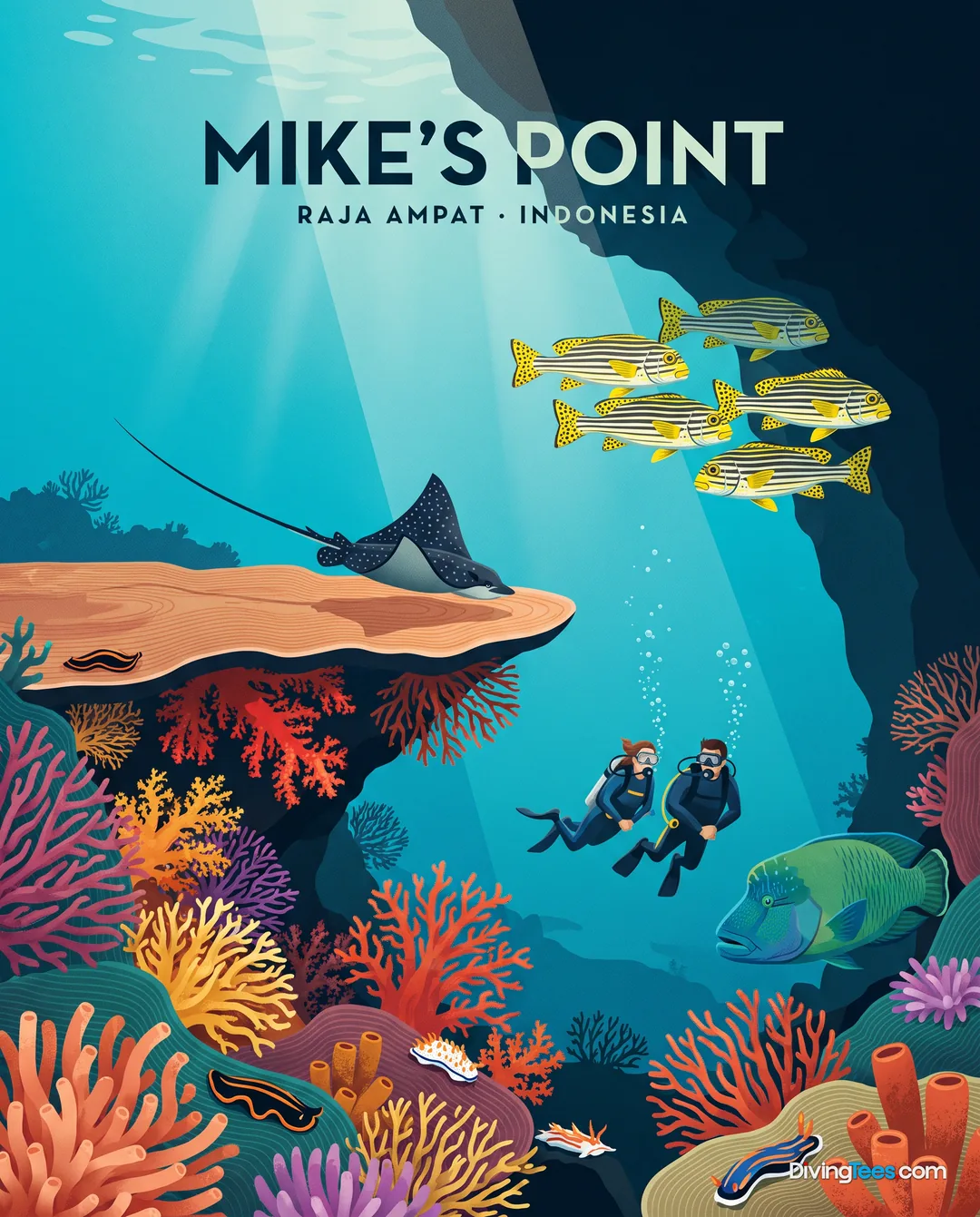
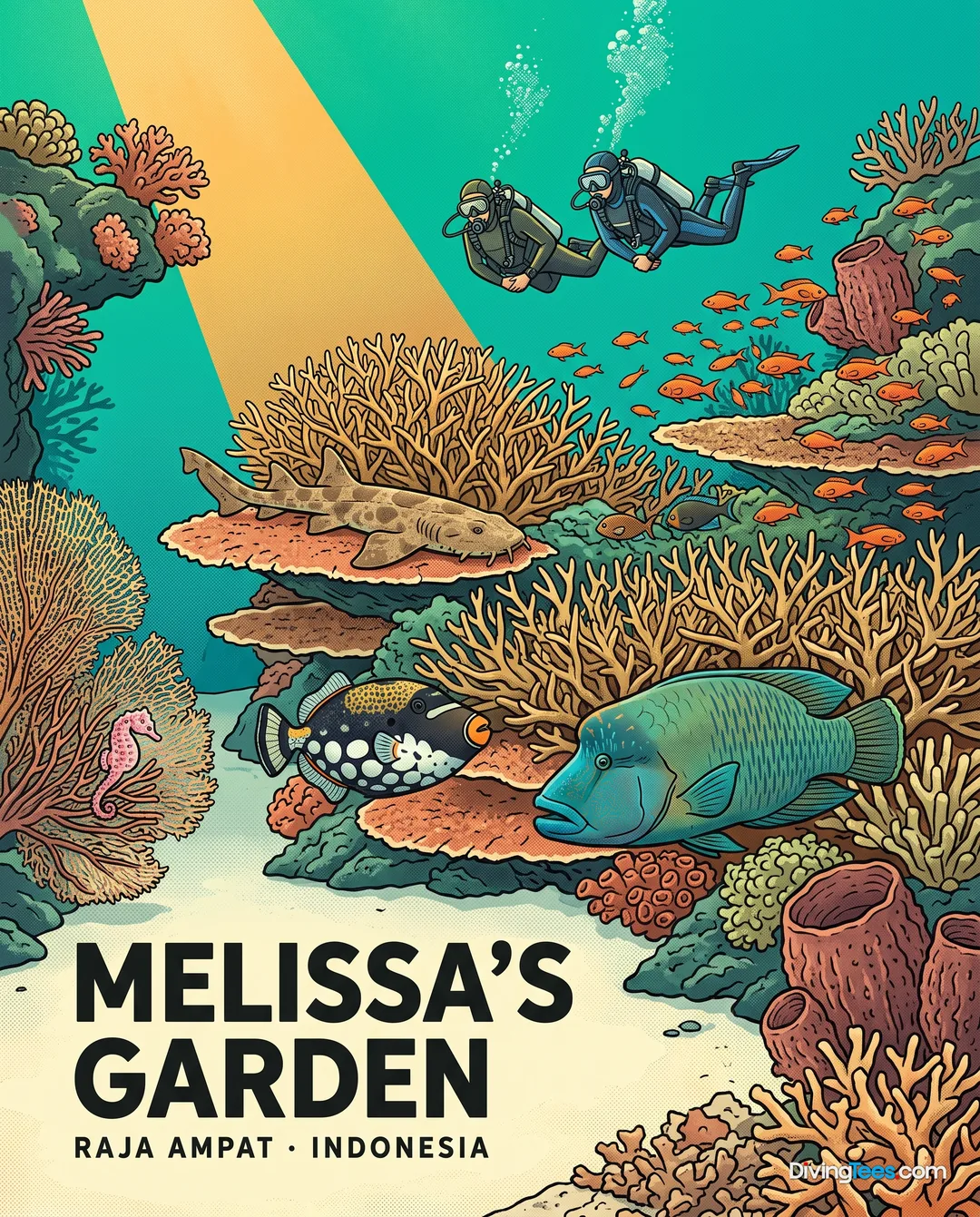
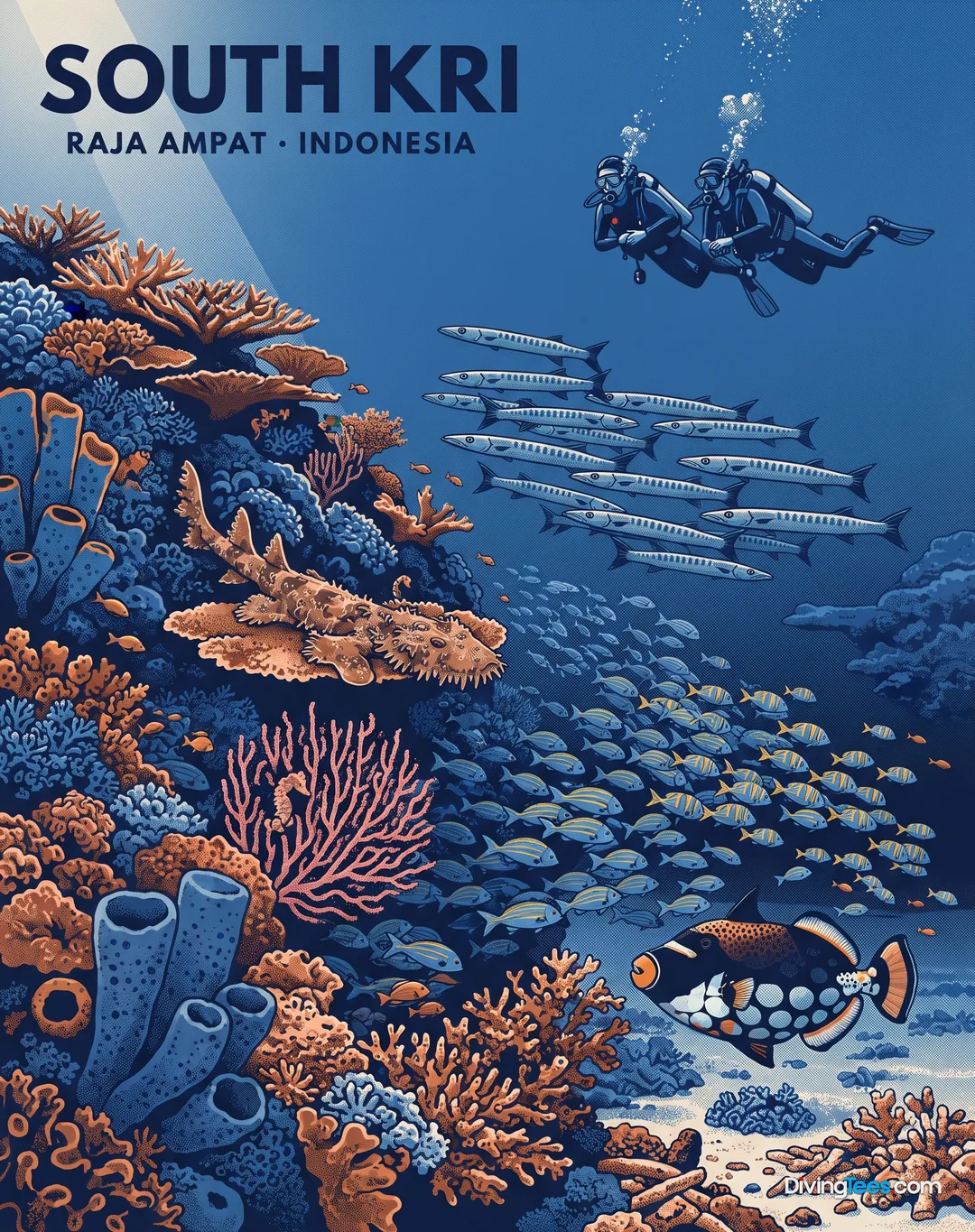
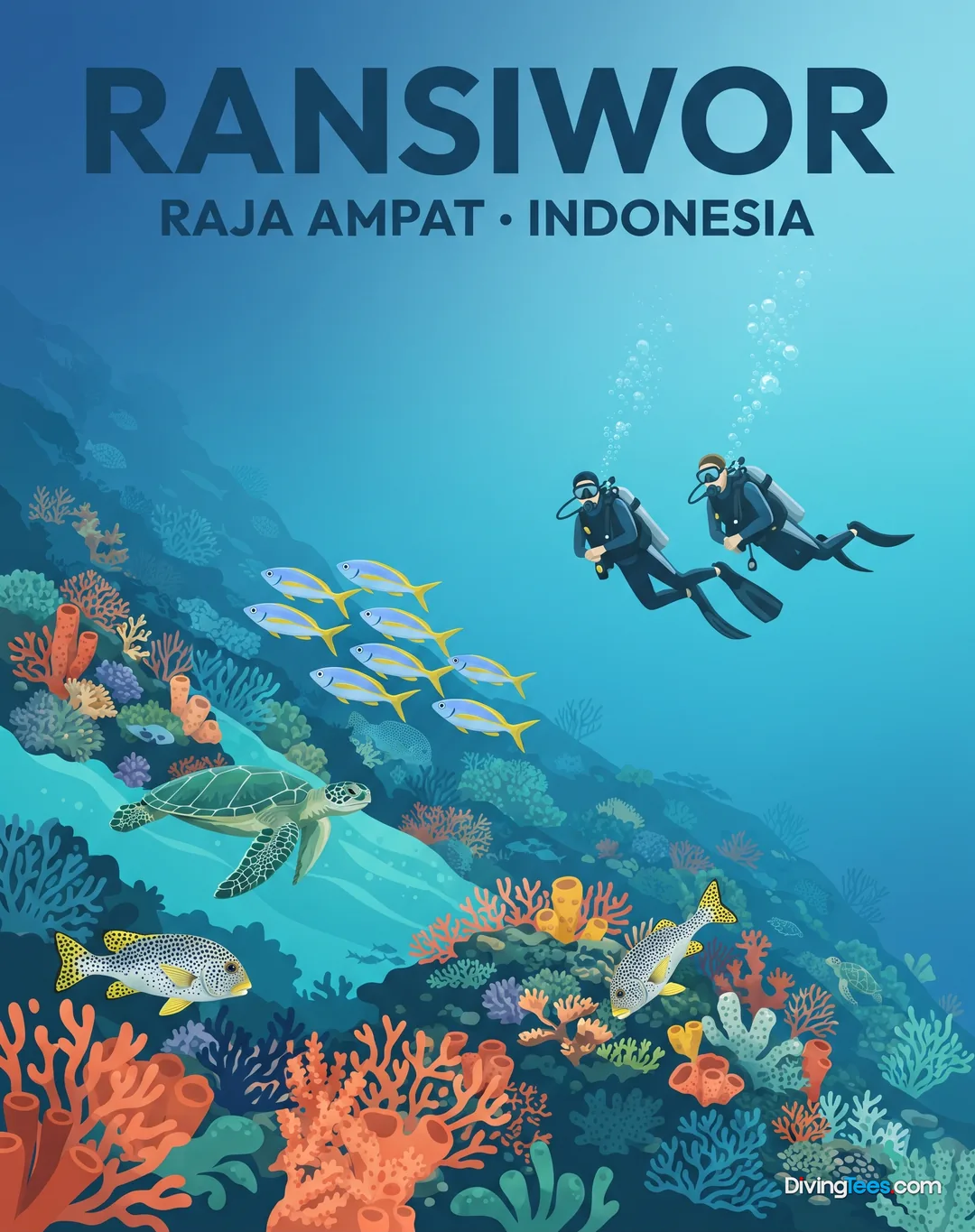
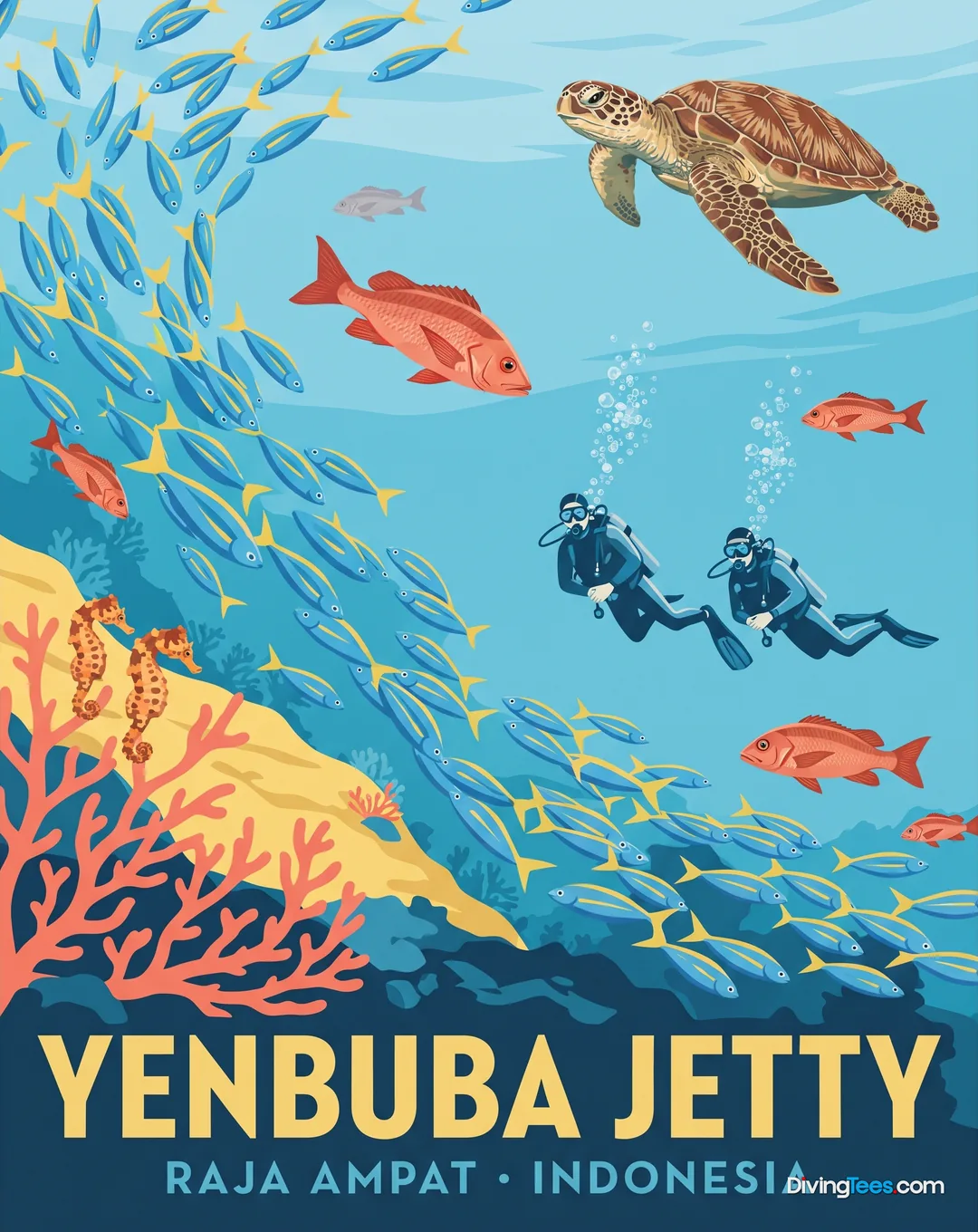
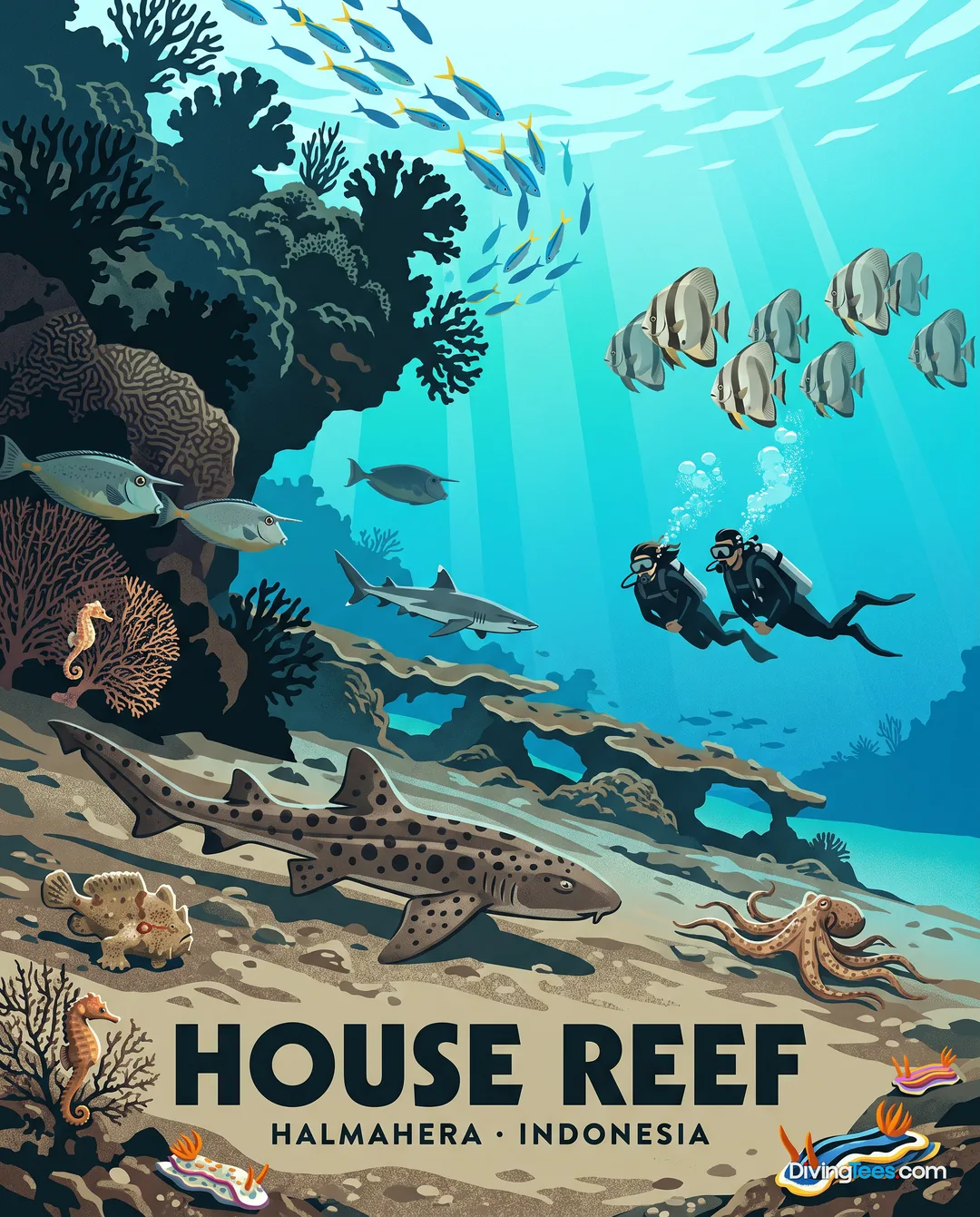
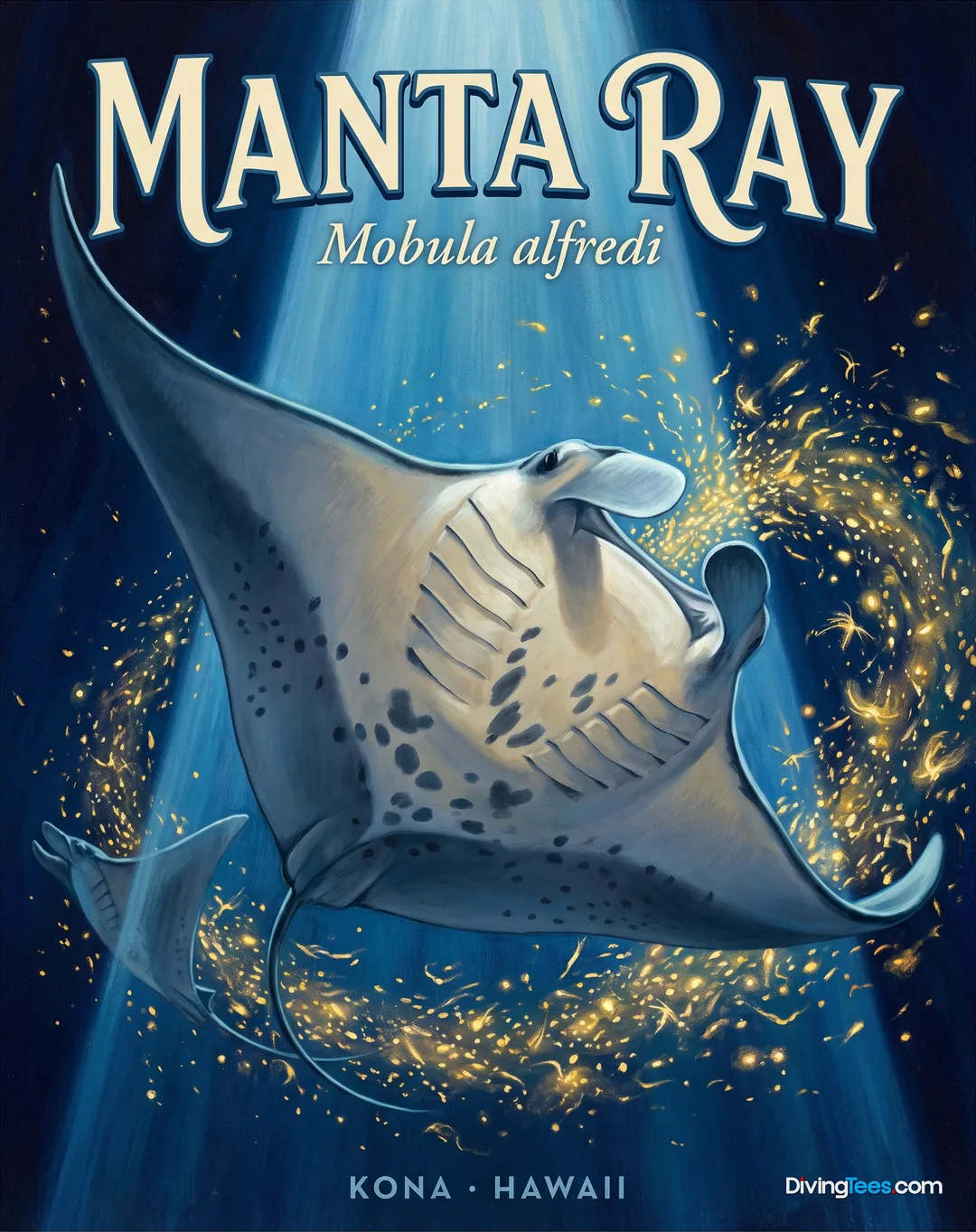
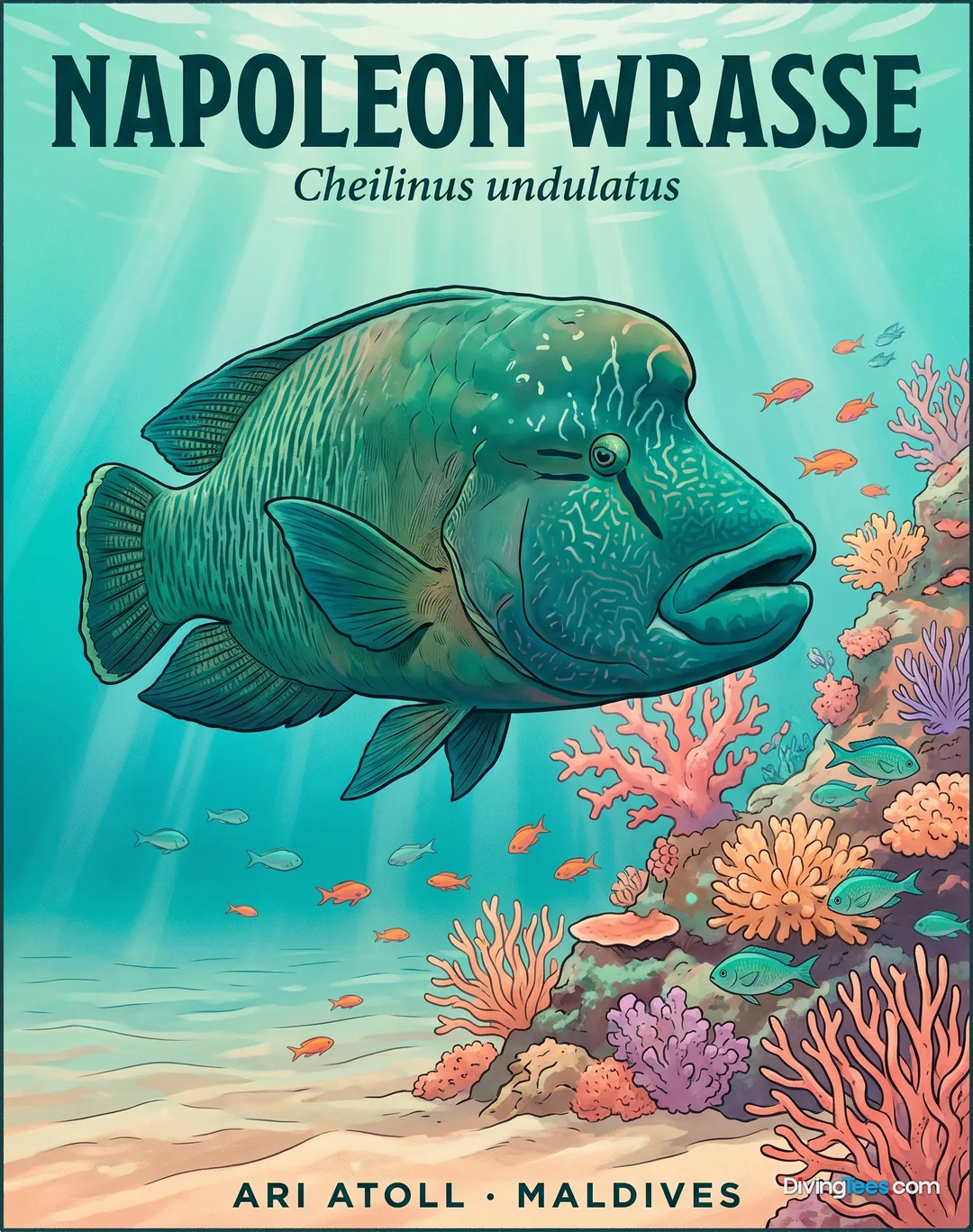
The Raja Ampat route brings together sites that reward very different kinds of diving. Manta Sandy centres on reef manta rays hovering over cleaning stations, while Blue Magic combines schooling fish with possible oceanic manta encounters, wobbegongs, tuna and reef sharks. Cape Kri is the high-density reef dive, with huge schools of emperors and fusiliers, Napoleon wrasse and reef sharks; 374 fish species have been observed on one dive there. At Mike's Point, overhangs carry soft corals and sweetlips, while eagle rays may cross the plateau; the site reaches a maximum of -40m. Melissa's Garden is a coral garden of soft corals and staghorn formations to a maximum of -35m. South Kri offers a drift where macro life and schooling fish meet, and Ransiwor slopes down to a maximum of -30m with cleaning stations and yellow-back fusiliers. Yenbuba Jetty reaches a maximum of -30m beneath fish-filled, coral-covered pilings. Recorded departures include Sorong–Raja Ampat–Sorong in 6 days and 5 nights, Raja Ampat–Halmahera in 10 days and 9 nights, South Halmahera circuits of 7 or 8 days, and Gorontalo–Togean–Gorontalo trips of 7 or 8 days. House Reef belongs to the Halmahera itinerary and begins directly from shore.
What you’ll meet underwater
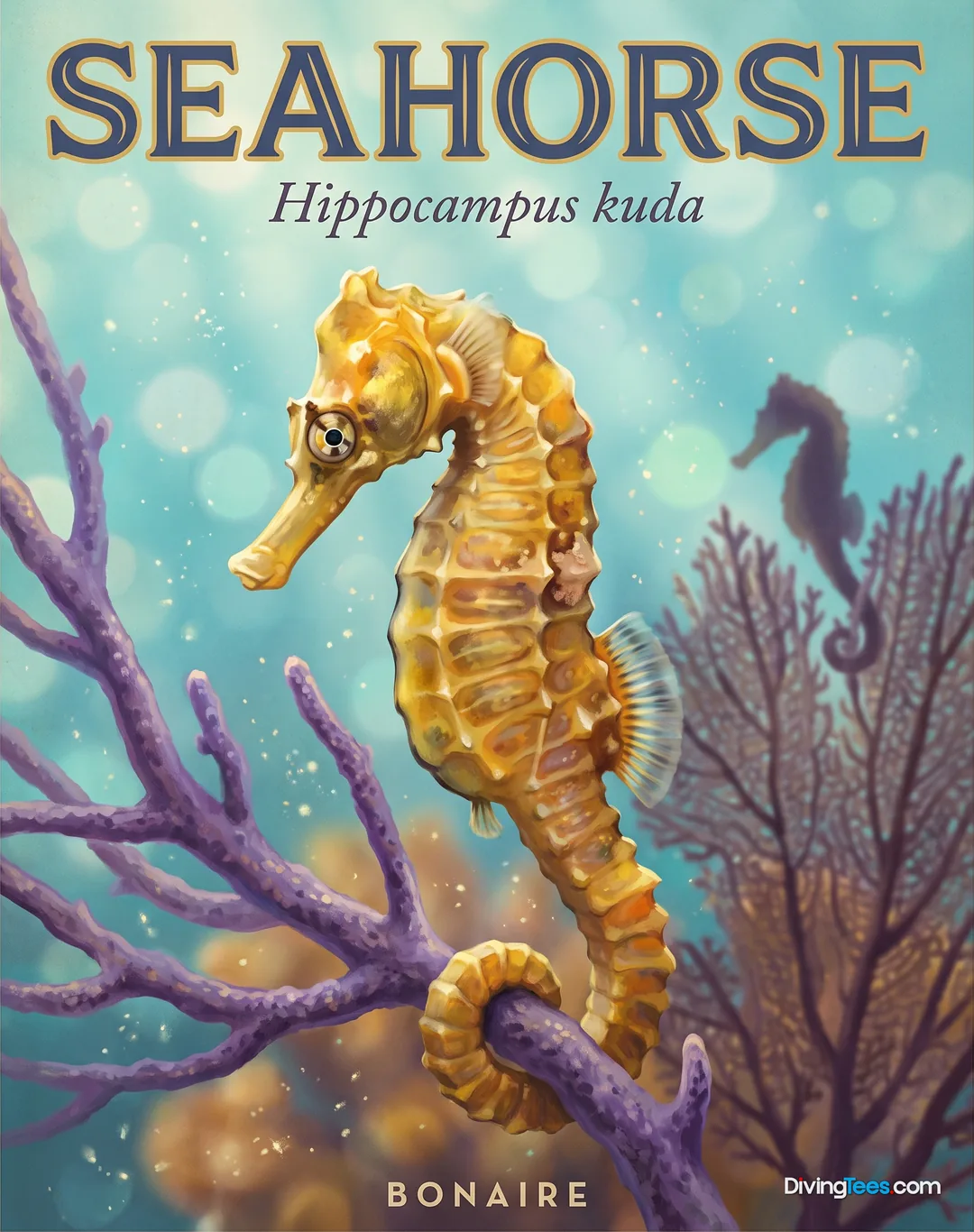
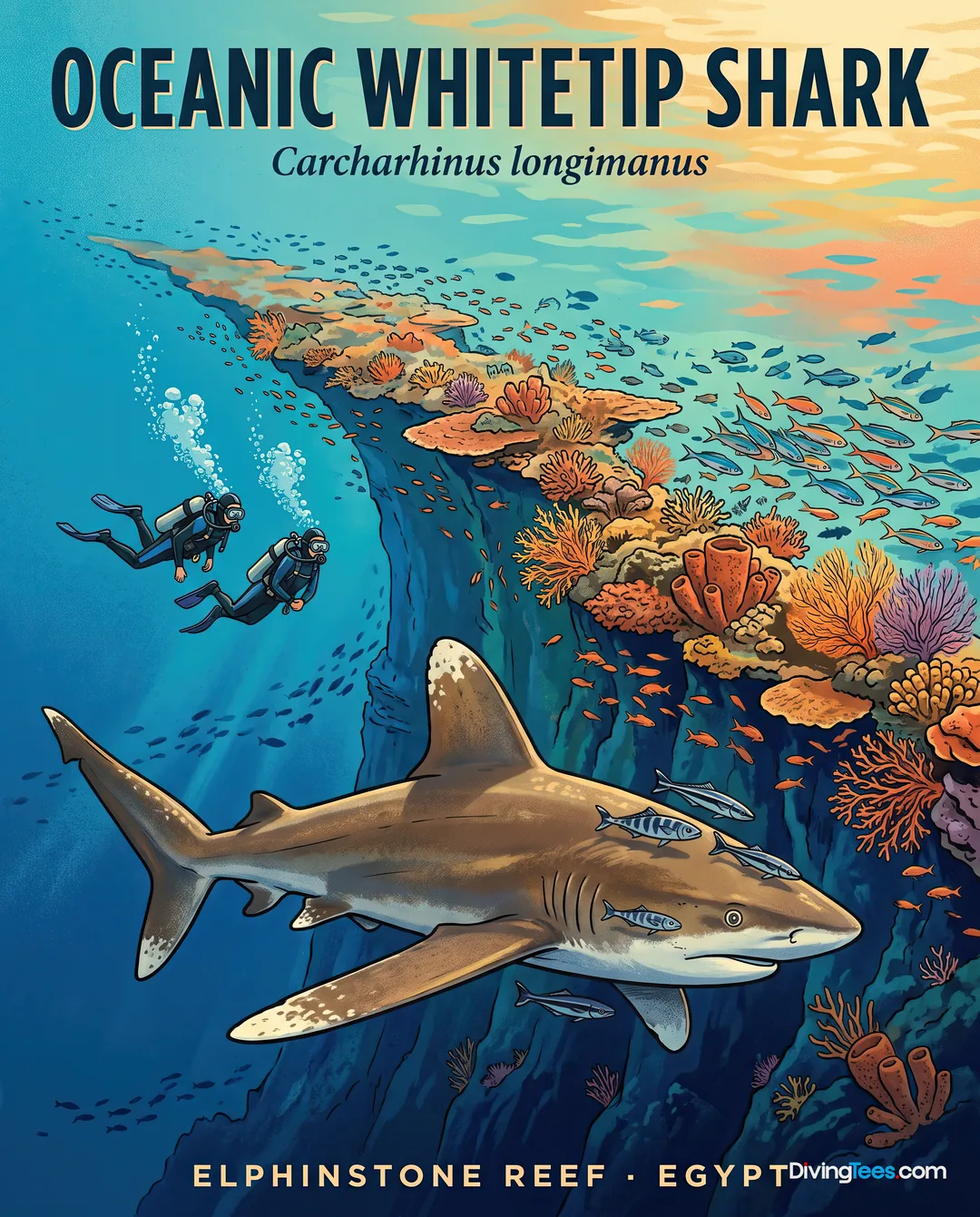
Across the Raja Ampat route, the recurring picture is made by fusiliers, barracuda, reef sharks, blacktip reef sharks, turtles, Napoleon wrasse, trevally, humphead parrotfish, soft corals, nudibranchs and pygmy seahorses. The fish density changes from site to site: currents and cleaning stations bring the larger movement, while walls, jetty pilings and coral gardens reward a slower search. Some sightings are tied to one place. Cape Kri is the site for the giant grouper; Blue Magic is where an oceanic whitetip shark and tuna are recorded. House Reef is the place associated with garden eels, gobies, a seahorse and harlequin shrimp. Ransiwor is where titan triggerfish and Moorish idols appear in the route's records, South Kri has the bigeye trevally, and Yenbuba Jetty adds anthias and dense damselfish life around the structure. These are possibilities, not promises, but the site choice gives each animal a reason to be there.

Who puts you in the water
The diving is organised around guides with a maximum ratio of one guide to four divers. The crew speaks English and Indonesian, and the boat requires an open-water certification or equivalent together with at least 30 logged dives. That minimum is important for Raja Ampat sites where current can dictate the entry, the drift and the exit. Briefings and group organisation are handled by the dive guides, while the tenders collect divers after the site. The safety equipment includes 100% oxygen and two AEDs, alongside the boat's wider safety and communication equipment. A dive computer is mandatory, and each diver must carry an SMB, torch and signalling device. Courses are not advertised as part of the onboard operation, so this is a guided liveaboard for certified divers rather than a training platform.
The dive deck and the gear
The dive setup is built around two Bauer compressors, a dedicated dive deck and tenders for reaching the sites. The standard tanks are 12-litre tanks with weights; 15-litre tanks can be arranged at extra cost. Both DIN inserts and INT valves are available, so most divers will not need an adapter. Nitrox is not available, and the boat is not set up for technical diving. Rental equipment is available at extra cost. A camera station is provided for the equipment that needs attention between dives, while divers are expected to bring their own dive computer, SMB, torch and signalling device. The tenders handle the transfers to and from the sites, but the exact launch arrangement depends on the site and conditions. There is no claim here of hot showers on the dive deck or a particular tank metal, so divers who care about either should plan around the 12-litre supply.
Between dives
Between dives, the boat gives guests several different places to disappear for an hour. The upper deck has an open but sheltered lounge, the main social spaces include shaded areas for eating or lying down, and the top deck is the place for sun, a beanbag and a view across the islands. Sailing time is part of the route rather than dead time: gear dries, cameras are checked and the next site comes closer while the wooden decks carry the group onward. An afternoon without a dive can stay quiet, with a book or a nap, or move upward toward the open air. The layout matters after repeated entries because nobody has to remain in one crowded room.
A day on board
A day follows the needs of the diving rather than a hotel timetable. The first briefing comes before the first entry, then the boat and crew turn the space between dives into a cycle of eating, drinking, drying equipment and preparing for the next site. The standard programme is two to three dives a day, with two dives on the final day. When the boat is underway, the upper deck becomes the place to watch the islands pass or sleep off the previous dive; when it stops, attention moves back to the briefing and the gear. Meals and snacks fill the gaps without requiring a long break from the operation. A night dive is part of the published Komodo itineraries, but it should not be assumed on every Raja Ampat or Halmahera departure.
What you eat aboard
Meals combine Western and local Indonesian food and are served buffet style, with dietary restrictions accommodated. Coffee, tea, hot and cold soft drinks, mineral water and snacks are available through the day. That matters on a diving boat because food is not a single long restaurant sitting; it has to fit around briefings, entries, surface intervals and the next return to the deck. The buffet lets divers take what they need without turning every meal into a fixed event. The galley therefore supports the practical rhythm of the trip: eat, drink, dry out, and be ready when the next group is called.
Nights at sea
The nine cabins are split between the main and lower decks, with twin, double-bed and master-cabin options. Each has air conditioning, an ensuite bathroom, wardrobe and freshwater shower, so the basic recovery after a dive happens in private rather than in a shared washroom. The master cabins and double-bed cabins suit couples; twin cabins keep the arrangement simple for dive partners. Above them, the boat opens into shaded and open-air spaces, while the sun deck provides beanbags for reading, naps or looking at the stars. There is no Wi-Fi listed for the boat, which changes the evenings in a useful way: the day ends with conversation, a camera review or quiet outside rather than a reliable signal in the bunk. European 220-volt plugs are available in the cabins and shared working areas.
Twin Cabin
Double Bed Cabin
Master Cabin
What to know before boarding
Raja Ampat trips begin and end in Sorong. The recorded crossing to Halmahera runs from Ternate to Sorong, while South Halmahera circuits use Ternate and Gorontalo–Togean trips begin and end in Gorontalo. Scheduled group airport-to-boat-to-airport transfers are included; private transfers are separate. Arriving the night before gives the transfer and boarding day some margin, especially when connecting through another Indonesian airport.
- Year built
- 2015
- Year renovated
- 2024
- Length
- 32 m
- Beam
- 7.5 m
- Maximum number of passengers
- 18
- Number of cabins
- 9
- Engines
- Mitshubishi 8M21-145 hp
- Website
- seamore-papua.com ↗
Hello, I'm Marina, DivingDeal.com's AI assistant. I answer in detail about hotels, dive centres and liveaboards.

Thinking about the whole trip and the flights? Talk it over with Edith →
Marina is an AI. Some links are affiliate links: DivingDeal may earn a commission, at no extra cost to you. Bookings are made with the partner.