Liveaboards · Philippines
Stella Maris Explorer — a practical Tubbataha dive cruiser with a crew-led spirit
What makes this boat unique
- Stella Maris Explorer carries up to 20 divers in 10 en-suite cabins and was renovated in 2018.
- The boat offers up to four dives a day at Tubbataha, with free nitrox for certified divers.
- Two tenders take small dive groups to the sites and collect them after the dive.
- A shaded sundeck, bar and jacuzzi give the boat a proper place to spend the hours between dives.
For subtitles in English: start the video firstthen click the gearat the top right of the video, select “Subtitles/CC”, then “Auto-translate” and choose “English”.
The invitation
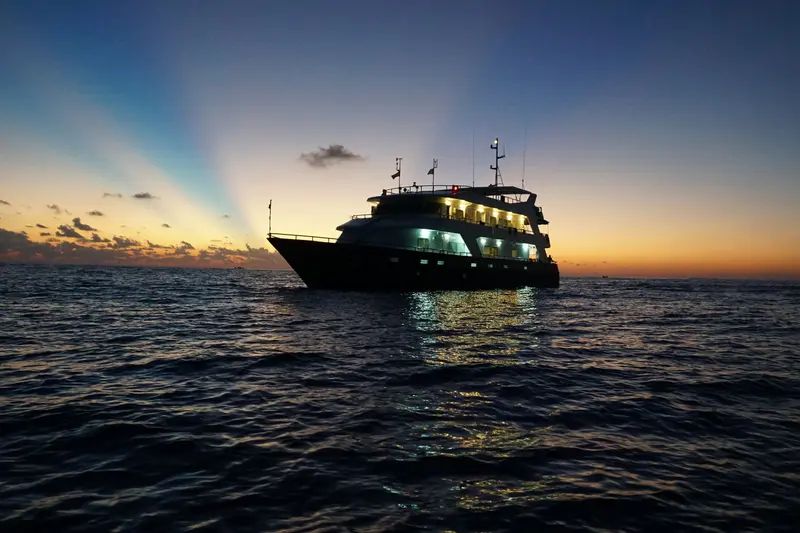
Stella Maris Explorer is a sensible choice for divers who put the water, the crew and the food ahead of a polished-yacht finish. The vessel is an older liveaboard, but its 2018 renovation, air-conditioned carpeted interiors, en-suite cabins and memory-foam bedding make the week easier on the body. The stronger reason to choose it is what happens around the diving: a crew-to-passenger ratio close to one, a food score of 9.6, and a route built around Tubbataha’s walls, currents and pelagic life. Regular trips spend seven days and six nights in the national park, while the eight-day transition trip adds Verde Island and a passage between Anilao and Puerto Princesa. The boat suits divers who want four useful dives a day, free nitrox and tender-based entries rather than a large ship with a crowd moving through one platform.
Boarding
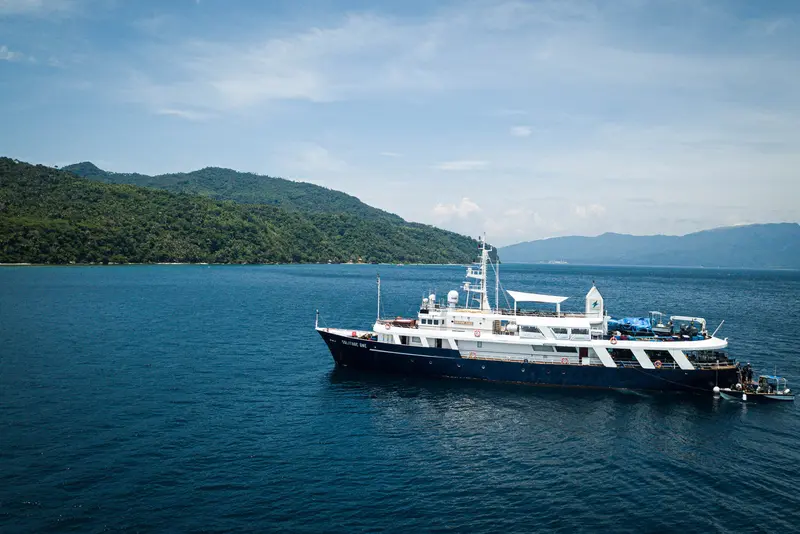
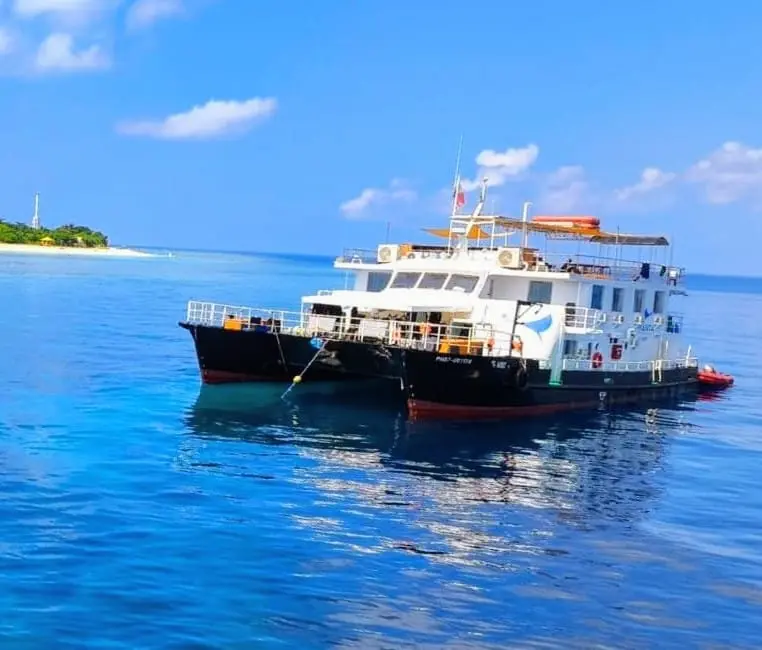
From the dock, Stella Maris Explorer presents as a working dive vessel rather than a new floating resort. Its 1980 construction shows in the boat’s character, while the 2018 renovation keeps the spaces clean, air-conditioned and functional. Once aboard, the useful parts are close at hand: the dive operation is separated from the living areas, the tenders handle the transfers to the reef, and the open upper deck gives passengers somewhere to look out over the Sulu Sea. A single engine means there is one mechanical voice to become familiar with during the crossing. With 20 passengers at most, the boat is small enough for people to learn one another’s names quickly, and the crew remains visible throughout the day. Boarding for a Tubbataha trip takes place in Puerto Princesa, with the vessel leaving in the evening after the briefing and cabin assignments.
The atmosphere on board
The atmosphere is shaped less by formal luxury than by how often the crew is involved in the day. A near one-to-one crew-to-passenger ratio leaves room for practical help with equipment, meals and tender movements, and the crew score of 9.3 reflects that part of the operation. Gordos Mateo R. Gojunco manages the boat and brings instructor, nitrox and EMT qualifications to the operation; Danny Felizardo is a divemaster with more than 10,000 logged dives. English is spoken on board. With no more than 20 passengers, the group becomes familiar quickly: the same people appear at the briefing, on the tender, at the buffet and later on the sundeck. Evenings are therefore social without needing organised entertainment, with the day’s sightings usually doing enough work on their own.
The sites you’ll dive
Tubbataha is the reason to book this boat: fissured walls, sloping coral and strong, shifting currents bring reef sharks and pelagics into clear blue water. Jessie Beazley Reef reaches -50m, with steep drops and current-swept water where barracuda, tuna, manta rays and the possibility of hammerhead or tiger sharks belong to the site’s appeal. Seafan Alley reaches -37m along a deep wall covered with gorgonian fans, while Terraces reaches -37m across a stepped reef that falls into a pelagic wall. At Washing Machine, the depth is -25m, but the defining feature is intense multidirectional current along the wall; Shark Airport reaches -30m across a coral plateau where whitetip and grey reef sharks use sandy patches. Malayan Wreck is a small fishing vessel at -22m before the route continues along a steep wall. Wall Street reaches -30m, Amos Rock -40m, and Ko-Ok -30m. Regular trips run seven days and six nights from Puerto Princesa to Puerto Princesa; Transition Trip 1 runs eight days and seven nights from Anilao to Puerto Princesa, with diving at Verde Island and Apo Reef before Tubbataha.
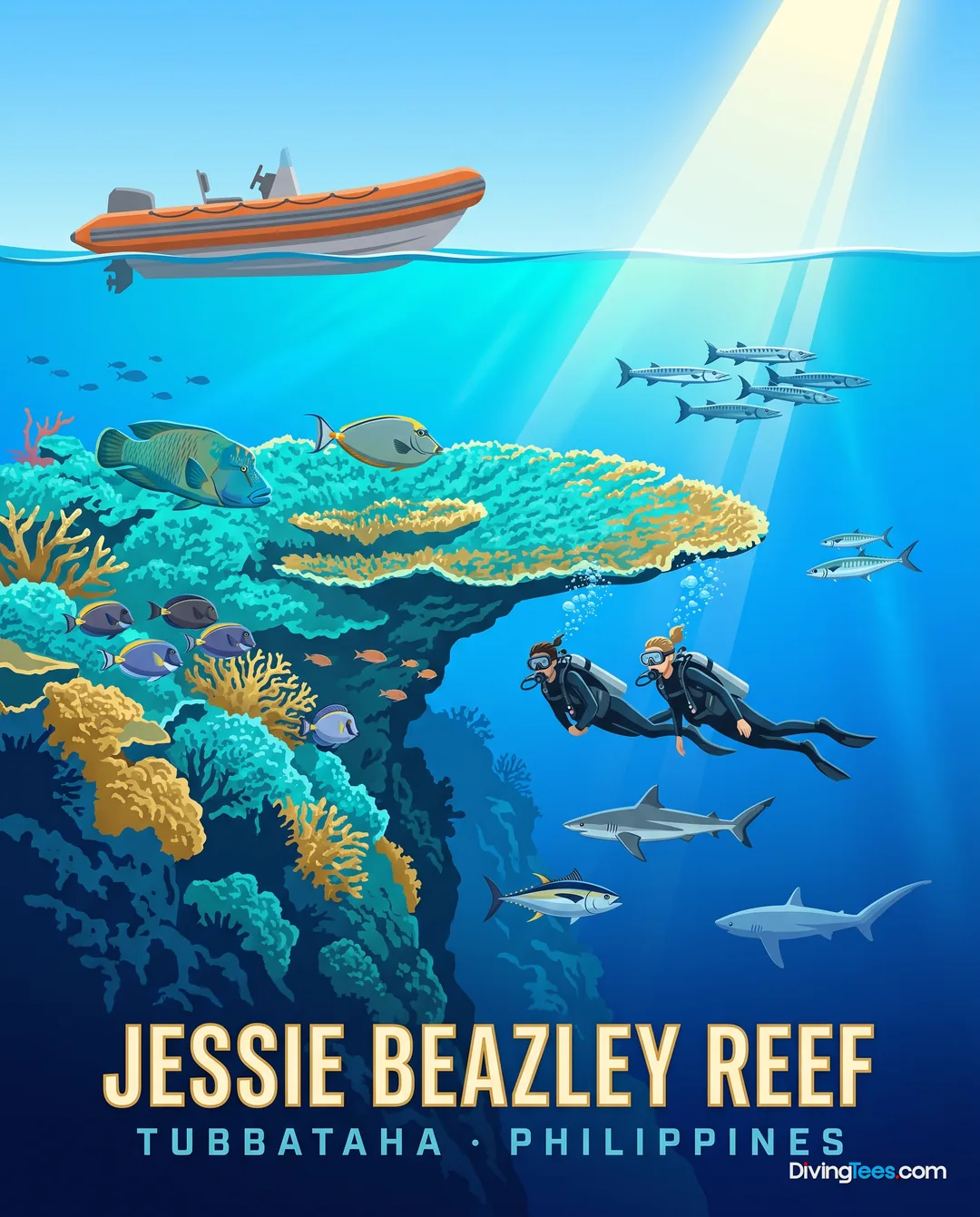
Jessie Beazley Reef →
Max. depth · 50 m
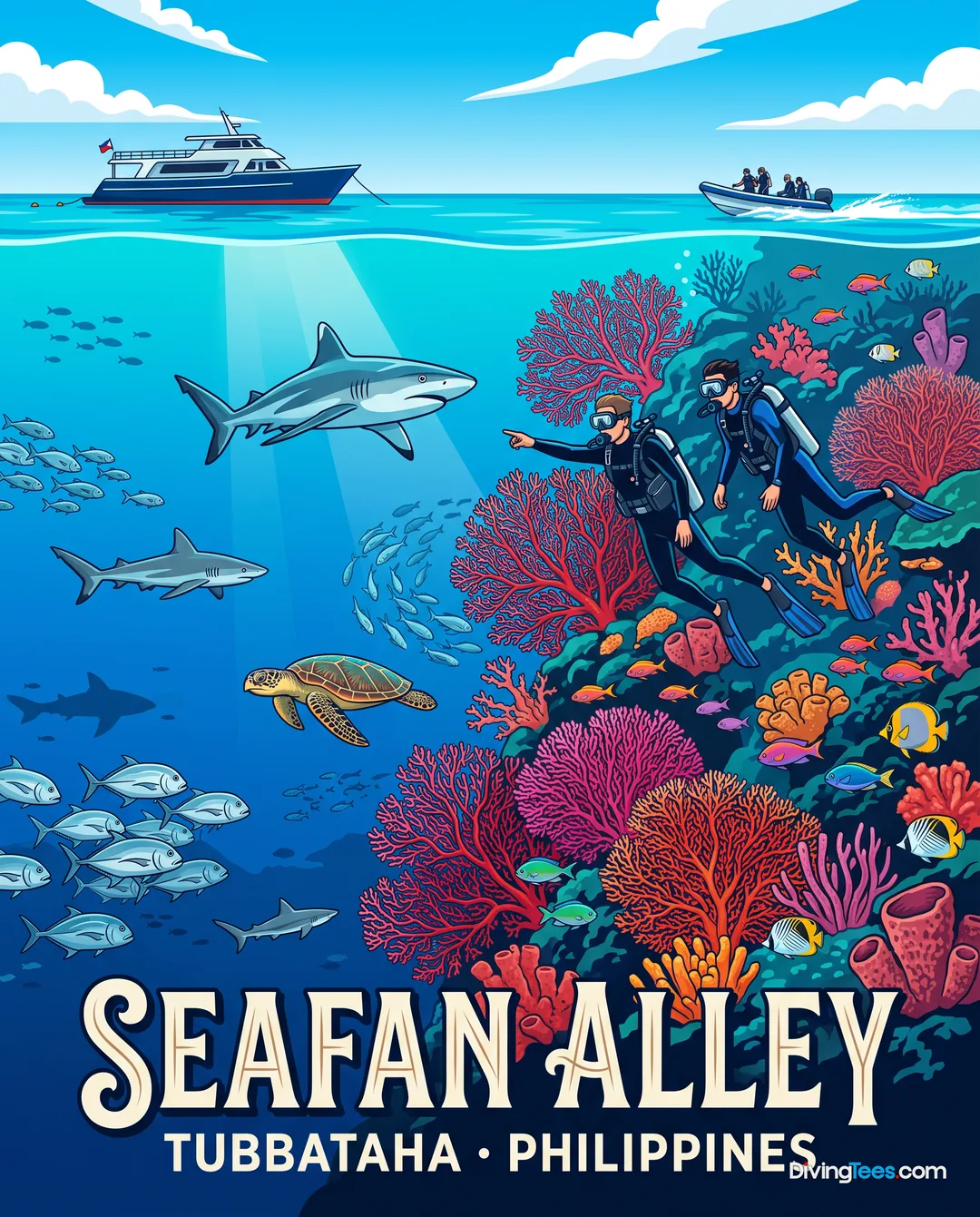
Seafan Alley →
Max. depth · 37 m
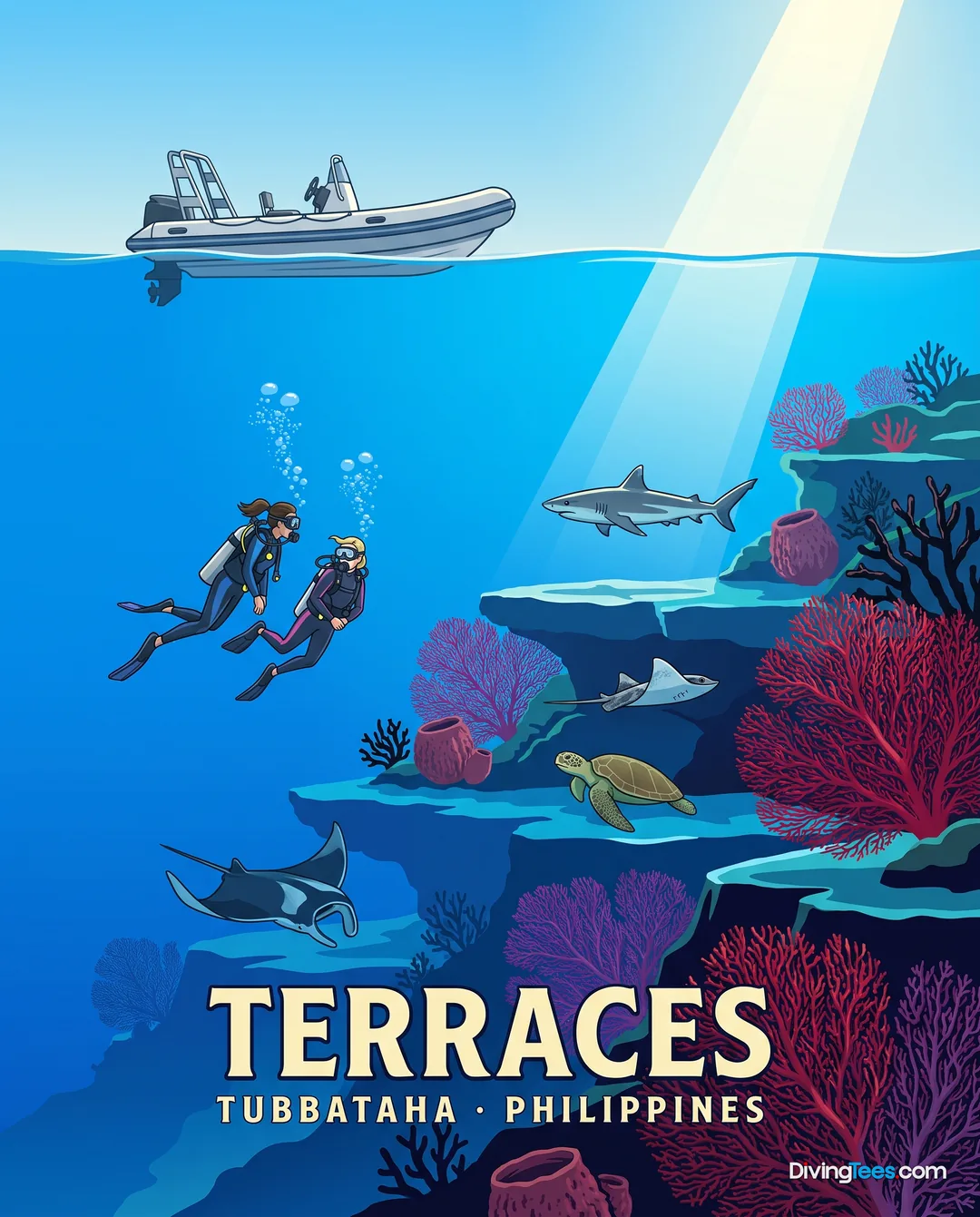
Terraces →
Max. depth · 37 m
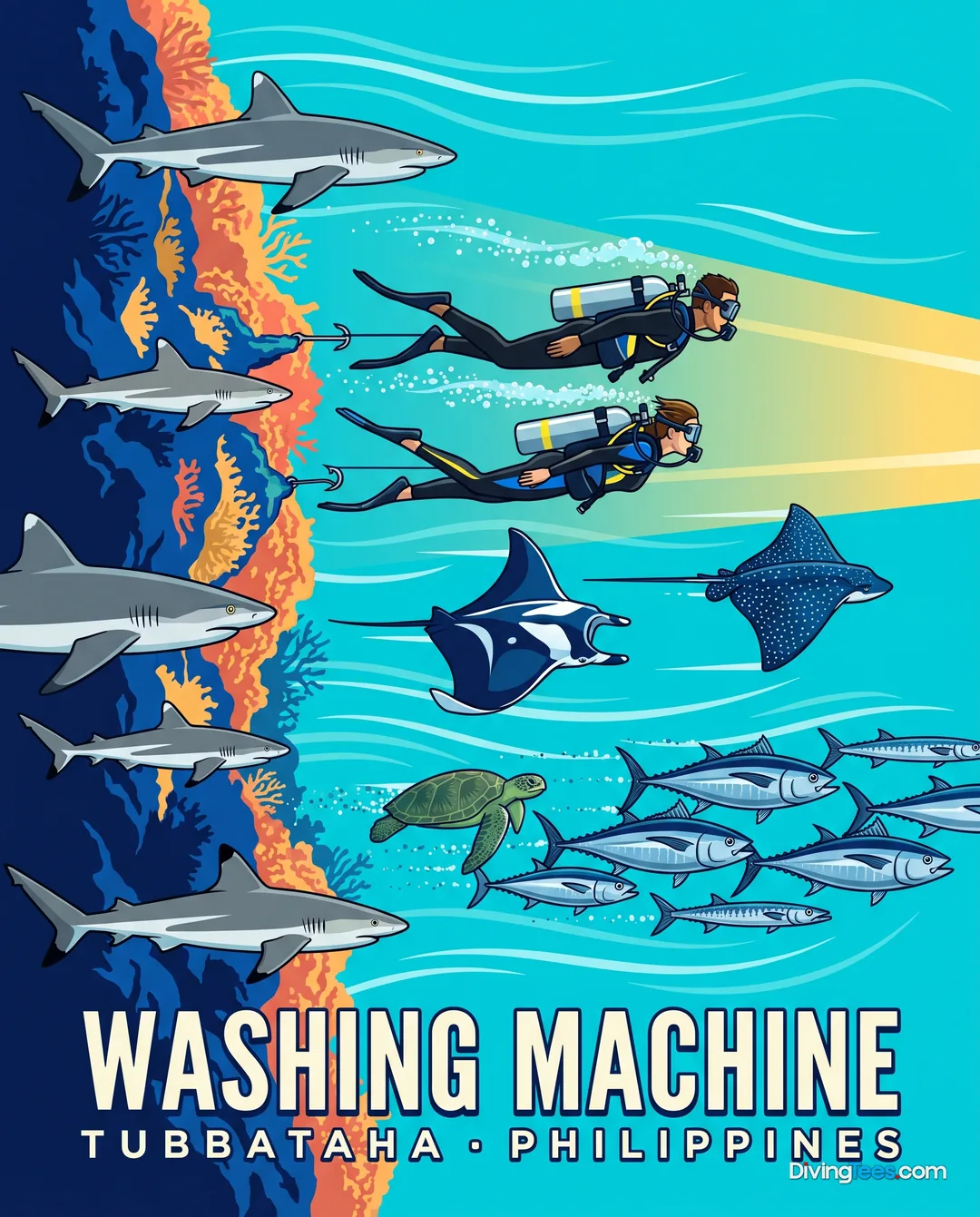
Washing Machine →
Max. depth · 25 m
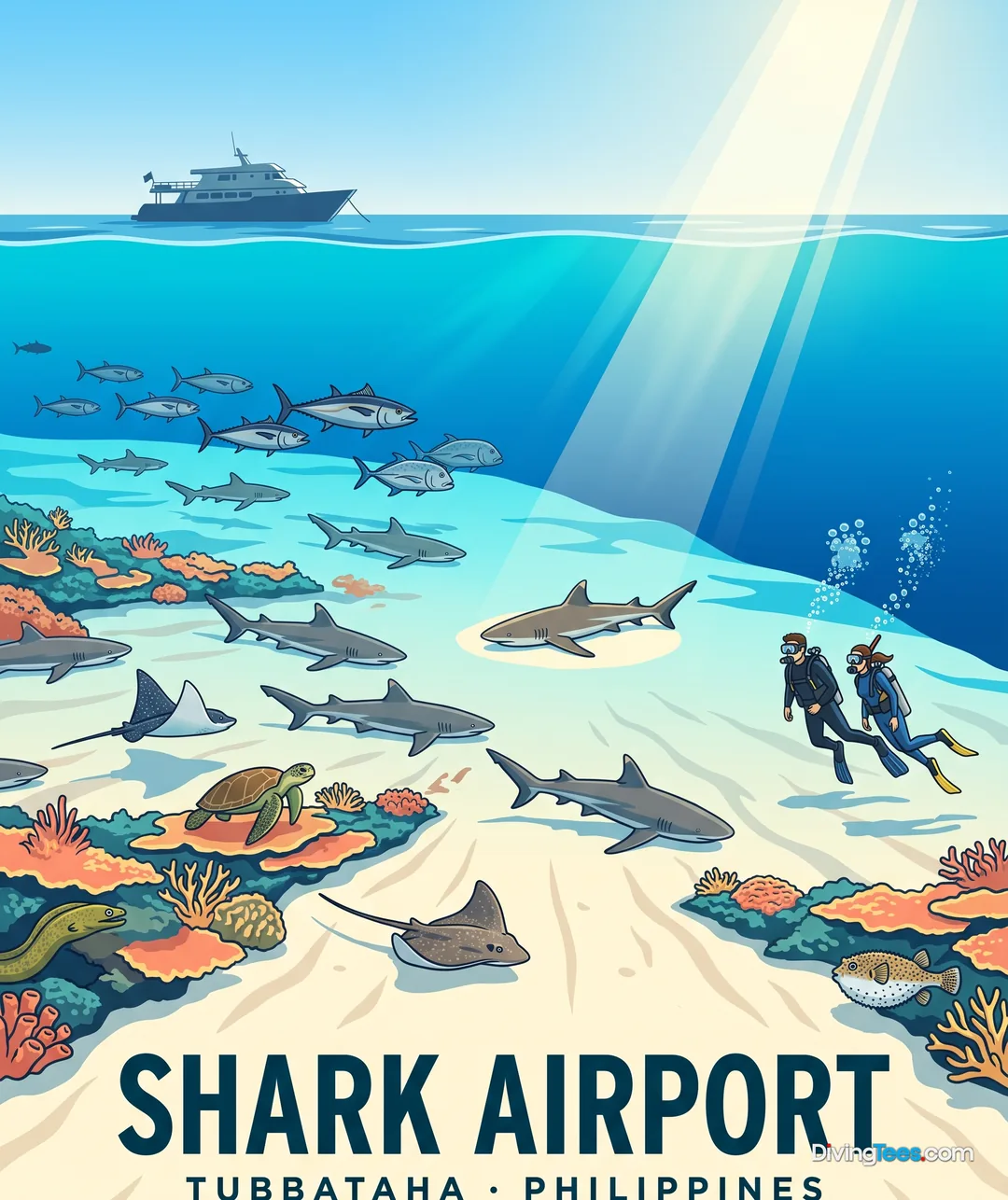
Shark Airport →
Max. depth · 30 m
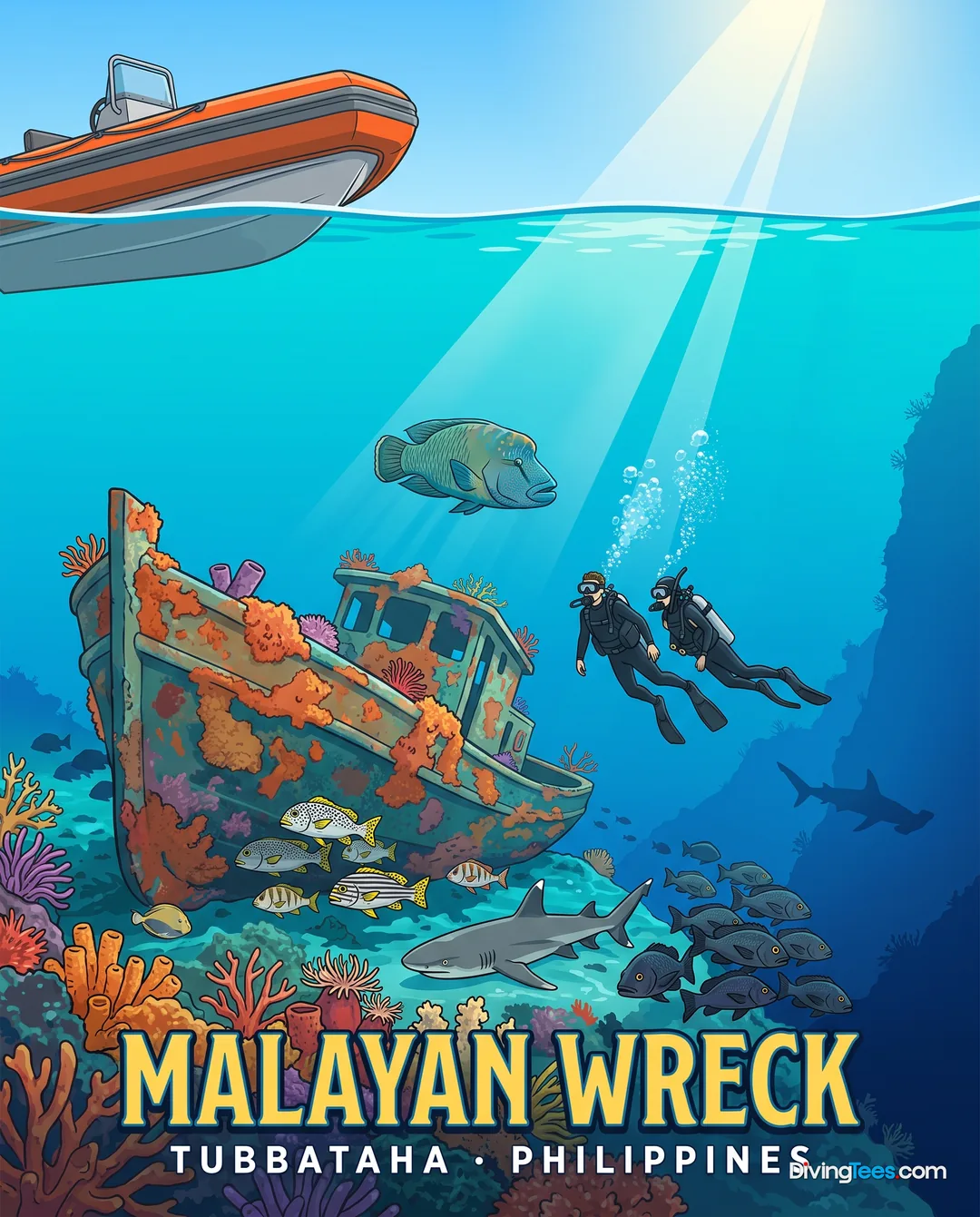
Malayan Wreck →
Max. depth · 22 m
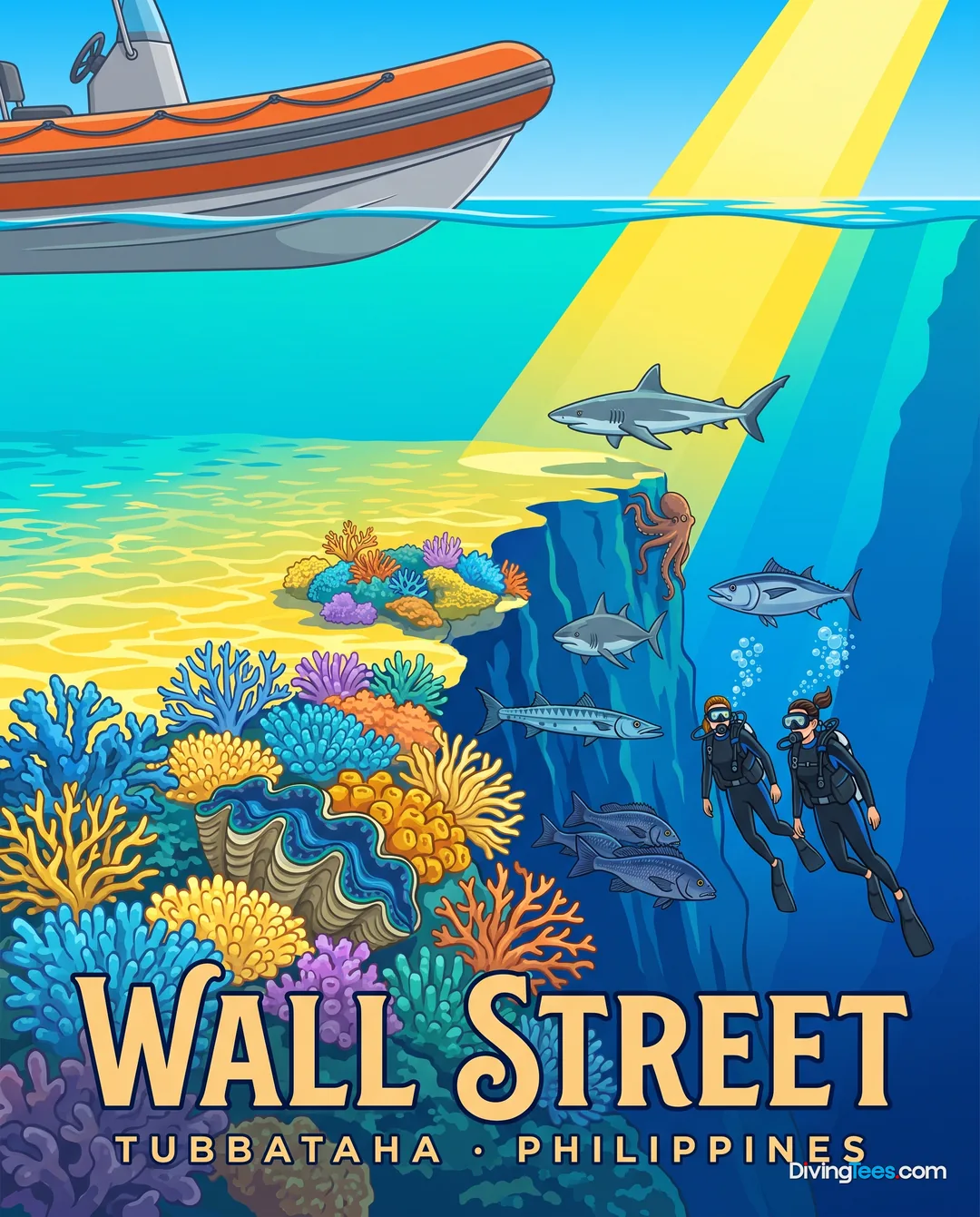
Wall Street →
Max. depth · 30 m
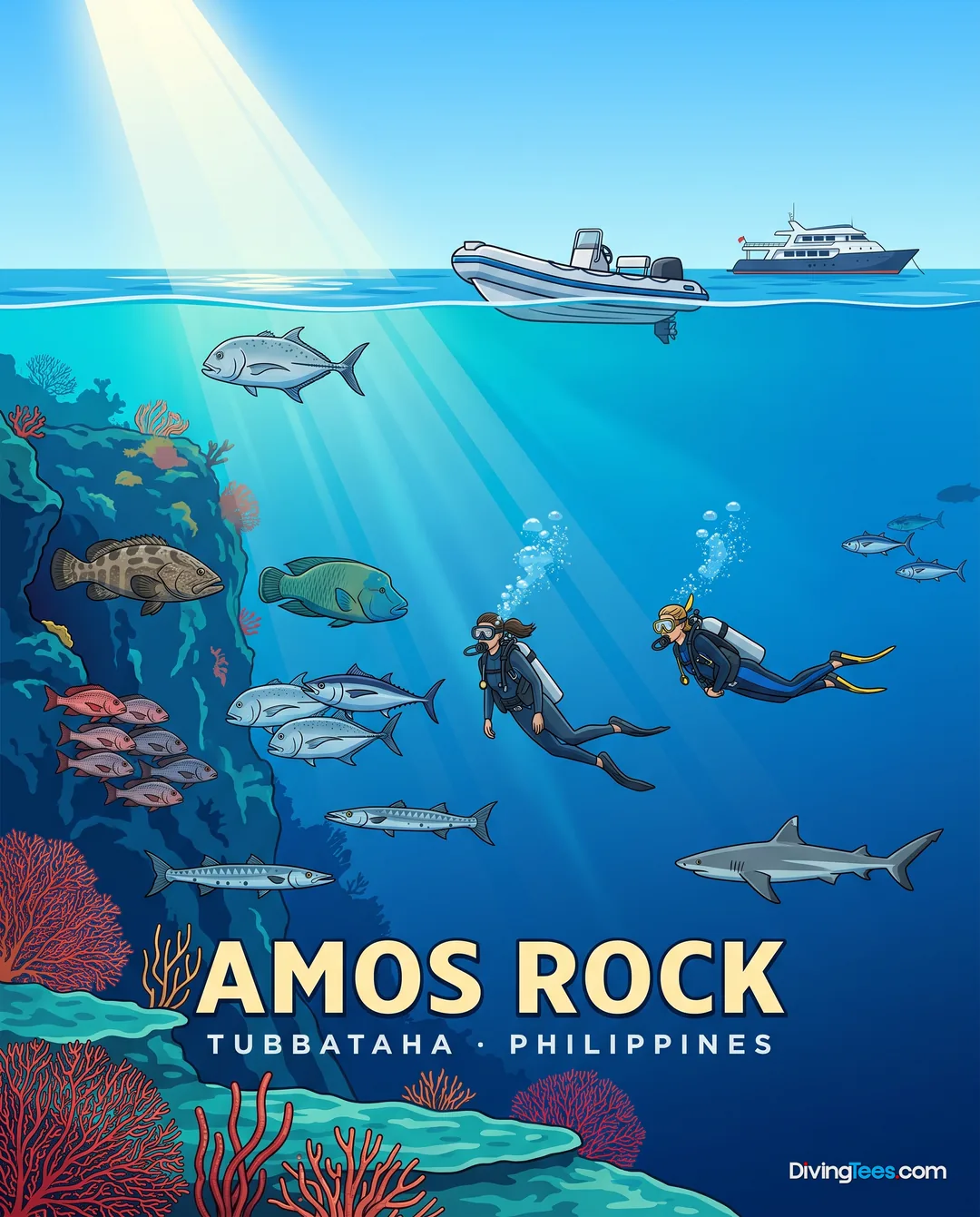
Amos Rock →
Max. depth · 40 m
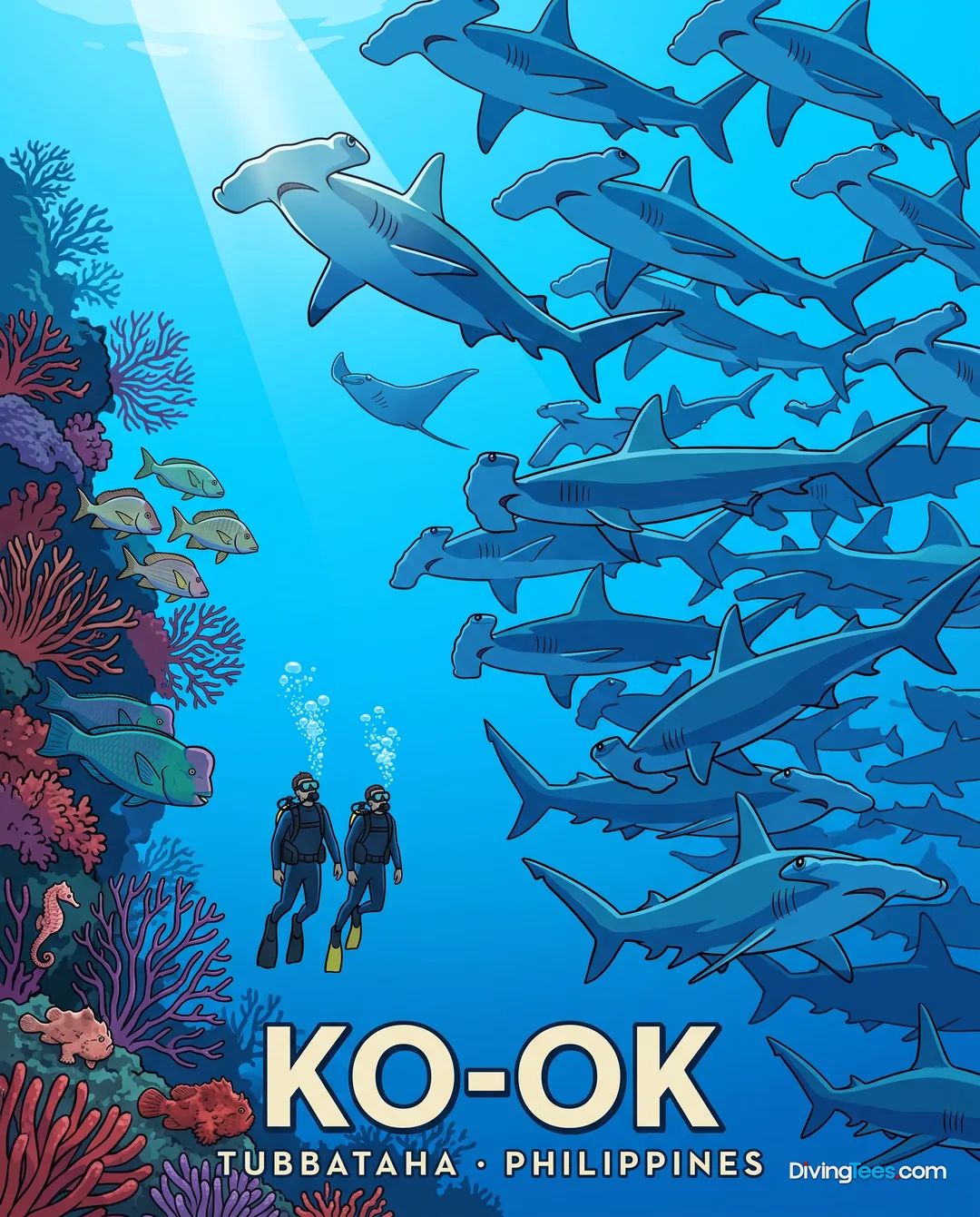
Ko-Ok →
Max. depth · 30 m
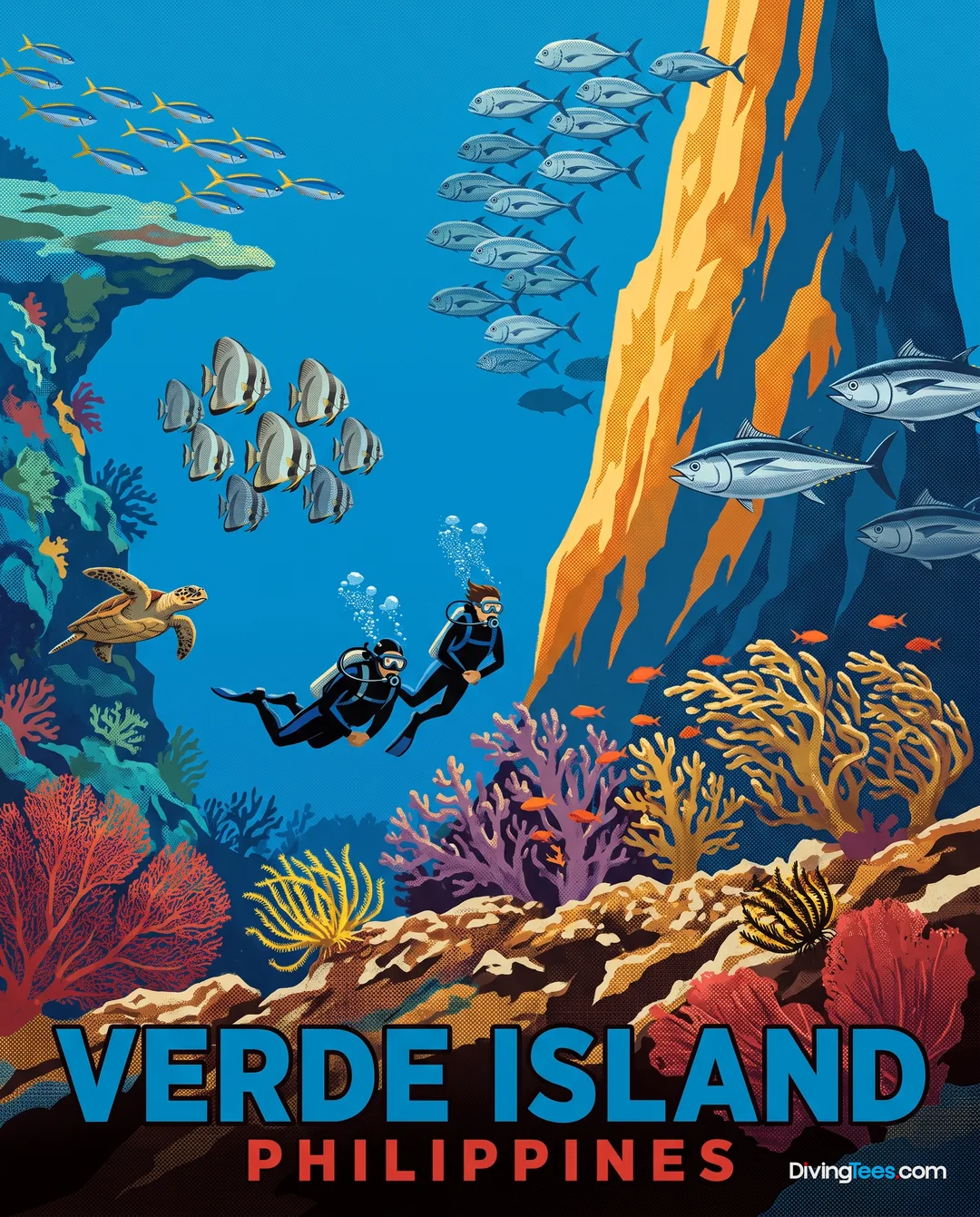
Verde Island →
Max. depth · 38 m
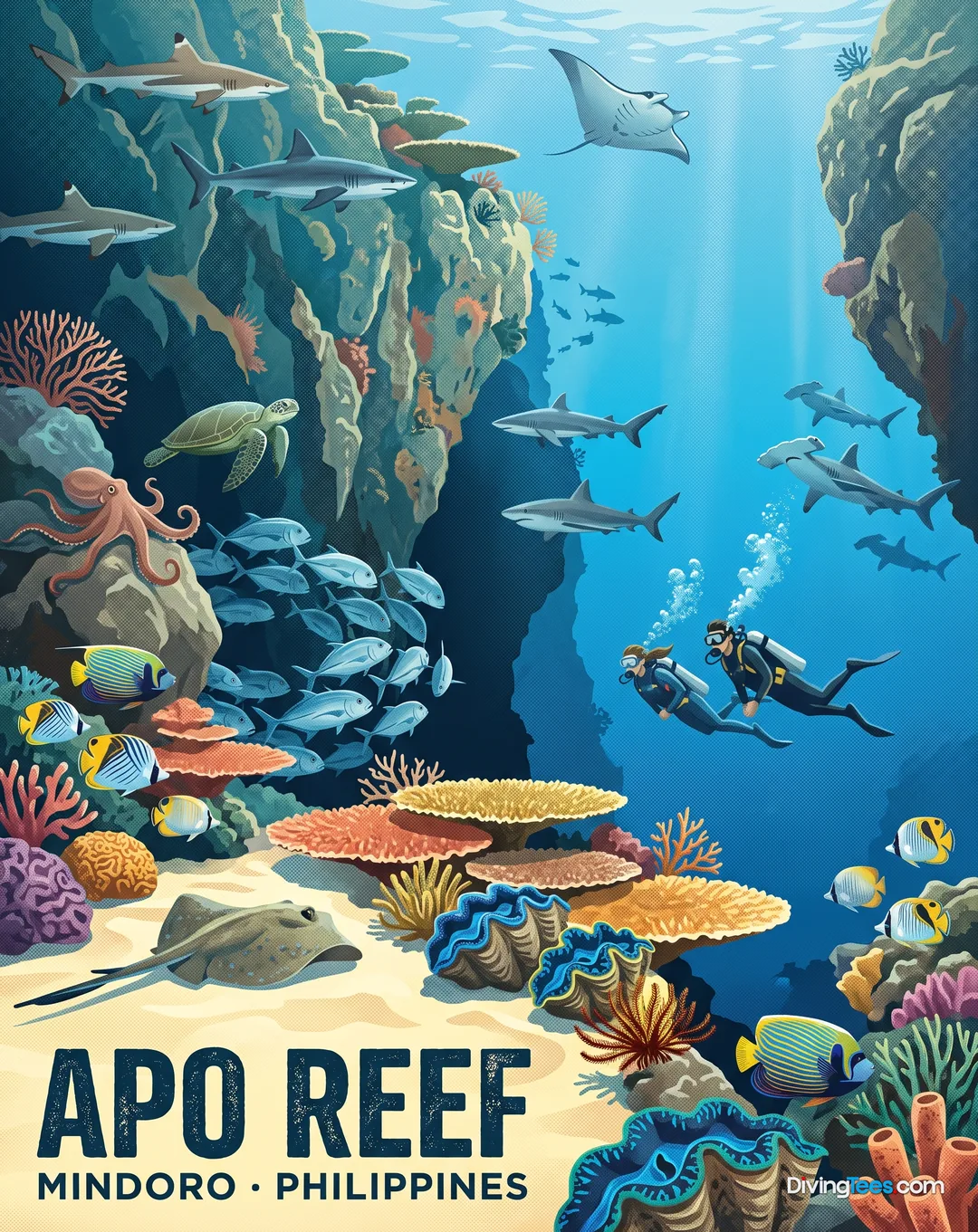
Apo Reef →
Max. depth · 40 m
Itineraries, dates and prices
Prices per person. Each month shows its lowest price: click a month, or pick an itinerary.
Next departures · 24 departuresfrom £2,373$3,172€2,834
March 2027
April 2027
May 2027
See dates and prices
If you click these links and make a purchase on the partner site, DivingDeal may earn a commission, at no extra cost to you.
Dates and prices taken from Divebooker and liveaboard.com, updated 24 October 2026
What you’ll meet underwater
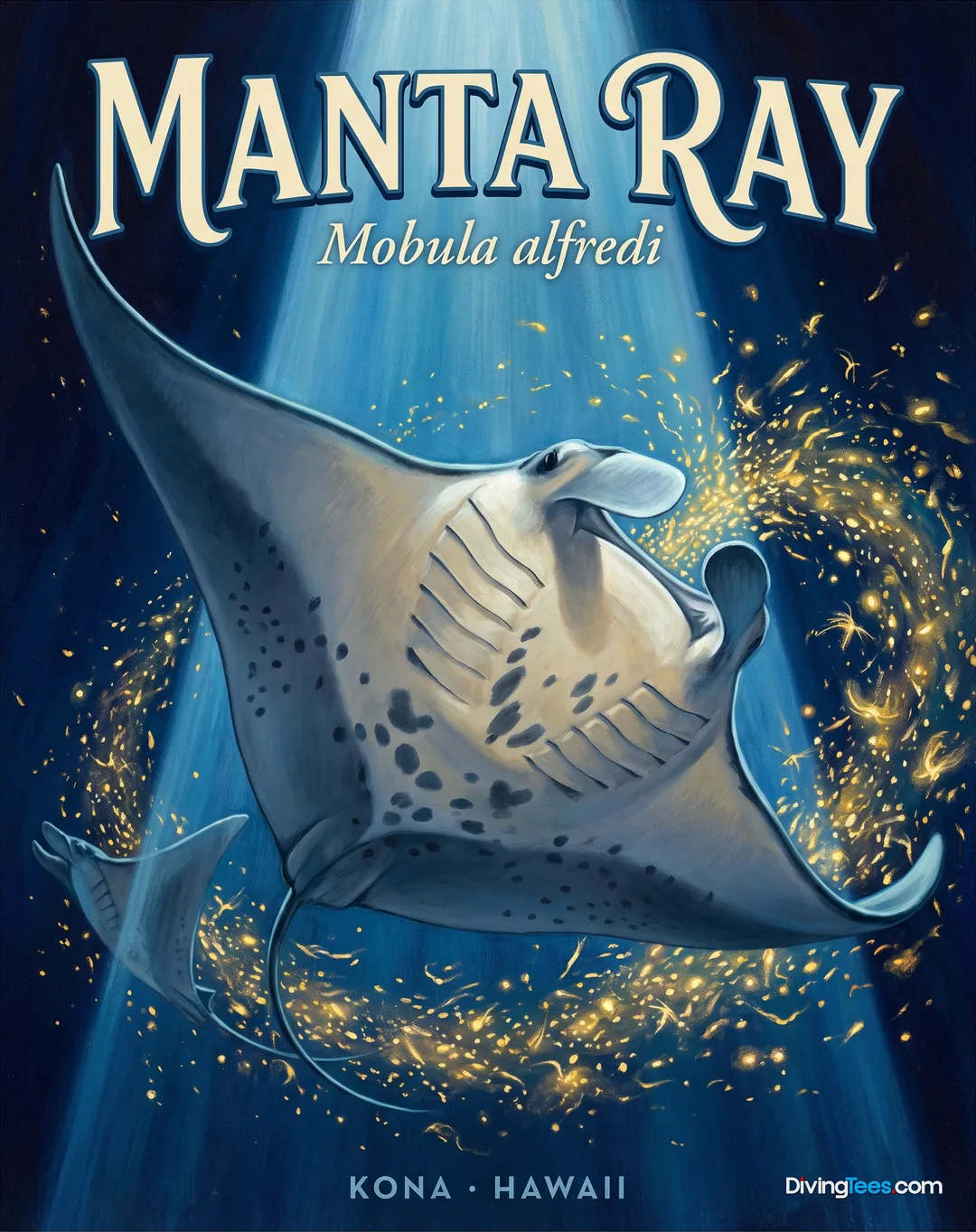
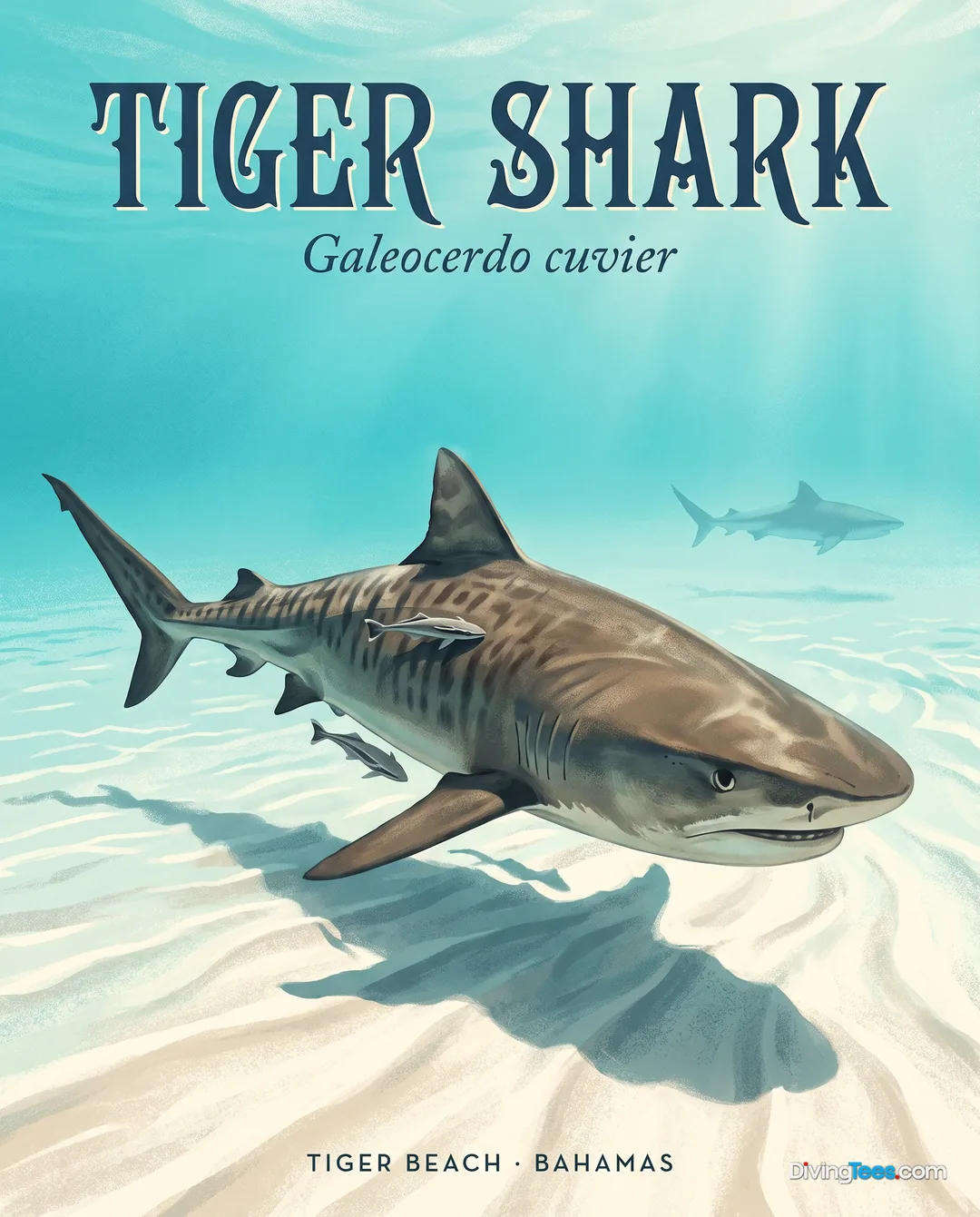
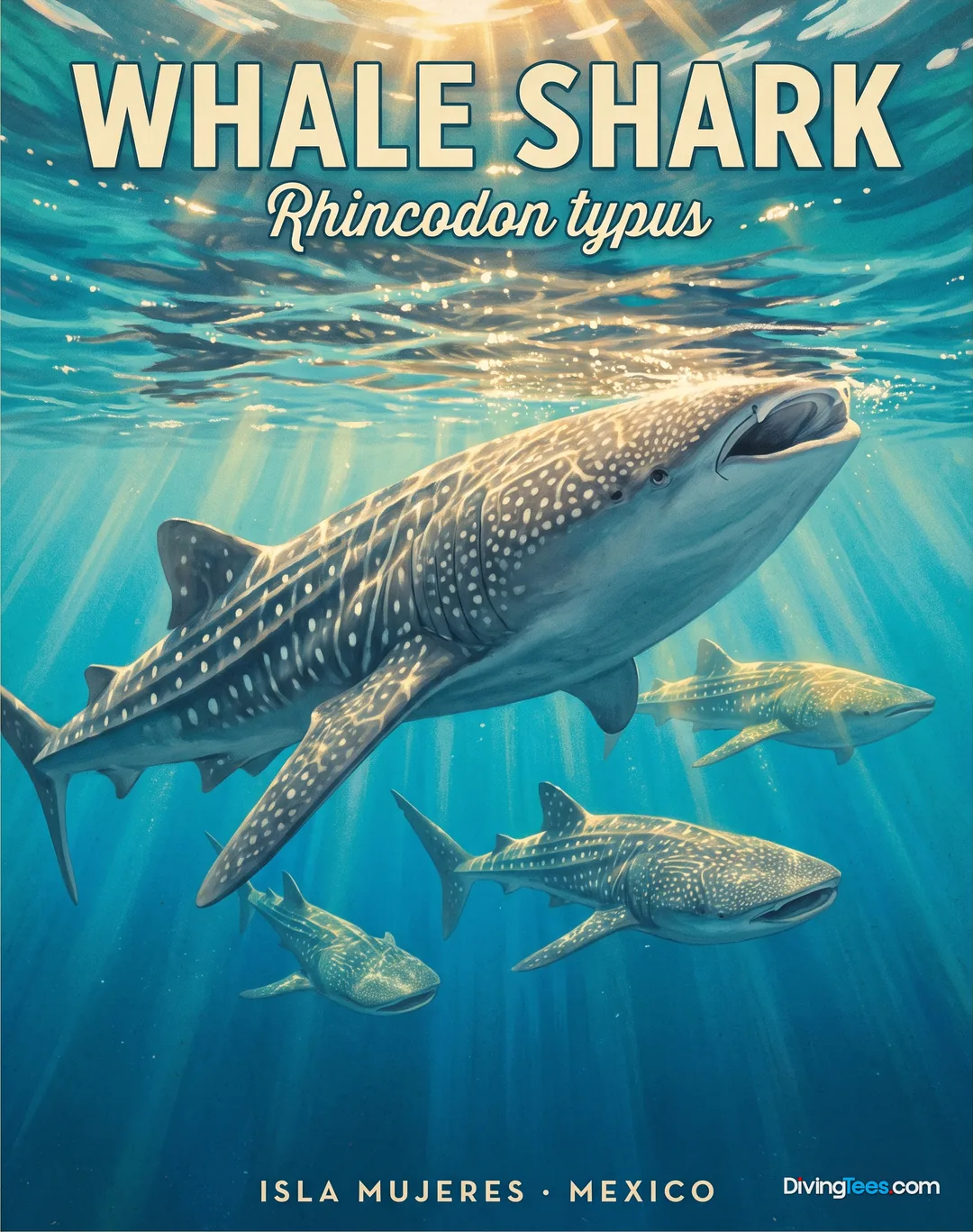
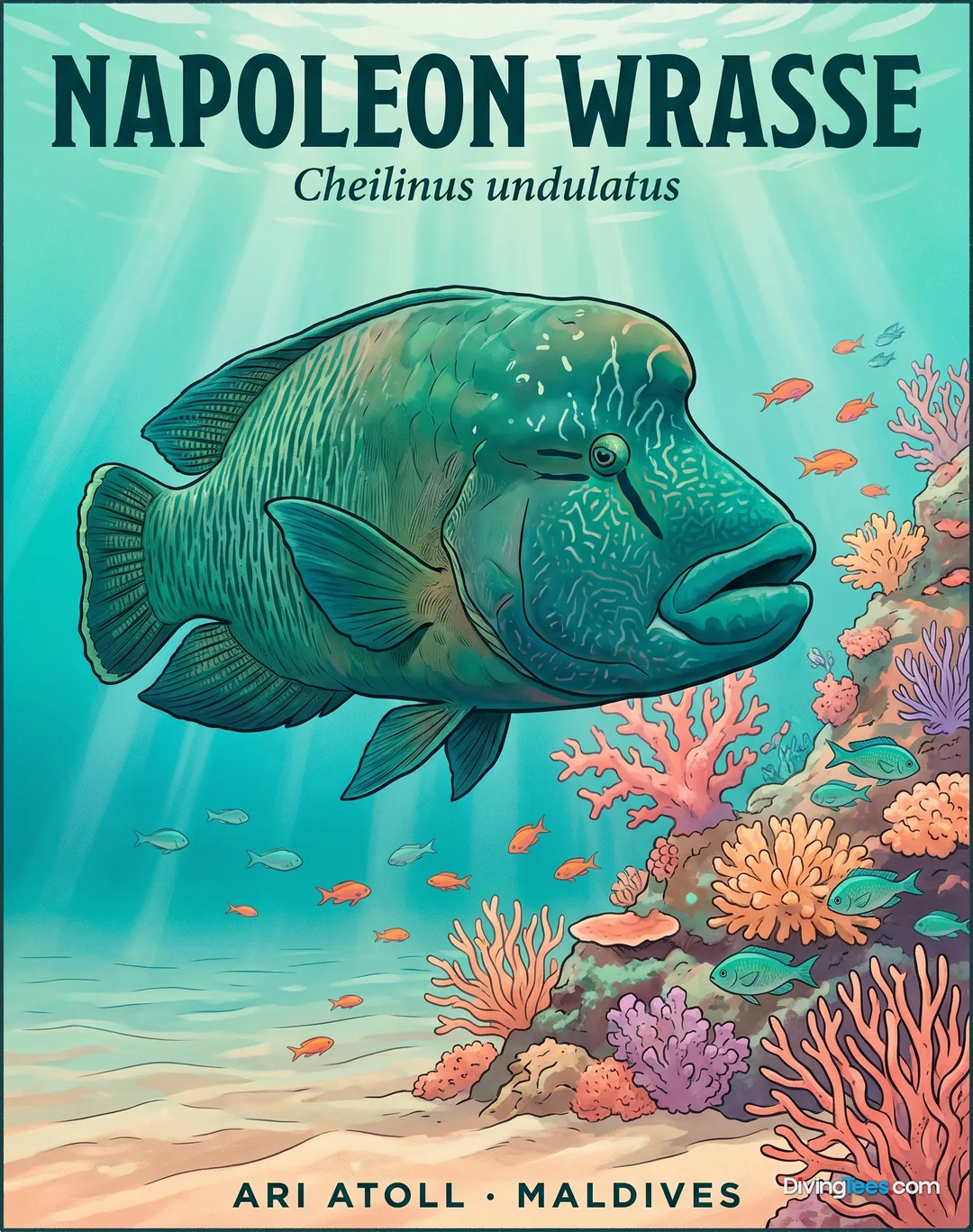
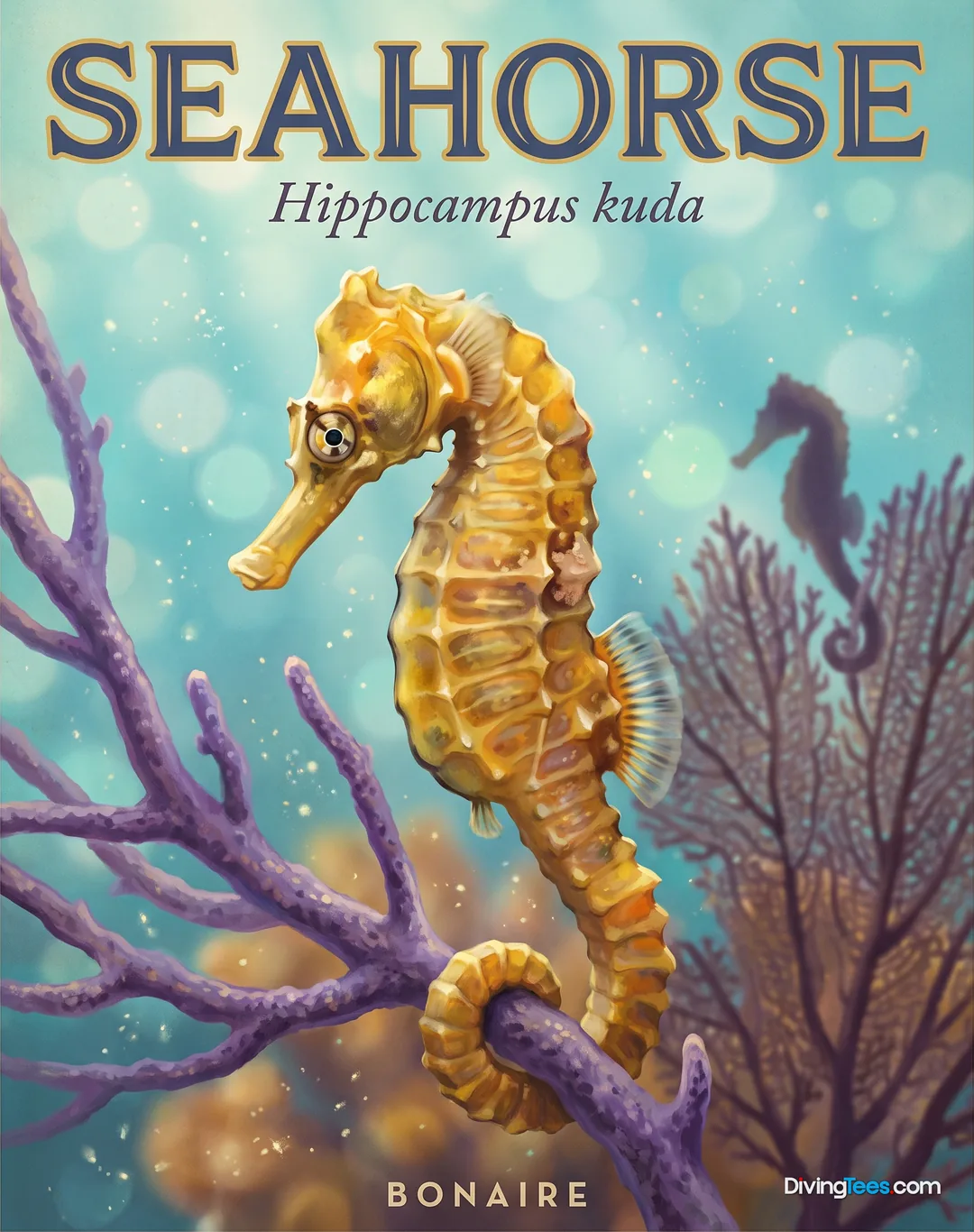
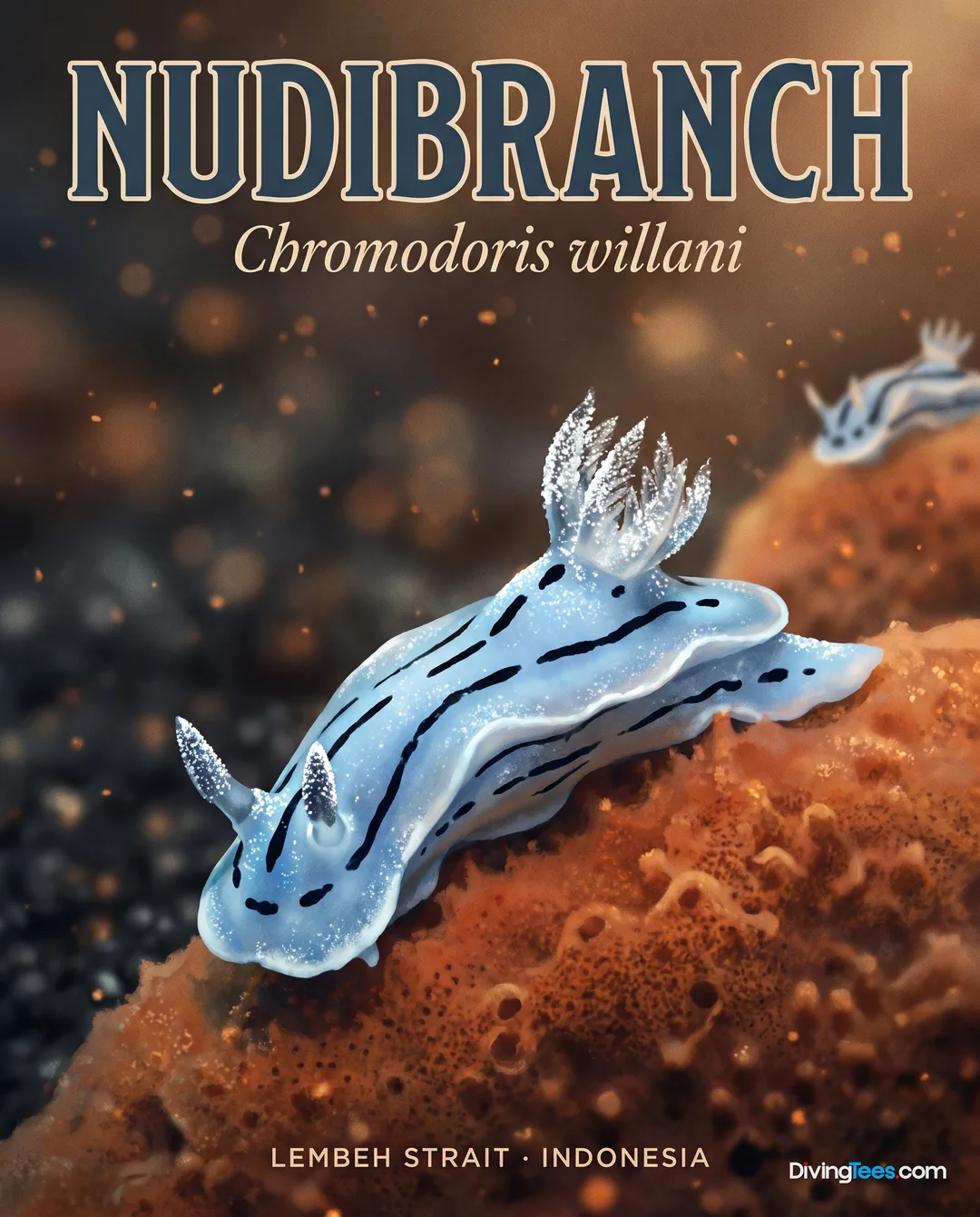
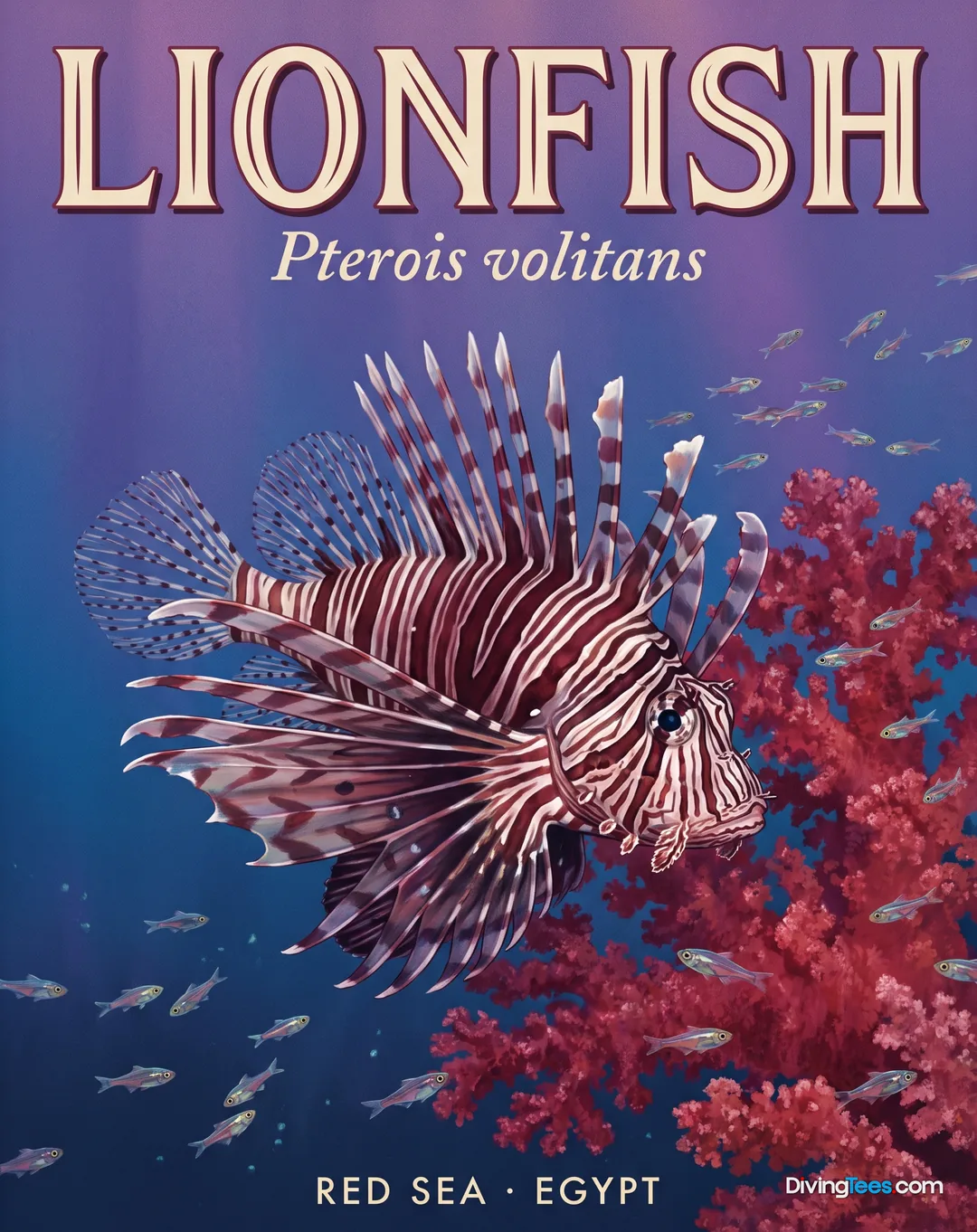
Across the Tubbataha route, grey reef sharks, manta rays, whale sharks, turtles, barracuda, Napoleon wrasse, tuna, sweetlips and reef fish form the larger picture. Strong current and isolated walls give the pelagic encounters their setting, but no sighting is guaranteed. The site-specific surprises are what reward a careful dive: pygmy seahorses at Seafan Alley, where gorgonian fans cover the deep wall; seahorses, ghost pipefish, frogfish, nudibranchs, crabs and shrimp on the silty slopes of Buceo Point; and anemones, trevally and a lionfish at Verde Island. Shark Airport is the place associated with bigeye trevally, while Terraces brings soft coral into the route’s cast. At Jessie Beazley Reef, the isolated, current-swept atoll can bring larger visitors including hammerhead and tiger sharks. Tubbataha’s season runs from mid-March to mid-June, when sea conditions are generally at their calmest and clearest.
Who puts you in the water
The boat manager, Gordos Mateo R. Gojunco, is a PADI instructor and NAUI divemaster with more than 3,000 dives, NAUI nitrox training, and EMT, defibrillation, and emergency-response qualifications. Danny Felizardo is a PADI and CMAS divemaster with more than 10,000 dives. Their backgrounds fit a route where current, walls, and tender procedures matter more than a simple sheltered-reef profile. Tubbataha is open to Open Water divers, although Advanced Open Water training is a useful advantage for its wall dives. Briefings cover the dive plan, boat assignments, park rules, and safety procedures, with divers organised into small tender groups rather than one large descent. Oxygen, first-aid kits, fire equipment, life rafts, and emergency communications are carried on board. PADI courses including Enriched Air, Deep, Multilevel, and Drift Diver are available when booked ahead and conditions and instructor availability allow.
The dive deck and the gear
The dive operation uses aluminium tanks, DIN adaptors, rinse bins, a dedicated dive platform and two tenders. Dives are conducted in small groups from the tenders, which means divers enter close to the site and are collected where they surface instead of waiting for the main vessel to manoeuvre into position. The boat carries three Bauer K15 compressors and a membrane nitrox system. Nitrox is free for certified nitrox divers, with 32% fills listed for rental tanks; the PADI Enriched Air course is an extra option for divers who need the certification. Sidemount and rebreather diving are supported, subject to the operation’s arrangements. Rental equipment is available, including BCDs, regulators, fins, masks, wetsuits, computers and torches, but divers should reserve it in advance. The published details do not establish a camera table, SMB supply or hot-water rinse after every dive, so those are not promised here.
Between dives
Between dives, the natural meeting point is the open upper deck, where the bar and jacuzzi give the boat a place to dry out without sending everyone into the lounge. The interior lounge is air-conditioned, and a library with books, magazines and DVDs offers a quieter alternative when the sun is too hard. Deck rinse showers are available after returning from the tenders, so salt water does not have to follow divers through the living areas. The boat also welcomes non-divers and snorkellers, which makes the surface hours easier for mixed groups. There is no need to invent a programme for every gap: a diver can sit in the shade, check a camera, eat a snack, read, or watch the reef line disappear while the boat moves on to the next site.
A day on board
The day begins with the first dive briefing, followed by the equipment check and a tender ride to the reef. Divers return to the boat, rinse off, eat and rest before the next briefing; the same sequence repeats through the day, with up to four dives when the site plan and conditions allow. Tubbataha packages describe three to four dives a day and roughly 16 to 18 dives on a regular trip. Meals and snacks sit between those water entries rather than interrupting them, and the lounge or upper deck becomes the place to dry out and compare sightings. There are no night dives on the Tubbataha operation, so the final dive is followed by dinner, showers and recovery instead of another descent. The boat moves between sites as the itinerary requires, then the lights go down in the air-conditioned cabins before the next briefing starts the cycle again.
What you eat aboard
Meals are served full-board, with buffet service and an Asian-fusion menu that brings local cooking onto a boat otherwise set up for international divers. Western and local dishes are available, with vegan and vegetarian choices, snacks throughout the day, and tea, coffee and drinking water included. Beer and wine are available separately. The table matters because this is a four-dive operation: breakfast follows the first preparation of the day, later meals restore energy without turning the schedule into a long restaurant sitting, and snacks cover the gaps between splash times. The food is one of Stella Maris Explorer’s clearest strengths, scoring 9.6 from reviewers. That is not a decorative extra on a Tubbataha trip. After current, depth and a tender ride, a reliable plate is part of the diving system.
Nights at sea
The cabins are divided into Deluxe, Standard, Economy and Premium Economy categories, but the useful common ground is more important: every cabin has air-conditioning, a private bathroom and hot and cold water. Carpeted interiors soften the feel of an older vessel, while memory-foam mattresses and pillows matter after several dives and wet exits each day. Standard windows provide daylight without turning the cabins into open-air spaces. The boat has 10 cabins for a maximum of 20 passengers, so the accommodation is compact rather than private-yacht spacious. The top deck is where the cabin gives way to open air, with a bar and jacuzzi for the hours when nobody wants another enclosed room. Nights here are about a cool bunk, a shower and enough rest to answer the next briefing, not about hotel-sized rooms.
Deluxe Cabins
Standard Cabins
Economy Cabins
Premium Economy Cabin
What to know before boarding
Regular Tubbataha trips depart from and return to Puerto Princesa. The eight-day Transition Trip 1 departs from Anilao and ends in Puerto Princesa. Airport and Puerto Princesa hotel transfers to and from the boat are included; staff meet arriving passengers at Puerto Princesa Airport and identify themselves by Expedition Fleet shirts. The boat embarks for Tubbataha in the evening, generally between 6pm and 8pm, so arriving in Puerto Princesa the night before is the safer plan.
Deck plan
- Year built
- 1980
- Year renovated
- 2018
- Length
- 33 m
- Beam
- 6.5 m
- Maximum number of passengers
- 20
- Number of cabins
- 10
- Number of bathrooms
- 10
- Engines
- Single
- Cruising speed
- 10 knots
- Tenders
- 2
- Website
- expeditionfleet.com ↗
Hello, I'm Marina, DivingDeal.com's AI assistant. I answer in detail about hotels, dive centres and liveaboards.
Thinking about the whole trip and the flights? Talk it over with Edith →
Marina is an AI. Some links are affiliate links: DivingDeal may earn a commission, at no extra cost to you. Bookings are made with the partner.