Liveaboards · Philippines
Gypsy — a compact Philippine yacht built around diving
What makes this boat unique
- Gypsy carries no more than eight guests, keeping the dive operation genuinely small.
- The 2021 refit created a three-deck layout with a large salon, flybridge, bow and stern seating, and a purpose-built dive deck.
- Seakeeper gyroscopic stabilisers reduce the boat's rolling during crossings and at anchor.
- The route combines Dauin's muck and protected reefs with Moalboal, Malapascua and, on selected itineraries, Bohol.
- The dive programme reaches up to four dives a day, including a sunset dive; night dives depend on the location.
For subtitles in English: start the video firstthen click the gearat the top right of the video, select “Subtitles/CC”, then “Auto-translate” and choose “English”.
The invitation
Gypsy is for divers who would rather spend a week moving between the Philippines' strongest sites than settle into one fixed base. Its reason for being is the small group: eight guests share a yacht with enough deck and salon space to avoid the usual liveaboard bottleneck, while the crew can move the boat between Dauin, Moalboal, Malapascua and Bohol. The diving has two very different faces. Dauin brings black-sand muck diving and the patience needed for frogfish, seahorses and ghost pipefish; Malapascua brings cleaning-station dives and the chance of threshers, hammerheads and other pelagics. That contrast is the point. Gypsy suits divers who want rare small life one day and open-water animals the next, with the comfort of a private-yacht layout between dives rather than a crowded expedition vessel.
Boarding
Gypsy makes the impression of a private yacht adapted by divers for long days in the water. The 2021 refit matters: the boat was redesigned around usable guest space, not just new surfaces. Boarding leads into a broad three-deck arrangement, with the dive area aft, outdoor seating, a large salon with dining space and camera worktop, and a flybridge above for the crossing. The bow and stern provide separate places to sit, so eight guests do not have to occupy one communal corner whenever they are out of the water. The engine room is separated from the lower-deck cabins by a thick soundproof wall. Under way, twin Volvo Penta engines and the Seakeeper stabilisers give the boat a steadier, quieter character than many smaller liveaboards. It feels designed for a group that will spend most of its waking hours moving between the dive deck, the water and the shaded outdoor spaces.
The atmosphere on board
Eight guests is the defining social fact. The group is small enough that the same faces appear at every briefing, meal and surface interval, but Gypsy has enough separate seating for anyone who wants a quiet hour. The crew includes local and international members and speaks English and German. Their role is visible in the practical parts of the day: equipment is kept moving, meals appear between dives, the tender collects divers, and the boat remains watched around the clock. Passenger feedback gives the crew and food higher marks than the hull, which is a fair distinction for a vessel that has already lived a working life. The benefit is not a showroom finish; it is a crew that carries the experience. Evenings can mean dinner in the salon, drinks on the flybridge or a sunset cruise with the boat's cocktail selection. A week with this few people becomes personal quickly.
The sites you’ll dive
The eight-day, seven-night route runs from Dauin to Moalboal, Malapascua and Bohol before returning to Dauin; some departures use the shorter Dauin–Moalboal–Malapascua–Dauin circuit. Dauin supplies the close-up work. Dauin Coastline reaches -25m over black sand, where frogfish, ghost pipefish, seahorses, nudibranchs and mimic octopus reward a slow search. House Reef reaches -30m across sand, coral slopes and green turtle habitat, while Pura Vida Housereef reaches -30m over an artificial reef crowded with frogfish, flamboyant cuttlefish, seahorses and nudibranchs. Apo Island is a protected coral reserve with turtles, schools of fish and large reef life; its write-up gives no maximum depth. At Malapascua, Kimud Shoal reaches -22m and is the route's thresher-shark site, with hammerheads possible. Monad Shoal is a cleaning station at a maximum of -200m, where threshers visit the shallower plateau. Dona Marilyn is a 98-metre ferry resting upright at -33m. Lighthouse Japanese Wreck is a shallow World War II wreck at -5m, while Lapus Lapus (-20m), Dakit-Dakit (-12m), Eva's Point (-32m), Sunken Island (-30m) and Patchy-patchy offer coral gardens, walls, slopes and schooling fish. Conditions decide the final order.
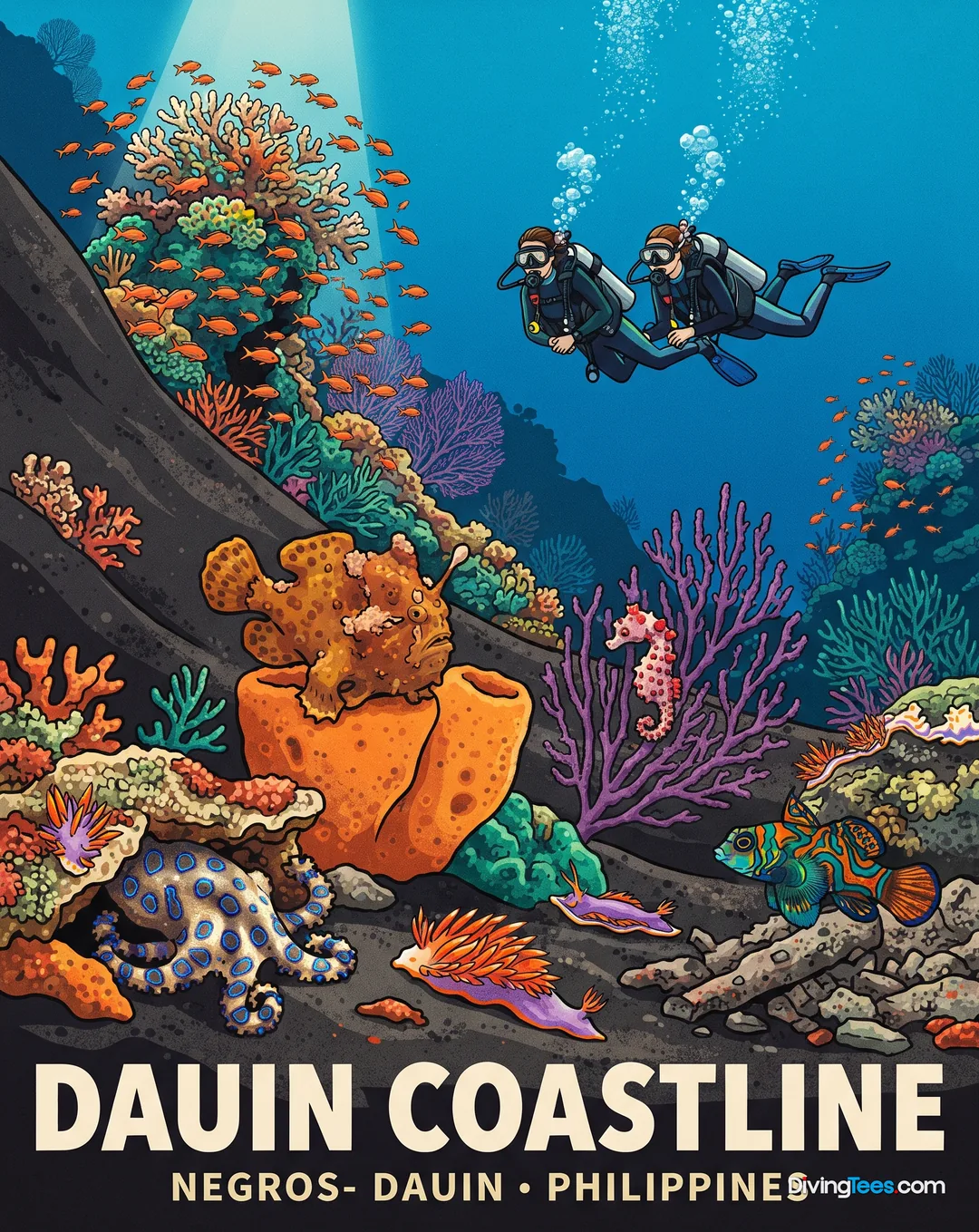
Dauin coastline →
Max. depth · 25 m
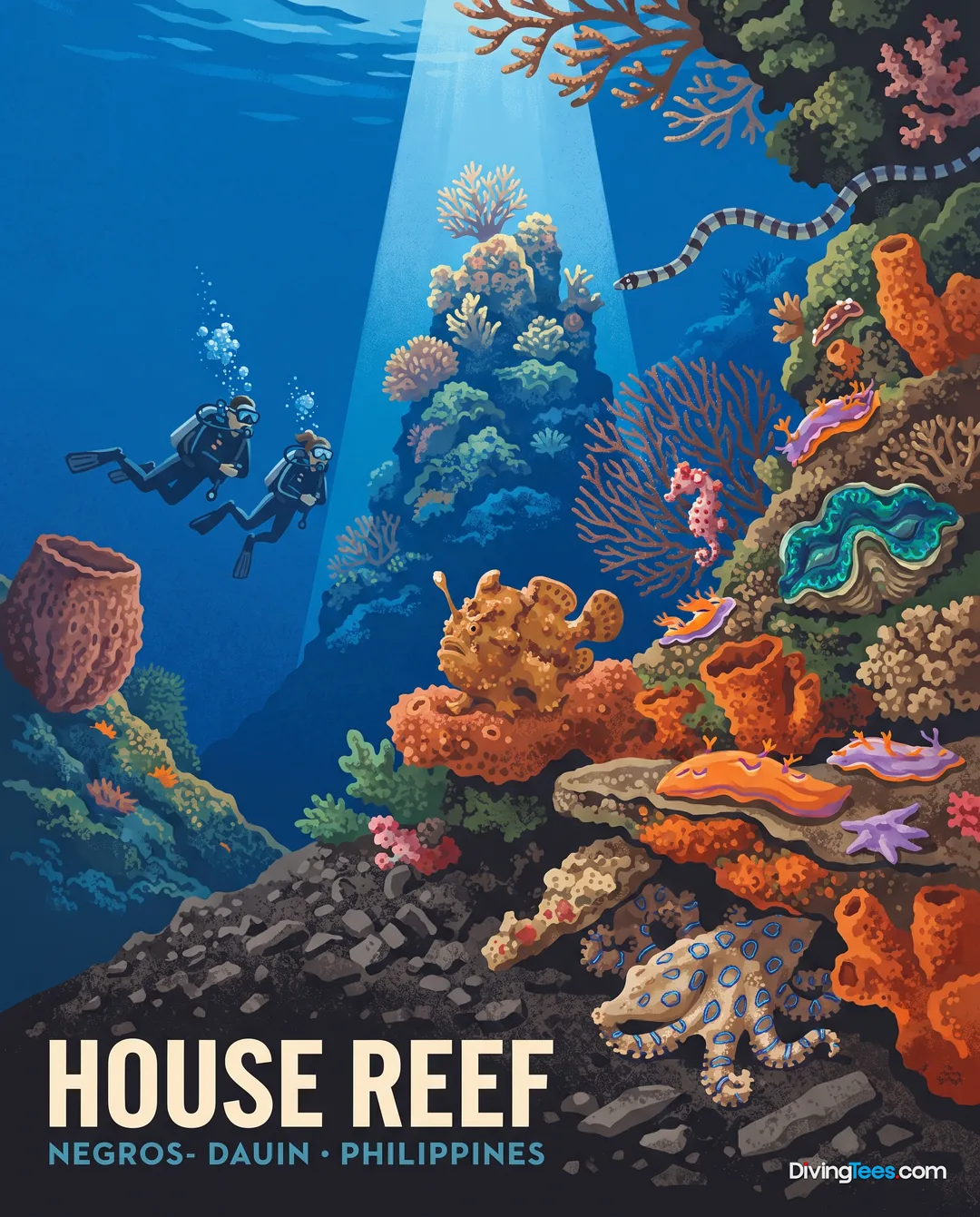
House Reef →
Max. depth · 30 m
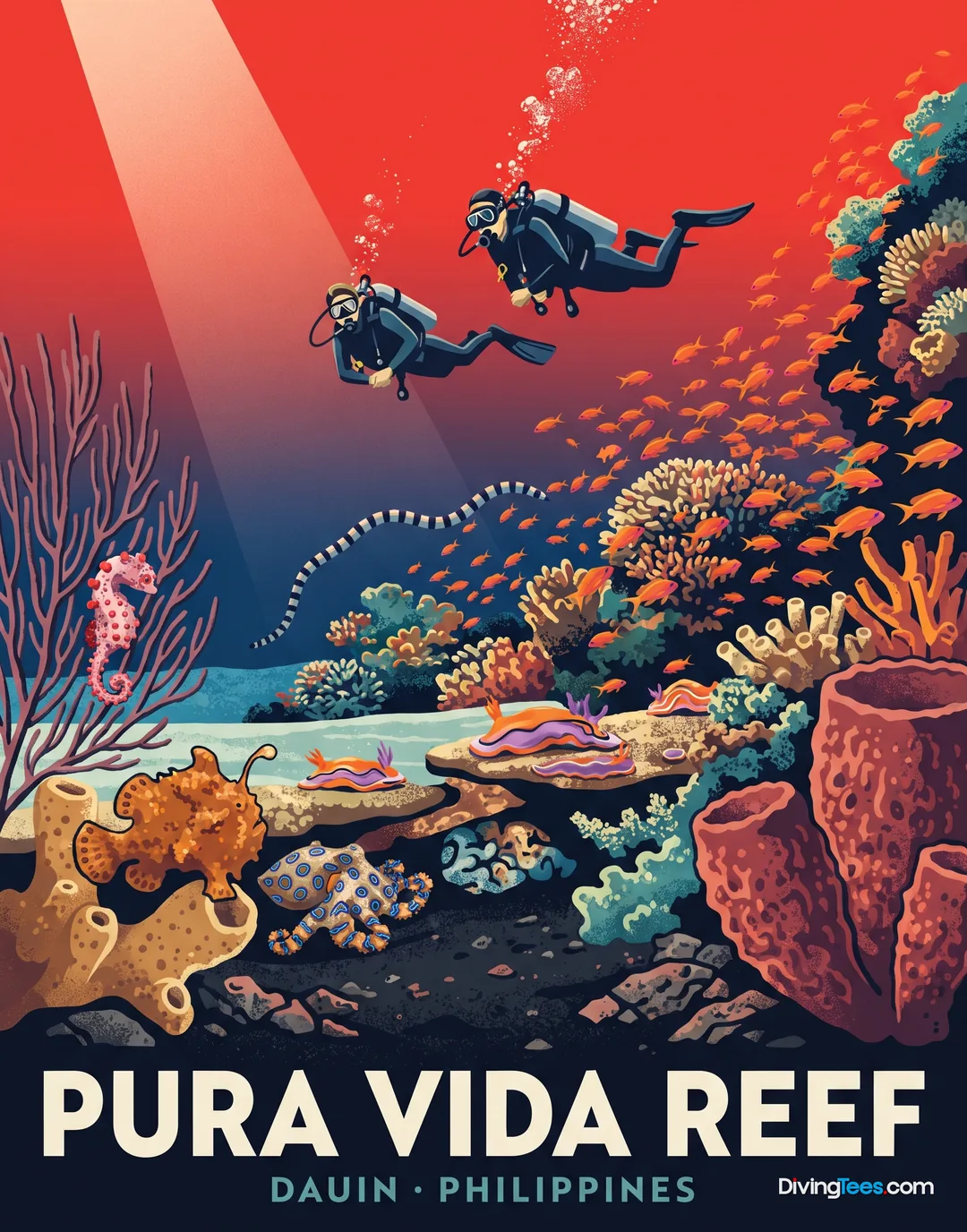
Pura Vida Housereef →
Max. depth · 30 m
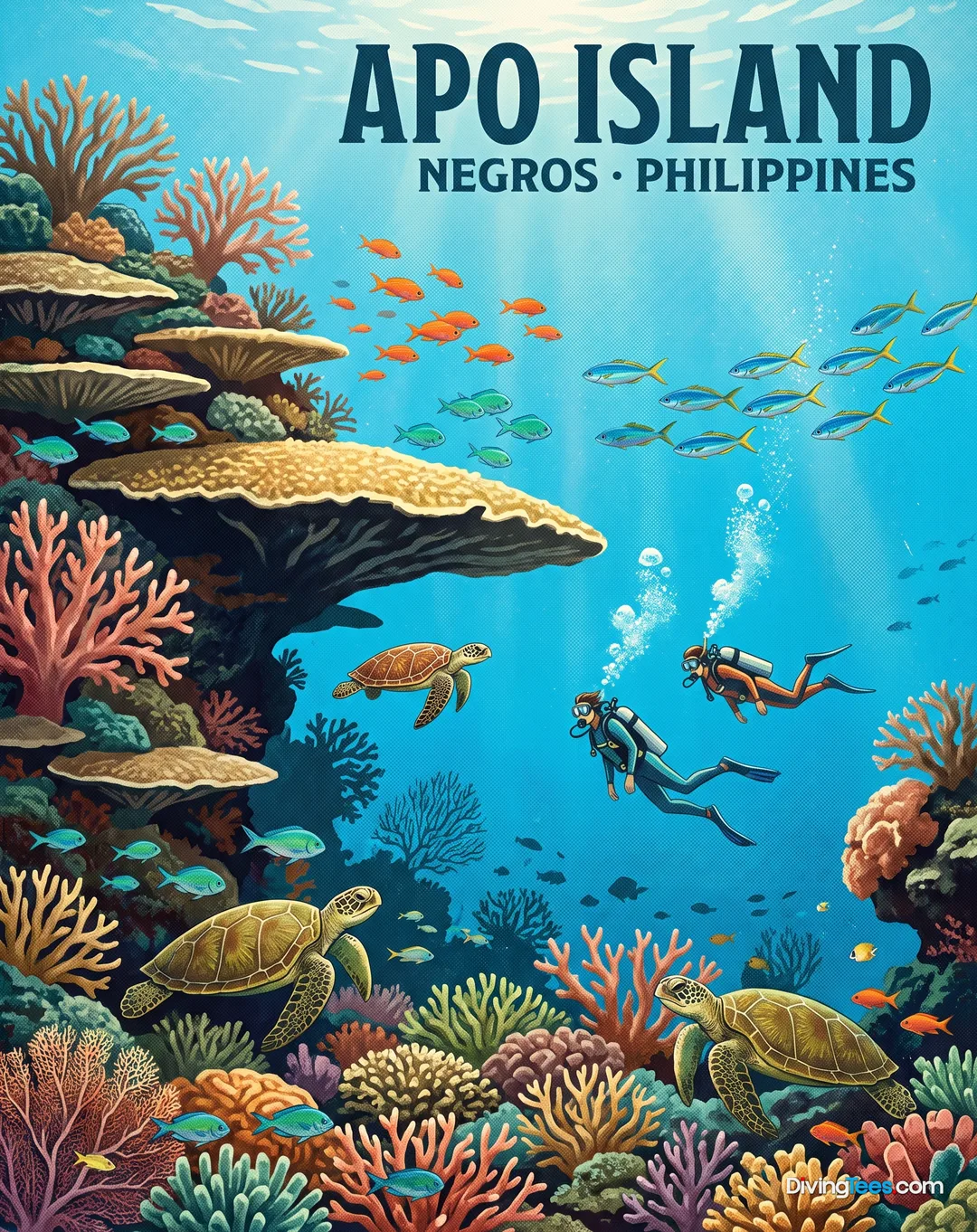
Apo Island →
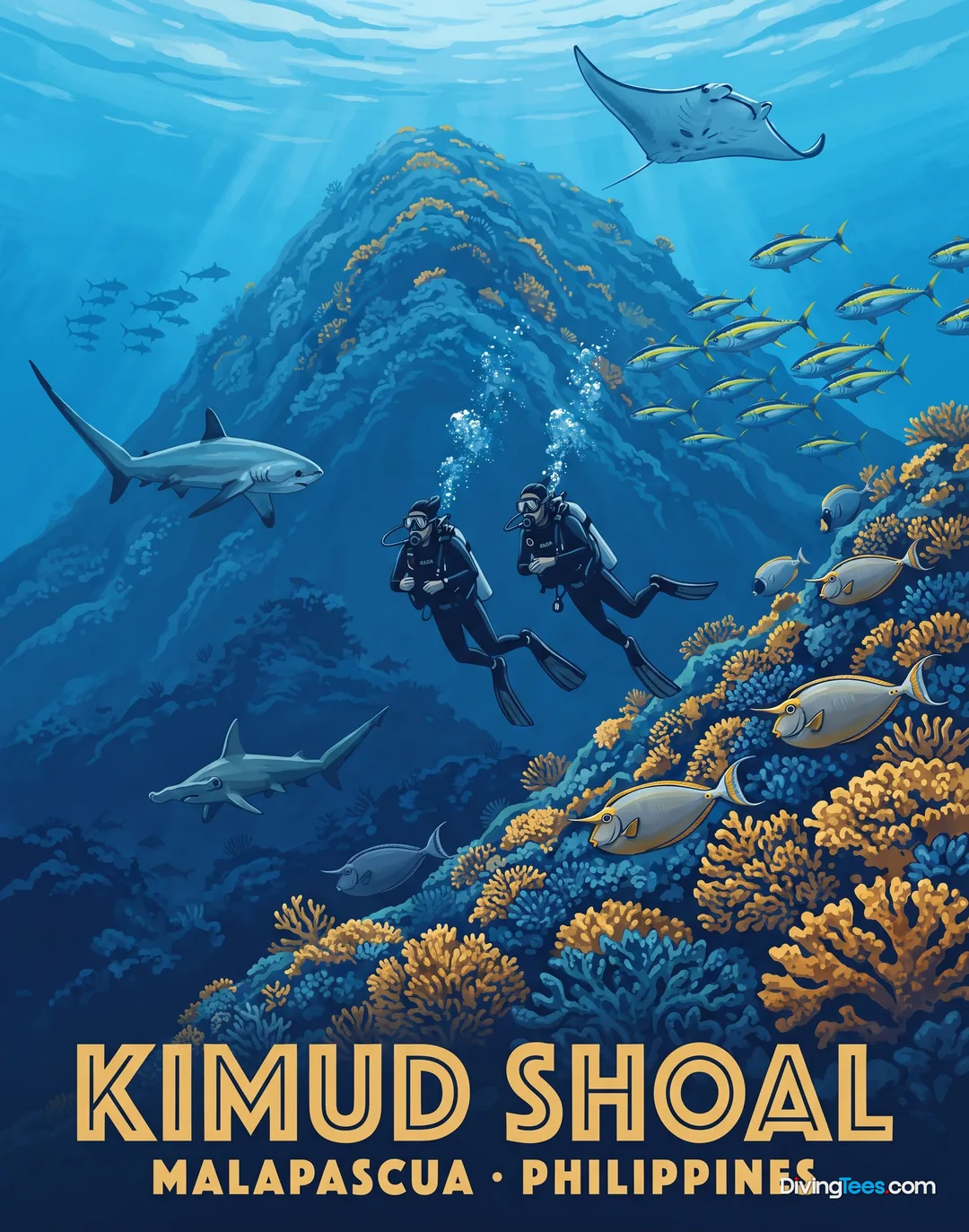
Kimud Shoal →
Max. depth · 22 m
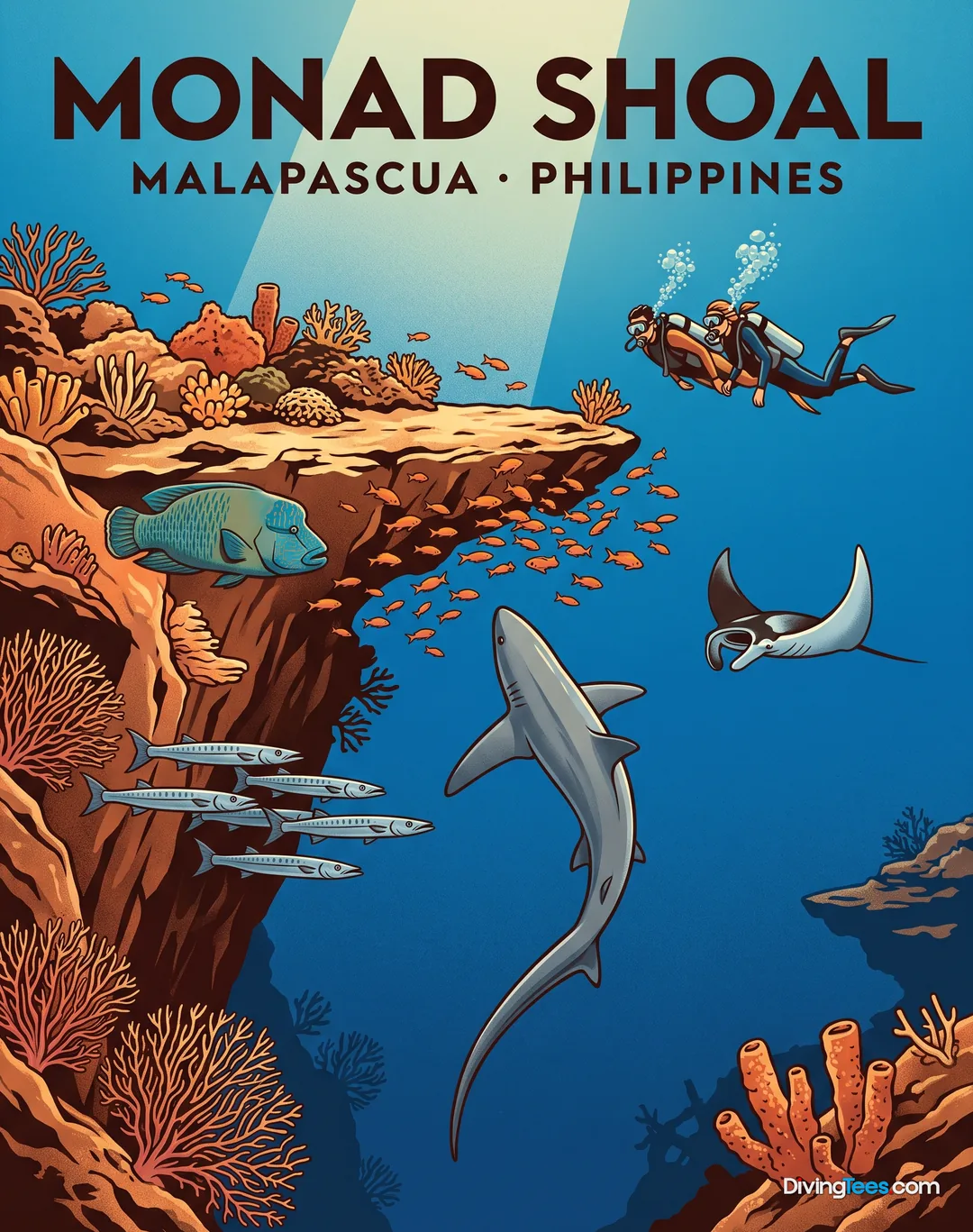
Monad Shoal →
Max. depth · 200 m
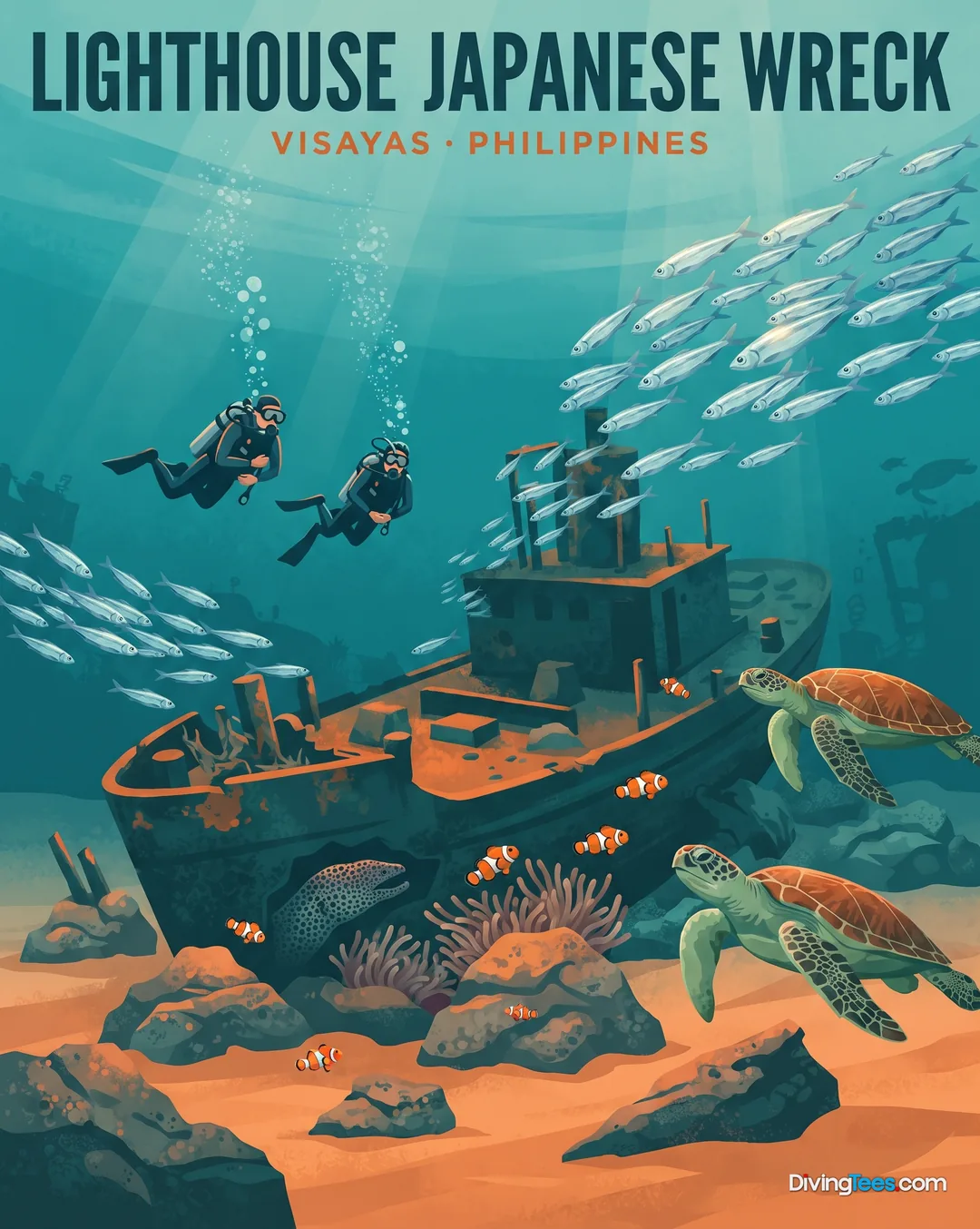
Lighthouse Japanese Wreck →
Max. depth · 5 m
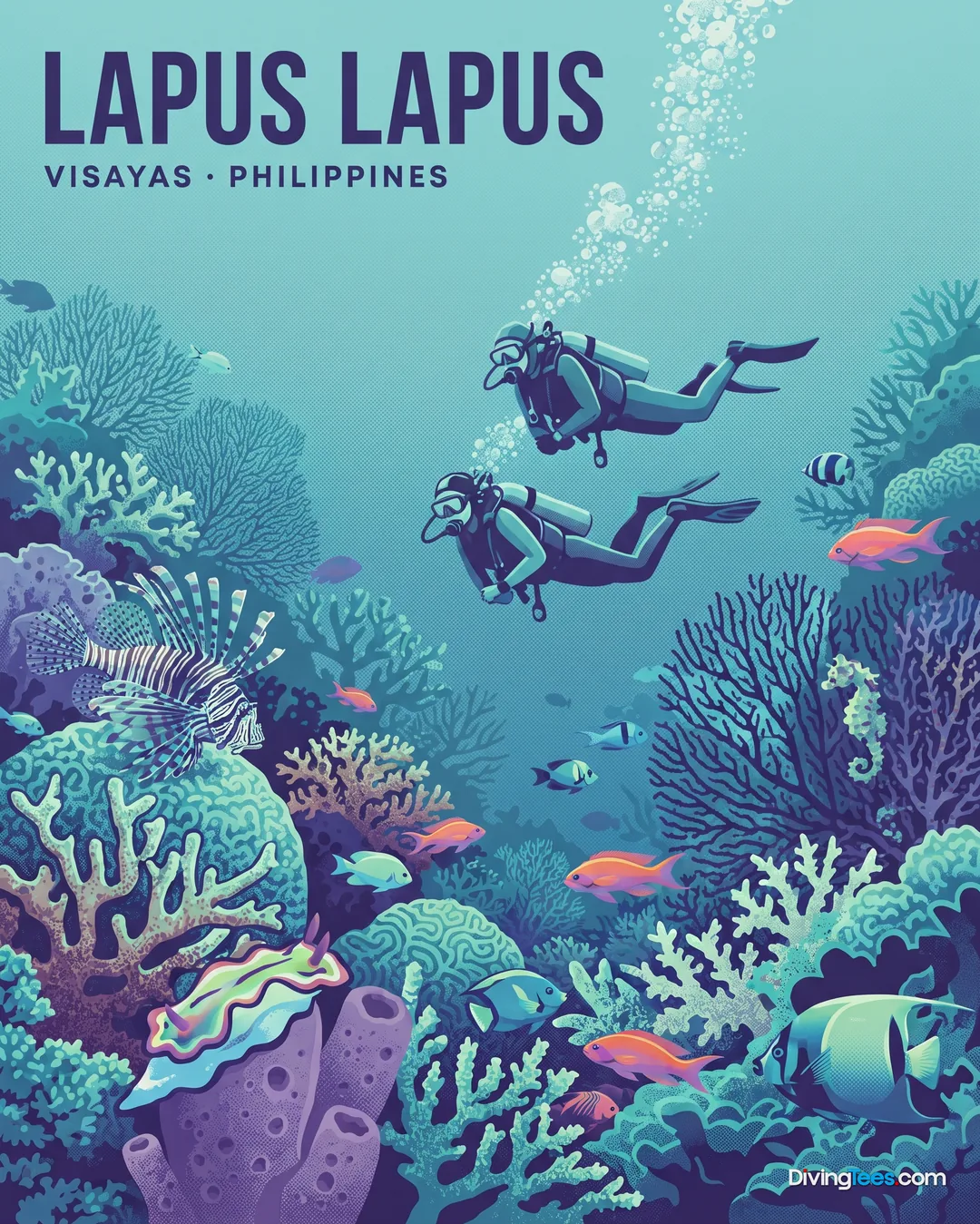
Lapus Lapus →
Max. depth · 20 m
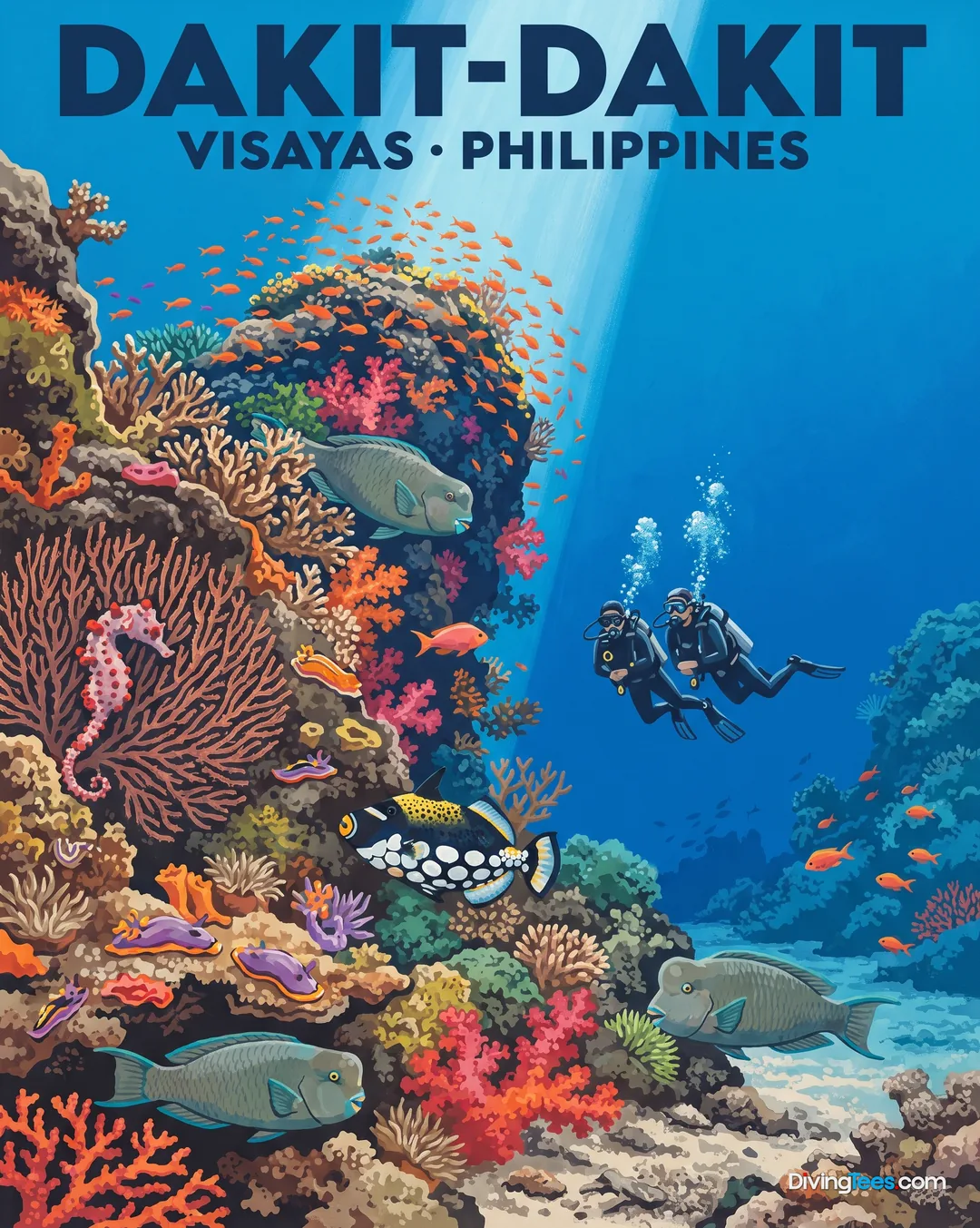
Dakit-Dakit →
Max. depth · 12 m
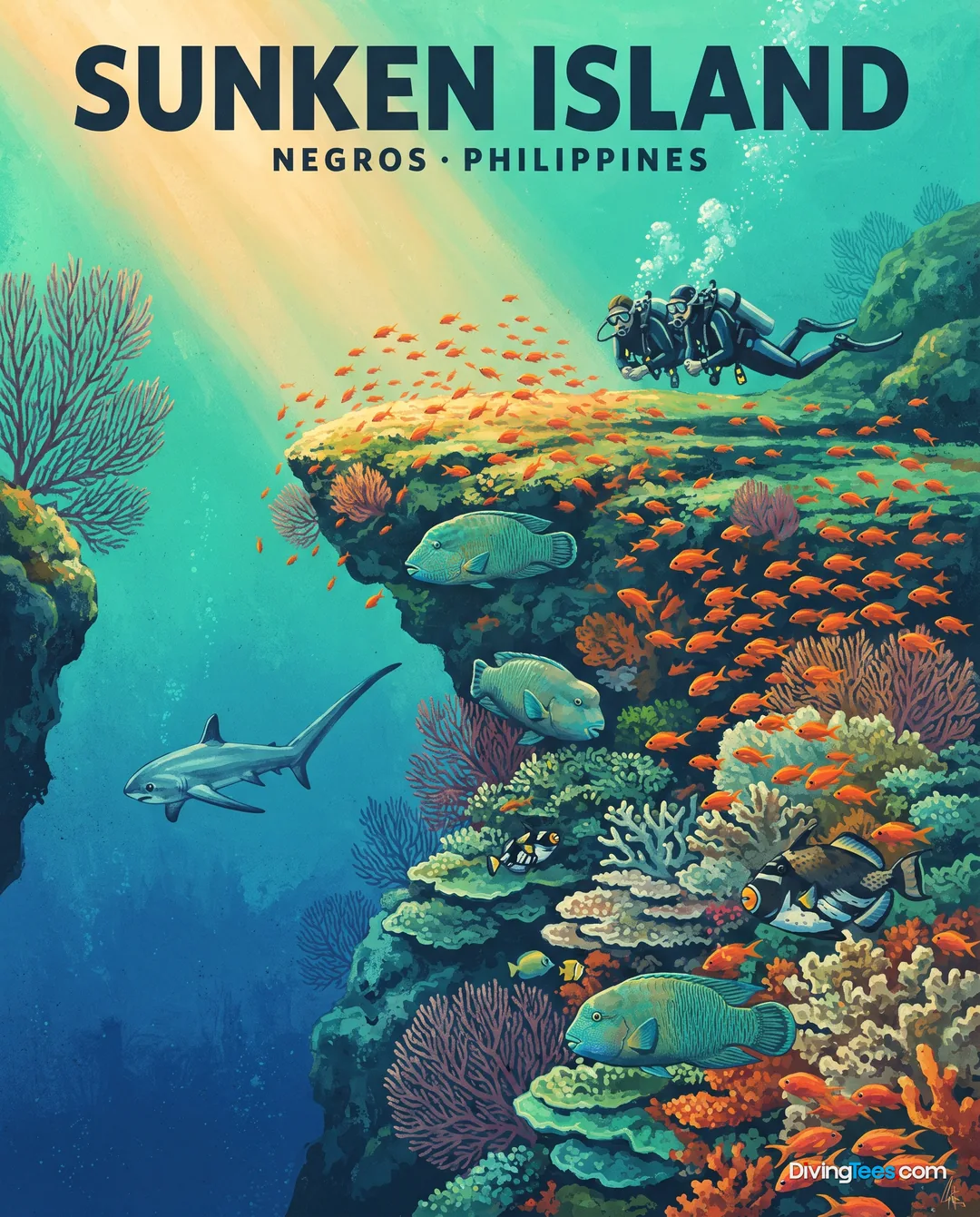
Sunken Island →
Max. depth · 30 m
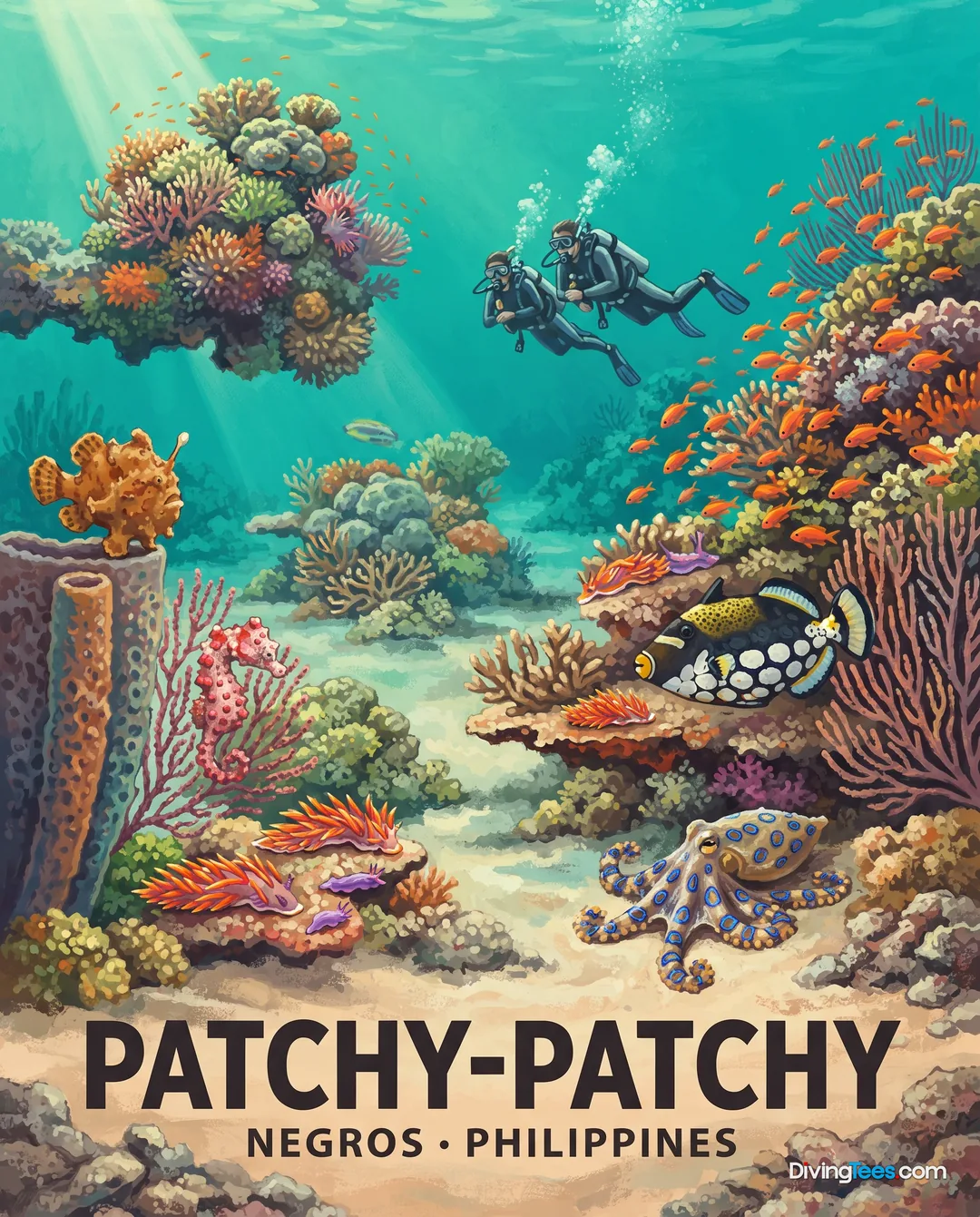
Patchy-patchy →
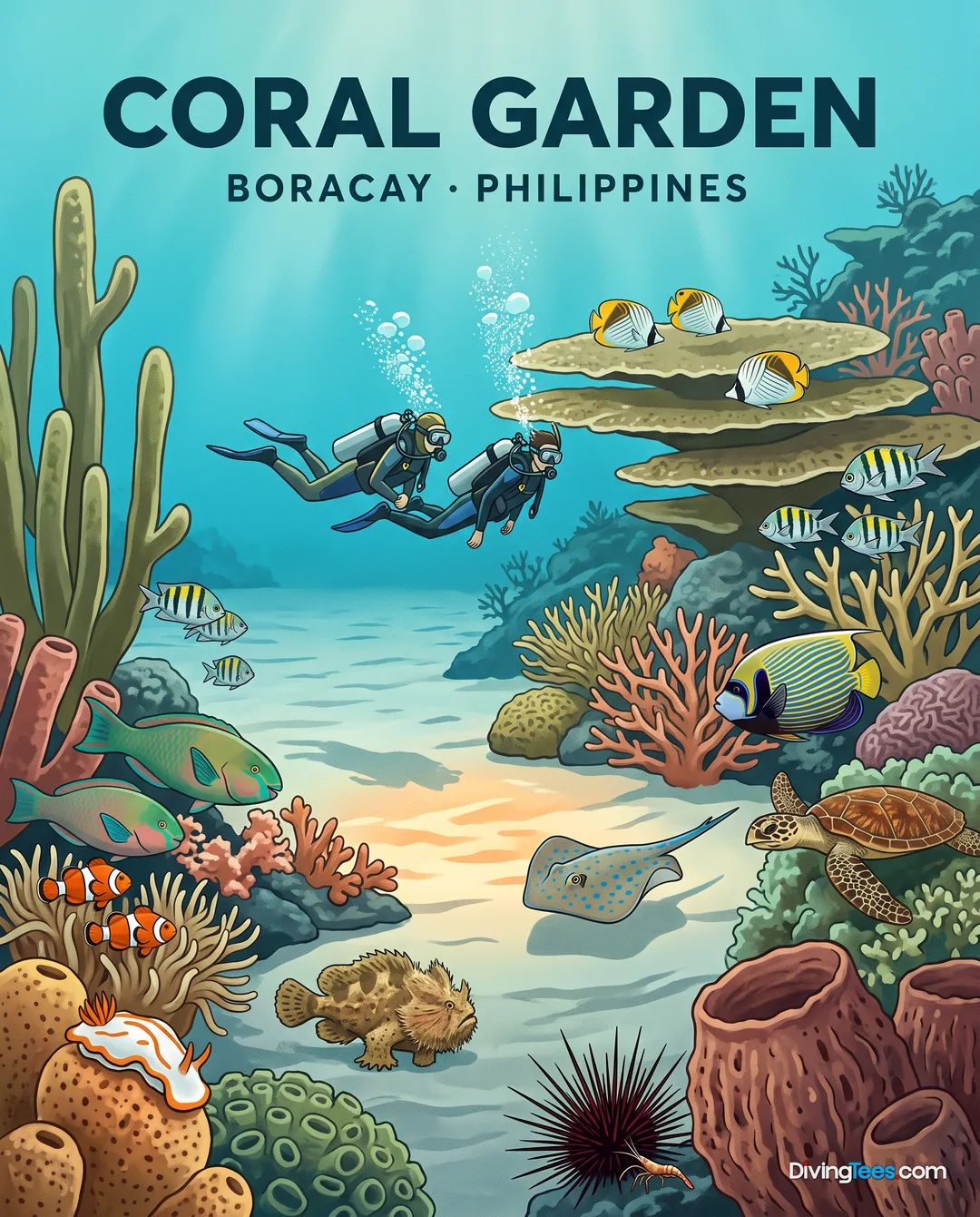
Coral Garden →
Max. depth · 20 m
What you’ll meet underwater
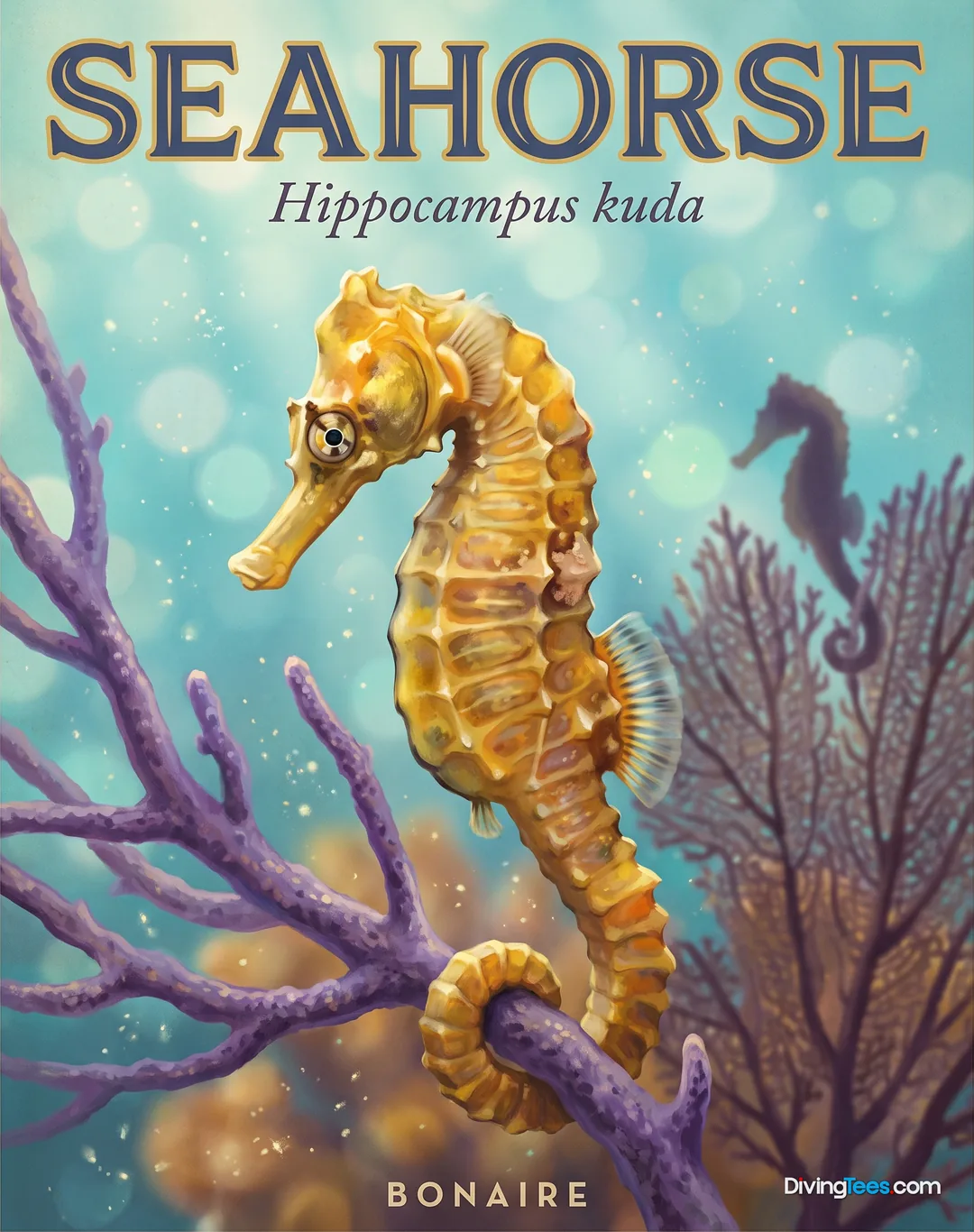
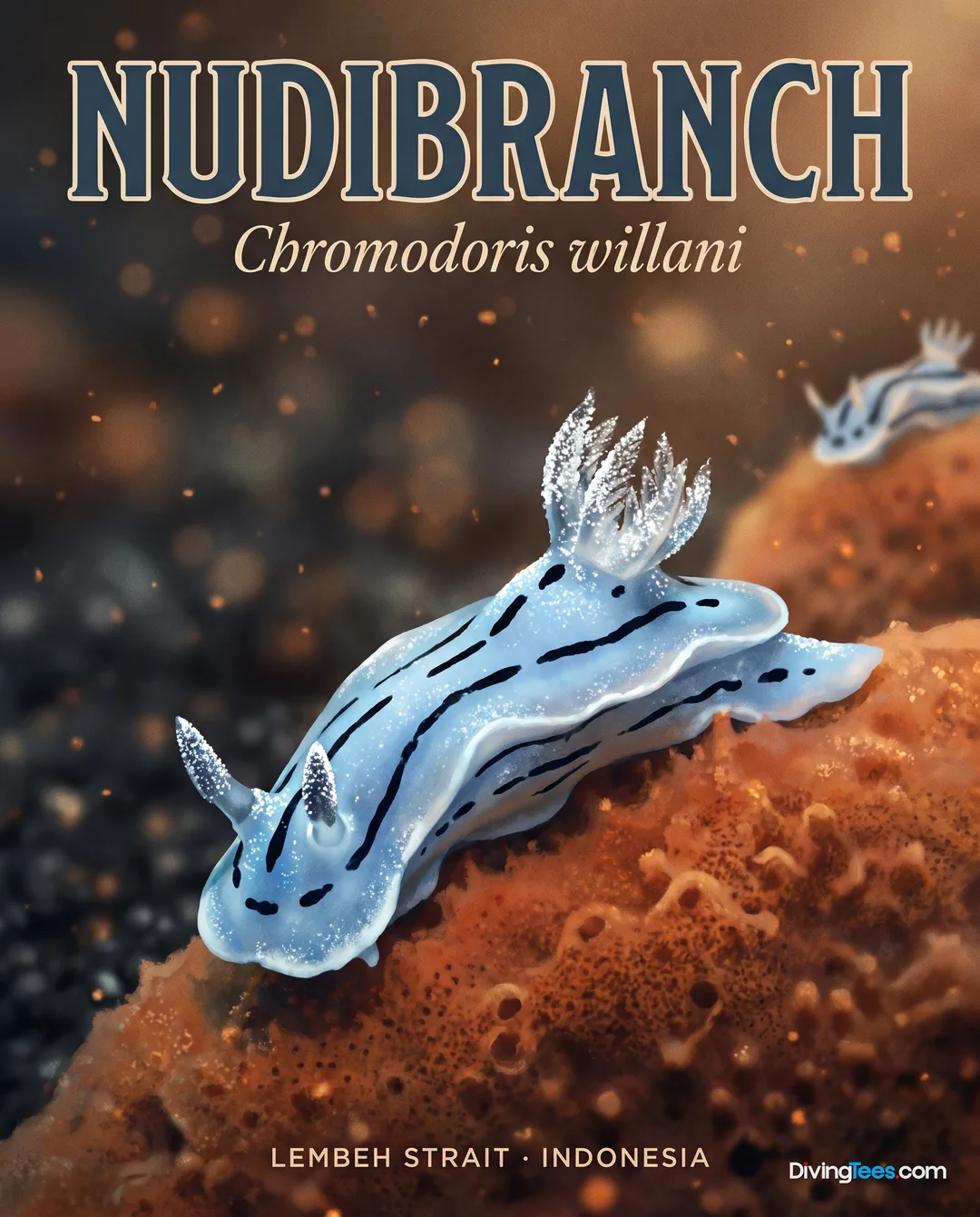
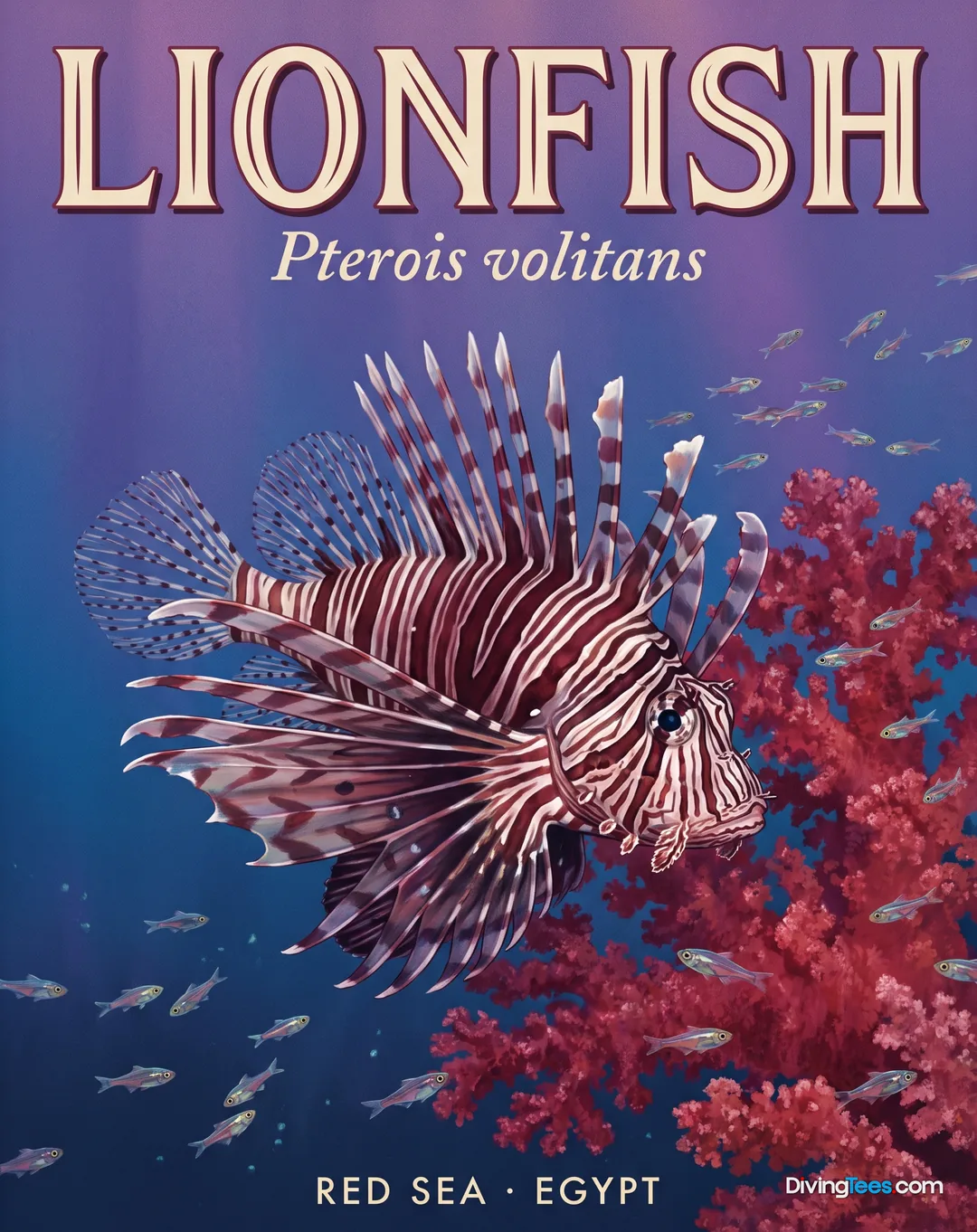
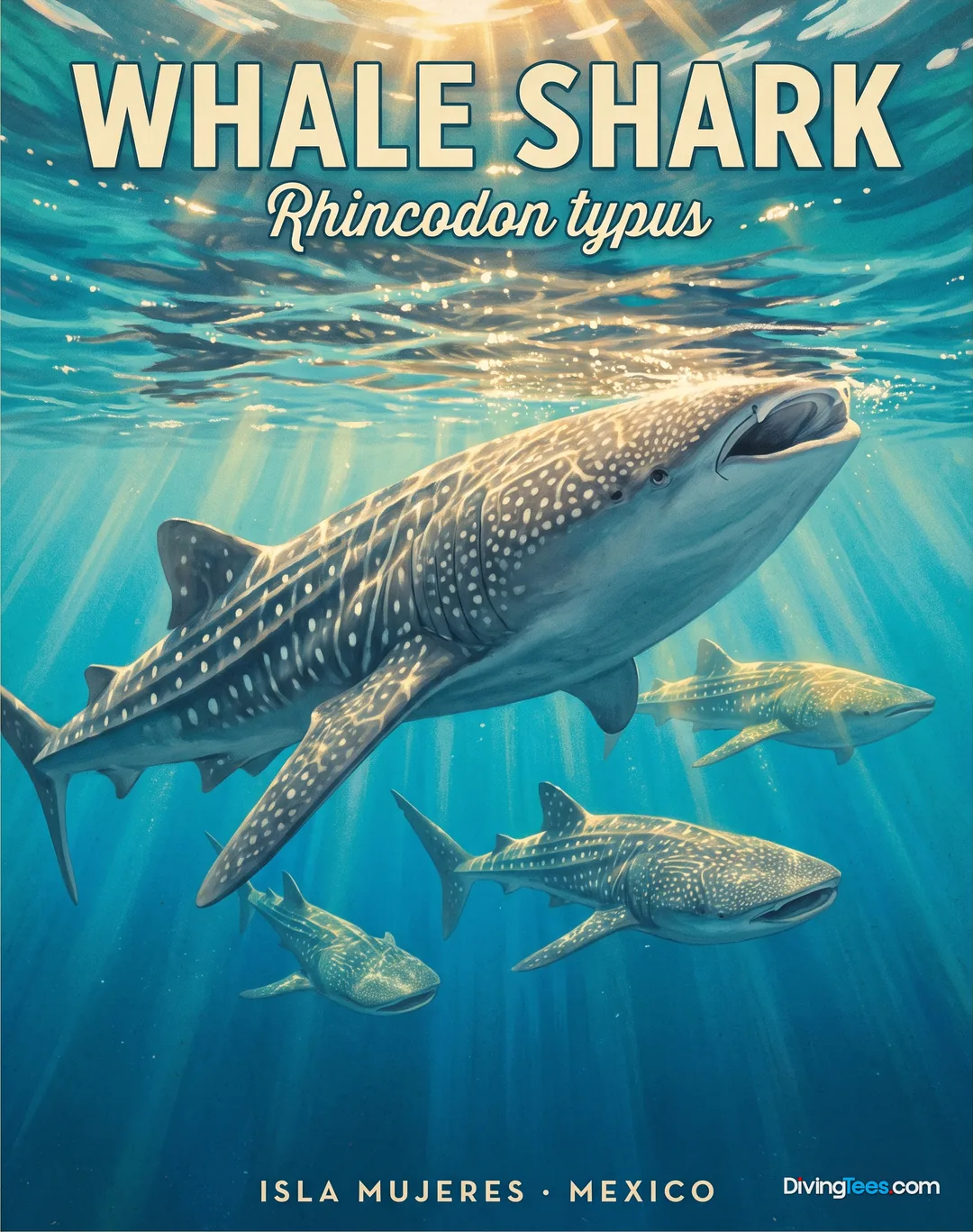
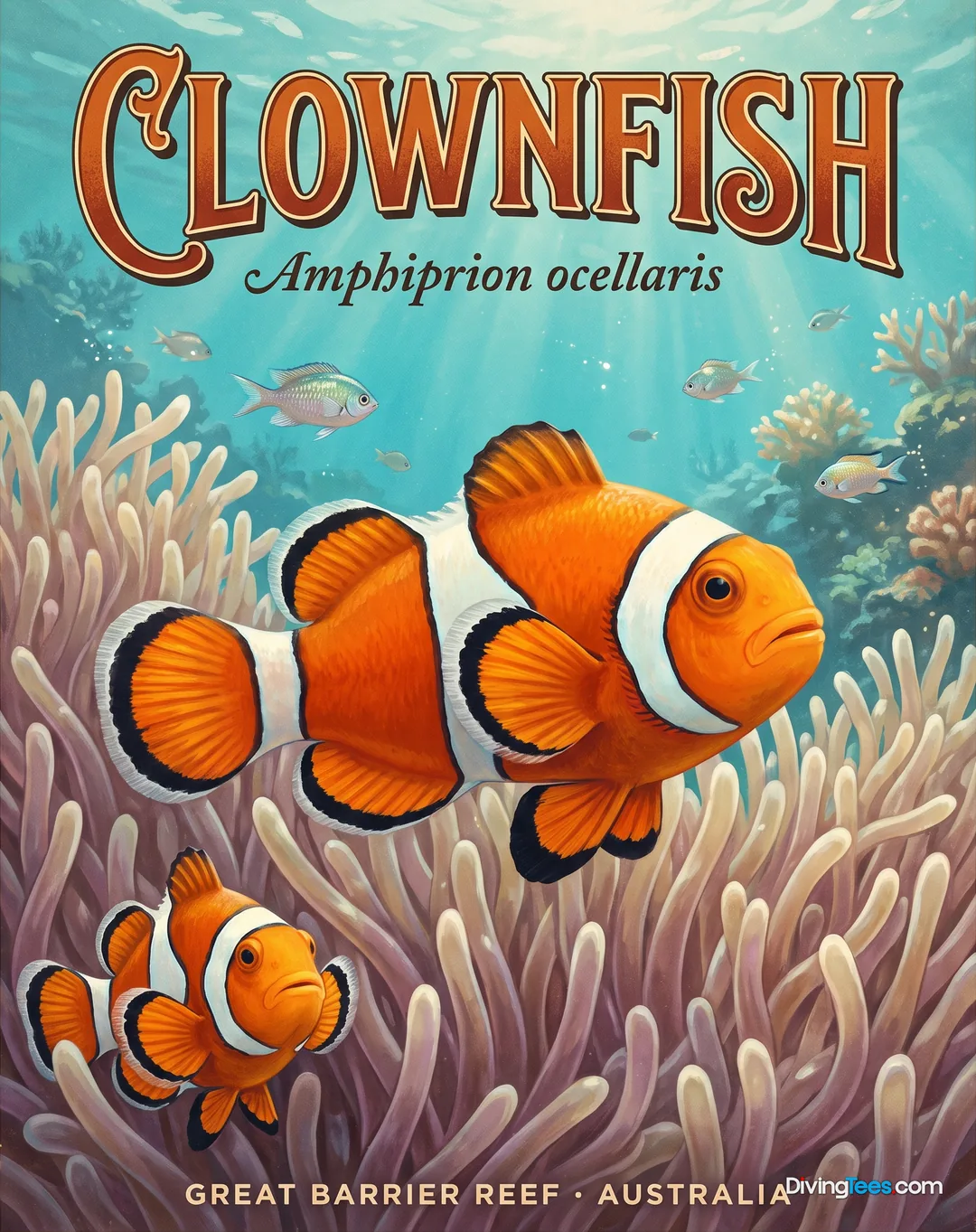
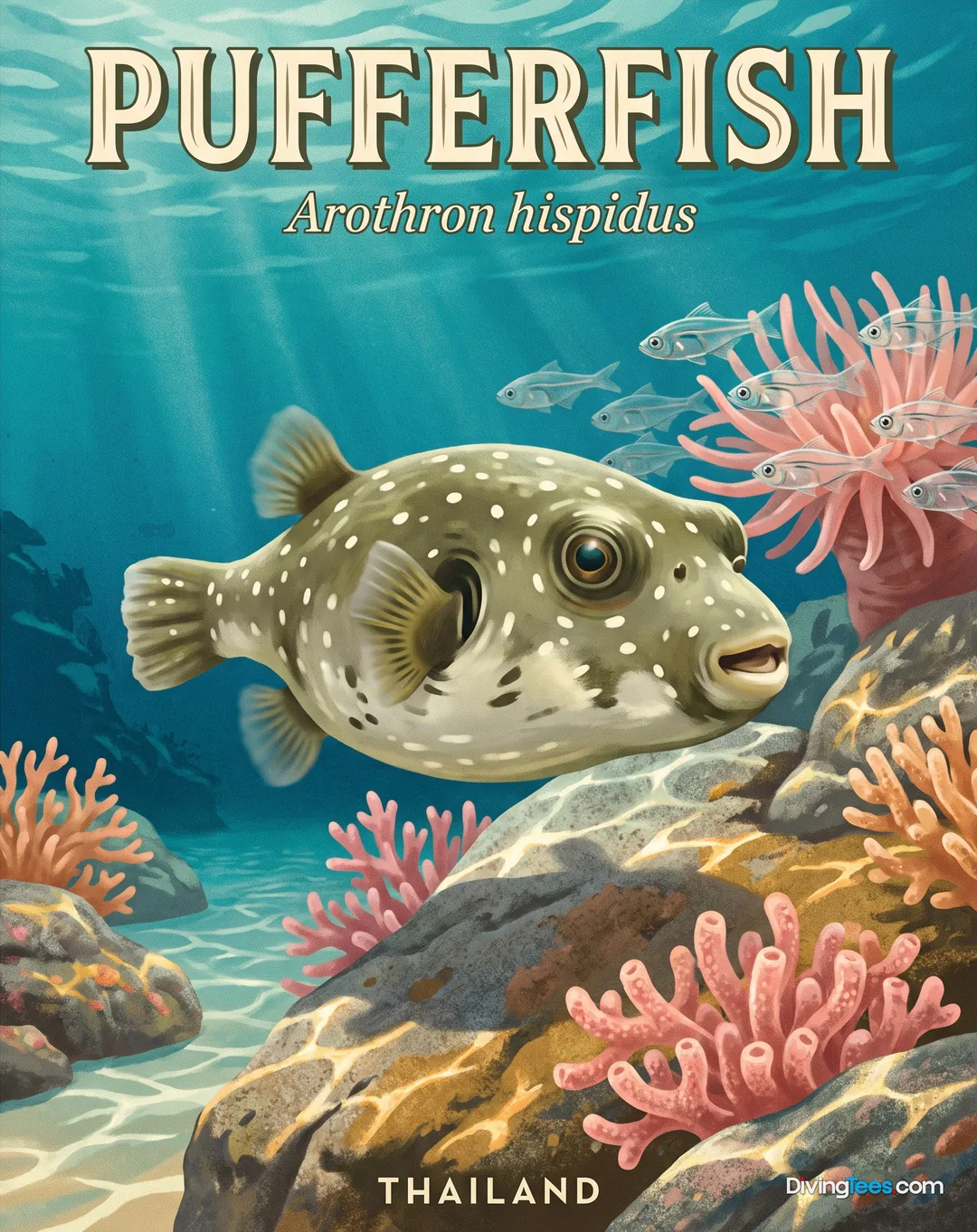
The route keeps returning to the same productive subjects: nudibranchs, lionfish, frogfish, seahorses, soft and hard corals, scorpionfish, crabs, shrimp, octopus, barracuda, gaterins and reef turtles. That is the everyday texture of the Visayas, not a promise that every animal appears on every dive. The unusual sightings give particular sites their pull. Monad Shoal is where devil rays, tuna and gobies join the cleaning-station action around the threshers. Kimud Shoal is the place to look for hammerheads and unicornfish. Dakit-Dakit is the only site on this route with a recorded whale shark, clownfish and white-spotted pufferfish. Apo Island is the recorded site for a reef shark, while Dona Marilyn can produce glassfish around the upright wreck. Lapus Lapus has anemones among its coral gardens, and House Reef is the site associated with squid. The route works because it alternates a patient eye for small animals with the possibility of something large arriving from blue water.
Who puts you in the water
The dive operation is built around a maximum of eight guests and a crew-to-passenger ratio close to one, so briefings and water entries can stay personal rather than becoming a mass departure. English and German are spoken on board. The crew is trained in first aid, oxygen is available on the yacht and on Speedy, and the boat carries first-aid kits, radios, navigation equipment and emergency beacons. Each dive begins with a briefing before guests move to the platform or tender, and the crew handles recovery at the surface. Gypsy supports up to four dives a day, with the fourth normally a sunset dive; a night dive depends on the location. The available information does not set a minimum logged-dive count or describe a fixed guide-to-group structure, so the boat is best suited to certified divers comfortable with the conditions of the selected route. Private guiding and training can be arranged as options.
The dive deck and the gear
The dive deck is aft and shaded, with a tank holder and storage space assigned to each guest. Entry is from the dive platform, while Speedy—the boat's single inflatable tender—supports site access and diver recovery. The deck has rinse tanks, a separate camera-rinse area, outdoor showers and a direct route back from the water. The setup is made for repeated dives: tanks stay organised, cameras have their own rinse, and wet divers do not have to carry everything through the guest spaces. The standard cylinder is 12 litres. DIN adapters are available, and sidemount and rebreather diving are supported; 15-litre tanks and other rental equipment can be arranged as paid options. Nitrox is available as a paid option. Filling is handled by Nuvair MCH16 Tropical Plus compressors, with a Bauer Mariner compressor as backup. Oxygen is carried on both Gypsy and Speedy. Equipment storage is practical rather than decorative, which is what matters after the second or third dive of the day.
Between dives
Between dives, Gypsy gives guests several places to disappear without going far. The flybridge has multiple seating areas, bean bags, a soft lounge and a minibar; the bow and stern offer more open-air space, while the salon provides air-conditioning, a dining table, a bar and a large camera station. The dive deck is shaded, so surface intervals do not have to be spent in full sun. Divers can rinse cameras separately from other equipment, browse the library, use the audio-visual entertainment or take a stand-up paddleboard when the boat is settled. The stabilisers matter here as much as during a crossing: less rolling makes a camera session, lunch or a nap between dives easier. When Gypsy is under way, the flybridge is the natural place to watch the islands pass. When it is anchored, the aft platform keeps the sea close without turning every quiet hour into a formal activity.
A day on board
A dive day begins with a light breakfast and a briefing before Dive 1. The larger breakfast follows, giving the first surface interval a proper meal rather than a snack. After more rest and a second briefing comes Dive 2, then lunch before the third dive. Later, light snacks lead into Dive 4, usually the sunset dive. The boat may schedule up to four dives, and a night dive is possible where the location allows it. On the Malapascua section, the programme is shaped around early dives at the cleaning stations, while Dauin's black-sand sites reward slower, more deliberate searches. Between entries, cameras go to the dedicated station, tanks remain on their holders and guests spread through the salon, shaded deck and flybridge. When Gypsy starts a passage, the dive rhythm gives way to a sunset cruise and open water. Dinner comes after the final dive, then the lower-deck cabins offer the quiet needed before the next briefing.
What you eat aboard
Food is treated as part of the dive schedule rather than as a single evening event. A light breakfast comes before the first briefing, a larger breakfast follows the first dive, lunch lands between the middle dives, snacks cover the later surface interval, and dinner closes the day. The galley serves international and Western dishes, with vegetarian and vegan options, à la carte dinners, wine, beer and cocktails available on board. Barbecue can also move ashore. Five eating occasions make sense on a boat that may schedule four dives: no one is expected to wait until dinner after spending the day underwater. The strong food score is earned in the practical detail of it—something to eat before gearing up, a proper plate after the first dive, and snacks ready when the surface interval is short. Dietary preferences should be given before departure.
Nights at sea
The cabins are on the lower deck, where each has a porthole, private shower and toilet, and individually controlled air-conditioning. The choice is between the Master Cabin and Deluxe Cabins; the latter include twin single beds. That lower position keeps the sleeping areas close to the dive platform, while the soundproof barrier around the engine room limits the machinery noise that often travels straight into a liveaboard bunk. Gypsy's sleeping space is not presented as a collection of oversized rooms. Its value is the separation: after the last dive, guests can leave the salon and flybridge behind, close the cabin door and control the temperature without negotiating with the rest of the group. Towels and daily cabin cleaning are provided. The portholes give each room a direct connection with the sea, but the real luxury is returning to a quiet, air-conditioned cabin after a full day in tropical water.
Master Cabin
Deluxe Cabin
What to know before boarding
The route boards and returns in Dauin, with Gypsy departing from the area of Pura Vida Beach & Dive Resort. Airport and hotel transfers are optional; airport pickup, where offered for the itinerary, runs to Pura Vida Beach & Dive Resort rather than directly to the boat. The return is also to Dauin. Arriving in the area the night before is the sensible choice, leaving the embarkation day free of flight delays and road transfers.
Deck plan
What the boat does for the ocean
Gypsy carries two 250-litre-per-hour watermakers, reducing reliance on shore water during a liveaboard trip. Its black- and grey-water systems include onboard treatment. The boat also uses Seakeeper gyroscopic stabilisers to reduce rolling at sea and anchor, which improves comfort without changing the route or adding a separate support vessel.
- Year built
- 2012
- Year renovated
- 2021
- Length
- 24.3 m
- Beam
- 6.1 m
- Maximum number of passengers
- 8
- Number of cabins
- 4
- Number of bathrooms
- 2 public 4 private
- Engines
- × 2 500 hp volvo penta
- Cruising speed
- 8-10 knots
- Tenders
- 1
- Website
- explorers.ph ↗
Hello, I'm Marina, DivingDeal.com's AI assistant. I answer in detail about hotels, dive centres and liveaboards.

Thinking about the whole trip and the flights? Talk it over with Edith →
Marina is an AI. Some links are affiliate links: DivingDeal may earn a commission, at no extra cost to you. Bookings are made with the partner.