
Plongee Passion Carry
Google 4.8/5 (231 reviews)
France · Mediterranean
Rocky walls, Posidonia seagrass, conger eels and offshore drop-offs meet around a protected marine reserve on France’s Côte Bleue.
For subtitles in English: start the video firstthen click the gearat the top right of the video, select “Subtitles/CC”, then “Auto-translate” and choose “English”.
Rocky walls, boulder fields and Posidonia seagrass define diving around Carry-le-Rouet. The town is a practical base for boat trips along the Côte Bleue, with shallow ground suited to discovery dives and deeper offshore sites for more experienced divers. Its marine reserve, created in 1983, is fully protected, so scuba diving takes place outside its boundaries. That division is central to the character of the destination: protected water close to town, active dive sites around it, and a straightforward stay on land.
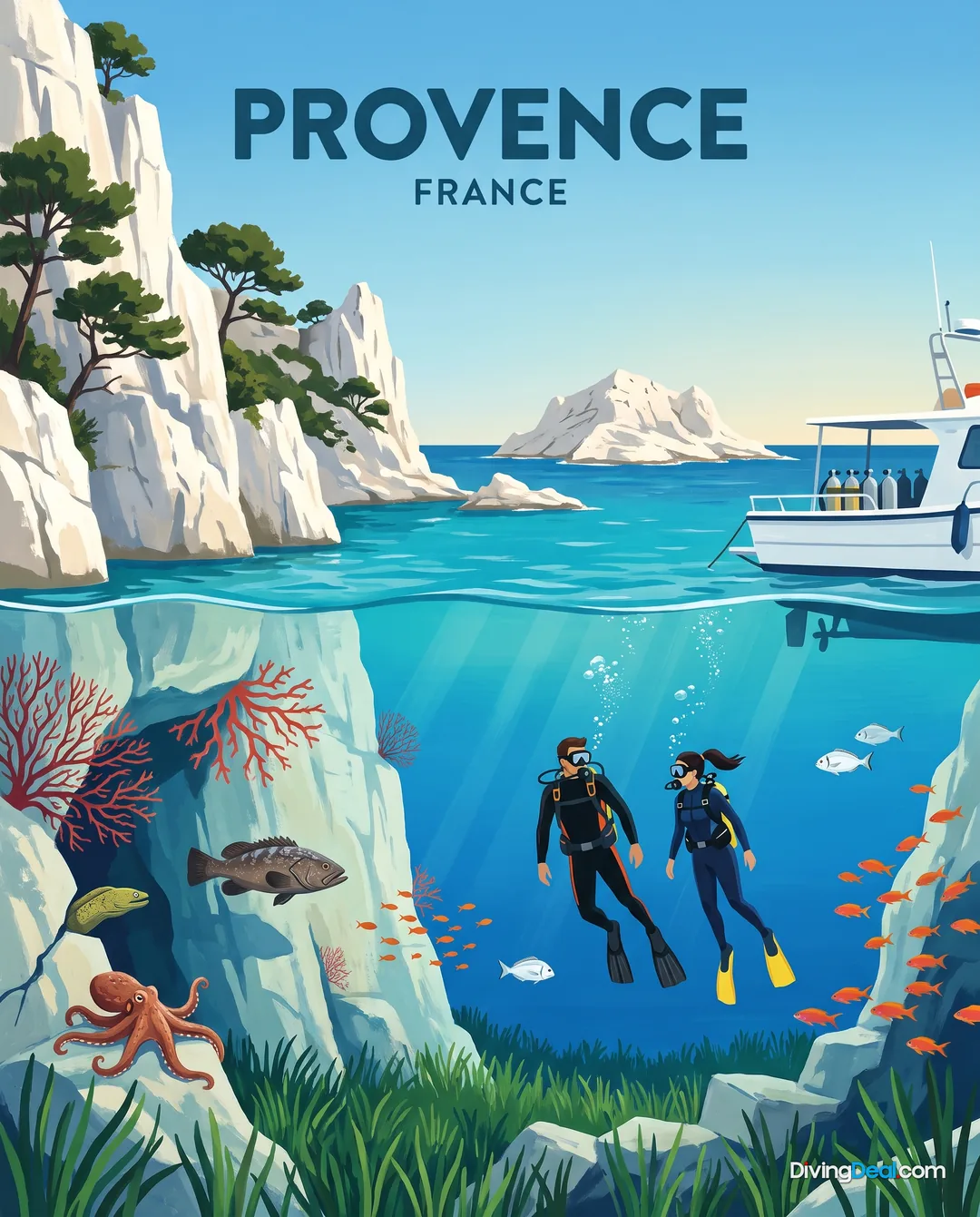
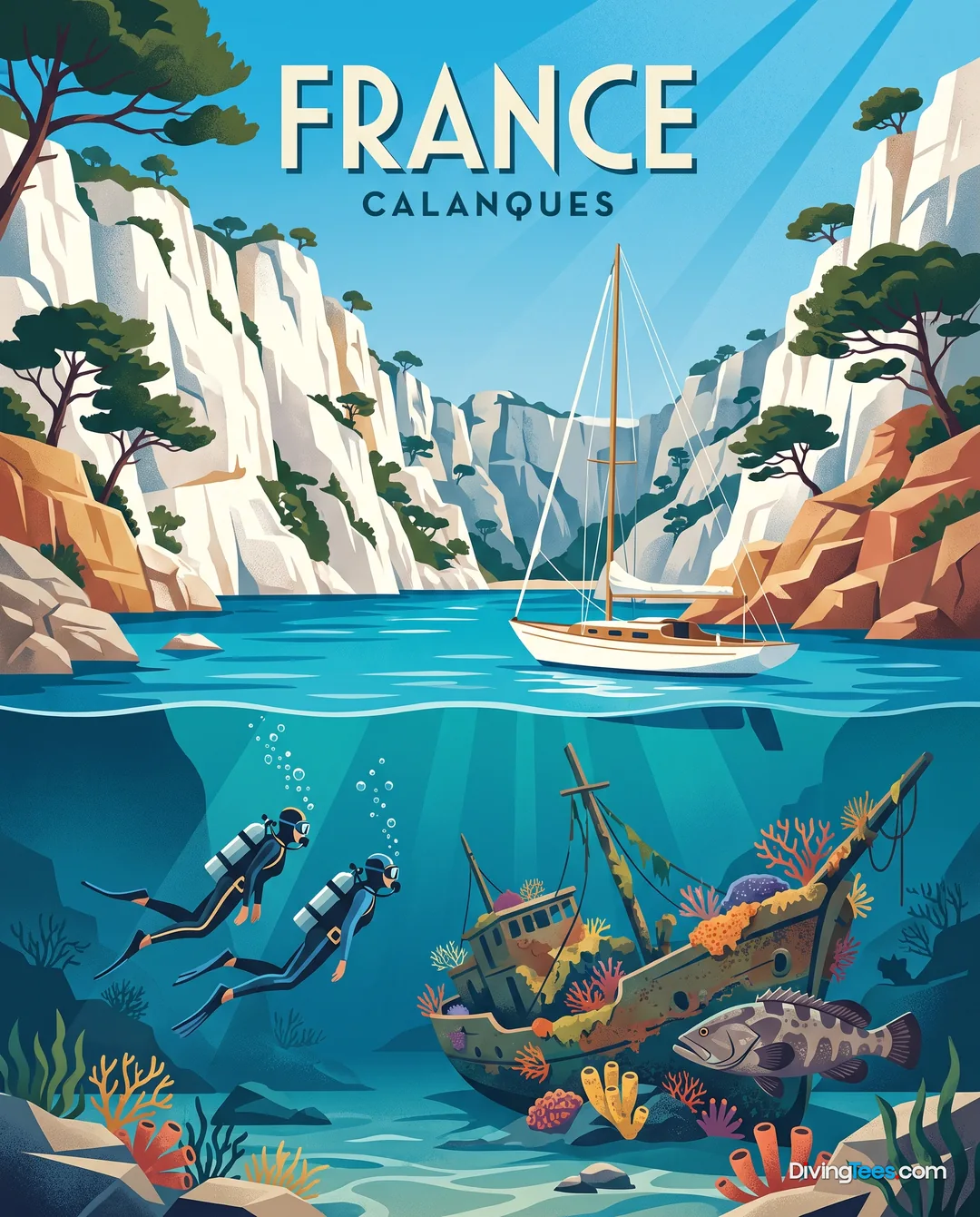
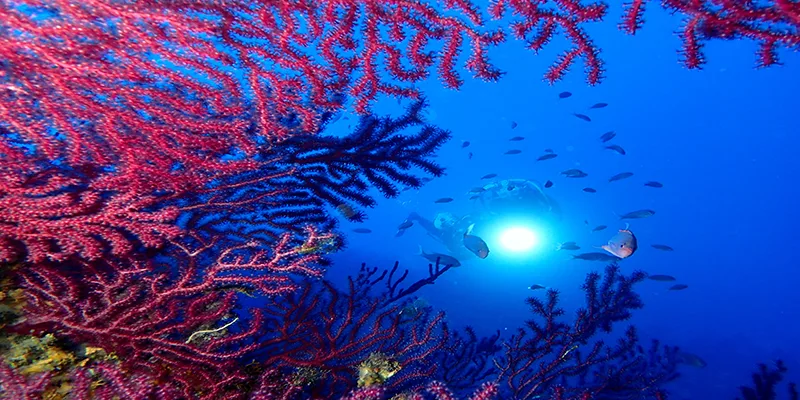
Underwater, expect a distinctly Mediterranean mix of rocky plateaux, steep walls, loose boulders, holes and seagrass beds. The shallow sites allow a measured pace for beginners, while offshore ground such as Secan takes the dive into deeper water and requires Level 2 or equivalent. Currents are variable rather than a defining feature, so the boat crew’s briefing matters more than any fixed expectation of a drift dive or downcurrent ride. Visibility also varies, and the coast is best approached as a series of boat outings with sensible alternatives nearby. You may spend one dive tracing a wall and checking cavities, then another moving across boulder-strewn ground or Posidonia. The marine reserve itself is not a scuba site: its value underwater is as a protected nursery and reference point for the surrounding coast.
The rocky cavities and boulder fields are the places to look closely. Conger eels may hold in shadowed holes, while spiny lobsters can be found among the rockwork. Small fish move around the walls and over the Posidonia seagrass, adding life to the shallower sections as well as the deeper sites. The appeal is not a checklist of large animals, but the change of scale during a dive: broad plateaux, dark cracks, then a careful search around a cavity. Carry-le-Rouet’s reserve strengthens that coastal setting by leaving a fully protected stretch between the harbour and Anse du Rouet. Snorkelling visits there offer a different way to appreciate the habitat, while scuba encounters are made outside its boundaries.
Carry-le-Rouet is easiest to plan outside the busiest summer weeks and weekends, when the beaches, harbour and surface activities draw more visitors. The quieter periods bring less pressure on the practical side of the trip and make it easier to build in a weather day. There is no useful reason to promise one perfect month here: conditions can alter the choice of site, and the Côte Bleue works better with flexibility than with a rigid schedule. A stay of three to five days gives room for several outings and a reserve day, while a week allows trips from neighbouring parts of the coast as well.
Beginners can use the shallow sites and discovery dives, provided the chosen outing matches their experience. Carry-le-Rouet also has proper scope for qualified divers who want walls, cavities and offshore ground rather than only sheltered exercises. Secan is specifically for Level 2 or equivalent, so check the certification requirement before booking. BSAC, PADI and SSI divers should bring their qualification details and be clear about depth experience, especially when moving from easy coastal ground to a deeper boat site.
From London Heathrow or Gatwick, or from Manchester, the usual air gateway is Marseille, followed by the road or regional train to Carry-le-Rouet. No ferry or domestic flight is needed for the final approach. Allow time for the connection between Marseille and the coast, particularly if the journey involves changing from air travel to rail or arranging a road transfer. Carry-le-Rouet is also linked by regional train with Marseille and other Côte Bleue communities. Once there, the harbour and nearby diving arrangements may be manageable on foot if you stay centrally. Elsewhere along the coast, expect to use a car or taxi, as there is no destination-wide shuttle.
The first thing to put on your plan is the marine reserve map. Do not book a scuba dive inside it: bottle diving, fishing and boat anchoring are forbidden there, even though guided surface visits and snorkelling are possible. Treat it as a protected coastal reference point, not as a dive site. Before reserving an offshore outing, check the certification requirement for the site, particularly Secan, which calls for Level 2 or equivalent. Ask about nearby alternatives as well, because Carry-le-Rouet works as a Côte Bleue network and a weather change may shift the day’s plan. In summer, arrange outings ahead where possible, then keep one day free for a guided snorkel in the reserve, the Anse du Rouet and the coastal paths. Staying near the harbour removes an unnecessary daily transfer, while a car or taxi is useful if your chosen operator lies elsewhere along the coast.
This is a land-based diving holiday, not a liveaboard destination. Base yourself near the harbour if you plan several boat days, or use a car or taxi when staying elsewhere on the Côte Bleue. Three to five days suits a focused visit with room for a weather change. A week opens up outings from neighbouring ports, plus time for the reserve, beaches, calanques and coastal walks. Non-divers have plenty to do without needing a boat.
Hello, I'm Marina, DivingDeal.com's AI assistant. I guide you through destinations, areas and countries.
Thinking about the whole trip and the flights? Talk it over with Edith →
Marina is an AI. Some links are affiliate links: DivingDeal may earn a commission, at no extra cost to you. Bookings are made with the partner.
Carry-le-Rouet is easier to plan outside the busiest summer weeks and weekends, when beaches, the harbour and surface activities attract more visitors. Quieter periods reduce practical pressure and make a weather day easier to include. Conditions can change site choices, so keep your schedule flexible rather than relying on one perfect month.
Carry-le-Rouet suits beginners on shallow sites and discovery dives, provided the outing matches your experience. Qualified divers can explore walls, cavities and offshore ground. Secan requires Level 2 or equivalent, so check before booking. Bring your BSAC, PADI or SSI qualification details and discuss your depth experience with the operator.
At Carry-le-Rouet, expect rocky plateaux, steep walls, boulder fields, cavities and Posidonia seagrass. Conger eels may shelter in shadowed holes, while spiny lobsters can appear among the rocks. Small fish move around walls and seagrass. Scuba diving takes place outside the fully protected marine reserve, where guided snorkelling is possible.
Plan Carry-le-Rouet as a land-based holiday with boat outings from the harbour. Marseille is the usual air gateway, followed by road or regional train. Staying near the harbour helps with diving arrangements. Three to five days allows several outings and a weather day, while a week adds neighbouring ports, reserve visits and coastal walks.