CMAS
Cote Bleue Plongee
Google 4.8/5 (197 reviews)
France · Mediterranean
An 8 to 14-metre harbour-mouth wall, artificial reefs, coastal drop-offs and boat trips towards Marseille and the Frioul define Sausset-les-Pins.
For subtitles in English: start the video firstthen click the gearat the top right of the video, select “Subtitles/CC”, then “Auto-translate” and choose “English”.
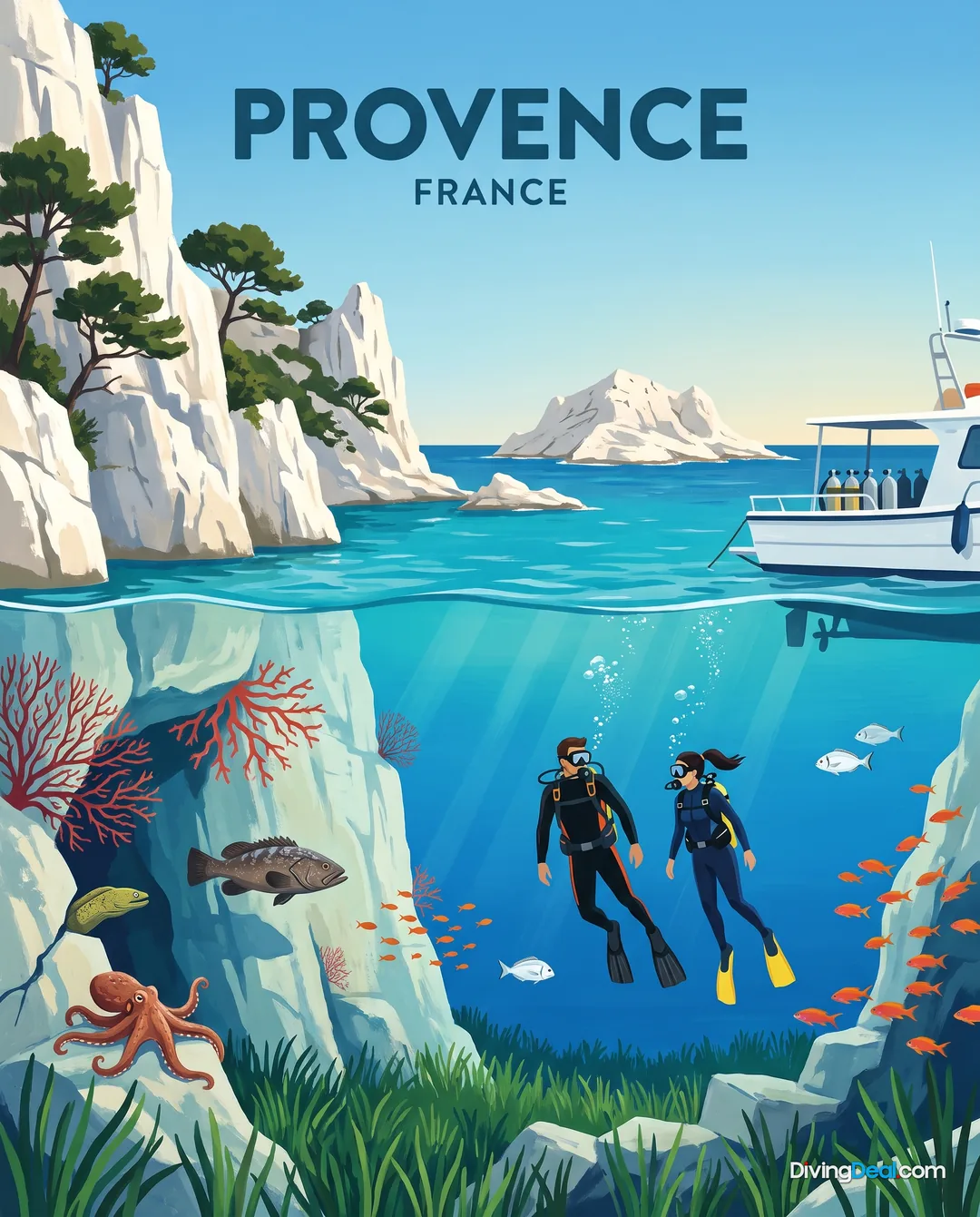
At the harbour mouth, the Jardin de Sausset drops from 8 to 14 metres, giving the town a genuinely useful local dive rather than just a place to board a boat. From here, outings range along the Côte Bleue, linking coastal walls, artificial reefs and wrecks between Carro, Carry-le-Rouet and Marseille, with the Frioul also within the advertised day-boat range. Sausset works best as a land-based base: dive locally when conditions and experience suit, then use the boat to explore a wider stretch of coast.
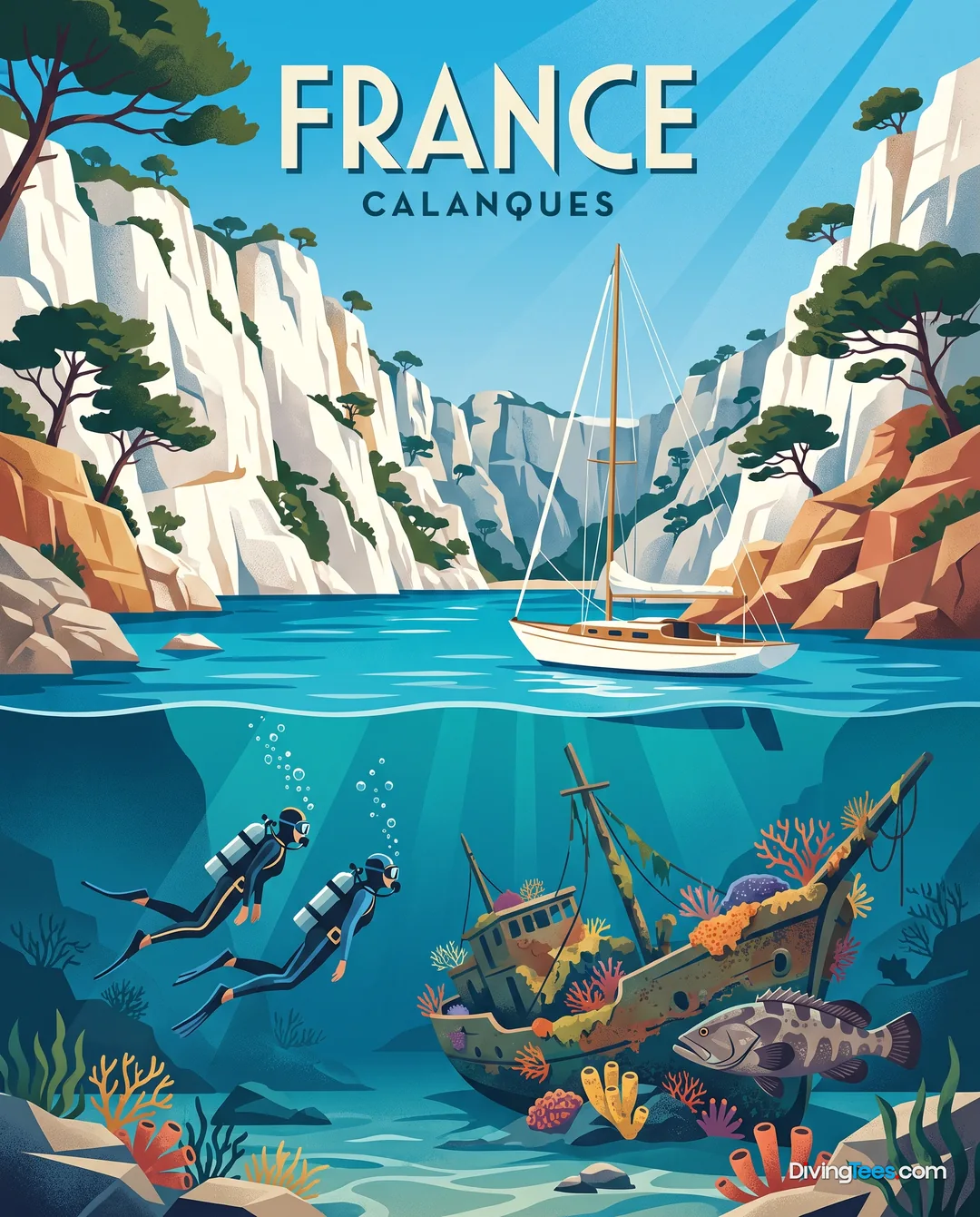
The diving shifts between rocky coastal walls, artificial reefs and boat-accessed wrecks. The Jardin de Sausset is the straightforward end of the range, with its 8 to 14-metre profile close to the harbour. Further along the Côte Bleue, walls become deeper and more demanding, particularly around neighbouring sectors from Carry towards Marseille. Currents are variable, so a site that looks simple on the chart still deserves a proper briefing, especially where a wall or wreck could turn the outing into a drift dive. The practical pattern is a day trip from a shore base, not a liveaboard: local dives can be mixed with boat runs towards Carro, La Redonne, Niolon, La Vesse, Marseille or the Frioul. Sausset therefore suits divers who want a recognisable Mediterranean base, but do not expect every outing to have the same depth or character.
What you meet underwater here is first of all the hard structure of the Côte Bleue: the Jardin de Sausset wall, darker deeper drop-offs, artificial reef material and wreck surfaces reached by boat. Those habitats give the dives their shape, with the eye moving between the edge of the wall, the reef structure and the open water beyond. The marine park matters because two fully protected reserves preserve sections of this coastline from bottle diving, anchoring and fishing. That means the protected landscape is part of the local experience, even when your own dive takes place in an authorised sector. Seasonal wildlife encounters are not the reason to time a visit to a particular month here. The attraction is the changing combination of terrain, depth and neighbouring sites.
Sausset-les-Pins can be dived throughout the year because the Côte Bleue includes sheltered coves. Spring and autumn are the sensible compromise for a stay that combines diving with walking, beaches and coastal villages, since the shore is less busy than in high summer. Summer brings the greatest tourist traffic around the harbour and beaches, which can make the land-based part of the trip feel busier even when the boat schedule works normally. Choose the season for the balance you want: quieter days on land in spring or autumn, or the full summer life of the coast. There is no need to build the trip around a rainy season or monsoon cycle.
The destination covers all levels, but not every outing does. Beginners and divers rebuilding confidence can use the Jardin de Sausset and its 8 to 14-metre depth, provided the day’s conditions and briefing suit them. Deeper walls nearby are aimed at more experienced divers, with some described for divers from Level 2 upwards. BSAC, PADI and SSI qualifications can all be considered in the normal way by the dive team, but the site choice should follow recent experience, depth comfort and current tolerance rather than the label on the card.
From London Heathrow, London Gatwick or Manchester, route the journey through Marseille, then continue to Sausset-les-Pins by road or by the Marseille to Miramas TER line. The train journey from Marseille typically takes around 30 to 45 minutes, while the road journey is quoted at roughly 30 minutes via the A55 towards Martigues and Fos, followed by the Sausset-les-Pins exit. The railway station is in the town centre, so arriving without a car is possible. A car becomes more useful once diving starts, because it makes carrying equipment easier and simplifies travel between Sausset, the neighbouring Côte Bleue ports and different launch points. No ferry or domestic flight is needed for this final leg.
Treat Sausset as a base for the Côte Bleue, not as a promise that every worthwhile outing will be directly outside the harbour. When booking, ask about sectors towards Carry, La Redonne, Niolon, La Vesse, Carro, Marseille and the Frioul, then keep the site choice matched to your qualification and recent depth experience. The Jardin de Sausset is the sensible local reference point at 8 to 14 metres; do not accept a deeper wall simply because the boat is already heading that way. The marine park also needs careful attention. Bottle diving, anchoring and fishing are forbidden in the fully protected reserves at Carry-le-Rouet and Cap Couronne, so check the planned position rather than assuming the park gives blanket permission. A car is worth considering if you bring substantial kit or want several launch points. Without one, the central TER station works well for a lighter trip. Spring or autumn makes the coast easier to enjoy away from summer crowds.
Organise the stay around shore-based boat days, with the option of a local dive at the Jardin de Sausset when a shorter or shallower outing makes sense. The town combines a harbour, beaches and coastal walks, while the TER provides an easy way to reach Marseille and other Côte Bleue villages. Non-divers have enough to do locally, and a day ashore can include the coastline between Niolon and Carro or Marseille’s museums and monuments. A car adds flexibility for equipment and neighbouring ports, but is not essential for reaching Sausset itself.
Hello, I'm Marina, DivingDeal.com's AI assistant. I guide you through destinations, areas and countries.
Thinking about the whole trip and the flights? Talk it over with Edith →
Marina is an AI. Some links are affiliate links: DivingDeal may earn a commission, at no extra cost to you. Bookings are made with the partner.
You can dive in Sausset-les-Pins throughout the year, with sheltered coves helping support different seasons. Spring and autumn offer a quieter balance for diving, walking, beaches and coastal villages. Summer brings fuller tourist traffic around the harbour and beaches, so choose it if you prefer the livelier coastal atmosphere.
Sausset-les-Pins accommodates all levels, but site choice should match your recent experience, depth comfort and tolerance for currents. Beginners and divers rebuilding confidence can consider the Jardin de Sausset, which reaches 8 to 14 metres, when conditions and the briefing suit them. Deeper walls are intended for more experienced divers.
Diving in Sausset-les-Pins features the Jardin de Sausset wall, darker deeper drop-offs, artificial reefs and wreck surfaces reached by boat. You move between wall edges, reef structures and open water along the Côte Bleue. Two fully protected marine-park reserves also preserve parts of the coastline from bottle diving, anchoring and fishing.
Plan Sausset-les-Pins as a land-based Côte Bleue stay, combining local dives with boat trips towards nearby coastal sectors, Marseille or the Frioul. Ask operators to match sites to your qualification and experience, and check protected areas before diving. The central TER station suits lighter trips, while a car helps with equipment and launch points.