Liveaboards · Indonesia
Ambai — a traditional Indonesian phinisi built around diving
What makes this boat unique
- Ambai is a 32-metre wooden phinisi designed specifically for liveaboard diving.
- The boat carries up to 16 divers in eight air-conditioned cabins with private bathrooms and hot water.
- Three 50HP Yamaha tenders can be alongside the dive platform at the same time.
- A dedicated camera room, separate camera rinse area and large screen support serious photography.
- Routes cover Halmahera, Raja Ampat, Triton Bay, the Banda Sea and the Forgotten Islands.
For subtitles in English: start the video firstthen click the gearat the top right of the video, select “Subtitles/CC”, then “Auto-translate” and choose “English”.
The invitation
Ambai is for divers who want Indonesia beyond the familiar names, but do not want to trade a proper dive operation for a rough expedition boat. Her traditional ironwood construction gives the vessel a strong sense of place; the layout, however, was designed around getting divers and equipment into the water efficiently. The important difference is practical: three tenders work from a large aft dive deck, while the main-deck restaurant doubles as a briefing and image-review room. That keeps the diving organised without turning the boat into a floating equipment shed. The routes reach Halmahera, Raja Ampat, Triton Bay, the Banda Sea and the Forgotten Islands, with short crossings on some programs and longer open-water passages on others. Ambai suits divers who want unusual sites, a small maximum group and a crew that handles the heavy work while the guests concentrate on the next dive.
Boarding
From the dock, Ambai looks like what she is: a working Indonesian phinisi with traditional timber construction rather than a white hotel built on a hull. Ironwood and other tropical hardwoods give the boat warmth and weight, while the open decks make it easy to see how the vessel is arranged. Once aboard, movement is straightforward. The aft dive deck leads directly to the platform, the air-conditioned restaurant sits where briefings happen, and the interior lounge provides a cooler place to regroup. The boat carries a maximum of 16 passengers, but the crew of 18 keeps equipment and luggage moving instead of leaving divers to manage every heavy lift themselves. It is a custom-built diving vessel, not a converted yacht. That distinction matters by the second dive, when the route from cabin to briefing, from briefing to tender and back again becomes familiar.
The atmosphere on board
Ambai's strongest impression comes from the way the crew removes small points of friction. Dive masters and support staff load and unload equipment, keep the deck moving and remain close enough that a request does not become a negotiation across three levels of the boat. With 16 guests and a crew of 18, the service feels personal without requiring a private charter. The mood is professional but not stiff; passengers describe a crew that keeps the serious parts serious and the rest of the day light. Evenings tend to gather around food, drinks and the large screen, where photographers and videographers can show what they found underwater. The boat itself is traditional and functional. The people aboard are what turn that working platform into a comfortable base for a week or two in remote Indonesian waters.
The sites you’ll dive
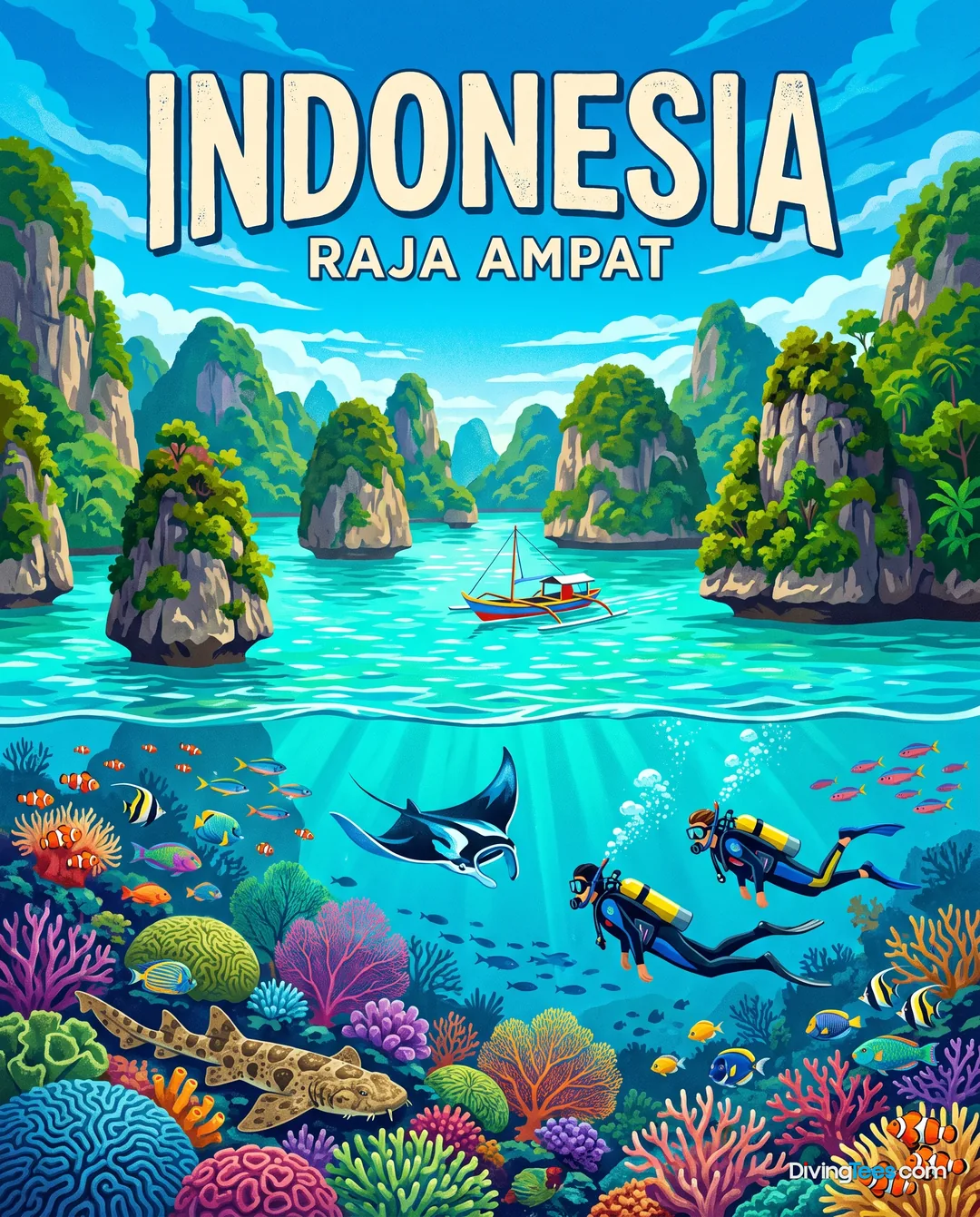
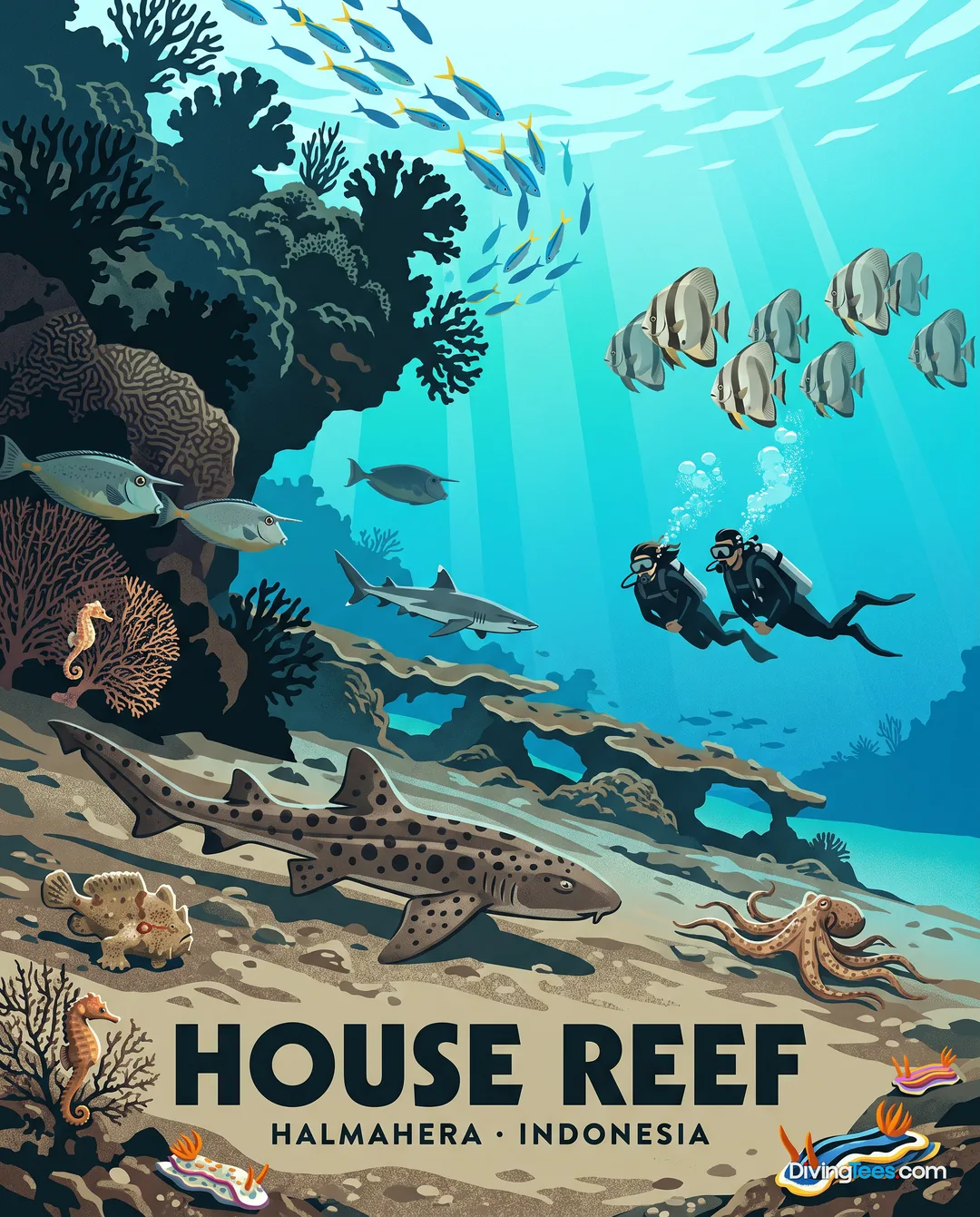
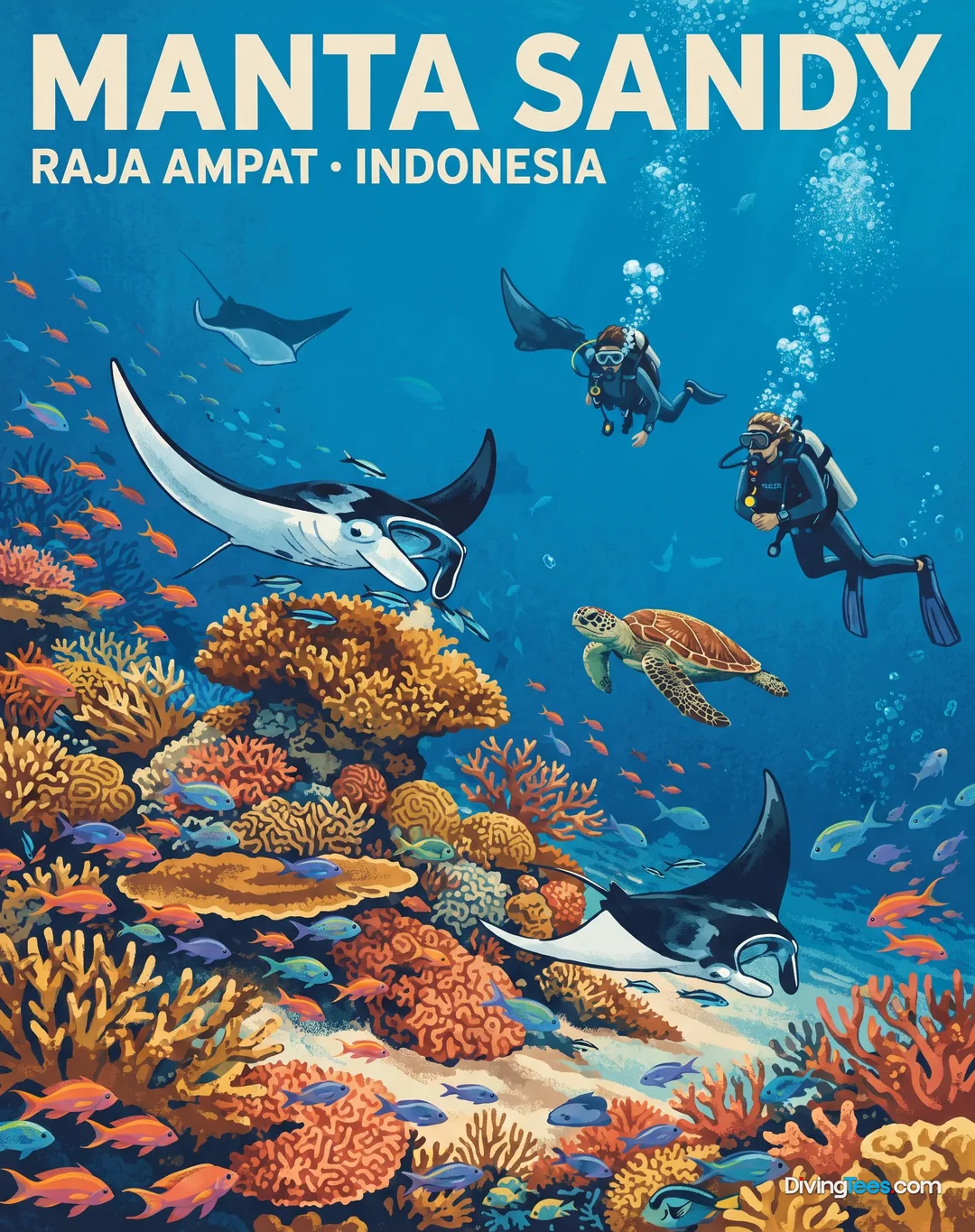
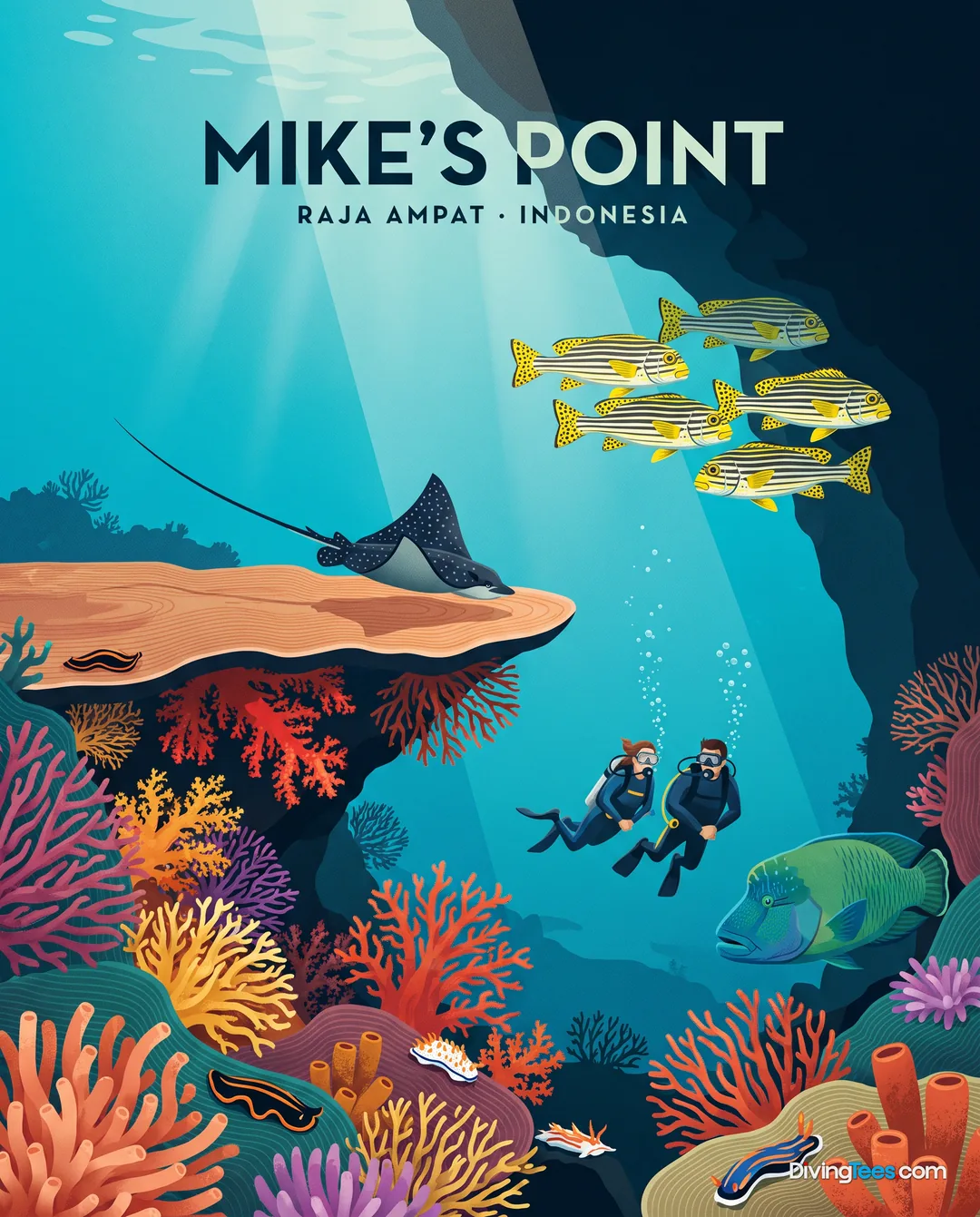
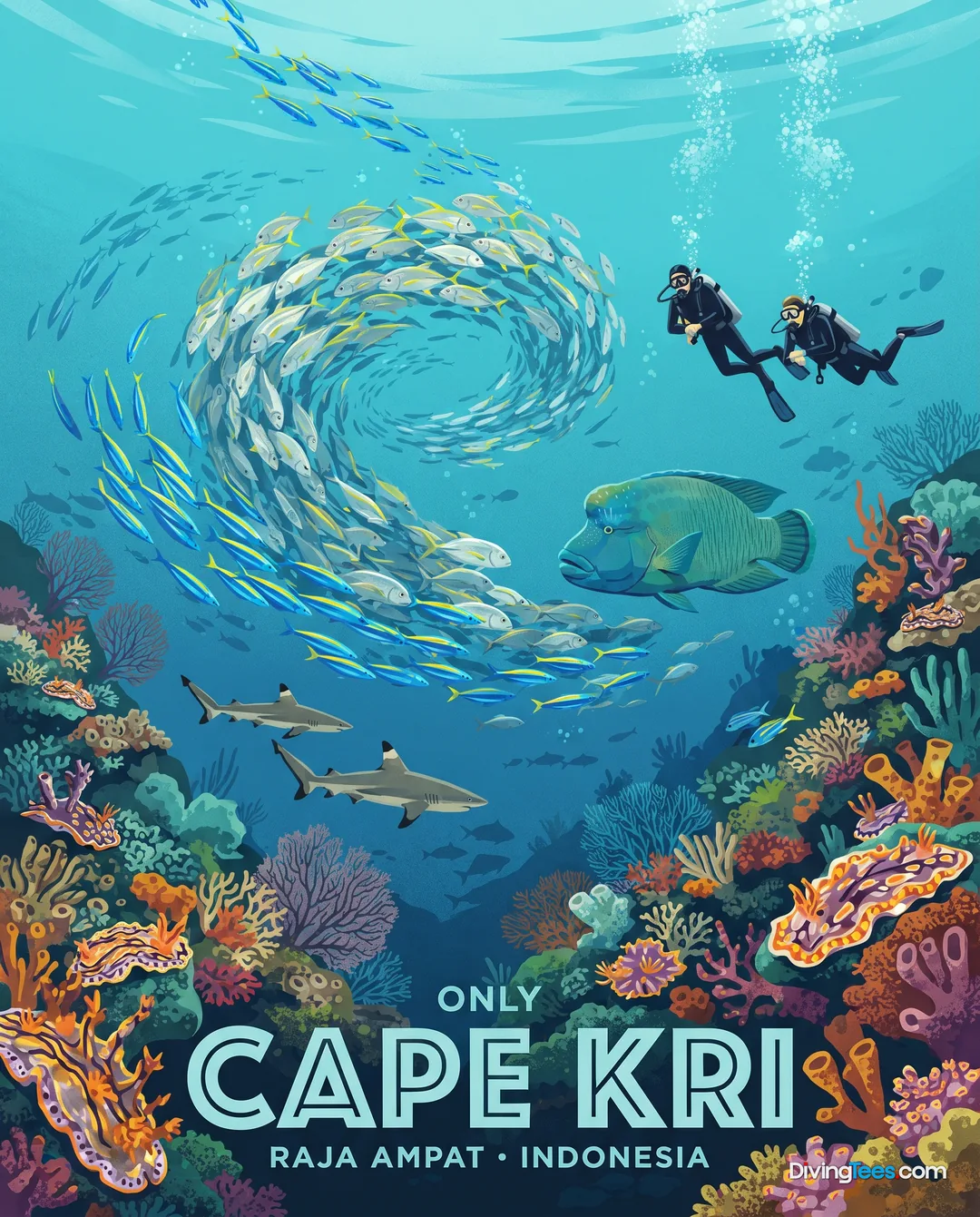
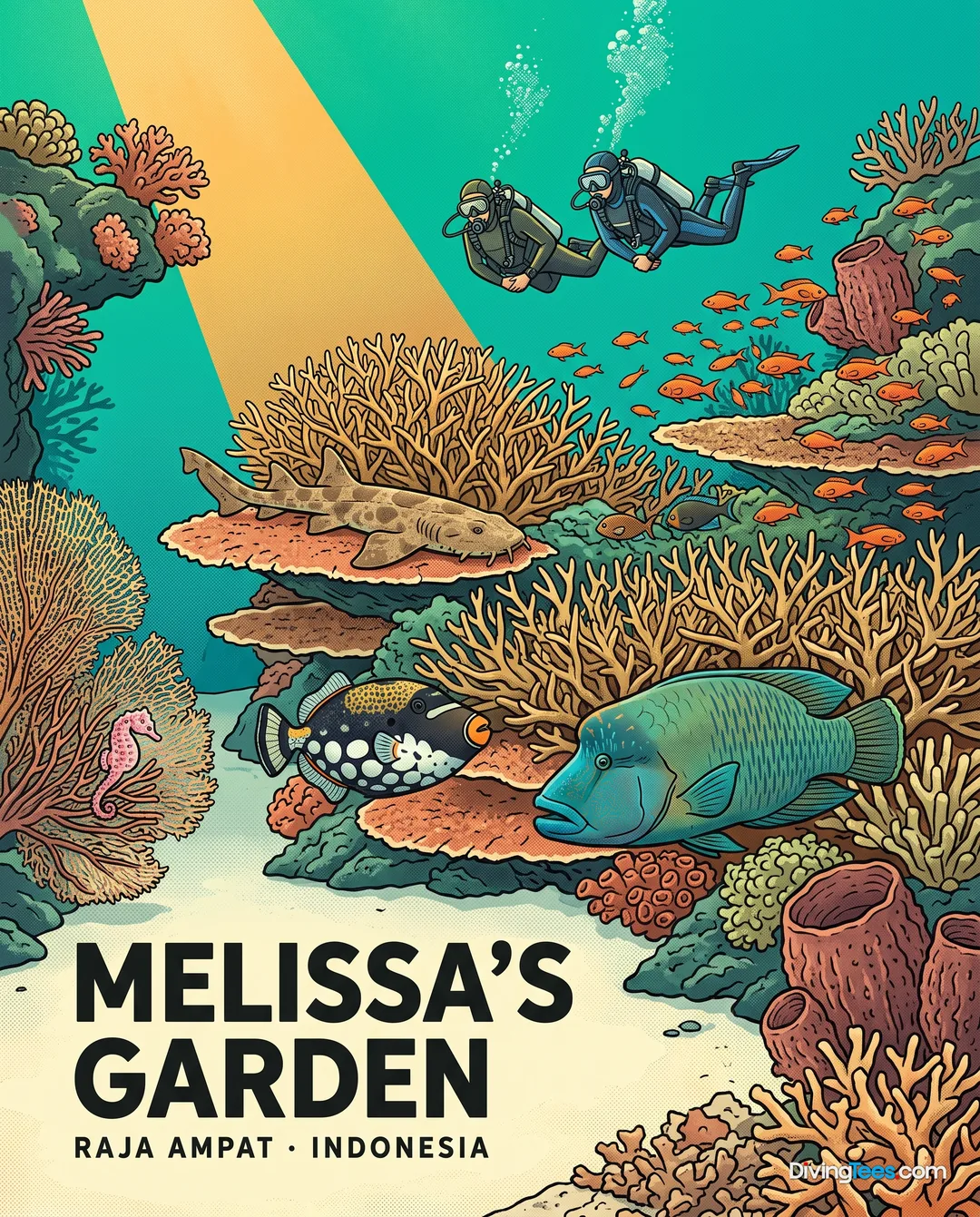
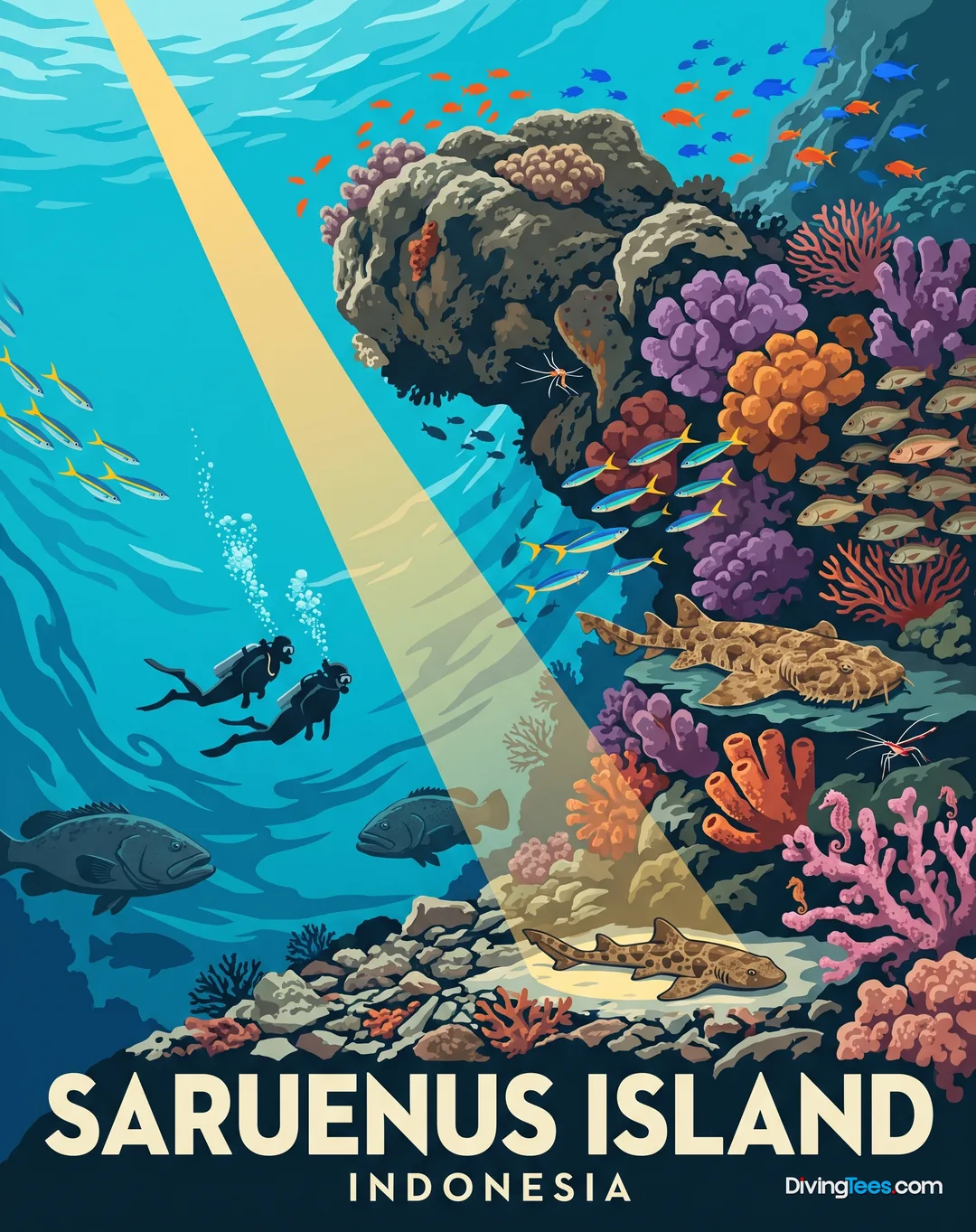
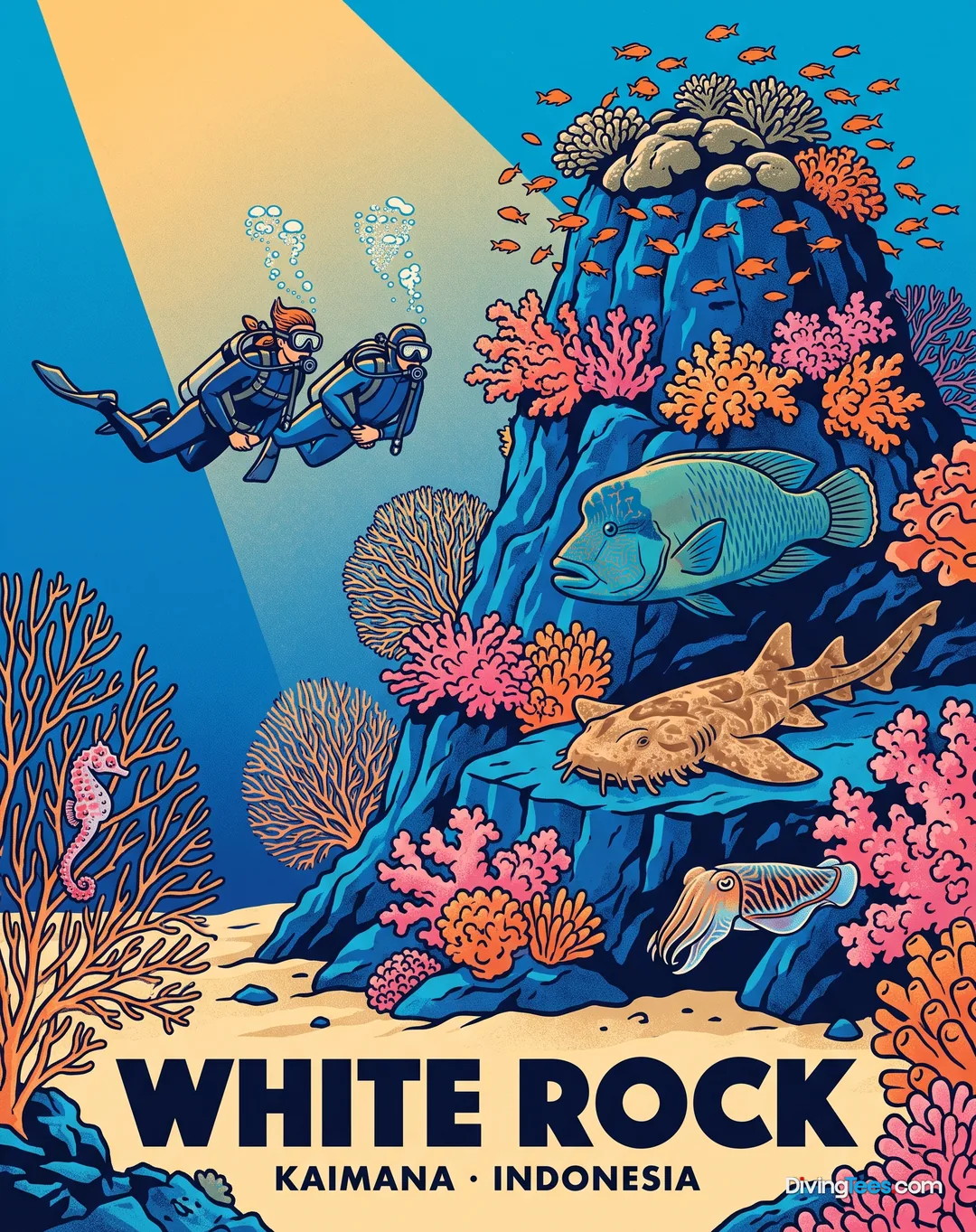
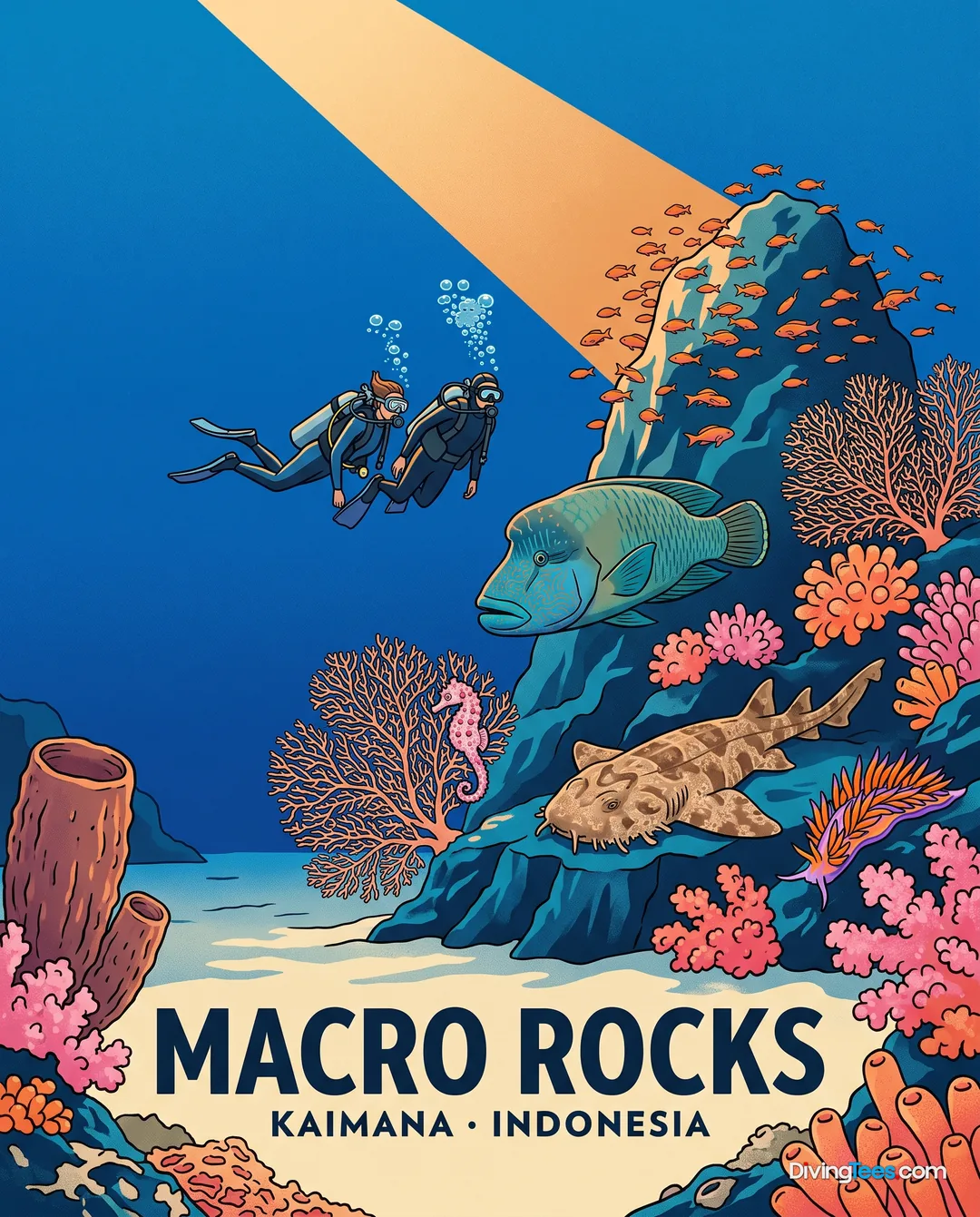
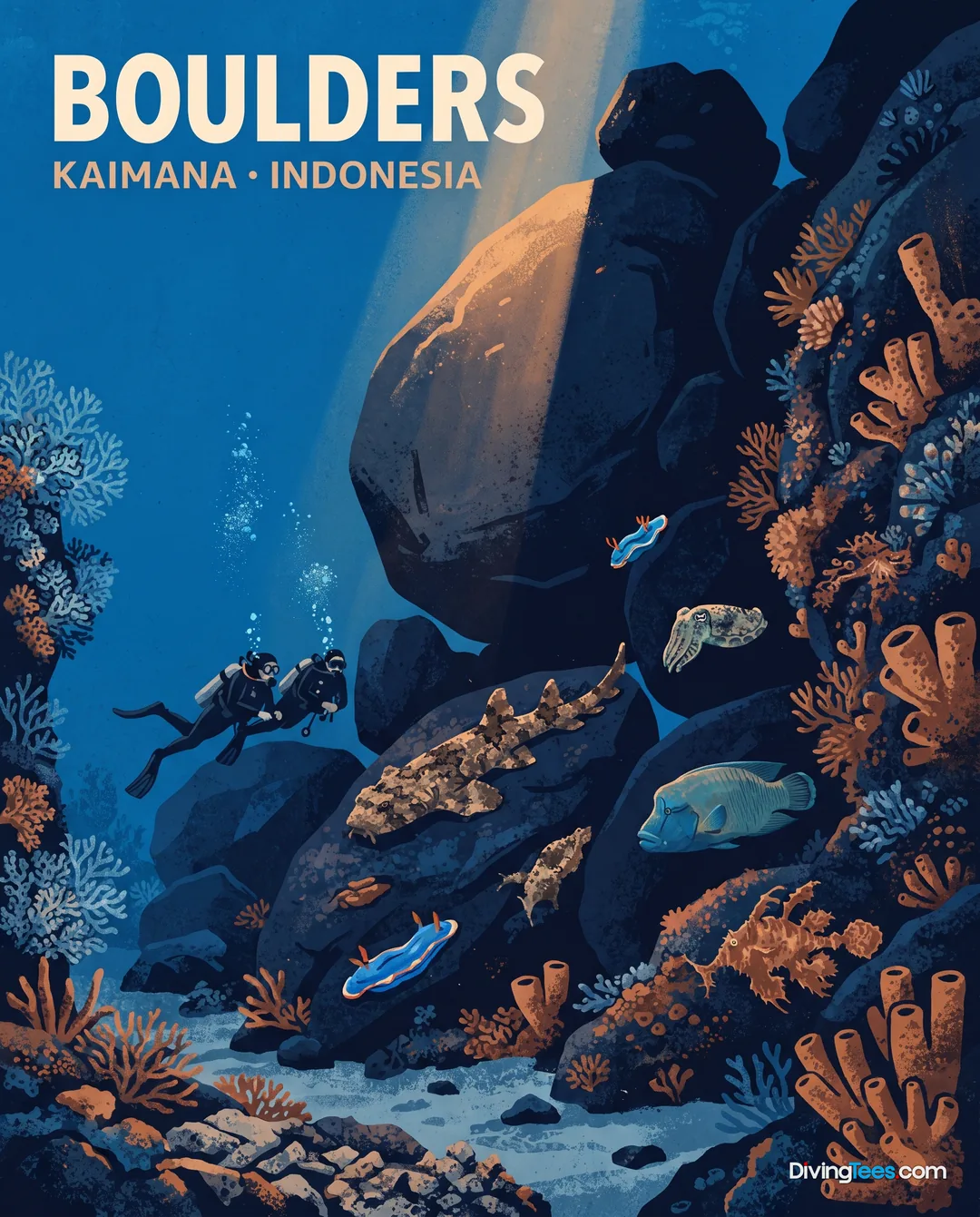
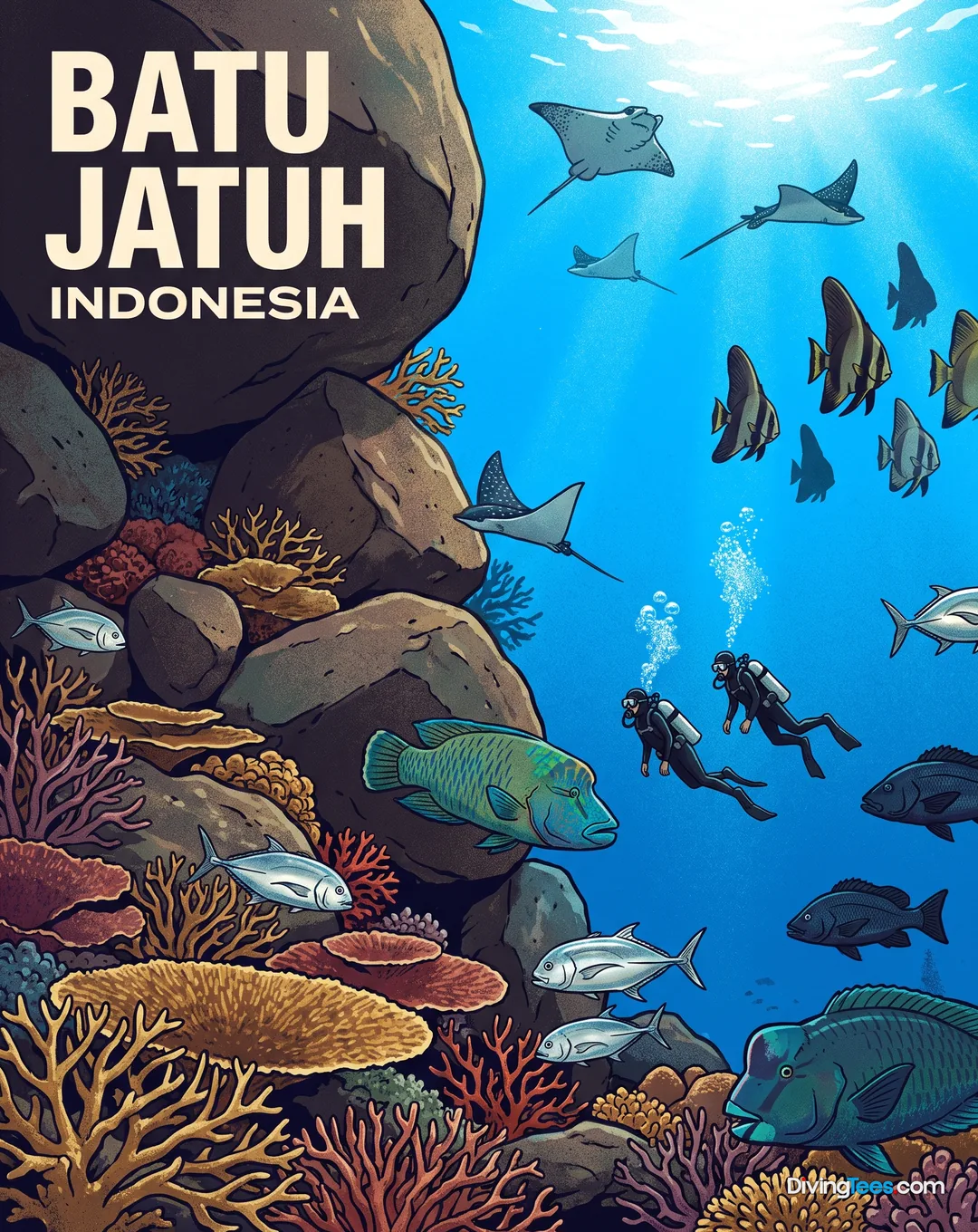
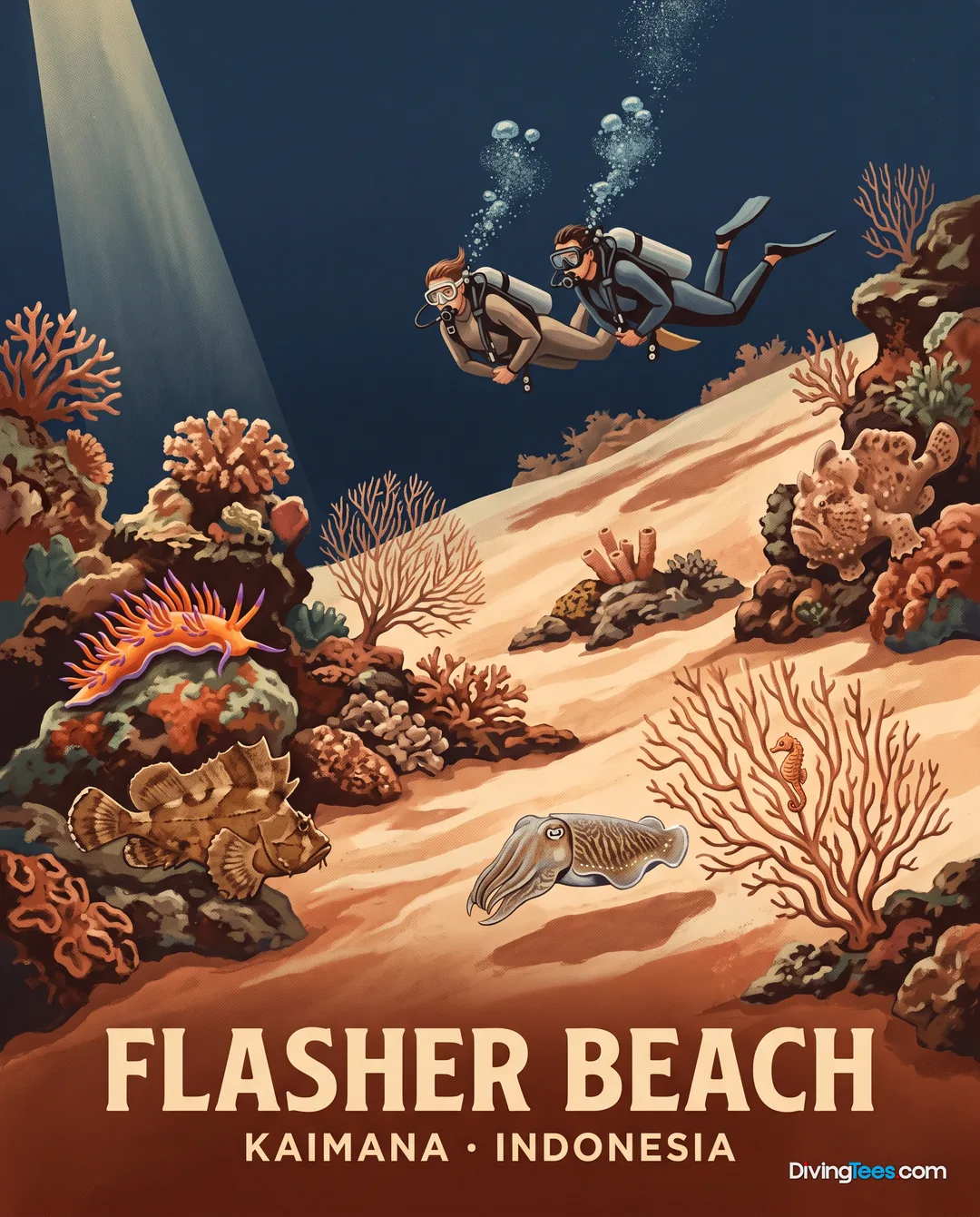
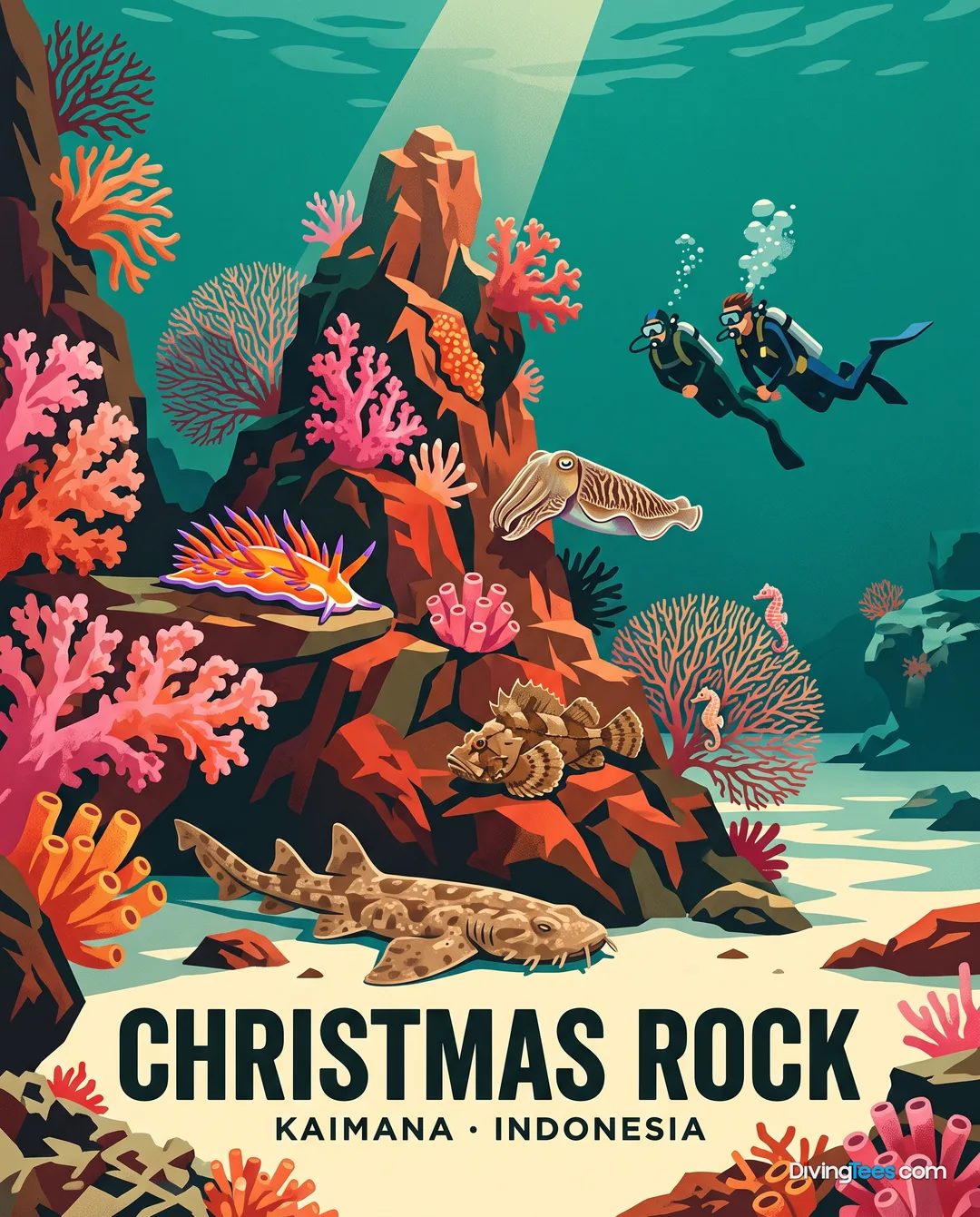
The itineraries run from 9 nights in Halmahera to 15 days and 14 nights on combined Halmahera–Misool–Banda Sea routes, with longer programs linking Raja Ampat, Triton Bay, the Ring of Fire and the Forgotten Islands. The site mix is unusually broad. Halmahera House Reef starts from shore and combines reef sharks with a macro-rich fringing reef. In Raja Ampat, Manta Sandy centres on cleaning stations, while Mike's Point drops to a maximum of -40m around reef overhangs, soft corals and a flat plateau used by eagle rays. Cape Kri is the famous high-density site where 374 fish species have been observed on one dive, and Melissa's Garden reaches -35m through soft coral and staghorn formations. Kaimana adds current-swept Saruenus Island, Bo's Rainbow at -16m, White Rock at -14m, Macro Rocks at -20m and Andy's Point, as well as the hard-coral boulders of Batu Jatuh, the sheltered Flasher Beach at -20m, Boulders and Christmas Rock at -18m. These are not interchangeable reef dives: the route moves between cleaning stations, slopes, boulders, current lines and dense coral gardens.
What you’ll meet underwater
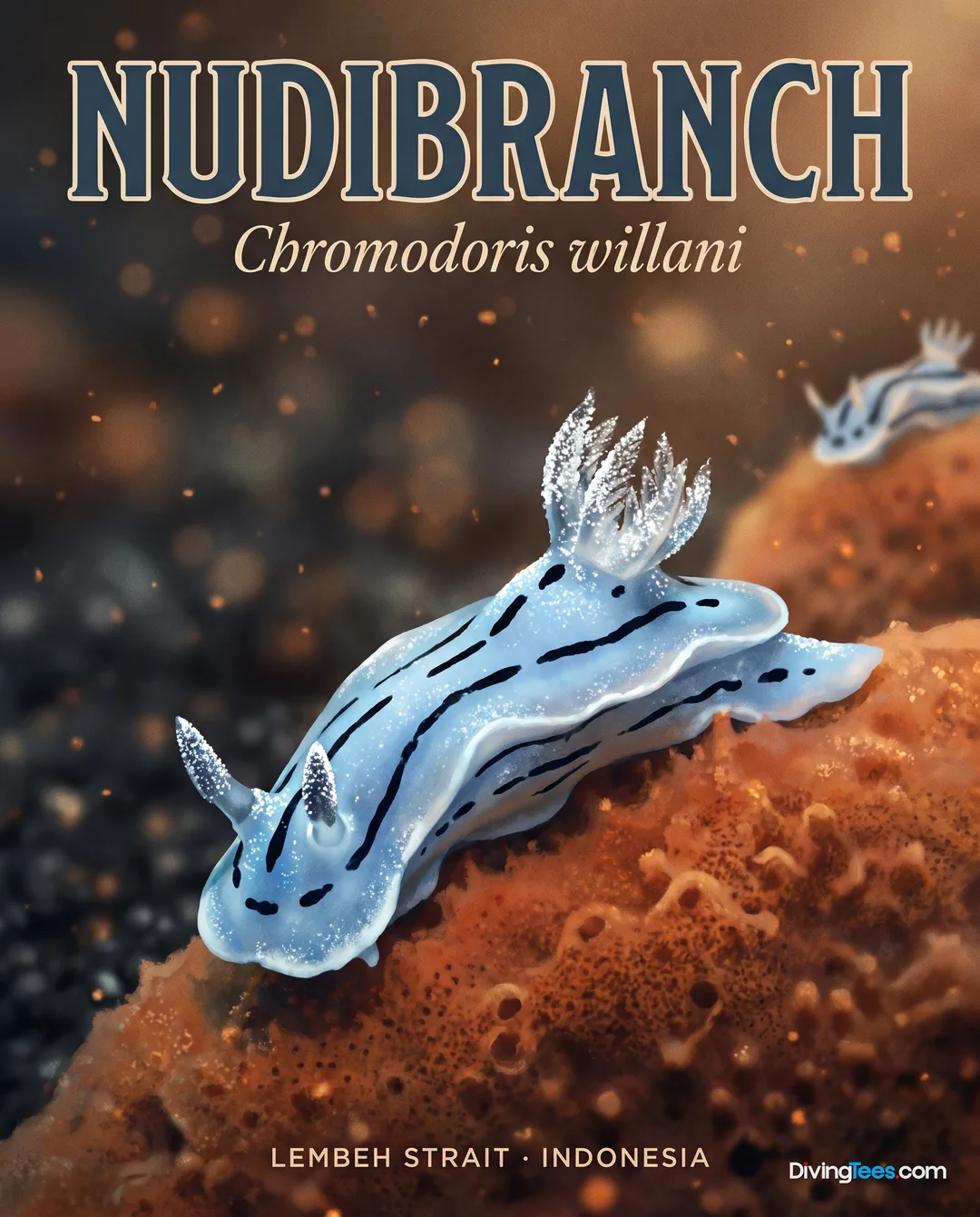
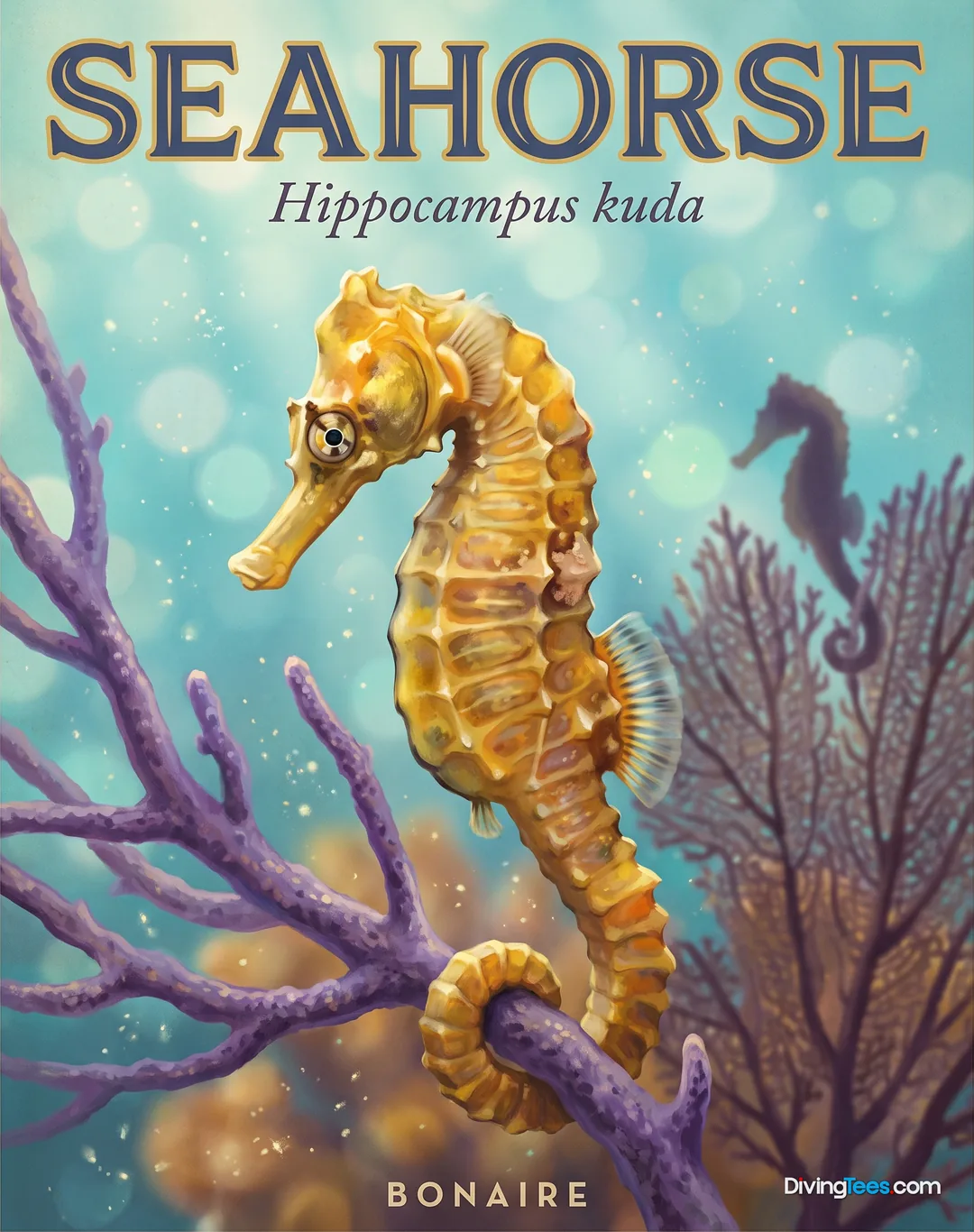
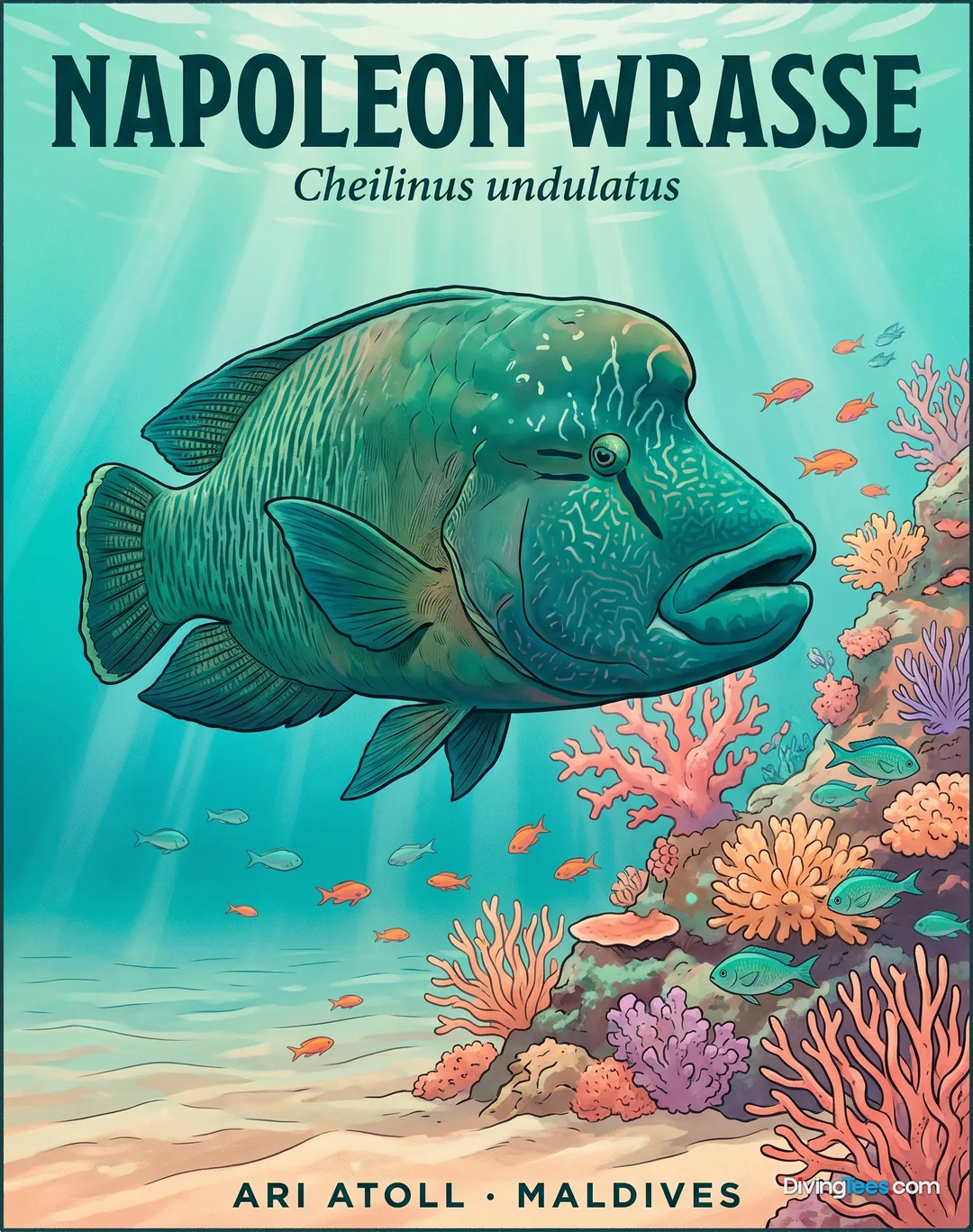
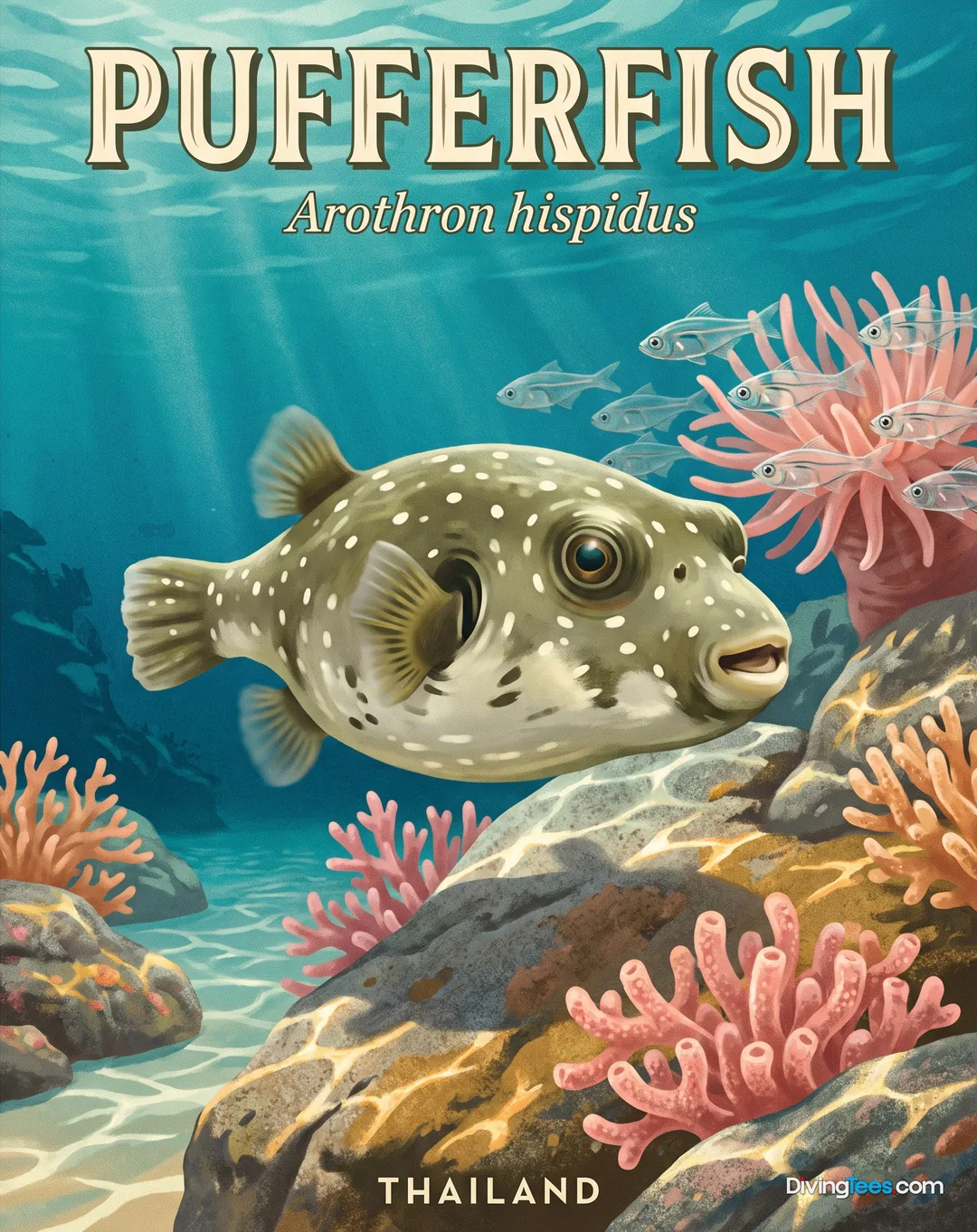
Across the route, nudibranchs, fusiliers, pygmy seahorses, turtles, Napoleon wrasses, humphead parrotfish, sweetlips, groupers, snappers, shrimp and reef fish provide the recurring search. The spectacle changes with the site: schools gather where current feeds the reef, while the small animals reward a slower descent and a good guide. Some encounters are tied to one place. Cape Kri is the site for barracuda and both white-tip and black-tip reef sharks. Saruenus Island is the named site for castagnoles, and its strong currents can bring pelagics across the reef. House Reef is the place to look for crabs, gobies, seahorses, octopus, ghost pipefish and other small life. Boulders holds glassfish and pufferfish, while Christmas Rock is the listed site for surgeonfish. Mantas at Manta Sandy are associated with cleaning stations, where reef mantas hover while cleaner fish work over them. Nothing is guaranteed underwater, but the sites give each search a reason.
Who puts you in the water
Four dive masters work with the crew, and guided groups are organised at a maximum of one guide for four divers. Guides check the current before each dive, so the briefing reflects the conditions at that moment rather than a fixed description written earlier in the trip. English, French, Spanish and Indonesian are spoken aboard. Divers must hold certification from a recognised international agency and be fit to dive; no minimum logged-dive number is given. Nitrox certification and scuba-diving courses can be arranged on board. Safety equipment includes oxygen, first-aid kits, radios, satellite communication, an EPIRB, life rafts, life jackets, fire alarms and extinguishers. The operation is built around current checks, clear briefings and tender support rather than sending divers to manage changing conditions alone. A defibrillator or separate diver-recall system is not listed.
The dive deck and the gear
The dive deck is the centre of Ambai. It gives direct access to the platform and is large enough for all three 50HP Yamaha tenders to come alongside together, so groups can board without a long queue or a scramble through the saloon. Standard tanks are aluminium 12-litre tanks; 15-litre tanks are available as a paid extra. Nitrox 32% is free for certified divers. DIN adapters, rinse tanks, shaded preparation space and a separate camera rinse area cover the daily essentials, while the dedicated camera room gives photographers a proper place to maintain and prepare equipment. An SMB can be rented, as can other diving equipment, but rental stock is limited and should be arranged in advance. Sidemount diving is supported. The compressor, filling system and equipment brands are not described, so those are not reasons to choose this boat on the information available here.
Between dives
Between dives, Ambai gives guests several different temperatures and levels of quiet. The shaded decks are the natural place to dry off, compare sightings and watch the islands pass; the sun deck is there when a diver wants heat and open sky instead. An indoor lounge and the air-conditioned restaurant provide shelter during the hottest part of the day, while the front outdoor sitting area is better for watching the boat work through a crossing. Kayaks are carried for exploring lagoons or reaching shore when the itinerary allows it. Land excursions may include villages, historical sites, forests and viewpoints, depending on the route and conditions. The dedicated camera room is another way to spend a surface interval: batteries, housings and images can be dealt with before the next briefing rather than spread across a cabin.
A day on board
The day begins before dawn, with a light breakfast, a briefing and the first tender departure at 7:00 AM. Breakfast is served properly after divers return. The second call comes at 10:30 AM for an 11:00 AM departure, followed by lunch, a surface interval and the third call at 2:30 PM. The last day dive leaves at 3:00 PM, close to the practical limit as Indonesian light fades after 4:00 PM and night falls around 6:00 PM. Snacks follow the third dive. When conditions and the itinerary allow, the night-dive briefing is at 6:00 PM and the tender leaves at 6:30 PM; dinner waits until divers return. Crossings happen between dives, at night or during longer passages, so the boat may be underway while guests eat, edit photographs or sit in the shade. It is a full diving day, but its order is clear.
What you eat aboard
Meals combine local Indonesian cooking with Western dishes, buffet service, gourmet preparation and options for vegetarian and vegan divers. Breakfast follows the first dive, lunch follows the second, and snacks arrive after the third; on a night-dive schedule, dinner comes after returning to the boat. That timing works because nobody is asked to choose between eating and gearing up. The air-conditioned restaurant is also the briefing room, so the table becomes the place where the next site is discussed and the previous dive is replayed. Non-alcoholic drinks, tea, coffee and all meals are included, while beer, wine and other alcoholic drinks are separate. The food scores particularly strongly among passengers, which matters on a long Indonesian itinerary where four dives can leave a diver more interested in the next plate than the next panorama.
Nights at sea
The eight cabins are on the upper deck, in the middle of the boat, where panoramic windows bring in daylight and sea views. Double, twin and double sea-view categories cover the available layouts; every cabin has individually controlled air-conditioning and a private bathroom with hot water. The cabins are not the reason to choose Ambai, but they give a 16-diver trip a level of privacy that smaller shared arrangements cannot. At night, the boat's wooden structure remains part of the experience: the sea is close, the common areas are separated from the sleeping spaces, and the air-conditioning can be set to suit each cabin. Towels and toiletries are provided. After a day of current, sun and salt, that private shower and a bunk away from the dive deck are useful luxuries, not decoration.
Double/Twin Bed Cabins
Twin Bed Cabins
Double Bed Cabins Sea View
What to know before boarding
Departure and return ports depend on the itinerary: Ambai operates from Ternate, Sorong or Kaimana and can finish in Ternate, Sorong, Kaimana, Ambon or Saumlaki. Airport-to-boat and hotel-to-boat transfers at the cruise departure and arrival locations are included. The exact meeting and transfer details are provided with the trip arrangements. Arriving the night before is the sensible choice, especially for routes beginning in remote Indonesian ports.
Deck plan
- Year built
- 2012
- Length
- 32 m
- Beam
- 7.5 m
- Maximum number of passengers
- 16
- Number of cabins
- 8
- Number of bathrooms
- 8
- Engines
- marine engines Mitsubishi 600 hp
- Cruising speed
- 8 knots
- Tenders
- 3 × 50 hp Yamaha
- Website
- wallacea-divecruise.com ↗
Hello, I'm Marina, DivingDeal.com's AI assistant. I answer in detail about hotels, dive centres and liveaboards.

Thinking about the whole trip and the flights? Talk it over with Edith →
Marina is an AI. Some links are affiliate links: DivingDeal may earn a commission, at no extra cost to you. Bookings are made with the partner.