Liveaboards · Indonesia
Naga Biru — a refined small-group dive liveaboard
What makes this boat unique
- Naga Biru was built in 2024 and renovated in 2025 as a wooden liveaboard for up to 12 passengers.
- The boat offers seven air-conditioned cabin categories, all with private bathrooms; selected cabins have accessible balconies.
- Komodo and Alor itineraries include guided diving, night dives, land excursions, snorkeling and free nitrox for certified divers.
- The shaded dive deck has DIN adapters, rinse tanks, a separate camera rinse area and two diver tenders.
For subtitles in English: start the video firstthen click the gearat the top right of the video, select “Subtitles/CC”, then “Auto-translate” and choose “English”.
The invitation
Naga Biru is for divers who want Indonesia's stronger sites without turning the boat into a floating crowd. The group stays small, the boat was built recently and renovated again in 2025, and the design puts diving and comfort on the same level rather than treating one as an afterthought. A dedicated camera room matters here: Komodo and Alor offer fast action, close macro subjects and scenes worth handling carefully between dives. The choice becomes clearer if the trip is meant to cover either Komodo's pinnacles and manta country or Alor's more remote, current-rich reefs. Both routes keep the focus underwater, while air-conditioned cabins, private bathrooms and full-board meals make the long hours between dives easier. Naga Biru suits a diver looking for a polished small-group boat, not a bare-bones expedition platform and not a large cruise vessel.
Boarding
From the dock, Naga Biru presents as a purpose-built wooden liveaboard rather than an improvised fishing boat converted for tourists. The 2024 build and 2025 renovation support the impression: clean, modern spaces, air conditioning in the cabins and salon, and a layout intended for divers who spend much of the day moving between deck, water and cabin. Boarding leads into a boat that keeps the group close without making the common areas feel like a hallway. The shaded dive space is the practical centre of the vessel; the salon and outdoor dining area pull people away from it when the gear is off. Its scale is large enough for separate places to sit, but the passenger limit still lets the crew know who is preparing for the next dive. Two tenders handle access to the sites, leaving Naga Biru as the base while the dive groups move across the reef.
The atmosphere on board
Naga Biru is built around a small group, with a close crew-to-passenger ratio and a local team that speaks English. That scale changes the practical side of a week: questions can be handled where they arise, meals do not require a crowd to organise, and the crew remains close to the dive deck rather than disappearing behind a reception desk. The boat's character is less about staged entertainment than about keeping the day moving cleanly from briefing to tender, return, meal and rest. In the evening, the bar, outdoor dining area and salon give the group several ways to stay together after the last rinse of the day. Families, couples, solo divers and snorkelers can share the boat, while private charters are also possible. The atmosphere should suit divers who value order and personal space over a party boat, with the crew's role felt in the small decisions that keep twelve passengers ready for the next site.
The sites you’ll dive
Komodo trips run between Labuan Bajo and Labuan Bajo for 7 days/6 nights or 8 days/7 nights. The sites range from current-swept pinnacles to shallow coral gardens. Batu Bolong is a tiny pinnacle with exceptional coral cover, where giant trevally, Napoleon wrasse and reef sharks move through water reaching -40m. Castle Rock drops to -30m on a submerged pinnacle, drawing reef sharks, eagle rays and barracuda into nutrient-rich current. Crystal Rock, also -30m, sits exposed in the Lintah Strait, where the current concentrates pelagic life including manta rays and reef sharks. Siaba Besar reaches -18m and trades adrenaline for frogfish, blue-ringed octopuses, seahorses and turtles among coral bommies. Shotgun and Tatawa Besar both reach -25m, with current, mantas, sharks, soft coral and green turtles. Cannibal Rock reaches -30m, combining prolific macro life with schooling pelagics in Horseshoe Bay. Alor trips run Kalabahi to Kalabahi for 8 days/7 nights or 10 days/9 nights. Crucifixion reaches -40m along a reef slope, overhangs and a vertical wall between two pinnacles. Bama Wall and Wolang Cavern also reach -40m: one is a current-fed drop-off crowded with schooling fish, the other links grotto systems, macro life and a soft-coral wall. Cathedral reaches -30m, with a swim-through at 25 to 30 metres. Andy's bus stop reaches -25m, drifting from a coral wall into blue water patrolled by giant trevally. Yellow Corner is a high-current alley known for large pelagics, while Biatabang combines a vibrant wall with traditional Alorese bubu fish traps integrated into the reef.
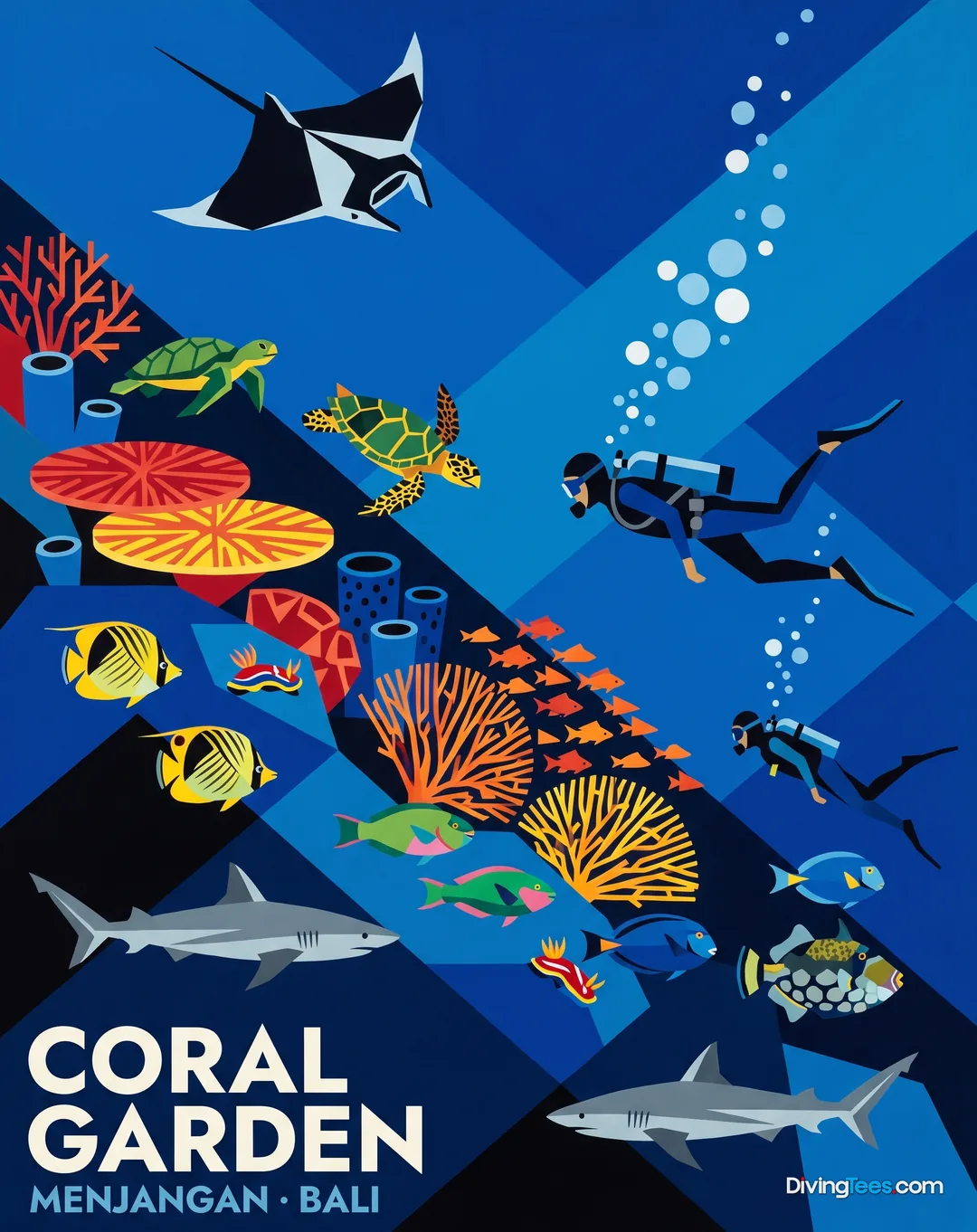
Coral Garden →
Max. depth · 28 m
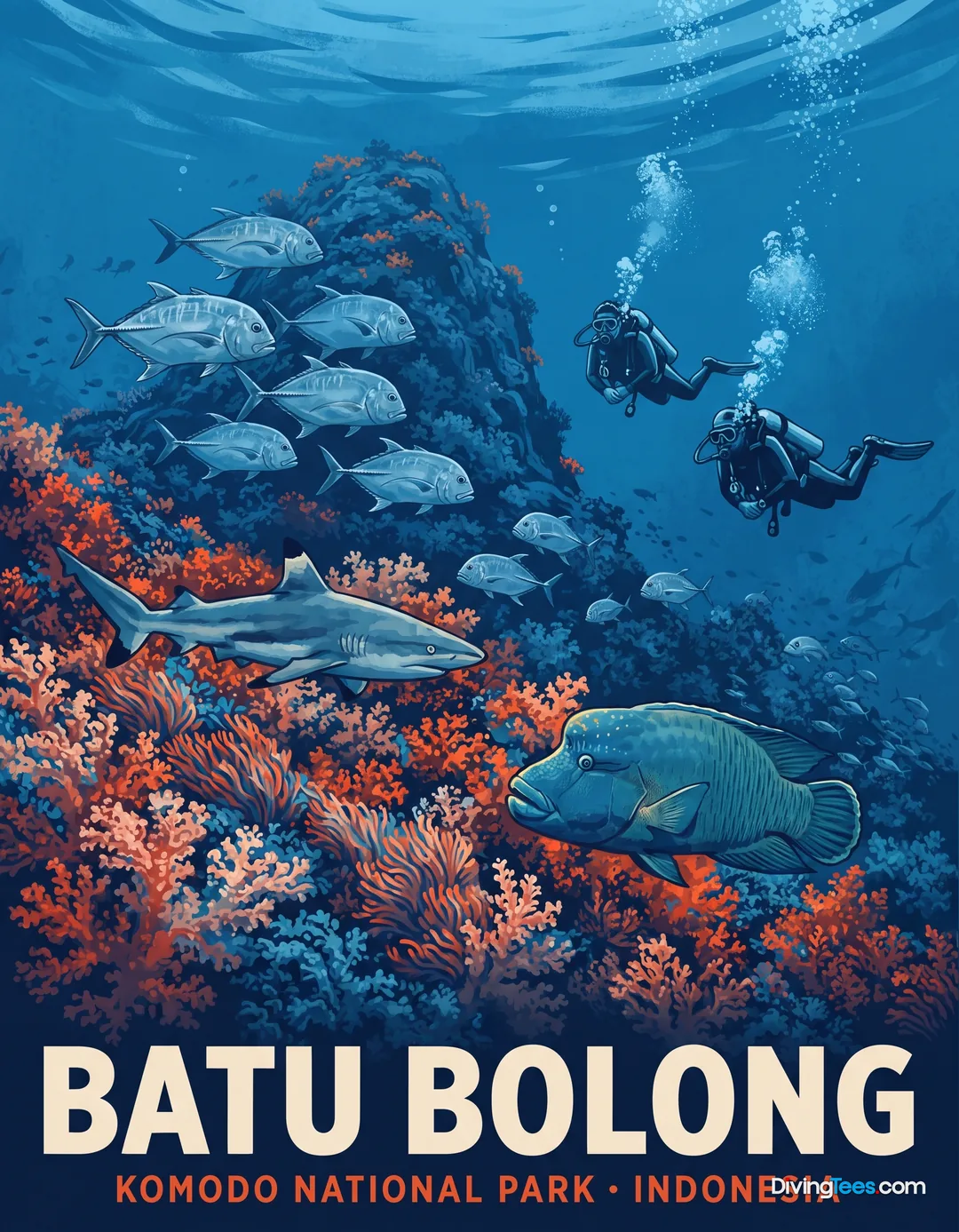
Batu Bolong →
Max. depth · 40 m
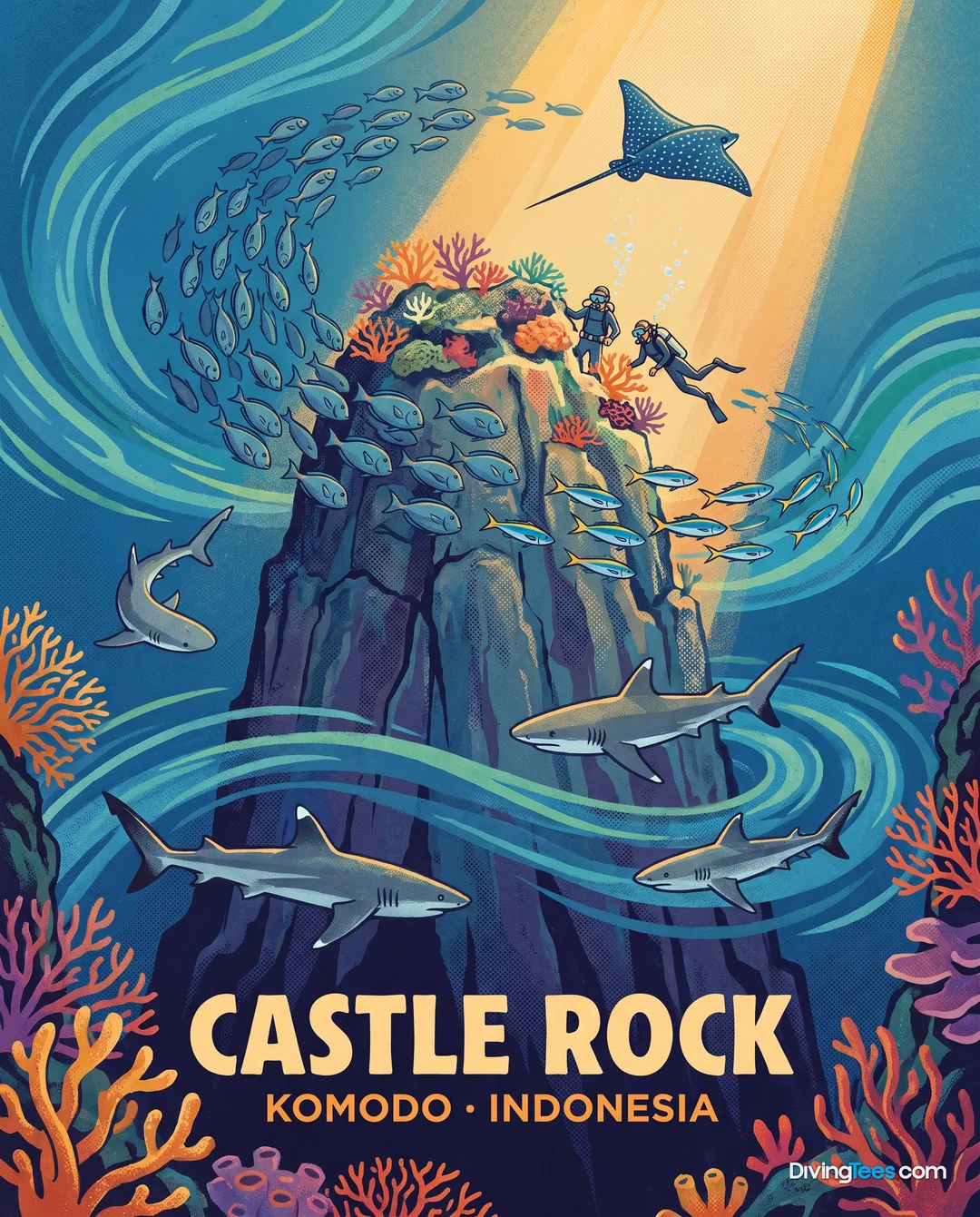
Castle Rock →
Max. depth · 30 m
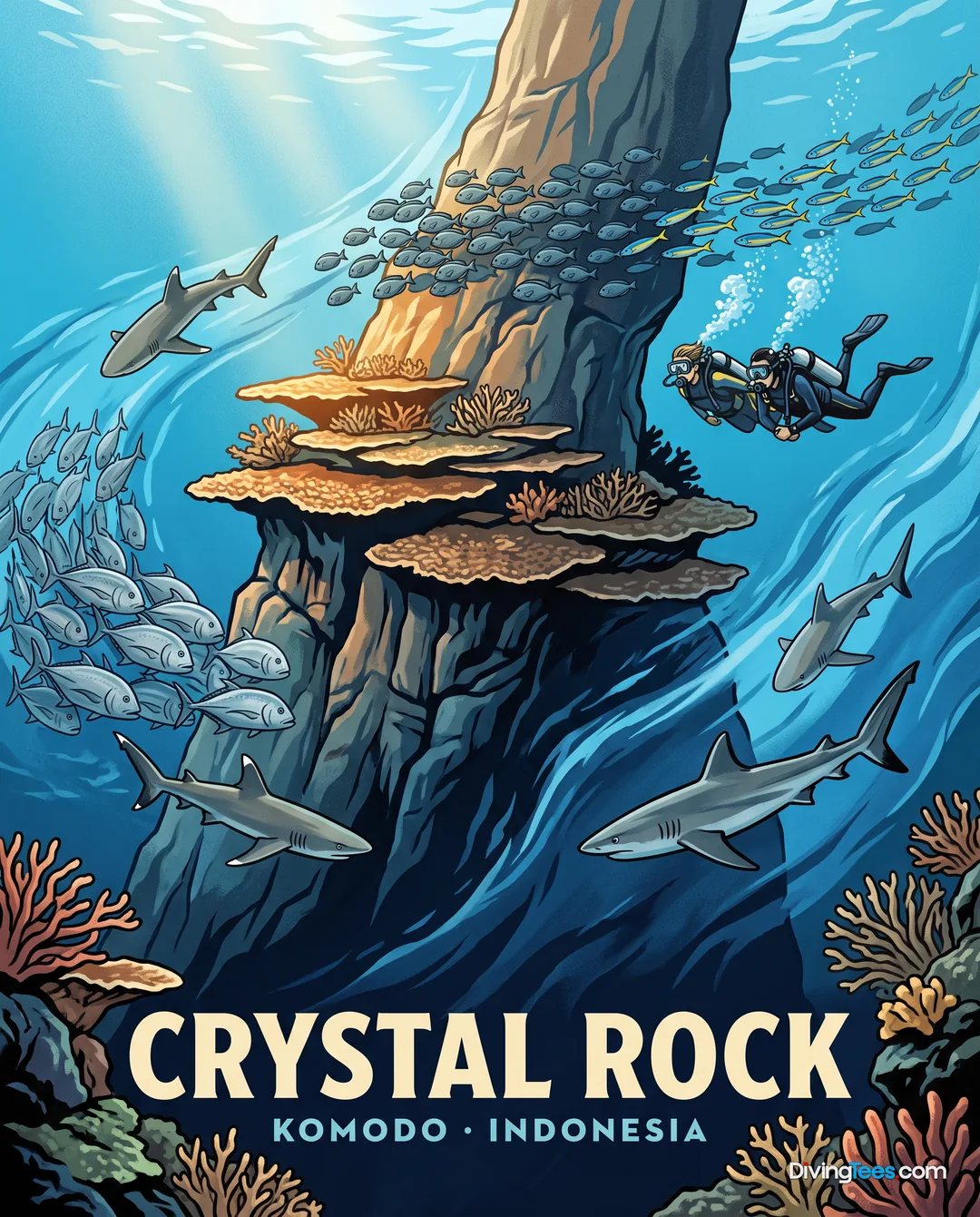
Crystal Rock →
Max. depth · 30 m
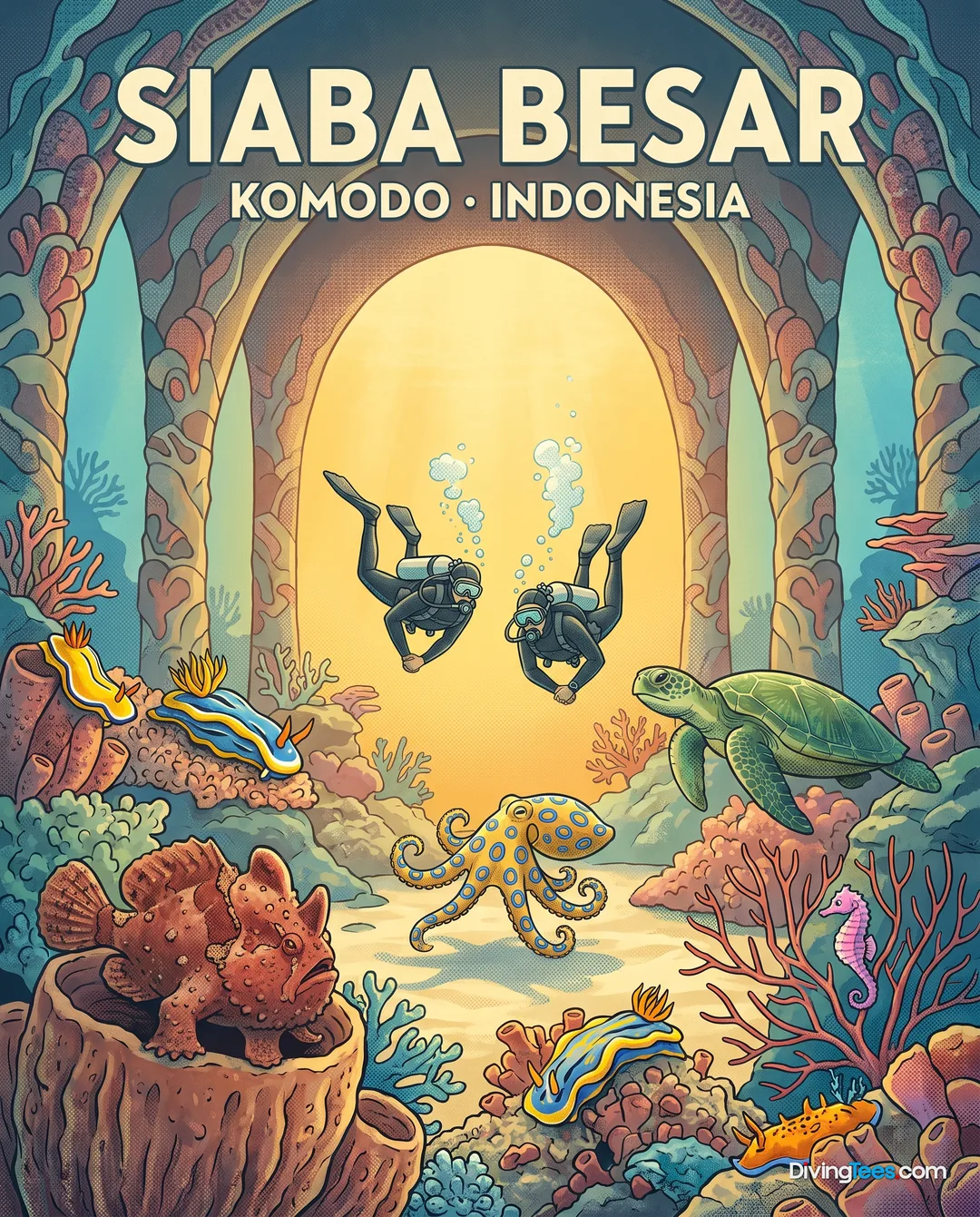
Siaba Besar →
Max. depth · 18 m
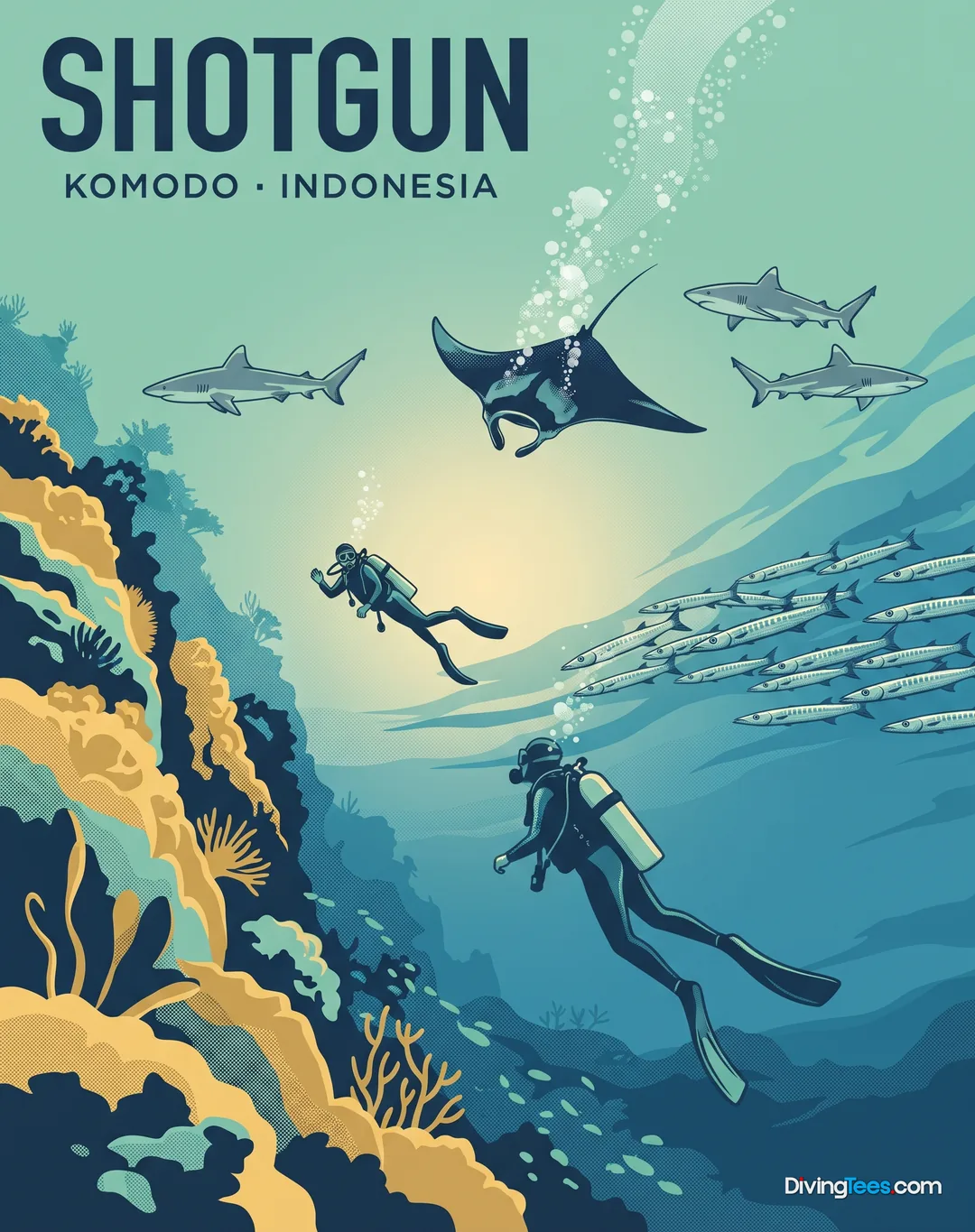
Shotgun →
Max. depth · 25 m
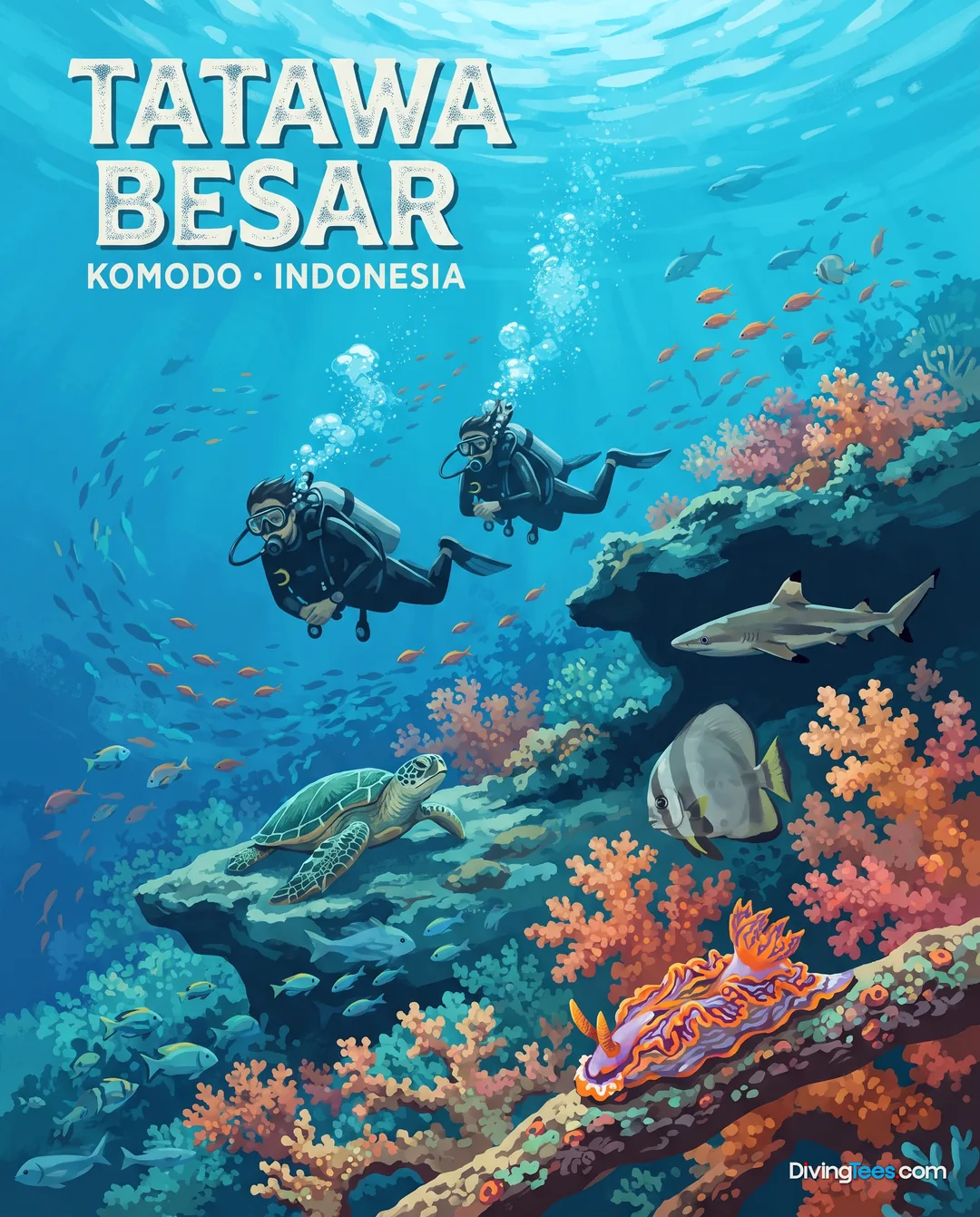
Tatawa Besar →
Max. depth · 25 m
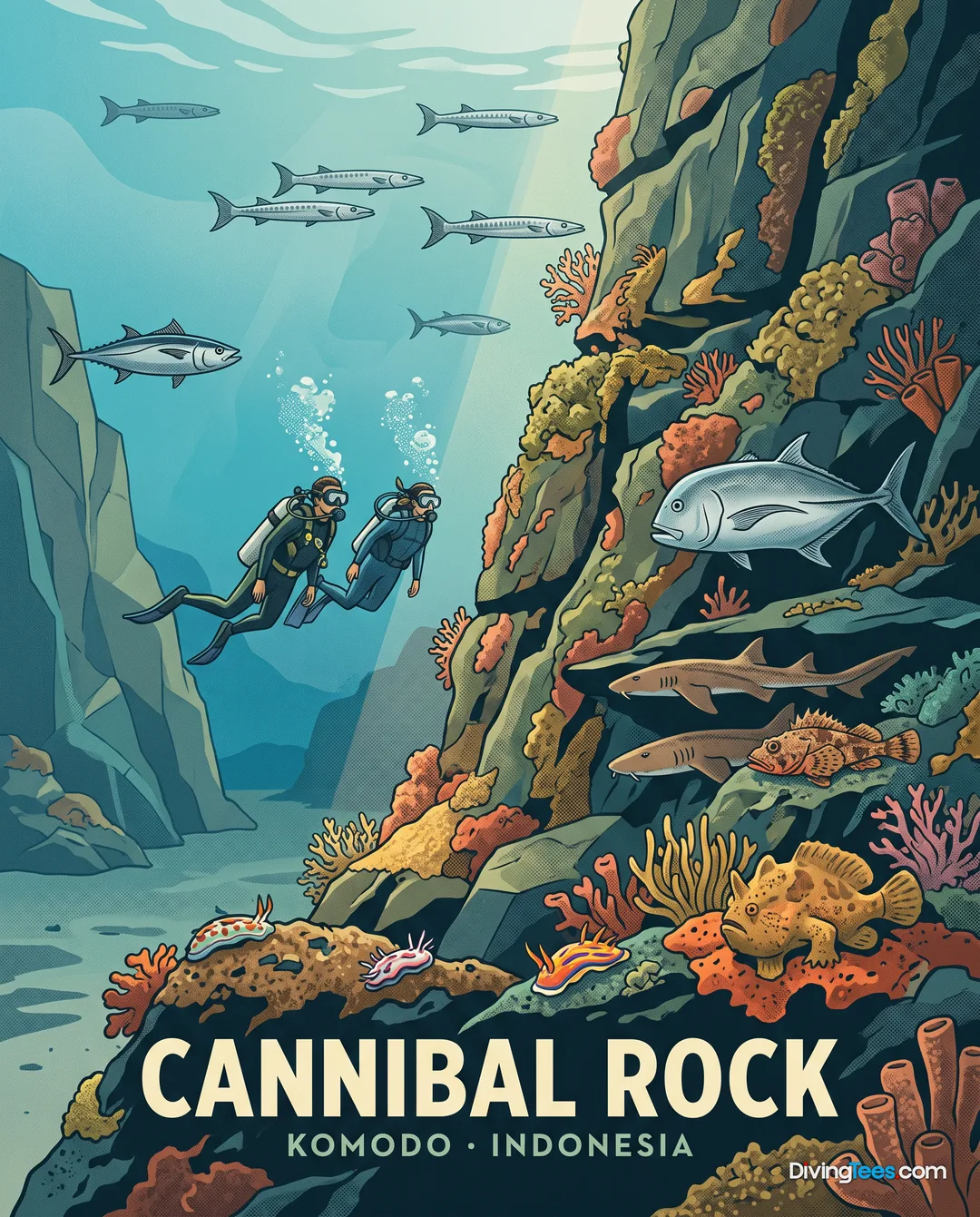
Cannibal Rock →
Max. depth · 30 m
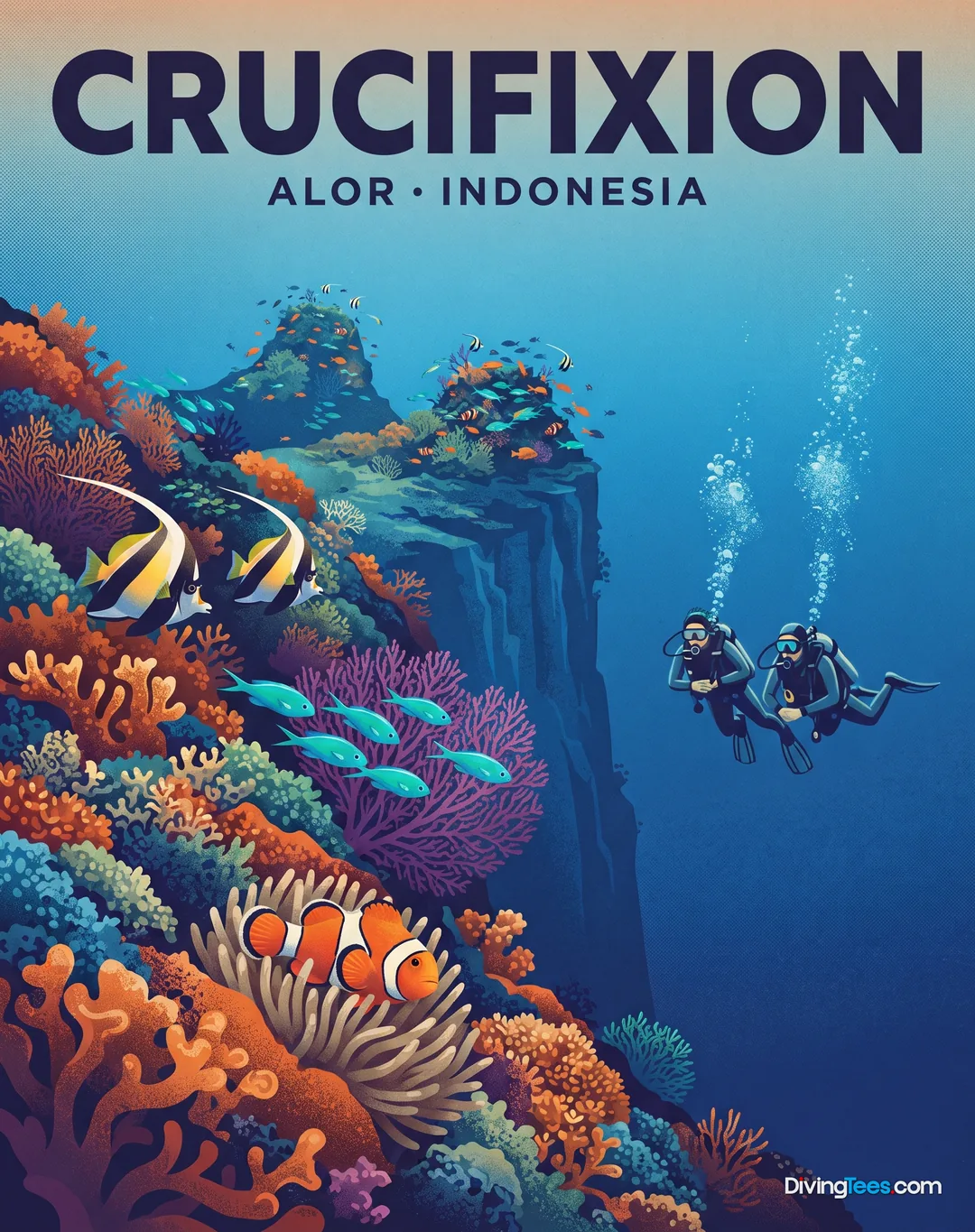
Crucifixion →
Max. depth · 40 m
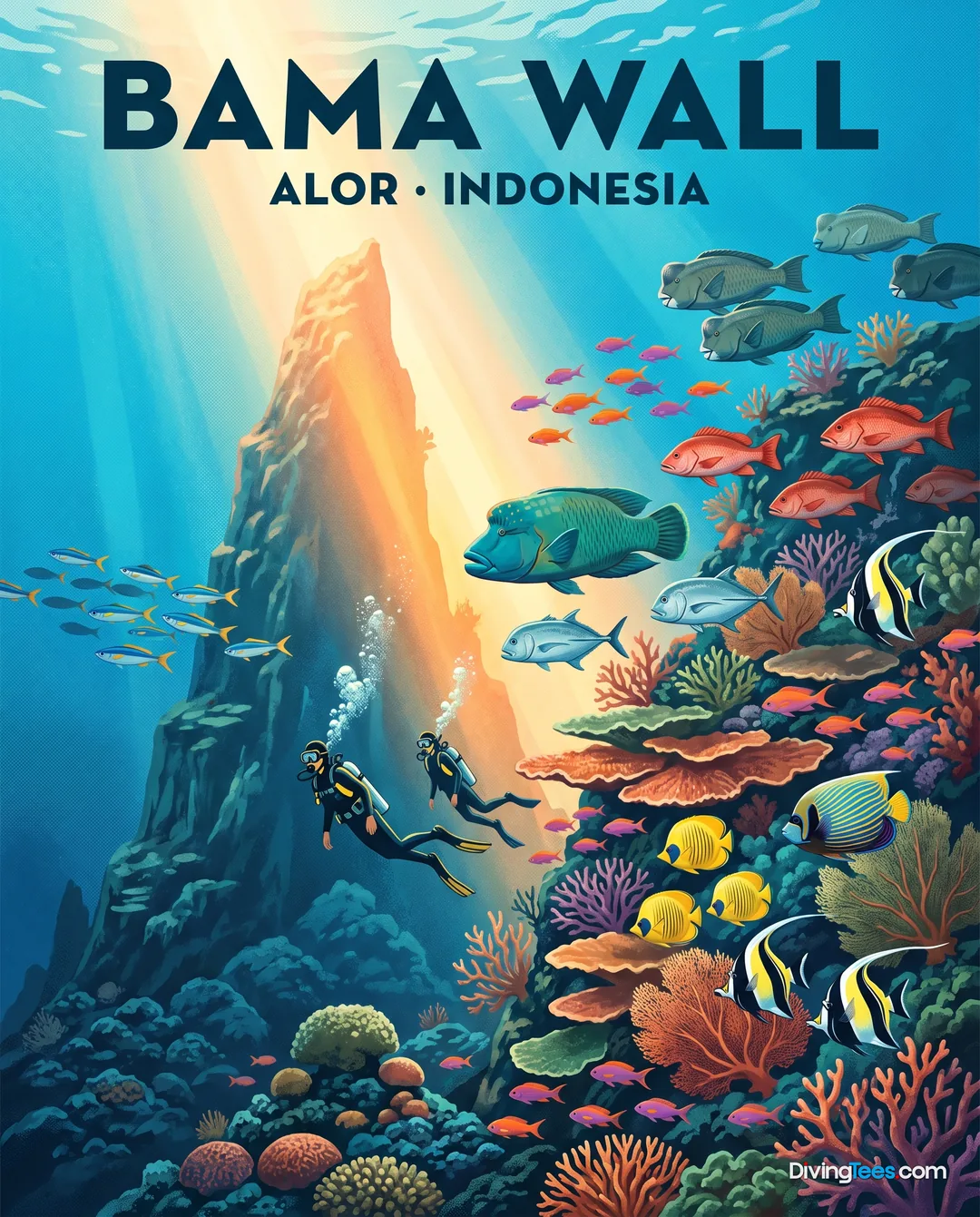
Bama Wall →
Max. depth · 40 m
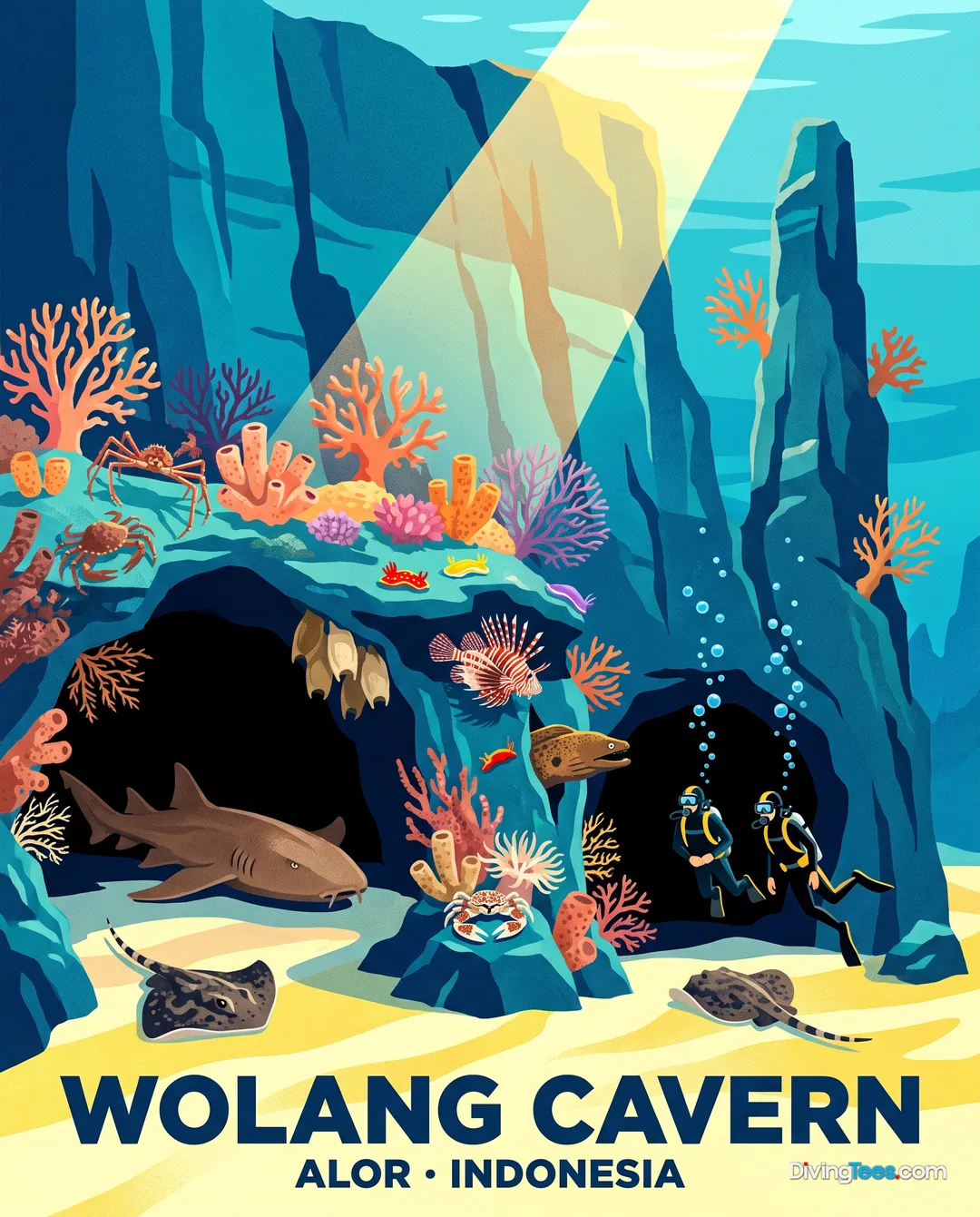
Wolang Cavern →
Max. depth · 40 m
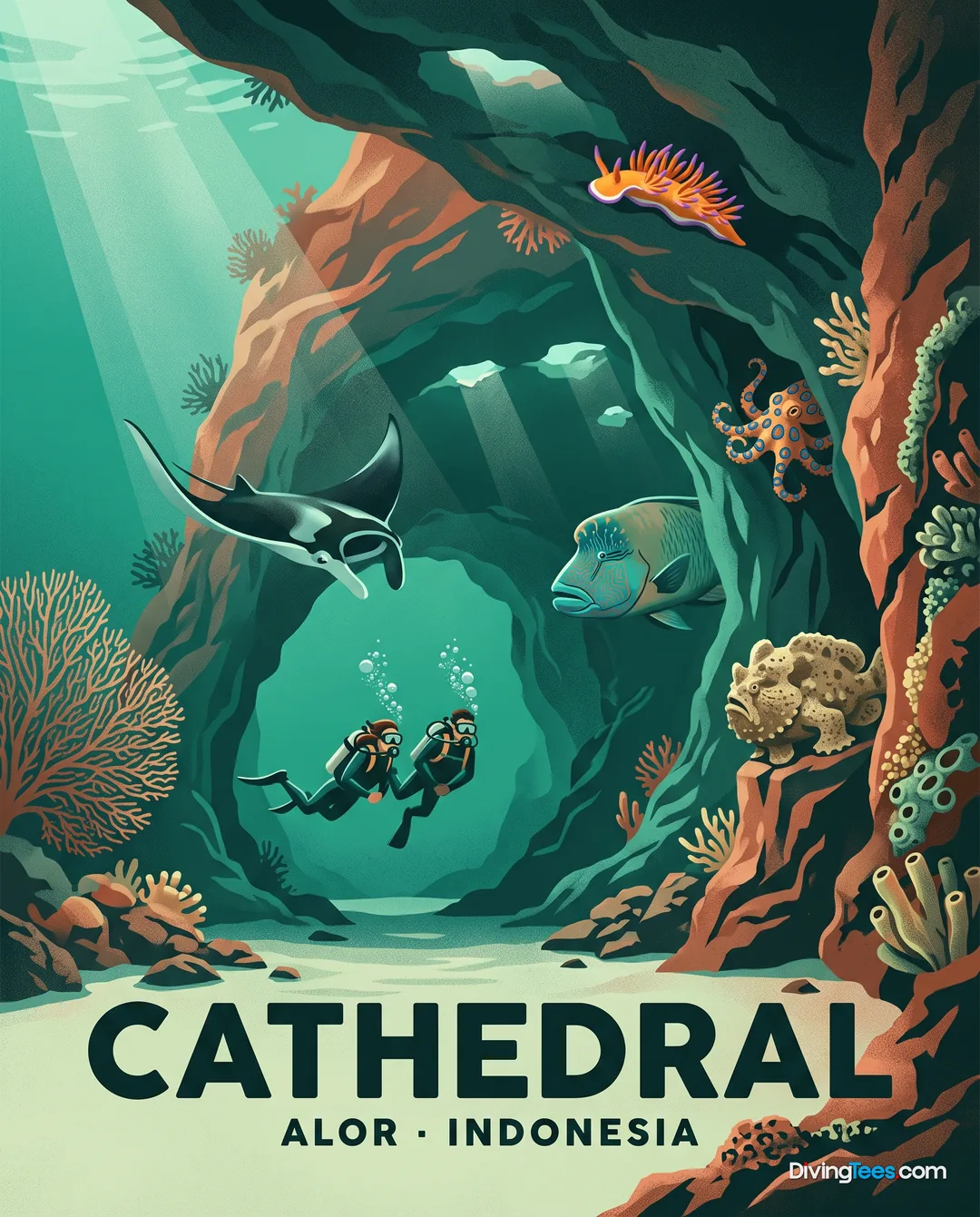
Cathedral →
Max. depth · 30 m
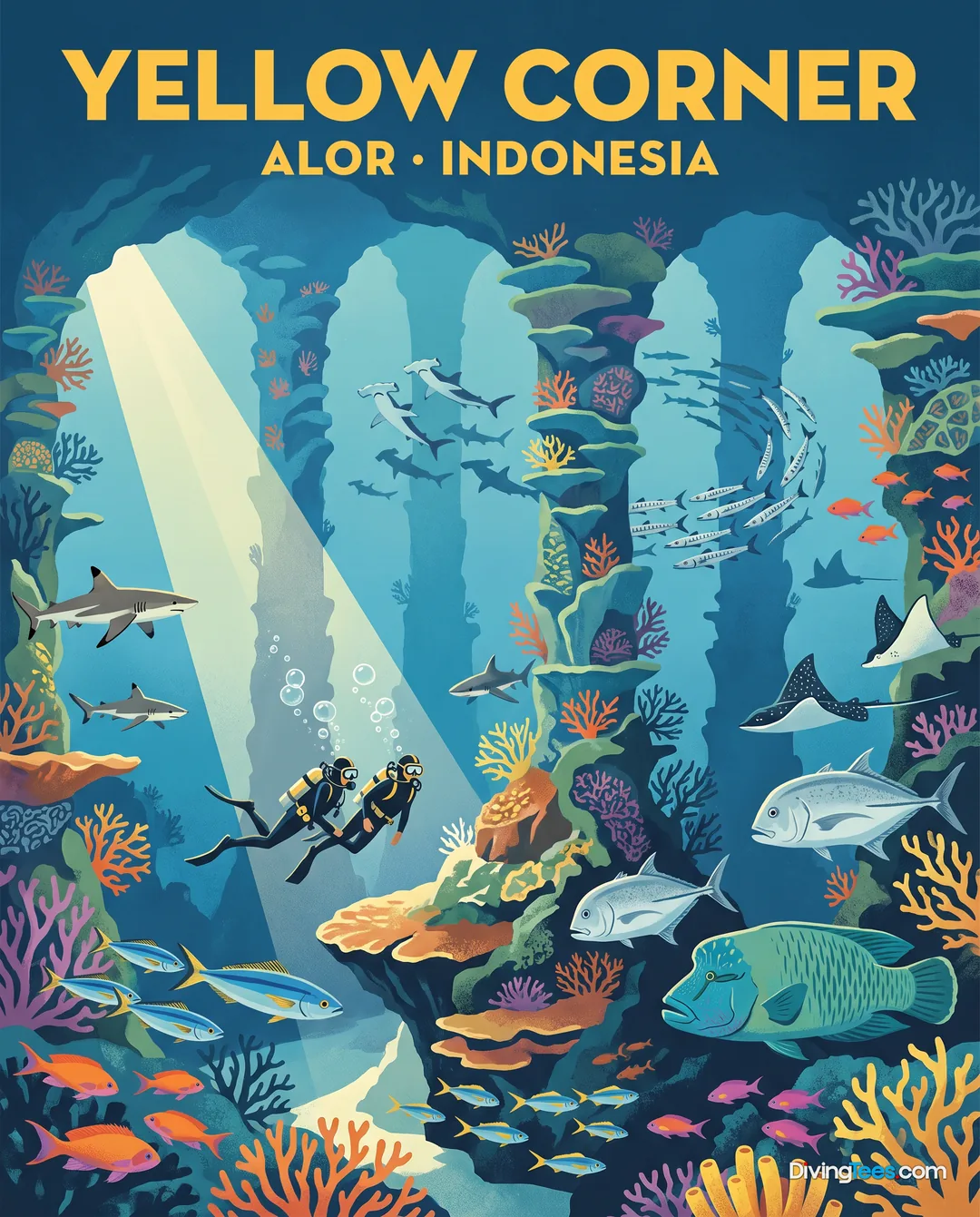
Yellow Corner →
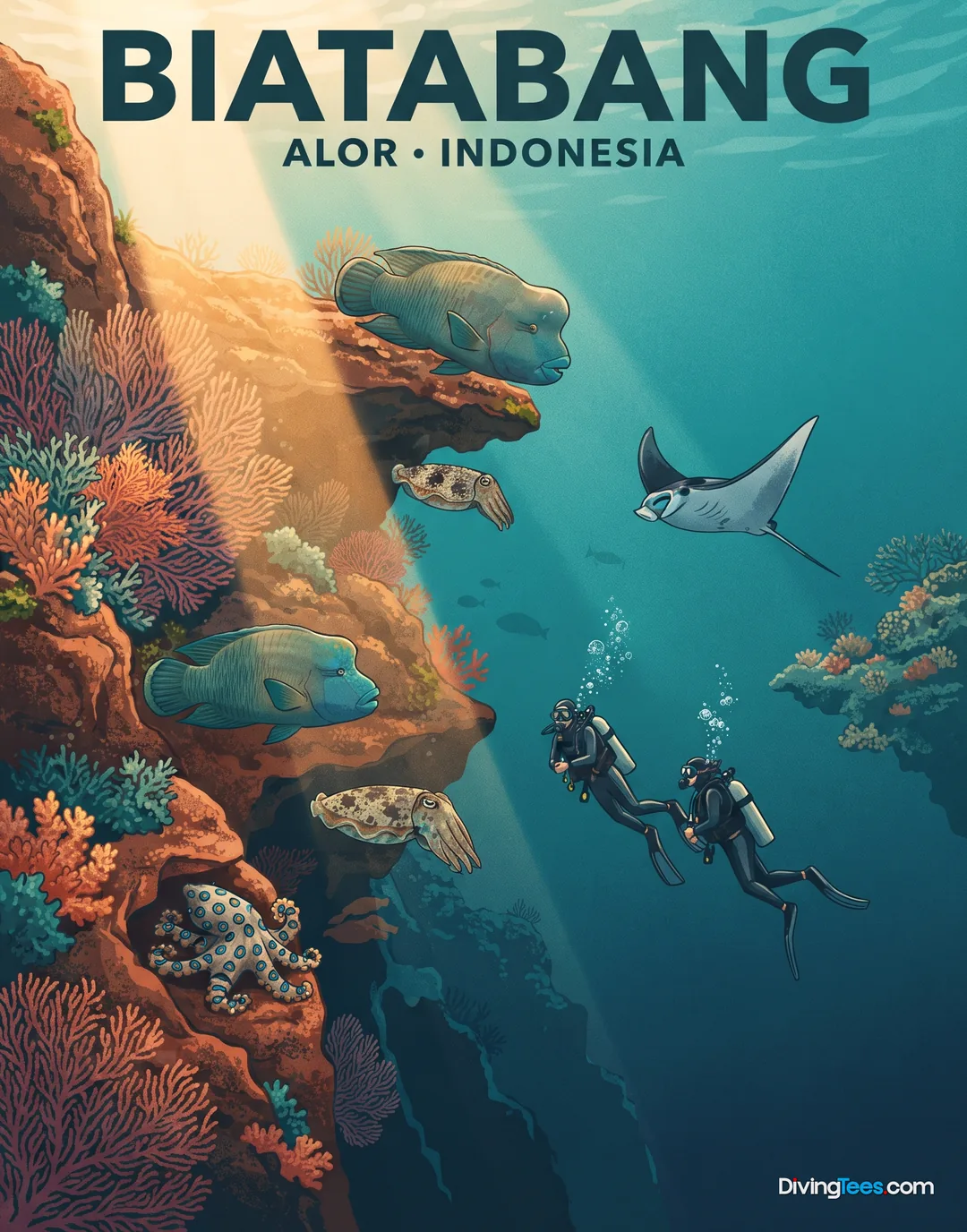
Biatabang →
What you’ll meet underwater
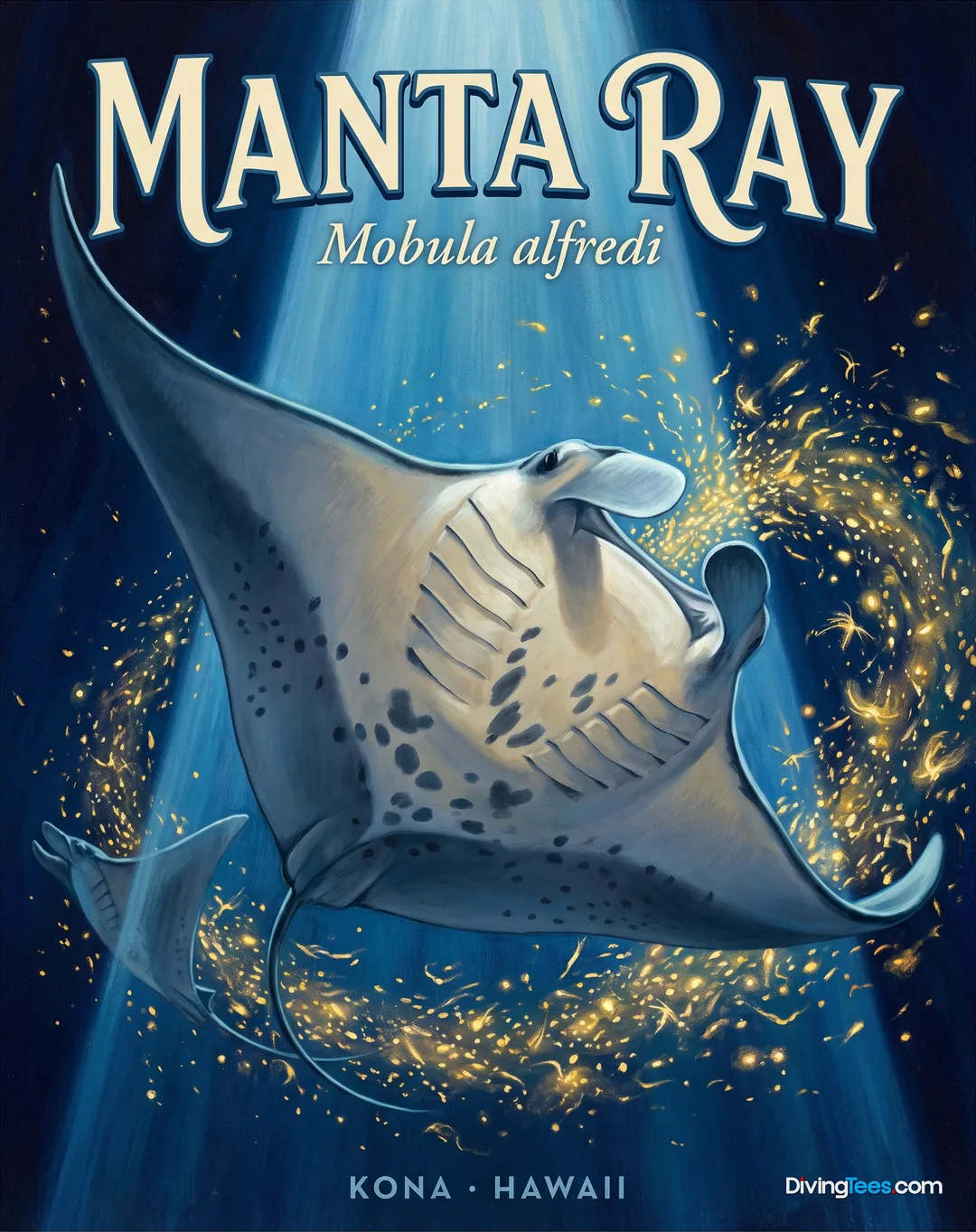
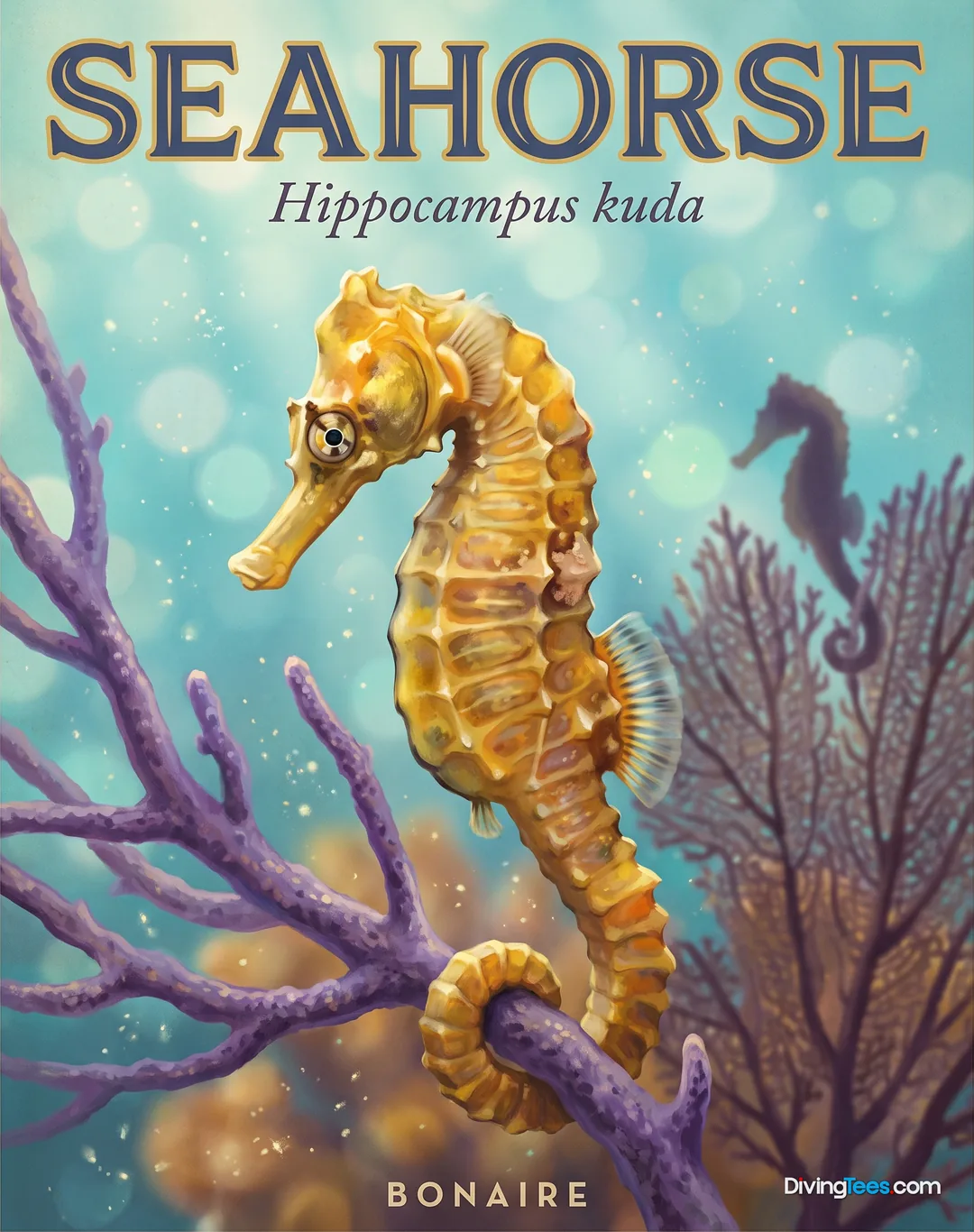
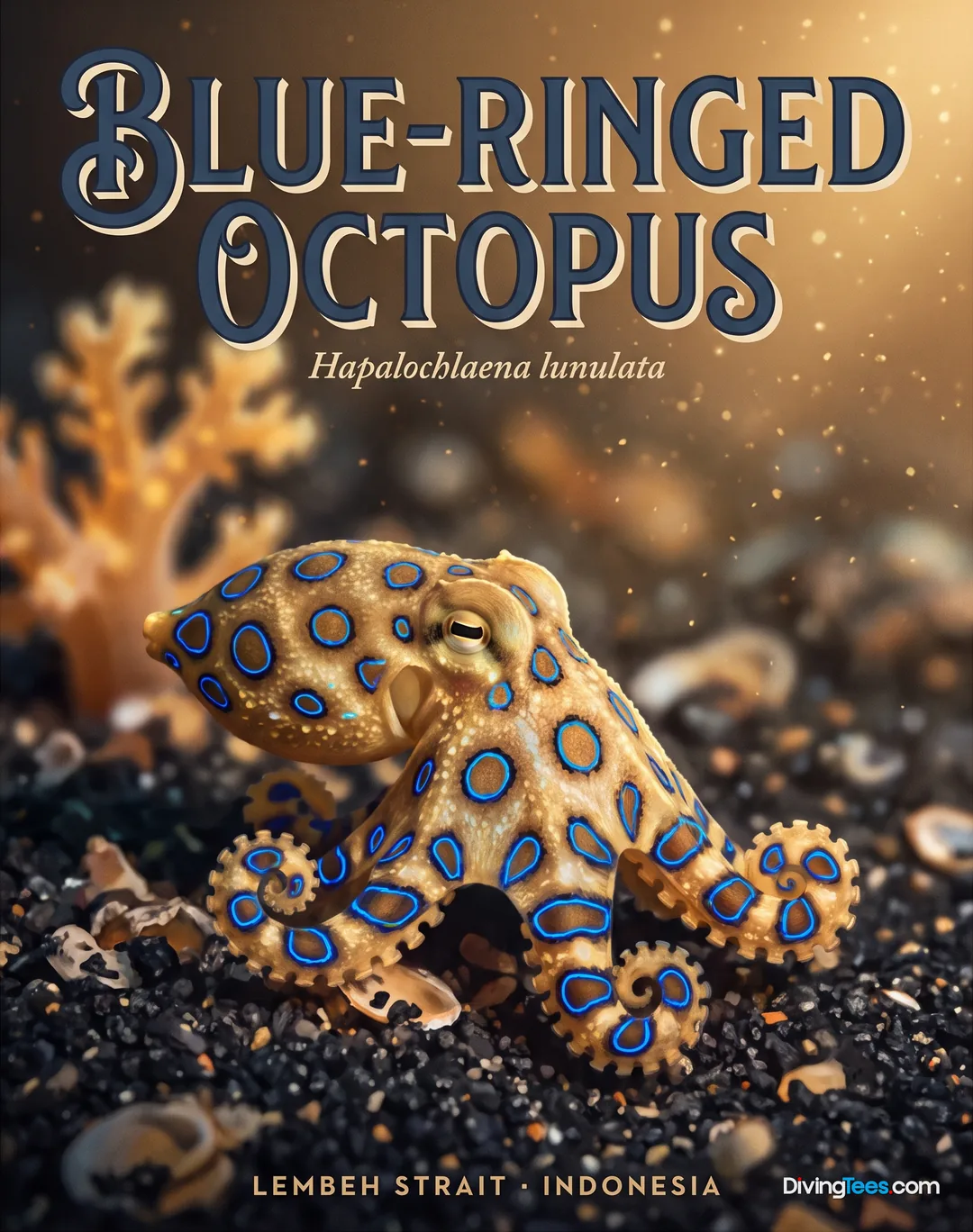
Across these routes, the recurring spectacle is large life moving through current: Napoleon wrasse, reef sharks, manta rays, barracuda, eagle rays, giant trevally and turtles, with nudibranchs and pygmy seahorses rewarding a slower look on the reef. Tuna and dolphins are also recorded across several sites, while soft corals, anthias and fusiliers fill the water around the larger animals. The site choice changes what the diver goes looking for. Castle Rock can produce grouper and coachfish alongside white-tip and grey reef sharks. Batu Bolong is the place for its hard-coral cover. Siaba Besar concentrates frogfish, blue-ringed octopus, seahorses, shrimp and unicornfish in shallow coral country. Wolang Cavern is where a lobster is specifically recorded. Cathedral offers the unusual possibility of a sunfish, while Yellow Corner is the site associated with hammerhead sharks. Andy's bus stop adds butterflyfish and parrotfish to the drift. These are possibilities tied to particular habitats and currents, not guarantees.
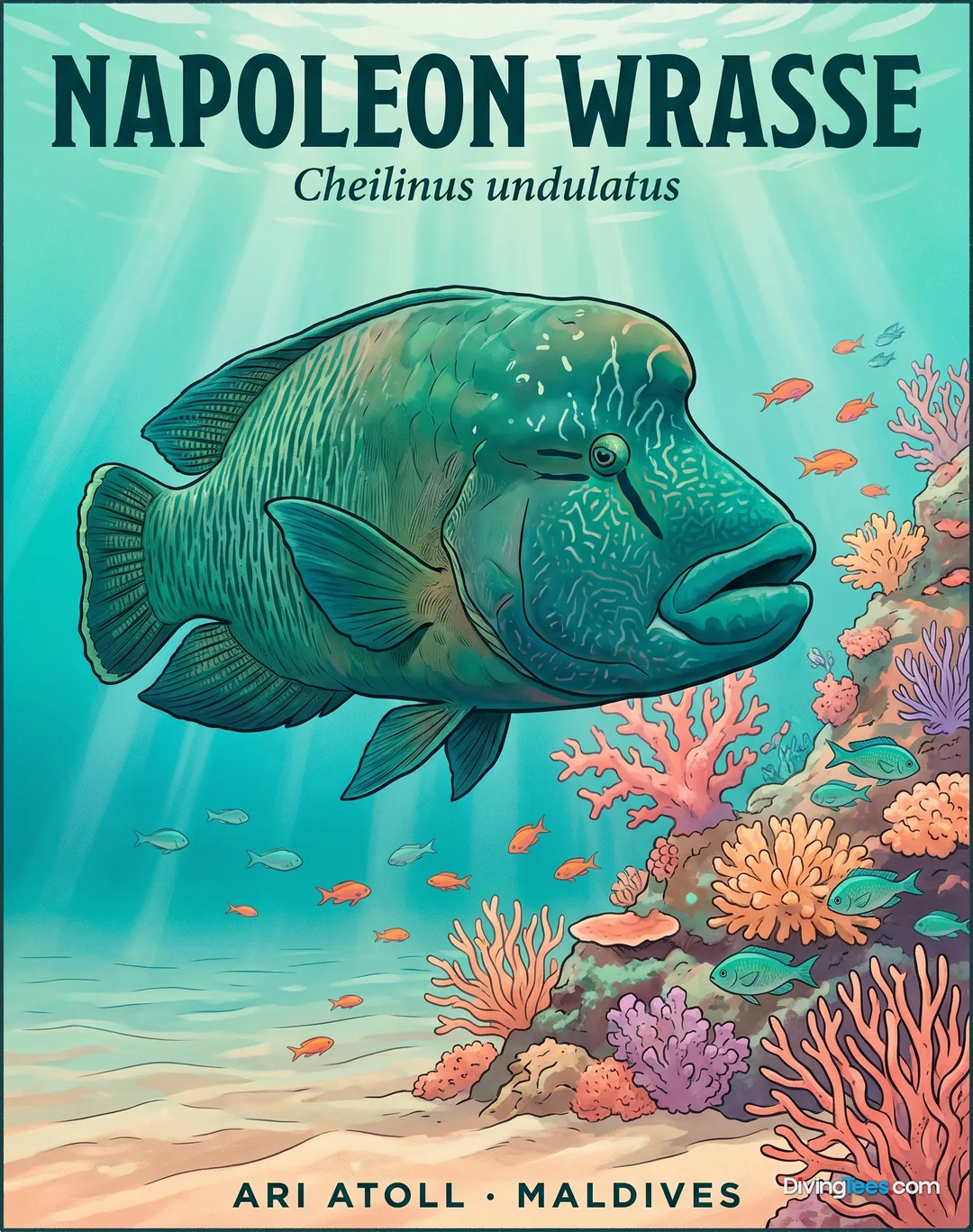

Who puts you in the water
The crew speaks English and is trained in first aid. Naga Biru carries oxygen, first-aid kits, fire alarms and extinguishers, life rafts, lifejackets, a radio and satellite communication equipment, along with navigation and emergency systems including radar, sonar, GPS and an emergency position-indicating radio beacon. Dive groups leave from the platform by tender after the briefing, with the crew handling the transfer between the main boat and the site. The boat welcomes certified divers and snorkelers, and private dive guides are available as an optional service for those who want individual supervision. The listed information does not give a fixed guide-to-diver ratio, a minimum logged-dive requirement, instructor numbers, course programme, recall system or defibrillator provision, so those points should not be assumed from the general safety equipment. What is clear is the emphasis on organised operations: a small passenger group, dedicated tenders and safety equipment kept on the vessel rather than improvised at the site.
The dive deck and the gear
The dive deck is shaded and arranged around a proper platform, with rinse tanks for equipment and a separate rinse area for cameras. DIN adapters are available, and nitrox is free for certified divers; an optional nitrox certification can be handled on board. Rental equipment is available, though the listed details do not identify tank material, tank volume, compressor type or rental brands. Two Suzuki 100 HP tenders carry divers from Naga Biru to the sites and collect them after the dive, while the main boat remains the stable base. The return is built around a platform rather than a climb up a high hull side, and hot showers are available afterward. Camera users get more than a generic rinse bucket: the dedicated camera room and separate camera rinse area protect the part of the kit most likely to need careful handling. Charging stations, oxygen and first-aid kits complete the working setup.
Between dives
Between dives, the shaded deck is the natural place to sit with wet gear drying nearby and the water still within sight. The outdoor dining area offers a second place to settle, while the air-conditioned salon is there when the heat, humidity or a long surface interval calls for cooler air. A dedicated camera room gives photographers somewhere more useful than a cabin bed for checking images and preparing the next entry. The boat carries internet through Starlink, audio and video entertainment, and a bar, but the route itself supplies the better interruption: Komodo's island scenery, Alor's quieter waters and the short tender rides to sites away from the mother ship. When diving pauses for a land excursion, snorkeling or a beach barbecue, the day opens out without requiring a separate resort stay. A stand-up paddleboard is also available for a slower hour on the surface.
A day on board
A day begins with the boat preparing the first dive before the group has fully emerged from the cabins. The briefing comes before the tender run, then divers return to Naga Biru for food, rinsing and a surface interval in the shade or the air-conditioned salon. The next immersion follows the same practical sequence, with meals and snacks keeping the gaps useful rather than empty. Depending on the itinerary and site conditions, the boat also makes room for land excursions, snorkeling, a beach barbecue or a quiet stretch underway between locations. As daylight fades, the crew prepares the night dive included in the programme; after that, dinner and the outdoor table give the day a slower ending. There is no need to force the schedule into invented clock times. The rhythm is set by the sites, the tenders, the current and the condition of the divers. Then the boat resets for the next briefing.
What you eat aboard
Meals are served as full board, with a buffet approach that can carry a diver from the first meal through the next surface interval without turning the table into a formal event. The galley combines local and Western cooking, with vegetarian and vegan options, snacks throughout the day, and non-alcoholic drinks, tea and coffee included. Local coffee and espresso are available alongside beer and wine for those who choose them. The outdoor dining area gives meals a place of their own rather than forcing every plate into the air-conditioned salon. A beach barbecue can also form part of the itinerary, which shifts dinner from the boat to the shore when the route allows it. On a diving trip, that flexibility matters: food arrives as fuel between immersions, then becomes the evening's social point once the gear is rinsed and the last dive is over.
Nights at sea
Naga Biru's seven cabin categories range from Lower Deck and Superior cabins to Deluxe, Grand Deluxe and an Upper Deck Single Cabin. The important difference at night is not a decorative name: each cabin is air-conditioned, has a private bathroom, and selected cabins open onto an accessible balcony. Standard windows give the cabins daylight without pretending that every berth is a panoramic suite. After a dive-heavy day, that private space lets a diver shut the door, dry kit and sleep without sharing the room's noise or light. The boat also provides hot showers, cabin towels, toiletries, a safe and a hair-dryer. Cabins are non-smoking, and the salon is air-conditioned for anyone who would rather sleep or read outside the cabin. The result is a more settled night than the compact bunk-room arrangement found on many working liveaboards, while the wooden hull keeps the experience recognisably nautical.
Lower Deck Cabin
Superior Cabin
Deluxe Cabin
Grand Deluxe Cabin
Upper Deck Single Cabin
What to know before boarding
Komodo departures and returns use Labuan Bajo, while Alor itineraries depart from and return to Kalabahi. Airport and hotel transfers are included for these cruises. Transfer arrangements are communicated before boarding, so the booking details should be checked for the meeting point and handover. Arriving the night before is the sensible choice, especially for a liveaboard departure: it keeps a delayed flight from becoming the first problem of the trip.
Deck plan
- Year built
- 2024
- Year renovated
- 2025
- Length
- 40 m
- Beam
- 6 m
- Maximum number of passengers
- 12
- Number of cabins
- 7
- Number of bathrooms
- 8
- Engines
- 1 × Nissan 10 cylinders
- Cruising speed
- 7 knots
- Tenders
- 2 × Suzuki 100 hp
Hello, I'm Marina, DivingDeal.com's AI assistant. I answer in detail about hotels, dive centres and liveaboards.

Thinking about the whole trip and the flights? Talk it over with Edith →
Marina is an AI. Some links are affiliate links: DivingDeal may earn a commission, at no extra cost to you. Bookings are made with the partner.