Liveaboards · Indonesia
Seahorse — a traditional Indonesian phinisi built around diving
For subtitles in English: start the video firstthen click the gearat the top right of the video, select “Subtitles/CC”, then “Auto-translate” and choose “English”.
The invitation
Seahorse is for divers who want a traditional Indonesian sailing boat without giving up the practical details that make a long cruise work. The wooden phinisi has the character of a working vessel, while the 2018 refurbishment brought its cabins, common areas and safety systems up to the standard expected on a serious liveaboard. The reason to choose it is the balance: enough space to escape the group, but only 16 guests and a crew large enough to keep the diving moving cleanly. Wallacea uses Seahorse on routes where the sites matter more than the name of the boat, from Komodo currents and manta stations to Raja Ampat reefs and the Banda Sea. Step aboard for the diving, then notice how much of the boat has been arranged to make four water entries in a day feel manageable.
Boarding
From the dock, Seahorse looks like what it is: a wooden Indonesian phinisi, with a working hull and the long, traditional lines of a sailing vessel rather than a purpose-built hotel. The wood gives the boat warmth that polished modern interiors often lack. Once aboard, the layout feels made for movement between cabins, shaded deck space, the restaurant and the dive area rather than for formal luxury. The refurbishment has kept the boat's traditional identity while adding air-conditioning, private bathrooms and modern navigation and safety equipment. The limited guest count matters more than another specification: by the second day, the people around the boat are familiar, and the crew can recognise whose camera, tank or fins belong where. Seahorse is not a new yacht pretending to be a phinisi. It is an established dive boat that has been kept useful.
The atmosphere on board
The atmosphere is shaped by a crew that keeps the operation professional without making the boat feel formal. Twelve crew members and four dive masters support 16 guests, so tanks, meals, cabins and tenders do not become a one-person job for the diver. The result is a boat where practical help is close at hand and the social side stays easy: divers meet around the camera room, the restaurant and the shaded deck, then split into small groups underwater. English, French, Spanish and Indonesian are spoken aboard. In the evening, the day usually ends around photographs, food and a drink rather than a staged programme. Seahorse suits people who want crew involvement when it matters, and enough room to disappear when the day has been long.
The sites you’ll dive
The site list changes with the cruise: Seahorse runs 11-day/10-night Bali–Sumbawa–West Flores crossings, 12- and 13-day Banda Sea and Raja Ampat routes, and other Indonesian itineraries. In Bali, Manta Point reaches -40m at manta cleaning stations, while Batu Kelebit drops to -60m around huge pinnacles rising from white sand, with pelagics moving through the blue. Bias Tugel reaches -30m on a coral slope where pygmy seahorses and Wally's squat lobster reward a slow search. Gili Mimpang and Gili Biaha both reach -40m: the first is a steep wall patrolled by white-tip reef sharks, the second enters an ancient volcanic blowhole and cave. Gili Tepekong reaches -40m, with coral gardens and a Canyon affected by unpredictable currents. Around Tulamben, Coral Garden reaches -30m for macro life and artificial reef, Tulamben Bay reaches -35m around the USS Liberty wreck and reef, and Tulamben Wall reaches -40m along a volcanic drop-off. In Raja Ampat, Manta Sandy is about cleaning-station encounters, while Mike's Point reaches -40m around overhangs, soft corals, sweetlips and eagle rays. Conditions, tides and the chosen itinerary decide which sites are used.
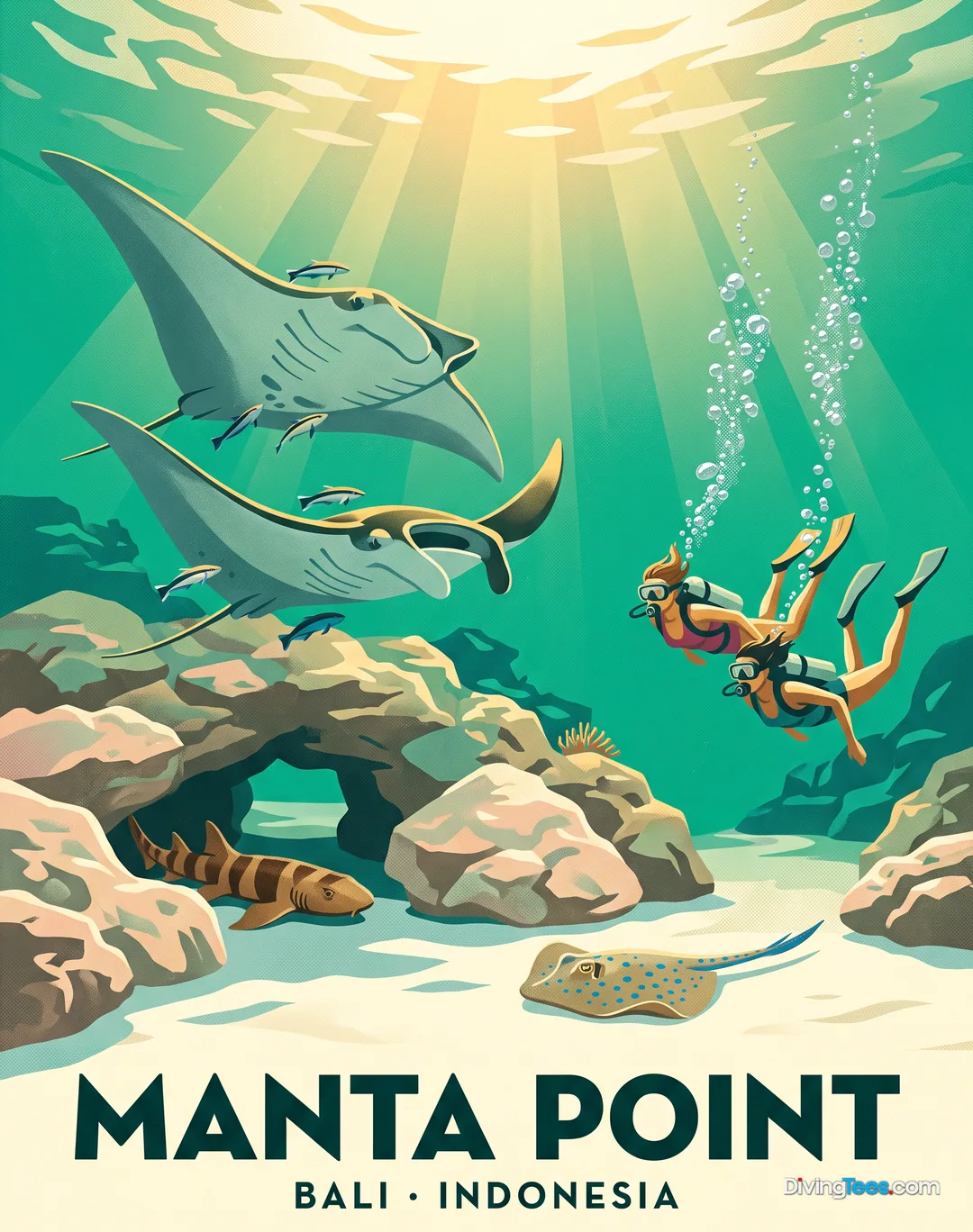
Manta Point →
Max. depth · 40 m
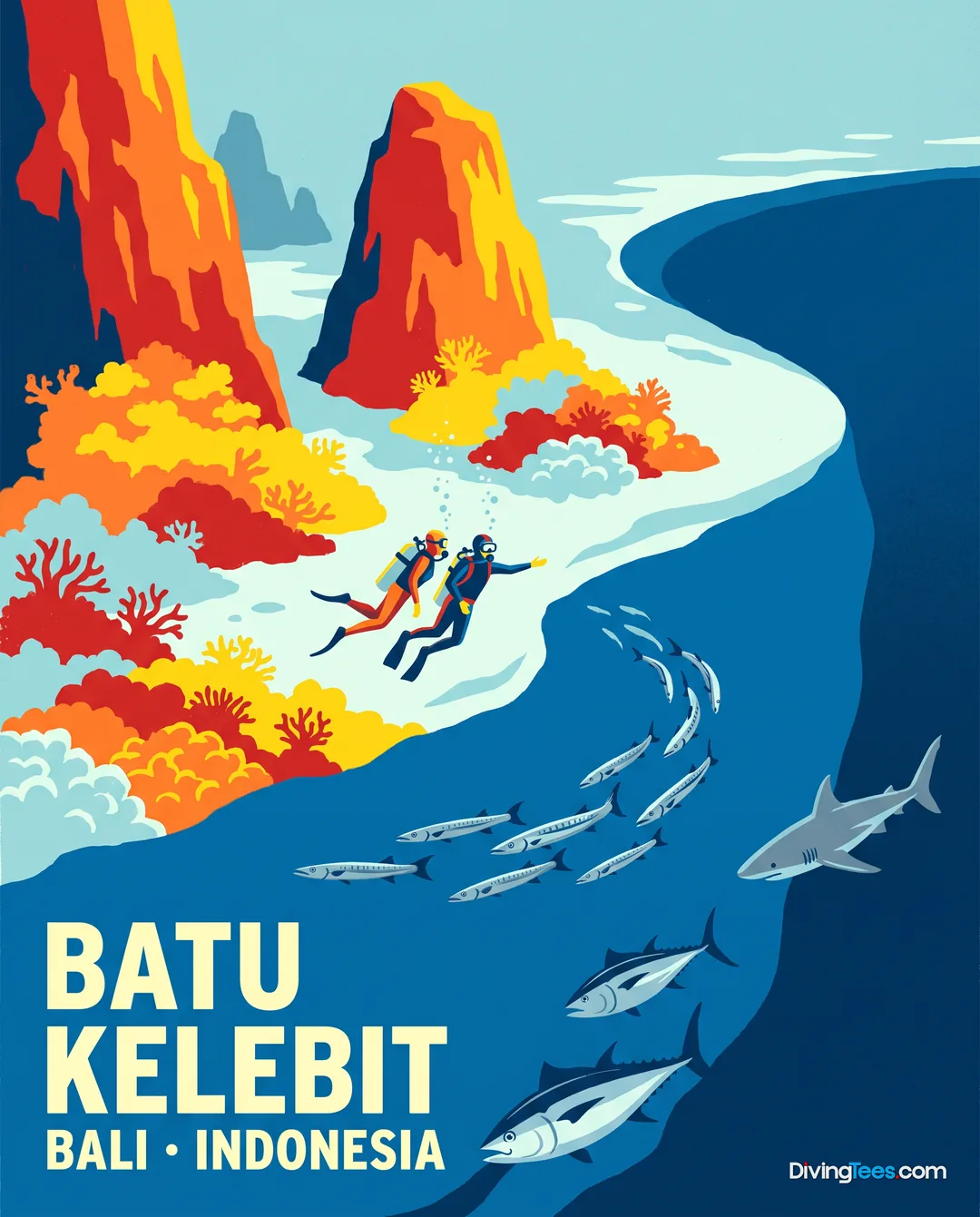
Batu Kelebit →
Max. depth · 60 m
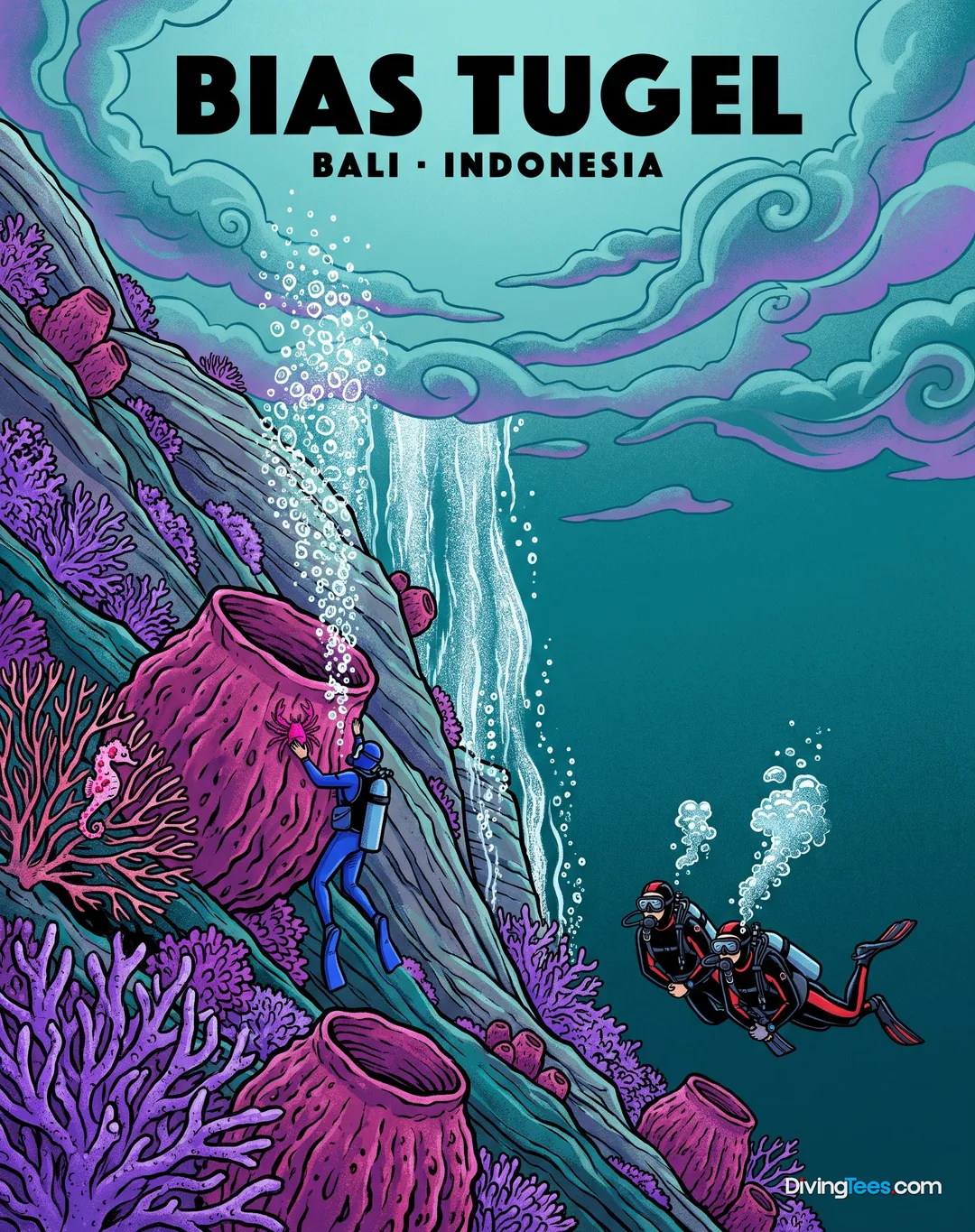
Bias Tugel →
Max. depth · 30 m
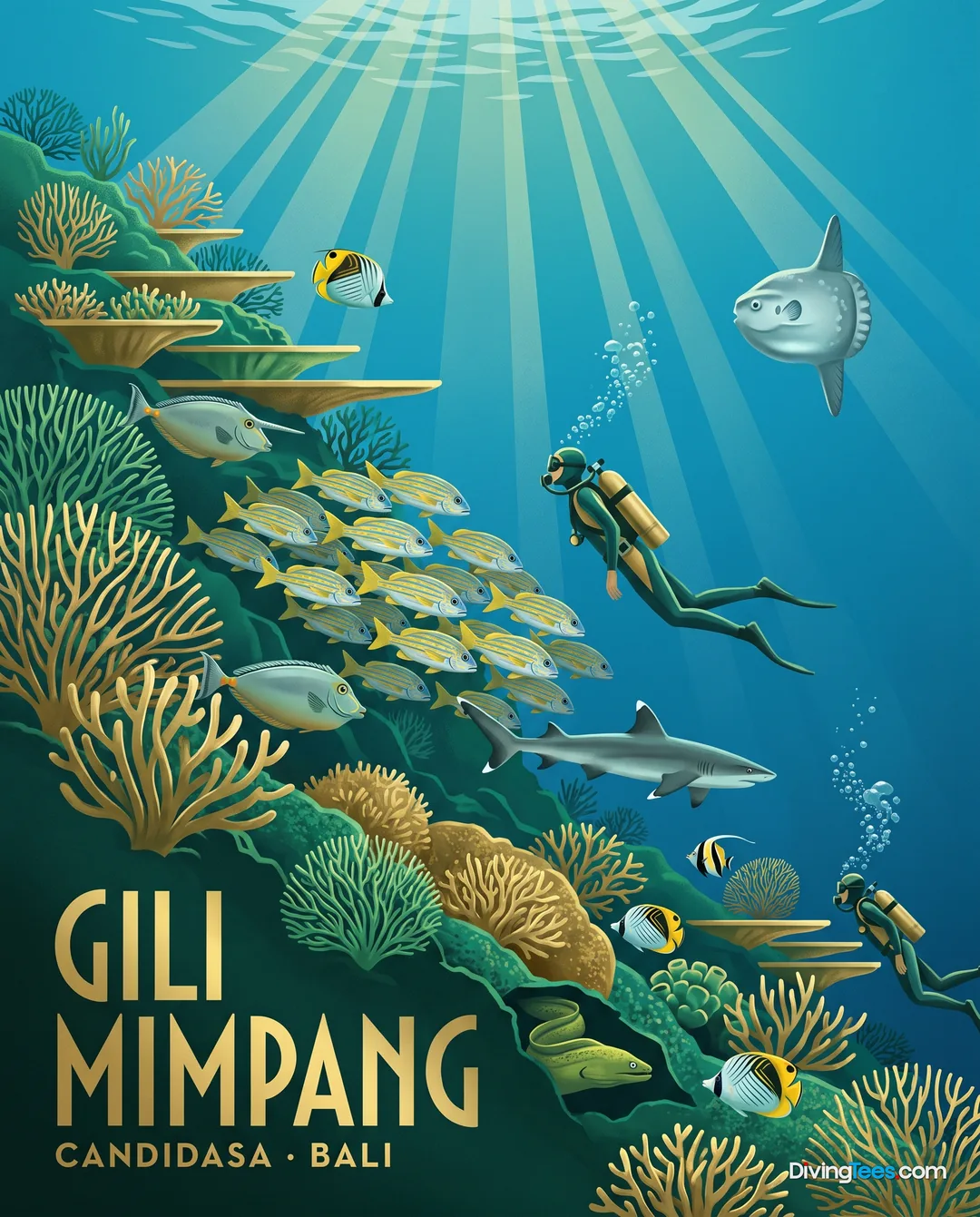
Gili Mimpang →
Max. depth · 40 m
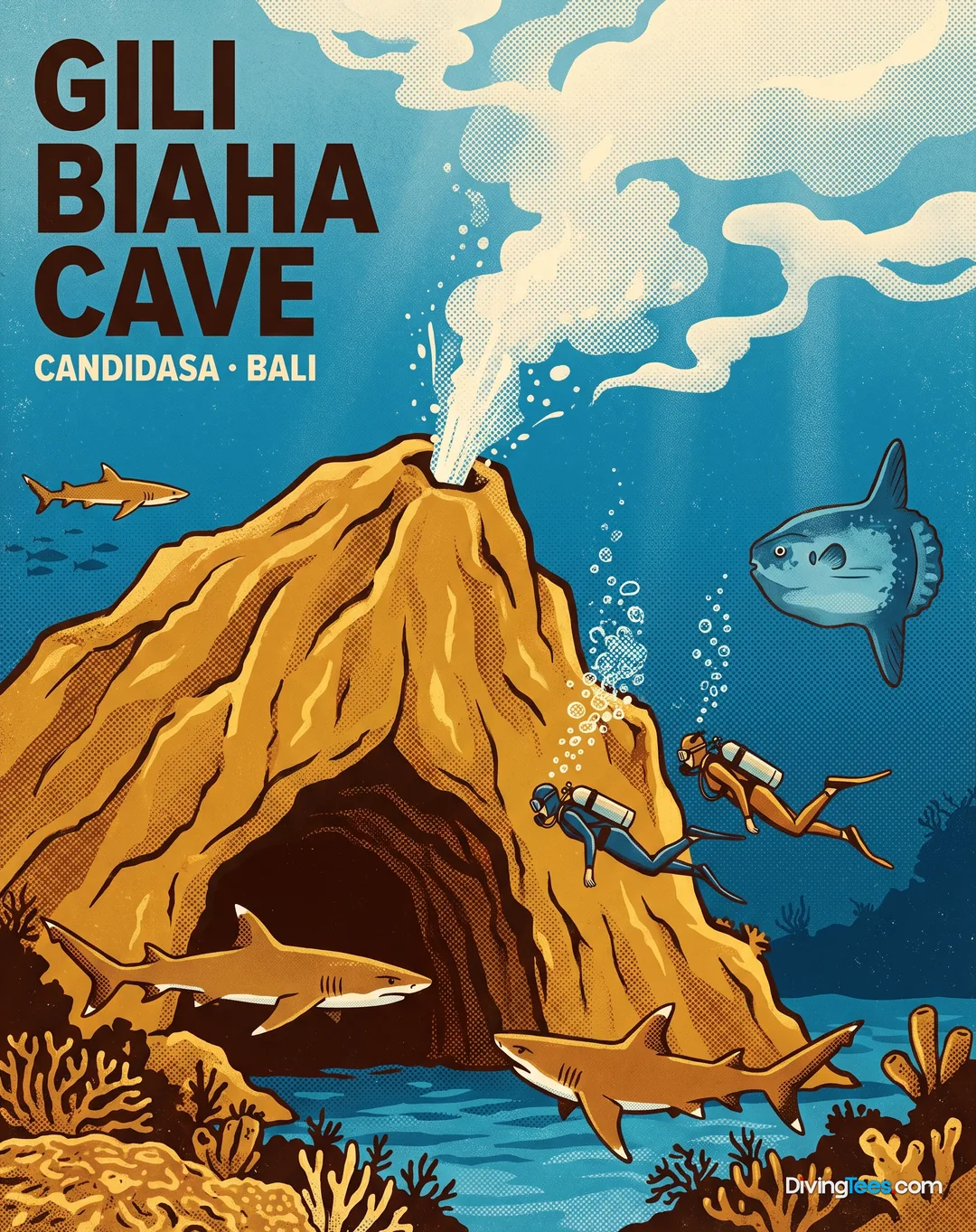
Gili Biaha →
Max. depth · 40 m
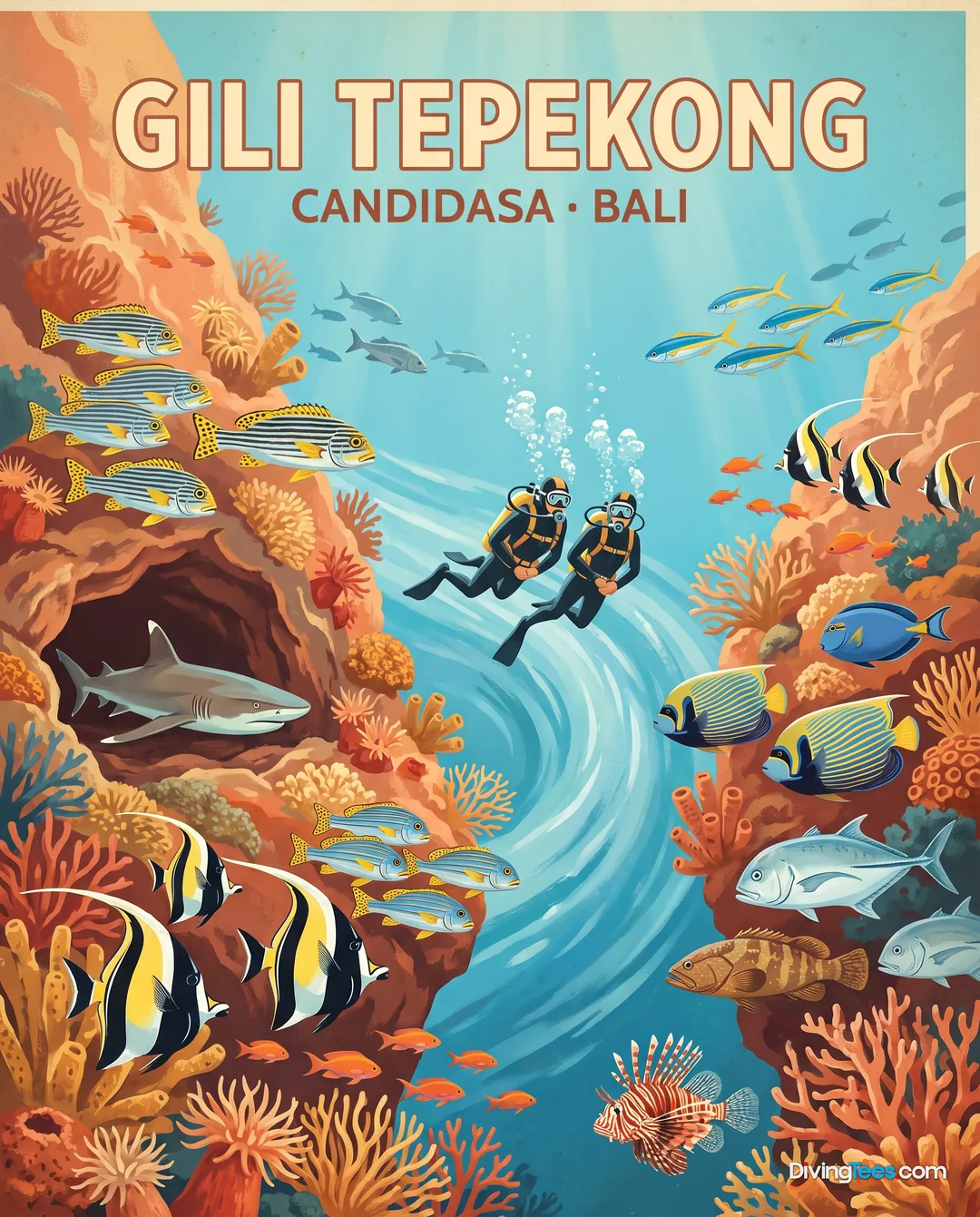
Gili Tepekong →
Max. depth · 40 m
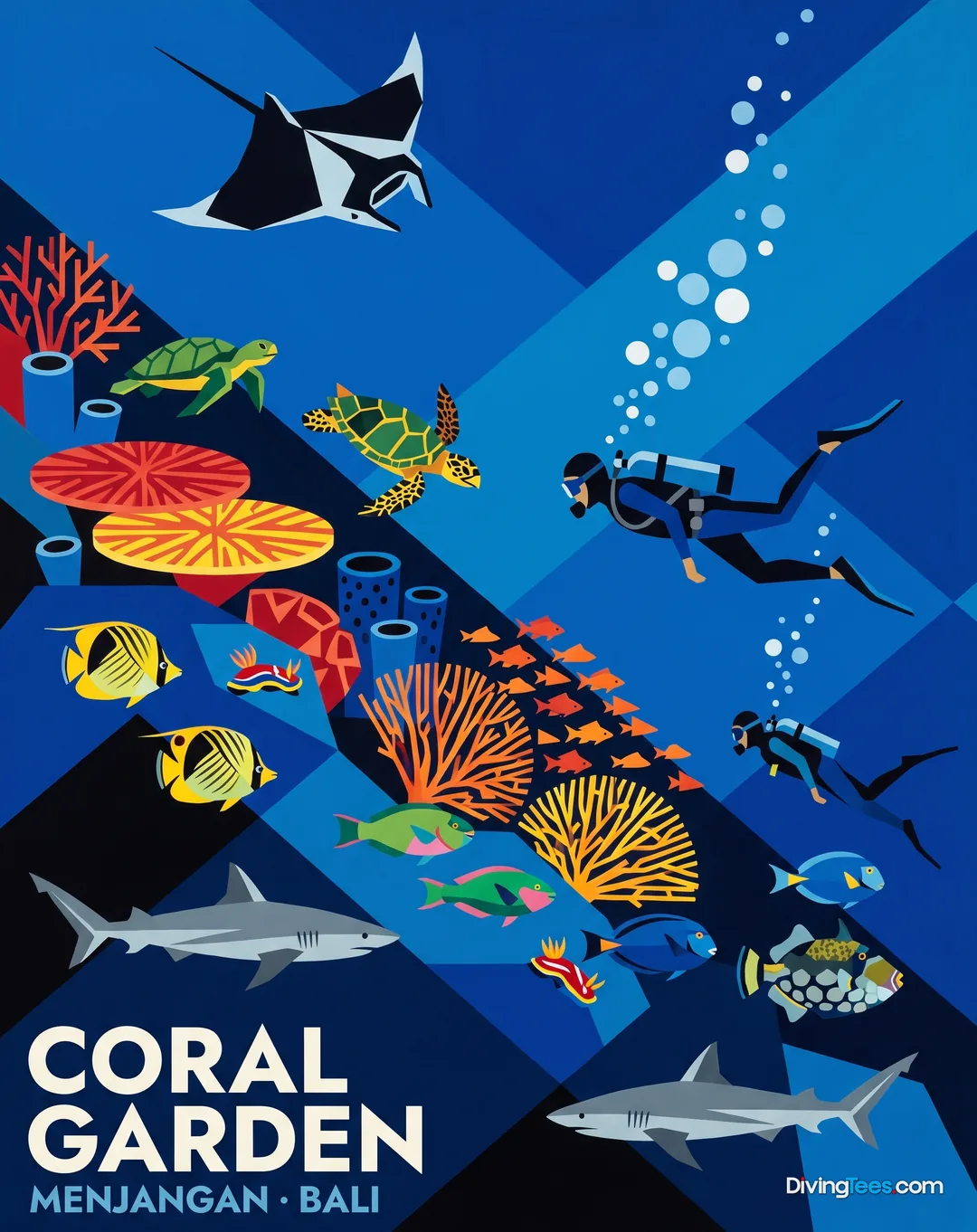
Coral Garden →
Max. depth · 28 m
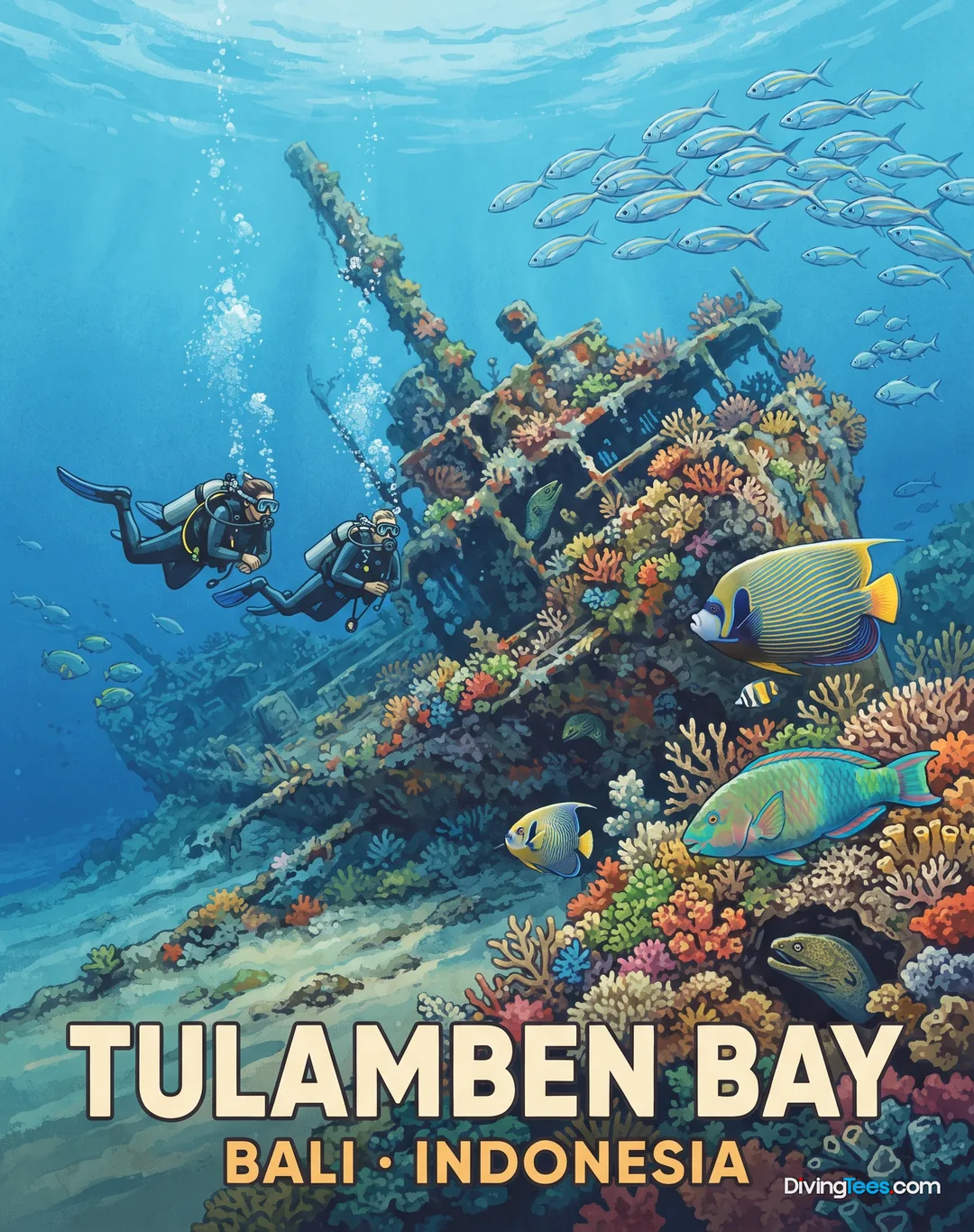
Tulamben Bay →
Max. depth · 35 m
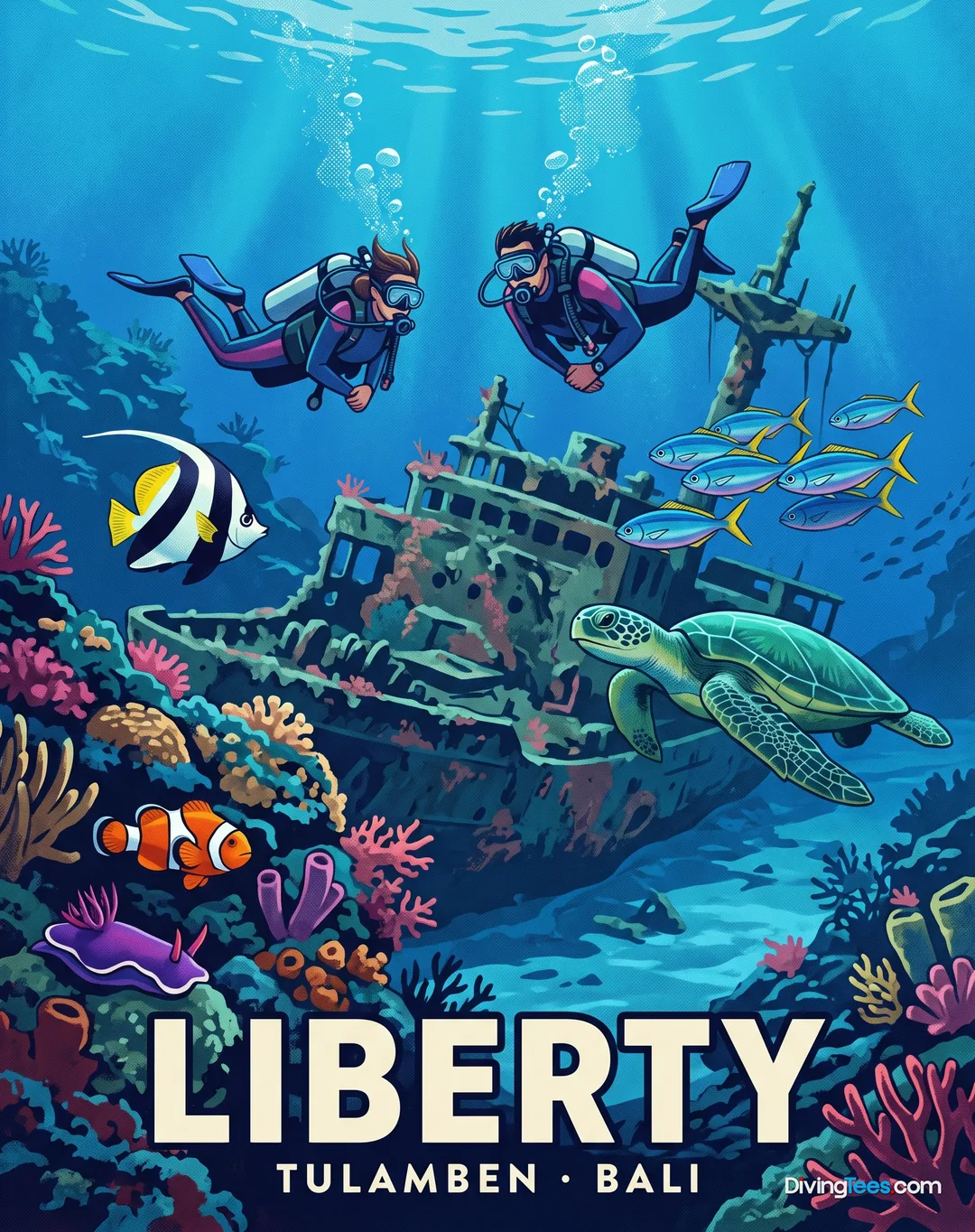
Liberty →
Max. depth · 30 m
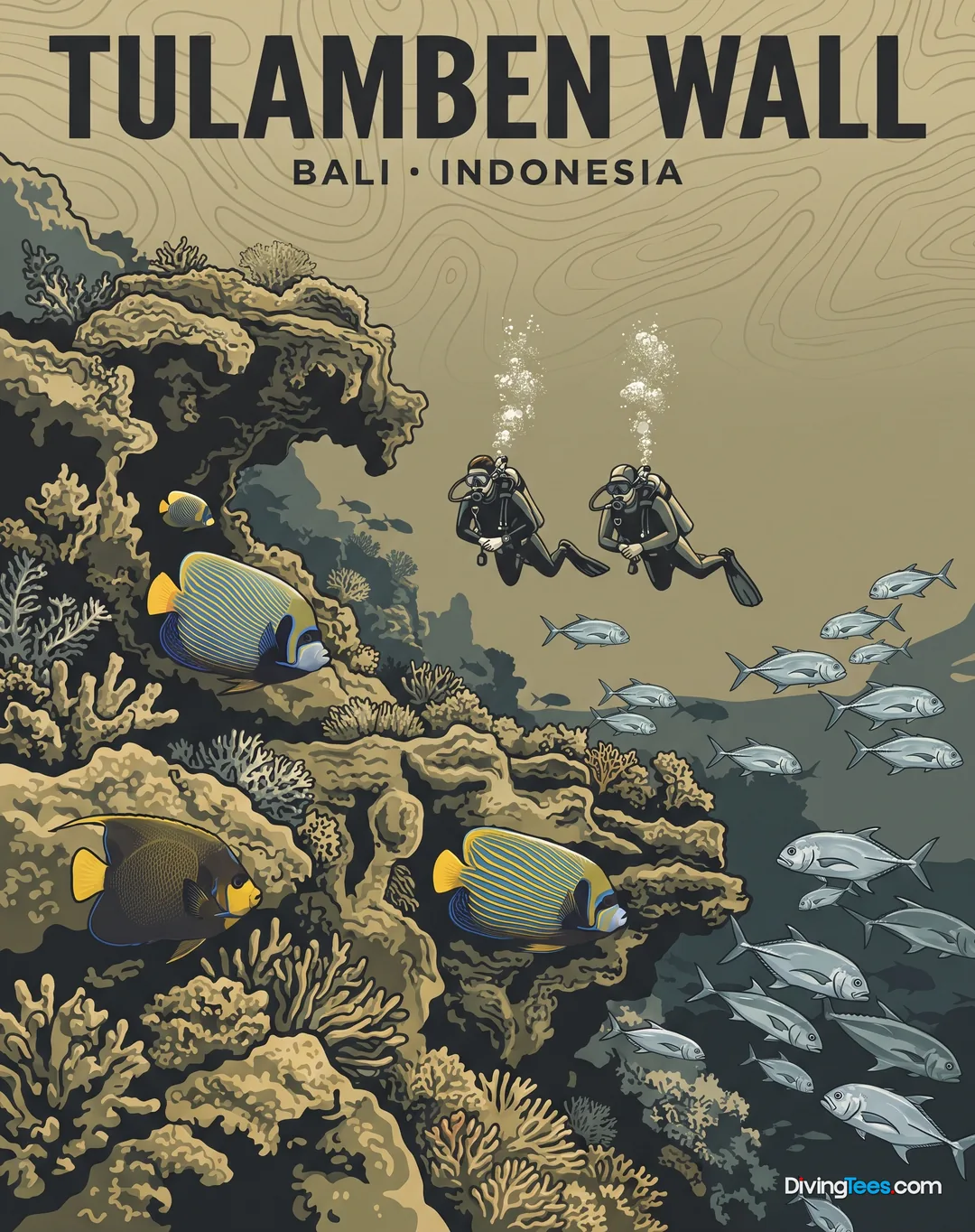
Tulamben Wall →
Max. depth · 40 m
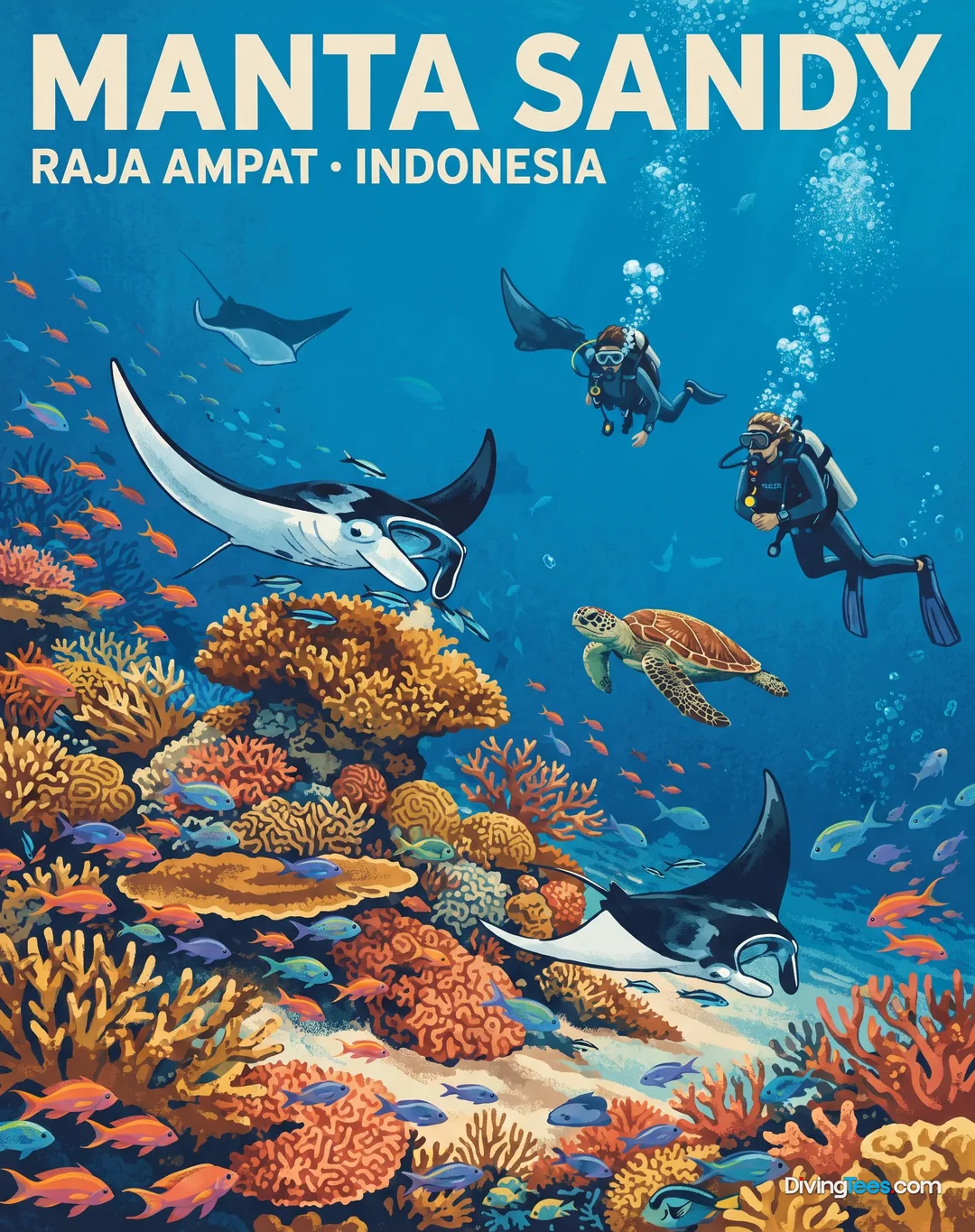
Manta Sandy →
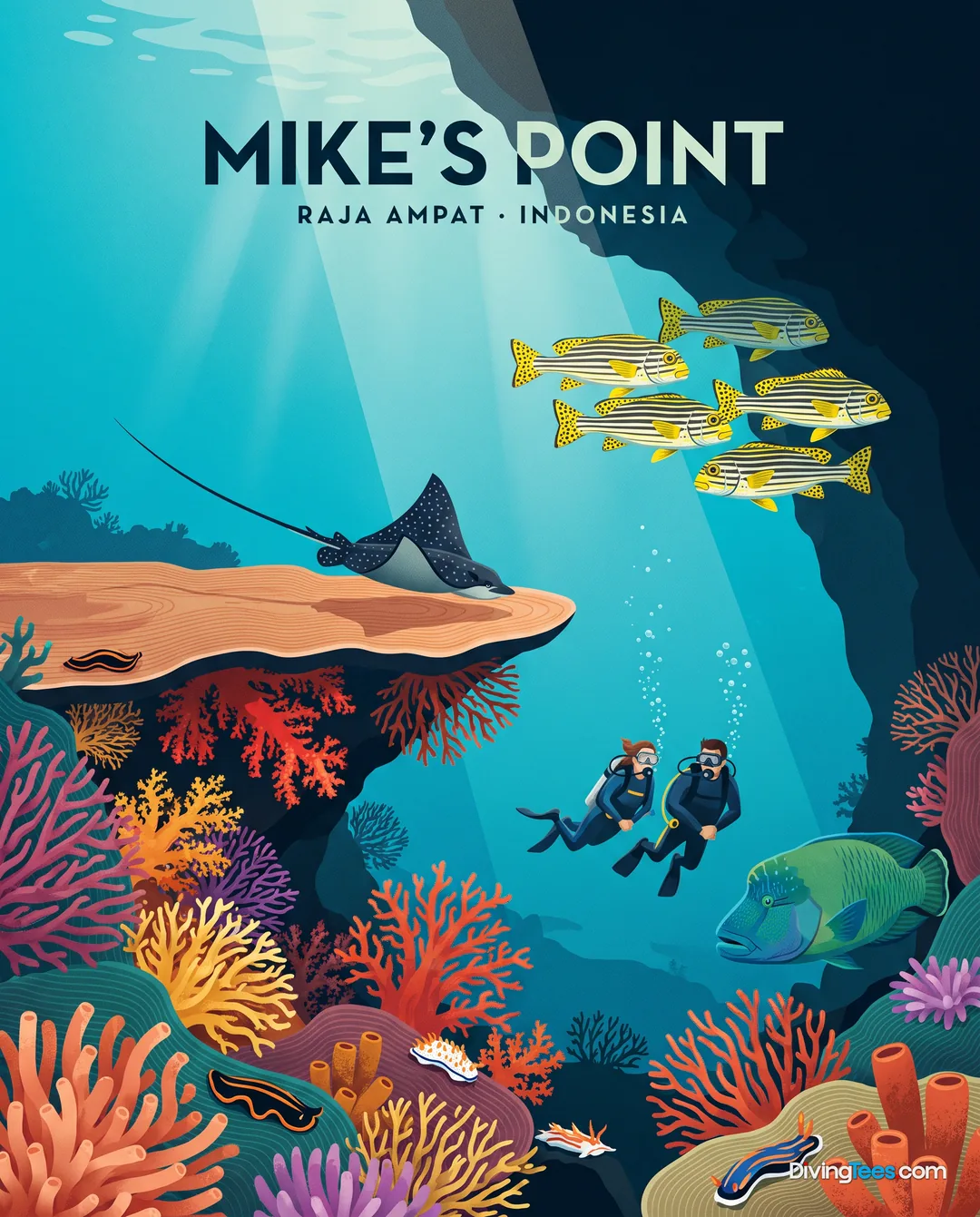
Mike's Point →
Max. depth · 40 m
What you’ll meet underwater
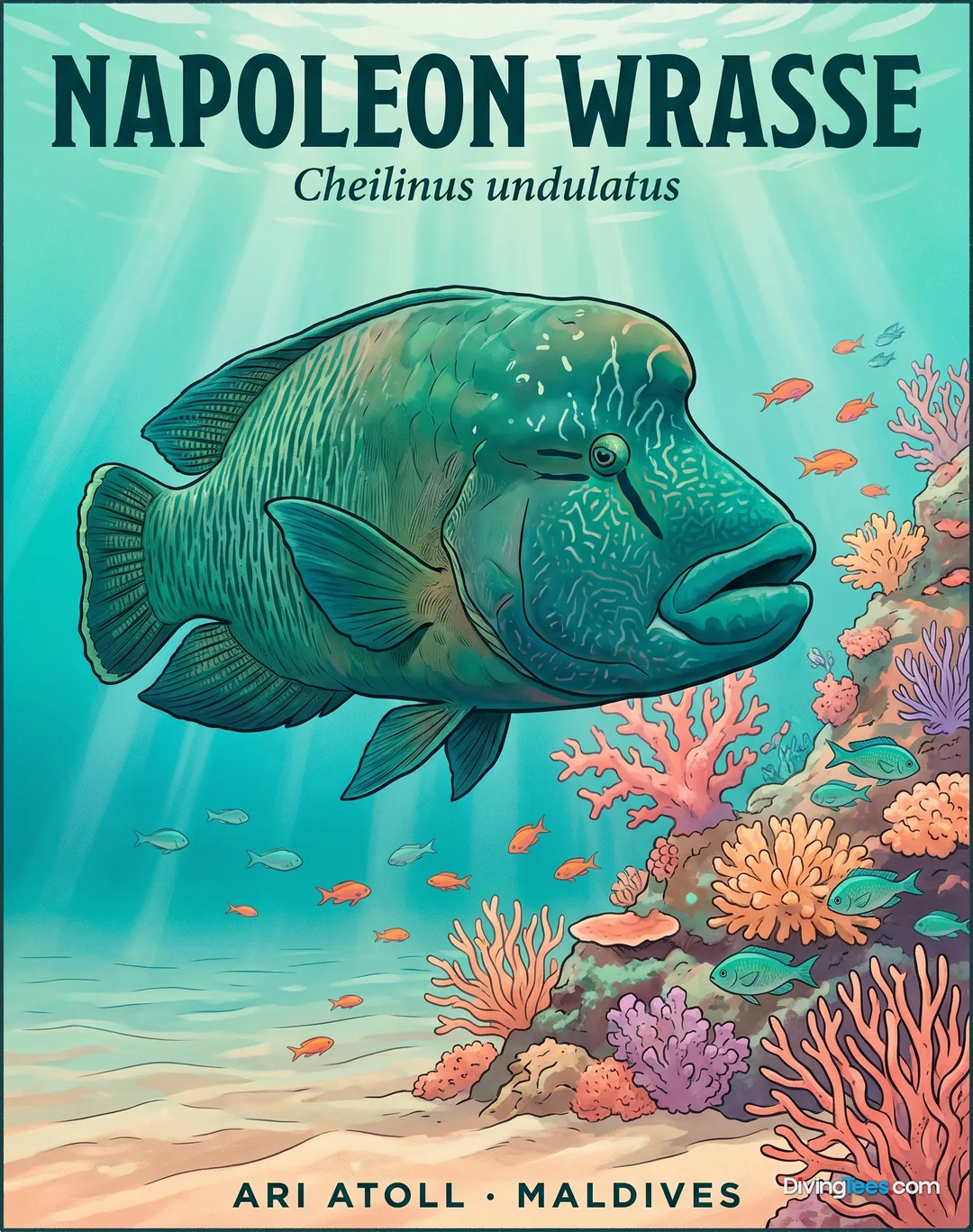
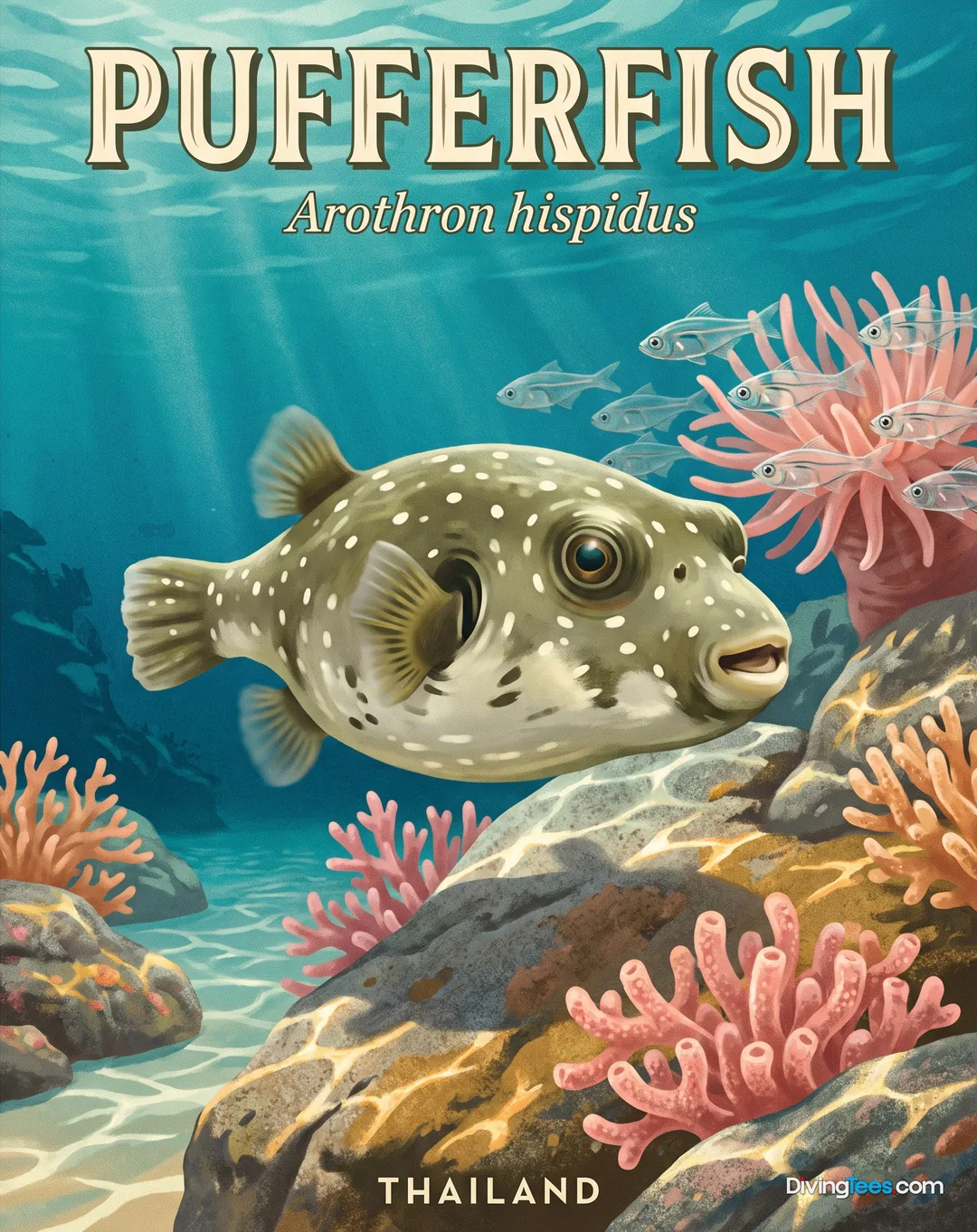
The route's recurring spectacle is large life moving through healthy reef: reef sharks, turtles, mola mola, barracuda, manta rays, white-tip reef sharks, Napoleon wrasse, tuna and trevallies are recorded across several sites. Nudibranchs, pygmy seahorses, soft corals and sweetlips keep the close inspection worthwhile when the pelagics stay away. Cleaning stations give the manta encounters at Manta Point and Manta Sandy their structure, while currents at sites such as Blue Corner can bring sharks, eagle rays and mola mola into view. The single-site records are the specialist reasons to slow down: Crystal Bay is the place on this route for green turtles, garden eels, seahorses, batfish, coachfish, boxfish and pufferfish; Coral Garden de Tulamben is where eels and anemones are recorded; Gili Tepekong is the named site for bigeye trevally; and Gili Biaha is the site associated with lobster. None of these animals is guaranteed. The variety is the point.

Who puts you in the water
Four dive masters work with the guest group, and the diving is guided rather than left to an anonymous drop in the water. Before each dive, guides check the current and use that information in the briefing, which is particularly important on Komodo, Raja Ampat and other tide-dependent sites. The boat does not publish a fixed diver-to-guide ratio, qualification list or minimum number of logged dives, so suitability depends on the cruise and the sites selected. Recognised certification is required to dive. Nitrox is available to certified divers, while Nitrox certification and other diving courses can be arranged as paid extras. Oxygen, first-aid kits, lifejackets, fire alarms and extinguishers are carried aboard, alongside VHF, satellite communication, GPS, radar and an emergency position-indicating radio beacon.
The dive deck and the gear
The dive operation is built around a large shaded preparation area and a direct route to the platform. Two custom-built tenders carry divers to the sites; each has a 100 HP Yamaha four-stroke engine, VHF radio and depth sounder, allowing quick transfers and pickup after the dive. The setup matters on current sites: divers can enter from the tender and be collected where they surface instead of returning to the mother ship. The boat supplies aluminium 80 CF tanks, weights and belts. Nitrox 32% is included for certified divers, and 15-litre tanks are available as an extra. DIN adapters are carried, and the operation supports sidemount and technical diving. Separate rinse facilities protect cameras, with charging stations and a dedicated camera room for preparation and maintenance. The compressor and filling system are not described in detail.
Between dives
Between dives, the shaded areas are where Seahorse earns its keep. They give divers somewhere to sit with wet hair, a towel and a camera without being forced into the air-conditioned lounge. The front sitting area and observation deck suit the hours when the boat is moving between islands; the sun deck is there when the light is worth staying outside for. Photographers have a proper camera room, while others can read, edit photographs, talk through the last dive or simply watch the islands pass. Kayaks are carried for shore and lagoon outings when the itinerary and weather permit. A massage and laundry service are available, but the more useful luxury is time on deck between briefings, with the next site still ahead.
A day on board
A diving day starts before dawn. The 6:15 AM wake-up is followed by a light breakfast, briefing and the first departure at 7 AM; breakfast is served properly when divers return. The second call comes at 10:30 AM for an 11 AM departure, with lunch waiting afterward. At 2:30 PM, the third briefing leads to a 3 PM dive, followed by snacks. When the itinerary, light and conditions allow it, the night-dive call is at 6 PM and the tender leaves at 6:30; dinner follows at 8:15 PM after a night dive, or at 7:45 PM without one. Dives average 60 minutes, with night dives limited to 45 minutes. Crossings happen between dives or at night, though relocation cruises can reduce the number of water entries. The day is full, but its order is simple: dive, eat, recover, repeat.
What you eat aboard
Meals combine local Indonesian cooking with Western and international dishes, and the food is one of Seahorse's strongest points. Breakfast follows the first dive, lunch the second, and snacks appear after the third, so eating fits the dive rhythm instead of stopping it. The table is set as buffet-style meals with vegetarian and vegan choices, non-alcoholic drinks, tea, coffee and snacks available through the day. A barbecue on the beach changes the setting when the itinerary allows it. Local dishes give the route a taste of Indonesia rather than serving the same neutral menu every day; international options keep the table workable for a mixed group after several dives. Alcoholic drinks, beer and wine are available separately.
Nights at sea
The cabins are at the rear of the main deck, where the boat's motion and engine sounds are part of the night rather than something to hide behind a resort-style wall. Eight cabins cover twin, lower-deck double and double-bed sea-view layouts. Each has individually controlled air-conditioning, a private bathroom, hot water and a standard window; the sea-view category gives a more direct relationship with the water outside. The point is not excess space, but a cabin that can dry a few things, hold dive luggage and give two tired divers a private place to shut the door. Towels and basic toiletries are provided. After a night dive, the boat settles into its working sounds: water against the hull, machinery somewhere below, and the occasional movement of people finishing the last jobs of the day.
Twin Cabins
Double Cabin Lower Deck
Double Bed Sea View
What to know before boarding
Departure and return ports depend on the itinerary. Recorded cruises include Denpasar–Labuan Bajo and Labuan Bajo–Denpasar, Maumere–Ambon, Saumlaki–Ambon, Ambon–Sorong and round trips from Sorong; Halmahera cruises use Ternate. Airport-to-boat and hotel-to-boat transfers at the departure and arrival points are included, with the precise meeting instructions sent for the booked cruise. Arriving the night before is sensible, especially for a morning domestic connection or a departure from a port reached by a connecting flight.
Deck plan
- Year built
- 2004
- Year renovated
- 2018
- Length
- 33 m
- Beam
- 8.5 m
- Maximum number of passengers
- 16
- Number of cabins
- 8
- Number of bathrooms
- 8
- Engines
- MAN 2866 LXE Marine Turbo Diesel 400 hp
- Cruising speed
- 8 knots
- Tenders
- 2 100 hp Yamaha 4-stroke engines, VHF radios and depth sounders
- Website
- wallacea-divecruise.com ↗
Hello, I'm Marina, DivingDeal.com's AI assistant. I answer in detail about hotels, dive centres and liveaboards.

Thinking about the whole trip and the flights? Talk it over with Edith →
Marina is an AI. Some links are affiliate links: DivingDeal may earn a commission, at no extra cost to you. Bookings are made with the partner.