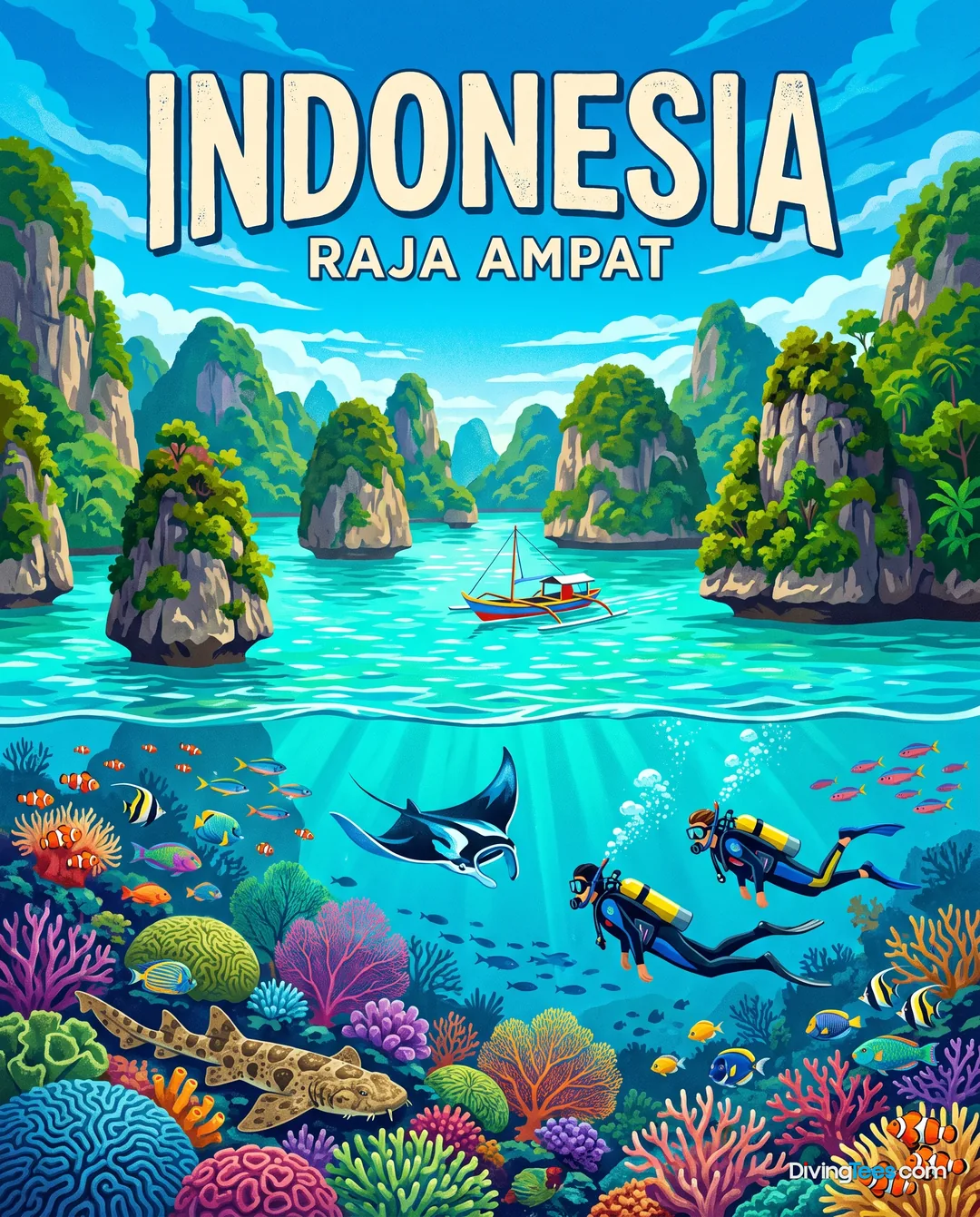
Liveaboards · Indonesia
Teman — a traditional Indonesian phinisi built around small-group diving
What makes this boat unique
- Teman is a 36-metre wooden phinisi carrying up to 12 guests in five ensuite, air-conditioned cabins.
- Komodo cruises run round trip from Labuan Bajo, with recorded departures of 4 days and 3 nights and longer itineraries also available.
- The dive setup includes shaded working space, a dive platform, three tenders, DIN adapters, separate camera rinsing and up to three guided dives per day.
- Manta rays, reef sharks, turtles, eagle rays, giant trevally and nudibranchs are recorded across much of the Komodo route.
- English- and French-speaking crew run diving, snorkeling, kayaking, paddleboarding and land excursions.
For subtitles in English: start the video firstthen click the gearat the top right of the video, select “Subtitles/CC”, then “Auto-translate” and choose “English”.
The invitation
Teman is for divers who want Komodo's strongest sites without giving up the character of a working Indonesian boat. She is a traditionally built phinisi rather than a floating hotel: local timber, open decks, a close crew-to-guest setup and a route built around reefs, currents, mantas and landings in the national park. The small capacity matters after a few days. You are not moving through a crowd to reach the water, and the dive guides can keep the operation personal. Non-divers fit here too, with snorkeling, kayaking, paddleboarding, hikes and beach stops alongside the diving. The reason to choose Teman is the combination: a real wooden sailing vessel, modern enough for air-conditioned cabins and ensuite bathrooms, taking a small group through Komodo's most varied underwater terrain.
Boarding
From the dock, Teman looks like what she is: a traditional Indonesian phinisi with a white hull, bright wood and a yellow deck. Teak, ironwood and other local timbers were selected for different strengths and textures, so the boat has more visual warmth than a production-built liveaboard. Built in 2017 and renovated in 2022, she combines that hand-built character with updated machinery and navigation systems. Once aboard, the layout is easy to read: lounge and dining spaces inside, open areas for looking out, a sun deck above and a dive deck close to the water. The scale keeps the boat social without making it feel anonymous. A crew of roughly one person per guest is part of the experience; help is close when bags, cameras or dive gear need moving.
The atmosphere on board
Teman's atmosphere comes from its size and the way the crew stays involved in the day. With five cabins and a close crew-to-passenger ratio, practical help is nearby rather than handled from a distance: cabins are cleaned daily, towels are supplied, meals arrive without ceremony, and dive equipment is dealt with as part of the routine. English and French are spoken on board. The crew's role extends beyond the dive deck, with snorkeling guidance, land excursions, kayaks, paddleboards and beach setups all part of the same operation. By the middle of a trip, the boat's social pattern is usually clear: divers compare sightings over food, photographers disappear toward the rinse area, and non-divers return from a shore visit with their own version of the day. Evenings can end at the bar, on the sun deck or around a beach barbecue rather than in a formal lounge.
The sites you’ll dive
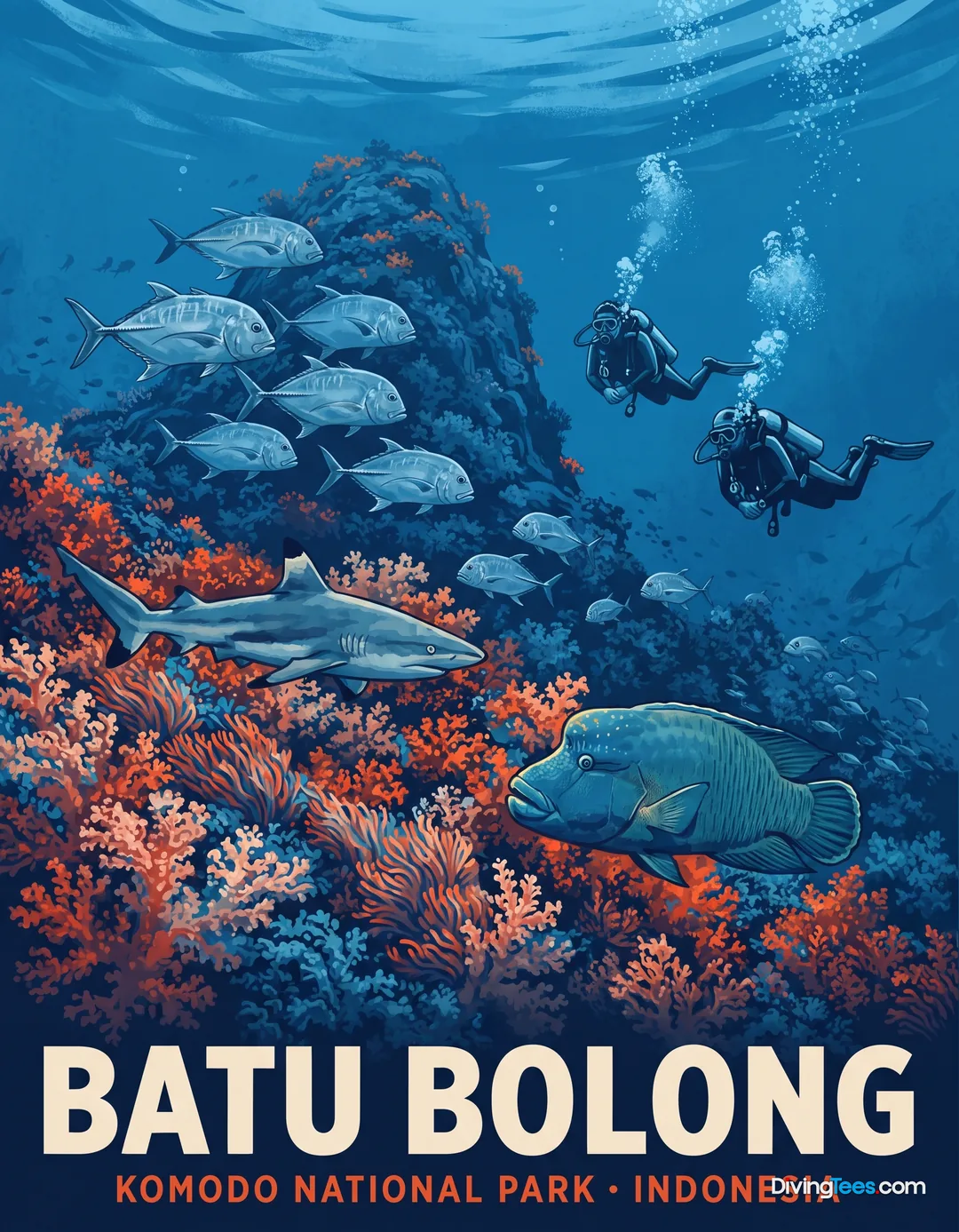
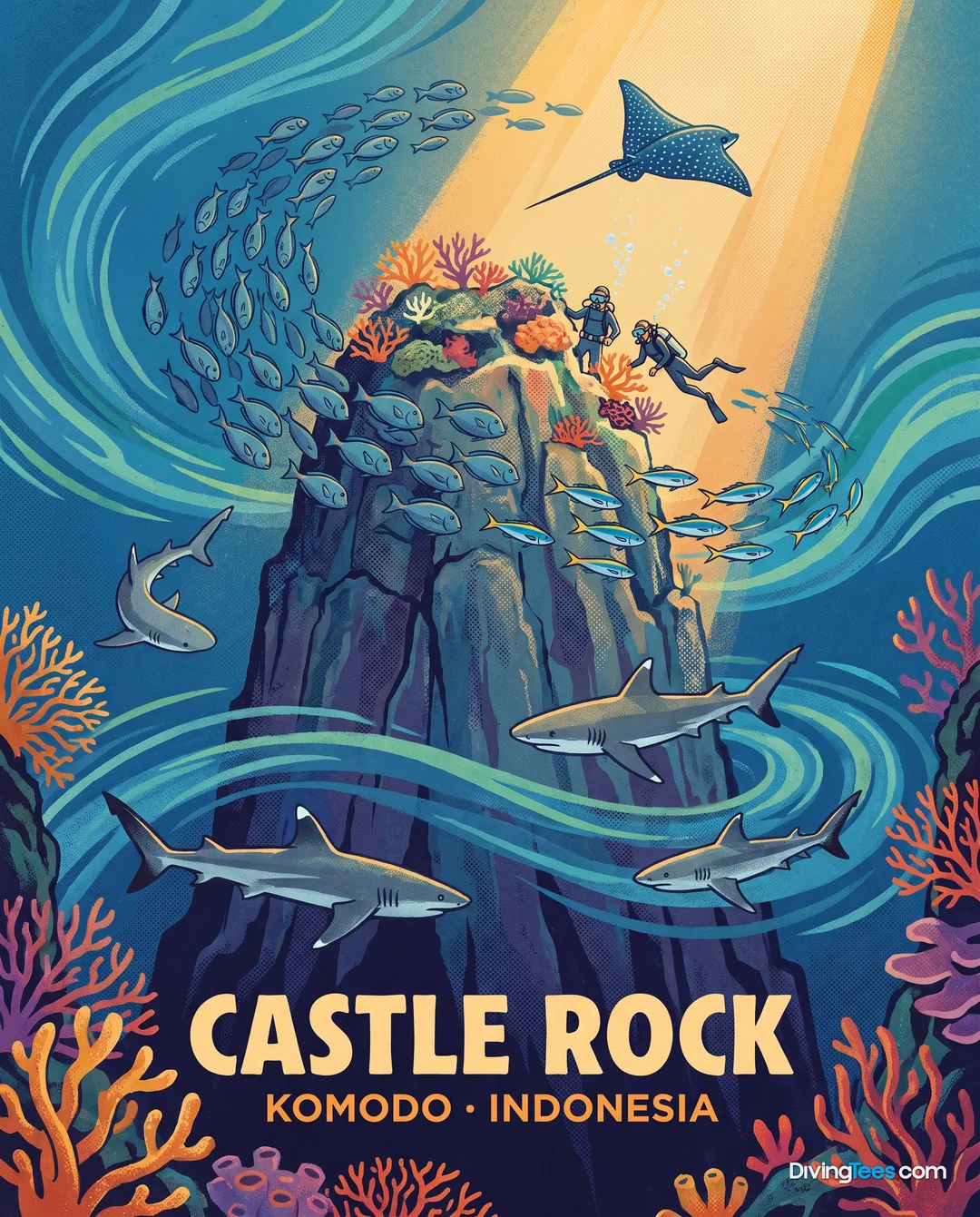
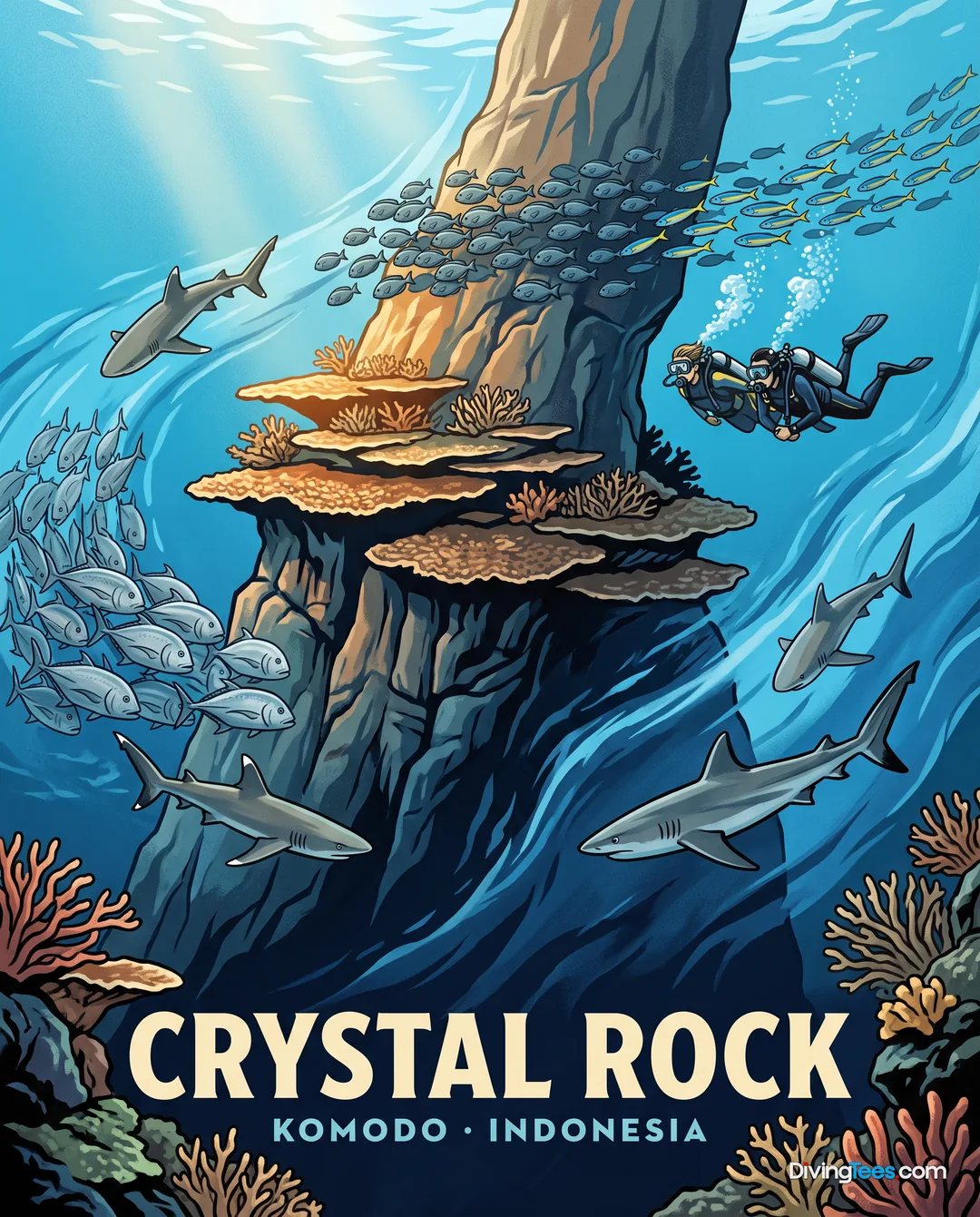
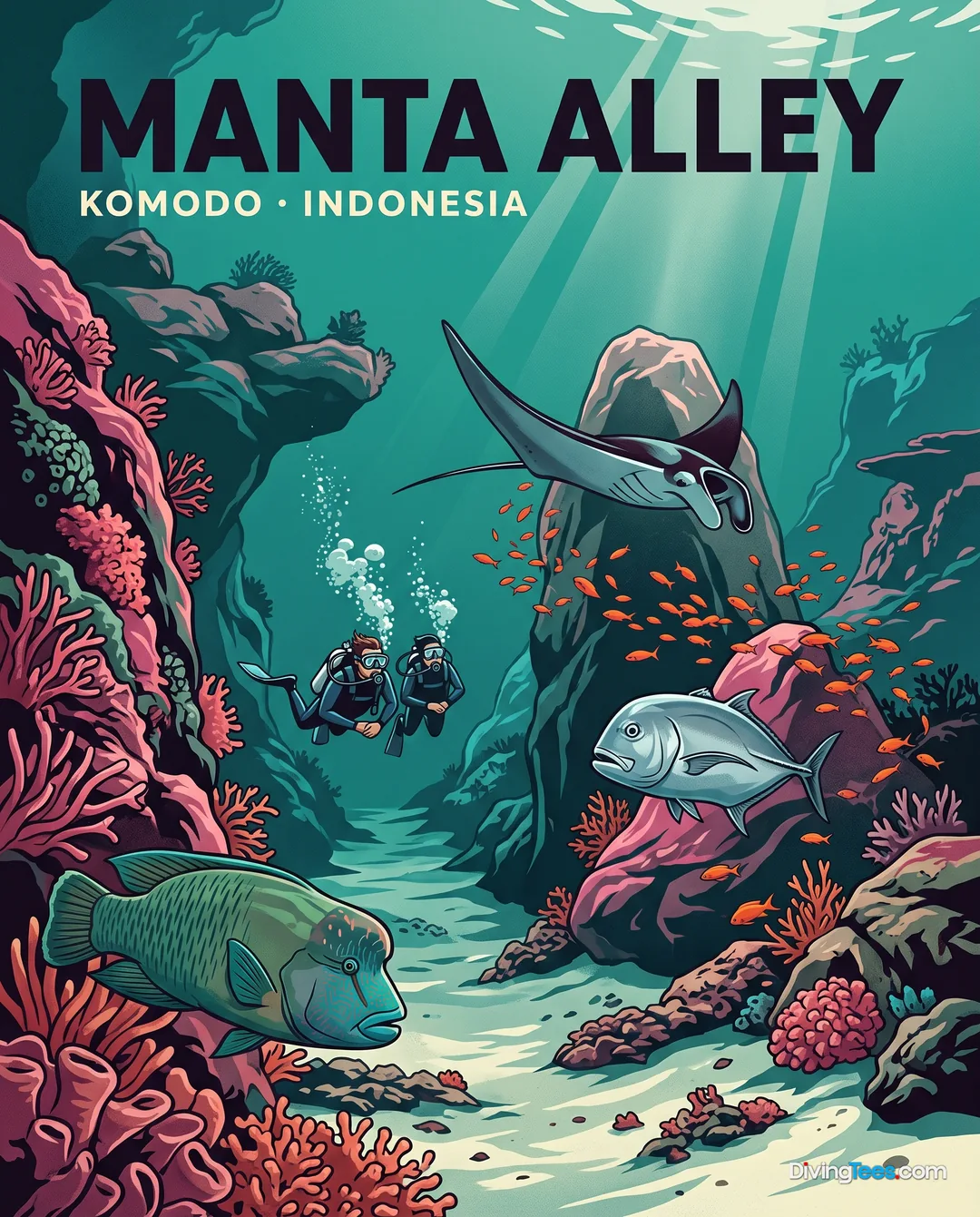
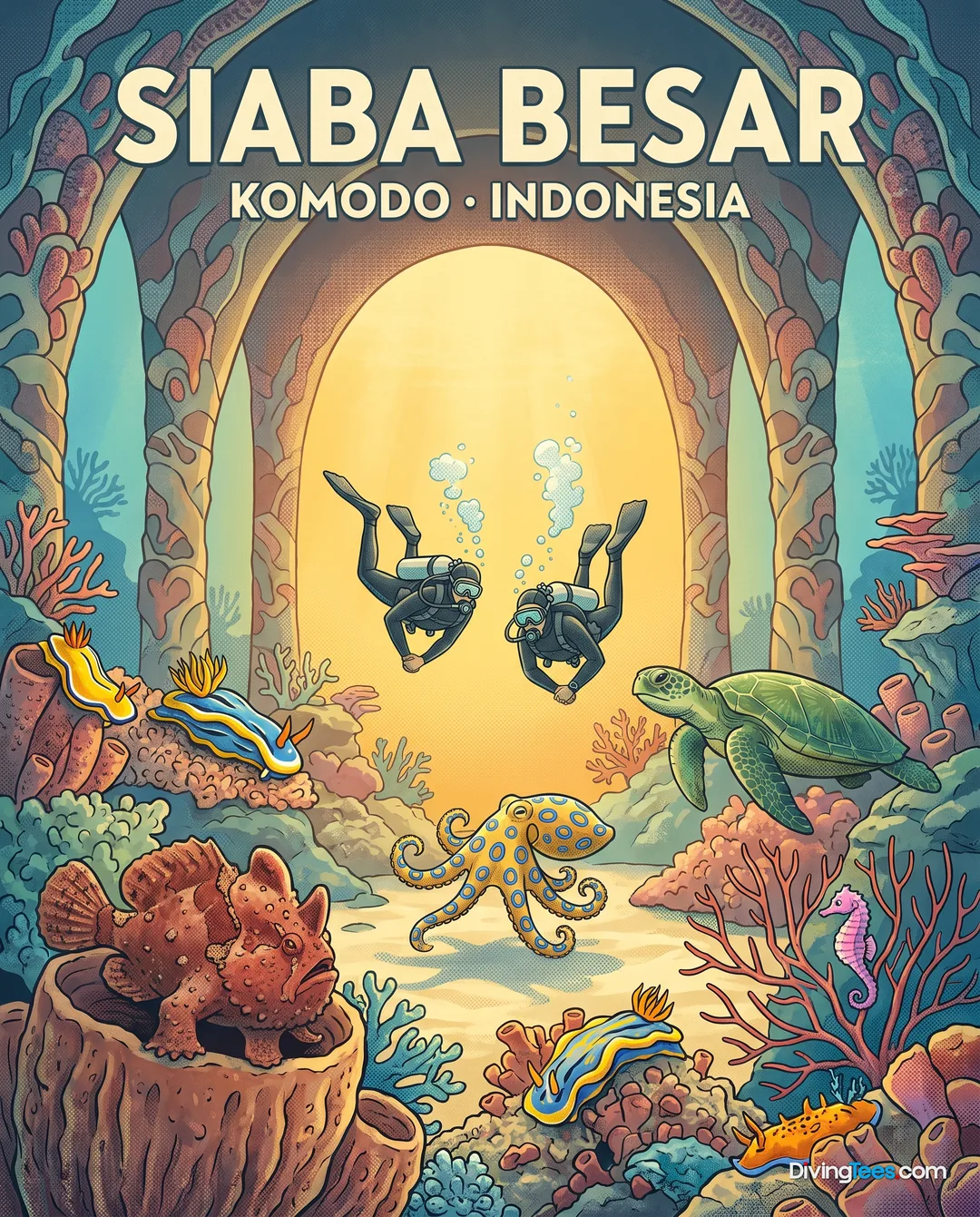
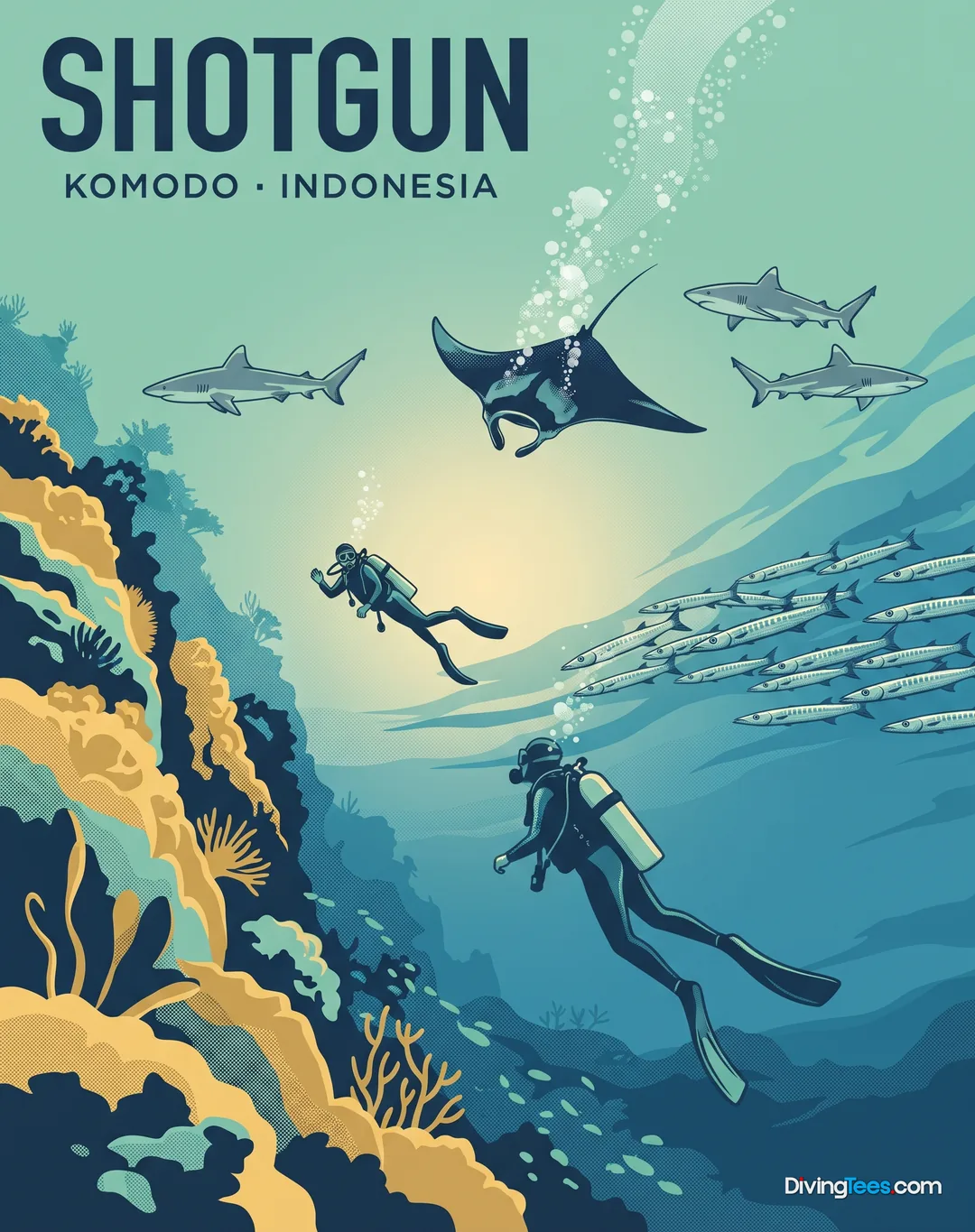
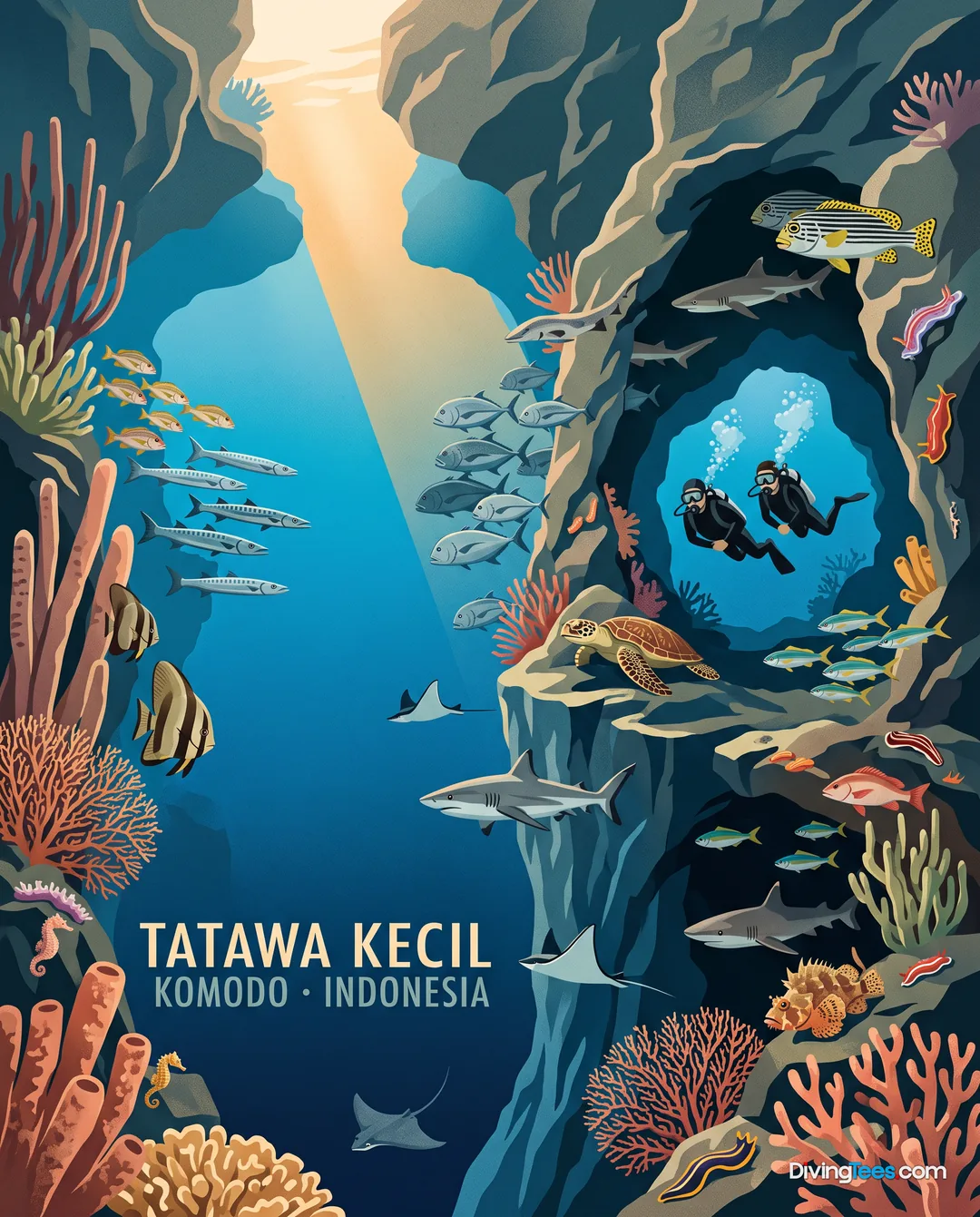
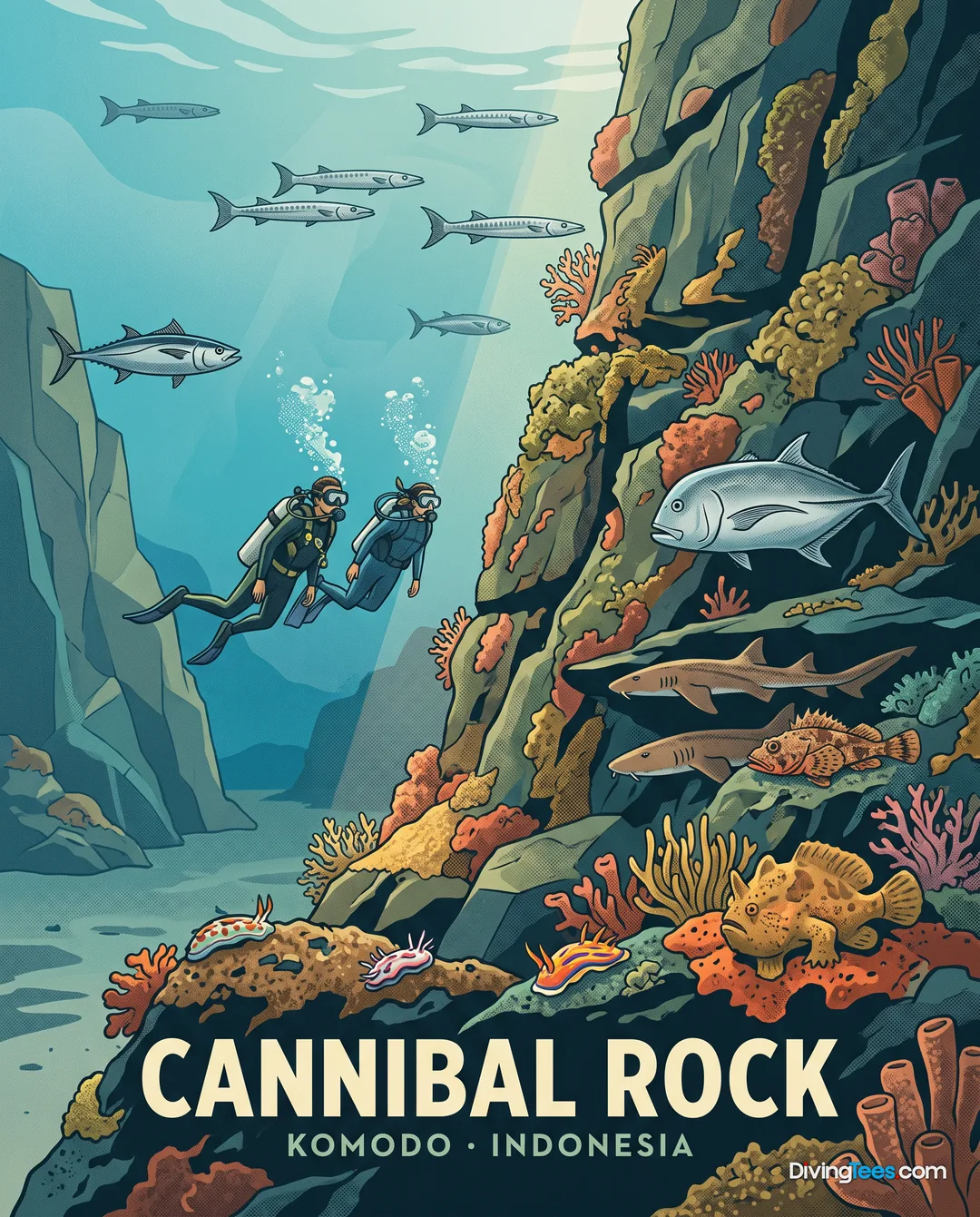
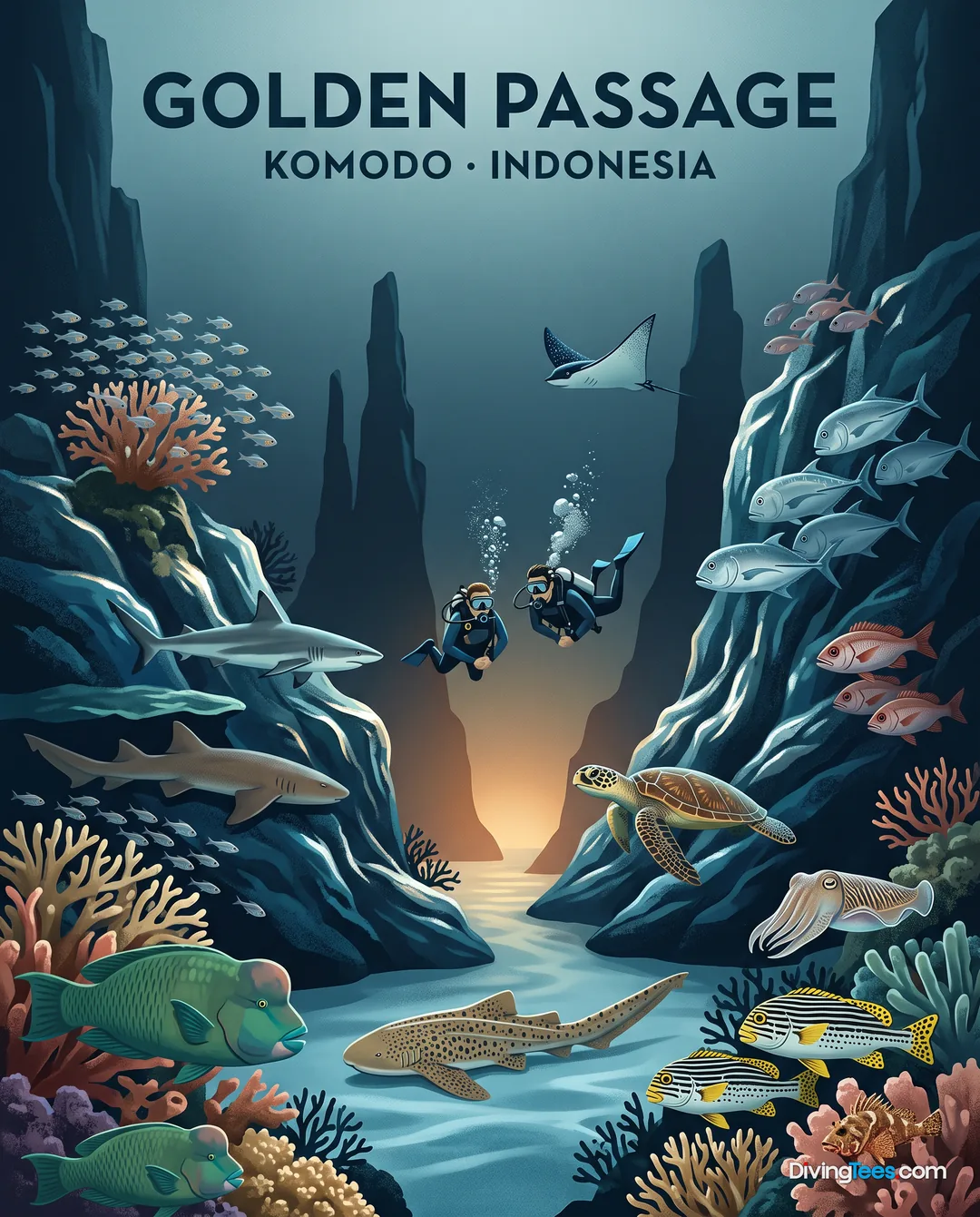
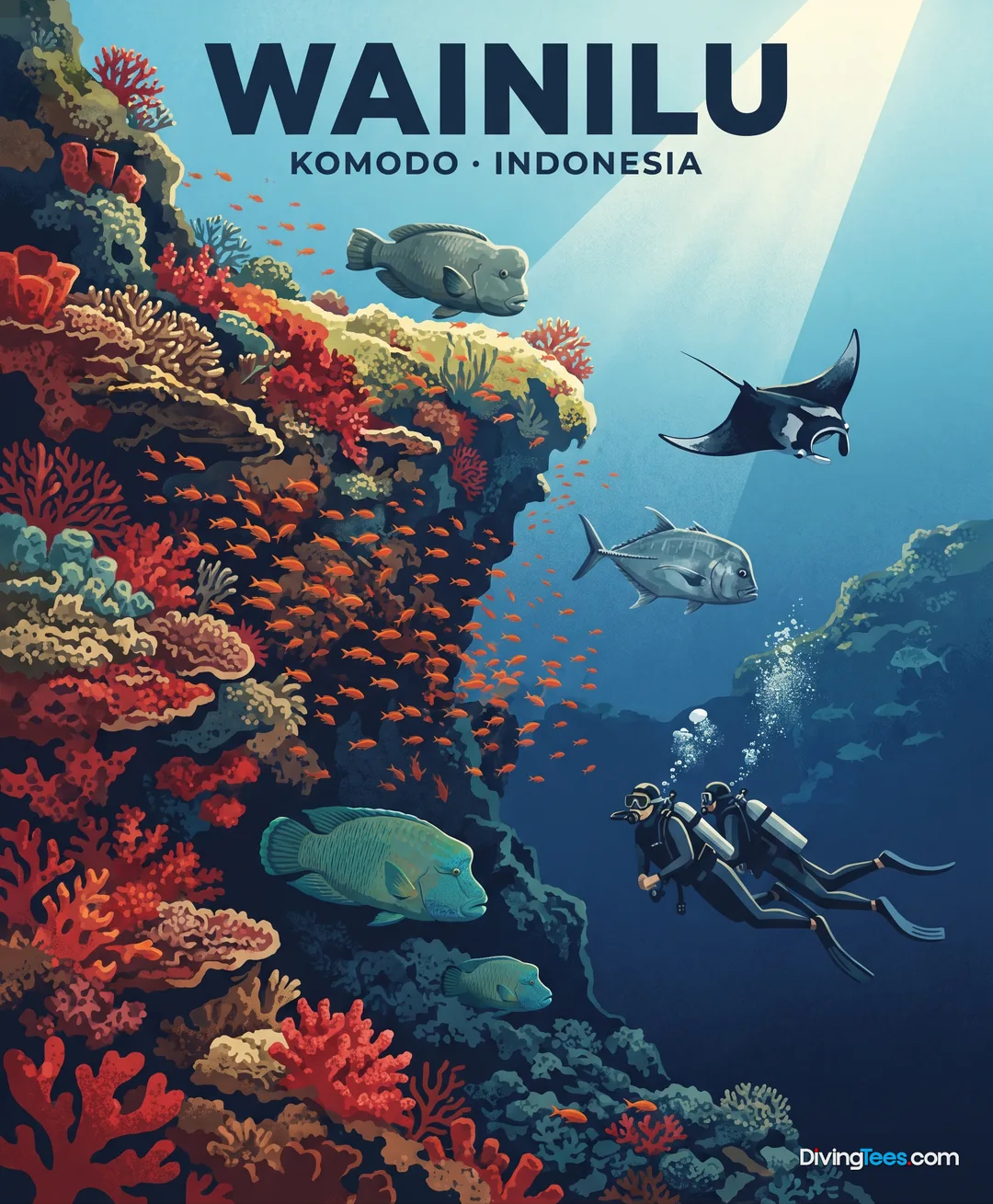
The Komodo route is a short, concentrated circuit from Labuan Bajo back to Labuan Bajo, with recorded departures of 4 days and 3 nights; longer 5-, 6-, 7- and 10-night diving itineraries are also offered. The sites change character quickly. Batu Bolong is a tiny pinnacle with dense coral, giant trevally, Napoleon wrasse and reef sharks down to -40m. Castle Rock and Crystal Rock are current-fed pinnacles, both reaching -30m, where reef sharks, eagle rays, barracuda and other pelagics gather. Manta Alley is a channel to -20m through which strong currents can bring groups of manta rays. Siaba Besar is shallower, to -18m, with frogfish, blue-ringed octopuses and turtles among coral bommies. Shotgun and Tatawa Kecil reach -25m and add fast drift diving, walls and pelagic action. Cannibal Rock reaches -30m and combines macro life with schooling fish in Horseshoe Bay. Golden Passage reaches -30m; Wainilu is the sandy-slope macro stop, where the point is finding life that hides in apparently empty ground.
What you’ll meet underwater
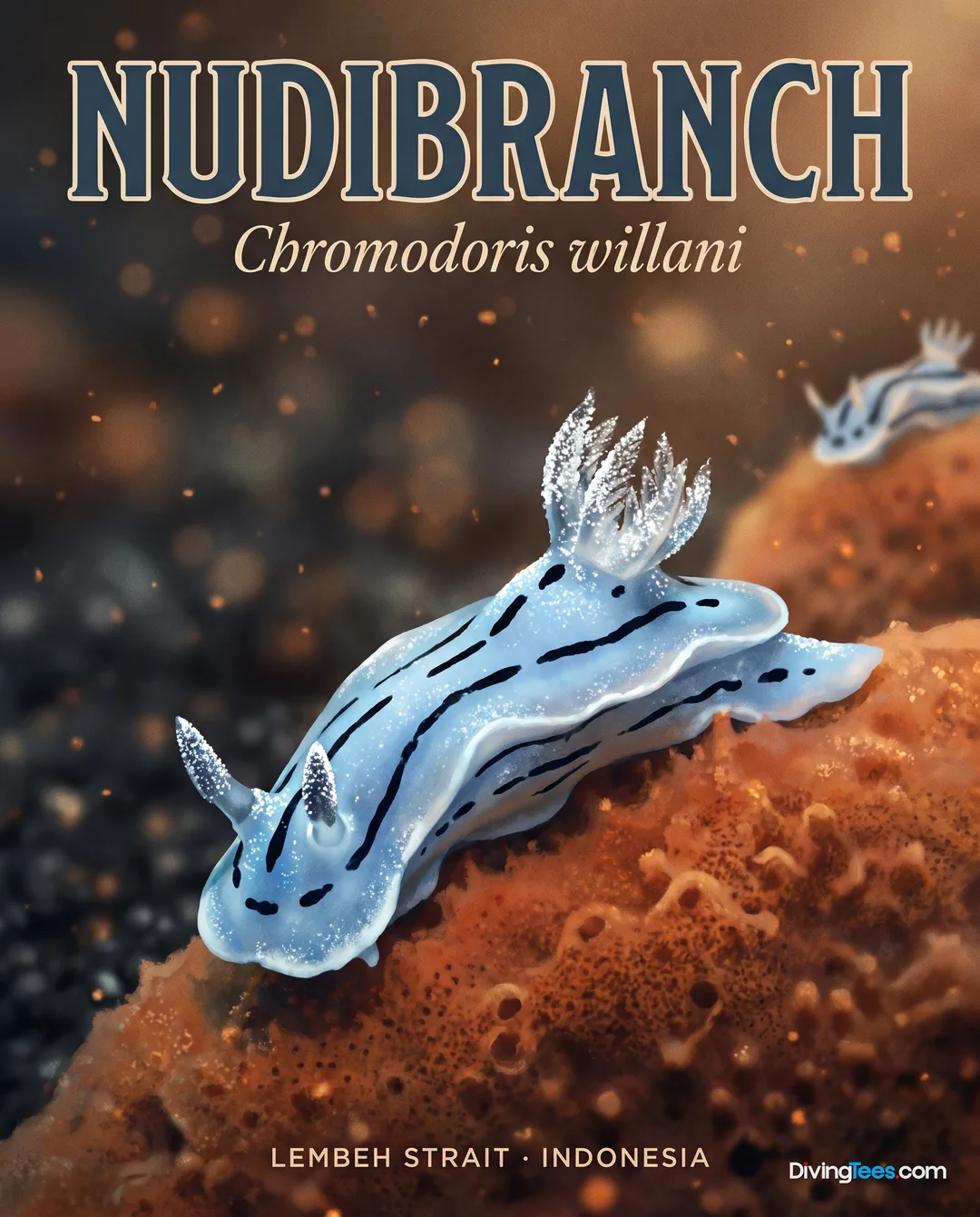
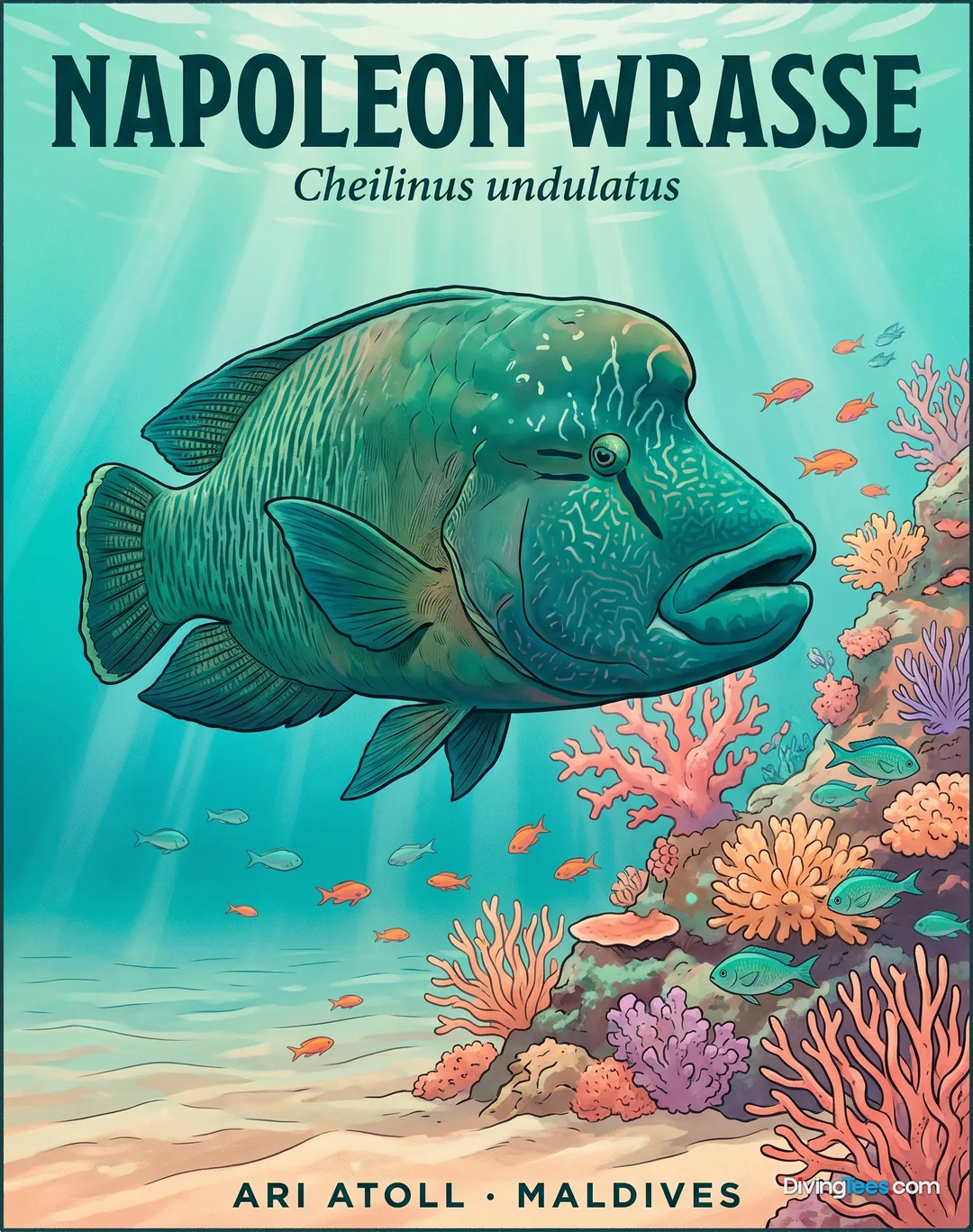
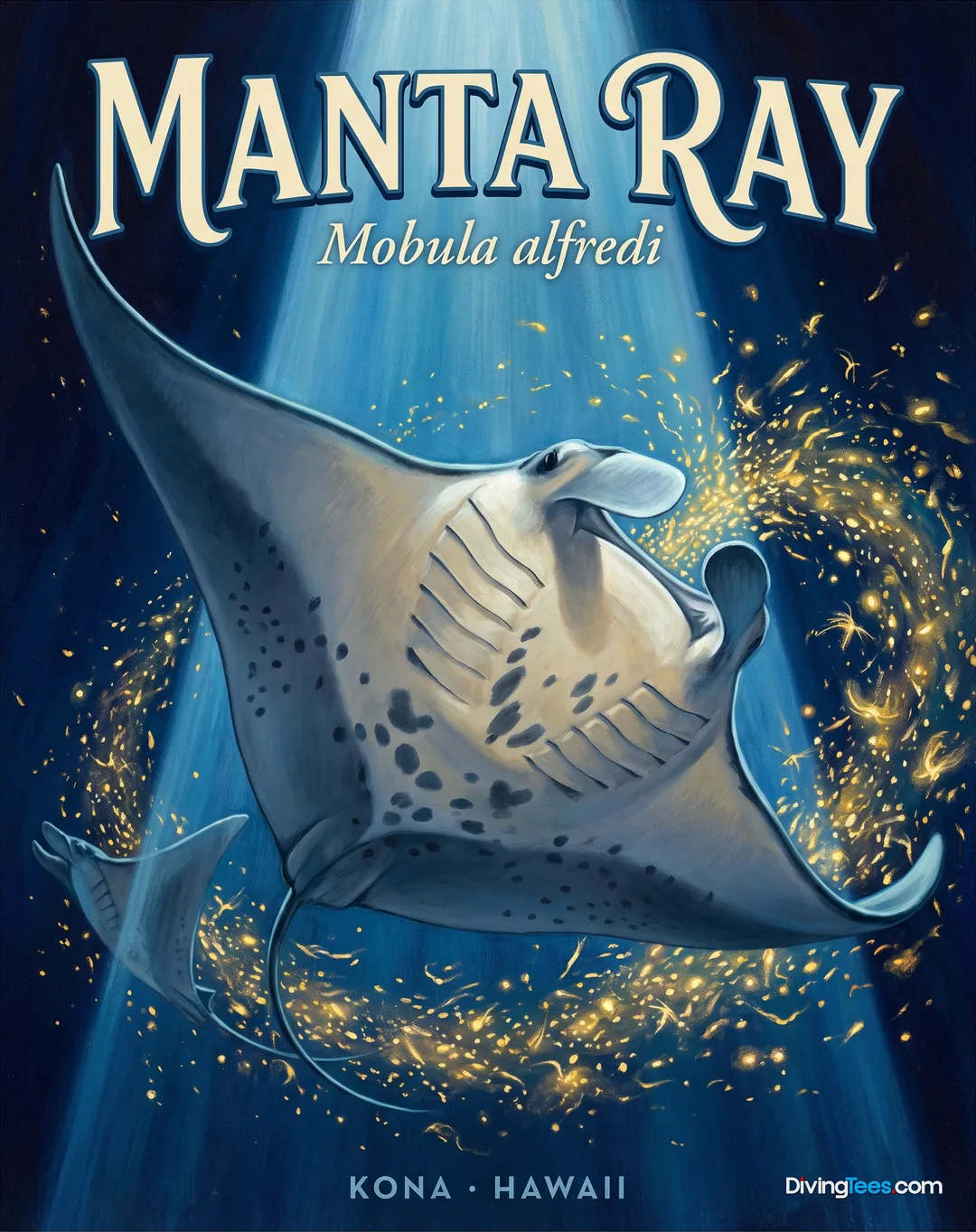
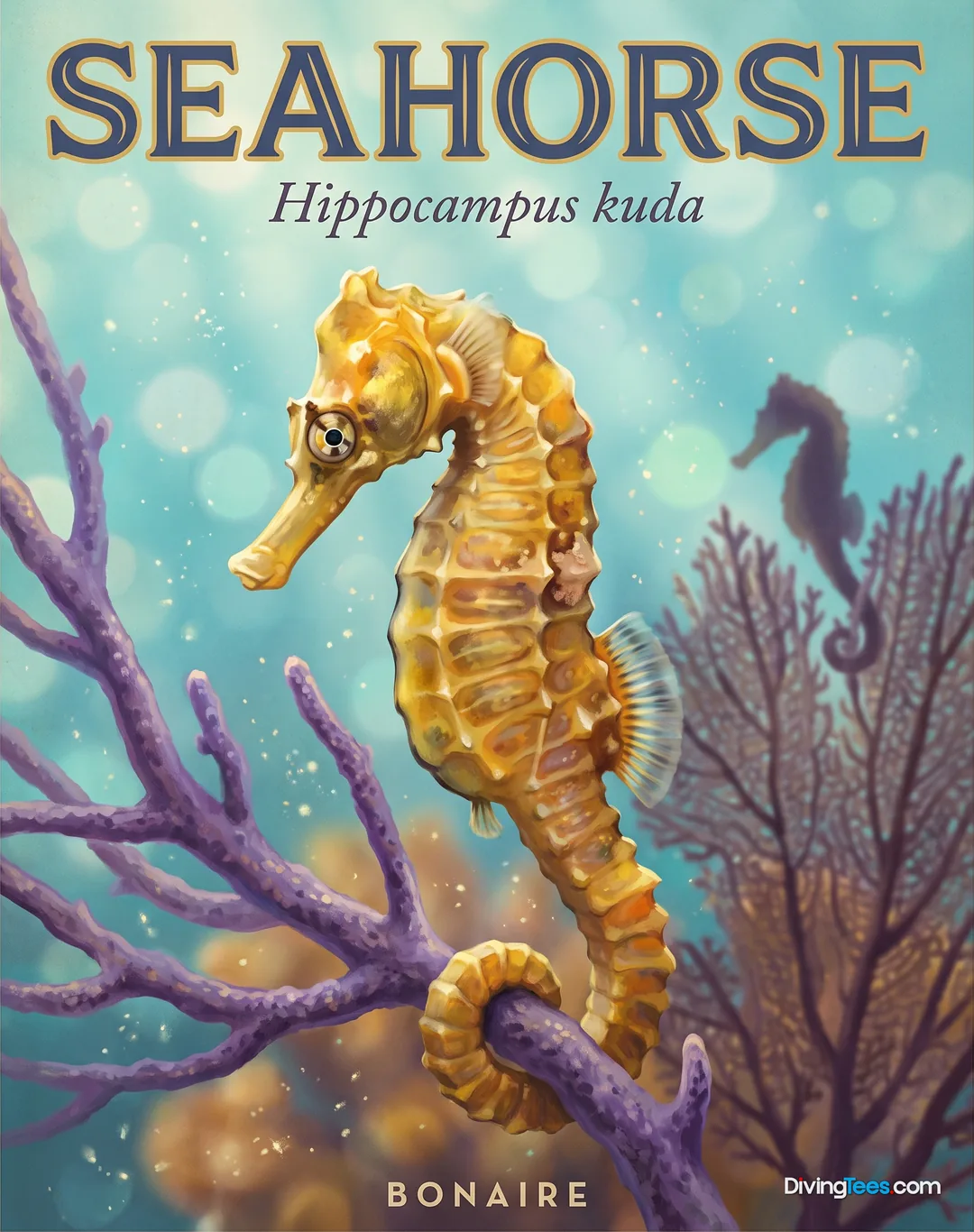
Manta rays, reef sharks, sea turtles and nudibranchs are the recurring cast of this Komodo route, with eagle rays, giant trevally, barracuda, soft corals and Napoleon wrasse also recorded at many sites. The current-fed pinnacles explain much of the larger action: Crystal Rock, Castle Rock, Shotgun, Golden Passage and Siaba Kecil can draw sharks, rays and schooling fish when the water is moving. The quieter sites reward slower searching. At Siaba Besar, frogfish, nudibranchs and blue-ringed octopuses hide among the coral; at Wainilu, the sandy slope is known for nudibranchs, frogfish, seahorses, flamboyant cuttlefish, harlequin shrimp and mandarinfish. Some sightings give a particular site its reason for being on the route: a leopard shark and glassfish are recorded only at Golden Passage, a ghost pipefish and unicornfish only at Siaba Besar, a mandarin fish only at Wainilu, and clownfish and filefish only at Sebayur Kecil. None is guaranteed; the searching is part of the dive.
Who puts you in the water
English- and French-speaking cruise staff support the trip, with English-speaking local dive guides leading the diving and a guide for snorkeling. The operator describes the dive masters as PADI-certified, while the local guides bring knowledge of Komodo's sites and conditions. Briefings precede the dives, and the groups are guided rather than left to navigate the pinnacles and channels alone. Up to three guided dives per day are included on diving cruises, with night dives available as part of the package. The boat carries oxygen, first-aid kits, fire equipment, radios and emergency beacons, and the crew is trained in first aid. The available information does not give a fixed guide-to-diver ratio, a minimum logged-dive requirement, courses run on board, or a defibrillator. Divers should therefore judge the itinerary by the sites selected and discuss experience and group arrangements when booking.
The dive deck and the gear
The dive deck is shaded and arranged for repeated entries, with a platform giving direct access to the water. Tanks are supplied in 12-litre size, with weight belts and weights included; DIN adapters are available. Nitrox is available as an optional extra, while rental equipment can be arranged separately. Three tenders support the operation, taking divers to the sites and collecting them after drift dives instead of asking everyone to return to the boat's exact anchor point. That matters in Komodo, where current is often part of the dive rather than an inconvenience to be avoided. There are dedicated rinse tanks for dive equipment and a separate rinse area for cameras, with space to work under cover after surfacing. The package includes up to three guided dives per day on diving cruises, and night dives are included in the trip offering. Details such as tank material, compressor type, SMB provision and rental brands are not stated.
Between dives
Between dives, Teman gives people several ways to come down from the water. The shaded dive area is useful for drying gear and sorting cameras, while the open lounge and dining space look out across the islands through a broad view. The sun deck suits those who want wind and light; the observation deck and terrace give quieter places to read or watch the next anchorage appear. Kayaks and stand-up paddleboards are available, and land excursions include hikes, beaches and visits connected with the Komodo route. A non-diver can therefore spend the day snorkeling or exploring while divers are underwater, then meet the group for lunch or a beach barbecue. The boat also has a library, an indoor salon and a separate camera-rinse area, so an afternoon without a dive need not mean sitting in one place.
A day on board
A Teman diving day is built around up to three guided dives, with meals and snacks filling the spaces between them. The first briefing comes before the first entry, followed by the return to the shaded deck, a rinse for gear and cameras, and time to eat, rest or watch the boat move toward the next site. Later dives may be drift dives from a tender, shallow coral work or a slower macro search, depending on the part of Komodo being visited. On selected trips, a night dive extends the day after dinner. When the boat is underway, the route itself becomes part of the interval: islands, channels and anchorages replace the usual view from a dive centre. A beach landing, hike, snorkeling stop or barbecue can take the place of a dive interval. On the final approach to Labuan Bajo, Kanawa provides a last snorkeling stop before return.
What you eat aboard
The galley serves three meals each day, with snacks available throughout the day to match a diving schedule. Meals combine Indonesian and Western cooking, with buffet service, local dishes, vegetarian and vegan options, and a choice of non-alcoholic drinks included. Beer, wine and other alcoholic drinks are available separately. The food is one of Teman's strongest points: fresh, varied and plentiful enough for a week of repeated dives without turning every meal into a rushed refuelling stop. A beach barbecue is part of the route when conditions allow, so dinner can move ashore after a day in the water. On board, the table is where the day gets compared: currents, photographs, missed nudibranchs and the shark that appeared just beyond one diver's group.
Nights at sea
The five cabins are named Sulawesi, Banda, Flores, Celebes and Seram. Three are arranged as doubles with queen beds, while two are triples with a queen bed and a single bed, making the latter useful for families or three friends travelling together. Each cabin has a private bathroom, hot shower, storage, towels, air-conditioning and a porthole rather than a large picture window. That means the cabins are practical retreats, not rooms designed for spending the day inside. Adjustable air-conditioning helps on hot nights, and reading lights let a diver go through photos or a book after the last dive. The more generous space is outside: the open lounge, dining area, terrace and observation deck give the boat its living room. Nights are quiet enough for conversation, with the machinery and sea reminding you that this is still a boat.
Master Cabin Sulawesi
Double Cabin - Banda
Double Cabin - Flores
Triple Cabin - Celebes
Triple Cabin - Seram
What to know before boarding
Teman departs from and returns to Labuan Bajo. Airport-to-boat transfers on the start and end days are included, and the transfer arrangements are communicated with the booking details. Flights are not booked by the boat, so arriving in Labuan Bajo the night before is the sensible choice. The same margin makes the return journey easier after the boat comes back to port.
Deck plan
- Year built
- 2017
- Year renovated
- 2022
- Length
- 36 m
- Beam
- 7.5 m
- Maximum number of passengers
- 12
- Number of cabins
- 5
- Number of bathrooms
- 6
- Engines
- Mitsubishi 6D22, 6-cylinder, 270 hp
- Cruising speed
- 7 knots
- Tenders
- 3
- Website
- temanliveaboard.com ↗
Hello, I'm Marina, DivingDeal.com's AI assistant. I answer in detail about hotels, dive centres and liveaboards.

Thinking about the whole trip and the flights? Talk it over with Edith →
Marina is an AI. Some links are affiliate links: DivingDeal may earn a commission, at no extra cost to you. Bookings are made with the partner.