Le Pirate Island - Adults Only
★ 9.6/10 (1,405 reviews)
13 km away as the crow flies
Dive centre · Komodo · Indonesia
4.8639 Google reviewsExperience the legendary currents of Komodo National Park with a team that has been operating out of Labuan Bajo since 2011.
For subtitles in English: start the video firstthen click the gearat the top right of the video, select “Subtitles/CC”, then “Auto-translate” and choose “English”.
Located in Labuan Bajo, the gateway to Komodo National Park, PT. Divers Paradise Komodo has been a fixture of the local diving community since 2011. The centre is positioned to take you directly into the heart of one of the world's most biologically diverse marine environments.
As an SSI affiliated centre, they provide a structured approach to both recreational diving and professional development. The operation is designed to handle the unique challenges of the region, from the high-energy drift dives of the northern islands to the sheltered reef flats used for more relaxed excursions.
The team at Divers Paradise Komodo is composed of experienced professionals who are fluent in English, Bahasa Indonesia, French, Spanish, Italian, Portuguese, and Japanese. This multilingual capability ensures that briefings and instruction are clear and precise for an international clientele.
Safety is managed through a strict guide-to-diver ratio, with a maximum of four divers per guide. This allows for the personalised attention necessary when navigating the complex currents that define the Komodo archipelago.
The centre offers a full spectrum of SSI training programmes. Beginners can start with the Open Water Diver course, while those looking to expand their experience can progress through the Advanced Open Water Diver and Rescue Diver certifications.
Professional training is also a core part of the operation, with Divemaster courses available for those pursuing a career in diving. Additionally, various SSI specialties can be undertaken to refine specific skills, and refresher courses are available for divers returning to the water after a break.
The centre provides a complete range of dive kit for hire, allowing you to travel light if you prefer. For those needing specific technical assistance, dive computer rental is available on-site.
For divers looking to document their encounters with pelagics, GoPro cameras can be rented for your trips. The centre also maintains oxygen safety equipment on-site as a standard safety measure.
Batu Bolong is a famous rocky pinnacle located between Komodo and Tatawa Islands. This site is known for its vibrant coral gardens and high concentrations of reef fish, though the currents can be quite strong.
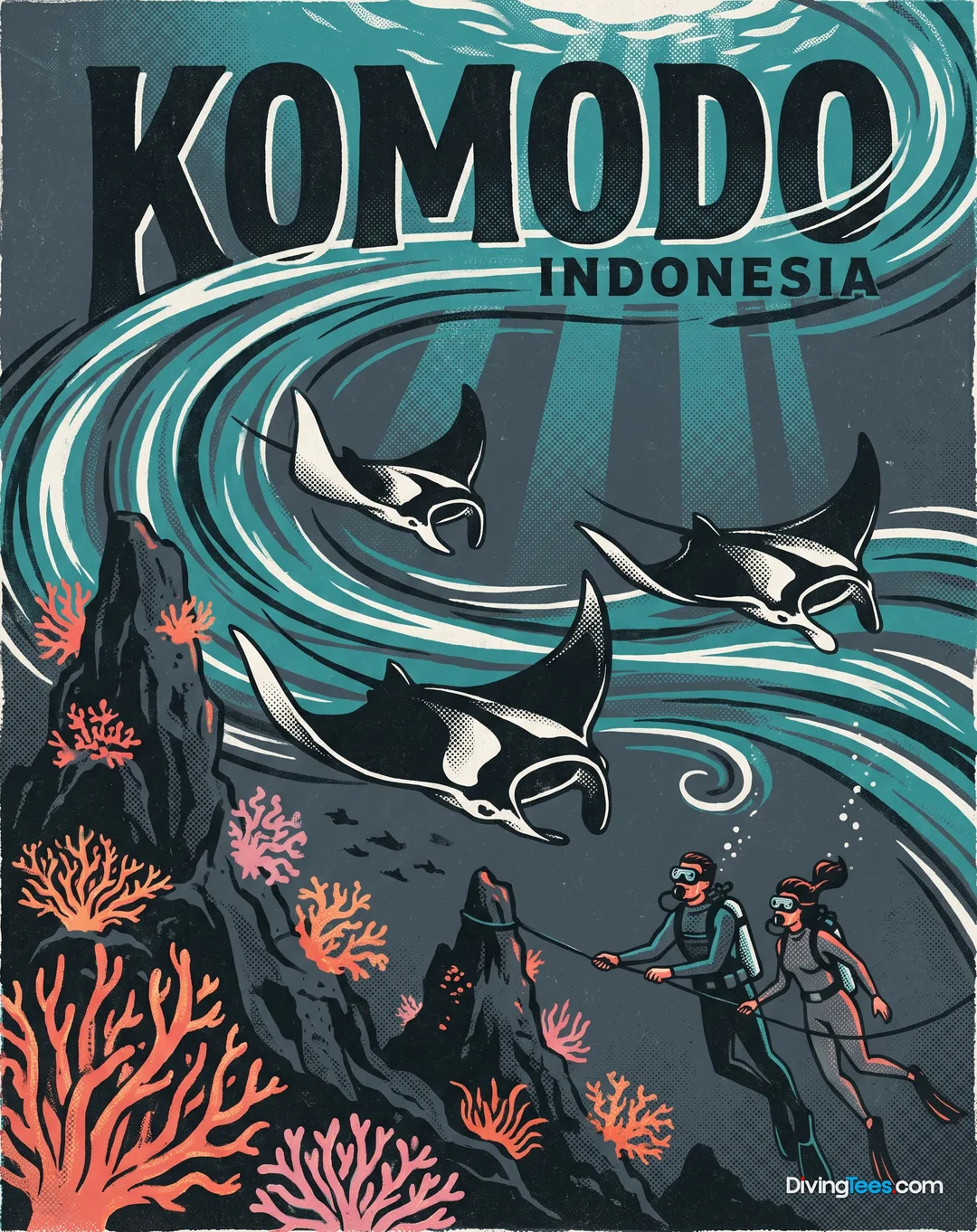
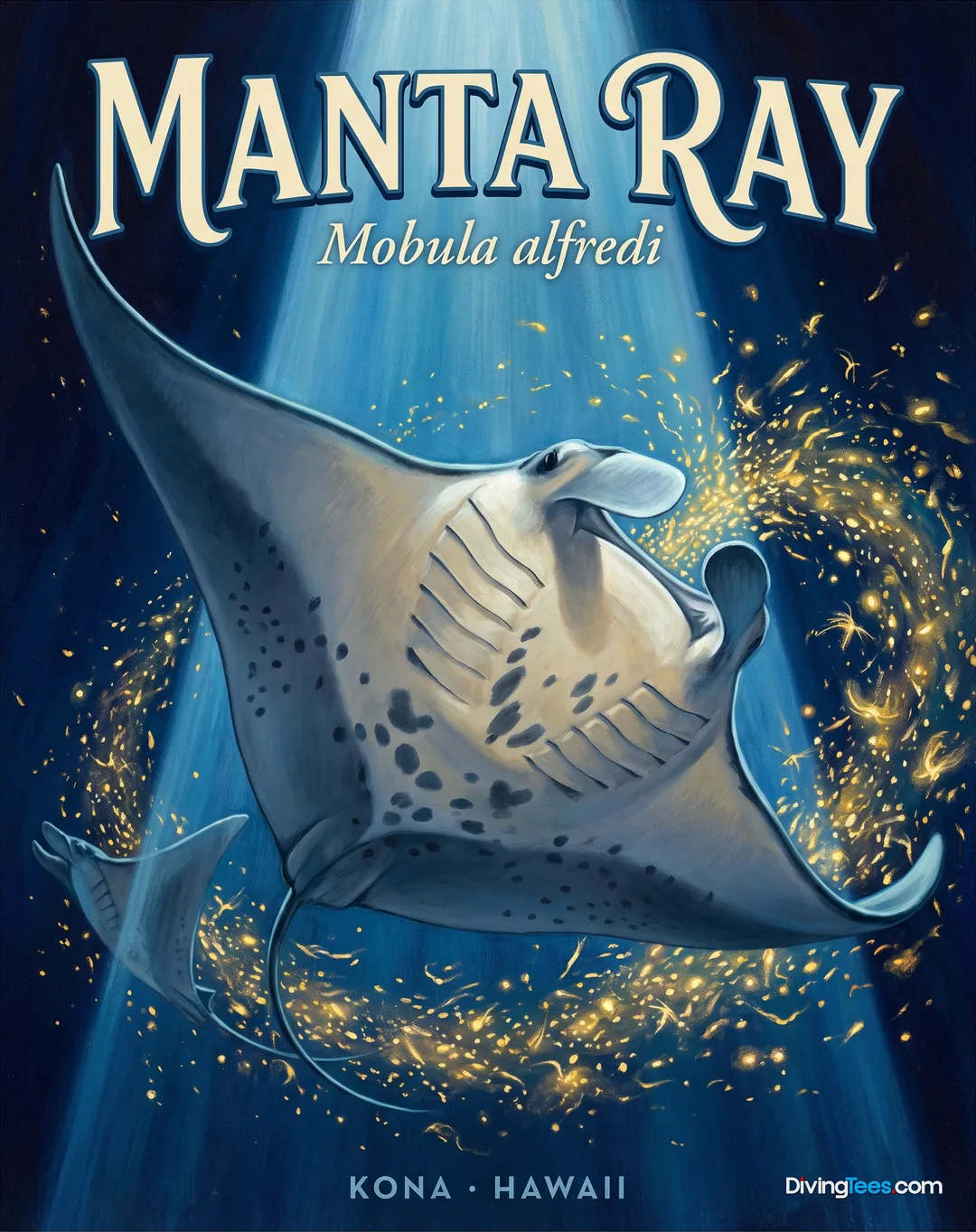
Manta Point, also known as Makassar Reef, is a shallow drift dive located east of Komodo Island. It is a well-known cleaning station where you can observe manta rays gliding through the water.
Castle Rock is a seamount north of Komodo Island that sits just 5 metres below the surface. It is a high-energy site where you can expect to see large schools of fusiliers, trevallies, and reef sharks.
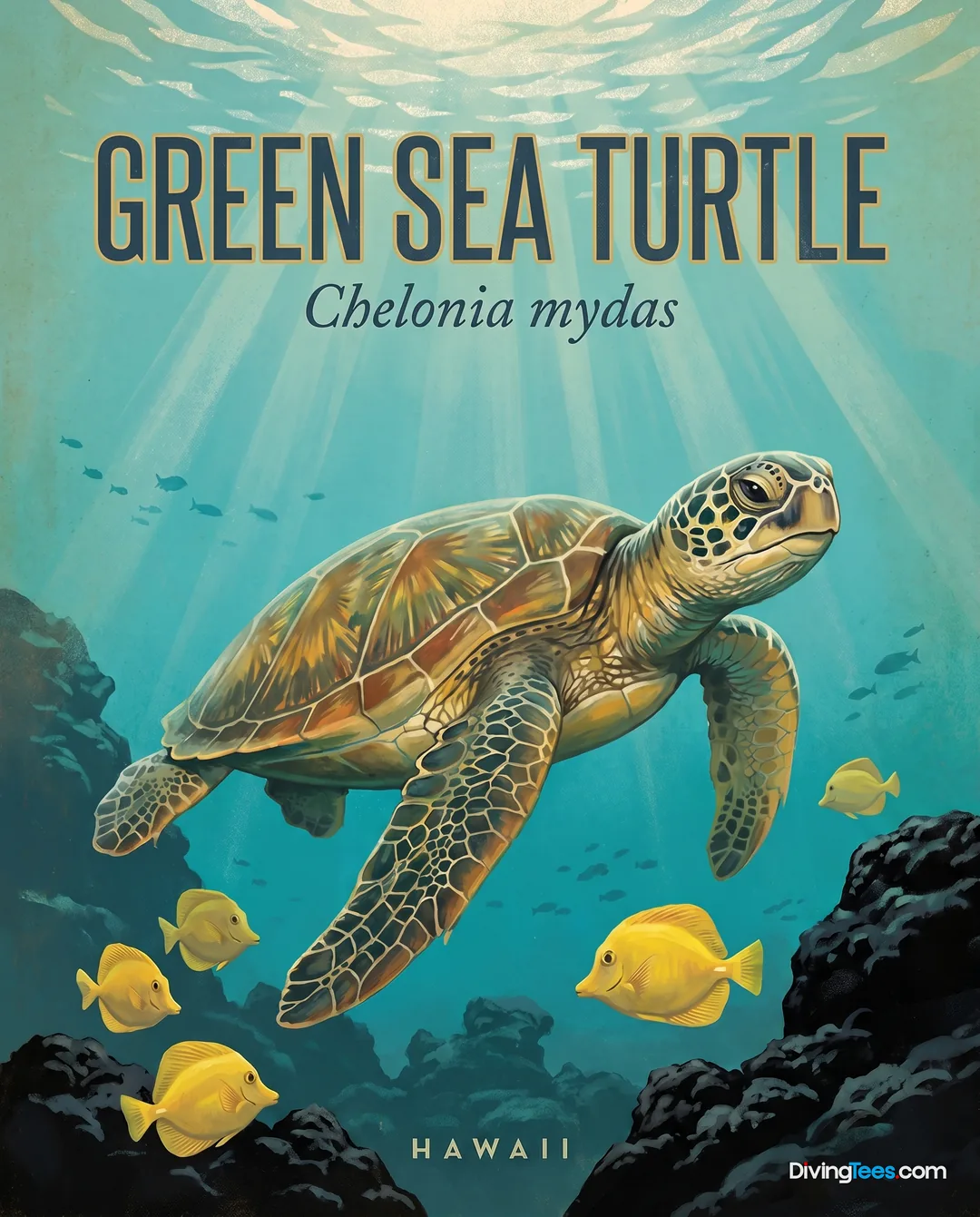
Siaba Besar is a sheltered bay that provides a calm environment for less experienced divers. The site is a haven for macro life and offers excellent opportunities to see green turtles and stingrays in a protected setting.
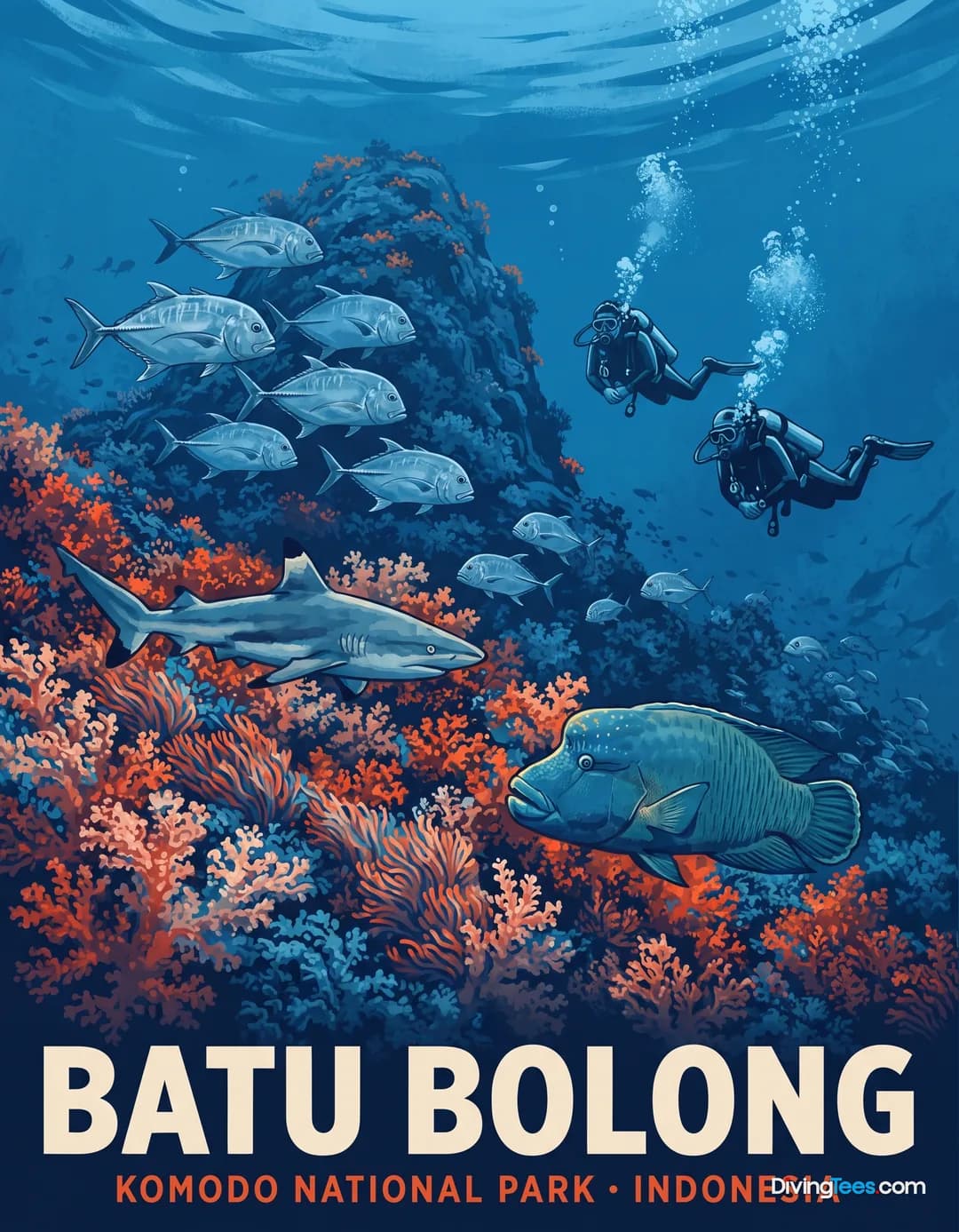
down to 40 m
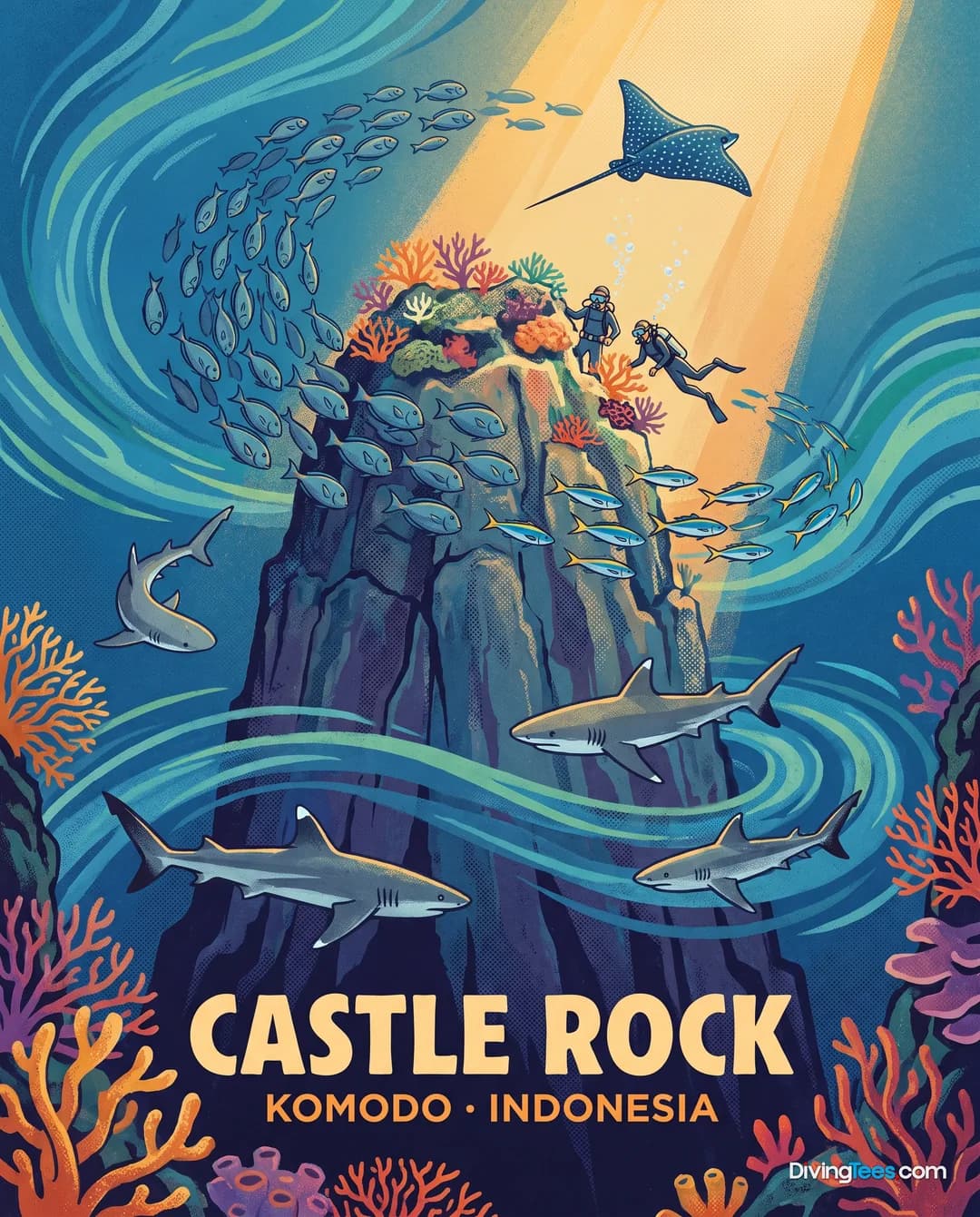
down to 30 m
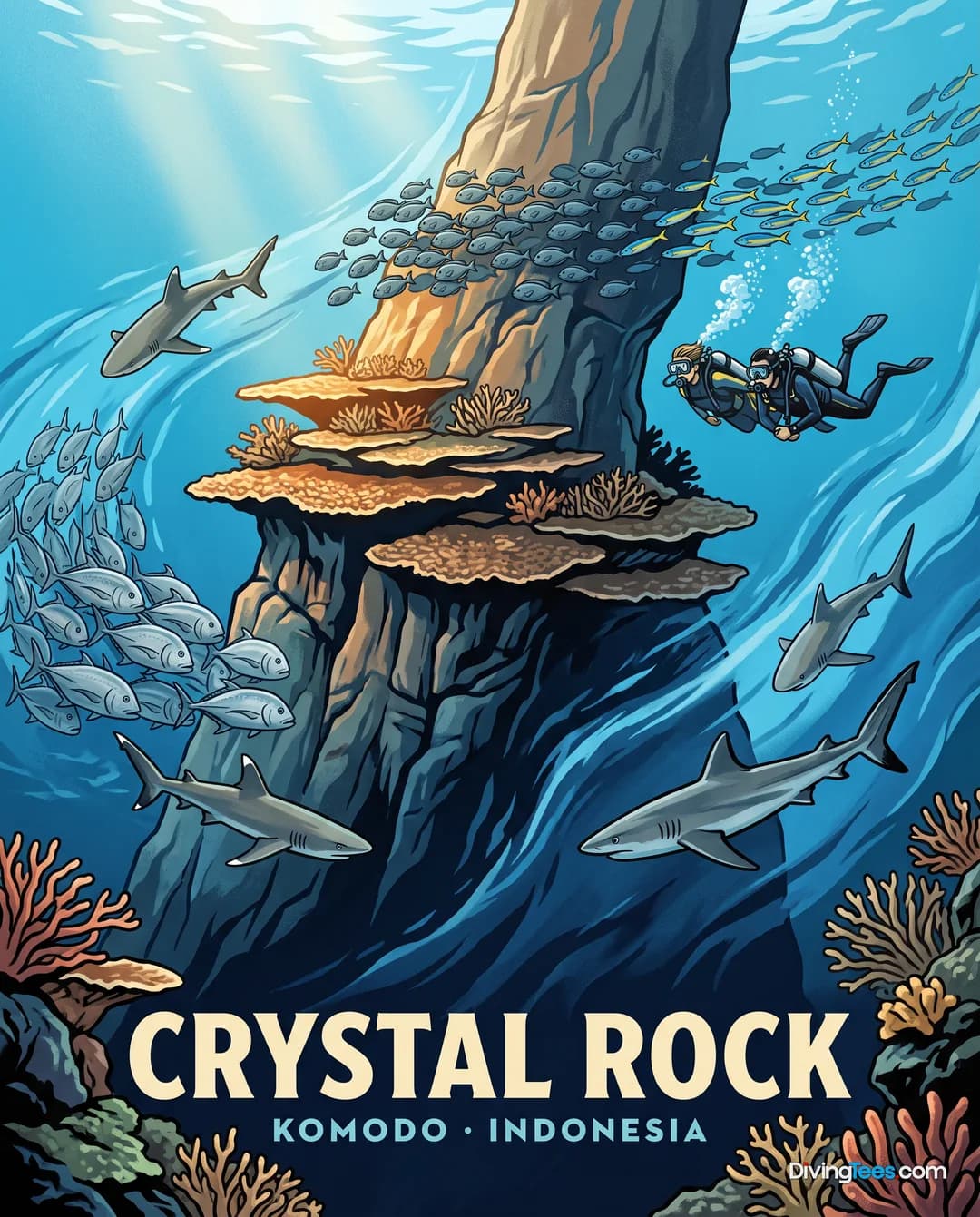
down to 30 m
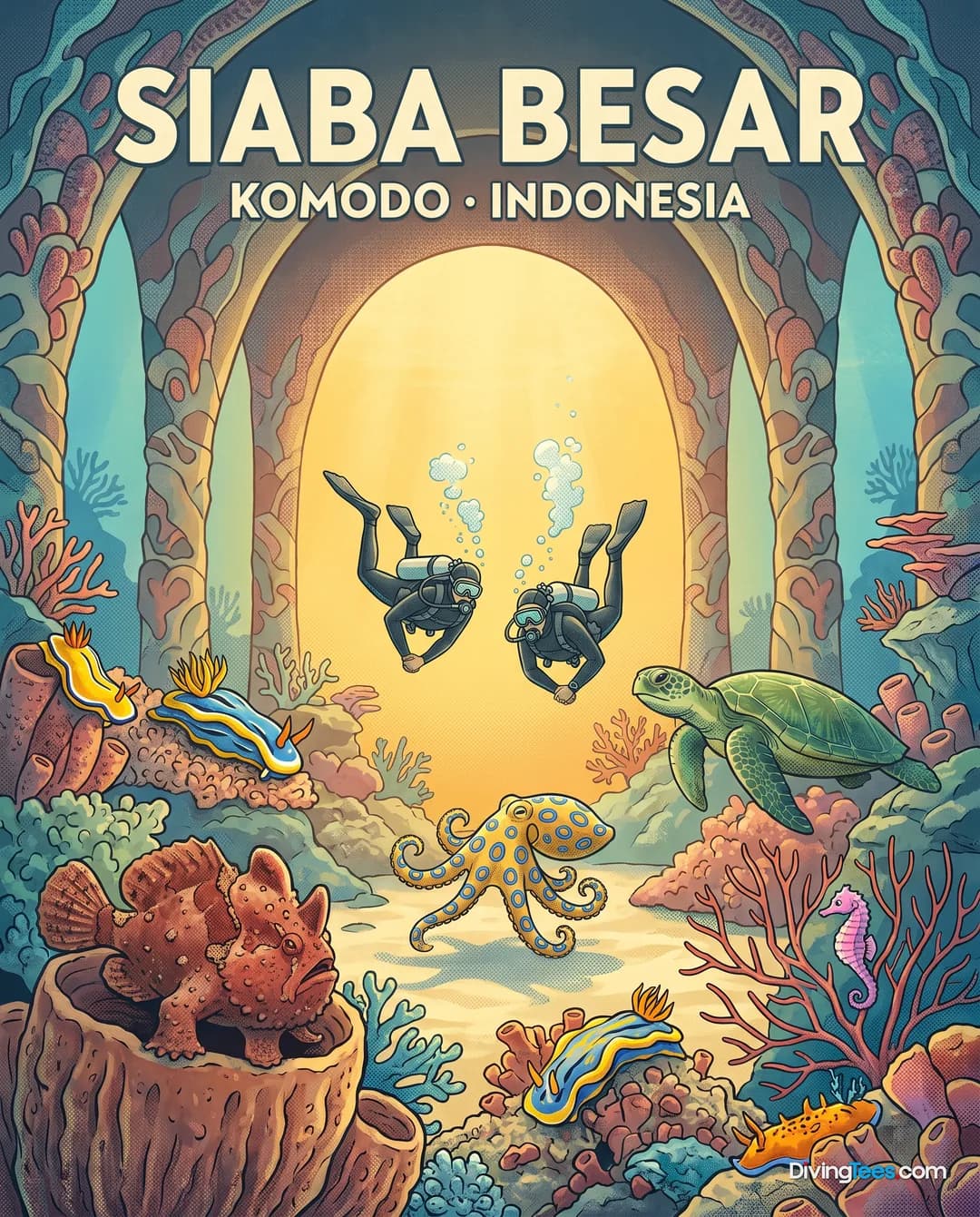
down to 18 m
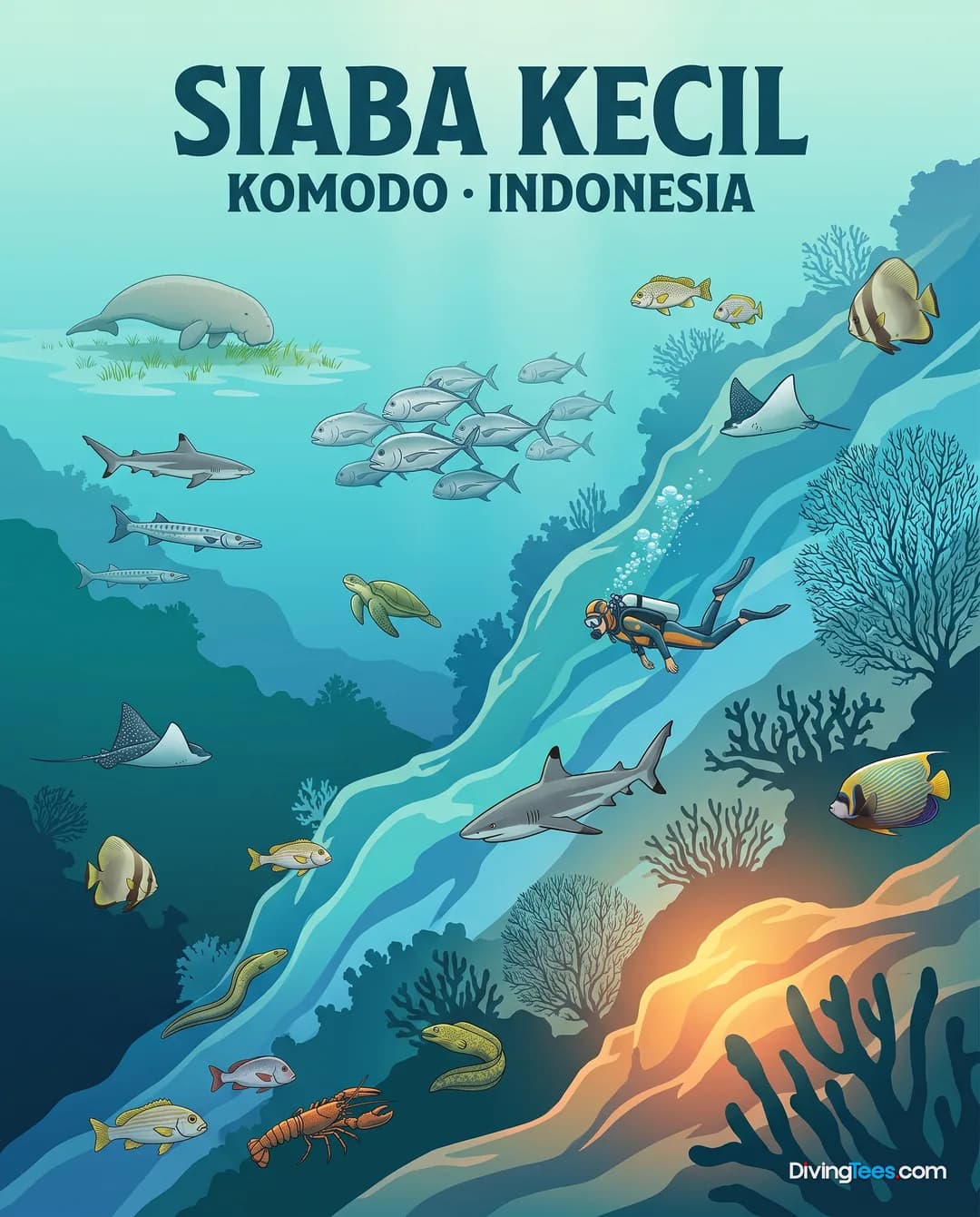
down to 30 m
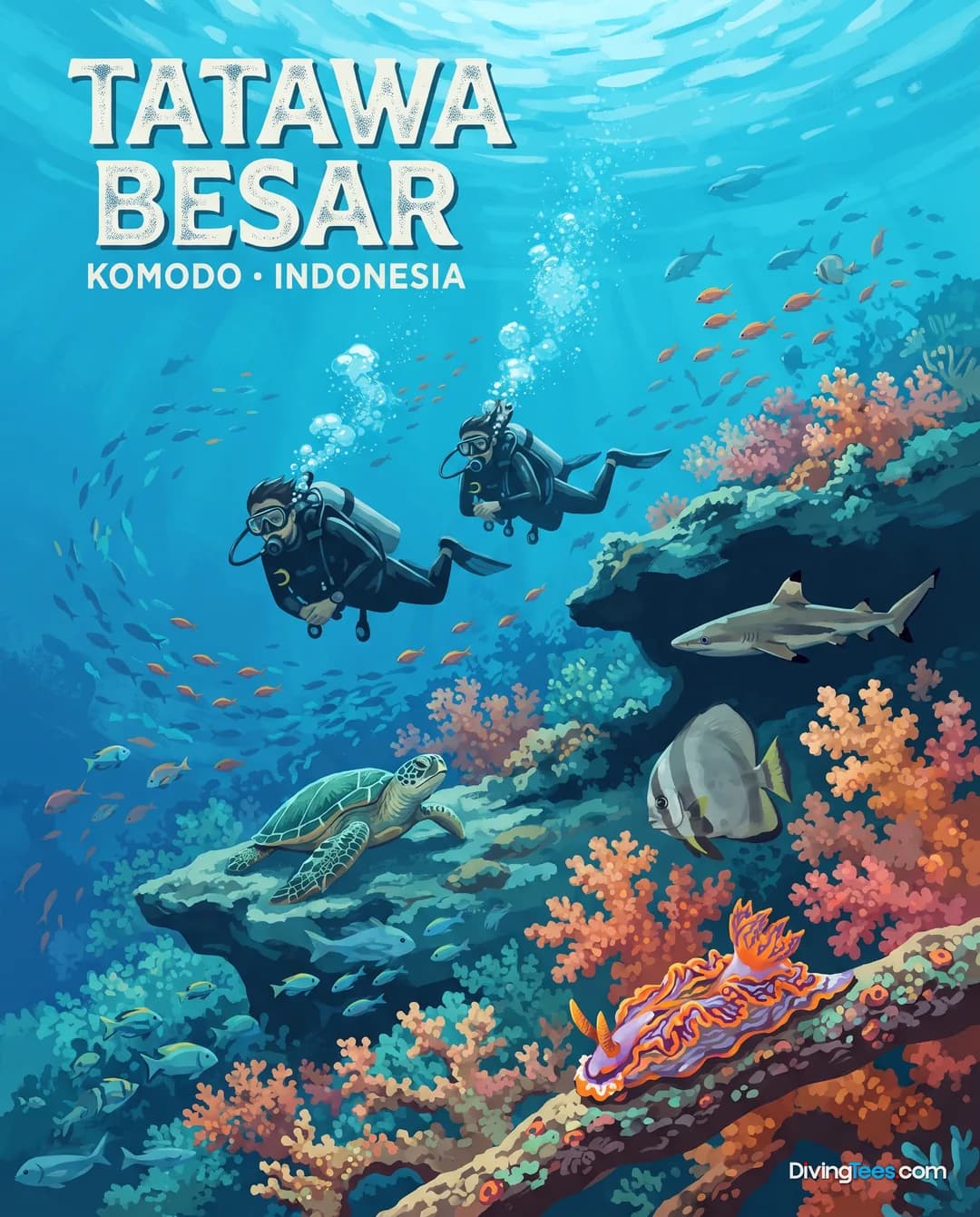
down to 25 m
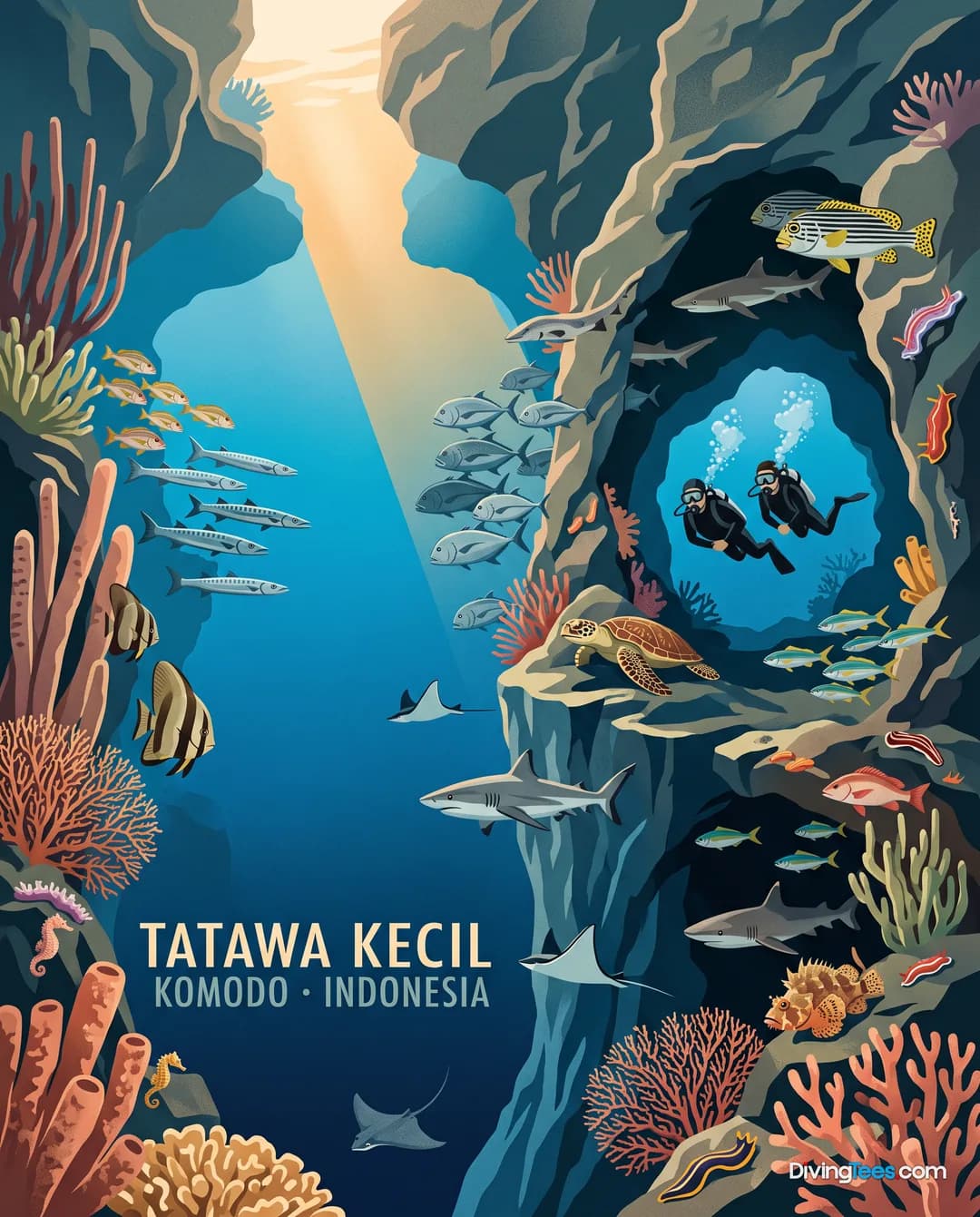
down to 30 m
And some of the dive sites the centre runs.
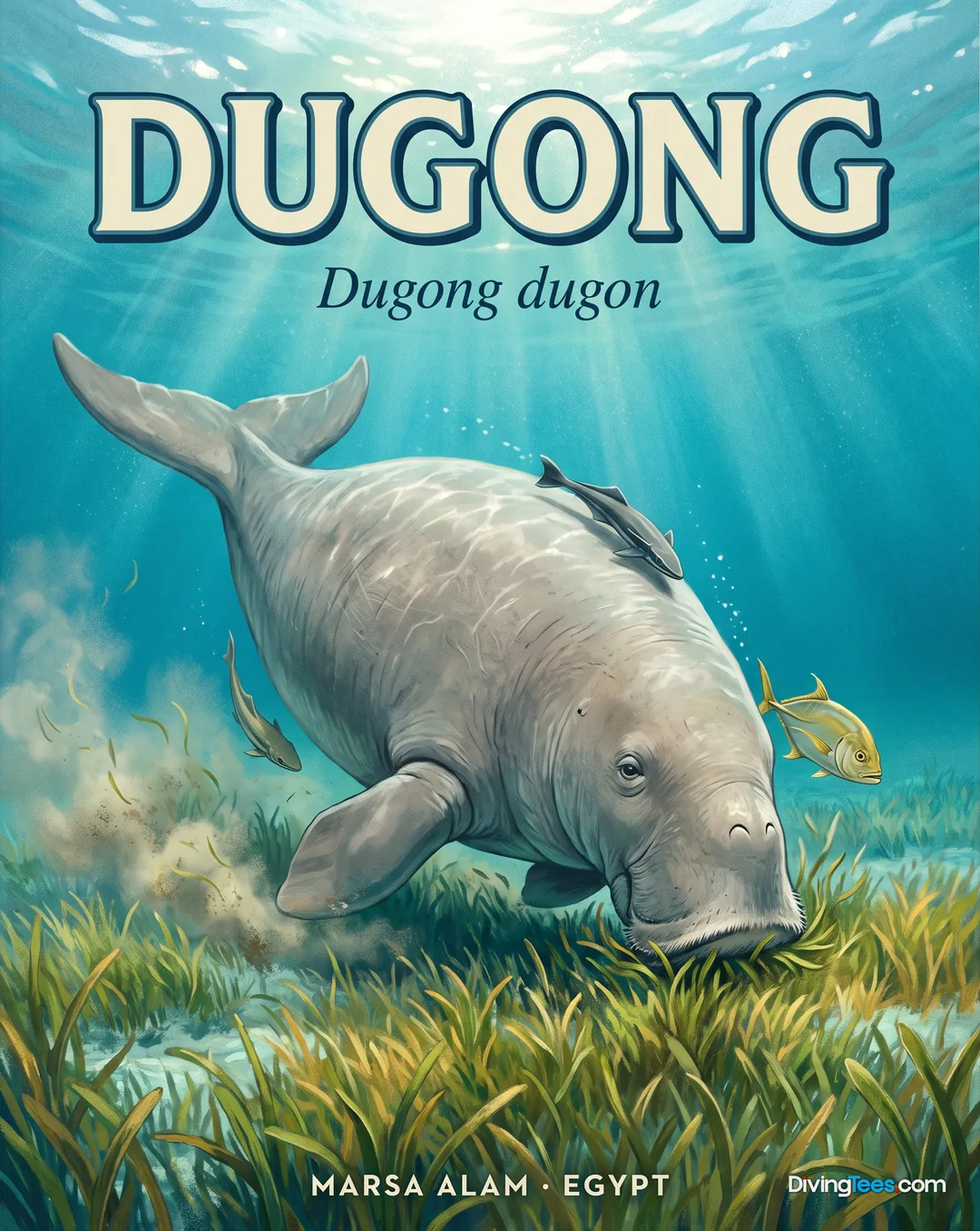
The marine life in Komodo is defined by its scale and diversity. You will frequently encounter large pelagics, including manta rays, eagle rays, and various species of reef sharks such as grey reef sharks and whitetip reef sharks. Schools of fusiliers, trevallies, and barracudas are common, alongside Napoleon wrasse, giant trevally, and sweetlips.
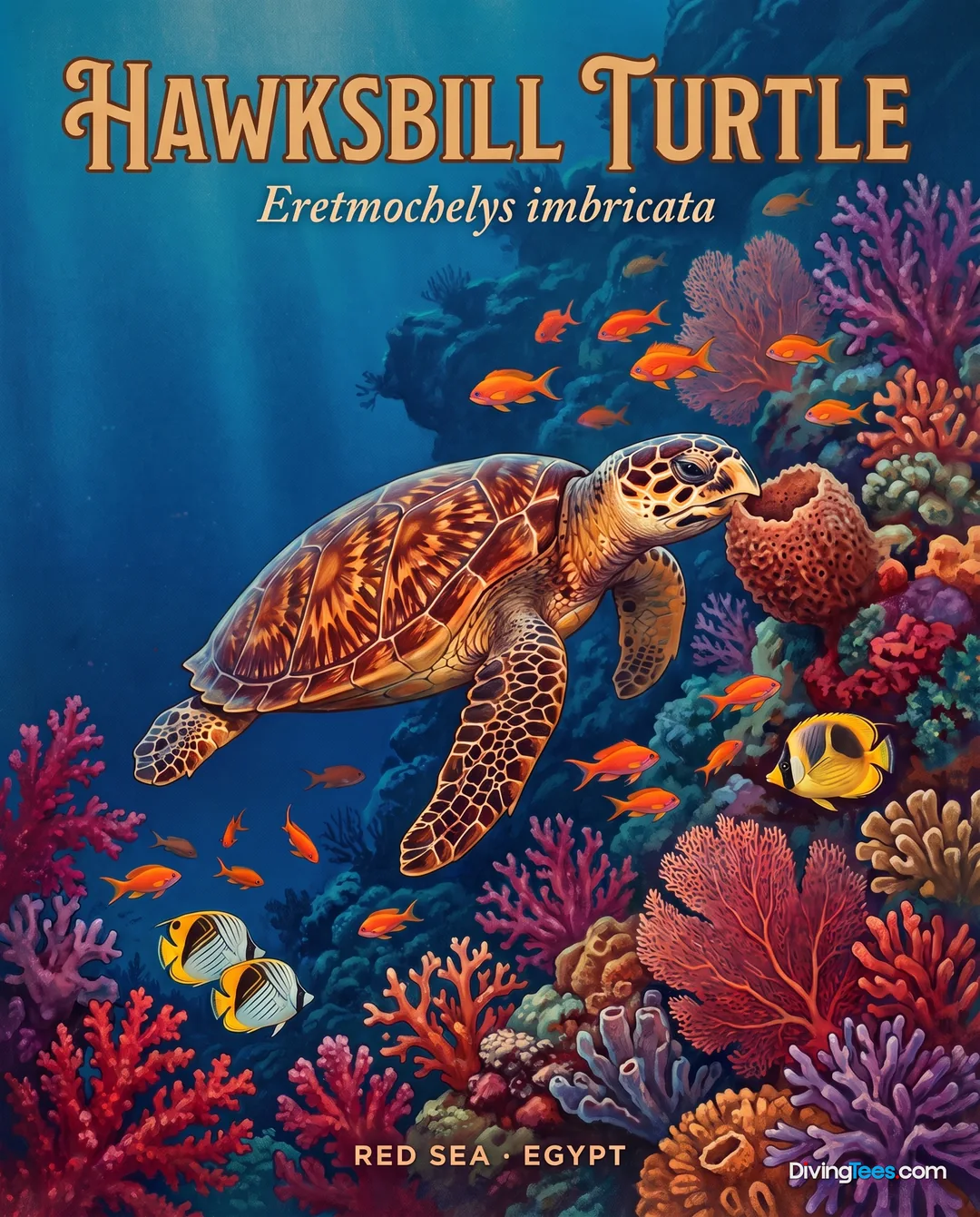
In the more sheltered areas and reef flats, the biodiversity shifts toward a rich array of reef fish and turtles. You can expect to see green sea turtles, hawksbill turtles, and various species of snapper and unicornfish. The reefs themselves are built upon a foundation of diverse hard and soft corals, including Gorgonian fans.
Macro enthusiasts will find plenty to explore, particularly around sites like Siaba Besar and Yellow Wall. The smaller inhabitants include frogfish, flamboyant cuttlefish, ghost pipefish, nudibranchs, and various species of shrimp and crabs. You may also spot leaf scorpionfish, blue-ribbon eels, and Spanish dancers among the reef structure.
During the peak season from December to February, manta ray sightings are particularly frequent at the cleaning stations. For those lucky enough to be diving during specific windows, the rare mola mola may also be encountered.
Komodo is famous for its powerful and unpredictable currents, which create world-class drift diving opportunities. The centre's guides are specifically trained to manage these conditions, providing detailed briefings to ensure all divers are prepared for the flow.
The best time to visit the park is during the dry season, from April to November. During this period, the conditions are generally more stable for exploring the various islands and pinnacles.
Hello, I'm Marina, DivingDeal.com's AI assistant. I answer in detail about hotels, dive centres and liveaboards.

Thinking about the whole trip and the flights? Talk it over with Edith →
Marina is an AI. Some links are affiliate links: DivingDeal may earn a commission, at no extra cost to you. Bookings are made with the partner.
Your last day stays dry: no diving in the 18-24 hours before a flight the perfect window to see the destination from another angle.
Ratings and reviews collected by Viator and Tripadvisor.