
Adventure Divers Bali
Google 5/5 (1,690 reviews)
5.8 km away as the crow flies
Amed · Indonesia · Asia
Max. depth · 26 mExplore a shallow, vibrant wreck off Amed's shores, an artificial reef teeming with marine life.
For subtitles in English: start the video firstthen click the gearat the top right of the video, select “Subtitles/CC”, then “Auto-translate” and choose “English”.
The Japanese Wreck is easily accessible from the shore in Banyuning, Lipah Bay, just Southeast of Amed. This steel wreck, approximately 10 to 20 meters in length, rests in a sheltered bay, allowing divers to explore its structure. The wreck, discovered in 1999, is mostly intact but broken up in sections, providing numerous hiding spots and light penetration. Its hull and compartments are extensively covered in corals and sponges, serving as a foundational structure for a diverse marine ecosystem.
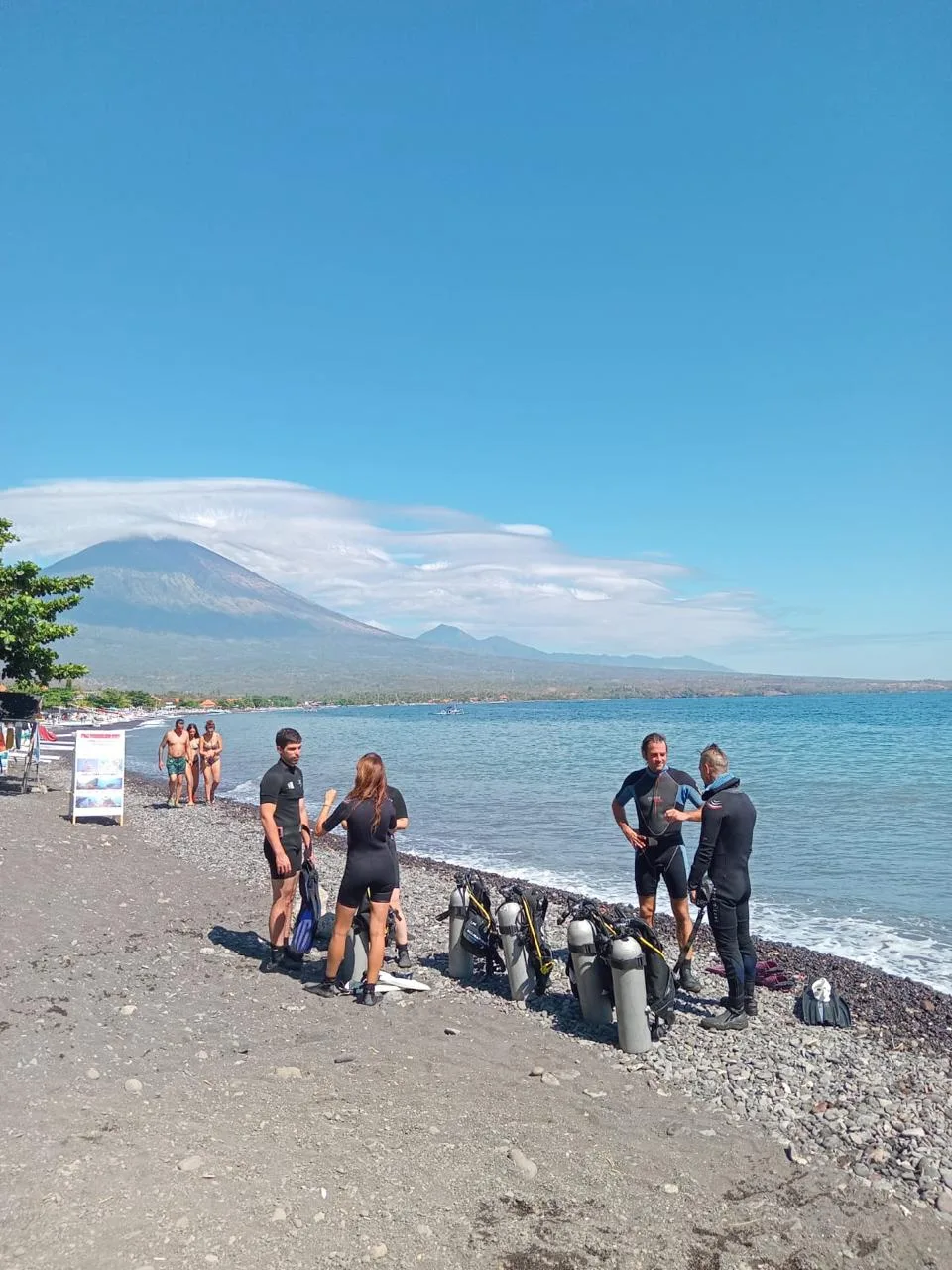
Your dive can begin directly from the beach, or via a short traditional Balinese jukung ride. As you descend, the wreck quickly comes into view. The main structure and surrounding areas are particularly rich in macro life. Delicate pygmy seahorses camouflage themselves within gorgonian corals, while various nudibranchs, ghost pipefish, and leaf scorpionfish blend with the vibrant reef growth. Look closely for orangutan crabs and squat lobsters tucked into crevices, making this site a paradise for underwater photographers.
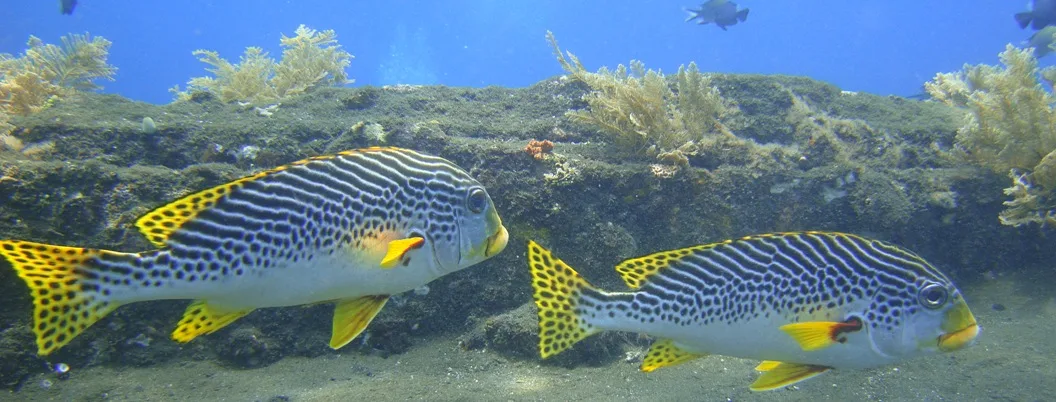
Beyond the wreck, the seafloor transitions into extensive coral gardens, featuring both a variety of healthy hard and soft corals. This vibrant reef extends as a gentle slope, offering a varied dive profile. Here, you'll find a wide array of reef fish, including damselfish, anthias forming shimmering clouds, a variety of parrotfish, and angelfish gracefully patrolling the reef edges. Moray eels are often found sheltering in the wreck's crevices or along the sloping reef.
The density of marine life is supported by moderate currents that typically sweep across the wreck and reef, enhancing visibility and bringing a constant supply of nutrients. These gentle flows allow for relaxed drifting and close observation of its inhabitants, including snapper, pufferfish, and groupers. Large sponges and gorgonian fans provide microhabitats for these species, ensuring a dynamic and healthy environment.
The site's blend of a compelling artificial reef with natural coral slopes creates a unique and fulfilling dive experience. Its accessible location and the abundance of both macro and reef life ensure that every dive offers new discoveries. This unique combination allows divers to explore a wide range of marine environments within a single immersion, from the intricate details of the wreck to the expansive beauty of the surrounding reef.
The Japanese Wreck is suitable for all certified divers, though exploring beyond 20 meters benefits from Advanced Open Water certification. The wreck itself spans from near the surface to 20 meters. Beyond the wreck, the natural reef slopes to a maximum depth of 26 meters. Currents are typically mild to moderate; good buoyancy control is advised, especially if currents are intermediate. Visibility generally ranges from 10 to 25 meters. The site can be dived year-round, with the best season from April to December.
You can dive Japanese Wreck year-round in its sheltered bay at Banyuning, Lipah Bay. Conditions are generally favorable from April to December, when the site offers its usual combination of accessible wreck exploration, coral gardens, macro life, and reef fish. You can begin from the beach or take a short traditional Balinese jukung ride.
You can visit Japanese Wreck as a certified diver. The wreck extends from near the surface to twenty meters, while the surrounding natural reef slopes to twenty-six meters. Exploring beyond twenty meters benefits from Advanced Open Water certification. The site suits varied profiles, combining a shallow wreck with deeper coral-covered reef.
You can generally expect mild to moderate currents at Japanese Wreck, with occasional intermediate flow across the wreck and reef. Good buoyancy control helps you remain comfortable while examining coral growth and small marine life. The current can support relaxed drifting, bring nutrients, and contribute to generally good visibility ranging from ten to twenty-five meters.
You can explore a small steel wreck covered in corals and sponges, with hiding places and light-filled sections. Look closely for pygmy seahorses, nudibranchs, ghost pipefish, leaf scorpionfish, orangutan crabs, and squat lobsters. Beyond it, hard and soft corals shelter damselfish, anthias, parrotfish, angelfish, moray eels, snapper, pufferfish, and groupers.