Manado Dive Club
Google 5/5 (412 reviews)
47 km away as the crow flies
North Sulawesi · Indonesia · Asia
Max. depth · 25 mDescend Nudifalls, where a beautiful sheer wall gives way to a vibrant soft coral forest, a prime habitat for an array of specialized nudibranchs and macro life.
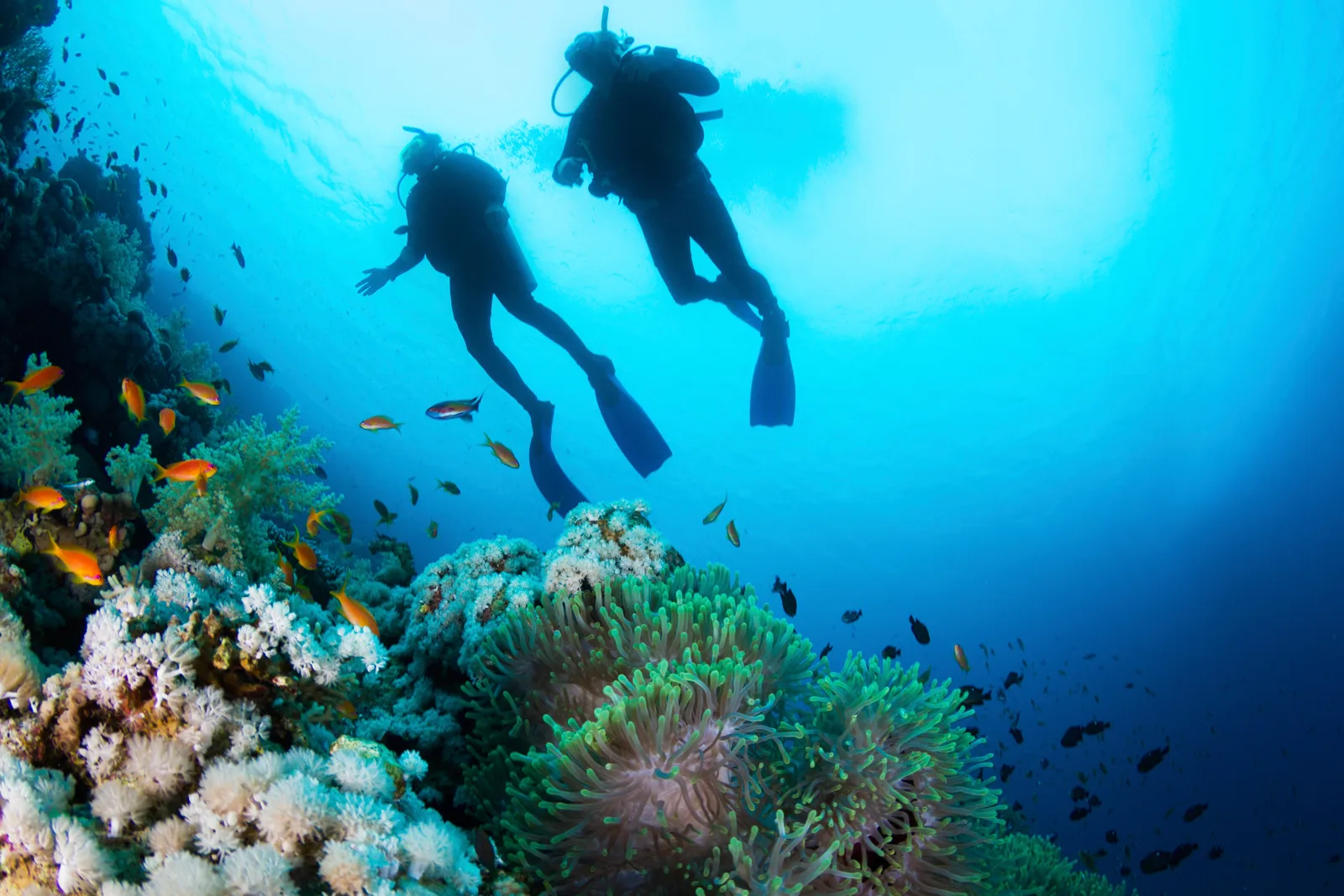
Dropping into Nudifalls, you're immediately greeted by the impressive sheer wall that characterises the upper section of this site. This vertical expanse descends gracefully, providing a rich surface for various encrusting organisms and small crevice dwellers. The light penetration here paints the wall in subtle hues, and as you drift along its face, keep an eye trained on the intricate details, as this area often hides smaller, less conspicuous marine life.
Below the wall, the topography shifts dramatically, introducing a rocky slope that serves as a transition zone. This rugged terrain offers numerous hiding spots and micro-habitats, making it a fertile ground for discovery. As you continue your descent, the rocks gradually give way to a sandy slope, a dynamic environment where many creatures burrow or move freely across the substrate, providing continuous opportunities for observation.
The sandy slope eventually levels out into the main channel of the Lembeh Strait, revealing a unique landscape of rubble. This seemingly chaotic environment is, in fact, a thriving ecosystem. From this rubble, a deep forest of large soft corals sprouts, creating a visually stunning and ecologically significant area. These soft corals sway gentle with any passing water movement, forming an intricate living tapestry that stands out scenically.
This coral forest and the surrounding rubble are prime hunting grounds for specific species that have made Nudifalls their home. Here, you'll commonly encounter the distinctive Goniobranchus kuniei, its vibrant colours a testament to the rich biodiversity. Other nudibranchs, such as Nembrotha rutilans and Nembrotha kubaryana, are also frequently spotted, alongside the striking Thecacera picta, all navigating the complex landscape of the reef.
Beyond the nudibranchs, Nudifalls is a site that rewards keen observation for larger, more enigmatic inhabitants. Giant frogfish, masters of camouflage, blend seamlessly into the corals and rubble, often requiring a sharp eye to distinguish them from their surroundings. You'll also discover beautiful cowrie shells clinging to various surfaces, adding a touch of elegance to the macro diversity present, and the fascinating pinnate batfish gracefully patrolling the soft coral stands.
Nudifalls offers diving conditions suitable for all levels, with a maximum depth of 25 metres. Currents here typically range from negligible to moderate, allowing for comfortable exploration. Visibility generally holds between 10 to 20 metres, offering clear views of the site's unique features. The best time to experience Nudifalls is from the end of March until the end of November, coinciding with the driest period.
You can dive Nudifalls from the end of March until the end of November. This period coincides with the driest conditions at the site, making it the preferred season for exploring the sheer wall, rocky and sandy slopes, main channel, rubble, and soft coral forest.
Nudifalls offers diving conditions suitable for all levels, with a maximum depth of 25 metres. You can explore the sheer wall, rocky transition, sandy slope, and main channel while choosing a depth that matches your experience and comfort during the dive.
At Nudifalls, currents typically range from negligible to moderate, allowing comfortable exploration. Visibility generally holds between 10 and 20 metres, giving you clear views of the site's sheer wall, changing slopes, rubble landscape, and deep forest of large soft corals.
You can look for abundant nudibranchs, including Goniobranchus kuniei, Nembrotha rutilans, Nembrotha kubaryana, and Thecacera picta. Nudifalls also features giant frogfish, cowrie shells, and pinnate batfish, along with a sheer wall, rocky and sandy slopes, rubble, and large soft corals.