
Tamarind Divers Lembongan
Google 5/5 (488 reviews)
121 km away as the crow flies
Nusa Lembongan · Indonesia · Asia
Explore a nutrient-rich sloping reef adjacent to the northern mangroves, where strong currents often provide a dynamic drift experience.
For subtitles in English: start the video firstthen click the gearat the top right of the video, select “Subtitles/CC”, then “Auto-translate” and choose “English”.
Mangrove Point sits along the northern flank of Nusa Lembongan, directly adjacent to its coastal mangrove forests. This location is not just a namesake; the proximity to these mangroves contributes to a nutrient-rich environment, feeding a vibrant reef system that offers a diverse marine ecosystem. The dive here is typically a drift, pushing you along the sloping coral reef, which starts shallow and gradually descends.
The reef itself is a tapestry of healthy corals, providing shelter and sustenance for a wide variety of reef fish. Visibility can vary, but generally holds well, allowing you to take in the sheer density of life that thrives here. As you move along, the current acts as your guide, revealing different sections of the reef and its inhabitants without requiring strenuous finning.
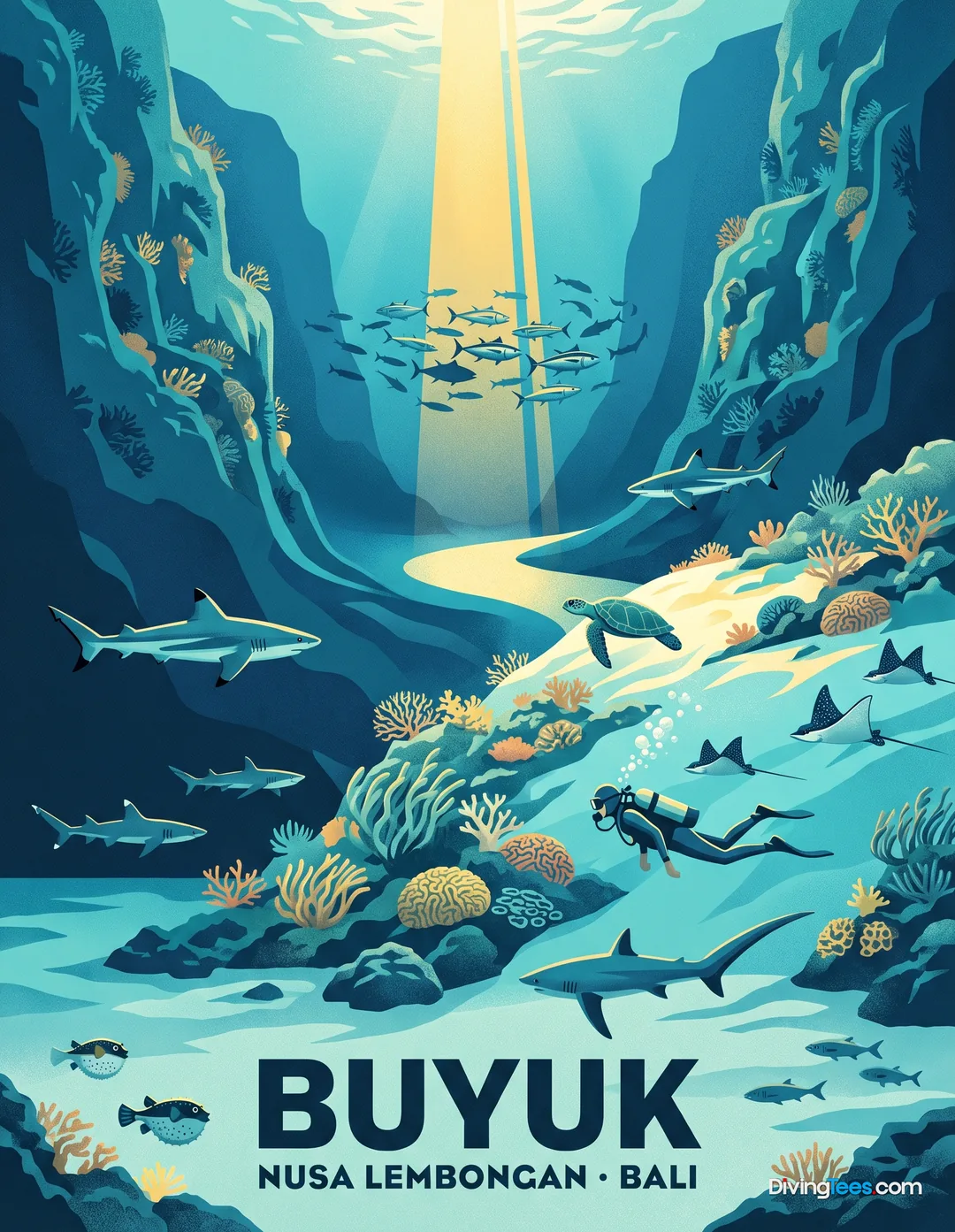
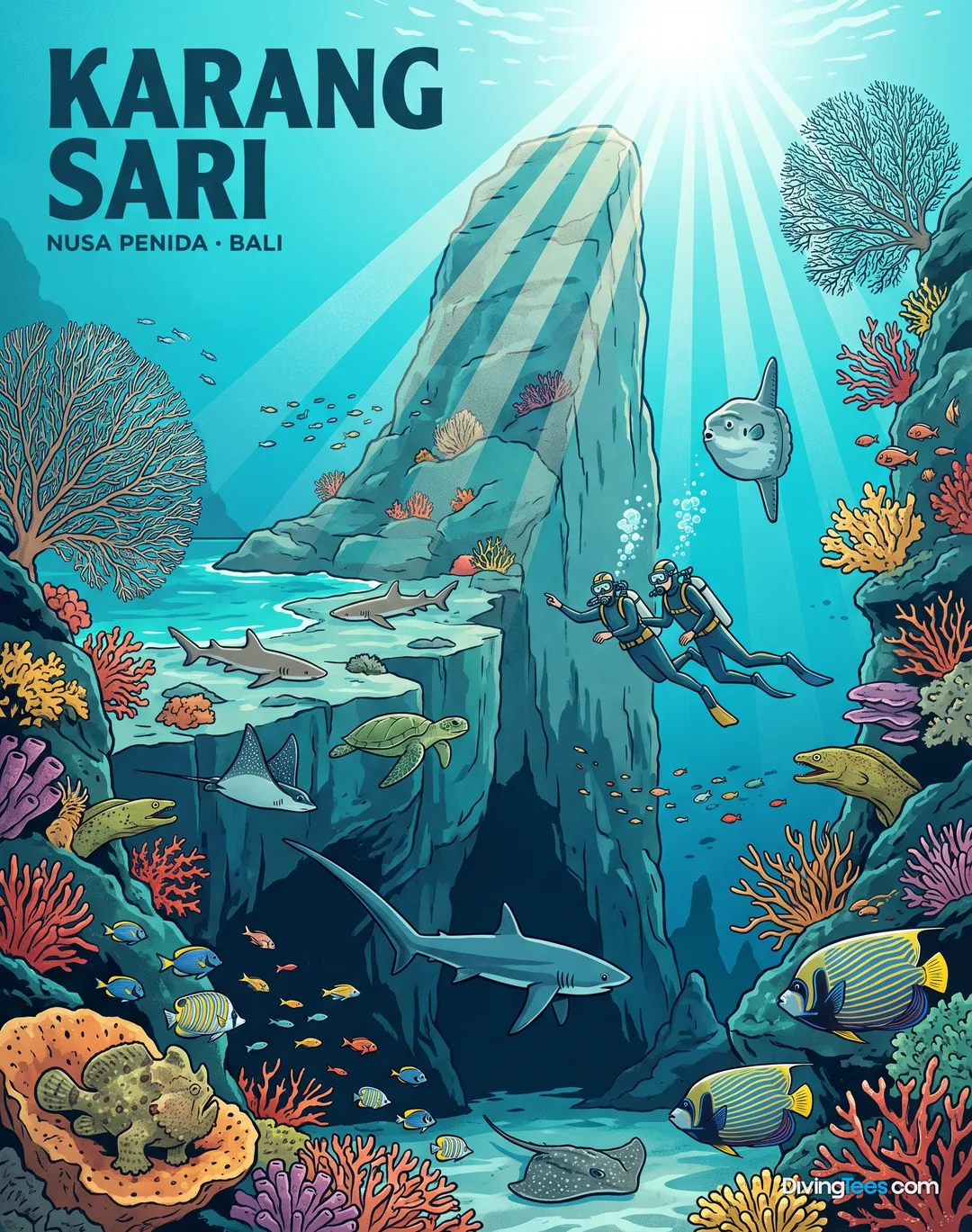
Pelagic encounters are a regular feature at Mangrove Point. Look into the blue for opportunities to spot eagle rays, often cruising gracefully against the current. White-tip reef sharks (Triaenodon obesus) are also present, often patrolling the deeper sections of the drop-off or resting under coral formations. While not guaranteed, these larger species add a dynamic element to the dive profile.
The resident fauna is abundant and diverse. You will commonly encounter numerous species of turtles, often seen grazing on the reef or moving between coral heads. Moray eels (Muraenidae), barracudas (Sphyraena), and various colourful triggerfish and pufferfish are also common sights, tucked into crevices or swimming along the reef. Keep an eye out for the camouflaged scorpionfish (Scorpaenidae) blending seamlessly with their surroundings.
Mangrove Point is generally considered accessible for intermediate divers, though some sources state an advanced certification is recommended due to the potential for strong currents. It is certainly not a beginner's site. Expect a maximum depth across the sloping reef of around 20-25 metres, though the exact profile can vary with the drift. Currents here can range from mild to strong, often shifting depending on the tide; this site functions best as a drift dive, so be prepared for a dynamic experience. The region's water temperature typically sits between 26°C and 29°C.
Mangrove Point is suited to you if you are an intermediate diver, although advanced certification is recommended because currents can become strong. This site is not suitable for beginners. You should be comfortable with changing conditions and a drift dive, where the current carries you along the sloping reef rather than requiring strenuous finning.
Mangrove Point follows a sloping coral reef that begins in shallower water and gradually descends. You can reach depths of around 20 to 25 metres, although the exact profile may vary with the drift. Deeper sections of the drop-off can be where white-tip reef sharks are seen, while coral life fills the reef along the route.
At Mangrove Point, currents can range from mild to strong and may shift with the tide. The site works best as a drift dive, with the moving water guiding you along different reef sections. You should be prepared for a dynamic experience and changing flow, rather than expecting a fixed current throughout the dive.
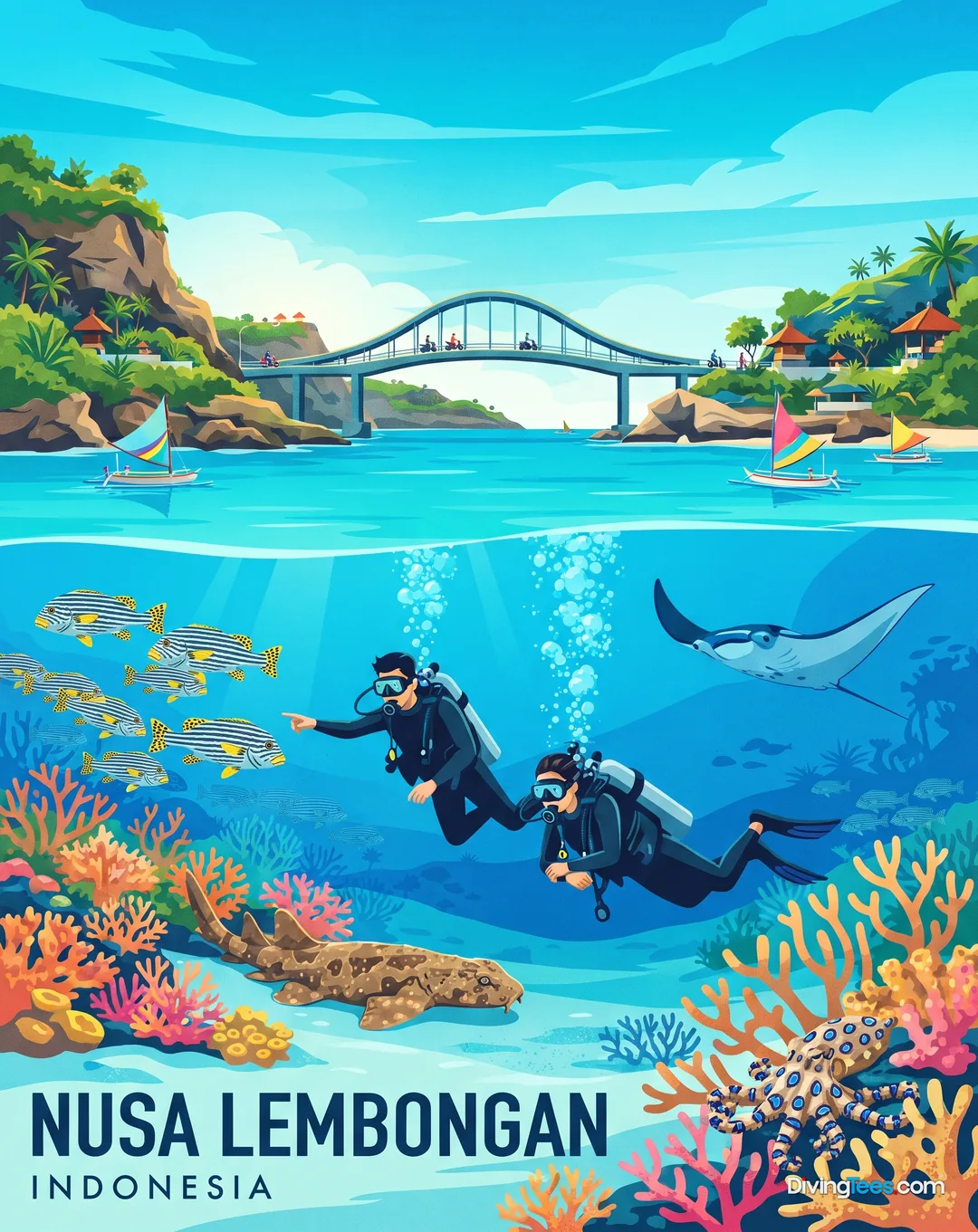
At Mangrove Point, you can explore a vibrant sloping coral reef with abundant turtles and diverse reef fish. Look for eagle rays in the blue, white-tip reef sharks near deeper areas or coral formations, and barracudas, moray eels, triggerfish, pufferfish, and camouflaged scorpionfish among the reef.