
Legend Diving Lembongan
Google 4.9/5 (1,942 reviews)
1.9 km away as the crow flies
Nusa Lembongan · Indonesia · Asia
Max. depth · 30 mMangrove offers a gentle drift dive across vibrant coral gardens, where nutrient-rich waters sustain a dense array of reef life.
For subtitles in English: start the video firstthen click the gearat the top right of the video, select “Subtitles/CC”, then “Auto-translate” and choose “English”.
Mangrove is situated directly in front of the lush mangrove forest on the northern side of Nusa Lembongan. This unique positioning is key to the health of the site, as the mangroves serve as a critical part of the local ecosystem, releasing a consistent supply of nutrients into the surrounding waters. This steady influx of sustenance directly contributes to one of the most vibrant coral reefs in the greater Nusa Penida area, making it a foundation for the entire food chain you'll encounter during your dive.
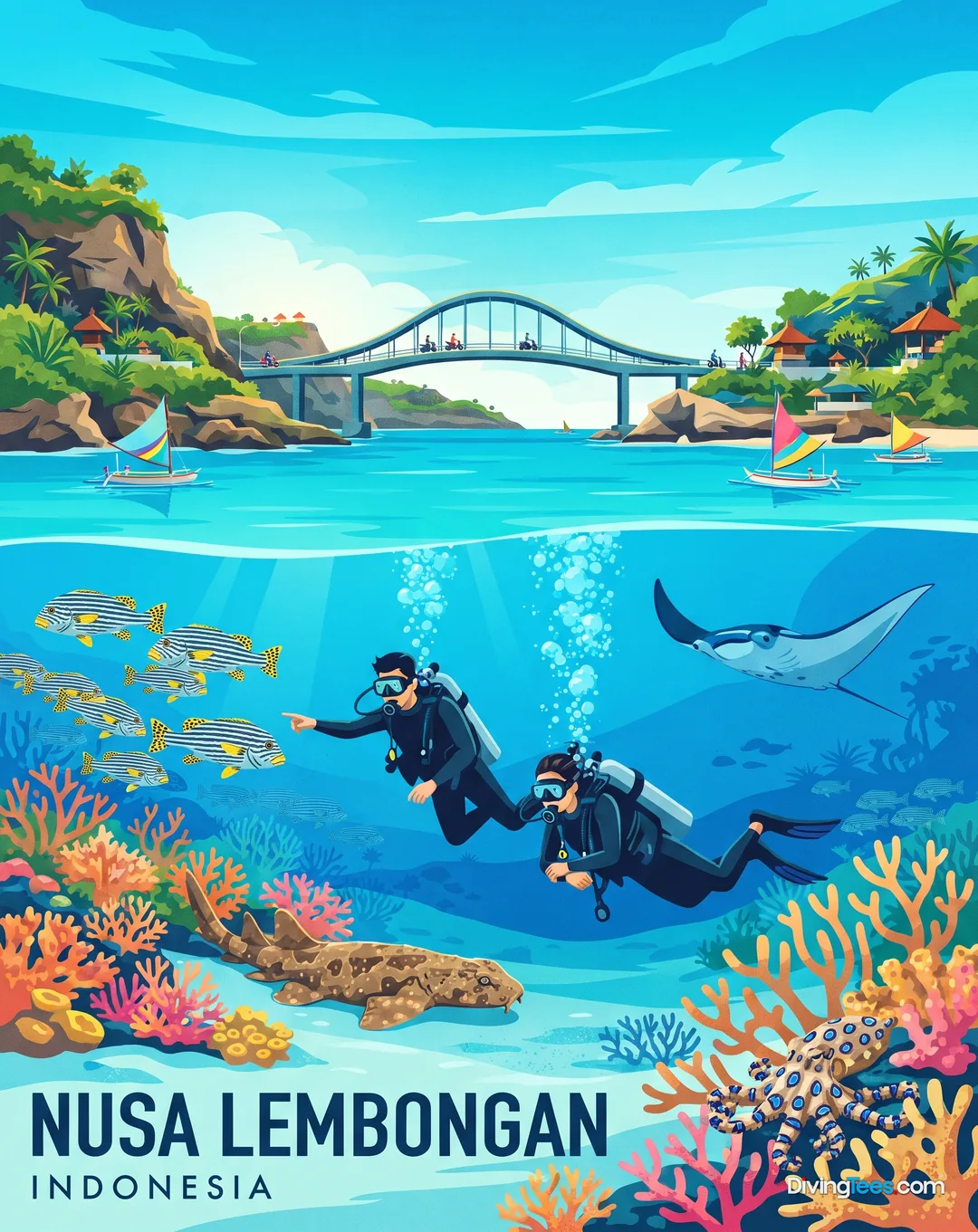
Your dive here will typically be a drift along a sloping reef, beginning in shallower waters and gradually descending. The topography is characterized by expansive hard and soft coral gardens that blanket the reef from near the surface down to around 30 metres. This constant covering of living coral provides refuge and hunting grounds for a diverse range of reef inhabitants, including various tropical fish that dart among the formations and the occasional small reef shark patrolling the edges of the reef.
As you move with the current, observe the intricate details within the coral structures. Among the dense thickets, you can often spot nudibranchs (Nudibranchia) meticulously grazing on sponges and hydroids, their vibrant colours standing out against the reef. Keep an eye out for scorpionfish (Scorpaenidae) that blend seamlessly with the coral, masters of camouflage, waiting for unsuspecting prey to pass by the reef floor.
The site hosts a significant population of reef fish, thriving on the sustained nutrient supply. While drifting, you will regularly encounter schools of fusiliers (Caesionidae) and giant trevally (Caranx ignobilis) moving with purpose. Bannerfish (Heniochus acuminatus) also frequent the coral formations, their distinctive long dorsal fin rays making them visible from a distance.
Visibility at Mangrove typically ranges from 15 to 30 metres, providing clear views of the expansive coral gardens and marine life. The clear water enhances the experience of observing reef fish behaviour, from the territorial clownfish (Amphiprioninae) within their anemones to the larger groupers (Epinephelinae) that often reside in deeper crevices, making the most of the diverse underwater landscape.
The presence of turtles is common at Mangrove, with both hawksbill (Eretmochelys imbricata) and green turtles (Chelonia mydas) seen navigating the reef, often pausing to graze on algae or rest within the coral. Their calm demeanour allows for close observation as they go about their foraging, adding to the richness of the dive experience.
Mangrove offers a unique reef environment where the interplay between the land and sea is evident in the health and density of marine life. It is not just about the species you see, but the dynamic and interconnected ecosystem that supports their thriving populations, from the smallest nudibranch to the passing reef sharks.
Mangrove is accessible from Open Water Diver level, but be prepared for a moderate current that necessitates drift diving experience. Depths range from a minimum of 5 metres to a maximum of 30 metres. Visibility is typically excellent, often reaching between 15 and 30 metres, with water temperatures usually sitting between 24°C and 28°C. This site is suitable year-round, although during calm weather, the current is less pronounced.
Mangrove is suitable for diving year-round. During calm weather, the current is less pronounced, which can make the drift easier to manage. Water temperatures usually range from 24°C to 28°C, while visibility is typically excellent, often reaching between 15 and 30 metres across the coral gardens and surrounding reef.
Mangrove is accessible to Open Water Divers, but you should be prepared for a moderate current. The dive usually involves drifting along a sloping reef, so drift diving experience is necessary. Moving with the current lets you observe coral formations and marine life while progressing from shallow water toward deeper sections.
Mangrove ranges from 5 to 30 metres deep. The drift begins in shallower water and follows a sloping reef that gradually descends. Hard and soft coral gardens cover the reef from near the surface down to around 30 metres, offering different underwater perspectives as you move through the site.
At Mangrove, you can see extensive hard and soft coral gardens filled with tropical reef fish, including fusiliers, giant trevally, bannerfish, clownfish and groupers. Green and hawksbill turtles are commonly seen, while small reef sharks, nudibranchs and camouflaged scorpionfish may also appear among the coral.