
BeFreeToDive, BeFree2Dive
Google 4.9/5 (220 reviews)
68 km away as the crow flies
Nice · France · Mediterranean
Max. depth · 35 mDescend along the distinct rock formations of Les Roches Quairolles, where rich invertebrate life thrives amidst passing pelagics.
Les Roches Quairolles is defined by two prominent rock formations, referred to locally as the 'petit' and 'grand' Quairolle, lying offshore from Cap Lardier. These structures rise from the seabed, creating a varied topography that divers can explore. The dive begins with the descent onto these impressive rocky outcrops, where the interplay of light and shadow highlights the intricate details of the geological features.
The site plunges to a maximum depth of 35 metres, offering a clear vertical profile along its rock faces and slopes. As you navigate these formations, the dive takes you through the heart of a marine protected area, which is evident in the density and health of the invertebrate life. Moving between the rocky areas, you'll encounter different microhabitats that support a variety of species.
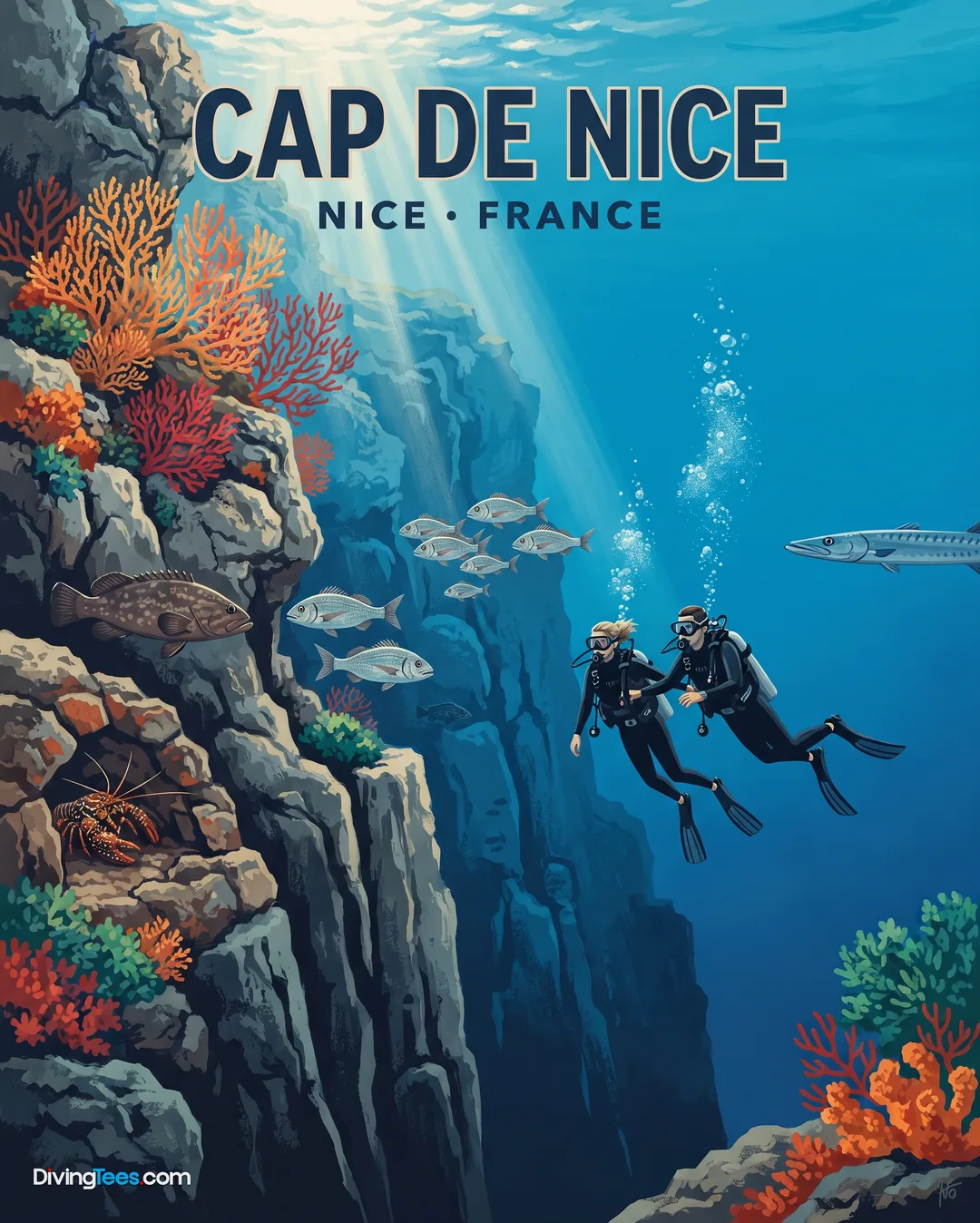
Life on the formations themselves is rich, with vibrant gorgones (gorgonian corals) swaying gently in the mild current. Colonies of mimosa de mer add splashes of colour and texture, covering the rock surfaces. These sessile invertebrates provide shelter and hunting grounds for smaller creatures, creating a dense underwater landscape that rewards close inspection.
Beyond the fixed life, Les Roches Quairolles is known for its resident fish populations and occasional pelagic visitors. You'll commonly encounter mérous (groupers), sometimes resting within the crevices or patrolling the edges of the rocks. Congres (conger eels) and murènes (moray eels) inhabit the numerous holes and overhangs, often peering out from their shelters. Dentis (dentex) and corbs (shi drums) are also present, adding to the dynamic marine environment.
The site also offers opportunities for observing nacres (noble pen shells), which are often embedded in sandy patches near the rock bases. These large, fan-shaped bivalves indicate a healthy seabed. Divers with an interest in underwater photography or marine biology will find ample subjects, from the intricate patterns of the gorgonians to the details of reef fish behaviour.
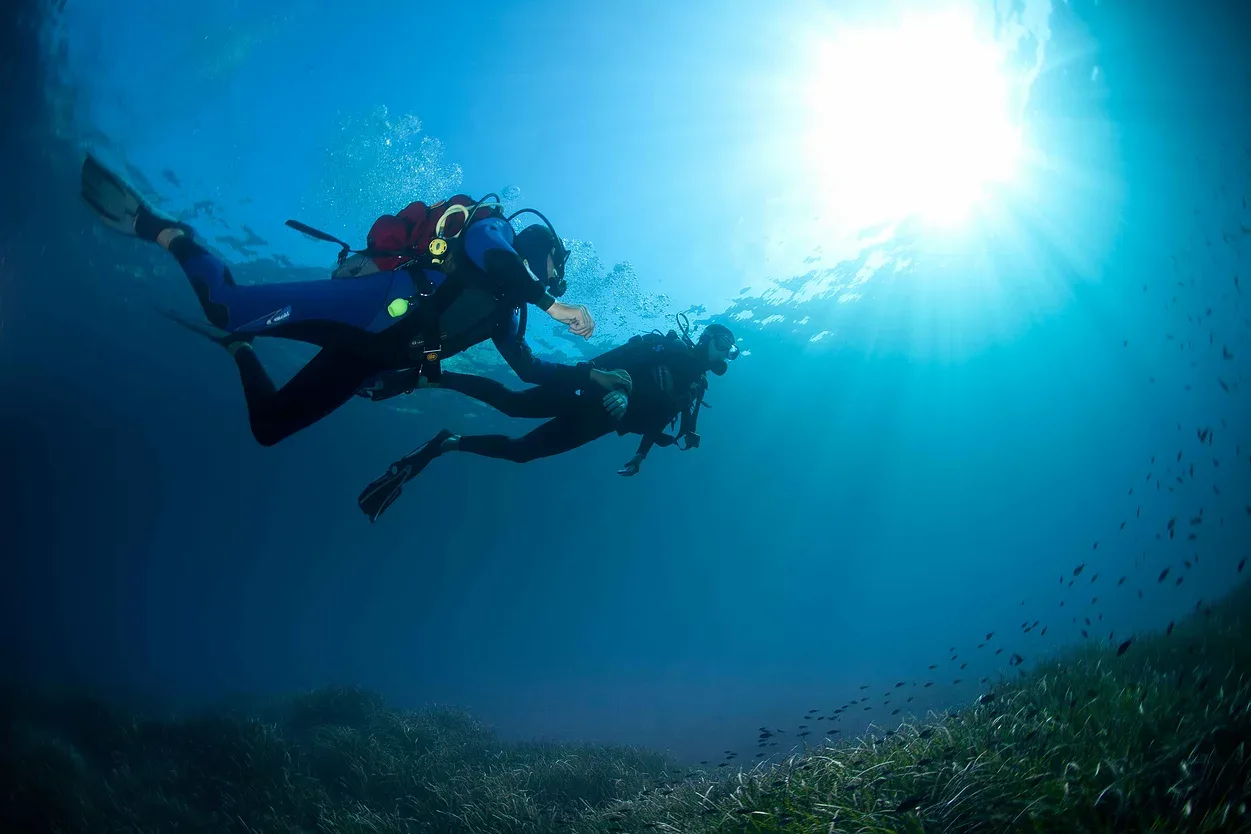
While the current is generally weak, often negligible, the topography ensures a feeling of active exploration as you trace the contours of the rocks. This gentle water movement allows for comfortable drifts along the formations, giving you time to observe the marine life without exertion. The clear conditions typically found here enhance the experience, providing good visibility across the expansive formations.
This site is accessible from Open Water Diver (N1 / PE20) level, with the exploration beginning at 15 metres and extending down to 35 metres. The current is typically weak, often negligible, allowing for relaxed navigation around the formations. The optimal period for diving here is seasonal, generally from April through October, with September often offering the most stable conditions.
You can dive Les Roches Quairolles during the seasonal period from April through October. September often offers the most stable conditions. The site lies within a marine protected zone, and clear conditions typically enhance the experience by allowing you to see across the expansive rock formations as you explore them.
Les Roches Quairolles is accessible from Open Water Diver level, also identified as N1 or PE20. Your exploration begins at fifteen metres and extends to thirty-five metres. The site follows the rock formations, slopes, and faces, creating a clear vertical profile for you to navigate during the dive.
At Les Roches Quairolles, the current is typically weak and often negligible. This allows you to navigate around the formations in relaxed conditions and follow their contours without exertion. Gentle water movement also supports comfortable drifts along the rocks, giving you time to observe the surroundings and marine life.
At Les Roches Quairolles, you can explore the two rock formations known as the petit and grand Quairolle. Gorgones and mimosa de mer cover the rock faces, while mérous, congres, murènes, dentis, and corbs inhabit the area. Nacres appear in sandy patches near the rock bases.