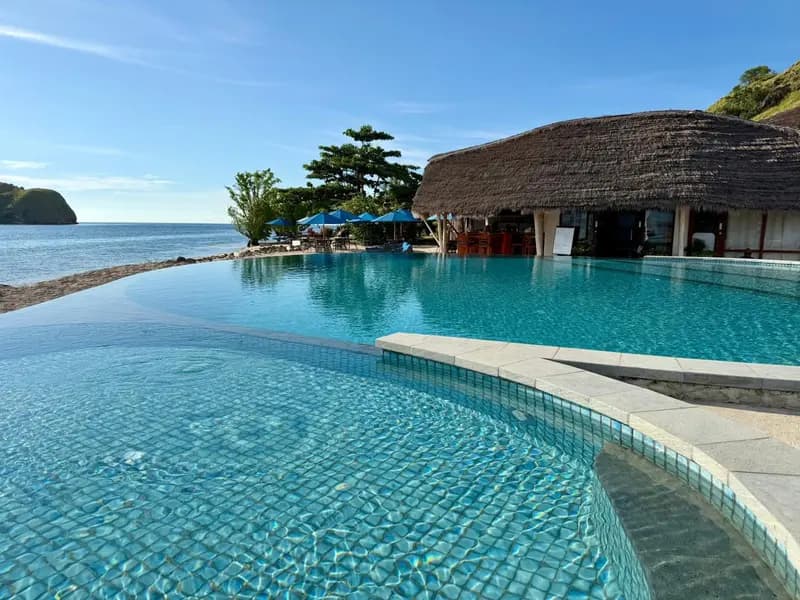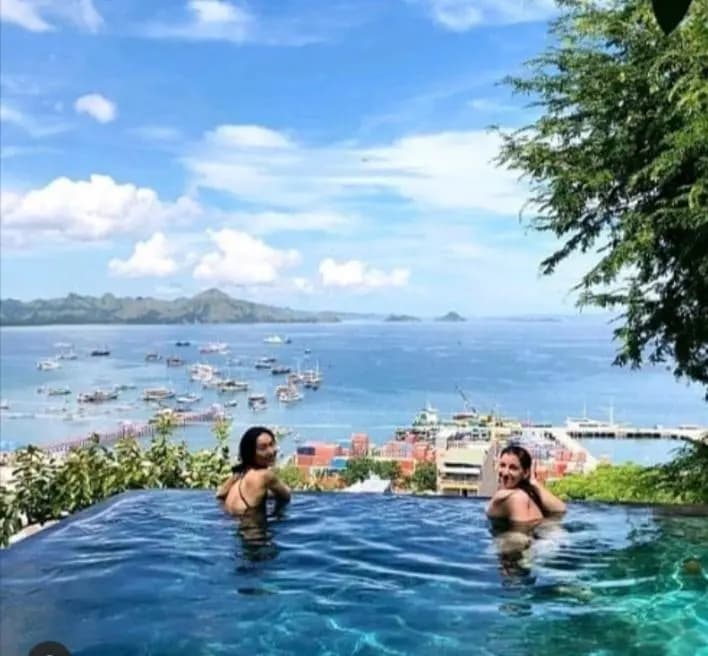
Le Pirate Island - Adults Only
★ 9.6/10 (1,405 reviews)
13 km away as the crow flies
Dive centre · Komodo · Indonesia
4.9577 Google reviewsExperience the currents of Komodo aboard the Cajoma IV, a traditional Indonesian Phinisi liveaboard.
For subtitles in English: start the video firstthen click the gearat the top right of the video, select “Subtitles/CC”, then “Auto-translate” and choose “English”.
Located in Labuan Bajo, Manta Rhei has been operating since 2014. This family-founded PADI centre serves as a gateway to the Komodo National Park, one of the most biologically diverse marine environments on the planet.
You can choose between daily excursions from the centre or extended liveaboard safaris to reach more remote parts of the archipelago. The centre's presence in Flores allows for easy access via Labuan Bajo airport, with transfers organised to connect your flights to the dive boats.
The team is composed of four experienced instructors and PADI Divemasters. To ensure safety and personalised attention, the centre maintains a strict ratio of maximum four divers per guide.
Instruction is provided in English and Indonesian. The centre is also deeply involved in local marine conservation, working alongside park authorities and NGOs like Trash Hero to help protect the reefs you dive.
Manta Rhei provides a comprehensive range of PADI training programmes. Beginners can start with Discover Scuba Diving or work through the Open Water Diver and Advanced Open Water Diver courses.
For more experienced divers, the centre offers Rescue Diver and Divemaster training, as well as Refresher Courses to brush up on skills before heading into the currents. All certifications are issued through PADI.
For day trips, the centre operates the Yolande, a dedicated day boat with a capacity for 10 divers. It is powered by an 8-cylinder Mitsubishi engine to navigate the local waters reliably.
For those looking to stay on the water, the Cajoma IV is a traditional Indonesian Phinisi liveaboard. This vessel accommodates up to 8 divers across different cabin options, including Master, Deluxe Double, and Shared cabins, allowing for multi-day safaris through the national park.
The centre offers full kit hire for those not travelling with their own equipment. This includes fins, masks, snorkels, and wetsuits. For those requiring more specialised kit, dive computers and torches can be hired separately.
Nitrox is available for use, providing an option for divers looking to extend their no-decompression limits. The centre is also located near the SILOAM hospital in Labuan Bajo, which is equipped with a decompression chamber.
Batu Bolong is a world-renowned underwater mountain and reef that rises from the seabed. It is a high-energy site with strong currents where you can find massive schools of fish, gorgonians, and large pelagics like tuna and sharks.
Crystal Rock is an advanced pinnacle site known for its exceptional clarity and strong currents. It is a prime location for seeing reef sharks, sweetlips, and vibrant anthias around the underwater structures.
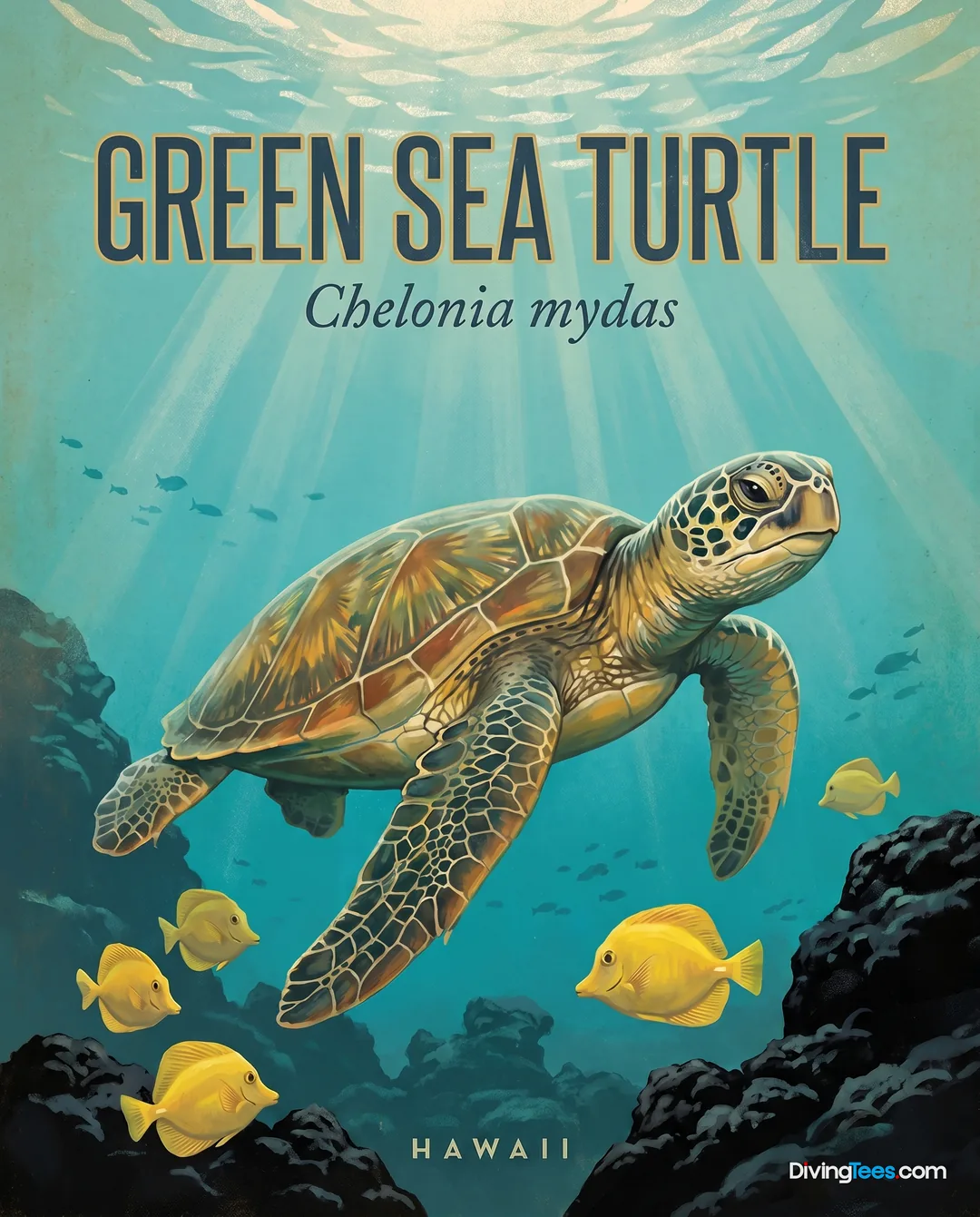
Siaba Besar, often called Turtle Town, is a protected bay with minimal current. It is an ideal site for beginners or those interested in muck diving, featuring abundant green sea turtles and a variety of small macro creatures.
The Cauldron is a drift dive located between Gili Lawa Laut and Gili Lawa Darat. It offers varied terrain from sandy bottoms to coral heads and is a reliable spot for spotting manta rays and large trevallies.
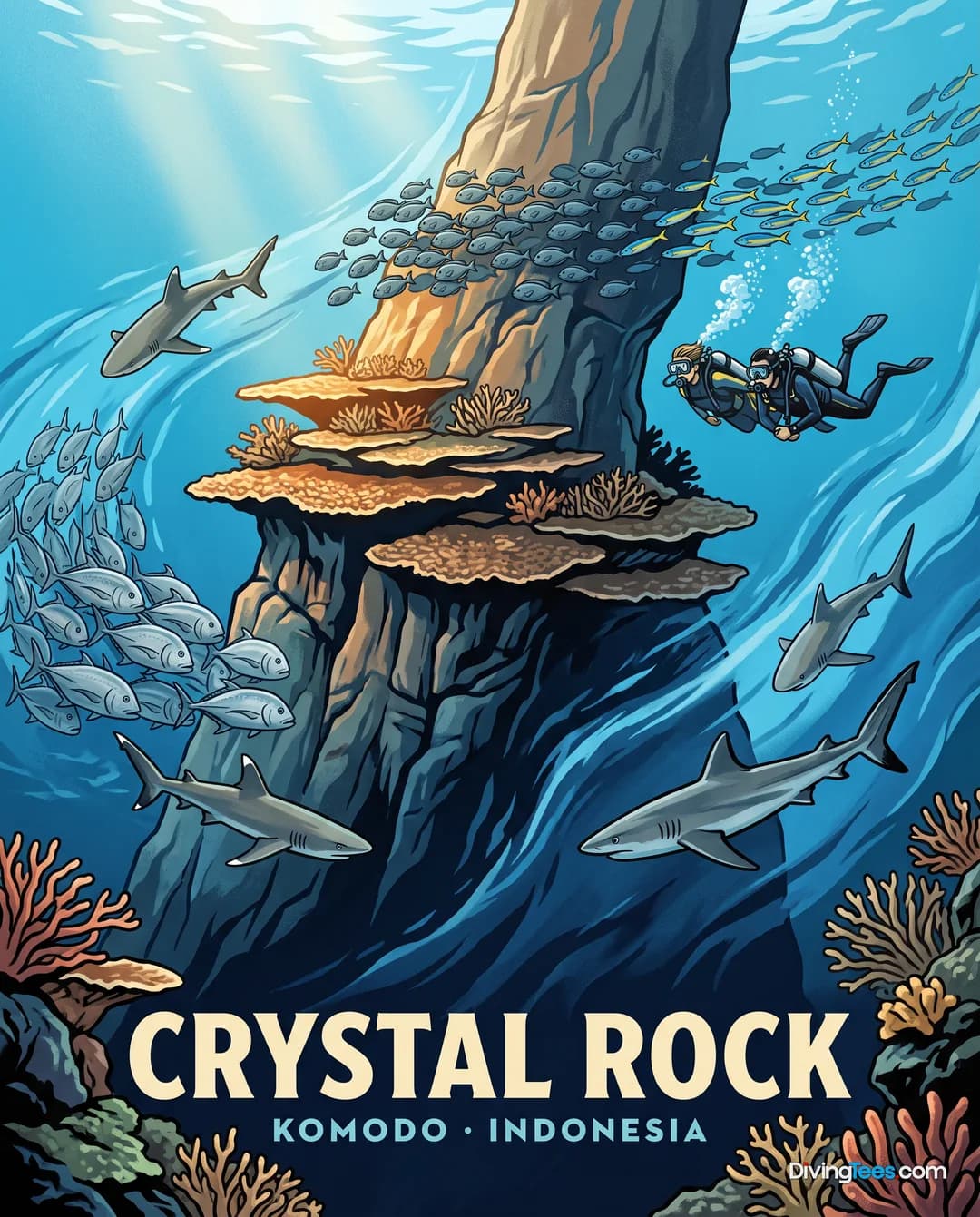
down to 30 m
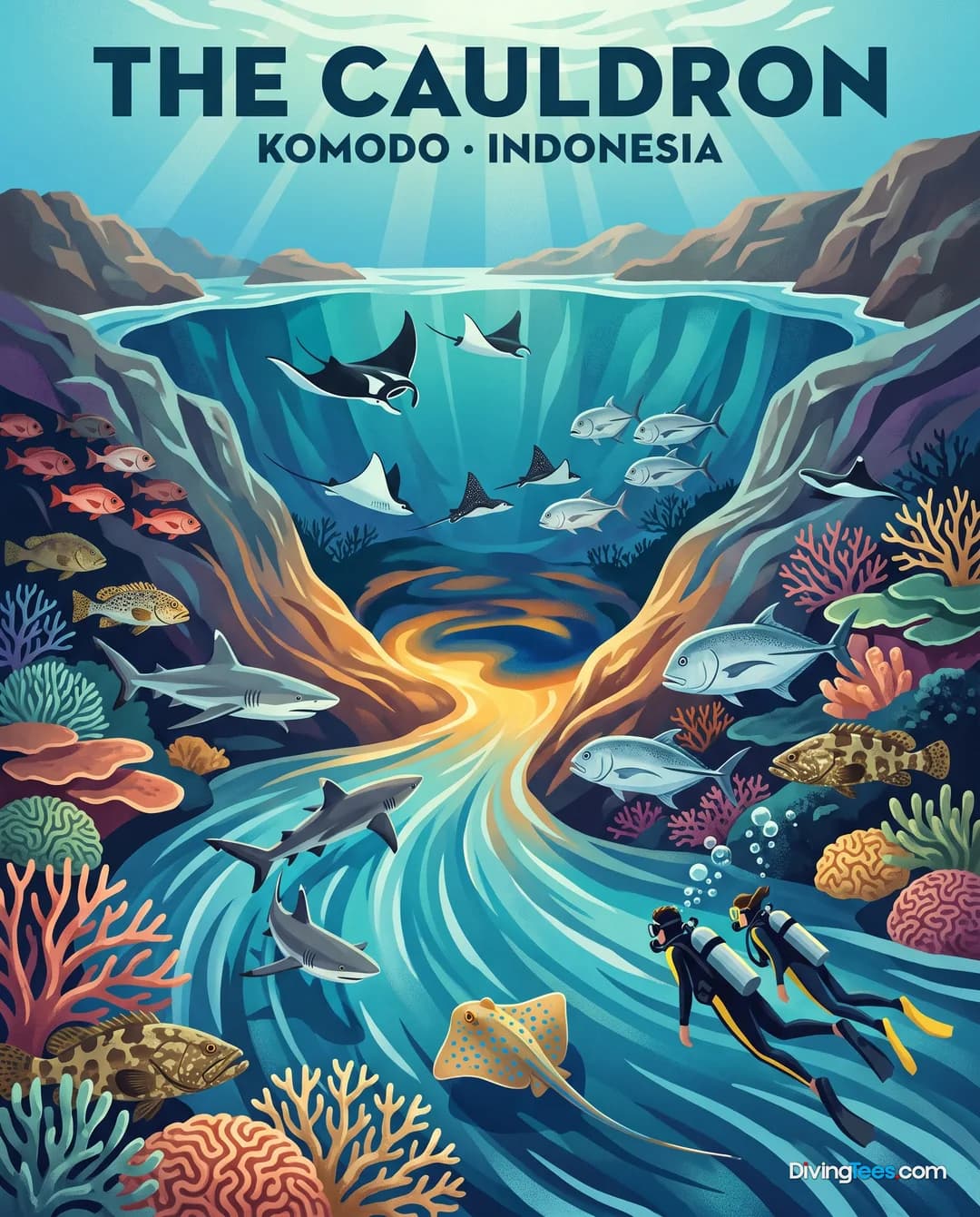
down to 25 m
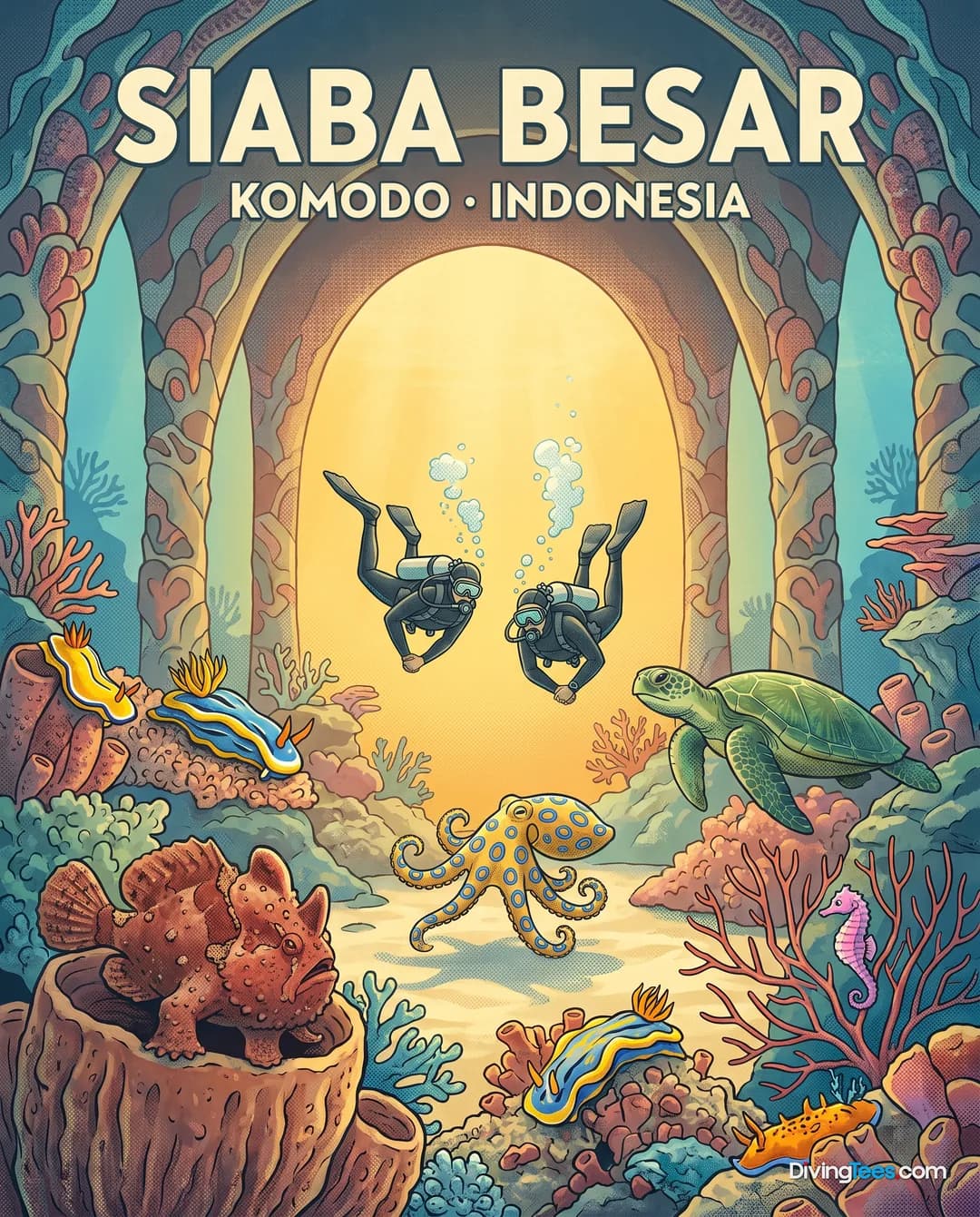
down to 18 m
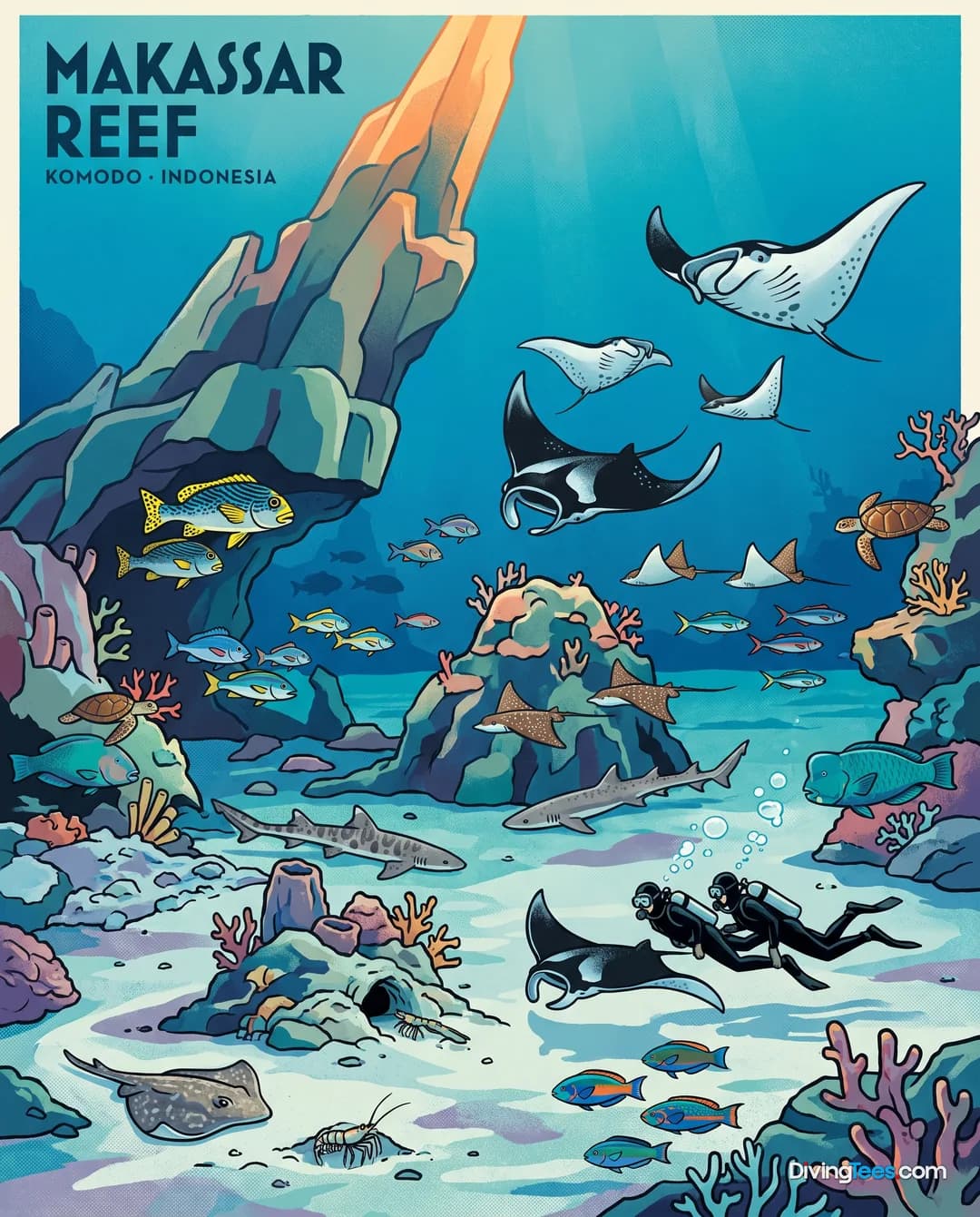
down to 18 m
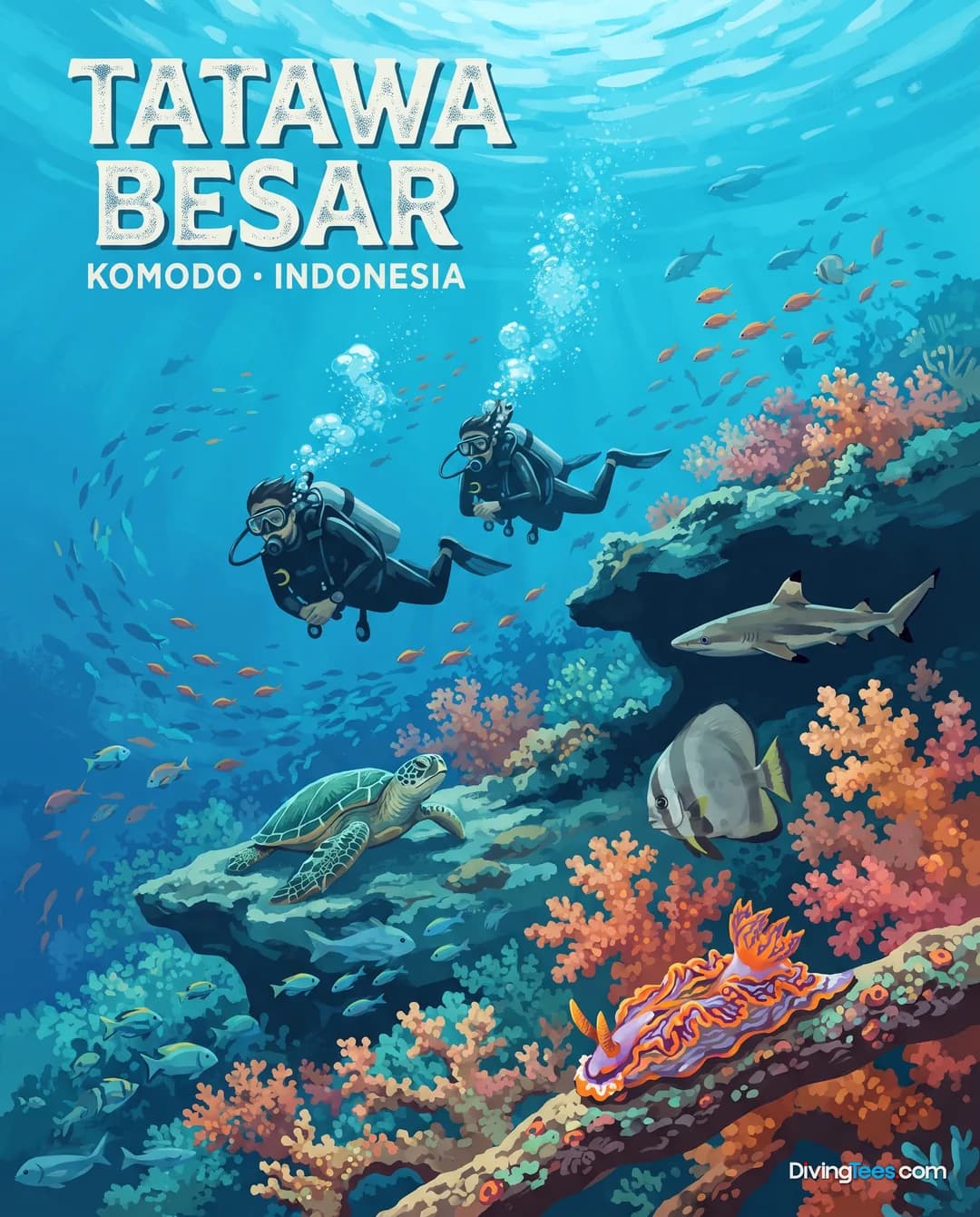
down to 25 m
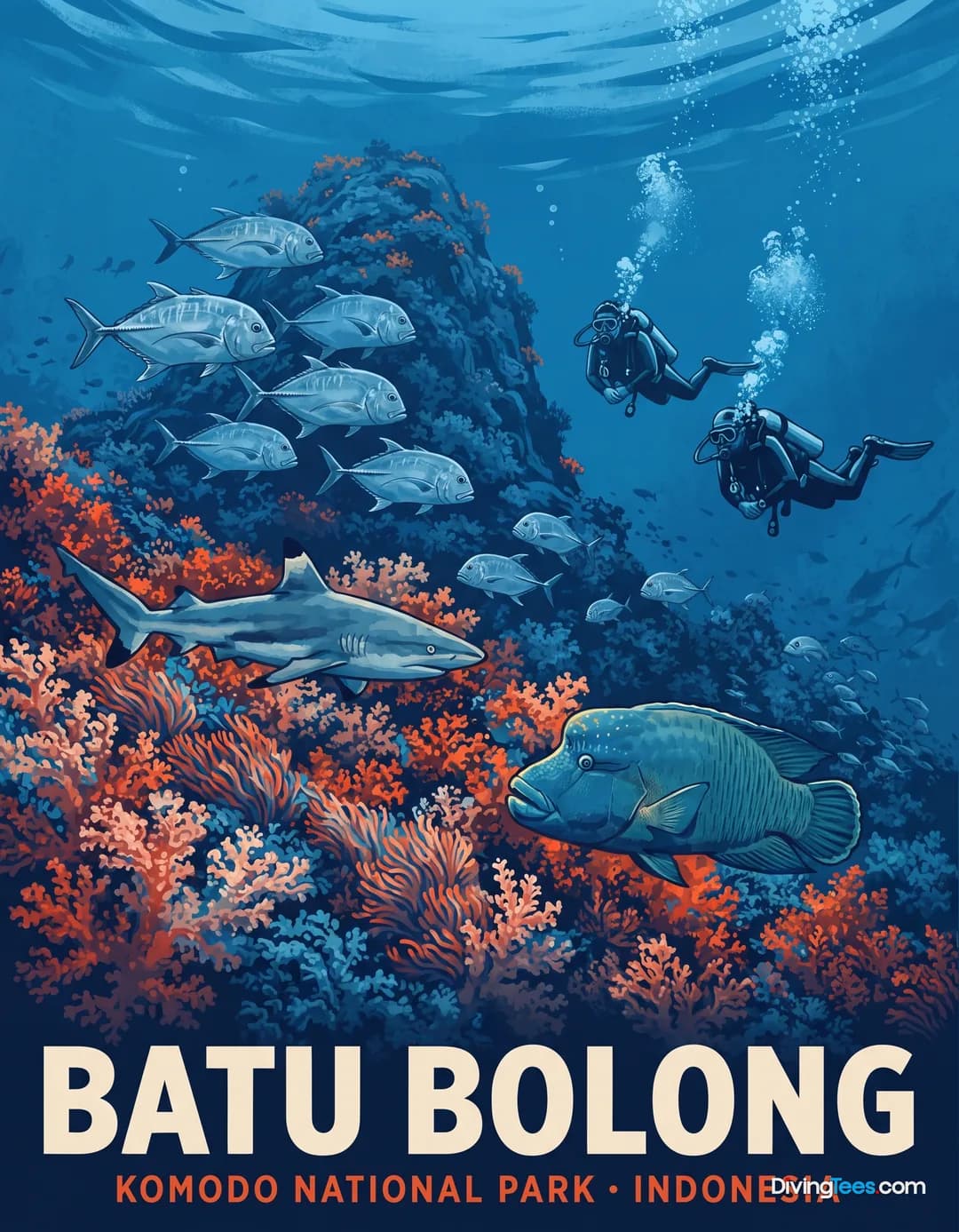
down to 40 m
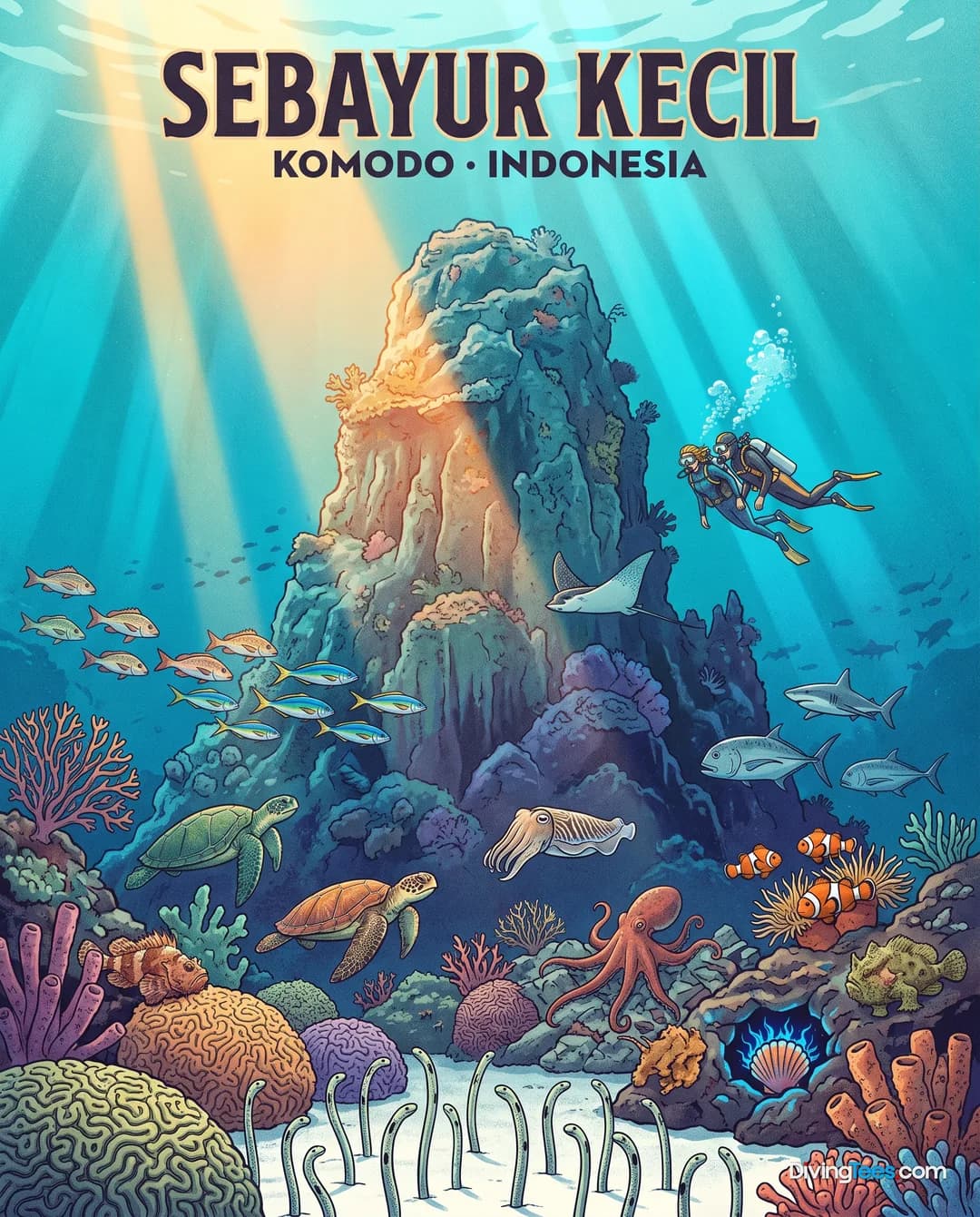
down to 25 m
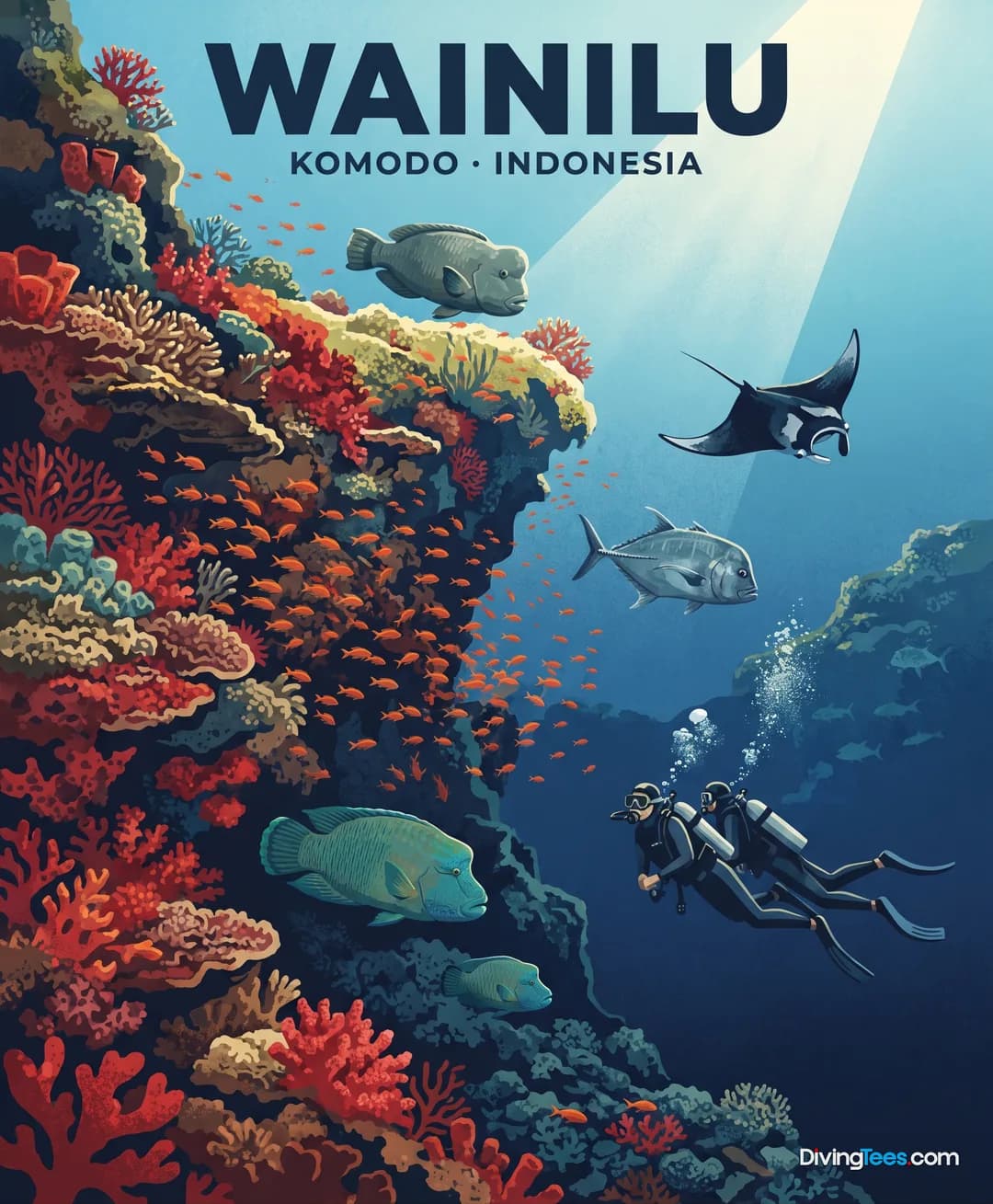
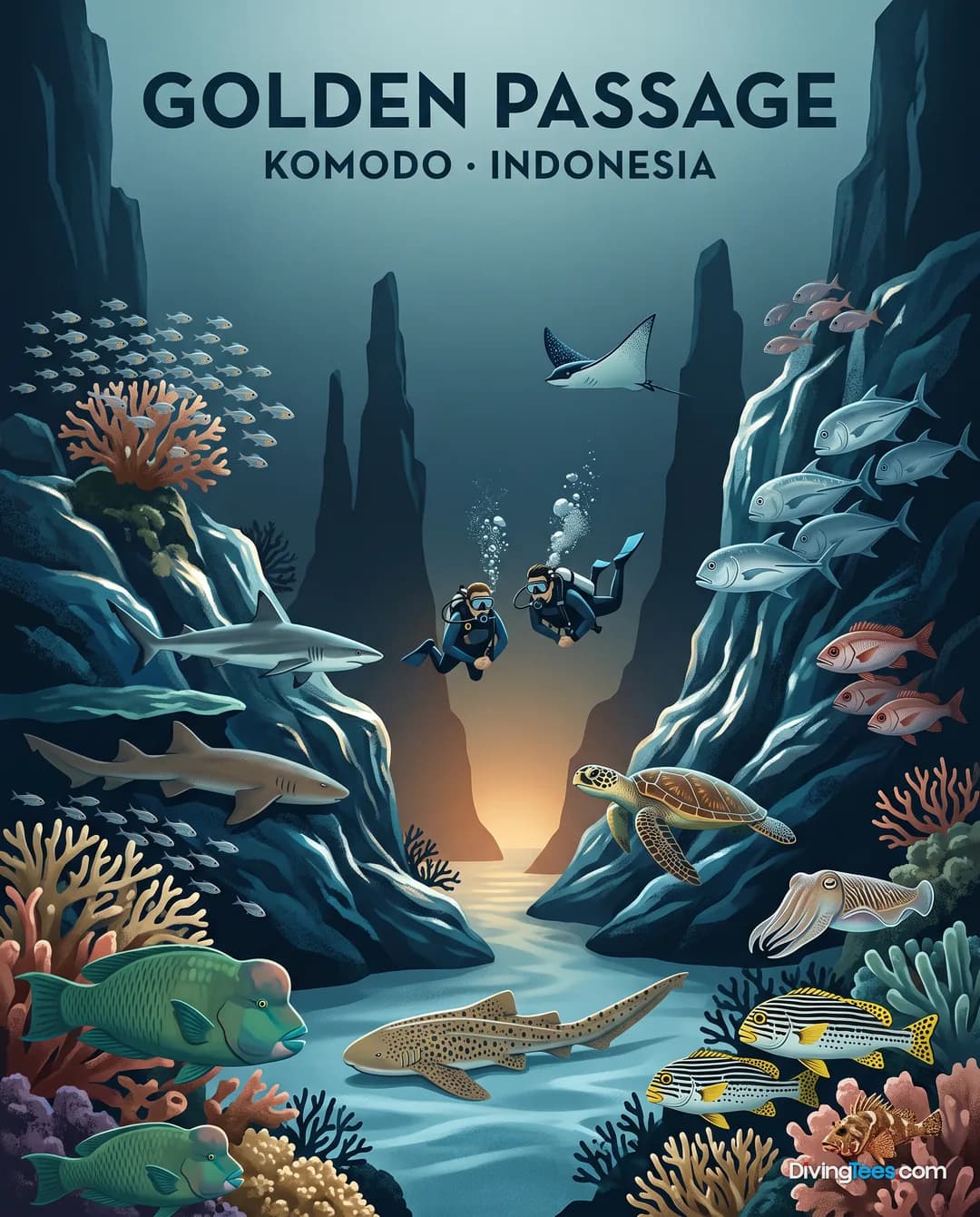
down to 30 m
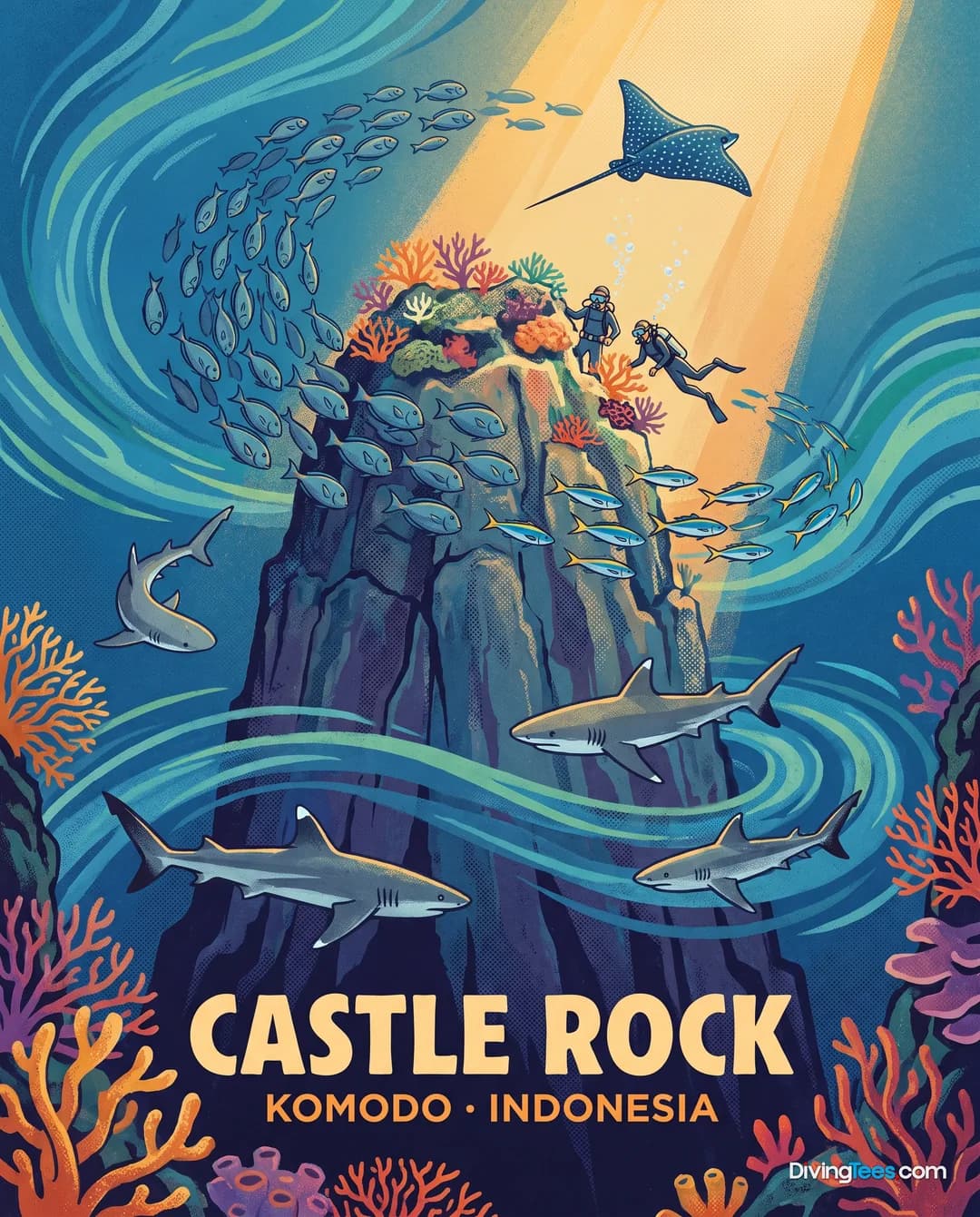
down to 30 m
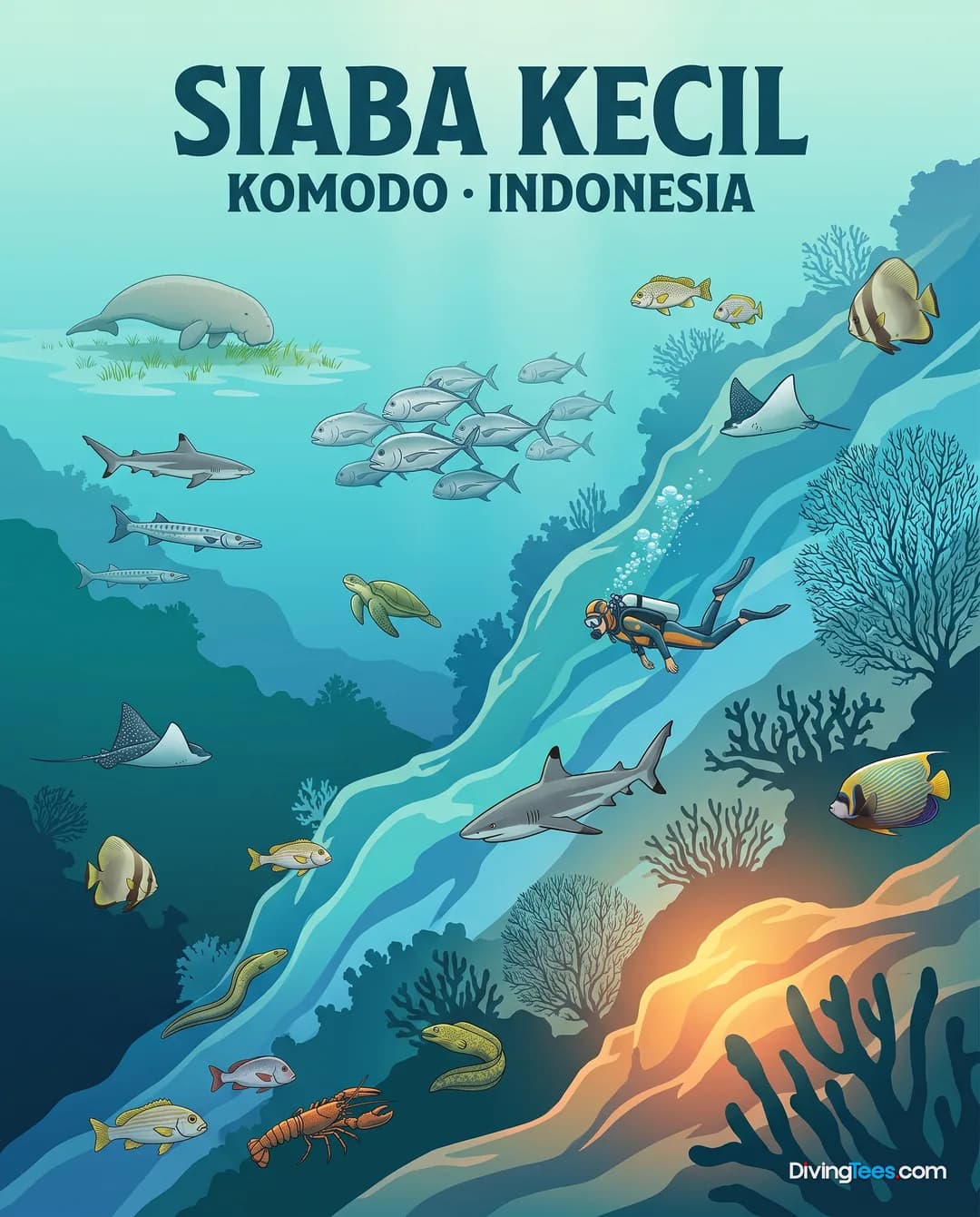
down to 30 m
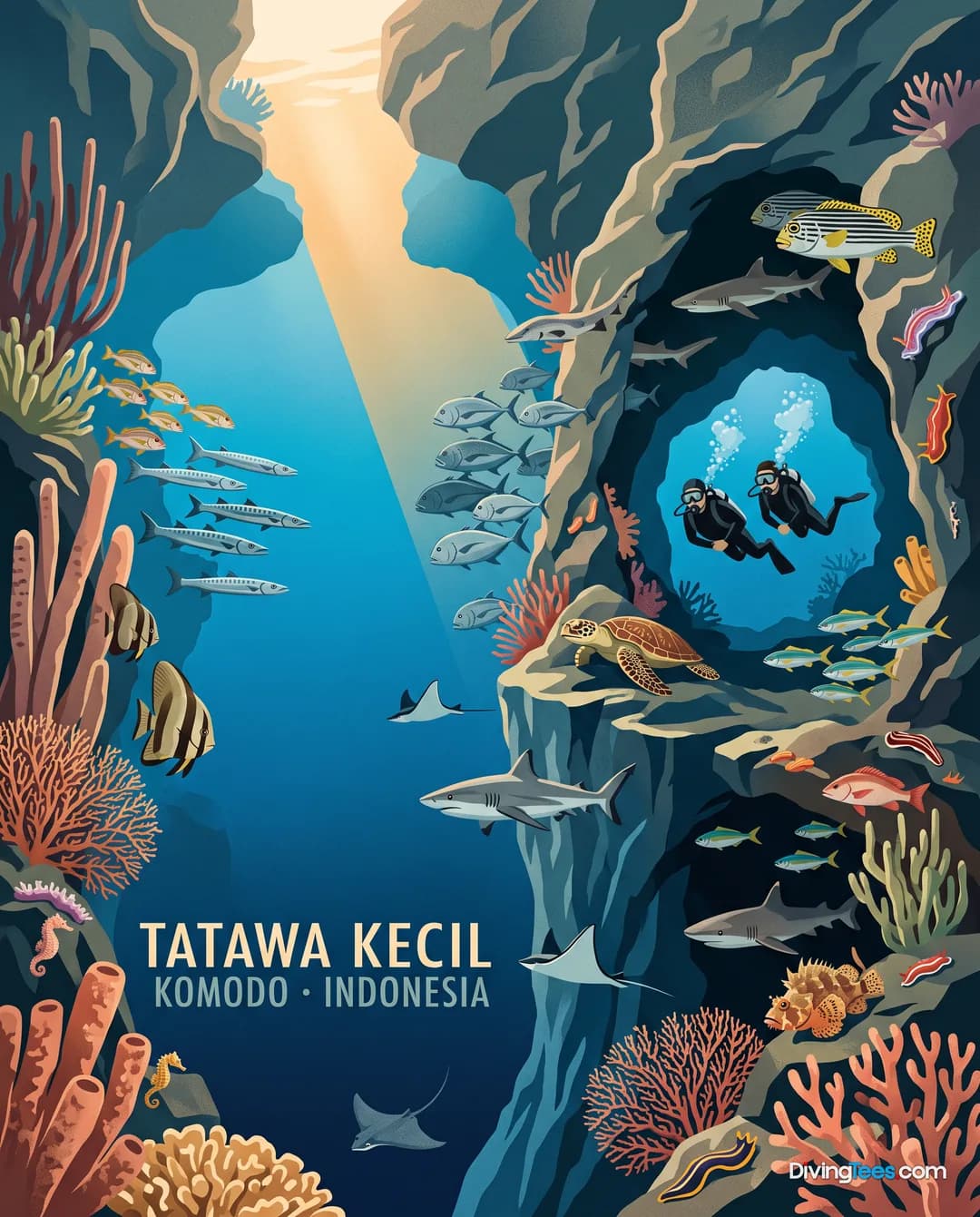
down to 30 m
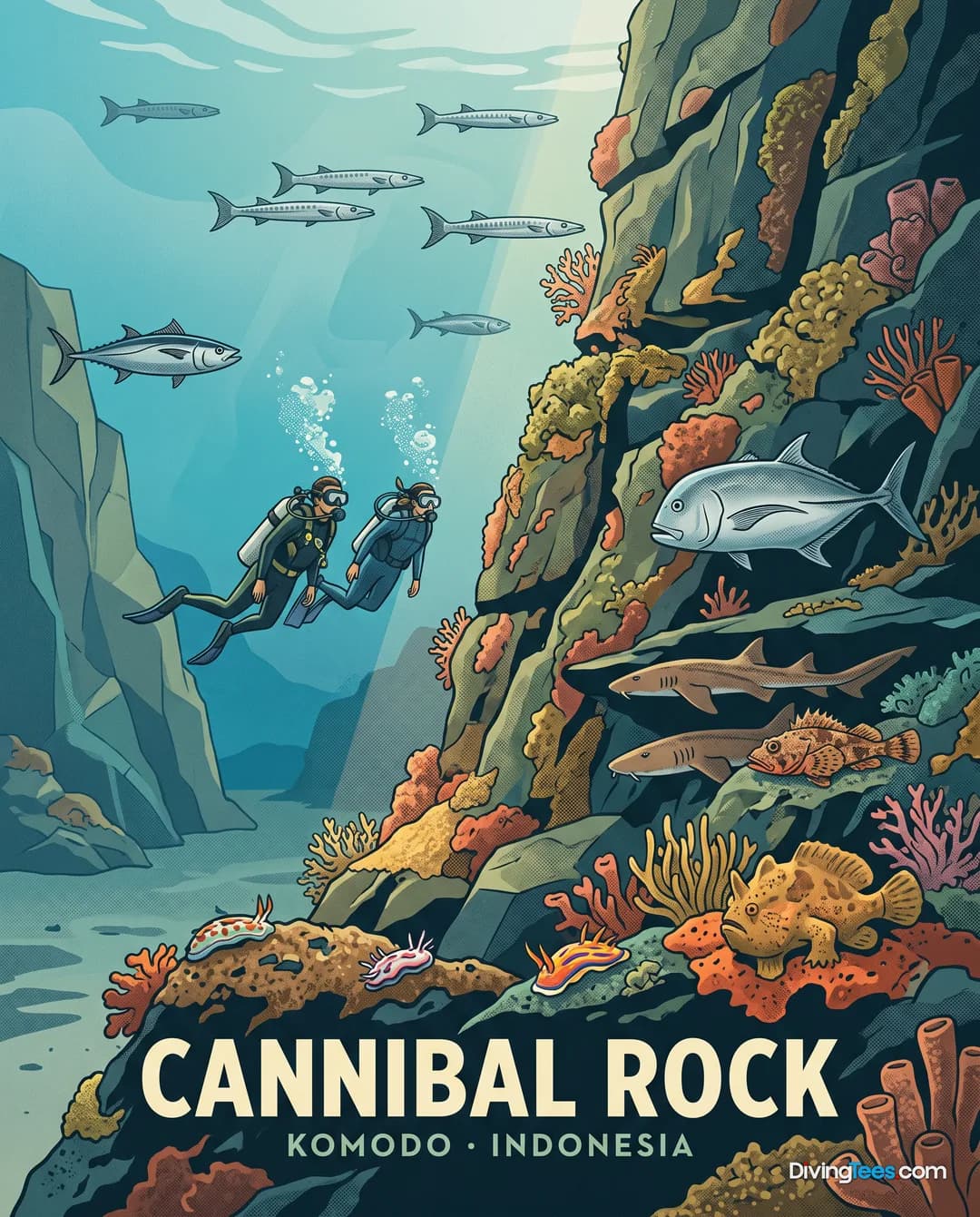
down to 30 m
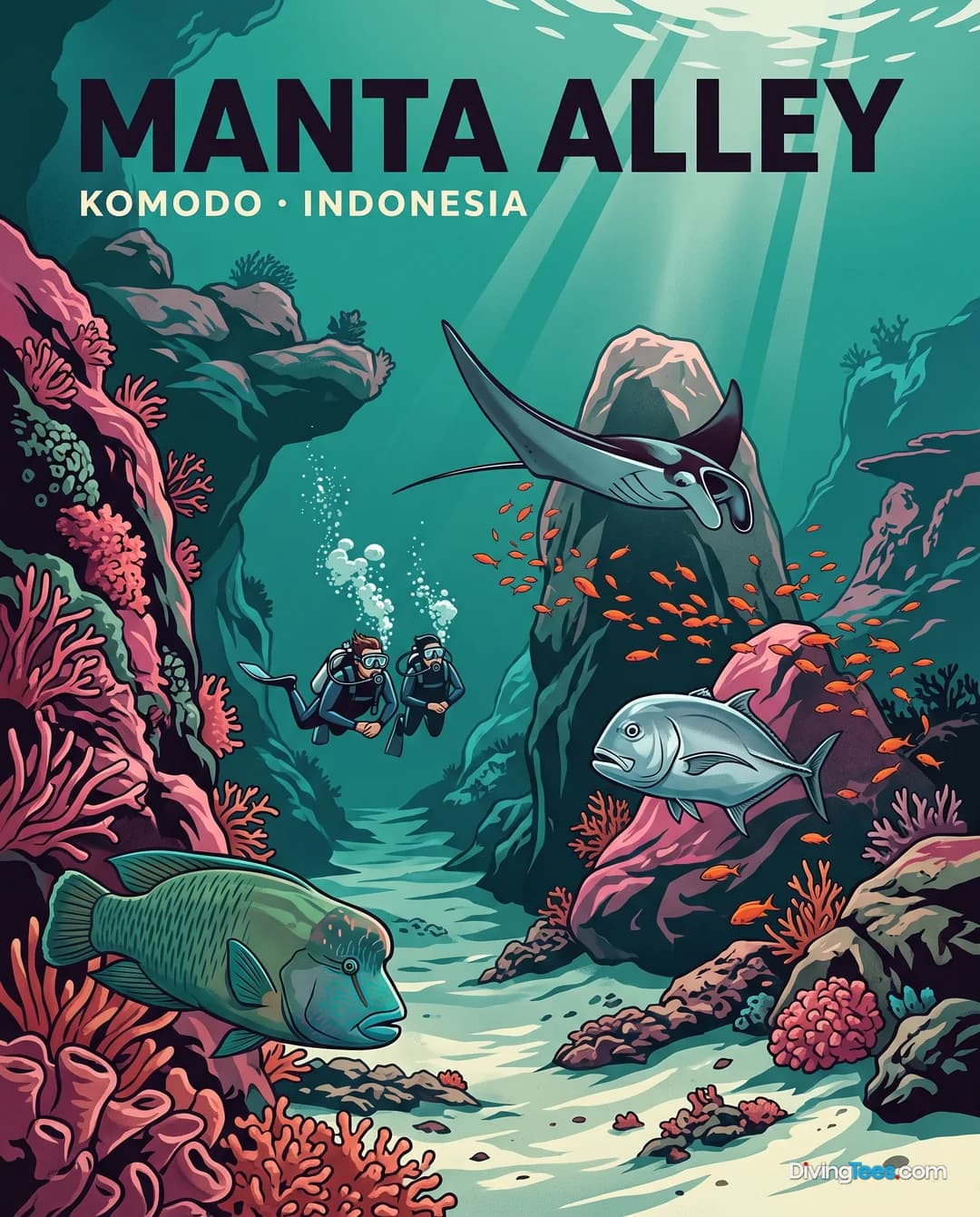
down to 20 m
And some of the dive sites the centre runs.
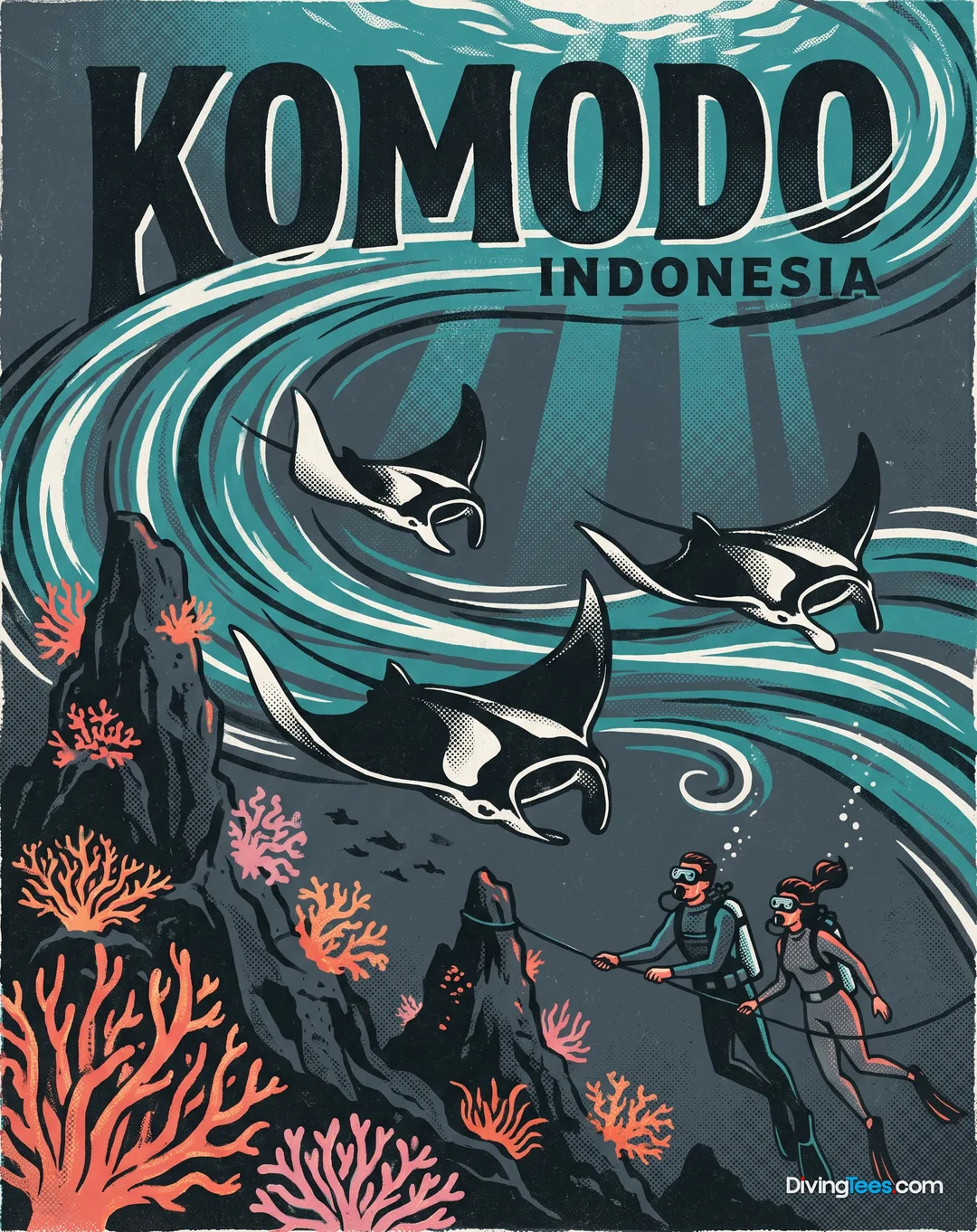
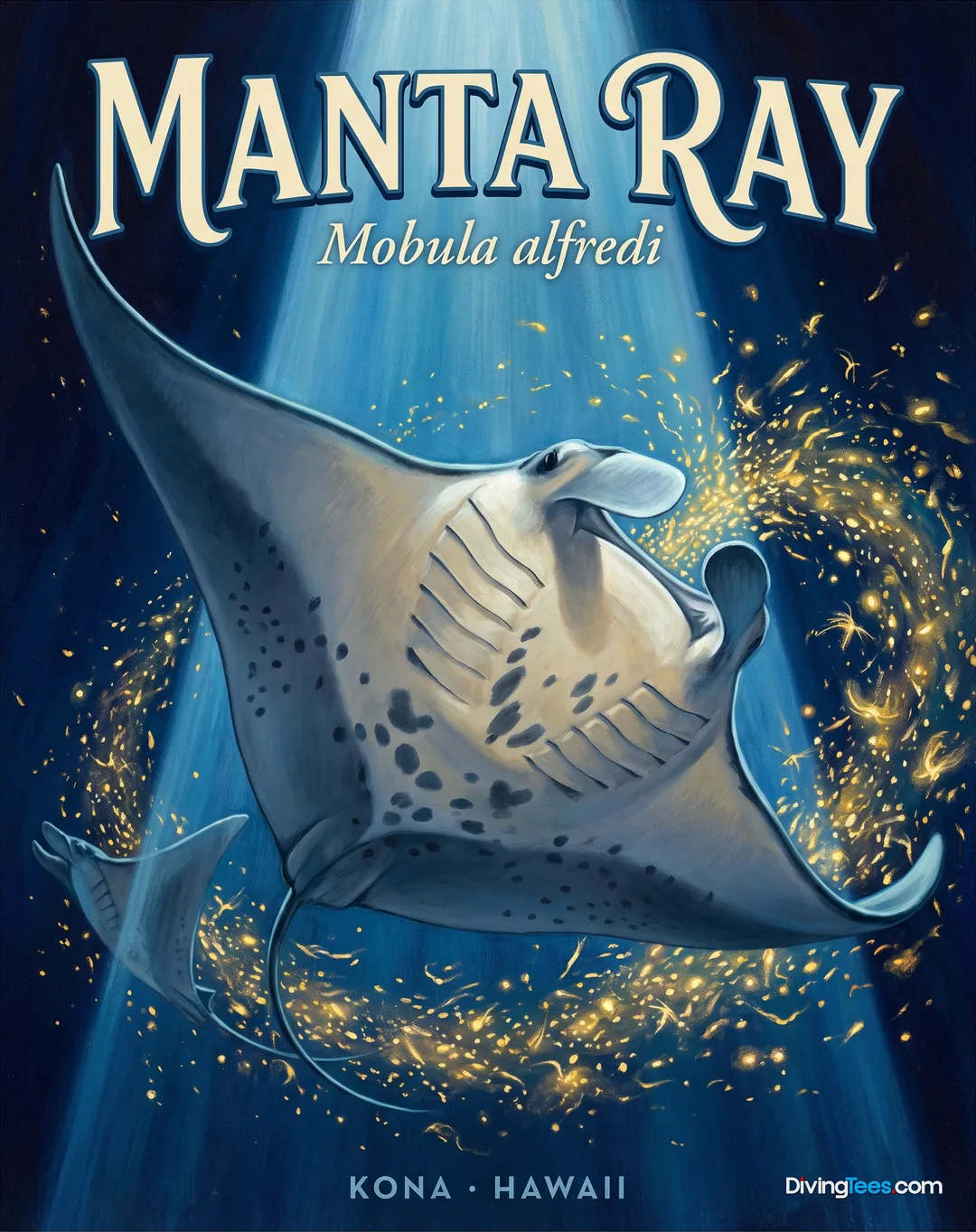
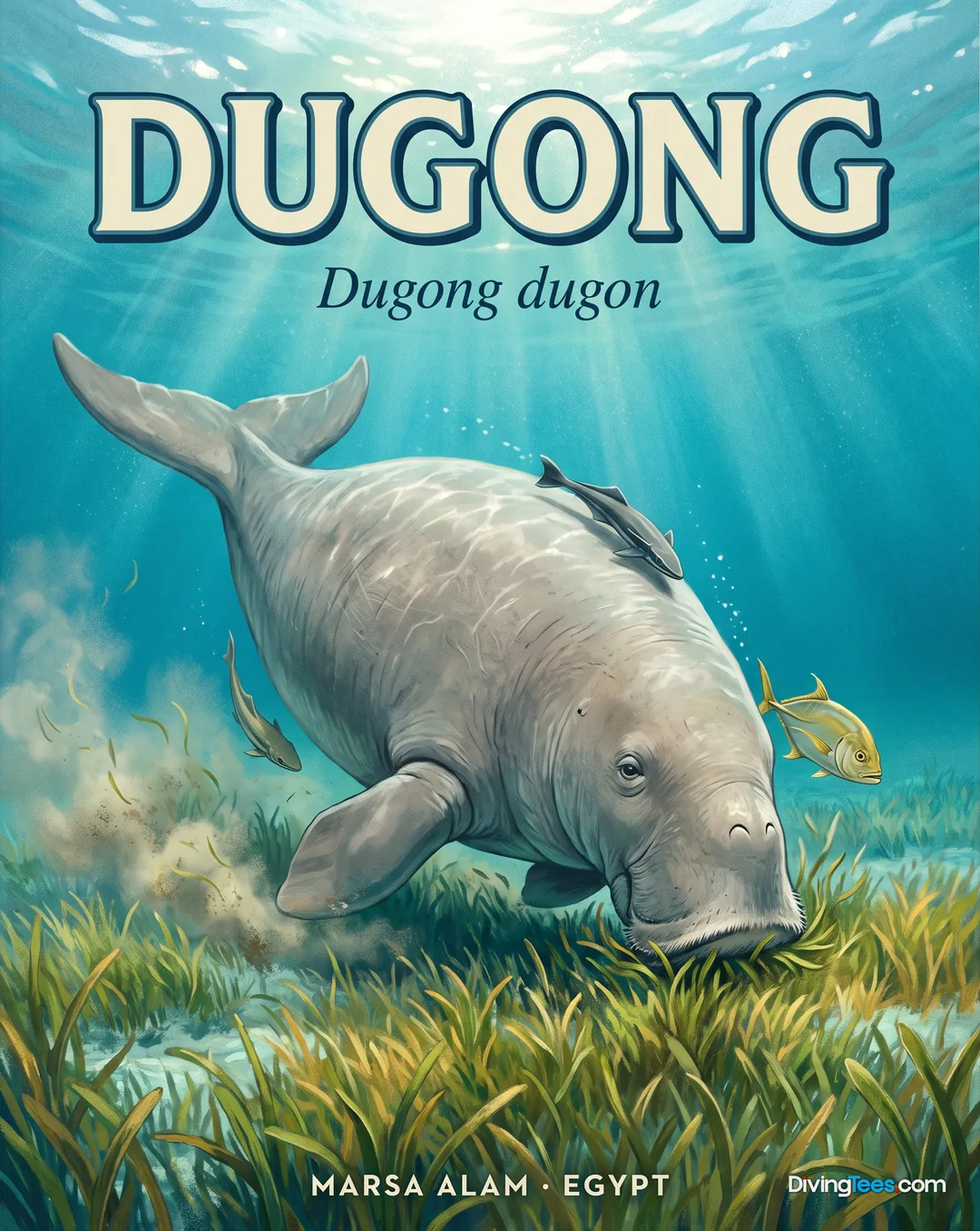
The marine life in Komodo is defined by its incredible variety. You will frequently encounter large pelagics such as Manta ray (Mobula alfredi), reef sharks, and various species of tuna. Schools of trevallies, barracudas, and jack move through the water columns, while Napoleon wrasse (Cheilinus undulatus) and various groupers patrol the reef structures.
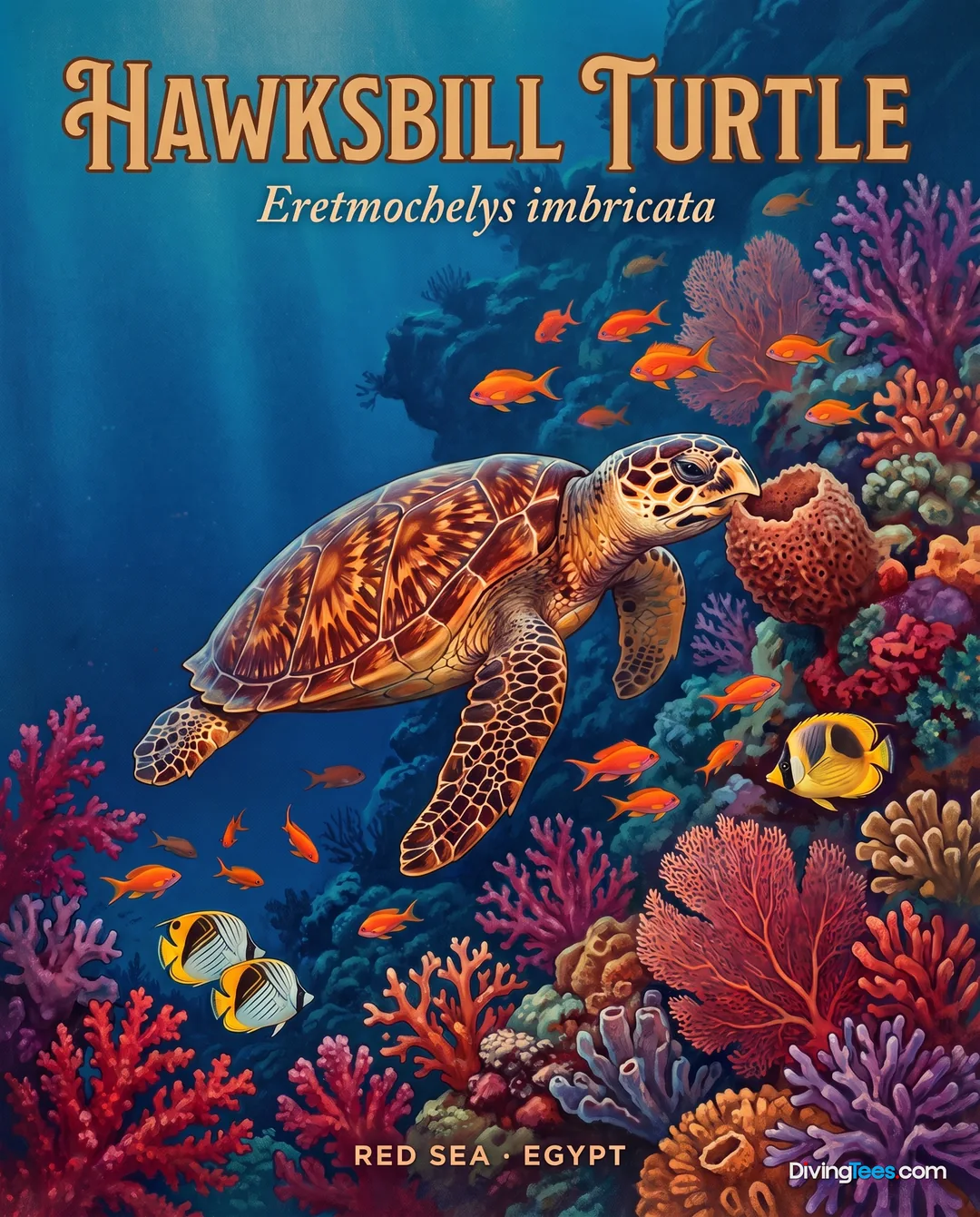
The reefs themselves are a riot of colour, built upon hard corals and soft corals, including large barrel sponges and gorgonian fans. You can observe hawksbill turtles (Eretmochelys imbricata) and green sea turtles (Chelonia mydas) navigating the reef, alongside schools of colourful reef fish like anthias, fusiliers, and snapper.
For macro enthusiasts, the area offers exceptional biodiversity. Look closely for pygmy seahorse (Hippocampus bargibanti), flamboyant cuttlefish, ghost pipefish (Solenostomidae), and various nudibranchs. The sandy patches and coral rubble also host octopus (Octopus vulgaris), scorpionfish (Scorpaenidae), frogfish (Antennarius), and leaf scorpionfish.
Divers should be prepared for changing and often strong currents, particularly when visiting sites in the northern part of the park. All dives are planned around the tides and sea conditions to ensure safety.
The best time to visit depends on your location within the park; the North and Central Komodo regions are best accessed from May to October, while the South and Central areas are more suitable from November to April.
Hello, I'm Marina, DivingDeal.com's AI assistant. I answer in detail about hotels, dive centres and liveaboards.

Thinking about the whole trip and the flights? Talk it over with Edith →
Marina is an AI. Some links are affiliate links: DivingDeal may earn a commission, at no extra cost to you. Bookings are made with the partner.
Your last day stays dry: no diving in the 18-24 hours before a flight the perfect window to see the destination from another angle.
Ratings and reviews collected by Viator and Tripadvisor.