Liveaboards · Indonesia
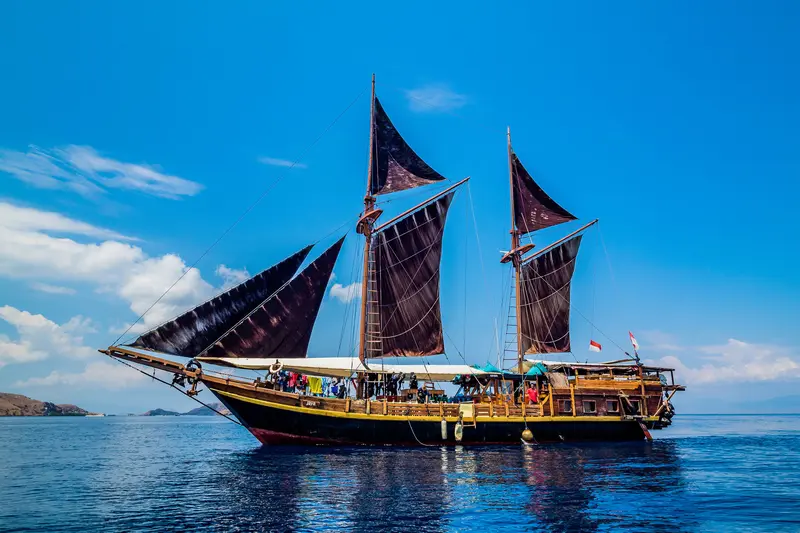
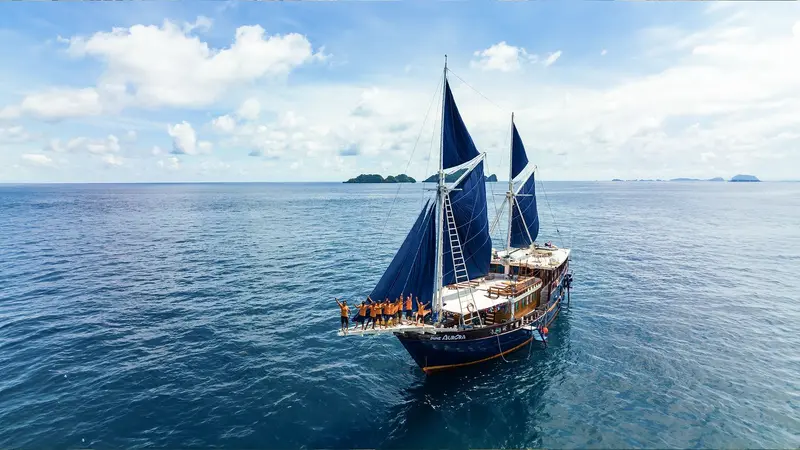
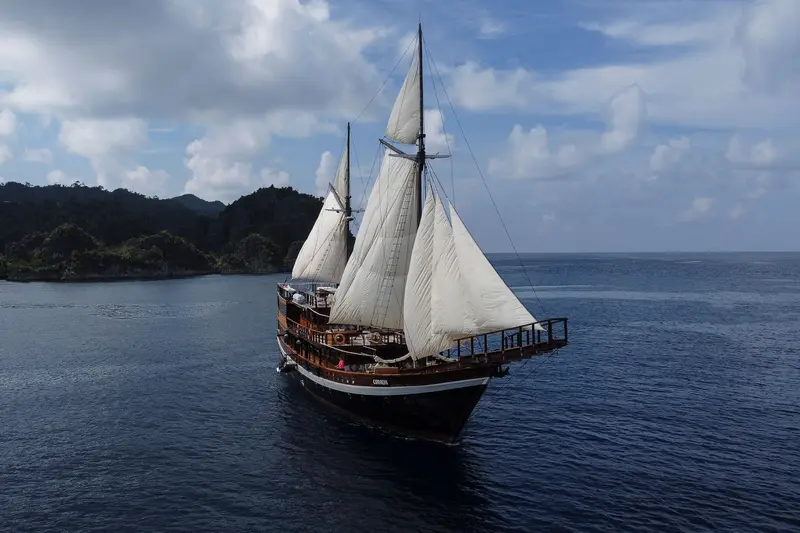
Dancing Wind — a traditional Phinisi built around Raja Ampat diving
What makes this boat unique
- A traditional Indonesian Phinisi built in 2018 and renovated in 2024, with ironwood construction and a dedicated dive operation.
- Raja Ampat itineraries run for 8 days and 7 nights or 11 days and 10 nights, with departures and returns in Sorong.
- The boat carries up to 20 passengers in eight air-conditioned cabins with private bathrooms and hot showers.
- Nitrox, DIN adapters, two diver tenders, a shaded dive area and a dedicated camera room support the diving day.
- The crew speaks English, with dive groups organised at a ratio of four divers to one guide.
For subtitles in English: start the video firstthen click the gearat the top right of the video, select “Subtitles/CC”, then “Auto-translate” and choose “English”.
The invitation
Dancing Wind is chosen for the diving rather than for a hotel-like stay at sea. The boat combines the look and working character of a traditional Indonesian Phinisi with a programme built around Raja Ampat’s strongest sites: current-swept reefs, manta cleaning stations, dense fish schools and coral gardens that continue into the shallows. The crew’s role is especially clear after a dive. Equipment is handled, a snack is ready, and the return to the boat does not become another job for the diver. That practical care matters when the day contains three or four dives and often a night dive. The boat also suits divers who want options beyond Raja Ampat, with routes through Misool, Alor, Banda Neira, Sulawesi, Sangihe, Wakatobi, Halmahera and Kaimana.
Boarding
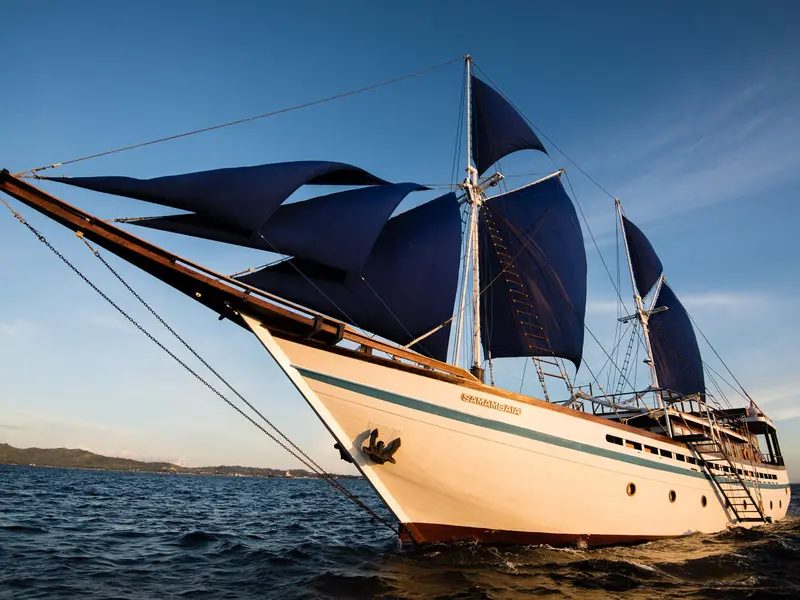
From the dock, Dancing Wind has the unmistakable profile of a working Indonesian Phinisi: handcrafted timber, broad decks and the visual weight of a vessel made for island waters rather than a marina. Ironwood gives the boat a solid, traditional character, while the 2024 renovation keeps the guest areas and diving spaces current. Once aboard, the layout separates the indoor salon, dining area, terraces and dive operation, so wet equipment does not take over the living spaces. The boat is large enough to carry a full group without feeling like a floating resort, and the local and international crew remain visible in the working areas. The impression is purposeful: this is a wooden expedition boat arranged around getting divers to reefs, then bringing them back cleanly and fed.
The atmosphere on board
Dancing Wind’s atmosphere is shaped by a crew that stays close to the diving day. English is spoken on board, and the local and international team handles the practical transitions that make repeated dives easier: moving equipment, preparing the tender and having a snack ready when divers return. With four divers to one guide, the group remains small enough for a briefing to feel useful rather than rushed. The social side builds around the moments divers actually remember: laughter at the table, anticipation before descent and animated talk after an encounter with mantas, sharks or a dense fish school. Evenings can be quiet after a full schedule, especially when a night dive has taken the last of the energy. The boat works best for divers who value crew contact and site quality over formal luxury.
The sites you’ll dive
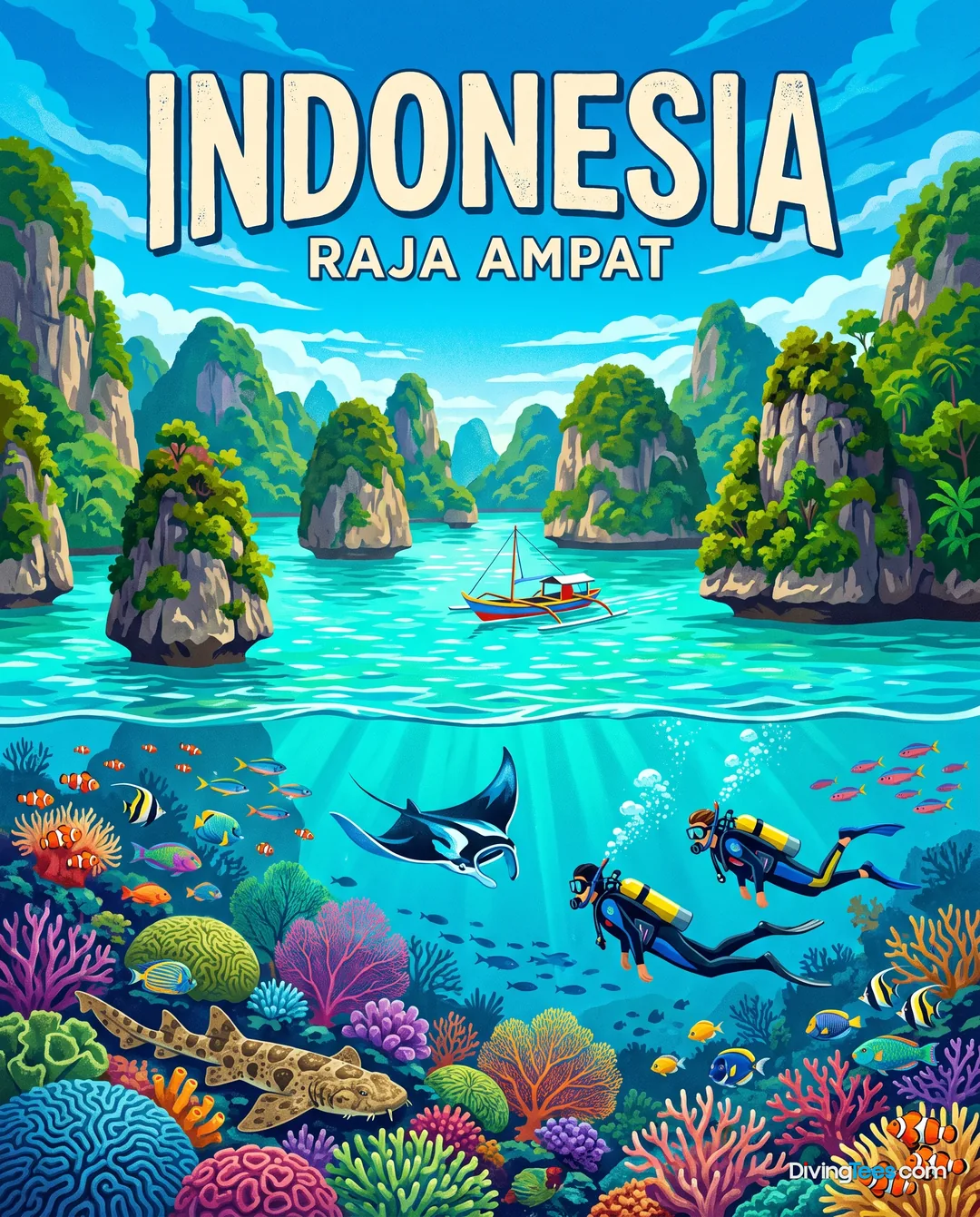
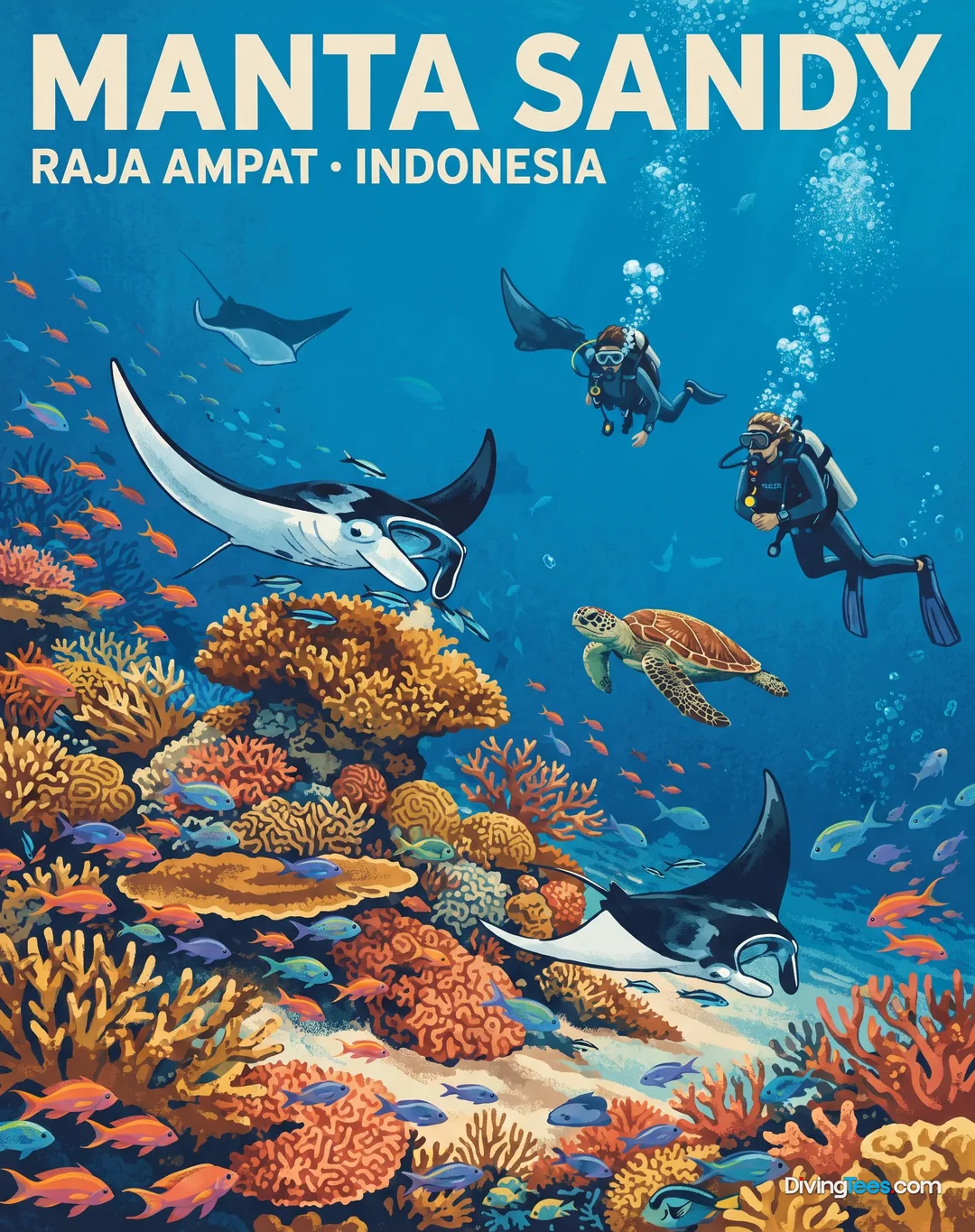
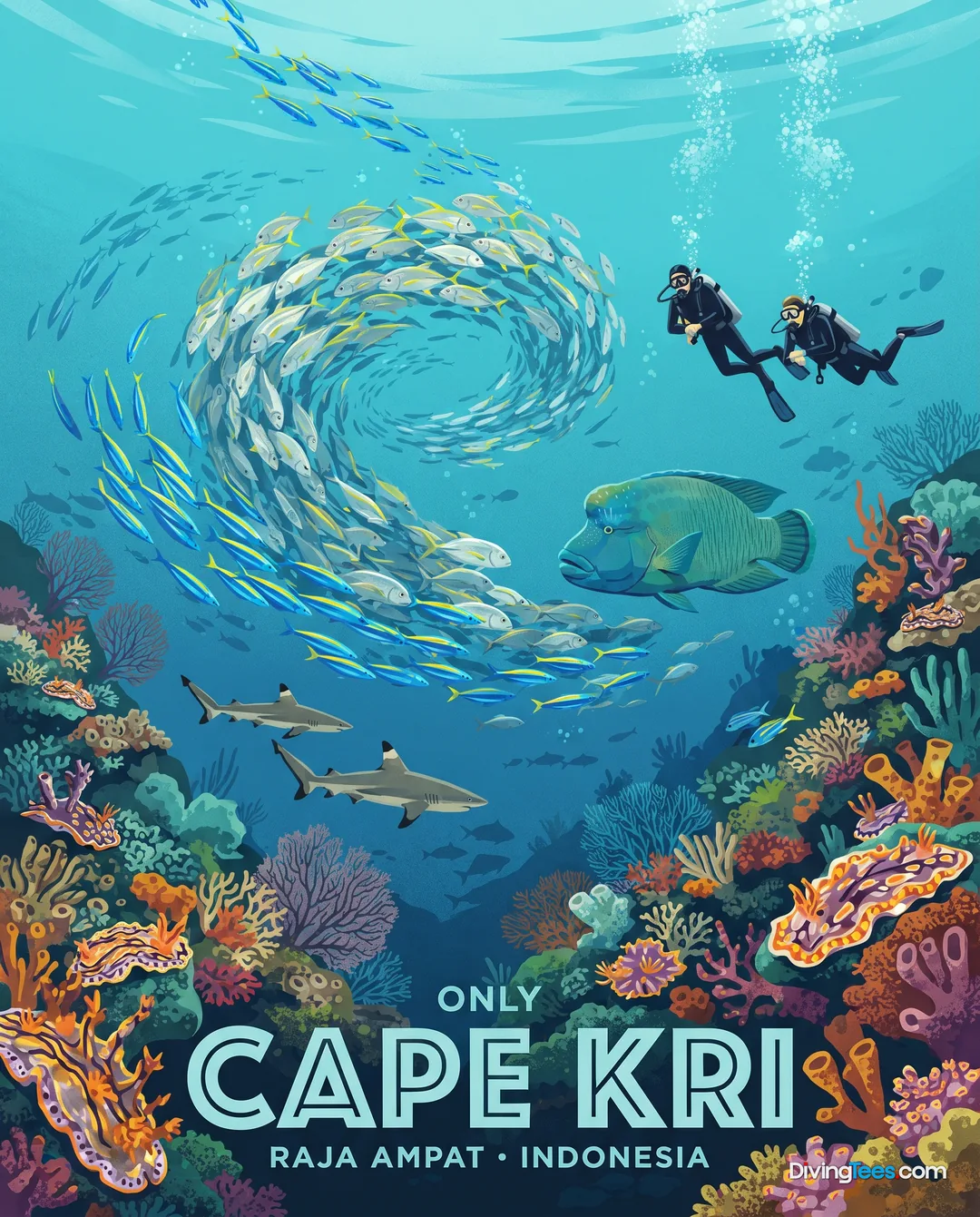
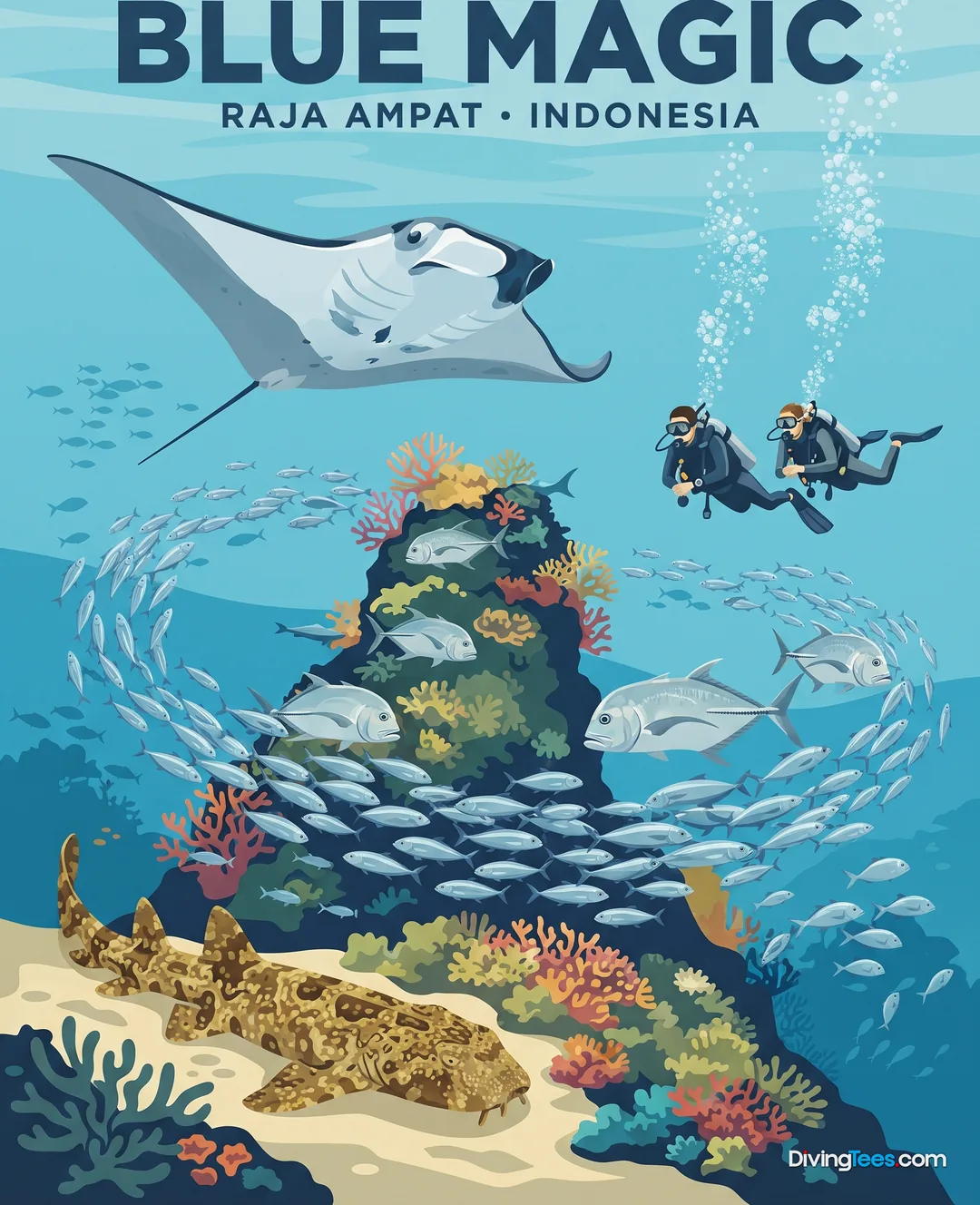
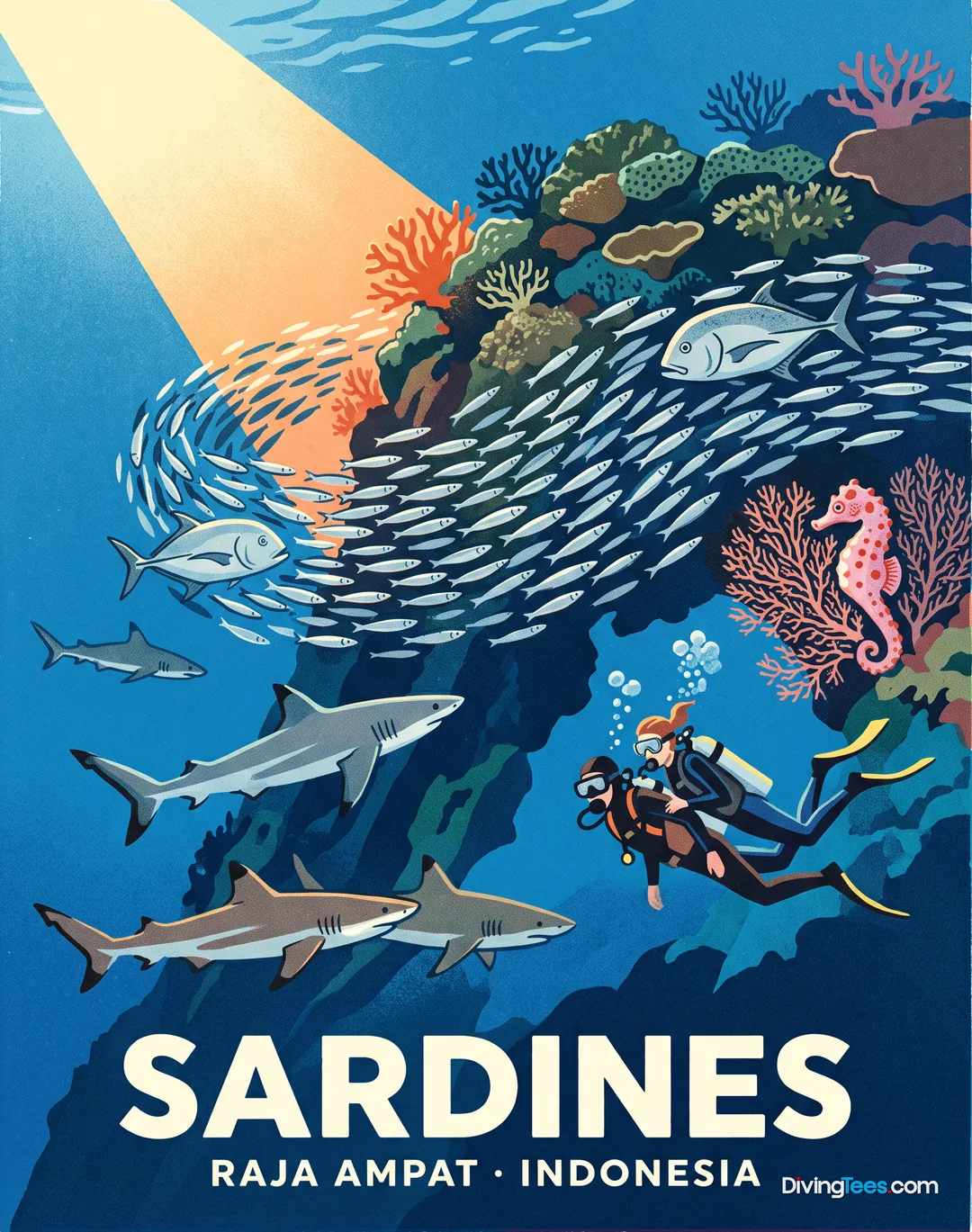
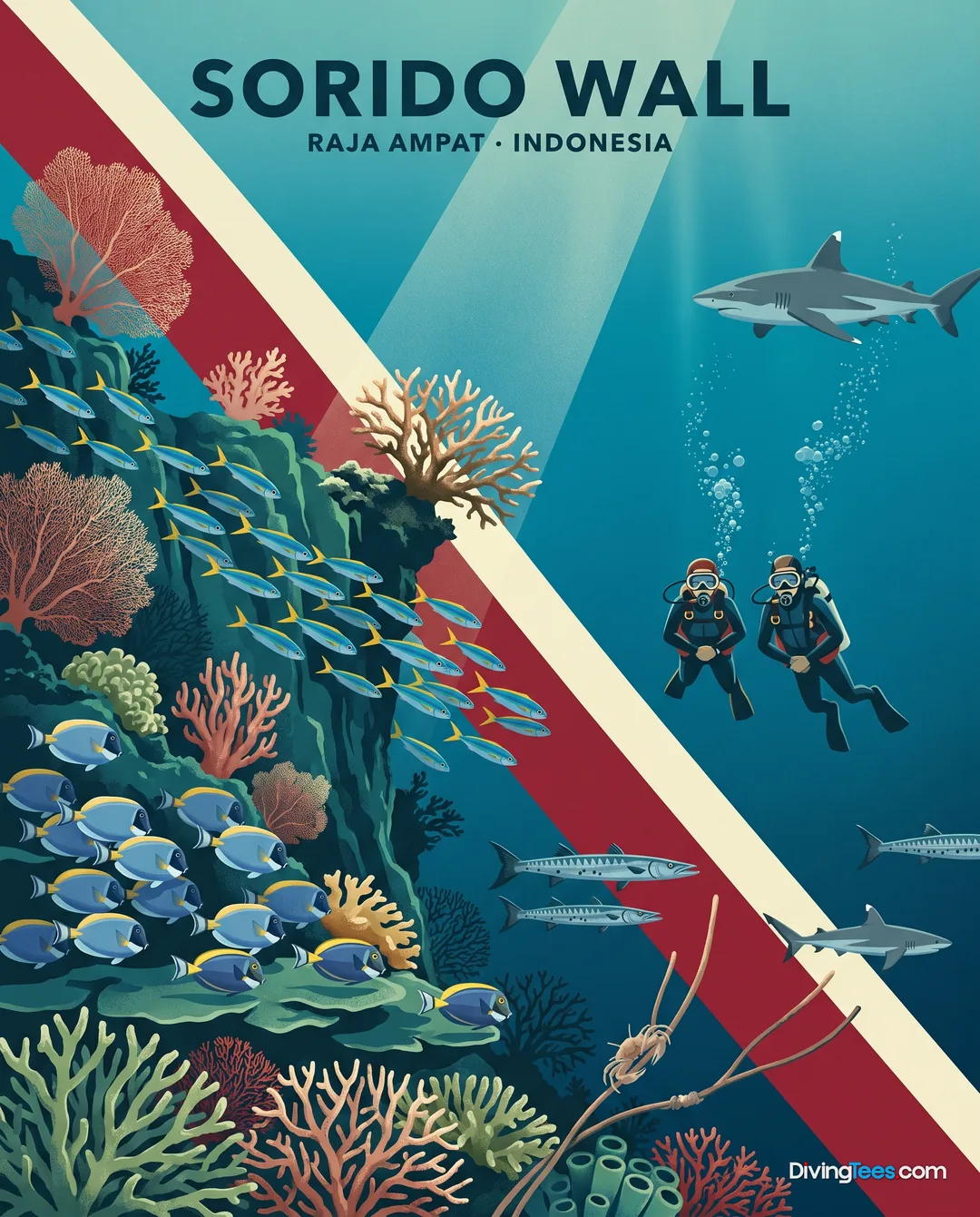
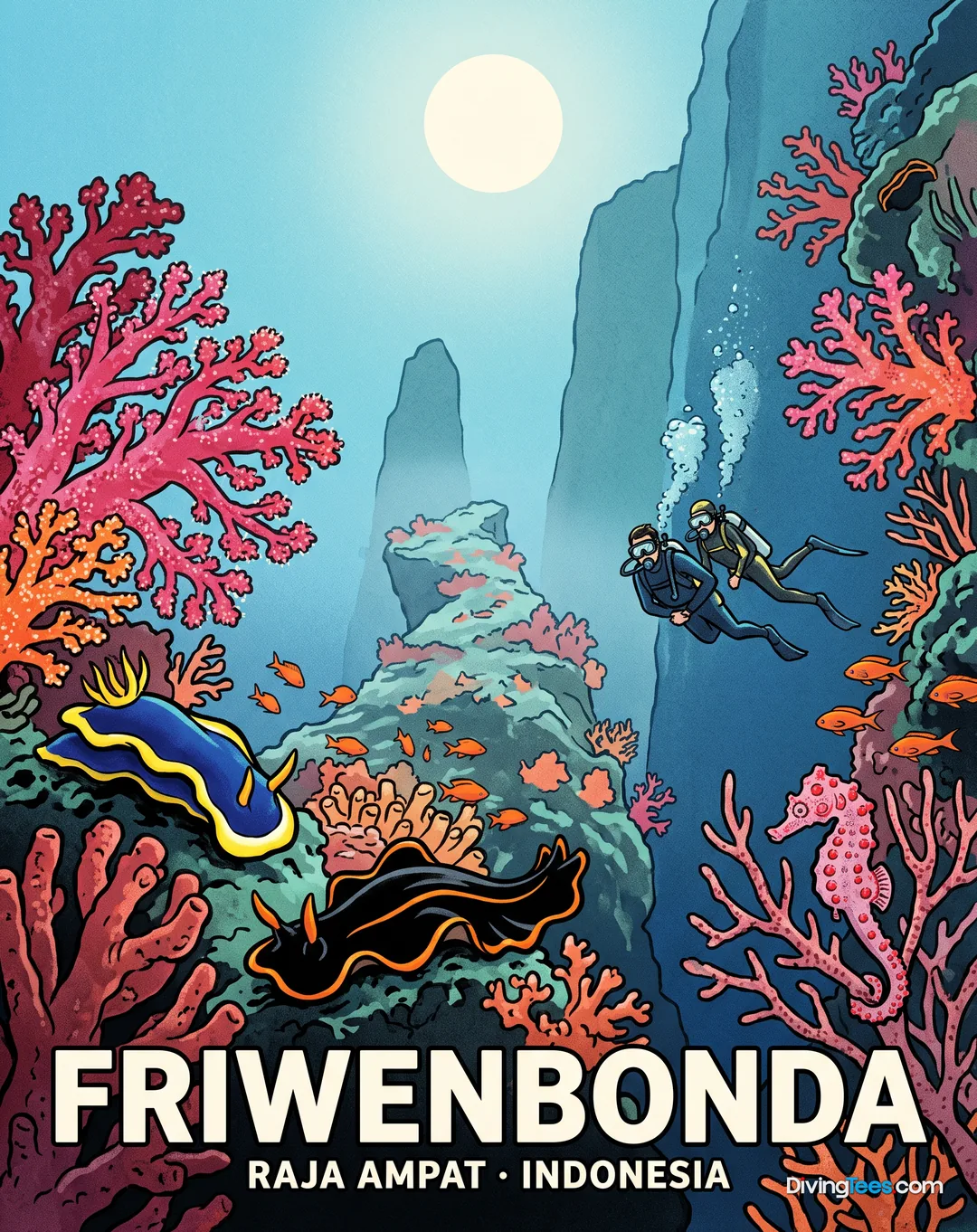
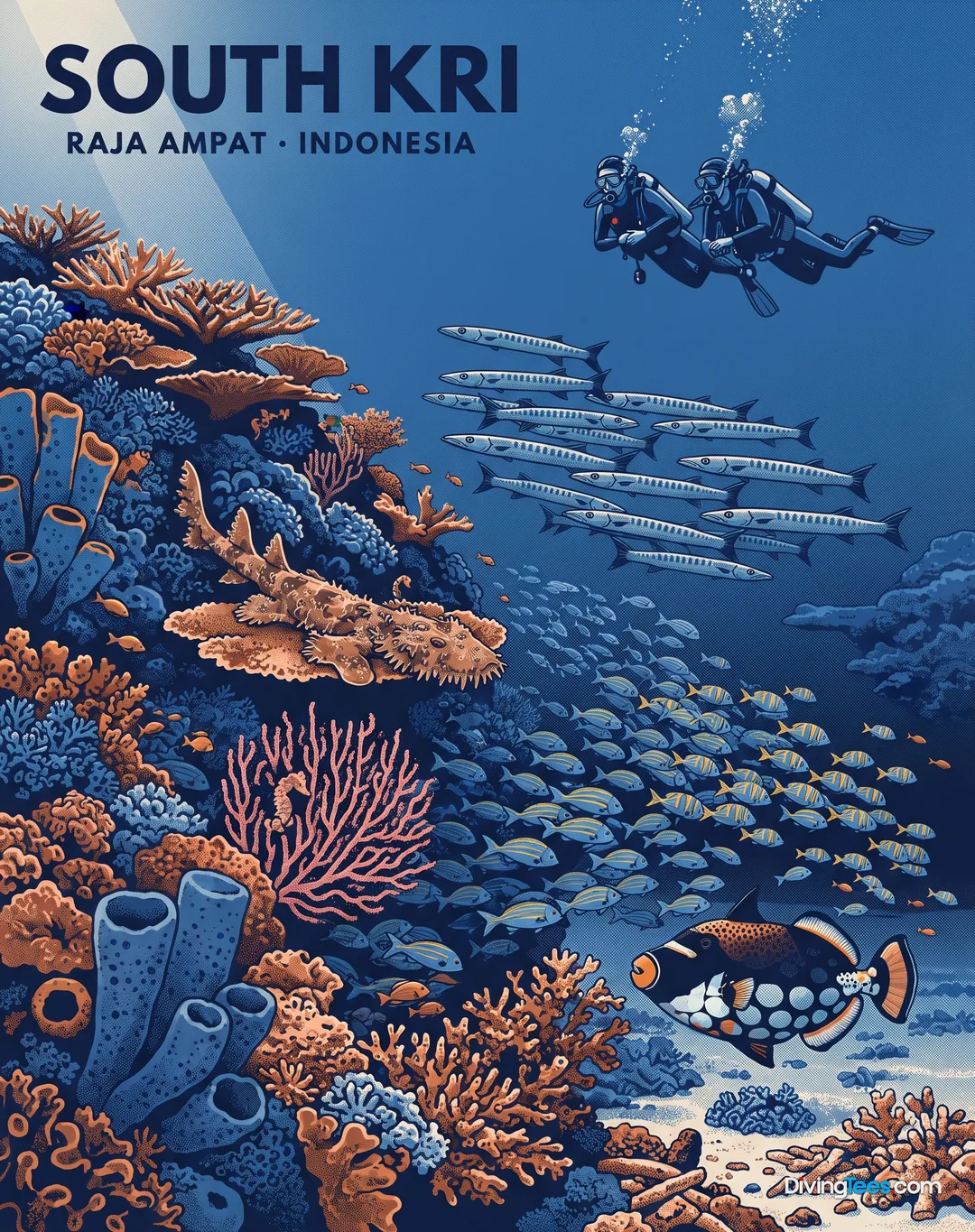
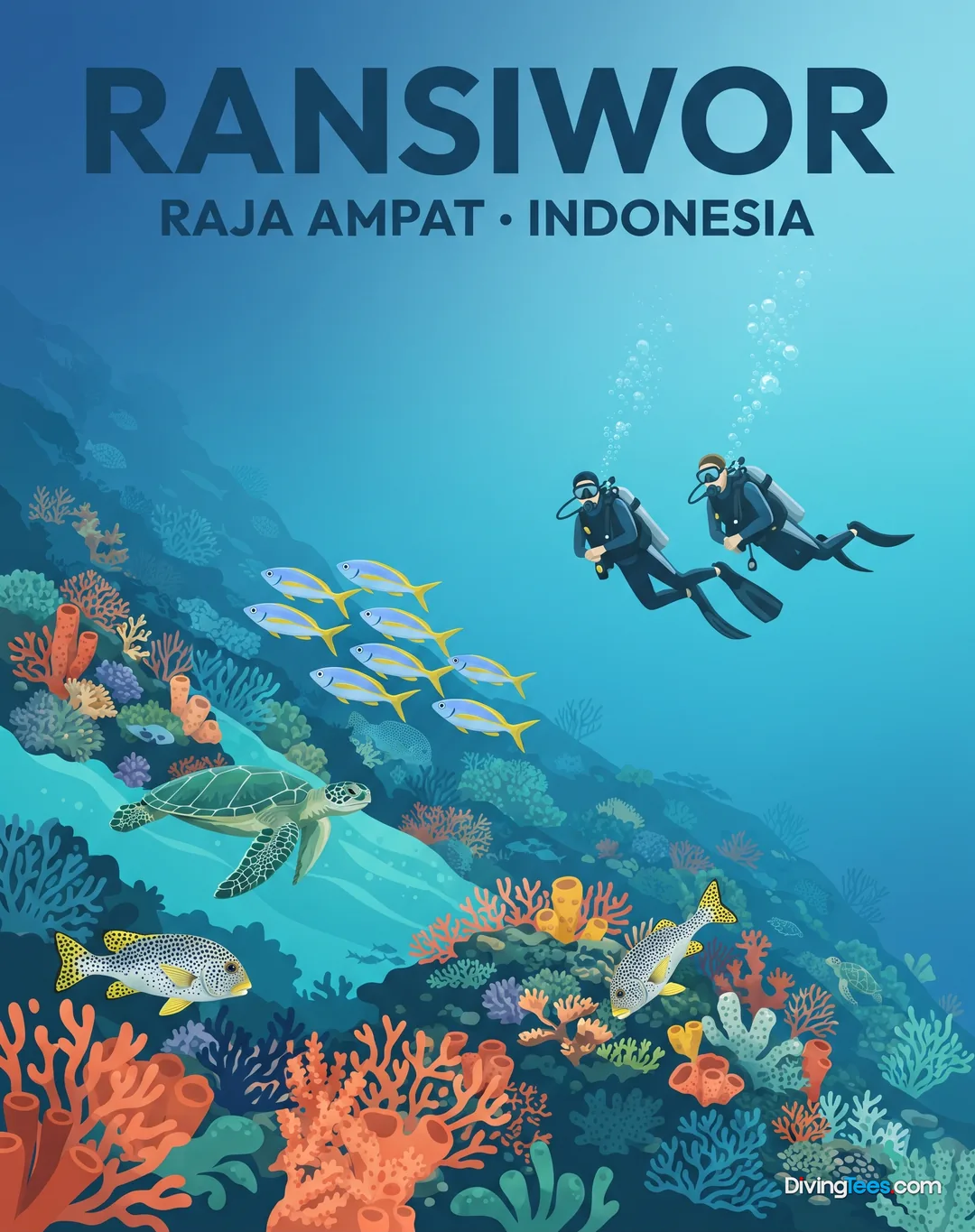
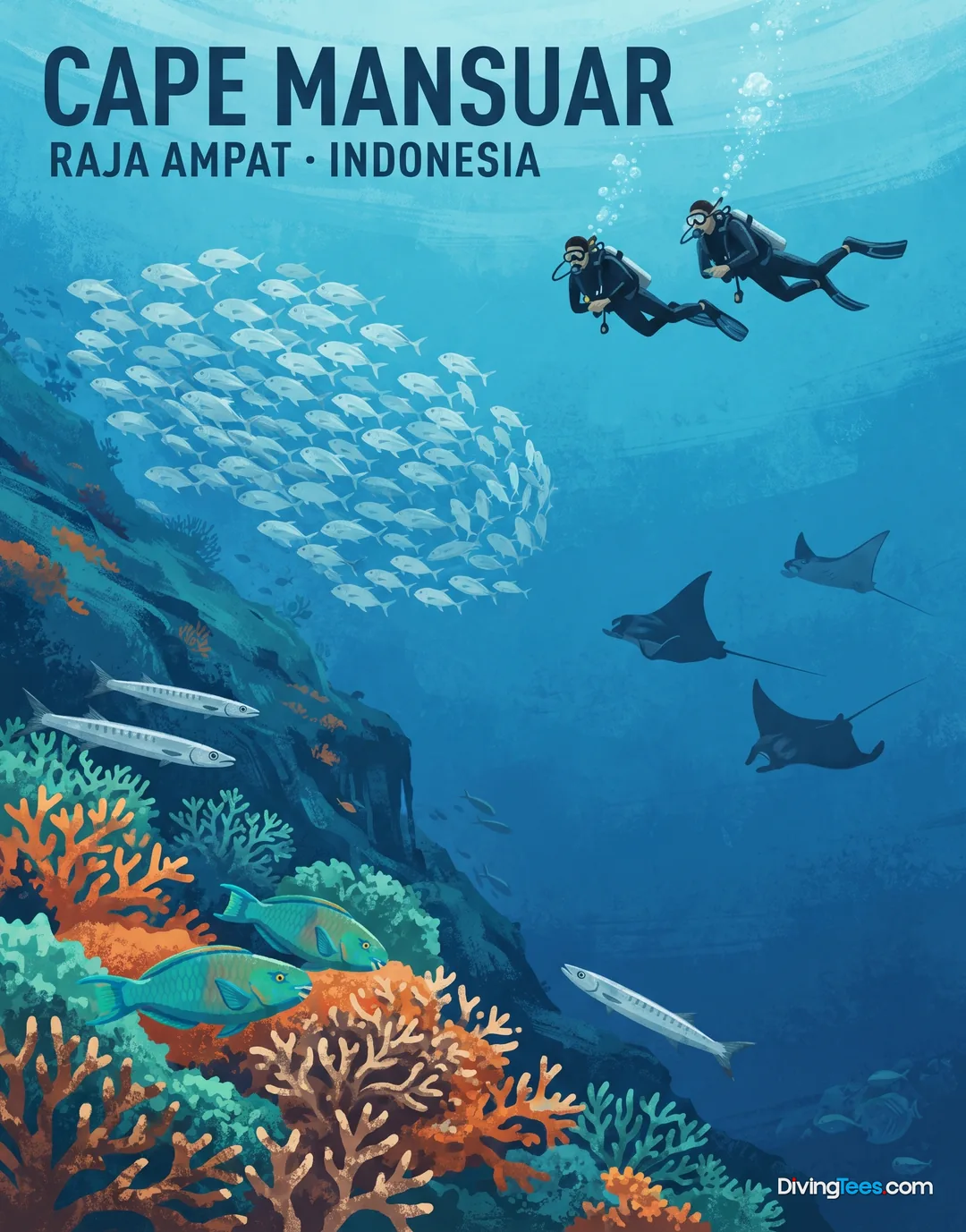
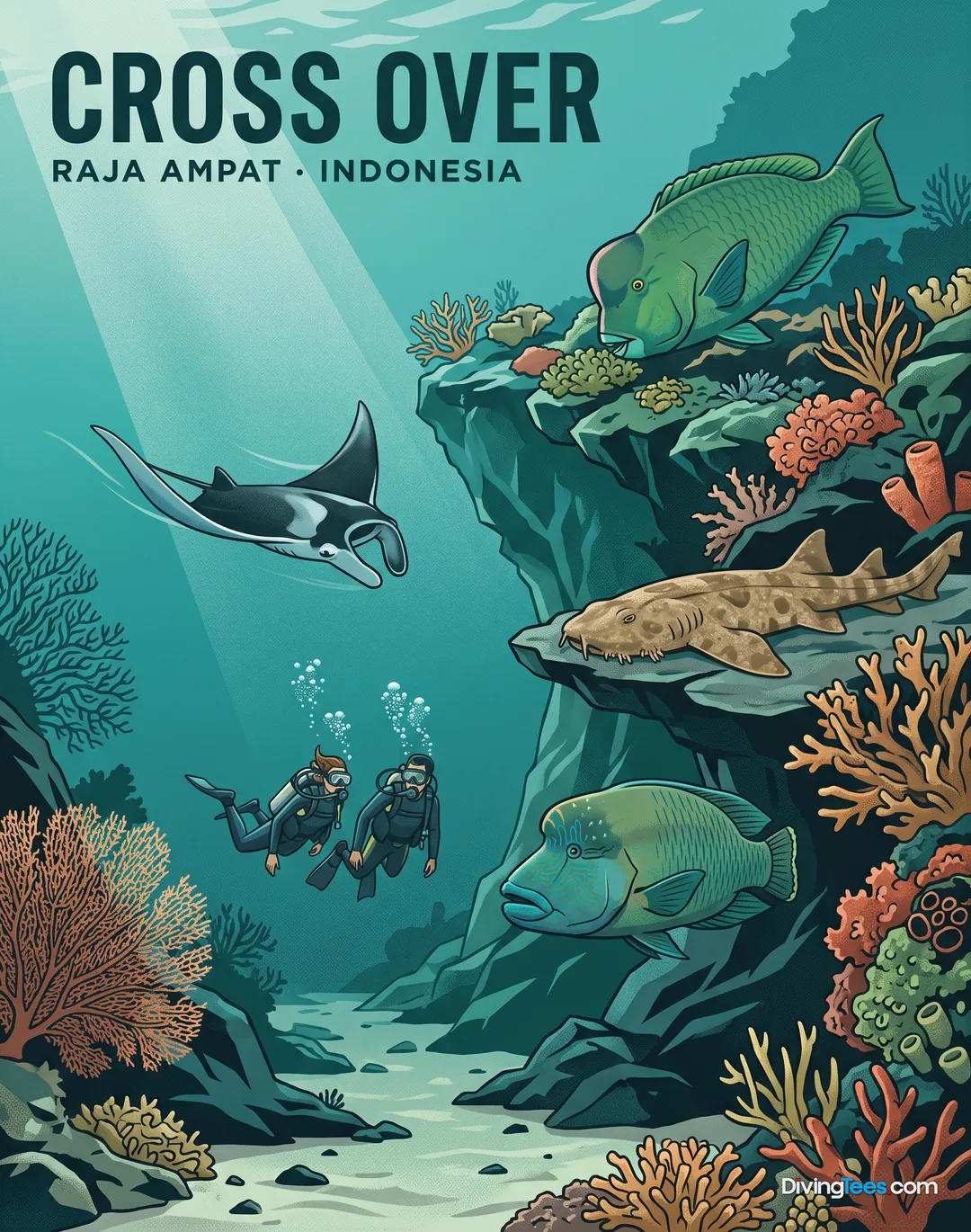
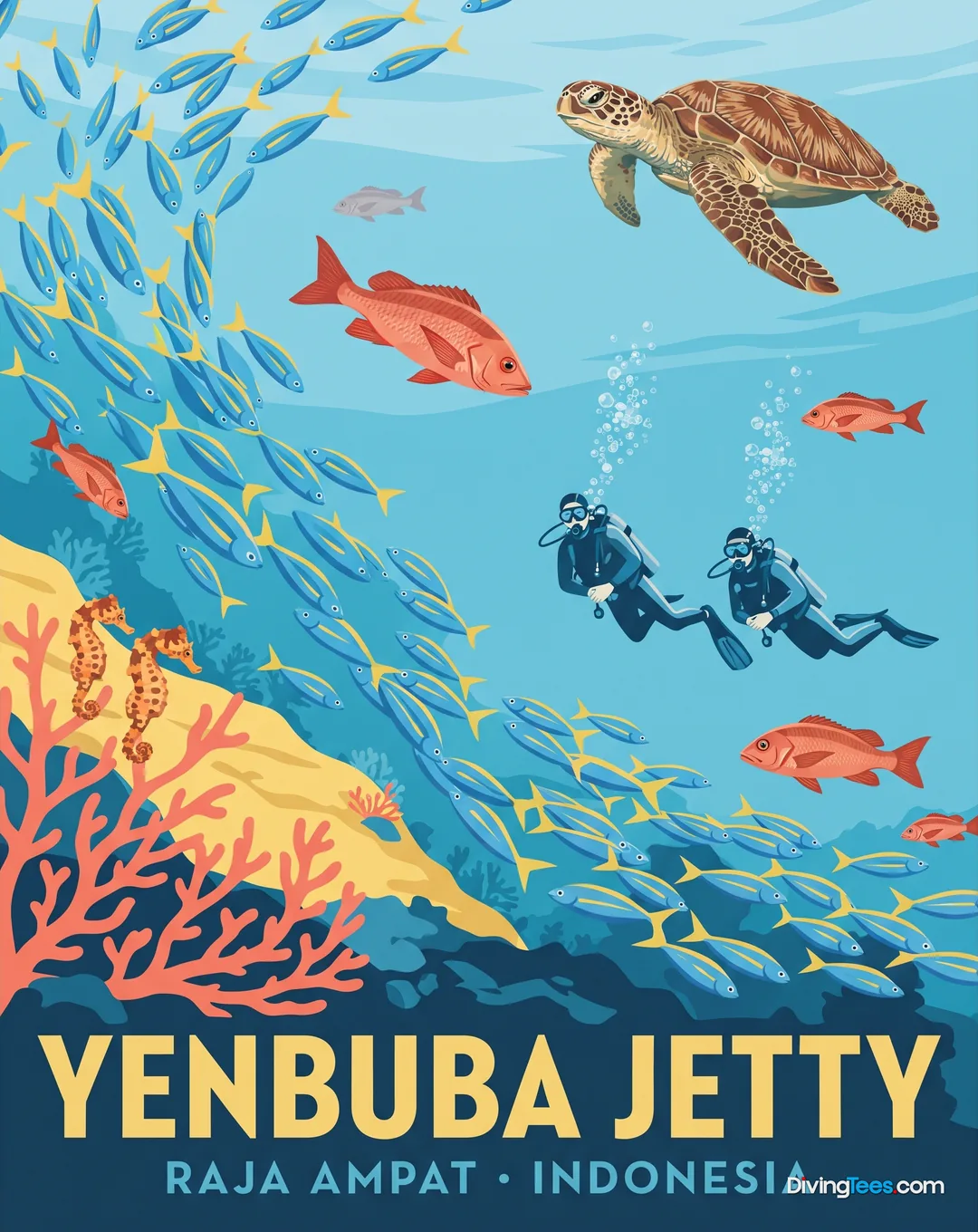
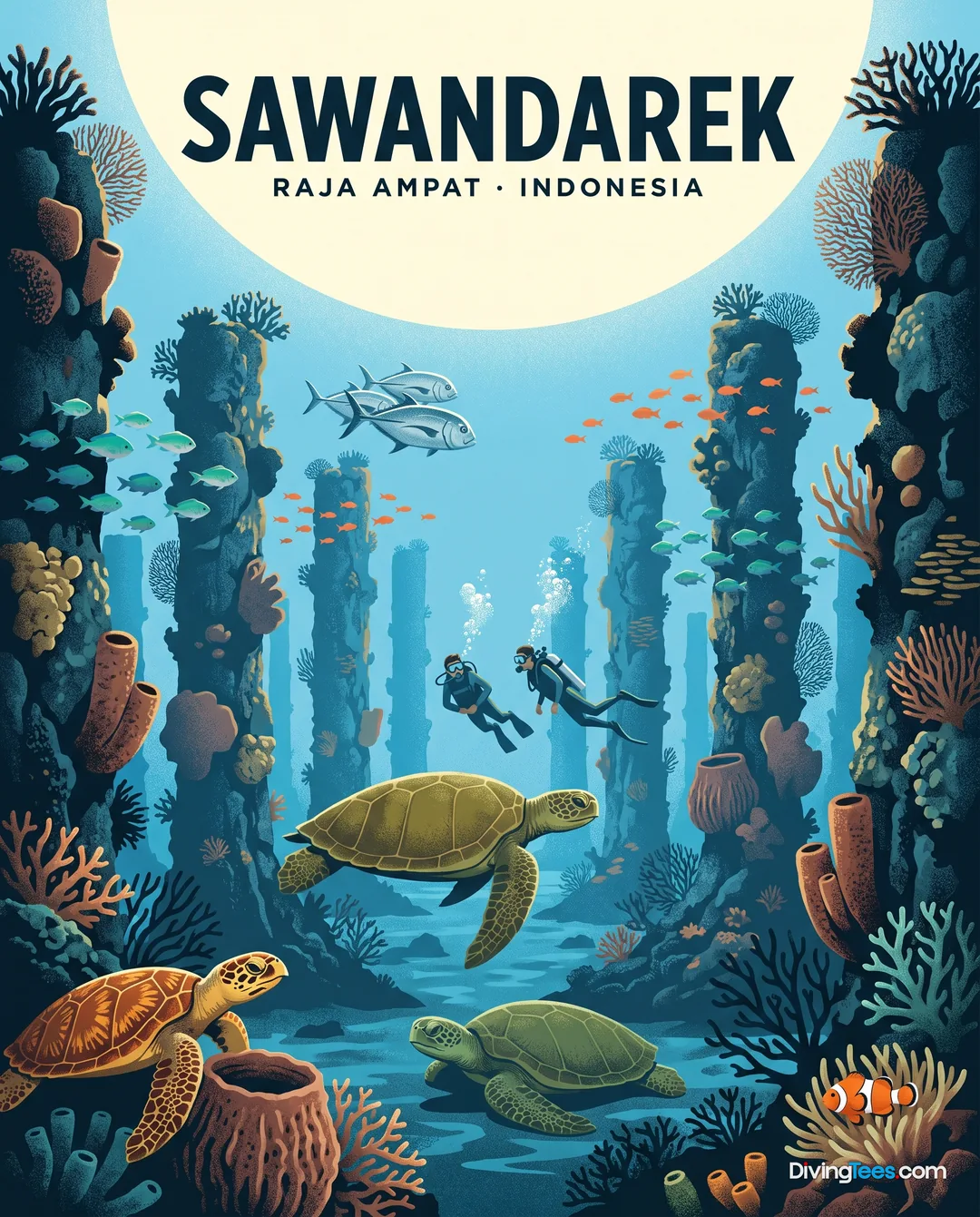
The Raja Ampat route moves between sites that reward different kinds of diving. At Manta Sandy, reef mantas gather around cleaning stations, making the site useful for both divers and snorkelers who can hold position and watch the behaviour unfold. Mike’s Point combines reef overhangs full of soft corals and sweetlips with a flat plateau where eagle rays may pass; its maximum depth is -40m. Cape Kri is the fish-density dive, with enormous schools of emperors and fusiliers, Napoleon wrasse and reef sharks. Melissa’s Garden slopes through soft coral and staghorn formations to a maximum of -35m. Blue Magic brings schooling fish and possible oceanic mantas, while Sardines is built around concentrated life and hunting pelagics. Sorido Wall carries barracudas and reef sharks along schools of fusiliers and surgeonfish. Friwenbonda is a colourful soft-coral wall with macro life near the surface. South Kri is a drift where schooling fish meet small creatures. Ransiwor reaches -30m and centres on cleaning stations and yellow-back fusiliers. Cape Mansuar, Cross Over, Yenbuba Jetty and Sawandarek add current, coral-covered pilings, blacktip reef sharks, pygmy seahorses, giant green turtles and shallow reef life. Trips cover Central Raja Ampat in 8 days and 7 nights, or Best of Raja Ampat and Misool in 11 days and 10 nights, all starting and ending in Sorong.
Itineraries, dates and prices
Prices per person. Each month shows its lowest price: click a month, or pick an itinerary.
Next departures · 60 departuresfrom £2,976$3,978€3,554
November 2026
December 2026
January 2027
February 2027
See dates and prices
If you click these links and make a purchase on the partner site, DivingDeal may earn a commission, at no extra cost to you.
Dates and prices taken from Divebooker and liveaboard.com, updated 22 October 2026
What you’ll meet underwater
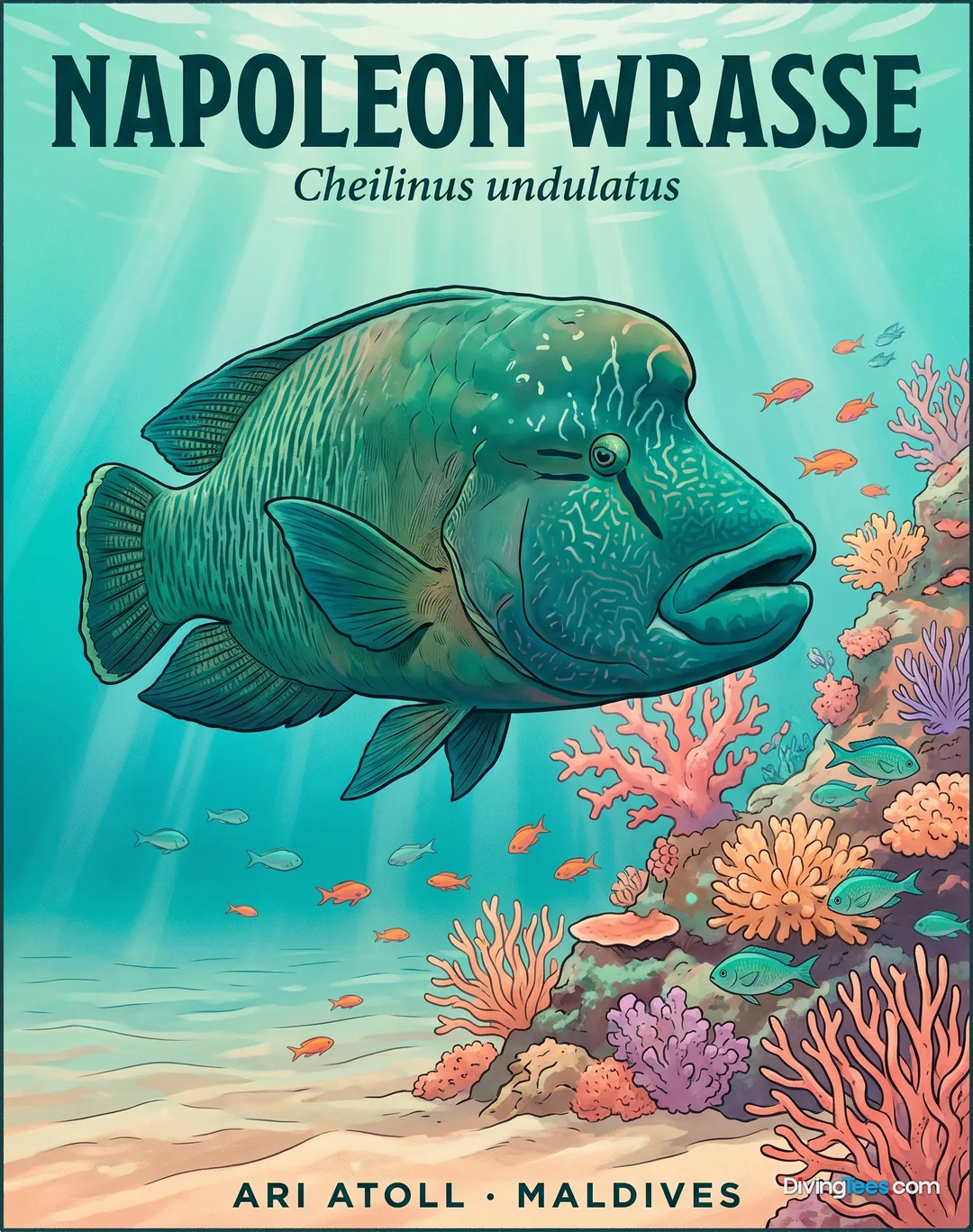
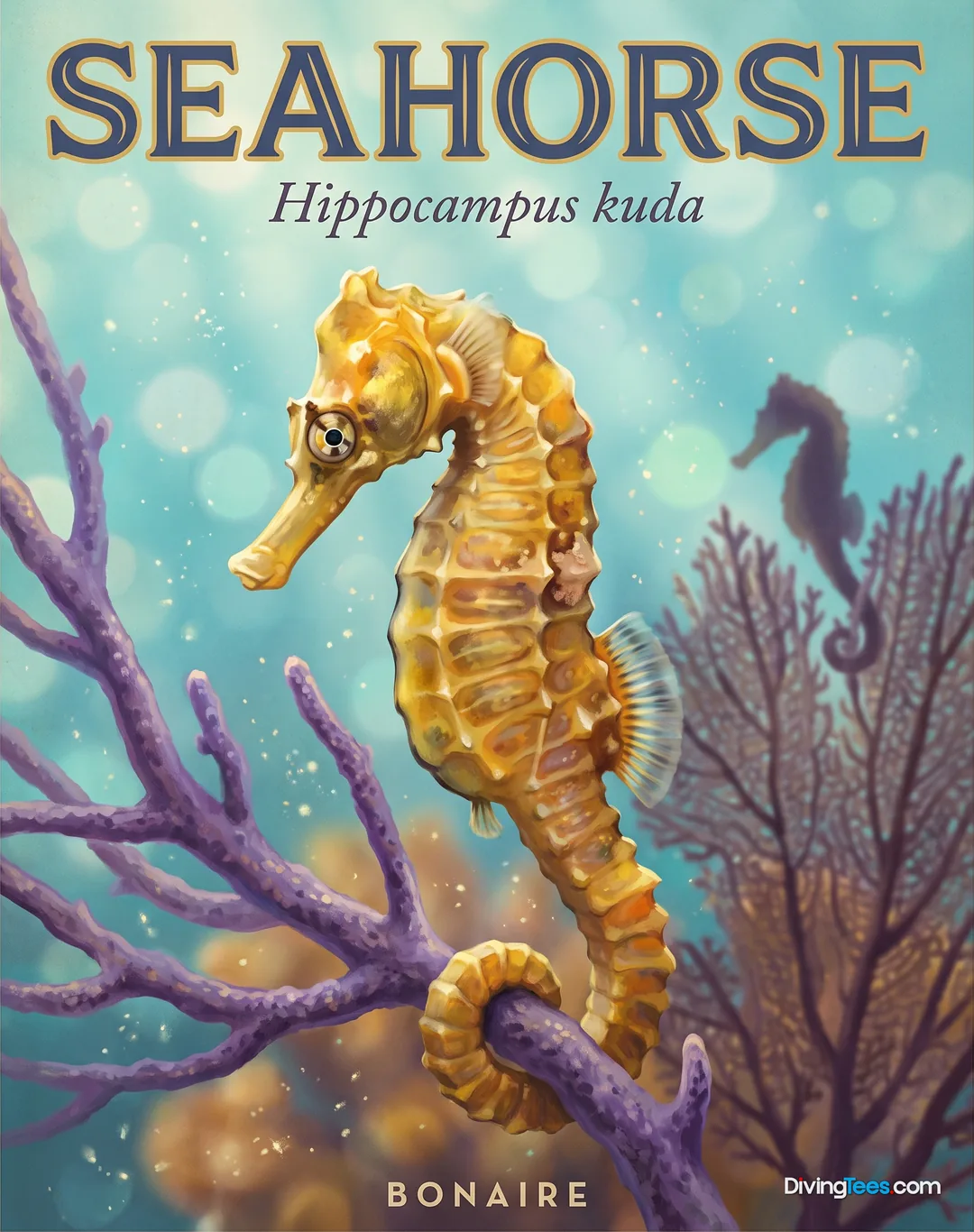
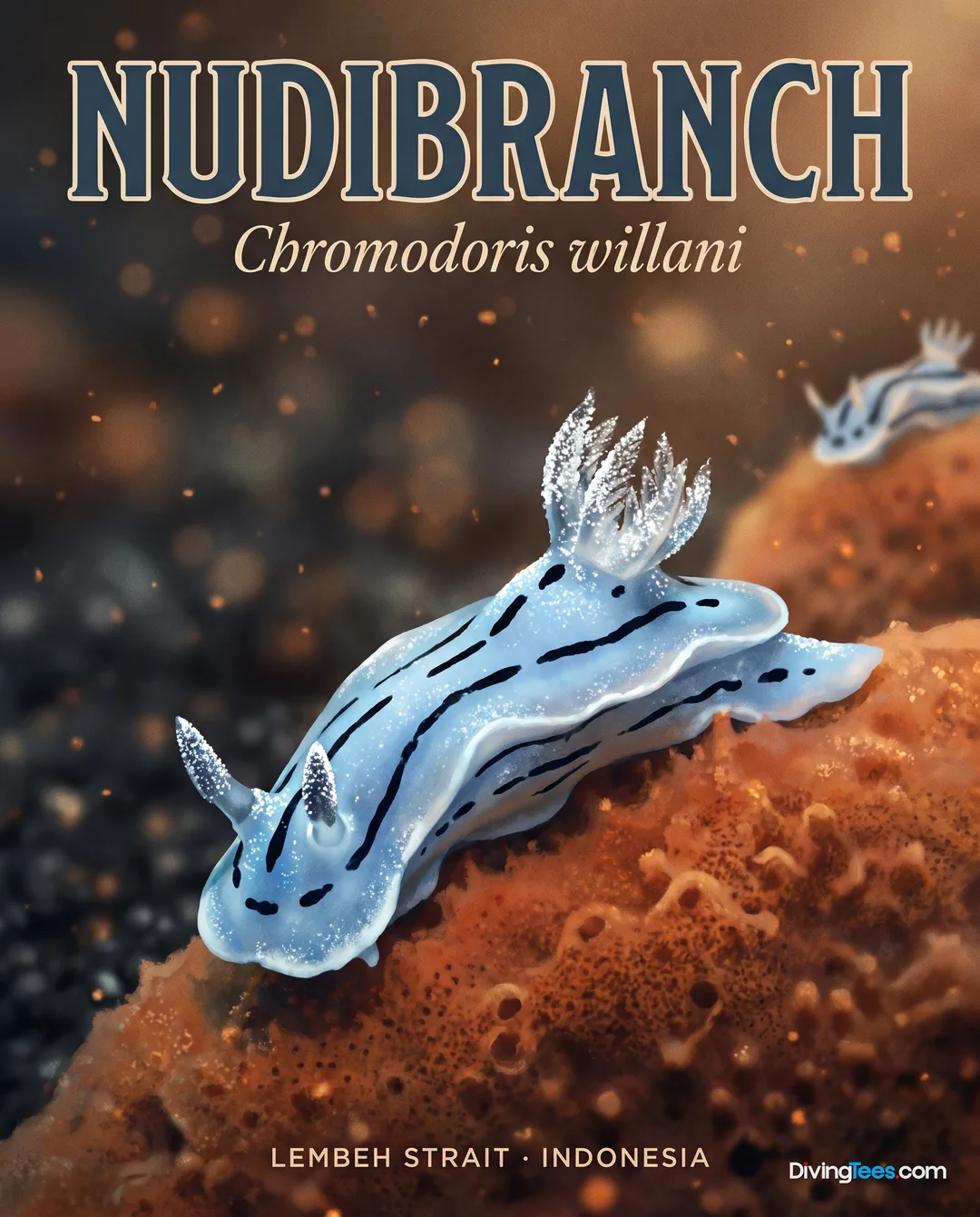
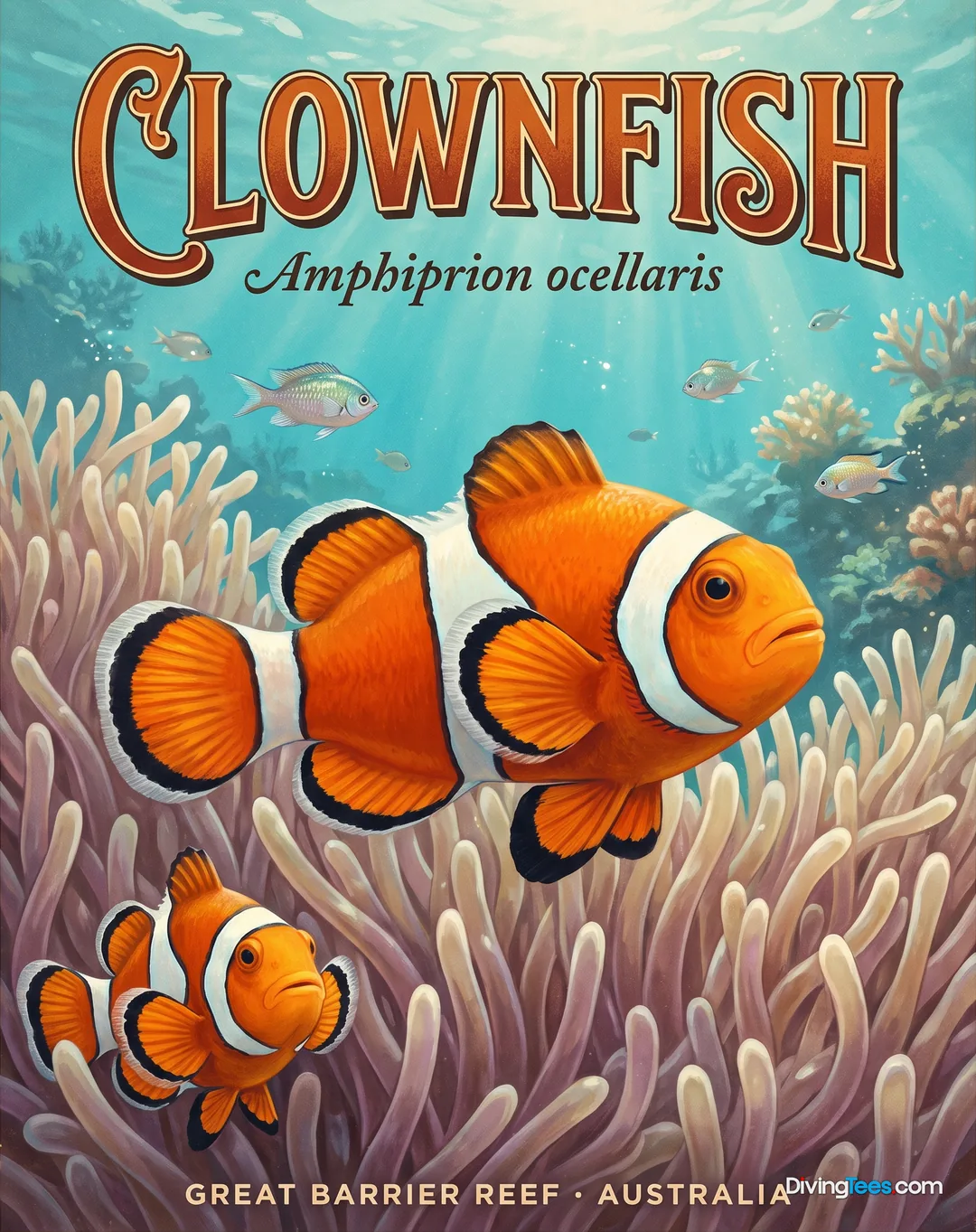
Across this Raja Ampat route, the recurring spectacle is movement: barracudas and reef sharks in the blue, carangids and fusiliers packed over the reef, Napoleon wrasse, turtles, sweetlips, humphead parrotfish and soft corals below. Nudibranchs and pygmy seahorses reward a slower look when the current eases, while eagle rays and reef mantas add the larger encounters. Some sightings give a site its reason to exist. Cape Kri is the only listed site for giant grouper and white-tip reef sharks. Blue Magic is the specific place for oceanic reef sharks and tuna. At Yenbuba Jetty, anthias and damselfish gather around coral-covered pilings, while South Kri is where big-eye trevally, crabs and shrimp appear in the site record. Ransiwor is the listed site for octopus and clownfish; Sorido Wall for surgeonfish. The manta sites work differently: Manta Sandy offers cleaning-station behaviour, while Blue Magic brings the possibility of oceanic mantas in open water.
Who puts you in the water
Dive masters and instructors run the operation in English, with dive groups organised at a ratio of four divers to one guide. Briefings lead into tendered dives across Raja Ampat’s walls, slopes, plateaus and current-affected reefs, with the guide’s role changing according to the site rather than forcing every diver into one pace. PADI and SSI courses are available on board, including Advanced Open Water and Nitrox training. Nitrox students use e-learning materials before or during the trip, then complete the practical course on board. Safety equipment includes oxygen, first-aid kits, marine radios, GPS, radar, sonar, emergency position-indicating equipment, life rafts, fire alarms and extinguishers. The crew is trained in first aid.
The dive deck and the gear
The dive deck is shaded and built around a dedicated platform, with two tenders taking divers to and from the sites. Entry and return therefore happen from the dive platform and tender rather than from a long swim away from the boat. DIN adapters are available, and Nitrox is offered for certified Nitrox divers; Nitrox fills beyond the certification level are linked to the Nitrox course taken on board. Rental equipment can be arranged, including 15-litre tanks, BCDs, regulators, computers, lights, wetsuits and complete packages. The boat supports technical divers. Photographers get a camera room, charging stations and a separate camera rinse area. Equipment handling and a snack are part of the return-to-boat routine.
Between dives
Between dives, the shaded dive area is the natural refuge from the tropical sun, while the terraces and outdoor spaces give the boat its best view of the islands. The air-conditioned salon offers a cooler place to eat, edit photographs or sit with a film when the light outside becomes too strong. Kayaks and stand-up paddleboards allow quiet exploration of sheltered water, and snorkeling is available for divers travelling with non-divers or for a surface interval away from the main group. The dedicated camera room gives photographers a place to handle equipment without spreading housings and chargers across the dining area. Massage is available as an optional extra. The boat’s leisure spaces support the diving; they do not compete with it.
A day on board
A diving day begins with the first briefing, equipment checks and the tender leaving the mother ship for the reef. The dives then arrive in a sequence shaped by the site: a wall or current run when conditions suit it, a shallower coral garden or macro search when the group needs a different pace, and often a third or fourth dive later in the day. Five meals and snacks keep the surface intervals structured without making the boat feel scheduled like a resort. Between dives, guides and crew reset the equipment while divers eat, rinse cameras, sit under shade or move to the terraces. On selected itineraries, the boat also fits in kayaking, village visits or land excursions. A night dive can close the diving programme, after which the boat may remain anchored or get underway for the next area. Then the cabins take over, and the cycle starts again.
What you eat aboard
The galley serves five freshly prepared meals a day, with Indonesian, European and Japanese influences rather than one fixed style of cooking. Meals are served as a buffet or à la carte, and vegetarian and vegan options are available. Non-alcoholic drinks, water, tea, coffee and snacks are included throughout the trip; wine is served with dinner, while beer and other alcoholic drinks are available separately. That timing matters on a Raja Ampat itinerary. Food arrives around the diving rather than interrupting it, with enough between-dive snacks to cover the long gaps between meals. After a current-heavy dive or a long tender ride, the table is less about ceremony than about getting a proper plate in front of a tired diver before the next briefing.
Nights at sea
The eight cabins are arranged as Lower Cabin Twin, Lower Deck Twin and Main Deck Twin/Double categories. Air conditioning, private bathrooms, hot water and storage make the cabin a proper place to recover between dives, while standard windows keep the sea present without turning every room into a panoramic suite. The lower-deck twins are the practical choice for divers who spend most of the day outside; main-deck cabins make movement easier between the sleeping area, salon and deck. Nights are quiet enough for the essentials that matter after repeated descents: a dry bunk, a cool room and a bathroom close by. Cabin windows and balconies vary by room, so the category matters more than the word “suite” when choosing where to sleep.
Lower Cabin Twin
Lower Deck Twin Cabin
Main Deck Twin/Double Cabin
What to know before boarding
Raja Ampat departures and returns are in Sorong. Airport and hotel transfers in Sorong are included, with arrangements communicated during the booking process. Arriving in Sorong the night before is the sensible way to protect the embarkation from flight delays and keep the first day on board for settling in and the check dive.
Deck plan
- Year built
- 2018
- Year renovated
- 2024
- Length
- 47 m
- Beam
- 9.3 m
- Maximum number of passengers
- 20
- Number of cabins
- 8
- Number of bathrooms
- 9
- Engines
- 600 hp
- Cruising speed
- 7 knots
- Tenders
- 2
- Website
- dancingwind-liveaboard.com ↗
Hello, I'm Marina, DivingDeal.com's AI assistant. I answer in detail about hotels, dive centres and liveaboards.
Thinking about the whole trip and the flights? Talk it over with Edith →
Marina is an AI. Some links are affiliate links: DivingDeal may earn a commission, at no extra cost to you. Bookings are made with the partner.