Liveaboards · Indonesia
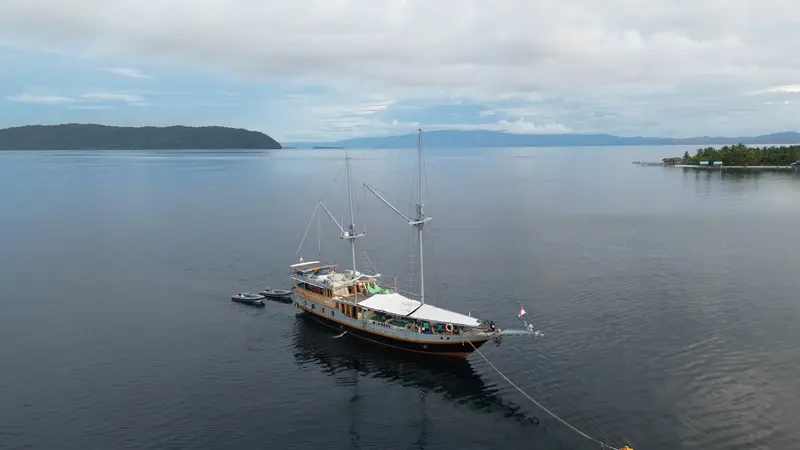
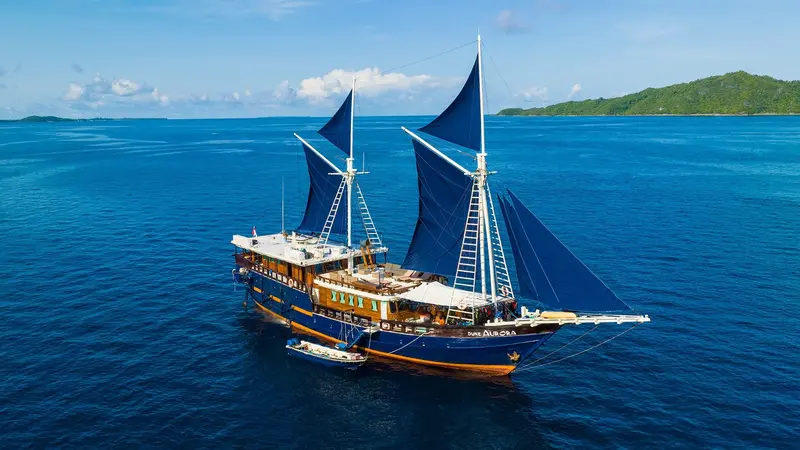
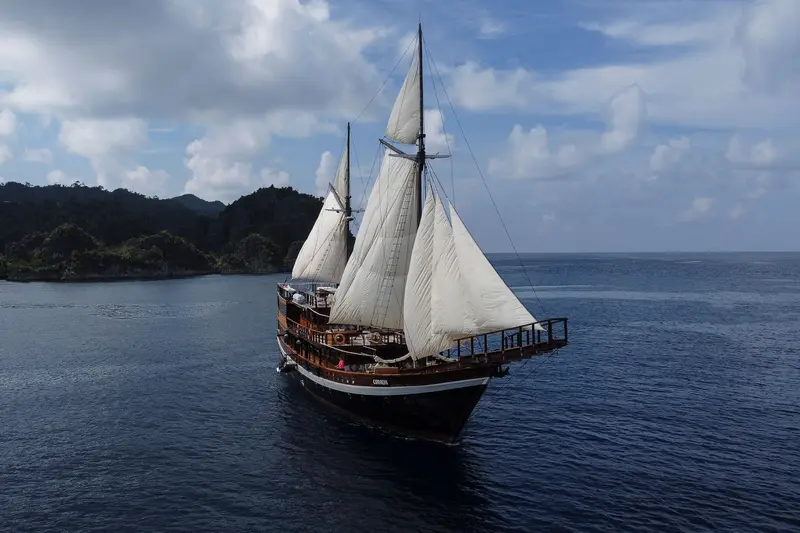
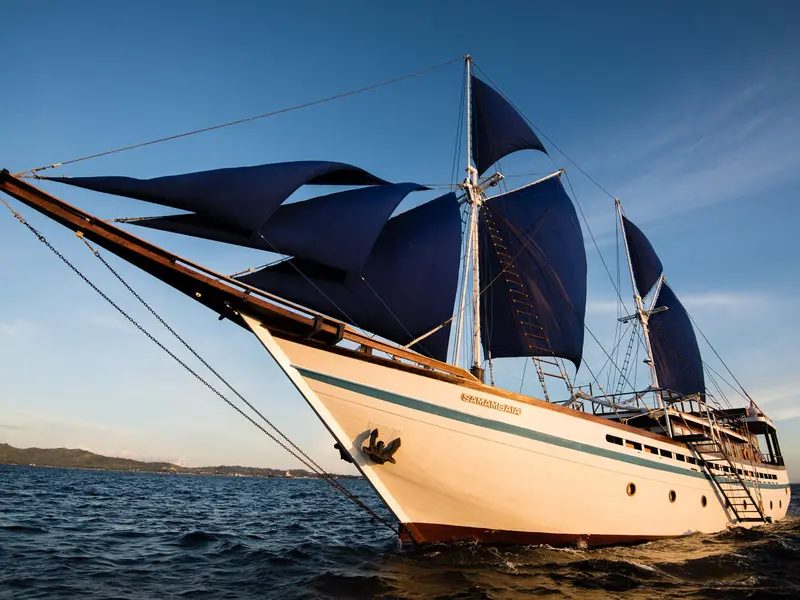
Tiare Cruise — a traditional Indonesian phinisi built around diving
What makes this boat unique
- Tiare Cruise is a traditional wooden phinisi carrying up to 14 passengers in six air-conditioned cabins.
- Raja Ampat trips run from Sorong to Sorong for 8 days/7 nights or 12 days/11 nights.
- Dive groups are limited to four divers, with each diver fitted with an ENOS GPS location system.
- Air and Nitrox 32 are available, with DIN/INT-adaptable valves and aluminium cylinders in 12- and 15-litre sizes.
- A dedicated camera room, camera rinse, charging stations and a large camera workstation support underwater photographers.
For subtitles in English: start the video firstthen click the gearat the top right of the video, select “Subtitles/CC”, then “Auto-translate” and choose “English”.
The invitation
Tiare Cruise is for divers who want Raja Ampat from a proper Indonesian phinisi rather than from a floating hotel with diving added later. The boat was built around access to remote reefs, with a separate dive deck, two fast dive boats and small groups in the water. That matters here: currents can move quickly, and the best sites reward a guide who can place four divers well rather than a crowd that arrives all at once. The reason to choose Tiare is the balance. It reaches sites such as Cape Kri, Blue Magic, Melissa's Garden and Manta Sandy, while non-divers have kayaks, paddle boards, snorkelling and island excursions instead of being left waiting between dives. The boat also has enough room for a week of repetitive diving without making the evenings feel like a return to a bare bunk. Its strongest case is simple: serious access to Raja Ampat, with a traditional Indonesian character and a crewed layout that keeps diving at the centre.
Boarding
From the dock, Tiare Cruise presents as a large traditional phinisi with the warmth of Indonesian timber rather than the blank finish of a purpose-built motor yacht. It was built in 2013 and renovated in 2016, and the antique teak used throughout the indoor and outdoor areas gives the boat a visible history. The wood comes from salvaged old Joglos, with darker grain and the marks of material that has already lived another life. Once aboard, the layout separates the working dive area from the social spaces, so wet gear and cameras do not take over the salon or front deck. The boat feels designed for people who will spend much of the day moving between water, shade and a meal outside. It is traditional in its surfaces, but not primitive in its operation: the engines, generators, navigation systems and fire systems are modern equipment behind that older Indonesian character.
The atmosphere on board
Tiare's atmosphere comes from the way the boat mixes a small passenger group with a substantial local and international crew. English, German, Japanese and Indonesian are spoken, and the crew includes cruise managers, diving instructors, dive guides, chefs, stewards and dinghy drivers. That division shows in the day: guides focus on the water, stewards keep the living spaces moving, and the chefs make the long repetitive dive schedule easier to sustain. By the second day, the same people have shared briefings, tenders, meals and stories from the reef, so the group forms around what happened underwater rather than around forced entertainment. Evenings can move to the front deck for food under the stars, drinks and conversation, or stay inside in the air-conditioned salon with audio and video facilities. The boat scores higher for its vessel and food than for diving and crew, but the practical gain is clear: a crew that makes the boat feel cared for while leaving divers room to settle into their own pace.
The sites you’ll dive
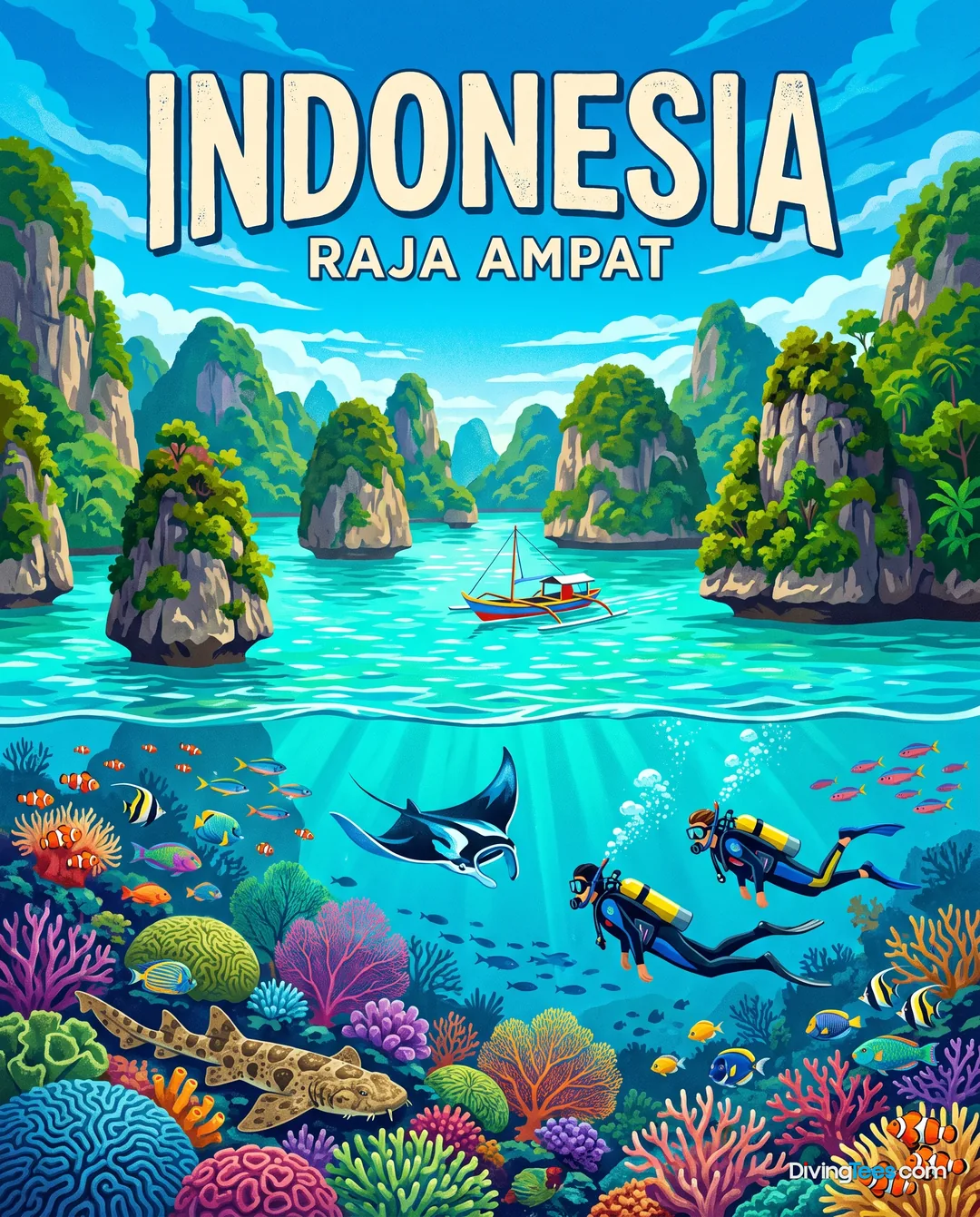
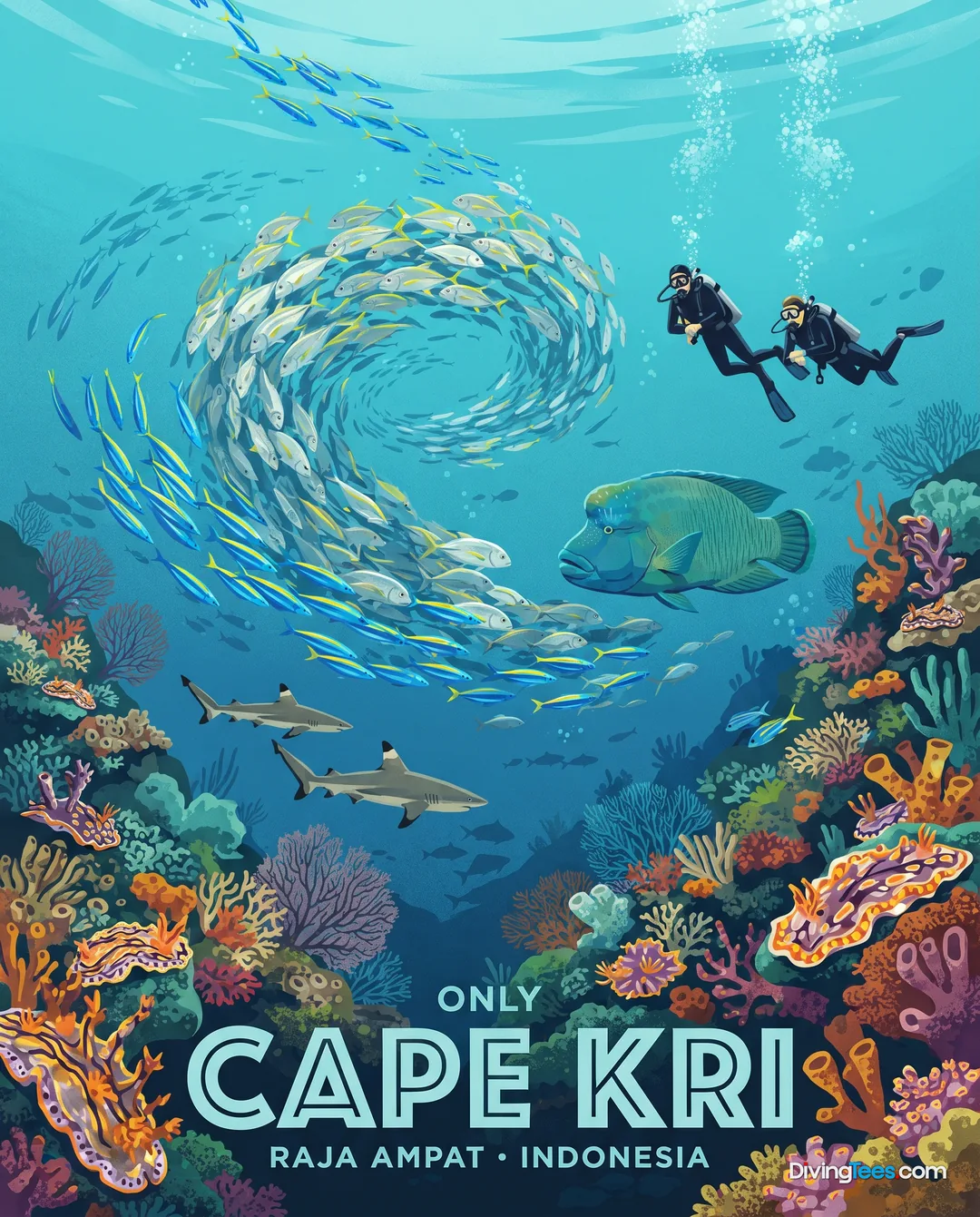
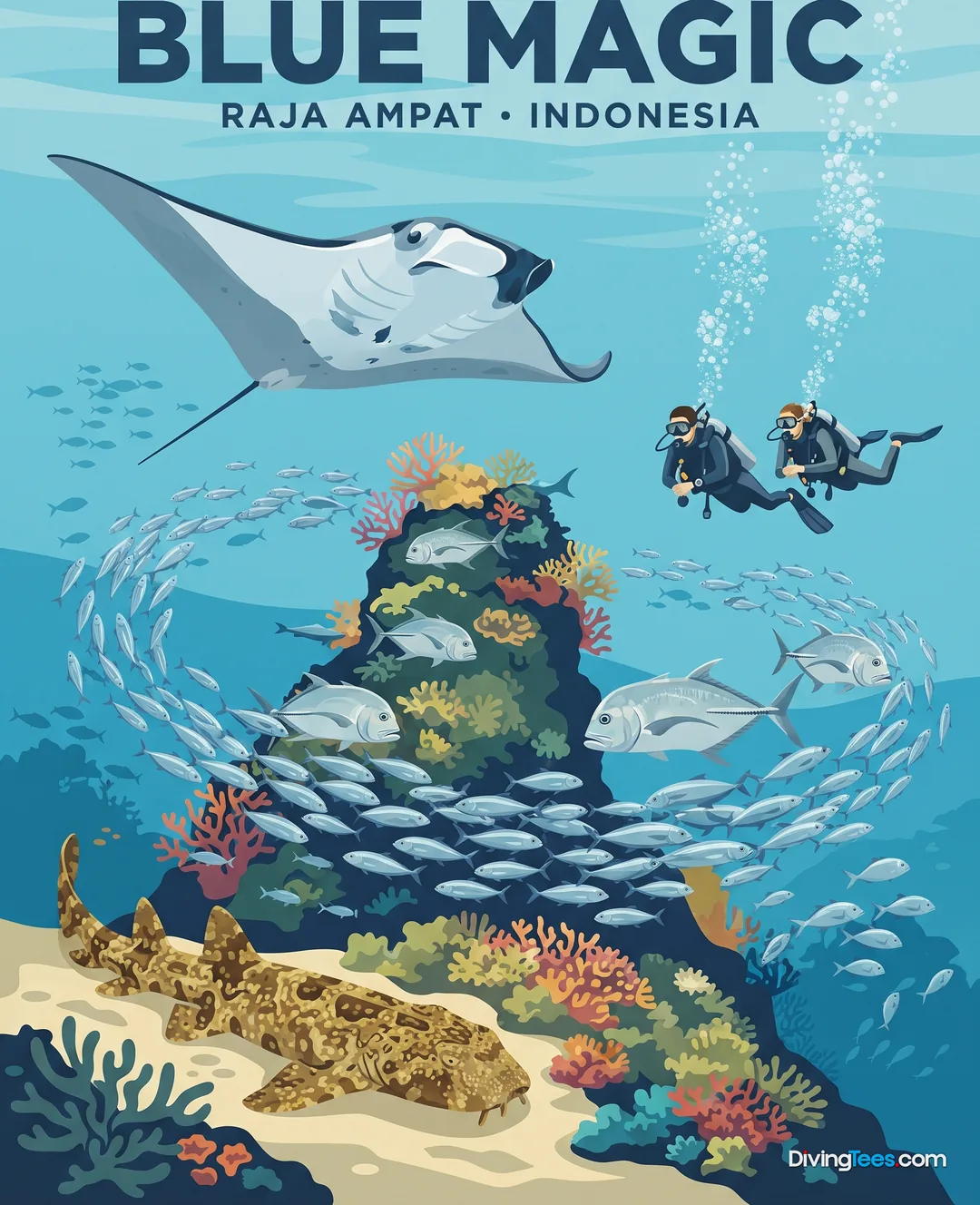
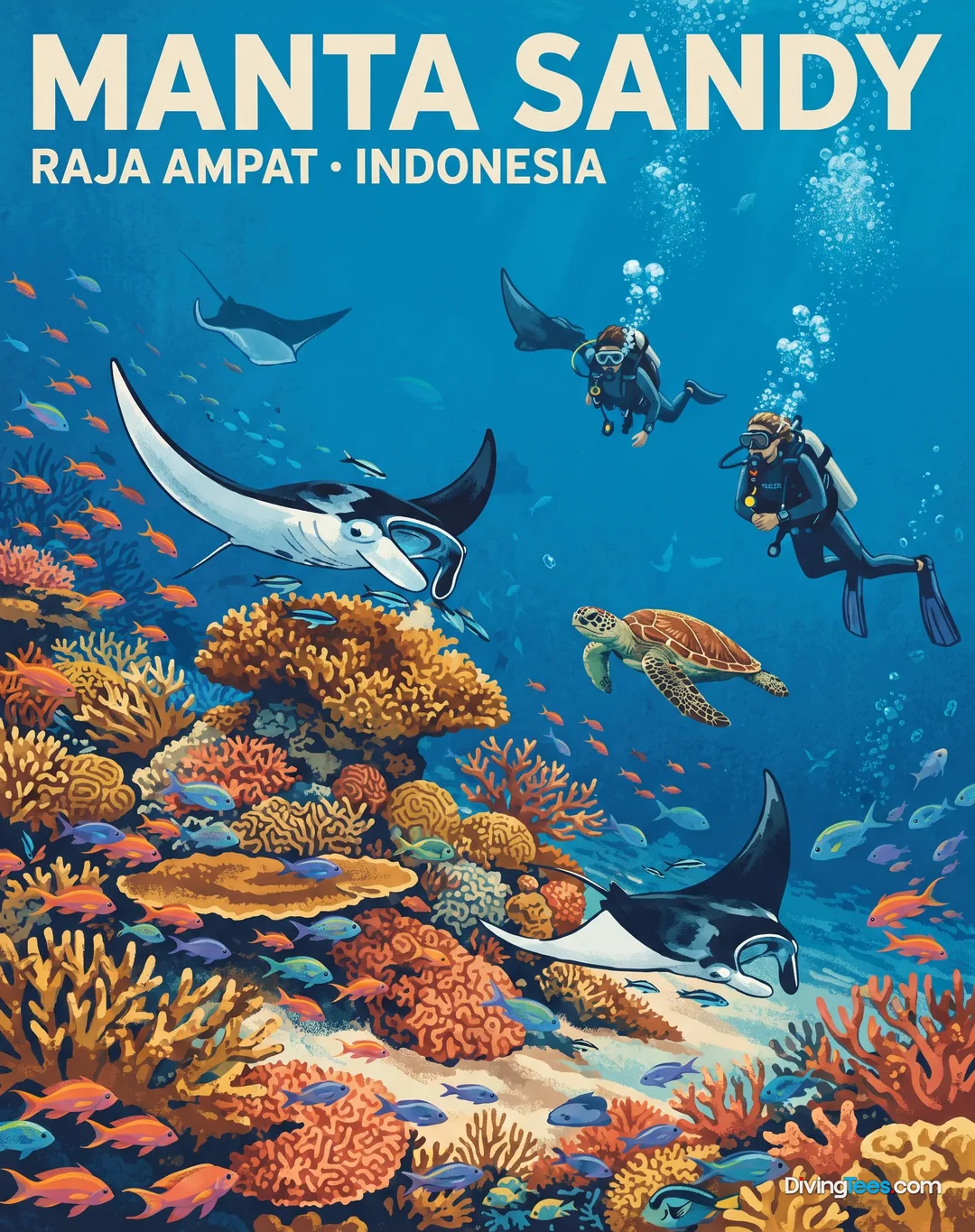
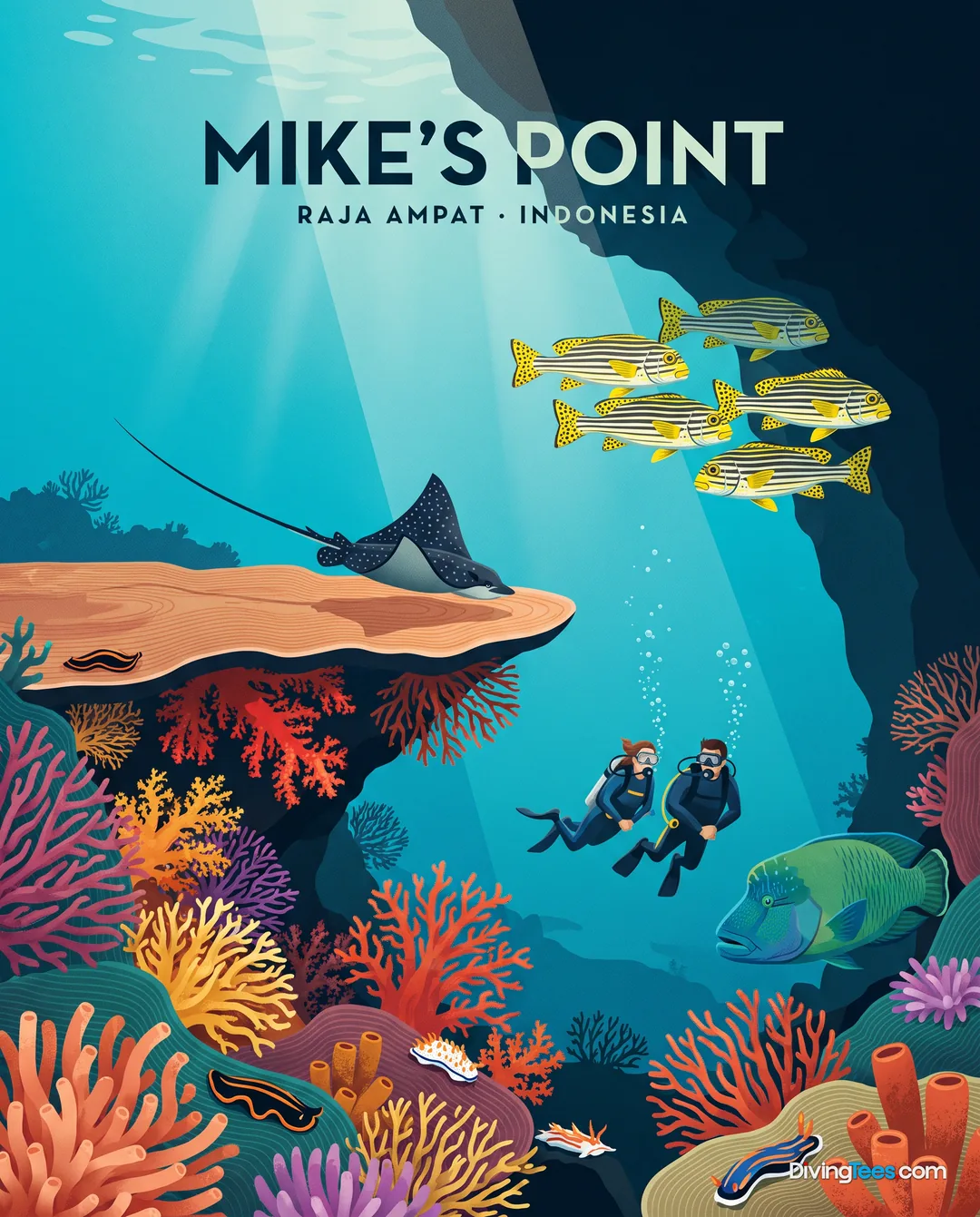
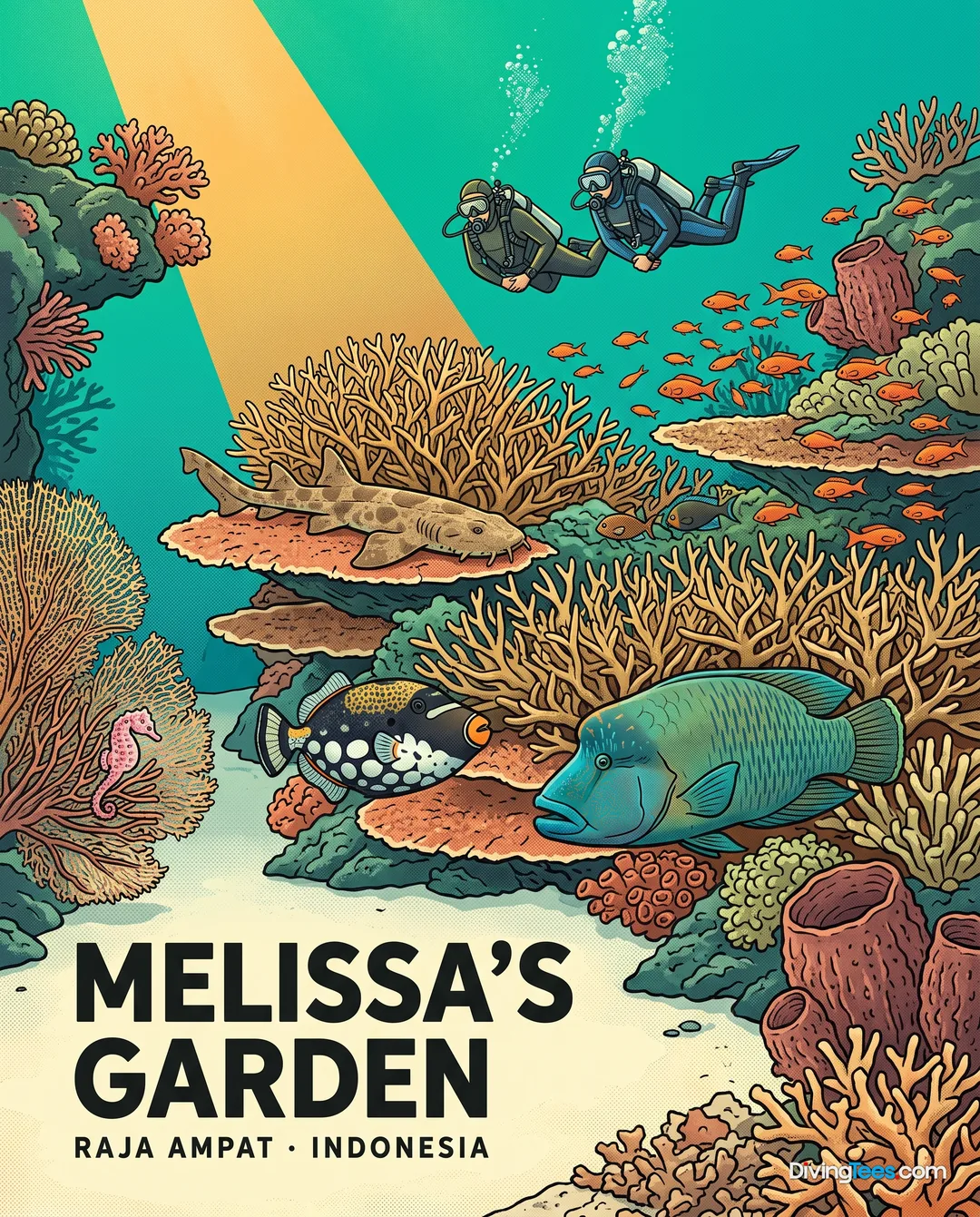
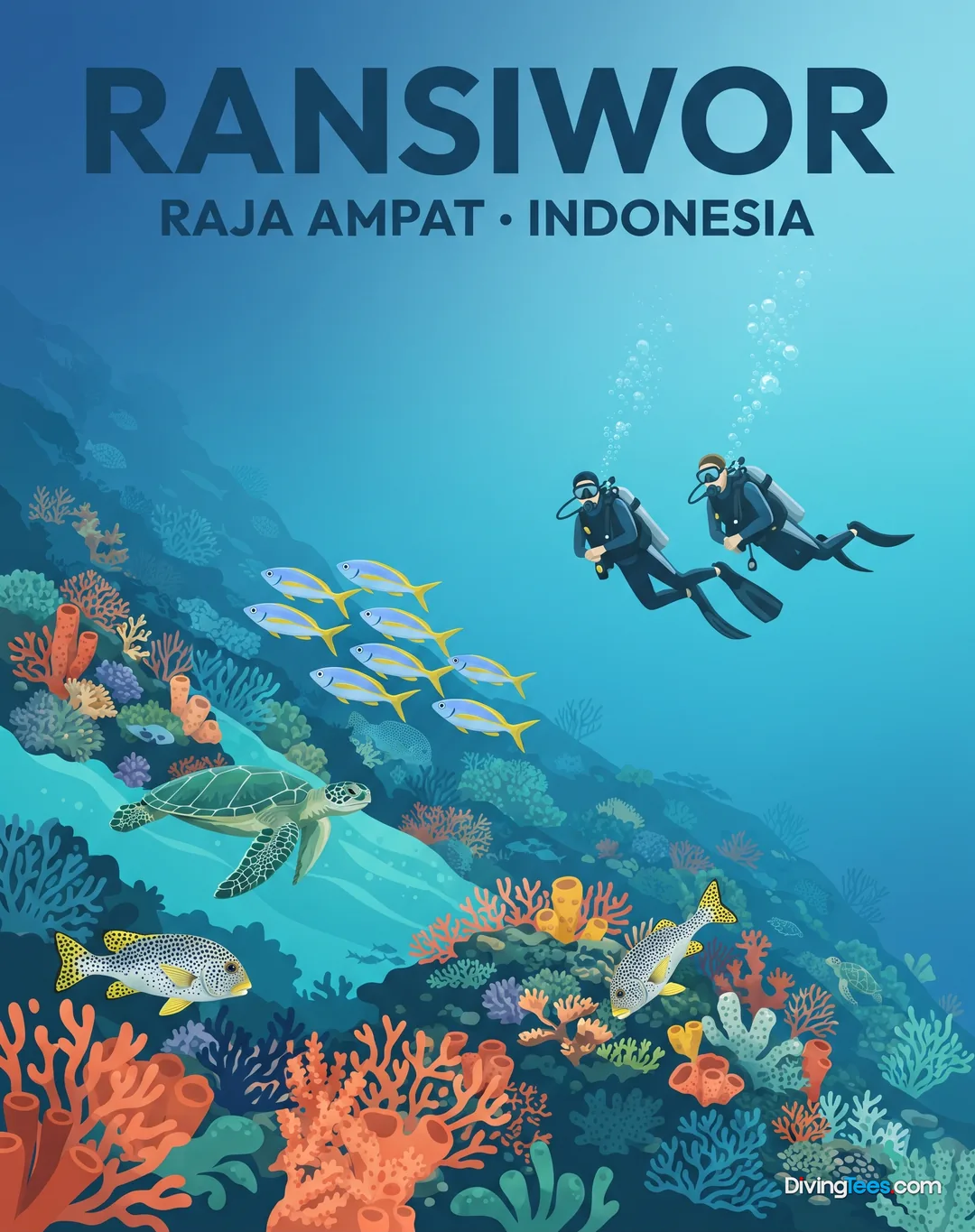
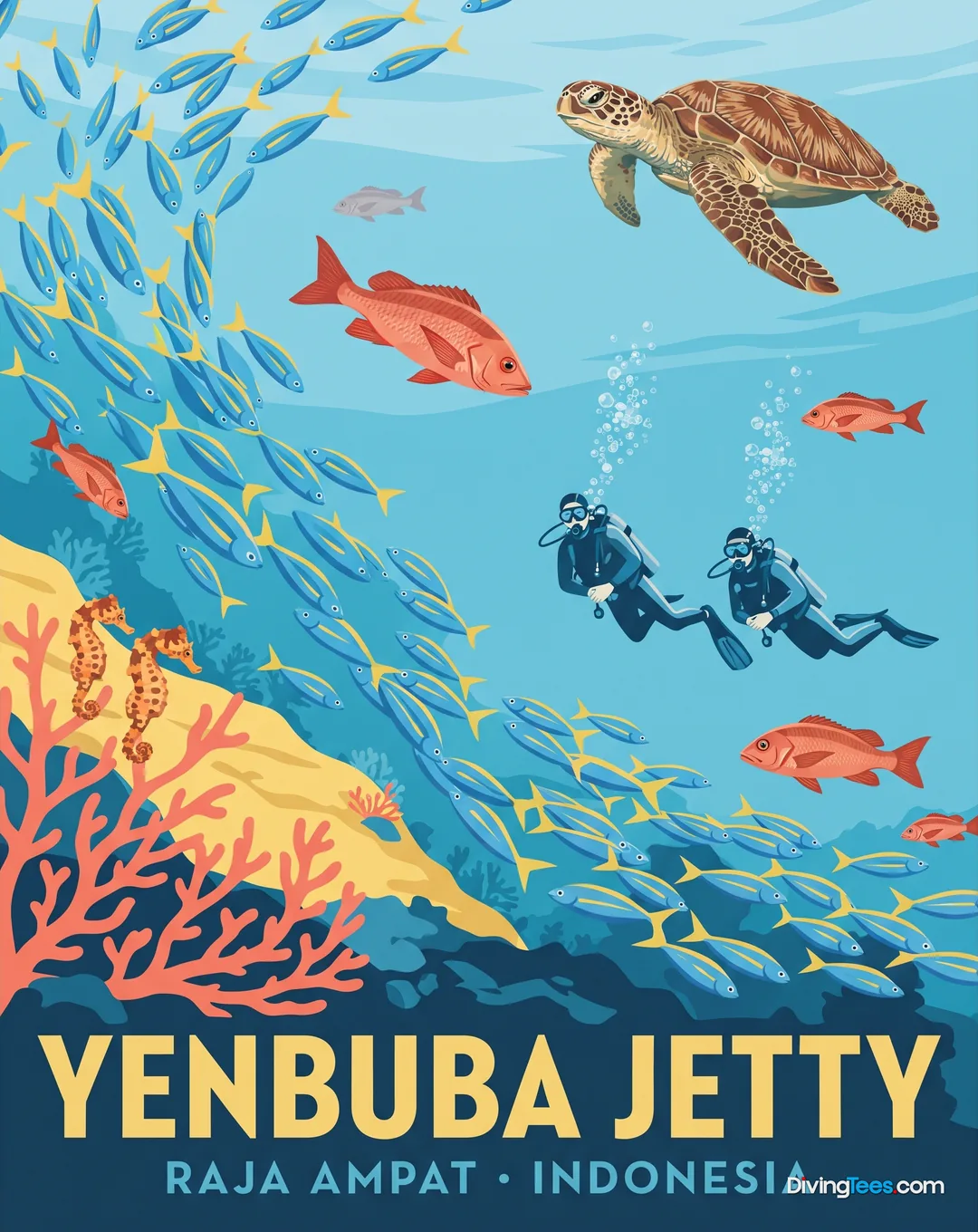
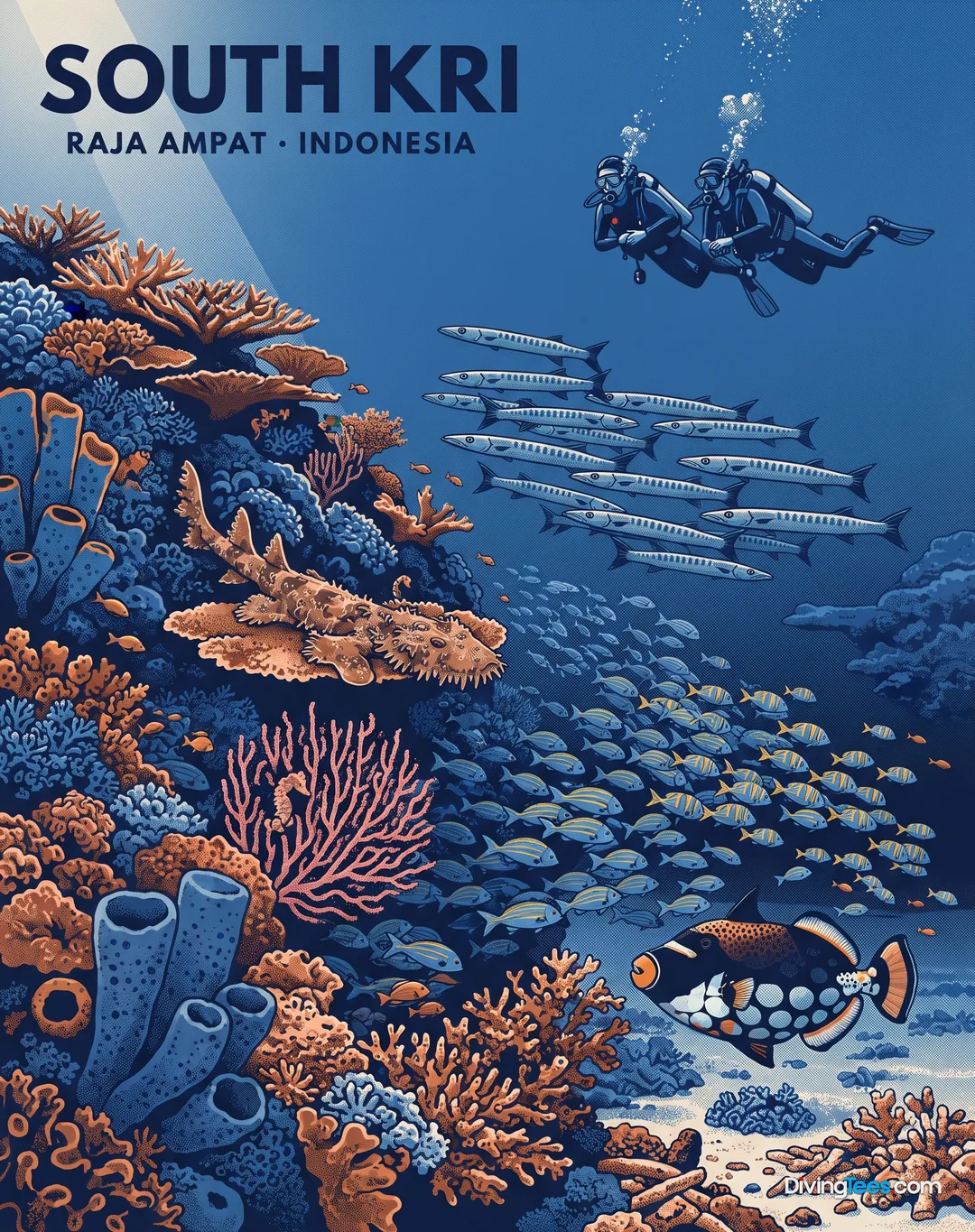
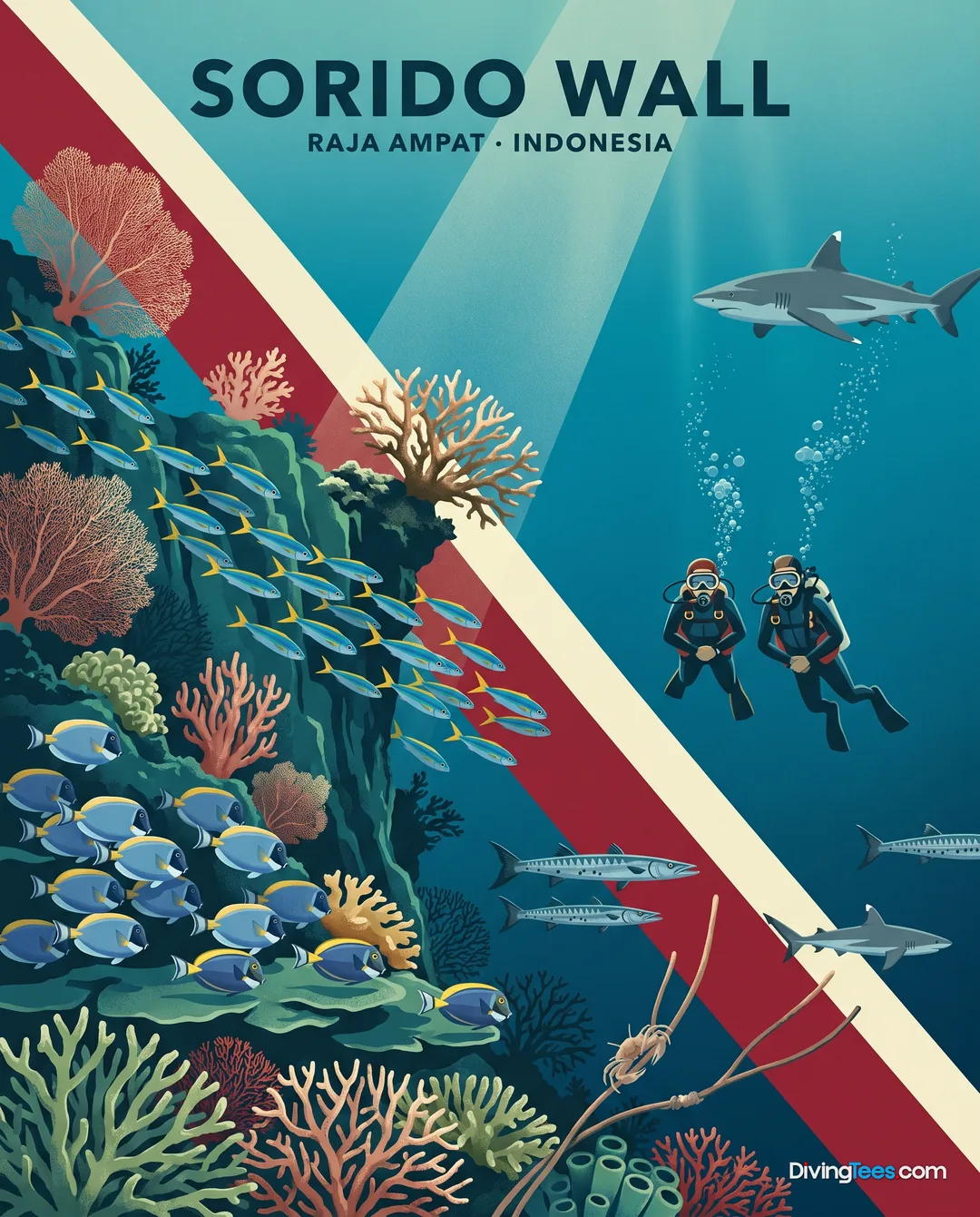
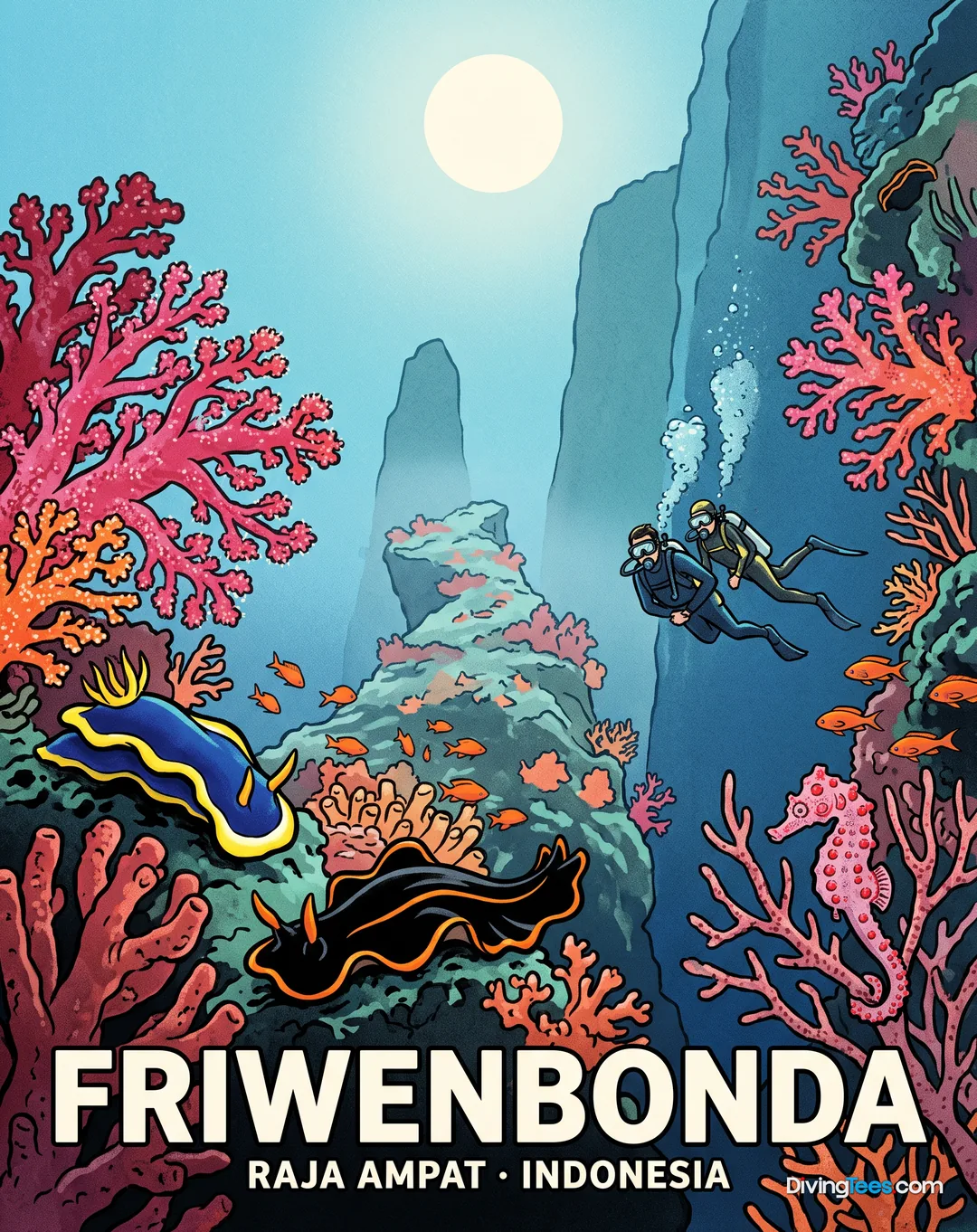
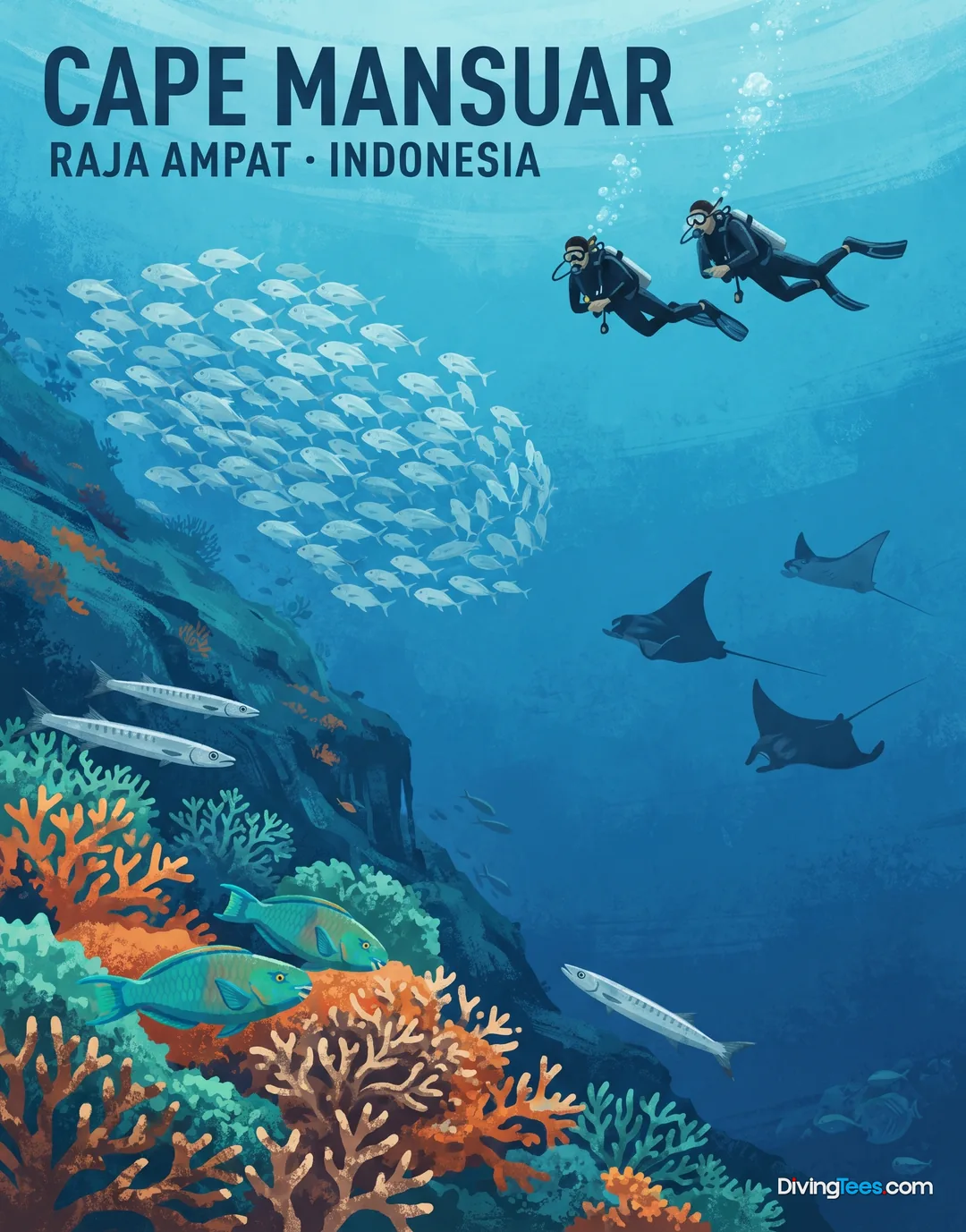
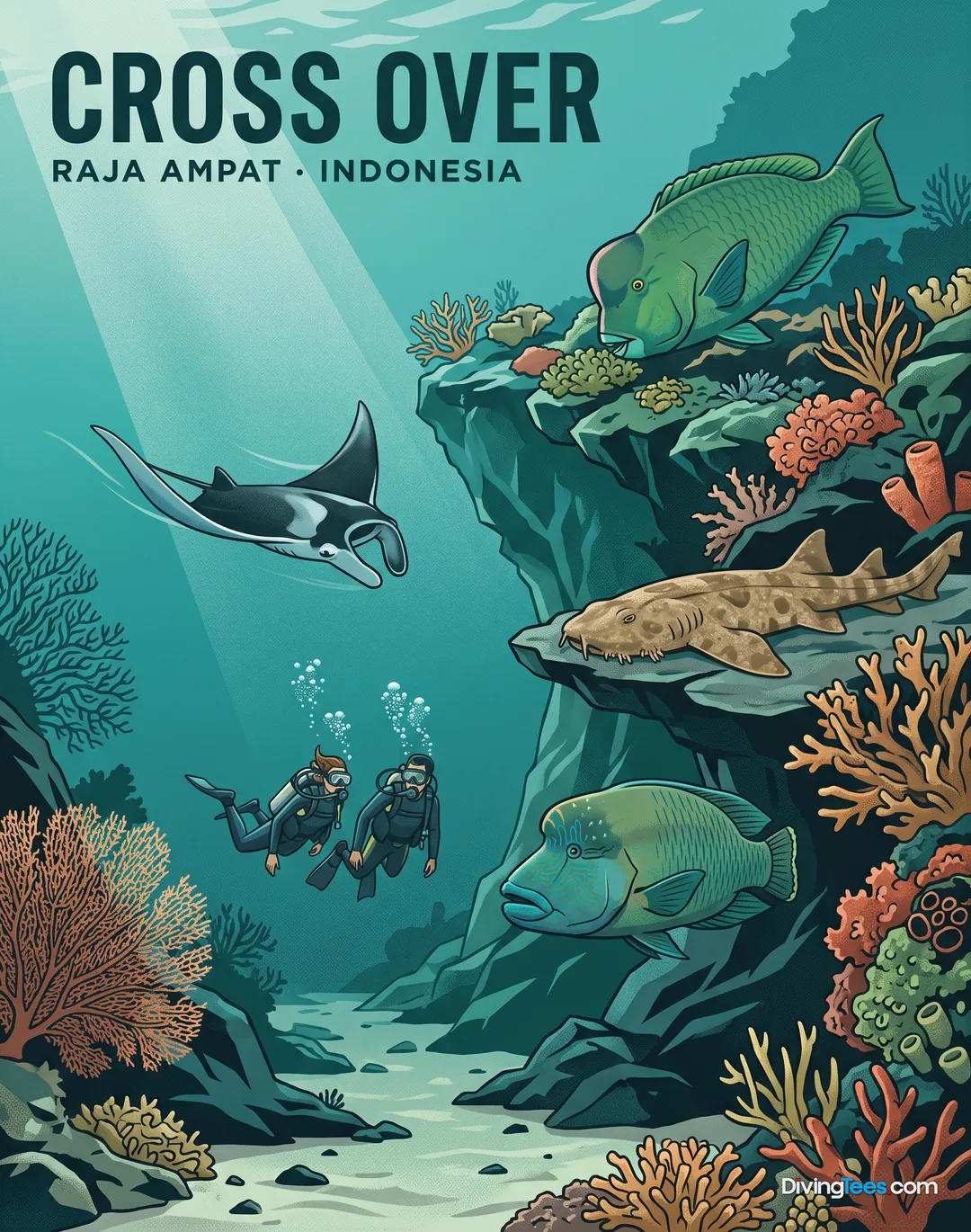
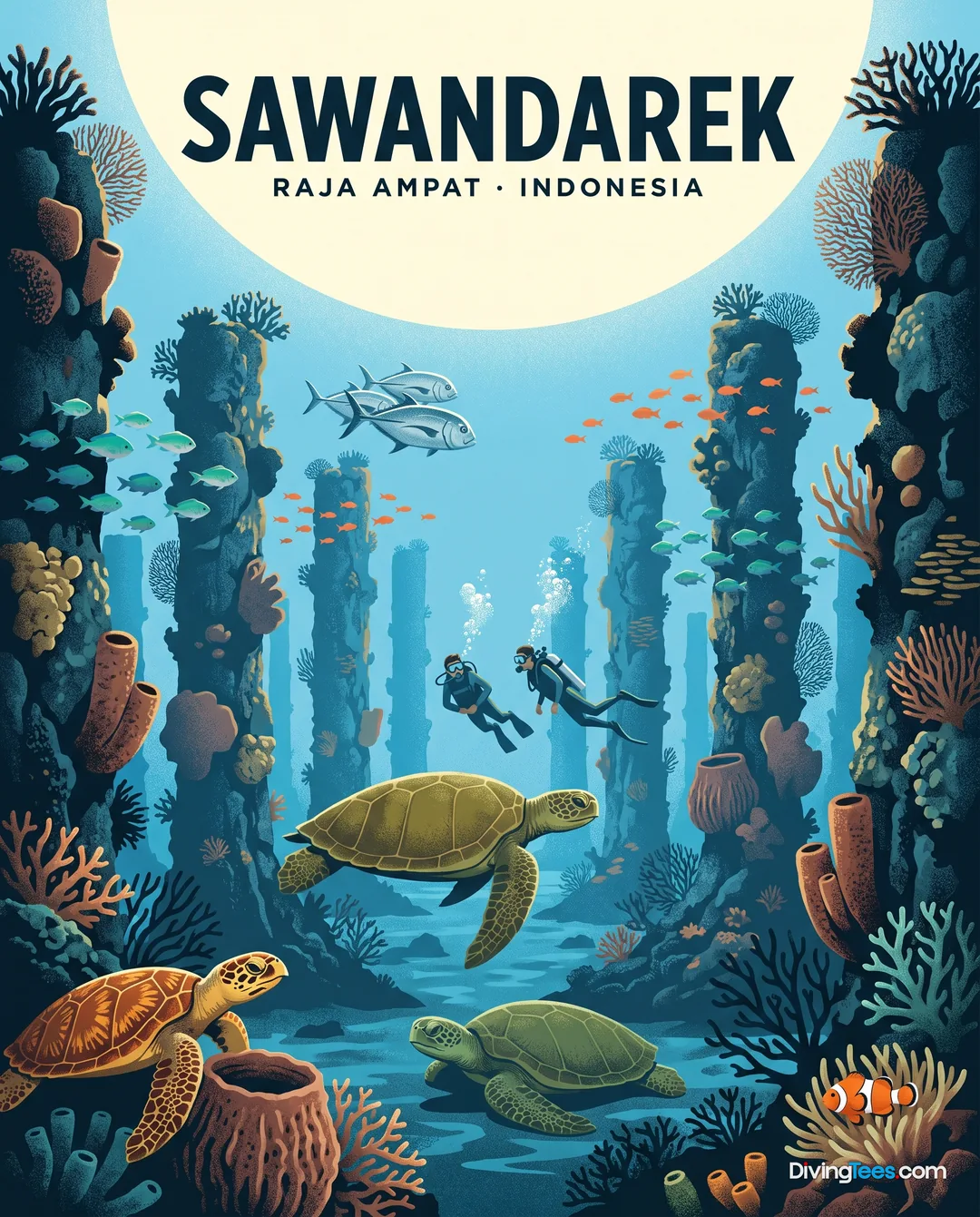
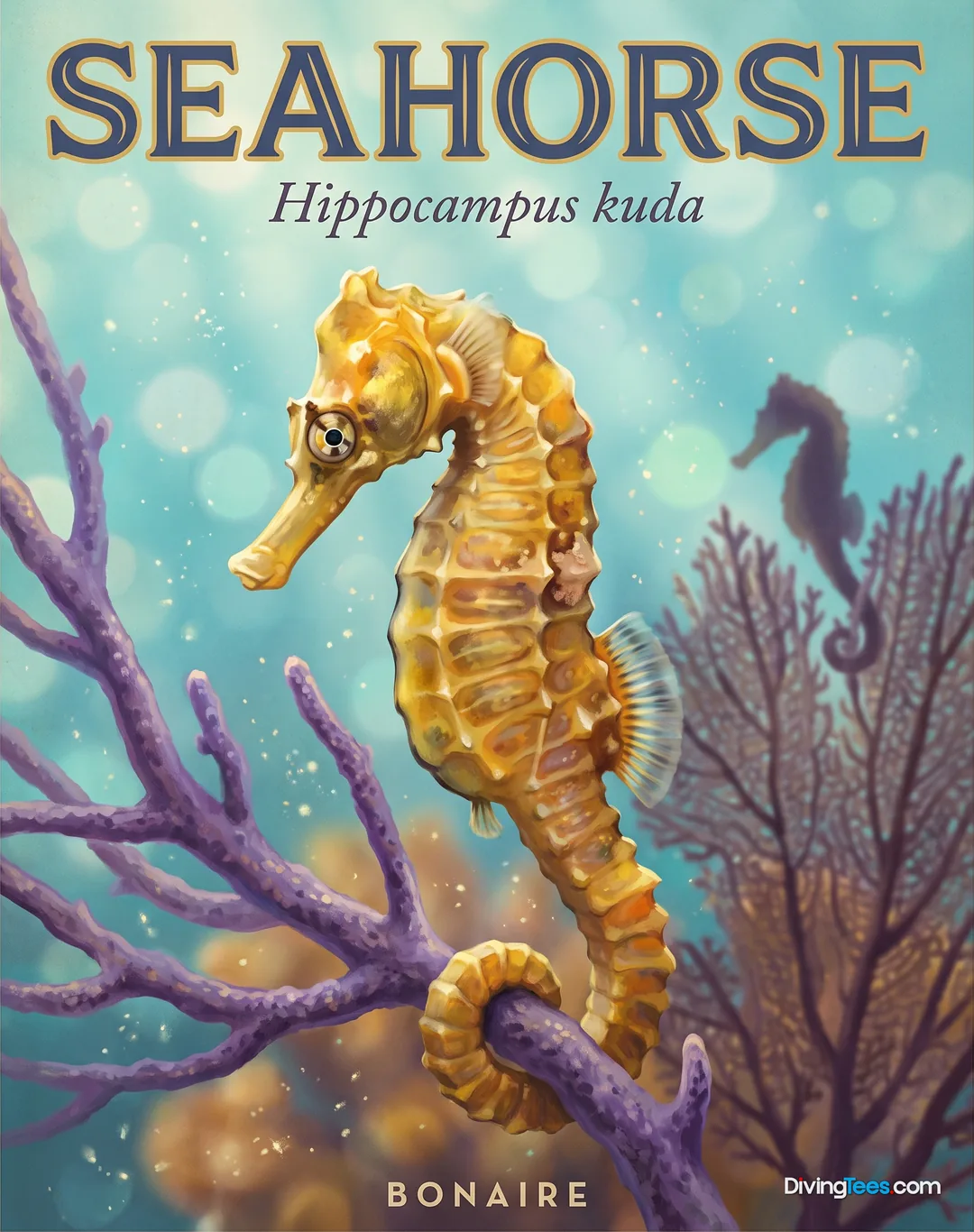
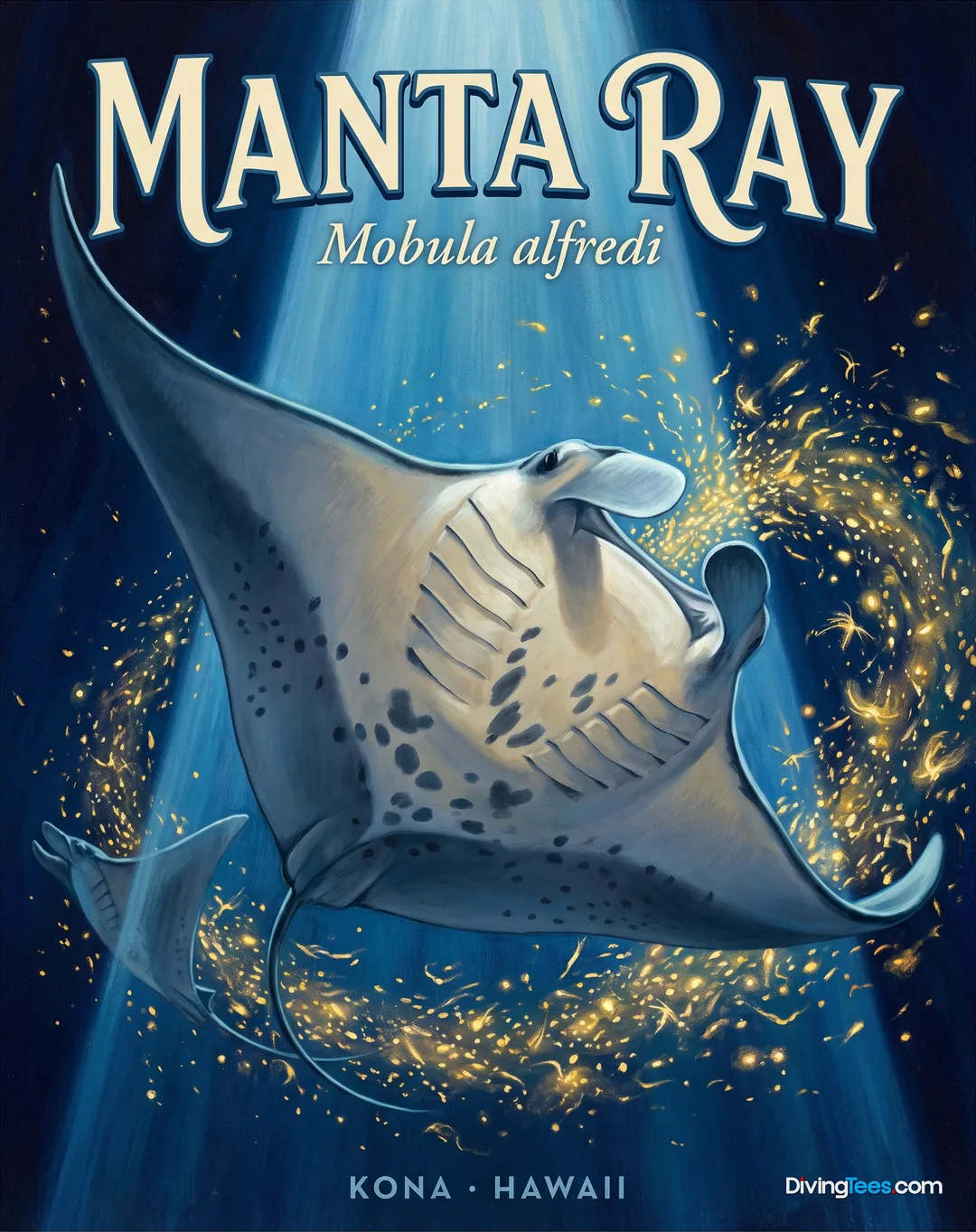
The Raja Ampat route is built around variety. At Cape Kri, dense schools, barracuda, trevally, Napoleon wrasse and reef sharks turn a single dive into a moving wall of fish; the site also offers wobbegongs and pygmy seahorses around gorgonian fans. Blue Magic puts divers into the blue above a reef where schooling fish, giant trevally and dogtooth tuna can pass, with oceanic manta rays and wobbegongs among the possible encounters. Manta Sandy centres on reef mantas hovering over cleaning stations, a site that works for snorkellers as well as divers. Mike's Point combines reef overhangs covered in soft coral with a plateau where eagle rays may cruise, to a maximum of -40m. Melissa's Garden reaches -35m among soft corals and staghorn formations. Ransiwor slopes gently to a maximum of -30m, with cleaning stations and yellow-back fusiliers. Yenbuba Jetty also reaches -30m, beginning beneath coral-covered pilings before opening onto a sloping reef. South Kri, Sorido Wall, Friwenbonda, Cape Mansuar, Cross Over and Sawandarek add drifts, walls, macro life, strong current and giant green turtles. Recorded Raja Ampat departures run 8 days/7 nights or 12 days/11 nights, both from Sorong to Sorong.
Itineraries, dates and prices
Prices per person. Each month shows its lowest price: click a month, or pick an itinerary.
Next departures · 19 departuresfrom £2,866$3,831€3,423
October 2026
November 2026
December 2026
January 2027
April 2027
See dates and prices
If you click these links and make a purchase on the partner site, DivingDeal may earn a commission, at no extra cost to you.
Dates and prices taken from liveaboard.com, updated 22 October 2026
What you’ll meet underwater
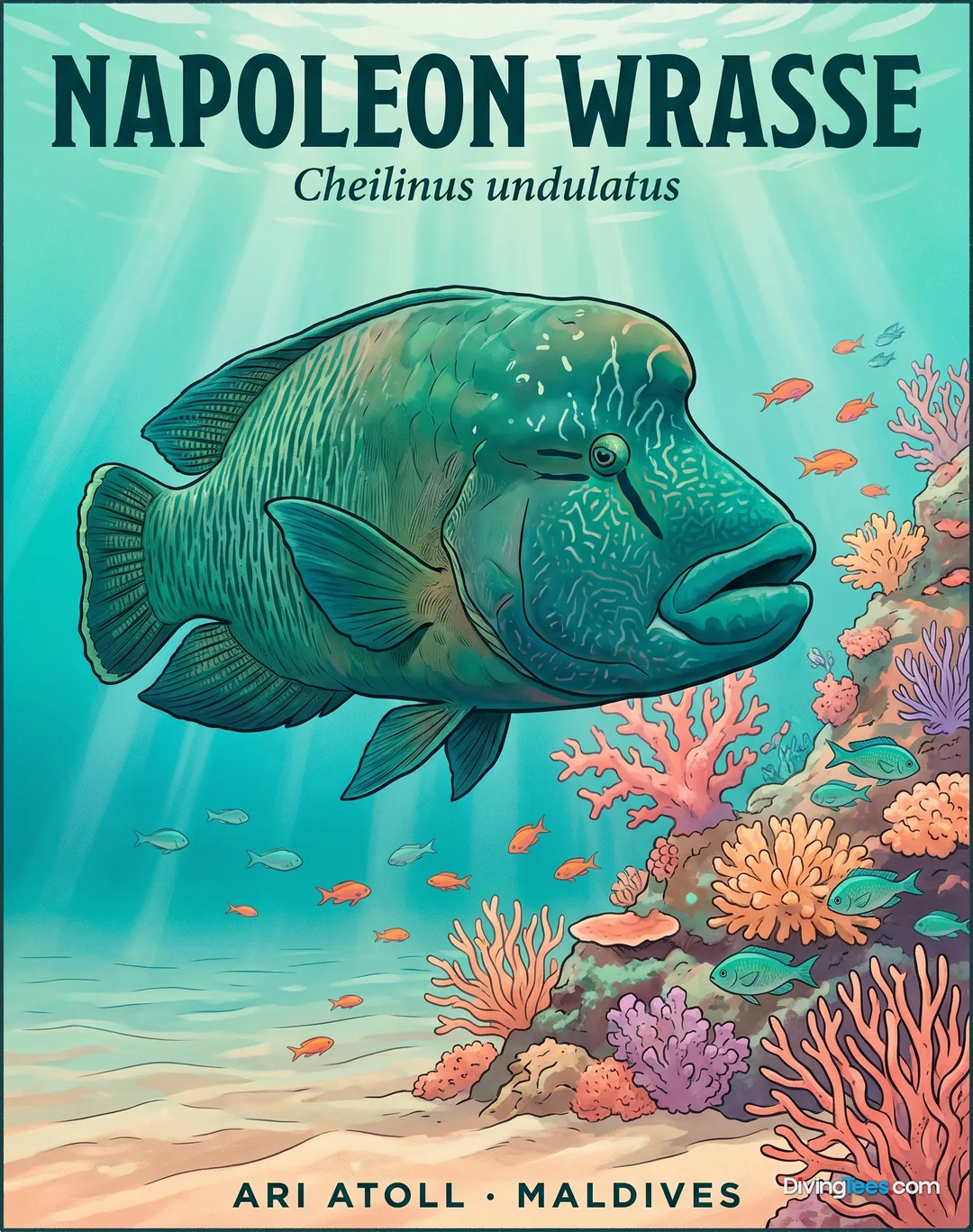
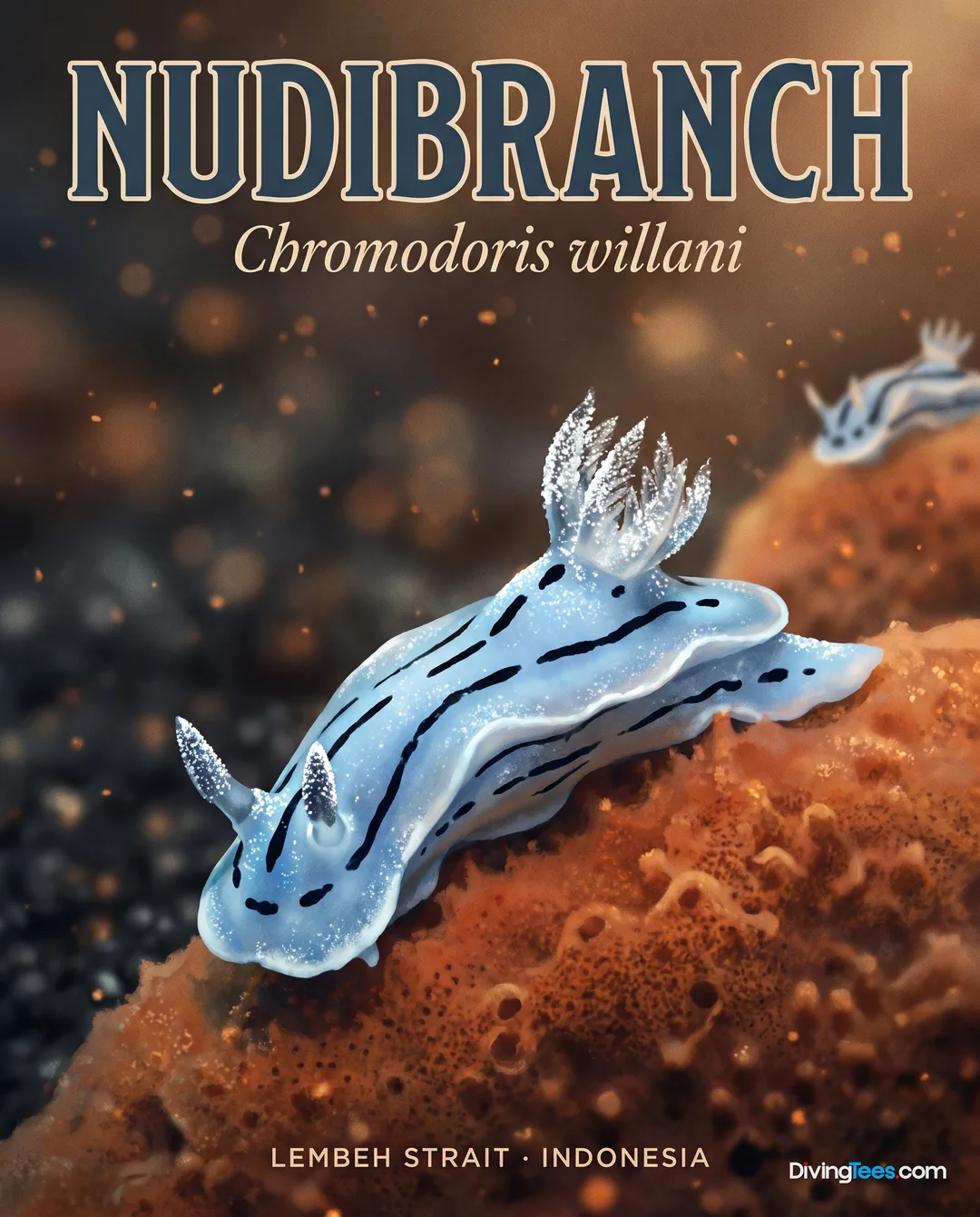
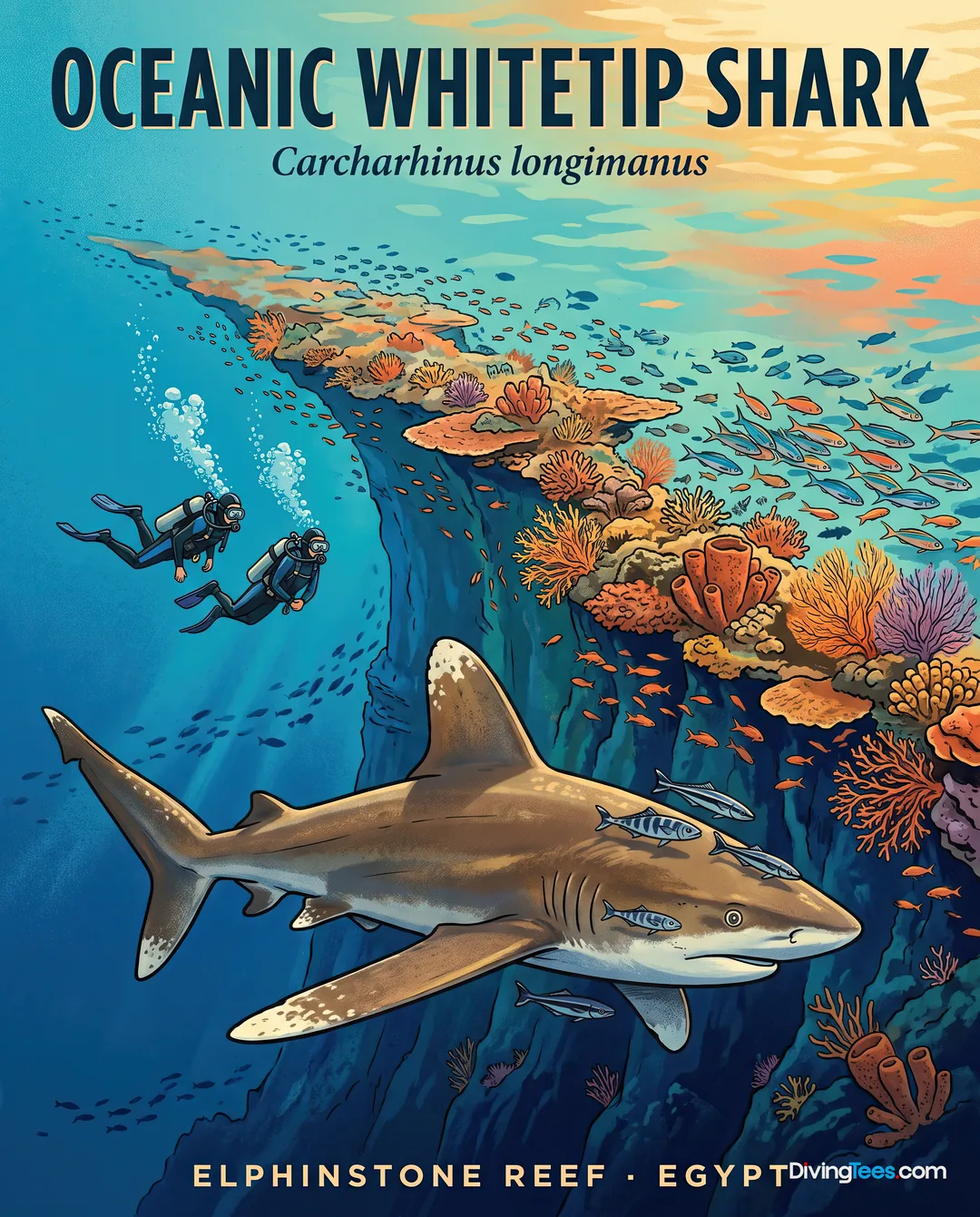
Across Raja Ampat, the recurring spectacle is not one headline animal but the sheer traffic on the reef: barracuda, reef sharks, trevally, fusiliers, nudibranchs, Napoleon wrasse, sweetlips, sea turtles, humphead parrotfish, soft corals and pygmy seahorses appear across several sites. Cleaning stations give the encounters a reason and a place. At Manta Sandy, reef mantas hover over the stations; at Ransiwor, turtles, reef sharks and octopuses may share the slopes with the constant movement of yellow-back fusiliers. Certain animals make a particular site worth prioritising. Cape Kri is the recorded site for giant grouper and white-tip reef sharks, while Blue Magic is where oceanic whitetip sharks and tuna are specifically noted. South Kri is the place for the listed big-eye trevally, crabs and shrimp, and Yenbuba Jetty offers anthias and damselfish among the pilings. Sorido Wall brings surgeonfish into the mix with barracuda and reef sharks. The sightings remain wild sightings, not a schedule, but the route gives each one a setting rather than reducing Raja Ampat to a species list.
Who puts you in the water
The dive team includes three to four guides on each trip, with a maximum of four divers per guide underwater. Groups are divided according to experience, and all certifications are welcome, so a newer diver is not automatically put into the same group as someone seeking the strongest current. PADI standards are followed, briefings come before every dive, and the guide adjusts the plan to the sea conditions and the ability of the group. Tiare offers PADI training including Discover Scuba Diving, Open Water on private charters, Advanced Diver and Enriched Air Diver courses. Every diver carries the ENOS electronic rescue and location system, along with a waterproof pocket containing a cell and whistle; oxygen is available on both the main boat and a dive boat, with emergency kits carried aboard. Strong currents, down-currents and eddies are part of Indonesian diving, so the useful safety feature is not a promise of easy water but a system that combines small groups, local knowledge and a way to locate a diver on the surface.
The dive deck and the gear
The dive operation is aft, with 15 individual dive stations, storage boxes at the seats, rinse tanks and two hot showers for the return from the water. Aluminium cylinders are available in 12- and 15-litre sizes, with 7-litre tanks for divers who want less weight on their back; valves accept either DIN or INT connections. Divers can choose air or Nitrox 32, with Nitrox offered as an optional extra. Rental equipment includes the usual mask, fins, wetsuit, regulator, BCD, computer, torch and 15-litre tank, subject to booking ahead because quantities are limited. Two 6-metre dive boats, each with a 90-horsepower engine and six dive stations, handle the drops and pickups, while a separate 4.5-metre rubber dinghy is dedicated to snorkellers. Photographers get a proper camera room, charging stations, shelving, a workstation and a separate camera rinse, not merely a corner of the salon. Each diver also carries an ENOS GPS system on the BCD, with a receiving station on the dive boat.
Between dives
Between dives, the large front deck is the natural place to spread out: open to the Indonesian light, with enough room to eat outside, talk through the last dive or disappear into a quiet corner. The shaded dive deck gives another kind of pause, especially after a current-heavy site, while the air-conditioned salon is there when the heat becomes too much. The boat carries kayaks and stand-up paddle boards for the non-diving hours, and island visits are part of the Raja Ampat itineraries. Photographers have a more purposeful retreat in the dedicated camera room, where batteries can charge and files can be handled without taking over the dining table. A day with no dive is not described as a resort day; it is better understood as time to use the water and shoreline at a slower pace, or simply let the boat's open decks do their work.
A day on board
A diving day starts with the first briefing, followed by the first descent and the practical sequence that makes liveaboard diving work: return to the boat, rinse gear, eat, rest, and prepare for the next site. Tiare carries the operation for up to four dives a day, so the spaces between them matter as much as the entries into the water. The dive boats take groups to the reef and return them to the mother ship, while food and snacks keep appearing around the water time. Later dives may be arranged around changing conditions and current, rather than around a rigid resort timetable. A night dive can end the underwater day when conditions and the plan allow, with hot showers waiting on the dive deck afterward. Between dives, people move between the shaded aft area, the front deck, the salon and the camera room. Then the boat gets underway for the next anchorage, and the process begins again with a new briefing.
What you eat aboard
Meals cover breakfast, lunch, dinner and snacks through the day, which is exactly what a four-dive routine requires: food appears before hunger becomes a problem, not only at fixed restaurant moments. The galley combines local Indonesian cooking with Western dishes, buffet and à la carte service, with vegetarian and vegan options available. Two chefs are part of the crew, and the table can move outside when the weather allows. A beach barbecue gives the route a different setting from the boat's dining areas, while non-alcoholic drinks, tea, coffee and water are included; beer, wine and cocktails are available separately. The food is one of Tiare's strongest points, reflected in the 9.8 food score. That matters on a liveaboard because meals are not an intermission between attractions. After the second or third dive, the plate has to be generous, familiar enough to settle into, and varied enough that the week does not taste like repetition.
Nights at sea
The six cabins sit on the lower deck, with portholes, air conditioning and private bathrooms. They include double, twin and triple configurations, as well as family arrangements, so the cabin choice is practical rather than decorative. Passenger feedback describes the cabins as bright and airy, with bathrooms large enough not to turn every change of clothes into an exercise in contortion. Antique teak continues inside, giving the rooms a warmer feel than a white laminate interior. The useful point after four dives is not luxury language; it is having a cool, private place to rinse salt from the day and shut the door. Outside, the front deck gives more space when a cabin feels too close. The boat has six bathrooms for six cabins, hot water and daily cabin cleaning. Non-smoking cabins keep the sleeping areas separate from the evening drinks and outdoor dining.
Double Cabins
Twin Cabins
Triple Cabins
What to know before boarding
The Raja Ampat cruises depart from Sorong and return to Sorong. Airport and designated hotel transfers on embarkation and disembarkation days are included, with the crew collecting arriving guests according to the transfer arrangements. Check-in is at 12:00, and check-out is at 09:00. Arriving in Sorong the night before is the sensible option, especially when a domestic flight connects with the boat.
Deck plan
What the boat does for the ocean
Tiare Cruise uses antique teak salvaged from old Joglos throughout its cabins, decks and living areas instead of relying solely on newly cut Indonesian timber. Reusing that wood reduces the use of rainforest timber while preserving the material's original character. The boat also operates with conservation rules that prohibit taking marine life, shells, dead coral or stone in protected areas and require divers to keep equipment and fins clear of living coral.
- Year built
- 2013
- Year renovated
- 2016
- Length
- 45.6 m
- Beam
- 9 m
- Maximum number of passengers
- 14
- Number of cabins
- 6
- Number of bathrooms
- 6
- Engines
- Yanmar Turbo Diesel 500 hp
- Cruising speed
- 10 knots
- Website
- tiarecruise.com ↗
Hello, I'm Marina, DivingDeal.com's AI assistant. I answer in detail about hotels, dive centres and liveaboards.
Thinking about the whole trip and the flights? Talk it over with Edith →
Marina is an AI. Some links are affiliate links: DivingDeal may earn a commission, at no extra cost to you. Bookings are made with the partner.