
Easy Dive
Google 4.7/5 (293 reviews)
3 km away as the crow flies
Antibes · France · Mediterranean
Max. depth · 60 mExplore a circular formation of rocks resting on the seabed at depths reaching 60 metres.
For subtitles in English: start the video firstthen click the gearat the top right of the video, select “Subtitles/CC”, then “Auto-translate” and choose “English”.
L'Arenas is a deep-water pinnacle situated in the waters off Cap d'Antibes, characterized by its distinct geological structure. The site consists of a succession of rocks arranged in a circular formation, resting on a seabed that typically lies between 38 and 45 metres. This specific topography creates a complex environment where the rocky relief rises from the surrounding floor, providing various niches for marine life. Because of its location and structure, the site remains relatively isolated from the more frequent boat traffic found closer to the shore.
The dive profile is focused on the deeper zones of the Mediterranean, with depths ranging from 35 to 60 metres. As you descend toward the rocky ring, the light levels decrease significantly, and the environment shifts toward a more specialized ecosystem. The structure is heavily colonized by sessile fauna, with large gorgonian corals forming dense thickets across the rock surfaces. These corals provide the primary framework for the site, creating a complex three-dimensional habitat that attracts diverse species looking for shelter and hunting grounds.
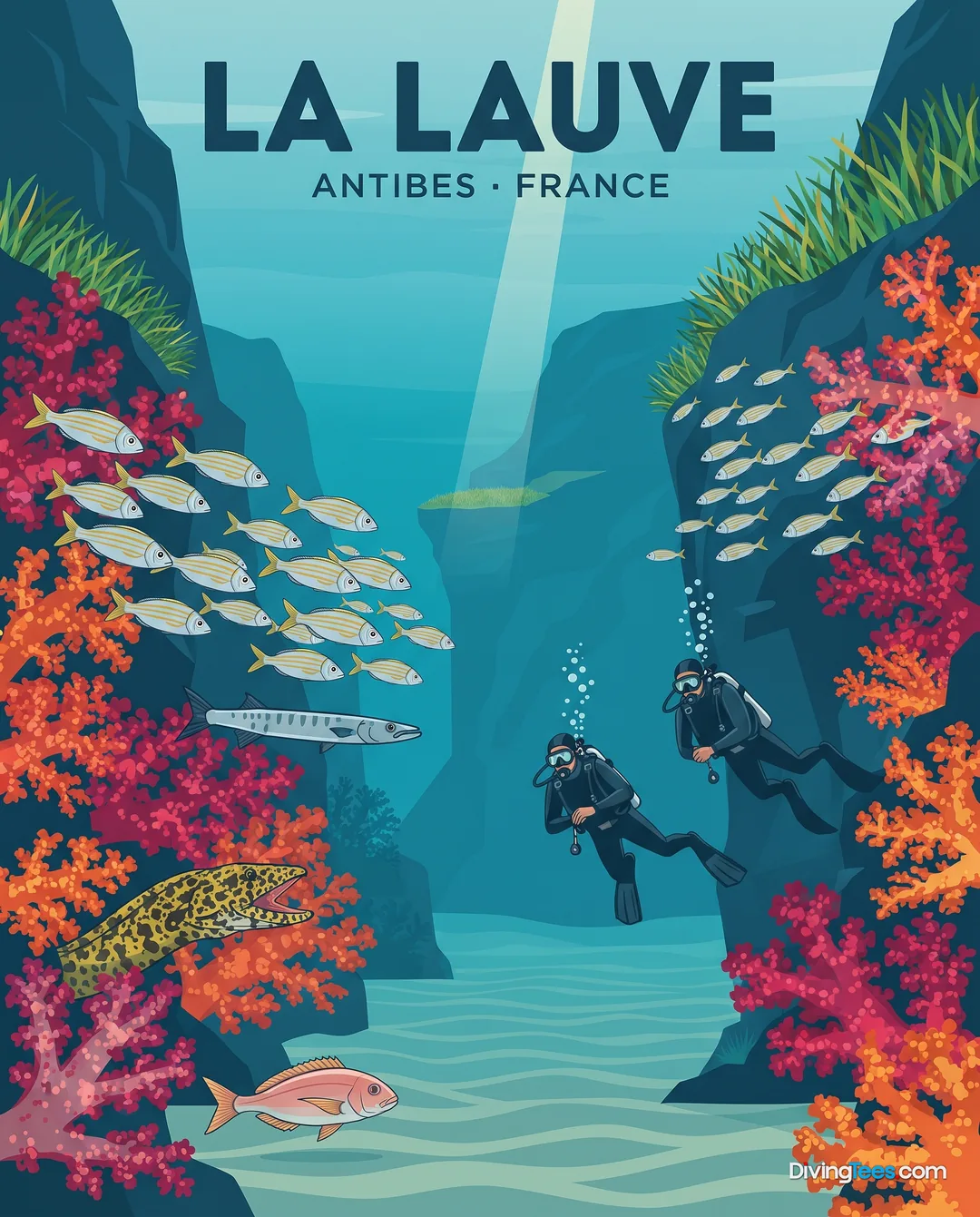
Navigating the circular reef requires careful buoyancy control due to the unevenness of the rocky terrain. The crevices and holes within the formation are deep and often quite narrow, providing ideal hiding spots for larger inhabitants. You will frequently find moray eels and conger eels tucked into these anfractuosities, watching the movement in the water column. The presence of these predators is a direct result of the complex topography, which allows them to ambush prey while remaining protected within the rockwork.
The biodiversity at L'Arenas is centered around the structural complexity provided by the gorgonian corals. Among the resident species, you can observe European lobsters and spiny lobsters moving through the lower reaches of the rocks. The site also hosts various fish species that utilize the rocky relief for protection. You might encounter John Dory or forkbeard moving along the periphery of the formation. These species are well-adapted to the deeper, more shaded conditions found around the pinnacle.
Large predators are a key component of the site's ecosystem, often appearing as you patrol the edges of the rocky circle. Dusky grouper are known to frequent the deeper sections, often hovering near the structure. The visibility of larger animals depends heavily on the current, as the movement of water brings nutrients that support the entire food chain. Observing the interaction between the resident reef fish and the larger predators is a central part of the experience at this location.
The site is highly exposed to the elements, which directly influences the diving conditions. Because it is situated away from the immediate protection of the coastline, the water surface and the underwater environment are subject to the influence of all prevailing winds. This exposure means that the site can change rapidly; while it may be calm one day, the swell and water movement can increase significantly depending on the local weather. Planning a dive here requires a clear understanding of the current sea state and wind direction.
Currents at L'Arenas are variable and can become quite strong, particularly when the wind picks up or during tidal shifts. The way the water interacts with the circular rock formation can create localized turbulence around the edges of the pinnacle. For divers, this means that maintaining a steady position while observing the fauna requires experience. Managing your gas consumption and ascent rates is especially important here, given the depth and the potential for unexpected water movement.
Depths range from 35 to 60 metres. This site is intended for technical divers or experienced, confirmed divers with proven experience in deep water and variable currents. Conditions are highly dependent on weather and sea state. The site is exposed to all winds, meaning currents can become strong and unpredictable; always verify the local forecast and sea conditions before attempting a descent.
Choose L'arenas only after checking the local forecast, wind direction, and sea conditions. The site is exposed to all winds, so surface conditions and underwater movement can change quickly. A calm day can be followed by increased swell and water movement, making the descent unsuitable when the weather or sea state deteriorates.
L'arenas is intended for technical divers and experienced, confirmed divers with proven deep-water experience. You also need to manage buoyancy around uneven rock, control your gas consumption and ascent rates, and remain comfortable with changing water movement while exploring a deep, specialized Mediterranean environment.
L'arenas is a deep-water pinnacle with overall depths ranging from 35 to 60 metres. Its circular rock formation generally rests on a seabed between 38 and 45 metres, while the surrounding relief creates deeper zones. As you descend, light levels decrease and the environment becomes more specialized.
Currents at L'arenas are variable and can become strong, especially when winds increase or during tidal shifts. The circular formation may create localized turbulence around its edges. You can see large gorgonian colonies, dusky grouper, conger and moray eels, spiny and European lobsters, John Dory, and forkbeard.