Easy Dive
Google 4.7/5 (293 reviews)
2.5 km away as the crow flies
Antibes · France · Mediterranean
Max. depth · 30 mTransition from shallow Posidonia meadows to a complex network of narrow canyons and a 30-metre rocky drop-off.
For subtitles in English: start the video firstthen click the gearat the top right of the video, select “Subtitles/CC”, then “Auto-translate” and choose “English”.
The dive begins on a relatively shallow plateau dominated by Posidonia seagrass, providing a calm entry point before the topography becomes more complex. As you move deeper, the seabed shifts from this vegetative cover into a structured network of narrow canyons and fissures. These geological formations create a protected environment within the larger site, allowing for closer observation of smaller organisms. Navigating through these tight passages requires careful buoyancy control to avoid contact with the rock faces. The transition from the plateau to the canyon system marks the start of the site's more technical features.
Once you exit the canyon network, the terrain opens up into a significant rocky drop-off that descends toward a sandy floor. This wall is characterized by various structural elements, including overhangs, terraces, and deep cracks that provide essential shelter for larger Mediterranean species. The verticality of the site is interrupted by these stepped reliefs, which create different micro-habitats at varying depths. You will find that the light changes noticeably as you move from the upper terraces down toward the 30-metre mark. The combination of hard rock and sand at the base of the wall defines the site's primary profile.
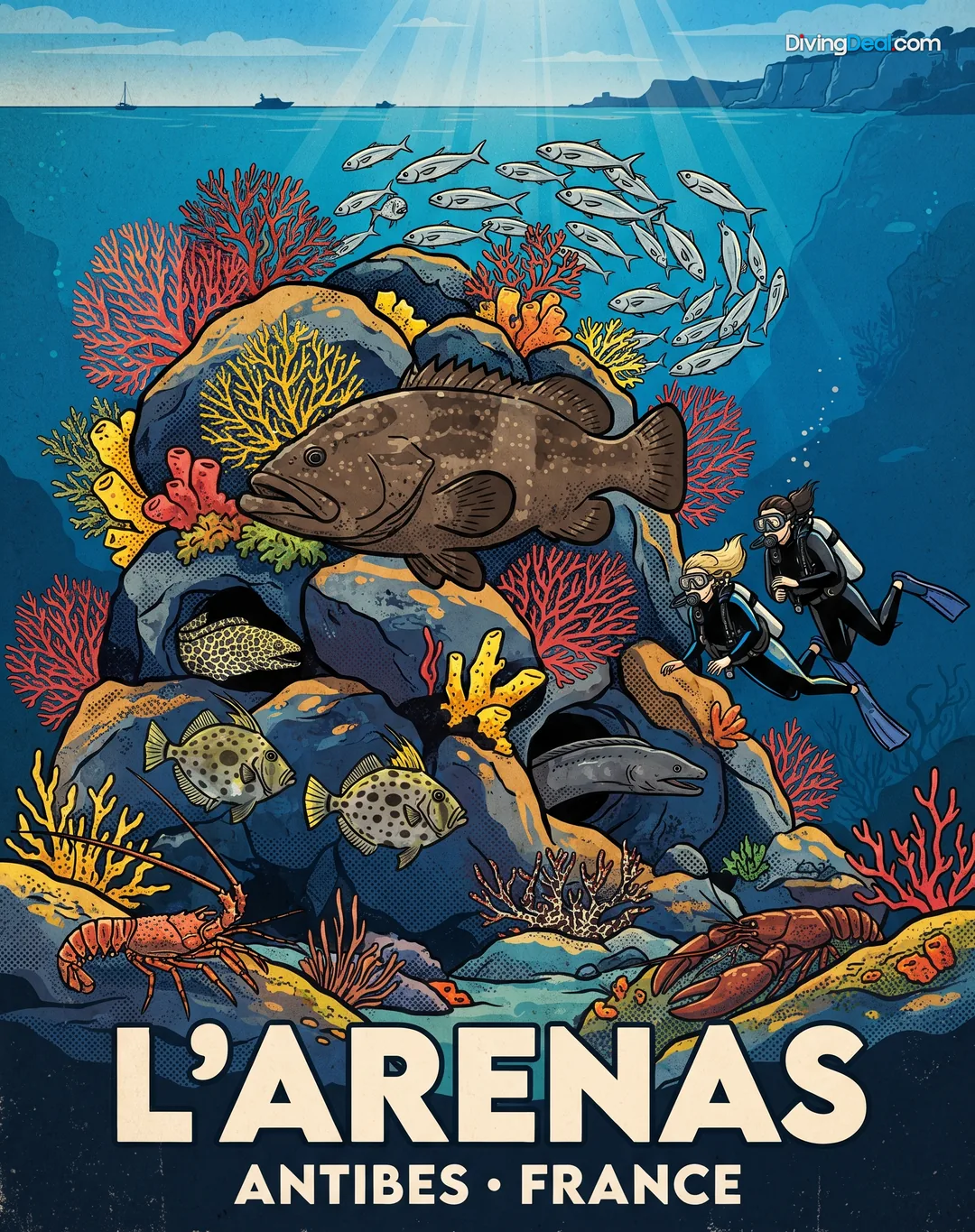
The resident fauna is heavily concentrated within the structural complexities of the wall and the canyons. Moray eels and conger eels are frequently found occupying the larger crevices and holes in the rock, often watching the divers pass. You can also spot common octopus hiding under rocky overhangs or amongst the debris in the canyon floors. Scorpionfish utilize the rocky terrain for camouflage, remaining stationary against the substrate. These ambush predators rely on the site's intricate topography to hunt effectively, making the cracks and shadows a primary focus for observation.
In the more open areas of the wall and above the sandy bottom, larger Mediterranean fish are common. Dentex and barracuda are often seen patrolling the water column, frequently appearing near the edges of the drop-off or cruising above the reef. Two-banded seabream and salema tend to school in the mid-water areas, moving in response to light and current changes. Groupers are another significant presence, often found near the base of the wall or hovering near rocky ledges. The movement of these larger species is closely tied to the transition zones between the rock and the sand.
The site also offers opportunities for macro observations among the smaller reef inhabitants. Nudibranchs can be found on the rock surfaces, providing splashes of colour against the darker Mediterranean substrate. Smaller reef fish, such as various species of seabream, inhabit the shallower parts of the rocky terraces. The presence of these organisms is highly dependent on the specific micro-habitat, with the canyons providing much more shelter than the exposed wall sections. Divers should scan the undersides of overhangs and the edges of the Posidonia meadows to find these smaller residents.
Conditions at La Lauve are heavily influenced by the prevailing weather patterns in the region. Because the site is exposed to southern swells and easterly winds, the water state can change rapidly depending on the local meteorology. While the shallow plateau may remain relatively calm, the deeper sections of the wall can experience increased surge or movement if the sea is active. This exposure means that the quality of the dive is closely linked to the calmest weather windows. Planning your dive according to the wind direction and swell height is essential for a predictable experience.
The accessibility of the site is primarily via boat from Golfe-Juan, which is approximately a 45-minute transit. The dive profile is versatile, offering shallow sections for those beginning their experience and deeper, more demanding sections for those looking to explore the verticality of the wall. The descent along the drop-off is the most technical part of the dive, requiring steady depth control as the terrain falls away toward the sandy bottom. Understanding the shift from the sheltered canyons to the exposed wall is key to managing your gas consumption and navigation.
Depths range from 1 to 30 metres. Accessible from Open Water Diver level, though experience is recommended for the canyon navigation and the 24–30 metre depth sections. Current and swell conditions vary based on southern swells and easterly winds. Best visibility occurs during sunny weather and calm sea conditions.
La Lauve is affected by southern swells and easterly winds, so conditions can change rapidly. The shallow plateau may stay relatively calm, while deeper wall sections can experience more surge or movement when the sea is active. Sunny weather and calm seas provide the best visibility for exploring the site.
La Lauve is accessible to Open Water Divers, with shallow sections providing a calm entry point. Experience is recommended for navigating the narrow canyons and exploring the twenty-four to thirty metre sections. Careful buoyancy control is important in tight passages, while steady depth control is needed along the drop-off.
La Lauve ranges from one to thirty metres. The dive begins on a shallow Posidonia plateau before continuing through narrow canyons and toward a rocky drop-off above a sandy floor. You can choose shallower areas or descend along the wall into deeper sections, where the terrain becomes more demanding.
At La Lauve, you can move from Posidonia seagrass and rocky canyons to walls with overhangs, terraces and crevices. Moray eels, conger eels, octopus and scorpionfish shelter among the rocks, while dentex, barracuda, groupers, seabream and salema occupy open areas. Nudibranchs and smaller reef fish offer macro subjects.