
Sub'dive
Google 5/5 (955 reviews)
3.6 km away as the crow flies
Calvi · France · Mediterranean
Max. depth · 50 mPunta Bianca offers a deep exploration of Corsica's underwater topography, with walls and reefs starting at 5 metres and dropping to 50.
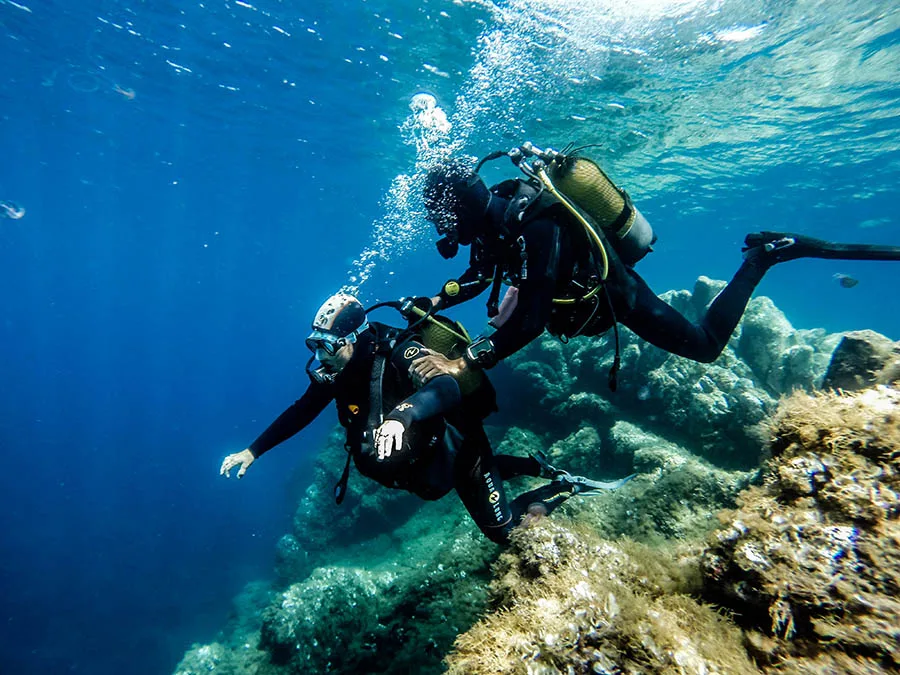
Punta Bianca, also known as Punta Bianca, presents a varied underwater landscape characterized by extensive rocky formations, sheer walls, and intriguing caves. The site begins subtly, with shallower sections around 5 metres, making it accessible for initial exploration. However, its true character emerges as you descend, revealing a complex topography that plunges much deeper, offering multiple profiles within a single dive.
The dive profile at Punta Bianca is distinct from many shallower coastal sites in the region. While the top reef offers shallower diving, the main draw for many is the submerged rock, which starts around 22 metres and continues its descent to approximately 40 metres. This provides a direct path to deeper exploration, allowing divers to experience the significant drop-offs and the relief that defines this offshore site.
As you move along the walls and explore the crevices, you'll encounter resident marine life that thrives in these deeper, more sheltered environments. Conger eels (Conger conger) often peer from their rocky hideouts, while mostelles (Phycis phycis) can be seen navigating the darker corners. The site's broken relief creates numerous shelters, making it a good spot to observe these often-elusive species.
The robust rocky structures of Punta Bianca also provide habitat for larger bottom dwellers. Groupers (Epinephelus marginatus) are common, often found in the deeper overhangs, along with sars (Diplodus sargus) patrolling the reef edges. Look closely in the cracks and beneath ledges for capons (Scorpaena scrofa) and corbs (Sciaena umbra), which blend expertly with the environment, relying on camouflage for hunting and protection.
The current at Punta Bianca is variable, reflecting its offshore location and exposure. While it is not consistently strong, conditions can shift, requiring divers to remain attentive to their position and buoyancy, particularly around the more exposed sections of the walls. This variability is a characteristic of such prominent rocky features in the Calvi/Revellata area, where oceanic influences can be felt more acutely than in sheltered bays.
Punta Bianca offers a broad dive depth, from 5 metres down to 50 metres, catering to a range of experience levels. The shallower areas are accessible for Open Water divers, but the deeper sections, extending towards the 50-metre mark, require Advanced Open Water certification and substantial experience with deeper profiles. Current conditions are variable, meaning divers should be prepared for potential shifts in water movement and maintain good situational awareness throughout the dive.
La Punta Bianca suits a range of experience levels because its shallower areas are accessible to Open Water divers. The deeper sections, reaching toward 50 metres, require Advanced Open Water certification and substantial experience with deeper profiles. Your training and experience should match the part of the site you plan to explore.
La Punta Bianca ranges from about 5 metres to 50 metres. The top reef begins in shallow water, while the submerged rock starts around 22 metres and descends to approximately 40 metres. This varied profile includes significant drop-offs, steep walls, rocky formations, caves, and overhangs at different depths.
Current conditions at La Punta Bianca are variable rather than consistently strong. Water movement can shift, particularly around the more exposed sections of the walls. You should remain attentive to your position and buoyancy throughout the dive, maintaining good situational awareness as conditions change around this offshore rocky site.
At La Punta Bianca, you can explore rocky reefs, steep walls, caves, overhangs, crevices, and submerged rock. Conger eels and mostelles shelter in darker spaces, while groupers and sars occur in deeper sections. Look beneath ledges and in cracks for capons and corbs, which blend with the rocky surroundings.