
Tiki Dive
Google 4.9/5 (288 reviews)
17 km away as the crow flies
Cavalaire-sur-Mer · France · Mediterranean
Max. depth · 25 mExplore the rocky formations and seagrass meadows of Sec Jaune, a submerged shoal offering a different perspective on Mediterranean diving.
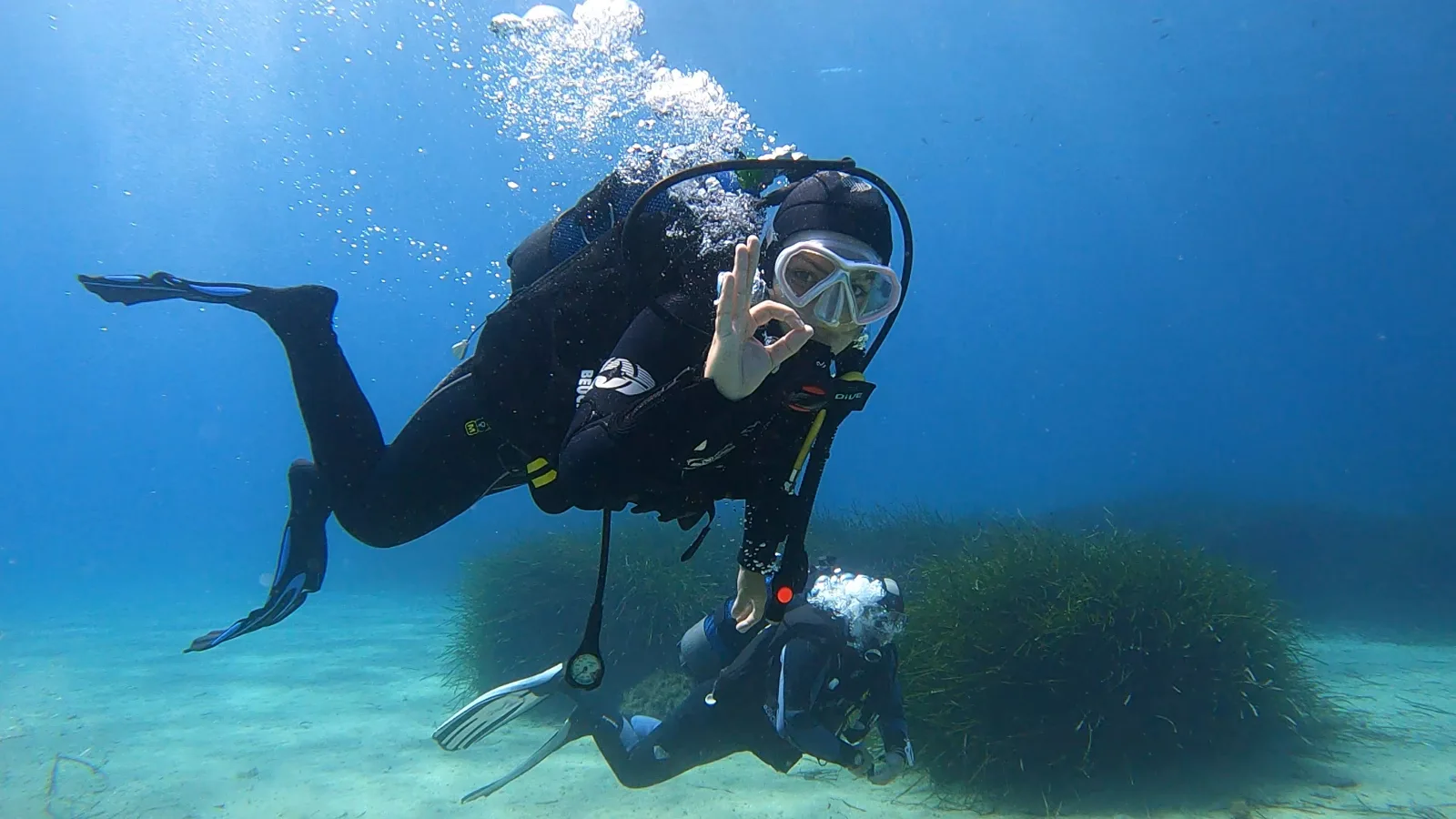
Sec Jaune, also known as Le Sec Jaune, is a submerged reef rising from the seafloor, not a wall or a wreck. You'll drop onto a plateau that begins around 5 metres below the surface and slopes gently down to a maximum depth of 25 metres. The topography here is a mix of rock formations and dense Posidonia oceanica seagrass meadows, creating varied habitats to explore.
As you descend onto the reef, you'll notice the structure isn't dramatic; it's a series of undulations and smaller rocky outcrops. This submerged shoal allows for flexible dive plans, whether you want to spend time exploring the shallower rocky patches or work your way down to the deeper boundaries where the reef transitions into sandy areas. The interaction between the rocks and the seagrass offers shelter and feeding grounds for many species.
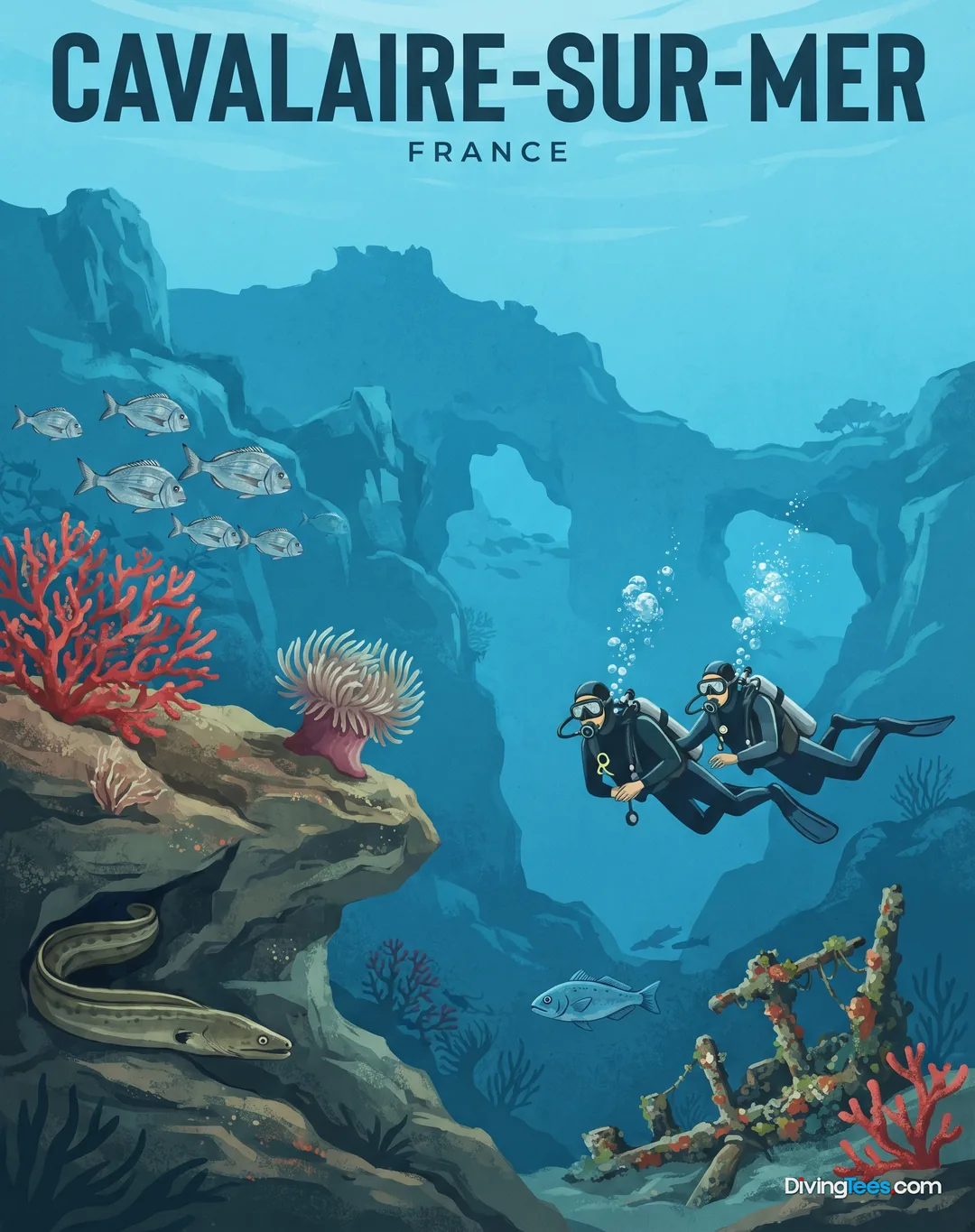
The resident marine life at Sec Jaune includes Mediterranean damselfish, which you'll see schooling around the rock formations, and various wrasse species moving through the Posidonia. Keep an eye out for groupers sheltering in the larger crevices, and you might spot moray eels and conger eels hidden within the rockwork. Sea bream are also a common sight, often seen grazing near the seagrass beds.
What sets Sec Jaune apart from many other sites on the Côte d'Azur is its accessible reef profile. Unlike the deeper wrecks that dominate the dive landscape in areas like Cavalaire-sur-Mer, this site provides an easier reef dive. It's a place where you can take your time, focus on buoyancy in shallower water, and observe the smaller details of the Mediterranean ecosystem without the demands of a deep or complex dive profile.
Sec Jaune is accessible from Open Water Diver level, provided you are comfortable with basic reef navigation and maintaining buoyancy in typical Mediterranean shallow conditions. Depths at the site range from a minimum of 5 metres to a maximum of 25 metres. Current conditions are variable; while direct data for this specific site is limited, similar shallow rocky areas in the region can experience wind-driven and tidal currents. It's advisable to check local conditions before diving.
You can dive Sec Jaune from Open Water Diver level if you are comfortable with basic reef navigation and maintaining buoyancy in typical Mediterranean shallow conditions. Its accessible reef profile lets you take your time in shallower water, focusing on buoyancy and observing the ecosystem without a deep or complex dive profile.
Sec Jaune ranges from 5 to 25 metres deep. You descend onto a plateau beginning around 5 metres, then follow a gentle slope toward the deeper boundaries. The reef consists of undulations and smaller rocky outcrops, transitioning into sandy areas near its maximum depth.
Current conditions at Sec Jaune are variable. Direct information for this specific site is limited, while similar shallow rocky areas in the region can experience wind-driven and tidal currents. Check local conditions before diving, particularly because the reef includes shallow areas where maintaining buoyancy and navigation matters.
At Sec Jaune, you can explore rock formations mixed with Posidonia oceanica meadows. Mediterranean damselfish school around the rocks, while wrasse move through the seagrass. Groupers may shelter in larger crevices, and moray eels, conger eels, and sea bream can also be seen around the reef.