Liveaboards · Indonesia
Amalia Indonesia — a compact, dive-first Komodo liveaboard with a crew-led spirit
What makes this boat unique
- Amalia carries up to 11 guests in five lower-deck cabins, with twin, double ensuite and larger shared cabin options.
- The dive setup includes a shaded dive area, DIN adaptors, separate camera rinsing and two diver tenders.
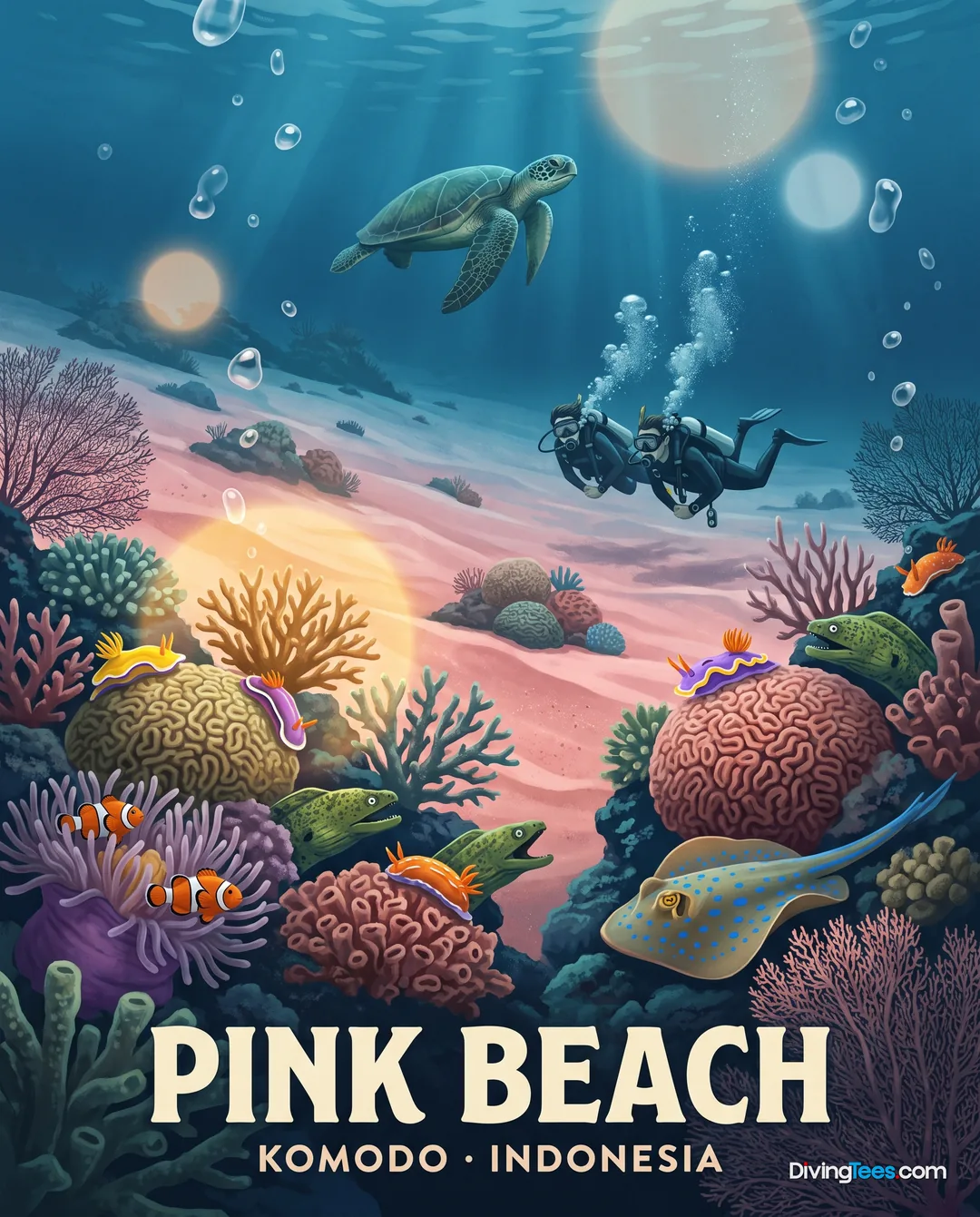
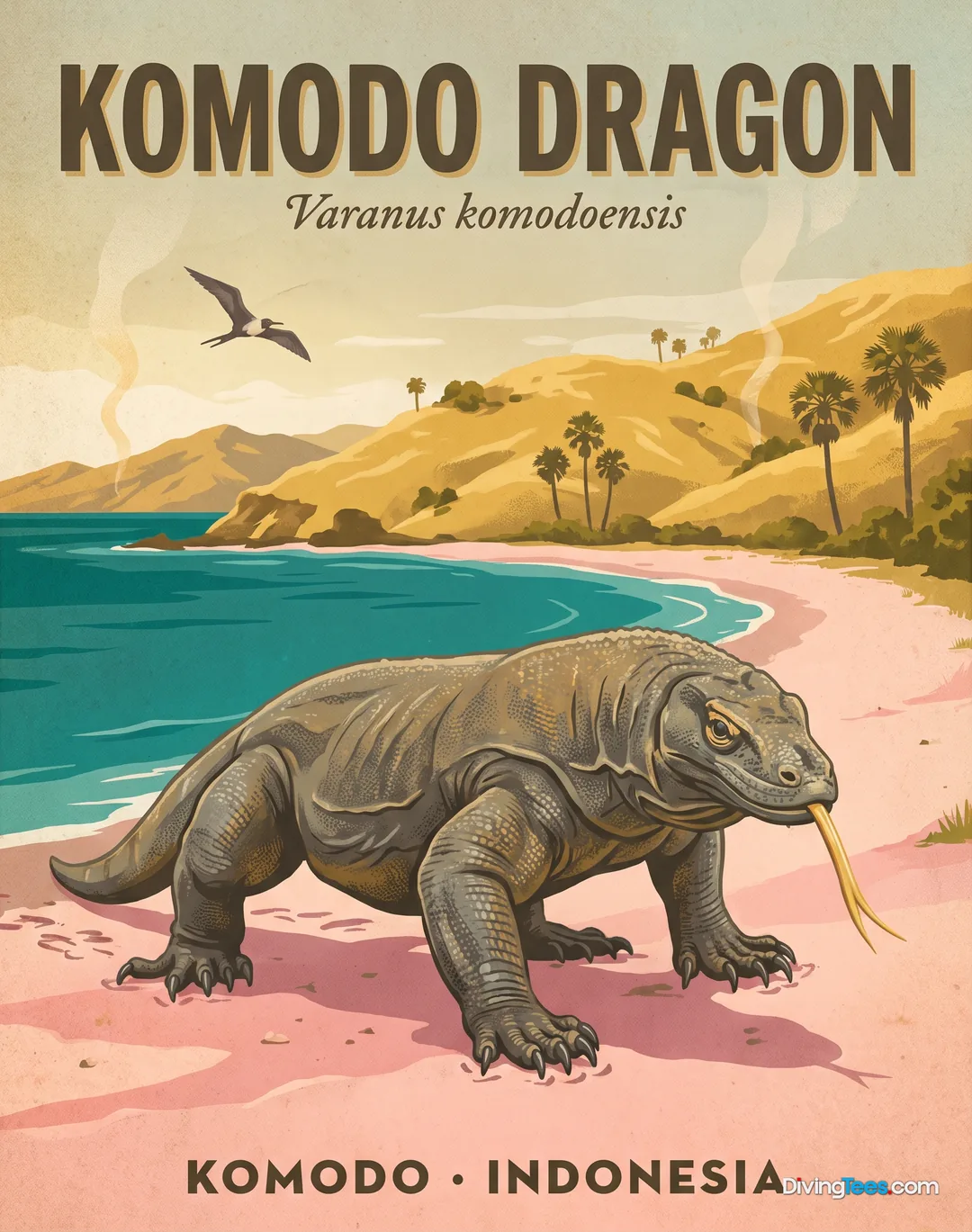
- Komodo itineraries combine up to six nights of diving with night dives, Komodo dragon visits, Padar trekking, pink beaches, snorkeling and stand-up paddleboarding.
- The boat was built in 2015 and renovated in 2021; passenger feedback rates the crew, food and diving higher than the vessel itself.
The invitation
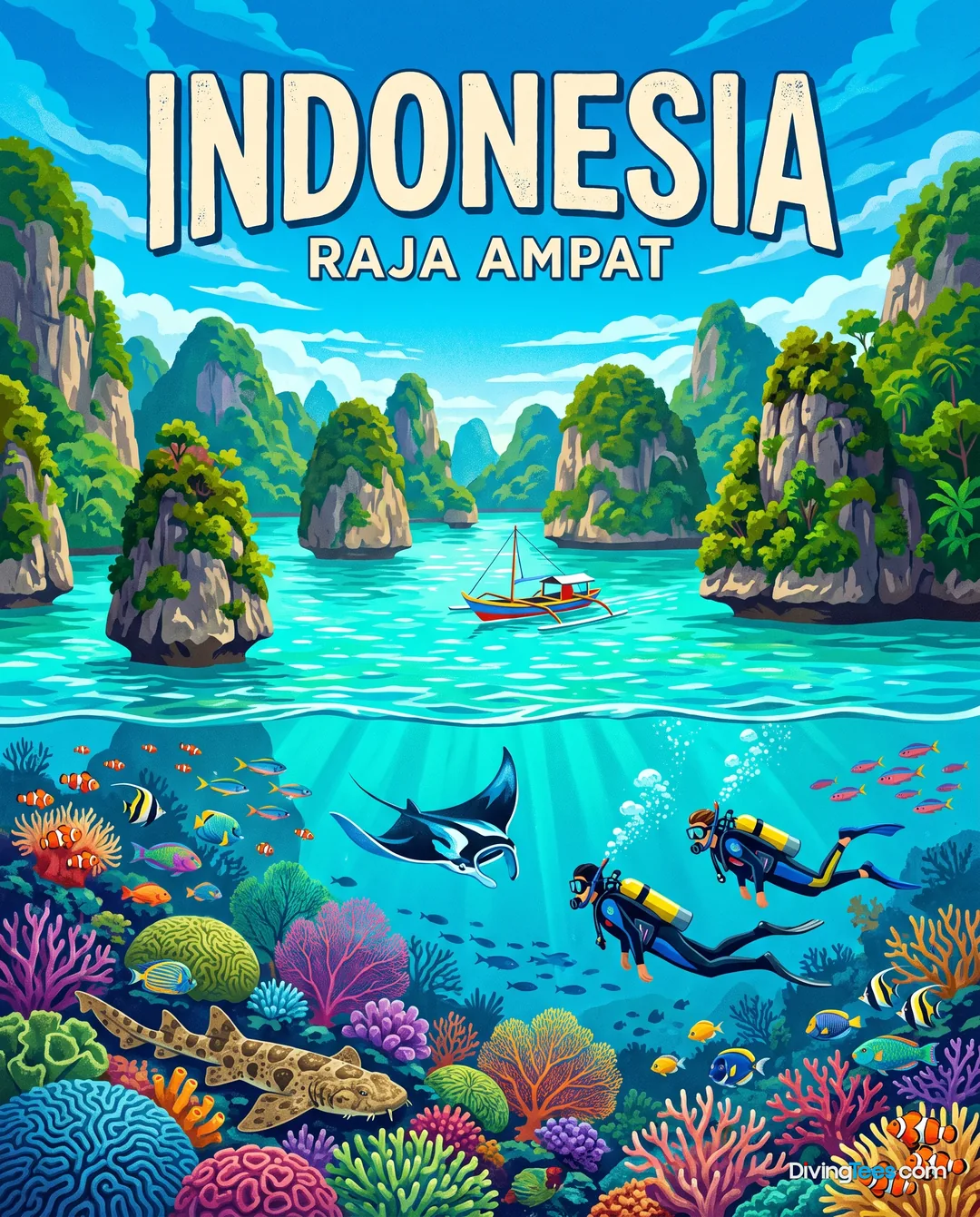
Amalia is for divers who want Komodo rather than a floating hotel. The boat takes the group into the national park for several nights, so sites such as Crystal Rock, Castle Rock, Manta Alley and the southern reefs are reached without repeating the long transfers of a day boat. Diving is the centre of the trip, but the route also brings Komodo dragons, Padar trekking, pink beaches, snorkeling and stand-up paddleboarding into the same voyage. The reason to choose Amalia is the balance: a small passenger group, a close crew-to-guest ratio, full-board meals and a dive operation built around reading Komodo’s currents safely. It is not the newest or most polished vessel in the region. Its stronger argument is what happens around the diving: guides who know the sites, briefings taken seriously, and a crew that stays involved from the first gear check to the last tender pickup.
Boarding
Amalia began as an old cargo hull, stripped back to its ironwood structure and rebuilt by Sulawesi woodworkers for diving in Labuan Bajo. That history remains part of the boat’s character: it feels more like a working wooden vessel than a resort, with broad shaded areas, an open kitchen, an indoor saloon and an upper sun deck linked by practical passageways. The 2021 renovation keeps the boat serviceable without erasing that older, hand-built feel. Once aboard, the layout is easy to understand. Guests move between the dive deck, saloon, outdoor dining area and observation space rather than disappearing into a maze of rooms. Two tenders sit ready for different entry and exit points, which matters in Komodo’s current-heavy sites. The vessel’s own scores are solid but below those for its crew, food and diving. That is a fair description of the trade: less hotel polish, more human attention.
The atmosphere on board
The atmosphere is shaped more by the crew than by the hull. Passenger feedback consistently points to careful organisation, calm instructors, strong safety briefings, good coordination and a crew that makes a mixed group feel looked after without hovering. The close crew-to-passenger ratio helps: questions are answered on deck, gear is handled quickly, and a guide remains present when conditions change. Evenings are simple rather than programmed. Divers eat together, review the day, watch or listen to something in the saloon, and sometimes join a beach barbecue or sunset drinks on shore. Amalia’s boat score sits below its crew score, while food and diving score higher still. That tells a useful story. Guests are not choosing a flawless modern yacht; they are choosing a capable working boat whose people turn its rougher edges into part of the trip.
The sites you’ll dive
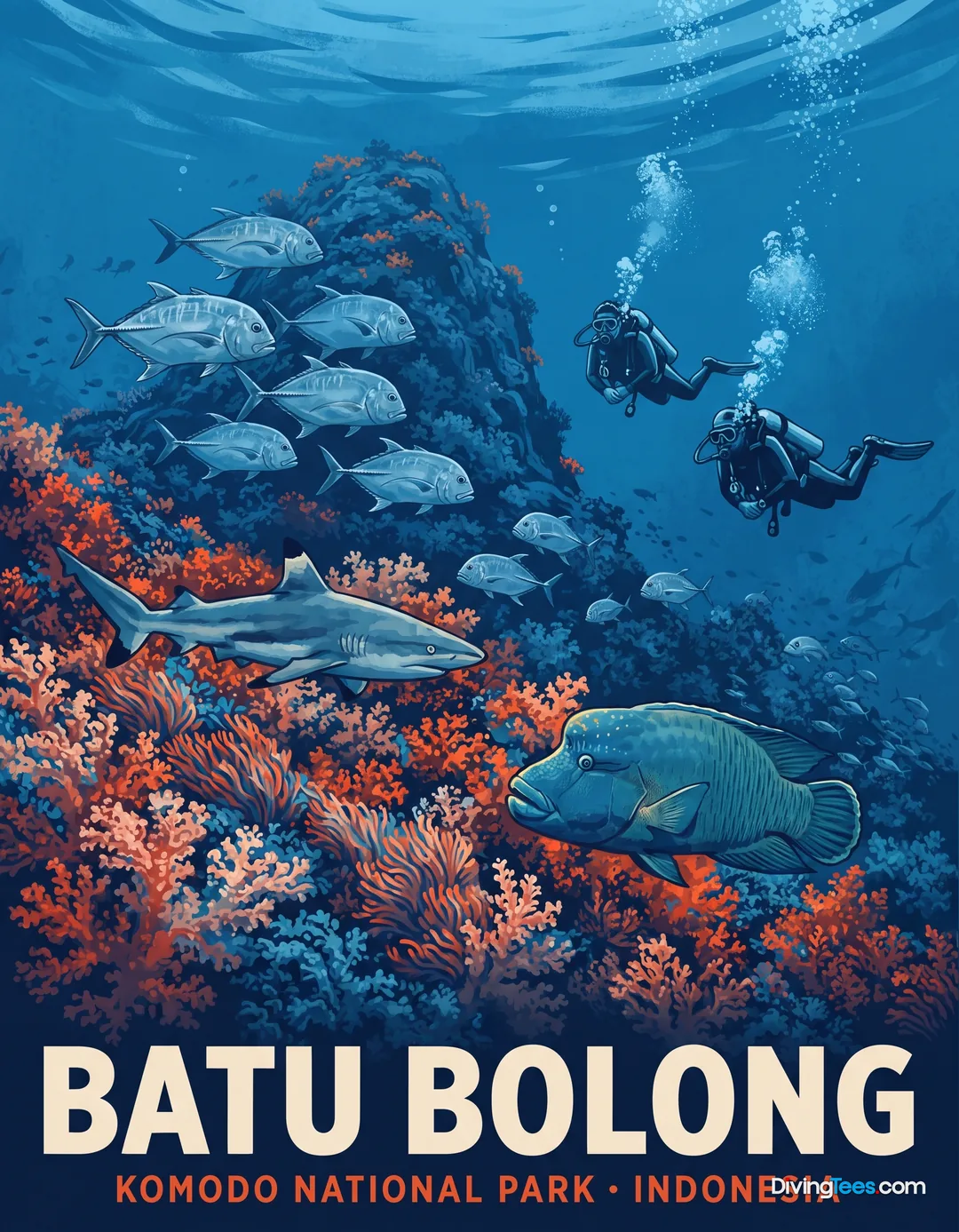
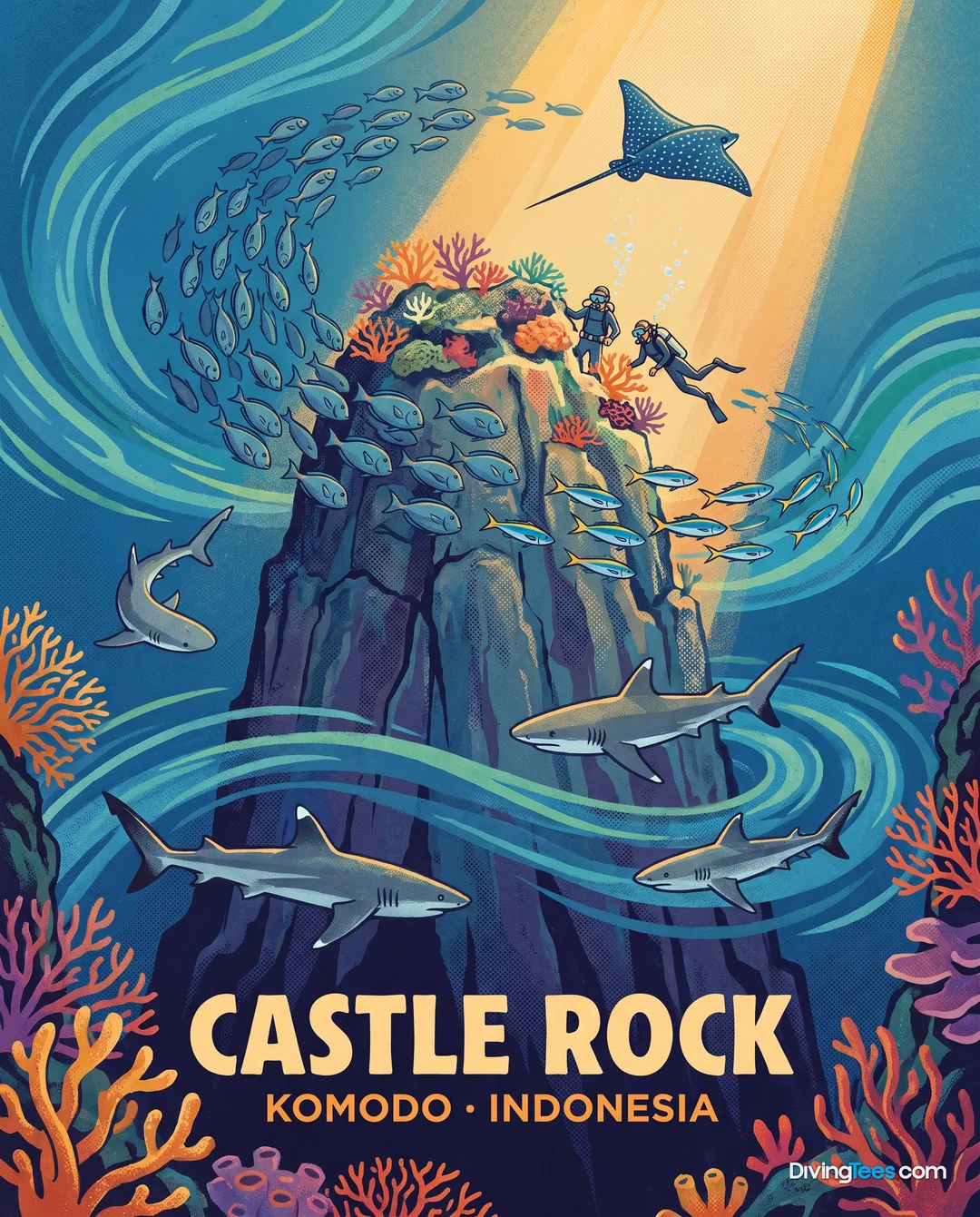
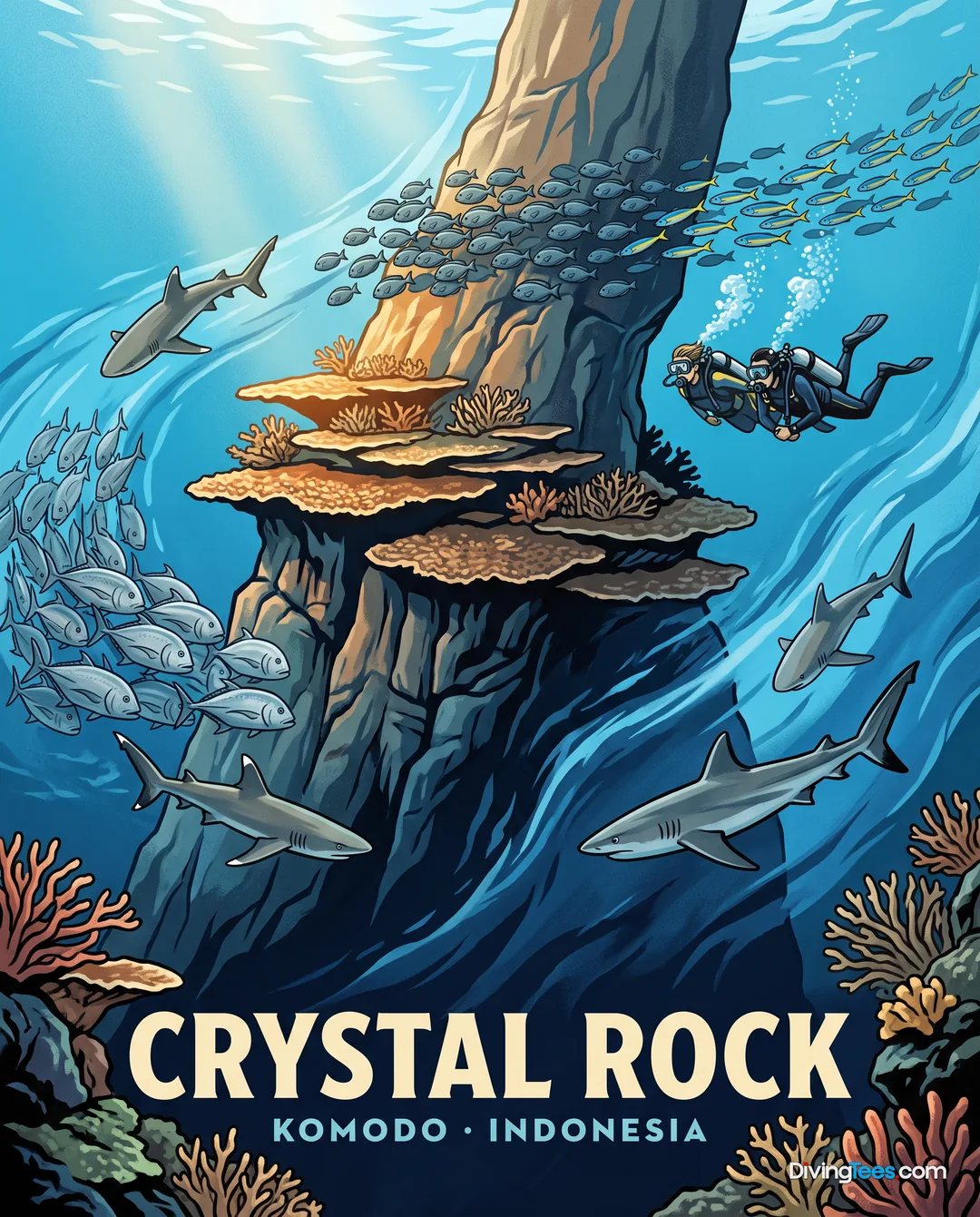
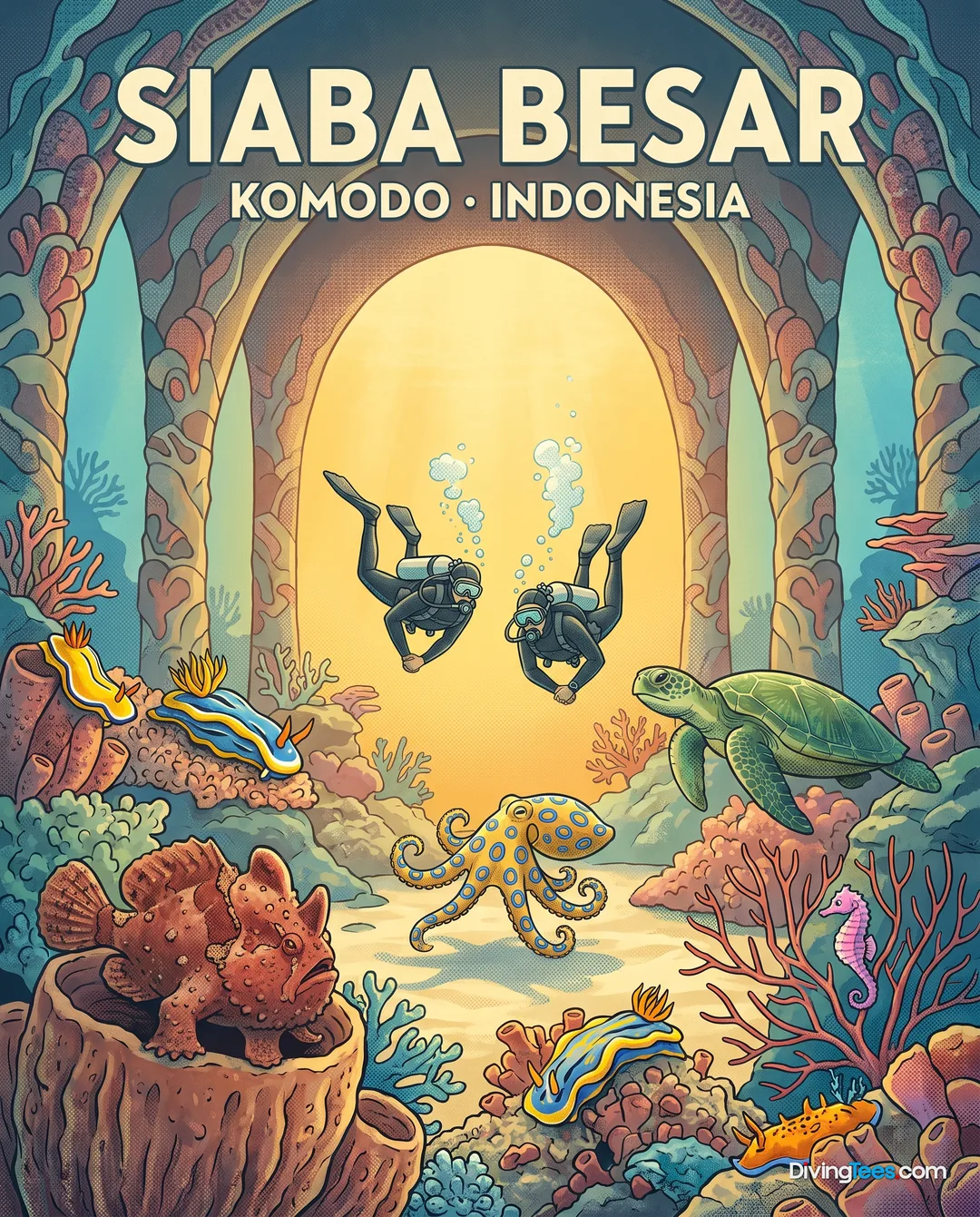
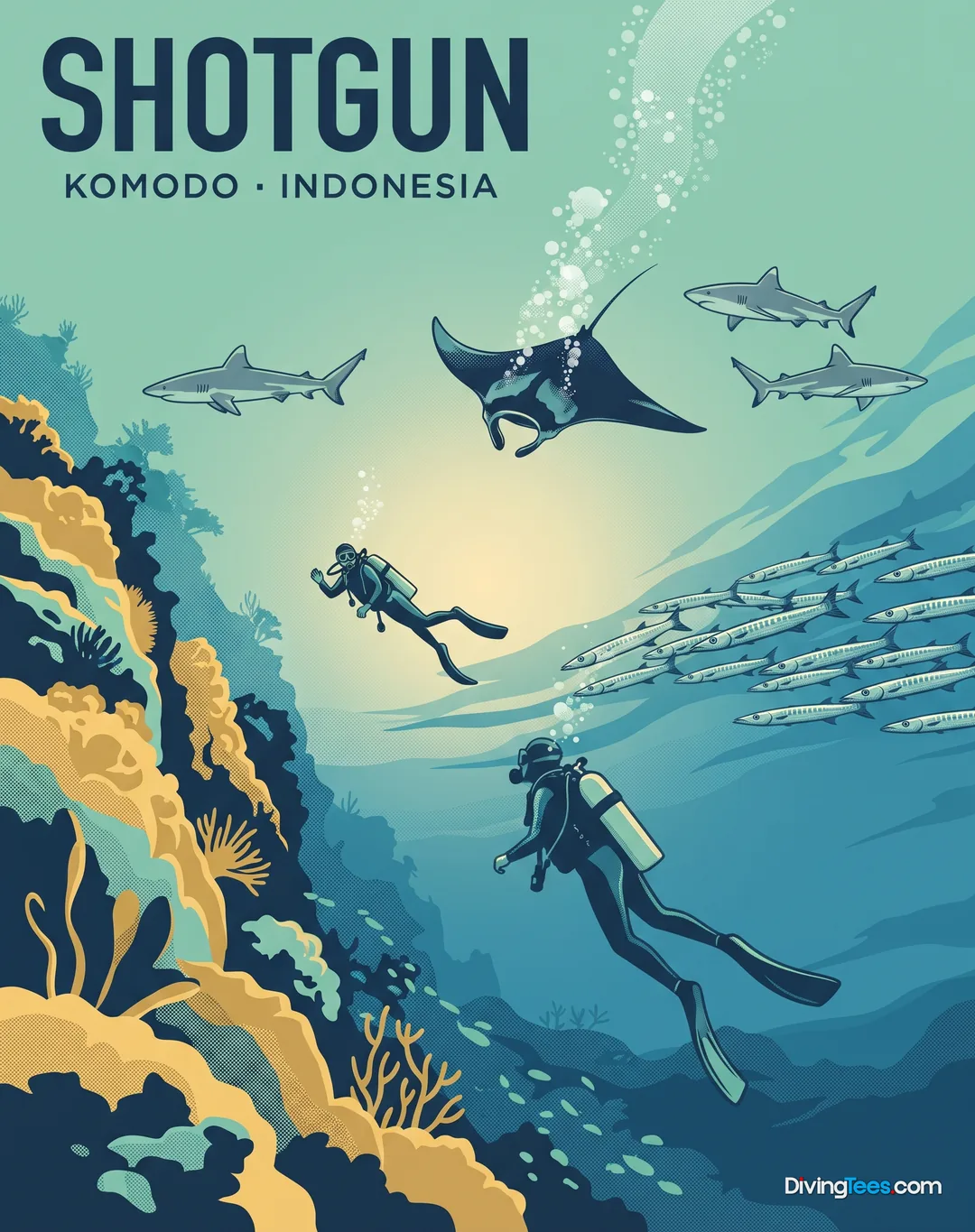
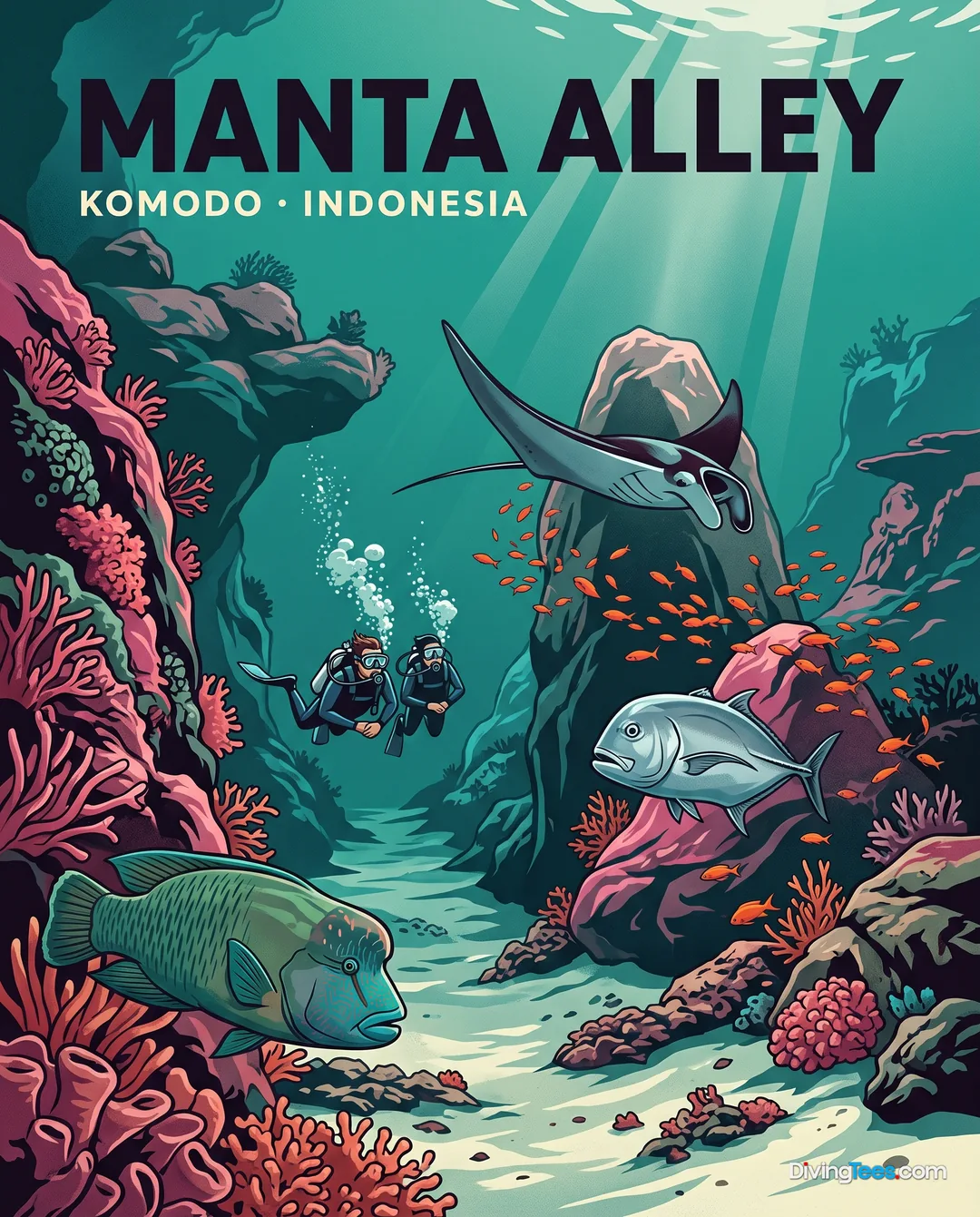
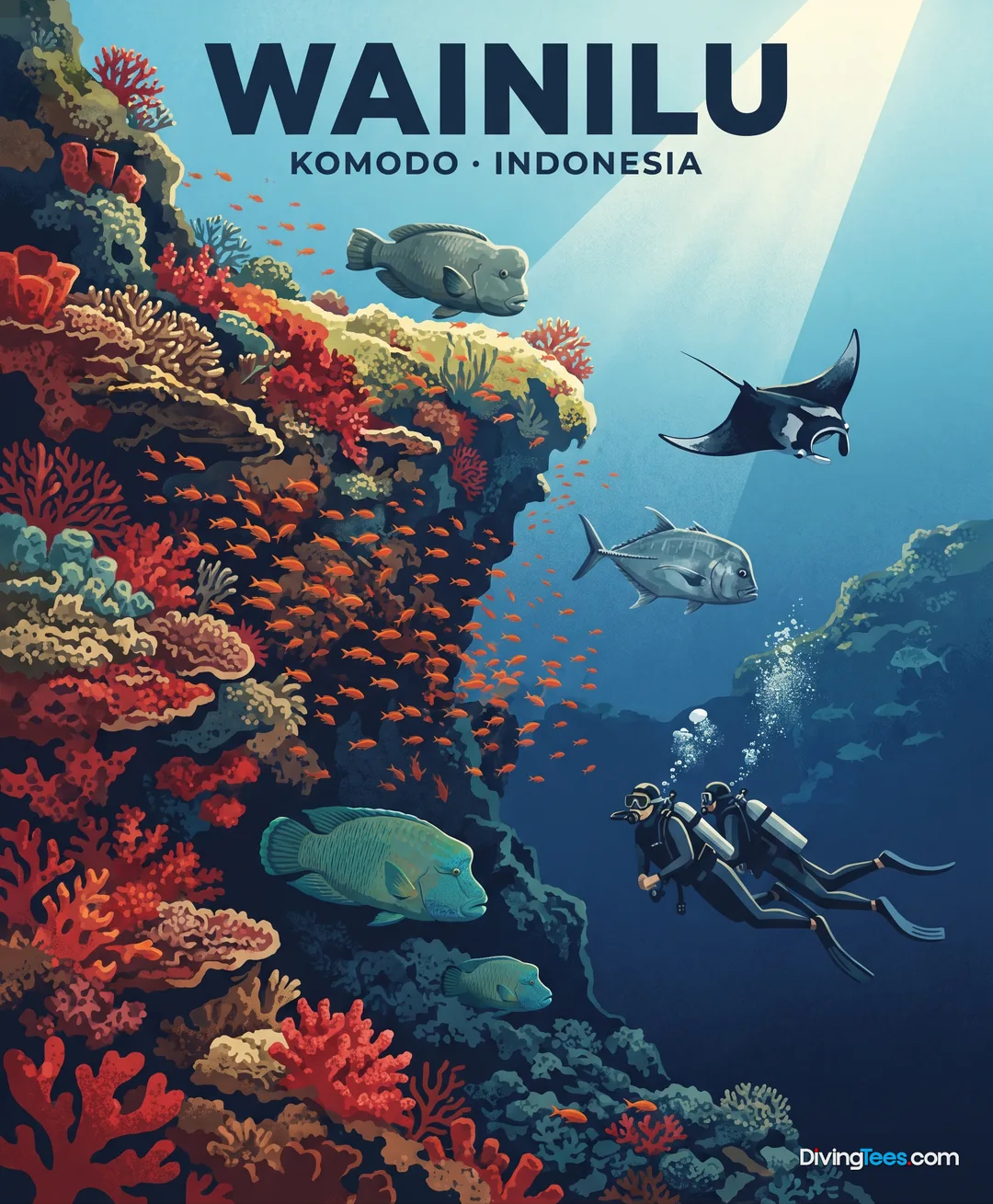
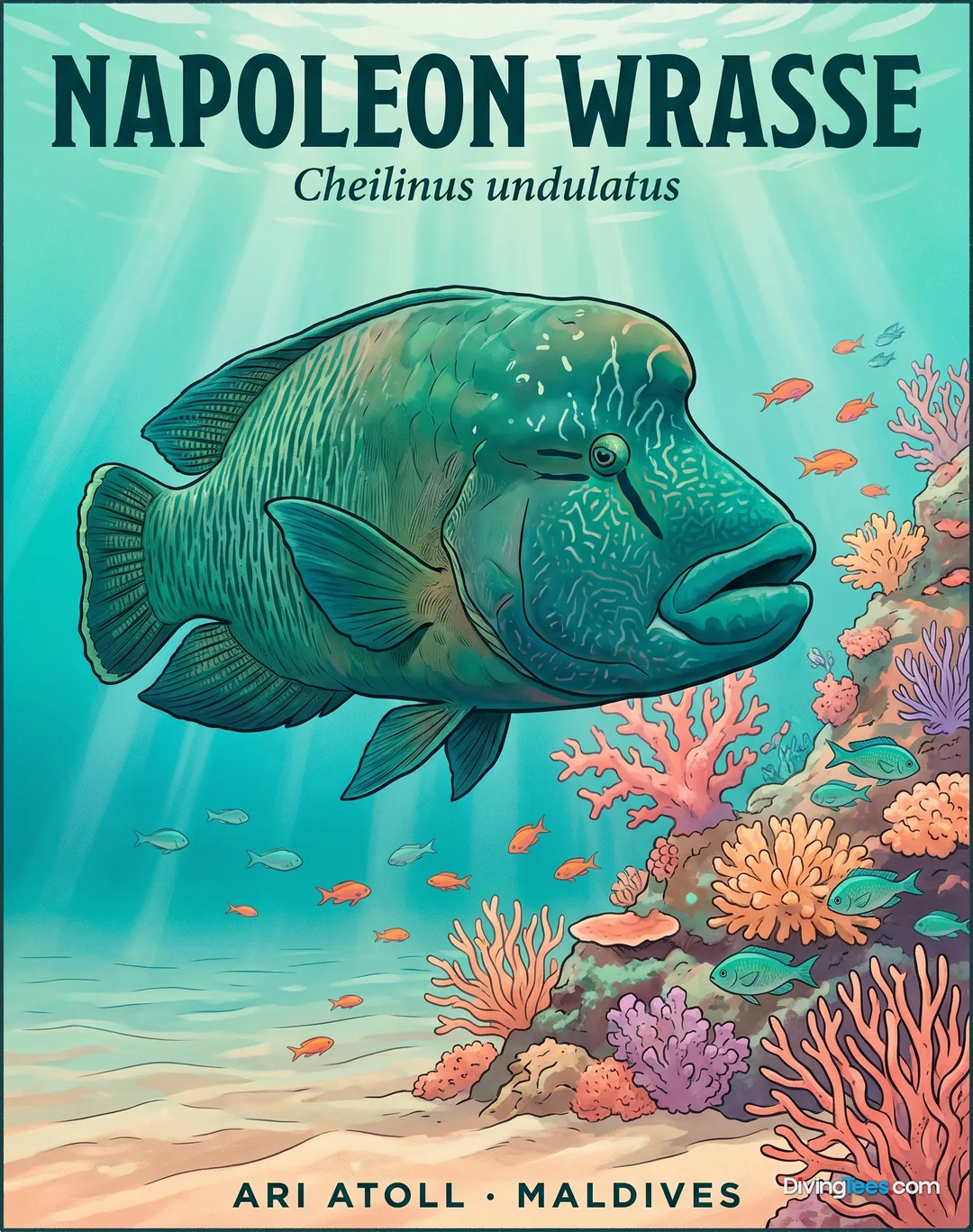
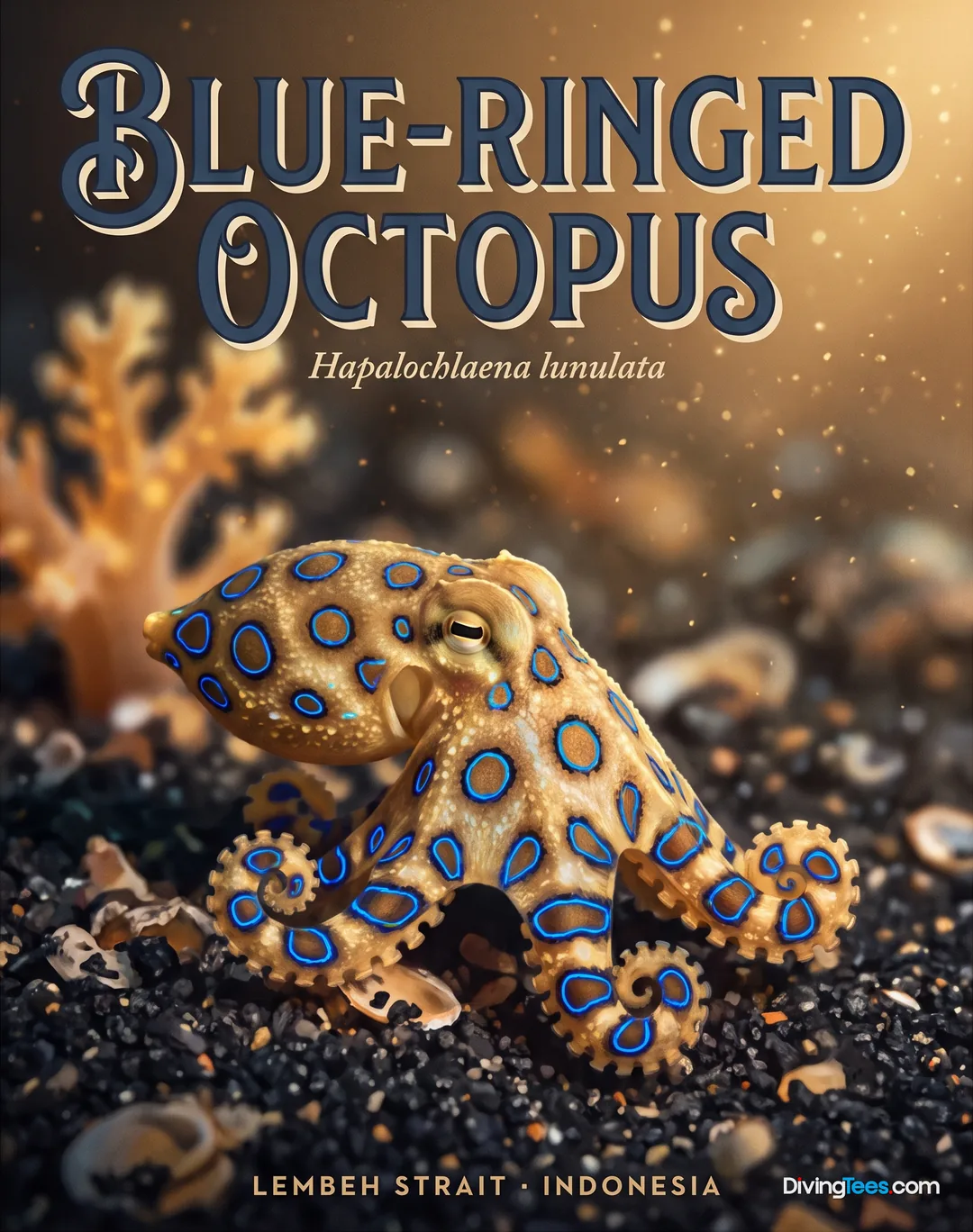
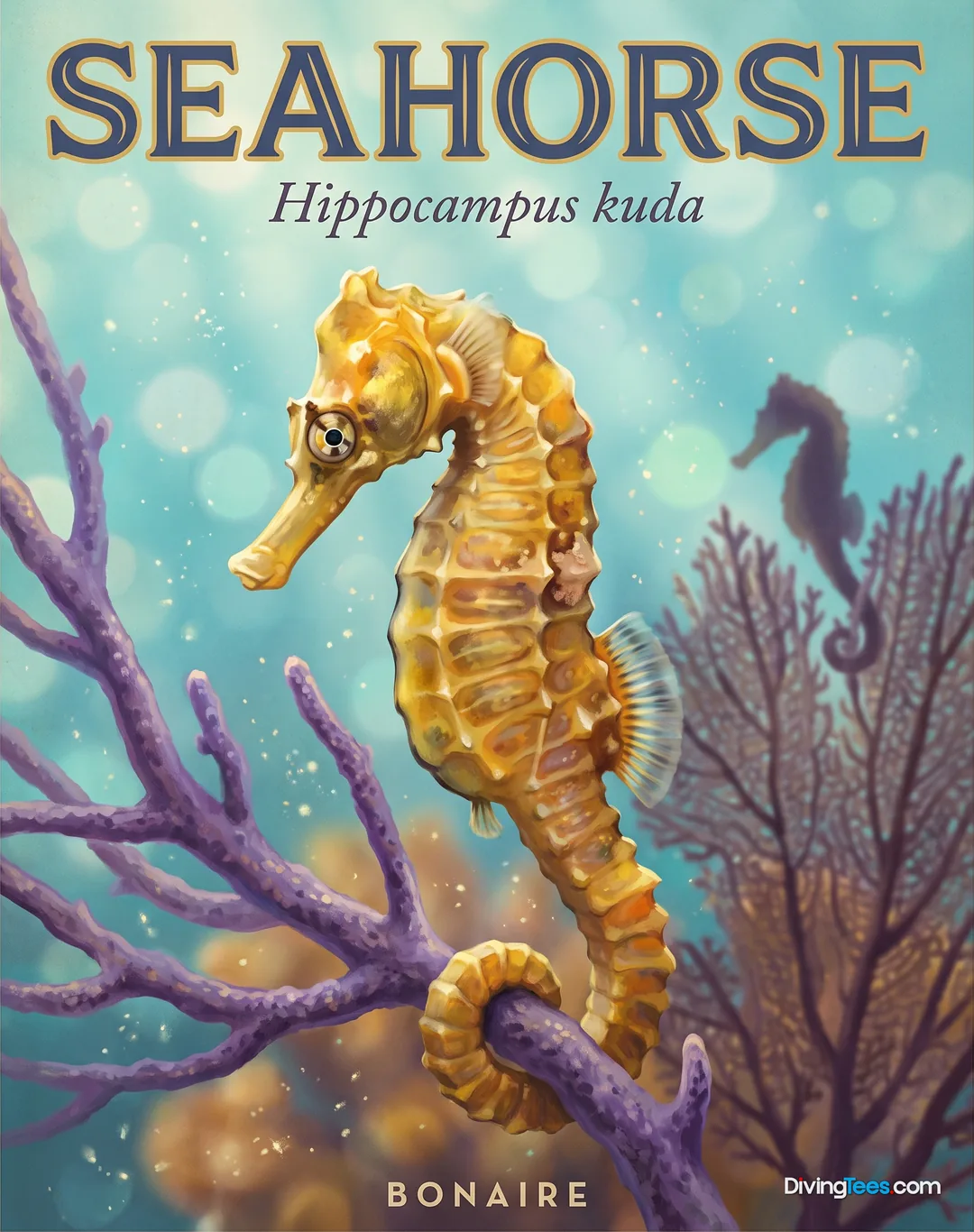
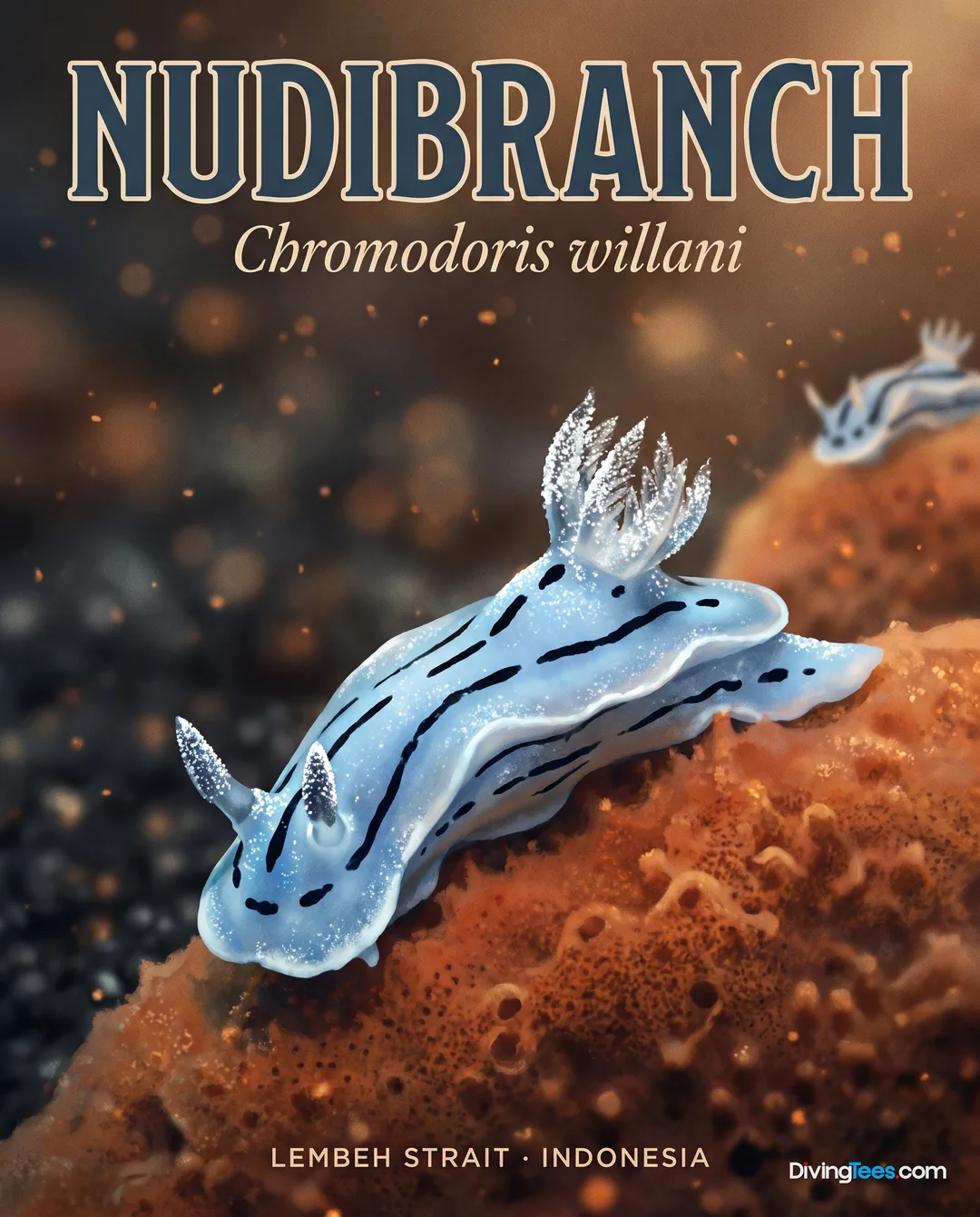
The recorded Amalia departures run from Labuan Bajo to Labuan Bajo for five or six days, with routes through North, Central and South Komodo depending on the season. A six-night itinerary can reach the northern pinnacles as well as central reefs; shorter trips focus the selection rather than trying to cover everything. Batu Bolong is a tiny pinnacle with exceptional coral cover, giant trevally, Napoleon wrasse and reef sharks down to -40m. Castle Rock is a submerged pinnacle to -30m where nutrient-rich current brings reef predators, while Crystal Rock reaches -30m in the Lintah Strait and concentrates pelagic life. For gentler reef work, Siaba Besar descends to -18m among frogfish, blue-ringed octopus and turtles. Shotgun reaches -25m on a current-driven wall where manta rays and sharks can pass. Manta Alley is a channel dive to -20m built around large groups of manta rays. Wainilu has no recorded maximum depth here, but its apparently barren sand slope is a serious macro site, with flamboyant cuttlefish, seahorses, frogfish and nudibranchs. Surface time adds Rinca or Komodo dragon visits, Padar trekking and pink beaches.
What you’ll meet underwater
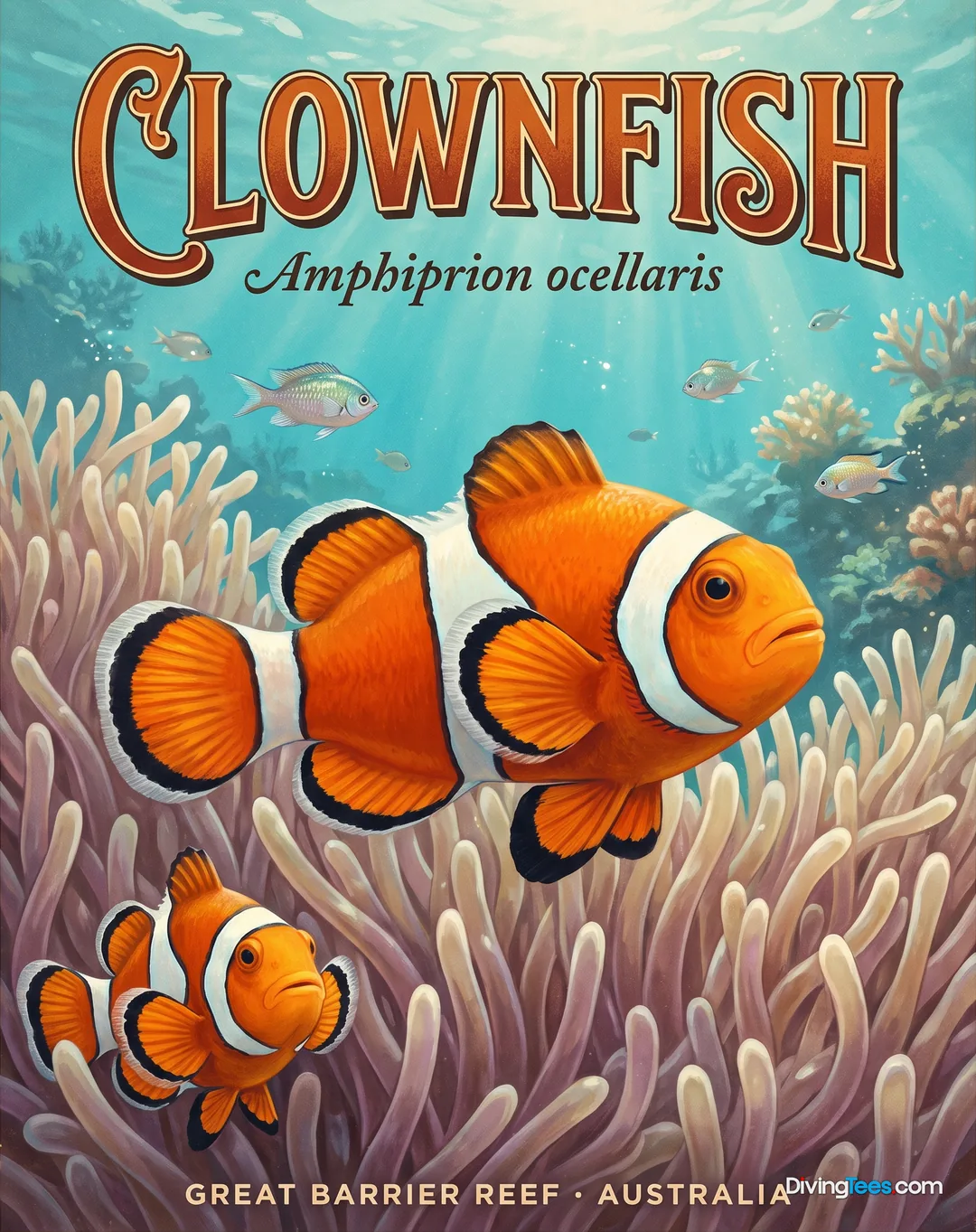
The route’s recurring spectacle is large and small at once. Manta rays, reef sharks, sea turtles and nudibranchs are recorded across ten sites, with eagle rays appearing at nine and giant trevally at eight. Barracuda and Napoleon wrasse turn up across several reefs, while soft corals, white-tip reef sharks, green turtles and reef-grey sharks add variety to the current sites. The specific reasons to save certain dives are narrower. Golden Passage is the place associated with the leopard shark and glassfish, while Siaba Kecil is the recorded site for lobster and angelfish. Sebayur Kecil offers clownfish and filefish; Siaba Besar is where ghost pipefish, unicornfish and a site-specific shark are recorded. Wainilu is the stop for mandarinfish, alongside its macro life. At Manta Alley, strong current can bring large groups of manta rays through the channel. At Crystal Rock, Castle Rock and Tatawa Kecil, current-rich water can bring the bigger hunters close to the reef.

Who puts you in the water
Guides and instructors speak English and Indonesian, and dive groups are limited to four guests, or two buddy pairs, per divemaster or instructor. Groups are matched by ability where possible, while site selection follows certification, experience and tidal conditions rather than a fixed promise. Every dive has a site briefing covering topography, current or drift character, expected depth, dive time and temperature; the general briefing covers park procedures, safety and emergencies. Liveaboard guests must hold at least an Adventure Deep certification because some encounters require going beyond 18 metres. The operator also runs SSI training from Open Water through Advanced Adventurer, Stress and Rescue, React Right and Divemaster level, though the liveaboard page does not define which courses are scheduled on a particular cruise. Safety equipment includes oxygen, first-aid kits, life rafts, lifejackets, radios, GPS, radar, emergency beacons and a trained crew.
The dive deck and the gear
The dive deck is shaded and organised around repeated diving rather than lounging. There is a proper entry platform, separate camera rinsing, DIN adaptors, outdoor showers and two tenders for diver transfers. The tenders are important here: they can support different entry and exit points, and collect divers where the current carries them rather than forcing every group back to the mother ship. SMBs are available in each BCD, and oxygen and first-aid equipment are carried on board. Full recreational rental equipment is included, with Scuba Pro and Mares equipment used by the operator; a dive computer is the rental item charged separately. The setup includes a dedicated camera rinse and charging stations, useful for photographers working four dives a day. Tank volume, tank material, compressor type and nitrox blending are not described, so those points should not be assumed. This is a current-diving platform first, with the tender operation doing much of the real work.
Between dives
Between dives, the shaded dive area is the practical refuge: wet gear stays below while guests eat, talk through the last dive and watch the islands slide past. The upper observation deck is the place for wind and distance, with the indoor saloon available when the sun becomes too strong. A stand-up paddleboard and snorkeling equipment open the water to non-diving hours, while land excursions lead to Komodo dragons, Padar, pink beaches and other park stops. There is also an outdoor shower, a library, games and books, and space for an afternoon without a tank. Amalia does not need to invent entertainment between dives. The Komodo landscape does the work, and the boat gives guests enough different places to look at it from.
A day on board
A liveaboard day starts early enough to put divers in the water before the day boats reach the best sites. Coffee, tea and a light breakfast appear before the first briefing, then the guide explains the reef, current, maximum depth and the way the group will enter and exit. The usual pattern is three dives, with a fourth sometimes added when the itinerary and conditions allow. Lunch follows the second dive, snacks fill the longer surface intervals, and the boat moves while guests eat, dry off or watch the islands pass. The final dive is followed by a quieter stretch on the sun deck, in the saloon or in the water with a snorkel or paddleboard. Selected itineraries include night dives, when the deck changes from a staging area into a place to sort torches and cameras. Landings for dragon visits, Padar trekking, pink beaches, beach barbecues or sunset drinks break the diving without turning the trip into a sightseeing cruise.
What you eat aboard
Meals come from an open galley and are cooked fresh on board, with local and Western dishes, vegetarian and vegan choices, and adjustments for allergies or intolerances when arranged in advance. Lunch lands after the second dive, when divers are cold, hungry and no longer interested in decorative portions. Snacks stay available through the day, alongside drinking water, tea, coffee and other non-alcoholic drinks. Dinner can be served outside, and the kitchen also supports an à la carte style rather than treating every meal as the same buffet. Beer and wine are available separately. The food is one of Amalia’s strongest points: the very high passenger rating makes sense because the galley is part of the dive operation, not an afterthought. Four dives, current and sun demand proper food. Here, the table is where the surface interval becomes useful again.
Nights at sea
The cabins are on the lower deck, where portholes bring in daylight and the boat’s movement remains part of the night. Twin cabins suit friends or solo travellers, the double private ensuite gives two guests their own bathroom, and the larger shared cabin works for a small group or family. Personal fans and cabin lighting keep the rooms practical after a long day in a 3mm wetsuit, while the saloon and deck provide more space when staying in the bunk stops making sense. Amalia has four bathrooms in total, including private and shared facilities, so the cabin choice affects how much privacy a guest has at shower time. The boat is small enough that engine and hull sounds are part of the experience rather than something to pretend away. In return, the upper deck gives open air, sky and a place to sleep after the last dive without feeling shut inside.
Twin Cabins
Double Private Ensuite
Larger Shared Cabin
What to know before boarding
Amalia departs from and returns to Labuan Bajo, at the Uber Scuba dive centre. Airport transfers and taxis are not included, so guests should arrange their own way to the departure point. Arriving in Labuan Bajo the night before is the sensible choice, leaving time for boarding without depending on a same-day flight.
Deck plan
- Year built
- 2015
- Year renovated
- 2021
- Length
- 29 m
- Beam
- 5 m
- Maximum number of passengers
- 11
- Number of cabins
- 5
- Number of bathrooms
- 4
- Cruising speed
- 6 knots
- Tenders
- 2
- Website
- uberscubakomodo.com ↗
Hello, I'm Marina, DivingDeal.com's AI assistant. I answer in detail about hotels, dive centres and liveaboards.

Thinking about the whole trip and the flights? Talk it over with Edith →
Marina is an AI. Some links are affiliate links: DivingDeal may earn a commission, at no extra cost to you. Bookings are made with the partner.