Liveaboards · Indonesia
Moana — a small, traditional phinisi for personal Komodo diving
What makes this boat unique
- A traditional Indonesian phinisi carrying a maximum of 10 guests in five air-conditioned ensuite cabins.
- Three dive and snorkel guides work with eight full-time crew members.
- The Komodo programme runs for 6 days and 5 nights from Labuan Bajo to Labuan Bajo, with around 14–16 dives on most departures.
- Three fiberglass tenders, a dedicated shaded dive deck and flexible group splits keep the water work practical.
- Fresh local cooking, full-board meals and all-day snacks are part of life aboard.
For subtitles in English: start the video firstthen click the gearat the top right of the video, select “Subtitles/CC”, then “Auto-translate” and choose “English”.
The invitation
Moana suits divers who want Komodo's serious water without joining a floating crowd. Ten guests, three guides and a crew of eight give the trip a scale where groups can split by experience instead of forcing everyone into the same dive. That matters in Komodo: a current-swept pinnacle, a sheltered coral garden and a macro slope are not the same dive, and they should not be treated as one. The boat also works unusually well for mixed groups. A diver can spend the day on reefs and channels while a partner snorkels with a separate guide rather than waiting on deck. The reason to choose Moana is the balance: enough structure to make four-dive days run cleanly, enough flexibility to change the plan when current, weather or wildlife calls for it, and enough shared space that the trip remains a holiday between descents.
Boarding
Moana comes across as a working Indonesian phinisi rather than a hotel that happens to carry dive gear. Its traditional profile sets the tone before the first briefing, while the layout is built around moving between deck, tender and water without ceremony. Ten guests is the useful number here: by the second day, faces are familiar and the crew can remember whose camera needs a rinse, who wants shade and who is ready for another dive. The main deck gives the group room to eat and talk, with a shaded chill-out area and a higher sun deck when the weather invites it. When the heat builds, the air-conditioned salon offers a quieter room with a library and charging stations. The boat is not designed around private suites or retreating behind a cabin door. Its strength is the shared deck, where the view stays open and the service stays close.
The atmosphere on board
The atmosphere is informal, cheerful and close without becoming noisy. Ten guests is small enough for the crew to notice the details that make a liveaboard week work: a camera that needs careful handling, a diver who wants a different group, a snorkeler who would rather stay in calm water. The crew's role is practical all day, from served meals and tender movements to the quiet resets between dives. Three guides keep divers and snorkelers from being treated as one compromise group, while the wider crew keeps the boat moving around them. Evenings tend to collect on the shared deck, around dinner, drinks and the day's sightings rather than around a formal programme. The result is a boat remembered for people as much as for reefs: food that keeps standards high, guides who make the sites accessible, and a crew whose helpfulness remains visible without taking over the trip.
The sites you’ll dive
This 6-day, 5-night Best of Komodo route leaves from and returns to Labuan Bajo, but the exact sites change with current, weather, visibility and the group's experience. The named sites show the range. Batu Bolong is a tiny pinnacle with dense coral, giant trevally, Napoleon wrasse and reef sharks, down to -40m. Castle Rock and Crystal Rock are submerged pinnacles, both to -30m, where nutrient-rich water draws reef sharks, giant trevally and other pelagics. Manta Alley reaches -20m in a current-fed channel where groups of manta rays may pass. Siaba Besar is the gentler shallow option, to -18m, with frogfish, blue-ringed octopuses and turtles among coral bommies. Shotgun reaches -25m and turns the current into a fast ride along a wall with mantas and sharks. Tatawa Besar, to -25m, combines soft coral, green turtles and reef sharks. Cannibal Rock reaches -30m and mixes macro life with schooling pelagics. Wainilu has no listed maximum depth, but its sandy slope is a deliberate macro dive, with nudibranchs, frogfish, seahorses and flamboyant cuttlefish. Golden Passage, Siaba Kecil, Tatawa Kecil, Pengah Kecil and Sebayur Kecil add channels, coral gardens, drifts and shallower reefs. More than 50 named sites give the guides room to choose well rather than chase a fixed checklist.
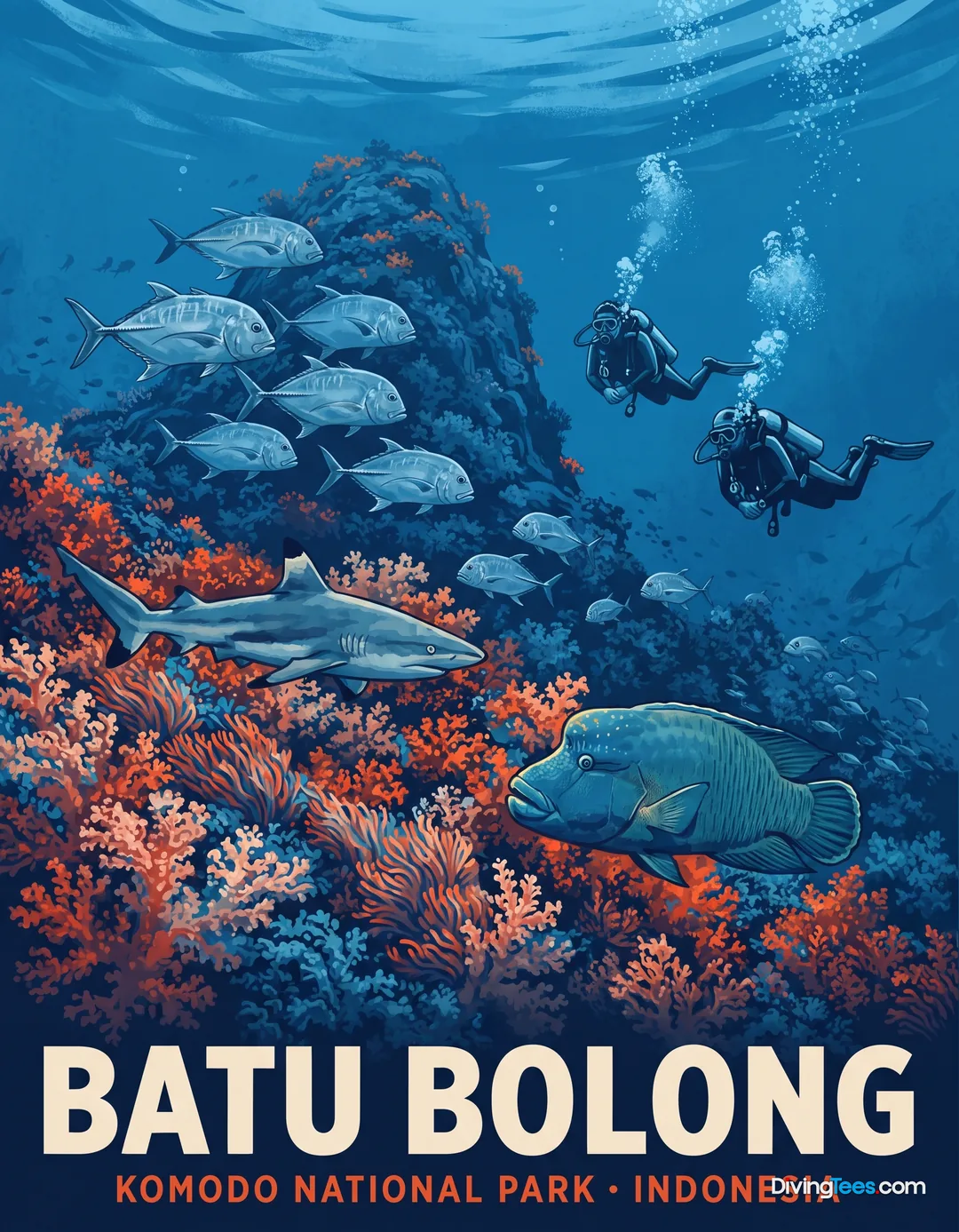
Batu Bolong →
Max. depth · 40 m
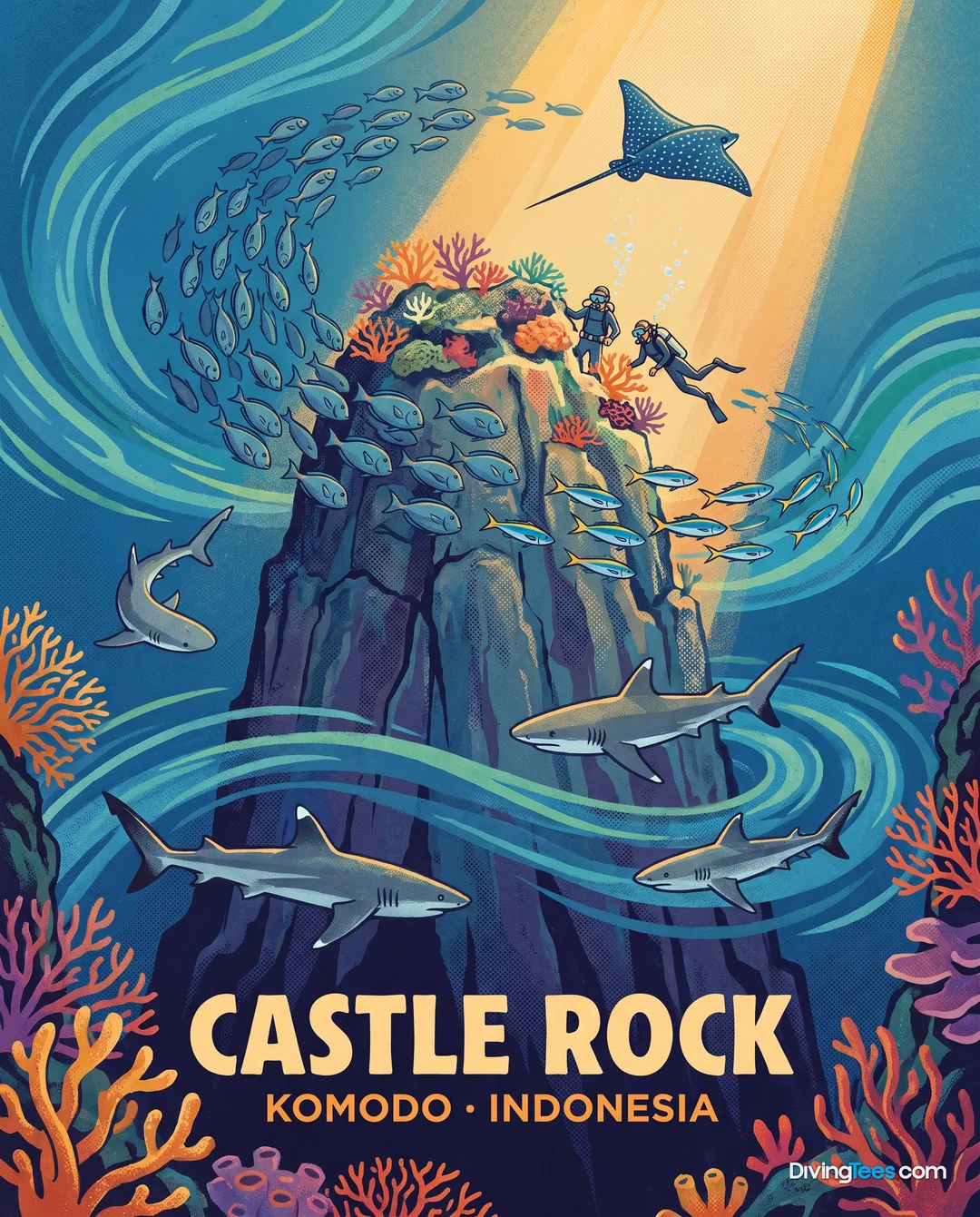
Castle Rock →
Max. depth · 30 m
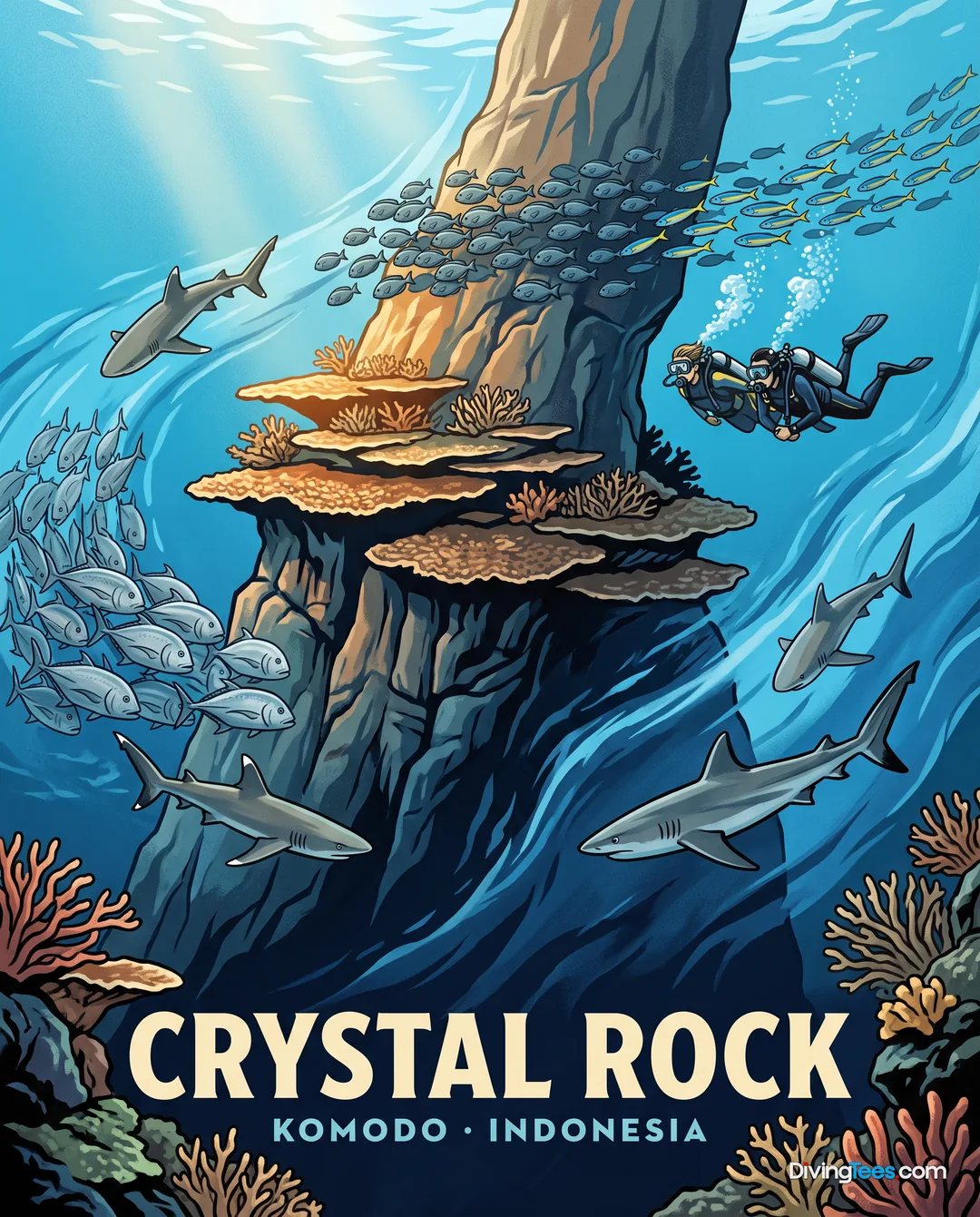
Crystal Rock →
Max. depth · 30 m
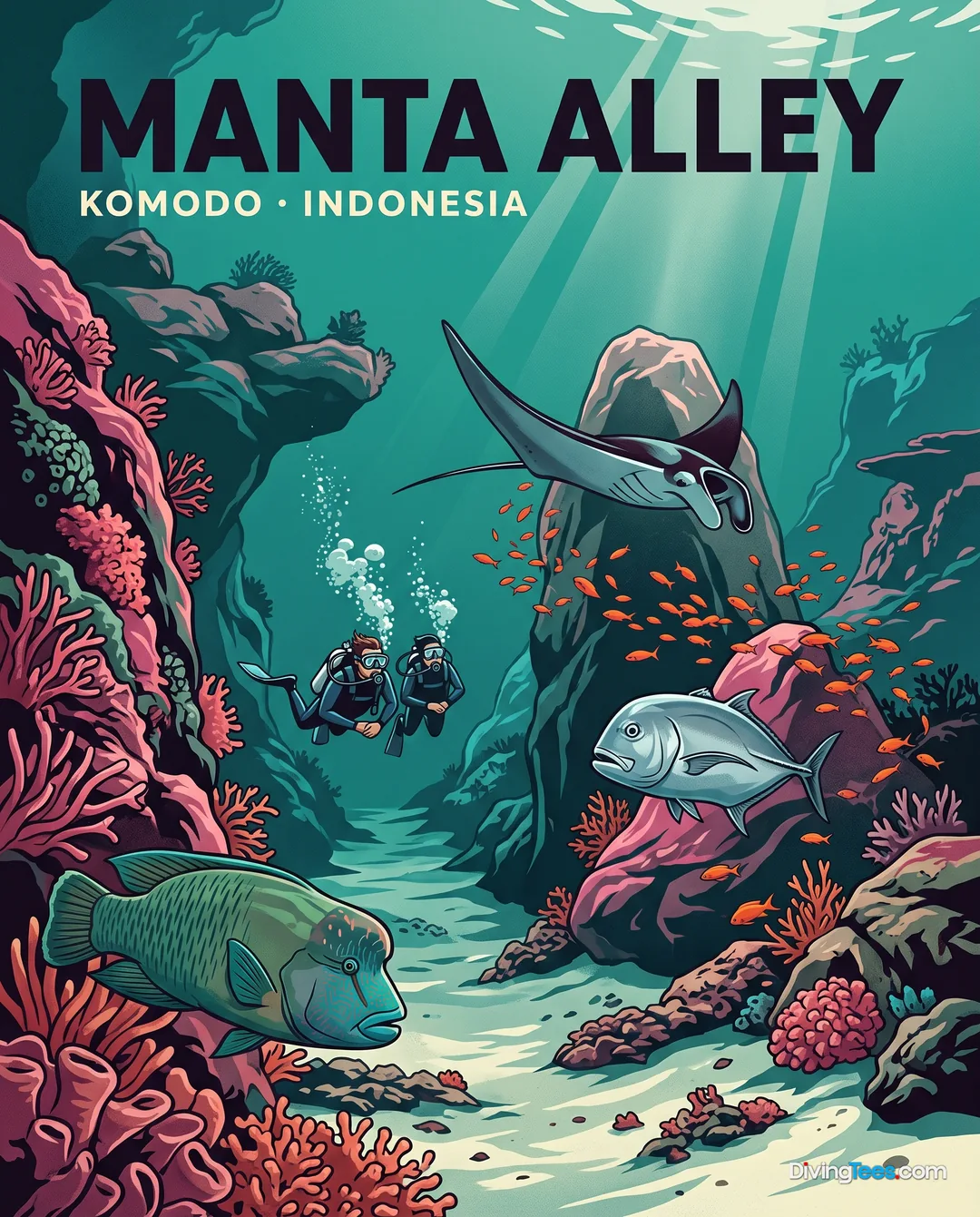
Manta Alley →
Max. depth · 20 m
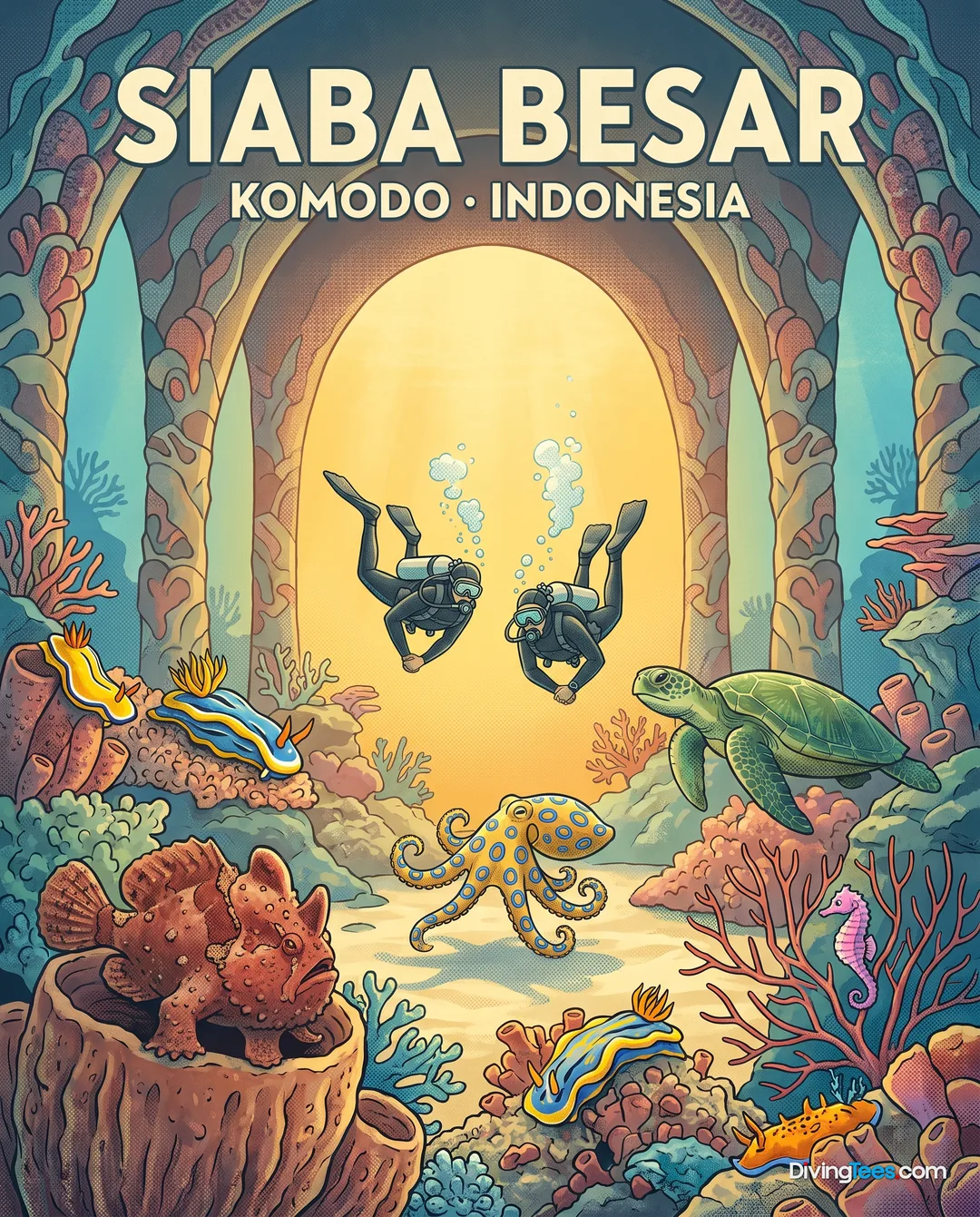
Siaba Besar →
Max. depth · 18 m
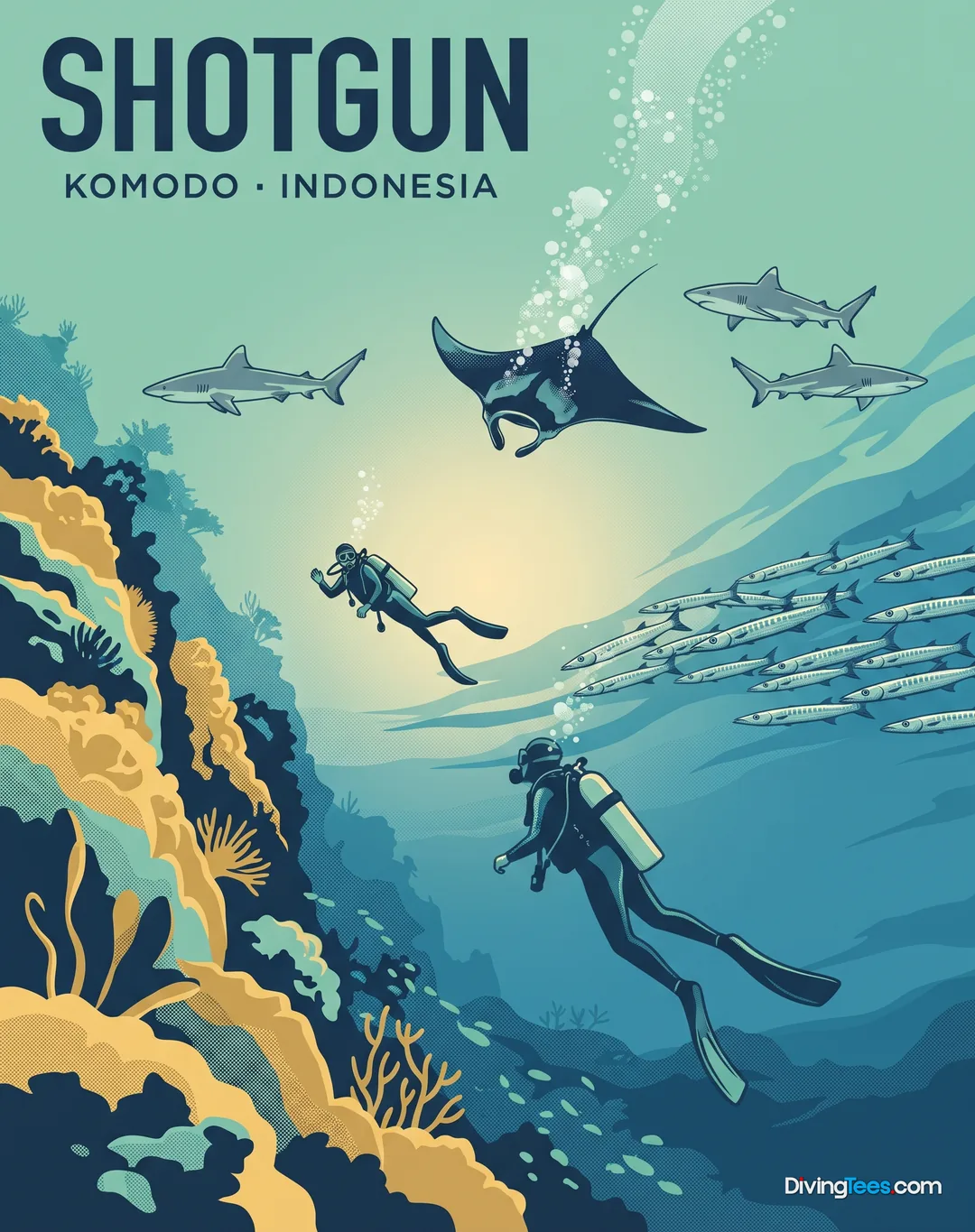
Shotgun →
Max. depth · 25 m
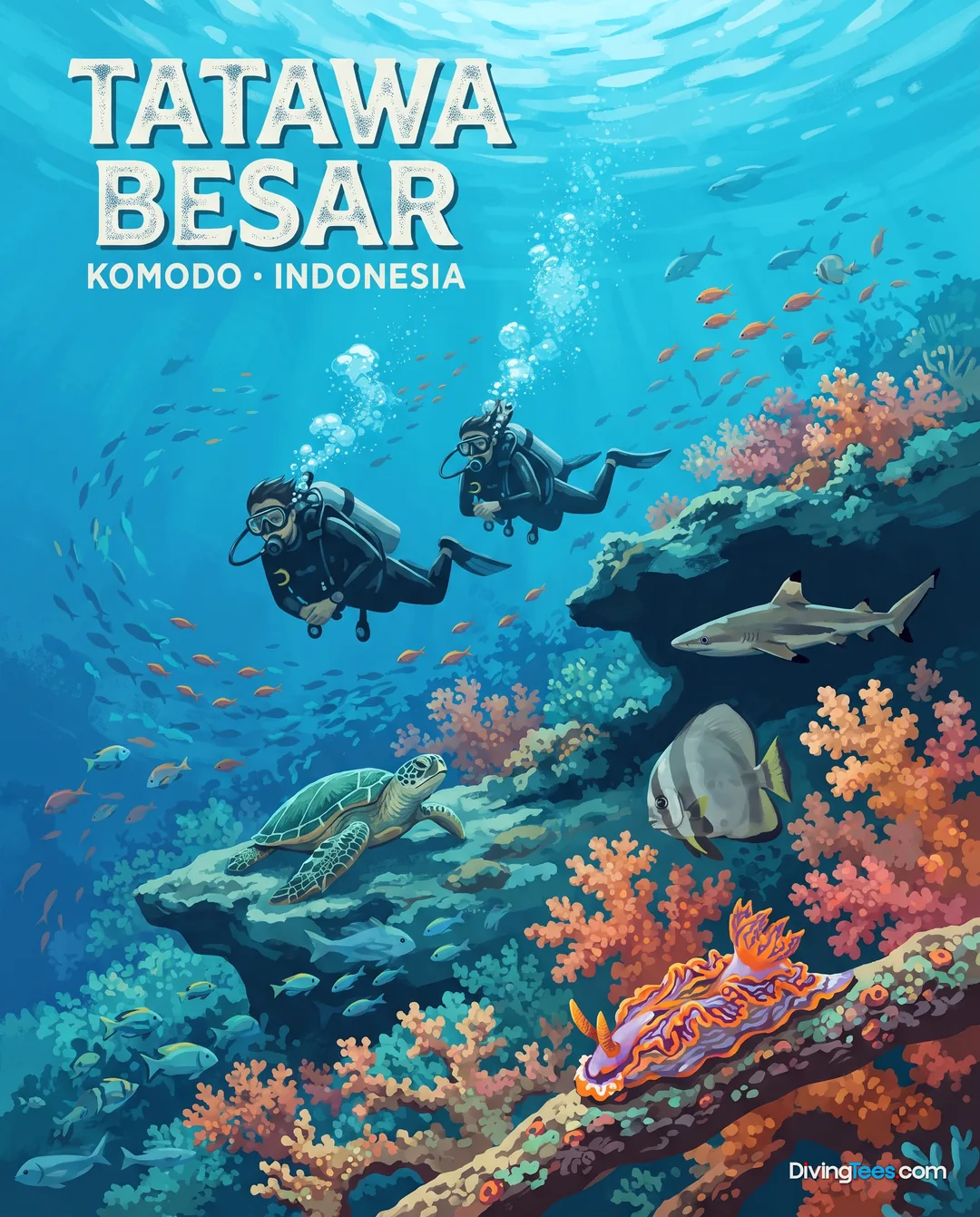
Tatawa Besar →
Max. depth · 25 m
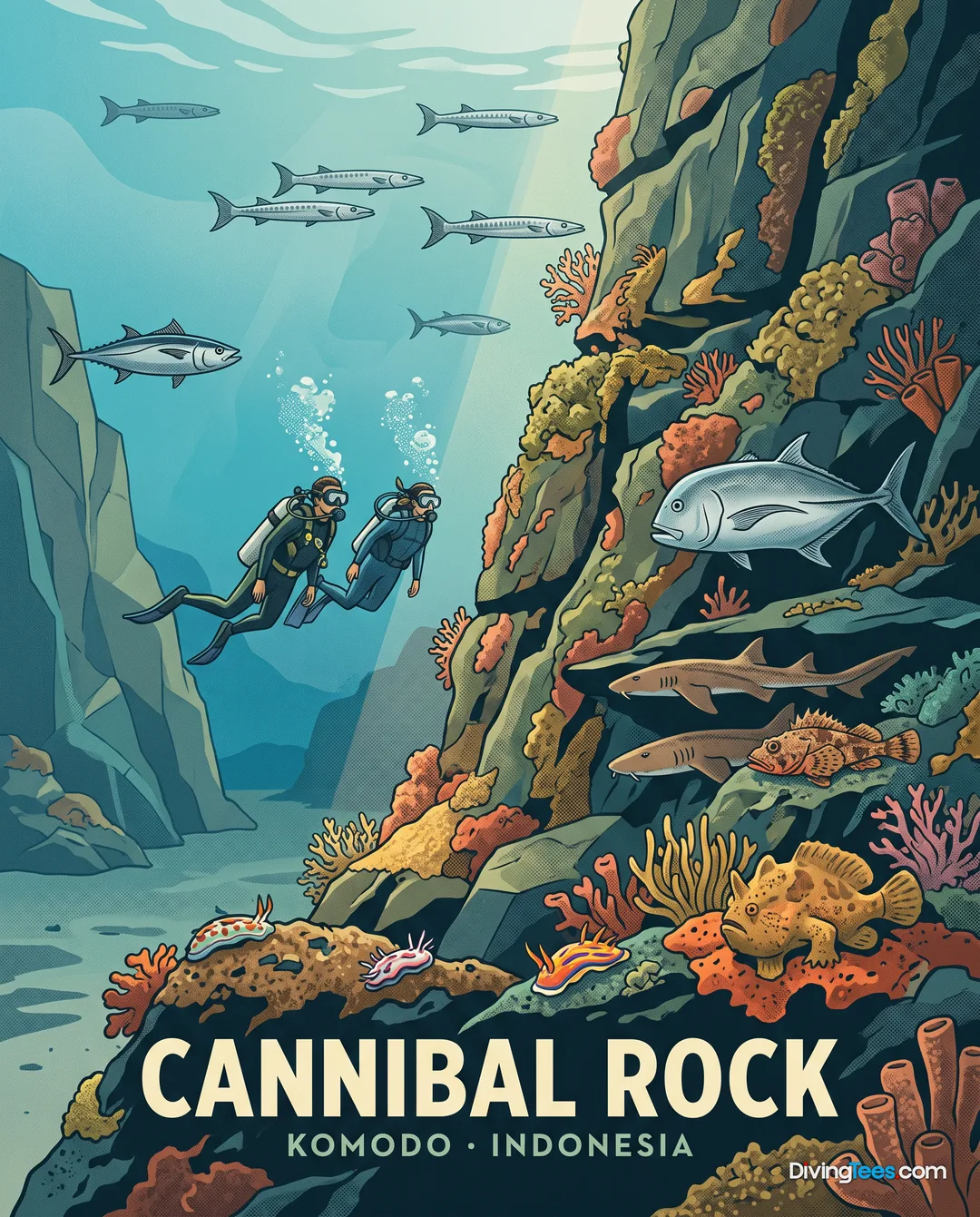
Cannibal Rock →
Max. depth · 30 m
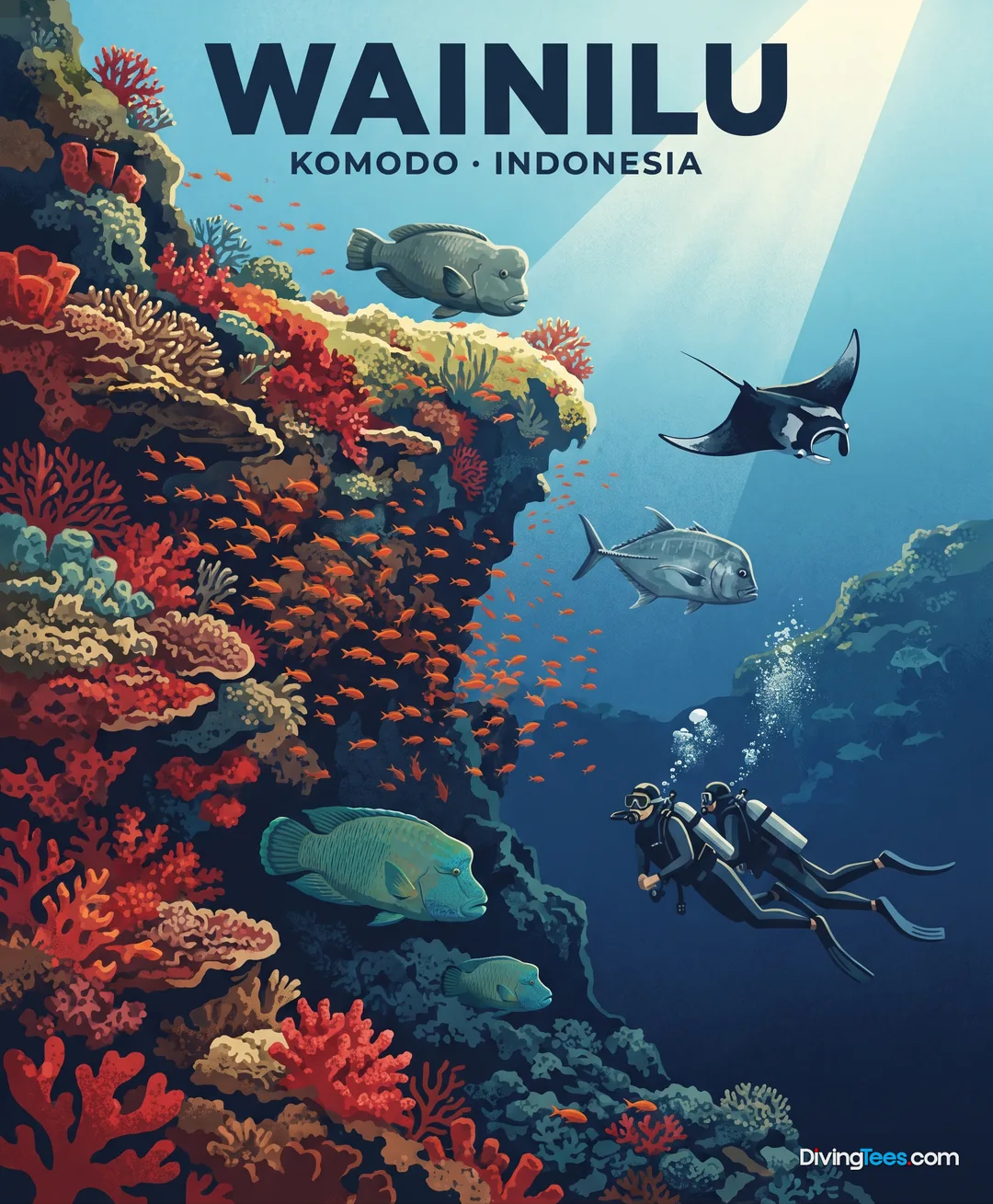
Wainilu →
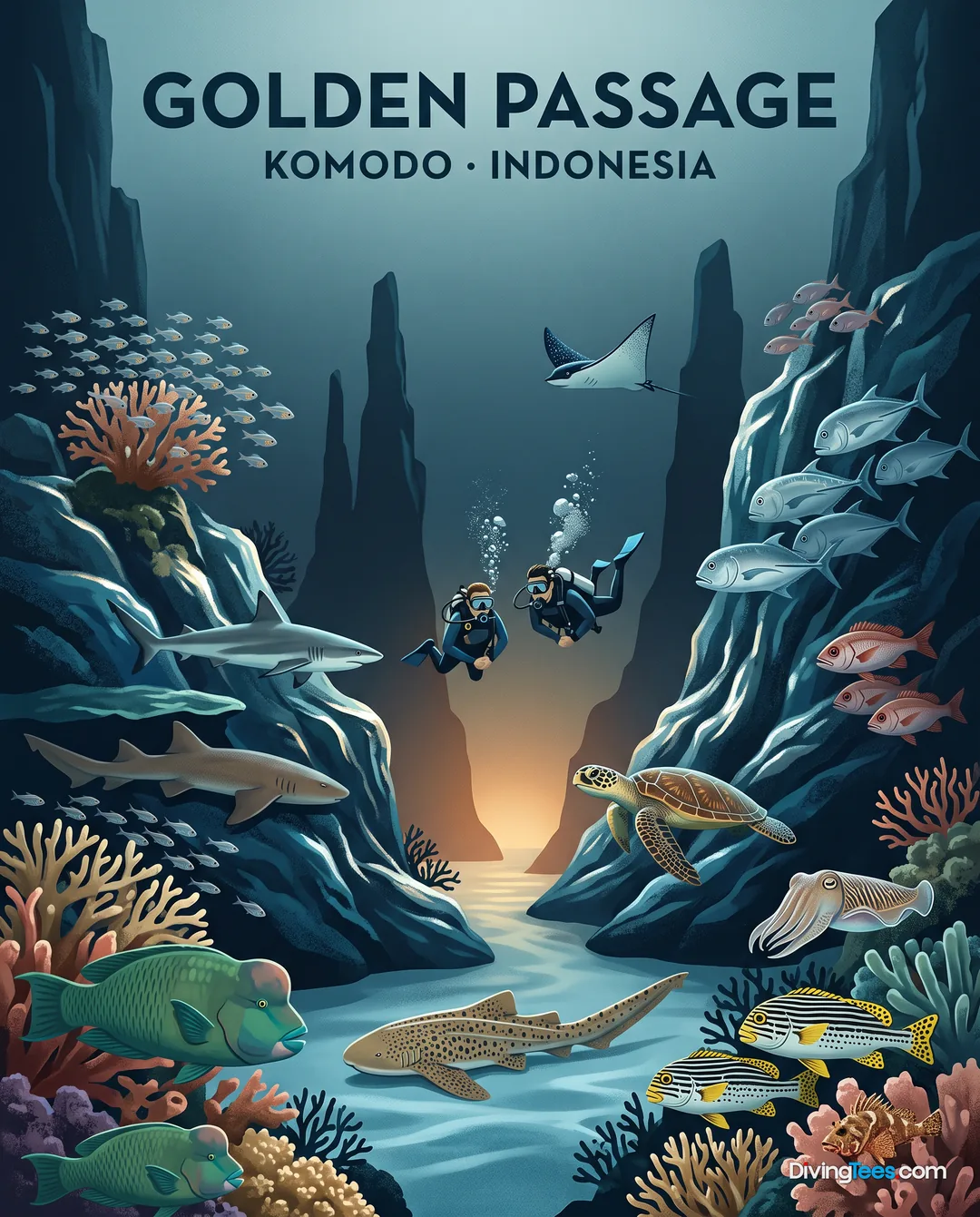
Golden Passage →
Max. depth · 30 m
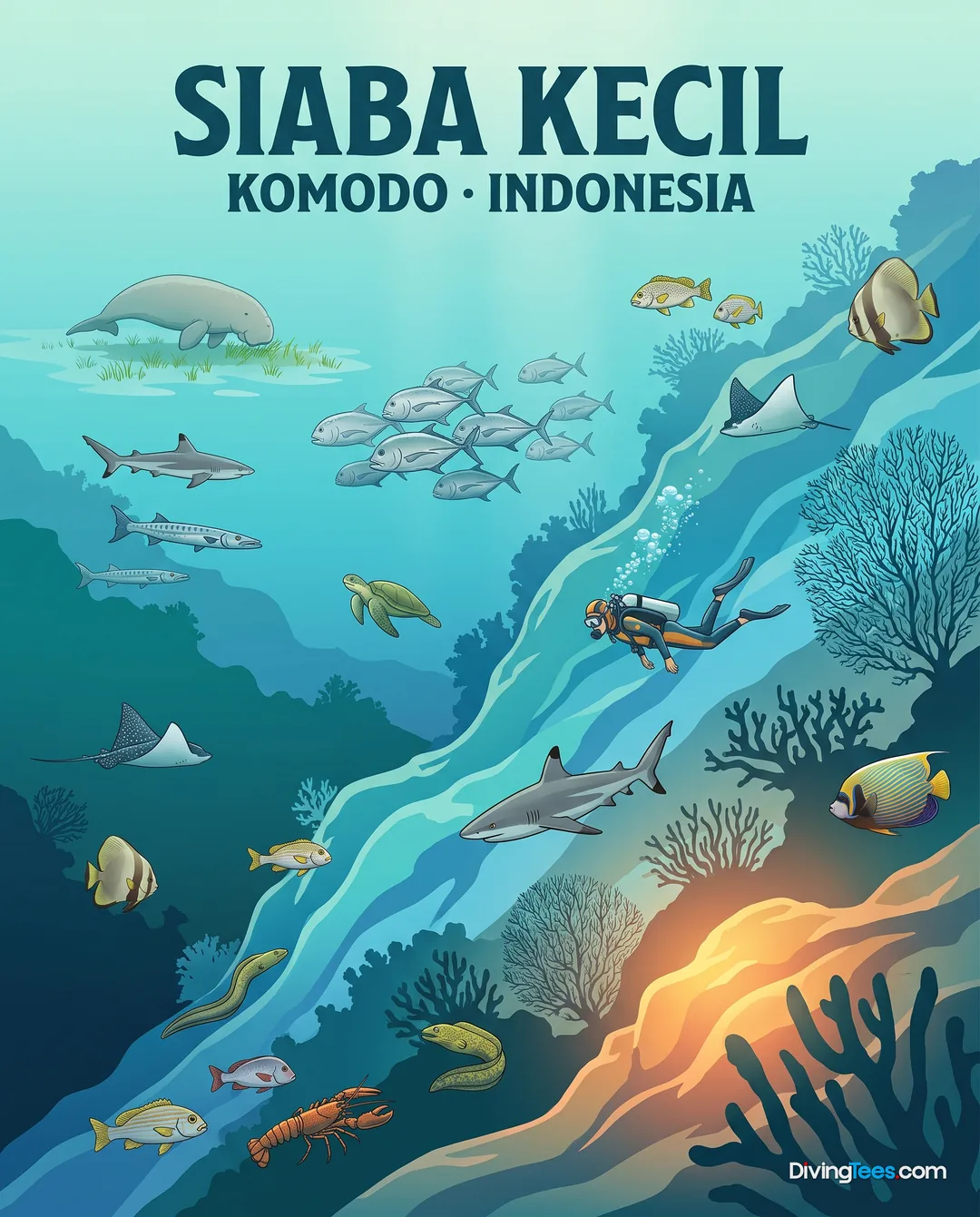
Siaba Kecil →
Max. depth · 30 m
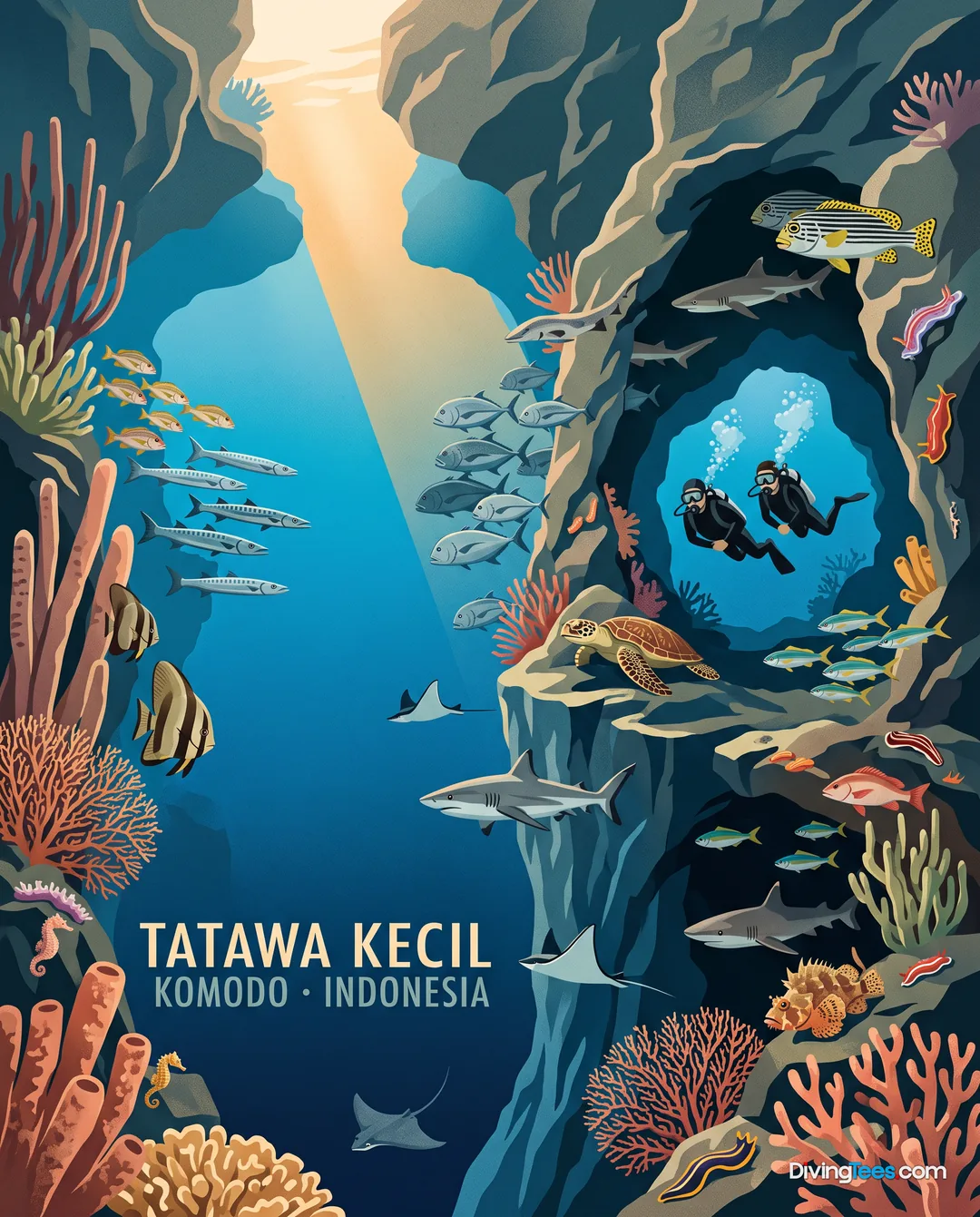
Tatawa Kecil →
Max. depth · 30 m
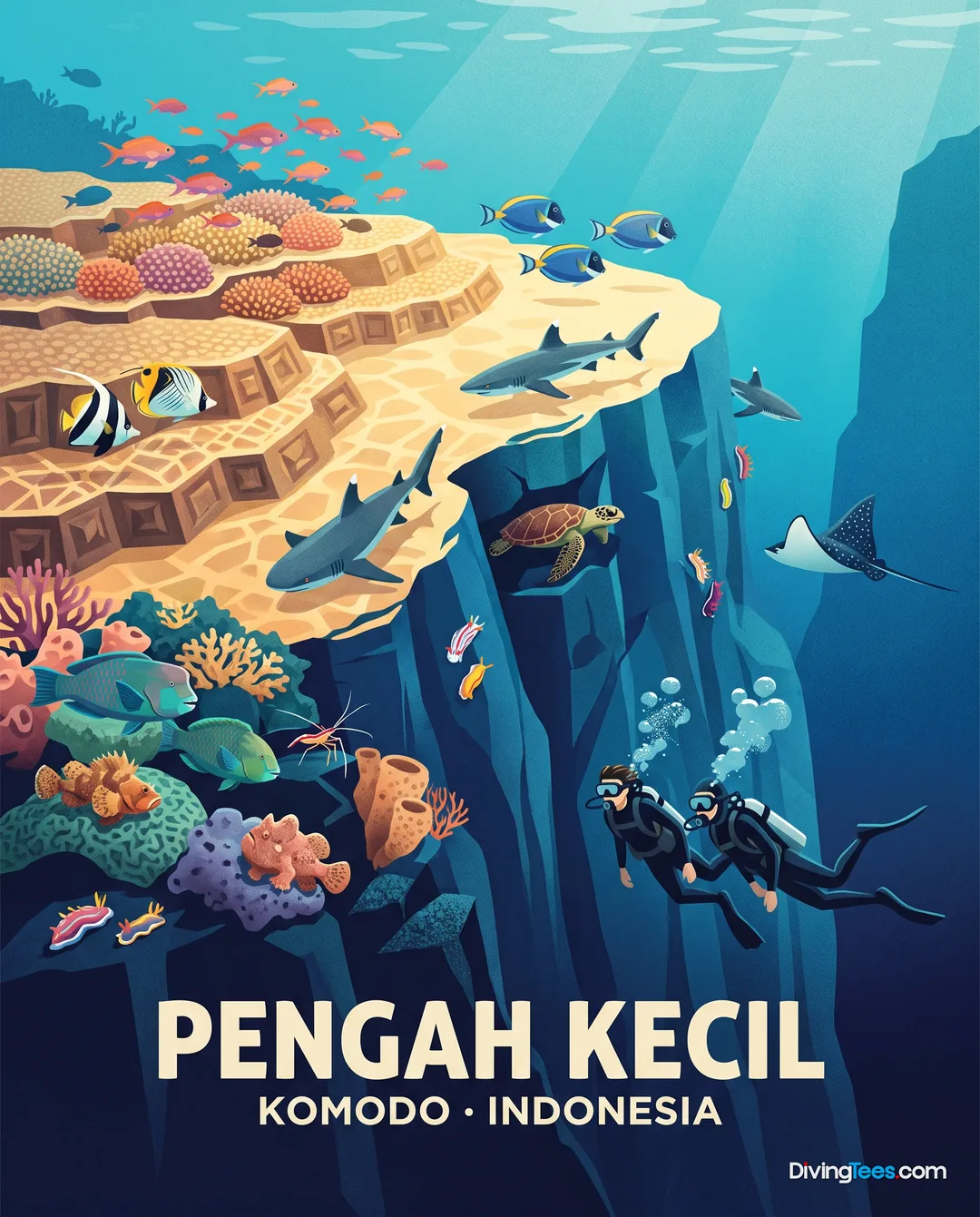
Pengah Kecil →
Max. depth · 25 m
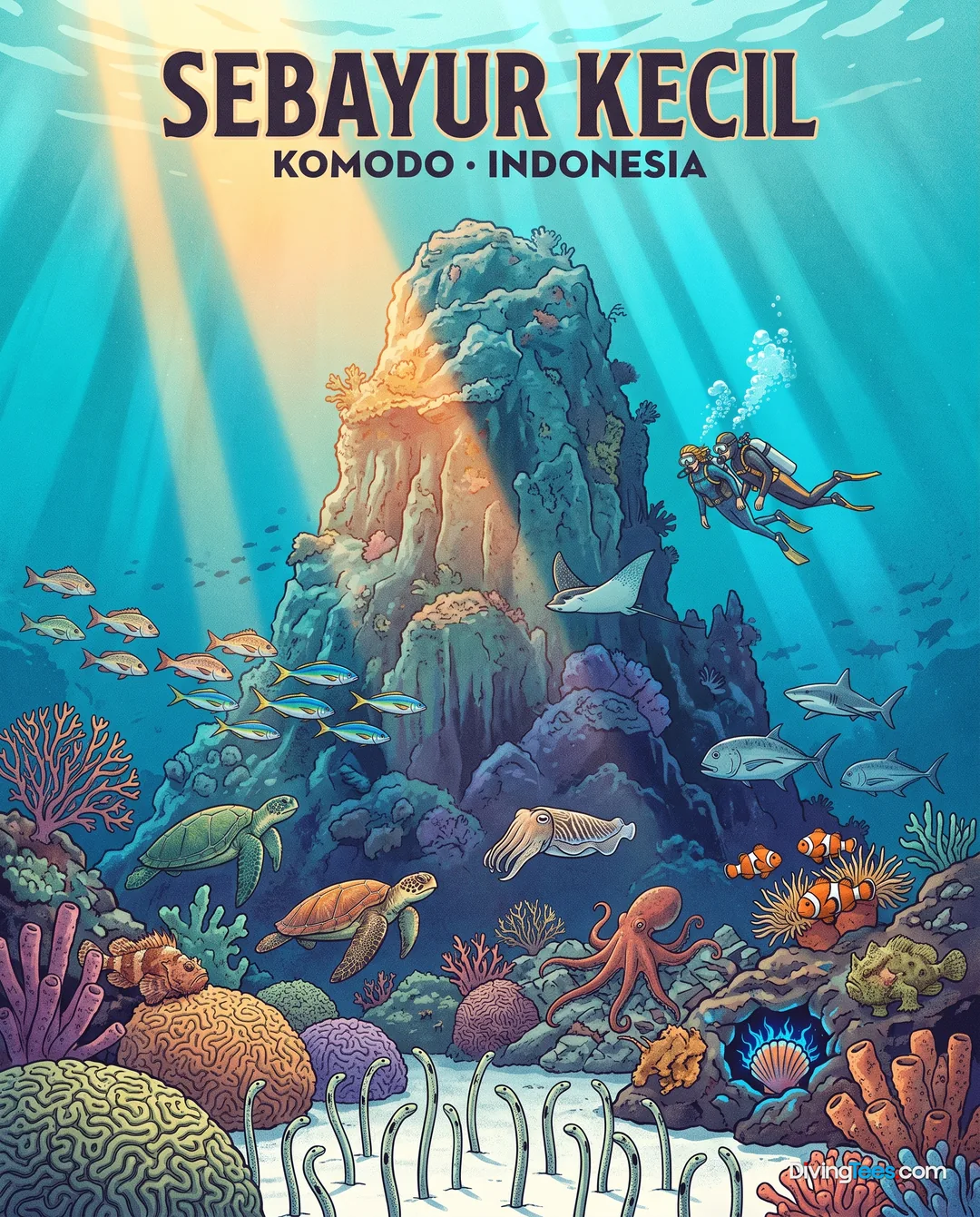
Sebayur Kecil →
Max. depth · 25 m
Coral Garden →
Max. depth · 28 m
What you’ll meet underwater
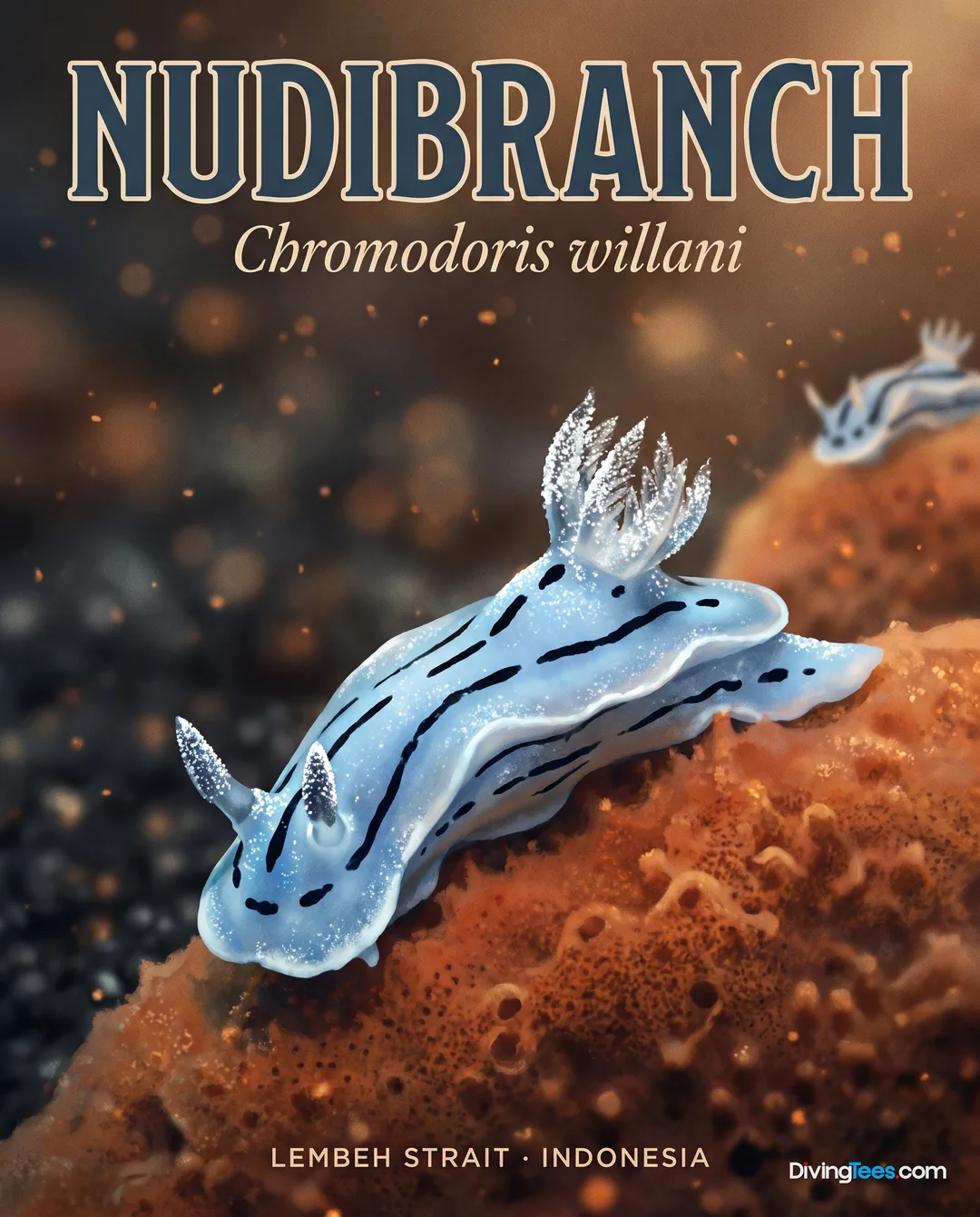
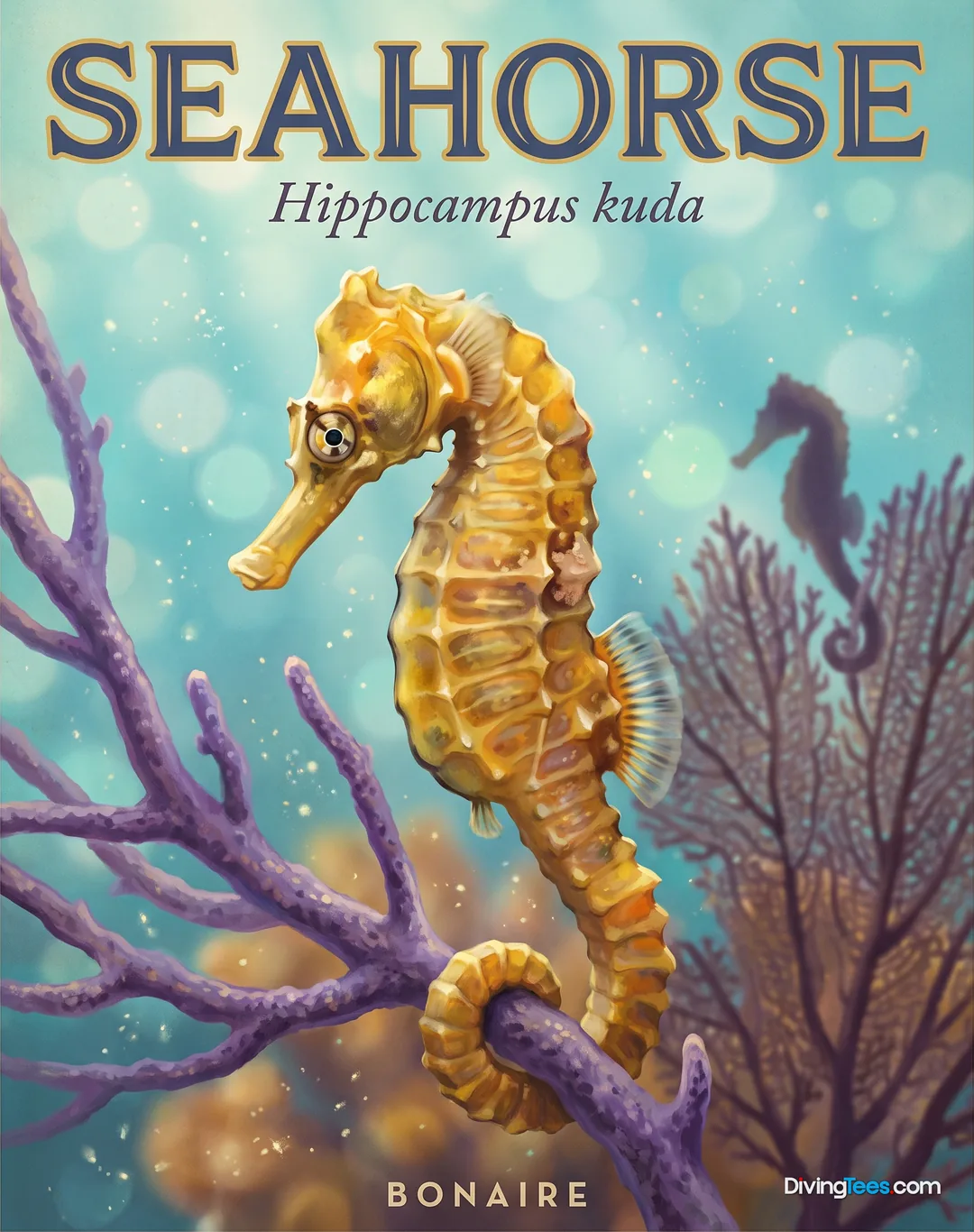
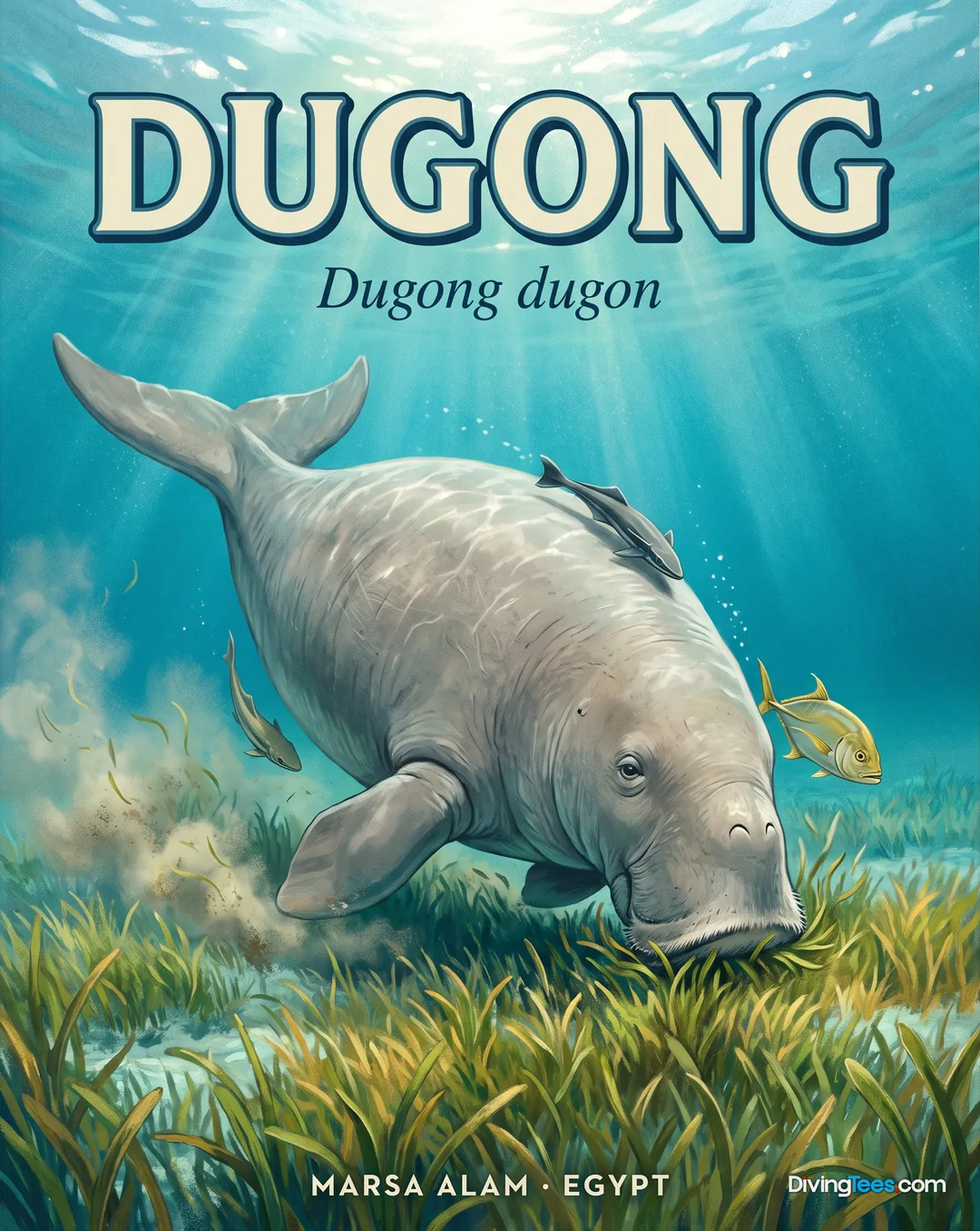
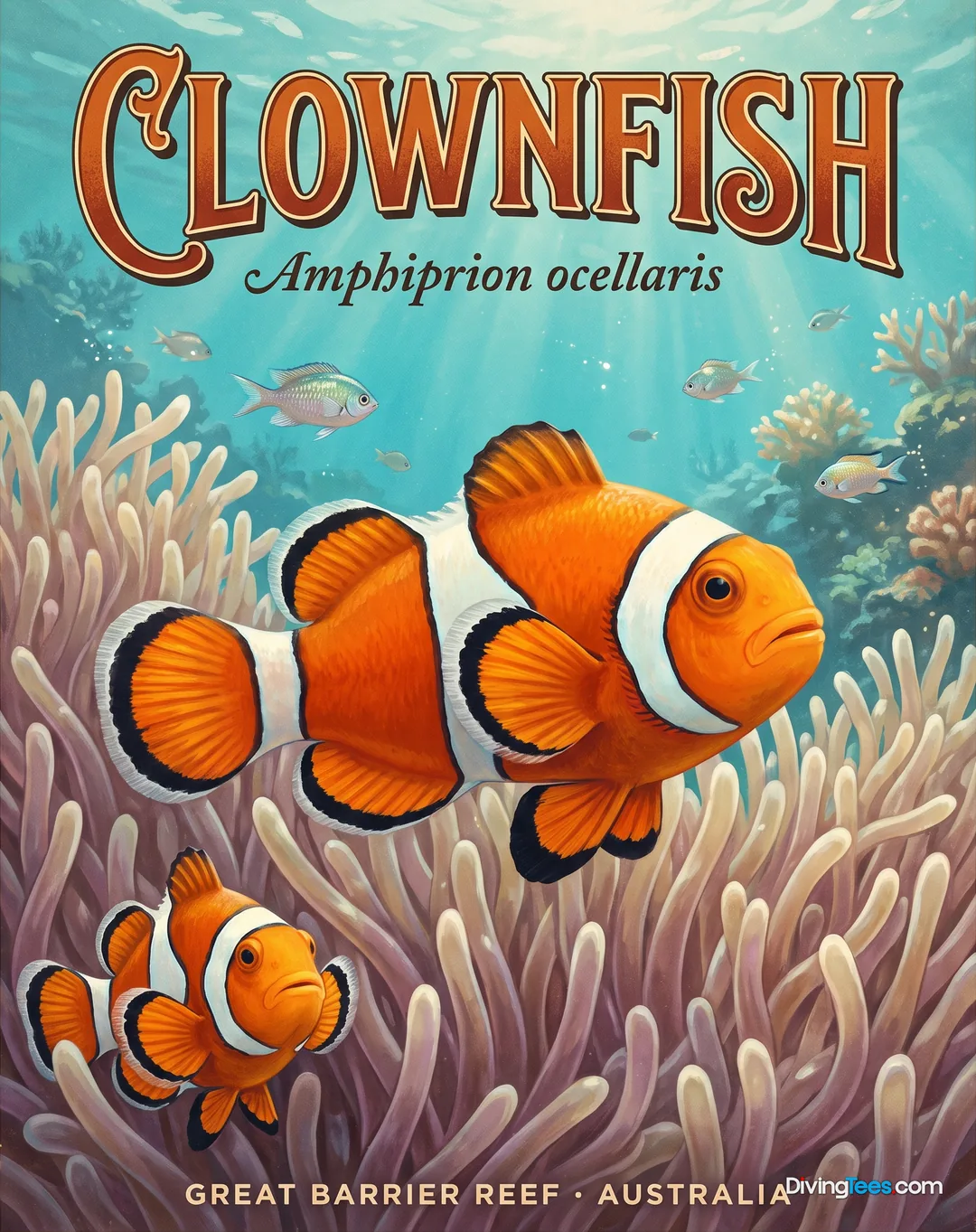
Mantas, reef sharks, sea turtles, nudibranchs, eagle rays, giant trevally, barracuda and soft corals recur across much of this route. Napoleon wrasse appear across six sites, white-tip reef sharks across five, and dolphins, dugongs, groupers, grey reef sharks and tuna are also recorded in several places. That spread is what makes Komodo rewarding: a strong-current dive can bring the big movement, while a sheltered reef keeps offering smaller detail. The site-specific animals give the route extra reasons to move. Golden Passage is the place for leopard sharks and glassfish. Siaba Kecil is where lobster and angelfish are recorded. Sebayur Kecil is notable for clownfish and filefish, Siaba Besar for ghost pipefish, unicornfish and a shark recorded only there, and Wainilu for mandarinfish. Castle Rock has bannerfish; Tatawa Besar has triggerfish. None of these sightings is a promise. They are the particular possibilities that make a guide slow down, look into the reef and choose one site over another.
Who puts you in the water
Three dedicated dive and snorkel guides lead the water work, with a maximum of 10 guests on board. That gives the operation room to split groups by experience and pace instead of taking every diver through the same route. The cruise director speaks English, German and Indonesian, and the crew includes local guides with long experience of Komodo's sites. An Open Water certification is required to dive; Advanced certification is recommended for some sites but is not required across the trip. Briefings cover the chosen site and the conditions, then the guides adjust the entry point, route and group plan to the current and the divers in front of them. Reef hooks are available when appropriate. Oxygen, first-aid kits and a crew trained in first aid are carried on board. Snorkelers have separate guided sessions, so a mixed group does not have to choose between one person's dive and another person's day.
The dive deck and the gear
The dedicated shaded dive and wet deck is arranged for the work divers actually repeat: gearing up, rinsing equipment and preparing for the next entry without competing with the rest of the boat. Tanks, weights, BCDs and regulators are provided; full rental equipment is available for guests who do not want to travel with a kit. DIN adaptors are on board, and separate rinse tanks protect cameras from the general equipment wash. The camera area includes charging and workspace for photo and video equipment. Divers reach the sites through three 5-metre fiberglass tenders with Yamaha 40 hp and 25 hp outboards, rather than turning the main boat into the entry point for every dive. The tender takes groups out and collects them after surfacing, which is especially useful when a drift carries divers away from the original drop. A proper dive platform keeps the last step simple: climb out, hand up the gear, rinse, and get back into the shade.
Between dives
Between dives, Moana gives people several ways to come off the clock. The shaded deck is the practical refuge after a warm-water exit, while the bow chill-out area opens the view and catches the feeling of being away from shore. The air-conditioned salon has a library, comfortable seating and a charging station for cameras and devices, so photographers can work without spreading equipment across the dive deck. When there is no dive to make, the tenders take guests to beaches and snorkel sites, and the boat carries kayaks and a stand-up paddleboard for slower exploration. Guided beach walks, sunset hikes and Komodo dragon treks with park rangers add a landward side to the route. The point is not to fill every gap. It is to give a diver somewhere to sit while the computer clears and the next tide decides what comes next.
A day on board
A full day begins with coffee and a light breakfast before the first morning dive or snorkel session. Divers return for a second breakfast, then head back out for the late-morning dive, usually around 10:30. Lunch follows, with an afternoon dive later in the day and an optional night dive when the conditions and group make sense. Between entries, the boat may be underway toward the next reef, or guests may take a tender to a beach, snorkel, hike or paddleboard. The first day usually includes a check dive followed by a night dive. On the final dive day, the plan normally closes with one or two dives and the Komodo dragon hike. Night diving is offered, never forced; a sunset walk or a quiet afternoon on a beach is a legitimate choice. Four dives on a full day are possible, but the route, weather, flight schedule and group experience decide the final rhythm.
What you eat aboard
The galley works with fresh local ingredients and an Indonesian focus, alongside Western dishes when the group wants them. Meals are served rather than left as a self-service scramble, and the table is generous enough for second helpings. There are two breakfasts: one before the early water session and another after divers and snorkelers return. Fresh salads, fruit, smoothies, flavoured water and snacks remain available through the day, which is exactly what a four-dive schedule needs. Vegetarian and vegan options are available, and the menu can move between buffet and à la carte service. Food scores exceptionally well because it is treated as part of the trip, not just fuel between tanks: a proper meal after the first dive gives the morning a reset, while dinner brings everyone back together after the last tender run.
Nights at sea
The five cabins sit on the lower deck, in double and twin layouts, each with air conditioning, a private bathroom and a porthole. They are compact, practical rooms for sleeping properly between dives rather than private lounges for spending the day. The real living space is above: shaded deck space, an indoor salon and the bow chill-out area, where some guests choose to sleep under the stars. A hot shower is available, and daily housekeeping keeps the small rooms from becoming gear stores. At night, the salon's indirect lighting and quiet audio system make the boat feel calmer without turning it into a resort. The porthole gives a cabin a connection to the water, but the better view is usually on deck, when the islands turn dark and the boat settles at anchor.
Double Cabins
Twin Cabins
What to know before boarding
The trip departs from and returns to Labuan Bajo. Airport and hotel transfers are included, and the arrangements are handled as part of the booking. Arriving in Labuan Bajo the night before is the sensible way to board without making the first day depend on a tight flight connection.
- Year built
- 2004
- Length
- 30 m
- Beam
- 6.5 m
- Maximum number of passengers
- 10
- Number of cabins
- 5
- Number of bathrooms
- 6
- Engines
- Mitshubishi 8-cylinder 270 hp Diesel
- Cruising speed
- 7 knots
- Tenders
- 3 × 5 m fiberglass boats with Yamaha 40 hp and 25 hp engines
- Website
- moanacruising.com ↗
Hello, I'm Marina, DivingDeal.com's AI assistant. I answer in detail about hotels, dive centres and liveaboards.

Thinking about the whole trip and the flights? Talk it over with Edith →
Marina is an AI. Some links are affiliate links: DivingDeal may earn a commission, at no extra cost to you. Bookings are made with the partner.