Liveaboards · Indonesia
Epica — a practical, small-group Raja Ampat liveaboard built around the diving
What makes this boat unique
- Epica carries up to 12 guests in six air-conditioned cabins on the main deck.
- The Dampier Strait route runs for 7 days and 6 nights, from Waisai to Waisai.
- Dive groups are limited to a maximum of four divers per guide.
- The shaded dive area has DIN adaptors, rinse tanks, a dive platform and diver tenders.
- Full board, snacks, drinking water, tea, coffee, the dive package and land excursions are included; park and port taxes are separate.
For subtitles in English: start the video firstthen click the gearat the top right of the video, select “Subtitles/CC”, then “Auto-translate” and choose “English”.
The invitation
Epica is for divers who want Raja Ampat's reefs without paying for a floating resort. The boat keeps the focus where it belongs: a compact group, a guide ratio that stays at four divers or fewer, full board, and access to the Dampier Strait sites that make this region worth the journey. The route combines current-swept reefs, manta cleaning stations, coral gardens, walls and panoramic land excursions. It suits the diver who would rather spend the budget on time underwater than on polished interiors. That choice has a clear trade-off. The boat scores below the crew, food and diving, so Epica is best approached as a practical dive platform rather than a luxury vessel. In return, guests get a 12-person capacity, a crew praised for making the trip run smoothly, and a route with enough variety to keep both wide-angle and macro divers interested.
Boarding
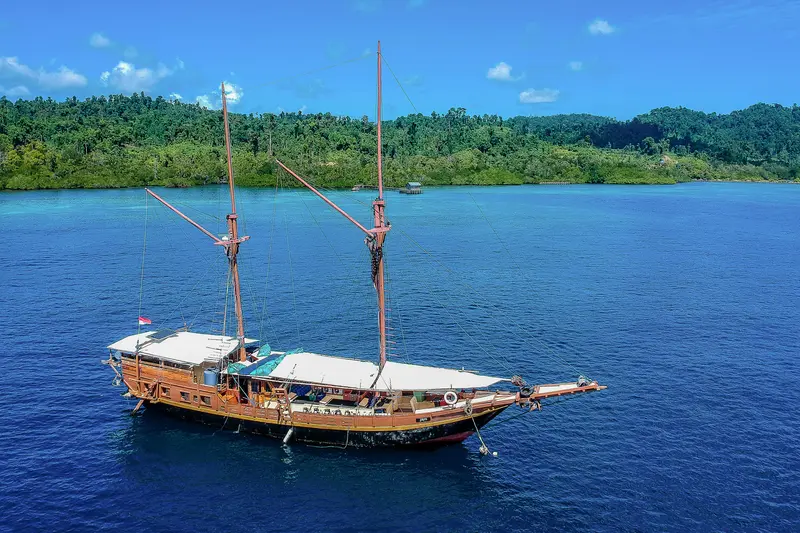
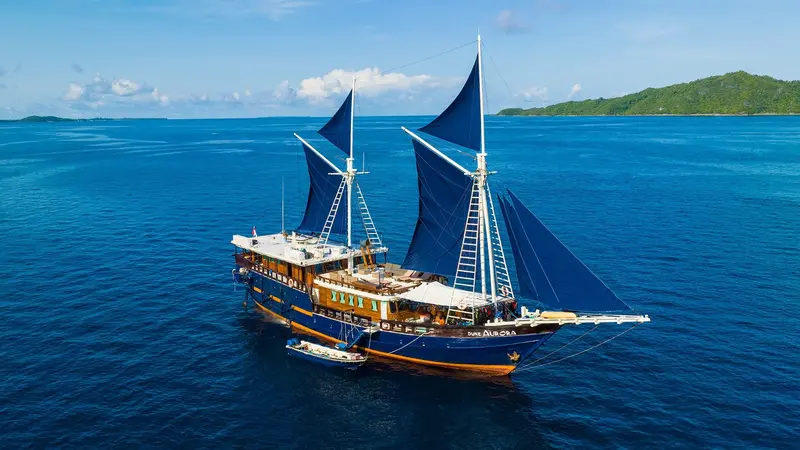
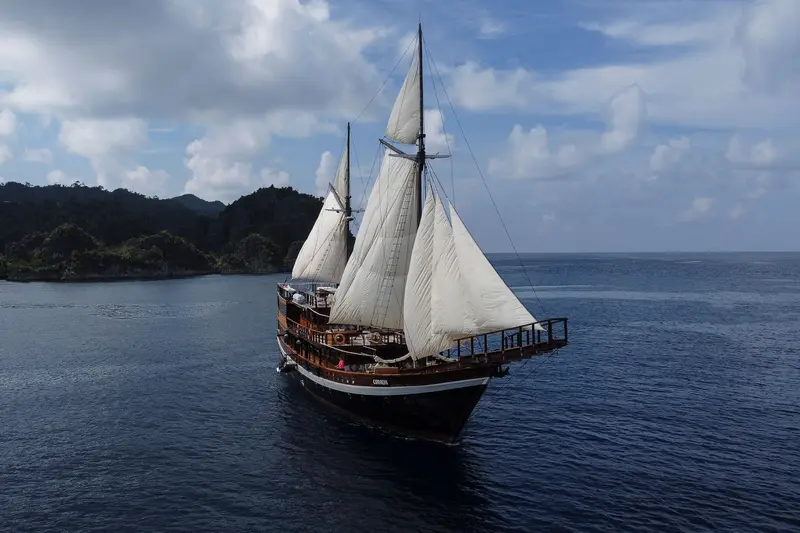
Epica was built as a dive boat, and the first impression is practical rather than theatrical. The layout is made for a small group moving between cabins, the shaded dive area and the water without having to negotiate the crowd of a larger vessel. With space for 12 guests, people become familiar quickly, while the terrace and open-air dining area give the boat somewhere to spread out after a dive. The 2016 build places Epica in the middle ground: not a new yacht, but not an old liveaboard being asked to do a job it was never designed for. Passenger feedback describes the boat as comfortable and never crowded, while the lower boat score compared with the crew and diving points to a vessel whose strengths are function and space, not showroom finish.
The atmosphere on board
Epica's atmosphere comes from the balance between a 12-person guest list and a crew that stays close to the operation. The crew is local and international, speaks English, and is consistently rated more highly than the boat itself. That distinction is useful: guests are not choosing Epica for yacht polish, but they can expect people who are professional, helpful and easy to live with for a week. The small capacity keeps the saloon and deck from becoming anonymous spaces. Solo divers can join without being swallowed by a large group, and the crew's role extends beyond handling tanks and meals; passenger experience points to an operation that notices what needs doing and keeps the practical details moving. Even the occasional unscheduled land stop has added to the character of past trips.
The sites you’ll dive
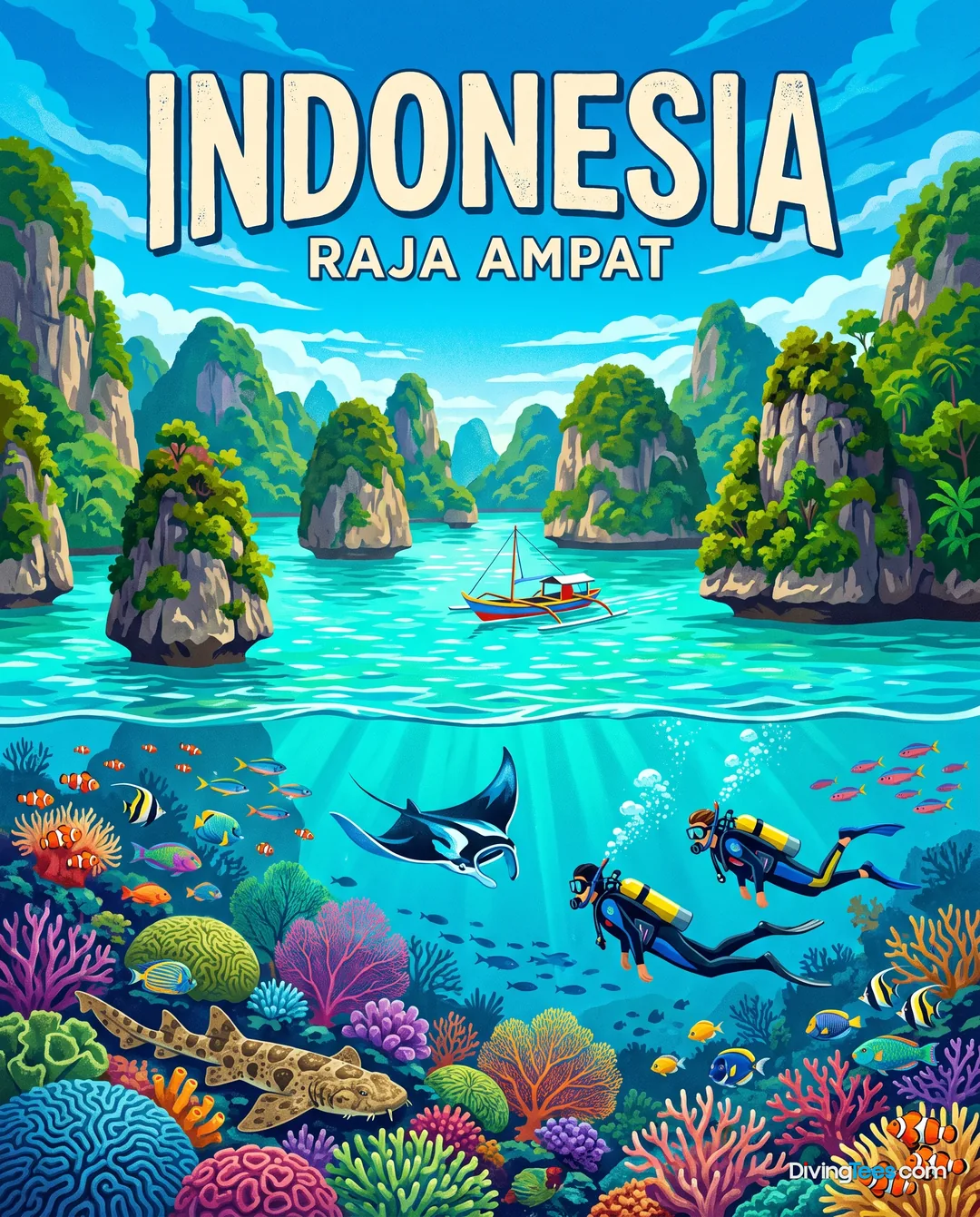
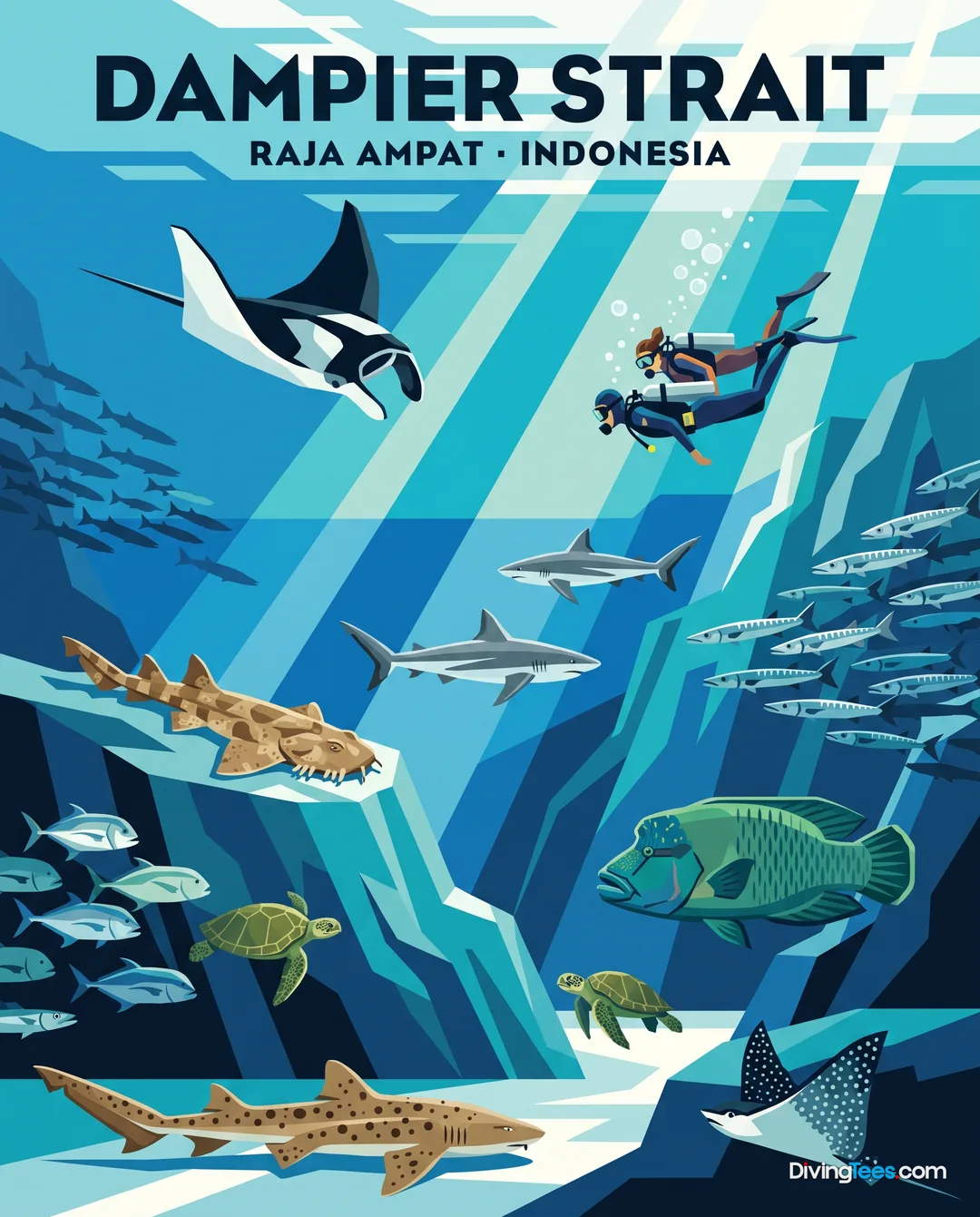
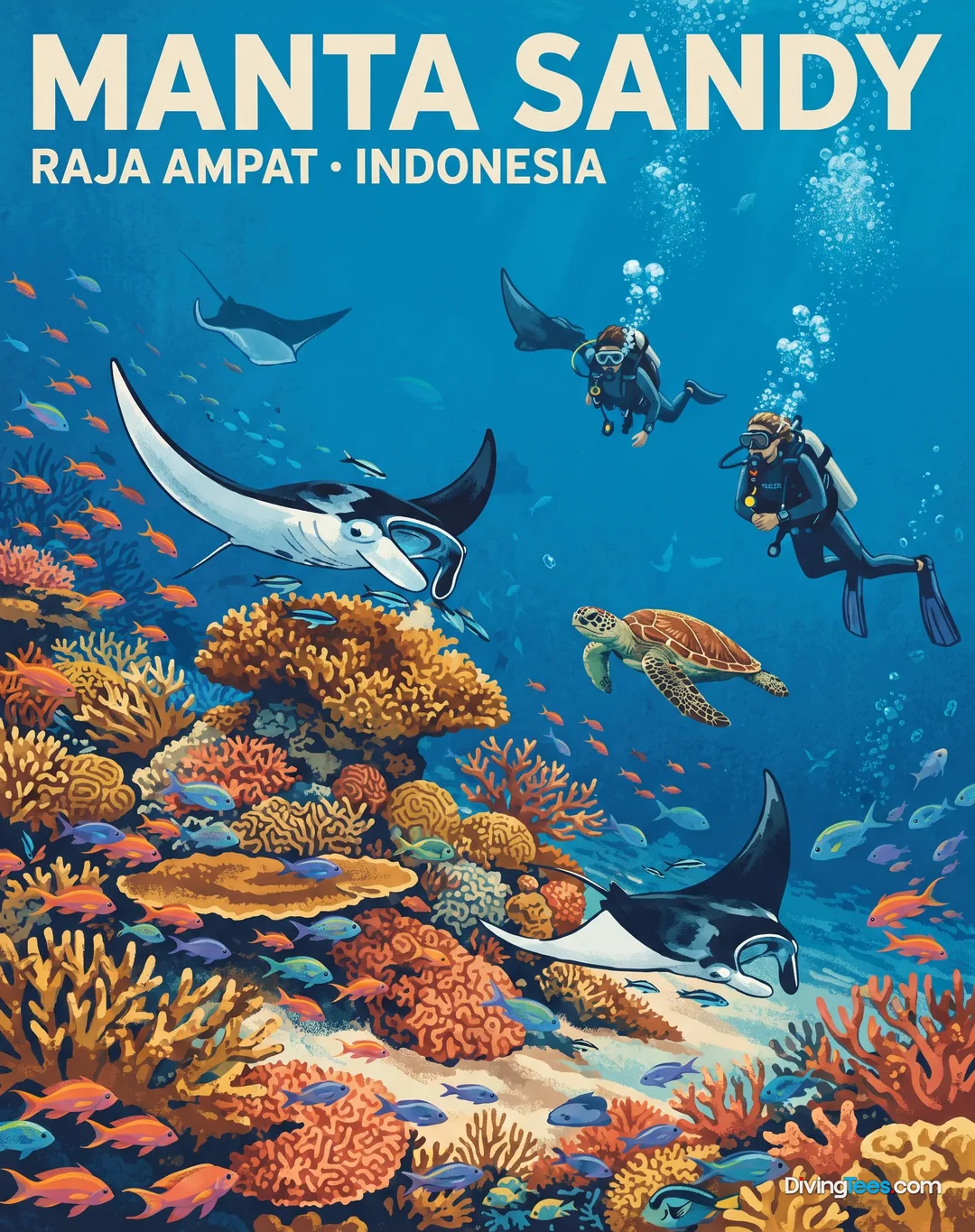
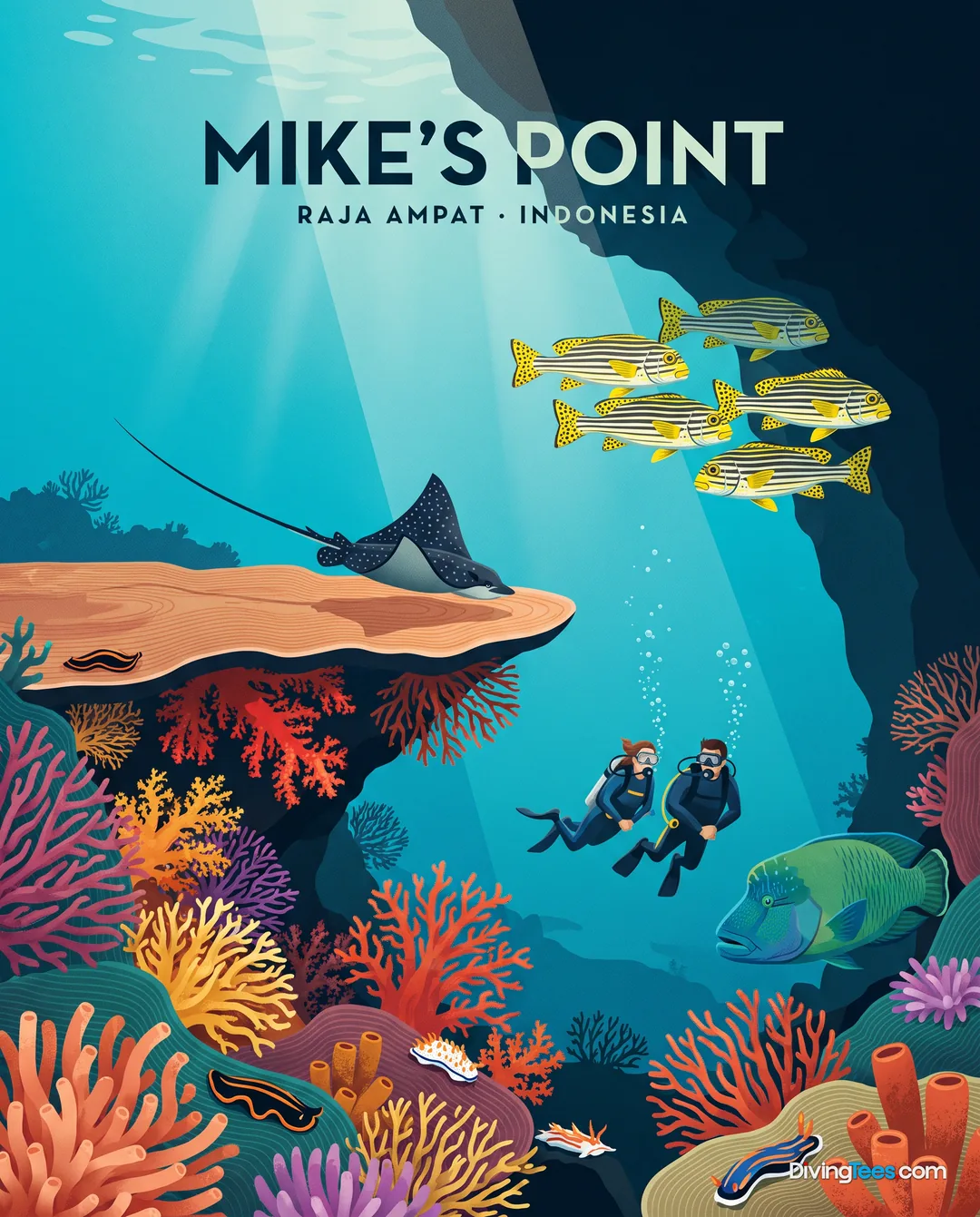
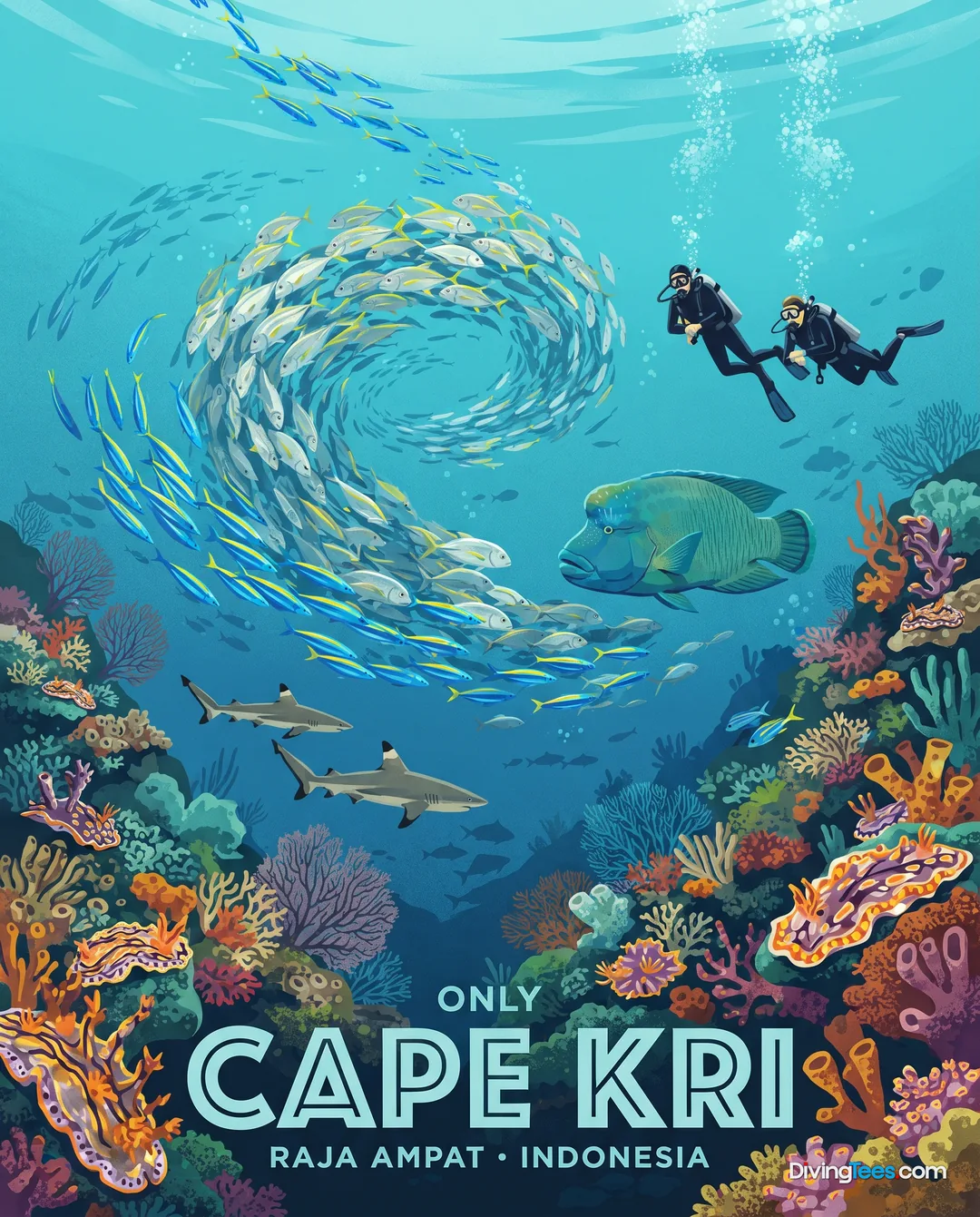
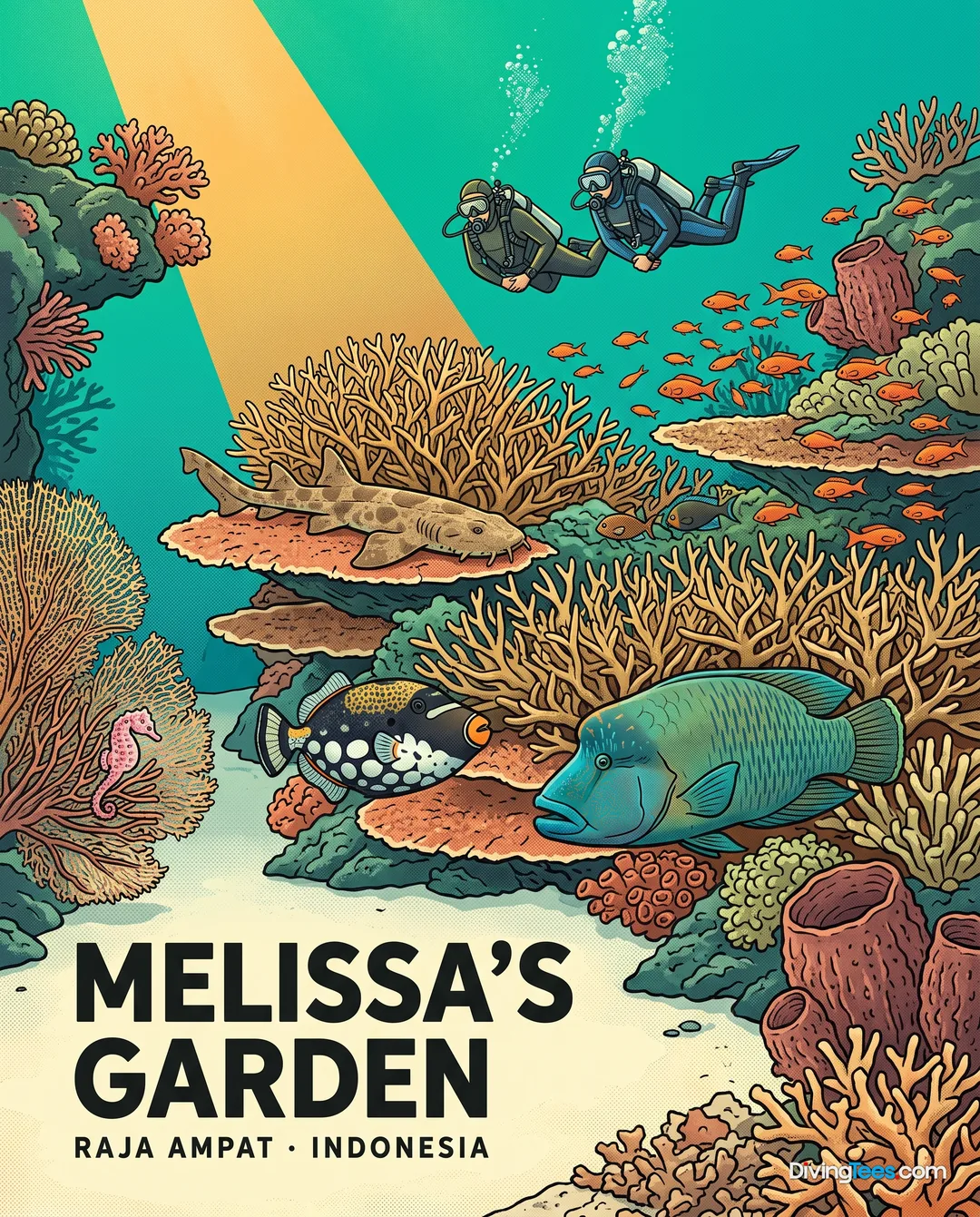
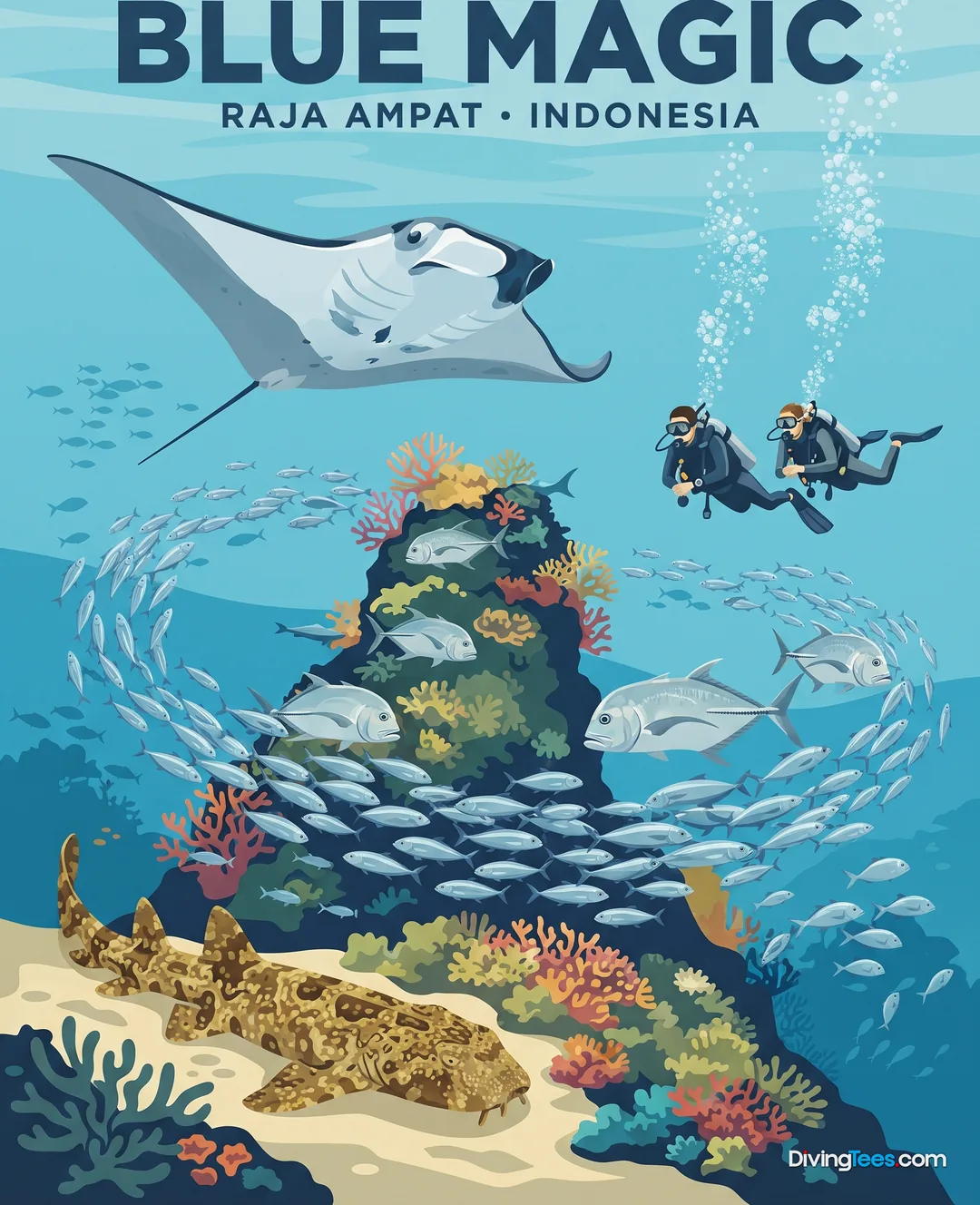
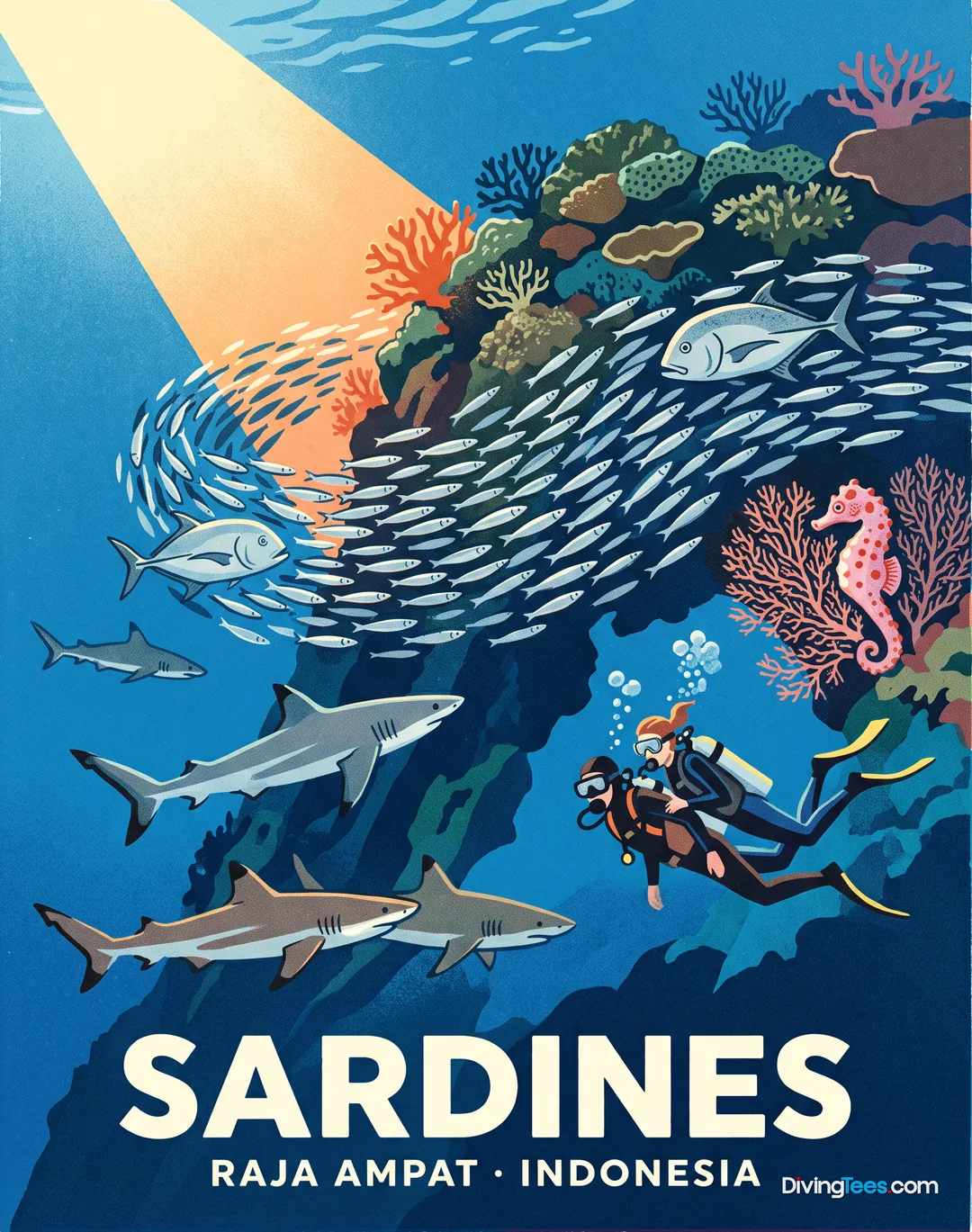
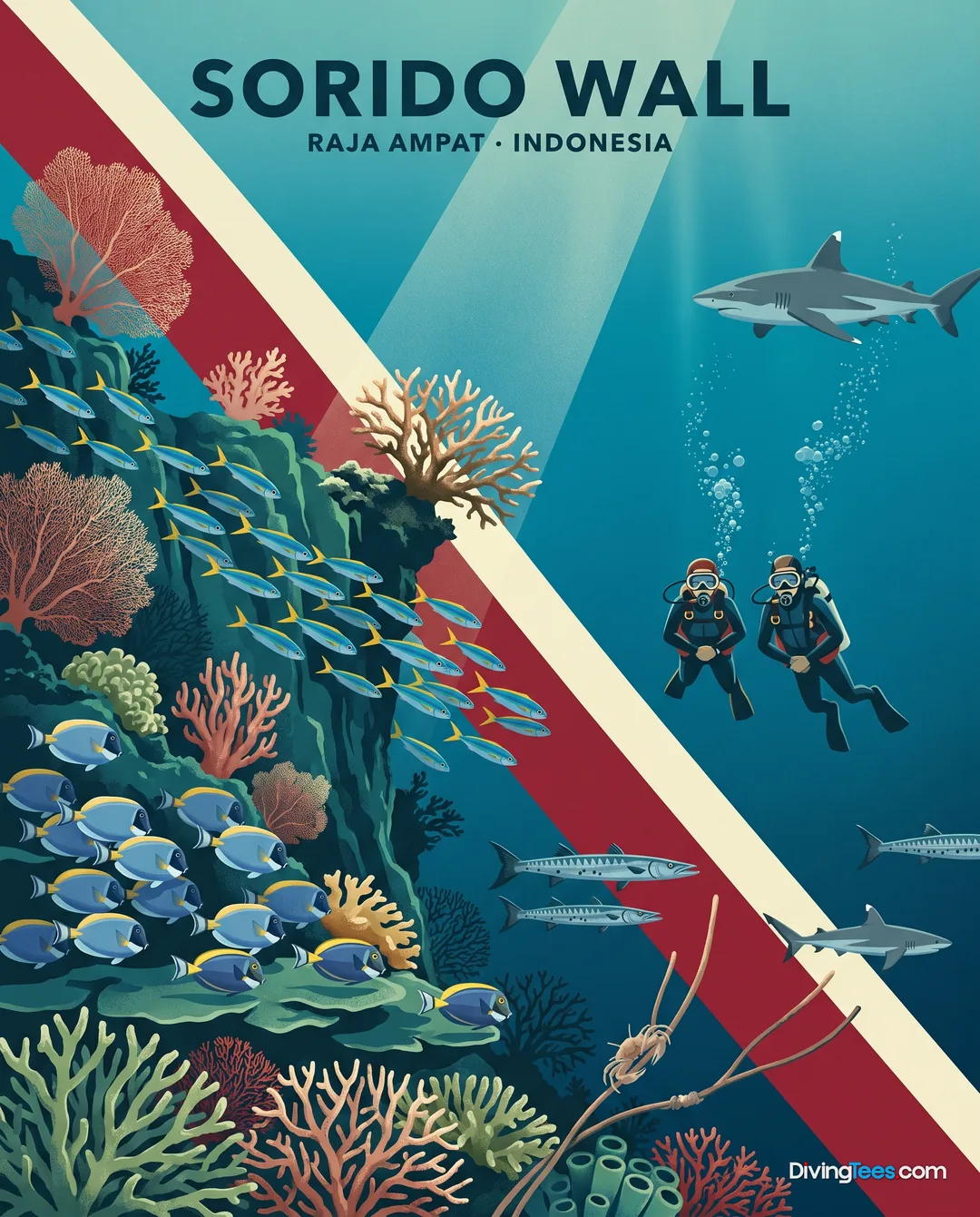
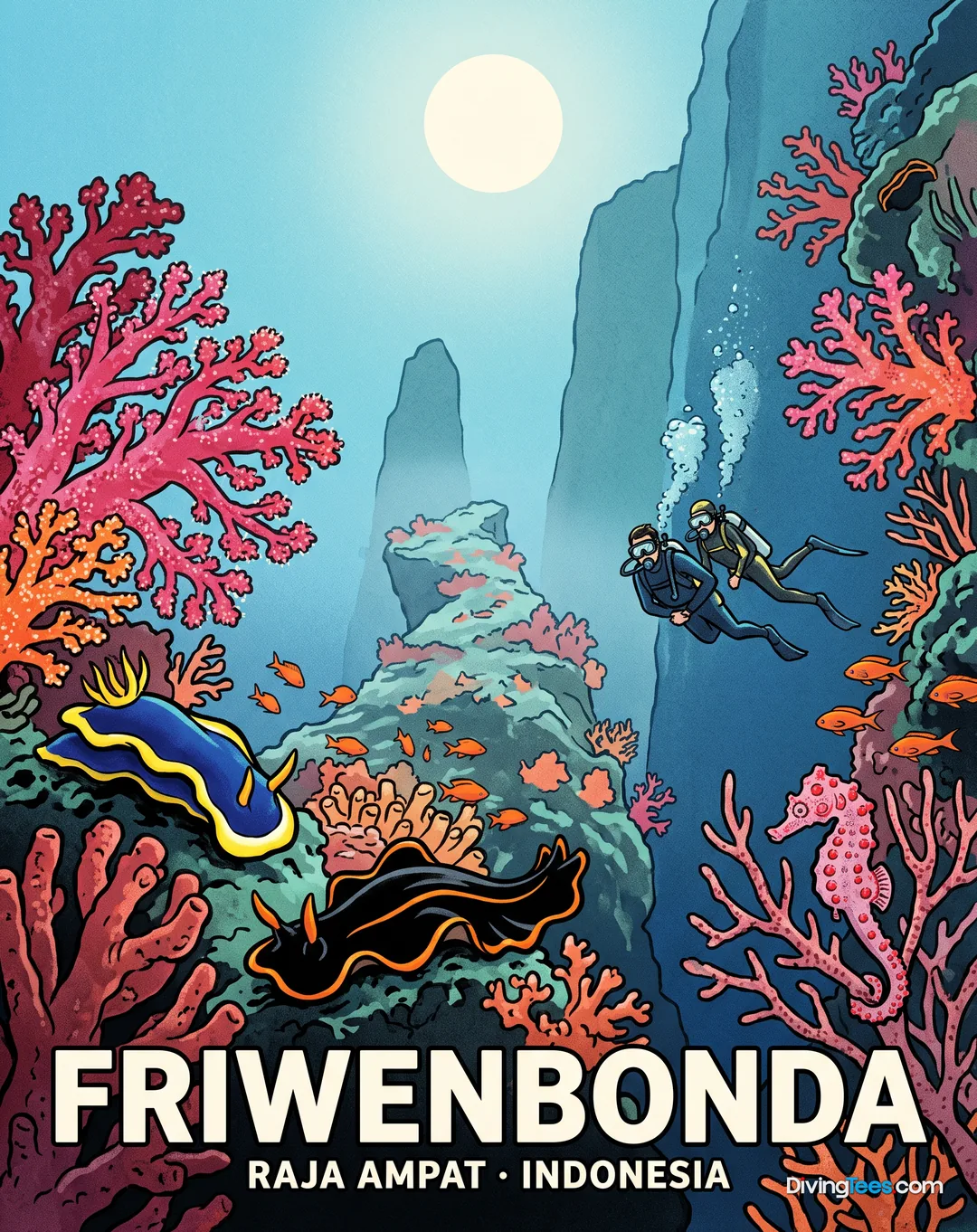
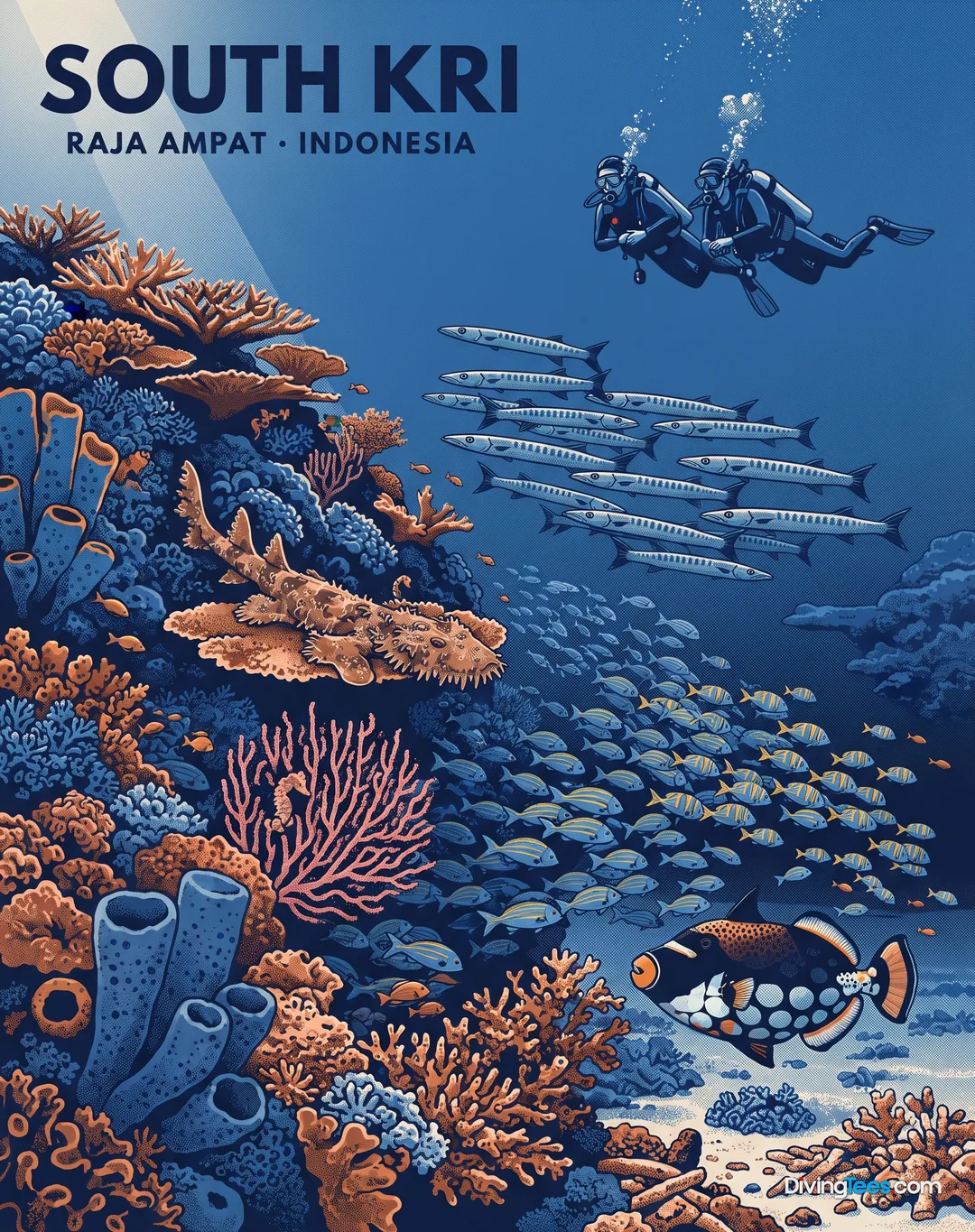
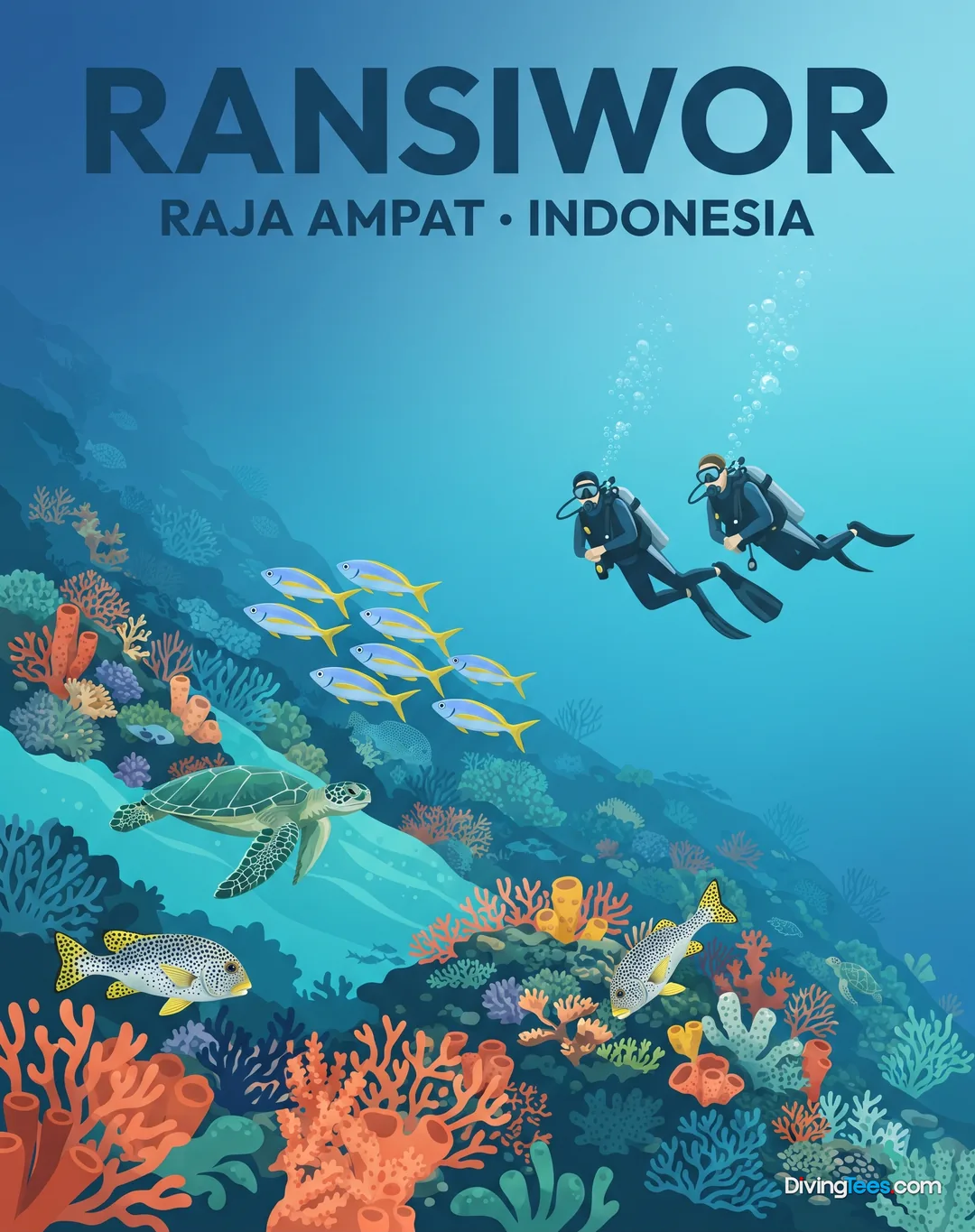
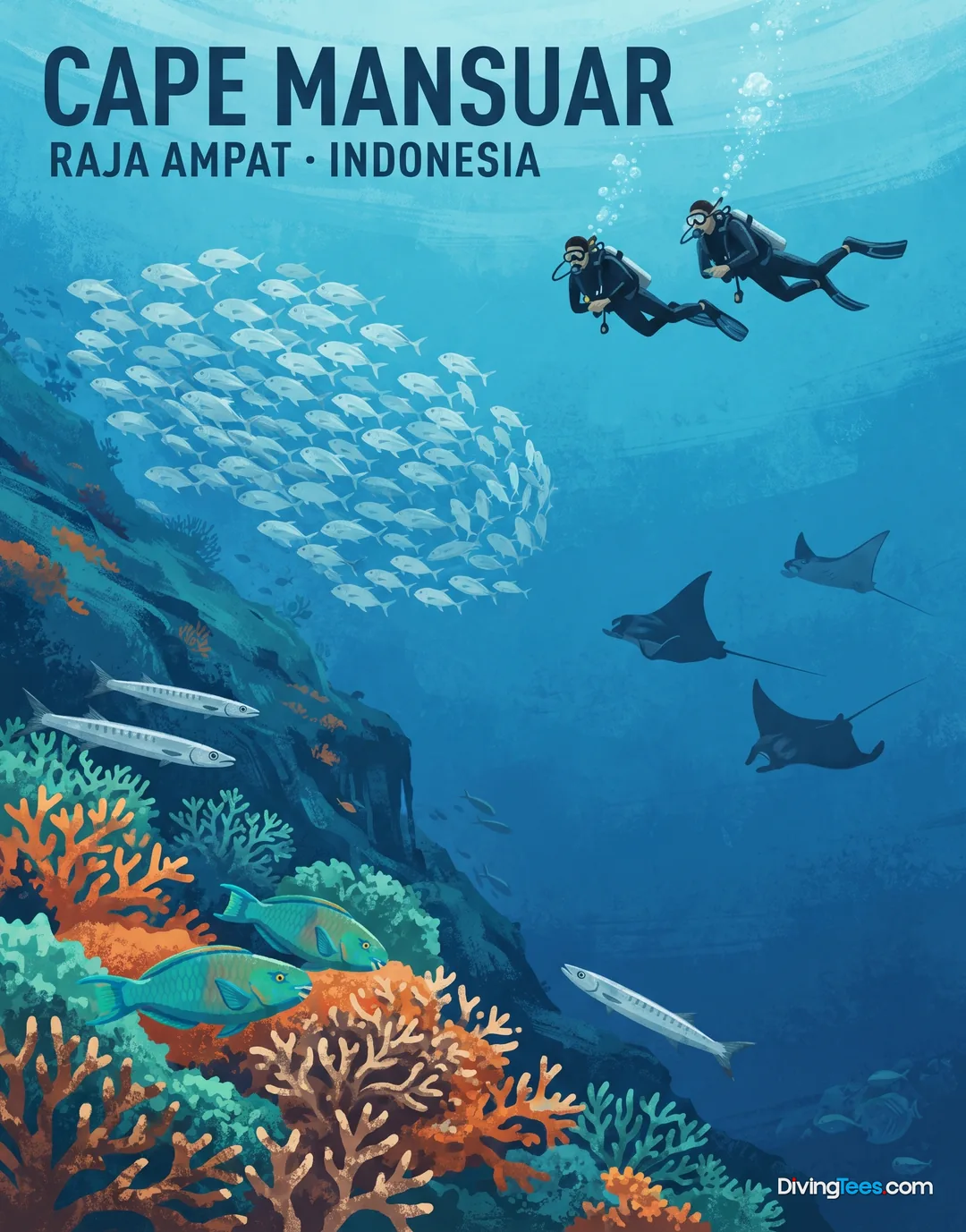
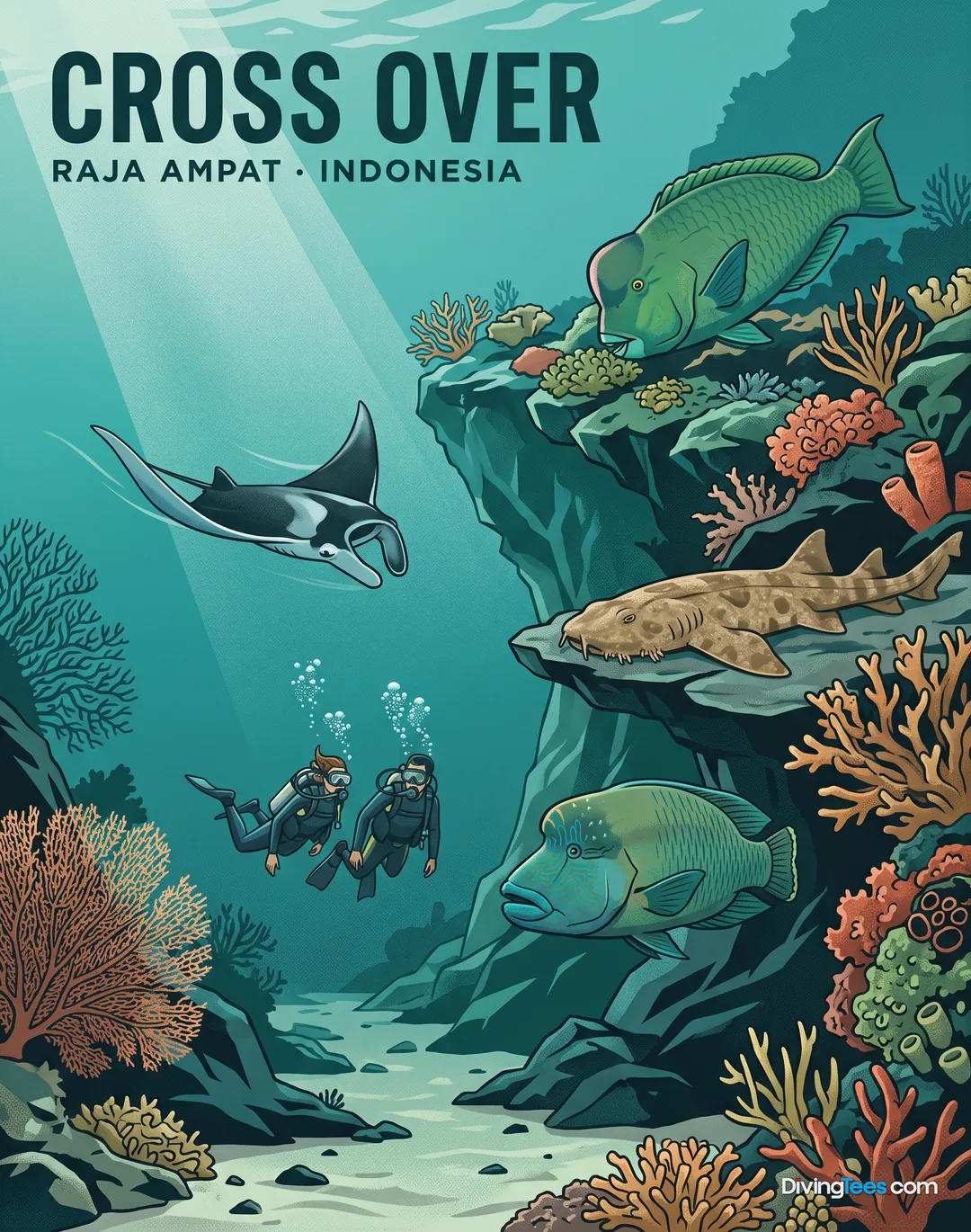
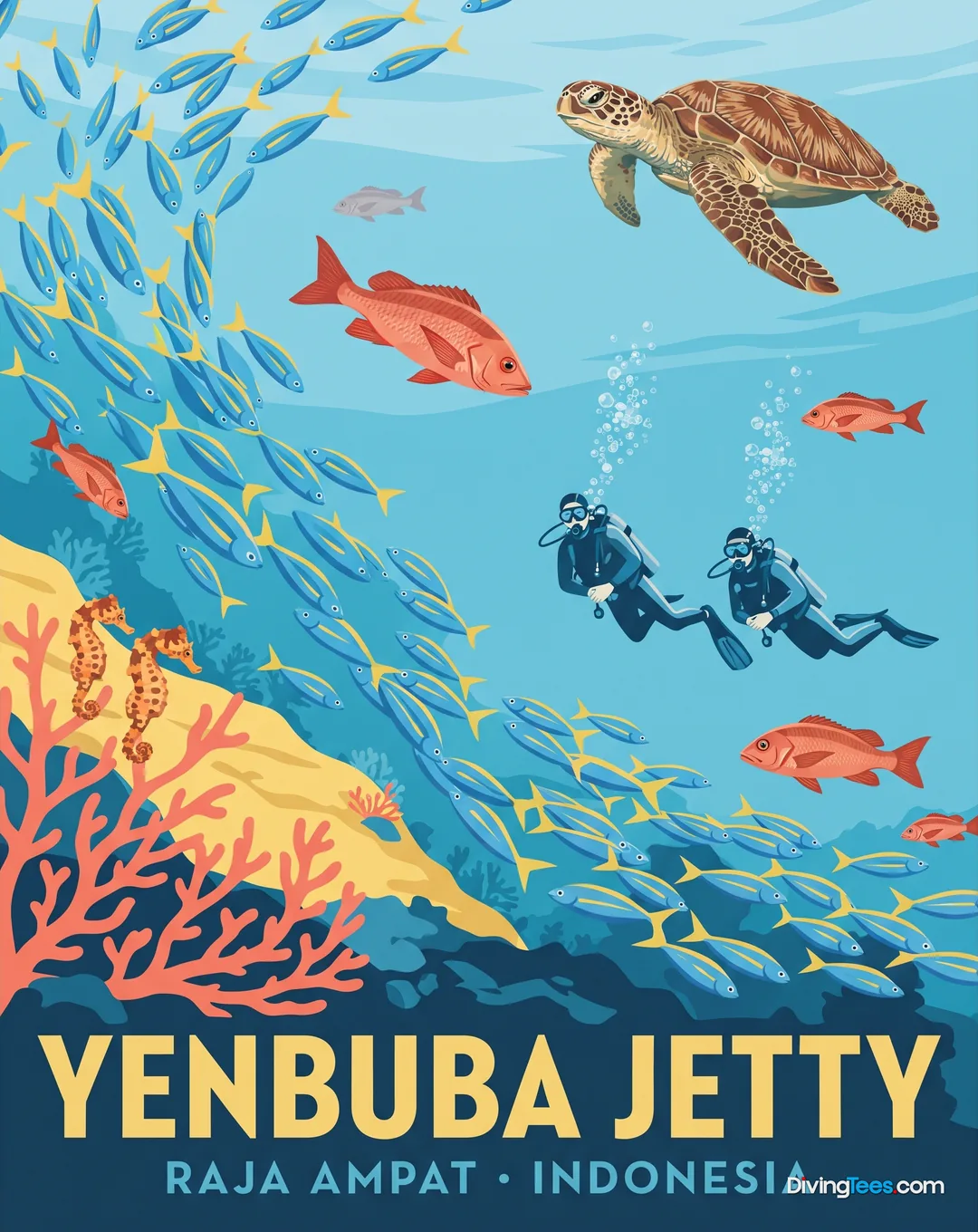
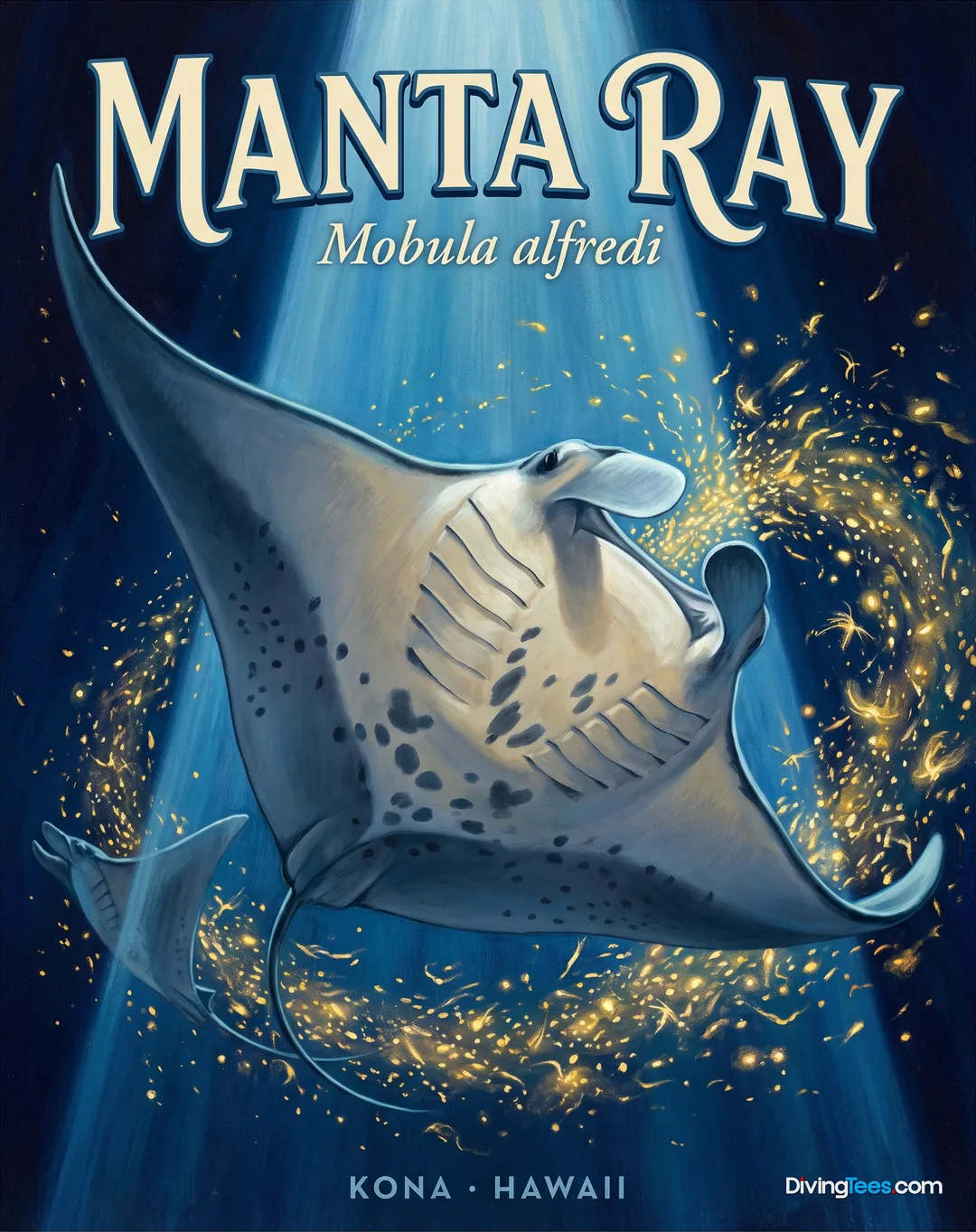
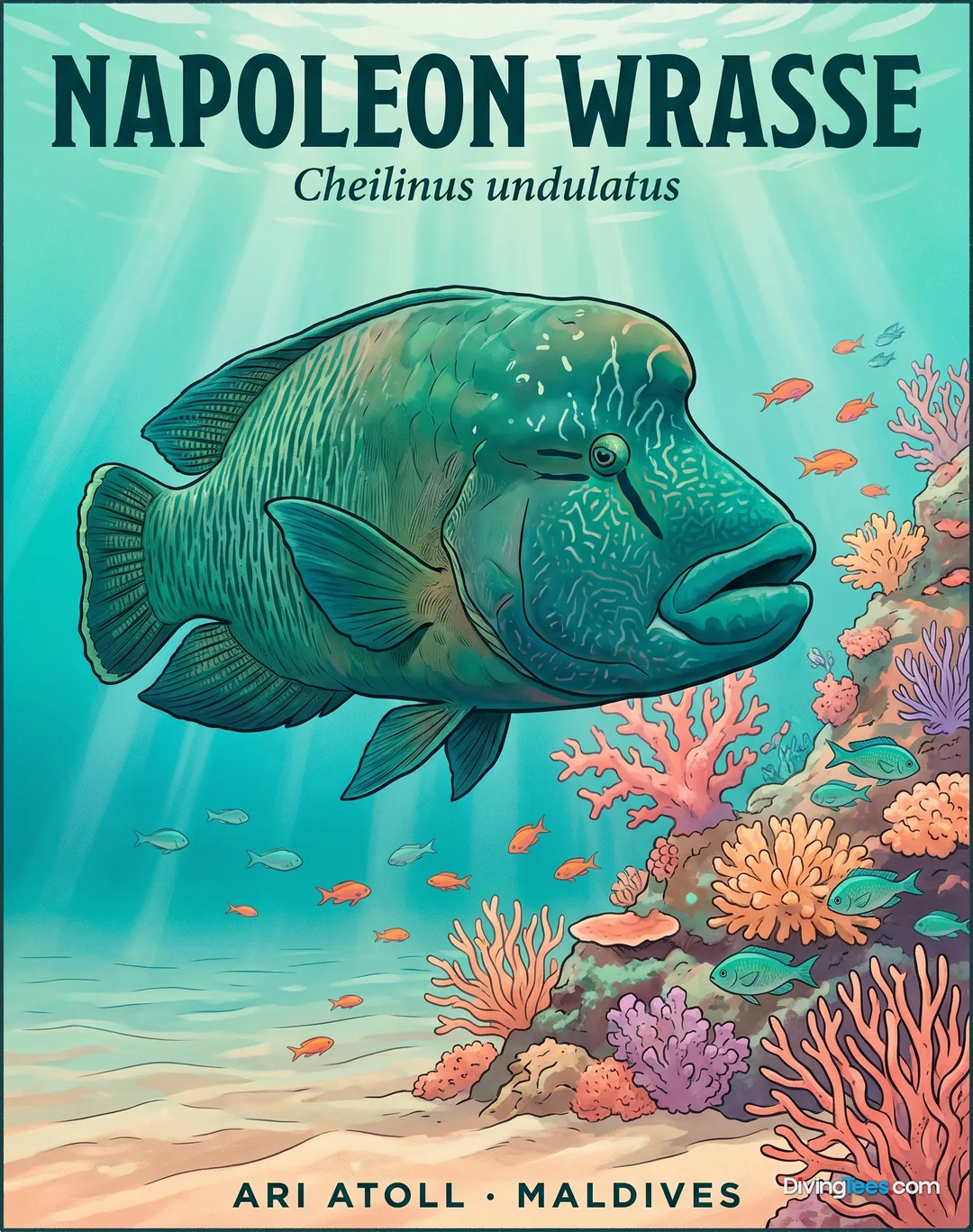
The 7-day, 6-night Best of Dampier itinerary runs from Waisai to Waisai through Raja Ampat's most varied diving. Dampier Strait brings vertical walls, strong currents and pelagic life, while Manta Sandy centres on reef manta rays hovering over cleaning stations. At Mike's Point, overhangs carry soft corals and sweetlips, with eagle rays crossing the flat plateau; its maximum depth is -40m. Cape Kri is the route's abundance dive, with large schools, reef sharks and napoleon wrasse, and a recorded 374 fish species observed on one dive. Melissa's Garden is a coral garden of soft corals and staghorn formations to -35m. Blue Magic adds schooling fish, wobbegong sharks and oceanic mantas. Sardines is built around dense fish concentrations and hunting pelagics, while Sorido Wall combines barracudas and reef sharks with fusiliers and surgeonfish. Friwenbonda offers a colourful soft-coral wall and pygmy seahorses. South Kri, Ransiwor, Cape Mansuar, Cross Over and Yenbuba Jetty add drifts, cleaning stations, macro life and coral-covered pilings; Ransiwor and Yenbuba Jetty reach -30m. Panoramic Raja Ampat viewpoints and other land excursions complete the route.
Itineraries, dates and prices
Prices per person. Each month shows its lowest price: click a month, or pick an itinerary.
Next departures · 37 departuresfrom £1,177$1,574€1,406
November 2026
December 2026
January 2027
See dates and prices
If you click these links and make a purchase on the partner site, DivingDeal may earn a commission, at no extra cost to you.
Dates and prices taken from Divebooker and liveaboard.com, updated 25 October 2026
What you’ll meet underwater
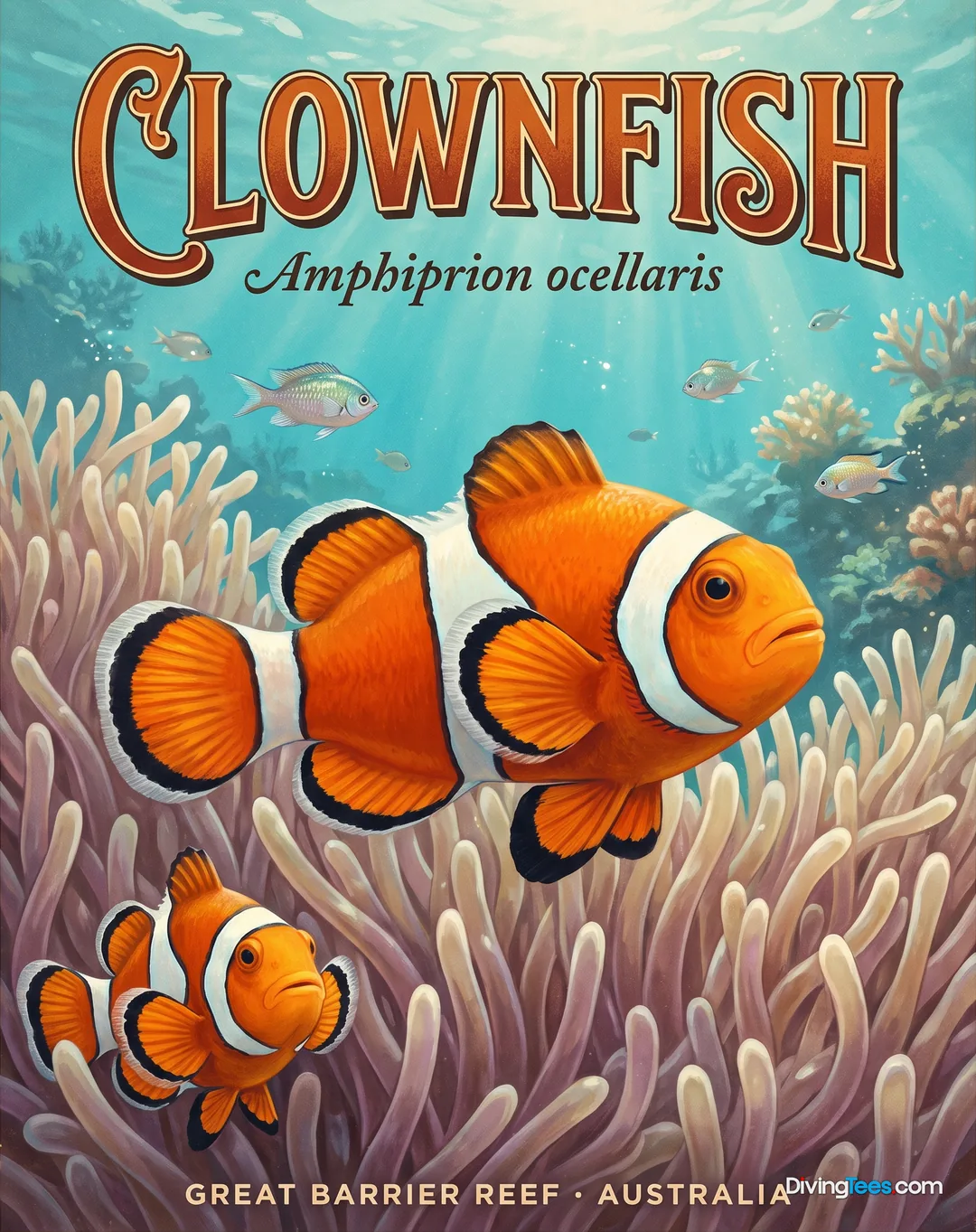
Across this route, reef sharks, barracudas, fusiliers, nudibranchs, napoleon wrasse, turtles, trevallies, humphead parrotfish, soft corals, eagle rays and pygmy seahorses form the recurring cast. The sites are rich enough that the wide-angle diver can stay busy while a careful guide can still point out small life in the reef. The single-site encounters are what give the itinerary extra purpose. Cape Kri is the place for giant grouper and whitetip reef sharks. Blue Magic is where oceanic reef sharks and tuna are recorded, with oceanic manta rays joining the schooling fish. Yenbuba Jetty is the site for anthias and damselfish around coral-covered pilings. South Kri adds bigeye trevally, crabs and shrimp, while Ransiwor is the place to look for an octopus and clownfish among its cleaning stations. Sorido Wall is the site associated with surgeonfish. At Manta Sandy, mantas gather over cleaning stations, and at Cape Mansuar mobulas may pass along the sloping reef. Currents help bring the larger animals in, but sightings remain sightings, not promises.

Who puts you in the water
Guiding is organised around a maximum of four divers per guide, the ratio that makes the most difference in Raja Ampat's currents and on a macro search. Groups can stay small enough for the guide to track different air consumption, buoyancy and comfort levels without turning the dive into a crowd. The crew speaks English, and briefings are delivered by the dive team before the entries. Oxygen, first-aid kits and marine communications equipment are carried on board, including GPS and VHF/DSC/SSB radio. Epica welcomes divers and snorkelers, but the required certification level, logged-dive minimum, guide qualifications, instructor count and courses run on board are not stated. A private dive guide is an optional extra, while the standard operation is built around the small group ratio.
The dive deck and the gear
The dive area is shaded, with rinse tanks, a platform and tenders for getting divers to and from the sites. The tenders are 3.5 metres long and powered by 15 hp Yamaha outboards, giving the crew a dedicated way to collect divers after the drift rather than making the liveaboard itself chase every surfacing point. DIN adaptors are available, and tanks, weights and weight belts form part of the dive package. Rental equipment is available when needed. Epica's dive deck is therefore set up for repeated entries and quick returns, with shade where divers are most exposed to the sun and rinse tanks for cameras and equipment. The available information does not establish tank material or volume, compressor type, nitrox provision, camera-table arrangements, hot-water facilities or SMB policy, so those details should not be assumed.
Between dives
Between dives, Epica gives guests a shaded place to sit, a terrace for open air, and enough room for the group to separate without disappearing from one another. Some will stay close to the dive deck, checking cameras or talking through the last current; others can move to the relaxation area and let the surface interval pass quietly. Outdoor dining changes the pace when the boat is under way, while included land excursions take the trip beyond the hull. Raja Ampat's panoramic viewpoints are part of the route, not an afterthought added to fill a spare afternoon. The boat is also open to non-divers and snorkelers, so surface time does not have to follow the divers' schedule exactly.
A day on board
A day on Epica is organised around the water rather than a clock. The dive team briefs the group, divers move through the shaded dive area, and the tenders take them to the reef or collect them where the current carries them. Back on board, snacks and drinks cover the first surface interval before the next entry; a full meal follows the diving, with more time to rest, talk through the site or watch Raja Ampat slide past the terrace. The order repeats as the route moves between Dampier Strait reefs, walls, coral gardens and manta sites. When the boat is under way, the deck becomes the place to dry equipment and watch the islands. Land excursions and panoramic viewpoints break up the underwater rhythm. By evening, dinner replaces the dive briefing as the day's main gathering point, and the cabins offer a quiet retreat before the next route day.
What you eat aboard
Food is one of Epica's strongest points. Full board is included, with buffet service, local and Western dishes, vegetarian and vegan options, and snacks available throughout the day. Meals are plentiful enough for a schedule built around repeated dives, while the choice of local cooking gives the trip a taste of Indonesia rather than an all-purpose international menu. Beer is available, and dinners can also be taken à la carte. The useful part is the timing: food is not treated as decoration between activities. It arrives as a proper recovery stop, with lighter snacks ready when a diver comes back hungry but not ready for a full meal. The food score is the highest of the passenger criteria, and that is exactly what matters after a week of immersion, currents and salt water.
Nights at sea
The six cabins sit on the main deck, each with air conditioning and a standard window. That position matters in Raja Ampat: getting to the dive deck does not mean climbing through several levels in wet gear. There are two bathrooms for the boat, so cabin life is comfortable but shared facilities are part of the arrangement. Nights are therefore about having a cool, private place to sleep between dives rather than a hotel-style suite. The boat's limited guest capacity keeps the shared spaces usable, and the terrace gives the cabins a natural escape when someone wants air instead of air conditioning. Epica's nights are simple and functional, with the next day's diving never far from the room.
Cabins
What to know before boarding
Epica departs from Waisai and returns to Waisai on the 7-day, 6-night Best of Dampier route. Airport and hotel transfers are optional extras rather than part of the liveaboard package, so they need to be arranged separately with the operator. Arriving in the area the night before is the sensible choice, leaving room for delays before boarding. The boat returns to Waisai at the end of the route.
- Year built
- 2016
- Length
- 24 m
- Maximum number of passengers
- 12
- Number of cabins
- 6
- Number of bathrooms
- 2
- Engines
- Mitsubishi 200p
- Tenders
- 3.5 m with 15 hp Yamaha
- Website
- scuba-republic.com ↗
Hello, I'm Marina, DivingDeal.com's AI assistant. I answer in detail about hotels, dive centres and liveaboards.
Thinking about the whole trip and the flights? Talk it over with Edith →
Marina is an AI. Some links are affiliate links: DivingDeal may earn a commission, at no extra cost to you. Bookings are made with the partner.