



Let's Dive Tulamben
Google 5/5 (2,215 reviews)
less than 1 km away as the crow flies
Tulamben · Indonesia · Asia
Max. depth · 30 mAlamanda offers a gently sloping coral reef teeming with macro life, just a short boat ride from Tulamben's shore.
For subtitles in English: start the video firstthen click the gearat the top right of the video, select “Subtitles/CC”, then “Auto-translate” and choose “English”.
Alamanda is found a quick five-minute boat ride northwest from the main dive area in Tulamben, accessible only by sea. The site presents a consistent coral slope that starts shallow and descends to around 30 metres. This gentle gradient allows for comfortable exploration, moving slowly along the reef contour while observing the intricate details of the habitat. The dive typically begins with a descent onto the upper part of the slope, allowing you to gradually work your way deeper, parallel to the reef.
The primary draw at Alamanda is its rich macro life, making it a dive where patience and a keen eye are rewarded. You will often find nudibranchs in various colours and forms clinging to corals, alongside cleaner shrimp and different crab species tucked into crevices. This focus on smaller organisms means moving at a deliberate, unhurried pace, examining the coral structure and its inhabitants closely rather than covering large distances.
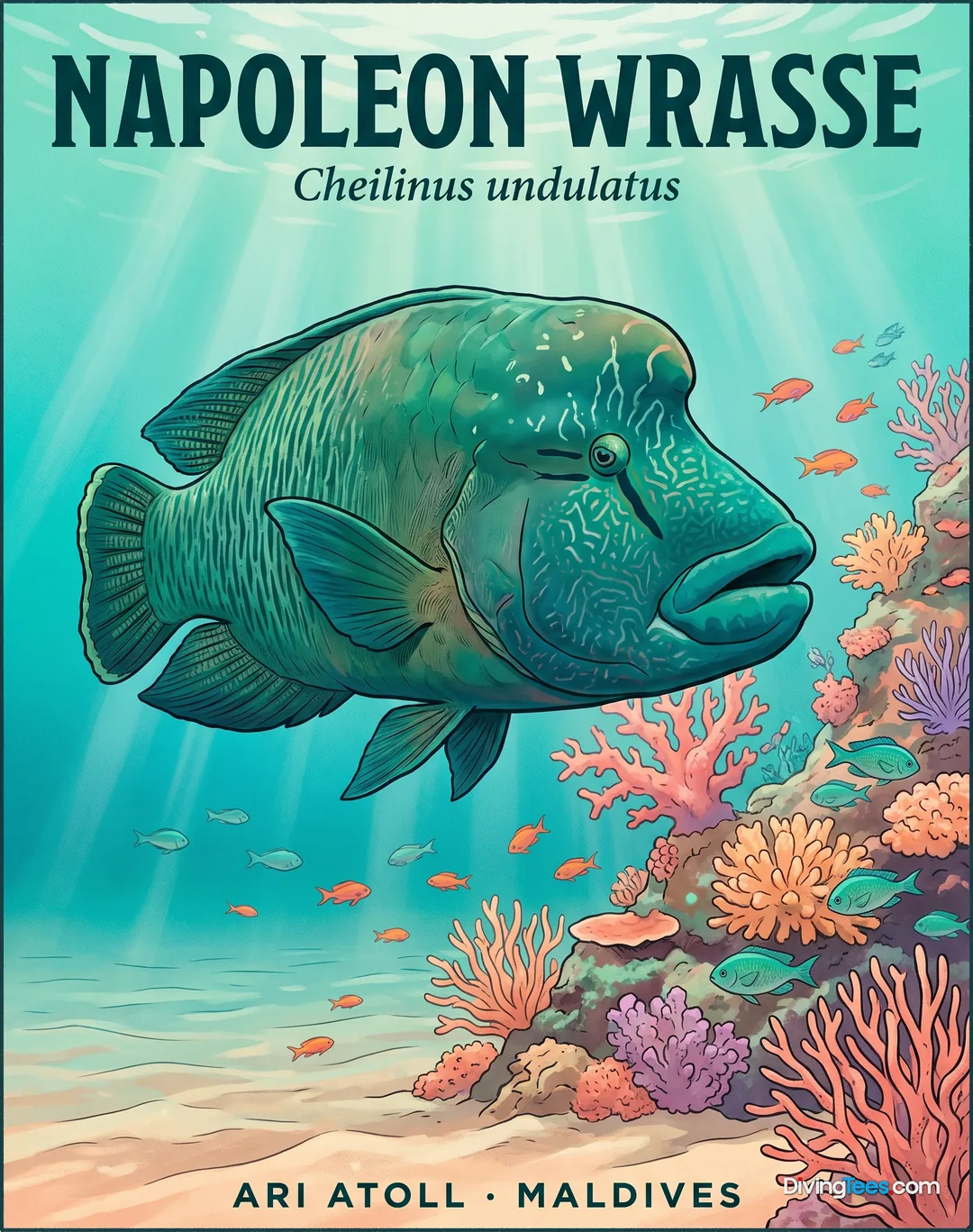
Beyond the macro, the site also hosts larger reef inhabitants. Occasional sharks have been spotted, adding an element of pelagic surprise, though they are not a consistent presence. You can expect to encounter bumphead parrotfish (Bolbometopon muricatum) methodically grazing on the coral, their sheer size making them unmistakable. Napoleon wrasse (Cheilinus undulatus), often identifiable by their prominent forehead hump, also cruise the reef, adding to the diversity of marine fauna.
Turtles are also regular visitors to Alamanda, frequently encountered as they navigate the reef or rest among the corals. Their calm presence offers excellent opportunities for observation. The coral cover itself is dense and healthy, providing ample shelter and feeding grounds, which explains the high concentration of diverse life found here. This robust ecosystem is a defining feature of the site, maintaining a balanced environment for both small and larger species.
Visibility at Alamanda is generally good, supporting clear observation of the reef and its inhabitants. The site experiences minimal to no current most of the time, providing a relaxed diving experience without the need to fight against moving water. This calm environment is particularly conducive to macro photography and allows divers to spend more time observing specific subjects without being swept away.
This site is safely accessible from Open Water Diver certification, with depths ranging from 10 to 30 metres. Current is consistently negligible, providing a calm environment for exploration. Visibility is typically good. The prime diving season in Tulamben for clear skies and comfortable surface conditions runs from May to October.
You can dive Alamanda throughout the year, while the prime season in Tulamben runs from May to October. During this period, clear skies and comfortable surface conditions support the boat journey and your dive. Visibility is typically good, helping you observe the coral slope and its inhabitants.
Alamanda is suitable for you if you hold an Open Water Diver certification. The coral slope begins in shallower water and descends gradually from 10 to 30 metres. You typically start on the upper slope, then move deeper while following the reef contour at a comfortable pace.
You can expect consistently negligible current at Alamanda, with minimal to no current most of the time. The site is accessible only by boat, and the calm conditions support relaxed exploration. You can move slowly along the reef and spend time examining subjects without being swept away.
At Alamanda, you can explore a vibrant, dense coral slope rich in macro life. Look for nudibranchs, cleaner shrimp, and crabs, as well as bumphead parrotfish and Napoleon wrasse. Turtles are regular visitors, while sharks appear occasionally. Good visibility supports close observation of the reef and its inhabitants.