
Bormes Plongee
Google 4.8/5 (262 reviews)
28 km away as the crow flies
Bormes les Mimosas · France · Mediterranean
Max. depth · 40 mExplore the historic 66-meter Rubis, a WWII submarine resting upright at 40 meters, now a vibrant artificial reef.
For subtitles in English: start the video firstthen click the gearat the top right of the video, select “Subtitles/CC”, then “Auto-translate” and choose “English”.
Diving Le Rubis means descending on a piece of history that still holds its form, almost seventy years after its deliberate sinking. This former mine-laying submarine, built in 1931, rests upright on a sandy seabed at 40 meters. The dark outline of the submarine slowly emerges from the blue, its 66-meter length dominating your field of vision, its form remarkably preserved after decades underwater.
The Rubis is not just another wreck; it's a testament to naval engineering and wartime history, now transformed into a thriving underwater ecosystem. Its journey was notable: after being launched in 1931, it joined the Free French Naval Forces in July 1940 and served throughout World War II. Le Rubis executed 28 missions, deploying 683 mines and sinking 15 ships, a background that adds a layer of historical weight to the dive.
The wreck was intentionally scuttled on January 31, 1958, near Bormes les Mimosas, to serve as a dive site, a decision that has preserved it for future generations of divers. As you circle the wreck, the detailed structure becomes evident. You can often make out periscopes, mine-laying wells, and even torpedo tubes, offering a direct connection to its operational past. The integrity of the submarine provides a stable habitat, which in turn draws a variety of marine life.
This wreck has become an exceptional artificial reef, attracting a significant amount of marine life due to its size and complexity. The metal structure now serves as a habitat, with its crevices and surfaces colonized by various organisms. The dive itself is less about penetration, and more about appreciating the external features and the life that has claimed them, from its conning tower to its torpedo tubes.
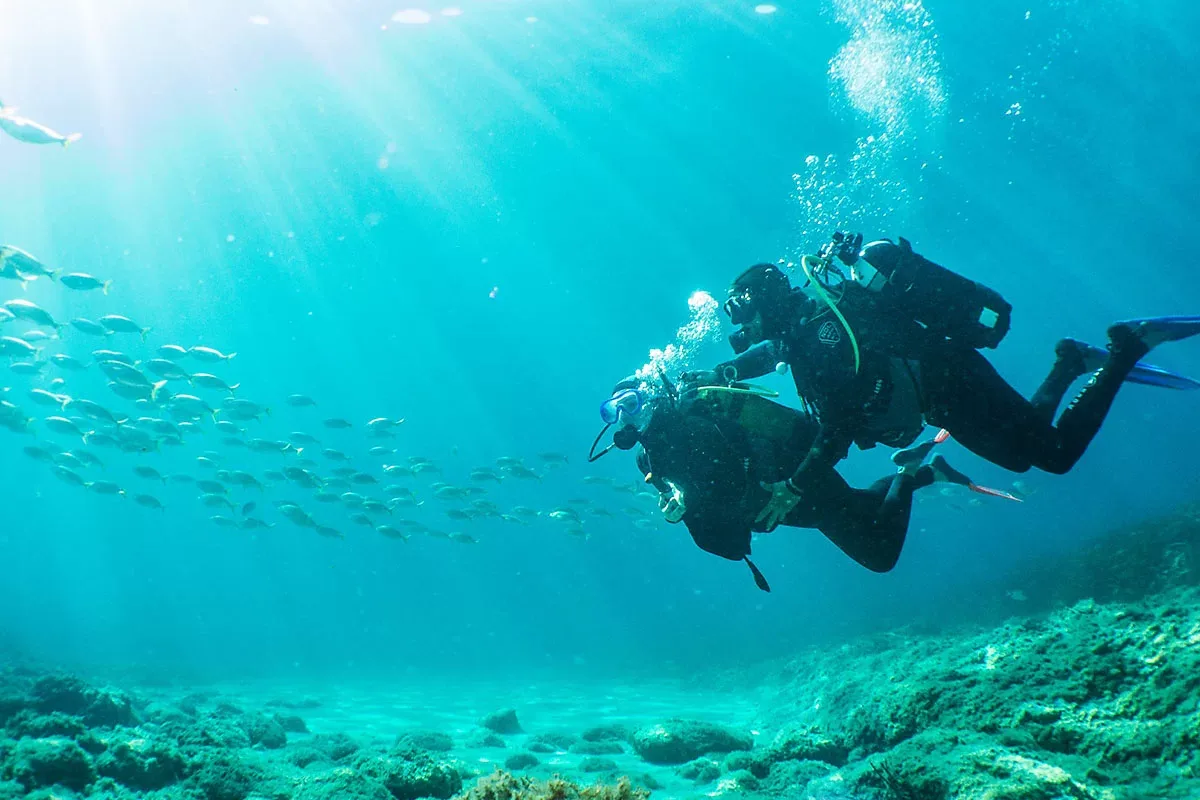
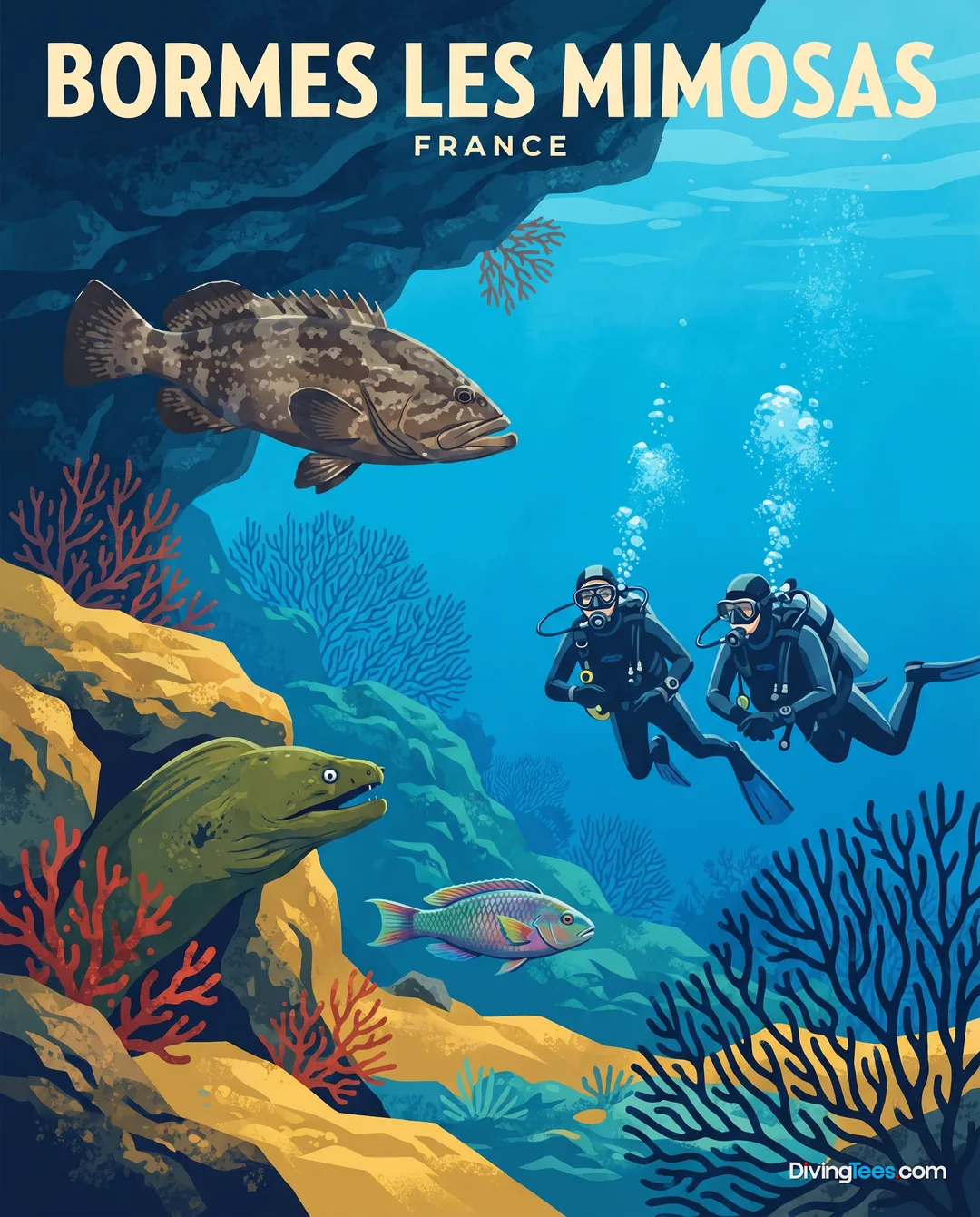
The marine life around Le Rubis is concentrated on its structure. You will typically encounter groupers taking shelter in crevices, and moray eels along with conger eels peering out from pipes and openings. Beyond these residents, the site is known for schools of fish that traverse the open water above the wreck, including black-headed sargos and golden grey mullets. These schools add to the sense of vibrancy despite the wreck's depth.
Visibility at Le Rubis is frequently excellent, providing almost perfect conditions to appreciate the wreck's details and the surrounding marine activity. This clear water, combined with the depth, creates a dramatic silhouette of the submarine against the blue. While currents can be strong, especially on specific tides, they contribute to the health of the ecosystem by bringing nutrients and maintaining water clarity, which benefits both the fixed life and schools of fish.
Diving Le Rubis requires a minimum certification of PE40 or Niveau 2, or an Advanced Open Water Diver with a deep dive specialty. It is also recommended to have confirmed deep diving experience, and careful buoyancy control is essential due to the depth and potential for exploration near the structure. The maximum depth for this site is 40 meters, reaching the sandy seabed. Currents can often be strong, so plan your dive accordingly. The best period for diving Le Rubis is during July, August, and September, offering optimal conditions.
The best period for diving Le Rubis is July, August, and September, when conditions are described as optimal. During your planning, consider that currents can often be strong and may be especially noticeable on specific tides. This wreck dive also benefits from frequently excellent visibility, helping you appreciate the submarine and surrounding marine life.
You need a minimum certification of PE40 or Niveau 2, or an Advanced Open Water Diver qualification with a deep dive specialty, to dive Le Rubis. Confirmed deep diving experience is recommended. Careful buoyancy control is essential because of the depth and the potential for exploration near the submarine’s structure.
Le Rubis lies between 32 and 40 meters, reaching a sandy seabed at its maximum depth of 40 meters. Currents can often be strong, so you should plan your dive accordingly, particularly around specific tides. Nutrient-carrying currents help maintain water clarity and support the ecosystem around the wreck.
At Le Rubis, you can circle an intact 66-meter submarine resting upright on the sand and view its conning tower, periscopes, mine-laying wells, and torpedo tubes. The wreck shelters groupers, moray eels, and conger eels, while schools of black-headed sargos and golden grey mullets move through the water around it.