
Plongee Tek Marseille
Google 5/5 (429 reviews)
Marseille · France · Mediterranean
Explore a network of underwater canyons, grottos, and vibrant reefs that shelter diverse Mediterranean marine life within the unique topography of the Calanques.
For subtitles in English: start the video firstthen click the gearat the top right of the video, select “Subtitles/CC”, then “Auto-translate” and choose “English”.
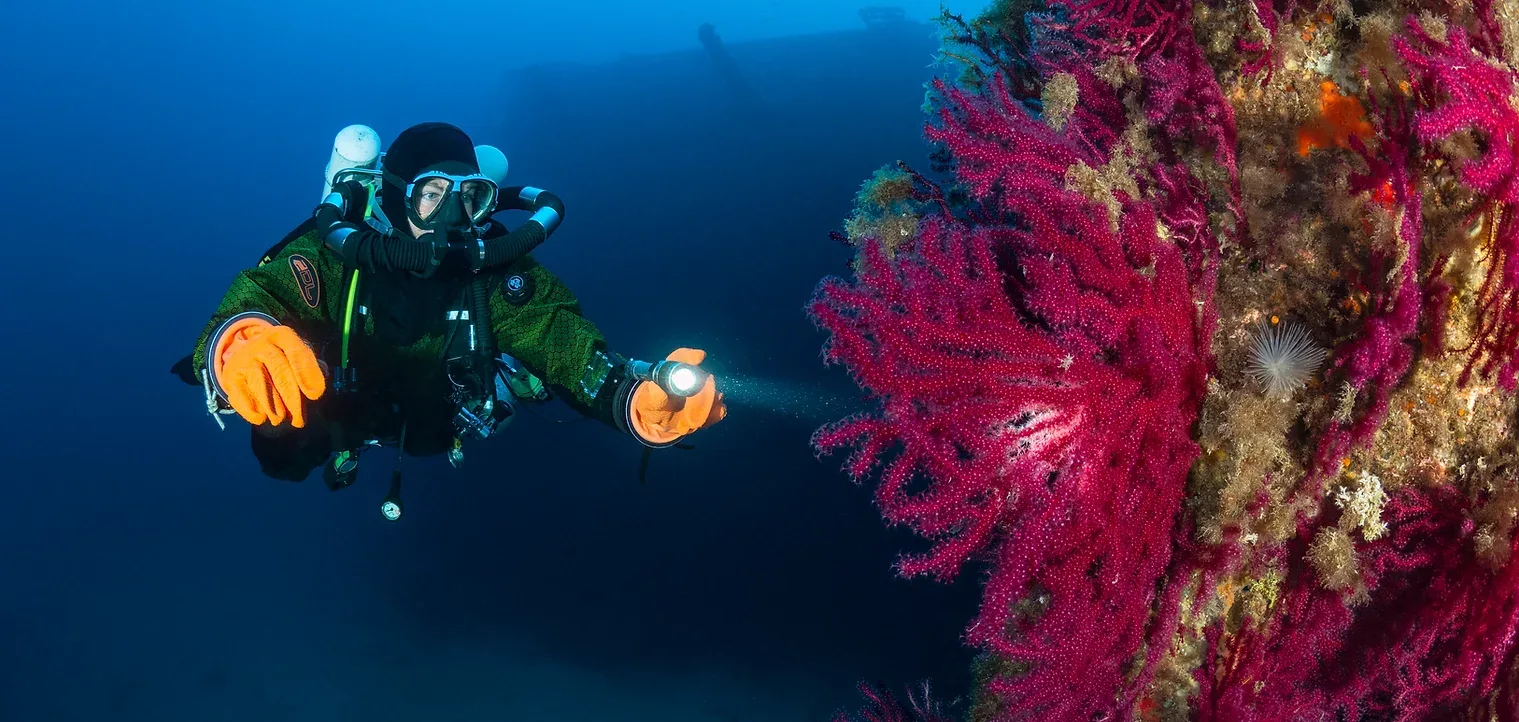
Diving the Parc National des Calanques means immersing yourself in a landscape shaped by ancient geology, both above and below the surface. The underwater topography here mirrors the iconic limestone cliffs above, featuring an intricate system of deep drop-offs, numerous seamounts, and a distinct archipelagic structure. As you descend, the light shifts across formations that range from sheer walls to more sheltered reef sections, creating a dynamic environment that changes with each metre of depth.
The sheer scale of this marine protected area, spanning over 43,500 marine hectares, sets it apart. It’s not just a collection of dive sites but a complex ecosystem with diverse habitats. You will encounter extensive Posidonia seagrass meadows in shallower areas, transitioning into dramatic underwater canyons at greater depths. This variety of structure supports a density of marine life that is characteristic of a healthy Mediterranean environment.
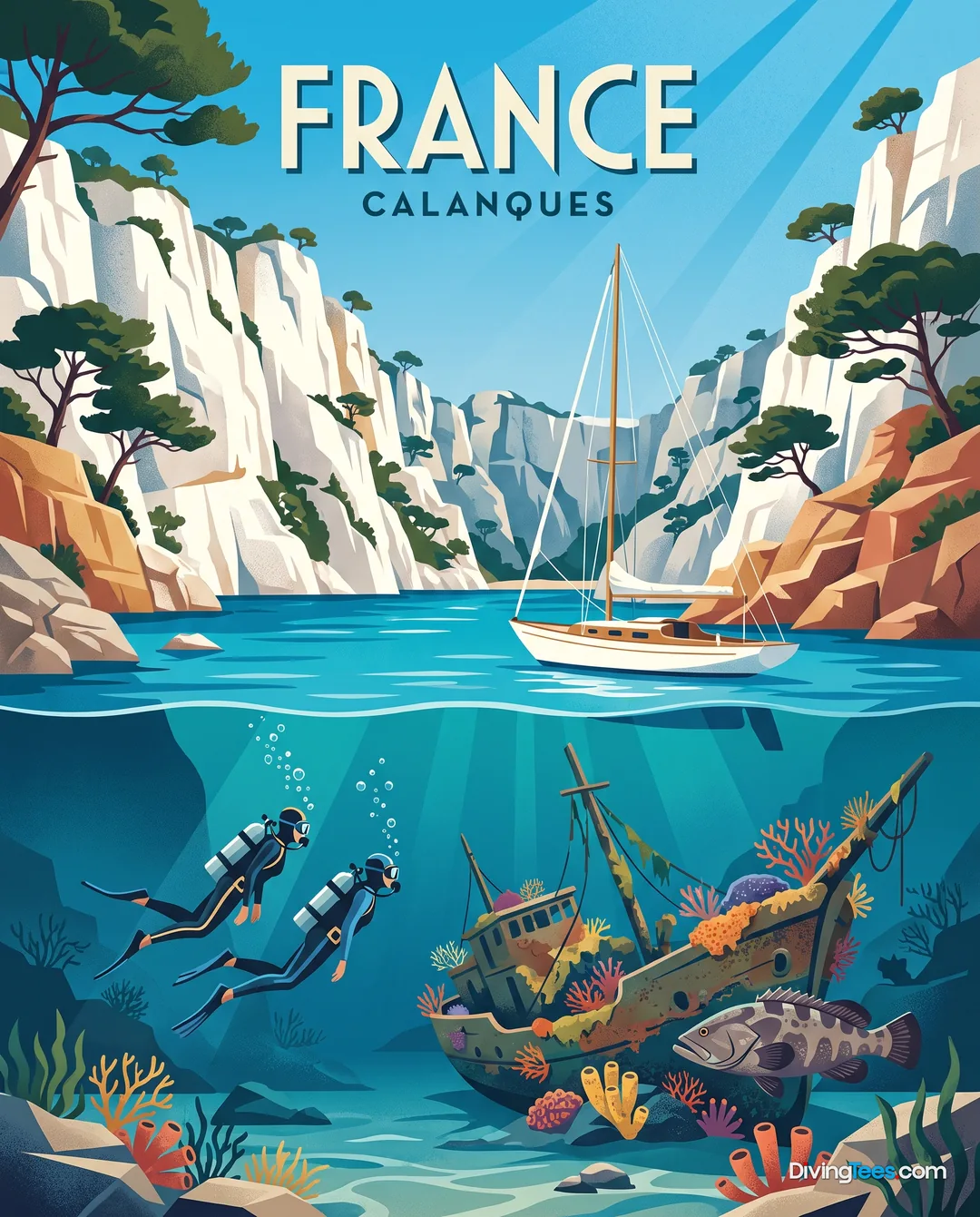
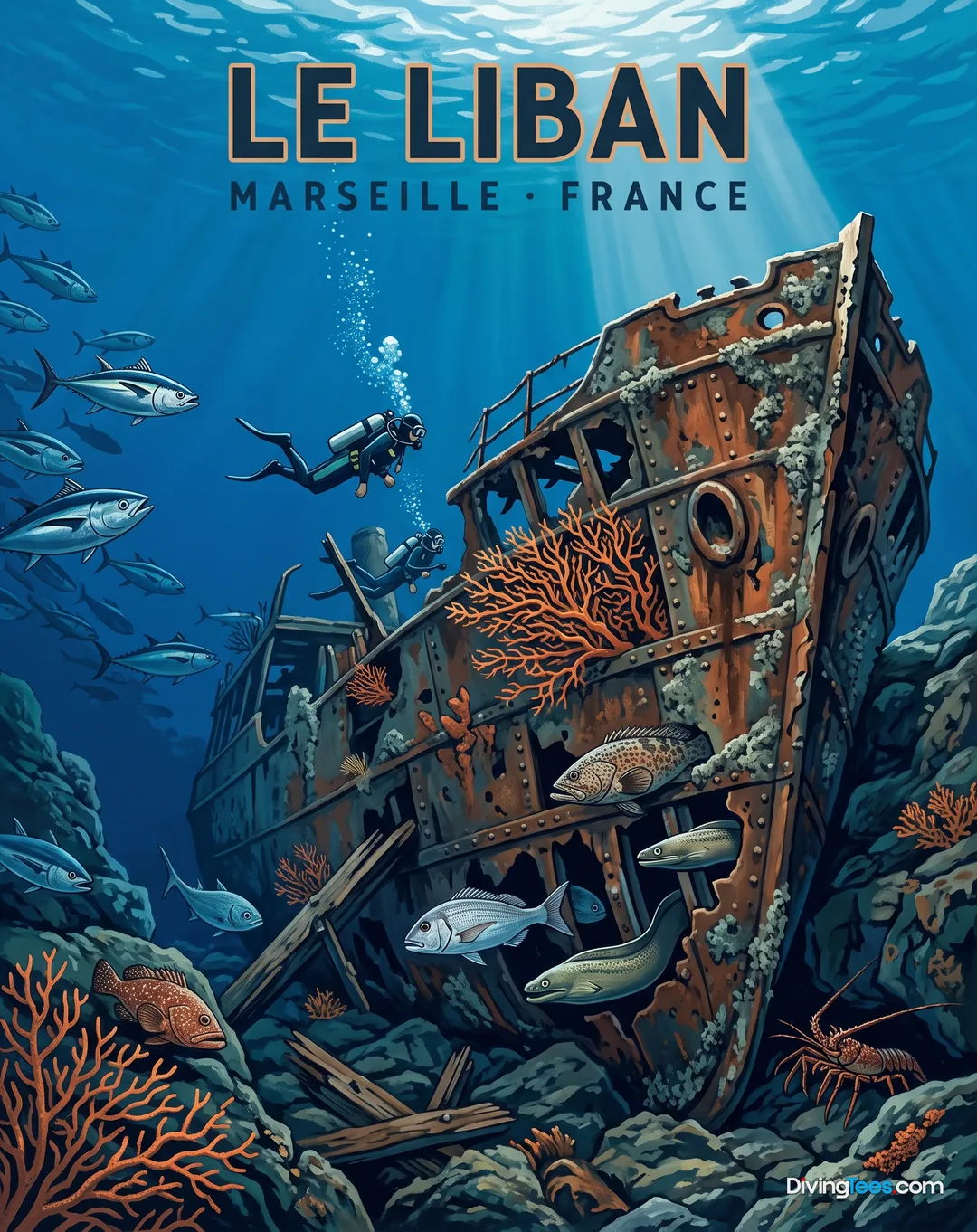
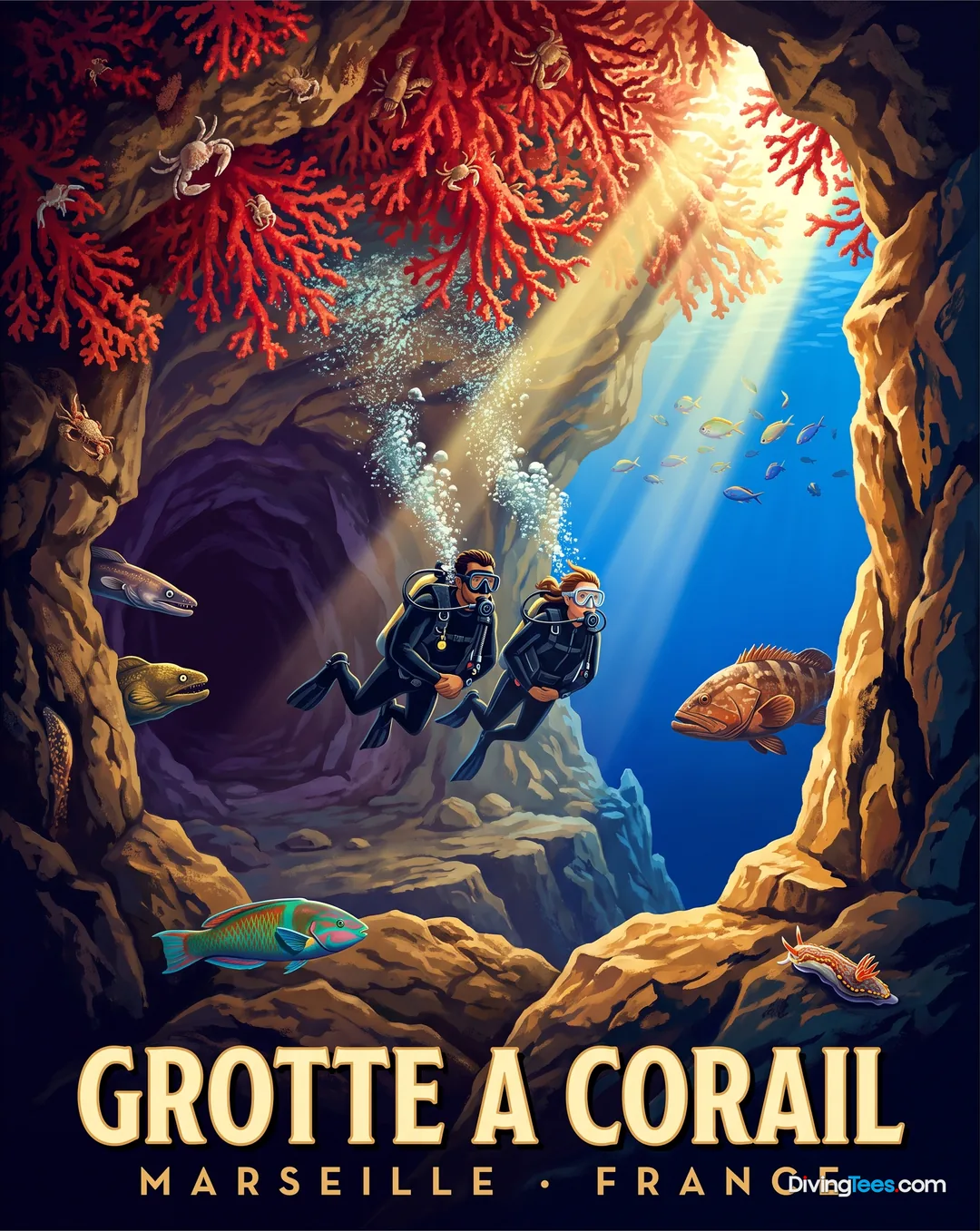
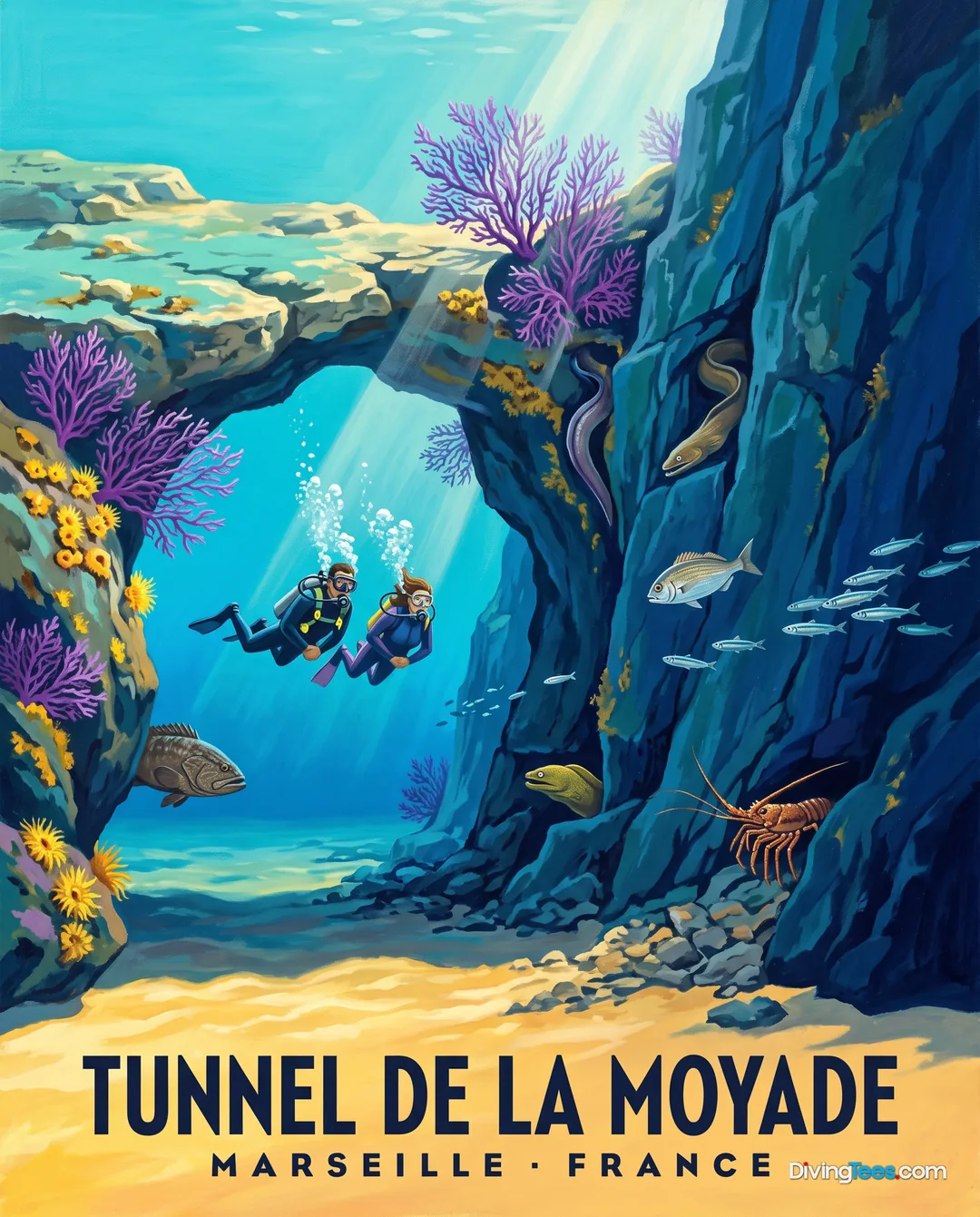
Below the surface, the Calanques reveal deeper structures including marine caves and arches, alongside historical ship and aircraft wrecks. These provide complex environments for marine life and offer varied dive profiles. These features create natural shelters and navigational challenges, adding another layer to the underwater exploration; each cave and wreck tells a story whether through the marine growth that now encompasses it or the fish that call it home.
While specific depths vary by site within the park, the overall topography allows for adaptable dive plans. You can follow relief features that lead into deeper water, extending your dive profile. The diverse structure, from shallow reefs to the deeper sections of canyons and ancient wrecks, means you can explore different aspects of the Calanques’ underwater world on repeated visits, often encountering new perspectives and marine encounters.
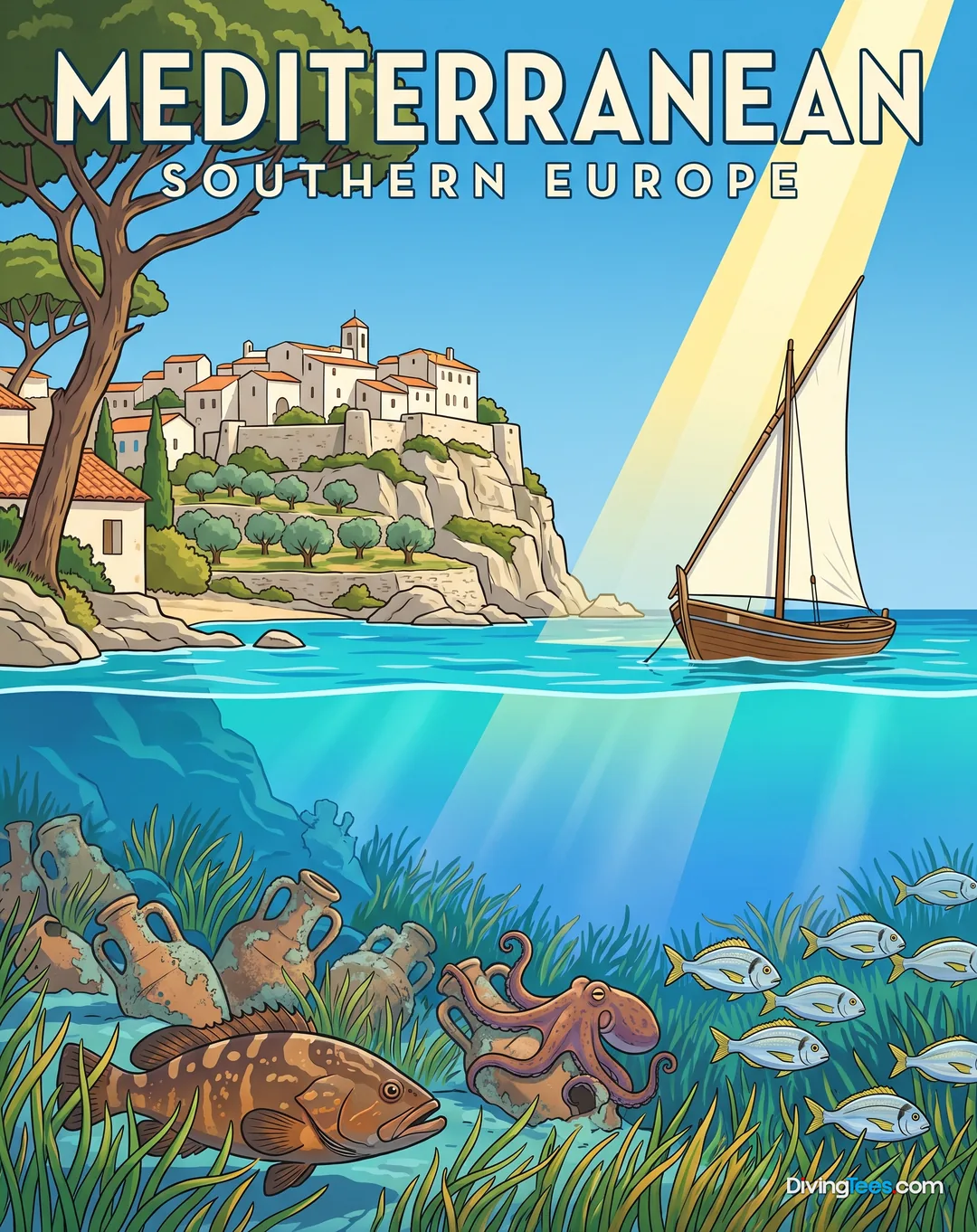
The resident fauna in the Calanques is abundant and frequently encountered, including sars, groupers (mérous), moray eels (murènes), and dentis patrolling the rocky outcrops. You will also see schools of sea bream (daurades), sea bass (loups), and anthias providing bursts of color against the rock faces. Smaller species like wrasses (girelles), silver sars, and cardinal fish (castagnoles) are constantly active in the reef systems, fitting into every crevice and current.
Life here extends beyond the common reef inhabitants. While not an everyday sighting, the deeper, more open water areas are known for encounters with pelagic species. Occasional sightings of dolphins, and rarely, whales and marlins, are recorded deeper or in transit through the park's waters. These rare encounters highlight the significance of the Calanques as a vital ecological corridor and a place of true Mediterranean biodiversity.
The overall experience of diving in the Calanques is shaped by its protective status and the diversity it fosters. This is a place where you observe established populations in their natural behaviour. The range of underwater topography ensures that whether you are tracing the edge of a drop-off, exploring a protected calanque, or navigating a wreck, you are constantly engaged with a dynamic and healthy Mediterranean environment.
The Parc National des Calanques caters to all levels of divers. Many sites are accessible from Open Water Diver certification. The extensive protected area provides sheltered zones that are suitable for newer divers, while deeper drop-offs, grottos, and wrecks offer progressive challenges for more experienced divers. Visibility is typically good, allowing for clear views of the diverse underwater landscapes.
Parc National des Calanques caters to all levels of divers. Many sites are accessible with Open Water Diver certification, and sheltered zones suit newer divers. If you have more experience, you can progress to deeper drop-offs, grottos, canyons, and wrecks that create more demanding dive profiles and navigation challenges.
Depths at Parc National des Calanques vary by site rather than following one fixed profile. You can explore shallower reefs and Posidonia seagrass meadows, then follow relief toward deeper drop-offs, underwater canyons, caves, arches, and wrecks. This varied topography supports adaptable dive plans for different experience levels.
At Parc National des Calanques, you can explore limestone walls, drop-offs, reefs, seamounts, caves, arches, canyons, and an archipelagic underwater structure. Sheltered reef sections and shallow seagrass meadows contrast with deeper formations. Multiple ship and aircraft wrecks add historical features, complex habitats, and navigation challenges to the landscape.
At Parc National des Calanques, you may encounter sars, groupers, moray eels, dentis, sea bream, sea bass, anthias, wrasses, silver sars, and cardinal fish among the rocky reefs. Deeper or open water can bring occasional dolphins, while whales and marlins are rare sightings in transit through the park’s waters.