Le Pirate Island - Adults Only
★ 9.6/10 (1,405 reviews)
13 km away as the crow flies
Dive centre · Komodo · Indonesia
4.9531 Google reviewsExplore the Komodo National Park on traditional Phinisi boats or via daily speed boat excursions from Labuan Bajo.
For subtitles in English: start the video firstthen click the gearat the top right of the video, select “Subtitles/CC”, then “Auto-translate” and choose “English”.
Located in Labuan Bajo on the island of Flores, Maika Komodo Tour & Diving serves as a gateway to one of the world's most biodiverse marine environments. The centre operates out of the main street, Jl. Soekarno Hatta, providing easy access for divers arriving via Komodo International Airport.
Whether you are looking for a day trip to explore the nearby reefs or a multi-day liveaboard to reach the more remote corners of the archipelago, the centre manages the logistics of the Komodo National Park. Their operations cover everything from local reef exploration to extended safaris on traditional vessels.
The team is composed of experienced local and international guides, supported by a crew with a combined 50 years of experience in the regional tourism industry. This depth of local knowledge is central to their operation, particularly when navigating the complex currents and sites of the national park.
Instruction is provided through the SSI system, covering a range of levels from beginners to professional divers. The staff are experienced in delivering both recreational courses and guided expeditions, with a focus on personalised service and environmental responsibility through the 'Plastic-Free Komodo' initiative.
Maika Komodo Tour & Diving offers a complete range of SSI training programmes. Beginners can start with Discover Scuba Diving or progress through the Open Water Diver and Advanced Open Water Diver courses.
For those looking to advance their skills or career, the centre provides Divemaster training and a variety of SSI specialty courses. This structured approach allows divers to tailor their training to the specific environments they encounter in the Komodo archipelago.
The centre utilises both speed boats for daily excursions and traditional Phinisi boats for extended liveaboard trips. These vessels are equipped with dedicated kitchens where fresh meals are prepared for divers between dives.
Onboard facilities include spacious entry and exit points for easy access to the water, several freshwater showers, and dedicated freshwater tanks for rinsing cameras and technical equipment. Comfortable relaxation areas are also provided for resting between dives or during transit.
A full range of diving equipment is available for hire, allowing you to travel light if you prefer. This includes essential kit such as regulators, wetsuits, and fins.
The centre is well-equipped for various diving needs, including night dives. Shore-based facilities include rinsing areas and showers to ensure your kit is well-maintained after every outing.
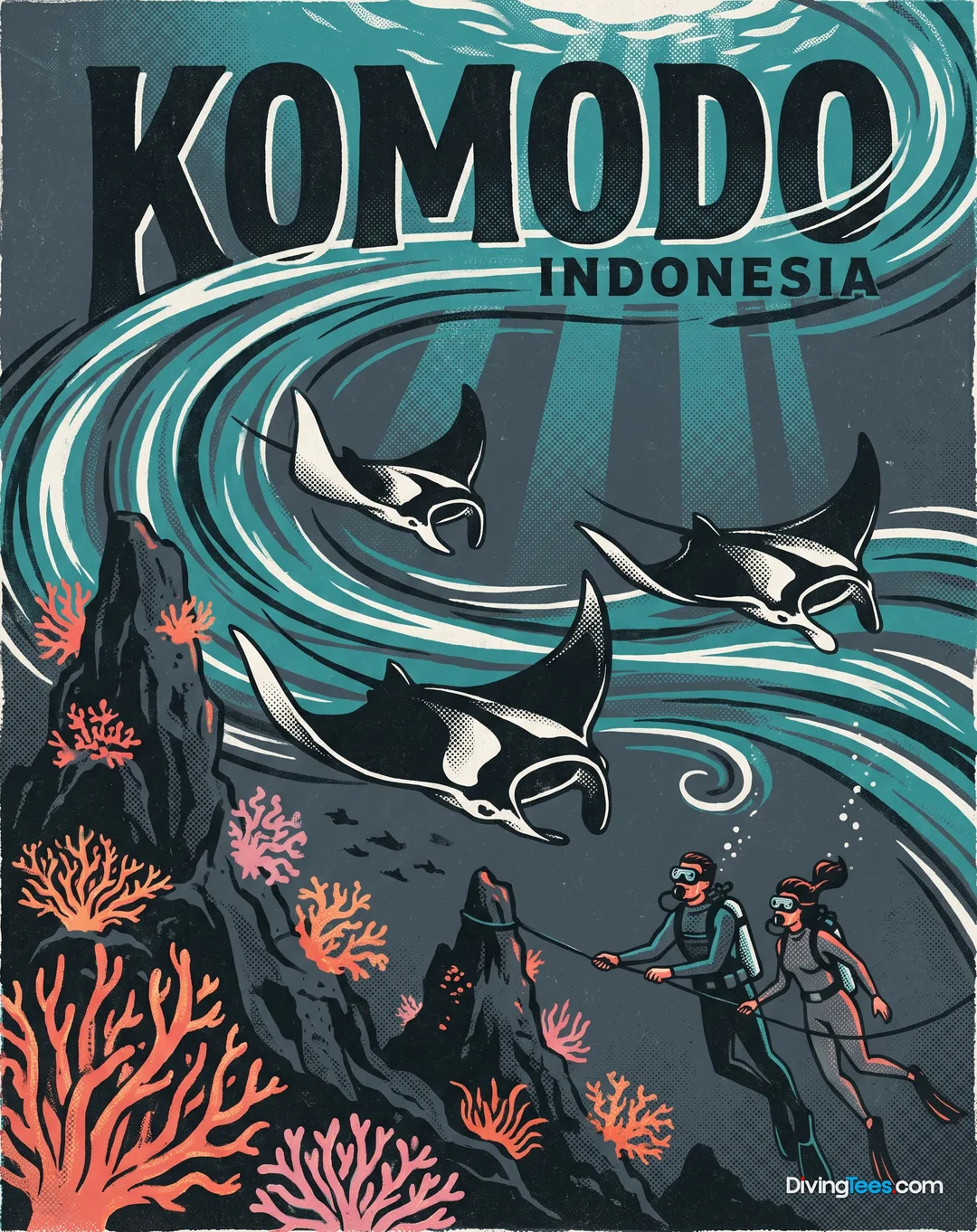
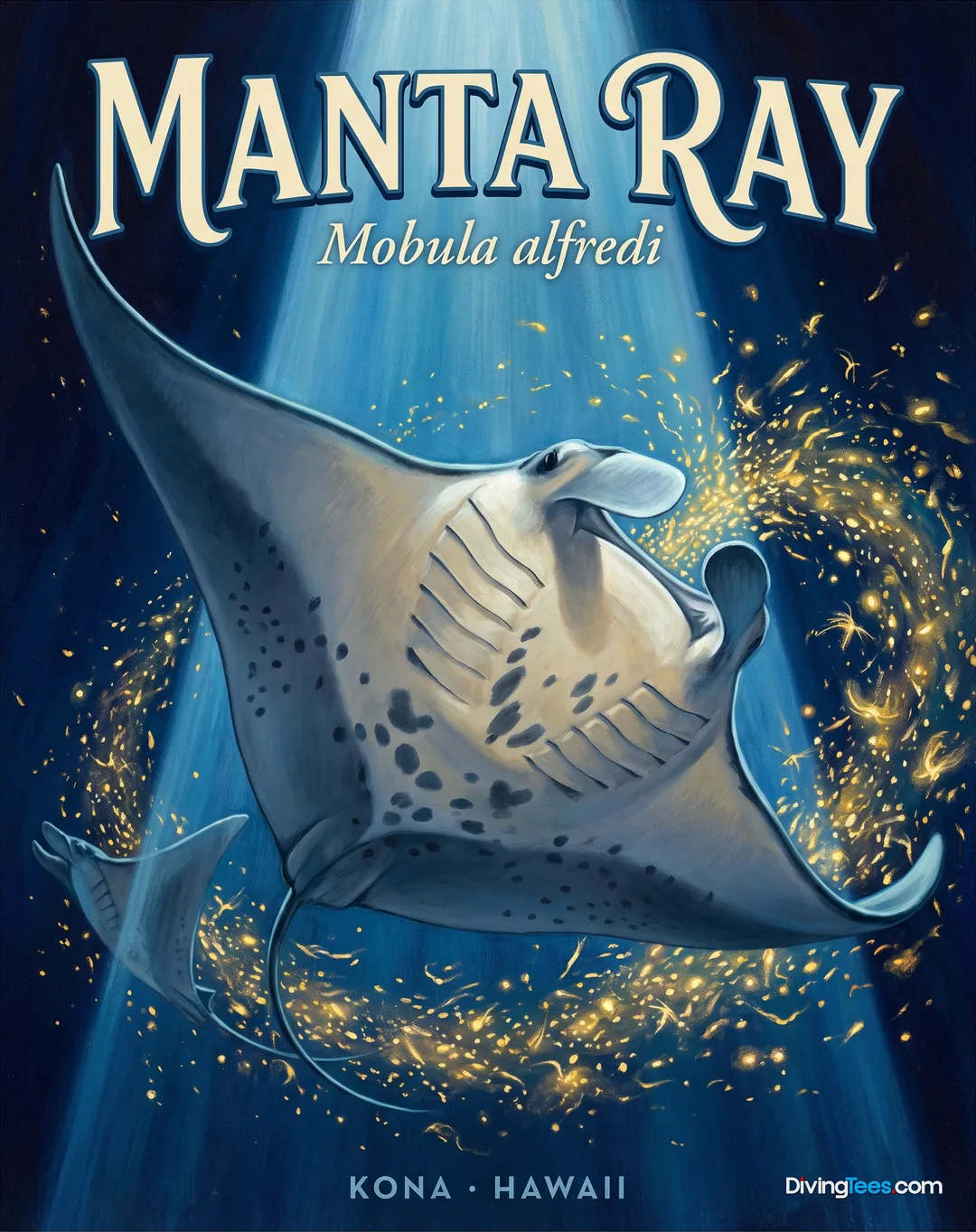
Manta Point is a premier site for observing large pelagics, with a high probability of encountering reef manta rays (Mobula alfredi). The site is a staple for anyone looking to see these animals in their natural habitat.
Castle Rock is a well-known site that offers diverse marine life and is a highlight for many divers in the region. It provides the kind of varied topography that defines the best of Komodo's underwater landscapes.
Batu Bolong is a significant site within the park, offering a high density of marine life. It is an essential stop for divers wanting to experience the true scale of the area's biodiversity.
Yellow Wall is a dedicated wall dive that provides excellent opportunities to observe reef life along its structure. It is a reliable site for seeing a wide array of colourful reef fish and corals.
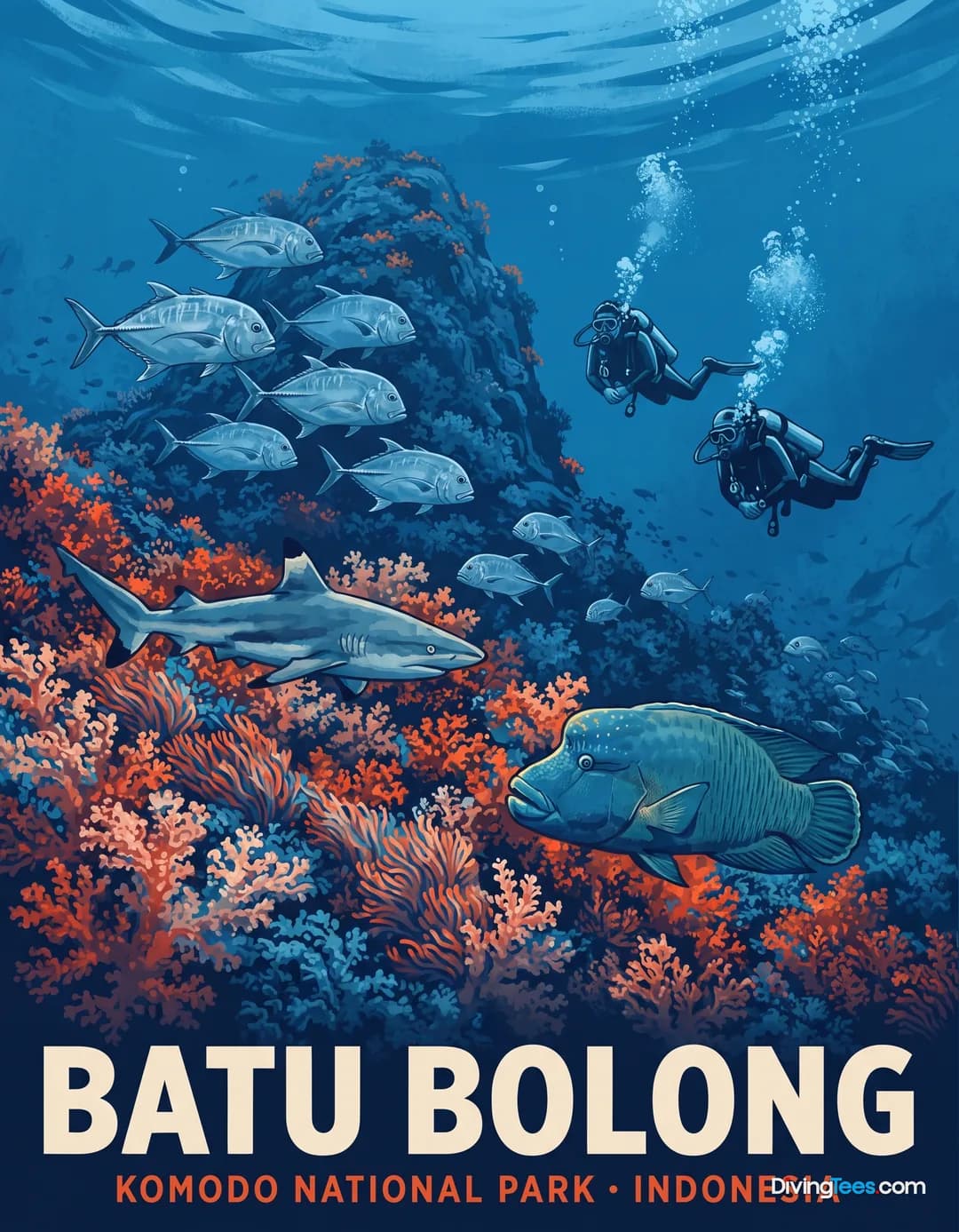
down to 40 m
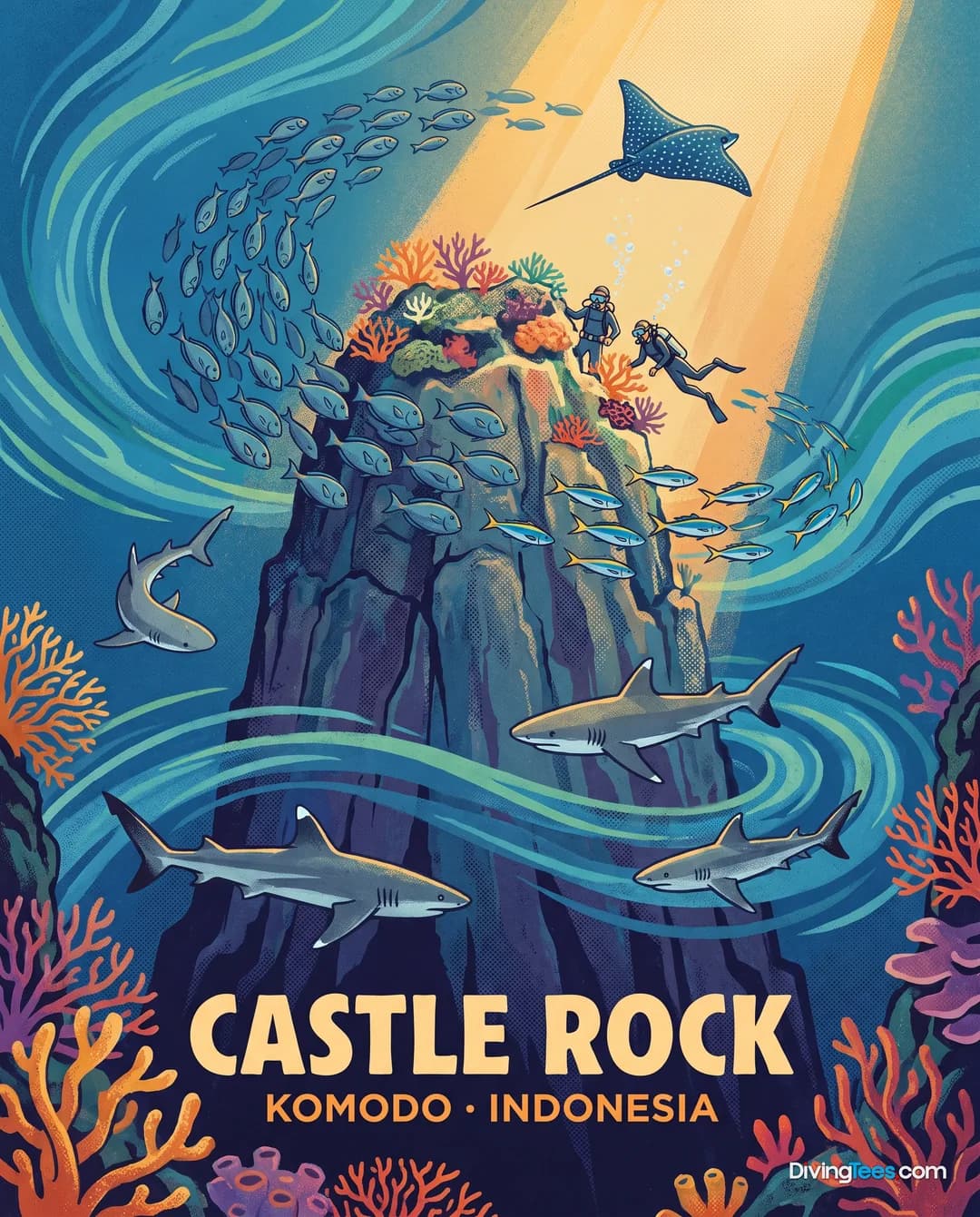
down to 30 m
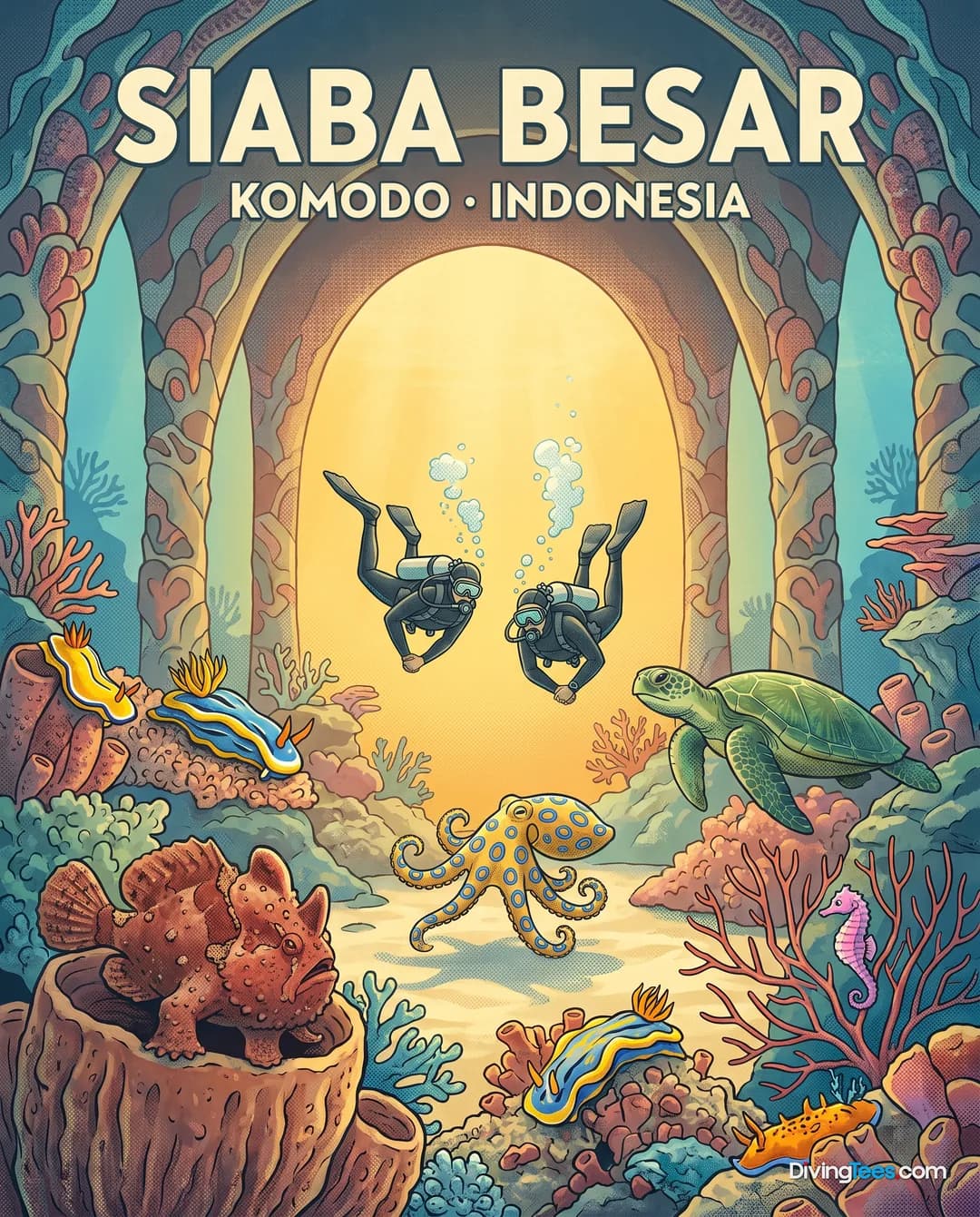
down to 18 m
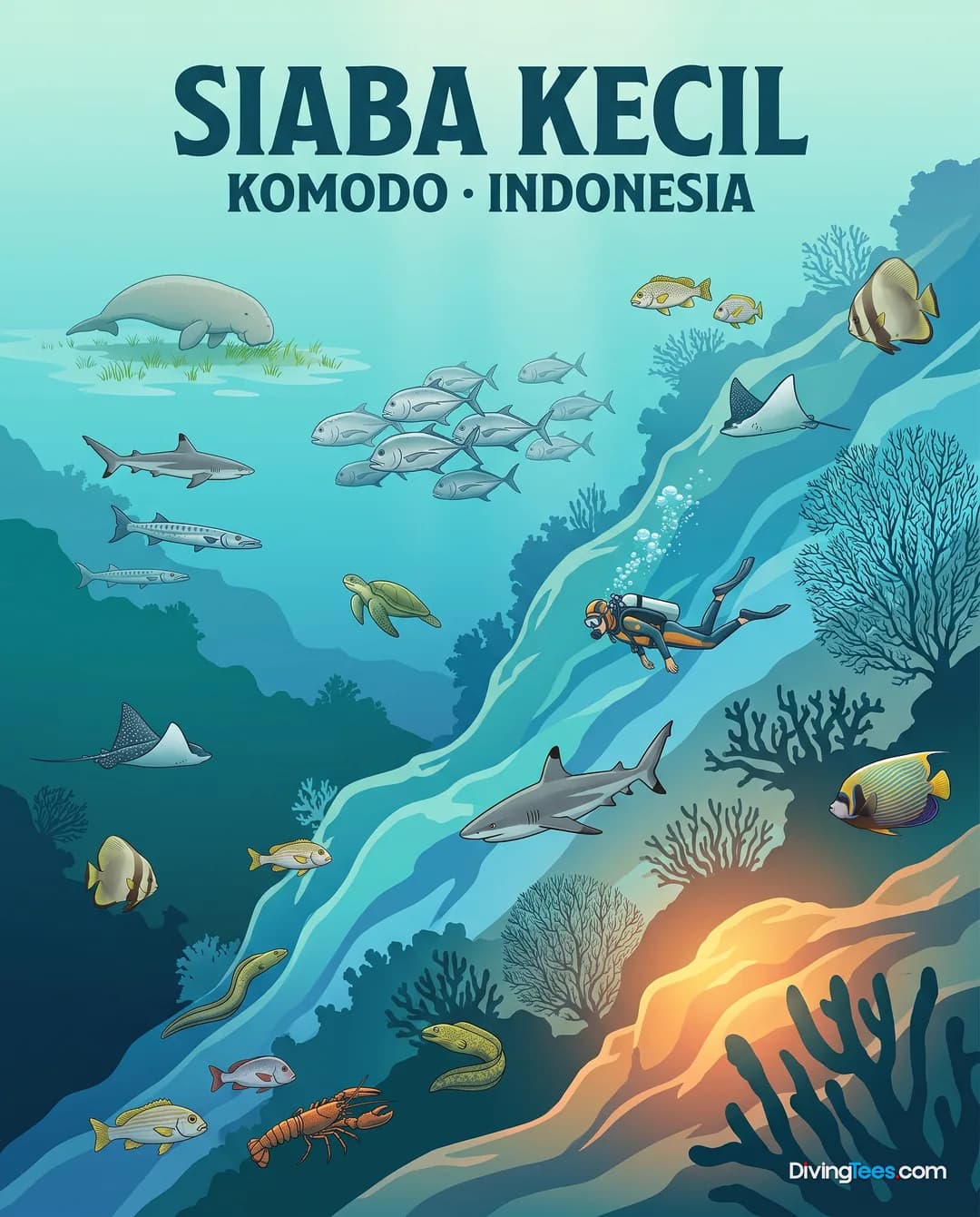
down to 30 m
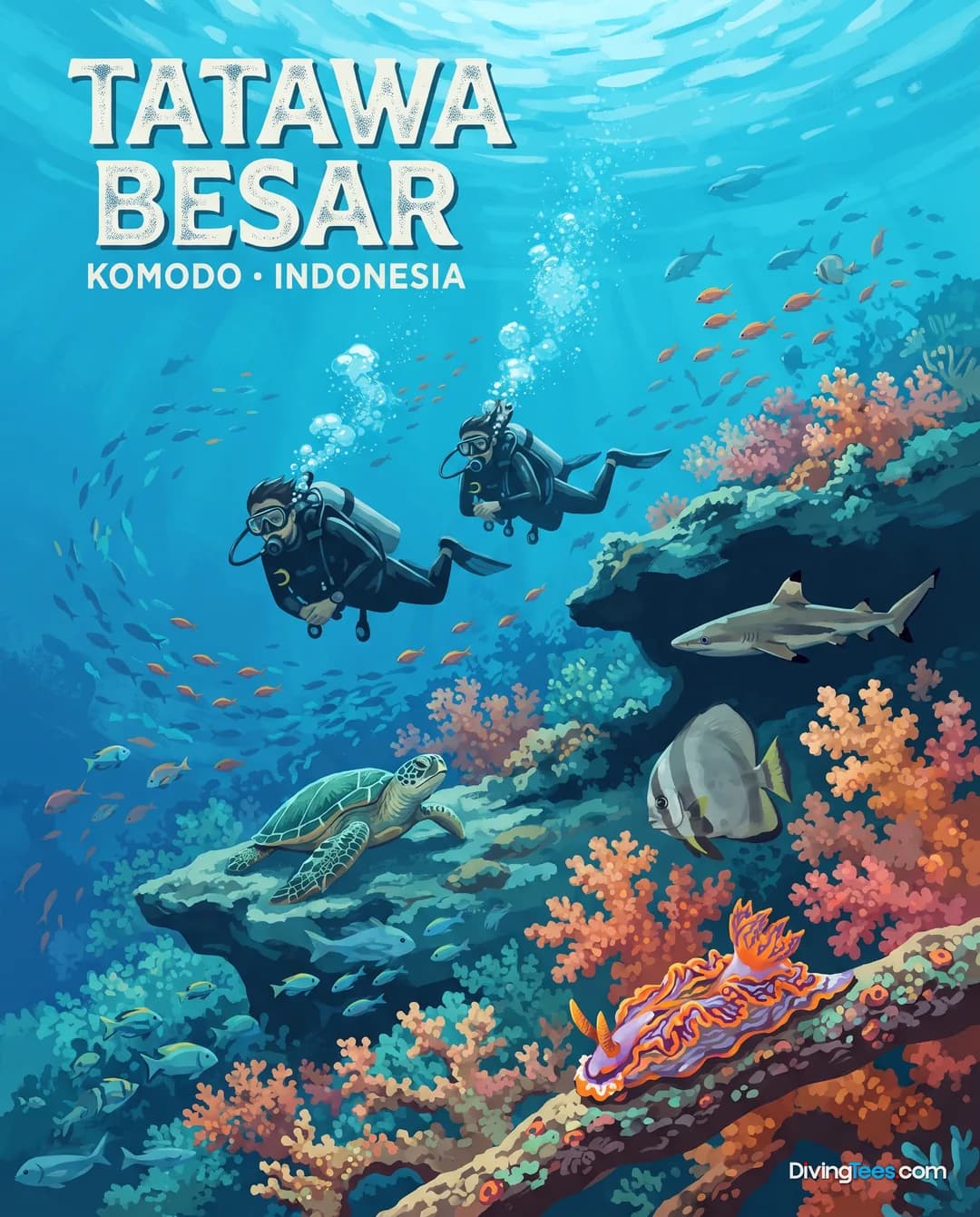
down to 25 m
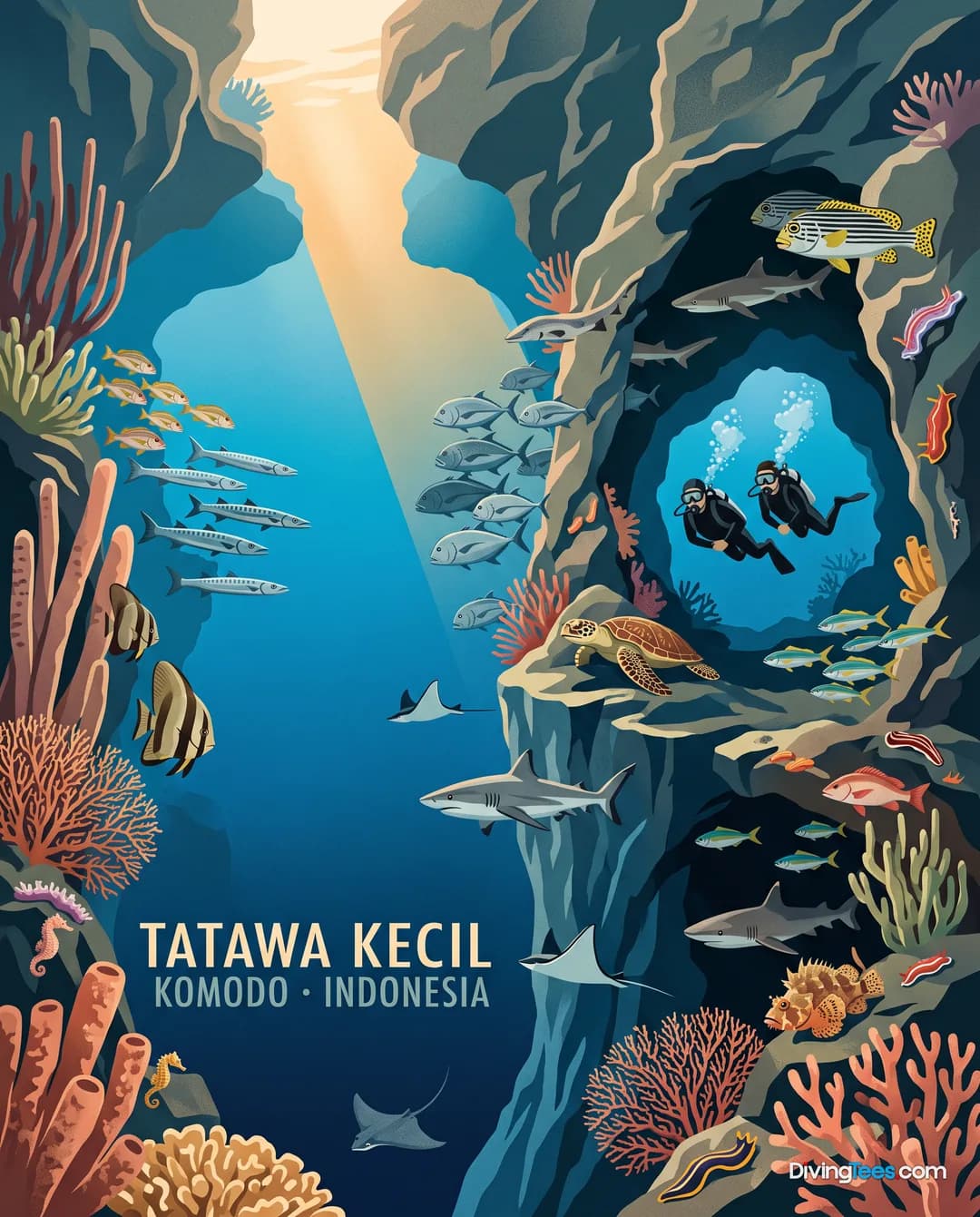
down to 30 m
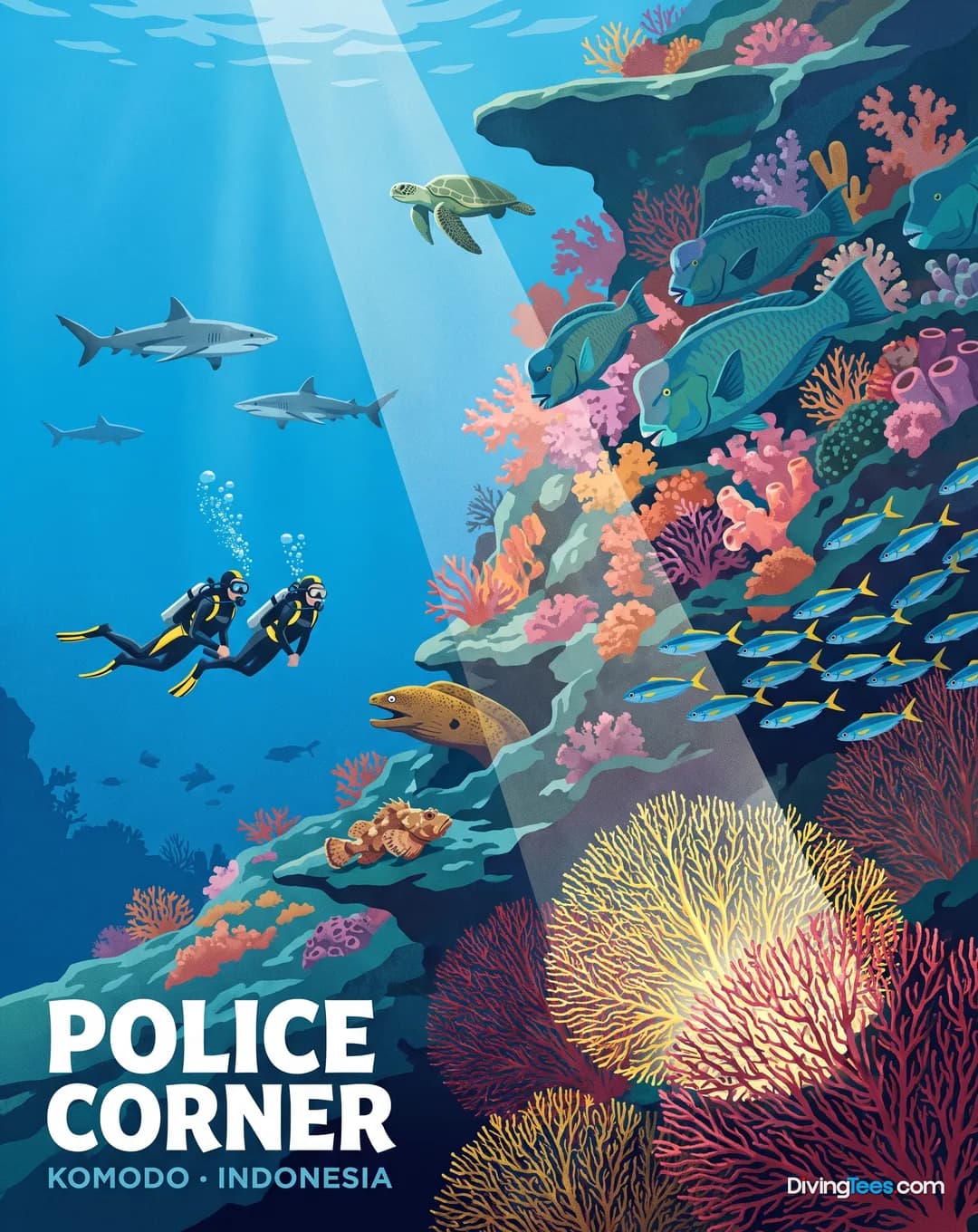
down to 30 m
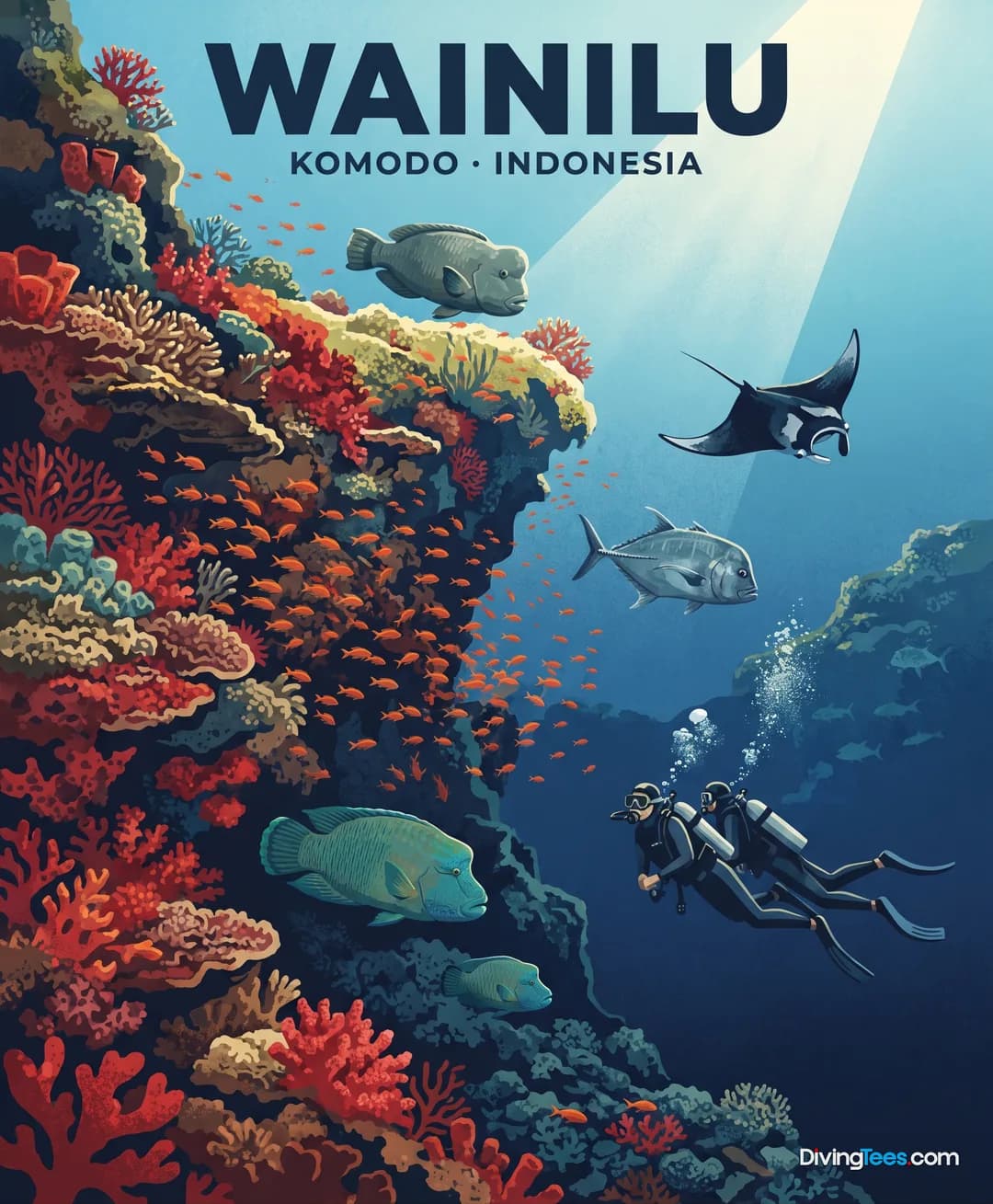
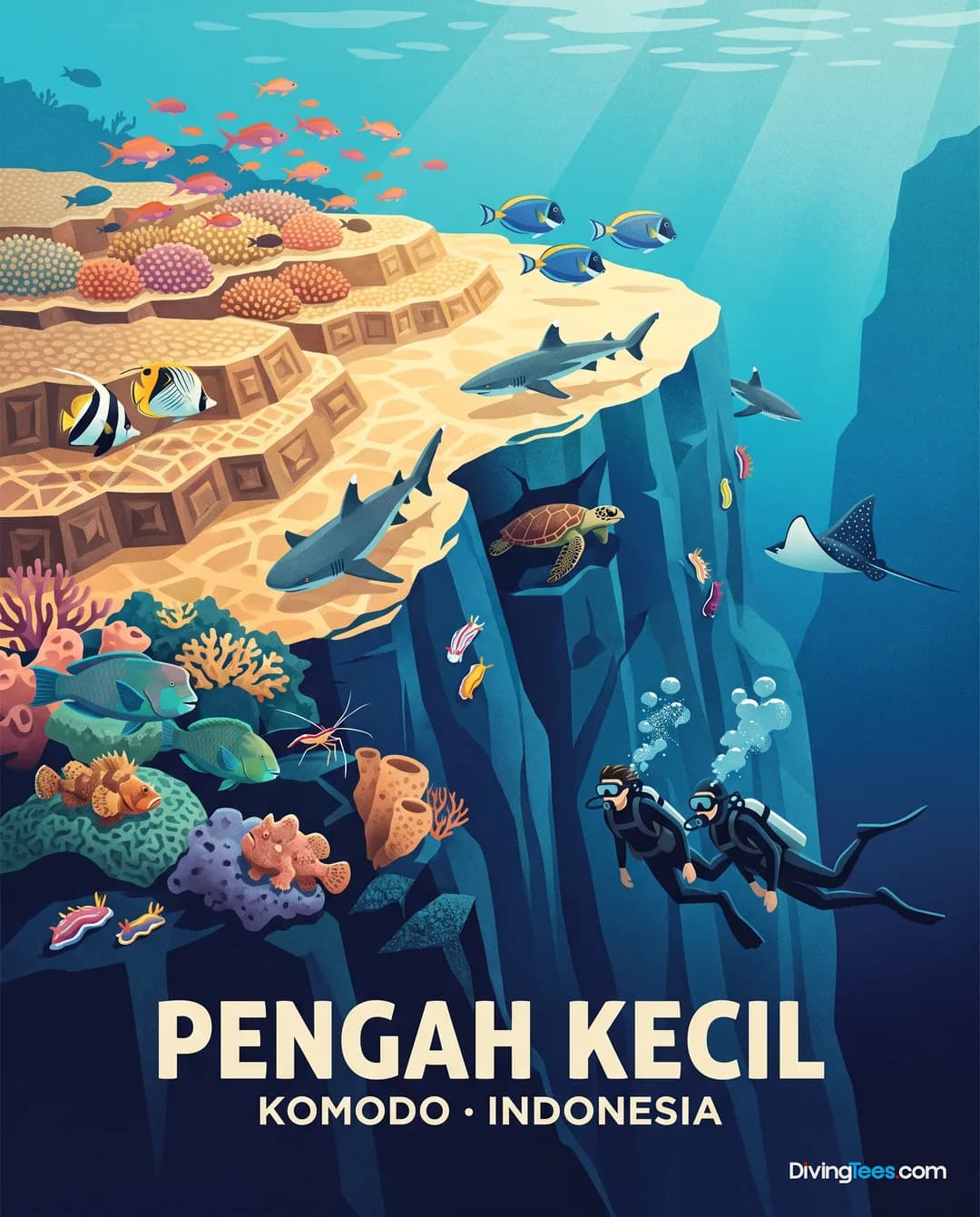
down to 25 m
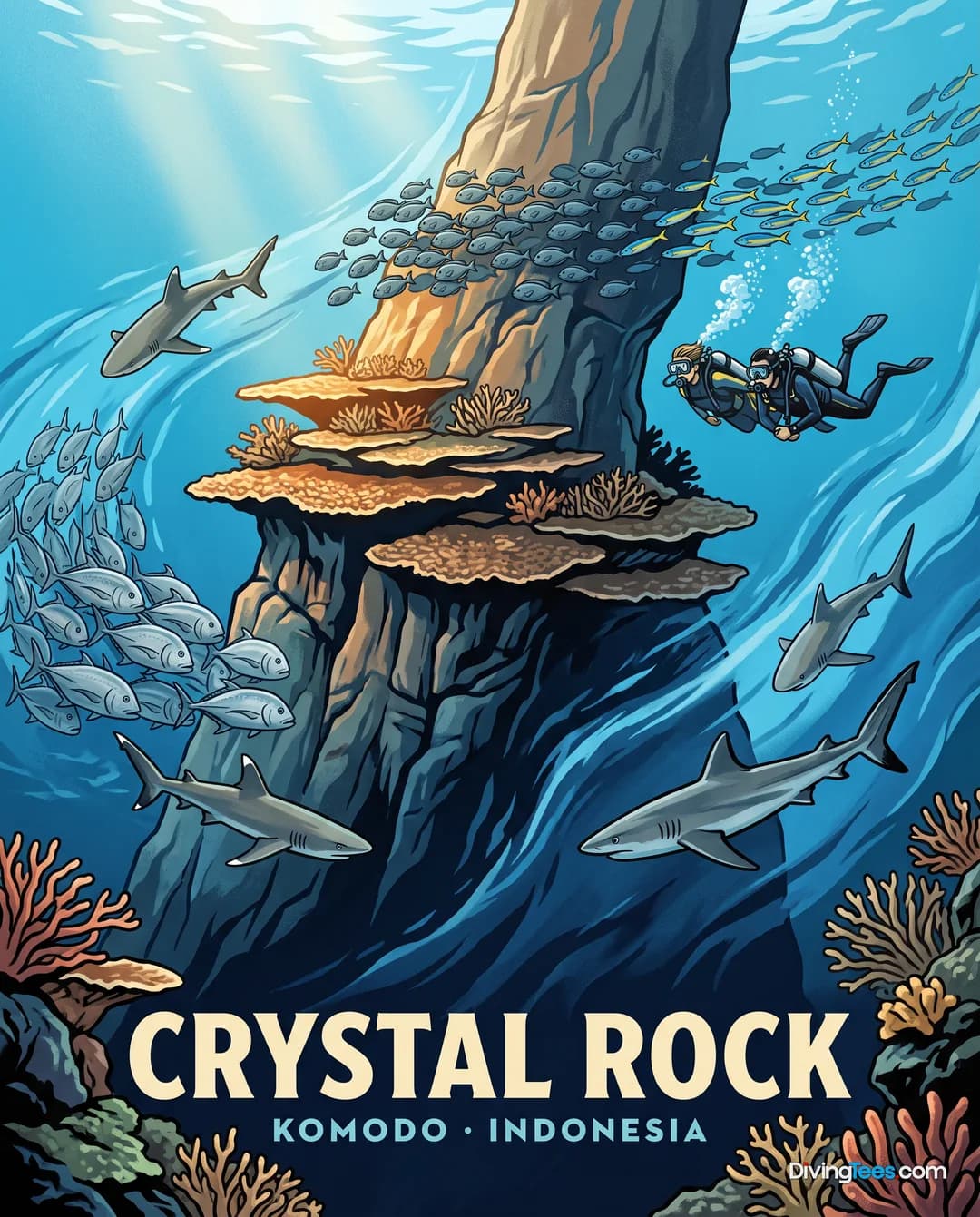
down to 30 m
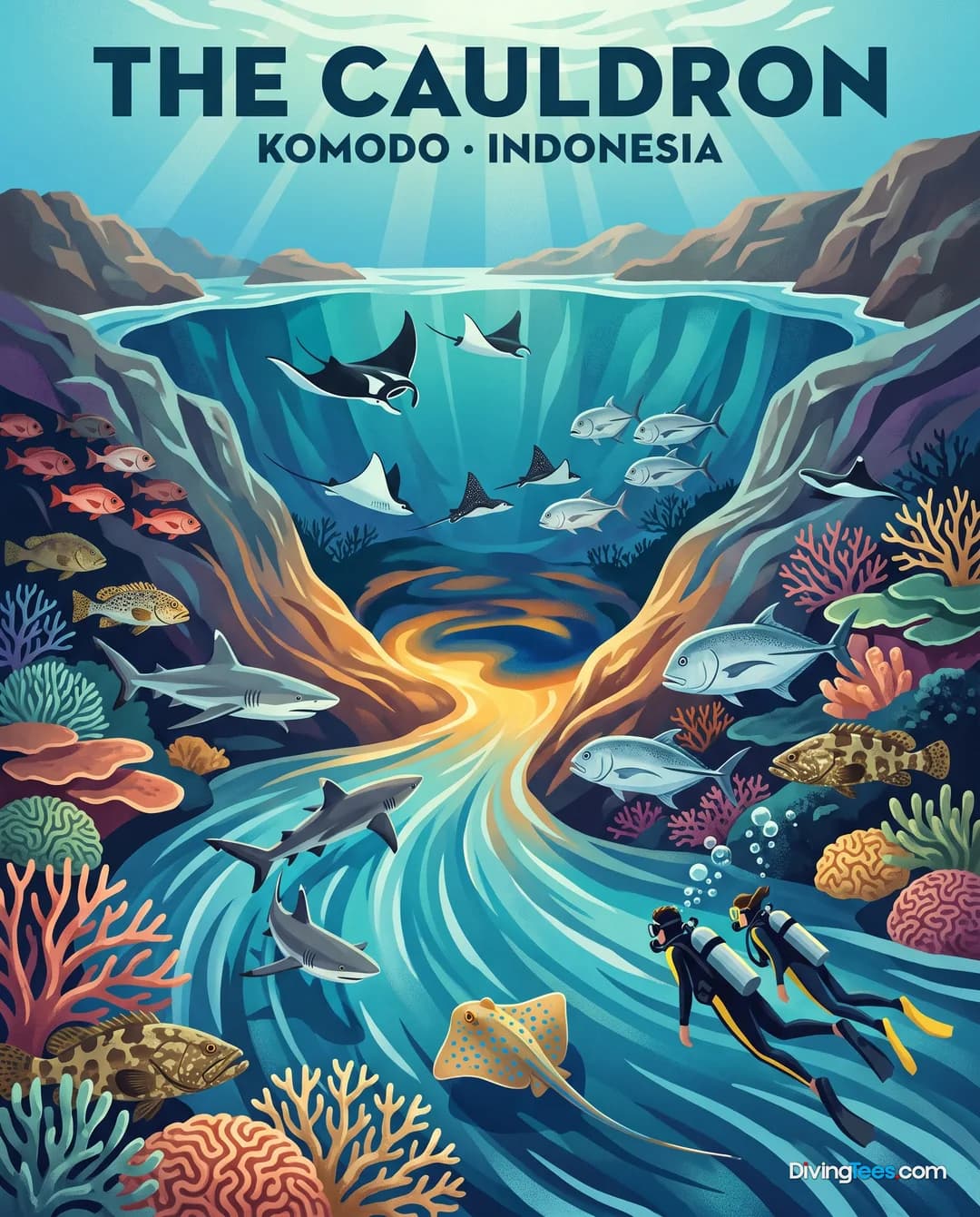
down to 25 m
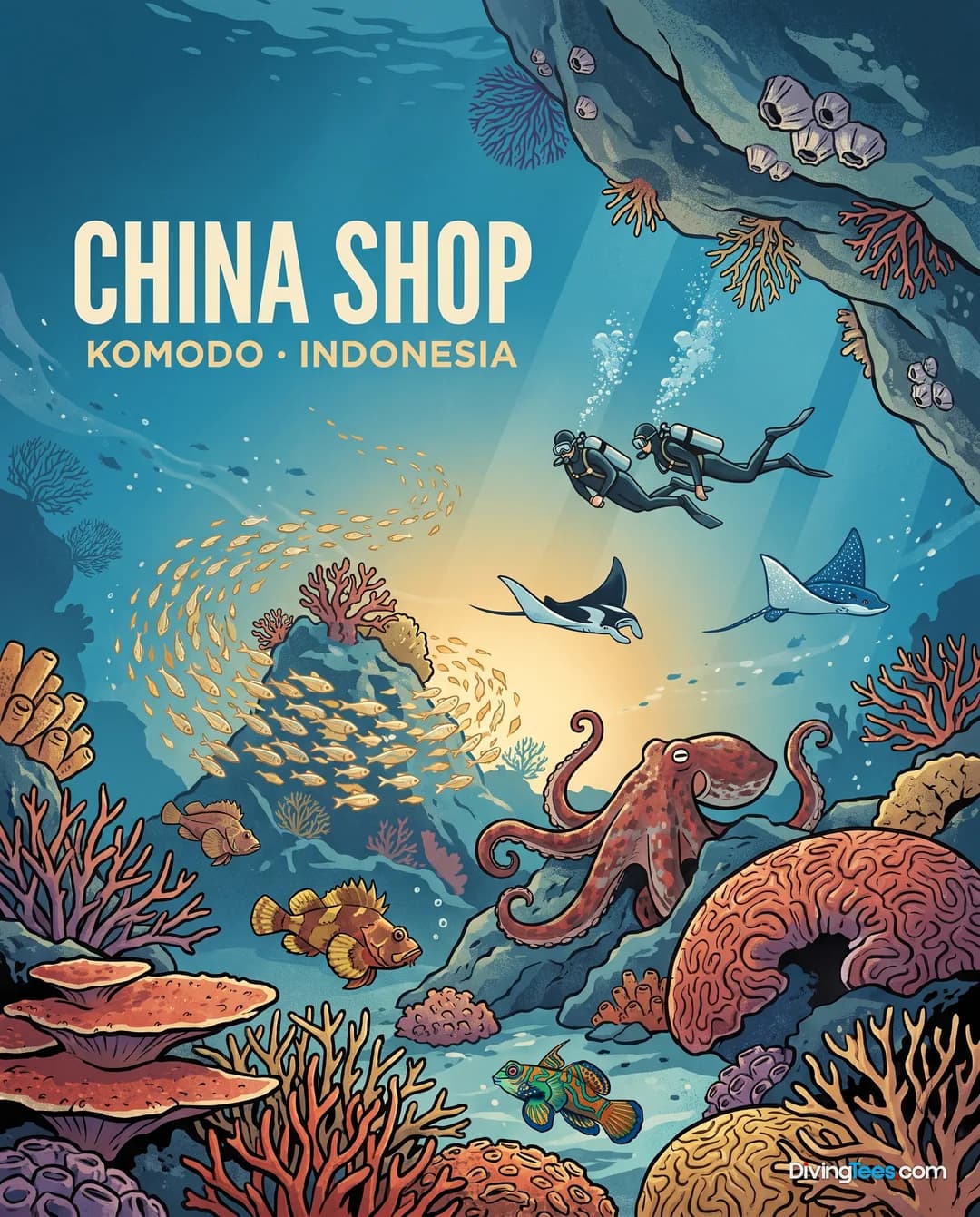
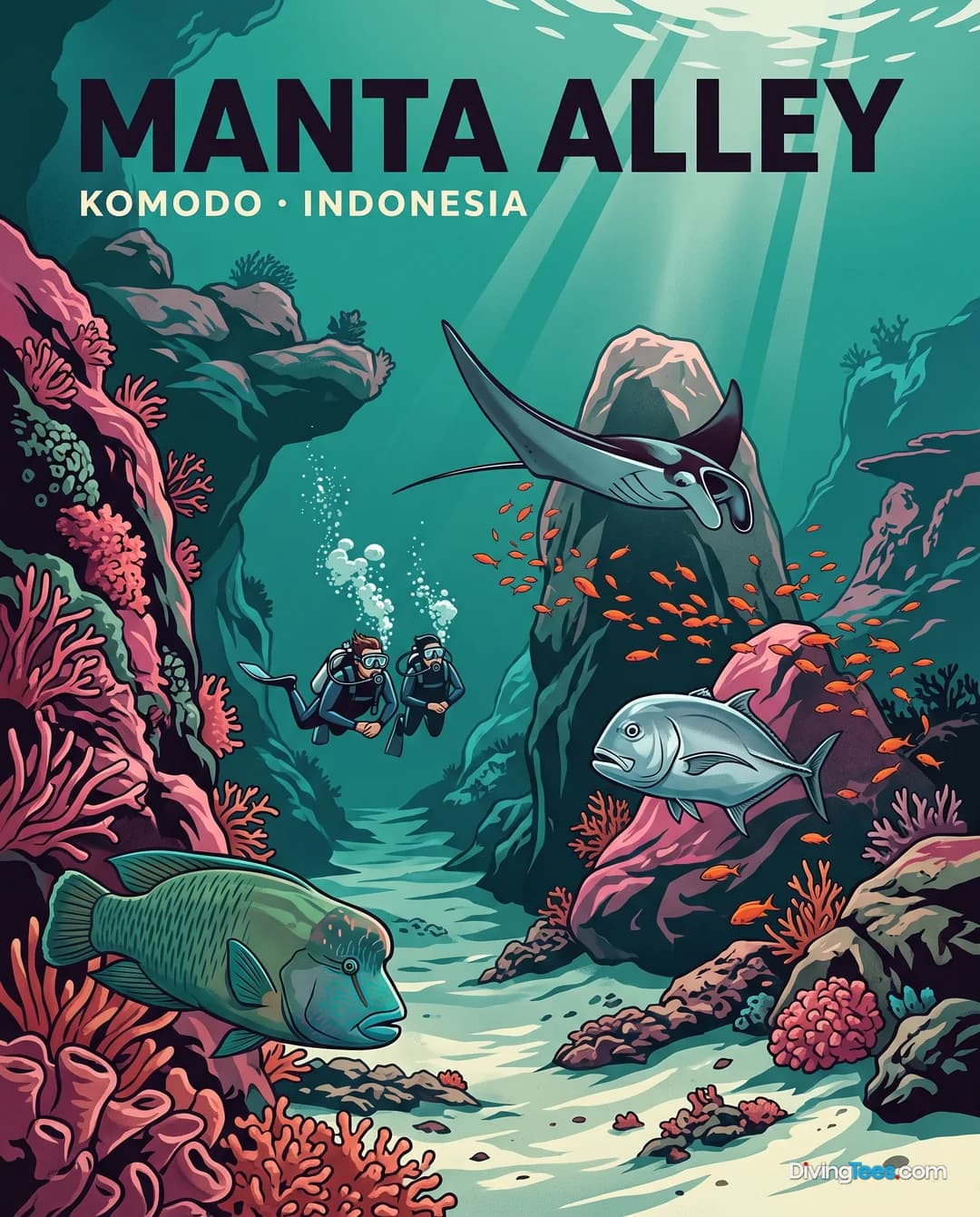
down to 20 m
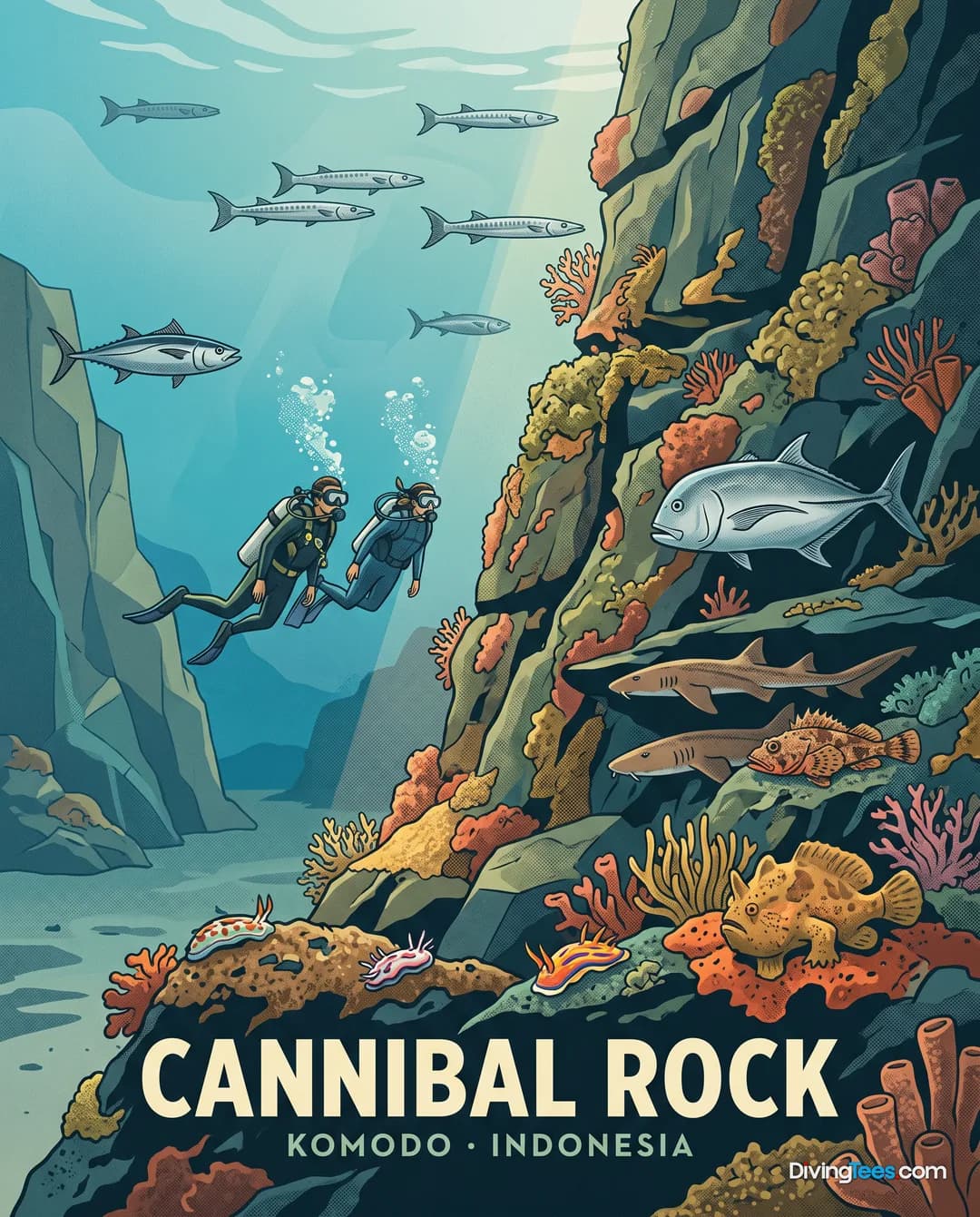
down to 30 m
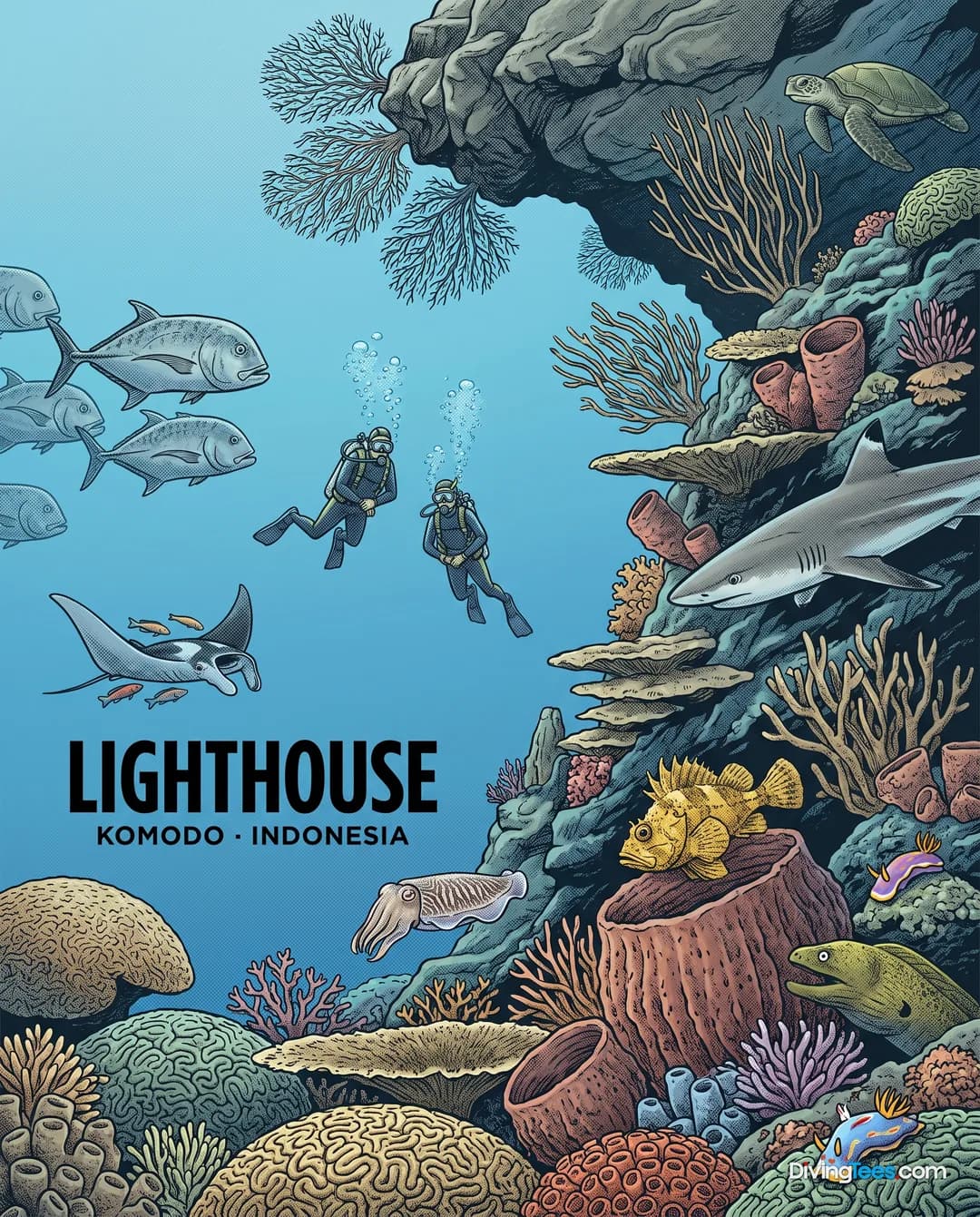
down to 30 m
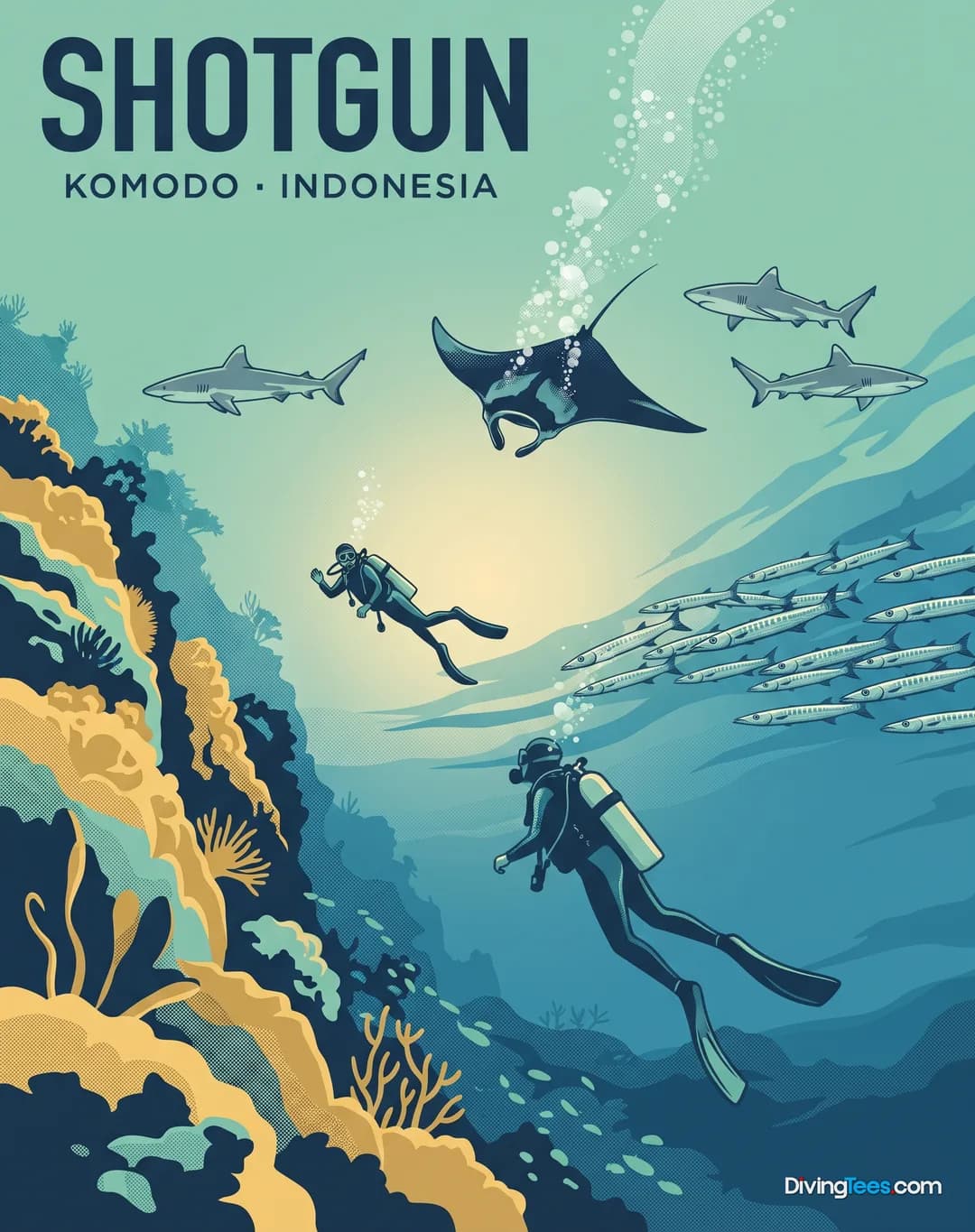
down to 25 m
And some of the dive sites the centre runs.
The waters of Komodo are home to a vast array of large pelagics and reef species. You can regularly encounter reef sharks (Carcharhinus), including whitetip reef sharks (Triaenodon obesus), blacktip reef sharks (Carcharhinus melanopterus), and grey reef sharks (Carcharhinus amblyrhynchos). Large schools of fish, such as trevallies, snappers (Lutjanus), and various fusiliers, are common sights.
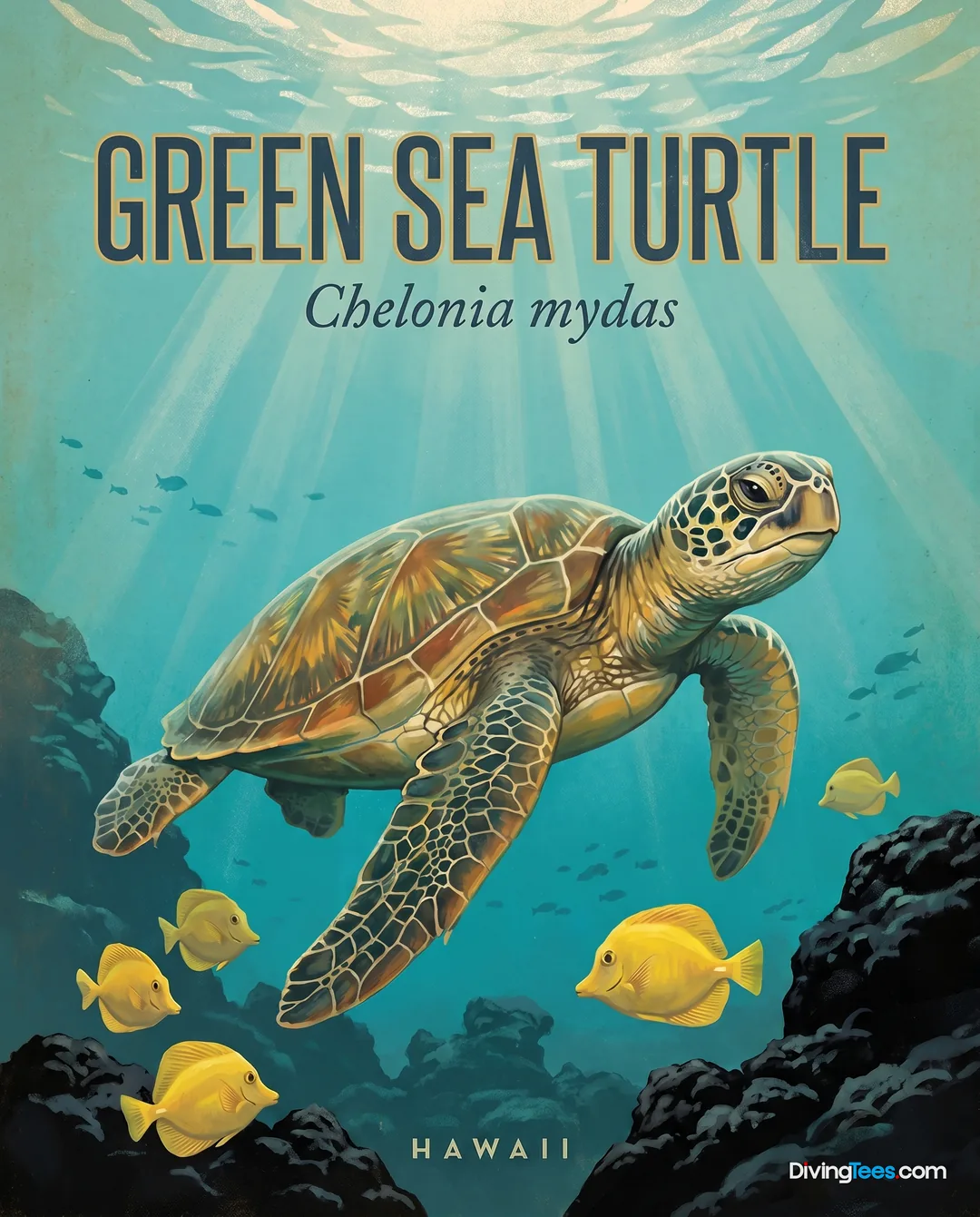
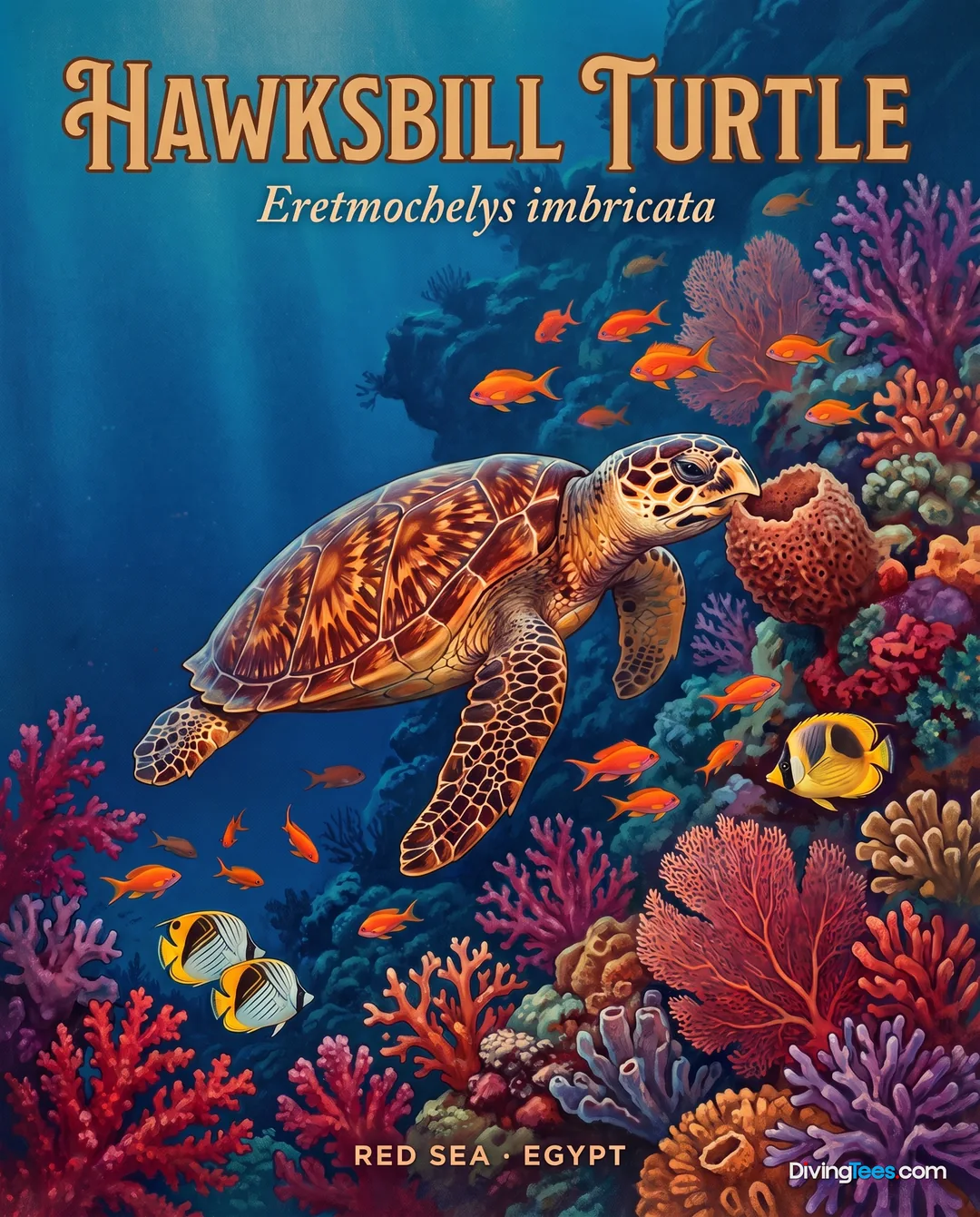
The reef itself is a vibrant landscape of hard corals and soft corals, providing a home for many species. You will see colourful reef fish, including various species of angelfish (Pomacanthidae), butterflyfish (Chaetodon), and surgeonfish (Acanthuridae). Sea turtles (Cheloniidae), such as the green turtle (Chelonia mydas) and hawksbill turtle (Eretmochelys imbricata), are also frequently observed.
For those interested in macro life, the area offers incredible diversity. You can find various nudibranchs, octopus (Octopus vulgaris), and many species of shrimp (Caridea). Look closely for seahorses (Hippocampus kuda), various types of scorpionfish (Scorpaenidae), and flamboyant cuttlefish among the corals and crevices.
Seasonality plays a role in sightings, particularly for larger animals. If you visit between December and February, you have a much higher chance of encountering manta rays (Mobula alfredi).
Divers should be prepared for strong currents, which are a characteristic feature of the Komodo National Park. These currents can be significant, making experience with drift diving a valuable asset.
The best time to visit is generally during the dry season from April to October. For those specifically seeking manta rays, the period between December and February is often the most productive.
Hello, I'm Marina, DivingDeal.com's AI assistant. I answer in detail about hotels, dive centres and liveaboards.

Thinking about the whole trip and the flights? Talk it over with Edith →
Marina is an AI. Some links are affiliate links: DivingDeal may earn a commission, at no extra cost to you. Bookings are made with the partner.
Your last day stays dry: no diving in the 18-24 hours before a flight the perfect window to see the destination from another angle.
Ratings and reviews collected by Viator and Tripadvisor.